Over 25,500 Palestinians Killed: Absence of Accountability is Nothing Short of Shameful

Armed Conflicts, Civil Society, Crime & Justice, Democracy, Headlines, Human Rights, IPS UN: Inside the Glasshouse, Middle East & North Africa, TerraViva United Nations
Opinion

Over 25,500 Palestinians Killed: Absence of Accountability is Nothing Short of Shameful

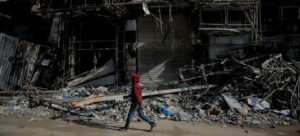
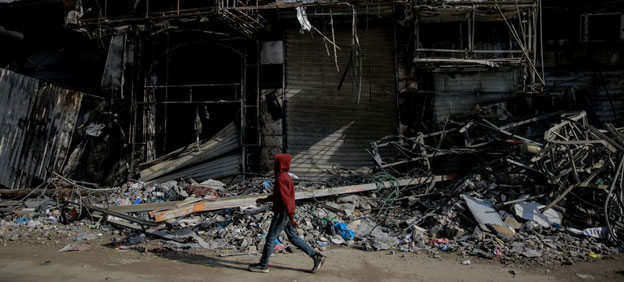
A boy walks through a destroyed neighbourhood in Gaza City. Credit: UNICEF/Omar Al-Qattaa

 
UN High Commissioner for Human Rights, Volker Türk’s remarks to the Interactive Dialogue on the human rights situation in the Occupied Palestinian Territory, at the 61st session of the Human Rights Council in Geneva on February 26 2026.

GENEVA, Feb 27 2026 (IPS) – The situation in the Occupied Palestinian Territory is a human-made disaster.

The report before you sets out events between 1 November 2024 and 31 October 2025 that show Israel’s utter disregard for human rights in Gaza and the West Bank, and the serious violations also committed by Hamas and other Palestinian armed groups.


The evidence gathered by my Office reveals a consistent pattern of gross violations and abuses of human rights, serious violations of international humanitarian law and atrocity crimes – that remain unpunished.

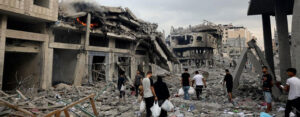
Israel’s continued attacks on residential buildings and makeshift tents, destroying entire neighbourhoods, caused mass civilian deaths. More than 25,500 Palestinians were killed, including entire families, and more than 68,800 were injured during the reporting period.

Among those killed were many Palestinian journalists. My Office has verified that 292 were killed in Israeli operations since 7 October 2023.

Israel’s militarization of humanitarian aid, through the Gaza Humanitarian Foundation, also led to large-scale killings. Between late May and 8 October 2025, my Office recorded 2,435 Palestinians killed by the Israeli military near food collection points — mostly young men and boys.

In August 2025, famine was declared in Gaza, affecting more than half a million people. According to the Palestinian Ministry of Health, at least 463 Palestinians, including 157 children, died from starvation. This was the direct result of Israel’s blocking of humanitarian aid and other deliberate actions.
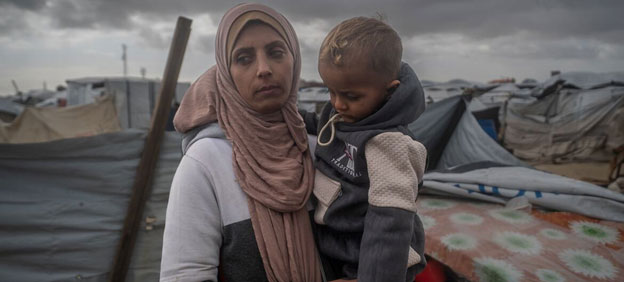
A woman holds a child as a storm approaches Khan Younis in Gaza. Credit: WFP/Maxime Le Lijour

Israeli forces continued to kill humanitarian and medical personnel during this period, and to make mass arrests of Palestinians across Gaza and the West Bank. These arrests often amounted to arbitrary detention, and included enforced disappearances.

Since 7 October 2023, my Office has verified that at least 89 Palestinians have died in Israeli custody. Torture and other ill-treatment of Palestinians in Israeli detention remain widespread.

Israeli operations destroyed some 80 percent of civilian infrastructure in Gaza – including homes, schools, hospitals, cultural sites, and water treatment plants.

During the reporting period, Israel continued to forcibly displace Palestinians, into ever-shrinking areas of the Gaza strip. Over the course of 2025, Hamas and other Palestinian armed groups continued to hold hostages in blatant violation of international law.

Fifty-one hostages who were seized on 7 October 2023 were returned to their loved ones. On their release, the hostages recounted their traumatic ordeals, including sexual and gender-based violence, torture, beating, and prolonged confinement underground.

In June, there were reports that armed men, allegedly affiliated with Hamas, summarily executed 12 Palestinians associated with the Gaza Humanitarian Foundation. In the West Bank, including East Jerusalem, Israeli security forces continued to launch airstrikes and use unlawful force, killing hundreds of Palestinians.

In January 2025, Israeli forces launched Operation Iron Wall in the northern West Bank, which is still ongoing. So far, they have forced 32,000 Palestinians from their homes.

Meanwhile, Palestinian security forces increased the use of unnecessary or disproportionate force, resulting in the unlawful killing of at least 8 Palestinians. They also arbitrarily detained and ill-treated more than 300 Palestinians.

The ceasefire of 11 October 2025 brought some measure of relief. But we must not mistake this for peace or safety. People are still dying in Gaza from Israeli fire, cold, hunger, and treatable diseases and injuries.

Since the ceasefire, Israeli attacks in Gaza have killed more than 600 Palestinians and injured more than 1,600, according to the Palestinian Ministry of Health. Anywhere else, this would be considered a major crisis.

My Office has also recorded at least 80 reported killings of Palestinians by Hamas since the ceasefire, mostly by summary executions and in clashes with rival factions. Gaza now has the highest number of amputee children per capita in the world.

Israel continues to destroy civilian infrastructure and forcibly transfer Palestinians within the Occupied Palestinian Territory. The humanitarian situation is still extremely precarious, as Israel continues to impede the humanitarian community’s ability to bring in food, shelter, fuel, medical supplies, and other essential items.

Since the ceasefire, at least 11 children have died from hypothermia. I deplore Israel’s decision at the end of last year to suspend some 37 aid groups from Gaza. I also deplore the ban on UNRWA operations and the demolition of its premises in East Jerusalem in blatant violation of international law.

Today, the situation in the West Bank is particularly disturbing. Recent Israeli measures expanding land expropriation consolidate the annexation of Palestinian territory. This is in flagrant breach of the Palestinian right to self-determination.

Israeli security forces continue to use unnecessary and disproportionate force, and have killed 1,020 Palestinians since 7 October 2023, according to figures verified by my Office.

Taken together, Israel’s actions appear aimed at making a permanent demographic change in Gaza and the West Bank, raising concerns about ethnic cleansing.

The absence of accountability for the egregious violations committed is nothing short of shameful. Instead, there are efforts to obstruct accountability. The unilateral sanctions imposed on 11 judges and prosecutors of the International Criminal Court are completely unacceptable.

As are those imposed on the Special Rapporteur on the Occupied Palestinian Territory, appointed by this Council. Time and again, I stand before this Council and brief on the litany of violations. I make recommendations, plead for accountability, and for respect for international law.

I do so again today, because it is crucial. The ongoing violations of international law in Gaza must stop. I need to issue a stark warning about the rapidly deteriorating situation in the West Bank. Israel must end its unlawful occupation, in line with the conclusion of the International Court of Justice. And Israel must lift undue restrictions on the flow of humanitarian aid.

We have thought a lot about the contribution my Office can make to shift the trajectory of this awful situation. It may seem incongruous or inappropriate to talk about reconstruction as the suffering continues unabated.

But we have a responsibility to think about what is needed to break this senseless cycle. To talk about lasting peace. Human rights have been crushed in the Occupied Palestinian Territory.

Any realistic effort to rebuild and move toward lasting stability will have to be anchored in human rights. And this is urgent. The reconstruction of Gaza is not a logistics exercise.

Rebuilding Gaza and restoring human rights throughout the Occupied Palestinian Territory requires focusing on what people have lived through over many generations and cutting through the contested narratives.

I see five elements that can help us get there.

First, there need to be meaningful steps towards accountability for all human rights violations and abuses. My Office’s reports form part of this record. Continued monitoring and reporting of the human rights situation is critical.

Second, there must be the long-overdue realization of Palestinians’ right to self-determination, including full responsibility for their own governance and control over their land and resources. Palestinians must be able to shape their own futures and lead reconstruction efforts in Gaza.

Third, security is more than weapons and walls. Unequal treatment is feeding grievances. People can only feel safe when they have faith in equal justice and the rule of law. All segregationist laws and policies that resemble the kind of apartheid system we have seen before must be dismantled.

Fourth, Palestinian and Israeli civil society organizations and human rights defenders that are trusted by their communities need to be central partners in safeguarding human rights going forward. They need the support and protection of the international community.

And finally, we need understanding and healing among Palestinian communities, and between Palestinians and Israelis. This means working to undo the dehumanization which has fuelled this decades-long conflict.

The voices of peace movements – Palestinian, Israeli, and those that bring together Palestinians and Israelis – must be heard and heeded. This can strengthen the constituency for dialogue and increase the space for shared narratives.

The international community needs to step into the moral vacuum and seize the moment – not to return to the pre-October 2023 status quo, but to finally address the underlying causes of this conflict.

Member States need to pursue a path to sustainable peace — one in which Palestine and Israel live side by side in equal dignity and rights, in line with UN resolutions and international law.

IPS UN Bureau
  Source

After a Brutal Winter, Millions of Ukrainians Face Deepening Displacement and Uncertainty

Armed Conflicts, Civil Society, Crime & Justice, Democracy, Europe, Headlines, Human Rights, IPS UN: Inside the Glasshouse, TerraViva United Nations

Opinion

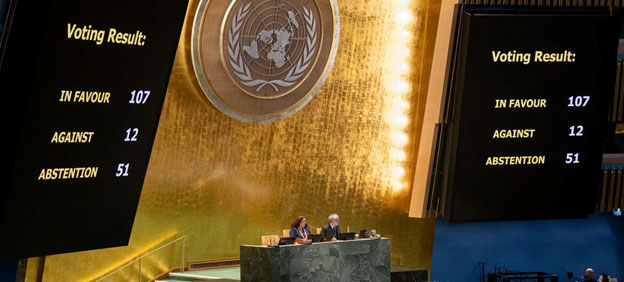
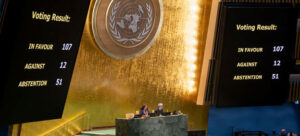
Result of the General Assembly vote on the draft resolution “Support for lasting peace in Ukraine” adopted during the emergency special session. 24 February 2026
Four years after Russia launched its full-scale invasion of Ukraine, the UN is marked the day with high-level debate and renewed calls to end the war – including in the General Assembly which passed a resolution reaffirming its strong commitment to the sovereignty, independence and territorial integrity of Ukraine. Credit: UN Photo/Manuel Elías

GENEVA, Feb 25 2026 (IPS) – After surviving the harshest winter in a decade, millions of displaced Ukrainians are confronting a growing crisis marked by hardship and ongoing attacks as peace prospects remain distant.


Inside Ukraine, repeated attacks on housing, energy systems and essential services throughout the winter left millions without heating or electricity for prolonged periods. While temperatures are slowly rising, the damage remains. An estimated 10.8 million people inside the country need humanitarian assistance in 2026, and 3.7 million are internally displaced.

At the same time, 5.9 million Ukrainians remain refugees abroad. Across Europe, host countries have provided protection and opportunities at an unprecedented scale, giving refugees access to education, healthcare and employment. This has helped millions regain stability and contribute to host communities.

As the war continues, however, more is needed to support refugees from a displacement crisis with no clear end. Alongside Temporary Protection, States should explore options for alternative arrangements for longer stay. These can bring stability for the most vulnerable in particular, for whom return may not be immediately possible even after the war.

Evidence shows that meaningful inclusion delivers results and refugees significantly boost host country economies. In Poland, analysis by UNHCR and Deloitte showed that Ukrainian refugees’ net impact amounted to 2.7 per cent of the Polish GDP, in 2024. With increased language training and wider recognition of credentials, access to decent work and self-reliance can improve for refugees across the region.

Inside Ukraine, communities continue to repair homes, restore services and rebuild livelihoods, with the support of UNHCR and NGO partners. But after four years of war, resilience has limits. Sustained humanitarian assistance remains essential, alongside scaled-up recovery and reconstruction support to prevent further displacement and enable safe conditions for return.

When conditions allow, gradual and voluntary returns will be critical for Ukraine’s recovery. UNHCR is working with the Government and partners to restore people’s documents, support rehabilitation of social infrastructure and repair war-damaged homes. UNHCR also works with partners to analyse refugees’ intentions, forecast return movements and support Ukraine’s recovery planning.

Since the start of the full-scale war, UNHCR and partners have supported 10 million people with emergency aid, protection services and psychosocial support. In 2026, UNHCR plans to assist a further 2 million people inside the country, subject to sufficient funding. Across the region, UNHCR and partners are supporting 1.7 million refugees and the States hosting them, with a focus on inclusion and self-reliance.

As winter fades, the humanitarian crisis does not. We must support the people of Ukraine with humanitarian relief and recovery inside the country, and with safety and self-reliance abroad.

Philippe Leclerc is UNHCR’s Regional Director for Europe and Regional Refugee Coordinator for the Ukraine Situation

IPS UN Bureau

  Source

‘Nothing Compares to Human Lives Lost’ – Reflections on Ukraine War

Armed Conflicts, Civil Society, Editors’ Choice, Europe, Featured, Headlines, Human Rights, Humanitarian Emergencies, International Justice, Peace, TerraViva United Nations

Armed Conflicts

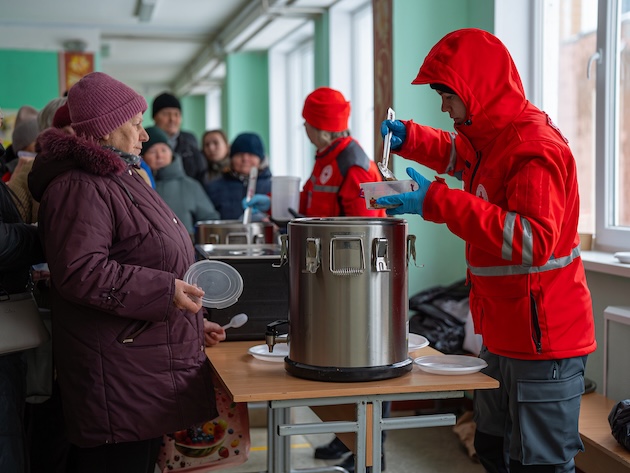
Ukrainian Red Cross teams have delivered over 3,300 hot meals to Kyiv residents at support points around the city. Credit: Red Cross

Ukrainian Red Cross teams have delivered over 3,300 hot meals to Kyiv residents at support points around the city. Credit: Red Cross

BRATISLAVA, Feb 24 2026 (IPS) – “We have a saying here in Ukraine now – ‘young people meet at their friends’ funerals rather than at weddings.’ It’s sad, but very true.”


As Russia’s full-scale invasion of her country moves into its fifth year, Iryna Yakova, 29, is looking back at how her life has changed over the past four years.

Speaking from Lviv, the western Ukrainian city where she lives, she tells IPS that her “values and attitude towards life” have changed. “Material things become unimportant when your loved ones or friends are in danger,” she says. She has also developed a keen sense of her national identity and an empathy for the suffering of her fellow Ukrainians.

“During the full-scale invasion, I realised that all of Ukraine is my home. I cry for people who were killed by a missile in Kyiv while they were sleeping at night. Even though I didn’t know them, it hurts me because they are Ukrainians. It also pains me to see children growing up without their parents because their parents are at the front. The war has intensified my sense of empathy and belonging.”

Her mental health has suffered. She says anxiety is ever-present in her life.

But what she returns to often as she answers questions about how her life is today compared to before the war is the loss she, and others, have experienced.

“What I miss most [from my life before the full-scale invasion] are the people who have been killed in the war. I have lost friends, acquaintances, and relatives. Nothing compares to human loss. The hardest thing I have had to deal with during this war is going to the funerals of friends — people you used to go to parties with, travel with, study with,” she says.

The human cost of Russia’s full-scale invasion of Ukraine has been enormous – Ukraine’s government does not officially give figures for military casualties, but it has been estimated they could be up to 600,000 (Russian military casualties are thought to be more than twice that amount).

But the scale of civilian casualties has been huge, too. According to UN bodies, more than 15,000 civilians have been killed and over 41,000 injured in Ukraine since the start of the invasion on February 24, 2022.

Worryingly, as Ukraine marks the fourth anniversary of the start of the war, research suggests there has been a sharp increase in civilian casualties over the last year.

Data from Action on Armed Violence (AOAV), released earlier this month, showed civilian casualties in Ukraine increased by 26 percent in 2025 compared with 2024, despite there being a 6 percent drop in the number of injurious explosive weapon incidents recorded nationwide.

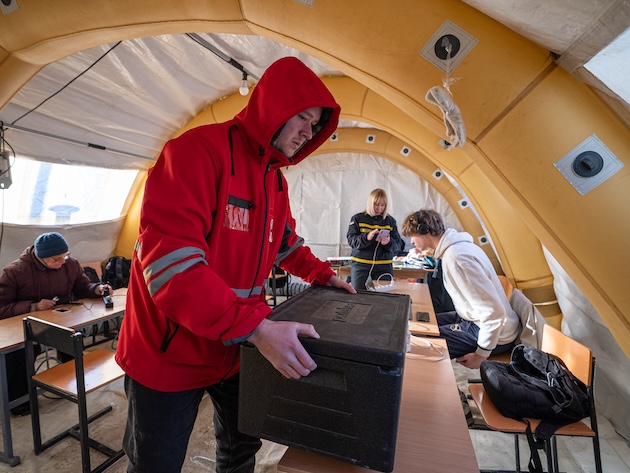
In Kyiv, response efforts continue amid attacks on energy infrastructure and severe cold. The Ukrainian Red Cross is supporting warming centres around the clock, providing people with a safe place to warm up, receive assistance, and feel cared for during difficult conditions. Credit: Red Cross

In Kyiv, response efforts continue amid attacks on energy infrastructure and severe cold. The Ukrainian Red Cross is supporting warming centres around the clock, providing people with a safe place to warm up, receive assistance, and feel cared for during difficult conditions. Credit: Red Cross

The group said its data showed a worrying shift in the character of the conflict – the average number of civilians killed or injured per incident in Ukraine rose 33 percent over the year, with a total of 2,248 civilians reported killed (an 11 percent rise) and 12,493 injured (a 28 percent rise) by explosive violence.

This suggests that explosive weapons are being used by Russia in Ukraine in ways that generate greater civilian impact, whether through more drone strikes, heavier munitions, specific targeting choices of populated areas, or repeated strikes on urban infrastructure, the group said.

Nearly seven in ten civilian casualties recorded in AOAV data occurred in residential neighbourhoods, up from just over four in ten in 2024.

Niamh Gillen, a researcher at AOAV, told IPS it was impossible to definitively say that Russian forces were deliberately targeting Ukrainian civilians, but that “the data speaks for itself.”

“It shows that civilian areas are being attacked, that the attacks are occurring within civilian areas like hospitals, schools, cities, towns. In general, in areas where civilians are heavily concentrated, like cities and towns, villages, anywhere like that, if you’re using an explosive weapon with wide area impacts, then you’re likely to harm more civilians,” she said.

On top of the deaths and destruction Russian attacks have caused, they have also led to massive displacement. It is thought that at least 3.4 million people are internally displaced in the country. This has put massive pressure not just on the displaced themselves, but also on host communities and services.

People’s physical health has deteriorated in such conditions – the World Health Organisation (WHO) has said that more than two-thirds of the population have reported a worsening of their health since the start of the invasion.

But the harm caused by these attacks is far from just physical. Mental health professionals in the country, as well as international bodies including the WHO, have warned of a mental health crisis in Ukraine, with possibly up to 10 million people suffering with mental health problems.

IPS spoke to scores of people in cities and towns across Ukraine about how the war had affected their mental health. Many spoke of experiencing anxiety, sometimes permanently to some level, which could be intensified at any moment by the frequent sound of air raid sirens warning of an attack, or for those closer to frontlines, the sounds of explosions and bombings.

“What affects my mental health on a daily basis are the constant nighttime drone and missile attacks. Because of them, it is impossible to relax or get proper rest, as reaching a shelter for safety is essential, even at night,” Mihail*, a teenager who lives in the Kyiv region, told IPS.

The situation for many Ukrainians has acutely worsened this winter. In what has been one of the coldest winters the country has seen for many years, Russian forces have repeatedly attacked Ukraine’s energy infrastructure, resulting in massive, widespread power outages. Thermal heating facilities have also been destroyed in targeted attacks.

As temperatures have plunged to as low as minus 30 degrees Celsius on some occasions, millions of people have been left freezing in their homes.

Jaime Wah, Deputy Head of Delegation with the International Federation of Red Cross and Red Crescent Societies (IFRC) in Ukraine, said people were suffering desperately in the cold.

“Some nights have been very unbearable. There is no escape from the cold. When you leave your apartment, it’s cold. Sometimes people have been joking that it’s warmer inside a fridge than inside their apartment. I’ve been here for over four years now, and it’s been the worst winter,” she told IPS.

Humanitarian organisations, including the Ukrainian Red Cross, and state emergency services have set up emergency heating points in cities and towns where people can keep warm, recharge devices and get food.

But Wah said while this has become a humanitarian crisis, it is one of just many crises Ukrainians are battling.

“In frontline regions, there are communities that are under evacuation orders, and some communities have essentially had most of their resources cut off. Family ties are quite strained – mental health needs are also immense, not only in the frontline regions but across Ukraine,” she said.

“There are lots of repairs to homes that are needed, not to mention the energy crisis, which is a humanitarian crisis… with no heating and no electricity, just the day-to-day things – just even heating your food becomes a problem. A lot of families are having to spend more time outside their homes, having to spend more money. On top of that, the cost of living has increased. These are some of the real, tangible situations that people in Ukraine are facing now,” she added.

Amid these problems, many Ukrainians admit that they are exhausted after four years of war.

But among the many people IPS spoke to on the eve of the fourth anniversary of the war, there was a widespread, although certainly not universal, determination to not give up.

“I feel a sense of responsibility. I do not have the right to give up, because many people have died so that I could have the chance to live. Of course, there is exhaustion, but, unlike those in the military, a civilian like me has time to rest and reset,” said Iryna.

For many, such resilience is born out of a desire not just for them and their country to survive what they see as Russia’s attempt to destroy them as an independent state and nation, but also a hope that, ultimately, there will be some justice served for what has been done to them.

The Russian military and authorities have repeatedly been accused of war crimes, crimes against humanity, breaches of international humanitarian law, as well as genocide, during the invasion of Ukraine.

The sheer volume of alleged crimes – at least 180,000 war crimes have been registered by Ukraine’s Prosecutor General – and the constraints of documenting, investigating and prosecuting during an ongoing conflict mean that bringing those behind them to justice was never expected to be easy. Only over 100 people have been prosecuted in Ukraine so far for crimes during the invasion.

But there are fears that international bodies such as the International Criminal Court (ICC), which has issued an arrest warrant for, among others, Russian President Vladimir Putin over alleged war crimes, could be rendered increasingly toothless in their ability to ever prosecute major figures who ordered such crimes because world leaders, such as US President Donald Trump, are no longer interested in upholding international justice for war crimes.

“I truly hope that the war will end very soon and that all war criminals will be brought to justice. However, what I see happening right now is the opposite: while institutions like the UN are unable to punish Russia, people are starting to forget about its war crimes. Countries are gradually lifting sanctions,” said Mihail.

“For example, Russian athletes are going to be able to take part in the Paralympics this year. As a result, people who committed war crimes just months or years ago can now take part in one of the world’s biggest sporting events. So we need to act – by refusing to normalise aggression, keeping sanctions firm and, most importantly, remembering about war.”

Others, though, are more hopeful.

“There is no doubt among Ukrainians that war criminals can be brought to justice,” Oleh Martynenko, an expert at the Ukrainian NGO Center for Civil Liberties, which documents war crimes, told IPS.

“This is evidenced by the participation of Ukrainians in international missions and courts where war criminals have been convicted. Also, thanks to the European Union, Ukrainians are building their own criminal prosecution systems, which provide for the arrest and imprisonment of Russian war criminals in accordance with UN international standards,” he said.

Regardless of these concerns and the other problems Ukrainians are facing as the full-scale invasion goes into its fifth year, some are looking to the future with a degree of hope.

“I feel a mix of determination, resilience, anger, and hope of victory,” Tetiana, a nurse in the Dnipropetrovsk region, who asked not to be identified for security reasons, told IPS. “Glory to Ukraine!” she added.

*Name changed to protect identity.

IPS UN Bureau Report

  Source

International Humanitarian Law is at Breaking Point – but not Beyond Repair

Armed Conflicts, Civil Society, Crime & Justice, Democracy, Global, Headlines, Human Rights, IPS UN: Inside the Glasshouse, TerraViva United Nations

Opinion

Credit: UNICEF/Eyad El Baba

 
What is international humanitarian law? Families flee their shattered homes in Tal al-Hawa neighbourhood in Gaza city. While aid workers serving conflict-affected civilian populations depend on a set of laws to protect them, some warring parties violate these global agreements, from targeting hospitals and schools to blocking aid workers from reaching civilians with lifesaving goods and services. Source: UN News

GENEVA, Feb 17 2026 (IPS) – International humanitarian law is at a breaking point, as rampant impunity for serious violations is enabling even greater abuses against civilians and detainees.


Across today’s wars, violations are no longer concealed or exceptional. They are increasingly open, systematic, and unpunished, with catastrophic consequences for those whom the law is supposed to protect.

New analysis of 23 situations of armed conflict between July 2024 and the end of 2025 reveals a consistent pattern: civilians are being killed, abused and starved at scale, while accountability mechanisms either falter or are actively undermined. Genocidal violence in Gaza, a renewed risk of genocide in Sudan, and mass atrocities elsewhere are not isolated horrors. Taken together, they point to a deeper failure – the collapse of meaningful restraint in the conduct of hostilities.

Conflict-related sexual violence has reached epidemic levels. Rape, sexual slavery, and sexual violence used as punishment or as a tool of territorial control have been documented across multiple conflicts, including in Colombia, the Democratic Republic of Congo, Myanmar, and Sudan. Particularly alarming is the growing number of cases involving attacks children, including victims as young as one.

These are not by-products of war, but violations long prohibited under international humanitarian law, now committed with near-total impunity. This occurs with the complicity of many other States, which have a duty to respect and ensure respect international humanitarian law.

This erosion of civilian protection is not primarily the result of gaps in legal knowledge. The rules exist. The problem is political choice – and a persistent failure to enforce, clarify and update the law where it no longer offers meaningful restraint.

Nowhere is this clearer than in the global arms trade. The United Nations Arms Trade Treaty has been widely ratified, including by major exporters such as China, France, and the United Kingdom. In theory, it requires its member States to deny arms transfers where there is a clear risk that weapons will be used to commit serious violations of international law. In practice, legal risk assessments are all too often overridden by strategic and political considerations.

Continued arms exports to Israel, Russia, and others, despite overwhelming evidence of civilian harm, have had devastating consequences on the ground.

Closing this gap does not require a raft of new rules in the short term. It requires the consistent application of existing ones: enforceable, evidence-based export controls; independent scrutiny of licensing decisions; and real accountability where transfers are authorised despite a clear risk that the law will be breached by the recipient.

Certain categories of weapons are though incompatible with the protection of civilians, but do not necessarily violate the already permissive standards. Repeated firing into populated areas of gravity ordnance from the air and inaccurate long-range artillery from the ground has been a major driver of civilian casualties across multiple conflicts.

There is a fundamental lack of clarity on two key rules: first, how close an attack may be launched to a military target while still complying with the law; and second, how much incidental civilian harm is permissible when targeting a military objective.

On both issues, the law urgently requires clarification. Restricting air-delivered weapons to precision-guided munitions alone would already make a measurable difference to civilian survival. Achieving this, however, requires States to clarify and update the rules of international humanitarian law that were drafted in the 1970s.

In State-on-State conflicts such as in Kherson province in Ukraine, drones have been used by Russian forces – and others – to target civilians, sometimes with real-time video footage disseminated online by the perpetrators.

At the same time, armed drones are no longer the preserve of States. Their use by non-State armed groups is increasing rapidly, including by JNIM in the Sahel, Islamic State in Somalia, and the Arakan Army in Myanmar. There is an urgent need for stronger mechanisms to attribute, investigate, and prosecute unlawful drone and autonomous weapon attacks.

Impunity on this scale is not inevitable. It is the product of sustained political and financial neglect. Institutions designed to promote compliance with international humanitarian law – including domestic courts and international tribunals – are under severe strain, with some facing paralysis or closure due to lack of resources.

Judges at bodies such as the International Criminal Court have even been sanctioned simply for carrying out their mandates. If States are serious about protecting civilians, political and financial support for these institutions must be treated as a core obligation and a policy priority, not an optional gesture.

The current moment represents a critical test for international humanitarian law itself. The international lawyer Hersch Lauterpacht once warned that the law existed at the “vanishing point” of international law. That warning is no longer theoretical.

Whether humanitarian law continues to function as a real constraint on warfare, or recedes into symbolic rhetoric, will depend on the political choices states make now – and on whether civilian protection is treated as a legal duty rather than a discretionary one.

Stuart Casey-Maslen is an international lawyer and lead author of War Watch: International Humanitarian Law in Focus at the Geneva Academy of International Humanitarian Law and Human Rights

IPS UN Bureau

  Source

Multilateralism Reaching Breaking Point

Active Citizens, Armed Conflicts, Civil Society, Democracy, Featured, Global, Headlines, Health, Human Rights, TerraViva United Nations

Opinion

Multilateralism Reaching Breaking Point

Credit: Jonathan Ernst/Reuters via Gallo Images

BRUSSELS, Belgium, Feb 13 2026 (IPS) – The latest World Economic Forum made clear the current crisis of multilateralism. Over 60 heads of state and 800 corporate executives assembled in Davos under a ‘Spirit of Dialogue’ theme aimed at strengthening global cooperation, but it was preceded by a series of events pointing to a further unravelling of the international system.


On 3 January, Donald Trump launched an illegal military strike on Venezuela to abduct President Nicolás Maduro, which was widely condemned as a violation of international law. On 7 January, he signed an executive order withdrawing the USA from 66 international bodies and processes, including 31 UN entities, such as the UN Democracy Fund, the UN Framework Convention on Climate Change and UN Women. Then came the launch of Trump’s Board of Peace, evidently an attempt to supplant the UN Security Council. The country that helped build the multilateral system is walking away from the parts it doesn’t like and seeking to reshape the rest in its interests.

Trump’s approach to multilateralism is nakedly transactional. His administration engages with international processes only when they advance immediate US interests and withdraws from those that impose obligations. This disassociates multilateralism from its core principles: accountability over shared standards, equality among nations and universality. It encourages other states to follow suit.

This approach brings devastating financial impacts. US threats to defund international bodies have left institutions scrambling. UN development, human rights and peacekeeping programmes all depended heavily on US financial contributions. The World Health Organization faces shortfalls that threaten its ability to respond to health emergencies because the US government quit without paying its overdue contributions.

The USA’s closest allies aren’t safe. Trump threatened NATO member Denmark with 25 per cent tariffs unless it agreed to the USA’s purchase of Greenland, and suggested he might seize the territory by force. NATO’s Article 5 on collective defence – invoked only once, by the USA after 9/11 – lies in doubt. European states are reacting by seeking strategic autonomy, slashing development aid and reducing UN contributions while finding extra billions for military spending.

Problematic alternatives are looking to capitalise on crisis. At Davos, China positioned itself as the grown-up alternative to Trump, promoting its Friends of Global Governance initiative, a group of 43 mostly authoritarian states including Belarus, Nicaragua and North Korea.

The queue of heads of government meeting China’s leader Xi Jinping shows many states are pivoting this way. But it comes at a cost: in China’s vision of international cooperation, state sovereignty is paramount and there’s no room for international scrutiny of human rights or cooperation to promote democratic freedoms.

It’s the same story with the new Board of Peace. The body originated in a controversial November 2025 Security Council resolution establishing external governance for Gaza, but Trump clearly envisions a permanent, wider role for it. He chairs it in a personal capacity, with full power to veto decisions, set agendas and invite or dismiss members. Permanent membership costs US$1 billion, with the money’s destination unclear.

The Board’s draft charter makes no mention of human rights protections, contains no provisions for civil society participation and establishes no accountability mechanisms. Most members so far are autocratic states such as Belarus, Egypt and Saudi Arabia. Its credibility is further undermined by the fact that Israel has just joined, despite having made a mockery of international humanitarian law. More democratic states have declined invitations, mostly due to concerns about the body’s unclear relationship with the UN. Trump’s response was to threaten increased tariffs against France and withdraw Canada’s invitation. He has made clear he considers himself above international law, casting himself as a de facto world president able to resolve conflicts through personal power and pressure.

As the old order dissolves, civil society must play a critical role in defining what comes next. While the UN – particularly its Security Council, hamstrung by the use of veto powers by China, Russia and the USA – needs reform, it remains the only global framework built on formal equality and universal human rights. As the UN faces assault from those abandoning it or seeking to dilute its human rights mandate, civil society must mobilise to keep it anchored to its founding principles and challenge the hierarchies that exclude global south voices.

It falls on civil society to organise across borders to uphold international law, document violations of international humanitarian and human rights law and demand accountability. Not for the first time, civil society needs to win the argument that might doesn’t make right.

Samuel King is a researcher with the Horizon Europe-funded research project ENSURED: Shaping Cooperation for a World in Transition at CIVICUS: World Alliance for Citizen Participation.

For interviews or more information, please contact research@civicus.org

  Source

‘After Decades of Denial and Silence, the Suffering of Rohingya People Is Being Heard at the World’s Highest Court’

Active Citizens, Armed Conflicts, Asia-Pacific, Civil Society, Crime & Justice, Featured, Gender Violence, Headlines, Human Rights, Migration & Refugees, TerraViva United Nations

Feb 9 2026 (IPS) –  
CIVICUS discusses the genocide case against Myanmar at the International Court of Justice (ICJ) with Mohammed Nowkhim of the Arakan Rohingya Society for Peace & Human Rights (ARSPHR), a civil society organisation led by Rohingya people born out of refugee camps in Bangladesh to document atrocities, preserve survivor testimony and advocate for accountability and justice.


‘After Decades of Denial and Silence, the Suffering of Rohingya People Is Being Heard at the World’s Highest Court’

Mohammed Nowkhim

On 12 January, the ICJ began hearings in the genocide case brought by The Gambia against Myanmar over the military’s treatment of the Rohingya Muslim minority. The Gambia, representing the Organisation of Islamic Cooperation’s 57 members, accuses Myanmar of breaching the Genocide Convention. The Gambia’s justice minister presented evidence of mass killings, sexual violence and village destruction during a government crackdown in 2017 that forced over 700,000 Rohingya people to flee to Bangladesh. Rohingya survivors testified in closed sessions. Myanmar denies genocidal intent, characterising its actions as counterterrorism. A final judgment is expected before the end of the year.

What atrocities were committed against Rohingya people and what is being examined in court?

During what were called ‘clearance operations’ in 2017, Myanmar security forces burned entire villages, raped women, killed children and threw them into fires and wells. According to documented reports, over 10,000 people were killed and around 700,000, including me, were forced to flee Myanmar. These were not random acts of violence; they were systematic and targeted attacks aimed at erasing our community.

In 2019, The Gambia, supported by 11 other states, filed a case against Myanmar at the ICJ, accusing it of genocide. Judges are now examining evidence of mass killings, sexual violence, village destruction and forced displacement. They are also reviewing official policies and actions that show intent to destroy Rohingya people as a group, including patterns of violence, coordination by state forces and the systematic denial of basic rights.

This case shows that genocide claims can be examined through law rather than dismissed for political convenience. But for the Rohingya, this is not just a legal process. It represents acknowledgment and a source of hope for present and future generations. After decades of denial and silence, our suffering is being heard at the world’s highest court and recognised in a legal space where truth matters. The hearings can’t erase our wounds, but they can offer some solace and a path towards justice.

What evidence supports the case against Myanmar?

The case was built on years of evidence-gathering. The Gambia relied on extensive material from the Independent Investigative Mechanism for Myanmar and United Nations (UN) fact-finding missions, as well as documentation collected over many years by human rights organisations, including Fortify Rights, Human Rights Watch and Rohingya-led groups.

Civil society played a key role when states failed to act. Even when the world looked away, organisations continued to document the truth and refused to let these crimes be erased or rewritten. Long before any court agreed to listen, groups including the ARSPHR were collecting survivor testimonies, documenting violations and carefully preserving evidence, knowing it might one day be used in court. Without that work, much of what happened would have been lost and perpetrators couldn’t have been challenged.

In a way, civil society became the memory of the Rohingya people. Today, this evidence forms part of the case before the ICJ.

Why is accountability so difficult?

Politics often protects perpetrators. Those with power choose stability over justice and shield those responsible for crimes. Myanmar’s authorities continue to deny wrongdoing and refuse to cooperate, which delays justice.

International law also has its limits. Justice moves slowly because ICJ rulings do not automatically lead to consequences. International courts can establish the truth, but they can’t force states to act. Enforcement depends on political will, often through the UN Security Council, where countries such as China and Russia can block action, even when crimes are clear and well documented.

What must happen to ensure justice?

There must be real action. Perpetrators must be held accountable, Rohingya citizenship must be restored and discriminatory laws that enabled genocide must be removed. Any return of refugees must be voluntary, safe and dignified. It can’t happen without international monitoring and guarantees of protection. People can’t be sent back to the same conditions that forced them to flee.

Ultimately, justice is not only about the past, but also about ensuring that future generations of Rohingya can live with rights, safety and dignity. This case is only the beginning. What happens after the judgment will decide whether justice is real or only symbolic.

CIVICUS interviews a wide range of civil society activists, experts and leaders to gather diverse perspectives on civil society action and current issues for publication on its CIVICUS Lens platform. The views expressed in interviews are the interviewees’ and do not necessarily reflect those of CIVICUS. Publication does not imply endorsement of interviewees or the organisations they represent.

GET IN TOUCH
Website
Facebook
Instagram
LinkedIn
Threads
Twitter
Mohammed Nowkhim/Facebook
Mohammed Nowkhim/LinkedIn

SEE ALSO
Myanmar’s junta tightens its grip CIVICUS Lens 12.Dec.2025
International Court of Justice offers hope of rules-based order CIVICUS Lens 19.May.2025
Myanmar at a crossroads CIVICUS Lens 28.Oct.2024

  Source