UN Independent Commission Finds That Israeli Forces Have Committed Genocide in Gaza

Armed Conflicts, Civil Society, Crime & Justice, Headlines, Health, Human Rights, Humanitarian Emergencies, Middle East & North Africa, Migration & Refugees, TerraViva United Nations

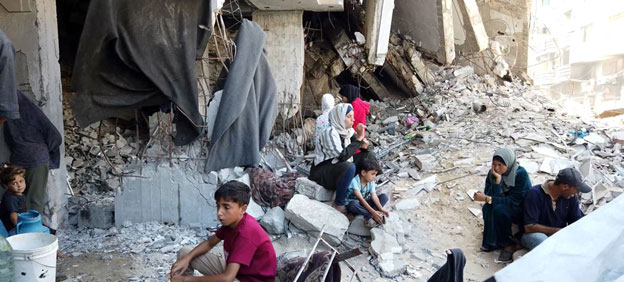
Gazan children standing in the rubble of their demolished home in Rafah. Credit: UNICEF/Eyad El Baba

UNITED NATIONS, Sep 17 2025 (IPS) – On September 16, the Israeli military began its ground offensive in Gaza City, accompanied by intensified bombardment of residential areas and a surge in civilian displacement. Concurrently, the United Nations Independent International Commission of Inquiry on the Occupied Palestinian Territory, including East Jerusalem and Israel, issued a report in which it found that Israel is responsible for committing genocide in Gaza, citing deliberate efforts to destroy Palestinian life, carried out with near-total impunity.


“The responsibility for these atrocity crimes lies with Israeli authorities at the highest echelons who have orchestrated a genocidal campaign for almost two years now with the specific intent to destroy the Palestinian group in Gaza,” said Navi Pillay, Chair of the Commission. “The Commission also finds that Israel has failed to prevent and punish the commission of genocide through failure to investigate genocidal acts and to prosecute alleged perpetrators.”

The Commission found that Israeli forces have repeatedly disregarded orders from the International Court of Justice (ICJ) as well as warnings from UN Member States, human rights groups and civil society organizations. Israeli officials have dismissed the Commission’s findings, accusing it of bias and refusing to cooperate with its investigations.

In response to the Commission, Israeli President Isaac Herzog told journalists, “While Israel defends its people and seeks the return of hostages, this morally bankrupt Commission obsesses over blaming the Jewish state, whitewashing Hamas’s atrocities, and turning victims of one of the worst massacres of modern times into the accused.”

The Commission described its report as the “strongest and most authoritative UN finding to date”, while noting that it operates independently from the UN and does not speak on its behalf. Currently, the UN does not categorize Israel’s actions in Gaza as a genocide, but has been under increasing pressure from its agencies to do so. Back in August, over 500 staff from the Office of the High Commissioner for Human Rights (OHCHR) urged UN Human Rights Chief Volker Türk to explicitly recognize the situation as a genocide. “OHCHR has a strong legal and moral responsibility to denounce acts of genocide,” said the letter signed by the UNHCR Staff Committee in Geneva. “Failing to denounce an unfolding genocide undermines the credibility of the U.N. and the human rights system itself.”

Humanitarian experts project that ongoing bombardments will result in an immense loss of human life and eliminate the remaining prospects of survival for those still in the enclave. The UN Human Rights Council (HCR) noted that controlled detonations in Gaza City have leveled entire neighborhoods and are in the process of wiping out “the last viable element of civilian infrastructure’ essential for survival.

The Commission reports that since October 7, 2023, Israel has repeatedly bombarded densely populated residential areas, often relying on explosive weapons with wide-area impacts. One spokesperson for the Israeli security forces told the Commission that they were “focused on what causes maximum damage”. The Commission has documented numerous instances of Israeli forces targeting high-rise buildings and residential apartment blocks, leading to the destruction of entire neighborhoods and the deaths of almost all civilians involved.

Additionally, the Commission observed that the number of bombs used by Israel in the past two years is unprecedented in comparison to other world conflicts, noting that Israel drops in less than a week the number of bombs the United States used in Afghanistan over an entire year —concentrated in a much smaller and more densely populated area.

Airstrikes and shellings on critical civilian infrastructures have disrupted nearly all aspects of life for Palestinians in Gaza. According to the report, damage to agricultural lands across the entire enclave poses significant long-term risks to food production and accelerated food insecurity, leading to famine.

As of February 2025, 403 school buildings in Gaza have been damaged by Israeli bombardment, including eighty-five that have been completely destroyed and seventy-three left only partly functional. The Commission warns that the strikes have effectively collapsed Gaza’s education system, disrupting schooling for over 658,000 children. Without urgent intervention, thousands are expected to suffer long-term psychological harm and stunted cognitive development due to the loss of education and psychosocial support services.

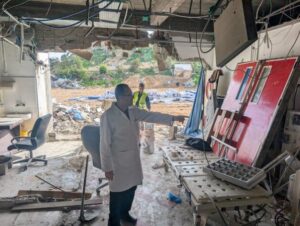
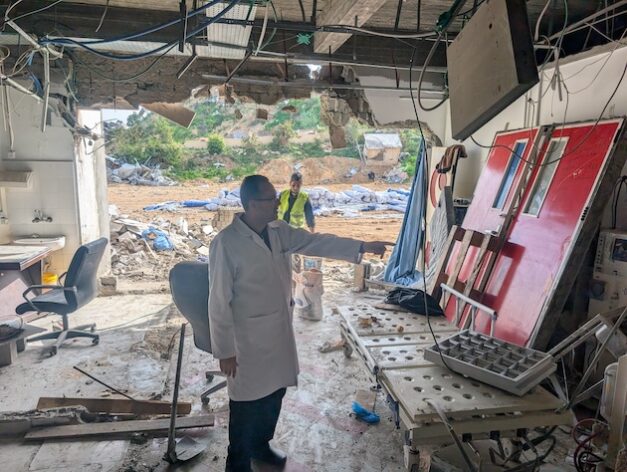
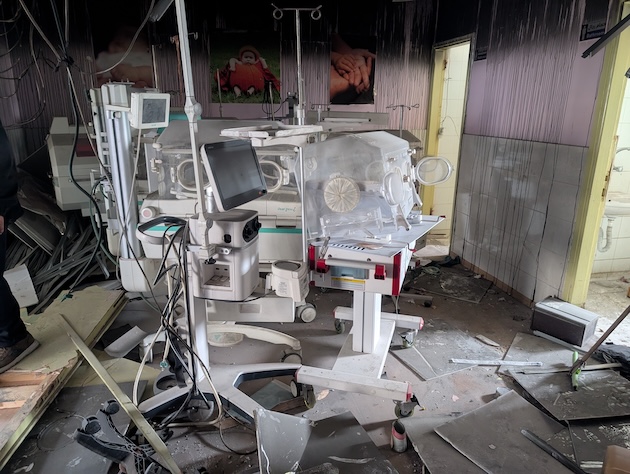
Furthermore, the widespread destruction of hospitals and the immense number of traumatic injuries from Israeli attacks have overwhelmed hospitals and healthcare centers across Gaza, leading to the collapse of the healthcare system. The siege has led to severe shortages in fuel and electricity, while also causing the looting and damaging of life-saving medical supplies and medications. As a result, patients with chronic illnesses and infections from diseases have been deprioritized, leading to a sharp increase in the number of preventable deaths and complications. Medical experts told the Commission that the targeting of healthcare facilities has severely restricted access to care for thousands of Palestinians, with children being among the most affected.

According to the report, between October 2023 and July 2025, approximately 53,000 Palestinians in Gaza were killed as a direct result of Israeli military operations. The Commission reports that Palestinians in Gaza were also attacked in their homes, in hospitals, as well as shelters, such as schools and religious sites. Israeli forces also repeatedly targeted journalists, healthcare personnel, humanitarian workers, and other protected individuals, sometimes even during ceasefire periods and without warning.

The report also documents Israeli forces targeting Palestinians in evacuation routes and designated safe zones, finding that women and children were most often directly targeted and killed, often while alone and in areas not experiencing active hostilities. In every case reviewed, the Commission found that Israeli forces were aware of civilians’ presence but opened fire regardless. Many of the victims were children carrying makeshift white flags , including toddlers who were reportedly shot in the head by snipers.

Furthermore, the report underscores that the Gaza Humanitarian Foundation (GHF) was largely ineffective in providing direct relief to struggling Palestinians and has been linked to a surge in civilian deaths. As of July 31, at least 1,373 Palestinians had been killed while trying to access food, with 859 killed near GHF sites and 514 along convoy routes—with most fatalities attributed to the Israeli military.

Furthermore, Israeli forces have effectively hindered humanitarian operations through routine bombardments and shellings. From October 2023 to July 2025, the Commission recorded at least 48 staff and volunteers from the Palestine Red Crescent Society (PRCS) that were killed. Additionally, medical personnel also informed the Commission that Israeli forces deliberately shelled ambulances, with many workers stating that they believed that they had been intentionally targeted.

The Commission also found that Israel weaponised the withholding of life-sustaining necessities, such as food, water, fuel, and humanitarian aid, leading to a sharp increase in preventable civilian deaths. According to the report, families in Gaza have less than one liter of water per person per day for drinking, cooking, and hygiene, which is far below international minimum standards for daily water consumption.

Moreover, water shortages have led to a deterioration of the sanitation system, which is particularly pronounced in displacement camps, where nearly 400,000 kilograms of waste piles up each day. This has led to the rampant spread of infectious diseases such as Hepatitis A.

Additionally, more than ninety percent of the population in Gaza has faced acute food insecurity since October 2023, with the most severe cases being concentrated in northern Gaza. According to figures from the Integrated Food Security Phase Classification (IPC), as of July 2025, food consumption has fallen far below the famine threshold in most areas of the enclave and malnutrition has reached the famine threshold in Gaza City.

The report found that Israeli forces were responsible for deliberately starving and depriving civilians in Gaza of resources that are paramount for human survival, with PRCS stating that Gaza is “unable to sustain life in its current state as civilians find their basic needs unmet”.

The Commission warns that the near-total impunity that Israeli forces and officials have emboldened the continuation of atrocities in Gaza, with global pressure mounting from the international community which urgently calls for an immediate de-escalation of hostilities, unimpeded humanitarian access, and credible mechanisms to hold perpetrators accountable.

“The international community cannot stay silent on the genocidal campaign launched by Israel against the Palestinian people in Gaza. When clear signs and evidence of genocide emerge, the absence of action to stop it amounts to complicity,” said Pillay. “Every day of inaction costs lives and erodes the credibility of the international community. All States are under a legal obligation to use all means that are reasonably available to them to stop the genocide in Gaza,” she added.

Following the report’s release, the leaders of twenty aid agencies working in Gaza, including Oxfam International, CARE and Médecins Sans Frontières (MSF), issued a joint statement also urging member states to take action to “prevent the evisceration of life in the Gaza Strip”.

“All parties must disavow violence against civilians, adhere to international humanitarian law and pursue peace. States must use every available political, economic, and legal tool at their disposal to intervene. Rhetoric and half measures are not enough. This moment demands decisive action,” the statement reads.

“The UN enshrined international law as the cornerstone of global peace and security. If Member States continue to treat these legal obligations as optional, they are not only complicit but are setting a dangerous precedent for the future. History will undoubtedly judge this moment as a test of humanity. And we are failing. Failing the people of Gaza, failing the hostages, and failing our own collective moral imperative.”

IPS UN Bureau Report

  Source

Struggle For Water Continues Following Israeli Attacks on Lebanon

Armed Conflicts, Civil Society, Development & Aid, Editors’ Choice, Featured, Headlines, Health, Human Rights, Humanitarian Emergencies, Middle East & North Africa, Sustainable Development Goals, TerraViva United Nations

Water & Sanitation

Damage to the water tank at the Maisat water pumping station. Credit: WaSH Sector Lebanon

Damage to the water tank at the Maisat water pumping station.
Credit: WaSH Sector Lebanon

BRATISLAVA, Sep 17 2025 (IPS) – Just under a year into a fragile ceasefire, 150,000 people in southern Lebanon continue to deal with the potentially lethal aftermath of Israeli bombing, highlighting the devastating long-term effects of conflict.


A report published late last month (AUG) by Action Against Hunger, Insecurity Insight, and Oxfam said that at least 150,000 people remain without running water across the south of Lebanon after Israeli attacks had damaged and destroyed swathes of water sanitation and hygiene (WASH) facilities since the beginning of the conflict in Lebanon.

The report, When Bombs Turn the Taps Off: The Impact of Conflict on Water Infrastructure in Lebanon, laid bare both the immediate and long-term effects of repeated attacks on Lebanese water infrastructure between October 2023 and April 2025.

It said that more than 30 villages were without any connection to running water, leading to long-term disruption to supplies of fresh water, fueling dependence on water trucking that many people cannot afford and, according to the World Bank, losses estimated at USD171 million across the water, wastewater and irrigation sectors.

A severe rainfall shortage in recent months has exacerbated the problem, increasing risks of outbreaks of waterborne diseases as  vulnerable communities are forced to resort to utilizing unsafe or contaminated water sources for their daily needs.

But groups behind the report warn that without mitigating action, the situation could become even worse.

“We can see there is the potential for some severe long-term repercussions of these attacks. There are 150,000 people without running water at the moment, but that number could rise in the future,” Suzanne Takkenberg, Action Against Hunger’s country director, told IPS.

Among the groups’ biggest concerns is the effect of the destruction on local agriculture.

In villages near the southern Lebanese border, farmers’ irrigation networks have been destroyed, cutting off vital water supplies to farms. Trucked-in water supplies have not been sufficient to replace this and allow them to irrigate land or give drinking water to their livestock, farmers say.

Meanwhile, farmers have also been unable to access their land due to security concerns—a November ceasefire between Israel and Hezbollah has held only partly, with violations reported regularly—compounding problems with food production.

“One of our major worries is the mid- to long-term effects of the difficulties for farmers to irrigate their land,” explained Takkenberg.

“They have been struggling to irrigate their land since October 2023, due to security concerns hindering access to their land, as well as water problems. We have seen as a consequence of these attacks that food prices have increased and food productivity has decreased.”

Another concern is the growing reliance on trucked-in water for communities.

“Worryingly, people are becoming dependent on using water that is trucked in. This is sometimes ten times more expensive than using water from a public network, and the checks on that water are not the same as those carried out on public water supply networks,” said Takkenberg.

“Water quality after any kind of conflict is a concern and we are definitely worried about it in southern Lebanon after these attacks,” she added.

Illness and disease related to water quality and shortages are major concerns.

Destroyed water pumping station in Tyre following an airstrike in November 2024.Credit: Insecurity Insight

A destroyed water pumping station in Tyre, Lebanon, following an airstrike in November 2024.
Credit: Insecurity Insight

While the report states that waterborne and water-related illnesses were not reported by people interviewed, some highlighted the limited resources available for testing water quality and possible contamination. There are also worries that water may have been contaminated by white phosphorus, the use of these munitions in Lebanon having been verified by Human Rights Watch.

Meanwhile, there are further concerns that residents may resort to using unsafe water sources due to limited supplies, a situation exacerbated by low rainfall and water shortages at critical reservoirs.

Local officials interviewed for the report also highlighted damage to sewerage networks in some areas. This, combined with the known large-scale damage to water infrastructure and the possibility that damaged sewerage infrastructure has contaminated water sources, ramps up the potential of negative long-term effects on health if the water supply crisis is not adequately addressed, the report states.

It also points to evidence from Ethiopia, Ukraine and the Middle East, demonstrating clear links between damage to water and sanitation infrastructure during conflict and adverse public health outcomes.

“People are cutting back on their water use, which can have an effect on health and hygiene and raises disease risk—cholera is already epidemic in Lebanon and this situation could exacerbate that. Other diseases could also be spread. We have already seen cases of watery diarrhea, which is bad not just in itself, but also because in children it can cause problems with malnutrition as their bodies struggle to absorb nutrients,” Takkenberg said.

But while the potential long-term impact of the damage and destruction to water infrastructure is severe, early action could mitigate the worst possible outcomes, experts say.

“There is an urgent need to repair systems and while this is ongoing, to track water into the area. The consequences of water system destruction are rarely immediate. Most often, the impacts accumulate over time. It is the combination of destroyed infrastructure with the failure to repair it, insufficient water trucking, or lack of access to trucked-in water that eventually produces devastating outcomes for individuals and communities,” Christina Wille, Director of Insecurity Insight, told IPS.

“This is why the destruction of infrastructure demands close attention: if not effectively mitigated, cascading consequences are inevitable. People may be forced to leave, adding to the numbers of displaced populations, or they may fall ill. Yet there is also an opportunity—by addressing damaged infrastructure early—to prevent the worst outcomes of displacement and disease and to save lives,” she added.

But while repairing and rebuilding water infrastructure is essential to preventing the most severe long-term impacts on local communities, implementing it is a different matter.

Authorities have managed to carry out some limited repairs to some networks, but issues around the continued presence of Israeli forces and concerns about ongoing conflict violence have prevented wider-scale or more extensive reconstruction. Finances for repairs are also under strain amid the socio-economic crisis the country has faced since 2019.

“Disease outbreaks are very predictable and the cost of not dealing with them is much worse than dealing with them now. The health ministry has been good in warning [of potential health risks] but there is a limit to what the government can do with the resources that are available after years of economic crisis. It is a very difficult situation,” said Takkenberg.

The report ends with a call for, among others, all parties to the conflict to strictly comply with the ceasefire agreement and adhere to international humanitarian law (IHL) and ensure the protection of civilians, health workers, and essential infrastructure.

It urges humanitarian programmers and donors to support the rehabilitation and operationalization of conflict-affected water infrastructure and ensure temporary access to safe water and basic sanitation services through the provision of water trucking, emergency water points, and safe wastewater discharge.

The report also says UN member states should push for the establishment of independent, impartial, and transparent investigations into all allegations of IHL violations.

Satellite imagery shown in the report indicates that in at least several incidents the damaged or destroyed facilities were located in large open areas without clearly identifiable military targets, suggesting that in some cases they may have been specifically and deliberately targeted.

The authors of the report point out that under IHL, parties to a conflict must always distinguish between lawful military targets and civilians and civilian objects and that deliberately targeting civilians and civilian objects is prohibited and amounts to a war crime. The various kinds of water infrastructure are protected as civilian objects under IHL and must never be attacked.

“Determining whether each incident deliberately targeted water infrastructure would require access to confidential military decisions, which is not available, as well as information on whether any military objectives were present at the time of the attacks. Our data is limited to the observable effects on the ground following the attacks. Nevertheless, the scale and nature of the observed damage raise serious questions regarding compliance with international humanitarian law, which governs the conduct of hostilities,” said Wille.

While it may not be possible to determine whether the attacks were deliberate, their impact is clear and highlights the need to look at not just the direct but also indirect effects of conflict, said Wille.

“Conflict deaths are not only direct (caused by weapons) but also indirect, when the destruction of systems produces cumulative and deadly consequences. The more complex and interconnected our societies become, particularly in securing food and water, the more vulnerable they are to such systemic shocks. At the same time, it becomes harder to trace devastating outcomes back to a single act of destruction.

“This is why we must learn to examine conflicts through the lens of systems and interconnectivity and to apply this knowledge to our legal analysis of the conduct of warfare,” she said.

“The public needs to ask more direct questions about the conduct of warfare and how the principles of distinction, proportionality, and precaution are being applied. We need a broader debate on how these principles should be interpreted in today’s conflicts. Modern societies rely on highly interconnected and complex infrastructure to secure basic needs such as food and water, while warfare is increasingly conducted remotely through advanced technologies. In this context, what counts as proportional? And what kinds of precautions are necessary in today’s world?” she added.

IPS UN Bureau Report

  Source

‘Israeli Offensive in Gaza City an Existential Threat to the Two-State Solution’

Armed Conflicts, Crime & Justice, Editors’ Choice, Featured, Freedom of Expression, Headlines, Human Rights, Humanitarian Emergencies, International Justice, Middle East & North Africa, Press Freedom, Sustainable Development Goals, TerraViva United Nations

Armed Conflicts

As Israel escalates its attack on Gaza City, the UN moves to stop further violence and humanitarian violations by renewing UNIFIL’s mandate for the last time.

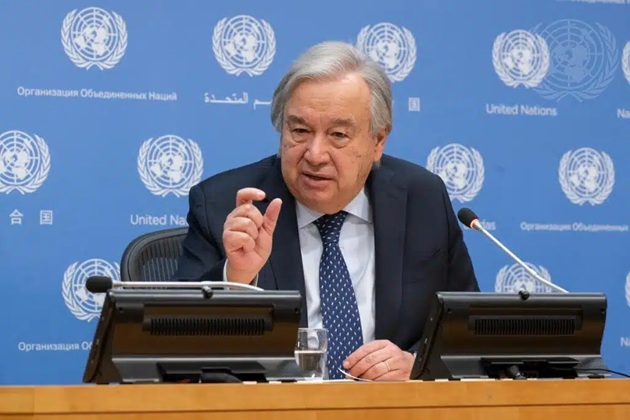
United Nations Secretary-General António Guterres at a press briefing on Israel’s plans to take over Gaza City. Credit: Jennifer Xin-Tsu Lin Levine/IPS

United Nations Secretary-General António Guterres at a press briefing on Israel’s plans to take over Gaza City. Credit: Jennifer Xin-Tsu Lin Levine/IPS

UNITED NATIONS, Aug 28 2025 (IPS) – Ahead of the Security Council meeting on the situation in the Middle East, United Nations Secretary-General António Guterres spoke to the press on the “unfolding tragedy that is Gaza,” calling Israel’s new plans to take over Gaza City with the military a “deadly escalation” and an “existential threat to the two-state solution.”


He warned that such a move could precipitate an unprecedented humanitarian catastrophe that imperiled any remaining prospects for negotiated peace.

The Secretary-General also reiterated his plea for an immediate ceasefire, emphasizing that capturing Gaza City would result in massive civilian casualties and widespread destruction—including severe impacts on the health sector already teetering on collapse.

At the daily press briefing, spokesperson for the Secretary-General Stéphane Dujarric reported on the displacement in Gaza since Israel’s most recent invasion, confirming the Secretary-General’s statements about refugees. UN experts report that the total number of people who have fled from north Gaza to south Gaza since August 14, when the Israeli invasion was announced, is 20,000.

The Secretary-General went on to address the most recent Israeli air strike on the Nasser Hospital in the southern Strip of Gaza, where at least 20 people were killed and 50 others were injured. Israel’s military defended the strike by asserting that it targeted a camera used by Hamas to surveil troop movements.

Dorothy Shea, United States ambassador to the United Nations, defended Israeli actions and urged condemnation of Hamas’ use of civilian facilities for military purposes. She also noted the Hamas members killed by the airstrike.

Prime Minister Benjamin Netanyahu issued a statement calling the strike a “tragic mishap” with no mention of a specific Hamas target. The Secretary-General called for an impartial investigation into these contrasting claims.

Although Netanyahu reaffirmed his respect for journalists on X, formerly known as Twitter, UNESCO reported at least 62 journalists and media workers killed in Palestine while working since October 2023. At least five journalists were killed in the Nasser air strike, according to World Health Organization Director Tedros Adhanom Gebreyesus.

At the Security Council meeting debating whether or not to renew the mandate for the United Nations Interim Force in Lebanon (UNIFIL), many representatives acknowledged Israel’s current military action and called UNIFIL’s work “vital” in maintaining borders, minimizing conflict and stabilizing tensions.

The representative for Algeria Amar Bendjama was critical of UNIFIL’s failures, but spoke in favor of the renewal. He said, “We must ask, has UNIFIL fulfilled its mandate? Clearly, the answer is no. Lebanese lines remain under Israeli occupation, and we regret that our proposal to include a clear reference to the 1949 general armistice agreement was not retained. Without ending Israel’s occupation of Arab lands, peace and stability in the region will remain elusive.”

UNIFIL was initially created in 1978 to oversee Israeli withdrawal from Lebanon. The mandate was adjusted and has played a significant role in maintaining Lebanese army control on the border between Lebanon and Israel rather than Hezbollah, a paramilitary organization, taking over. Critics, led by the United States, see the mandate as a waste of money that has helped Hezbollah consolidate power.

Dujarrac emphasized the necessity of all participating parties to respect UNIFIL’s mandate for it to successfully fulfill its promises.

The Council ultimately voted to renew UNIFIL’s mandate, with many members stressing that the mission continues to play an important role in preventing further escalation along the Israel-Lebanon border.

Guterres’s warnings on Gaza and the debate over UNIFIL underscored the overlapping crises in the region that face the Security Council.

As displacement in Gaza mounts and humanitarian needs continue to fester, UNIFIL’s renewal has bought time rather than answers for a region caught between humanitarian crisis and unresolved conflict.

IPS UN Bureau Report

  Source

Southern Voices: Grief, Resilience, and Daily Life in Jnoub

Armed Conflicts, Civil Society, COP29 Blog, Disaster Management, Editors’ Choice, Featured, Headlines, Human Rights, Humanitarian Emergencies, Middle East & North Africa, TerraViva United Nations

Armed Conflicts

Morning after an Israeli attack in Tyre, Lebanon. Credit: Nour

JNOUB, Lebanon, Aug 15 2025 (IPS) – “Special, targeted operations in southern Lebanon,” a phrase that has echoed repeatedly over the past two years in Israeli Defence Force (IDF) statements. But behind these clinical military terms lies a human cost that statistics cannot capture.


The residents of southern Lebanon—mothers, fathers, children, and elders—are the ones who face the daily reality of displacement, loss, and uncertainty. Their homes become coordinates on military maps; their neighborhoods, theaters of “operations.” Yet their stories of endurance, grief, and quiet acts of resilience rarely reach beyond the headlines.

Through interviews with residents of “Jnoub,” we examine how communities are navigating displacement, processing communal loss, and finding ways to grieve while continuing to live. These are voices from a region too often reduced to geopolitical analysis, voices that reveal the profound human dimension of conflict.

“Ironically, my workplace is close to my old house’s rubble. I see it, as well as the zone where my pet died, on a daily basis. I haven’t grieved as I should… haven’t cried as much as I should have.

“I hate the sound of phone calls, especially the landlines and my father’s good old Blackberry phone, as they remind me of the time we received the threat and people were calling to warn us,” said Sarah Soueidan when asked about her daily routine after her home was destroyed.

Having both her residential house and her family’s house bombed by the Israeli Defence Forces, she and her family had to move repeatedly throughout the past two years. Her hometown, Yater, located in South Lebanon, was directly affected by the war, leaving nothing but old memories and rubble.

The night they had to flee their house in Southern Beirut, Sara and her family woke up to a series of calls while listening to the sounds of ‘warning shots’ on the streets. These shootings were made to help draw attention to residents who did not receive the warning to leave their houses and find shelter before the attack.

As it was only 10 am, they had to act fast, so she and her mother left the house first to see what was going on and then realized that their building would be hit. Sarah had to go back home to warn her father and siblings. Since there was not enough time, and her father needed assistance in movement, they had to pick him up and leave the house with as few objects as possible.

They made sure to put Halloum (Sarah’s cat) in his cage, but due to the rush and many people in the house trying to help, Halloum got scared and jumped out of his cage. Sara and her siblings tried to look for him before leaving, but there was no more time; people were dragging them out of the house. On that day, Sarah took his toys and food, hoping to find him again, but she never did. The Israeli attack on Sarah’s house in Southern Beirut reduced it to rubble.

Sarah and her family had nowhere to go as their house in their hometown, Yater, was also bombed, and they had to leave the area until things settled down.

The interview took place a while after the attack, as Sarah was now ready to talk about what happened with her and her family, stating, “While I am not politically affiliated with anyone, nor would I discuss the reasons for escalation, as it is debatable, yet aggression and terrorism would always be so, without any reason. I was born and raised in these areas and streets. None of the allegations regarding ‘weapons, machinery, or drones under a three-story building’ are true. We need answers or proof.”

Halloum the cat, lying next to a Christmas tree. Credit: Sarah Soueidan

Many neighborhoods, streets, and buildings were targeted in the process; no one knew how or why, they only received images of their building with a warning that they needed to evacuate.

“The bomb was so close and I heard the sound of the missiles just before they reached the ground (and here you didn’t know if the missile would fall on you or no) and when I heard that, I ran toward my son and hugged him, then the missile exploded. This was repeated three or four times,” said Zaynab Yaghi, who is a resident in Ansar, a village in South Lebanon. Zaynab and her family had to leave South Lebanon under stress and fear of the unknown, all while trying to control the emotions of her son in order not to scare him even more.

Zaynab, like many others, had to live under stressful conditions, waiting for the unknown. Even after the ceasefire was agreed upon, residents in Southern Lebanon were still unable to go back home or live a normal life.

“Nearby buildings were struck after the ceasefire (one as far as 100m away from our own home). We were very surprised the first time it happened and scrambled to leave. It was very frightening,” said Mohammad Wehbe, who lost his home in Ainata and his apartment in the suburbs of Beirut, which was affected by the bombing of nearby buildings.

After talking to many people from different villages and areas in South Lebanon, there was one thing that made them feel a sense of hope, and that was community, traditions, and resistance. Resistance by choosing to go back, to have a future, present, and past within their grandparents’ land, and to grieve by holding on to what was left.

When asked, Nour described her village as a step back in time, a place of simplicity, serenity, and beauty. Nature all around and people who are warm and always have their doors open for strangers. Nour’s village, which is located within the Tyre district, was directly affected by the Israeli attacks. Her old neighborhood was completely demolished, and while the streets feel empty, she is trying to visit the area as much as possible to remember, to tell the story of those forgotten, and to belong to something greater than a title.

“The first time I went in winter, it felt strange: silence and destruction. But visit after visit, nature and the people of nature try to live again. That gives me hope. We’ll be fixing our home again. What matters is that we acknowledge this land is ours. And on our land, I can sense existence.”

While Nour gets her strength from people around her and her will to go back and build her home again, some have lost it completely, as it is not black or white; there is not a single way of grieving, existing, and living within times of chaos and displacement. “What beliefs I had before the war are long gone now. I don’t think I have processed what happened and I cope by ignoring everything and focusing on survival. Hope certainly feels like a big word these days,” Mohammad Wehbe said.

Compounding these challenges is the absence of government support. None of the interviewees have received any assistance from official channels, instead relying on their savings and help from family members to survive. This reality adds another layer of uncertainty to their daily struggles, as they navigate displacement and loss without institutional backing

These stories from Southern Lebanon reveal the complexity of human resilience in the face of displacement and loss. While some find strength in community and connection to their ancestral land, others struggle with the weight of survival itself. What remains constant is the need to bear witness to these experiences, to ensure that behind every military briefing and policy discussion, the human cost is neither forgotten nor reduced to mere statistics.

The residents of Jnoub continue to navigate an uncertain future, carrying with them the memories of what was lost and the fragile hope of what might be rebuilt. Their voices remind us that recovery is not just about reconstructing buildings but about healing communities and honoring the stories of those who endure.

IPS UN Bureau Report

  Source

Women in Sudan are Starving Faster than Men; Female-Headed Households Suffer

Active Citizens, Africa, Armed Conflicts, Civil Society, Crime & Justice, Food and Agriculture, Food Security and Nutrition, Gender, Headlines, Health, Human Rights, Humanitarian Emergencies, Migration & Refugees, TerraViva United Nations

In Sudan, women-led households are three times more likely to deal with serious food insecurity compared to male-led households. Credit: UN Women Sudan

UNITED NATIONS, Aug 12 2025 (IPS) – The food crisis in Sudan is starving more day by day, yet it is affecting women and girls at double the rate compared to men in the same areas. New findings from UN-Women reveal that female-headed households (FHHs) are three times more likely to be food insecure than ones led by men.


Women and girls make up half of the starving in Sudan, at 15.3 million of the 30.4 million people currently in need. In the midst of the current humanitarian crisis brought on by the Sudanese civil war, women are increasingly seen to be leading households in the absence of men due to death, disappearances or displacement amidst the civil war, making simply living in a FHH a statistical predictor of hunger.

“With conditions now at near famine thresholds in several regions in the country, it is not just a food crisis, but a gender emergency caused by a failure of gender-responsive action,” said Salvator Nkuruniza, the UN-Women representative for Sudan.

Famine Risks for Sudan’s Women

This famine has left only 1.9 percent of FFHs food secure, compared to 5.9 percent of male-headed households (MHHs) reporting food security. 45 percent of the FHHs reported poor food consumption which was nearly double the rate as compared to MHHs at 25.7 percent. Considering this, only one third of FHHs have an acceptable diet in comparison to half of MHHs. In these worsening conditions 73.7 percent of women nationally are not meeting the minimum dietary diversity, which is limiting nutrient intake and thus endangering maternal and child health.

Rates of poor food consumption have doubled in one year across FHHs, meaning a longer drawn conflict will see even worse numbers leading to the ultimate starvation of many. Nearly 15 percent of FHHs are living in conditions that meet or are near famine thresholds compared to only 7 percent of MHHs meeting the same threshold.

With all available funding, the World Food Programme (WFP) has scaled assistance to support nearly 4 million people per month, leaving an additional 26 million people still in need of support. As one representative from the UN Office of the Coordination of Humanitarian Affairs (OCHA) told IPS, under these circumstances WFP has had to make tough calls, either shrinking assistance packages or reducing the amount of people who receive assistance. There have been cases where they have been forced to cut off all assistance in general.

Within Sudan’s civil society, women-led organizations (WLO) are playing a central role in delivering vital meals to affected groups across Sudan. Nkurunziza told IPS that “WLOS are the backbone of response in many areas,” who can access areas which the international system cannot reach. WLOs in West Kordofan are solarizing clinics, running nutrition outreach, managing mobile maternal health care, and operating informal shelters. In North Kordofan, WLOs. are running protection hotlines, distributing food, and helping displaced families find safety. Many times they are providing these services without institutional funding.

UN Women has been supporting 45 WLOs with institutional support, funding and technical assistance, which has allowed these organizations to operate across sixteen states. However, underfunding still remains a critical issue for WLOs. Nkurunziza explained how due to funding deficits, one WLO that operates across eight states was forced to shut down thirty-five of its sixty food kitchens. WLOs must also deal with serious logistical and digital constrains, making it nearly impossible to have any form of coordination meetings. Sudan is also facing the world’s largest displacement crisis, making a shrinking of operations among deteriorating consumption rates detrimental to attempts to elevate food security.

Aid Delivery Challenges

Amidst funding shortfalls, supply chains have struggled reaching critical locations due to Sudan’s size, lack of infrastructure, and weather difficulties. WFP shared that Sudan is “roughly the size of western Europe”, and as such they and other humanitarian actors are having to transport humanitarian items over 2500 kilometers across deserts and challenging terrain. They added that road infrastructure in remote areas such as Darfur and Kordofan has further increased the difficulty. The rainy season between April and October has also added further complications, which has made many roads completely flooded or impassable.

WFP said that the conflict has not only affected supply chains, but trade routes themselves. Among the besieged cities of El Fasher and Kadulgi, supplies remain limited and far and few. WFP is “extremely concerned about the catastrophic situation, especially in El Fasher and Kadulgi and urgently [needed] guarantees of safe passage to get supplies in – while we continue supporting with digital cash transfer”. This comes amidst not being able to deliver food and aid supplies by road.

Gender Disparities and Solutions

Nkurunziza told IPS that even before the conflict, women and girls “faced challenges in accessing their rights due to cultural norms and traditional practices”, adding that this conflict has only widened these gaps.

Food access is only one example of how gender inequality manifests during this crisis. Nkurunziza noted that food queues are often dominated by men compared to women from FHHs. He added that women have been “largely left out” of decision-making spaces, therefore their specific needs are “frequently overlooked”.

The search for food has caused an increase in harmful coping mechanisms like child marriage, sexual exploitation, female genital mutilation, and child labor. The nature of these harmful instances come from unchecked sexual exploitation and abuse due to the lack of law enforcement and government in many areas. Since April 2023, 1,138 cases of rape have been recorded, including 193 children. This number is expected to be even higher, as social and security fears may be preventing accurate reporting of gender-based violence crimes.

“The conflict has magnified every existing inequality,” Nkurunziza said, adding that this created the need for responsive action, moving beyond simple rhetoric.

In their report, UN Women outlined several measures that needed to be adopted in order to diminish famine conditions among women, including prioritizing food distribution and assistance planning to FHHs and establishing localized distribution sites, thus reducing movement-related risks for women. They also recommended increased representation in local aid committees and decision-making spaces by at least 40 percent. They called for increasing investment and funding to WLO’s, which are currently receiving less than 2 percent of humanitarian aid funds.

Despite these challenges, Nkurunziza said that WLOs are still working to feed families. “They are not waiting for permission — they are responding. The question is whether the system will finally recognize them as equal partners or continue to leave them behind.”

IPS UN Bureau Report


  Source

Roma’s Long Standing Exclusion Compounded As Ukraine War Continues

Armed Conflicts, Civil Society, Disaster Management, Editors’ Choice, Europe, Featured, Headlines, Human Rights, Humanitarian Emergencies, Sustainable Development Goals, TerraViva United Nations

Armed Conflicts

The home of Oksana Serhienko, Merefa village, near Kharkiv, Ukraine. Credit: Akos Stiller

The home of Oksana Serhienko, Merefa village, near Kharkiv, Ukraine. Credit: Akos Stiller

BRATISLAVA, Aug 6 2025 (IPS) – As Russian forces continue to lay waste to civilian areas of towns and cities across Ukraine, Roma in the country are struggling to access compensation to help them rebuild their damaged homes.


Russia’s relentless bombing has, according to the World Bank, left 13 percent of Ukraine’s housing damaged or destroyed, affecting over 2.5 million households.

Despite this, many Ukrainians, including Roma, have refused to leave their homes in the face of relentless bombing and instead are determined to carry on living in sometimes severely damaged homes to keep their communities alive.

But a new report has shown that many Roma—one of the most vulnerable communities in Ukraine—have been unable to access state property damage compensation: only 4 percent of Roma households surveyed successfully secured compensation for war damage, despite suffering widespread destruction.

This is because requirements for applicants mean the Roma population, whose lives were already precarious long before the war began, are being disproportionately excluded from the scheme, according to the Roma Foundation for Europe (RFE), which was behind the report.

“Many of the issues we identify [in our report] affect non-Roma applicants too—particularly in occupied or frontline areas… [but] what makes the situation more severe for Roma is the combination of these factors with long-standing exclusion and economic precarity,” Neda Korunovska, Vice President for Analytics and Results at RFE, told IPS.

As in many countries in Europe, the Roma community in Ukraine has long faced social exclusion and, many claim, systemic discrimination at societal and institutional levels.

But like the rest of Ukrainian society, they have felt the full effects of Russia’s brutal full-scale invasion over the last three and half years and many have seen their homes damaged or even destroyed.

State compensation for property damage caused by the fighting is available, but experts say there are significant barriers for claimants, some of which are specifically greater for Roma people.

These include requirements such as possession of official property documents and proof of ownership—both sometimes difficult for Roma from communities where informal housing and disputed property rights are not uncommon—as well as a need for a level of digital literacy, which can be a problem for communities where levels of digital exclusion are high, according to RFE.

The group’s analysis, based on cases across four Ukrainian regions, including Zaporizhzhia, Kryvyi Rih, Odessa and Kharkiv, shows that deeply entrenched legal, administrative, and digital hurdles are blocking Roma communities from accessing aid intended for rebuilding homes and lives, the group claims.

Zeljko Jovanovic, RFE president, said that current compensation systems, although designed for order and efficiency, often overlook those with fewer resources but no less damage, and that they lack “…the required flexibility for the complex realities of pre-war informality of homes, displacement, and occupation.”

“Many affected families cannot afford the property registration fees or the costs associated with inheritance procedures. The average damage of 2,816 Euros represents several months of pre-war salary,” he added.

RFE points out that in regions like Odesa, more than half (54 percent) of Roma families lack formal property registration, while in Kryvyi Rih, not a single claim from the surveyed households has been submitted to the state registry due to legal limbo over inheritance, missing paperwork, and lack of resources to navigate the system. Even in Zaporizhzhia, where property records are strongest, low application rates point to deep mistrust in institutions, amplified by experiences of discrimination.

Some Roma contacted for the survey said they had not even bothered to apply for compensation for fear that the government might later come and demand the money back from them.

“This is a reflection of deep institutional mistrust,” said Korunovska. “This mistrust isn’t unfounded—it’s rooted in long-standing patterns of discrimination. In previous research we have undertaken, many Roma respondents have described negative treatment by public officials when seeking housing or services. Surveys consistently show high levels of social distance between Roma and the broader population in Ukraine, which reinforces these feelings of exclusion.”

RFE points out that nationally, around 61% of submitted claims have been approved, but that among Roma, the figure was only 28%—and the vast majority (86%) of people surveyed for its report never submitted claims at all due to systemic barriers.

Liubov Serhienko, 69, has lived in her home in Merefa, near Kharkiv, for the last forty years. But it has suffered severe damage from bombings by Russian forces—during one attack the roof and some ceilings collapsed and one room is now entirely uninhabitable. During a short evacuation from the house, thieves stole her boiler, fridge, and furniture.

Her daughter, Oksana, describes how the family—three generations all living under the same roof, including Oksana and her children—is forced to use blankets to try to retain whatever heat they can in rooms now largely completely exposed to the outside because walls are no longer standing. In winter, snow blows straight into the home, she says.

While neighbors have helped with some repairs, resources are limited and the building remains in disrepair. Relying solely on her pension of 3,000 UAH (around €70) to support the household—the war has taken away all job opportunities for her and members of her family—she says all she wants is the state to help fix the roof and ceiling, as she no longer has the physical strength or finances to do it herself.

In testimony to RFE, which was passed on to IPS, Serhienko said, “What I want most right now is for my family to have a roof over their heads.”

Oksana criticizes the lack of help from the state for them and other Roma in similar situations.

“The government doesn’t care. They’ve done nothing,” she said.

Her mother goes even further, explicitly linking her experience to deliberate discrimination by authorities.

“[Just] Gypsies, they say. As if we’re not people. Maybe they don’t see us as people.”

Andriy Poliakov has stayed in his home in Andriivka in the Kharkiv region since the start of the full-scale invasion, despite the severe damage the dwelling has suffered in Russian attacks.

Windows are broken and there are cracks in the walls, as he has suffered several damages to their house, windows were broken, and there are cracks in the walls, as his house has shifted structurally due to bomb blasts. Poliakov, 45, refuses to leave his home, as he is a sole caregiver for some members of his family, even though he is disabled himself, but he says life is difficult, as they have no gas or other reliable heating source and rely on a makeshift stove he built from stone and bricks.

As with almost all of those surveyed in the RFE report, Poliakov has had no help from the state with any of the damage to his home. One of the reasons so many Roma choose not to even attempt to apply for compensation is the distrust of authorities that is widespread among communities—a distrust Poliakov shares.

“They don’t care. Even though I’m disabled and it’s on paper that I’m disabled… It doesn’t matter to them,” he said.

In the wake of its findings, RFE is calling on the Ukrainian government to integrate urgent reforms into reconstruction planning, including accepting alternative proof of ownership such as utility bills or community testimony, waiving registration fees for war-affected families, and introducing temporary ownership certificates to ensure displaced or undocumented Roma have access to compensation.

RFE says it is hoping to present its findings to government representatives in the coming weeks.

“We hope this data will serve as a constructive basis for reform, especially in light of Ukraine’s broader efforts to align with European values of fairness and accountability,” said Korunovska.

Jovanovic added that “even if full compensation isn’t possible now, temporary support is essential. Roma living in damaged homes are part of Ukraine’s strength and its resistance.”

IPS UN Bureau Report

  Source