Myanmar: International Action Urgently Needed

Armed Conflicts, Asia-Pacific, Civil Society, Crime & Justice, Featured, Headlines, Human Rights, Migration & Refugees, TerraViva United Nations

Opinion

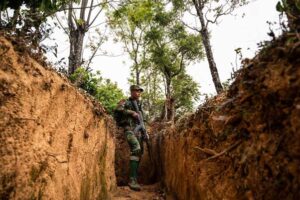
Crerdit: STR/AFP via Getty Images

LONDON, Jul 3 2024 (IPS) – Myanmar’s army, at war with pro-democracy forces and ethnic militias, must know it’s nowhere near victory. It recently came close to losing control of Myawaddy, one of the country’s biggest cities, at a key location on the border with Thailand. Many areas are outside its control.


The army surely expected an easier ride when it ousted the elected government in a coup on 1 February 2021. It had ruled Myanmar for decades before democracy returned in 2015. But many democracy supporters took up arms, and in several parts of the country they’ve allied with militia groups from Myanmar’s ethnic minorities, with a long history of resisting military oppression.

Setbacks and violence

Army morale has collapsed. Thousands of soldiers are reported to have surrendered, including complete battalions – some out of moral objections to the junta’s violence and others because they saw defeat as inevitable. There have also been many defections, with defectors reporting they’d been ordered to kill unarmed civilians. Forces fighting the junta’s troops are encouraging defectors to join their ranks.

In response to reversals, in February the junta announced it would introduce compulsory conscription for young people, demanding up to five years of military service. An estimated 60,000 men are expected to be called up in the first round. The announcement prompted many young people to flee the country if they could, and if not, seek refuge in parts of Myanmar free from military control.

There have also been reports of army squads kidnapping people and forcing them to serve. Given minimal training, they’re cannon fodder and human shields. Rohingya people – an officially stateless Muslim minority – are among those reportedly being forcibly enlisted. They’re being pressed into service by the same military that committed genocide against them.

People who manage to cross into Thailand face hostility from Thai authorities and risk being returned against their will. Even after leaving Myanmar, refugees face the danger of transnational repression, as government intelligence agents reportedly operate in neighbouring countries and the authorities are freezing bank accounts, seizing assets and cancelling passports.

Conscription isn’t just about giving the junta more personnel to compensate for its losses – it’s also part of a sustained campaign of terror intended to subdue civilians and suppress activism. Neighbourhoods are being burned to the ground and hundreds have died in the flames. The air force is targeting unarmed towns and villages. The junta enjoys total impunity for these and many other vile acts.

The authorities hold thousands of political prisoners on fabricated charges and subject them to systematic torture. The UN independent fact-finding mission reports that at least 1,703 people have died in custody since the coup, likely an underestimate. Many have been convicted in secret military trials and some sentenced to death.

There’s also a growing humanitarian crisis, with many hospitals destroyed, acute food shortages in Rakhine state, where many Rohingya people live, and an estimated three million displaced. Voluntary groups are doing their best to help communities, but the situation is made much worse by the military obstructing access for aid workers.

International neglect

In March, UN human rights chief Volker Türk described the situation in Myanmar as ‘a never-ending nightmare’. It’s up to the international community to exert the pressure needed to end it.

It’s by no means certain the military will be defeated. Adversity could lead to infighting and the rise of even more vicious leaders. One thing that could make a decisive difference is disruption of the supply chain, particularly the jet fuel that enables lethal airstrikes on civilians. In April, the UN Human Rights Council passed a resolution calling on states to stop supplying the military with jet fuel. States should implement it.

Repressive states such as China, India and Russia have been happy enough to keep supplying the junta with weapons. But democratic states must take the lead and apply more concerted pressure. Some, including Australia, the UK and USA, have imposed new sanctions on junta members this year, but these have been slow in coming and fall short of the approach the Human Rights Council resolution demands.

But the worst response has come from the Association of Southeast Asian Nations (ASEAN). Ignoring reality and civil society’s proposals, ASEAN has stuck to a plan it developed in April 2021 that simply hasn’t worked. The junta takes advantage of ASEAN’s weakness. It announced compulsory conscription shortly after a visit by ASEAN’s Special Envoy for Myanmar.

ASEAN’s neglect has allowed human rights violations and, increasingly, transnational organised crime to flourish. The junta is involved in crimes such as drug trafficking, illegal gambling and online fraud. It uses the proceeds of these, often carried out with the help of Chinese gangs, to finance its war on its people. As a result, Myanmar now ranks number one on the Global Organized Crime Index. This is a regional problem, affecting people in Myanmar’s neighbouring countries as well.

ASEAN members also have an obligation to accept refugees from Myanmar, including those fleeing conscription. They should commit to protecting them and not forcing them back, particularly when they’re democracy and human rights activists whose lives would be at risk.

Forced conscription must be the tipping point for international action. This must include international justice, since there’s none in Myanmar. The junta has ignored an order from the International Court of Justice to protect Rohingya people and prevent actions that could violate the Genocide Convention, following a case brought by the government of The Gambia alleging genocide against the Rohingya. The UN Security Council should now use its power to refer Myanmar to the International Criminal Court so prosecutions of military leaders can begin.

China and Russia, which have so far refused to back calls for action, should end their block on Security Council action, in the interests of human rights and to prevent growing regional instability.

Andrew Firmin is CIVICUS Editor-in-Chief, co-director and writer for CIVICUS Lens and co-author of the State of Civil Society Report.
  Source

Thailand’s LGBTQI+ Rights Breakthrough

Asia-Pacific, Civil Society, Featured, Gender, Headlines, Human Rights, LGBTQ, TerraViva United Nations

Opinion

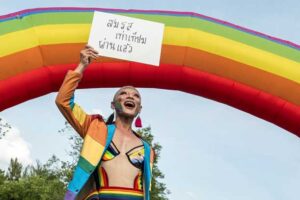
Credit: Chanakarn Laosarakham/AFP via Getty Images

MONTEVIDEO, Uruguay, Jun 27 2024 (IPS) – At the height of 2024 Pride season, decades of civil society campaigning came to fruition in Thailand. With 130 votes for and only four against, on 18 June the Senate passed the Marriage Equality Bill. With a few strokes of the pen, the bill tweaked the language of the Civil and Commercial Code, replacing gendered references such as ‘man’ and ‘woman’ with gender-neutral ones such as ‘persons’ and ‘spouses’. It now goes for formal assent to King Maha Vajiralongkorn and will take effect 120 days after publication in the official bulletin.


This means equal marriage is now recognised in 37 countries. Recent progress has seen Estonia become the first post-Soviet state to join the ranks in 2023, and Greece the first majority-Orthodox Christian country to do so in early 2024. Thailand is the first country in Southeast Asia and the third in Asia, following Taiwan and Nepal, to recognise the right to marry and all associated rights for same-sex couples.

SAME-SEX MARRIAGE AROUND THE WORLD

The long road to equality

With its vibrant LGBTQI+ culture, Thailand has long been advertised as ‘an exceptional destination for gay travellers’. But things weren’t quite so good for local LGBTQI+ people, whose identities and relationships lacked legal recognition and associated rights.

Civil society worked to change that. Efforts to advance the rights of same-sex couples in Thailand date back at least as far as 2011.

The first shift came in 2012, when the government began to consider some kind of recognition for same-sex relations. In 2013 it drafted a civil partnership bill with bipartisan support, but progress stalled under the military government formed as a result of a 2014 coup.

The country remained under military rule until mid-2019, but rather than stopping, LGBTQI+ activism gained strength by connecting with the country’s youthful and outspoken movement for democracy. In 2017, a petition calling for the recognition of civil partnerships gathered over 60,000 signatures. The government responded by preparing a draft bill and holding public hearings where it received overwhelming public support. But by mid-2020, the bill – which activists criticised for not ensuring the same rights as marriage – died in parliament.

When youth-led protests for democratic change erupted in 2020, their demands included LGBTQI+ rights and led to the development of a new bill that was eventually introduced but failed to pass before parliament was dissolved ahead of a general election in May 2023.

LGBTQI+ activists also took to the courts, but received a setback. In 2021, in response to a petition filed by two LGBTQI+ people seeking to get married, the Constitutional Court ruled that the section of the Civil and Commercial Code that defined marriage as being between a man and a woman was constitutional. LGBTQI+ activists were particularly unhappy with the court’s sexist and demeaning language.

Cultural and political battles

Longstanding efforts to normalise the presence of LGBTQI+ people and shift conservative narratives produced high levels of acceptance and support for LGBTQI+ rights. Thailand ranks 44 out of 196 countries in Equaldex’s Equality Index, which rates countries according to their LGBTQI+-friendliness. But unlike most other countries, it places higher for public attitudes than for its laws.

This meant Thai LGBTQI+ activists were able to use the broadly favourable climate of opinion to pressure politicians. They turned LGBTQI+ rights into a bandwagon politicians wanted to join for political gain. As a result, some of the major parties competing in the 2023 election campaigned on pledges to push for marriage equality. This included the progressive Move Forward party, which won the most seats.

But military-appointed senators stopped Move Forward forming a government, and instead Pheu Thai Party, a populist party twice deposed in military coups, formed a coalition with military-aligned parties – not the outcome young democracy activists had hoped for. Still, the new prime minister, Srettha Thavisin, had also promised to send a bill to parliament.

He still took his time, and LGBTQI+ activists gave him the push he needed. By early September 2023, when the new government was sworn in, the Rainbow Coalition for Marriage Equality had collected over 362,000 signatures in support of marriage equality. Srettha sent the bill to parliament in November, and in December debate started on the government’s bill plus three other versions submitted by other parties and civil society.

The House of Representatives passed all four bills with an overwhelming majority, then formed a committee to merge them into one, and passed the combined bill with near unanimity. The Senate completed the process on 18 June.

What – and where – next

The Marriage Equality Bill recognises rights in relation to inheritance, adoption and healthcare decisions. But beyond these direct effects, activists expect it to have powerful indirect impacts, sending a message of acceptance and encouraging younger LGBTQI+ people to come out and lead full lives free of discrimination and violence.

Now marriage equality has been achieved, LGBTQI+ activism is turning to the next big issue – trans rights. Despite playing a prominent role in entertainment, transgender people in Thailand face steep barriers, particularly in employment. They have few legal protections against discrimination, and those that exist aren’t fully enforced. They’re unable to obtain legal documents that reflect their gender identity, and what few rights they have in this regard depend on bureaucratic discretion. To change this, LGBTQI+ activists will keep campaigning for a Gender Recognition Bill.

The significance of the change achieved in Thailand, and the further change that seems sure to come, extends far beyond the country’s borders. Most countries in the region don’t recognise same-sex marriage, and some, including Brunei, Malaysia and Myanmar, still severely criminalise same-sex relations.

Thai activists believe their success can both bring further change at home and set an example for other countries to follow. Given what they’ve achieved, they have every reason for hope.

Inés M. Pousadela is CIVICUS Senior Research Specialist, co-director and writer for CIVICUS Lens and co-author of the State of Civil Society Report.

  Source

New Caledonia: Time to Talk about Decolonisation

Asia-Pacific, Civil Society, Crime & Justice, Economy & Trade, Featured, Global, Headlines, Human Rights, Indigenous Rights, Inequality, Natural Resources, TerraViva United Nations

Opinion

Credit: Alain Pitton/NurPhoto via Getty Images

LONDON, Jun 20 2024 (IPS) – The violence that rocked New Caledonia last month has subsided. French President Emmanuel Macron has recently announced the suspension of changes to voting rights in the Pacific island nation, annexed by his country in 1853. His attempt to introduce these changes sparked weeks of violence.


Colonial legacies

Scattered around the world are 13 territories once part of the French Empire that haven’t achieved independence. Their status varies. Some, such as Guadeloupe and Martinique, have the same legal standing as French mainland regions. Others have more autonomy. New Caledonia is in a category of its own: since the 1998 Nouméa Accord, named after New Caledonia’s capital, France agreed to a gradual transfer of power. Currently, France determines New Caledonia’s defence, economic, electoral, foreign and migration policies.

The Accord came in response to a rising independence movement led by Kanak people, the country’s Indigenous inhabitants. Kanaks make up around 40 per cent of the population, with the rest being people of European descent and smaller groups of Asian, Oceanian and mixed heritage. Kanaks experienced severe discrimination under French colonial rule, and for a period were confined to reservations.

An independence movement formed after a fresh wave of Europeans arrived in the 1970s to work in the nickel-mining industry. New Caledonia is the world’s fourth-largest producer of nickel, a key ingredient in stainless steel and, increasingly, electric vehicle batteries. The nickel boom highlighted the divide in economic opportunities. Unrest lead to worsening violence and, eventually, the Nouméa Accord.

A downturn in the industry has deepened economic strife, exacerbating the poverty, inequality and unemployment many Kanaks experience. Today, around a third of Kanaks live in poverty compared to nine per cent of non-Kanaks.

Multiple referendums

The Accord created different electoral rolls for voting in mainland France and in New Caledonian elections and referendums, where the roll is frozen and only people who lived in the country in 1998 and their children can vote. These limitations were intended to give Kanak people a greater say in three independence referendums provided for in the Accord.

Referendums took place in 2018, 2020 and 2021, and the pro-independence camp lost every time. The 2020 vote was close, with around 47 per cent in favour of independence. But the December 2021 referendum was held amid a boycott by pro-independence parties, which called for a postponement due to the COVID-19 pandemic: an outbreak that began in September 2021 left 280 people dead, most of them Kanak. Independence campaigners complained the vote impinged on traditional Kanak mourning rituals, making it impossible to campaign.

Almost 97 per cent of those who voted rejected independence, but the boycott meant only around 44 per cent of eligible people voted, compared to past turnouts of over 80 per cent.

France viewed this referendum as marking the completion of the Nouméa Accord. Macron made clear he considered the issue settled and appointed anti-independence people to key positions. The independence movement insisted that the vote, imposed by France against its wishes, wasn’t valid and another should be held.

Since the Accord was agreed, the far right has risen to prominence in France, as seen in the recent European Parliament elections. French politics and its politicians have become more racist, with mainstream parties, including Macron’s, tacking rightwards in response to the growing popularity of the far-right National Rally party. The ripple effect in New Caledonia is growing polarisation. As French politicians have promoted a narrow understanding of national identity, New Caledonia’s anti-independence movement has become more emboldened.

China’s push for closer ties with Pacific countries has also raised Oceania’s strategic importance. The US government and its allies, including France, have responded by paying renewed attention to a long-neglected region. France may be less willing to tolerate independence than before, particularly given the growing demand for electric vehicles.

State of emergency

The immediate cause of the protests was the French government’s plan to extend the franchise to anyone who has lived in New Caledonia for more than 10 years. For the independence movement, this was a unilateral departure from the Nouméa Accord’s principles and a setback for prospects for decolonisation and self-determination. Tens of thousands took part in protests against the change, approved by the French National Assembly but pending final confirmation.

On 13 May, clashes between pro-independence protesters and security forces led to riots. Rioters burned down hundreds of buildings in Nouméa. Communities set up barricades and people formed defence groups. Eight people are reported to have died.

France declared a state of emergency and brought in around 3,000 troops to suppress the violence, a move many in civil society criticised as heavy-handed. French authorities also banned TikTok. It was the first time a European Union country has made such a move, potentially setting a dangerous precedent.

Dialogue needed

Macron, who paid a brief visit once violence had subsided, has said the electoral changes will be suspended to allow for dialogue. His decision to gamble on early elections in France in the wake of his European election defeat has bought him some time.

This time should be used to build bridges and address the evident fact that many Kanak people don’t feel listened to. This goes beyond the question of the franchise. There are deep and unaddressed problems of economic and social exclusion. Many of those involved in violence were young, unemployed Kanaks who feel life has little to offer.

As a consequence of recent developments, New Caledonia is now more divided than it’s been in decades. The question of independence hasn’t been settled. Many Kanak people feel betrayed. For them, before there can be any extension of the franchise, France must agree to complete the unfinished process of decolonisation.

Andrew Firmin is CIVICUS Editor-in-Chief, co-director and writer for CIVICUS Lens and co-author of the State of Civil Society Report.

  Source

Sawantwadi’s Traditional Handmade Toys Struggle for Survival

Arts, Asia-Pacific, Civil Society, Cooperatives, Development & Aid, Economy & Trade, Editors’ Choice, Environment, Featured, Headlines, Natural Resources, TerraViva United Nations, Trade & Investment

Arts

Shashikant Rane with his wooden fruits. Credit: Rina Mukherji/IPS

Shashikant Rane with his wooden fruits. Credit: Rina Mukherji/IPS

PUNE, Jun 14 2024 (IPS) – Sawantwadi in Maharashtra, on the western coast of India, bordering Goa, has always been known for its wooden toys. A picturesque town amid hills and lush greenery, Sawantwadi retains an old-world charm to this day.  The regal Sawantwadi Palace holds pride of place, with colleges, schools, and temples cloistered around the periphery of the lake, which was once an extension of the royal grounds.  In the centre of the town is the Ubha Bazaar, or Hanging Market, which houses rows of shops selling the iconic wooden toys that are a hallmark of Sawantwadi.


The wooden toys of Sawantwadi are a legacy that the previous rulers nurtured, and they reflect the spirit of the area. Generations of children in Maharashtra and Goa have grown up playing with the life-like depictions of fruits, people, and the pull-along toys that were a necessary part of growing up. But today, these painstakingly carved, hand-made toys made of Pongamia and mango wood are struggling for survival. The once-bustling hilltop market in downtown Sawantwadi, known as Ubha Bazaar (Hanging Market), is now a ghost of what it once was. The artisan families who manufactured and sold these toys from their workshops-cum-homes are now reduced to a handful.

So, what caused the busy hands of these artisans to fall silent?

By the looks of it, several factors are responsible.

Female musicians in concert. Credit: Rina Mukherji/IPS

Female musicians in concert. Credit: Rina Mukherji/IPS

Backgrounder

Unlike the cheap machine-made toys that flood the market today, toys are a traditional craft in India, commanding a hoary lineage from the era of the Indus Valley civilization. Like many other centers in India, Sawantwadi always boasted gifted artisans capable of painstakingly breathing life into wood and carving out an array of life-like figures inspired by everyday life. Over the decades, the life-like depiction of fruits and vegetables was always been a specialty of Sawantwadi craftsmen. Of course, there were other toys too, for every age group of children: pull-along toys for toddlers, kitchen sets for little girls, bullock carts and other vehicles for bigger children, as well as spoons, cutters, and ladles used in the kitchen. What always made these toys stand out was the environment-friendly techniques and colors that were used to produce them.

Toy-making in Sawantwadi had its origins in the arrival of  Telangana Brahmins in the 17th century, who visited the kingdom to take part in religious debates with the then ruler, Khem Sawant II, who was extremely well-versed in Hindu religious scriptures and philosophy. The Chitrali artisans who arrived with the Brahmins brought the craft of toy-making and ganjifa (playing cards) to Sawantwadi.

Ideally suited to the greenery and scenic landscape of Sawantwadi, toy-making here made use of Pongamia and mango wood, which thrived in the thick forests here. The wood used for the toys would be collected in the summer and, after being washed and dried, left out to get thoroughly soaked during the entire monsoon. After thorough drying, they would be carved as per the desired shape. Once the toys were carved out, they would be covered with five layers of earth and left aside for a certain period of time. The lathe would then be used in this stage to impart the desired shape and finish. They would be painted with a powdery mixture made of tamarind and other seeds once dusted off and smoothed with sandpaper. After applying several coats of paint, a coat of lacquer and natural gum would add the finishing touches.  To this day, the lacquer used in Sawantwadi toys is their special feature. It is durable and never fades or chips away, no matter how roughly the toys are used. When toy-making was on the verge of fading out at one point in time, the local royal family gave it an impetus in the early 1970s. Primarily responsible for this shot in the arm were the Queen, Maharani Satvashila Devi and her husband, the reigning king, Rajesaheb Khem Sawant VI, Lt Colonel Shivram Sawant Bhonsale. The reigning royal family also set up a workshop to make hand-painted ganjifa cards at the palace, which is functional to this day.

Sawantwadi Palace grounds. Credit: Rina Mukherji/IPS

Sawantwadi Palace grounds. Credit: Rina Mukherji/IPS

Difficulties in Procuring Inputs

Historically, Sawantwadi was a vassal state of the mighty Maratha empire. When the British defeated the Marathas, Sawantwadi continued to exist as a small principality with a benign ruler during the British Raj.  The erstwhile British Resident’s home in downtown Sawantwadi, at a stone’s throw from the Palace, testifies to those bygone days. The early years of the 20th century saw Sawantwadi thrive in matters of education and culture, with the rulers also making efforts to nurture traditional crafts and artisans.

In recent times, however, deforestation has made it difficult to get adequate supplies of pangara (Pongamia) wood, while mango is not suitable for products that need the lathe machine.  Artisans have now turned to Acacia, Shivan (Gmelina Arborea) and Glyricidea, compromising on the quality of the toys.  Glyricidea has particularly emerged as a favorite, notwithstanding its being environmentally unsound and causing rats to overrun homes.

Lack of skilled artisans

The painstaking nature of the job, the difficulties in procuring wood and other inputs, and an uncertain market that cannot guarantee earnings in keeping with the efforts put in have resulted in many skilled artisans moving out of the industry and opting for employment elsewhere.  Industrialization in the neighboring districts has also been a big draw, while government initiatives to train young artisans in wood carving have been lackadaisical at best.

Very few can carve wood now, unlike in the past. So, instead of carving out a toy, the prevailing trend is to fill up sawdust into ready moulds. This also helps keep costs low and is not labour-intensive.  Shashikant Rane, one of the very few remaining master craftsmen in Sawantwadi, who the government approached about opening a Hastkala (handicrafts) Kendra (centre), tells me, “I entered the profession in the early 1960s, thanks to my father, who had received special training from Abha Gawde, a well-known master in the craft. Traditional toy-making requires a great deal of patience, starting with the procurement of the right wood. You procure the wood in May but cannot work on it until a few months later. In these times of quick turnarounds and massive profits, few are willing to put in the effort,” he points out.

Rane has been training 30 youngsters in the craft every year at his modest workshop-cum-home and is a much sought-after craftsman for prominent projects all over India. Referring to the government’s lackadaisical approach to training artisans, Rane tells me,  “The Minister-In-Charge had identified the venue for setting up the Hastkala Kendra and spoken to me about his vision at length.  But it is over a year now, and the plan still awaits finalization.”

Unfair Competition and Dwindling Demand

There are other factors, too. Cheap Chinese machine-made toys have also made consumers move away from these beautiful, hand-carved toys, which, owing to rising input costs, sell at higher rates. One also perceives a change in taste. P D Kanekar and Company, a prominent seller of toys in Sawantwadi, has moved to manufacture non-traditional toys in recent years.  Ankita Kanekar, from the Kanekar family, tells me, “Pangara (Pongamia) wood was always used to make life-like fruits and vegetables in the past. But no one is interested in playing with those now, unlike the previous generation.  Pangara trees are only available in a few villages now. Besides, a single set takes around one and a half months to be made. The work is painstaking and exacting, and the return is very little. There are very few good artisans practicing the trade.”

She also blames the current transport infrastructure for dwindling sales. “Earlier, the road links from Mumbai and Pune passed through Sawantwadi. But the highways now skirt our town.”

Changing tastes are evident when one browses through the shops today. Imitations of machine-made toys hold pride of place as compared to the artistic depictions of musicians, vegetable -sellers, or fishermen in traditional attire. It is tough to spot a bunch of bananas or betelnuts either.

Lack of government support is another major factor.

The active support of the ruling royal family had bolstered the toy industry in the previous century. This kind of support is no longer forthcoming. The lack of a strong toymakers’ cooperative or guild is also partly to blame. “There is no unity among the various people in the trade to negotiate in one voice with the authorities and demand guarantees or protective subsidies,” rues a prominent toymaker, requesting anonymity.

Consequently, Sawantwadi toys were devoid of geographic identification (GI) until now.

Light at the End of a Tunnel

As I write this, toymakers are jubilant about a GI tag having been granted to Sawantwadi wooden toys on March 30, 2024. This opens up a new vista for them. Toymakers like PD Kanekar have already taken to selling their toys online. “ We started selling online during the pandemic when everything shut down,” Ankita Kanekar tells me. The Kanekars sell through the DirectCreate platform to buyers all over India. Otherwise, sales are made to wholesalers based in Goa, who, in turn, sell to those traveling to India. This is because “international courier services are not yet developed from Sawantwadi. ”

Even so, with Goa’s newly-opened MOPA airport just 15–16 km away, international tourists often come down to Sawantwadi to buy these iconic toys.

One could well say that the GI tag and the inclusivity it bestows on these beautiful handcrafted toys are a good beginning. However, a lot more needs to be done if these toys are to capture the attention of a global market. Improving the courier services as well as government subsidies to the makers could go a long way here.

IPS UN Bureau Report

IPS UN Bureau, IPS UN Bureau Report, India

  Source

India’s Election: Cracks Start to Show in Authoritarian Rule

Asia-Pacific, Civil Society, Crime & Justice, Featured, Headlines, Human Rights, Press Freedom, Religion, TerraViva United Nations

Opinion

Credit: Himanshu Sharma/picture alliance via Getty Images

LONDON, Jun 7 2024 (IPS) – India’s Hindu nationalist strongman Narendra Modi has won his third prime ministerial term. But the result of the country’s April-to-June election fell short of the sweeping triumph that seemed within his grasp.

Modi’s Bharatiya Janata Party (BJP) has shed seats compared to the 2019 election, losing its parliamentary majority. Modi remains prime minister thanks to coalition partners. It’s a long way from the 400-seat supermajority Modi proclaimed he wanted – which would have given him power to rewrite the constitution.


The outcome may be that Modi faces more checks on his power. If so, that can only be good news for those he’s consistently attacked – including civil society and India’s Muslim minority.

Modi’s crackdown

Under Modi, in power since 2014, civic space conditions have deteriorated. India’s election was accompanied by the usual headlines about the country being the world’s largest democracy. But India’s democracy has long been underpinned by an active, vibrant and diverse civil society. Modi has sought to constrain this civic energy, seeing it as a hindrance to his highly centralised and personalised rule.

Modi’s government has repeatedly used repressive laws, including the draconian Unlawful Activities Prevention Act, to harass, intimidate and detain activists and journalists on fabricated charges. Law enforcement agencies have raided numerous civil society organisations and media companies. In October 2023, for example, police raided the homes of around 40 staff members of the NewsClick portal and detained its editor.

This was one of many attacks on media freedoms. Independent journalists routinely face harassment, intimidation, threats, violence, arrests and prosecution. Last year, the government banned a BBC documentary on Modi, followed by tax investigation raids on the corporation’s Indian offices.

The authorities have also used the Foreign Contribution Regulation Act to block access to international funding for civil society organisations, targeting those critical of their attacks on human rights. In 2020, the government amended the law to make it even stricter, extending powers to freeze bank accounts. Since the start of 2022, the authorities have cancelled registrations of almost 6,000 organisations.

The authorities have also unleashed violence against protesters. In 2019, citizenship legislation created a way for undocumented migrants to become Indian citizens – but only if they weren’t Muslim. Despite India’s secular constitution, the law introduced religious criteria into the determination of citizenship. The passage of this discriminatory law brought tens of thousands to the streets. Security forces responded with beatings, teargas and arrests, accompanied by internet shutdowns.

It was the same when farmers protested in 2020 and 2021, believing new farming laws would undermine their ability to make a living. The farmers ultimately triumphed, with Modi repealing the unpopular laws. But several farmers died as a result of the authorities’ heavy-handed response, including when a minister’s car ploughed into a crowd of protesters. Once again, the authorities shut down internet and mobile services, and police used batons and teargas and arrested many protesters.

As the new citizenship law made clear, those who have least access to rights are the ones most under attack. Muslims are the BJP’s favourite target, since it seeks to recast the country as an explicitly Hindu nation. The party’s politicians have consistently stoked anti-Muslim hatred, including over the wearing of hijabs, interfaith marriage and the protection of cows – a revered animal in Hinduism.

Modi has been accused of spreading anti-Muslim hate speech and conspiracy theories, including on the campaign trail. During the election, he called Muslims ‘infiltrators’ and alluded to India’s version of a narrative often advanced by far-right parties – that a minority population is out to replace the majority through a higher birthrate and the conversion of partners.

The BJP’s populist rhetoric has encouraged hatred and violence. In 2020, Delhi saw its worst riots in decades, sparked by violence at a protest against the citizenship law. Groups of Hindus and Muslims fought each other and 53 people were killed, most of them Muslims.

Top-down institutional violence followed the unilateral revocation of Jammu and Kashmir’s special autonomous status in 2019. The removal of constitutional protections for this Muslim-majority region was accompanied by a military occupation, curfew, public meeting ban, movement restrictions and one of the world’s longest-ever internet shutdowns. Indian government authorities have detained thousands of Kashmiri activists and criminalised countless journalists.

Disinformation thrives

Ahead of the election, the state detained key opposition politicians such as Delhi’s Chief Minister Arvind Kejriwal and froze opposition bank accounts, including of the main opposition party, Congress. Almost all politicians investigated by the government’s Enforcement Directorate are from the opposition.

Indian elections always take several weeks, given the huge logistical challenge of allowing up to 969 million people to vote. But this one, spread over 82 days, was unusually long. This allowed Modi to travel the country and make as many appearances as possible, representing a campaign that put his personality front and centre.

Disinformation was rife in the campaign. BJP politicians spread claims that Muslims were engaged in what they called a ‘vote jihad’ against Hindus, accompanied by accusations that the opposition would favour Muslims. Congress leader Rahul Gandhi was a particular target, with false allegations of links to China and Pakistan and doctored videos in circulation.

But despite the many challenges, the opposition coalition performed better than expected. The result suggests at least some are tired of the Modi personality cult and politics of polarisation. And for all the BJP’s attempts to emphasise economic success, many voters don’t feel better off. What matters to them are rising prices and unemployment, and they judged the incumbent accordingly.

It’s to be hoped the result leads to a change in style, with less divisive rhetoric and more emphasis on compromise and consensus building. That may be a tall order, but the opposition might now be better able to play its proper accountability role. Modi has lost his sheen of invincibility. For civil society, this could open up opportunities to push back and urge the government to stop its onslaught.

Andrew Firmin is CIVICUS Editor-in-Chief, co-director and writer for CIVICUS Lens and co-author of the State of Civil Society Report.

  Source

Solomon Islands: A Change More in Style than Substance

Asia-Pacific, Civil Society, Crime & Justice, Democracy, Economy & Trade, Featured, Global, Headlines, Human Rights, Press Freedom, TerraViva United Nations

Opinion

Credit: Saeed Khan/AFP via Getty Images

LONDON, May 16 2024 (IPS) – There’s change at the top in Solomon Islands – but civil society will be watching closely to see whether that means a government that’s grown hostile will start doing things differently.


Jeremiah Manele is the new prime minister, emerging from negotiations that followed April’s general election. He’s part of OUR Party, led by outgoing four-time prime minister Manasseh Sogavare. The party came first, winning 15 of 50 constituencies, but several incumbents who stood for it lost their parliamentary seats, and Sogavare only narrowly held his. Weakened, Sogavare stood aside to allow Manele to prevail as the consensus candidate of the post-election coalition his party stitched together.

China in the spotlight

Voters had to wait to have their say. The election was supposed to be held in 2023 but the government postponed it. It claimed it couldn’t afford to hold the election and host the Pacific Games in the same year, and temporarily suspended constitutional provisions through a parliamentary vote. The opposition accused Sogavare of a power grab and questioned his commitment to democracy.

Political debate in recent years has been dominated by the government’s relations with China, a major funder of the 2023 Pacific Games. Sogavare pivoted towards China shortly after becoming prime minister for the fourth time in 2019. Until then, Solomon Islands was among the small number of states that still recognised Taiwan instead of China. The move was controversial, made with no consultation after an election in which it hadn’t been an issue.

Sogavare then signed a series of agreements with China, including a highly secretive security cooperation deal. For civil society, this raised the concern that Solomon Islands police could be trained in the same repressive techniques used in China, and Chinese security forces could be deployed if unrest broke out. The country has experienced several bouts of conflict, including ethnic unrest and violent protests started by young unemployed men, with some violence targeting people of Chinese origin. Such conflict followed controversial post-2019 election manoeuvres that returned Sogavare to power, and surged again in 2021 over the government’s relations with China. Sogavare blamed ‘foreign powers’ for the 2021 unrest.

China is making extensive economic diplomacy efforts to encourage states to switch allegiance and has developed a keen interest in Pacific Island nations, long neglected by western powers. Its efforts are paying off, with Kiribati and Nauru also abandoning Taiwan in recent years. The Pacific Islands cover a vast oceanic territory, and a major Chinese foreign policy objective is to break up the island chains it sees as encircling it and constraining its reach. It’s long been suspected of coveting a naval base in Solomon Islands.

Further, while the populations may be small, each state has an equal vote in the United Nations, and the more allies China has, the more it can shield itself from criticism of its many human rights violations.

China didn’t just help pay for the Games. It provides direct funding to pro-government members of parliament, and has been accused of outrightly trying to bribe politicians. Daniel Suidani, a strong opponent of deals with China, claims to have been offered bribes to change his position. Suidani was premier of Malaita Province, until 2023, when he was ousted in a no-confidence vote following the central government’s apparent intervention. Police then used teargas against protesters who supported him.

China’s attempts to exert influence extend to the media. Last year, it was reported that the Solomon Star newspaper had received funding from the Chinese state in return for agreeing to publish pro-China content.

Disinformation favourable to China also circulated during the campaign. A Russian state-owned news agency falsely reported that the US government was planning what it called an ‘electoral coup’, a lie repeated by the Chinese Communist Party’s Global Times newspaper. During the campaign, Sogavare also doubled down on his support for China, heaping praise on its political system and suggesting that democracy might open the door to same-sex marriage, which he portrayed as incompatible with his country’s values.

At the same time as China’s media influence has grown, the Solomon Islands government has gained a reputation for attacking media freedoms. It took full control of the public broadcaster, the Solomon Islands Broadcasting Corporation, giving itself the power to directly appoint the broadcaster’s board, and made an attempt to vet all of its news and current affairs programmes, which it dropped after backlash. Following an investigation of relations with China by Australia’s public broadcaster, the government threatened to bar foreign journalists from entering the country if they run stories it deems ‘disrespectful’, accusing media of spreading ‘anti-China sentiments’.

Following criticism, the government also threatened to investigate civil society and accused civil society organisations of fraudulently receiving funds. It’s clear that the other side of the coin of closer relations with China has been growing hostility towards dissent.

Looking forward

China was far from the only issue in the campaign, and many voters emphasised everyday concerns such as the cost of living, the state of education, healthcare and roads, and the economy. Some criticised politicians for spending too much time talking about foreign policy – and will be judging the new government by how much progress it makes on these domestic issues.

The good news is that the vote appears to have been competitive, and so far there’s been no repeat of the post-election violence seen after the 2019 vote. That’s surely a positive to build on.

But Sogavare isn’t gone from politics, taking a new position as finance minister. Meanwhile, Manele, foreign minister in the old government and viewed as another pro-China figure, is unlikely to take a new foreign policy direction. But there’s some hope, at least for civil society, that he’ll be a less polarising and more conciliatory politician than Sogavare. The first test will be how the new government handles its relations with civil society and the media. The government should prove it isn’t in China’s pocket by respecting civic freedoms.

Andrew Firmin is CIVICUS Editor-in-Chief, co-director and writer for CIVICUS Lens and co-author of the State of Civil Society Report.

  Source