Mahatma’s Non-Violence: Essence of Culture of Peace for New Humanity

Armed Conflicts, Civil Society, Crime & Justice, Democracy, Education, Featured, Gender, Global, Global Governance, Headlines, Human Rights, Inequity, IPS UN: Inside the Glasshouse, Peace, TerraViva United Nations, Women in Politics

Opinion

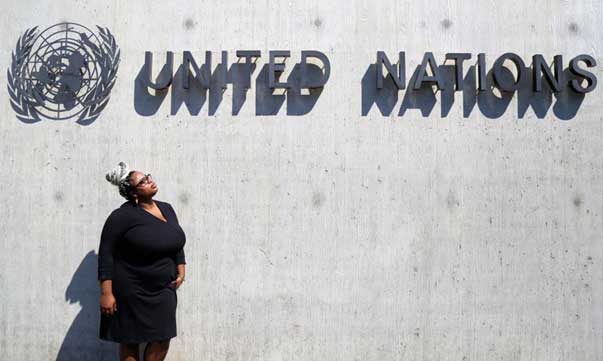
Ambassador Anwarul K. Chowdhury, former Under-Secretary-General and High Representative of the United Nations and Founder of The Global Movement for The Culture of Peace (GMCoP), was the keynote speaker at the observance of the International Day of Non-Violence on the 15th Mahatma Gandhi Day Celebration, organized virtually by the Gandhi International Institute for Peace (GIIP)
Credit: United Nations

HONOLULU, Hawaii, Oct 22 2020 (IPS) – I will begin by presenting to you excerpts from the message from UN Secretary-General António Guterres on the International Day of Non-Violence.


I quote: “In marking the birthday of Mahatma Gandhi, this International Day highlights the remarkable power of non-violence and peaceful protest. It is also a timely reminder to strive to uphold values that Gandhi lived by: the promotion of dignity; equal protection for all; and communities living together in peace.

On this year’s observance, we have a special duty: stop the fighting to focus on our common enemy: COVID-19. There is only one winner of conflict during a pandemic: the virus itself. As the pandemic took hold, I called for a global ceasefire. Now is the time to intensify our efforts. Let us be inspired by the spirit of Gandhi and the enduring principles of the UN Charter.” End of quote

At the outset, let me thank the Gandhi International Institute for Peace (GIIP) and its dynamic President Mr. Raj Kumar for organizing the observance of the International Day of Non-Violence and of the 15th Mahatma Gandhi Day Celebration by the Institute.

The theme of my keynote speech today is “Mahatma’s Non-Violence: Essence of The Culture of Peace for New Humanity”

The Mahatma affirmed that he was not a visionary but a practical idealist. He affirmed that “Non- violence is the law of our species, as violence is the law of the brute. The spirit lies dormant in the brute and he knows no law but that of physical might. The dignity of man requires obedience to a higher law – to the strength of the spirit.”

It is said that “he was the first in human history to extend the principle of non-violence from the individual to the social and political plane.” He entered politics for the purpose of experimenting with non-violence and establishing its validity.
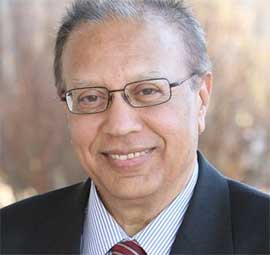
Ambassador Chowdhury

The Mahatma had said that “Nonviolence is the greatest and most active force in the world. One cannot be passively nonviolent … One person who can express ahimsa in life exercises a force superior to all the force of brutality.” I believe whole-heartedly that Mahatma Gandhi’s principle of nonviolence or Ahimsa has found true reflection in the life of a great son of the United States, Dr. Martin Luther King Jr.’s own struggle for equality and justice.

Dr. King considered his Nobel Peace Prize as “a profound recognition that nonviolence is the answer to the critical political and racial questions of our time – the need for man to overcome oppression without resorting to violence“. I reiterate this mainly to highlight the need for revisiting those words in view of what is happening in many parts of our world, including in this country.

As I have stated on many occasions, my life’s experience has taught me to value peace and non-violence as the essential components of our existence. Those unleash the positive forces of good that are so needed for human progress. Peace is integral to human existence — in everything we do, in everything we say and in every thought we have, there is a place for peace.

It is important to realize that the absence of peace takes away the opportunities that we need to prepare ourselves, to empower ourselves to face the challenges of our lives, individually and collectively. This intellectual and spiritual inspiration is implanted in me through the Mahatma’s life and his words.

The United Nations Charter emerged in 1945 out of the ashes of the Second World War. The UN Declaration and Programme of Action on Culture of Peace was born in 1999 in the aftermath of the Cold War. I was the chair of the nine-month-long negotiations from 1998 to 1999 that produced the Programme of Action on Culture of Peace.

For more than two decades, I have continued to devote considerable time, energy and effort to realizing the implementation of this landmark, norm-setting decision of the UN. For me, this has been a realization of my personal commitment to peace inspired by the Mahatma and my humble contribution to humanity.

My work took me to the farthest corners of the world and I have seen time and again how people – even the humblest and the weakest – have contributed to building the culture of peace in their personal lives, in their families, in their communities and in their countries – all these contributing to global peace one way or the other.

The focus of my work and advocacy has been on advancing the culture of peace which aims at making peace and non-violence a part of our own self, our own personality – a part of our existence as human beings. I believe this will empower ourselves to contribute more effectively to bring inner as well as outer peace.

In simple terms, the Culture of Peace as a concept means that every one of us needs to consciously make peace and nonviolence a part of our daily existence. We should know how to relate to one another without being aggressive, without being violent, without being disrespectful, without neglect, without prejudice.

We should not isolate peace as something separate or distant. More so, in today’s world so full of negativity, tension, poverty and suffering, the culture of peace should be seen as the essence of a new humanity, a new global civilization based on inner oneness and outer diversity.

In my keynote address on “Human Security – an Essential Element for Creating the Culture of Peace” at the Victoria University in Wellington, New Zealand, in August 2007, inspired by Mahatma’s eternal words “Be the change that you want to see in the world,” I underscored that “Peace is a prerequisite for human development.… We all must undertake efforts to inculcate the culture of peace in ourselves. We cannot expect the world to change if we do not start first and foremost with changing ourselves – at the individual levels.”

The objective of the culture of peace is the empowerment of people, as has been underscored by the global leader for peace and Buddhist philosopher Daisaku Ikeda. As we say “Peace does not mean just to stop wars, but also to stop oppression, injustice and neglect”. The culture of peace can be a powerful tool in promoting a global consciousness that serves the best interests of a just and sustainable peace.

I am encouraged that the 2030 Agenda for Sustainable Development adopted by the UN in 2015 includes, among others, the culture of peace and non-violence as well as global citizenship as essential components of today’s education.

This realization has now become more pertinent in the midst of the ever-increasing militarism and militarization that is destroying both our planet and our people. The Mahatma asserted that “One thing is certain. If the mad race for armaments continues, it is bound to result in a slaughter such as has never occurred in history. If there is a victor left, the very victory will be a living death for the nation that emerges victorious. There is no escape from the impending doom save through a bold and unconditional acceptance of the nonviolent method with all its glorious implications.”

Dr. King had advised us rightly, “… I suggest that the philosophy and strategy of nonviolence become immediately a subject for study and for serious experimentation in every field of human conflict, by no means excluding the relations between nations.”

The last decades of violence and human insecurity should lead to a growing realization in the world of education today that children should be educated in the art of peaceful, non-violent, non-aggressive living.

Never has it been more important for the next generation to learn about the world and understand and respect its diversity. I want to underscore one particular aspect in this context. In the culture of peace movement, we are focusing more attention on children because that contributes in a major way to the sustainable and long-lasting impact on our societies. As the Mahatma’s words highlight, “Real education consists in drawing the best out of yourself.”

An essential message that I have experienced from my work for the culture of peace is that we should never forget that when women – half of world’s seven plus billion people – are marginalized, there is no chance for our world to get sustainable peace in the real sense.

Women bring a new breadth, quality and balance of vision to a common effort of moving away from the cult of war towards the culture of peace. “Without peace, development cannot be realized, without development, peace is not achievable, but without women, neither peace nor development is possible.”

I believe the culture of peace is not a quick-fix. It is a movement, not a revolution.

Let us remember that the work for peace is a continuous process. Each one of us can make a difference in that process. The culture of peace cannot be imposed from outside; it must be realized from within.
  Source

The Plight of Domestic Workers in Brazil

Civil Society, Development & Aid, Economy & Trade, Featured, Gender, Global Governance, Headlines, Human Rights, IPS UN: Inside the Glasshouse, Labour, Latin America & the Caribbean, Population, Poverty & SDGs, TerraViva United Nations, Women & Economy

Opinion

Waldeli Melleiro is a project manager at the Brazil Office of Friedrich-Ebert-Stiftung (FES) and Christoph Heuser is the resident representative at the FES Brazil Office.

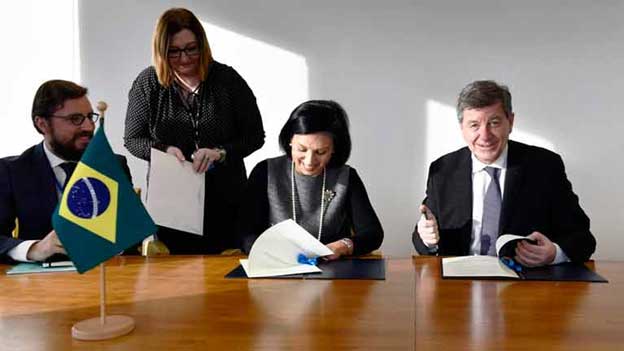
On 31 January 2018, the Government of Brazil deposited the formal instrument of ratification with the International Labour Office for ratification of the Convention on Decent Work for Domestic Workers, 2011 (No. 189) . Accordingly, Brazil became the twenty-fifth member State of the ILO and the fourteenth member State in the Americas region to ratify this Convention. It is estimated that there are about seven million domestic workers in Brazil, six million of them women, and more than in any other country in the world. Moreover, the majority of domestic workers are women, with indigenous peoples and persons of African descent being over-represented in the domestic work sector. But how has the Convention been implemented?. Credit: International Labour Organization (ILO), Geneva

SAO PAULO, Brazil, Oct 21 2020 (IPS) – The inclusivity of Brazilian society is put to the test as the coronavirus pandemic highlights a labour sector ripe with historical and structural inequality: domestic work.


The first death of COVID-19 in Rio de Janeiro was emblematic of the country’s inequities: a domestic worker who caught the new coronavirus from her employer. Much has since been written about the Brazilian government and its catastrophic inaction during the pandemic.

But the new normal also highlights a sector that has always been present in Brazil but with little public attention. A sector, in which the historical and structural inequality in Brazil is very much represented: domestic work.

With about 6 million female workers, domestic work is the second-largest occupation for women in Brazil. They are mostly black (about 65 per cent) and many are over 45 years old (46.5 per cent).

They start working sometimes as teenagers or even children, and because they lack access to most labour rights and social protection, even after 50 years or more of continuous work they still do not have the right to retirement and well-deserved rest.

They live far from their workplaces, often earn less than the legal minimum wage of around 200 USD per month, and are nonetheless often responsible (45 per cent of them) for the income of their families.

Among the poorest of these workers (less than 1,5 USD/day), 58.1 percent are heads of household, which gives an indication of the extreme poverty in which their families live.

The lack of labour protection

Domestic workers have long been fighting for recognition of the value of their work and for labour rights. The struggle in Brazil goes back to the 1930s, with the founding of the Professional Association of Domestic Employees of Santos.

In 1988 the new Constitution guaranteed paid leave and a 13th month of salary, among others. But domestic workers continued to have fewer rights than those in other professions.

Several further rights were only obtained in 2013 under the former administration of Dilma Rousseff, including the limiting of working hours to eight per day and 44 per week, the right to recognition of overtime, and paid retirement.

Despite these advances, many female workers are still excluded from many of those rights, which are guaranteed only to those who work at least three days a week in the same job. And even where the conditions are met, many employers persistently fail to respect workers’ rights, while monitoring compliance is difficult.

Those who work for the same employer for one or two days a week, known as day workers, remain completely unassisted by the law and social protection.

Furthermore, the degree of informality in domestic work is very high: In 2018, only 27 percent of women workers had a formal contract, if we are adding those paying individually even without having a formal contract, only 39 percent contributed to social security.

Thus, the vast majority of female domestic workers are not entitled to unemployment insurance, sickness benefit and retirement.

The new normal of work during and after the pandemic

Domestic work is one of the occupations most affected by the pandemic.

Many workers are in high-risk age groups; their working conditions expose them to more possibilities of contamination; they use public transportation over long distances; they care for elderly people or children with unavoidable physical proximity; and they often have to work without proper protective masks, gloves, or alcohol gel.

Or even worse: in order to keep their jobs and limit contamination, some stay for days and weeks on end in the homes where they work, away from their families.

As the pandemic took hold, the government allowed employers of domestic workers to suspend the contract for up to two months, with two months of secure employment after the suspension. It also allowed partial employment.

But this only helped the minority of domestic workers with such a contract. Most have precarious positions and many of those, especially day workers, have been dismissed and left without income and vulnerable.

The government also started paying 600 reals (around 109 USD) per month for those in need, for example informal workers, rising to 1,200 reals (218 USD) per month for some cases, for example single mothers. However, many women had difficulty in registering and accessing this aid.

Despite the pandemic, domestic workers are standing firm in the fight for labour rights. In March 2020 Fenatrad (National Federation of Domestic Workers) launched a campaign under the slogan “Take care of those who take care of you, leave your domestic worker at home, with paid wages.”

According to Luiza Batista, president of Fenatrad, there was good coverage in social networks, but in practice there was little adhesion by employers. Fenatrad has been carrying out an intense programme of denunciation and negotiation.

The group has also campaigned against a controversial measure by some state governments, for example Pará, to declare domestic work as an essential service during lockdown, forcing workers to continue working.

This measure was reversed after pressure from Fenatrad to specify what functions within domestic work are essential. The category was refined to include only nannies, careers for the elderly, and those caring for people with special needs and whose employers are keyworkers, e.g. in the health or security sectors.

Still the question remains: if domestic work is essential why it is not valued? It is fundamental work, but it is marginalized and carries the prejudices of a society in which social rights are not within reach for everyone.

The pandemic stresses the importance of domestic work and at the same time showed its precariousness as well as the inequality within the Brazilian society. It is time to reflect on the need for change in paid domestic work, aiming at a fair and inclusive society.

The new normal should recognize and value domestic work, including adequate labour rights as an important step on the long way to a more just society.

Source: Friedrich-Ebert-Stiftung (FES), Brazil

  Source

Amid COVID-19, What is the Health of Civic Freedoms?

Active Citizens, Civil Society, Democracy, Editors’ Choice, Featured, Global, Global Governance, Headlines, Human Rights, Inequity, IPS UN: Inside the Glasshouse, Population, Poverty & SDGs, TerraViva United Nations

Opinion

Marianna Belalba Barreto is the Civic Space Research Lead at CIVICUS: World Alliance for Citizen Participation & Aarti Narsee is a Civic Space Research Officer at CIVICUS: World Alliance for Citizen Participation

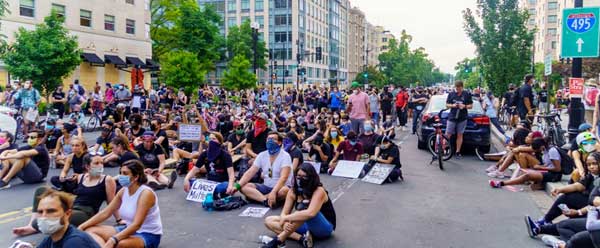
Black Lives Matter Protests, Washington DC, June 2020. Credit: Ted Eytan

JOHANNESBURG, South Africa, Oct 16 2020 (IPS) – More than half a year after the World Health Organization declared the COVID-19 outbreak a pandemic, governments are continuing to waste precious time and energy restricting human rights rather than focusing on fighting the virus.


Civic freedoms, including the freedom to associate, express views and peacefully assemble, are under threat, with states using broad and restrictive legislation to snuff out dissent.

But people are organising and mobilising to demand rights. In the face of restrictions, civil society continues to fight back, often taking to the streets to do so.

Even before the pandemic freedom of expression was under threat. In 2019, the CIVICUS Monitor reported that censorship was the most common violation during that year, occurring across 178 countries.

Now, under the guise of stopping the spread of what they characterise as ‘fake news’, many governments continue to target the media.

Free-flowing information and unrestricted speech are vital during a pandemic. People need to receive accurate and up-to-date information on the emergency, not least so they can protect themselves and their families.

As frontline workers, journalists have a crucial role to play in disseminating important information, often putting their own lives at risk. But during the pandemic they have faced harassment, arbitrary detention and censorship from governments determined to silence critical reporting about their response to COVID-19.

Often such attempts have been carried out under the guise of tackling so-called ‘fake news’ on the virus.

Even before the pandemic, Turkey was the number one jailer of journalists in the world, with about 165 journalists currently behind bars. The government’s crackdown on the media has continued, with journalists being jailed on charges of ‘causing people to panic and publishing reports on coronavirus outside the knowledge of authorities’.

Thousands of social media accounts have also been placed under surveillance for comments about COVID-19, with citizens being detained for ‘unfounded and provocative’ posts that cause worry among the public, incite them to fear, panic and target persons and institutions’.

People expect to be able to question their government’s handling of the crisis and hold it to account over the decisions made. But governments are resisting this. In Zimbabwe, investigative journalist Hopewell Chin’ono was detained and charged for his critical reporting on the government’s COVID-19 procurement.

The need for this was clear when Zimbabwe’s health minister was dismissed and arrested for alleged corruption in medical procurement. But while Chin’ono has been released on bail, the persecution against him continues, despite calls from local and international media watchdog bodies for all charges to be dropped.

Despite these restrictions, people have continued to mobilise and fight for their rights. The pandemic pushed activists to come up with new and innovative forms of protests. Health workers across the world staged socially distanced protests to highlight the challenges within the medical system which have been further exposed by the pandemic; around the world, people found innovative ways to get their voices across.

In Palestine, feminist organisations organised balcony protests against the surge of gender-based violence during the pandemic. Videos show people standing on their balconies, banging pots and pans and hanging banners to show solidarity.

In Singapore in April, young climate activists from the Fridays for Future global school strike movement held solo protests in order to sidestep the country’s restrictive laws on peaceful assembly.

In June in Brazil, human rights groups organised peaceful interventions to denounce the scale of the COVID-19 crisis; protesters in the capital Brasilia put up 1,000 crosses to pay tribute to COVID-19 victims on the lawn in front of key government buildings, calling out President Jair Bolsonaro for his denials of the pandemic’s gravity.

Protests against racial injustice have been staged in all corners of the globe, following the killing of George Floyd by the Minneapolis police on 25 May 2020. Floyd’s death sparked massive protests against police brutality in the USA, under the banner of Black Lives Matter.

As the movement expanded, people from different continents, in countries as diverse as Senegal, Sri Lanka and Sweden, chanted “No Justice, No Peace”, and held placards reading “racism is a virus” to show they had no choice but to protest amid a global pandemic.

But in some countries these protests were dispersed by police using excessive force, with the reasoning that protests would lead to a further spread of COVID-19.

CIVICUS continues to document civic space restrictions, and while many governments are taking advantage of the crisis to suppress criticism, civil society continues to resist, to fight back, and to make their voices heard.

As part of this, journalists are playing a vital role in fighting censorship and sharing information about the pandemic.

What is very clear is that civil society has and will continue to play a vital role in addressing the urgent needs of the people during this crisis. Without a healthy civic space and an enabling environment for activists, civil society and journalists, we will not be able to effectively tackle the spread of the virus and the prospect for rebuilding a more equal and just society will be limited.

This is why people will continue to organise, mobilise and protest.

  Source

To Achieve Gender Equality Within, the UN Must Do More to Tackle Sexual Harassment

Civil Society, Development & Aid, Editors’ Choice, Featured, Gender, Global, Global Governance, Headlines, IPS UN: Inside the Glasshouse, TerraViva United Nations

Opinion

Antonia Kirkland is Global Lead on Legal Equality & Access to Justice at Equality Now*

Credit: Equality Now, Tara Carey

NEW YORK, Sep 30 2020 (IPS) – In September 2017, Secretary-General António Guterres launched the “System-wide strategy on gender parity”, which set the goal of reaching gender parity within the United Nations by 2028 and outlined a strategy on how to achieve this, including the introduction of special measures, senior appointments, targets and accountability, amongst other things.


Three years have passed and it is heartening to hear that the UN has made significant progress towards this goal by achieving gender parity within its senior management. We look forward to the organization hopefully achieving this at all levels by 2028, or preferably sooner.

The principle of equal rights for women and men is one of the pillars upon which the UN was founded. It is rooted in the recognition that gender equality is a fundamental human right and that empowering all women is essential for a peaceful, prosperous, and sustainable world.

The blueprint to achieving this was outlined by the UN in 2015 with the 2030 Agenda for Sustainable Development, which enshrines the ambition in Sustainable Development Goal 5 to “achieve gender equality and empower all women and girls”.

As an agenda-setting organisation that plays an influential role on the world stage, the UN has a responsibility to lead by example in advocating for gender equality from the inside out. This entails ensuring that women from a variety of backgrounds are equally represented at all levels of the UN system, and is necessary for both its credibility and effectiveness in applying a gender lens to its policies and programs.

An inclusive, gender-balanced and culturally diverse workforce, operating within a system that support’s women’s equal access to decision-making, will enable the UN to carry out its mandate more successfully.

Although gender parity is an important component of achieving gender equality within the UN, what is also needed is a frank examination and enhancement of the organizational culture and ways of working. The UN has spoken of the need to “create a working environment that embraces equality, eradicates bias, and is inclusive of all staff.”

Whilst it is encouraging to see the progress being made at the UN, there are still areas where commitments must be translated into effective action, and this pertains particularly to the handling of sexual abuse and harassment within the work environment, even as the workplace itself is evolving in response to the COVID-19 pandemic.

In 2018, UN Women appointed an Executive Coordinator and Spokesperson on Sexual Harassment and Discrimination. This office was tasked with “supporting States, government administrations and the private sector to ensure actions are taken to respond to women’s experiences of sexual harassment.”

It contributed to the adoption of the UN System Model Policy on Sexual Harassment by the Chief Executives Board, as well as promoting much-needed awareness raising and open discussion of the issue at the highest levels of the UN itself.

Unfortunately, this office has just been closed permanently, undermining the Secretary-General’s “zero-tolerance” policy on sexual harassment and putting into question the UN’s commitment to priortizing this as in important issue in need of addressing.

Greater attention and improvement are required regarding the handling of sexual harassment and abuse cases involving UN staff, including those in senior management. A staff survey investigating sexual harassment within the organization was carried out in 2018.

Only 17.1 percent of staff responded but of those who did, a third reported they had experienced harassment, with junior and temporary staff being particularly targeted. 12 percent of the perpetrators were in senior leadership positions and incidents were cited in which offenders were not punished or condemned, despite numerous charges being levied against them.

This type of failure was clearly illustrated when the UN’s own internal Dispute Tribunal called the “accountability gap deplorable” in a recent case involving compensation for sexual harassment committed by a previous chair of the International Civil Service Commission against a UN staff member who worked under him.

Although the chair was a UN official elected by the UN General Assembly, he was deemed to be outside the jurisdiction of the UN Secretary-General and as such, no action was taken by the Tribunal. This demonstrates a systemic failure in dealing with cases of this kind.

Sexual harassment and abuse thrive where there is a culture that fosters a lack of accountability that enables perpetrators to act with impunity. Tackling it requires clear and effective leadership to ensure the implementation of adequate safeguarding measures.

Senior management must enact changes to embed transparency across the board, tackle the continuing problem of under-reporting, and provide better support to victims and whistle-blowers who disclose allegations. Only then, will the UN truly be on course to achieve gender equality within its own ranks and stand as a role model for others.

For media enquiries and interview requests please contact Tara Carey at tcarey@equalitynow.org; +44 (0)20 7304 6902; +44 (0)7971 556 340.

*Equality Now is an international human rights organisation that works to protect and promote the rights of women and girls around the world by combining grassroots activism with international, regional and national legal advocacy. It’s international network of lawyers, activists, and supporters achieve legal and systemic change by holding governments responsible for enacting and enforcing laws and policies that end legal inequality, sex trafficking, sexual violence, and harmful practices such as female genital mutilation and child marriage.

For details of current campaigns, go to www.equalitynow.org, Facebook @equalitynoworg, and Twitter @equalitynow.

  Source

Congolese ‘Kings’ of Art on Exhibition in Paris

Civil Society, Headlines, TerraViva United Nations

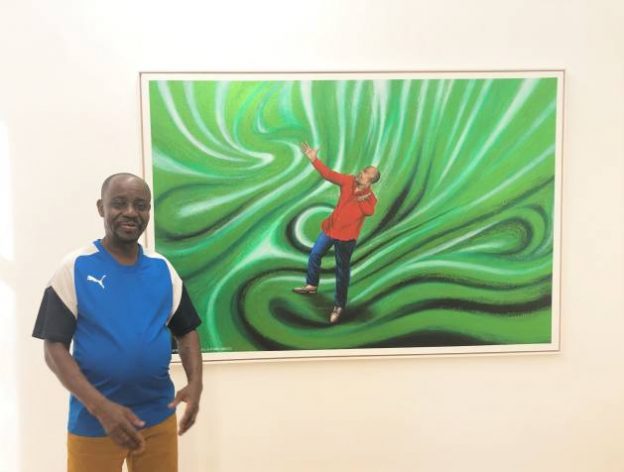
The show “Kings of Kin” – brings together the work of Chéri Samba (pictured above), Bodys Isek Kingelez and Moké, known affectionately as the kings of Kinshasa, as their art is closely linked with the capital of the Democratic Republic of the Congo, their home and work base. Credit: AD McKenzie

PARIS, Sep 28 2020 (IPS) Chéri Samba has a sly sense of humour, both in person and in his work. Standing in front of his 2018 painting “J’aime le jeu de relais” (I Love the Relays) – which criticizes politicians who cling to power instead of passing the baton – Samba is asked about the resemblance of one of his subjects to a famous statesman.


“Oh, I was just portraying a politician in general. I didn’t really have a particular person in mind because they all have certain characteristics,” he responds. Then he adds mischievously, “Isn’t it me though? Doesn’t it look like me?”

In this case it doesn’t, but the Congolese artist sometimes depicts himself in various guises in his paintings. Visitors to the current exhibition in Paris featuring his work and those of two of his equally acclaimed countrymen will have fun trying to spot him on canvas.

The show – Kings of Kin – brings together the work of Samba, Bodys Isek Kingelez and Moké, known affectionately as the kings of Kinshasa, as their art is closely linked with the capital of the Democratic Republic of the Congo, their home and work base. All three have participated in numerous exhibitions around the world, in group and solo shows, but this is the first time they’re being shown together in galleries.

Kings of Kin is being held jointly at the MAGNIN-A and the Natalie Seroussi galleries (running until Oct. 30) and features some 30 works, including Samba’s latest paintings. He is undoubtedly the star attraction with his bold, massive canvases commenting on social and political issues in Africa and elsewhere, but the others command attention as well.

Samba also is the only surviving “king” as Moké died in 2001 and Kingelez in 2015.

On a recent unseasonably hot afternoon, the artist is present at the MAGNIN-A gallery, speaking with a visitor who’s wearing a mask, although he himself is without one. He says he came to Paris in January, then got caught in the lockdown as the Covid-19 pandemic spread in France. He has used the time to complete several paintings for the current show.

Asked if he doesn’t miss the “inspiration” that Kinshasa provides, Samba replies that all artists should be able to produce work wherever they find themselves.

“I live in the world, and I breathe as if I’m in Kinshasa,” he says. “In my head, I want to live where I can speak with people and where they understand me. I travel with the same brain. I would like to be in Kinshasa, but this doesn’t prevent me from creating. The world belongs to all of us.”

His new paintings fill the entry and the main hall of the MAGNIN-A gallery, with bright greens, reds, blues – inviting viewers into his mind or current state of world awareness. 

The first work that strikes the eye is “Merci, merci je suis dans la zone verte” (Thank you, thank you I’m in the green zone), which depicts a man – the artist – seemingly caught in a vortex of some sort. Painted this year, the painting reflects the current global upheavals with the Covid-19 and other ills. It could also be referencing the DRC’s past under brutal colonialism and the difficulties of the present.

Another equally compelling work features the faces of six girls of different ethnicities, produced in acrylic with particles of glitter, and titled: “On Est Tout Pareils” (We’re All the Same). Samba says that his daughter served as the model and that the painting is a call for peace, equality and the ability to live together without discord.

The oldest of his paintings on display dates from 1989 and reveals a very different style, with softer colours and intricate workmanship, as he portrays a Congolese singer – the late feminist performer M’Pongo Love – wearing an attractive dress. Here the broad strokes are absent, and the designs on the dress are meticulously captured.

He says that although viewers may notice variations between his earlier output and the new works, he tends not to take note of such differences.

“All the paintings are like my children,” he says. “I can’t make distinctions between them.”

In contrast to Samba, the paintings by Moké comprise softer hues and have a more earthy feel, but they also compel the viewer to see into the lives of those depicted. Moké’s subjects nearly always elicit a certain empathy, a certain melancholy, and sometimes hope – whether these subjects are performers or an older couple simply having dinner together.

Moké lived for only 51 years, but his output was impressive – dating from the time he arrived in Kinshasa as a child and began painting urban landscapes on cardboard. He considered himself a “painter-journalist” and portrayed the everyday life of the capital, including political happenings. One of his paintings from 1965 depicts then-general Mobutu Sese Seko waving to the crowds as he came to power in Zaire (the previous name of the DRC).

In the Paris show, Moké’s paintings depict boxers, performers, frenetic city scenes, and portraits of women staring out with expressions that are both bold and solemn.

Meanwhile, the work of Kingelez takes viewers into a sphere of colourful towers and other “weird and wonderful” structures with a utopian bent, as he imagines a world that might possibly rise from the ravages of colonialism, inequity and bad urban planning.

The first Congolese artist to have a retrospective exhibition at New York’s Museum of Modern Art (“City Dreams” in 2018), Kingelez used everyday objects such as paper, cardboard and plastic to produce his first individual sculptures before creating whole fantastical cities.

His futuristic urban settings, which also address social issues, thus form a perfect companion to the “surreal earthliness” of Samba and Moké in Kings of Kin.

“These are artists who worked because of deep necessity, because they had something to say. It wasn’t about the art market or commerce,” said French gallery owner and independent curator André Magnin, who first encountered their work in the 1980s in Kinshasa.

The author of several books on Congolese art, Magnin said he hoped visitors to the exhibition would discover the unique “artistic richness” of the Congo region as exemplified by the “kings”. As for “queens”, he said that there weren’t many women artists working at the time, but that more are now becoming known and should be the focus of coming shows.

Dorine, a French art student of African descent who visited the exhibition, said she admired the artists and particularly Samba because he “speaks of African reality”.

“Their work is very interesting, and the message is extremely strong,” she told SWAN.

  Source

Agriculture for Development

Civil Society, Food & Agriculture

Sep 21 2020 –  

Special Issue on the contributions of non-governmental organisations and civil society
to agricultural and rural development

– Involving local communities in setting the agricultural development agenda
– Ten years of opportunities to improve the lives of family farmers
– BRAC’s contributions to agricultural development
– Updated data sets for more efficient investment strategies for family farms
– Can food production keep up with population increase in Malawi?

– Northern civil society in agriculture in the South: a failure?
– A systems approach to unlock the potential of African agriculture
– Promoting biodiversity and livelihoods through community forest restoration
– Introducing the new Chair of TAA
– Alternative livelihoods in an opium-based agricultural economy
– News from NGO institutional members

Source: ‘Agriculture for Development’ journal

  Source