Women in Africa are Better Off Today but Gender Equality Remains Out of Reach

Civil Society, Featured, Gender, Global, Global Governance, Headlines, Human Rights, IPS UN: Inside the Glasshouse, TerraViva United Nations

Opinion

ADDIS ABABA, Ethiopia, Nov 20 2024 (IPS) – Today, women in Africa generally have better access to education, healthcare, and opportunities than ever before. Yet, as they step into the world, a gap between them and their male counterparts persists, a reminder that gender equality remains out of reach.


The evidence is all around us. One in three women still experience physical or sexual violence. Nearly every woman spends twice as much time on unpaid household work as men. And not a single country offers women in Africa full legal protection.

For me, this reality stirs a mix of frustration and hope in recognizing how far we have come and how far we have still to go.

Nearly 30 years ago, 189 world leaders left the Fourth World Conference on Women with renewed hope, committing their countries to the Beijing Platform for Action, an ambitious roadmap for ending gender inequality. Yet today, as countries conduct their reviews, not a single country has achieved those commitments.

The 2023 Africa Gender Index report, produced by the United Nations Economic Commission for Africa and the African Development Bank, reveals that we are only halfway there on the road to gender equality. The journey remains long, and progress has been agonizingly slow.

The stakes could not be higher. Failing to end gender inequality incurs a heavy price: economic stagnation, weakened social systems, instability, and wasted human potential – all of which derail Africa’s progress towards the Sustainable Development Goals. Without urgent action now, we risk sleepwalking into a future marred by spiralling inequality, injustice and instability – an outcome none of us can afford.

As we reflect on the promises made in Beijing, all of us must hold ourselves accountable and take bold political and financial steps to change our current trajectories. To support this, our analysis points to five critical areas, where concentrated efforts over the next five years could pave the way to achieving gender equality by 2030.

First, despite more women working full-time, they still shoulder most caregiving responsibilities, suffer discrimination and deal with harmful stereotypes. Governments and businesses must dismantle barriers to women’s career progression. Experience teaches us that providing women with equal opportunities is not just the right thing to do but also the smart approach, with the potential to boost the GDP of emerging markets and developing economies by an average of 23 percent.

Second, as digitalization shapes the future of work, many women are being left behind. In 2023, only 32 percent of women in Africa had access to the internet. This divide translates into lost opportunities and costs African economies millions of dollars every year. We urgently need to make digital services affordable and promote digital literacy so that every woman has an equal opportunity to participate in the digital world.

Third, although maternal mortality rates have dropped, we cannot overlook the fact that healthcare is still out of reach for too many women. Governments must prioritize access to healthcare for every woman, regardless of where she lives or her income status. Focusing on women’s health not only saves lives but also makes economic sense. Every dollar invested in women’s health generates $3 in economic growth.

Fourth, while women in Africa now have near-equal access to primary, secondary, and tertiary education, this has yet to translate into leadership roles or economic power. Women’s parliamentary representation in Africa increased by only one percent from 25 percent in 2021 to 26 percent in 2024. Without their voices in leadership, we risk perpetuating the very inequalities we seek to eradicate.

Lastly, we must confront the harmful cultural norms, gender-based violence and legal barriers that restrict women’s access to resources and leadership positions. Tackling these deeply entrenched issues not just requires robust enforcement of laws and policies but also a societal shift, with responsibility shared by policymakers, board members, community elders, faith leaders and people like you and me.

None of these issues are new. And while some may seem intractable, they are not insurmountable. Africa has demonstrated incredible successes, from Tunisia’s increase in women science graduates to Rwanda’s significant reduction in cervical cancer cases and Namibia’s gender-equal parliament.

These instances remind us that change is possible when we invest in what we know works. In all of this, data plays an inextricable role in targeting and tracking interventions based on evidence rather than opinion. However, when it comes to women and girls, the data we need is too often missing, leaving too many of their challenges invisible and unaddressed. If we are serious about real progress, we must invest in gathering a fuller picture by bolstering our data capabilities.

In a world where pressing challenges dominate our attention, gender equality is often pushed to a backseat. We can no longer afford complacency or business as usual. If we stay on the current course, gender equality remains 300 years away. This is unacceptable.

We call on leaders across all sectors to recommit to the goals of Beijing and invest in real change to address the gender inequality that we know exists. Only then can we bring equality from a distant hope to a reality within our lifetimes. I am confident that this is possible, but only if we all act now.

Claver Gatete is Executive Secretary of the United Nations Economic Commission for Africa

IPS UN Bureau
  Source

One in Three Women Experiences Gender-based Violence

Civil Society, Crime & Justice, Featured, Gender, Global, Global Governance, Headlines, Human Rights, IPS UN: Inside the Glasshouse, TerraViva United Nations

Opinion

A woman with her baby attends a UN-run awareness-raising session on gender-based violence at the One Stop Centre in Sominé Dolo Hospital in Mopti, Mali. Credit: UNFPA Mali/Amadou Maiga

UNITED NATIONS, Nov 20 2024 (IPS) Every year, the 16 Days of Activism against Gender-Based Violence (GBV) campaign led by UN Women serves as a powerful reminder of the widespread violence women and girls face worldwide.


Starting from November 25, on the International Day for the Elimination of Violence against Women, and concluding on December 10, on Human Rights Day, this campaign calls on governments, activists, and individuals to unite and push for lasting change.

In support of this civil society initiative the UN Secretary-General back in 2008 launched the campaign UNITE by 2030, which runs parallel to the 16 Days of Activism.

Tweet URL

Every year, the UNITE Campaign focuses on a specific theme and this year’s focus is UNITE! Invest to prevent violence against women and girls, aiming for long-term solutions that address the root causes of the problem.

Why it matters

The statistics are staggering: nearly one in three women and girls worldwide will experience physical or sexual violence during their lifetime.

For at least 51,100 women in 2023, this violence escalated to femicide (homicide targeted at women) with over half committed by intimate partners or family members.

The agency championing women’s empowerment, UN Women, points out that femicides are the ultimate evidence that the systems and structures meant to protect women and girls are failing.

Women are not safe outside their homes either.

Public figures, including politicians, human rights defenders, and journalists, are often targeted by violence both online and offline, with some leading to fatal outcomes and intentional killings.

One alarming aspect of this issue is the prevalence of violence in conflict zones. In 2023, the United Nations reported a staggering 50 per cent increase in gender violence from the previous year.

From survivors to advocates

Women like Ukrainian activist Lyudmila Huseynova exemplify the harrowing reality of conflict-related sexual violence.

After enduring over three years of imprisonment and torture in a Russian prison, where she faced brutal physical abuse, “In that place, you become a person without rights,” she recalled of her torment in Izolyatsia prison, Ms. Huseynova’s resilience turned into activism.

Since her release in 2022, she has become an unwavering advocate for survivors, working with SEMA Ukraine to amplify the voices of those suffering from conflict-related sexual violence and to demand global attention to the atrocities faced by women and children in Ukraine.

Through her tireless efforts, Ms. Huseynova not only exposes the cruelty women endure but also leads efforts to secure justice and recovery for victims. “We will use every means to make their pain visible,” she emphasised.

What can we do?

While we may not all be activists, we all have a role in ending the abuse, says UN Women.

On an individual level, from supporting local organisations to advocating for stronger laws and supporting the women in our lives, everybody can make a difference.

Argentinian activist Iren Cari and founder of Women’s Forum for Equal Opportunities stressed the need to support women in political life and centre their voice: “We need funds to promote women’s participation – not only in public policy making, but also to participate in elections.”

UN Women emphasised that governments must enact laws to ensure accountability for perpetrators of gender-based violence, particularly through National Action Plans.

In parallel, funding women’s rights organizations is essential to support survivors and provide them with the necessary resources for recovery.

The 16 Days of Activism remind us that every action, no matter how small, counts in the fight to end gender-based violence, the agency stresses.

Source: UN News

IPS UN Bureau

  Source

Dazzling Wildlife Portraits at COP29: A Conversation with Photographer Brad Wilson

Arts, Biodiversity, Civil Society, Climate Action, Climate Change, COP29, COP29 Blog, Editors’ Choice, Environment, Featured, Global, Headlines, Sustainable Development Goals, TerraViva United Nations

COP29 Blog

Brad Wilson is an American photographer specializing in classical portraits of animals. Credit: Umar Manzoor Shah/IPS

Brad Wilson is an American photographer specializing in classical portraits of animals. Credit: Umar Manzoor Shah/IPS

As delegates at COP29 stroll through the venue in Baku, Azerbaijan, many pause to marvel at the stunning portraits of animals and birds adorning the pavilion walls. These 16 captivating images, showcasing Azerbaijan’s rich biodiversity, are more than just art—they’re a call to action.

Visitors, from diplomats to environmental activists, can often be seen snapping selfies with these majestic portraits, drawn to their lifelike intensity. Behind this collection is Brad Wilson, an American photographer whose mission is to “bridge the gap between humans and the natural world.” 

Wilson spoke to the IPS on his artistic journey and the philosophy underpinning his work.

“My name is Brad Wilson,” he begins. “I’m an American photographer specializing in classical portraits of animals.”

Classical portraits—usually a domain of human subjects—take on a unique depth when applied to animals.

“I aim to elevate animals to a higher level, presenting them as equals to humans—different but equal. Looking into their eyes through these photographs should invoke a sense of responsibility for their lives because we all share the same planet.”

For Wilson, animals represent a poignant connection to the natural world. “They are our closest relatives living in the wild,” he says. “They serve as a bridge, reminding us of our roots in nature.”

Brad Wilson photographic portraits were commissioned for the Haydar Aliyev Centre in Baku and are on display at the COP29 venue. Credit: Umar Manzoor Shah/IPS

Brad Wilson photographic portraits were commissioned for the Haydar Aliyev Centre in Baku and are on display at the COP29 venue. Credit: Umar Manzoor Shah/IPS

Process: A Dance of Patience and Precision

Creating these portraits is no simple task. Wilson describes the meticulous setup required for his work.

“All the portraits are done in a studio. I set up the studio close to where the animals live—often in sanctuaries or ranches. Then we bring them in for two or three hours,” he says. But those hours yield just fleeting moments of magic.

“I’m lucky if I get two or three good seconds with each animal. But that’s all I need—a single moment of connection that resonates.”

“My photo shoots are like meditations amidst organized chaos,” he says. Amid bustling activity, Wilson remains quiet and still, waiting for the animal to relax. “What I aim to capture is something uncommon—a glimpse of the animal’s soul, if you will. That’s what I hope viewers experience—a moment of connection.”

“I want people to understand that we are part of this planet’s biodiversity. We’re not separate from these creatures. It’s only been about 12,000 years—since the advent of farming and permanent settlements—that we began seeing ourselves as separate from the natural world. That’s a mistake. These animals remind us of our place in the web of life.”

“When we talk about climate action, it’s not just about saving the earth—it’s about saving humanity and the animals that share this planet with us. The earth will endure, but we might not.”

Behind the Scenes at COP29

Wilson’s collection at COP29 was commissioned by the Haydar Aliyev Centre in Baku.

“They brought me here in August to photograph animals in Baku and Shamaki,” he says. The project celebrates Azerbaijan’s biodiversity, showcasing species native to the region while promoting conservation awareness.

The portraits have been a hit among COP29 attendees, sparking conversations about the intersection of art, biodiversity, and climate action. Wilson hopes the images inspire policymakers and the public alike to take meaningful action.

“Climate change is already a massive problem, and it’s only going to worsen. We need to get serious about tackling it.”

Advice for Aspiring Photographers

For those inspired to follow in Wilson’s footsteps, he offers this advice: “Start with humans. I spent 15 years photographing people in New York City before transitioning to animals. That experience taught me about connection and emotion—skills that translate well to wildlife photography.”

IPS UN Bureau Report

  Source

Pakistan’s Climate Minister Pitches for ‘Climate Diplomacy’ at COP29

Asia-Pacific, Civil Society, Climate Change Finance, Climate Change Justice, COP29, Development & Aid, Editors’ Choice, Environment, Featured, Global, Headlines, Human Rights, Humanitarian Emergencies, Sustainable Development Goals, TerraViva United Nations, Women in Politics

COP29

Romina Khurshid Alam, the Coordinator to the Prime Minister of Pakistan on Climate Change at the Pakistan Pavilion at the COP29 Venue in Baku. Credit: Umar Manzoor Shah/IPS

Romina Khurshid Alam, the Coordinator to the Prime Minister of Pakistan on Climate Change at the Pakistan Pavilion at the COP29 Venue in Baku. Credit: Umar Manzoor Shah/IPS

BAKU, Nov 19 2024 (IPS) – Romina Khurshid Alam, the Coordinator to the Prime Minister of Pakistan on Climate Change, praised the resilience of the people of her country in the face of climate disasters and has put her faith into diplomacy to achieve climate justice.


Speaking to IPS against the backdrop of a rising environmental crisis and unfulfilled promises by developed nations, Alam outlined the necessity of climate diplomacy as a tool to bridge global disparities and address the collective challenges posed by climate change. 

Climate Diplomacy: A Global Imperative

Alam said that climate diplomacy is of utmost importance in a world where disasters transcend borders.

“Climate diplomacy is crucial because the challenges we face today are not confined to one nation,” she said. “Smog, floods, and melting glaciers do not ask for permission to cross boundaries. Even the largest wars have been resolved through dialogue, and we must adopt the same approach for climate issues.”

Recalling the devastating floods in Pakistan in 2022, Alam said the human and economic toll the country has faced was massive. Vulnerable nations like Pakistan, she argued, are bearing the brunt of a crisis they did little to create.

“We are paying the price for a problem caused by others. Despite our minimal contributions to global emissions, we are expected to ‘do more’ while developed countries delay fulfilling their commitments.”

A flooded village in Matiari, in the Sindh province of Pakistan. Credit: UNICEF/Asad Zaidi

A flooded village in Matiari, in the Sindh province of Pakistan. Credit: UNICEF/Asad Zaidi

Unkept Promises and the Loss and Damage Fund

Alam expressed frustration with the slow progress of the Loss and Damage Fund, a financial mechanism agreed to in previous COPs to support vulnerable nations.

“What happened to those pledges? Where is the funding? Promises are made at every COP, but they rarely materialize into action,” she said, while urging developed nations to stop making new commitments until they have fulfilled their existing ones and also stressing that accountability and transparency are essential.

Alam also criticized the lack of accessibility to promised funds for developing nations.

“It’s not just about pledging money—it’s about ensuring those funds reach the countries that need them. Mechanisms must be simplified so that nations like Pakistan can access what is rightfully theirs.”

Education and Climate Justice

During the interview, Alam drew attention to the intersection of climate change and education.

Children in Pakistan are losing their right to education because of environmental crises like smog and floods,” she said. “How can we expect to provide green education when children can’t even make it to school safely?”

Alam called for climate justice that includes the protection of basic human rights, such as education, for the next generation.

She also pointed to the reluctance of neighboring countries to engage in meaningful discussions on shared challenges. “Regional solutions are imperative. Disasters don’t respect political or geographical boundaries, and neither should our response to them.”

International Climate Justice Court

Alam also shared her vision of an International Climate Justice Court, where vulnerable nations can hold major polluters accountable.

“I have requested the establishment of an International Climate Justice Court to protect the rights of those most affected by climate change,” she said. “Pakistan has already taken the lead by engaging national and international judges in this effort. Justice Mansoor Ali Shah has been instrumental in highlighting the need for such a court.”

According to Alam, this court could empower vulnerable nations to seek redress and enforce accountability, especially for unfulfilled commitments by developed countries.

“Why should children in Pakistan or other vulnerable nations suffer because of decisions made elsewhere? It’s time we demand answers.”

Human Rights and Climate Change

For Alam, the climate crisis is not just an environmental issue but also a severe human rights violation.

“Developed nations often champion human rights, but they fail to recognize the rights being violated in vulnerable countries due to climate change,” she said. “The loss of lives, homes, and livelihoods in countries like Pakistan is a direct result of inaction by wealthier nations.”

She called on the international community to view the climate crisis through a humanitarian lens. “This is about humanity. The sun shines on all, and disasters strike indiscriminately. We must come together, regardless of our differences, to address this shared challenge.”

Pakistan’s Role as a Climate Advocate

Alam praised the resilience of the Pakistani people, particularly in the aftermath of the 2022 floods.

“Our people have shown incredible strength,” she said. “Even the poorest woman who loses her roof to a flood will rebuild her life with courage. This resilience is what keeps us moving forward.”

She also highlighted Pakistan’s leadership in raising the voices of vulnerable nations. “Pakistan doesn’t just speak for itself; we speak for all developing countries that are facing the consequences of climate change. Peace and cooperation are essential, and Pakistan will continue to advocate for both.”

IPS UN Bureau Report

  Source

Climate Change Threatens Our Existence, Says Indian Spiritual leader Sadhguru

Civil Society, Climate Change, COP29, COP29 Blog, Environment, Featured, Headlines, Sustainable Development Goals

COP29

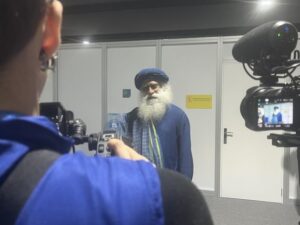
Jagadish Vasudev, known widely as Sadhguru, at COP29. Credit: IPS

Jagadish Vasudev, known widely as Sadhguru, at COP29. Credit: IPS

BAKU, Nov 16 2024 (IPS) – A sudden flurry of activity as Jagadish Vasudev, known widely as Sadhguru, emerges from an interview room in the COP29 media centre. It’s early days of the conference and there is energy and excitement at the venue in Baku.


With his long flowing beard and blue turban, it’s clear that many journalists are keen to interview the influential spiritual leader from India and the founder of the Isha Foundation, which has been dedicated to humanitarian projects since 1992. His initiative, Cauvery Calling, aims to support Indian farmers by encouraging the planting of 2.4 billion trees through agroforestry to restore the Cauvery River basin.

Now in Baku for COP29, Sadhguru shares his insights in an exclusive interview with IPS.

Inter Press Service: Sadhguru, climate change has been a known crisis for over four decades. Yet despite numerous conferences and terms like “loss and mitigation” and “climate finance,” we’re still facing rising temperatures, floods, and droughts. Why are we not succeeding? Are we missing the right approach?

Sadhguru: “Succeeding in what, exactly? The problem is that there’s no clear, actionable goal. We talk about economic development, which many nations pursue without pausing to consider its impact on the planet. At the same time, those who have already achieved a certain quality of life tell others not to follow the same path. It’s a paradox. We tell people to give up hydrocarbons—coal, oil—yet offer no viable alternatives. If we shut off hydrocarbons today, this very conference wouldn’t last ten minutes!

We’re all focused on what to give up but lack sustainable, scalable alternatives. Solar, wind, and similar sources only cover a tiny fraction of our energy needs—less than 3 percent. For real change, we need technology that provides clean, non-polluting energy, but we’re far from that. Nuclear energy is a powerful option, yet there’s too much activism and fear surrounding it. Meanwhile, electric cars, often touted as solutions, don’t really address ecological well-being; they just reduce urban air pollution.”

IPS: So, what would be a more pragmatic approach?

Sadhguru: It’s simple. We need to focus on soil restoration. Changing the soil composition can mitigate up to 37 percent of climate issues, according to studies. The emphasis has shifted a bit from ‘oil’ to ‘soil,’ and that’s a good sign. But beyond that, our entire mindset needs to shift from activism to pragmatic, science-based solutions. Over the past 70 years, we’ve lost 84 percent of wildlife, 92% of freshwater aquatic life, and 84 percent of insect life. The soil lacks organic content, and without it, trillions of microorganisms essential to life are perishing. Most scientists warn that if we continue at this pace, we may only have 40–50 harvests left—about 25–30 years of viable farming.

IPS: Climate change is often seen as a distant, scientific issue. Many people don’t connect with it. Why is that?

Sadhguru: An idea must have legs to walk. If it can’t, it won’t go anywhere. Rather than lofty ideals, we need simple, actionable goals. Soil is foundational to life: we eat from it, and when we die, we go back to it. Ninety-five percent of life forms depend on it, and over half the human population interacts with it daily. We must invest in soil regeneration, not just technologies to replace oil.”

IPS: How do we make this understandable for the common person?

Sadhguru: The common person doesn’t need to grasp all the details. It’s the responsibility of governments to act—to create laws and policies that enforce soil conservation. Blaming consumerism misses the point. People aspire to improve their lives, and those who criticize ‘consumerism’ often hold to a double standard. You can’t stop human aspirations. If anything, we need to reduce our population’s environmental impact over time, but even mentioning that sparks controversy. The truth is, over the past century, life expectancy has increased dramatically—from an average of 28 years in 1947 to over 70 years today. As people live longer, reproduction should be adjusted to balance the population. But people resist even these pragmatic realities.

IPS: You have been advocating for a long time to make living in a village a lucrative affair. How can we make village life sustainable and attractive?

Sadhguru: Yes, but it’s about making rural life viable, not romanticizing it. If the soil is rich, rural life can be economically rewarding. Today, people pay more for organic produce. Imagine if we branded food by the soil’s organic content—consumers would pay more for nutrient-dense produce, and this would incentivize soil conservation. Our agriculture needs to move beyond rice and wheat dependency, which was a temporary solution during the Green Revolution. Now we must transition from that ‘bridge’ to sustainable practices.

IPS: This needs government policies but there are few.  Why don’t we see climate change as a political agenda?

Sadhguru: In a democracy, politicians focus on what their voters demand, which often isn’t long-term environmental policies. To enact meaningful change, citizens need to express this desire. For example, our Save Soil movement reached 3.91 billion people in a hundred days. This kind of widespread support influences policy. We’re already seeing action in countries like China, India, and parts of Europe, though it’s gradual. Unfortunately, sometimes governments wait for a disaster before they act. Then only I understand there is a flood. It entered your house somewhere. I think, after all, it’s in the flooding region, you know.

IPS: And you’ve also mentioned that thirty percent of the human diet should come from trees. Could you elaborate on that?

Sadhguru: In Kashmir, for example, over thirty percent of people’s diet used to come from trees. They eat a lot of local fruits. When Hyun Tsang visited India, he observed that the intellect of Indian people was sharper because of the high fruit intake. Today, unfortunately, most fruit is bought in supermarkets, often imported from far-off places. The local connection is being lost, and this has implications for health. Eating local fruit is more than just cultural. The microorganisms in our body and in the soil where we live are continuously in contact. This link between diet and our microbiome is often ignored, yet it affects us deeply. The biome in your body has “cousins” in the land where you live. In yoga, we advise eating foods from within a radius that you can walk in a day. This keeps your body strong and in sync with the environment.

IPS: One critical issue back in India is farmer suicide. What can be done to address this?

Sadhguru: They’re not dying out of choice but out of desperation. When they take loans and cannot repay, life becomes unbearable. Many have inherited farming skills but lack alternatives. If someone with an MBA or MSc in agriculture were given land, they would struggle to match the knowledge and skill of a farmer, yet society undervalues this knowledge. Due to small land holdings—less than a hectare on average—they can neither sustain their families nor avoid debt.

In the past, villagers worked together as a community. Today, small farmers fence their tiny plots and install their own bore wells. The costs are immense and lead to further debt. We need to restore community support, enlarge land holdings, or provide viable alternatives to prevent this tragic cycle.

IPS: And what about faith? Can it play a role in addressing the climate crisis?

Sadhguru: Let’s not focus on faith in the context of climate change. It’s our responsibility to act. When things go wrong due to human error, people often call it fate or God’s will. But this crisis is of our making. And the crisis we talk about isn’t the planet’s—it’s a crisis for human survival. Life on Earth relies on delicate interconnections, from insects to microbes. If these were wiped out, life on the planet would soon collapse. Ironically, if humans disappeared, the planet would thrive. This is the perspective we need: climate change threatens our existence, not the Earth’s.

IPS UN Bureau Report

  Source

Women, Indigenous Communities Must Lead Climate Finance Allocations at COP29—Plan International Global Director

Active Citizens, Aid, Civil Society, Climate Change, Climate Change Justice, COP29, COP29 Blog, Education, Population, Sustainable Development Goals

COP29 Blog

Soumya Guha, the Global Director of Programs, Plan International. Credit: Umar Manzoor Shah

Soumya Guha, the Global Director of Programs, Plan International. Credit: Umar Manzoor Shah

BAKU, Nov 16 2024 (IPS) – Plan International, a global leader in advocating for children’s rights and gender equality, sees the need for women and Indigenous people to be at the forefront of climate negotiations.


Founded in 1937 during the Spanish Civil War, Plan International has spent over eight decades working to improve the lives of children in some of the world’s most underprivileged regions. While its initial focus was on broader child welfare, the organization has, over the last ten years, shifted its attention toward empowering girls, particularly those from disadvantaged backgrounds. This strategic pivot has an understanding that girls often face compounded barriers to education, health, and economic opportunities, especially in remote and conflict-prone areas.

Today, Plan International, says Soumya Guha, the Global Director of Programs, operates in 52 countries, supported by fundraising activities across 22 locations. Its programs target the most marginalized communities, focusing on holistic, long-term development alongside emergency humanitarian responses. This dual approach has allowed the organization to integrate its development goals with pressing needs, such as disaster resilience and conflict mitigation.

“We believe the first five years of a child’s life are critical in shaping their future,” Guha said. The organization’s “I Am Ready” program, implemented in countries like Laos, Tanzania, and Cambodia, addresses linguistic and social barriers faced by children from marginalized groups. By offering a ten-week intensive program that prepares children for primary school in their local language, the initiative has led to a remarkable 37 percent improvement in school attendance and retention rates.

In earthquake-prone areas, the organization has introduced disaster preparedness programs that equip schools to respond effectively during emergencies. “In the Kathmandu earthquake, schools participating in our safety programs were able to evacuate quickly, saving lives,” Guha said.

Beyond education, Plan International emphasizes sexual and reproductive health and rights (SRHR), ensuring that young people have access to critical information and resources. Programs that support economic empowerment, such as initiatives involving school feeding programs, complement these efforts. In Sierra Leone, for instance, women’s cooperatives not only supply food for schools but also reinvest their earnings to establish educational facilities in underserved areas. This approach has created a ripple effect, fostering gender equality, boosting local economies, and enhancing educational outcomes.

Recognizing the disproportionate impact of climate change on marginalized communities, the organization integrates climate adaptation strategies into its education and health programs. In Asia, combating child marriage and addressing climate vulnerabilities are emerging priorities. “Child marriage is a persistent issue in Asia, and we are determined to tackle it alongside climate change challenges,” Guha said.

He added that operating in regions affected by conflict and disasters requires a nuanced approach. In Ethiopia’s Tigray region, where prolonged conflict has displaced thousands, Plan International works with local organizations to provide immediate relief while also supporting host communities. This dual focus aims to ease tensions and promote peacebuilding. Similar strategies have been employed in Bangladesh during the Rohingya refugee crisis, where the organization ensured that support extended to both displaced populations and the local communities hosting them.

“Technology plays an increasingly important role in Plan International’s programs, particularly in remote and resource-poor areas. In Sierra Leone, for example, a digital platform called Televret enables real-time feedback on the quality of school meals, ensuring accountability and timely action. In Ethiopia, augmented reality tools are being piloted to support children with learning disabilities by making educational content more accessible and engaging,” Guha said.

The organization plans to continue its focus on early childhood development, education, economic empowerment, and climate resilience. While its geographic priorities remain centered on Africa and Asia, it will also maintain a presence in South America, addressing deep-seated inequities that persist despite overall economic progress in the region.

Guha stressed the importance of international cooperation at COP29, particularly in climate finance. The organization advocates for ambitious funding targets, stating that developed nations should bear a significant share of the responsibility. “The most marginalized communities, including women and indigenous populations, must be at the forefront of climate finance allocations,” said.

IPS UN Bureau Report

  Source