Cambodia’s Young Environmental Activists Pay a Heavy Price

Armed Conflicts, Asia-Pacific, Civil Society, Economy & Trade, Environment, Featured, Headlines, Indigenous Rights, Labour, Natural Resources, Press Freedom, TerraViva United Nations

Opinion

Credit: Tang Chhin Sothy/AFP via Getty Images

LONDON, Aug 1 2024 (IPS) – It’s risky to try to protect the environment in authoritarian Cambodia. Ten young activists from the Mother Nature environmental group have recently been given long jail sentences. Two were sentenced to eight years on charges of plotting and insulting the king. Another seven were sentenced to six years for plotting, while one, a Spanish national banned from entering Cambodia, was sentenced in absentia.


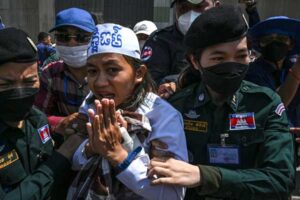
Four of the activists were then violently dragged away from a peaceful sit-in they’d joined outside the court building. The five who’ve so far been jailed have been split up and sent to separate prisons, some far away from their families.

This is the latest in a long line of attacks on Mother Nature activists. The group is being punished for its work to try to protect natural resources, prevent water pollution and stop illegal logging and sand mining.

An autocratic regime

Cambodia’s de facto one-party regime tolerates little criticism. Its former prime minister, Hun Sen, ruled the country from 1985 until 2023, when he handed over to his son. This came shortly after a non-competitive election where the only credible opposition party was banned. It was the same story with the election in 2018. This suppression of democracy required a crackdown on dissenting voices, targeting civil society as well as the political opposition.

The authorities have weaponised the legal system. They use highly politicised courts to detain civil society activists and opposition politicians for long spells before subjecting them to grossly unfair trials. Campaigners for environmental rights, labour rights and social justice are frequently charged with vaguely defined offences under the Criminal Coder such as plotting and incitement. Last year, nine trade unionists were convicted of incitement after going on strike to demand better pay and conditions for casino workers.

In 2015 the government introduced the restrictive Law on Associations and Non-Governmental Organisations (LANGO), which requires civil society organisations to submit financial records and annual reports, giving the state broad powers to refuse registration or deregister organisations. In 2023, Hun Sen threatened to dissolve organisations if they failed to submit documents.

The state also closely controls the media. People close to the ruling family run the four main media groups and so they mostly follow the government line. Independent media outlets are severely restricted. Last year the authorities shut down one of the last remaining independent platforms, Voice of Democracy. Self-censorship means topics such as corruption and environmental concerns remain largely uncovered.

This extensive political control is closely entwined with economic power. The ruling family and its inner circle are connected to an array of economic projects. Landgrabs by state officials are common. These means land and Indigenous people’s rights activists are among those targeted.

In 2023, courts sentenced 10 land activists to a year in jail in response to their activism against land grabbing for a sugar plantation. That same year, three people from the Coalition of Cambodian Farmer Community, a farmers’ rights group, were charged with incitement and plotting. The LANGO has also been used to prevent unregistered community groups taking part in anti-logging patrols.

The activity that saw the Mother Nature activists charged with plotting involved documenting the flow of waste into a river close to the royal palace in the capital, Phnom Pen. It’s far from the first time the group’s environmental action has earned the state’s ire. The government feels threatened by the fact that Mother Nature’s activism resonates with many young people.

Three of the group’s activists were convicted on incitement charges in 2022 after organising a protest march to the prime minister’s residence to protest against the filling in of a lake for construction. In 2023, Mother Nature delivered a petition urging the government to stop granting land to private companies in Kirirom National Park; there’s evidence of licences going to people connected to ruling party politicians. In response, the Ministry of Environment said Mother Nature was an illegal organisation and that its actions were ‘against the interests of Cambodian civil society’.

Media also get in trouble if they report on the sensitive issue of land exploitation. In 2023, the authorities revoked the licences of three media companies for publishing reports on a senior official’s involvement in land fraud. In 2022, two teams of reporters covering a deforestation operation were violently arrested.

Regional challenges

Repression of environmental activism isn’t limited to Cambodia. In neighbouring Vietnam, the one-party communist state is also cracking down on climate and environmental activists. In part this is because, as in Cambodia, climate and environmental activism is increasingly shining a light on the environmentally destructive economic practices of authoritarian leaders.

Cambodia’s creeping use of the charge of insulting the king to stifle legitimate dissent also echoes a tactic frequently used in Thailand, where the authorities have jailed young democracy campaigners for violating an archaic lèse majesté law that criminalises criticism of the king. Other repressive states are following its lead – including Cambodia, where the law on insulting the king was introduced when the crackdown was well underway in 2018.

Cambodia provides ample evidence of how the denial of democracy and the repression that comes with it enable environmentally destructive policies that further affect people’s lives and rights. The solution to protect the environment and prevent runaway climate change is less repression, more democracy and a more enabled civil society.

Cambodia’s international partners should emphasise this in their dealings with the state. They should press the authorities to release the jailed Mother Nature activists, who deserve to spend the coming years helping make their country a better place, not rotting in prison.

Andrew Firmin is CIVICUS Editor-in-Chief, co-director and writer for CIVICUS Lens and co-author of the State of Civil Society Report.

  Source

At Paris Olympics, Art Runs in Tandem with Sports

Arts, Civil Society, Europe, Headlines, Inequality, TerraViva United Nations

Human Rights

Cover of the Cultural Olympiad programme

PARIS, Jul 31 2024 (IPS) – As cheers from beach-volleyball fans fill the air at the Eiffel Tower Stadium on a steamy, sunny day, pedestrians just down the road are enjoying another kind of show: an outdoor exhibition of huge photographs gleaming on the metal railings of UNESCO headquarters.


Titled Cultures at the Games, the exhibition is among hundreds of artistic and cultural events taking place across France during the 2024 Olympic Games (hosted by the French capital July 26 to Aug. 11), and they’re being staged alongside the numerous athletic contests.

The events even have an umbrella name – the Cultural Olympiad – and include photography, painting, sculpture, fashion, and a host of attractions linking art and sport. Most are scheduled to run beyond the closing ceremony of the Games.

UNESCO (the United Nations Educational, Scientific and Cultural Organization) is a “partner” in the Cultural Olympiad, arranging not only the usual meetings where bureaucrats give lofty speeches, but also showcasing a series of works to highlight diversity and inclusion.

Cultures at the Games, for instance, comprises some 140 photographs portraying memorable aspects of the opening and closing ceremonies of the Olympics since 1924 and is presented in association with the Olympic Museum of Lausanne.

Images show how national delegations have transmitted their culture during these extravaganzas, and the pictures depict athletes such as Jamaica’s Usain Bolt, whose “lightning bolt” pose has become part of the Games’ folklore even as he has helped to make the green, gold and black colours of his country’s flag more recognizable.

Inside UNESCO’s Y-shaped building, meanwhile, a collection of panels focuses on how sport can “Change the Game”, a theme running across all of the organization’s “Olympiad” events. (At the “World Ministerial Meeting” that UNESCO hosted on July 24, just ahead of the Olympics, officials discussed gender equality, inclusion of people with disabilities, and protection of athletes, for example.)

A notable section of the indoor exhibition features historic photographs that pay tribute to athletes who sparked change through their achievements or activism. Here, one can view an iconic picture of American athlete Jesse Owens, the “spanner in the works that completely disrupted the Nazi propaganda machine set up during the 1936 Berlin Olympics,” according to the curators.

Owens won four medals at the Games, but “received no immediate (official) recognition from his own country” despite being welcomed as a hero by the public, as the exhibition notes. The racism in the United States meant that President Franklyn D. Roosevelt refused to congratulate him “for fear of losing votes in the Southern states.” The photo shows him standing on the podium in Berlin, while behind him another competitor gives a “Hitler salute”.

Jesse Owens at the Berlin Olympics, in Athletes who changed the world at UNESCO;

Athletes who changed the world equally features boxer Mohammad Ali, who in 1967 refused to fight in Vietnam and was stripped of his world championship title and banned from the ring for three years.

Perhaps the most famous image, however, is that of athletes Tommie Smith and John Carlos at the 1968 games in Mexico City. They “removed their shoes and walked forward in socks to protest against the extreme poverty faced by African Americans,” as the caption reminds viewers. “With solemn faces, Smith and Carlos bowed their heads and raised their gloved black fists, aiming to raise global awareness about racial segregation in their country.”

A photo of Tommie Smith, in Athletes who changed the world at UNESCO

The exhibition outlines the long battles faced by women athletes as well, and it highlights the work of Alice Milliat who, as president of the French Women’s Sports Federation, “campaigned for women’s inclusion in Olympic sports”. She organized the first Women’s Olympic Games in Paris in 1922, bringing together five countries and 77 athletes.

Although Milliat “died in obscurity” in 1957, her “legacy endures today, with the Paris 2024 Games highlighting gender equality in sports, largely thanks to her visionary efforts,” says the photo caption.

Similarly, the exhibition spotlights the contributions of disabled athletes such as Ryadh Sallem, who was born without arms or legs, a victim of the Thalidomide medication that was prescribed to pregnant women in the 1950s and Sixties and caused deformities in children.

Sallem won 15 French championship titles in swimming and later turned to team sports such as wheelchair basketball and rugby. At UNESCO, his photograph is prominently displayed, along with the story of his hopes for the 2024 Paralympics and his mission to “promote a positive vision of disability”.

Elsewhere in the city, artists and museums are also paying tribute to Paralympic competitors, ahead of the Paralympic Games from Aug. 28 to Sept. 8 in Paris.

On the fencing around the imposing Gare de l’Est (train station), colourful works by artist Lorenzo Mattoti show disabled athletes competing in a variety of sports, while the Panthéon is presenting the “Paralympic Stories: From Sporting Integration to Social Inclusion (1948-2024)”. This exposition relates the “history of Paralympism and the challenges of equality,” according to curators Anne Marcellini and Sylvain Ferez.

For fans of sculpture, Paris has a range of “Olympiad” works on view for free. In June, the city unveiled its official “sculpture olympique” or Olympic Statue, created by Los Angeles-based African-American artist Alison Saar, who cites inspiration from Africa, the Caribbean and Latin America.

The sculpture, located near the famed Champs Elysées avenue, depicts a seated African woman holding a flame in front of the Olympic rings, and it “embodies Olympic values of inclusivity and peace,” according to the office of Paris mayor Anne Hidalgo.

When it was inaugurated on June 23, however, it sparked a flurry of hostile remarks from some far-right commentators on social media, who apparently felt threatened by the work.

Another statue of a woman, that of Venus de Milo or the mythical goddess Aphrodite, has been “reinterpreted” in six versions by artistic director Laurent Perbos to symbolise “feminine” sporting disciplines, including boxing, archery and surfing. The statues stand in front of the National Assembly, and the irony won’t be lost on most viewers: French women secured the right to vote only in 1944.

Of course, Paris wouldn’t be Paris without another particular artform. As the much-discussed Opening Ceremony of the Olympics showed, fashion is an integral part of these Games, and those who didn’t get enough of the array of sometimes questionable costumes can head for another dose with “La Mode en movement #2” (Fashion in Motion #2).

This exhibition at the Palais Galliera / Fashion Museum looks at the history of sports clothing from the 18th century, with a special focus on beachwear. Among the 250 pieces on display, viewers will surely gain tips on what to wear for beach volleyball.

For more information, see: Olympiade Culturelle (paris2024.org)

  Source

SUMMIT OF THE FUTURE: ‘The UN Secretary-General Underestimated the Difficulty of Reaching Consensus’

Civil Society, Environment, Featured, Global, Global Governance, Headlines, Human Rights, Sustainability, TerraViva United Nations

Jul 30 2024 (IPS) –  
CIVICUS discusses the upcoming Summit of the Future with Renzo Pomi, who represents Amnesty International at the United Nations (UN) in New York.


Renzo Pomi

In September, world leaders will gather at the UN World Summit of the Future to adopt the Pact for the Future. Ahead of the summit, civil society, academia and the private sector have contributed to the pact’s zero draft. Civil society sees the process as an opportunity to strengthen commitments on the environment, human rights and social justice, and CIVICUS advocates for the inclusion of language on the protection and expansion of civic space. But much work remains to be done before, during and after the summit to ensure ambitious commitments are adopted and then realised.

How did the Summit of the Future come about?

In September 2021, the UN Secretary-General released a report, ‘Our Common Agenda’, outlining global challenges and proposing a summit for world leaders to address them. Originally scheduled for September 2023, the summit was postponed due to a lack of consensus and will now take place in September 2024. Just before the opening of the 79th session of the UN General Assembly, world leaders will gather in New York to discuss the future and adopt by consensus an action-oriented document, the Pact for the Future.

The pact and its two annexes – the Global Digital Compact and the Declaration on Future Generations – will be the summit’s main outcome. It aims to address our global challenges through commitments in five thematic areas: sustainable development and financing for development, international peace and security, science, technology and innovation, youth and future generations, and transforming global governance. The pact will address a wide range of challenges facing humanity and the international system, and will seek to make intergovernmental institutions such as the UN more fit for the purpose they were created for.

What has the process towards the draft pact been like, and what role has civil society played in it?

The drafting process has been largely a state-owned and state-exclusive process. Germany and Namibia have co-facilitated the negotiations and presented the zero draft in January and subsequent revisions in May and July 2024.

Civil society participation has been very limited. We rely mostly on friendly states for information, as we are not in the room when negotiations take place. After each draft was released, we were invited to submit our recommendations and participate in virtual consultations to discuss the content. But, while we value these opportunities, nothing replaces the chance to be actively involved in negotiations. When you hold a virtual meeting like this, what you get is a series of hasty statements, not a real dialogue. As a result, we’ve had to lobby states to champion our issues, and it’s unclear whether our views will be reflected in the pact.

While the co-facilitators are often blamed for this, the truth is that the process was agreed by all states. The UN Charter recognises civil society as an important stakeholder, as does the Secretary-General, but many states believe the UN should be exclusively state-run and civil society shouldn’t have a place in discussing important issues.

Further, relations between civil society and the UN in New York are particularly strained compared to Geneva, where there is a more established tradition of including civil society in discussions. And the UN’s financial crisis means there’s no investment in hybrid meetings, which allow civil society organisations (CSOs) that can’t afford to travel to have a voice in meetings.

What did you advocate should be including in the pact?

We made two submissions, one before the zero draft was circulated and the other commenting on it. We analysed the whole document and focused on ensuring that a human rights perspective was adopted in every measure. Our proposals covered issues from Security Council reform to increased civil society participation in the UN.

We have long argued that Security Council permanent members should refrain from vetoing or blocking credible resolutions on serious violations such as war crimes, crimes against humanity and genocide. Unfortunately, this proposal is not accurately reflected on the draft. States may at the end agree to expand the Security Council, but otherwise most of the language simply reaffirms existing commitments, such as Article 27.3 of the Charter, which prevents states involved in conflicts voting on related resolutions but is currently ignored.

We also highlighted that CSOs face several barriers to engaging with the UN. The Economic and Social Council’s NGO Committee, which reviews applications for consultative status, often acts as a gatekeeper, unfairly denying access to CSOs that challenge the positions of particular states. We have proposed dismantling this committee and setting up an independent expert mechanism to assess applications on the basis of merit rather than political considerations. However, this proposal is unlikely to be included in the pact’s final draft.

How much real impact do you think the pact will have?

We hope some of our recommendations will be included in the pact, but the geopolitical climate suggests many will not. The Secretary-General has correctly identified the challenges, but he has underestimated the difficulty of reaching consensus on meaningful commitments. International cooperation is now almost non-existent. Today’s context resembles the Cold War, where there was no room for agreement on even basic issues. In the current circumstances, it was unrealistic for the Secretary-General to think he could launch such a massive undertaking and get an action-oriented document with real commitments for reform adopted.

It is said that even in the worst moments you have to push for the best. We may not get actionable commitments, but we may still get some good language and a minimum common denominator every country can agree on.

For the pact to have a real impact, global civil society needs to push for the strongest possible commitments and their implementation. In 2005, a similar summit ended with a decision to create the Human Rights Council in place of the discredited Commission on Human Rights. Now it’s very difficult to foresee getting commitments this specific, and as we approach the summit, proposals are being watered down. Civil society will have to be very creative in finding ways to use the watered-down language to demand change.

What’s next for civil society ahead of the summit?

In the days leading up to the summit, Summit of the Future Action Days will allow civil society, states and UN bodies to propose side events. Getting selected is very difficult, as requirements include sponsorship by two member states and one UN entity, and support by a coalition or network of CSOs. As a result, only a few side events will be approved.

As the summit approaches, civil society should focus on reviewing the second revision of the pact and identifying advocacy opportunities. Chances to advance our agenda will become more limited as September approaches. States will struggle to reach consensus on a final document and there will be no space to reopen closed discussions.

Once the pact is adopted, civil society will need to continue to push for critical issues and stay vigilant in monitoring its implementation.

Get in touch with Amnesty International through its website or Facebook and Instagram pages, and follow @amnesty on Twitter.

This interview was conducted as part of the ENSURED Horizon research project funded by the European Union. Views and opinions expressed in this interview are those of the interviewee only and do not necessarily reflect those of the European Union. Neither the European Union nor the granting authority can be held responsible for them.

  Source

Paraguay: ‘Bureaucratic Criminalisation’, New Legislation Threatens NGOs and Democracy

Civil Society, Crime & Justice, Democracy, Headlines, Human Rights, Latin America & the Caribbean, Press Freedom, TerraViva United Nations

Opinion

March for rights in Asunción, capital of Paraguay. Credit Patricia López

ASUNCIÓN, Paraguay, Jul 29 2024 (IPS) – In a move that has aroused national and international concern, the Paraguayan Senate has given preliminary approval to a controversial bill that imposes strict controls on NGOs in a case of ‘bureaucratic criminalisation’.


The landscape has become increasingly hostile to the activities of civil society organisations, with several laws representing a rollback of historically defended fundamental rights.

‘Additional bureaucratic hurdles”: the effects of new legislation

Non-profit organisations in the country have to deal with a variety of formalities and ongoing procedures before various public bodies. The proposed legislation, promoted by the ruling Colorado Party, now introduces additional registrations for all NGOs and strict reporting requirements. Under the pretext of improving transparency and accountability, the legislation represents a significant threat to democracy and the operational freedom of civil society in Paraguay.

Controversial elements of the bill include a new mandatory registration with the Ministry of Economy and Finance – which would be the law’s implementing authority – for all organisations receiving public or private funds of national or international origin, detailed reporting of all activities, detailed semi-annual financial reports, and severe penalties for non-compliance, including heavy fines and the possibility of dissolution of NGOs. Critics argue that these ‘legal-political arrangements’ are disproportionate and serve more to intimidate and control NGOs than to promote real accountability.

March for rights in Asunción, capital of Paraguay. Credit Patricia López

What civil society says

The passage of this bill comes in a broader context of growing authoritarianism in Paraguay. Since the 2023 elections, there have been several concerns about the ruling party’s consolidation of power and its impact on democratic institutions. The media, opposition parties and civil society organisations have faced increasing pressures, raising fears of a regression to the authoritarian practices of the past.

Monica Centron, Executive Coordinator of the national NGO platform, POJOAJU, emphasises the broader implications of such legislation for democracy: ‘This law threatens the fundamental rights enshrined in our constitution. It undermines the role of civil society in holding government accountable and promoting social justice. NGOs promote transparency and accountability, we have legislation that obliges us to account for our actions such as the Civil Code, reports to Seprelad (Secretariat for the Prevention of Money or Asset Laundering), the Treasury Attorney’s Office, banks, the National Directorate of Tax Revenue, among others’.

Raúl Monte Domecq, from POJOAJU’s coordination team, highlighted the possible adverse effects for smaller NGOs: ‘The administrative burdens and the threat of severe sanctions could lead many smaller organisations to close down. This will have a devastating impact on the communities they serve, particularly the most vulnerable’.

‘It must be understood that we have adopted for our Republic a Social State of Law and as a form of government representative, participatory and pluralist democracy, as enshrined in the National Constitution. The paths of dialogue and consultation, and not the opposite, are necessary requirements for the strengthening of our still incipient process of democratisation,’ says Gladys Casaccia, also a member of the POJOAJU Coordination team.

A threat to democratic principles

The bill has faced strong opposition from various sectors, including religious leaders, civil society organisations and international human rights bodies.

Marta Hurtado, spokesperson for the UN Human Rights Office, said the bill would ‘impose substantial restrictions on NGO funding’ and ‘obstruct the exercise of freedoms of association and expression’.

Ana Piquer, Amnesty International’s Americas director, said that ‘this bill subjects civil society organisations to arbitrary and abusive state control, without giving them the opportunity to defend themselves. It puts human rights defenders and the communities they serve at significant risk’.

Just a few days ago, several UN Special Rapporteurs have joined forces to communicate to the government of Paraguay their concern about the possible approval of the Draft Law on the Control of Non-Profit Organisations.

Cardinal Adalberto Martinez, has urged the Senate to delay the bill, which will be discussed in less than 2 weeks from now, and initiate a dialogue with the affected sectors. ‘This bill could have serious consequences for our representative, participatory and pluralistic democratic system,’ he warned, emphasising the need for inclusive discussions.

This legislative measure also follows a worrying trend observed in other countries where governments have introduced restrictive laws to curb the influence and operations of civil society. By limiting access to international funding and imposing strict oversight, these laws effectively weaken civil society’s ability to operate independently and advocate for human rights and democratic governance.

Call for action

In light of these developments, POJOAJU and other civil society organisations call for urgent action:

    • Postponement and dialogue: they urge the government to halt the legislative process and engage in meaningful consultations with civil society to review the draft law.
    • Protection of rights: They demand that any new regulatory framework respect constitutional rights and international human rights standards, ensuring that it promotes genuine transparency without undermining the independence of civil society.
    • International solidarity: Civil society and governments are also being urged to call for dialogue with the Paraguayan government to reconsider this draft law in law. The stakes are high, not only for Paraguay, but also for the precedent it could set in the region.

Mónica Centrón, POJOAJU, Isabella Camargo and Bibbi Abruzzini, Forus

This article is written by the Forus network in partnership with POJOAJU. For more on the “bureocratic criminalisation” of civil society, consult Abong’s report detailing the context in Brazil under Bolsanaro’s presidency here.

IPS UN Bureau

  Source

Government Indifferent to Invasion of Drug Traffickers in the Peruvian Amazon

Civil Society, Crime & Justice, Editors’ Choice, Headlines, Human Rights, Indigenous Rights, Latin America & the Caribbean, Sustainable Development Goals

Indigenous Rights

Members of the indigenous guard of the native community of Puerto Nuevo, of the Amazonian Kakataibo people, located in the central-eastern jungle of Peru. Credit: Courtesy of Marcelo Odicio

Members of the indigenous guard of the native community of Puerto Nuevo, of the Amazonian Kakataibo people, located in the central-eastern jungle of Peru. Credit: Courtesy of Marcelo Odicio

LIMA, Jul 26 2024 (IPS) – The invasion of lands inhabited by Amazon indigenous communities is growing in Peru, due to drug trafficking mafias that are expanding coca crops to produce and export cocaine, while deforestation and insecurity for the native populations and their advocates are increasing


“Drug trafficking is not a myth or something new in this area, and we are the ones who defend our right to live in peace in our land,” said Kakataibo indigenous leader Marcelo Odicio, from the municipality of Aguaytía, capital of the province of Padre Abad, in the Amazonian department of Ucayali.

“We are the ones who pay the consequences, we are visible to criminals, we are branded as informers, but I will continue to defend our rights. Along with the indigenous guard we will ensure that the autonomy of our territory is respected,” Marcelo Odicio.

Of the 33 million inhabitants of the South American country, around 800,000 belong to 51 Amazonian indigenous peoples. Overall, 96.4% of the indigenous population is Quechua and Aymara, six million of whom live in the Andean areas, while the Amazonian jungle peoples account for the remaining 3.6%.

The Peruvian government is constantly criticised for failing to meet the needs and demands of this population, who suffer multiple disadvantages in health, education, income generation and access to opportunities, as well as the growing impact of drug trafficking, illegal logging and mining.

A clear example of this is the situation of the Kakataibo people in two of their native communities, Puerto Nuevo and Sinchi Roca, in the border between the departments of Huánuco and Ucayali, in the central-eastern Peruvian jungle region.

For years they have been reporting and resisting the presence of invaders who cut down the forests for illegal purposes, while the government pays no heed and takes no action.

The most recent threat has led them to deploy their indigenous guard to defend themselves against new groups of outsiders who, through videos, have proclaimed their decision to occupy the territories over which the Kakataibo people have ancestral rights, which are backed by titles granted by the departmental authorities.

Six Kakataibo leaders who defended their lands and way of life were murdered in recent years. The latest was Mariano Isacama, whose body was found by the indigenous guard on Sunday 14 July after being missing for weeks.

In his interview with IPS, Odicio, president of the Native Federation of Kakataibo Communities (Fenacoka), lamented the authorities’ failure to find Isacama. The leader from the native community of Puerto Azul had been threatened by people linked to drug trafficking, suspects the federation.

Marcelo Odicio, president of the Native Federation of Kakataibo Communities, headquartered in the town of Aguaytía, in the department of Ucayal, in the Peruvian Amazon. Credit: Inforegión

Marcelo Odicio, president of the Native Federation of Kakataibo Communities, headquartered in the town of Aguaytía, in the department of Ucayal, in the Peruvian Amazon. Credit: Inforegión

During a press conference in Lima on 17 July, the Interethnic Association for the Development of the Peruvian Jungle (Aidesep), that brings together 109 federations representing 2,439 native communities, deplored the government’s indifference in the situation of the disappeared and murdered leader, which brings to 35 the number of Amazonian indigenous people murdered between 2023 and 2024.

Aidesep declared the territory of the Amazonian indigenous peoples under emergency and called for self-defence and protection mechanisms against what they called “unpunished violence unleashed by drug trafficking, mining and illegal logging under the protection of authorities complicit in neglect, inaction and corruption.”

Lack of vision for the Amazon

The province of Aguaytía, where the municipality of Padre de Abad is located and where the Kakataibo live, among other indigenous peoples, will account for 4.3% of the area under coca leaf cultivation by 2023, around 4,019 hectares, according to the latest report by the government’s National Commission for Development and Life without Drugs (Devida).

It is the sixth largest production area of this crop in the country.

The report highlights that Peru reduced illicit coca crops by just over 2% between 2022 and 2023, from 95,008 to 92,784 hectares, thus halting the trend of permanent expansion over the last seven years.

These figures are called into question by Ricardo Soberón, an expert on drug policy, security and Amazonia.

Ricardo Soberón, a renowned Peruvian expert on drug policy, Amazonia and security. Credit: Walter Hupiú / IPS

Ricardo Soberón, a renowned Peruvian expert on drug policy, Amazonia and security. Credit: Walter Hupiú / IPS

“The latest World Drug Report indicates that we have gone from 22 to 23 million cocaine users, and that the golden triangle in Burma, the triple border of Argentina-Paraguay-Brazil and the Amazonian trapezoid are privileged areas for production and export,” Soberón told IPS.

The latter holds “Putumayo and Yaguas, areas that according to Devida have reduced the 2,000 hectares under cultivation. I don’t believe it,” he said.

The United Nations Office on Drugs and Crime (UNODC), that commissioned the report, also lists Peru as the world’s second largest cocaine producer.

Soberón added another element that discredits the conclusions of the Devida report: the government’s behaviour.

“There is no air interdiction in the Amazonian trapezoid, the non-lethal interdiction agreement with the United States will be operational in 2025. On the other hand, there are complaints against the anti-drug police in Loreto, the department where Putumayo and Yaguas are located, for their links with Brazilian mafias,” he explained.

He believes there was an attempt to whitewash “a government that is completely isolated”, referring to the administration led since December 2022 by interim president Dina Boluarte, with minimal levels of approval and questioned over a series of democratic setbacks.

Soberón, director of Devida in 2011-2012 and 2021-2022, has constantly warned that the government, at different levels, has not incorporated the indigenous agenda in its policies against illegalities in their ancestral areas.

This, he said, despite the growing pressure on their peoples and lands from “the largest illegal extractive economies in the world: drug trafficking, logging and gold mining,” the main causes of deforestation, loss of biodiversity and territorial dispossession.

Soberón argued that, given the magnitude of cocaine trafficking in the world, major trafficking groups need coca crop reserves, and Peruvian territory is fit for it. He deplored the minimal strategic vision among political, economic, commercial and social players in the Amazon.

Based on previous research, he says that the Cauca-Nariño bridge in southern Colombia, Putumayo in Peru, and parts of Brazil, form the Amazonian trapezoid: a fluid transit area not only for cocaine, but also for arms, supplies and gold.

Hence the great flow of cocaine in the area, for trafficking and distribution to the United States and other markets, which makes the jungle-like indigenous territories of the Peruvian Amazon attractive for coca crops and cocaine laboratories.

Soberón stresses it is possible to reconcile anti-drug policy with the protection of the Amazon, for example by promoting the citizen social pacts that he himself developed as a pilot project during his term in office.

It is a matter, he said, of turning the social players, such as the indigenous peoples, into decision-makers. But this requires a clear political will, which is not seen in the current Devida administration.

Mariano Isacama (left), a Kakataibo indigenous leader who disappeared and was murdered after allegedly receiving threats from people linked to drug traffickers. Next to him, the president of the indigenous organisation Orau, Magno López. Credit: Courtesy of Marcelo Odicio

Mariano Isacama (left), a Kakataibo indigenous leader who disappeared and was murdered after allegedly receiving threats from people linked to drug traffickers. Next to him, the president of the indigenous organisation Orau, Magno López. Credit: Courtesy of Marcelo Odicio

“We will not stand idly by”

Odicio, the president of Fenacoka, knows that the increased presence of invaders in their territories is aimed at planting pasture and coca leaf, an activity that destroys their forests. They have even installed maceration ponds near the communities.

When invaders arrive, they cut down the trees, burn them, raise cattle, take possession of the land and then demand the right to title, he explained. “After the anti-forestry law, they feel strong and say they have a right to the land, when it is not the case,” he said.

He refers to the reform of the Forestry and Wildlife Act No. 29763, in force since December 2023, which further weakens the security of indigenous peoples over their land rights and opens the door to legal and illegal extractive activities.

The leader, who has a wife and two young children, knows that the role of defender exposes him. “We are the ones who pay the consequences, we are visible to criminals, we are branded as informers, but I will continue to defend our rights. Along with the indigenous guard we will ensure that the autonomy of our territory is respected,” he stressed.

In the native community of Puerto Nuevo there are 200 Kakataibo families, with 500 more in Sinchi Roca. They live from the sustainable use of their forest resources, who are at risk from illegal activities. “We just want to live in peace, but we will defend ourselves because we cannot stand idly by if they do not respect our autonomy”, he said.

  Source

Achieving the 10-10-10 HIV Targets by 2025

Civil Society, Global, Global Governance, Headlines, Health, Human Rights, IPS UN: Inside the Glasshouse, TerraViva United Nations

Opinion

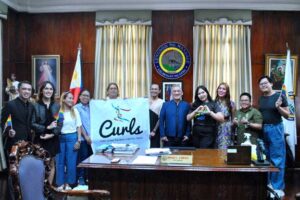
The Mandaue City government signs the Implementing Rules and Regulations of the city’s Anti-Discrimination Ordinance. This marks a significant milestone for the UNDP-supported Kadangpan Project. Credit: UNDP Philippines

UNITED NATIONS, Jul 26 2024 (IPS) – Around the world countries are taking powerful steps to protect people’s rights, dignity, and health. Dominica and Namibia became the most recent to decriminalize same-sex relations. South Africa made strides towards decriminalizing sex work.


Japan’s Supreme Court ruled that compulsory sterilization for transgender people is unconstitutional, and for the first time the essential role of harm reduction was recognized in a UN resolution on narcotic drugs.

These achievements all contribute to the landmark 10-10-10 HIV targets, adopted by countries in the 2021 Political Declaration on HIV and AIDS, to reduce new infections and tackle criminalization, stigma and discrimination and gender inequality, issues especially critical for people living with HIV and key populations, including sex workers, men who have sex with men, transgender people, people who inject drugs, and the incarcerated.

Yet, for every heartening step toward justice, setbacks and barriers remain. In the last three months alone, Georgia’s parliament moved to curb LGBTIQ+ rights, Iraq criminalized same-sex relationships, countries in Eastern Europe and Central Asia have signed into law sweeping restrictions on civil society and the Malawi courts upheld a ban on same-sex conduct.

Every action we take now will make a difference

With just one year left to meet these targets, we are still off track. What’s more, the global pushback on human rights and gender equality, constraints on civil society, and the acute funding gap for HIV prevention and addressing structural and social barriers, threaten continued progress on AIDS.

This is the time to re-double our efforts. Every single action taken now to meet the 10-10-10 targets will improve the lives and wellbeing of those living with HIV and other key populations well into the future. It will protect the health and development gains of the AIDS response.

If we are to realistically end AIDS by 2030, we must, in lockstep with recent scientific advances, urgently accelerate efforts by shaping enabling policy environments.

Together with partners, UNDP will use its platform at the AIDS 2024 conference, along with a new #Triple10Targets campaign, to call for urgent action to accelerate progress in scaling national key population-led strategies, promoting allyship and inclusive institutions and unlocking sustainable financing.

Community leadership

Key populations and their sexual partners remain at the highest risk for HIV, accounting for 55 percent of all new HIV infections in 2022 and 80 percent of new HIV infections outside of sub-Saharan Africa, a trend which persists. The heightened risk they face is, in part a result of stigma, discrimination and criminalization.

The heart of the HIV response was built by community advocates, past and present, on its inextricable links to human rights. People living with HIV and other key populations are still leading the charge, based on their experiences and knowledge of what their communities need to tackle discriminatory laws and HIV-related criminalization, which deny them services and violate their human rights.

The recent overturning of a colonial-era sodomy law in Namibia, brought to court by Friedel Dausab, a gay Namibian man, showcases such courageous leadership.

But those most affected by and at risk of discrimination, exclusion and violence must not be left to tackle this alone. Their efforts are that much more effective and powerful when met with global solidarity and inclusive institutions, backed by collaboration and investment.

UNDP continues to promote and prioritize the meaningful engagement of people living with HIV and other key populations in decision-making spaces and policy design, through the work done by SCALE, #WeBelong Africa and Being LGBTI in the Caribbean and its HIV and health work more broadly.

The role for allies

Expanding and deepening networks of allies, in particular fostering links between key populations and scientists, health workers, legal professionals, policymakers, faith leaders, media and the private sector, will be vital to building a sustainable HIV response. Finding common ground with broader social movements is a critical element to policy change and reform.

One such UNDP-led initiative brings together members from the judiciary in regional fora in Africa, Eastern Europe and Central Asia and Latin America and the Caribbean to deepen knowledge and understanding of law, rights and HIV, and the impact of punitive laws and policies.

This work has contributed to informing judicial decisions upholding the rights of marginalized communities in Botswana, Kenya, Namibia, Mauritius and Tajikistan and beyond.

Hundreds of parliamentarians worldwide can now support LGBTIQ+ inclusion through the Handbook for Parliamentarians on Advancing the Human Rights and Inclusion of LGBTI People. These demonstrate how allies can use their power and privilege to shape inclusive polices and institutions that support the dignity and human rights of people living with and affected by HIV.

Unlocking innovative financing

Progress will not be possible without addressing the funding gap. Yet investment in HIV is declining, and funding for primary prevention programmes in low- and middle-income countries has dropped, with a sobering 80 percent gap in 2023.

Countries must boost sustainable investments in the HIV response. This includes both for services and for addressing the structural barriers for these services, particularly in low- and middle-income countries.

Through SCALE, UNDP funds 44 key population-led organizations in 21 countries, boosting capacities to share good practice and remove the structural barriers which impede their access to services and violate their human rights. In the Philippines, Cebu United Rainbow LGBT Sector (CURLS) is working towards comprehensive key population protection ordinances, contributing to the recently-signed Implementing Rules and Regulations of Mandaue City’s LGBTIQ+ Anti-Discrimination Ordinance. These will encourage LGBTIQ+ communities to more proactively engage with services.

Strong national leadership and inclusive institutions are also vital to scaling up funding. Last year UNDP worked with 51 countries to expand innovative financing for HIV and health, utilizing strategies such as investment cases, social contracting, inclusive social protection, health taxes and co-financing.

Achieving health for all

As polycrisis threatens the hard-won gains of the HIV response and the clock winds down on the 10-10-10 targets, we must remain steadfast and focused on the task; scaling national key population-led strategies, promoting allyship and inclusive institutions, and unlocking sustainable funding. The stakes couldn’t be higher.

Achieving the 10-10-10 targets will not only be a victory against this preventable disease, but also against the stigma and discrimination faced by those left furthest behind, ultimately benefiting the health of people everywhere.

There is no path to ending AIDS as a public health threat without the triple ten targets.

Mandeep Dhaliwal is Director of the HIV and Health Group, UNDP; Kevin Osborne is Manager, SCALE Initiative, HIV and Health Group, UNDP.

Source: UNDP

IPS UN Bureau

  Source