Myanmar: International Action Urgently Needed

Armed Conflicts, Asia-Pacific, Civil Society, Crime & Justice, Featured, Headlines, Human Rights, Migration & Refugees, TerraViva United Nations

Opinion

Crerdit: STR/AFP via Getty Images

LONDON, Jul 3 2024 (IPS) – Myanmar’s army, at war with pro-democracy forces and ethnic militias, must know it’s nowhere near victory. It recently came close to losing control of Myawaddy, one of the country’s biggest cities, at a key location on the border with Thailand. Many areas are outside its control.


The army surely expected an easier ride when it ousted the elected government in a coup on 1 February 2021. It had ruled Myanmar for decades before democracy returned in 2015. But many democracy supporters took up arms, and in several parts of the country they’ve allied with militia groups from Myanmar’s ethnic minorities, with a long history of resisting military oppression.

Setbacks and violence

Army morale has collapsed. Thousands of soldiers are reported to have surrendered, including complete battalions – some out of moral objections to the junta’s violence and others because they saw defeat as inevitable. There have also been many defections, with defectors reporting they’d been ordered to kill unarmed civilians. Forces fighting the junta’s troops are encouraging defectors to join their ranks.

In response to reversals, in February the junta announced it would introduce compulsory conscription for young people, demanding up to five years of military service. An estimated 60,000 men are expected to be called up in the first round. The announcement prompted many young people to flee the country if they could, and if not, seek refuge in parts of Myanmar free from military control.

There have also been reports of army squads kidnapping people and forcing them to serve. Given minimal training, they’re cannon fodder and human shields. Rohingya people – an officially stateless Muslim minority – are among those reportedly being forcibly enlisted. They’re being pressed into service by the same military that committed genocide against them.

People who manage to cross into Thailand face hostility from Thai authorities and risk being returned against their will. Even after leaving Myanmar, refugees face the danger of transnational repression, as government intelligence agents reportedly operate in neighbouring countries and the authorities are freezing bank accounts, seizing assets and cancelling passports.

Conscription isn’t just about giving the junta more personnel to compensate for its losses – it’s also part of a sustained campaign of terror intended to subdue civilians and suppress activism. Neighbourhoods are being burned to the ground and hundreds have died in the flames. The air force is targeting unarmed towns and villages. The junta enjoys total impunity for these and many other vile acts.

The authorities hold thousands of political prisoners on fabricated charges and subject them to systematic torture. The UN independent fact-finding mission reports that at least 1,703 people have died in custody since the coup, likely an underestimate. Many have been convicted in secret military trials and some sentenced to death.

There’s also a growing humanitarian crisis, with many hospitals destroyed, acute food shortages in Rakhine state, where many Rohingya people live, and an estimated three million displaced. Voluntary groups are doing their best to help communities, but the situation is made much worse by the military obstructing access for aid workers.

International neglect

In March, UN human rights chief Volker Türk described the situation in Myanmar as ‘a never-ending nightmare’. It’s up to the international community to exert the pressure needed to end it.

It’s by no means certain the military will be defeated. Adversity could lead to infighting and the rise of even more vicious leaders. One thing that could make a decisive difference is disruption of the supply chain, particularly the jet fuel that enables lethal airstrikes on civilians. In April, the UN Human Rights Council passed a resolution calling on states to stop supplying the military with jet fuel. States should implement it.

Repressive states such as China, India and Russia have been happy enough to keep supplying the junta with weapons. But democratic states must take the lead and apply more concerted pressure. Some, including Australia, the UK and USA, have imposed new sanctions on junta members this year, but these have been slow in coming and fall short of the approach the Human Rights Council resolution demands.

But the worst response has come from the Association of Southeast Asian Nations (ASEAN). Ignoring reality and civil society’s proposals, ASEAN has stuck to a plan it developed in April 2021 that simply hasn’t worked. The junta takes advantage of ASEAN’s weakness. It announced compulsory conscription shortly after a visit by ASEAN’s Special Envoy for Myanmar.

ASEAN’s neglect has allowed human rights violations and, increasingly, transnational organised crime to flourish. The junta is involved in crimes such as drug trafficking, illegal gambling and online fraud. It uses the proceeds of these, often carried out with the help of Chinese gangs, to finance its war on its people. As a result, Myanmar now ranks number one on the Global Organized Crime Index. This is a regional problem, affecting people in Myanmar’s neighbouring countries as well.

ASEAN members also have an obligation to accept refugees from Myanmar, including those fleeing conscription. They should commit to protecting them and not forcing them back, particularly when they’re democracy and human rights activists whose lives would be at risk.

Forced conscription must be the tipping point for international action. This must include international justice, since there’s none in Myanmar. The junta has ignored an order from the International Court of Justice to protect Rohingya people and prevent actions that could violate the Genocide Convention, following a case brought by the government of The Gambia alleging genocide against the Rohingya. The UN Security Council should now use its power to refer Myanmar to the International Criminal Court so prosecutions of military leaders can begin.

China and Russia, which have so far refused to back calls for action, should end their block on Security Council action, in the interests of human rights and to prevent growing regional instability.

Andrew Firmin is CIVICUS Editor-in-Chief, co-director and writer for CIVICUS Lens and co-author of the State of Civil Society Report.
  Source

Zionism is Broken

Armed Conflicts, Civil Society, Global Governance, Headlines, Human Rights, IPS UN: Inside the Glasshouse, Middle East & North Africa, TerraViva United Nations

Opinion

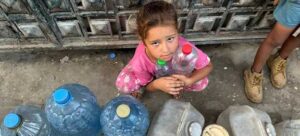
A child waits to fill water containers in Gaza. Credit: UNRWA

 
In its latest update last week. the UN agency for Palestinian refugees, UNRWA, reported “especially intense” airstrikes in central Gaza in recent days, particularly in Bureij, Maghazi and Nuseirat refugee camps and eastern Deir Al-Balah.

 
Meanwhile, the Israeli military’s ground offensive “continues to expand”, UNRWA noted, particularly in the southern regions of Gaza City and eastern Rafah, causing further suffering and further “destabilising” humanitarian aid flows.

ATLANTA, Georgia, Jul 3 2024 (IPS) – Zionism is broken. It is finished as a political philosophy and cannot long survive. Having earned the visceral opposition of multitudes of people and countries around the world for engaging in vast overkill in Gaza, that historical reality will likely become clear to the Israeli people over time.


Still, how could the most powerful state in the Middle East, the most flourishing economically, with the strongest superpower backing, become defunct? It cannot—unless somehow its chief raison d’etrê, its founding philosophy, collapses. That has already happened.

In the wake of the October 7 attack by Hamas, the visceral racist core of Zionism has become evident in the indiscriminate slaughter of tens of thousands of innocent Palestinian civilians, including many thousands of children.

No reason of state can ever excuse that. Israel’s righteous anger against HAMAS for its obscene October 7 attack transitioned quickly into racial hatred, ending in, if not genocide, then certainly war crimes and crimes against humanity. Netanyahu and his Likud allies have not hidden their racism for decades. Now it is explicit in full view of the world.

The Zionism of Netanyahu and his supporters must be repudiated by the Israelis themselves. Israel’s leaders from Menachem Begin to today have long endorsed statements lauding Israel uber alles.

Zionism can only be rehabilitated if it separates its reason for existing from the current triumphalist military identity that is determined to kill, kill, and kill again until the utter destruction and suppression of all every tangible and ideological enemy.

In a recent CNN interview, former Shin Beth Director Ami Ayalon, was very explicit: he said “The toxic leadership of Prime Minister Netanyahu” [in pursuing an endless war] will “lead to the end of Zionism.” In that case, he said, “We cannot be secure and we shall lose our identity.”

Ayalon was preceded by a number of courageous Israeli thinkers and writers who warned of the same outcome—Israel was founded in 1948 but in their opinion, Zionism had already failed ideologically by the mid-1960s. They included Hebrew University professor Israel Shahak (1933-2001), who wrote, “It is my considered opinion that the State of Israel is a racist state in the full meaning of the term.”

He insisted that, “You cannot have humane Zionism. It (too) is a contradiction in terms.” Uri Avnery (1923-2018), a decorated Israeli soldier and later a publisher and politician, published a book in 1968 titled Israel without Zionists.

Many of the original Jewish colonists had utopian dreams, but their leaders would probably not recognize the grim, revengeful militarism of today’s Israel. A few tiny orthodox religious parties in Israel have never bought into the military machine that is the Likud Party’s pride and joy.

Some have steadfastly refused even to serve in the Israeli army because they don’t believe in the Israeli state. Now even they are being conscripted.

The original dream of Zionism from Theodore Herzl to Chaim Weizmann to David Ben Gurion, although containing seeds of a today’s hob-booted military identity, nevertheless also expressed a grandiosely humane, even a universal, goal—to become a “light to the nations.” In that, Israel has signally failed.

Like HAMAS and most Palestinians, Israel’s people—and Israel as a country—has become increasingly and deeply racist. Now racism—hatred of others for their differences—has become racial-ism, which is even worse, a doctrine of race superiority, which was the Nazi credo.

The Israel of Benjamin Netanyahu and his thuggish coalition has succumbed to such race hatred that Zionists from pre-1948 Palestine would not recognize it. A Jan. 6, 2024 opinion article in the Jerusalem Post urges Israel to reform its politics along better Zionist lines and take power away from the extremists now in charge. Commendable, but not nearly enough.

What if Abraham Lincoln had countenanced America’s original sin of slavery by merely taking half steps? We might still have “slavery lite.” No, Israel’s race-based philosophy must change to the democratic ideal: a single state in Israel and the occupied territories for Muslims, Christians, and Jews. One person, one vote.

When Palestinians are treated as human beings—as real people instead of enemies to be eradicated en masse—people everywhere would soon see how quickly peace would come to the Middle East.

James E. Jennings, PhD, is President, Conscience International
www.conscienceinternational.org
conscience@earthlink.net

IPS UN Bureau

  Source

US Arms Suppliers in Gaza Killings Should be “Named, Shamed & Boycotted”

Armed Conflicts, Civil Society, Featured, Global Governance, Headlines, Human Rights, Middle East & North Africa, TerraViva United Nations

A child watches as bodies are recovered from under the rubble of a house in the Al-Nasr neighborhood, east of the city of Rafah, in the southern Gaza Strip. Credit: UN News/Ziad Taleb

UNITED NATIONS, Jul 3 2024 (IPS) – The US gun lobby justifies the unfettered American gun ownership in the US on a misguided premise: Guns don’t kill people, it’s bullets that kill people.

The accusations of genocide and war crimes in Gaza have been directed firstly, at Israel, for the killings of more than 37,700, mostly civilians, and over 86,000 injured, in retaliation for the 1,200 killed by Hamas last October, according to estimates from Gaza health officials, as cited by Cable News Network (CNN) last week.


And secondly, the blame is also squarely on the United States, the unrestrained supplier of arms, including the devastating 2,000-pound unguided bombs, to the Netanyahu government.

But a group of UN human rights experts is now blaming a third force: US arms manufacturers who are accused of implicitly killing people, along with financial institutions that fund most of these weapons suppliers.

“The transfer of weapons and ammunition to Israel may constitute serious violations of human rights and international humanitarian laws and risk State complicity in international crimes, possibly including genocide, the UN experts said last week, reiterating their demand to stop transfers immediately.”

In line with recent calls from the Human Rights Council, the UN experts are calling for halt to the sale, transfer and diversion of arms, munitions and other military equipment to Israel by US arms manufacturers – including BAE Systems, Boeing, Caterpillar, General Dynamics, Lockheed Martin, Northrop Grumman, Oshkosh, Rheinmetall AG, Rolls-Royce Power Systems, RTX, and ThyssenKrupp.

The experts say these defense contractors should also end transfers, even if they are executed under existing export licenses.

“These companies, by sending weapons, parts, components, and ammunition to Israeli forces, risk being complicit in serious violations of international human rights and international humanitarian laws,” the experts said.

This risk is heightened by the recent decision from the International Court of Justice (ICJ) ordering Israel to immediately halt its military offensive in Rafah, having recognised genocide as a plausible risk, as well as the request filed by the Prosecutor of the International Criminal Court (ICC) seeking arrest warrants for Israeli leaders on allegations of war crimes and crimes against humanity.

“In this context, continuing arms transfers to Israel may be seen as knowingly providing assistance for operations that contravene international human rights and international humanitarian laws and may result in profit from such assistance.”

Dr Ramzy Baroud, a journalist and Editor of The Palestine Chronicle, told IPS the UN experts’ statement is important, as it highlights the complex role of the US in supporting, sustaining, and benefiting from the Israeli genocide in Gaza.

“Quite often we call on, demand and implore the US to end its support of Israel, so that the genocide may come to an end. The experts, however, are reminding us that the US involvement is not confined to that of the White House, and direct or indirect US military and logistical support to Israel”, he pointed out.

Indeed, he said, US support is channeled through multiple players, those who manufacture, transport, assemble and maintain the weapons and munition — a multi-billion-dollar military machine that has harvested the lives of tens of thousands of Palestinians.

These companies must be named, shamed, boycotted and held accountable in every possible way. They must understand that there are legal repercussions to their action, as they are complicit in the Israeli crimes against the Palestinians, said Dr Baroud, a Non-resident Senior Research Fellow at the Center for Islam and Global Affairs (CIGA).

These companies are, as the experts said, ‘knowingly’ providing direct assistance to Israel in its genocidal war. They are fully aware of the extent of these crimes as articulated in the South African case against Israel at the ICJ, and the call for arrest warrants by the chief prosecutor of the ICC.

The next rational step is for these companies to be taken to task. They seem to have no moral threshold. Their quest for profits by far exceeds their concern that their weapons are killing thousands of children, women and civilians in Gaza, and throughout occupied Palestine. They must face justice as participants in the Israeli genocide in Gaza, declared Dr Baroud.

Norman Solomon, executive director, Institute for Public Accuracy, told IPS it’s difficult to draw any clear distinction between the U.S. government and the arms makers that sell to it.

“The two are so intertwined that differentiating between them is often a distinction without a difference. The revolving door for individuals, in both directions, places weapons executives in pivotal government positions and vice versa”.

The magnitude of the military profits, he pointed out, is overwhelming in the nation’s political economy and culture. The multibillion-dollar corporations that depend on selling weaponry to the government are directly participating in a routine process of literally making a killing on behalf of massive profit-taking.

To call these firms “defense contractors” is a misnomer, since what they sell has little to do with defense in any meaningful sense, he argued.

“The stepped-up weapons sales and gifts to Israel are continuations of a partnership between the U.S. government and arms suppliers with the purpose of aiding an ally and reaping still more massive profits. In tandem, the U.S. government and the companies are providing Israel with the means to continue mass murder of Palestinian civilians in Gaza. The core of the problem is lack of democracy and vastly excessive corporate power”.

In moral terms, the culpability is far-reaching. Yet, in a sinister way, he said, the military contractors are doing what capitalism provides for them to do — seek to maximize profits regardless of the consequences for human beings and the natural environment.

In contrast, within a democratic system, government is supposed to be responsive to the informed consent of the governed — conditions that certainly do not exist in the United States.

Meanwhile, in terms of international law and human decency, the U.S. government and its arms suppliers are guilty of horrendous crimes, which assist and compound those of Israel, declared Solomon, who is also national director, RootsAction.org and author of, “War Made Invisible: How America Hides the Human Toll of Its Military Machine”

A report from the Human Rights Council in mid-June details six emblematic attacks involving the suspected use of GBU-31 (2,0000 lbs), GBU-32 (1,000 lbs) and GBU-39 (250 lbs) bombs from 9 October to 2 December 2023 on residential buildings, a school, refugee camps and a market.

The UN Human Rights Office verified 218 deaths from these six attacks, and said information received indicated the number of fatalities could be much higher.

“The requirement to select means and methods of warfare that avoid or at the very least minimise to every extent civilian harm appears to have been consistently violated in Israel’s bombing campaign,” said High Commissioner for Human Rights Volker Türk.

The report says the series of Israeli strikes, exemplified by the six incidents, indicates that the IDF may have repeatedly violated fundamental principles of the laws of war. In this connection, it notes that unlawful targeting when committed as part of a widespread or systematic attack against a civilian population, in line with a State or organisational policy, may also implicate the commission of crimes against humanity.

Financial institutions investing in these arms companies are also called to account. Investors such as Alfried Krupp von Bohlen und Halbach-Stiftung, Amundi Asset Management, Bank of America, BlackRock, Capital Group, Causeway Capital Management, Citigroup, Fidelity Management & Research, INVESCO Ltd, JP Morgan Chase, Harris Associates, Morgan Stanley, Norges Bank Investment Management, Newport Group, Raven’swing Asset Management, State Farm Mutual Automobile Insurance, State Street Corporation, Union Investment Privatfonds, The Vanguard Group, Wellington and Wells Fargo & Company, are urged to take action.

Failure to prevent or mitigate their business relationships with these arms manufacturers transferring arms to Israel could move from being directly linked to human rights abuses to contributing to them, with repercussions for complicity in potential atrocity crimes, the experts said.

“Arms initiate, sustain, exacerbate, and prolong armed conflicts, as well as other forms of oppression, hence the availability of arms is an essential precondition for the commission of war crimes and violations of human rights, including by private armament companies,” said the experts.

The experts paid tribute to the sustained work of journalists who have been documenting and reporting on the devastating impact of these weapons systems on civilians in Gaza, and human rights defenders and lawyers, among other stakeholders, who are dedicated to holding States and companies accountable for the transfer of weapons to Israel.

IPS UN Bureau Report

  Source

Argentina: Civil Society’s Urgent Call to Protect Rights

Civil Society, Crime & Justice, Democracy, Economy & Trade, Environment, Headlines, Human Rights, Latin America & the Caribbean, TerraViva United Nations

Opinion

First Round of the elections in Argentina in 2023. Credit: Midia Ninja

BUENOS AIRES, Argentina, Jul 2 2024 (IPS) – Between the Mafia and the State, I prefer the Mafia. The mafia has codes, it keeps its promises, it doesn’t lie, it’s competitive. If a company pollutes a river, where is the damage? The sale of organs is a market like any other. Abortion should be considered “aggravated murder”.


These are just a couple of quotes from former TV pundit Javier Milei, now president of Argentina, as he makes anti-progressism his trademark, borrowying from the ready-made discourse of the globalalt-right. He claims that global warming is “another lie of socialism”.

In recent months, Argentina has witnessed a significant shift under his new administration that threatens to undermine the very fabric of its civil society and democratic governance.

On June 12th, there was a violent crackdown on protesters outside the National Congress, involving the use of batons, tear gas, and rubber bullets. Several individuals were arrested arbitrarily and subsequently labeled as “terrorists” by the government, a move clearly intended to intimidate civil society and criminalize protest. These detainees have been transferred to federal prisons, where reports indicate continued abuse, including the use of pepper spray, physical violence, and denial of basic rights.

Last Friday, the government sent another controversial bill to Congress looking to lower the age of criminal responsibility from 16 to 13, even though minors commit less than 1% of serious crimes in Argentina. A proposal that was labelled by opposers as “pure smoke and mirrors.”

Since taking office, President Javier Milei’s administration has received significant international criticism, including from UN High Commissioner for Human Rights Volker Türk and the Inter-American Commission on Human Rights which has scheduled a hearing on July 11th to address the situation.

“A President proud to repress”, this is what various media across Argentina wrote as Milei went as far as accusing protesters of being “terrorists” and said police violence prevented a “coup d’état”.

These alarming development mark a stark contrast to the country’s long-standing commitment to democracy and human rights, a commitment that has been painstakingly nurtured since the end of its brutal military dictatorship in 1983.

Moreover, this change of administration has been accompanied by an abrupt “retreat” of the state from its historic role as guarantor of the rights of its citizens. This abdication by the State of its essential responsibilities adds even more concerns to the already alarming measures explicitly restricting civic space.

Javier Milei’s aggressive and theatrical style – from superhero costumes to wielding a chainsaw to illustrate his plans to cut down the size of the state – has led some to compare him to Donald Trump in the US or Jair Bolsonaro of Brazil. This shift, alongside the blurring of ideological lines between the Peronist and Together for Change coalitions, has implications for Argentina’s political landscape and on civic space.

Argentina’s civil society organizations, long the backbone of its democratic resilience and human rights advocacy, face unprecedented challenges.

Legislative proposals aimed at restricting their activities, coupled with limitations on freedom of expression and the right to protest, have sent shockwaves through the community. The administration’s policies include drastic public spending cuts, the closure of state institutions dedicated to women’s rights and access to justice, and a suspension of participation in international events related to the 2030 Agenda.

A recent protocol, announced by Security Minister Patricia Bullrich, involves identifying protesters through various means and then billing them for the costs incurred by deploying security forces to police the demonstrations. Human rights activists, opposition legislators, and organizations like the Centre of Legal Studies (CELS) argue that these measures effectively criminalize legitimate protests and violate constitutional rights. The government’s allies, such as legislator José Luis Espert, have responded with aggressive rhetoric: “Prison or bullet”.

Recently, a violent attack against a member of the organization H.I.J.O.S., known for its fight against impunity for the crimes of the last civil-military dictatorship and for the defense of human rights, has been denounced. This attack, characterized by its brutality and strong political message, reflects an alarming increase in violence against activists and civil society organizations. The attackers, by leaving the acronym VLLC (“Viva la libertad, carajo!”), associated with President Javier Milei, insinuate a disturbing link between government rhetoric and violent actions directed against “dissidents”.

These proposals, exacerbated by the country’s ongoing economic and social crises, pose new hurdles for civil society’s ability to operate and advocate for public interests.

Argentina’s history, marked by the dark years of dictatorship between 1976 and 1983, serves as a reminder of the cost of silence and inaction. The country’s journey to reclaim democracy and human rights was arduous, characterized by relentless efforts to acknowledge and compensate the victims of past repression. The current administration’s move to revise policies related to memory, truth, and human rights threatens to undo decades of progress, challenging the very essence of Argentina’s democratic sphere.

The international community, particularly organizations dedicated to the promotion of human rights and the preservation of historical memory, such as UNESCO, must heed this call to action.

The situation in Argentina requires a collective effort to support its civil society, advocate for the protection of civic space, and ensure that the lessons of the past are not forgotten.

This article was written by the Entidades no Gubernamentales para el Desarrollo (EENGD) – Red Encuentro, the national NGO platform of Argentina, in collaboration with the global civil society network Forus.

IPS UN Bureau

  Source

Special Report: Exposing Afghanistan’s Pervasive, Methodical System of Gender Oppression

Civil Society, Development & Aid, Editors’ Choice, Education, Featured, Gender, Headlines, Human Rights, Humanitarian Emergencies, Middle East & North Africa, Sustainable Development Goals, TerraViva United Nations

Education Cannot Wait. Future of Education is here

Richard Bennett during his oral statement at the Human Rights Council on June 18, 2024. Credit: Anne-Marie Colombet/Human Rights Council

Richard Bennett during his oral statement at the Human Rights Council on June 18, 2024. Credit: Anne-Marie Colombet/Human Rights Council

NAIROBI , Jul 1 2024 (IPS) – The UN Special Rapporteur’s annual report on human rights in Afghanistan lays bare the alarming phenomenon of an institutionalized system of discrimination, segregation, disrespect for human dignity and exclusion of women and girls.

In the new report, Richard Bennett, the UN’s Special Rapporteur, provides an intersectional analysis of the establishment and enforcement of this institutionalized system of unparalleled gender oppression. It paints a picture of a worsening situation for women and girls.


“The situation is that the de facto authorities, who control the country but are not yet recognized as a government, are not just failing to implement their obligations to human rights under the human rights treaties that they’ve signed. They are deliberately implementing policies and practices that flout those policies to create a society where women are permanently inferior to men,” says Bennett in an exclusive interview with IPS.

Education Cannot Wait’s #AfghanGirlsVoices global campaign highlights real-life testimonies of hope, courage and resilience by Afghan girls denied their right to education. Credit: ECW

Education Cannot Wait’s #AfghanGirlsVoices global campaign highlights real-life testimonies of hope, courage and resilience by Afghan girls denied their right to education. Credit: ECW

“Of course, there is sexism in every country, some worse than others, but this is very different from any other country.”

Bennett is referring to the distressing pattern of large-scale systematic violations and subjugation of women’s and girls’ fundamental rights that is unfolding, abetted by the Taliban’s discriminatory and misogynist policies and harsh enforcement methods such as gender apartheid and persecution.

“Only in Afghanistan has a government shut schools for girls above the age of 13, above the sixth grade, and does not allow women to go to universities. And this, combined with segregation, means that women are really suffering. For example, women can only get treatment from doctors who are women and the same applies to teaching. It is a very segregated society as a whole. Just today, a businesswoman told me that she could only do business with female customers. This is affecting not just the current situation and the current generation, but the future as well.”

The Special Rapporteur finds that the Taliban’s institutionalized system of discrimination is most visible through its relentless issuance and enforcement of edicts, decrees, declarations and orders that in and of themselves constitute severe deprivations of human rights and violations of international law.

Between June 2023 and March 2024, they issued an estimated 52 edicts. These include banning foreign non-governmental organizations from providing educational programmes, including community-based education. The Taliban banned women from participating in radio and television shows alongside male presenters.

In July 2023, female beauty salons were forced to close. In August 2023, women were prohibited from entering Band-e Amir National Park. In October 2023, women were excluded from holding directorships within non-governmental organizations. In February 2024, women on television were required to wear a black hijab, with their faces covered, leaving only their eyes visible.

“We are concerned about intergenerational issues, but also intersectional issues. There is discrimination against women and girls who are of an ethnic or religious or linguistic marginalized groups,  or persons with disabilities, or a woman heading a household. Travel requires accompaniment by a close male relative and some women do not have such a person available. All of this is extremely restrictive and will also affect future generations as it will lead to a lack of education and professions,” Bennett says.

The report finds that “women and girls are being maneuvered into increasingly narrow roles where the deep-rooted patriarchy, bolstered and legitimized by Taliban ideology, deems them to belong: as bearers and rearers of children, and as objects available for exploitation, including debt bondage, domestic servitude, sexual exploitation and other forms of unremunerated or poorly remunerated labor.”

The UN Special Rapporteur stresses that there was progress in Afghanistan before the return of the Taliban.

“It was not perfect, but for 20 years there was notable progress. As a result, there are very many professional women in Afghanistan, and women who head households as the main income earners—the main breadwinners for their families. The restrictions are having very serious negative effects.”

Richard Bennett, UN Special Rapporteur Afghanistan, advocates for the rights of every girl to education in Afghanistan. Credit: ECW

Richard Bennett, UN Special Rapporteur for Afghanistan, advocates for the rights of every girl to education in Afghanistan. Credit: ECW

Bennett is among the prominent supporters of the global #AfghanGirlsVoices campaign launched by Education Cannot Wait (ECW), the global fund for education in emergencies and protracted crises within the United Nations. Now in its second phase, the campaign aims to ensure unrestricted access to education for Afghan girls and young women.

After seizing power in 2021, the Taliban swiftly imposed a ban on secondary education for girls, subsequently expanding this restriction to encompass universities and, more recently, private learning centers. Young women have also been prevented from leaving Afghanistan to pursue tertiary education.

“There has never been universal education in Afghanistan, even in the 20 years preceding the return of the Taliban. However, the education system gradually improved, although not as much in remote or rural areas. Part of this was due to a lack of resources, as well as an ongoing internal conflict. So, it was insecure and difficult to maintain schools. But once the Taliban came back into power after August 2021, an education system built over two decades was quickly unraveling,” he says.

In addition to the school closures, he speaks of concerns about the quality of education from two perspectives. One is the alarm over an ongoing brain drain in Afghanistan since the Taliban took over. Many teachers and university lecturers have left the country.

The other concerns are changes to the curriculum and especially a notable increase in madrasa education. Madrasa education has always been a feature of life in Afghanistan. “But now there seems to be at least anecdotal information that the teaching is much more religious-based than a broad education. Girls can go to madrasas,” he says. 

On recommendations and urgent solutions moving forward, Bennett stresses that “no country should ban schools. We therefore continue to call for the reversal of this policy and the reopening of schools with a good quality education. My recommendations are what I call an all-tools approach, as only one approach or any one tool will not work.”

Overall, he says the report calls for justice and accountability, incorporating human rights and women’s voices in political processes and diplomatic engagement. Emphasizing that bolstering documentation of human rights abuses and violations is critical, as is reinforcing protection and solidarity for Afghan women, girls and human rights defenders.

Bennett has a direct message to the current rulers in Afghanistan, the Taliban, to reverse their policies and to comply with human rights. The second message is to the international community, urging them not to normalize or recognize Afghanistan’s unacceptable and worsening human rights situation.

Further stressing that the global community should strongly resist normalizing diplomatic relations or accepting the Taliban into the UN unless and until they meet concrete, measurable, verifiable benchmarks on human rights and the rights of women and girls.

IPS UN Bureau Report

  Source

IRAQ: ‘Tolerance for Abuses Against LGBTQI+ People Has Now Been Made Explicit Through Legislation’

Civil Society, Crime & Justice, Featured, Gender, Gender Identity, Gender Violence, Headlines, Human Rights, LGBTQ, Middle East & North Africa, Religion, TerraViva United Nations

Jul 1 2024 (IPS) –  
CIVICUS discusses the criminalisation of same-sex relations in Iraq with Sarah Sanbar, researcher at Human Rights Watch’s Middle East and North Africa division.


Sarah Sanbar

The Iraqi parliament recently passed a law criminalising LGBTQI+ people, punishing same-sex relations with between 10 and 15 years in prison and transgender identities with sentences of one to three years. The original proposal included even harsher penalties, but lawmakers introduced amendments in response to strong criticism. Supporters claim the law upholds deeply held religious values, while critics condemn it for institutionalising discrimination and enabling serious human rights abuses.

What led to recent legislative changes criminalising LGBTQI+ people?

On 27 April 2024, the Iraqi parliament passed an amendment to the country’s 1988 anti-prostitution law, effectively criminalising same-sex relations and transgender identities. The amendment states that same-sex relations are punishable with between 10 and 15 years in prison, and provides for one to three years’ imprisonment for those who undergo or perform gender-affirming medical procedures.

The law also punishes those who ‘imitate women’ with a seven-year prison sentence and a fine of between 10 and 15 million Iraqi dinars (approx. US$7,700 to US$11,500) and criminalises the ‘promotion of homosexuality’, a vague and undefined expression.

The passing of this law follows years of steadily increasing hostile rhetoric against LGBTQI+ people. Prominent politicians and media personalities have consistently spread harmful stereotypes, tropes and disinformation. They often claim homosexuality is a western import that goes against traditional Iraqi values.

This rhetoric has increasingly translated into government action. For example, on 8 August 2023, the Communications and Media Commission issued a directive ordering all media outlets to replace the term ‘homosexuality’ with ‘sexual deviance’ in all published and broadcast language. The directive also banned the use of the word ‘gender’, which shows how the crackdown on LGBTQI+ rights is intertwined with broader issues, and is also used to target and silence women’s rights organisations working on gender-based violence.

Sadly, as in many other countries, LGBTQI+ people in Iraq are being used as political pawns and scapegoats to distract from the government’s failure to provide for its people. Tensions are growing between the more conservative and religious groups in society and government and those that take a more secular approach to governance. The fact that conservatives have gained increasing support in successive elections allows laws like this to be passed. Such a law probably wouldn’t have been passed even a few years ago.

What’s the situation of LGBTQI+ people in Iraq, and how do you expect it to change?

The situation of LGBTQI+ people is extremely unsafe. Threats to their physical safety, including harassment, assault, arbitrary detention, kidnappings and killings, come from society at large – including family and community members as well as strangers – and from armed groups and state personnel. Human Rights Watch has documented cases of abductions, rape, torture and killings by armed groups. Impunity is widespread, and the government’s failure to hold perpetrators accountable sends the message that this violence is acceptable.

With the passage of the new law, the already dire situation is expected to worsen. Tolerance for abuses has now been made explicit through legislation. As a result, an increase in violence is to be expected, along with an increase in the number of LGBTQI+ Iraqis fleeing the country to seek safety elsewhere. Unfortunately, it is becoming even harder for LGBTQI+ Iraqis to ensure their physical safety in the country, let alone lead fulfilling lives, find love, make friends and build links with others in their community.

What are the challenges facing Iraqi LGBTQI+ rights organisations?

The space for LGBTQI+ organisations in Iraq has long been extremely limited. For example, in May 2023, a court in the Kurdistan Region ordered the closure of Rasan, one of the few groups willing to publicly advocate for LGBTQI+ rights in the region. The reason the court gave for its closure was its activities ‘in the field of homosexuality’, and one piece of evidence cited was its use of rainbow colours in its logo.

Organisations such as Rasan have previously been targeted under vaguely worded morality and public indecency laws that restrict freedom of expression. By criminalising the ‘promotion of homosexuality’, the new law makes the work of LGBTQI+ organisations even more dangerous. Any action in support of LGBTQI+ rights could be perceived as ‘promoting homosexuality’, which could lead to activities being banned or organisations being shut down. It will be almost impossible for LGBTQI+ rights organisations to operate openly.

In addition, all civil society organisations in Iraq must register with the Directorate of NGOs, a process that includes submitting bylaws, lists of activities and sources of funding. But now, it is essentially impossible for LGBTQI+ organisations to operate transparently, because they can’t openly state their intention to support LGBTQI+ people without risking closure or prosecution. This leaves two options: stop working, or operate clandestinely with the risk of arrest hanging over them.

Given the restrictive legal and social environment, many organisations operate from abroad. IraQueer, one of the most prominent LGBTQI+ advocacy groups, is based in Sweden.

But despite the challenges, LGBTQI+ organisations continue to advocate for LGBTQI+ rights, help people fleeing persecution and work with foreign governments to put pressure on Iraq to roll back discriminatory policies. And they have made significant achievements, facilitating the safe passage of people fleeing persecution and broadening coalitions to advocate for LGBTQI+ rights internationally. Their perseverance in the face of adversity is inspiring.

What international support do local LGBTQI+ groups need?

Global organisations should use their capacity to sound the alarm and advocate for the repeal of the new law and the reversal of other discriminatory measures, and for impunity for violence against LGBTQI+ people in Iraq to be addressed.

An effective strategy could be to focus on human rights violations. Equal protection from violence and equal access to justice are required under international law, including the International Covenant on Civil and Political Rights and the Arab Charter on Human Rights, both of which Iraq has signed. Advocacy for LGBTQI+ rights as human rights can put greater pressure on the Iraqi government to fulfil its obligations.

It’s also essential to provide resources and support to local organisations in Iraq and in host countries where LGBTQI+ Iraqis seek refuge, to ensure people have access to basic needs and community support, and can live full lives without fear.

Civic space in Iraq is rated ‘closed’ by the CIVICUS Monitor.

Get in touch with Human Rights Watch through its website, and follow @hrw and @SarahSanbar on Twitter.

  Source