Vaccination Is the Best Bet Against Drug-Resistant Superbugs — Experts

Experts encourage parents to vaccinate their children against typhoid to ensure that the child has access to clean drinking water. Credit: Zofeen Ebrahim/IPS

Experts encourage parents to vaccinate their children against typhoid to ensure that the child has access to clean drinking water. Credit: Zofeen Ebrahim/IPS

By Zofeen Ebrahim
KARACHI, Jul 6 2023 (IPS)

The first thing you notice about eight-month-old Manahil Zeeshan is how tiny she looks on the adult-size hospital bed at the government-run Sindh Institute of Child Health and Neonatology (SICHN) in Korangi, a neighbourhood in Karachi.


Her right foot is taped with a cannula, and she whimpers incessantly. “I have been in and out of the hospital for the last seven days,” said Uzma Mohammad, Zeeshan’s mom, with worry lines on her forehead. “High fever that refused to come down, severe cough for days and breathlessness,” were some of the symptoms Mohammad described. She was convinced someone had “put a spell” on her daughter.

The doctors, however, suspected she had typhoid.

Salmonella Typhi bacteria cause typhoid fever, and Salmonella Paratyphi bacteria cause paratyphoid fever. According to the US-based public health agency, Centers for Disease Control and Prevention, along with a fever that can be as high as 103 to 104°F (39 to 40°C), the sick person can have weakness, stomach pain, headache, diarrhoea or constipation, cough, and loss of appetite. Some people have a rash of flat, rose-coloured spots.  Internal bleeding and death can occur but are rare. It affects between 11 and 20 million people each year, leading to 128,000 to 161,000 deaths, according to the World Health Organization (WHO). The highest fatality rates are reported in children under four years of age.

While Zeeshan’s blood culture report had yet to come to ascertain the cause of her sickness, she needed urgent medical care, said Dr Shabita Bai, who had admitted her.

“We could not wait for five days for the blood culture report as she was not doing well. And because she had already been given an antibiotic (a medicine used to kill bacteria) from outside, our chances of finding if the baby had typhoid for sure were slim, and we had to rely on the history,” justified Bai.

Decisions had to be made. Based on her condition, symptoms, and clinical diagnosis, the baby was given Ceftriaxone, an intravenous antibiotic, but she showed no improvement. The doctors then administered the stronger Meropeneme intravenously, a last-resort antibiotic.
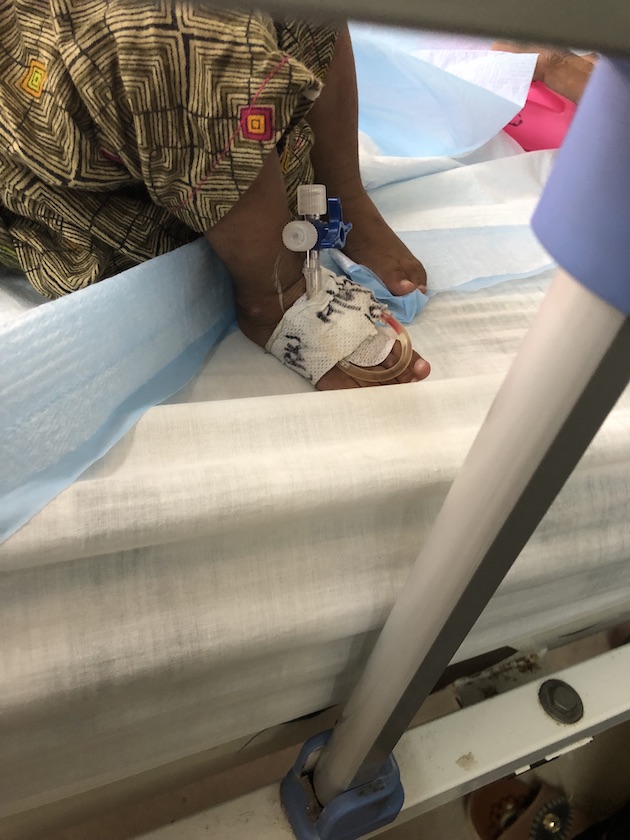
Manahil Zeeshan's foot has a drip in an effort to bring her temperature down and fight suspected typhoid. Credit: Zofeen Ebrahim/IPS

Manahil Zeeshan’s foot has a drip in an effort to bring her temperature down and fight suspected typhoid. Credit: Zofeen Ebrahim/IPS

Battling the Superbug

But even if she had typhoid, the bacteria in her body had taken on the form of a superbug — the extensively drug-resistant (XDR) typhoid and the current antimicrobials had become ineffective, said paediatrician Dr Jamal Raza, the executive director of the SICHN.

According to a Lancet study published in 2022, multidrug-resistant (MDR) typhoid has been seen in Pakistan, while typhoid bacteria resistant to the widely-used antibiotic azithromycin have been found in Bangladesh, Nepal and India. “Our analysis revealed a declining trend of MDR typhoid in south Asia, except for Pakistan, where XDR S Typhi emerged in 2016 and rapidly replaced less-resistant strains,” stated the study, which researchers claim is the largest ever examination of the S.Typhi bacterium.

The reason why antibiotics are losing their punch against some types of bacteria, said Raza, was the “indiscriminate use of antibiotics” that health practitioners prescribe to provide immediate relief. Another big problem was self-medication by people. “I know people often use an old prescription by a doctor to get the same medicine if they feel they have the same symptoms, thinking they do not need to visit the doctor.”

But he pointed out viruses, which are also small germs like bacteria, are causing bacteria-like infections, like a cold or the flu.

“Taking an antibiotic for the latter does not treat the disease; it only leads to antibiotic resistance,” said Raza.

A study conducted by researchers from three medical institutions, namely, the Aga Khan University (AKU) in Karachi, the Armed Forces Institute of Pathology (AFIP) in Rawalpindi, and the Shaukat Khanum Memorial Cancer Hospital & Research Center (SKH) in Lahore in 2018, found indiscriminate use of antibiotics to be causing new drug-resistant “superbugs.”

It found a high prevalence of multidrug and fluoroquinolone resistance for both S.Typhi and S. Paratyphi strains of typhoid bacteria. From 20% in 1992, the resistance was found to have increased to around 50% in 2015. The stubborn bacteria were resistant to antibiotics like ampicillin, chloramphenicol (and co-trimoxazole), as well as fluoroquinolone (ciprofloxacin and/or ofloxacin).

“The situation is quite grim,” said Dr Mashal Khan, chairperson of the government-run paediatric medicine department at Karachi’s National Institute of Child Health, referring to the increase in the number of children developing resistance to typhoid drugs. His worry is not that the bacteria has spread; his concern is the bacteria has mutated and become resistant to the drug.

“We’re running out of new antibiotics to treat bacterial infections; Meropeneme is the last one, and a very expensive one too,” he said resignedly, adding: “Although the development of newer antibiotics is the need of the day, I must emphasise the rational use of the ones being used is more urgent.”

Developing new drugs is challenging, and antibiotics more so, as the science is tricky.

“Antibiotics are not the most lucrative drugs to develop for pharmaceuticals as their utility is limited in the future due to the bacteria developing the ability to resist them,” said Infectious Diseases specialist and epidemiologist Dr Faisal Mahmood at the Aga Khan University Hospital in Karachi. “A lot of money goes into developing new drugs, and since most of the funding is from the global north, they prefer to work on infections which concern them directly. Typhoid is unfortunately endemic in the low and middle-income countries in the South, which have poorer water quality and have warmer, more humid climates.”

And that is why the only sure-shot way of reducing the disease burden of typhoid is to vaccinate the children.

In 2019, Pakistan became the first country to get the World Health Organization (WHO)-recommended single-dose typhoid conjugate vaccine (TCV) injected intramuscularly, added to its routine immunisation (RI) regime. This is given to babies at nine months, alongside measles-rubella vaccinations, without impacting either vaccine.

“Childhood vaccination complemented with clean drinking water and improved hygiene practices is the much more cost-effective way of eradicating typhoid than pumping antibiotics in a child,” said Raza. Meropenem costs as much as Rs. 30,000 (USD 105) for a 10-day course, and if hospitalisation is included, it can go up to Rs 100,000 ($349), said the doctor. Being in a government hospital, Zeeshan is treated free of cost.
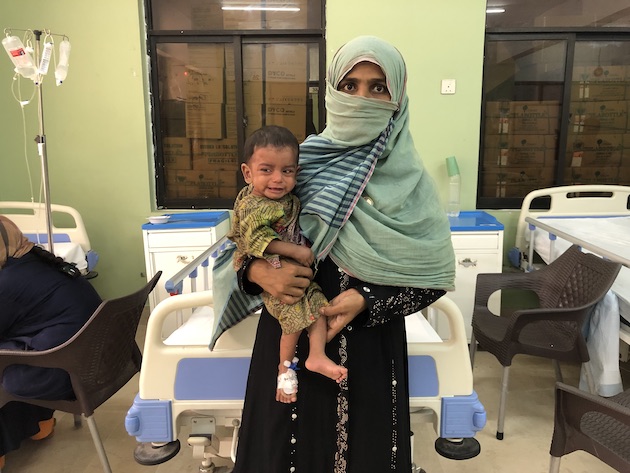
Eight-month-old Manahil Zeeshan is treated for typhoid at the government-run Sindh Institute of Child Health and Neonatology (SICHN) in Korangi, a neighbourhood in Karachi. Credit: Zofeen Ebrahim/IPS

Eight-month-old Manahil Zeeshan is treated for typhoid at the government-run Sindh Institute of Child Health and Neonatology (SICHN) in Korangi, a neighbourhood in Karachi. Credit: Zofeen Ebrahim/IPS

Typhoid Vaccine Launch Hits a Snag as Covid-19 Surfaces

The 2019 TCV campaign was first launched in the two cities of Sindh – Karachi and Hyderabad (children up to 15 years of age were also given a shot), which reported the highest number of typhoid cases among children. There was a pause when Covid-19 hit the world. But by 2022, TCV had been launched across Pakistan, and 35.5 million children were vaccinated, after which it was added to the government-run Expanded Programme on Immunisation (EPI) programme.

“Many parents do not know that the TCV is a more effective vaccine but only available at government vaccination centres, and not at private clinics and hospitals as Gavi has only given it to the government of Pakistan,” said paediatrician Dr D.S. Akram.

“There is another typhoid vaccine available in the private sector (typhoid polysaccharide vaccine), but it can only be given to children over two years of age, and it needs boosters every three years. My advice to parents is to vaccinate their kids against typhoid bacteria at nine months,” she said.

But it is still a drop in the ocean, and the fight against typhoid and other childhood diseases continues. The WHO places Pakistan among the ten countries that account for almost two-thirds of the world’s unimmunised children.

When Covid-19 hit the country’s already crumbling health system, it also brought the country’s immunisation programme to a halt too. An estimated 1.5 million children across Pakistan missed out on basic vaccines from March to May 2020, according to Gavi.

For Pakistan, which already has low immunisation coverage (the percentage of fully immunised children aged 12-23 months is just 66%), it meant a further dip in coverage which led to an unprecedented rise in the number of zero-dose children (those that have not received any routine vaccine). Add to these were the almost 19,000 new births every day. But when the lockdown eased and vaccinators returned to work, there was less demand for vaccination, having been replaced by fear of the new virus.

While Pakistan has yet to reach the optimal immunisation coverage of 90%, during Covid-19, Pakistan’s EPI received plaudits internationally for taking both vaccine coverage and the number of zero-dose children close to pre-pandemic levels in 2021. “What Pakistan achieved needs to be celebrated. In fact, Pakistan and Chad are used as examples internationally of how to get it right in an emergency,” said Huma Khawar, an immunisation and child health advocate working closely with EPI.

“Despite a year’s delay due to Covid-19, which was unforeseen, I think it is the best thing that the government has done for its country’s children,” said Khawar. She credited the RI programme that bounced back to the pre-pandemic level in 2021.

Clean water, Good Hygiene Key to Preventing typhoid

While immunisation can protect children from getting infected, clean drinking water and improved hygiene practices can reduce the risk of catching the disease to a great extent.

“Vaccines provide immunity when there is exposure to the bacteria,” agreed Dr Jai Das, assistant director at the Institute for Global Health and Development at the Aga Khan University and one of the co-authors of the 2018 report on typhoid, but emphasised the need for improved water and sanitation, a situation that continues to remain dismal and compromised in Pakistan.

The same study not only found a strong correlation between water and sanitation but to literacy levels as well. In addition, it stressed improving the country’s food safety protocols and implementing regulations.

While Mohammad believes that her daughter is under a curse, one reason could be that the unpasteurised cow’s milk she gives her daughter may not be properly boiled at home. “I was unable to breastfeed her,” she said. Further, she confessed to diluting it with unboiled tap water to make it last longer.

Doctors say giving Pakistani babies a lease of life is simple and costs nothing. “Exclusive breastfeeding up to at least six months of age (right now it is only 43%), attaining 90% coverage of RI across Pakistan and improving water and sanitation quality,” according to Dr Akram.

Bacteria Don’t Respect Geographic Borders

The XDR typhoid bacteria propagating in Pakistan has crossed borders and reached as far as the UK, Canada and the US. Earlier this year, a team of Pakistani and US researchers published their findings in the American Journal of Tropical Medicine and Hygiene, stating that with numerous typhoid bacteria variants circulating in Pakistan have also been identified in Southeast Asia and Eastern and Southern Africa and have been introduced into the United Kingdom, Canada, and the United States by travellers.

The Lancet study said strains from South Asia had spread 200 times to other countries since 1990. When these superbugs grow and spread, they can cause infections that are hard to treat. Sometimes they can even spread the resistance to other bacteria they meet.

The future looks frightening. While the need for improving water and sanitation cannot be overemphasised, along with the need for vaccinating children, newer and stronger antibiotics need to be developed and fast as typhoid may surface in deadlier ways than now since very few antibiotics remain effective against the bacteria.

Note: This story was supported by the Sabin Vaccine Institute and Internews

IPS UN Bureau Report


!function(d,s,id){var js,fjs=d.getElementsByTagName(s)[0],p=/^http:/.test(d.location)?’http’:’https’;if(!d.getElementById(id)){js=d.createElement(s);js.id=id;js.src=p+’://platform.twitter.com/widgets.js’;fjs.parentNode.insertBefore(js,fjs);}}(document, ‘script’, ‘twitter-wjs’);  

Excerpt:

Childhood vaccination, complemented with clean drinking water and improved hygiene practices, are the key to eradication of typhoid XDR, not indiscriminate use of antibiotics, say Pakistan health experts. Source


Guatemala Clings to Democratic Promise

Credit: Silvia Rodríguez/AFP via Getty Images

By Inés M. Pousadela
MONTEVIDEO, Uruguay, Jul 5 2023 (IPS)

When Guatemalans went to the polls on 25 June, distrust and disillusionment were rife. First place in the presidential contest was claimed by none of the candidates: it went to invalid votes, at 17 per cent. Many didn’t bother, resulting in an abstention rate over 40 per cent.


But an unexpected development brought some hope: Bernardo Arévalo, leader of the progressive Movimiento Semilla, made it to the runoff.

Arévalo’s promise to fight against systemic corruption and bring back the numerous justice operators – people such as judges, prosecutors and public defenders – currently in exile to help clean up institutions is causing great concern for those who profit from the current state of affairs. The fact that Arévalo could become Guatemala’s next president has made the election results an instant object of contention.

Corruption and democratic decline

Guatemalan electoral processes aren’t pristine, but that isn’t where the most serious problems lie. Civic freedoms are steadily deteriorating and state institutions have been weakened by predatory elites and coopted by organised crime. Transparency International finds evidence of strong influence by organised criminals over politics and politicians, with some criminals themselves in office.

No wonder Guatemalans have a low level of confidence in state institutions. In the latest Latinobarómetro report, the church was by far the most trusted institution, winning the trust of 71 per cent of people, followed at some distance by the armed forces and police. But only nine per cent of people trust political parties, and trust is also very low in Congress, electoral bodies and the judiciary.

At 25 per cent, satisfaction with the performance of democracy is extremely low – as is the number of people who think the country is ruled for the benefit of all rather than just elites.

The run-up to the vote

Those denouncing corruption, collusion, illegal private sector practices and human rights abuses have increasingly been subjected to smear campaigns, surveillance, harassment and criminalisation by state authorities. Many have been pushed into exile. Rising violence against journalists and human rights defenders, including killings – the latest being that of journalist Orlando Villanueva – recently led the CIVICUS Monitor to downgrade its civic space rating for Guatemala to the second-worst category, repressed.

Restrictions on civic freedoms increased in the run-up to elections, ranging from smear campaigns to criminalisation. On 14 June, José Rubén Zamora, head of the newspaper elPeriódico, which had exposed more than 200 corruption cases, was sentenced to six years in prison for alleged money laundering. Zamora had been subjected to harassment and intimidation for years and had survived an assassination attempt.

An observation mission carried out by Reporters Without Borders and others ahead of voting warned that the absence of basic press freedoms made it impossible to guarantee a legitimate electoral process.

The process was indeed marred by multiple irregularities, starting with the disqualification of several contenders, including Indigenous leader Thelma Cabrera and her running mate, Jordán Rodas Andrade, the only left-wing candidacy polls showed stood a fighting chance. The candidate who led opinion polls, conservative business leader and TikTok star Carlos Pineda, was also disqualified.

What happened on 25 June

With two dozen candidates competing in the presidential race, it was no surprise that none reached the 50 per cent threshold required to avoid a runoff. What was unexpected was Arévalo’s good performance.

The front-runner, Sandra Torres of National Unity of Hope, is a political insider, Guatemala’s first lady between 2008 and 2011. Now standing for the third time in a row, she received 16 per cent of the vote. If elected, she would become Guatemala’s first female president. But she’s by no means a champion of women’s rights: she’s a vocal anti-abortion activist and her running mate is an evangelical pastor.

Runner-up Arévalo is an unusual politician at the head of an unusual party. Originally an academic with social-democratic views, he’s currently a member of Congress, where he leads a five-member progressive caucus. His running mate, low-key feminist Karin Herrera, is a microbiology researcher and university professor.

Unlike many Guatemalan parties, Arévalo’s party wasn’t created as a vehicle for someone’s presidential ambitions or corrupt interests: it was the creature of a group of concerned people that grew out of mass anti-corruption protests that broke out in 2015. In 2019, its presidential candidate was disqualified. But it found its footing among middle class groups, young people and women, particularly in Guatemala City.

The aftermath

Opinion polls had placed Arévalo eighth or ninth among the many contenders, so his performance caught elites off guard.

There’s no guarantee he’ll win the run-off. He’d have to gain the votes of the many who abstained or cast blank and invalid votes. But the fact that Arévalo might win has galvanised those who currently profit from the corrupt status quo, and they’re trying to push him out of the race. A majority of pro-establishment parties, including Torres’s party, have submitted complaints demanding a recount. Their supporters converged outside the Supreme Electoral Tribunal (TSE), quickly pushing further and calling for a rerun.

While various incidents were recorded on election day – including instances of vote buying, mostly by parties linked to the ruling alliance – international and domestic observers alike concluded that the results were valid and the gap of more than 200,000 votes between Semilla and the next contender, the outgoing president’s party, was insurmountable.

Mirador Electoral, a civil society platform, denounced pressures on the TSE as an attempted ‘electoral coup’. The European Union’s observer mission and the Organization of American States have called for the will of voters to be respected. Arévalo condemned it all as an intimidatory manoeuvre and called for the TSE, the Supreme Court and the Constitutional Court to act quickly and responsibly.

Instead, the Constitutional Court ordered the TSE to suspend official certification of results until complaints are resolved. Some fear an attempt to annul the elections will come next.

Guatemala stands at a crossroads. On the eve of voting it seemed on the verge of autocracy. An unexpected result hinted at the possibility of a much brighter path – one that fills many with hope but scares those who see their wealth and power endangered. The coming days and weeks will witness an arm-wrestling match between the past and the future, with three potential outcomes.

In the worst-case scenario, the runoff continues to be delayed by legal appeals and the task of appointing a president ultimately falls to Congress. In the second-worst scenario, a vote-by-vote recount is conducted instead of a simple cross-check of tally sheets, fraud occurs along the way and the ruling party’s candidate takes Arévalo’s runoff spot. Either way, the past wins.

Only if the recount is properly conducted, the results are corroborated and the runoff is held on 20 August will the future have a fighting chance. The corrupt establishment may still beat Arévalo – but this decision belongs to no one but the citizens of Guatemala.

Inés M. Pousadela is CIVICUS Senior Research Specialist, co-director and writer for CIVICUS Lens and co-author of the State of Civil Society Report.


!function(d,s,id){var js,fjs=d.getElementsByTagName(s)[0],p=/^http:/.test(d.location)?’http’:’https’;if(!d.getElementById(id)){js=d.createElement(s);js.id=id;js.src=p+’://platform.twitter.com/widgets.js’;fjs.parentNode.insertBefore(js,fjs);}}(document, ‘script’, ‘twitter-wjs’);  

Source

Quest for Safe Water in One of India’s Most Isolated Villages

Simita Devi, whose daughter spent days in hospital recently suffering from typhoid caused by contaminated water, collects clean water brought to the surface by a solar pump. Credit: Umar Manzoor Shah/IPS

Simita Devi, whose daughter spent days in hospital recently suffering from typhoid caused by contaminated water, collects clean water brought to the surface by a solar pump. Credit: Umar Manzoor Shah/IPS

By Umar Manzoor Shah
Champad, India, Jul 4 2023 (IPS)

Simita Devi spent over ten days in a government-run hospital a year ago anxiously watching her critically ill nine-year-old daughter, Gudiya, who was diagnosed with typhoid.

Gudiya was so sick she even went into a coma for a day. Medical staff attending to the child said she contracted the disease from drinking contaminated water.


After being discharged, Devi’s main worry was to get safe drinking water for her ailing daughter.

She was advised not to consume water from village wells or untested sources like river streams or springs.

Hailing from Champad, a tribal village in India’s Jharkhand state, Devi works as a daily wage labourer alongside her husband. With a limited income, Devi couldn’t afford packaged drinking water for her daughter.

She then decided to boil the water using firewood to make it safe to drink. But to get the firewood, she had to trek the treacherous terrains of the nearby forests – a long, difficult work and the fear of wild animals loomed.

It was not Devi alone impacted by contaminated water, it was making many people in her village ill, and there was nothing the inhabitants could do about it.

According to government records, 80% of India’s rural drinking water comes from underground sources. One-third of India’s 600 districts do not have safe drinking water because fluoride, iron, salinity, and arsenic concentrations exceed tolerance levels. India’s water quality is poor, ranking at 120 of 122 nations.

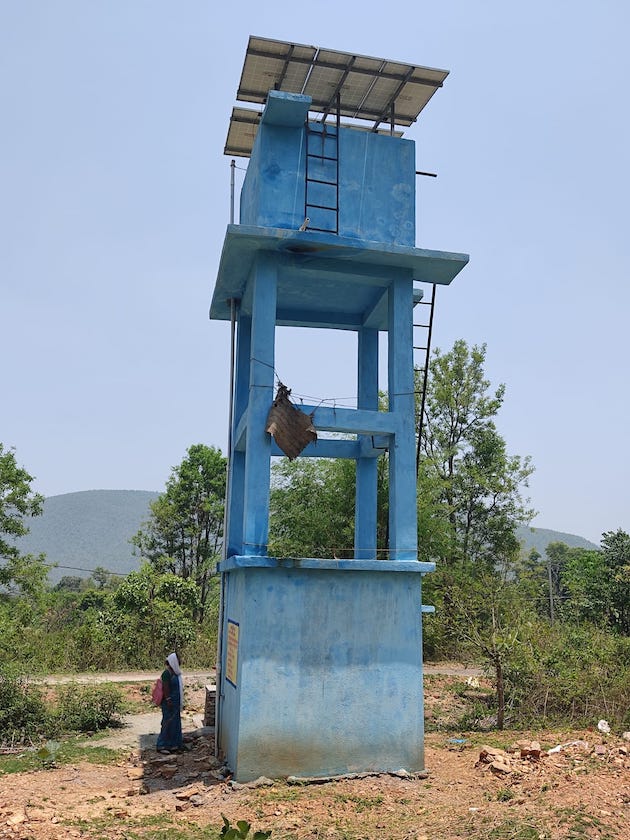
The solar panels on the water tower have meant clean waters for the villagers of Champad, a tribal village in India’s Jharkhand. Credit: Umar Manzoor Shah/IPS

The solar panels on the water tower have meant clean waters for the villagers of Champad, a tribal village in India’s Jharkhand. Credit: Umar Manzoor Shah/IPS

Experts believe that the source of these heavy metals is industrial waste being dumped untreated into water systems and nitrates which surface due to excessive and prolonged use of fertilizers. The government estimates that every year, over one lakh (100,000) people die of waterborne diseases in the country.

Champad, a village inhabited by a tribal community, has 105 households per the 2011 census. Until 2022, the community depended on only two tube wells as their source of drinking water. However, these tube wells often experienced malfunctions, leaving the villagers with no choice but to fetch water from a nearby river or pond. Consequently, there has been a rise in waterborne diseases, particularly affecting the health of women and children. The need to travel long distances for safe drinking water has increased women’s workload, increasing their workload.

Perturbed by the threat of waterborne diseases, the village locals congregated earlier this year to try to find a solution. They at first visited the local politicians for help. Then they headed towards government offices. “Nothing happened—absolutely nothing. We were virtually left high and dry. Except for God, no one is there to help us. At times, we were told to wait, and at times, we were told that government funding wasn’t available. But we were slowly dying. Our children are suffering in front of our own eyes,” Ram Singh, a local villager at Champad, told IPS.

Earlier this year, a team from a non-governmental agency working to uplift rural areas in India visited the village to assess the villagers’ hardships.

The agency then mooted the idea of a solar water tower in the village. The villagers were made aware of the process involved in the tower’s construction and that government approval for the facility was needed.

The village representatives were taken on board, and a proposal was submitted to the water department of the district.

“Government liked the idea, and it was readily approved. The entire village worked together to make the project a success story,” says a member of the humanitarian agency who wished to remain anonymous.

The towers were equipped with solar panels, enabling them to operate sustainably and with minimal environmental impact. The selection of sites for the towers was a collaborative effort involving the village communities. The first solar water tower was constructed in February 2023, while work on the other two towers is still ongoing. As a result, 45 families now directly benefit from the convenience of having clean drinking water channelled to their homes through pipelines. The water provided is of good quality and considered safe, in contrast to the open well water that was previously relied upon. This development has significantly alleviated the burden on women, who no longer have to travel long distances to fetch water from various sources.

The impact of this intervention was significant. The community’s health improved, and they were no longer at risk of waterborne illnesses. The women and children, who were often responsible for collecting water from distant sources, could now spend their time on other activities. The community’s overall quality of life improved, and they could focus on their livelihoods and education.

For Simita Devi, the facility is no less than a major solace in her life. She excitedly uses this water for drinking and thanks God for such an endeavour.

“Safe water means life for us. The solar tower has become a messiah for poor villagers like us. We will cherish the moments for life when we find its water coming to our homes,” Devi told IPS.

IPS UN Bureau Report


!function(d,s,id){var js,fjs=d.getElementsByTagName(s)[0],p=/^http:/.test(d.location)?’http’:’https’;if(!d.getElementById(id)){js=d.createElement(s);js.id=id;js.src=p+’://platform.twitter.com/widgets.js’;fjs.parentNode.insertBefore(js,fjs);}}(document, ‘script’, ‘twitter-wjs’);  

Source

The Common Good, or Transactional Religion?

An Interfaith Moment of Prayer for Peace at UN Headquarters. Credit: UN Photo/Eskinder Debebe

 
UN Secretary-General António Guterres said the gathering was taking place at a unique moment: on the last Friday of Ramadan, as Christians celebrate Easter, Jews mark the end of Passover, and Sikhs enjoy the festival of Vaisakhi. “Even the calendar is sending a message of unity,” he remarked. “Today, at this blessed moment of renewal across faiths, let us lift our hearts and voices for peace – our guiding star and our most precious goal.” April 2023

By Azza Karam
NEW YORK, Jun 28 2023 (IPS)

For the last 30 odd years, I have maintained that religions matter. I noted the reasons for why they matter, and always listed how they matter —as social service providers, as first responders in humanitarian crisis; as mediators in tensions and conflicts, as upholders of common good and the values of humanity; as protectors of children and of the most vulnerable; and even as political actors.


All to name but a few. I still feel amused when some of those I trained among the UN staff and the faith-based NGO community, quote something I said, in public – albeit without even being aware they are quoting (I am trying to be kind here) – such as: “we should not be talking about whether religions matter, but how they matter”.

In 2007, while at UNDP, I was told, more than once, “we do not do religion”. By the time I left the UN in 2020, after building two bodies – an Interagency Task Force on Religion and its Multi Faith Advisory Council – it was clear that almost all UN entities were competing to ‘do religion’. In fact, some UN entities are competing for religious funding.

While I have not lost that faith in faith itself, over the last years, I have grown increasingly incredulous of those who would speak in the name of ‘religion’. It is hard not to feel distinctly bemused, when versions of ‘if religious actors/leaders are not at the [policy] table, they will be on the menu]’, are being told in one gathering after another.

Often by the same kinds of speakers, among the same kinds of audiences, albeit meeting more and more frequently – and often more lavishly — in different cities around the world.

The reason for bemusement, is not disillusion with the unparalleled roles that various religious institutions and communities of faith play. Far from it. These roles are, in short, vast. In fact, they are as impossible to quantify, as they are implausible to assume full comprehension of.

After all, how do you accurately measure the pulse of our individual spiritualities – let alone our collective sense thereof? Religious leaders, religious institutions, faith-based and faith-inspired NGOs (FBOs) – let alone faith communities – are massive in number, and permeate all the world’s edifices, peoples and even languages. Faiths, and expressions of religiosity, are likely as numerous as the hairs on an average head (not counting those who may be lacking vigour in that department).

No, the reason for bemusement is disillusionment with the trend of commercialisation of religion, the business of ‘doing religion’. The emerging marketplace of “religion and [fill in the blanks – and anything is possible]” is reminiscent of not too many decades ago, when so many academics, consultants, think tanks, NGOs, worked on the business of democracy and/or good governance and/or human rights. Then, as now, projects, programmes, initiatives, meetings, and more meetings, were hosted.

A global emerging elite of ‘experts’ in the above (or variations thereof) permeated the four and five-star hotel meeting rooms, gave business to caterers and conference centres as they traipsed the ‘conference circuits’ from north to south, populated proposals to governments, philanthropists and various donor entities.

They defined the missions of for-profit consultancies claiming to enable the strategic capabilities, to inform the media presences, to refine the narratives, to provide the leadership coaching, to jointly express the common values, to uphold the good in public service… And so on.

We are not living in better democracies now, in spite of all that business. Will we have more faithful societies? Will people pray more, for one another and serve more selflessly now that ‘religion’ is in? Somehow, I doubt it.

By the time we realised the extent of the commercialisation of democracy and human rights, the commercial nature had corrupted much of the sagacity – and the necessary courage – there was. Even autocrats bought into the business of doing democracy and human rights, and used the narratives to enhance their respective agendas.

Few democratic actors worked together, and even fewer collaborated to serve – and save – the whole of humanity. As with any business venture, the motive of profit – and power – of some, dominated.

And rather than a consolidated civil society effort holding decision makers accountable for the sake of the most vulnerable, and collectively and successfully eliminating the tools of harm, we are living in the era where money, weapons – including nuclear ones – control over resources, and war (including war on this earth), dominate.

Today, some of the most authoritarian and self-serving regimes, and some of the most power-seeking individuals, and their retinues, are vested in the business of ‘religion’. And why not? It is among the most lucrative domains of financial, political and social influence.

Decades of study, however, point to some simple questions to ask, to distinguish the transactional nature of ‘religious affairs’ claiming to be for the good of all, from those actually serving the common good.

The questions include the following:

How many of those engaged in the work of religion (whether as religious or secular actors) actually give of or share, their varied resources, to/with one another (including those from other/different religions, entities, age groups, countries, races, etc.)?

How many different religious organisations plan and deliver, jointly, the same set of services to the same set of needs, in the same neighborhoods or in the same countries?

How many ‘religious actors’ actually partner with ‘secular’ civil society organisations to hold institutions of political and financial power equally accountable – if need be, at cost to their own welfare. In other words, how many stand on principle, irrespective of the cost?

And, my personal favourite: what are these religious actors’ respective positions on women’s rights, on gender equality and/or on women’s leadership?

The more diplomatic way to frame that is also one of the most powerful litmus tests: which human rights do these actors working on/with/for religion, value more? You see, those who are engaged in transactional practices wearing a religious garb, will invariably prioritise some rights, or some privileges, over others.

The answer to this question therefore, will indicate the difference between a coalition of religious fundamentalists (including secular power seekers and some religious and political leaders), and a multilateral alliance dedicated to serving the common good – for each and all, barring none, especially in the most challenging of times.

Azza Karam is a Professor of Religion and Development at the Vrij Universiteit of Amsterdam and served as a member of the UN Secretary General’s High Level Advisory Board on Effective Multilateralism.

IPS UN Bureau


!function(d,s,id){var js,fjs=d.getElementsByTagName(s)[0],p=/^http:/.test(d.location)?’http’:’https’;if(!d.getElementById(id)){js=d.createElement(s);js.id=id;js.src=p+’://platform.twitter.com/widgets.js’;fjs.parentNode.insertBefore(js,fjs);}}(document, ‘script’, ‘twitter-wjs’);  

Source

Women Suffer Harassment and Discrimination on Chile’s Public Transport

Perla Venegas is one of 1444 female bus drivers in the surface public transport network in Santiago, Chile, which aims at gender inclusion and offers job stability and shift flexibility compatible with family life. CREDIT: Orlando Milesi / IPS

Perla Venegas is one of 1444 female bus drivers in the surface public transport network in Santiago, Chile, which aims at gender inclusion and offers job stability and shift flexibility compatible with family life. CREDIT: Orlando Milesi / IPS

By Orlando Milesi
SANTIAGO, Jun 26 2023 (IPS)

Sexual harassment and discrimination are daily realities for women on public transport in Chile and also an obstacle for plans to expand mass transit in order to reduce pollution in several cities in this South American country.


Santiago, the capital, is the most polluted city based on fine air particulate matter among the large Latin American cities, according to the World Air Quality Report 2022, ahead of Lima and Mexico City, while five other Chilean cities are among the 10 most polluted in South America.

Sexual harassment is the most visible form of discrimination against women in Chilean public transportation, in addition to insecurity due to poorly lit bus stops, inadequate buses, and more frequent trips at times when women are less likely to travel.

Personal accounts gathered by IPS also mentioned problems such as the constant theft of cell phones and the impossibility for young women to wear shorts or low-cut tops when traveling on buses or the subway, the backbone of Santiago’s public transportation system.

To address these problems, the Chilean government and the Santiago city government adopted gender strategies: they put in place special telephones to report harassers and thieves, began installing “panic buttons” and alarms at bus stops, and incorporated more women in driving and security.

“When I was younger I suffered a lot of harassment because I didn’t have the character to stand up to the harassers. Now that I am older, I am able to confront an aggressor without fear, even when he is harassing another person, whether a man or a woman. When I confront them, they run away,” Bernardita Azócar, 34, told IPS.


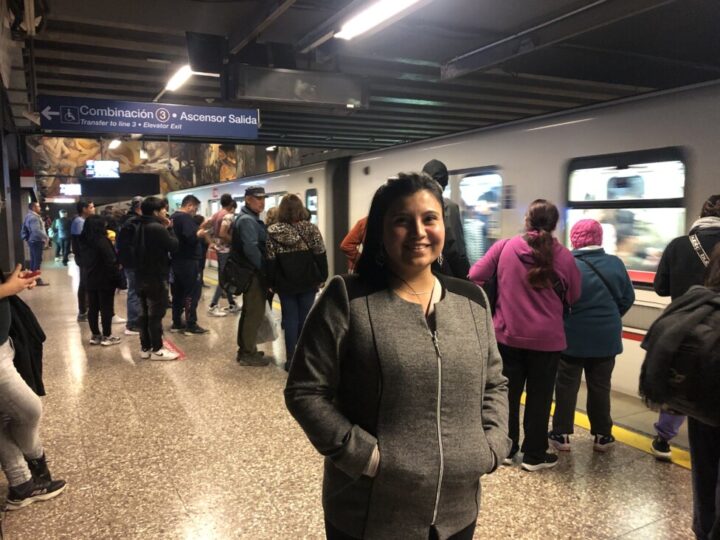
Bernardita Azócar, in a subway station in Santiago, Chile, heads to her job in a collection agency. She says she suffered sexual harassment on public transport in the capital when she was younger, but now she is more alert to any aggression and feels empowered to help others who suffer the same bad experience. CREDIT: Orlando Milesi / IPS

Bernardita Azócar, in a subway station in Santiago, Chile, heads to her job in a collection agency. She says she suffered sexual harassment on public transport in the capital when she was younger, but now she is more alert to any aggression and feels empowered to help others who suffer the same bad experience. CREDIT: Orlando Milesi / IPS


“It happened to me a couple of times when I was younger. They want to grope you or try to touch another girl and now I confront them. I suffer less because I’m more aware and I try not to put myself at risk,” she added during a dialogue at the University of Chile subway station in Santiago.

Azócar, who works for a collection company, said the root cause of harassment lies in education and in Chilean society.

“If you wear a miniskirt or show cleavage, society points the finger at you, as if you were provoking men and it was your fault. And I don’t think that’s why it happens. It’s abuse to be harassed in the public system…or anywhere else,” she said.

Maite, a humanities student at the Catholic University, feels that women are at a disadvantage on public transportation.

“When a woman takes a bus, she tends to sit next to the aisle to have an easier way to flee from any threat. Or she sits next to another woman so as not to travel alone. There are many things that women do that are not explicit. They are behaviors we learn, to get by on public transportation,” said the young woman who, like her friends, preferred not to give her last name.

According to Maite, “women can’t wear shorts or backpacks on the bus, or openly use a cell phone. Every time you get on the bus you have to take a lot of measures.”

Maite and four other classmates told IPS that they take a combination of buses and the subway to go to school and that none of them have suffered harassment on the bus, but they know of several cases that happened to their friends.

“If someone tries to touch me or crowd me too closely I don’t feel so safe,” said Elena, a commercial engineering student.

“A friend of mine had her cell phone stolen. I have not been harassed, but I would never go on the bus or subway in shorts even if I were dying of heat. I wear long pants because wearing shorts is a risk,” added Emilia, a psychology student.


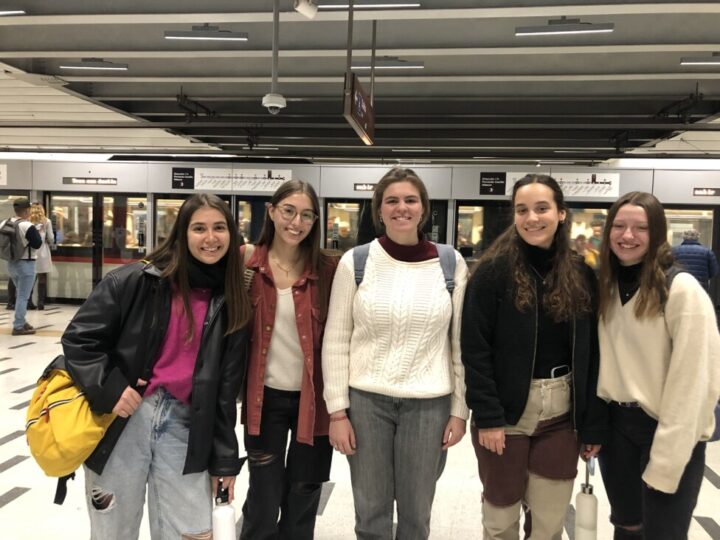
The five university students in this group lament the discrimination women suffer on Chilean public transport and recognize that they have a "code of conduct" that they personally follow to avoid problems, such as not wearing shorts or miniskirts or showing cleavage, even in summertime, although it sometimes restricts their personal freedom. CREDIT: Orlando Milesi / IPS

The five university students in this group lament the discrimination women suffer on Chilean public transport and recognize that they have a “code of conduct” that they personally follow to avoid problems, such as not wearing shorts or miniskirts or showing cleavage, even in summertime, although it sometimes restricts their personal freedom. CREDIT: Orlando Milesi / IPS


The joys and pitfalls of being a female bus driver

Getting more people to use buses and other public transport in Chile, a long narrow country with a population of 19.8 million, is difficult because 71 percent of households own at least one car.

The incorporation of more female bus drivers is aimed at a friendlier mass transit system.

Perla Venegas, 34, has been working as a bus driver in Santiago’s public transportation system for six years.

“I like my job and driving. The most complicated thing is dealing with cyclists, pedestrians and passengers, who are never satisfied,” she told IPS while parked waiting to pull out on the corner of Santa Rosa and Alameda, in the heart of downtown Santiago.

Her route connects downtown Santiago with the municipality of Maipú, in the western outskirts of the capital.

“I’m on a par with the male drivers, but I’m more cautious, not so aggressive and I’m a more defensive driver. I have been complimented several times, especially by elderly people,” said Venegas, who lives with her two daughters, aged 16 and 8.

“I have female colleagues who have been hit and beaten. I received a death threat from a passenger because when the route ended he wouldn’t get off. He was a homeless drug addict. It was 5:30 AM. In the end I found a carabineros (police) patrol car and I turned him in,” she said.

She added that she has had both pleasant and negative experiences and acknowledged that she is proud that her eldest daughter also wants to be a bus driver “although I would not like her to experience the hard parts.”


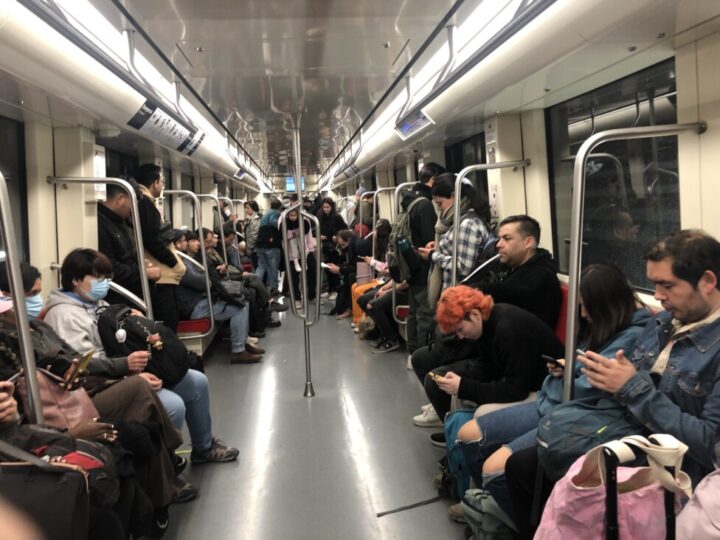
The Santiago subway is the backbone of the mass transit system in the Chilean capital. It makes it possible to reach 23 of the 32 municipalities that encompass the capital and allows passengers to combine with a bus network to reach any point of the metropolitan region. CREDIT: Orlando Milesi / IPS

The Santiago subway is the backbone of the mass transit system in the Chilean capital. It makes it possible to reach 23 of the 32 municipalities that encompass the capital and allows passengers to combine with a bus network to reach any point of the metropolitan region. CREDIT: Orlando Milesi / IPS


Staying alert in the subway, the main means of public transport

On the Santiago subway there are 2.3 million trips on working days. Its tracks cover 140 kilometers on six lines, with 136 stations in 23 of the 32 municipalities that comprise the metropolitan area. Greater Santiago is home to 7.1 million people.

An additional 2.1 million average daily trips are made on surface public transport.

According to official statistics, during the first five months of the year there were 21 pollution episodes in Santiago above the maximum standard level and eight environmental alerts for excess fine particulate matter, so increasing the use of public transport instead of private vehicles is considered a priority for the authorities.

Paulina del Campo, the subway’s sustainability manager, told IPS that gender issues are a strategic objective in this state-owned company.

“We have taken the issue of harassment very seriously. We do not have large numbers, but we do have moments like March 2022 when the issue was raised because of situations in the streets and in universities that included public transportation,” she said.

After meetings with authorities and student leaders, the subway increased the presence of female security guards at stations in the university district.

“One of the things they said is that in a situation of harassment it is much more comfortable to ask for help from a woman than from a man,” explained Del Campo.

The company thus hired a specific group of female guards to receive and respond to complaints.

“Qualified staff respond and are trained to provide support for the victims. We can quickly activate the protocols with the carabineros police. When it happens we can intercept the train and often arrest the people (aggressors) on the spot,” said Del Campo.

In another campaign, a standard methodology designed by international foundations with expertise in harassment was adapted to the situation in Chile.

At the same time, the subway increased its female staff and the number of women in leadership positions.

“Two years ago we had a female staff of around 20 percent and now, in May, 26.5 percent of the 4,400 subway workers are women. In the area of security guards we have a staff of approximately 700 and of these 110 are women,” explained the company’s Sustainability Manager.


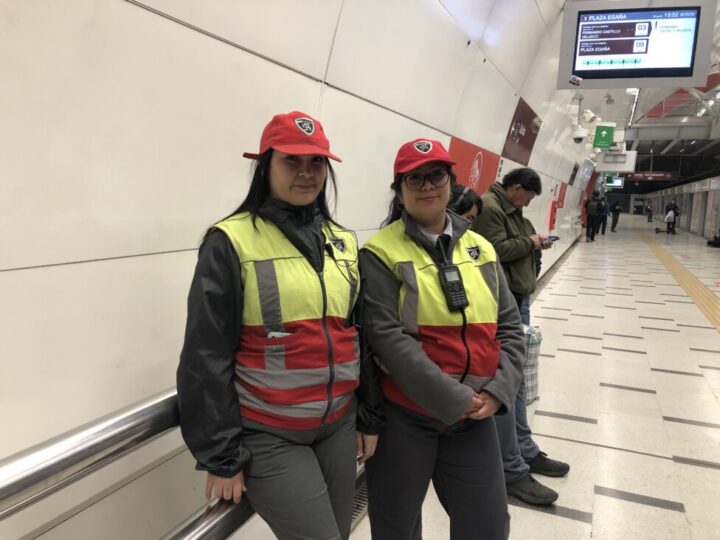
These two women are security guards at the Plaza Egaña subway station, on line 6 in Chile's capital. The state-owned Metro company is increasing the number of women in its services as part of a gender policy that even includes the maintenance of trains. CREDIT: Orlando Milesi / IPS

These two women are security guards at the Plaza Egaña subway station, on line 6 in Chile’s capital. The state-owned Metro company is increasing the number of women in its services as part of a gender policy that even includes the maintenance of trains. CREDIT: Orlando Milesi / IPS


Gender policies in public transportation

The Metropolitan Public Transport Directorate (DTPM) informed IPS that it aims to reduce the male-female gap in public transport.

It also plans to increase the number of women bus drivers.

The Red system, with buses running throughout Santiago, currently employs 1,444 women – only 7.6 percent of all drivers.

“Many women who have entered this field come from highly precarious and unregulated jobs, so this opportunity has allowed them greater autonomy and, on many occasions, to leave violent environments and improve their self-confidence,” the DTPM stressed in response to questions from IPS.

“This has meant an effort to train and generate conditions to keep and promote women who are part of the system,” it added.

Origin-Destination Surveys reveal that women are the main users of public transport and 65 percent of trips for the purpose of caring for the home, children or other people are made by women. They are more likely to make multidirectional trips and in the so-called off-peak hours, with little traffic.

According to the DTPM, waiting for the bus is one of the most critical moments in every trip.

“This is why we installed the panic button at bus stops and real-time information on the arrival of buses to improve the perception of security,” it explained.

The information is available through an application on cell phones, while the panic buttons began as a women’s safety pilot plan in October 2022 at stops in one of the capital’s municipalities. The plan is to extend them to a large number of stops in Santiago.

Source

Biodigesters Boost Family Farming in Brazil

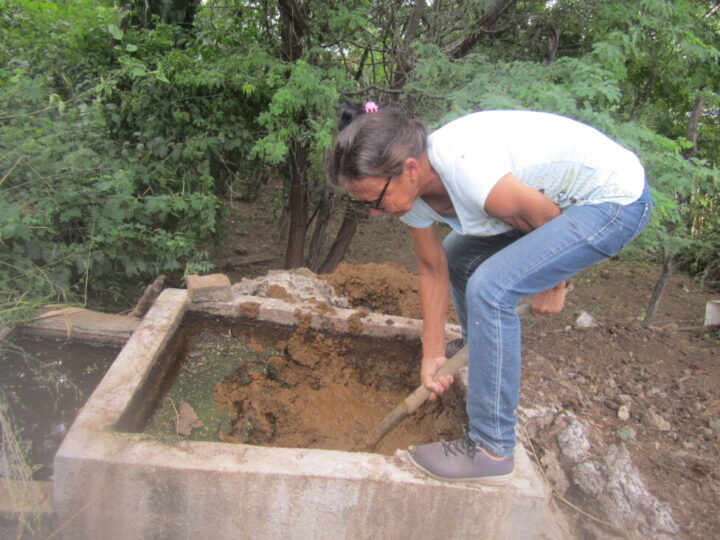
Lucineide Cordeiro loads manure from her two oxen and two calves into the "sertanejo" biodigester that produces biogas for cooking and biofertilizer for her varied crops on the one-hectare agroecological farm she manages on her own in the rural municipality of Afogados da Ingazeira, in the semiarid ecoregion of northeastern Brazil. CREDIT: Mario Osava / IPS

Lucineide Cordeiro loads manure from her two oxen and two calves into the “sertanejo” biodigester that produces biogas for cooking and biofertilizer for her varied crops on the one-hectare agroecological farm she manages on her own in the rural municipality of Afogados da Ingazeira, in the semiarid ecoregion of northeastern Brazil. CREDIT: Mario Osava / IPS

By Mario Osava
AFOGADOS DA INGAZEIRA, Brazil , Jun 24 2023 (IPS)

“The biodigester really gives a huge boost to those who have the courage to do things,” said Maria das Dores Alves da Silva, based on her own experience as a 63-year-old small farmer.


She did not hesitate to accept the offer of Diaconia, a social organization of Protestant churches in Brazil, to acquire the equipment to produce biogas on her farm in the rural area of Afogados da Ingazeira, a municipality of 38,000 people in the state of Pernambuco in the Northeast region of Brazil.”We seek to promote energy, food and water autonomy to maintain more resilient agroecosystems, to coexist with climate change, strengthening community self-management with a special focus on the lives of women.” — Ita Porto

At first she did not have the cattle whose manure she needed to produce biogas, that enables her to save on liquefied petroleum gas, which costs 95 reais (20 dollars) for a 13-kg cylinder – a significant cost for poor families.

She brought manure from a neighboring farm that gave it to her for free, in an hour-long trip with her wheelbarrow, until she was able to buy her first cow and then another with loans from the state-owned Banco del Nordeste.

“Now I have more than enough manure,” she said happily as she welcomed IPS to her four-hectare farm where she and her husband have lived alone since their two children became independent.

Das Dores, as she is known, is an example among the 163 families who have benefited from the “sertanejos biodigesters” distributed by Diaconia in the sertão of Pajeú, a semiarid micro-region of 17 municipalities and 13,350 square kilometers in the center-north of Pernambuco.

Farmer Maria das Dores Alves da Silva stands between the manure pit and the "sertanejo" biodigester designed by Diaconia, a social organization of Protestant churches in Brazil, which has already installed 713 biogas production plants in eight of Brazil's 26 states. CREDIT: Mario Osava / IPS

Farmer Maria das Dores Alves da Silva stands between the manure pit and the “sertanejo” biodigester designed by Diaconia, a social organization of Protestant churches in Brazil, which has already installed 713 biogas production plants in eight of Brazil’s 26 states. CREDIT: Mario Osava / IPS

Biofertilizer

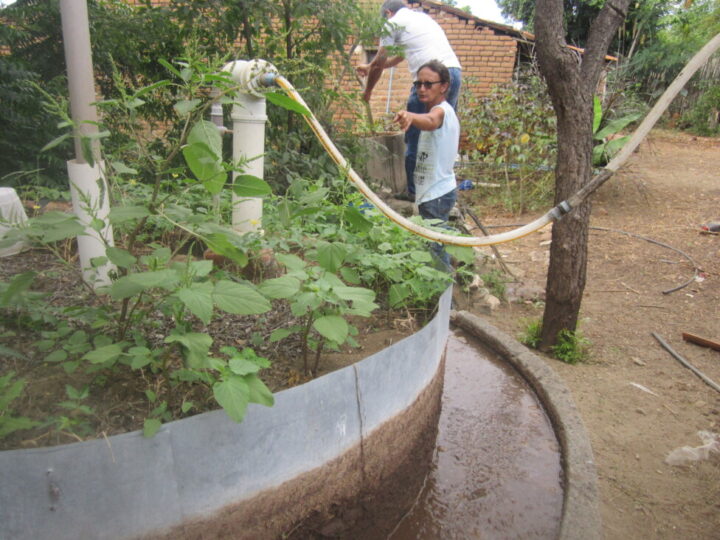
In addition to using the biogas, she sells the manure after it has been subjected to anaerobic biodigestion that extracts the gases – the so-called digestate, a biofertilizer that she packages in one-kilo plastic bags, after drying and shredding it.

Every Saturday, she sells 30 bags at the agroecological market in the town of Afogados da Ingazeira, the municipal seat. At two reais (40 cents) a bag, she earns an extra income of 60 reais (12.50 dollars), on top of her sales of the various sweet cakes she bakes at home, at a cost reduced by the biogas, and of the seedlings she also produces.

The seedlings provided her with a new business opportunity. “The customers asked me if I didn’t also have fertilizer,” she said. The biodigester produces enough fertilizer to sell at the market and to fertilize the farm’s crops of beans, corn, fruit trees, flowers and different vegetables.

This diversity is common in family farming in Brazil’s semiarid Northeast, but even more so in the agroecological techniques that have expanded in this territory of one million square kilometers in the northeastern interior of the country, which has an arid biome highly vulnerable to climate change, subject to frequent droughts, and where there are areas in the process of desertification.

The Pajeú river basin is the micro-region chosen by Diaconia as a priority for its social and environmental actions.

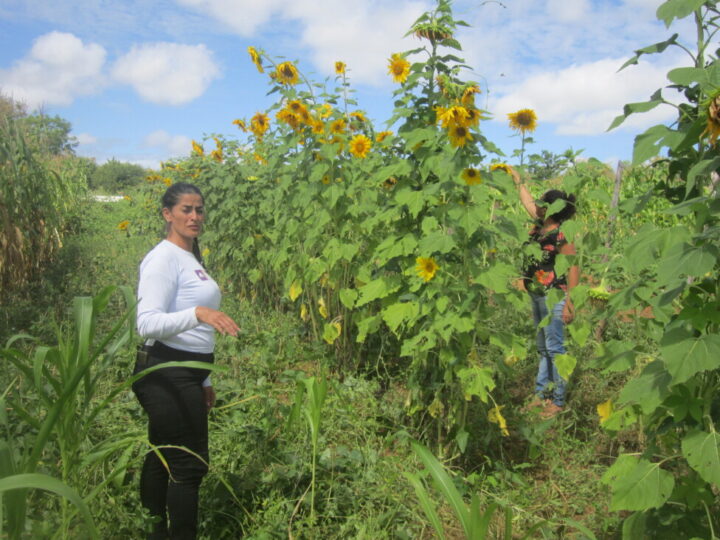
On Lucineide Cordeiro's small farm, cotton, corn, sesame, sunflower, cassava and fruit trees are alternated in the fields, as recommended by agroecology, which is on the rise on family farms in Brazil's semiarid Northeast, which is threatened by longer and more severe droughts due to the climate crisis. CREDIT: Mario Osava / IPS

On Lucineide Cordeiro’s small farm, cotton, corn, sesame, sunflower, cassava and fruit trees are alternated in the fields, as recommended by agroecology, which is on the rise on family farms in Brazil’s semiarid Northeast, which is threatened by longer and more severe droughts due to the climate crisis. CREDIT: Mario Osava / IPS

Energy and food security

“We seek to promote energy, food and water autonomy to maintain more resilient agroecosystems, to coexist with climate change, strengthening community self-management with a special focus on the lives of women,” Ita Porto, Diaconia’s coordinator in the Pajeu ecoregion, told IPS.

“The production of biogas on a rural family scale fulfills the needs of energy for cooking, sanitary disposal and treatment of animal waste and reduction of deforestation, in addition to increasing food productivity, with organic fertilizer, while bolstering human health,” said the 48-year-old agronomist.

More than 713 units of the “sertanejo biodigester”, a model developed by Diaconia 15 years ago, have been installed in Brazil. In addition to the 163 in the sertão do Pajeú, there are 150 in the neighboring state of Rio Grande do Norte and another 400 distributed in six other Brazilian states, financed by the Caixa Econômica Federal, a government bank focused on social questions.

“Hopefully the government will make it a public policy, as it has already done with the rainwater harvesting tanks in the semarid Northeast,” said Porto.

More than 1.3 million rainwater harvesting tanks for drinking water have already been built, but some 350,000 are still needed to make them universal in rural areas, according to the Articulation of the Semi-Arid (Asa), a network of 3,000 social organizations that spearheaded the transformative program.

Maria Das Dores examines the biofertilizer that comes out of the biodigester, without the gases from the animal manure. She sells this by-product at the agroecological market in the town of Afogados da Ingazeira, the seat of the municipality where her four-hectare farm is located, which earns her an average extra income of 12.5 dollars a week. CREDIT: Mario Osava / IPS

The value of manure

“One cow is enough to produce the biogas consumed in our stove,” said Lucineide Cordeiro, on her one-hectare farm where she grows cotton, corn, sesame seeds and fruit, in an interconnected agroecological system, along with chickens, pigs and fish in a pond.

She also has two oxen and two calves, which she proudly showed to IPS during the visit to her farm.

“Pig manure produces biogas more quickly, but I don’t like the stench,” the 37-year-old farmer who is the director of Women’s Policies at the Afogados da Ingazeira Rural Workers Union told IPS.

The difference in the crops before and after fertilization by the biodigester by-product is remarkable, according to her and other farmers in the municipality.

She tends to her many crops on her own, although she is sometimes helped by friends, and has several pieces of equipment such as a brushcutter and a micro-tractor.

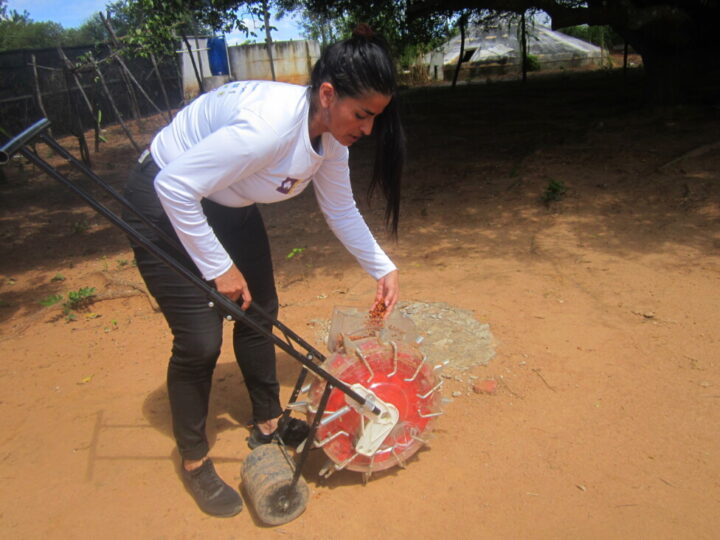
"It's the best invention," says Lucineide Cordeiro, as she shows IPS the seeder created by the Japanese for small-scale farming, which allows her to sow in half a day the land that used to take her two days to plant, on her one-hectare farm in Afogados da Ingazeira, in Brazil's semiarid Northeast. CREDIT: Mario Osava / IPS

“It’s the best invention,” says Lucineide Cordeiro, as she shows IPS the seeder created by the Japanese for small-scale farming, which allows her to sow in half a day the land that used to take her two days to plant, on her one-hectare farm in Afogados da Ingazeira, in Brazil’s semiarid Northeast. CREDIT: Mario Osava / IPS

“But the seeder is the best invention that changed my life, it was invented by the Japanese. Planting the seeds, which used to take me two days of work, I can now do in half a day,” Cordeiro said.

The seeder is a small machine pushed by the farmer, with a wheel filled with seeds that has 12 nozzles that can be opened or closed, according to the distance needed to sow each seed.

The emergence of appropriate equipment for family farming is recent, in a sector that has favored large farmers in Brazil.

Female protagonism clashes with male chauvinist violence

For the success of local family farming, the support of the Pajeú Agroecological Association (Asap), of which Cordeiro is a member and a “multiplier”, as the women farmers who are an example to others of good practices are called, is important.

In family farming the empowerment of women stands out, which in many cases was a response to sexist violence or oppression.

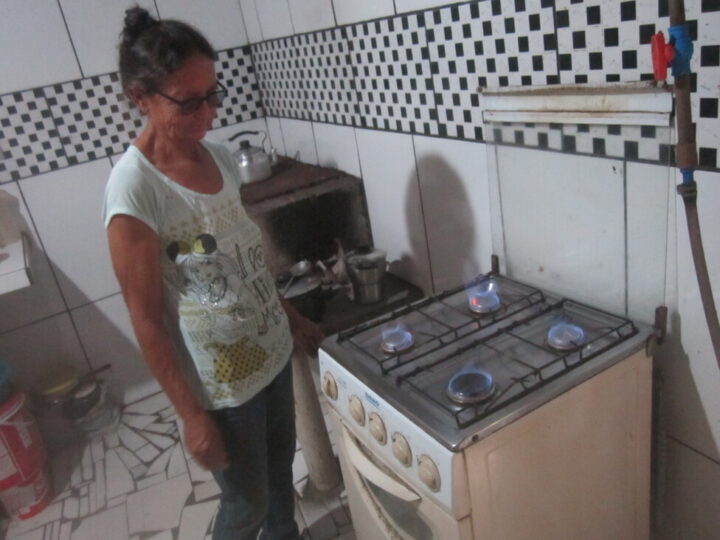
 Blue flames emerge from the burners of Maria Das Dores' biogas stove at her home in Afogados da Ingazeira, in Brazil's semiarid Northeast region. A single ox or cow produces enough manure to generate more biogas than a family requires for its domestic needs. CREDIT: Mario Osava / IPS

Blue flames emerge from the burners of Maria Das Dores’ biogas stove at her home in Afogados da Ingazeira, in Brazil’s semiarid Northeast region. A single ox or cow produces enough manure to generate more biogas than a family requires for its domestic needs. CREDIT: Mario Osava / IPS

“The first violence I suffered was from my father who did not let me study. I only studied up to fourth grade of primary school, in the rural school. To continue, I would have had to go to the city, which my father did not allow. I got married to escape my father’s oppression,” said Cordeiro, who also separated from her first husband because he was violent.

After living in a big city with the father of her two daughters, she separated and returned to the countryside in 2019. “I was reborn” by becoming a farmer, she said, faced with the challenge of taking on that activity against the idea, even from her family, that a woman on her own could not possibly manage the demands of agricultural production.

Organic cotton, promoted and acquired in the region by Vert, a French-Brazilian company that produces footwear and clothing with organic inputs, has once again expanded in the Brazilian Northeast, after the crop was almost extinct due to the boll weevil plague in the 1990s.

In the case of Das Dores, a small, energetic, active woman, she has a good relationship with her husband, but she runs her own business initiatives. Thanks to what she earns she was able to buy a small pickup truck, but it is driven by her husband, who has a job but helps her on the farm in his free time.

“He drives because he refuses to teach me how, so I can’t go out alone with the vehicle and drive around everywhere,” she joked.

Source