A Grim Year for Democracy and Civic Freedoms – but in Gen Z There Is Hope

Active Citizens, Armed Conflicts, Civil Society, Climate Change, Crime & Justice, Democracy, Economy & Trade, Environment, Featured, Gender, Global, Headlines, Human Rights, Inequality, LGBTQ, TerraViva United Nations
Opinion

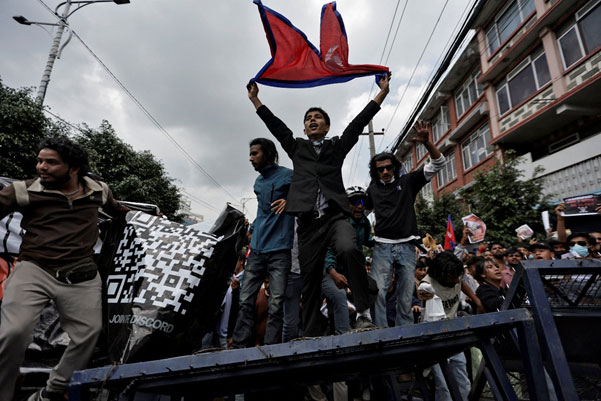
People take part in an anti-corruption protest in Kathmandu, Nepal on 8 September 2025. Credit: Navesh Chitrakar/Reuters via Gallo Images

NEW YORK, Dec 24 2025 (IPS) – 2025 has been a terrible year for democracy. Just over 7 per cent of the world’s population now live in places where the rights to organise, protest and speak out are generally respected, according to the CIVICUS Monitor, a civil society research partnership that measures civic freedoms around the world. This is a sharp drop from over 14 per cent this time last year.


Civic freedoms underpin healthy democracies, and the consequences of this stifling of civil society are apparent. At the end of the first quarter of the 21st century, the world is experiencing 19th century levels of economic inequality. The wealth of the richest 1 per cent is surging while some 8 per cent of the world’s population – over 670 million people – suffer from chronic hunger. Weapons-producing firms, closely intertwined with political elites, are reaping windfall profits as death and destruction rains down in Gaza, Myanmar, Sudan, Ukraine and many other places. It should surprise no one that the political leaders fomenting these conflicts are also squashing civic freedoms to avert questions about their motivations.

From Lima to Los Angeles, Belgrade to Dar es Salaam and Jenin to Jakarta, far too many people are being denied the agency to shape the decisions that impact their lives. Yet these places have also been the site of significant protests against governments this year. Even as authoritarianism appears to be on the march, people are continuing to pour onto the streets to insist on their freedoms. As we speak people in Sofia in Bulgaria are demonstrating in large numbers against endemic corruption which recently forced the government to resign.

History shows that mass demonstrations can lead to major advances. In the 20th century, people’s mobilisations helped achieve women’s right to vote, liberation of colonised peoples and adoption of civil rights legislation to address race-based discrimination. In the 21st century, advances have been made in marriage equality and other LGBTQI+ rights, and in highlighting the climate crisis and economic inequality through protests. But in 2025, the right to protest, precisely because it can be effective, is under assault by authoritarian leaders. Around the world, the detention of protesters is the number one recorded violation of civic freedoms, closely followed by arbitrary detentions of journalists and human rights defenders who expose corruption and rights violations.

This backsliding is now happening in major established democracies. This year, the CIVICUS Monitor downgraded Argentina, France, Germany, Italy and the USA to an ‘obstructed’ civic space rating, meaning the authorities impose significant constraints on the full enjoyment of fundamental rights. This regression is being driven by anti-rights nationalist and populist forces determined to degrade constitutional checks and balances and advance ballot box majoritarianism that denies minorities a fair say in economic, political and social life.

The push to degrade democracy by anti-rights forces now coming to fruition has been many years in the making. It accelerated this year with the return of Donald Trump. His administration immediately withdrew support to international democracy support programmes and instead built links to politicians responsible for crushing civic freedoms and committing grotesque human rights violations. Trump has laid out of the red carpet to El-Salvador’s Nayib Bukele, Hungary’s Victor Orbán, Israel’s Benjamin Netanyahu, Russia’s Vladimir Putin and Saudi Arabia’s Mohammed bin Salman, ushering in a new era of values-free might-is-right diplomacy that threatens to undermine decades of painstaking progress achieved by civil society.

The fallout is clear. Many wealthy democratic governments that traditionally fund civil society activities have significantly reduced their contributions. At the same time, they have linked their remaining support for civil society to narrowly defined strategic military and economic interests. In doing so, they have played directly into the hands of powerful authoritarian states such as China, Egypt, Iran, Nicaragua and Venezuela that seek to discredit domestic calls for accountability. Countries including Ecuador and Zimbabwe have introduced laws to limit the ability of civil society organisations to receive international funding.

All these developments are negatively impacting on civil society efforts for equality, peace and social justice. Yet the story of 2025 is also one of persistent resistance, and some successes. The courage demonstrated by Generation Z protesters has inspired people around the world. In Nepal, protests triggered by a social media ban led to the fall of the government, offering hope for a much-needed political reset. In Kenya, young protesters continued to take to the streets to demand political reform despite state violence. In Moldova, a cash-rich disinformation campaign run by a fugitive oligarch failed to sway the course of the national election away from human rights values. In the USA, the number of people joining the No-Kings protests just keeps on growing.

With over 90 per cent of the world’s population living with the institutional denial of full civic freedoms, anti-rights forces must be feeling pretty smug right now. But democratic dissent is brewing, particularly among Generation Z, denied political and economic opportunities but understanding that another world – one more equal, just, peaceful and environmentally sustainable – is possible. It’s far from game over yet, and even in difficult times, people will demand freedoms – and breakthroughs may be just around the corner.

Mandeep S Tiwana is Secretary General of CIVICUS, the global civil society alliance.
  Source

Climate Crisis Disrupts Sundarbans Community Festival, Prosperity

Asia-Pacific, Civil Society, Climate Action, Climate Change, Climate Change Finance, Climate Change Justice, COP30, Environment, Featured, Headlines, Indigenous Rights, Population, Sustainable Development Goals, TerraViva United Nations

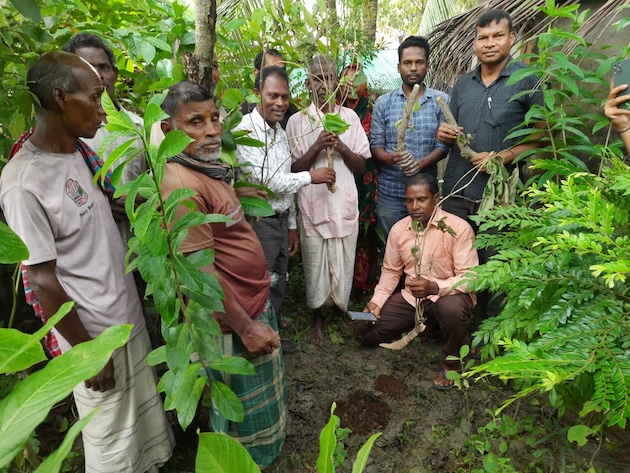
Two years ago, a Karam tree branch brought from another district was being planted in the SAMS office premises along the Shyamnagar-Munshiganj road, but it didn't survive. Credit: Rafiqul Islam Montu/IPS

Two years ago, a Karam tree branch brought from another district was being planted in the SAMS office premises along the Shyamnagar-Munshiganj road, but it didn’t survive. Credit: Rafiqul Islam Montu/IPS

SATKHIRA, Bangladesh, Dec 9 2025 (IPS) – A dried karam tree branch stands on the bank of a pond in a field in Datinakhali village adjacent to the Sundarbans. Despite many efforts, the tree could not be saved.


For two years, the Munda community in Bangladesh’s Sundarbans had been fighting to save the Karam tree so that they could bring back their traditional Karam festival—once the biggest festival in their community. Many trees are unable to survive due to the effects of salinity—this list includes the Karam tree, which is the main ingredient in celebrating the festival.

Bhakta Sardar, a priest from the Munda community, says the festival of the indigenous Munda community would be incomplete without the branches of the Karam tree

“We believe that our prosperity and well-being are hidden in the branches of the Karam tree. We pray to God to achieve our prosperity around this festival. But frequent cyclones and salinity have killed the Karam trees.”

“Now we celebrate this festival in its name only for the prosperity of the community. We cannot leave the festival for the next generation,” added Bhakta Sardar, referring to a smaller festival where the community uses fig tree branches as an alternative.

While the debate about how to integrate non-economic losses and damages due to the impact of climate change continued during the 30th Conference of the Parties to the UNFCCC (COP30) in Belém, Brazil, the Munda community is looking for ways to revive the Karam festival, a symbol of their prosperity. A recent study emphasized that these non-economic losses and damages included the loss of religious and cultural practices.

The study says that climate risks are increasing on the coast of Bangladesh. The risk is even higher in the southwest. If this situation continues in the future, small communities like the indigenous Munda community will be in even greater crisis. The study called for policy and financial reform to assist communities like this to adapt to the impacts of climate change.

In Search of the Karam Tree

The scientific name of the Karam tree is Mitragyna parvifolia. This tree in the Asian region is also known as Kelikadam. It mainly blooms before the monsoon. As the Karam tree has disappeared, the indigenous Munda community of Bangladesh now celebrates a similar festival on a smaller scale, with branches of a fig tree. The scientific name of this tree is Ficus religiosa.

There were once many Karam trees in the villages of southwestern Bangladesh. Datinakhali, adjacent to the Sundarbans in the Shyamnagar upazila (subdistrict) of Satkhira district, is one such village. This village celebrated the Karam festival with a grand event, with people from the Munda community from different areas joining in.

In addition to their time-honored religious tradition, the community in this village on the banks of the Chuna River faces economic difficulties.

The indigenous Munda community lives in several villages adjacent to the Sundarbans in Koyra upazila (sub-district) of Khulna district in southwestern Bangladesh.

Shukkuri Rani Munda used to attend the Karam festival organized in the courtyard of Fulsingh Munda’s house in Uttar Haztakhali village.

“To everyone now, the festival feels like a myth. A storm has swept away the entire festival. The next generation will forget the name of the Karam festival,” she says.

Munda Young Balai Krishna Sardar (38), president of the Sundarban Adivasi Unnayan Sangstha of that village, cannot recall attending the festival. Rangalal Munda’s 60-year-old father, Fulsingh Munda, witnessed a small-scale celebration five years ago. After Fulsingh’s death a year ago, no one in the village now knows how to initiate the Karam festival.

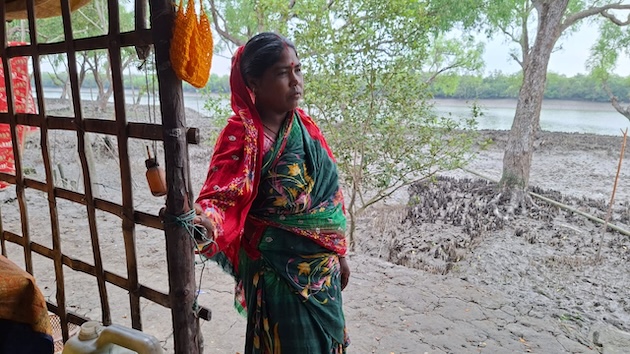
Geeta Rani Munda, 42, lives precariously in Datinakhali village, adjacent to the Sundarbans. She wants the Karam festival to return for her prosperity. Credit: Rafiqul Islam Montu/IPS

Geeta Rani Munda, 42, lives precariously in Datinakhali village, adjacent to the Sundarbans. She wants the Karam festival to return for her prosperity. Credit: Rafiqul Islam Montu/IPS

‘A Symbol of Our Faith’

The Munda community holds the belief that the branches of this tree conceal prosperity and well-being. They believe that the Karam festival ensures their good health and the well-being of future generations. Various tribal communities in Jharkhand, West Bengal, and Bihar, India, celebrate this festival with the same beliefs. Indigenous communities like Munda, Mahato, Kurmi, Matato, Santal, Orao, Baraik, Singh, Pahan, Mahali, Bhumij, etc., all celebrate the Karam festival.

“The Karam festival is our faith. Perhaps our economic condition is gradually deteriorating because we cannot follow our religious instructions,” said Anandini Rani Munda of Datinakhali village, articulating the belief that religious and economic wellbeing are intrinsically interlinked.

Nilkant Pahan, a priest of Burigoalini village in Shyamnagar upazila (sub-district), had been conducting the puja (religious ceremony) of the Munda community for eight years. He has organized the Karam festival several times following the ancestral tradition. But they were small events.

“Celebrating the Karam festival is our religious tradition. Our ancestors observed this tradition. We are trying to maintain its continuity. We are facing a much greater socio-economic and cultural crisis than before. We do not know what this crisis is because we cannot observe religious traditions,” Pahan says.

Impact of salinity

During Cyclone Aila in 2009, the entire area was submerged in the wave of salt water that broke the dam. The land was submerged in salt water for a long time, and the Karam trees could no longer survive. Many elderly Munda citizens believe that not only Aila but also other cyclones, especially a strong cyclone that hit the region in 1988, helped reduce the number of Karam trees.

GM Mostafizur Rahman, Chief Scientific Officer of Khulna Soil Resources Institute, said, “Both the intensity and extent of salinity in soil and water are increasing due to climate change; 81 percent of land in Shyamnagar is affected by varying degrees of salinity.”

Professor Saleh Ahmed Khan, Department of Botany, Jahangirnagar University, said, “The tree that the Munda community calls the ‘Karam’ tree is ‘Kelikadam.’ We did not find it among the 528 species under our research. The tree may not have survived due to the spread of salinity.”

Fight To Bring Back the Karam Festival

The Sundarbans Adivasi Munda Sangstha (SAMS) and leading members of the Munda community are working to bring back the Karam tree. They are trying to bring back the Karam festival by bringing branches of the Karam tree from other districts.

Two years ago, a branch of the Karam tree was planted in the SAMS office premises on the Shyamnagar-Munshiganj road, and another branch was planted in the Munda-dominated Datinakhali village. But it was not possible to save the tree. They will try again next year.

“We celebrate the Karam festival for our prosperity. We are trying to save the Karam trees for the festival. But due to salinity in the soil, the Karam trees cannot be saved. As an alternative, we use the branches of the fig (Ficus religiosa) tree,” said Geeta Rani Munda of Datinakhali village.

Krishnapada Sardar, Executive Director of SAMS, said it wasn’t enough that this festival only survives in the stories of elders.

“It was a major event in the rural culture of this community, which is proud of its identity. Climate change has changed the food habits of the Munda community, and the opportunities for livelihood have narrowed. The families of the community are facing an extreme economic crisis.

“Our lost festivals can be brought back by restoring the Karam tree. We want to return to our lost traditions. We want to return to our roots.”

IPS UN Bureau Report

  Source

From Access to Action — Carbon Markets Can Turn Developing Countries’ Ambitions into Realities

Biodiversity, Climate Action, Climate Change, Climate Change Finance, Climate Change Justice, Conferences, COP30, Economy & Trade, Environment, Global, Headlines, Sustainability, Sustainable Development Goals, TerraViva United Nations

Opinion

Local farmer ploughing a field in Indonesia. Credit: Unsplash

RIO DE JANEIRO, Brazil, Nov 26 2025 (IPS) – The UN climate talks at COP30 once again brought the critical issue of climate finance to the forefront of global discussions.

However, while much of the debate revolved around traditional forms of aid directed at developing countries most vulnerable to the impacts of climate change, a faster, more transformative approach lies in expanding access to carbon markets.


When emerging and developing economies (EMDEs) are equipped with the tools and knowledge needed to engage in these markets on their own terms, carbon finance can be generated and harnessed in ways that reflect their unique natural assets, governance, social contexts, and national priorities.

Achieving global climate and sustainable development goals depends on ensuring that those worst affected by climate change can fully participate in and benefit from this growing flow of finance.

EMDEs are on the frontlines of climate change — from rising sea levels threatening Pacific island nations to intensifying droughts and fires in the Amazon and Horn of Africa, and increasingly intense and frequent hurricanes in the Caribbean. These crises often hit hardest in regions that have contributed least to global emissions and in the most difficult position to react to them.

Yet, these same nations face a climate finance shortfall of $1.3 trillion per year. Carbon markets present an opportunity for these countries to bridge this gap by turning their natural advantages into climate finance assets.

Despite successful initiatives aimed at bolstering both high-integrity supply and demand for carbon credits, significant barriers to access persist, particularly for EMDEs. From fragmented policy landscapes to weak governance structures, limited institutional capacity, and low investor confidence, various obstacles prevent the vast potential of EMDEs to engage fully.

The Access Strategies Program — led by the Voluntary Carbon Markets Integrity Initiative — is a direct response to these challenges. It helps governments design and implement their own pathways into high-integrity carbon markets, enabling them to build the policies, institutional capacity, and investor confidence needed to meet their climate finance needs and transform their potential into progress.

Each country’s natural capital — from Brazil’s vast rainforest and agricultural landscapes, to the Caribbean’s blue carbon ecosystems, or Kenya’s grasslands and renewable energy potential — represents a unique competitive advantage, ready to be realised.

Simultaneously, no two countries share the same development goals or governance contexts. In some, carbon markets can drive forest conservation and biodiversity protection; while in others, they deliver the most impact by strengthening rural livelihoods or financing clean energy transitions.

The Access Strategies model recognises this uniqueness, tailoring its support to help countries use carbon finance in ways that align with their own specific economic and environmental strategies and goals.

For example, the Partnership for Agricultural Carbon (PAC) — developed with the Inter-American Institute for Cooperation on Agriculture (IICA) — is building capacity across Latin American and Caribbean agriculture ministries to participate in high-integrity carbon markets. It provides training, policy guidance, and decision-making tools that help governments and farmers identify viable carbon projects aligning with national agricultural and sustainability goals.

The collaboration has given small and medium producers a clearer route to investment, while positioning agriculture as a central player in regional climate strategies. Another example of the Access Strategies work is the recently launched Amazon Best Practices Guide, which will help Amazon state governments design and implement carbon market frameworks made specifically for their unique ecological and governance realities.

Moreover, in countries such as Kenya, Peru, and Benin, the Program has provided tailored support to develop policy and regulatory frameworks, strengthen institutional capacity, and attract responsible investment for high-priority climate mitigation projects — all in line with country-led goals.

These examples show what’s possible when governments have the tools and expertise to engage in high-integrity carbon markets on their own terms. More countries should seize this opportunity to tap into the growing flow of finance from carbon markets.

While carbon markets are not a silver bullet, they are one of the few scalable and self-sustaining tools available when grounded in integrity and tailored to each country’s needs.

Programs like Access Strategies do more than transfer technical knowledge — they build the enabling conditions for locally led action, drawing on countries’ unique ecological, social, and institutional insights to shape solutions that work in practice.

The focus of global climate action should not only be on new funding pledges, but on ensuring funding that is already available is effectively redirected for EMDEs countries to harness their own natural capital and promote social inclusion, while meeting their climate goals and reshaping their development pathway.

Building this kind of capacity is how we turn global ambition into lasting, locally owned progress, and moreover how carbon finance can become a true instrument of sustainable development.

Ana Carolina Avzaradel Szklo, Technical Director, Markets and Standards, Voluntary Carbon Markets Integrity Initiative (VCMI)

IPS UN Bureau


COP30: Broken Promises, New Hope — A Call to Turn Words into Action

Biodiversity, Climate Action, Climate Change, Climate Change Finance, Conferences, COP30, Economy & Trade, Energy, Environment, Featured, Global, Headlines, Indigenous Rights, TerraViva United Nations

Opinion

VICTORIA, Seychelles, Nov 25 2025 (IPS) – When the world gathered in Glasgow for COP26, the mantra was “building back better.” Two years later, in Sharm El Sheikh, COP27 promised “implementation.”

This year, in Belém, Brazil, COP30 arrived with a heavier burden: to finally bridge the chasm between lofty rhetoric and the urgent, measurable steps needed to keep 1.5 °C alive.


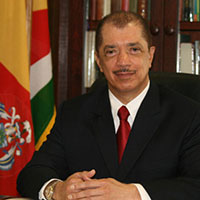
James Alix Michel

What Was Expected of COP30 were modest yet critical. After the disappointments of Copenhagen (2009) and the optimism sparked by Paris (2015), developing nations, small island states, Indigenous groups and a swelling youth movement demanded three things:

    1. Binding phase out timelines for coal, oil and gas.
    2. A fully funded Loss and Damage Facility to compensate vulnerable countries already suffering climate impacts.
    3. Scaled up adaptation finance—tripling the $120 billion a year pledge and ensuring it reaches the frontline communities that need it most.

However the negotiations evolved into a tug of war between ambition and inertia. Wealthier nations, still reeling from economic shocks, offered incremental increases in adaptation funding and a new Tropical Forests Forever Facility (TFFF) worth $125 billion, with 20 percent earmarked for Indigenous stewardship. The Global Implementation Accelerator—a two year bridge to align Nationally Determined Contributions (NDCs) with 1.5 °C—was launched, alongside a Just Transition Mechanism to share technology and financing.

However, the text on fossil fuel phase out remained voluntary; the Loss and Damage Fund was referenced but not capitalised; and the $120 billion adaptation pledge fell short of the $310 billion annual need.

But there were Voices That Could Not Be Ignored.

Developing Nations (the G77+China) reminded the plenary that climate justice is not a charity—it is a legal obligation under the UNFCCC. They demanded that historic emitters honor their “common but differentiated responsibilities.”

Island States(AOSIS) warned that sea level rise is no longer a future scenario; it is eroding coastlines and displacing entire cultures. Their plea: “1.5 °C is our survival, not a bargaining chip.”

Indigenous Peoples highlighted the destruction of Amazon and Boreal forests, urging that 30 percent of all climate finance flow directly to communities that protect 80 percent of biodiversity.

Youth — The Gen Z generation, marched outside the venue, chanting “We will not be diluted” demanding binding commitments and accountability mechanisms.

The Legacy of Copenhagen, Paris, and the Empty COPs –

I attended COP15 in Copenhagen (2009), where the “Danish draft” was rejected, and the summit collapsed amid accusations of exclusion. The disappointment lingered until Paris (2015), where the 1.5 °C aspiration was enshrined, sparking hope that multilateralism could still work. Since then, COPs have been a carousel of promises: the Green Climate Fund fell $20 billion short; the 2022 Glasgow Climate Pact promised “phasing out coal” but left loopholes. Each iteration has chipped away at trust.

COP30 was billed as the moment to reverse that trend.

And the result? Partial progress, but far from the transformational shift required.

Did We Achieve What We Hoped For?

In blunt terms: No. The pledges secured are insufficient to limit warming to 1.5 °C, and critical gaps—binding fossil fuel timelines, robust loss and damage funding, and true equity in finance—remain unfilled.

Yet, there are glimmers. The tripling of adaptation finance, the first concrete allocation for Indigenous led forest protection, and the creation of an Implementation Accelerator signal that the architecture for change exists. The challenge now is to fill it with real money and accountability.

Let us look at ‘What Must Happen Next’

    1. Full Capitalisation of Loss and Damage Fund
    – G20 nations must commit 0.1 % of GDP and disburse within 12 months.
    2. Binding Fossil Fuel Phase out – Coal, oil and gas with just transition financing for workers.
    3. Scale Adaptation Finance to $310 billion/yr
    – Re channel subsidies from fossil fuels to resilience projects.
    4. Direct Funding for Indigenous and Youth Initiatives
    – Allocate 30 % of climate finance to community led stewardship.
    5. Strengthen Accountability
    – Mandate annual NDC updates with independent verification and penalties for non compliance.

But for all this to become reality there must be a determined effort to achieve Future Actions.
We have watched promises fade after every COP, yet the physics of climate change remains unforgiving. The urgency is not new; the window to act is shrinking. But hope endures – in the solar panels lighting remote villages, in mangroves being restored to buffer storms, in the relentless energy of young activists demanding a livable planet.

Humanity has the knowledge, technology, and resources. What we need now is the collective political will to use them. Let COP30 be remembered not as another empty summit, but as the turning point where the world chose survival over complacency.

The future is not written; we write it with every decision we make today.

James Alix Michel, Former President Republic of Seychelles, Member Club de Madrid.

IPS UN Bureau


Bonn to Belém: Three Decades of Promises, Half-Delivered Justice, and Rights-Based Governance Is Now Inevitable

Biodiversity, Climate Action, Climate Change, Climate Change Finance, Climate Change Justice, Conferences, COP30, Economy & Trade, Energy, Environment, Global, Green Economy, Headlines, Human Rights, Indigenous Rights, Migration & Refugees, Sustainable Development Goals, TerraViva United Nations

Opinion

DHAKA, Bangladesh, Nov 25 2025 (IPS) – COP30 in Belém is not just another annual climate meeting, it is the 32-year report card of the world governance architecture that was conceived at the Rio Earth Summit of 1992. And that is what report card says: delivery has been sporadic, cosmetic and perilously disconnected with the physics of climatic breakdown.


M. Zakir Hossain Khan

The Amazon, which was once regarded in Rio as an ecological miracle of the world, is now on the verge of an irreversible precipice. Even the communities that struggled to protect it over millennia also demonstrate against COP30 to make it clear that they do not oppose multilateralism, but because multilateralism has marginalized them many times.

Rio Promised Rights, Take Part, and Protection, But Delivery Has Been Fragmented

Rio Summit gave birth to three pillars of international environmental control: UNFCCC (climate), CBD (biodiversity) and UNCCD (desertification). Every one of them was supposed to be participating, equitable and accountable. But progressively delivery disintegrated:

    • Rio has only achieved 34 per cent biodiversity commitments (CBD GBO-5).
    • CO₂ emissions rose over 60% since 1992.
    • The globe is headed to 2.7 o C with the existing policies (UNEP 2024).
    • The funding obligations are in a chronic state of arrears, adaptation requirements are three times higher than the real flows.

Rio gave the world a vision. COP30 demonstrates the fact that that vision is yet to be developed.

The Rights Gap: The Key Failure between Rio and Belém

Although Rio pledged to involve Indigenous people, Indigenous people today are only getting less than 1 percent of climate finance. In addition, it caused a rising trend of carbon market-related land grabs and resource exploitation, because of the lack of binding power in the decisions regarding climate. This is not a delivery gap but a right gap. COP30 has been improved technically but has failed to redress the inherent imbalance at Rio that remained unaddressed: decision-making in the absence of custodianship.

The Sleepiness Menace Came to Rio and Detonated by COP30

Rio established three overlapping conventions that lacked a single governance structure. Climate to oceans, food, forests, finance, security, and technology; CBD to traditional knowledge, access and benefit-sharing, and UNCCD to migration, peace and livelihoods all increased over the decades.

The outcome is an institution that is too broad to govern effectively, making watered-down decisions and poor accountability. COP30 is being developed, however, within a system that was never intended to deal with planetary collapse on this level.

The Amazon: The Ultimate Test of Rio on Prognosis

Rio glorified forests as the breathing organs of the world. However, three decades later:

    • Amazon was deforested by 17 per cent and was close to the 20-25 per cent dieback mark.
    • Native land protectors become increasingly violent.
    • Carbon markets run the risk of stimulating extraction in the name of green growth.

Another pledge is not required by Amazon. It requires energy from its protectors. That was missing in Rio. It is still missing in COP30. Indigenous people depicted in CoP30 in all their frustration and agitation are the consequences of the system failure to provide them with a say in the decision-making process and the unceasing denial of their natural rights.

Young: The Post-Rio Generation that was Duped by Incrementalism

The post-Rio generation (those that were born after the year 30) is more than 50 percent of the world population. They left behind a) tripled fossil subsidy regime; b) soaring climate debt; c) ever-turbid biodiversity collapse; d) rising climate disasters; and e) inability to send up $100B/year finance on time.

They are only impatient not because of emotions. They observe that a system that was developed in 1992 to address a slow-paced crisis can no longer be applied to the fast emergency of 2025.

Natural Rights Led Governance (NRLG): Making Good What Rio Left, but Left Incomplete

Natural Rights-Led Governance (NRLG) provides the structural correction that Rio has evaded: a) Nature as a law-rights holder, not a resource; b) Indigenous peoples as co-governors, not consultants; c) Compulsory ecological and rights-based control, not voluntary reporting; d) Direct financing to custodians, not bureaucratic leakage; e) Accountability enforceable in law, not conditional on political comfort. NRLG is not the alternative to the vision of Rio, it is the long-deserved update that will turn the arguments of Rio into reality.

The Verdict: COP30 Moves forward, yet Rio Business Unfinished Haunts it

The advancement of COP30 with its stronger fossil language, more comprehensible measurements of adaptation, new pressure on financing is a reality that is inadequate. It advances the paperwork. It is yet to develop the power shift that would safeguard nature or humanity. As long as rights are not yet non-negotiable, the Rio-to-COP30 trip will be a tale of great promises, half-fulfilled and increasingly dangerous.

What the World Must Do Now

Include nature and Indigenous rights in the COP document; construct governance based on custodianship and co-decision; a system of NCQG to deliver finance to communities; no longer voluntary but obligatory commitments reflecting the final Advisory of ICJ assuming integration of natural rights as a prelude to human rights; and use NRLG as the backbone to all future multilateral climate action.

Rio taught us what to do. COP30 is an education about the consequences of procrastinating. The 30-year period is not going to forgive the errors made in the previous 30. The world should stop being a promise and change to power, negotiate to justice, Rio dream of NRLG deliveries. The deadline is not 2050. It is now.

Rio had sworn justice and rights, but COP30 taught a crueler lesson: the world made promises and not protection. Emission increased, ecosystems failed, money is not spent on fulfilling the finances and Indigenous guardians, to the last remaining forests, continue to get less than 1% of climate money and nearly no say. It is not a policy gap but a failure of rights and governance. If the leaders of the world do not recalibrate climate architecture based on natural rights, since co-decision of the Indigenous and on binding commitments rather than a voluntary one, COP30 will be remembered as the moment when the system was exposed as limiting, not as the moment when the system was fixed. This is no longer a promising problem it is a power problem. And the deadline is not 2050. It is now.

M Zakir Hossain Khan is the Chief Executive at Change Initiative, a Dhaka based think-tank, Observer of Climate Investment Fund (CIF); Architect and Proponent of Natural Rights Led Governance (NRLG).

IPS UN Bureau

  Source

Evaluation Finds Food Systems Programs Deliver Results but Warns of Missed Transformation Chances

Asia-Pacific, Climate Change, Conferences, Development & Aid, Economy & Trade, Environment, Featured, Food and Agriculture, Food Systems, Global, Headlines, Sustainable Development Goals, TerraViva United Nations

Food Systems

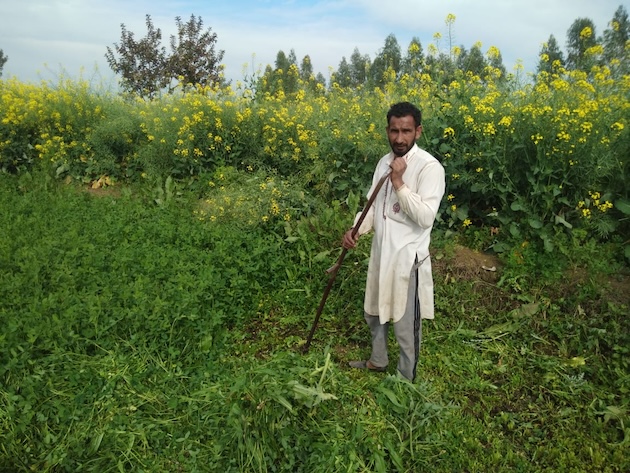
The Global Environment Facility’s food systems program found that its programs are highly relevant to global efforts to curb deforestation, land degradation, biodiversity loss and greenhouse gas emissions from agriculture, fisheries, and commodity supply chains. Pictured here is a farmer in Kashmir's frontier hamlet of RS Pura bordering Pakistan, farmers in this region have been affected by both climate change and conflict. Credit: Umar Manzoor Shah/IPS

The Global Environment Facility’s food systems program found that its programs are highly relevant to global efforts to curb deforestation, land degradation, biodiversity loss and greenhouse gas emissions from agriculture, fisheries, and commodity supply chains. Pictured here is a farmer in Kashmir’s frontier hamlet of RS Pura bordering Pakistan, farmers in this region have been affected by both climate change and conflict. Credit: Umar Manzoor Shah/IPS

WASHINGTON, D.C & SRINAGAR, Nov 21 2025 (IPS) – A new independent evaluation of the Global Environment Facility’s food systems programs says they are delivering strong environmental and livelihood gains in many countries but warns that a narrow focus on farm production, weak political analysis, and shrinking coordination budgets are holding back deeper transformation.


The Evaluation of GEF Food Systems Programs, prepared by the GEF Independent Evaluation Office for the 70th GEF Council in December 2025, reviews five major programs from GEF 6 to GEF 8. Together they cover 84 projects in 32 countries, backed by about USD 822 million in GEF finance and more than USD 6 billion in co-financing.

The report finds that the programs are highly relevant to global efforts to curb deforestation, land degradation, biodiversity loss and greenhouse gas emissions from agriculture, fisheries and commodity supply chains. They also respond to growing pressure on food systems as the world’s population rises and millions still lack access to healthy diets.

“Food systems are major drivers of global forest and biodiversity loss, land degradation, water pollution and greenhouse gas emissions,” the report notes. It says GEF funding has helped countries design more integrated approaches that connect environmental goals with farming, fisheries and rural development.

Results Most Visible at Community Level

During a webinar to launch the report, Fabrizio Mario Dante Felloni, Deputy Director of the Independent Evaluation Office, said the team had used a systemic lens, looking at the whole food system rather than isolated projects. The evaluation drew on document reviews, geospatial analyses, surveys, interviews, and case studies in Ghana, Indonesia, Peru, and Tanzania.

Felloni said the programs mark a clear shift from earlier, more fragmented efforts. They try to connect ministries and sectors that often work in isolation. “Because it was a food system, looking at the different sectors involved” was central to the design, he explained during the presentation.

The evaluation confirms that GEF food systems projects address several environmental pressures at once. Most initiatives target land and soil degradation, deforestation and biodiversity loss, often through better land use planning, sustainable farming practices, and stronger governance of coastal fisheries. Many projects also seek to link environmental gains with better incomes, skills for women and youth, and improved food security.

Results are most visible at the community level. The report highlights gains in biodiversity, improved land management and reduced emissions when farmers have adopted climate-smart or ecosystem-friendly practices. Socioeconomic benefits include higher yields and incomes, new skills for women, and greater youth engagement in agriculture.

At a meso level, some projects are improving value chains through better market access, traceability and basic processing support. At the macro level, the evaluation records progress on policies and governance, including multi-stakeholder platforms, land use and marine planning, and early steps toward aligning national and local policies.

Yet the evaluation also finds clear gaps. While more than 90 percent of projects focus on the production stage, only about 40 percent look seriously at postharvest issues such as storage, processing, transport and markets. Very few tackle food loss, waste or dietary change, even though these are critical for shifting entire food systems.

“Despite having an ambition to look at the food system and value chains, there was still a production-focused type of approach,” Felloni said. Environmental drivers and biophysical issues receive strong attention in design, but only 40 percent of projects examine the political context, and around 30 percent look closely at socioeconomic drivers.

That limited attention to political economy and social dynamics restricts transformational potential, the report argues. It notes that many designs assume that coordination and platforms will naturally lead to policy alignment, without fully analyzing power relations, trade offs or vested interests.

‘Coordination Budgets Are Shrinking’

Jessica Kyle of ICF, who led parts of the evaluation, told the webinar that private sector engagement has been a “key feature” of the food systems programs. Around two-thirds of country projects include some engagement with businesses, from public private partnerships and capacity building to support for national commodity platforms. At the global level, partners such as the International Finance Corporation have mobilized significant private finance for sustainable commodities.

However, she said scaling these efforts remains difficult. Fragmented supply chains, often weak regulatory incentives for sustainability, and unclear business cases are some of the challenges. Programs have also struggled to link global work on standards and finance with activities in country projects.

On the program approach itself, Kyle said the evaluation found real added value. Stronger program governance, shared design frameworks and knowledge pathways have improved the coherence of activities and allowed influence to extend beyond individual project boundaries. The programs have generated many knowledge products, trainings and learning events and have increasingly shifted from broad global exchanges to more targeted regional and commodity-focused dialogues.

Even so, the report finds “relatively limited evidence” that countries are applying this knowledge in a systematic way. Timing is one reason. In some cases, guidance arrived before projects were ready to use it. In others, knowledge products were not tailored to local needs, or project teams were reluctant to adjust activities mid-course.

To address this, the evaluation calls for stronger “country docking” so that global coordination projects can provide support when countries actually need it and in forms they can absorb. It also urges more participatory processes to identify country demands for technical assistance and learning.

A recurring concern is that coordination budgets are shrinking, even as the scope of programs widens. Coordination funding fell from about 10 percent of total program cost in GEF 6 food systems programs to around 7 percent in GEF 8, even though the number of countries and commodities grew. The report warns that this gap risks undermining the entire programmatic promise, since meaningful integration and tailored support require time, travel and staff.

The Catalytic Capital

Speaking for the GEF Secretariat, Peter Mbanda Umunay, thematic lead for food systems and land use, welcomed the evaluation and said many of its findings were already shaping the design of GEF 8 and early thinking on GEF 9. He described it as “one of the less contentious evaluations,” noting that the Secretariat agreed with most points.

Umunay traced the evolution from the first Integrated Approach Pilots in 2015, focused on resilient food systems in sub-Saharan Africa and commodity supply chains, to the FOLUR Impact Program in GEF 7 and the Food Systems Integrated Program in GEF 8. Over time, he said, the Secretariat has tried to tighten links between global coordination platforms and country projects and to use limited GEF funds more strategically as catalytic capital.

He highlighted efforts to promote “country docking” so that information and technical support flow more clearly between global hubs and national projects. The aim is to empower coordination platforms with enough resources and authority to structure strong connections with governments.

On private finance, Umunay said the evaluation had reinforced the case for using GEF resources to unlock much larger flows. By using GEF grants to de-risk investments or support blended finance, he argued, programs can shift perceptions that agriculture and land use are too risky for private investors and bring in both large companies and small and medium enterprises.

He also accepted the criticism that programs focus too much on production and not enough on postharvest value chains. This, he said, is now being addressed in GEF 8 and in plans for GEF 9, including through work on processing, storage, school meal schemes and nutrition outcomes, which can also bring in more ministries and strengthen policy coherence.

The evaluation ends with four main recommendations. It calls on the GEF to sharpen the focus of food systems programs and consider phasing them across replenishment periods so that countries can move from readiness and pilots to larger-scale investments over longer time frames. It urges a broader focus beyond production, especially on value chain integration and demand-side measures, where this can secure environmental and social gains.

The report also recommends deeper analysis of political economy and behavior change at design and during implementation and stronger country docking to turn knowledge and global services into real changes on the ground.

Umunay said the Secretariat had already prepared a management response and would use the findings to strengthen current and future programs. He stressed that the GEF remains country-driven. Governments must see these programs as supporting their priorities, from climate plans and food security strategies to rural development.

“We have been very successful in some countries that have continuously applied this program all across,” he told participants. “We will continue to do that, and this evaluation is eye-opening for the next steps.”

IPS UN Bureau Report