The Climate Alarm Is Ringing – It’s Time to Stop Silencing It

Civil Society, Climate Action, Climate Change, Crime & Justice, Economy & Trade, Environment, Featured, Global, Headlines, TerraViva United Nations

Opinion

Credit: Last Generation Germany

LONDON, Apr 12 2024 (IPS) – The heat records keep tumbling – 2023 was the hottest year in recorded history. Extreme weather events keep mounting up. And yet the voices most strongly calling for action to prevent climate catastrophe are increasingly being silenced.


It’s a sad fact that climate campaigners in the global south – in many countries in Africa, Asia and Latin America – have long faced repression. People have been subjected to incarceration and violence all the way up to murder for resisting climate-harming extractive projects and environmental destruction. In comparison, climate activists in global north countries – including Europe and North America – for a long time enjoyed relative freedom, which they used to protest against their governments and the corporations headquartered in their countries that bear most of the responsibility for causing global warming.

But they no longer enjoy the full freedom to do so. As the latest State of Civil Society Report from global civil society alliance CIVICUS shows, several global north governments are increasingly making it harder for people to take part in climate protests. They’re using anti-protest laws, raids, arrests, jail sentences and violence to try to subdue voices calling for urgent action.

When it comes to the climate, delay is denial, because if action isn’t taken fast, it may be too late. This means the repression of activists demanding immediate action must be seen as a form of climate denial.

Examples are piling up. In Germany last year, authorities used laws intended to combat organised crime to raid the homes of young activists from the Last Generation climate movement, seize their laptops and freeze their bank accounts. The German police also used violence against activists trying to block a coalmine expansion. The imposition of restrictions on climate activism is one the key reasons the CIVICUS Monitor recently downgraded Germany’s civic space rating.

In Italy too, the government has served climate campaigners with criminal conspiracy indictments historically used against the mafia, and it has also introduced a law to criminalise non-violent action at key sites. The Dutch authorities have responded with mass arrests to roadblock protests demanding it fulfil its promise to end fossil fuel subsidies, which amount to around US$39.9 billion a year. Thousands have been detained and the police have used water cannon against protesters.

The UK government has passed a package of laws that criminalise disruptive and noisy protests, clearly targeted at the non-violent direct action used by climate campaigners. In January, the UN Special Rapporteur on environmental defenders, Michel Forst, condemned these new laws. Numerous climate activists have been jailed for peaceful protest actions that until recently would never have received a prison sentence. Meanwhile the UK government plans to grant over 100 new oil and gas licences. Several Australian states have also passed anti-protest laws that have been used to jail climate activists.

Global north states, apparently eager to do the bidding of the fossil fuel giants, can be expected to intensify this repression as the gap between the action needed and the lack of effort being taken becomes increasingly clear. They silence civil society because activists expose the hypocrisy behind the greenwash. As right-wing populists and nationalists who oppose climate action – and often spread climate disinformation – gain influence across the global north, climate activists can expect an even greater wave of vilification.

The impacts of repression are personal. They increase the costs and dangers of activism in an attempt to deter people from getting involved and sap collective energies. However, in response, campaigners are showing resilience. In Germany, frozen funds were quickly replaced with crowdsourced donations. In the Netherlands, attempts to repress roadblocks motivated more people to turn up to protest.

But the opportunity cost is steep. Energy that should be invested in advancing creative climate solutions is instead being spent in fending off restrictions. In the long-term, there’s a danger of attrition, depleting the ranks of climate activists. And without civil society, who will push to keep the climate crisis high on the political agenda?

Civil society has shown it can make a difference. While there was much to be unhappy about with the last global climate summit, COP28, the fact that for the first time states acknowledged the need to transition away from fossil fuel use came as a direct result of civil society’s decades-long advocacy. More institutions are committing to divest from fossil fuel investments due to campaigning pressure: 72 per cent of UK universities have now done so, because student activists demanded it.

And the growing field of climate litigation keeps paying off. A group of Swiss women just won a ruling at the European Court of Human Rights, which found that their government has violated their human rights by not doing enough to tackle climate change, a verdict that sets a strong precedent. Last year, courts in Belgium and Germany insisted on stronger actions to cut emissions following lawsuits brought by campaigners. More are sure to follow.

Civil society will strive to keep working on every front possible, through protest, advocacy and litigation, because the scale of the climate crisis demands a full spectrum of responses. States should stop trying to hold back the tide and put themselves on the right side of history. They must respect the right of everyone to protest and stop the denial they practise through repression.

Andrew Firmin is CIVICUS Editor-in-Chief, co-director and writer for CIVICUS Lens and co-author of the State of Civil Society Report.
  Source

New Report Examines Progress on Global Sustainable Development Goals

Civil Society, Climate Action, Climate Change, Environment, Global, Headlines, Human Rights, Natural Resources, Sustainable Development Goals, TerraViva United Nations

Opinion

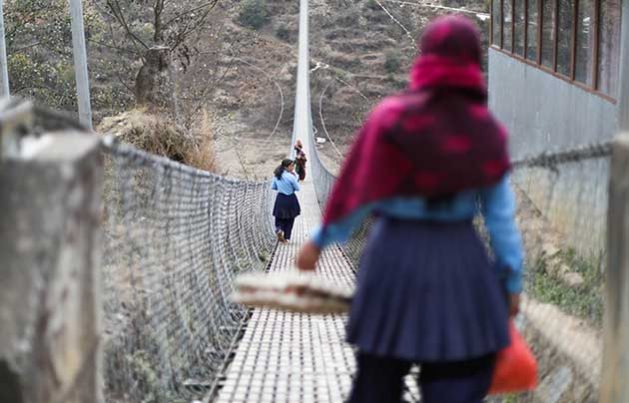
Credit: Students in Nepal’s Chitlang. Both Nomads/Forus

NEW YORK, Mar 21 2024 (IPS) – At the half-way point of the 2030 Agenda, the Sustainable Development Goals (SDGs) “are in deep trouble.” The need to accelerate progress towards the Sustainable Development Goals has never been more urgent as only approximately 12% of targets are currently on track. “Planet” is equally at risk as “people”.


As civil society leader Mavalow Christelle Kalhoule, Forus Chair and President of SPONG, the Burkina Faso NGO network, puts it, “What unfolds in the Sahel and in so many other forgotten communities ripples across the globe, impacting us all even if we choose to look away. Implementing the Sustainable Development Goals is vital to unlock a different future.”

The new “Progressing National SDGs Implementation” report looks at how countries around the world are advancing in their efforts towards sustainable development. The 2023 edition of the report is particularly significant as it marks the midpoint towards the 2030 Agenda’s goals, and the “world is not delivering”.

The report, which has been published since 2017, looks at crucial aspects such as governance, civil society involvement and space, localization, the importance of policy coherence, and the principle of Leaving No One Behind.

To compile the analysis, the report combines official Voluntary National Reviews (VNRs) submitted by member states with spotlight and alternative assessments, which aim to offer a more complete picture of national progress, particularly with respect to the fundamental 2030 Agenda principle to leave no one behind.

The report highlights that while more countries are engaging in ‘whole of government’ planning to implement the SDGs, at the same time many of the same countries do not ensure a wider ‘whole of society’ approach that involves civil society partners in delivery of the 2030 Agenda.

The report calls for a renewed global commitment to the SDGs, with a focus on:

    • Increased ambition: Countries need to adopt more ambitious plans to achieve the SDGs and ensure policy coherence.
    • Leaving no one behind: Data collection and policy focus must ensure that everyone benefits from SDG progress pacitularly by considering the extra challenges faced in reaching historically marginalized groups.
    • Stronger partnerships: Governments, civil society, and the private sector need to work together more effectively.
    • Improved monitoring: More robust data, national statistical and monitoring systems are needed to track progress and identify areas lagging behind.

Oli Henman from Action for Sustainable Development said: “We need to ensure that SDG reviews are genuinely inclusive of all parts of society and that national plans are backed up with real steps towards financing implementation at the community level. This to the only way that the world can get back on track to deliver the transformative change that was promised in 2015.”

Wangu Mwangi, a seasoned environmental journalist and expert in sustainable development, has authored the Progressing National SDG Implementation Report 2023, drawing on her extensive experience in sustainable development, land governance, natural resources management, climate change adaptation, and African development.

This report was coordinated by A4SD, in collaboration with ANND, BOND, Cooperation Canada, CPDE, Forus, IISD, Save The Children UK, and Sightsavers.

IPS UN Bureau

  Source

From Gas to Ash: The Struggle of Nigerian Women Amidst Surging Cooking Gas Prices

Africa, Civil Society, Climate Change, Development & Aid, Energy, Environment, Featured, Food and Agriculture, Gender, Headlines, Sustainable Development Goals, TerraViva United Nations

Energy

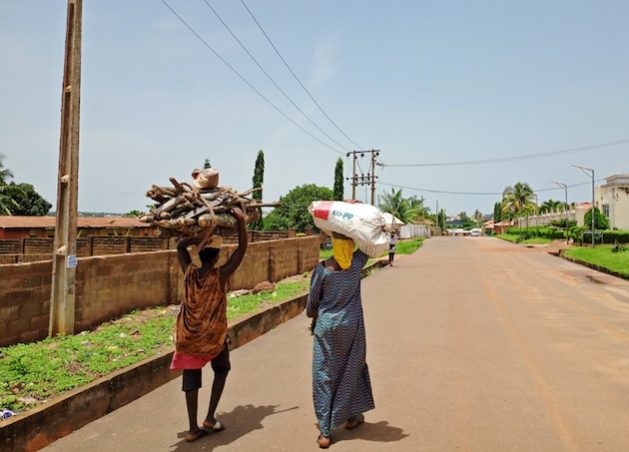
Nigerian women returning from the forest with firewood. Credit: Peace Oladipo/IPS

Nigerian women returning from the forest with firewood. Credit: Peace Oladipo/IPS

KWARA, Nigeria, Mar 1 2024 (IPS) – One sunny mid-morning in Omu-Aran village, a community in Kwara State, North Central Nigeria, Iyabo Sunday sat beside a firewood stand observing her pot of beans with rice (a combination enjoyed by many in Nigeria).

The 52-year-old widow used her plastic dirt parker to fan the flames, occasionally blowing air through her mouth for speed and frantically shielding her face from the wisps of smoke that curled from the firewood.


After a hike in electricity tariffs, Sunday told IPS that she abandoned her electric-powered stove for cooking gas. But instability in the “economy has successfully caused me to move back to the firewood since my children and I must eat.”

Oyedele Christiana, a 41-year-old restaurateur who specializes in making fufu, a local delicacy made from cassava, expressed her wish to stop using firewood and charcoal but was constrained by finances. “The smoke enters my eyes and makes me cough a lot.  I usually use firewood for my canteen business, while I use charcoal at home for household cooking.”

Like Iyabo, Christiana made use of cooking gas. The sporadic increase in the price of domestic gas has since pushed her to the traditional cooking method, with its attendant havoc on her eyes and lungs. “I am not as old as I look, but cooking has done this,” Oyedele sighed.

The price of cooking gas in Nigeria has soared wildly amid the country’s inflation woes. The removal of subsidy on petrol products, together with a depreciation of the naira, has resulted in a steep increase in the cost of food and transportation. This hike in the cost of living comes amid a minimum wage of N30,000 ($18), ranked among the lowest in the world, according to Picodi.

The price of 12.5 kg of cooking gas increased from N7,413. ($4) in 2022 to N16,875 ($10) in February 2024 across the country, a price just half the national minimum wage.

Implications on Women, Environment

Women living in grassroots communities who can no longer afford cooking gas have no choice but to bear the harsh method of cooking with firewood. Many, like Ajayi Omole, an octogenarian living in Akungba, a town in Ondo State, have made cooking with firewood a delight due to the lack of alternatives.

“We usually go into the forest, get the trees, sun dry (them), and prepare them for cooking.” However, she said, “I have a stove inside my room but I can’t use it because I don’t have enough to purchase kerosene.”

The nation’s alarming poverty circle, where Iyabo and Oyedele belong, speaks loudly about the reality of clean cooking. Statistics indicate that 63 percent of the entire population mostly relies on traditional method cooking, usually described as ‘dirty’.

The National Council on Climate Change (NCCC) has stated that, aside from the dangers of deforestation and climate destruction, the use of firewood and charcoal for cooking directly affects women’s health. This is in agreement with figures from the Federal Ministry of Environment about how more than 98,000 Nigerian women die annually from smoke inhaled while cooking with firewood.

Aisha Sulaiman, a renewable energy and green hydrogen technologist, said that rising prices of cooking gas have caused many to transition back to the use of firewood and charcoal, leading many women to multiple health issues. She emphasized that women suffer stronger health issues as secondhand smokers.

She said, “In an African setting, women belong to the kitchen; that’s how the narrative is, even if that is not supposed to be. In rural communities, the main source of energy in terms of cooking is the traditional method, which is unsustainable and harmful.

“The traditional methods of cooking involve charcoal and firewood. These are materials that lead to the release of greenhouse gases, particularly CO2, into our environment, and this in turn contributes to global warming, which brings about climate change.”

Speaking on women’s health, Sulaiman mentioned that respiratory diseases could stem from inhaling smoke from charcoal and firewood. “These methods are a source of air pollution, which can cause serious health issues. Overexposure to the smoke also leads to a disease called chronic obstructive pulmonary disease, which is very endemic to women,’’ she said. Sulaiman added that the Nigerian government should prioritize making clean energy accessible and cost-competitive to procure its acceptance by the people in low-income communities.

Ibrahim Muhammad, an energy consultant and team lead at Climate Alaramma Sustainable Development Initiative, a youth-led environmental organization in northern Nigeria, argued that the transition back to the traditional method of cooking would increase deforestation. He said the increase in LPG’s price is connected to the nation’s economic downturn.

In his words, “There is extensive research demonstrating the significant impact of traditional cooking methods on women and children. These methods contribute to deforestation and air pollution, particularly through the emission of smoke.”

Muhammad noted that women’s transition to traditional cooking was a setback in Nigeria’s transition plan to energy, especially in the area of clean cooking.

The Nigerian government and international development partners must find avenues for cleaning cooking infrastructure to be subsidized so that rural communities, mostly affected, can be able to afford it. According to him, “Considering the nature of some communities that are into agriculture, they are expected to be supported with infrastructure that can help them use this agricultural waste to cook.  Additionally, the prices of these clean cooking stoves that are being developed are subsidized.”

Speaking further on alternatives, he added, “Briquettes, produced from agricultural waste, typically resemble charcoal and can perform all the functions of charcoal. They are energy-efficient and made from various agricultural waste materials, thus not promoting deforestation.”

Muhammad added that harmless solutions should be created to fit in Nigeria’s context; electric stoves may be considered impossible due to unstable electricity.

“Solar cookers are typically used when it is sunny, but many people hardly have lunch, they mostly focus on breakfast and dinner. Many women cook early in the morning or evening, so we need to tailor solutions to our specific circumstances,’’ he said.

IPS UN Bureau Report

  Source

The World Social Forum: The counterweight to the World Economic Forum

Armed Conflicts, Civil Society, Climate Action, Climate Change, Democracy, Economy & Trade, Global, Headlines, Human Rights, Inequality, Press Freedom, TerraViva United Nations

Opinion

Opening of the World Social Forum 2024 in Kathmandu

KATHMANDU, Nepal, Feb 23 2024 (IPS) – This week the 2024 annual meeting of the World Social Forum (WSF) was held in Nepal. There were fifty thousand participants from over 90 countries, exchanging strategies to address the multiple global crises, from climate catastrophes to unfettered capitalism, inequality, social injustice, wars and conflict.


The WSF was created in 2001 as a counterbalance to the elitism of the World Economic Forum (WEF). The WEF, founded and chaired by a private financial sector foundation, fosters the influence of the corporate world among governments in the luxury ski resort of Davos (Switzerland).

Isabel Ortiz

By contrast, the WSF was created as an arena for alternative thinking, where the grassroots and social avant-garde could gain a voice, challenging the neoliberal idea that “there is no alternative” (TINA); instead affirming that “another world is possible” built upon peace, human rights, real democracy, equity, and justice.

While Davos is the meeting for the 1%, the wealthiest people in the planet, Kathmandu is the meeting for the rest of us. The UN Secretary-General extended his best wishes for WSF 2024 for “restoring hope and finding innovative solutions for people and the planet.”

Indeed, the WSF 2024 was hotbed of ideas, alternative experiences and strategies. There is no concluding summary or annual declaration because the WSF organizers seek to maintain a plurality and diversity of messages. The following points reflect my personal overview of the key topics discussed:

    • Denouncing the genocide in Gaza, a demand for an immediate ceasefire and the establishment of a free state of Palestine.

    • Refuse militarization and wars: Cut military spending and power, promote peace and democracy. Defense spending is increasing while austerity policies cut social spending, this trend must be reversed.

    • Organize against the rise of the far right: Radical right governments around the world have eroded democracy, human rights and civil society. Reports were made of censorship, repression, abuses of justice, unjustified raids and unfair imprisonment of progressive citizens, by the governments of Modi in India, Duterte in Philippines, Orban in Hungary, Duda in Poland, Al-Sisi in Egypt, Trump in the US, Bolsonaro in Brazil, among others There were also many reports of abusive litigation by corporations and politicians against journalists, activist researchers and CSOs, that are silencing critical voices.

    Fight inequality to counter the excessive concentration of power and wealth in the hands of a small elite. Inequality is the result of deliberate political and economic choices, and it can be reversed to build a just, equal and sustainable world.

    End Austerity, illegitimate debt and neoliberal economic policies that have failed citizens resoundingly. These outdated policies, imposed by international financial institutions (IFIs) like the IMF and the World Bank through the Ministries of Finance and G20, mostly benefit corporations and investors in the US and in a few Northen countries, result in real and lasting harm to the lives of ordinary people. There are alternative economic policies, such as the adequate taxation of wealthy millionaires and corporations, that can finance prosperity for people and planet.

    • Redress violations of human rights for women, Dalits (the ‘untouchables’) and lower castes, LGBT, persons with disabilities and different ethnicities; demanding enactment and implementation of inclusive policies and strategies to eliminate class, caste, gender and race-based disparities.

    • The 2024 Feminist Forum focused on addressing systemic barriers that impede women’s rights, from patriarchy to macroeconomic policies, through transformative feminist action that leads to change.

    • Ensure public services, universal social security or social protection, and labor rights for all, including informal workers and migrants, instead of the current austerity driven trend to privatize or corporatize public services, to reduce welfare benefits and to deregulate the labor market.

    • Peasant protests and movements: La Via Campesina is the largest movement today with two hundred million peasant members fighting for food security, against agribusiness and GMOs. It is very active, has alliances with unions, indigenous peoples’ movements and it is a good model for other movements.

    Climate Justice: A number of sessions discussed climate catastrophes, the IFIs support for fossil fuels, just transitions, habitat, and sustainable development.

The lack of will of the world’s political and economic elites to resolve today’s multiple crisis fuels discontent among citizens and disillusionment with conventional parties. People everywhere are losing faith in governments, institutions, and economic and political systems. Governments and world leaders would do well to listen and to act upon the ideas coming from the World Social Forum.

Isabel Ortiz, Director of the think-tank Global Social Justice, was Director of the International Labor Organization and UNICEF, and a senior official at the United Nations and the Asian Development Bank.

IPS UN Bureau

  Source

Snowless Winter and a Climate Crisis: Kashmir’s ‘Unprecedented’ Weather

Asia-Pacific, Civil Society, Climate Change, Climate Change Justice, Editors’ Choice, Environment, Featured, Food and Agriculture, Food Security and Nutrition, Headlines, Natural Resources, Sustainable Development Goals, TerraViva United Nations

Climate Change

Local Muslims held special prayer ceremonies in January for snowfall. Credit: Umar Manzoor Shah/IPS

Local Muslims held special prayer ceremonies in January for snowfall. Credit: Umar Manzoor Shah/IPS

SRINAGAR, India, Feb 20 2024 (IPS) – Abdul Gani Malik, a 75-year-old goldsmith living in Kashmir’s capital, Srinagar, has witnessed eras of tranquility and turbulence in the Himalayan region. What he has not seen, however, is a snowless Kashmir during the winter.


Malik still works at his shop, located in one of the jam-packed markets of the old city area of Kashmir’s capital, intricately lacing colorful emeralds on dazzling gold necklaces. While conversing with IPS, he mentions that the winter in Kashmir has never been so terrible and terrifying as it has been this year.

He recalls how, during the 40-day harshest winter period from December 21 to January 30, snow would accumulate to about six or seven feet, freezing and making pathways treacherous even for city dwellers. In the mountainous region, according to Malik, the snow would last for several months, regulating temperatures during the summer and providing water and food.

“Now is a different tale. The mountains appear dry and dead. The rivers are carrying no water, and our woods are bereft of life. This is an absolute apocalypse,” Malik said.

The region of Kashmir is located in the north-western complex of the Himalayan ranges, with marked relief variation, snow-capped summits, antecedent drainage, complex geological structure, and rich temperate vegetation and fauna.

Kashmir’s winter is traditionally divided into three parts: Chilay Kalan (old man winter), Chilay Khuarud (young winter), and Chilay Bacha (kiddy winter). The coldest part, called Chilay Kalan, starts on December 21 and ends at the end of January. It is during this period that snowfall is expected.

“The temperatures during this period plummet to even minus 8 to 10 degrees Celsius, and when it snows, it accumulates in glaciers. The snowfall in the later period is of no use,” says Abdul Ghani Malik.

He was part of the congregational prayers held across Kashmir for snowfall. Local Muslims, who constitute more than 90 percent of the local population, decided in January to hold special prayers for snowfall in all major mosques. “We prayed, and we hope God listens to our plight.”

According to Abid Ali, a student of environmental sciences from Kashmir, Kashmir’s livelihood depends on snowfall, and if it doesn’t snow, things are going to take a terrible shape.

“The region’s electricity system, agriculture, and tourism are all dependent on snowfall. The dry winter will prove catastrophic for the local populace,” Abid said.

Kashmir, as per estimates, reported a 79 percent precipitation deficit through December of last year. Indian meteorologists claim that unusual weather is linked to global warming and El Niño, the sporadic climate phenomenon that can create warm, dry conditions in the Indian subcontinent and other parts of Asia.

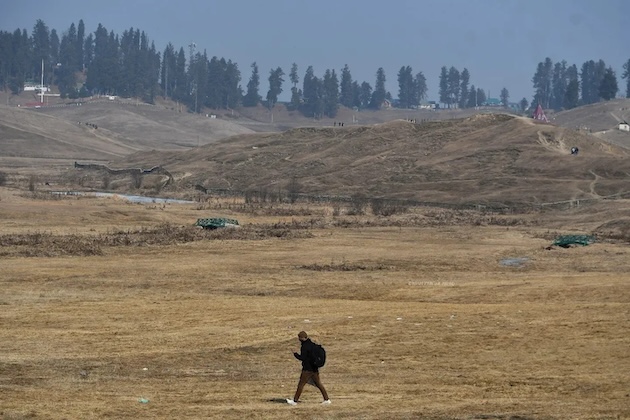
A man walks through an area in Kashmir where low snowfall is causing concern as the region’s economy is highly dependent on it. Credit: Umar Manzoor Shah/IPS

A man walks through an area in Kashmir where low snowfall is causing concern as the region’s economy is highly dependent on it. Credit: Umar Manzoor Shah/IPS

Threat to Agriculture

In Kashmir, 60 percent of the state’s revenue comes from agriculture and horticulture, and about 80 percent of the population lives in rural areas.

However, over the years, the valley has experienced irregular patterns of precipitation. In the first five months of 2022, Kashmir saw a 38 percent rain shortage, according to data provided by the Meteorological Department (MeT) in Srinagar.

The data reveals that the Kashmir Valley has experienced a significant lack of pre-monsoon precipitation over the years. From March 1 to May 31, 2022, the region got 99.5 mm of rain, 70 percent lower than average.

Comparatively, between March and May of each of the following years—2017, 2018, 2019, 2020, and 2021—there was a deficit of 16, 28, 35, and 26 percent, respectively. The dry winter this year is already throwing life out of gear for the farmers.

Abdul Karim Ganaie, a farmer hailing from south Kashmir’s Pulwama, says the threats are menacingly looming large, and people cannot do anything other than watch helplessly as the crisis unfolds.

When IPS contacted Choudhary Mohammad Iqbal, the director of agriculture in Kashmir, he stated that the department was closely monitoring the situation and would be issuing a warning to the farmers in the coming months.

“We accept that the situation is going to prove worrisome for Kashmir’s farming community, but we have to adopt a strategy to ensure minimal losses. We are working on that front,” Choudhary said.

Tourism under Cloud

The famous tourist destinations in Kashmir are also witnessing a dip in tourist arrivals, putting the people associated with this business in dire straits. In January, the famous tourist resorts recorded the lowest arrival of foreign and domestic tourists, with only 30 percent occupancy in hotels.

It snows at last but too little, too late!

Finally, in the first week of February, when the harshest 40-day-long spell was already over, it snowed in most of the areas of Kashmir. However, according to experts, the snow would yield the fewest results as it is not possible to accumulate for an extended period.

What is important, says Mehraj Ahmad, a research scholar working on climate change in Kashmir, is that the snow must accumulate in the higher reaches for as long as possible until the arrival of summers.

“The snowfall of February or March carries the least significance when compared with the snowfall of January. Therefore, we really are keeping our fingers crossed and praying for the safeguard of our lives against the dark, dreadful effects of climate change,” Ahmad said.

IPS UN Bureau Report

IPS UN Bureau, IPS UN Bureau Report, India, Kashmir

  Source

Solar Energy Gives Important Boost to Small-scale Farmers in Chile

Active Citizens, Civil Society, Climate Action, Climate Change, Development & Aid, Economy & Trade, Editors’ Choice, Energy, Environment, Featured, Food and Agriculture, Headlines, Integration and Development Brazilian-style, Latin America & the Caribbean, Population, Projects, Regional Categories, Water & Sanitation

Energy

Myriam Miller and Freddy Vargas stand next to one of the three greenhouses on their farm, where tomatoes are growing, anticipating an optimal harvest this year. The couple uses no chemical fertilizers to ensure the healthy development of thousands of plants on their farm in Mostazal, a municipality in central Chile. CREDIT: Orlando Milesi / IPS

Myriam Miller and Freddy Vargas stand next to one of the three greenhouses on their farm, where tomatoes are growing, anticipating an optimal harvest this year. The couple uses no chemical fertilizers to ensure the healthy development of thousands of plants on their farm in Mostazal, a municipality in central Chile. CREDIT: Orlando Milesi / IPS

MOSTAZAL, Chile , Feb 2 2024 (IPS) – The installation of photovoltaic panels to use solar energy to irrigate small farms is expanding quickly in Chile because it lowers costs and optimizes the use of scarce water resources.


This long, narrow South American country that stretches from the northern Atacama Desert to the southern Patagonia region and from the Andes Mountains to the Pacific Ocean is extremely rich in renewable energies, especially solar and wind power.

“Solar panels have made an immensely important contribution to our energy expenditure. Without them we would consume a lot of electricity.” — Myriam Miller

Last year, 36.6 percent of Chile’s electricity mix was made up of Non-Conventional Renewable Energies (NCREs), whose generation in May 2023 totaled 2392 gigawatt hours (GWh), including 1190 GWh of solar power.

This boom in the development of alternative energies has been mainly led by large companies that have installed solar panels throughout the country, including the desert. The phenomenon has also reached small farmers throughout this South American country who use solar energy.

In family farming, solar energy converted into electricity is installed with the help of resources from the government’s Agricultural Development Institute (Indap), which promotes sustainable production of healthy food among small farmers, incorporating new irrigation techniques.

In 2020 alone, the last year for which the institute provides data, Indap promoted 206 new irrigation projects that incorporated NCREs with an investment of more than 2.1 million dollars.

That year, of the projects financed and implemented, 182 formed part of the Intra-predial Irrigation Program, 17 of the Minor Works Irrigation Program and seven of the Associative Irrigation Program. The investment includes solar panels for irrigation systems.

Within this framework, 2025 photovoltaic panels with an installed capacity of 668 kilowatts were installed, producing 1002 megawatt hours and preventing the emission of 234 tons of carbon dioxide.

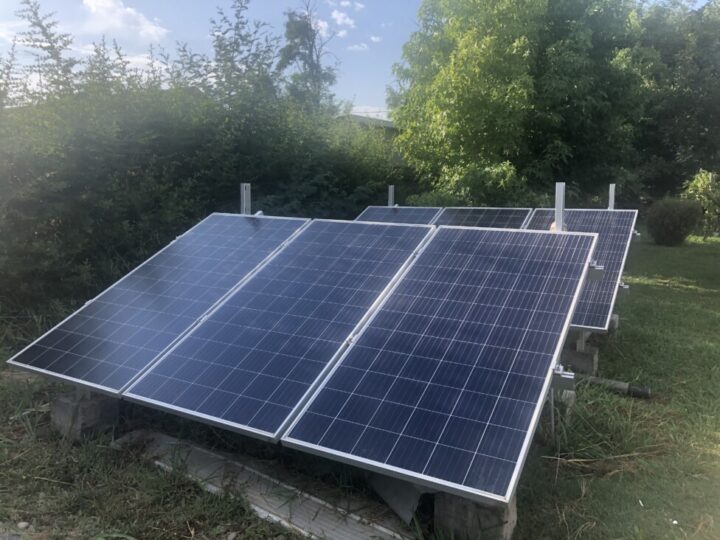
The six solar panels installed on the small farm of Myriam Miller and Freddy Vargas, in the municipality of Mostazal, south of Santiago, Chile, allow them to pump water to their three greenhouses with thousands of tomato plants and to their vegetable garden. They also drastically reduced their electric energy expenditure. CREDIT: Orlando Milesi / IPS

The six solar panels installed on the small farm of Myriam Miller and Freddy Vargas, in the municipality of Mostazal, south of Santiago, Chile, allow them to pump water to their three greenhouses with thousands of tomato plants and to their vegetable garden. They also drastically reduced their electric energy expenditure. CREDIT: Orlando Milesi / IPS

An experience in Mostazal

“Solar panels have made an immensely important contribution to our energy expenditure. Without them we would consume a lot of electricity,” 50-year-old farmer Myriam Miller told IPS at her farm in the municipality of Mostazal, 66 km south of Santiago, where some 54,000 people live in different communities.

Miller has half a hectare of land, with a small portion set aside for three greenhouses with nearly 1,500 tomato plants. Other tomato plants grow in rows outdoors, including heirloom varieties whose seeds she works to preserve, such as oxheart and pink tomatoes.

Indap provided 7780 dollars in financing to install the solar panels on her land. Meanwhile, she and her husband, Freddy Vargas, 51, who run their farm together, contributed 10 percent of the total cost.

In 2023, Miller and Vargas built a third greenhouse to increase their production, which they sell on their own land.

“We’re producing around 8,000 kilos of tomatoes per season. This year we will exceed that goal. We’re happy because we’re moving ahead little by little and improving our production year,” Miller said as she picked tomatoes.

On the land next to the tomato plants, the couple grows vegetables, mainly lettuce, some 7,000 heads a year. They also have fruit trees.

Vargas told IPS that they needed electricity to irrigate the greenhouses because “it’s not easy to do it by hand.”

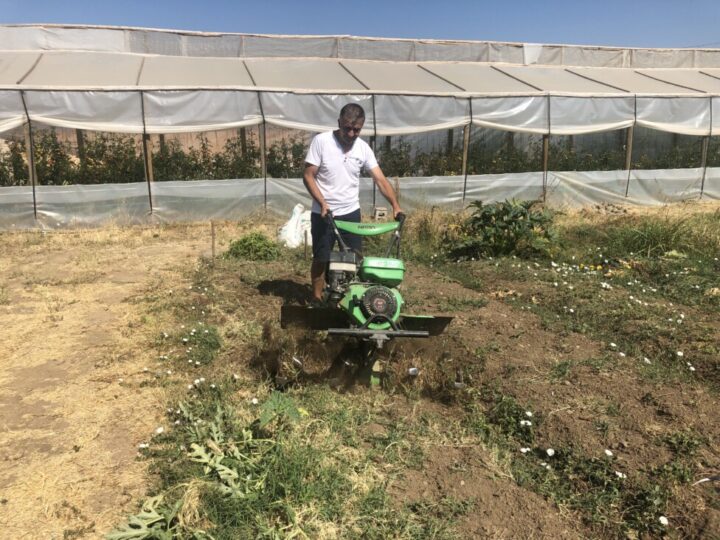
Freddy Vargas turns the soil on his farm in the municipality of Mostazal, south of Santiago, Chile. Lettuce is his star vegetable, with thousands of heads sold on the farm. The farmer plans to buy a mini-tractor to alleviate the work of plowing the land. CREDIT: Orlando Milesi / IPS

Freddy Vargas turns the soil on his farm in the municipality of Mostazal, south of Santiago, Chile. Lettuce is his star vegetable, with thousands of heads sold on the farm. The farmer plans to buy a mini-tractor to alleviate the work of plowing the land. CREDIT: Orlando Milesi / IPS

The farm has two wells that hold about 30,000 liters of water that arrives once a week from a dam located two kilometers away. This is the water they use to power the pumps to irrigate the greenhouses.

“We have water rights and Indap provided us with solar panels and tools to automate irrigation. They gave us four panels and we made an additional investment, with our own funds, and installed six,” Vargas explained.

The couple consumes between 250 and 300 kilowatts per month and the surplus energy they generate is injected into the household grid.

“We don’t have storage batteries, which are more expensive. Every month the electric company sends us a bill detailing the total we have injected into the grid and what we have consumed. They calculate it and we pay the difference,” Vargas said.

The average savings in the cost of consumption is 80 percent.

“I haven’t paid anything in the (southern hemisphere) summer for years. In the winter I spend 30,000 to 40,000 pesos (between 33 and 44 dollars) but I only pay between 5,000 and 10,000 pesos a month (5.5 to 11 dollars) thanks to the energy I generate,” the farmer said.

Above and beyond the savings, Miller stressed the “personal growth and social contribution we make with our products that go to households that need healthier food. We feel good about contributing to the environment.”

“We have a network, still small, of agroecological producers. There is a lack of information among the public about what people eat,” she added.

Their tomatoes are highly prized. “People come to buy them because of their flavor and because they are very juicy. Once people taste them, they come back and recommend them by word of mouth,” Miller said.

She is optimistic and believes that in the municipalities of Mostazal and nearby Codegua, young people are more and more interested in contributing to the planet, producing their own food and selling the surplus.

“We just need a little support and more interest in youth projects in agriculture to raise awareness that just as we take care of the land, it also gives to us,” she said.

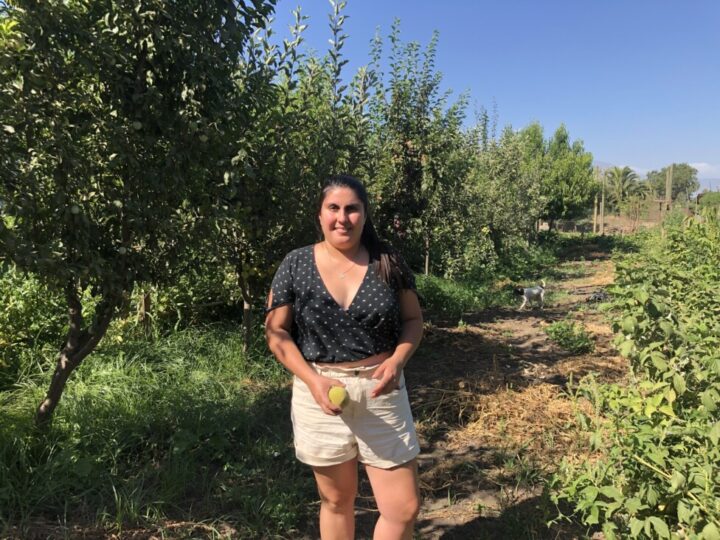
Valentina Martínez stands on her father's small plot of land in the municipality of María Pinto, north of Santiago, Chile. The fruit trees provide the shade needed to keep the planted vegetables from being scorched by the strong southern hemisphere summer sun in central Chile. CREDIT: Orlando Milesi / IPS

Valentina Martínez stands on her father’s small plot of land in the municipality of María Pinto, north of Santiago, Chile. The fruit trees provide the shade needed to keep the planted vegetables from being scorched by the strong southern hemisphere summer sun in central Chile. CREDIT: Orlando Milesi / IPS

A pesticide-free new generation

Valentina Martínez, 32, is an environmental engineer. Together with her father, Simón, 75, they work as small farmers in the municipality of María Pinto, 60 kilometers north of Santiago. She has a 0.45 hectare plot and her father has a 0.35 hectare plot.

Both have just obtained funding from the Transition to Sustainable Agriculture (TAS) project, which operates within Indap, and they are excited about production without chemical fertilizers and are trying to meet the goal of securing another larger loan that would enable them to build a greenhouse and expand fruit and vegetable production on the two farms.

“It’s a two-year program. In the first year you apply and they give you an incentive of 450,000 pesos (500 dollars) focused on buying technology. I’ve invested in plants, fruit trees, worms, and containers for making preserves,” Valentina told IPS.

In the second year, depending on the results of the first year, they will apply for a fund of 3900 dollars for each plot, to invest in their production.

“This year my father and I will apply for solar panels to improve irrigation,” said Valentina, who is currently dedicated to producing seedlings.

“My father liked the idea of producing without agrochemicals to combat pests,” she said about Simón, who has a fruit tree orchard and also grows vegetables.

In María Pinto there are 380 small farmers on the census, but the real number is estimated at about 500. Another 300 are medium-sized farmers.

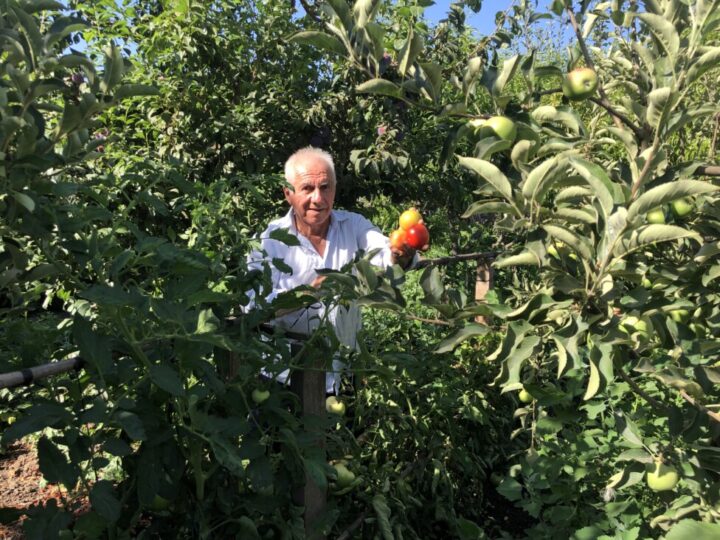
Simón Martínez, 75, proudly shows some of the citrus fruits harvested on his farm where he practices agroecology and does not use agrochemicals. He and his daughter Valentina won a contest to continue improving the sustainability of their farming practices on their adjoining plots, located outside the Chilean town of María Pinto. CREDIT: Orlando Milesi / IPS

Simón Martínez, 75, proudly shows some of the citrus fruits harvested on his farm where he practices agroecology and does not use agrochemicals. He and his daughter Valentina won a contest to continue improving the sustainability of their farming practices on their adjoining plots, located outside the Chilean town of María Pinto. CREDIT: Orlando Milesi / IPS

The rest of the area is monopolized by large agricultural companies dedicated to monocultures for export. Most of them have citrus, avocado, cherry and peach trees, as well as some walnut trees, and they all make intensive use of chemical fertilizers.

Chile exports mainly copper, followed by iron. But it also stands out for its sales of fish, cellulose pulp and fruit. In 2023, it exported 2.3 million tons of fruit, produced by large farms and bringing in 5.04 billion dollars. Agriculture represents 4.3 percent of the country’s GDP.

Family farming consists of some 260,000 small farms, which account for 98 percent of the country’s farms, according to the government’s Office of Agrarian Studies and Policies (Odepa).

Family farms produce 40 percent of annual crops and 22 percent of total agricultural production, which is key to feeding the country’s 19.7 million people.

Valentina is excited about TAS and the meetings she has had with other young farmers.

“It’s fun. We’re all on the same page and interested in what each other is doing. We start in December and January and it lasts all year. The young people are learning about sustainable agriculture and that there are more projects to apply for,” she explained.

She said that 15 young people in María Pinto have projects with pistachio trees, fruit trees, greenhouse gardens, outdoor gardens, animal husbandry and orchards. They are all different and receive group and individual training.

The training is provided by Indap and the Local Development Program (Prodesal), its regional representatives and the Foundation for the Promotion and Development of Women (Prodemu).

“The idea is that more people can learn about and realize the benefits of sustainable agriculture for their own health and for their land, which in a few years will be impossible due to the spraying of monocultures,” Valentina said.

It targets large entrepreneurs who produce avocado and broccoli in up to four harvests a year, both water-intensive crops, even on high hillsides.

“We need to come together, do things properly and recruit more people to create a legal group to reach other places and be able to organize projects. When you exist as an organization, you can also reach other places and say I am no longer one person, we are 15, we are 20, 100 and we need this,” she said.

  Source