Good for Girls and Good for the Planet: Eco-Friendly Sanitary Towels

Africa, Climate Change, Conservation, Environment, Featured, Green Economy, Headlines, Health, Innovation, Sustainable Development Goals, TerraViva United Nations

Women’s Health

Stephany Musombi and engineers preparing the banana stems for processing at KIRDI. Credit: Wilson Odhiambo/IPS

Stephany Musombi and engineers preparing the banana stems for processing at KIRDI. Credit: Wilson Odhiambo/IPS

NAIROBI, Nov 16 2023 (IPS) – ’Going Green’ seems to Dr Jacquline Kisato’s favorite catchphrase as she passionately explains her eco-friendly sanitary towel, a product she expects will help empower women and young girls while also putting money into farmers’ pockets.


Kisato is a lecturer at the Kenyatta University (KU), Fashion Design and Marketing, currently working on a project to develop affordable and eco-friendly sanitary towels while also finding a solution for sustainable packaging materials.

Kisato’s venture started out to help communities get a source of employment through the commercialization of banana stems – products that were considered useless by farmers and would usually be left to rot away on farms.

After the Kenyan government enforced a ban on the use of plastic bags in 2018, there was a need to find immediate alternatives.

Plastic bags were a necessity for grocers and fast-food vendors, an item that made it easy for customers to carry their goods home. Despite their advantage, however, their negative impact on the environment could no longer be overlooked.

‘’I started looking at this project from an entrepreneurship point of view on how I could commercialize banana stem fibers. The government had just banned single-use plastic bags, and market vendors needed alternatives to serve their customers,’’ Kisato told IPS.

‘’Poorly disposed sanitary towels also formed part of the pollution problem since they were composed of plastic,’’ she added.

According to Kisato, however, her need to empower women and young girls through affordable sanitary towels was something that she always had in mind after noticing the struggles that school-going girls went through.

‘’While walking along the hallways one day, a student on campus stopped me and asked if I could help her with a packet of sanitary pads. This incident shocked me as for a long time, I had assumed ‘period poverty’ was only experienced amongst high school children,’’ Kisato said.

Kisato and her research team interviewed 400 high school girls from Gatundi, Kibera, and Kawangware, where they found out that more than 50 percent of the girls in these low-income areas could hardly afford sanitary pads even when at home.

This did not sit well with the don as she felt something needed to be done about it.

It was while researching alternatives to plastic bags that she realized that she could solve two problems at the same time.

Kisato, therefore, applied for the National Research Fund (NRF) in 2018 with the aim of developing eco-friendly plastic bags and sanitary towels. Her wish came through when NRF granted Kenyatta University Ksh.9 million (about US $ 61,623) in 2020, with her taking the lead as the principal investigator in the project.

Her team is made up of scholars from different departments and institutions and also includes Ph.D. and master’s students, with each one of them playing a major role in seeing the project through.

‘’I lead a team of engineers from the Kenya Industrial Research and Development Institute (KIRDI), whose task is to reverse engineer machines that can extract fiber from banana stems and use them to create eco-friendly packaging and sanitary towels,’’ she explained. “I also have researchers from Moi University whose work was to turn the extracted fiber into soft materials for use.”

Kisato’s aim was to produce quality sanitary towels that could compete with what was already in the market while still being eco-friendly, a fact that led her to seek the expertise of Edwin Madivoli, a chemistry lecturer at the Jomo Kenyatta University of Agriculture and Technology (JKUAT).

According to Kisato, the towels on the market have a component in them called hydrogel, which enables them to retain fluids for longer, and were also lined with plastic sheets to prevent any leakage. Our intention is to replicate the same but use bioplastic materials, which can degrade as opposed to the normal plastic that is being used.

From her research, Kisato also discovered that Africans, on average, wore sanitary towels for longer as compared to women and girls from developed countries and were thus at risk of getting bacterial infections. This was due to limited access and affordability in Africa.

‘’The recommended period for one to have on a sanitary pad is about three hours, which means that it should be changed at least three times a day to avoid any risk of infections. This is, however, not the case for many girls in Africa due to poverty,’’ Kisato explained to IPS.

‘’We thought adding anti-microbial properties to our product would therefore make it as good or even better than what was in the market,’’ said Kisato.

The research team also found out that there were a lot of myths surrounding menstrual flow among young girls, a fact that led to a lot of stigmatization, which made it difficult for them to understand how to use sanitary towels properly.

Some of the notable ideas that girls told each other concerning menstrual flow included:

  1. It is a curse from God
  2. Girls who had periods were considered dirty and impure
  3. Their faces would become pale from losing blood

‘’These are beliefs that need to be done away with by encouraging parents and the government to speak about monthly periods with young girls openly,’’ Kisato said.

For the second phase of the project, Madivoli’s chemistry expertise came in handy, and the Research Scholarship and Innovation Fund (RSIF) was happy to add an additional Ksh.9 million (about USD 59,000) for Kisato to continue what she had started.

‘’My role is to ensure our sanitary pads are of the same quality as what is in the market while at the same time maintaining an eco-friendly nature, which is the main agenda of this whole project,’’ Madivoli told IPS.

‘’I am tasked with the development of hydrogels, production of bioplastics, and finding a way to incorporate anti-microbial properties into our products to protect the users from possible infections,’’ he said.

JKUAT received funding of Ksh.800,000 (about US $ 5477) from the Kenya National Innovation Agency (KENIA) to further help Madivoli with this research.

“As they are left to dry up on the farms, banana stems are known to produce large amounts of methane, which is a harmful greenhouse gas that contributes to the climate change problems that we are trying to tackle, added Madivoli. ‘”Having an alternative use for the stems therefore limits the greenhouse effect in the atmosphere.’’

Madivoli said that most banana farmers usually do not know what to do with the stems once they have done their harvest, and this project gives them a way to earn some extra income as they expect to buy the stems from them at Ksh.35 per stem.

“This project will not only be environmentally friendly but will also create jobs for the people who go to cut the stems from the farms while also finding use for the biomass that the farmers thought was useless,’’ he concluded.

Once it is up and running, they expect to source banana stems from counties such as Kisii, Muranga, Embu, Meru, and parts of western Kenya.

Stephany Musombi is one of Kisato’s students specializing in textiles whose task in the project is to come up with quality packaging materials.

‘’Apart from the banana fiber, I am also experimenting with other biomass such as pineapple and seaweed,’’ Musombi told IPS. If I can find a way to make this work, the project will open up a market for seaweed and pineapple biomass.

Kisato’s project could not have picked a better time there is an international joint push for green solutions to help mitigate climate change. On September 4, 2023, Kenya also played host to the climate summit that attracted leaders from across Africa.

Kenya’s president, William Ruto, drove himself in a tiny electric car to the Kenyatta International Convention Centre (KICC), where he challenged the African leaders and innovators to find sustainable solutions to their daily activities that can help them reduce the carbon print in the continent and globally.

‘’Africa can power all energy needs with renewable resources. The continent has enough potential to be entirely self-sufficient using wind, solar, geothermal, sustainable biomass, and hydropower energy. Africa can be a green industrial hub that helps other regions achieve their net zero strategies by 2050,’’ Ruto said at the summit.

Kisato expects her product to hit the market later this year, where she plans to make it more affordable for all. Her intention is to team up with startups or established companies that deal with toiletries.

‘’The cheapest sanitary packet in the market costs Ksh.140. We expect ours to go as low as Ksh.100, Kisato,’’ concluded.

Kenyatta University’s Vice Chancellor, Paul Wainaina, lauded the project, stating that it will enable the country to meet its industrial needs while conserving the environment.

IPS UN Bureau Report

  Source

Smallholder Farmers Gain Least from International Climate Funding

Africa, Aid, Civil Society, Climate Action, Climate Change, Climate Change Finance, COP28, Development & Aid, Editors’ Choice, Food and Agriculture, Food Security and Nutrition, Food Sustainability, Global, Headlines, Human Rights, Humanitarian Emergencies, Sustainable Development Goals, TerraViva United Nations

Climate Change Finance

David Obwona at his seed rice farm in Katukatib village, Amoro district, northern Uganda. The farmer is part of a group that is now engaged in seed rice farming to climate-proof agriculture courtesy of the Regional Universities Forum for Capacity Building Agriculture. Credit: Maina Waruru/IPS

David Obwona at his seed rice farm in Katukatib village, Amoro district, northern Uganda. The farmer is part of a group that is now engaged in seed rice farming to climate-proof agriculture courtesy of the Regional Universities Forum for Capacity Building Agriculture. Credit: Maina Waruru/IPS

NAIROBI, Nov 14 2023 (IPS) – Smallholder farmers from the Global South benefit from a grossly disproportionate 0.3% of international climate finance despite producing a third of the world’s food and despite holding the key to climate-proofing food systems.


The family farmers and rural communities received around USD 2 billion from both public and private international climate funds out of the USD 8.4 billion that went to the agriculture sector in 2021, even as over 2.5 billion people globally depended on the farms for their livelihoods.

The USD 8.4 billion was almost half of the USD 16 billion that was availed for the energy sector and is only a fraction of the estimated USD 300-350 billion needed annually to “create more sustainable and resilient food systems,” a new report has found.

The amount was also quite different from the USD 170 billion that smallholder farmers in Sub-Saharan Africa alone would require per year, the study on global public finance for climate mitigation and adaptation conducted by Dutch climate advisory company Climate Focus has found.

The low level of climate finance for agriculture, forestry, and fishing is of concern, given the impact of climate change on food production and the extent to which food and agriculture are fueling the climate and biodiversity crisis.

Agricultural productivity has declined by 21 percent due to climate change, while the food and agriculture sector as a whole is responsible for 29 percent of greenhouse gas emissions and 80 percent of global deforestation, the study explains.

The farmers have been sidelined by global climate funders and locked out of decision-making processes on food and climate despite being the engines of rural economic growth. This is especially so in Sub-Saharan Africa, where up to 80 percent of agriculture is by smallholder farmers and where 23 percent of regional GDP is attributable to the sector.

It reveals that 80 percent of international public climate finance spent on the agri-food sector is channeled through governments and donor country NGOs, making it hard for smallholder farmers’ organizations to access it. This is because of complex eligibility rules and application processes and a lack of information on how and where to apply.

Many family farmers also lack the infrastructure, technology, and resources to adapt to climate impacts, with serious implications for global food security and rural economies as well, it notes.

The study ‘Untapped Potential: An analysis of international public climate finance flows to sustainable agriculture and family farmers,’ published on 14 November, laments that only a fifth of international public climate finance for food and agriculture supports sustainable practice. The money mainly goes to the Global North, even as agriculture becomes the third biggest source of global emissions. and the main driver of biodiversity loss.

“Climate change is hitting harvests and driving up food prices across the globe. It has helped push 122 million people into hunger since 2019. We need to create more sustainable and resilient food systems that can feed people in a changing climate, but we can’t do this without family farmers,” the report compiled on behalf of ten farmer organizations in Africa, Asia, Latin America, and the Pacific says.

“Family farmers are also key to climate adaptation. They are at the forefront of the shift to more diverse, nature-friendly food systems, which the Intergovernmental Panel on Climate Change (IPCC) says is needed to safeguard food security in a changing climate,” it further notes.

The groups are led by the World Rural Forum and include African groups—the Eastern Africa Farmers Federation, Eastern and Southern Africa small-scale Farmers Forum, the Regional Platform of Farmers’ Organisations in Central Africa, and the Network of West African Farmers’ and Producers’ Organisations. Also part of the group is Northern Africa’s Maghreb and North African Farmers Union.

The Asian Farmers Association for Sustainable Rural Development, the Pacific Island Farmers Organization Network, the Confederation of Family Producers’ Organizations of Greater Mercosur, and the Regional Rural Dialogue Programme are also represented in the study.

Many of the farmers are already practicing climate-resilient agriculture, including approaches such as agroecology, which implies a wider variety of crops, including traditional ones, mixing crops, livestock, forestry, and fisheries, while reducing agrochemical use, and building strong connections to local markets.

The study by the new alliance of farmer networks representing over 35 million smallholder producers ahead of COP28, which is set to agree on a Global Goal for Adaptation, is concerned that since 2012, overall, only 11% of international public climate finance has been targeted at agriculture, forestry, and fishing, which amounts to an average of USD 7 billion a year.

In 2021, the World Bank, Germany, the Green Climate Fund, and European Union institutions contributed around half—54 percent, amounting to USD 4 billion collectively, while Nigeria, India, and Ethiopia were the top recipients, receiving a combined USD 1.8 billion. Notably, some of the world’s most food insecure countries, including Sudan, Sierra Leone, and Zambia, each received less than USD 20 million, it discloses.

“As the climate crisis pushes the global food system ever closer to collapse, it is vital that governments recognize family farmers as powerful partners in the fight against climate change,” it warns.

Hakim Baliriane, Chair of the Eastern and Southern Africa small-scale Farmers Forum, observed: “Climate change has helped push 122 million people into hunger since 2019. Reversing this trend will not be possible if governments continue to tie the hands of millions of family farmers.”

The study defines small-scale family farms as those of less than two hectares, mainly in developing countries.

On the other hand, international climate finance broadly refers to finance channeled to “activities that have a stated objective to mitigate climate change or support adaptation. These include multilateral flows in and outside the (UNFCCC) and the Paris Agreement, as well as bilateral flows at national and regional levels, including the Global Environment Facility, Adaptation Fund, and Green Climate Fund, and are usually disbursed as grants and concessional loans

The study finds that family farms are also the backbone of rural economies, supporting over 2.5 billion people globally who depend on family farms for their livelihoods. It says that in Sub-Saharan Africa, where up to 80 percent of farming is done by smallholder farmers, agriculture contributes 23 percent to regional Gross Domestic Product.

Family farmers are also key to climate adaptation in that they are at the forefront of the shift to more “diverse, nature-friendly food systems,” which, according to the Intergovernmental Panel on Climate Change (IPCC), are critical in safeguarding food security in a changing climate.

It finds that millions of smallholder farmers are already practicing climate-resilient agriculture, including approaches such as agroecology—growing a wider variety of crops, including traditional crops, mixing crops, livestock, forestry, and fisheries, reducing agrochemicals use while building “strong connections to local markets.”

It concludes that governments must ensure that available climate finance for sustainable climate-resilient practices is increased, including that of agroecological approaches.

It explains: “This means funds to support diverse, nature-friendly approaches and to create community-based solutions that build on traditional expertise and experience.

It recommends that small-scale family farmers ought to have direct access to more climate finance and that financing mechanisms and funds should be developed with the participation of farmers’ organizations to meet their needs.

In addition, efforts should be made to ensure longer-term, flexible funding so that communities can determine their own priorities.

The role of the farmers as powerful catalysts for climate action, food system transformation, and the protection of biodiversity should be acknowledged and given a “real say” in decision-making on food and climate at the local, national, regional, and international levels. This should include decisions on land reform and agricultural subsidies.

The COP28 in Dubai later this month has food systems as a big part of the agenda.

An August report by the UK’s ActionAid has found that climate adaptation and green transition initiatives in the Global South received 20 times less financing when compared to main global emitters, fossil fuels, and intensive agriculture sectors in the last seven years.

It found that leading banking multinationals funded the emitters’ activities in the southern hemisphere to the tune of USD 3.2 trillion since 2015 when the Paris Agreement on Climate was adopted. German agrochemical giant Bayer was the biggest recipient of the financing, receiving an estimated USD 20.6 billion since 2016.

IPS UN Bureau Report

  Source

Brazil: A Step Forward for Indigenous Peoples’ Rights

Civil Society, Climate Change, Environment, Featured, Headlines, Human Rights, Indigenous Rights, Latin America & the Caribbean, TerraViva United Nations

Opinion

Credit: Evaristo Sa/AFP via Getty Images

MONTEVIDEO, Uruguay, Oct 24 2023 (IPS) – Brazil’s Supreme Court has delivered a long-awaited ruling upholding Brazilian Indigenous peoples’ claims to their traditional land. It did so by rejecting the ‘Temporal Framework’ principle, which only allowed for the demarcation and titling of lands physically occupied by the Indigenous groups who claimed them by 5 October 1988, when the current constitution was adopted. This excluded the numerous Indigenous communities who’d been violently expelled from their ancestral lands before then, including under military dictatorship between 1964 and 1985.


The case was brought in relation to a land dispute in the state of Santa Catarina, but the ruling applies to hundreds of similar situations throughout Brazil.

This was also good news for the climate. Brazil is home to 60 per cent of the Amazon rainforest, a key climate stabiliser due to the enormous amount of carbon it stores and the water it releases into the atmosphere. Most of Brazil’s roughly 800 Indigenous territories – over 300 of which are yet to be officially demarcated – are in the Amazon. And there are no better guardians of the rainforest than Indigenous peoples: when they fend off deforestation, they protect their livelihoods and ways of life. The best-preserved areas of the Amazon are those legally recognised and protected as Indigenous lands.

But there’s been a sting in the tale: politicians backed by the powerful agribusiness lobby have passed legislation to enshrine the Temporal Framework, blatantly ignoring the court ruling.

A tug of war

The Supreme Court victory came after a long struggle. Hundreds of Indigenous mobilisations over several years called for the rejection of the Temporal Framework.

Powerful agribusiness interests presented the Temporal Framework as the proper way of regulating article 231 of the constitution in a way that provides the legal security rural producers need to continue to operate. Indigenous rights groups denounced it as a clear attempt to make theft of Indigenous lands legal. Regional and international human rights mechanisms sided with them: the Inter-American Commission on Human Rights and the United Nations (UN) Special Rapporteur on the rights of Indigenous Peoples warned that the framework contradicted universal and Inter-American human rights standards.

In their 21 September decision, nine of the Supreme Court’s 11 members ruled the Temporal Framework to be unconstitutional. With a track record of agribusiness-friendly rulings, the two judges who backed it had been appointed by former far-right president Jair Bolsonaro, and one of them had also been Bolsonaro’s justice minister.

As the Supreme Court held its hearings and deliberations, political change took hold. Bolsonaro had vowed ‘not to cede one centimetre more of land’ to Indigenous peoples, and the process of land demarcation had remained stalled for years. But in April 2023, President Lula da Silva, in power since January, signed decrees recognising six new Indigenous territories and promised to approve all pending cases before the end of his term in 2026, a promise consistent with the commitment to achieve zero deforestation by 2030. The recognition of two additional reserves in September came alongside news that deforestation in the Brazilian Amazon had fallen by 66 per cent in August compared to the same month in 2022.

Agribusiness fights back

But the agribusiness lobby didn’t simply accept its fate. The powerful ruralist congressional caucus introduced a bill to enshrine the Temporal Framework principle into law, which the Chamber of Deputies quickly passed on 30 May. The vote was accompanied by protests, with Indigenous groups blocking a major highway. They faced the police with their ceremonial bows and arrows and were dispersed with water cannon and teargas.

The Temporal Framework bill continued its course through Congress even after the Supreme Court’s decision. On 27 September, with 43 votes for and 21 against, the Senate approved it as a matter of ‘urgency’, rejecting the substance of the Supreme Court ruling and claiming that in issuing it the court had ‘usurped’ legislative powers.

The Articulation of Indigenous Peoples of Brazil’s (APIB) assessment was that, as well as upholding the Temporal Framework, the bill sought to open the door to commodity production and infrastructure construction in Indigenous lands, among other serious violations of Indigenous rights. For these reasons, Indigenous groups called this the ‘Indigenous Genocide Bill’.

The struggle goes on

As the 20 October deadline for President Lula to either sign or veto the bill approached, a campaign led by Indigenous congresswoman Célia Xakriabá collected almost a million signatures backing her call for a total veto. Along with other civil society groups, APIB sent an urgent appeal to the UN requesting support to urge Lula to veto the bill.

On 19 October the Federal Public Prosecutor’s Office said Lula should veto the bill on the basis that it’s unconstitutional. On the same day, however, senior government sources informed that there wouldn’t be a total veto, but a ‘very large’ partial one. And indeed, the next day it was announced that Lula had partially vetoed the bill. According to a government spokesperson, all the clauses that constituted attacks on Indigenous rights and went against the Constitution were vetoed, while the ones that remained would serve to improve the land demarcation process, making it more transparent.

Even if the part of the bill that wasn’t vetoed doesn’t undermine the Supreme Court ruling, the issue is far from settled. The veto now needs to be analysed at a congressional session on a date yet to be determined. And the agribusiness lobby won’t back down easily. Many politicians own land overlapping Indigenous territories, and many more received campaigns funding from farmers who occupy Indigenous lands.

While further moves by the right-leaning Congress can’t be ruled out, the Supreme Court ruling also has some problems. The most blatant concerns the acknowledgment that there must be ‘fair compensation’ for non-Indigenous people occupying Indigenous lands they acquired ‘in good faith’ before the state considered them to be Indigenous territory. Indigenous groups contend that, while there might be a very small number of such cases, in a context of increasing violence against Indigenous communities, the compensation proposal would reward and further incentivise illegal invasions.

But beneath the surface of political squabbles, deeper changes are taking place that point to a movement that is growing stronger and better equipped to defend Indigenous peoples’ rights.

The 2022 census showed a 90-per-cent increase, from 896,917 to 1.69 million, in the number of Brazilians identifying as Indigenous compared to the census 12 years before. There was no demographic boom behind these numbers – just longstanding work by the Indigenous movement to increase visibility and respect for Indigenous identities. People who’d long ignored and denied their heritage to protect themselves from racism are now reclaiming their Indigenous identities. Not even the violent anti-Indigenous stance of the Bolsonaro administration could reverse this.

Today the Brazilian Indigenous movement is stronger than ever. President Lula owes his election to positioning himself as an alternative to his anti-rights, climate-denying predecessor. He now has the opportunity to reaffirm his commitment to respecting Indigenous peoples’ rights while tackling the climate crisis.

Inés M. Pousadela is CIVICUS Senior Research Specialist, co-director and writer for CIVICUS Lens and co-author of the State of Civil Society Report.

  Source

Peru Faces Challenge of Climate Change-Driven Internal Migration

Civil Society, Climate Action, Climate Change, Development & Aid, Editors’ Choice, Featured, Global Governance, Headlines, Humanitarian Emergencies, IPS UN: Inside the Glasshouse, Latin America & the Caribbean, Population, TerraViva United Nations, Water & Sanitation

Climate Change

LIMA, Sep 28 2023 (IPS) – Nearly 700,000 people have migrated internally in Peru due to the effects of climate change. This mass displacement is a clear problem in this South American country, one of the most vulnerable to the global climate crisis due to its biodiversity, geography and 28 different types of climates.


“We recognize migration due to climate change as a very tangible issue that needs to be addressed,” Pablo Peña, a geographer who is coordinator of the Emergency and Humanitarian Assistance Unit of the International Organization for Migration (IOM) in Peru, told IPS.

In an interview with IPS at the UN agency’s headquarters in Lima, Peña reported that according to the international Internal Displacement Monitoring Center, the number of people displaced within Peru’s borders by disasters between 2008 and 2022 is estimated at 659,000, most of them floods related to climate disturbances.

“We recognize migration due to climate change as a very tangible issue that needs to be addressed.” — Pablo Peña

In this Andean country of 33 million inhabitants, there is a lack of specific and centralized data to determine the characteristics of migration caused by environmental and climate change factors.

Peña said that through a specific project, the IOM has collaborated with the Peruvian government in drafting an action plan aimed at preventing and addressing climate-related forced migration, on the basis of which a pilot project will begin in October to systematize information from different sources on displacement in order to incorporate the environmental and climate component.

“We aim to be able to define climate migrants and incorporate them into all regulations,” said the expert. The project, which includes gender, rights and intergenerational approaches, is being worked on with the Ministries of the Environment and of Women and Vulnerable Populations.

He added that this type of migration is multidimensional. “People can say that they left their homes in the Andes highlands because they had nothing to eat due to the loss of their crops, and that could be interpreted, superficially, as forming part of economic migration because they have no means of livelihood. But that cause can be associated with climatic variables,” Peña said.

In a 2022 report, the United Nations Food and Agriculture Organization (FAO) identified Peru as the country with the highest level of food insecurity in South America.

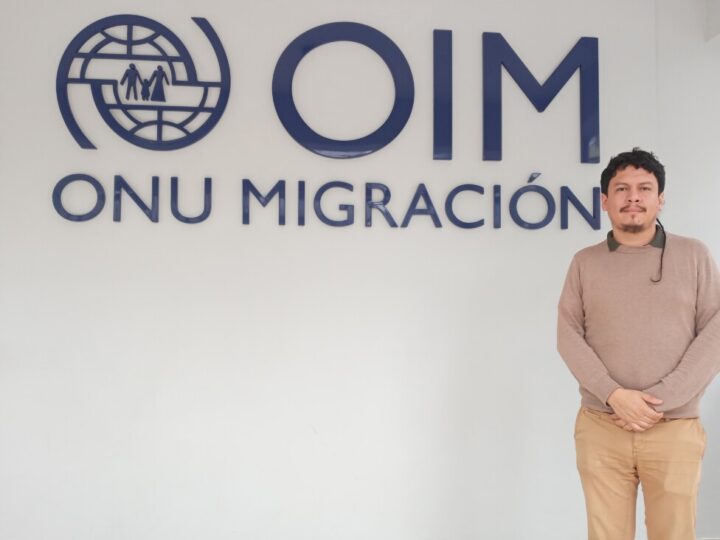
Pablo Peña, coordinator of the Emergency and Humanitarian Assistance Unit of the International Organization for Migration (IOM) in Peru, stands in front of the headquarters of this United Nations agency in Lima. He highlights the need to address the situation of internal migration driven by the impacts of climate change. CREDIT: Mariela Jara / IPS

Pablo Peña, coordinator of the Emergency and Humanitarian Assistance Unit of the International Organization for Migration (IOM) in Peru, stands in front of the headquarters of this United Nations agency in Lima. He highlights the need to address the situation of internal migration driven by the impacts of climate change. CREDIT: Mariela Jara / IPS

The Central Reserve Bank, in charge of preserving monetary stability and managing international reserves, lowered in its September monthly report Peru’s economic growth projection to 0.9 percent for this year, partly due to the varied impacts of climate change on agriculture and fishing.

This would affect efforts to reduce the poverty rate, which stands at around 30 percent in the country, where seven out of every 10 workers work in the informal sector, and would drive up migration of the population in search of food and livelihoods.

“The World Bank estimates that by 2050 there will be more than 10 million climate migrants in Latin America,” said Peña.

The same multilateral institution, in its June publication Peru Strategic Actions Toward Water Security, points out that people without economic problems are 10 times more resistant than those living in poverty to climatic impacts such as floods and droughts, which are increasing at the national level.

The country is currently experiencing the Coastal El Niño climate phenomenon, which in March caused floods in northern cities and droughts in the south. The official National Service of Meteorology and Hydrology warned that in January 2024 it could converge with the El Niño Southern Oscillation (ENSO) global phenomenon, accentuating its impacts.

El Niño usually occurs in December, causing the sea temperature to rise and altering the rainfall pattern, which increases in the north of the country and decreases in the south.

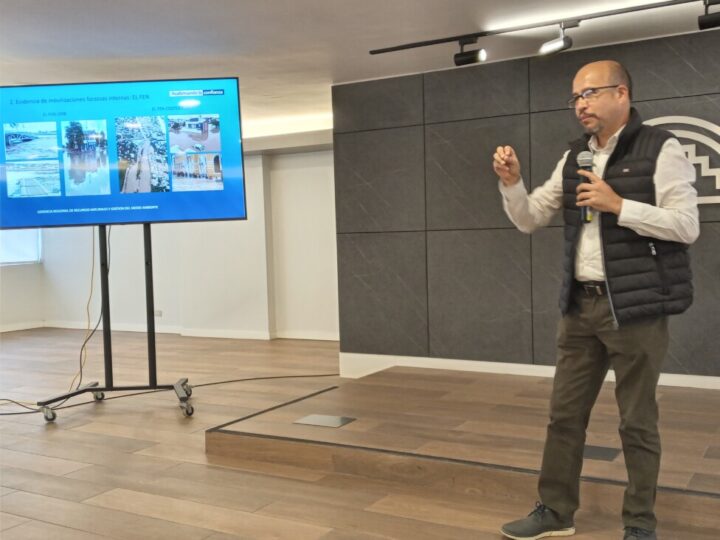
The manager of Natural Resources of the Piura regional government, Juan Aguilar, described the vulnerability to climate change of this northern coastal region of Peru at a September meeting organized by the IOM in Lima. The official explained that the El Niño climate phenomenon has become more intense and frequent due to the effects of climate change, which aggravates its impacts on the population, such as severe flooding this year. CREDIT: Mariela Jara / IPSThe manager of Natural Resources of the Piura regional government, Juan Aguilar, described the vulnerability to climate change of this northern coastal region of Peru at a September meeting organized by the IOM in Lima. The official explained that the El Niño climate phenomenon has become more intense and frequent due to the effects of climate change, which aggravates its impacts on the population, such as severe flooding this year. CREDIT: Mariela Jara / IPS

The manager of Natural Resources of the Piura regional government, Juan Aguilar, described the vulnerability to climate change of this northern coastal region of Peru at a September meeting organized by the IOM in Lima. The official explained that the El Niño climate phenomenon has become more intense and frequent due to the effects of climate change, which aggravates its impacts on the population, such as severe flooding this year. CREDIT: Mariela Jara / IPS

Reluctance to migrate to safer areas

Piura, a northern coastal department with an estimated population of just over two million inhabitants, has been hit by every El Niño episode, including this year’s, which left more than 46,000 homes damaged, even in areas that had been rebuilt.

Juan Aguilar, manager of Natural Resources of the Piura regional government, maintains that the high vulnerability to ENSO is worsening with climate change and is affecting the population, communication routes and staple crops.

At an IOM workshop on Sept. 5 in Lima, the official stressed that Piura is caught up in both floods and droughts, in a complex context for the implementation of spending on prevention, adaptation and mitigation.

Aguilar spoke to IPS about the situation of people who, despite having lost their homes for climatic reasons, choose not to migrate, in what he considers to be a majority trend.

“People are not willing overall to move to safer areas, even during El Niño 2017 when there were initiatives to relocate them to other places; they prefer to wait for the phenomenon to pass and return to their homes,” he added.

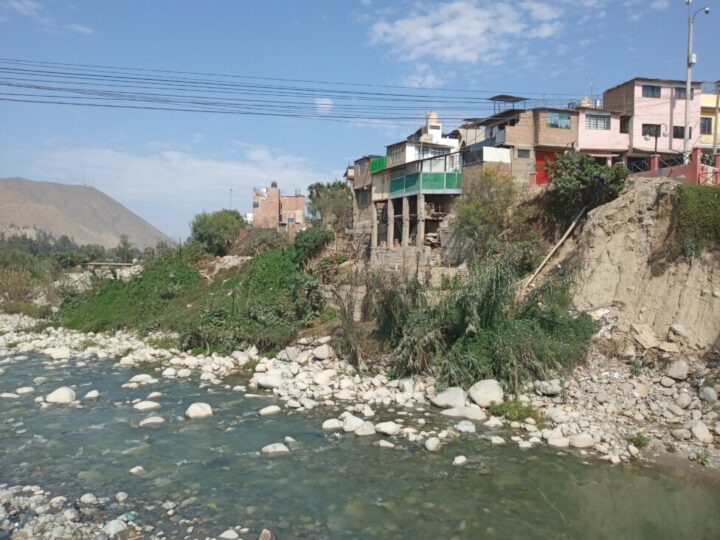
View of the Rimac River as it passes through the municipality of Lurigancho-Chosica, in the Peruvian province of Lima. In this town, many families are still living in housing in areas at high risk, which is exacerbated during the rainy season that begins in December and has intensified due to climate change and the increased recurrence of the El Niño climate phenomenon. CREDIT: Mariela Jara / IPS

View of the Rimac River as it passes through the municipality of Lurigancho-Chosica, in the Peruvian province of Lima. In this town, many families are still living in housing in areas at high risk, which is exacerbated during the rainy season that begins in December and has intensified due to climate change and the increased recurrence of the El Niño climate phenomenon. CREDIT: Mariela Jara / IPS

He explained that this attitude is due to the fact that they see the climatic events as recurrent. “They say, I already experienced this in such and such a year, and there is a resignation in the sense of saying that we are in a highly vulnerable area, it is what we have to live with, God and nature have put us in these conditions,” Aguilar said.

He acknowledged that with regard to this question, public policies have not made much progress. “For example after 2017 a law was passed to identify non-mitigable risk zones, and that has not been enforced despite the fact that it would help us to implement plans to relocate local residents to safer areas,” he added.

The regional official pointed out that “we do not have an experience in which the State says ‘I have already identified this area, there is so much housing available here for those who want to relocate’ , because the social cost would be so high.”

“We have not seen this, and the populace has the feeling that if they are going to start somewhere else, the place they abandon will be taken by someone else, and they say: ‘what is the point of me moving, if the others will be left here’,” Aguilar said.

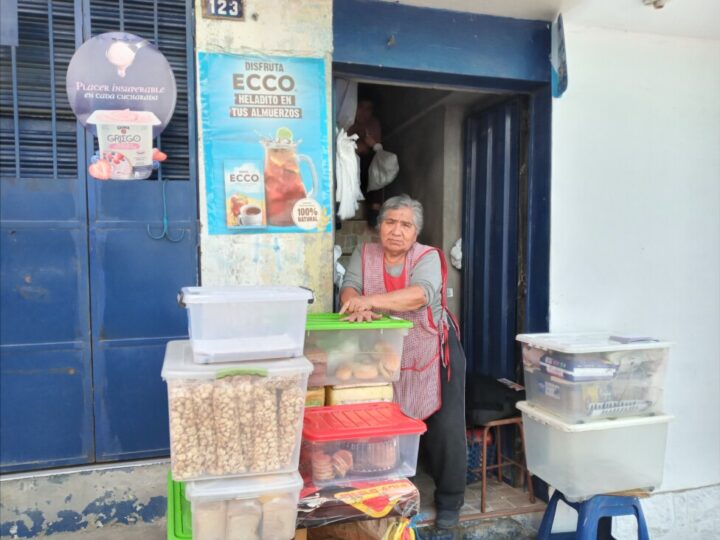
Paulina Vílchez, 72, has always lived in the Peruvian municipality of Lurigancho-Chosica. Despite the fear every year that the Rimac River might flood and that mudslides could occur in one of the 21 ravines in the area, she has never thought of moving away. "I'm not going to go to an empty plot to start all over again, that's why I've stayed. I leave everything in the hands of God," she said. CREDIT: Mariela Jara / IPS

Paulina Vílchez, 72, has always lived in the Peruvian municipality of Lurigancho-Chosica. Despite the fear every year that the Rimac River might flood and that mudslides could occur in one of the 21 ravines in the area, she has never thought of moving away. “I’m not going to go to an empty plot to start all over again, that’s why I’ve stayed. I leave everything in the hands of God,” she said. CREDIT: Mariela Jara / IPS

The fear of starting over

Some 40 km from the Peruvian capital, in Lurigancho-Chosica, one of the 43 municipalities of the province of Lima, the local population is getting nervous about the start of the rainy season in December, which threatens mudslides in some of its 21 ravines. The most notorious due to their catastrophic impact occurred in 1987, 2017, 2018 and March of this year.

Landslides, known in Peru by the Quechua indigenous term “huaycos”, have been part of the country’s history, due to the combination of the special characteristics of the rugged geography of the Andes highlands and the ENSO phenomenon.

In an IPS tour of the Chosica area of Pedregal, one of the areas vulnerable to landslides and mudslides due to the rains, there was concern in the municipality about the risks they face, but also a distrust of moving to a safer place to start over.

“I came here to Pedregal as a child when this was all fields where cotton and sugar cane were planted. I have been here for more than sixty years and we have progressed, we no longer live in shacks,” said 72-year-old Paulina Vílchez, who lives in a nicely painted two-story house built of cement and brick.

On the first floor she set up a bodega, which she manages herself, where she sells food and other products. She did not marry or have children, but she helped raise two nieces, with whom she still lives in a house that is the fruit of her parents’ and then her own efforts and which represents decades of hard work.

Vílchez admits that she would like to move to a place where she could be free of the fear that builds up every year. But she said it would have to be a house with the same conditions as the one she has managed to build with so much effort. “I’m not going to go to an empty plot to start all over again, that’s why I’ve stayed. I leave everything in the hands of God,” she told IPS.

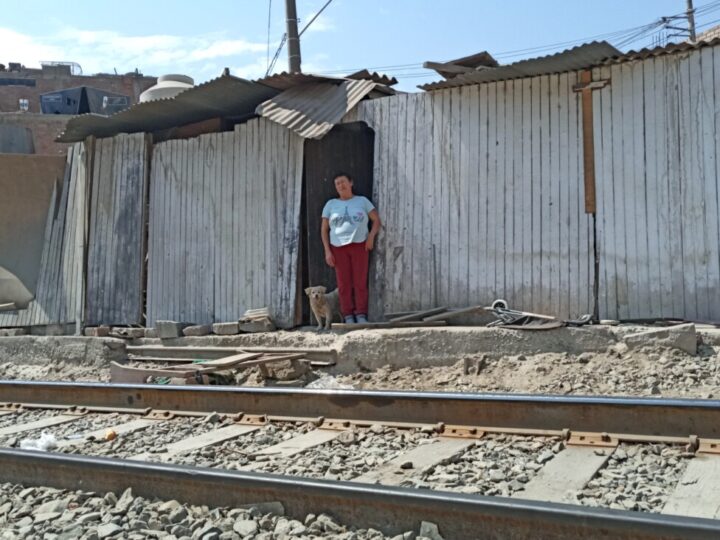
Maribel Zavaleta's home in the Peruvian municipality of Chosica is built of wood, near the Rimac River and just a meter from the train tracks. She arrived there in 1989, relocated after a mud, water and rock slide two years earlier in another part of the town. She constantly worries that another catastrophe will happen again, and says she would relocate if she were guaranteed safer land and materials to build a new house. CREDIT: Mariela Jara / IPS

Maribel Zavaleta’s home in the Peruvian municipality of Chosica is built of wood, near the Rimac River and just a meter from the train tracks. She arrived there in 1989, relocated after a mud, water and rock slide two years earlier in another part of the town. She constantly worries that another catastrophe will happen again, and says she would relocate if she were guaranteed safer land and materials to build a new house. CREDIT: Mariela Jara / IPS

Very close to the Rimac River and next to the railway tracks that shake her little wooden house each time the train passes by lives Maribel Zavaleta, 50, born in Chosica, and her family of two daughters, a son, and three granddaughters.

“I came here in 1989 with my mom, she was a survivor of the 1987 huayco, and we lived in tents until we were relocated here. But it’s not safe; in 2017 the river overflowed and the house was completely flooded,” she told IPS.

Zavaleta started her own family at the age of 21, but is now separated from her husband. Her eldest son lives with his girlfriend on the same property, and her older daughter, who works and helps support the household, has given her three granddaughters. The youngest of her daughters is 13 and attends a local municipal school.

“I work as a cleaner and what I earn is only enough to cover our basic needs,” she said. She added that if she were relocated again it would have to be to a plot of land with a title deed and materials to build her house, which is now made of wood and has a tin roof, while her plot of land is fenced off with metal sheets.

“I can’t afford to improve my little house or leave here. I would like the authorities to at least work to prevent the river from overflowing while we are here,” she said, pointing to the rocks left by the 2017 landslide that have not been removed.

  Source

Treated Wastewater Is a Growing Source of Irrigation in Chile’s Arid North

Active Citizens, Civil Society, Climate Action, Climate Change, Combating Desertification and Drought, Development & Aid, Economy & Trade, Editors’ Choice, Environment, Featured, Food and Agriculture, Green Economy, Headlines, Integration and Development Brazilian-style, Latin America & the Caribbean, Projects, Regional Categories, Sustainable Development Goals, Water & Sanitation

Water & Sanitation

Alfalfa farmer Dionisio Antiquera stands in front of one of the wastewater treatment ponds at the modernized plant in Cerrillos de Tamaya, a rural community in the Coquimbo region of northern Chile. The thousands of liters captured from the sewers are converted into clear liquid ready for reuse in local small-scale agriculture. CREDIT : Orlando Milesi / IPS

Alfalfa farmer Dionisio Antiquera stands in front of one of the wastewater treatment ponds at the modernized plant in Cerrillos de Tamaya, a rural community in the Coquimbo region of northern Chile. The thousands of liters captured from the sewers are converted into clear liquid ready for reuse in local small-scale agriculture. CREDIT : Orlando Milesi / IPS

COQUIMBO, Chile , Sep 18 2023 (IPS) – The reuse of treated wastewater in vulnerable rural areas of Chile’s arid north is emerging as a new resource for the inhabitants of this long, narrow South American country.


The Coquimbo region, just south of the Atacama Desert, one of the driest in the world, is suffering from a severe drought that has lasted 15 years.

According to data from the Meteorological Directorate, a regional station located in the Andes Mountains measured 30.3 millimeters (mm) of rain per square meter this year as of Sept. 10, compared to 213 mm in all of 2022.

“Rural localities today are already reusing wastewater or gray water. This is going to happen, with or without us, with or without a law. The need for water is so great that the communities are accepting the use of treated wastewater.” — Gerardo Díaz

At another station, in the coastal area, during the same period in 2023, rainfall stood at 10.5 mm compared to the usual level of 83.2 mm.

Faced with this persistent level of drought, vulnerable rural localities in Coquimbo, mostly dedicated to small-scale agriculture, are emerging as a new example of solutions that can be replicated in the country to alleviate water shortages.

The aim is to not waste the water that runs down the drains but to accumulate it in tanks, treat it and then use it to irrigate everything from alfalfa fields to native plants and trees in parks and streets in the localities involved. It is a response to drought and the expansion of the desert.

“We were able to implement five wastewater treatment projects and reuse 9.5 liters per second, which is, according to a comparative value, the consumption of 2,700 people for a year or the water used to irrigate 60 hectares of olive trees,” said Gerardo Díaz, sustainability manager of the non-governmental Fundación Chile.

These five projects, promoted by the Fundación Chile as part of its Water Scenarios 2030 initiative, are financed by the regional government of Coquimbo, which contributed the equivalent of 312,000 dollars. Of this total, 73 percent is dedicated to enabling reuse systems, for which plants in need of upgrading but not reconstruction have been selected.

The common objective of these projects, which together benefit some 6,500 people, is the reuse of wastewater for productive purposes, the replacement of drinking water or the recharge of aquifers.

Díaz told IPS that the amount of reuse obtained is significant because previously this water was discharged into a stream, canal or river where it was perhaps captured downstream.

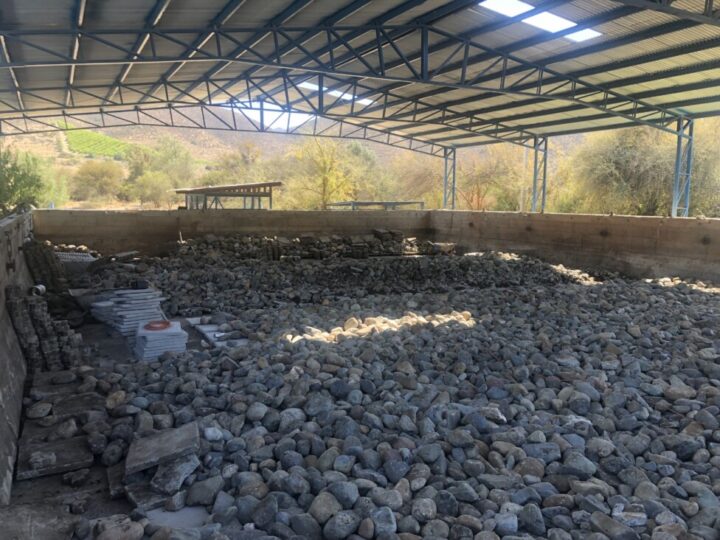
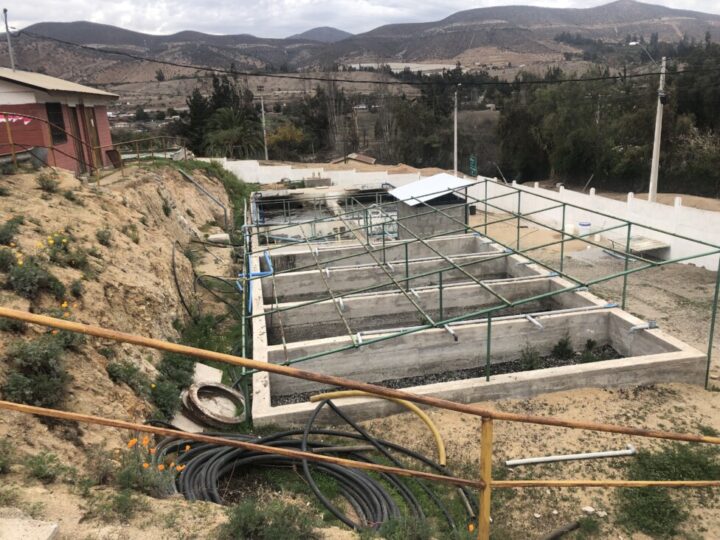
The Huatulame treatment plant in the rural municipality of Monte Patria in northern Chile is being completely repaired with the support of the local municipality. Waterproof plastic sheeting and boulders have been installed, and in the final stage sawdust and earthworms will be incorporated before receiving wastewater from local households for reuse. CREDIT: Orlando Milesi / IPS

The Huatulame treatment plant in the rural municipality of Monte Patria in northern Chile is being completely repaired with the support of the local municipality. Waterproof plastic sheeting and rocks have been installed, and in the final stage sawdust and earthworms will be incorporated before receiving wastewater from local households for reuse. CREDIT: Orlando Milesi / IPS

A successful pilot experience

In Coquimbo, which has a regional population of some 780,000 people, there are 71 water treatment plants, most of which use activated sludge and almost all of which are linked to the Rural Drinking Water Program (APR) of the state Hydraulic Works Directorate.

Activated sludge systems are biological wastewater treatment processes using microorganisms, which are very sensitive in their operation and maintenance and rural sectors do not have the capacity to maintain them.

“Most of these treatment plants are not operating or are operating inefficiently,” Diaz acknowledged.

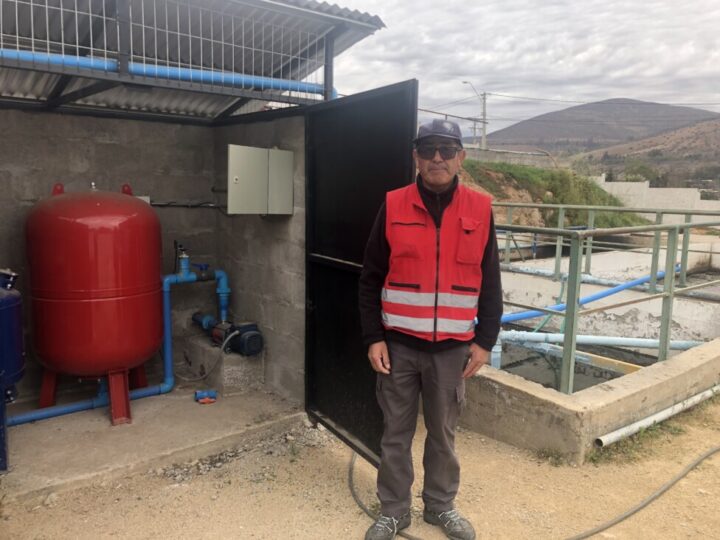
But one of the plants, once reconditioned, has served as a model for others since 2018. Its creation allowed Dionisio Antiquera, a 52-year-old agricultural technician, to save his alfalfa crop.

“We have had a water deficit for years. This recycled water really helps us grow our crops on our eight hectares of land,” he said in the middle of his alfalfa field in Cerrillos de Tamaya, one of the Coquimbo municipalities that IPS toured for several days to observe five wastewater reuse projects.

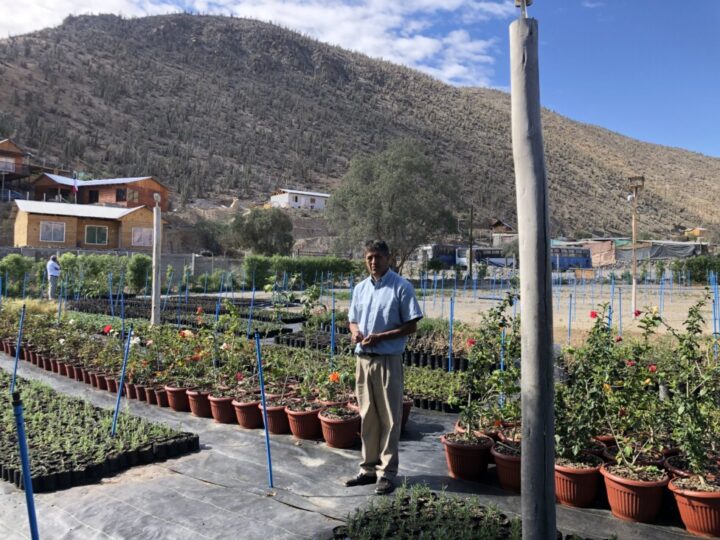
Raúl Ángel Flores stands in his nursery, where the plants and trees are irrigated with recycled water from the Punta Azul project in the town of Villa Puclaro, in Chile's Coquimbo region. All profits from the town's wastewater treatment are reinvested in its maintenance. CREDIT: Orlando Milesi / IPS

Raúl Ángel Flores stands in his nursery, where the plants and trees are irrigated with recycled water from the Punta Azul project in the town of Villa Puclaro, in Chile’s Coquimbo region. All profits from the town’s wastewater treatment are reinvested in its maintenance. CREDIT: Orlando Milesi / IPS

He explained that using just reused water he was able to produce six normal alfalfa harvests per year with a yield per hectare of 100 25-kg bales.

“That’s 4500 to 4800 bales in the annual production season,” he said proudly.

These bales are easily sold in the region because they are cheaper than those of other farmers.

The water he uses comes from an APR plant that has 1065 users, 650 of whom provide water, including Antiquera.

On one side of his alfalfa field is a plant that accumulates the sludge that is dehydrated in pools and drying courts, and on the other side, the water is chlorinated and runs into another pond in its natural state.

“This water works well for alfalfa. It is hard water that has about 1400 parts per million of salt. Then it goes through a reverse osmosis process that removes the salt and the water is suitable for human consumption,” the farmer explained.

In Chile, treated wastewater is not considered fresh water or water that can be used directly by people, and its reuse is only indirect.

Antiquera sold half a hectare to the government to install the plant and in exchange uses the water obtained and contributes 20 percent to the local APR.

He recently extended his alfalfa field to another seven hectares, thanks to his success with treated water.

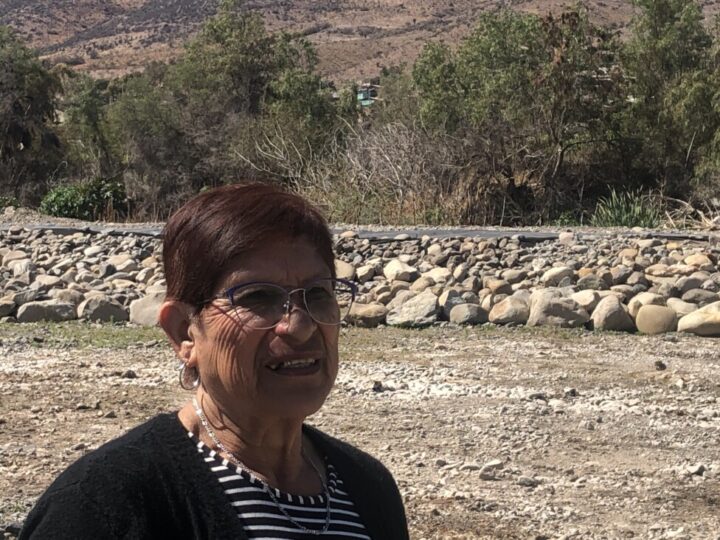
Deysy Cortés, president of a rural drinking water system in Huatulame, stands in front of the dry riverbed of the town of the same name. Today there is no water in the river, where local residents swam and summer vacationers camped on its banks 15 years ago. CREDIT: Orlando Milesi / IPSDeysy Cortés, president of a rural drinking water system in Huatulame, stands in front of the dry riverbed of the town of the same name. Today there is no water in the river, where local residents swam and summer vacationers camped on its banks 15 years ago. CREDIT: Orlando Milesi / IPS

Deysy Cortés, president of a rural drinking water system in Huatulame, stands in front of the dry riverbed of the town of the same name. Today there is no water in the river, where local residents swam and summer vacationers camped on its banks 15 years ago. CREDIT: Orlando Milesi / IPS

Flowers and trees also benefit

In Villa Puclaro, in the Coquimbo municipality of Vicuña, Raúl Ángel Flores, 55, has an ornamental plant nursery.

“I’ve done really well. My nursery has grown with just reuse water….. I have more than 40,000 ornamental, fruit, native and cactus plants. I deliver to retailers in Vicuña and Coquimbo,” a port city in the region, he told IPS.

The nursery is 850 square meters in size, and has an accumulation pond and pumps to pump the water. He has now rented a 2,500-meter plot of land to expand it.

Flores explained to IPS that he manages the nursery together with his wife, Carolina Cáceres, and despite the fact that they have two daughters and a senior citizen in their care, “we make a living just selling the plants…I even hired an assistant,” he added.

In the southern hemisphere summer he uses between 4,000 and 5,000 liters of water a day for irrigation.

“I have water to spare. Here it could be reused for anything,” he said.

Joining the project made it possible for Flores to make efficient use of water with a business model that in this case incorporates a fee for the water to the plant management, which is equivalent to 62 cents per cubic meter used.

 Arnoldo Olivares operates the water treatment and recycling plant in Plan de Hornos, northern Chile. The plant's infrastructure and operation have been upgraded, and it can now deliver water to rural residents to irrigate trees and plants, instead of using potable water. CREDIT: Orlando Milesi / IPS

Arnoldo Olivares operates the water treatment and recycling plant in Plan de Hornos, northern Chile. The plant’s infrastructure and operation have been upgraded, and it can now deliver water to rural residents to irrigate trees and plants, instead of using potable water. CREDIT: Orlando Milesi / IPS

Eliminating odors, and creating new gardens

In the community of Huatulame, in the municipality of Monte Patria, Fundación Chile built an artificial surface wetland to put an end to the bad odors caused by effluents from a deficient waste-eater earthworm vermifilter treatment plant.

“This wetland has brought us peace because the odors have been eliminated. For the past year people have been able to walk along the banks of the old riverbed,” Deysy Cortés, 72, president of the APR, told IPS.

The municipality of Monte Patria is financing the repair of the plant with the equivalent of 100,000 dollars.

“The sprinklers will be changed, the filtering system will be replaced, and sawdust and worms will be added. It will be up and running in a couple of months,” explained agronomist Jorge Núñez, a consultant for Fundación Chile.

As in other renovated plants, safe infiltration of wastewater is ensured while the project simultaneously promotes the protection of nearby wells to provide water to the villagers.

The Huatulame treatment plant in the rural municipality of Monte Patria in northern Chile is being completely repaired with the support of the local municipality. Waterproof plastic sheeting and boulders have been installed, and in the final stage sawdust and earthworms will be incorporated before receiving wastewater from local households for reuse. CREDIT: Orlando Milesi / IPS

The Huatulame treatment plant in the rural municipality of Monte Patria in northern Chile is being completely repaired with the support of the local municipality. Waterproof plastic sheeting and boulders have been installed, and in the final stage sawdust and earthworms will be incorporated before receiving wastewater from local households for reuse. CREDIT: Orlando Milesi / IPS

Cortés warned of serious difficulties if no more rain falls in the rest of 2023, despite the relief provided by the plant for irrigation.

“I foresee a very difficult future if it doesn’t rain. We will go back to what we experienced in 2019 when in every house there were bottles filled with water and a little jug to bathe once a week,” she said.

During a recent crisis, the local APR paid 2500 dollars to bring in water from four 20,000-liter tanker trucks.

In Plan de Hornos, a town in the municipality of Illapel, irrigation technology was installed using reused water instead of drinking water to create a green space for the community to enjoy.

The project included water taps in people’s homes for residents to water trees and flowers.

Arnoldo Olivares, 59, is in charge of the plant, which has 160 members.

“I run both systems,” he told IPS. “I pour drinking water into the pond. After passing through the houses, the water goes into the drainage system, where there is a procedure to reclaim and treat it.”

“This water was lost before, and now we reuse it to irrigate the saplings. We used to work manually, now it is automated. It’s a tremendous change, we’re really happy,” he said.

Antiquera the alfalfa farmer is happy with his success in Cerrillos de Tamaya, but warns that in his area 150 to 160 mm of rainfall per year is normal and so far only 25 mm have fallen in 2023.

“The water crisis forces us to find alternatives and to be 100 percent efficient. Not a drop of water can be wasted. They have forecast very high temperatures for the upcoming (southern hemisphere) summer, which means that plants will require more water in order to thrive,” he said.

Díaz, the sustainability manager of Fundación Chile, said the Coquimbo projects are fully replicable in other water-stressed areas of Chile if a collaborative model is used.

He noted that “in Chile there is no law for the reuse of treated wastewater. There is only a gray water law that was passed years ago, but there are no regulations to implement it.”

He explained, however, that due to the drought, “rural localities today are already reusing wastewater or gray water. This is going to happen, with or without us, with or without a law. The need for water is so great that the communities are accepting the use of treated wastewater.”

The governor of Coquimbo, Krist Naranjo, argued that “a broader vision is needed to value water resources that are essential for life, especially in the context of global climate change.”

“We’re working on different initiatives with different executors, but the essential thing is to value the reuse of graywater recycling,” she told IPS from La Serena, the regional capital.

  Source

Youth Rally for Peace Through Climate Justice at the UN

Climate Action, Climate Change, Climate Change Justice, Environment, Global, Headlines, IPS UN: Inside the Glasshouse, TerraViva United Nations, Youth Thought Leaders

Climate Change Justice

Youth rally at the UN for climate justice. Credit: Abigail Van Neely/IPS

Youth rally at the UN for climate justice. Credit: Abigail Van Neely/IPS

UNITED NATIONS, Sep 15 2023 (IPS) – “What do we want? Climate justice! When do we want it? Now!” youth chanted in an unusually lively conference at the United Nations Headquarters.


Earlier on Thursday morning (September 14), almost 500 young people had streamed into the room to a DJ’s upbeat soundtrack. Spirits were high despite the more somber rallying cry of this year’s International Day of Peace youth event: the planet is on fire. Many speakers focused on the idea that there cannot be peace without climate justice.

“We cannot begin to talk about peace without talking about the climate crisis,” environmental justice advocate Saad Amer said after leading the crowd in the kind of chants more likely heard at a protest. Fossil fuel disputes spark wars that disproportionately affect people of color, Amer explained. Youth must take charge to “re-write destiny.”

To 21-year-old Mexican climate justice activist Xiye Bastida, “Peace is the ability to drink clean air and clean water.” Bastida, a member of the Otomi-Toltec indigenous community, spoke of her community’s traditional commitment to living in harmony with the earth. Now, indigenous people are being displaced as regenerative practices are forgotten. Bastida called for a world free of extreme weather and exploitation. The climate crisis reflects a broken system, she said, but peace is the bravery to imagine a better world.

Young people are “creating a youth movement for climate action, seeking racial justice, and promoting gender equality,” the Under-Secretary-General for Global Communications, Melissa Fleming, told the audience. In a recorded statement, Secretary-General Antonio Guterres reiterated that youth action has power. Still, only four governments have concrete plans to include young people in policymaking, Youth Envoy Jayathma Wickramanyake noted.

As she lived through brutal conflicts in her home country of Sri Lanka, Wickramanayake said she wondered why people around her continued to fight. Today, she told other young activists that the root causes of conflict always run deep – from inequality to poverty. She stressed that peace cannot be differentiated from development.

The event occurs days before the Sustainable Development Goal (SDG) Summit, a critical opportunity for world leaders to address failures to implement the goals so far.

“Next week there will be an important breakthrough in creating the conditions to rescue the sustainable development goals. I’m very hopeful that the SDG summit will indeed represent a quantum leap in the response to the dramatic failures that we have witnessed,” Guterres said during a news conference.

Meanwhile, youth are left with memories of their chants: “The oceans are rising, and so are we!” “We are unstoppable – another world is possible!”

IPS UN Bureau Report

  Source