There’s No Continent, No Country Not Impacted by Land Degradation

Biodiversity, Climate Change, Combating Desertification and Drought, Conferences, Editors’ Choice, Featured, Global, Headlines, Regional Categories, Sustainability, TerraViva United Nations

Combating Desertification and Drought
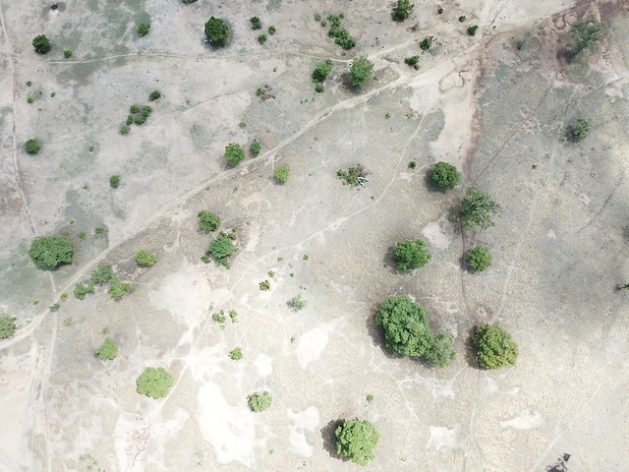
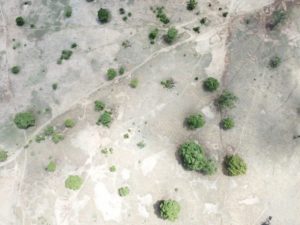
On all continents you have the issue of land degradation, and it requires governments, land users and all different communities in a country to be part of the solution. Credit: Albert Oppong-Ansah /IPS

ANKARA, Jun 17 2019 (IPS) – The coming decades will be crucial in shaping and implementing a transformative land agenda, according to a scientist at the United Nations Convention to Combat Desertification (UNCCD) framework for Land Degradation Neutrality (LDN).


UNCCD-Science Policy Interface co-chair Dr. Mariam Akhtar-Schuster, who spoke with IPS ahead of the start of activities to mark World Day to Combat Desertification (WDCD) on Monday, Jun. 17, said this was one of the key messages emerging for policy- and other decision-makers.

This comes after the dire warnings in recent publications on desertification, land degradation and drought of the Global Land OutlookIntergovernmental Science-Policy Platform on Biodiversity and Ecosystem Services (IPBES) Assessment Report on Land Degradation and Restoration, World Atlas of Desertification, and IPBES Global Assessment on Biodiversity and Ecosystem Services.

“The main message is: things are not improving. The issue of desertification is becoming clearer to different communities, but we now have to start implementing the knowledge that we already have to combat desertification,” Akhtar-Schuster told IPS.

“It’s not only technology that we have to implement, it is the policy level that has to develop a governance structure which supports sustainable land management practices.”

IPBES Science and Policy for People and Nature found that the biosphere and atmosphere, upon which humanity as a whole depends, have been deeply reconfigured by people.

The report shows that 75 percent of the land area is very significantly altered, 66 percent of the ocean area is experiencing increasing cumulative impacts, and 85 percent of the wetland area has been lost.

“There are of course areas which are harder hit; these are areas which are experiencing extreme drought which makes it even more difficult to sustainably use land resources,” Akhtar-Schuster said.

“On all continents you have the issue of land degradation, so there’s no continent, there’s no country which can just lean back and say this is not our issue. Everybody has to do something.”

Akhtar-Schuster said there is sufficient knowledge out there which already can support evidence-based implementation of technology so that at least land degradation does not continue.

While the information is available, Akhtar-Schuster said it requires governments, land users and all different communities in a country to be part of the solution.

“There is no top-down approach. You need the people on the ground, you need the people who generate knowledge and you need the policy makers to implement that knowledge. You need everybody,” the UNCCD-SPI co-chair said.

“Nobody in a community, in a social environment, can say this has nothing to do with me. We are all consumers of products which are generated from land. So, we in our daily lives – the way we eat, the way we dress ourselves – whatever we do has something to do with land, and we can take decisions which are more friendly to land than what we’re doing at the moment.”
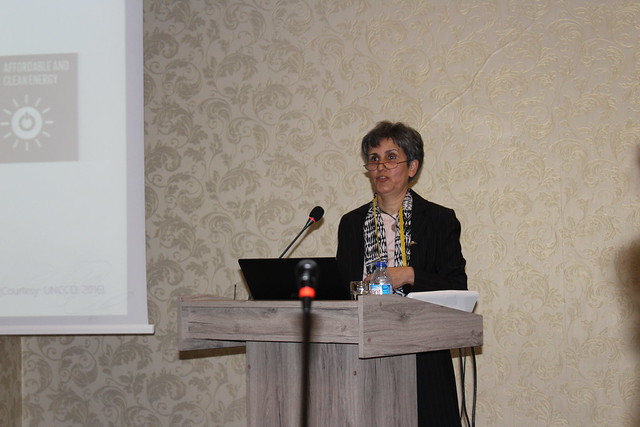
UNCCD-Science Policy Interface co-chair Dr. Mariam Akhtar-Schuster says things are not improving and that the issue of desertification is becoming clearer to different communities. Credit: Desmond Brown/IPS

UNCCD Lead Scientist Dr. Barron Joseph Orr said it’s important to note that while the four major assessments were all done for different reasons, using different methodologies, they are all converging on very similar messages.

He said while in the past land degradation was seen as a problem in a place where there is overgrazing or poor management practices on agricultural lands, the reality is, that’s not influencing the change in land.

“What’s very different from the past is the rate of land transformation. The pace of that change is considerable, both in terms of conversion to farm land and conversion to built-up areas,” Orr told IPS.

“We’ve got a situation where 75 percent of the land surface of the earth has been transformed, and the demand for food is only going to go up between now and 2050 with the population growth expected to increase one to two billion people.”

That’s a significant jump. Our demand for energy that’s drawn from land, bio energy, or the need for land for solar and wind energy is only going to increase but these studies are making it clear that we are not optimising our use,” Orr added.

Like Akhtar-Schuster, Orr said it’s now public knowledge what tools are necessary to sustainably manage agricultural land, and to restore or rehabilitate land that has been degraded.

“We need better incentives for our farmers and ranchers to do the right thing on the landscape, we have to have stronger safeguards for tenures so that future generations can continue that stewardship of the land,” he added.

The international community adopted the Convention to Combat Desertification in Paris on Jun. 17, 1994.

On the occasion of the 25th anniversary of the Convention and the World Day to Combat Desertification in 2019 (#2019WDCD), UNCCD will look back and celebrate the 25 years of progress made by countries on sustainable land management.

At the same time, they will look at the broad picture of the next 25 years where they will achieve land degradation neutrality.

The anniversary campaign runs under the slogan “Let’s grow the future together,” with the global observance of WDCD and the 25th anniversary of the Convention on Jun. 17, hosted by the government of Turkey.
 

Global Governance and Information

Civil Society, Civilisations Find Alliances, Climate Change, Development & Aid, Education, Environment, Featured, Global, Global Governance, Headlines, Human Rights, Natural Resources, Peace, Poverty & SDGs, TerraViva United Nations

Opinion

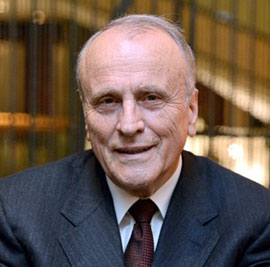
Ambassador Walther Lichem* of Austria is President Inter Press Service (IPS).

VIENNA, Apr 16 2019 (IPS) – The past seventy years since the end of the second world war have been marked by profound changes in our international system. Relations between states have become more horizontally structured interactions with a rising significance of the common good articulated and pursued by newly-created international programmes and organisations.


Ambassador Walther Lichem

The international agenda increasingly consists of items addressing internationally and globally-shared challenges of dependencies and interdependencies.

The traditional security and peace focus has been broadened into areas of concern which require contributions and activities not only by states but by international organisations and programmes who jointly with non-state actors such as academic institutions and associations, civil society organisations, the private sector including those who joined the Global Compact, have contributed to a new pattern of leadership in the processes of defining our global goals and in the implementation of the related programmes of action.

Another characterizing element in our Global Agenda related-approach is the inter-sectoral interdependence reflected in the international community’s agenda marked by “AND” – “climate change and international security”, “human rights and societal cohesion” etc.

These agenda—and interrelated-ness—require, however, also institutional integration cutting across the institutional development marked by sectoral segregation. There is a rising need for each agenda sector to be fully up-to-date regarding the entire pattern of global challenges and the related plans of action, using this level of information for the development of institutional integration.

There is also a rising need for information flows between governmental/ intergovernmental and non-governmental organizations (NGOs).

The new global agenda benefits from the work and conclusions of academic institutions and programmes, a relationship which regrettably has not yet been fully recognized by the international system.

Many of our important global agenda items based their policy approach on research and academic discourse – e.g. the issue of environmental protection, the concept of sustainability, the process of climate change, the societal development needs and human rights etc.

Another dimension of the pluralisation of global governance affectedness and responsibility is the role of each and every citizen on the globe to know and understand these challenges and assume a rising responsibility in addressing them.

Certain agenda areas, such as environmental protection, the sustainable development and use of our natural resource systems, human rights and human security have given the citizen an almost central role in the achievement of the declared objectives.

Today, every citizen can contribute to the recognition of the dignity of the other and the related human rights. The impact of citizen-focused human rights programmes is visible in human rights cities in all regions of the world. The citizen creating conditions of societal cohesion also essentially contributes to peace and security.

Private sector decisions can make important contributions to both the natural resources related and societal cohesion-related challenges. Academic institutions must adjust their programmes of research and of university education to the global agenda-related challenges.

The cultural sector provides important inputs into the development of values and related behavioural patterns related to the challenges of pluri-identity societies and the integration of otherness.

All these new patterns of responsibility and contributions to achievements for our Global Agenda, however, do require qualified information. It must be recognized that complex academic or policy-process related studies and reports are not accessible to the general citizenship including those in positions of responsibility at local and national levels.

Even governmental institutions and the international diplomatic community cannot internalize all the documents which are to serve as a basis for multilateral negotiations.

The development of this new participatory system of global governance with intergovernmental institutions and processes, national governments and local authorities has led to the recognition of an urgent need for qualified patterns of information which translate challenges, achievements and failures to the political responsibilities at local, national and also international levels, to governmental, inter-governmental and non-governmental institutions who have increasingly shaped our Global Agenda and articulated the rising need for societal understanding and information.

Media are the classical providers of such information combining data with assessments and the vision of our common future. Yet, as analysis of the current situation underlines, there is an urgent need to strengthen qualified information systems which would provide not only governmental, intergovernmental and non-governmental institutions and the citizens but also the media with pertinent and needed information.

There is no way into a future of shared global responsibility without a qualified and also ethically committed system of information related to our processes of global change.

There is a need to recognize that such highly pertinent information related to our common future requires recognition and support from the global society as a contribution to our shared global public space.

This implies that support is to be provided from governmental, intergovernmental and non-governmental institutions. A respective policy discourse with participation from these institutions is to be envisaged in order to prevent the decay or elimination of qualified programmes like Inter Press Service.

*Walther Lichem, retired Austrian Ambassador with studies in law and oriental archaeology (Univ. of Graz, Austria) and political science (Univ. of North Carolina, Chapel Hill; Institute for Advanced Studies, Vienna) started his professional career in 1966 at the United Nations Secretariat in New York in the field of international water resources with development cooperation missions to Ethiopia (1971), Argentina (1971-74) and to the Senegal River Development Organisation (1980). He was also Rapporteur on international river basins at the International Conference on Water Law (Caracas, 1976) and at the IVth World Water Conference (Buenos Aires, 1982).
Ambassador Lichem undertook major assignments in the UN system at the Human Rights Summit in Vienna in 1992 and as Ambassador to Chile and to Canada, as a member of the UN Committee on the Peaceful Uses of Outer Space and as an adviser to the 16 countries sharing the Guinea Current in West and Central Africa on the creation of a regional organisation.


Innovative Sustainable Business: A Three Trillion-Dollar Opportunity that UN Environment Wants People to Develop

Africa, Climate Change, Conferences, Economy & Trade, Editors’ Choice, Environment, Featured, Global, Green Economy, Headlines, IPS UN: Inside the Glasshouse, Natural Resources, Regional Categories, Sustainability, TerraViva United Nations, Trade & Investment

Environment

Achenyo Idachaba-Obaro, the founder of Mitimeth, a social enterprise that has trained hundreds of women on how to make popular handicrafts from water hyacinth. Credit: Isaiah Esipisu/IPS

NAIROBI, Mar 12 2019 (IPS) – In the East African region, communities around the continent’s largest water body, Lake Victoria, regard the water hyacinth as a great menace that clogs the lake and hampers their fishing activities. But in Lagos, Nigeria, some groups of women have learned how to convert the invasive weed into a resource, providing them with the raw material needed to make handicrafts.


“Our biggest challenge right now is the market where these women can sell their finished products from the water hyacinth,” said Achenyo Idachaba-Obaro, the founder of Mitimeth, a social enterprise that has trained hundreds of women on how to make popular handicrafts from water hyacinth.

Dressed in a blouse partly made of fabric from water hyacinth and buttons made from a coconut shell at the ongoing United Nations Environment Assembly (UNEA) in Nairobi, Kenya, Idachaba-Obaro showcased several products made from the aquatic weed ranging from boutique dresses, unique multipurpose baskets, vases, stationery, wall decor, and dining ware, among others.

“All these items are a product of handcrafts by women whom we have trained, and they are now able to generate extra income from a weed that is seen as a menace to many other people worldwide,” she told IPS.

So far, over 350 women, comprising mostly of widows but who also include students and teachers, from riparian rural communities have been trained on how to make finished products from water hyacinth, and they all sell them locally.

“Whenever we have a ready market, we always call on them to make water hyacinth ropes for us, which is the first stage of developing any water hyacinth fabric,” said Idachaba-Obaro.

In the past few months for example, a team of 70 women were able to make ropes which earned them 1.4 million Naira (3,880 dollars). “It has become a big business in Nigeria where everybody wants to be involved,” she said.

Her exhibition was one of the 42 technologies and innovative solutions from around the world that formed the 2019 Sustainable Innovation Expo at the UNEA conference in Nairobi, which is being held Mar. 8-15.
To move such innovations forward through research and to later upscale them, Joyce Msuya, the U.N. Environment Acting Executive Director and Assistant Secretary-General of the U.N. urged countries to provide enabling environments for both innovators and researchers.

“Innovation will be the heartbeat of the transformation we want and this cannot happen by itself. Policies and incentives to spur innovation and sustainable consumption and production must be backed by efforts to build implementation capacity,” she told the more than 4,000 delegates from 170 countries during the official opening of the assembly in Nairobi.

According to Siim Kisler, the Minister of Environment in Estonia and the UNEA President, there is need to find innovative solutions for environmental challenges through different approaches to sustainable consumption and production, inspiring nations, private sector players and individuals.

The Expo is the U.N. Environment Assembly’s solution-based platform for engaging innovators using exhibitions that reveal the latest technologies, panel discussions, and networking opportunities.

Other innovative techniques showcased at the expo include ‘Timbeter’ a digital (mobile app) timber measurement solution that uses a smart phone for accurate log detection.

“With this app on your smart phone, you only need to point the phone camera to say a lorry full of timber, and it will accurately give you the total number of logs on the truck, and circumference measurement of each of the logs,” Anna-Greta Tsahkna the Co-founder of the Estonian-based Timbeter told IPS.

So far, the technology has been embraced in Thailand, Brazil, South Africa, Russia and Chile where companies are using it to share measurements with contractors and clients. They use it to count logs, the log diameter and density in less than 3 minutes. It is an important tool in eradicating illegal logging.

Apart from another exhibition by a Canadian company that uses shipping containers to create affordable and sustainable housing, Brazilian experts from a company called Votorantim were showcasing a technique where they extract DNA from different forest species to analyse their chemical makeup.

“This makes it easy for users to know which type of trees, plants, grass or anything within the biodiversity they should target based on what they want to extract for medicines, cosmetics, perfumes among others,” said Frineia Rezente, the Executive Manager of Votorantim, said.

According to a statement by U.N. Environment, innovative sustainable business represents a trillion-dollar opportunity that can bring value to people and the environment.