Toothless Global Financial Architecture Fuelling Africa’s Climate Crisis

Africa, Biodiversity, Climate Action, Climate Change, Climate Change Finance, Climate Change Justice, Conferences, Editors’ Choice, Environment, Featured, Food and Agriculture, Headlines, Humanitarian Emergencies, Sustainable Development Goals, TerraViva United Nations

Climate Change Justice

Africa needs approximately USD 579.2 billion in adaptation finance over the period 2020 to 2030, and yet the current adaptation flows are five to 10 times below estimated needs.
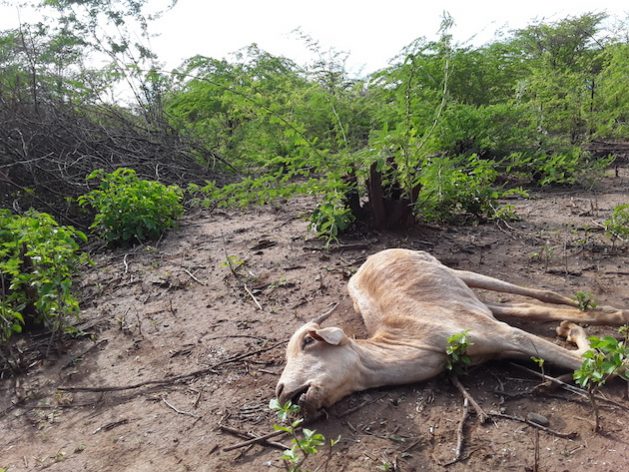
 

This goat died of starvation while surrounded by an inedible invasive plant. Lives hang in the balance as Kenya’s dryland is ravaged by a severe prolonged drought. Credit: Joyce Chimbi/IPS

This goat died of starvation while surrounded by an inedible invasive plant. Lives hang in the balance as Kenya’s dryland is ravaged by a severe prolonged drought. Credit: Joyce Chimbi/IPS

NAIROBI, Sep 5 2023 (IPS) – As thousands convene in Kenya’s capital, Nairobi, for the Africa Climate Summit, the first time the African Union has summoned its leaders to solely discuss climate change under the theme ‘Driving Green Growth and Climate Finance Solutions for Africa and the World’, the backdrop is a country on the frontlines of a climate crisis.


The severe, sharp effects of climate change are piercing the very heart of an economy propped up by rainfed agriculture and tourism – sectors highly susceptible to climate change. After five consecutive failed rainy seasons, more than 6.4 million people in Kenya, among them 602,000 refugees, need humanitarian assistance – representing a 35 per cent increase from 2022.

It is the highest number of people in need of aid in more than ten years, says Ann Rose Achieng, a Nairobi-based climate activist. She tells IPS that Kenya is hurtling full speed towards a national disaster in food security as “at least 677,900 children and 138,800 pregnant and breastfeeding women in Kenya’s arid and semi-arid regions alone are facing acute malnutrition. Nearly 70 per cent of our wildlife was lost in the last 30 years.”

Despite Kenya contributing less than 0.1 per cent of the global greenhouse gas emissions per year, the country’s pursuit of a low carbon and resilient green development pathway produced a most ambitious Nationally Determined Contribution (NDC) to cut greenhouse gasses by 32 per cent by 2030 in line with the Paris Agreement.

But as is the case across Africa, there are no funds to actualise these lofty ambitions. Africa needs approximately USD 579.2 billion in adaptation finance over the period 2020 to 2030, and yet the current adaptation flows to the continent are five to ten times below estimated needs. Globally, the estimated gap for adaptation in developing countries is expected to rise to USD 340 billion per year by 2030 and up to USD 565 billion by 2050, while the mitigation gap is at USD 850 billion per year by 2030.
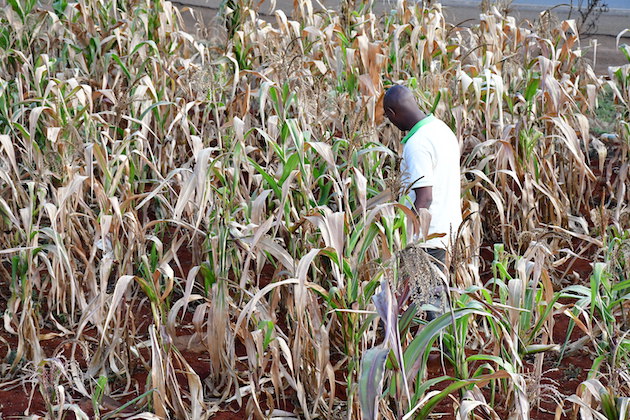
After five consecutive failed rainy seasons, food insecurity is expected to escalate as maize crop has failed to flourish due to erratic weather patterns. Credit: Joyce Chimbi/IPS
After five consecutive failed rainy seasons, food insecurity is expected to escalate as maize crop has failed to flourish due to erratic weather patterns. Credit: Joyce Chimbi/IPS

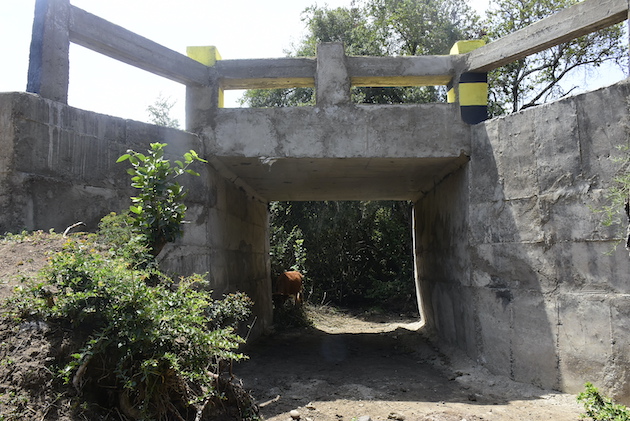
As dams and rivers dry up, Kenya will continue to be on the frontlines of a climate crisis unless climate change adaptation and mitigation efforts are escalated. Credit: Joyce Chimbi/IPS

As dams and rivers dry up, Kenya will continue to be on the frontlines of a climate crisis unless climate change adaptation and mitigation efforts are escalated. Credit: Joyce Chimbi/IPS

Frederick Kwame Kumah, Vice President of Global Leadership African Wildlife Foundation, tells IPS a big part of the problem is Africa’s burgeoning gross public debt which increased from 36 per cent of Gross Domestic Product (GDP) to 71.4 per cent of GDP between 2010 and 2020 – a drag on its development progress and a disincentive for climate finance flows.

“There is a concern that climate finance, if and when provided, will be used to first service Africa’s debt burden. The first step to addressing Africa’s Climate Finance must be action towards debt relief for Africa. Freeing up debt servicing arrangements will release resources for continued development and climate finance purposes,” Kumah explains.

He says there is an urgent need to challenge the existing unfair paradigm for financing by developing countries. It is very expensive for developing countries to borrow for development purposes. Africa must then leverage its natural capital towards seeking innovative financing mechanisms such as green bonds and carbon credits to address its development and climate change challenges.
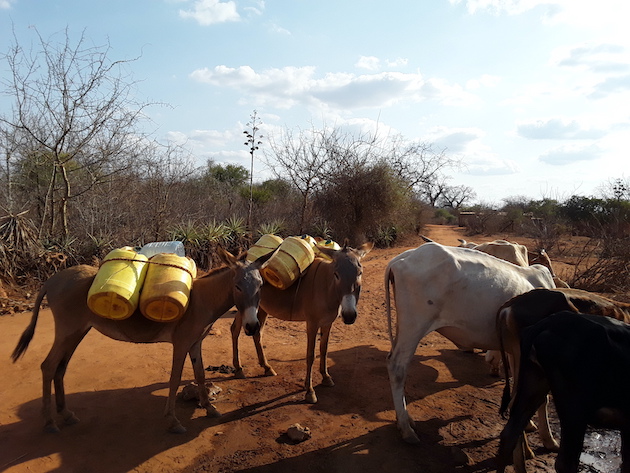
Nearly half, 23 out of 47 counties in Kenya, are classified as arid and semi-arid. Livelihoods are at risk as pastoralists are unable to cope with drastic weather changes. Credit: Joyce Chimbi/IPS
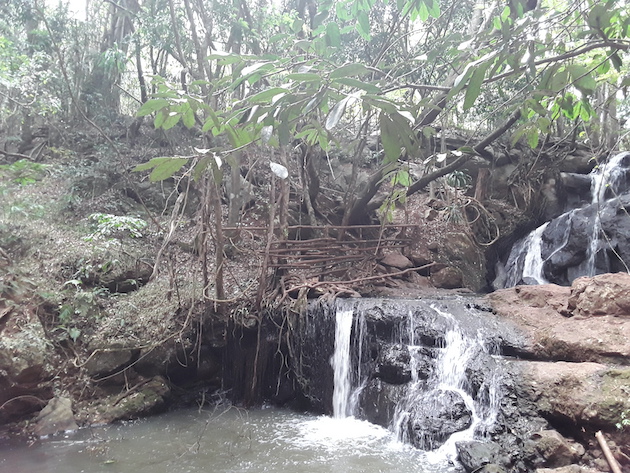
Nearly half, 23 out of 47 counties in Kenya, are classified as arid and semi-arid. Livelihoods are at risk as pastoralists are unable to cope with drastic weather changes. Credit: Joyce Chimbi/IPS

This waterfall is on the verge of drying up. Kenya's economy is heavily dependent on tourism and agriculture. The two sectors are highly susceptible to climate change. Credit: Joyce Chimbi/IPS

This waterfall is on the verge of drying up. Kenya’s economy is heavily dependent on tourism and agriculture. The two sectors are highly susceptible to climate change. Credit: Joyce Chimbi/IPS

“Climate finance was, as expected, a key part of COP27. It is a grave concern for Africa that developed countries’ commitment to provide $100 billion annually has yet to be met, even though the need for finance is becoming increasingly obvious. In COP27, we noted that new climate finance pledges were more limited than expected. Countries such as those in Africa are still waiting for previous pledges to be fulfilled,” says Luther Bois Anukur, Regional Director, IUCN (International Union for Conservation of Nature).

Meanwhile, Anukur tells IPS negotiations on important agenda items, most notably the new finance target for 2025, stalled. In COP27, Parties concentrated on procedural issues – deferring important decisions about the amount, timeframe, sources, and accountability mechanisms that may be relevant to a new finance goal in the future. African countries and many other vulnerable countries are in the fight for our lives, and sadly they are losing.

Anukur stresses that Africa’s natural resources are depleted, eroded, and biodiversity lost due to extreme effects of climate change leading to loss of lives and ecosystem services and damage to infrastructure at an alarming rate. Yet climate finance pledges have not materialised. The Africa Climate Summit should be the platform for Africa and developing partners to address existing finance gaps with clear programmatic and project approaches.

Africa must use the Summit to assess and prepare their position for the COP28 in the United Arab Emirates towards strengthening partnerships for the delivery of desired climate finance. Kumah adds that the principle of equal but differentiated responsibilities of nations must be adhered to for climate justice and to enable developing countries, who are least responsible for the effects of climate, to have much-needed resources to cope and adapt to biodiversity loss and climate change.

“In that respect, the creation of a dedicated funding mechanism to address loss and damage and another for adaptation and mitigation to redress historical and continued inequities in contributions towards biodiversity loss and climate change. We must rethink how private investments can be reshaped and harnessed for the benefit of biodiversity and climate action,” Kumah expounds.

“Private investments can be scaled through green bonds, carbon markets, sustainable agricultural, forestry and other productive sector supply chains.  Transformative financing architecture is necessary at the domestic and international levels to bring the private and public sectors together to secure the critical backbone of Africa’s natural infrastructure.”
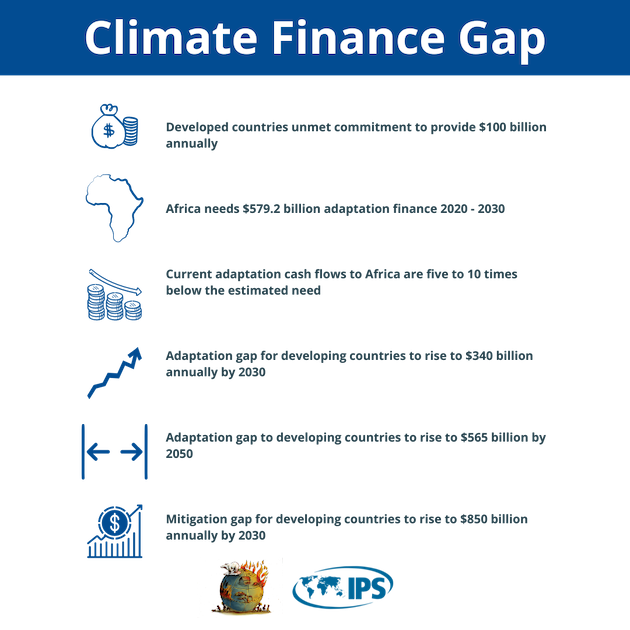
Climate finance gap. Graphic: Joyce Chimbi & Cecilia Russell

Climate finance gap. Graphic: Joyce Chimbi & Cecilia Russell

While developing countries submitted revised and ambitious National Adaptation Plans and NDCs as requested, Anukur says complicated processes to access financing for their climate actions persist. Stressing the need for reforming the international financial architecture, starting with multilateral development banks.

“The 2023 Summit for New Global Financing Pact held in Paris committed to a coalition of 16 philanthropic organizations to mobilize investment and support UN’s SDG priorities by unlocking new investment for climate action in low- and middle-income countries while reducing poverty and inequality,” Anukur observes.

Civil society organizations and activists such as Achieng have expressed concerns that such announcements are insufficient considering the scale of the challenges facing planet Earth. The Summit will have failed if the global financial architecture is not overhauled in line with the needs of the African continent, she says.

Anukur says the Summit must therefore propel Africa to new heights of climate financing to help reduce Africa’s vulnerability to climate change and increase its resilience and adaptive capacity in line with the Global Goal on Adaptation. Ultimately expressing optimism that the opportunity to unlock the potential of climate financing – breaking the shackles of debt and building a climate-resilient and prosperous Africa is, at last, in sight.

IPS UN Bureau Report


Lawmakers Call on G20 to Prioritise Spending on Youth, Gender, and Human Security

Asia-Pacific, Conferences, Development & Aid, Gender, Headlines, Humanitarian Emergencies, Population, Poverty & SDGs, Sustainable Development Goals, Youth

Population

Asian Parliamentarians believe it’s important to prioritise spending on ageing and youth populations. Credit: APDA

Asian Parliamentarians believe it’s important to prioritise spending on ageing and youth populations. Credit: APDA

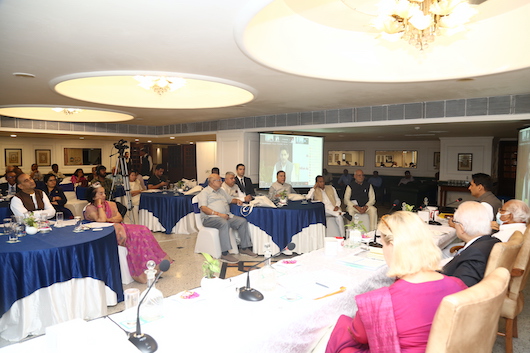
NEW DELHI, Sep 5 2023 (IPS) – Legislators from around the world, this week, officially submitted to the Sherpa of the G20 meeting set for September in New Delhi a declaration calling on governments to prioritise spending on ageing, youth, gender, human security, and other burning population issues.


The submission to the G20 Sherpa follows a workshop held on August 22 in New Delhi to discuss the Declaration first presented at the G7 Hiroshima summit in April by the Global Conference of Parliamentarians on Population and Development (GCPPD) under the UNFPA

“We have now submitted the Declaration to Amitabh Kant, Sherpa to the G-20 so that it can be taken up,” Manmohan Sharma, Executive Secretary of the Indian Association of Parliamentarians on Population and Development (IAPPD), told IPS.

Deepender Hooda, Vice Chair of the AFPPD and a member of India’s Parliament, said the workshop in New Delhi was significant not only because India is hosting the G-20 summit but also because India was expected to have overtaken China as the world’s most populous country reaching 1,425,775,850 people in April.

Lawmakers met in New Delhi to discuss the prioritisation of resources to prepare a declaration to the G20. Credit: APDA

Lawmakers met in New Delhi to discuss the prioritisation of resources to prepare a declaration to the G20. Credit: APDA

Keizo Takemi, member of the House of Councillors, Japan, and Chair of the AFPPD, observed that India faced many challenges that are hard to overcome, and these included the large size of its population, limited school attendance, and a high rate of unemployment. “Prioritisation of population issues is the most important,” he emphasised.

Hooda, a leader of the opposition Congress party from the state of Haryana, said he was concerned at the dwindling budgetary outlay in social sectors like health and education over the last few years in India. “Currently, for some reason, inclusive growth in education and health has fallen,” he told delegates.

A presentation to the workshop by Suneeta Mukherjee indicated that India is among the top five nations leading the ‘out-of-school’ category, with 1.4 million children in the 6-11-years-old age category not attending school. Also, out of every 100 students, 29 per cent drop out of school before completing elementary education.

Mukherjee, an Indian career bureaucrat who has served at the UNFPA, said the situation appeared to be worsening at the upper primary level given that the dropout rate at the upper primary level had gone up to 3 per cent in 2021-2022 while it was only 1.9 per cent in 2020-2021. The annual dropout rate of secondary school students was 14.6 in 2020-2021.

Citing recent studies in her presentation, Mukherjee said 36 per cent of Indians between the ages of 15 and 34 believe that unemployment is the biggest problem facing the country. She said one survey showed 40 per cent of graduates identified unemployment as their most pressing concern.

Said P.J. Kurien, chairperson of IAPPD: “It is important that all MPs take up population-related issues. They need to ask what percentage of the budget is devoted to education and health and ensure that every child goes to school with special attention given to girls.”

Echoing Kurien, Sharma said it was up to members of parliament to ensure that no child is left out in his or her constituency. “The solution is in your hands, but the prioritisation is missing.”

Delegates outlined at the workshop legislative steps taken by Parliamentarians in their countries in implementing the International Conference on Population Development’s Programme of Action and 2030 Agenda.

Josephine Veronique Lacson-Noel, Member, House of Representatives of the Philippines, said over the last two decades, her country had enacted such legislations as the Magna Carta of Women, Reproductive Health Law, 105-Day Expanded Maternity Leave, Act Prohibiting Child Marriage, Universal Health Care Act, Youth Council Reform and Empowerment Act, and an Act to enable conditional cash transfers.

On the anvil, she said, is the Adolescent Pregnancy Prevention Bill, a law to recognise, evaluate and redistribute unpaid care and domestic work done by women, and another to accord social protection for older persons and the promotion of active aging.

For 2023, the budget allocation for reproductive health was $14.9 million dollars, and that for training teachers to implement comprehensive sexuality education was $13.8 million, Lacson-Noel said.

Andrea W. Wojnar, UNFPA India representative and country director for Bhutan, said with the right expertise and skills, India’s 1.4 billion people could be turned into 1.4 billion opportunities.

Wojnar said India, with its large youth cohort — its 254 million youth in the 15-24 age bracket — can be a source of innovation and solutions, especially if girls and women are provided educational opportunities and skills to access new technologies and are empowered to fully exercise their reproductive rights and choices.

With close to 50 per cent of its population below the age of 25, India has a time-bound opportunity to benefit from the demographic dividend, according to Wojnar.

“Women and girls should be at the centre of sexual and reproductive policies and programmes. When rights, choices, and equal value of all people are truly respected and held, only then can we unlock a future of infinite possibilities,” Wojnar said in a statement.

“As the national fertility rate falls below 2.1 (the replacement level), India is at a unique historical opportunity, witnessing a great demographic transition as a youthful nation,” Wojnar said, adding that India also has the largest number of outmigrants and is affected by ageing, urbanisation and issues around sustainable development.

Wojnar warned that, overall, the Asia Pacific region was six times more likely to be affected by disaster events than other regions and is highly susceptible to changing weather patterns, calling for special attention by governments.

The Declaration presented to the Sherpa of the G-20 called on governments, among other things, to implement comprehensive legislation and policies that address all forms of gender-based violence and eradicate harmful practices such as child marriage, early and forced.

It also called for investment in sexual and reproductive health and rights, as well as comprehensive sexuality education toward making future societies economically dynamic and for building peaceful, inclusive, and sustainable societies. Support for political and economic participation by women and girls could ensure the development of societies that guarantee liberty and individual choice for women and girls, it said.

Governments were asked to promote and assure equitable access to health innovation, finance, technology, and medicines in the global community which can support human security, leaving no one behind.

Acknowledgement of the grave impacts of environment/climate change and global warming was important, as also the need to promote policies that address the needs of geographically vulnerable countries, which is a threat to health and human security, the Declaration said.

Investing in young people by providing decent work opportunities and enabling them to become a driving force for sustainable development was important as also addressing active and healthy ageing to enhance people’s overall quality of life by improving areas such as health and long-term care through resilient universal health coverage, physical security, and income stability.

Governments were also asked to enact national legislation and policies and ensure political will through allocation, oversight, and monitoring of budgetary resources to build universal health coverage, which is vital to enhance the global health framework.

IPS UN Bureau Report

  Source

Afghan Girls, Women Deprived of Education, Find Hope in Africa

Shabana Basij-Rasikh, co-founder and President of SOLA, speaks at the Women Deliver conference in Rwanda. Credit: Aimable Twahirwa/ IPS

Shabana Basij-Rasikh, co-founder and President of SOLA, speaks at the Women Deliver conference in Rwanda. Credit: Aimable Twahirwa/IPS

By Aimable Twahirwa
KIGALI, Aug 1 2023 (IPS)

When providing education to her small group of Afghan girls, who had been studying at a boarding school back home, became tenuous, Shabana Basij-Rasikh, relocated them to Rwanda.


She had set up a pioneering school under the project SOLA, the Afghan word for peace, and a short form for School of Leadership Afghanistan. But as the Taliban swept to power in August 2021, she closed the doors of the school, destroyed any school records which could help identify the girls, and on August 25, relocated 250 members of the SOLA community, including the student body and graduates from the programme, totally more than 100 girls, to Rwanda.

Basij-Rasikh, co-founder and SOLA’s President said a major challenge had been the lack of resources and capacity to teach Afghan girls after the return of the Taliban deprived right to education of girls in secondary schools and above.

As the Taliban swept back into power in Afghanistan in the summer of 2021, Shabana Basij-Rasikh, the founder of the nation’s only all-girls boarding school, initially ran the school out of a former principal’s living room. But that soon became untenable.

Speaking on the sidelines of The Women Deliver 2023 Conference (WD2023), which took place in Kigali from 17-20 July 2023, Basij-Rasikh, who completed her undergraduate studies in the United States, explained that when Kabul fell under the control of the Taliban, she managed within a short time to evacuate the entire school community to Rwanda.

“Although we managed to move the school to a safe country, it is still embarrassing and shameful for me since Afghanistan is the only country in the world where women and girls’ access to education has been suspended,” she said.

Initially, SOLA started as a scholarship program where Afghan youth would be identified and could access quality education abroad and, later on, go back to their home country as highly-skilled Afghans in whichever profession they chose.

“When the US announced that they were to withdraw their troops in Afghanistan, it created a lot of anxiety among young Afghans who were in the West hoping to return to the country.”

Basij-Rasikh regrets that some of her former students, who were able to leave Afghanistan after the Taliban’s return, are still struggling to continue their education overseas.

“We wish to see many Afghan girls return to schools,” she said, explaining that the migration status of the students in many countries restricted their access to education.

Since the school opened last year’s admissions season, Shabana Basij-Rasikh and her team have been inviting Afghan girls worldwide to apply and join the rest in Rwanda. Last year they enrolled 27 girls in their first intake.

“The major challenge is that there are several hundreds of thousands of girls who want to join our campus, but space is limited, and so places are being granted on merit and need,” Shabana told IPS.

Shabana argues investing in girls’ education is a smart investment; she is convinced that the current situation in Afghanistan must and should not be accepted or supported by any country around the world.

On September 18, 2021, a month after taking over the country, the Taliban ordered the reopening of only boys’ secondary schools. A few months later, in March 2022, according to human rights organizations, the Taliban again pledged to reopen all schools, but they officially closed girls’ secondary schools.

“These girls deserve the opportunity to realize their full potential, and the international community has an important role to play,” Shabana said.

UNESCO’s latest figures show that 2,5 million or 80 percent of school-aged Afghan girls and women are out of school.  The order suspending university education for women, announced in December last year, affects more than 100,000 students attending government and private institutions, according to the UN agency.

On the sidelines of the Women Deliver Conference 2023, Senegalese President Macky Sall pledged that his government would offer 100 scholarships for women who have seen their right to education decimated under Taliban rule in Afghanistan to pursue their university degrees in Senegal.

Rwanda is one of several African countries that agreed to temporarily host evacuated Afghans.

Sall, who was reacting to the concerns raised by Basij-Rasikhat, said his Government was ready to give chance to Afghan girls to pursue their studies.

So far, SOLA school has received 2,000 applications across 20 countries where some Afghans are living.

In 2022, it received 180 applications from Afghans living in 10 countries, but only 27 girls were admitted.

“That explains how families in Afghanistan are ready to support the girls in moving abroad to pursue their education,” Shabana said.

“Boarding schools that allow Afghan girls to study and live together are the best way to promote their education.”

IPS UN Bureau Report



!function(d,s,id){var js,fjs=d.getElementsByTagName(s)[0],p=/^http:/.test(d.location)?’http’:’https’;if(!d.getElementById(id)){js=d.createElement(s);js.id=id;js.src=p+’://platform.twitter.com/widgets.js’;fjs.parentNode.insertBefore(js,fjs);}}(document, ‘script’, ‘twitter-wjs’);  

Global Community Celebrates Medical Innovations and Milestones Since Defining Leprosy Discovery 150 Years Ago

Yohei Sasakawa, WHO’s Goodwill Ambassador for Leprosy Elimination, speaks at the two-day Bergen International Conference on Hansen’s Disease. The conference coincided with the 150th anniversary of the discovery of Mycobacterium leprae by Norwegian doctor Gerhard Armauer Hansen. Credit: Thor Brødreskift/Sasakawa Leprosy (Hansen’s Disease) Initiative

Yohei Sasakawa, WHO’s Goodwill Ambassador for Leprosy Elimination, speaks at the two-day Bergen International Conference on Hansen’s Disease. The conference coincided with the 150th anniversary of the discovery of Mycobacterium leprae by Norwegian doctor Gerhard Armauer Hansen. Credit: Thor Brødreskift/Sasakawa Leprosy (Hansen’s Disease) Initiative

By Joyce Chimbi
NAIROBI, Jun 22 2023 (IPS)

The 1873 discovery of Mycobacterium leprae, the causative agent of leprosy by Norwegian doctor Gerhard Armauer Hansen, remains one of the greatest paradigm shifts in medical history, a true revolution.


“Before the great discovery, even in the days when communication and transportation technologies were not as developed as today, leprosy was detested by the entire world. Leprosy was believed to be a divine punishment or a hereditary disease; once affected, patients were segregated to remote areas and islands for life,” says Yohei Sasakawa, WHO’s Goodwill Ambassador for Leprosy Elimination.

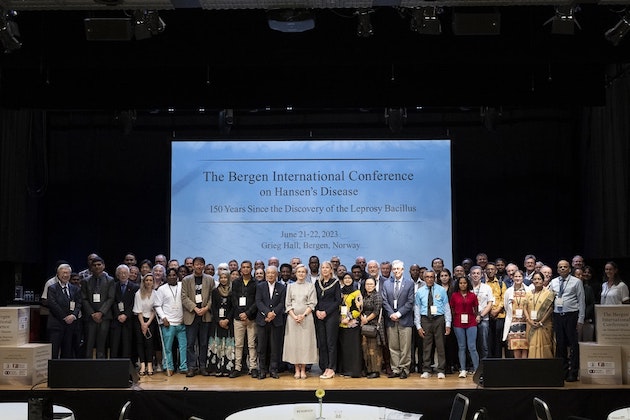
Sasakawa, who also serves as chairperson of The Nippon Foundation, spoke during a two-day conference in Bergen, Norway, to commemorate the 1873 discovery. In attendance were over 200 people, including medical, human rights, and historical preservation experts, researchers, NGOs, and organizations of persons affected by the disease.

The Bergen International Conference on Hansen’s Disease, held on June 21 and 22, 2023, was organized by the Sasakawa Leprosy (Hansen’s Disease) Initiative and the University of Bergen. It focused on medical efforts against leprosy, human rights, and dignity issues and preserving the history of leprosy for the lessons it can teach future generations. All three are pillars of the Sasakawa Leprosy (Hansen’s Disease) Initiative’s activities for a world free of leprosy and the discrimination it causes, in line with the UN’s Resolution on Elimination of discrimination against persons affected by leprosy and their family members.

In his speech to delegates, Sasakawa acknowledged the extraordinary advances made by medical professionals since Dr Hansen’s discovery that leprosy was neither a curse nor a punishment from God but a chronic disease caused by a bacillus.

With the 1873 discovery, leprosy went from being a mythological divine disease shrouded in mystery to something one could observe and explain—although it would take more than half a century before a cure was found.

Delegates at the Bergen International Conference on Hansen’s Disease held on June 21 and 22, 2023. The conference was organized by Sasakawa Leprosy (Hansen’s Disease) Initiative and the University of Bergen. Credit: Thor Brødreskift/Sasakawa Leprosy (Hansen’s Disease) Initiative

Delegates at the Bergen International Conference on Hansen’s Disease held on June 21 and 22, 2023. The conference was organized by the Sasakawa Leprosy (Hansen’s Disease) Initiative and the University of Bergen. Credit: Thor Brødreskift/Sasakawa Leprosy (Hansen’s Disease) Initiative

Margareth Hagen, Rector, University of Bergen, said there was a clear shift in the scientific discourse about leprosy before and after the discovery.

Sasakawa said the journey towards a cure started with a single anti-leprosy drug to more effective drug regimens and, ultimately, a recommendation from WHO’s medical team that leprosy patients receive drug regimens consisting of multiple drugs.

“A single anti-leprosy drug tended to increase drug resistance. Since the development of multi-drug therapy, with early detection and treatment, leprosy has become totally curable. About 60 million patients have been cured over the last 40 years,” he said.

Abbi Patrix, the great-grandson of Dr Hansen, now responsible for his great grandfather’s history, spoke about the man behind the science in a session titled, ‘My grandfather, my mother, the documents and me.’

Patrix, a European performance storyteller, talked about the day his mother, the only direct descendant of Dr Hansen at the time, learned that leprosy was named Hansen’s disease after her grandfather.

She was moved and wondered why? His mother was informed that Dr Hansen’s discovery had put a name to a disease that had confounded scientists and society alike and that labeling it ‘Hansen’s disease’ meant freedom for those afflicted because a cure could now be found.

The conference venue was, therefore, a recognition of his renowned great-grandfather because he was born in Bergen, and this was the site for his landmark 1873 discovery at only 32 years of age.

WHO Director-General Dr Tedros Adhanom Ghebreyesus told the audience: “WHO was born halfway between 1873 and today, 75 years ago. Much progress has been made since the two major milestones in the fight against leprosy. But much remains to be done toward our shared goals of zero disease, zero disability, and zero discrimination. Cases of leprosy have decreased significantly in recent decades, but more effort is needed to recover from the health system disruptions of the COVID-19 pandemic and move further ahead.”

Ghebreyesus said the WHO was committed to supporting countries in their bid to eliminate leprosy in line with the roadmap for neglected tropical disease for 2021 to 2030.

“So far, 49 countries have eliminated at least one neglected tropical disease, including Human African trypanosomiasis, rabies, and trachoma. With your support and those of our global partners, we can achieve that goal for leprosy too.”

Other dignitaries who spoke at the conference include United Nations High Commissioner for Human Rights Volker Türk, who said the conference celebrated medical innovations over the last 150 years.

“But when leprosy was eliminated as a global public health problem in 2000, it did not mean that the disease disappeared. Over 250,000 people suffer from leprosy every year, 15,000 of them are children. The actual figures are likely far higher,” he emphasized.

“Around three to four million people who have already been cured still bear varying degrees of impairment. The burden of leprosy is heaviest in countries with the greatest inequality, poverty, and marginalization.”

Türk further said that to better the lives of people affected by leprosy, “We need to address the physical symptoms, but we also need social and behavioral measures to address stigma and discrimination. We need comprehensive strategies with access to quality care, education, and social protection,” and told participants that “together we can make a real difference in ending leprosy, which causes immense preventable and unjustifiable suffering for thousands of people.”

Against this backdrop, Sasakawa stressed that further action is needed to combat stigma and discrimination, pointing out that as many as 130 discriminatory laws against leprosy are still in place in more than 20 countries.

“When respect for human rights is a must, it is unacceptable to leave such a large-scale and serious human rights violation unaddressed,” he said.

As the curtain fell on the Bergen conference of a remarkable journey to end leprosy over the last 150 years, Dr Takahiro Nanri, executive director of Sasakawa Health Foundation, noted that this was the third international conference that the foundation has helped to organize since launching its “Don’t Forget Leprosy” campaign in 2021 to help to ensure that the disease and those affected by it are not overlooked amid the coronavirus pandemic.

“Our purpose in organizing these conferences is to make the world aware that there are still many people who have Hansen’s disease and its consequences; to build momentum for collaboration toward the realization of a leprosy-free world; and to provide a setting for both formal and informal exchanges that can be a catalyst for innovative solutions that we as a foundation are ready to support,” he said.

IPS UN Bureau Report


!function(d,s,id){var js,fjs=d.getElementsByTagName(s)[0],p=/^http:/.test(d.location)?’http’:’https’;if(!d.getElementById(id)){js=d.createElement(s);js.id=id;js.src=p+’://platform.twitter.com/widgets.js’;fjs.parentNode.insertBefore(js,fjs);}}(document, ‘script’, ‘twitter-wjs’);  

Source

Parliamentarians Ask G7 Hiroshima Summit to Support Human Security and Vulnerable Communities

Parliamentarians attending the Global Conference of Parliamentarians on Population and Development Toward the 2023 G7 Hiroshima Summit. Credit: APDA

Parliamentarians attending the Global Conference of Parliamentarians on Population and Development Toward the 2023 G7 Hiroshima Summit. Credit: APDA

By Cecilia Russell
JOHANNESBURG, May 9 2023 (IPS)

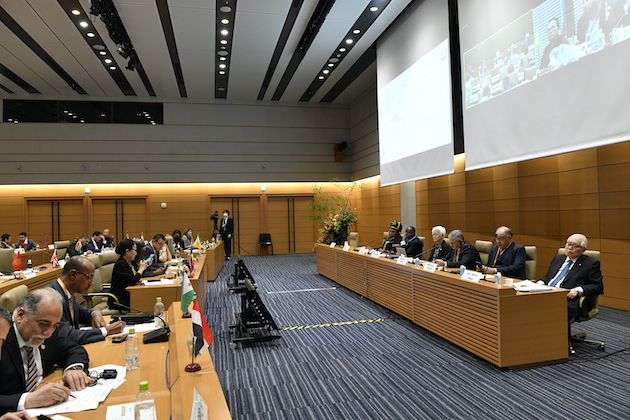
Parliamentarians from more than 30 countries agreed to send a strong message to the G7 Hiroshima Summit in Japan later this year, focusing on human security and support of vulnerable communities, including women, girls, youth, aging people, migrants, and indigenous people, among others.


The wide-ranging declaration also called on governments to support active political and economic participation for women and girls, enhancing and implementing legislation that addresses gender-based violence (GBV) and eradicating harmful practices like child, early, and forced marriages. During discussions and in the declaration, a clear message emerged that budgetary requirements for Universal Health Care (UHC) should be prioritized and the exceptional work done by health workers during the pandemic be recognized.

In his keynote address, Japan’s Prime Minister Kishida Fumio reminded delegates that Covid-19 had exposed the “fragility of the global health architecture and underscored the need for UHC.”

Kishida said that the central vision of the G7 Hiroshima Summit was to emphasize the importance of addressing human security – through building global health architecture, including the “governance for prevention, preparedness, and response to public health crises, including finance. We believe it is important for the G7 to actively and constructively contribute to efforts to improve international governance, secure sustainable financing and strengthen international norms.”

Apart from contributing to resilient, equitable, and sustainable UHC, health innovation was needed to promote a “more effective global ecosystem to enable rapid research and development and equitable access to infectious disease crisis medicines … and to support aging society,” Kishida said.

Former Prime Minister of Japan Fukuda Yasuo, Chair of APDA, and Honorary Chair of JPFP said this conference and its declaration would follow in a tradition of delivering strong messages to the G7 that improving reproductive health was crucial to the development and the future of a planet which now had 8 million people living on it.

“International Community is becoming increasingly confrontational and divided, and there is the emergence of a national leader who is threatening the use of nuclear weapons. No nuclear weapons have been used in the nearly 80 years since Hiroshima and Nagasaki. We must work together to prevent the use of nuclear weapons, which can take many precious lives and people’s daily lives. In this instance, I would like you to search for the path toward appeasement and not division. We must keep all channels of dialogue open so as to ease tension,” Fukuda asked of the conference.

While calling on parliamentarians to work together to address challenges, Fukuda also expressed concern about the widening inequities caused by Covid-19 and climate change and noted: “This network of parliamentarians on population and development has been a vital resource for parliamentarians who share the same concern for not only their own countries but for the entire planet and future generations.”

Kamikawa Yoko, MP Japan, Chair of JPFP, said that with a world population of 8 billion, it was essential to “realize a society where no one is left behind … and Japan would share its experiences of being on the frontlines of an aging society with declining birth rates. “We are living in an aging society … and given these challenges in Japan, we will try to share with you our experience and lessons through our diplomacy while trying to deepen our discussions and exchanges to seek solutions.”

Japan’s Foreign Affairs Minister Hayashi Yoshimasa said it was essential for all to cooperate during the “Anthropocene era, when human activities have promised to have a major impact on the global environment, global issues that transcend national borders, such as climate change, and the spread of infectious diseases, including Covid-19 are becoming more and more prevalent.”

He reminded the delegates that at the center of Japan’s economic growth post World War II was mainly through health promotion and employment policies.

Delegates of the Global Conference of Parliamentarians on Population and Development Toward the 2023 G7 Hiroshima Summit agreed to send a strong message on human security to the Summit. Credit: APDA

Delegates of the Global Conference of Parliamentarians on Population and Development Toward the 2023 G7 Hiroshima Summit agreed to send a strong message on human security to the Summit. Credit: APDA

Director of the Division for Communications and Strategic Partnerships of UNFPA, Ian McFarlane, said it was not about the “numbers of people but the rights of the people that matter. It’s not about whether we are too many or too few, but whether women and girls can decide if, when, and how many children to have.”

A recent UNFPA report indicated that nearly half of the women across the globe could not exercise their rights and choices, their bodily autonomy, and expressed hope that policies in the future continue to focus on humanity and universal human rights.

Despite being close to the 30th anniversary of the International Conference on Population and Development (ICPD), the conference heard that much still needed to be done regarding women’s rights.

New Zealand MP and co-chair of AFPPD Standing Committee on Gender Equality and Women Empowerment, Angela Warren-Clark, reminded the audience that women still only held 26 percent of parliamentarian seats globally. While women make up 70 percent of the workforce in the health sector, only 25 percent have senior leadership positions.

“It is women in this pandemic who bore the increased burden of unpaid work at home as schools were closed, and it is girls and the poorest families who were taken out of school and forced into early marriages … We believe that if women had an equal say in decision-making during the pandemic, some of these mistakes would have been avoided.”

Baroness Elizabeth Barker, MP from the United Kingdom, told parliamentarians their role was to ensure that “no person on earth, from the head of G7 country to a poor person in a village, can say that they do not know what gender equality is. And they do not know what gender violence is.”

Barker suggested they use international standards, like the Istanbul Convention on Violence Against Women, to compare countries. “And you know that if your country doesn’t come out very well, they really don’t like it.”

She pointed to two successes in the UK, including stopping virginity testing and tackling the practice of forced marriages. She also warned the delegates that there was a right-wing campaign aimed at destroying human rights gained, and they chose different battlegrounds. The overturning of abortion rights in the United States in the Roe vs. Wade case was an example, as was the anti-LGBTQ legislation in Uganda.

Hassan Omar, MP from Djibouti, gave a host of achievements in his country, including ensuring that women occupy 25 percent roles in politics and the state administration and the growing literacy of women numbers in his country.

Risa Hontiveros, MP Philippines, painted a bleak picture of the impact of Covid in her country.

Hontiveros said GBV increased during Covid and extended to the digital space.

“The Internet has become a breeding ground for predators and cyber criminals to prey on children, especially young women, and girls. The online sexual abuse and exploitation of children … has become so prevalent in the Philippines that we have been tagged as the global hotspot.”

In a desperate attempt to provide for their families, even parents produced “exploitative material of their own children and sold them online to pedophiles abroad.”

To address these, she filed a gender-responsive and inclusive Emergency Management Act bill, which seeks to address the gender-differentiated needs of women and girls, because they were “disproportionately affected in times of emergencies.”

Former MP from Afghanistan Khadija Elham’s testimony united many in the conference and even resulted in proposals from the floor to include a condemnation of the Taliban’s women’s policies.

Elham said GBV had increased since the Taliban took over – women were forced to wear a burqa in public, they were not allowed to work, and those who wish to “learn science or (get an) education are forced to continue their studies and hidden places like basements.”

If their secret schools are exposed, they face torture and imprisonment. During the last two months, 260 people, including 50 women, were publicly whipped – a clear violation of their human rights. Women’s representation in political life has been banned, and women are no longer allowed to work in NGOs – and it has been “550 days since women could attend high schools and universities.”

She called on the international community, the United Nations, to pressure the Taliban to restore women’s work and education rights.

Nakayama Maho, Director of the Peacebuilding Program at the Sasakawa Peace Foundation, announced new research on factors contributing to men’s propensity to GBV. The research found that the higher a man’s educational attainment, the lower the level of violence. There were also lower levels of violence with “positive” masculinity – such as a man being employed, married, and capable of protecting his family. Men who experienced violence during times of conflict tended to support violence to instill discipline, or protect women and communities.

Dr Roopa Dhatt, Executive Director of Women in Global Health, summed up this critical session by saying, “Equal leadership for women in all fields is a game changer, particularly in politics and health.”

Japan’s Health, Labour and Welfare Minister, Kato Katsunobu, noted during his closing address that the G7 countries “share the recognition that investment in people is not an expense, but an investment… and as you invest in people you can create a virtuous cycle between workers well-being and social and economic activities.”

He said Japan had a lot to offer concerning aging populations.

“Japan has been promoting the establishment of a comprehensive community-based care system so that people can continue to live in their own way in their own neighborhood until the end of their lives and is in the position to provide knowledge to the G7 countries and other countries who will be facing (an aging population) in the future.”

Dr Alvaro Bermejo, Director-General of IPPF, commended the conference and said he was “thankful” that the conference declaration would tell G7 governments to set an example. “Marginalized and excluded populations are at the heart of human security and can only be achieved in solidarity, and that message from this conference is clear.”

Professor Takemi Keizo, MP Japan, Chair of AFPPD, summed up the proceeding by saying that parliamentarians as representatives of the electorate were vital to creating a “positive momentum in this global community and overcoming so many difficult issues.”

Takemi elaborated on some issues facing the world now, including climate change and military conflicts, but as parliamentarians, there was the opportunity to “build up the new basis of the global governance, which can be very beneficial.”

NOTE: Global Conference of Parliamentarians on Population and Development Toward the 2023 G7 Hiroshima Summit was organized by the Asian Population and Development Association (APDA), the Asian Forum of Parliamentarians on Population and Development (AFPPD), and the Japan Parliamentarians Federation for Population (JPFP).

It was supported by the Ministry of Foreign Affairs of Japan (MOFA), United Nations Population Fund (UNFPA), Japan Trust Fund (JTF), and Keidanren-Japan Business Federation in cooperation with the International Planned Parenthood Federation (IPPF).

IPS UN Bureau Report


!function(d,s,id){var js,fjs=d.getElementsByTagName(s)[0],p=/^http:/.test(d.location)?’http’:’https’;if(!d.getElementById(id)){js=d.createElement(s);js.id=id;js.src=p+’://platform.twitter.com/widgets.js’;fjs.parentNode.insertBefore(js,fjs);}}(document, ‘script’, ‘twitter-wjs’);  

Climate Crisis is a Child Crisis and Climate-Resilient Children, Teachers and Schools Must Become Top International Agenda

From climate change to child marriage, education is seen as the solution. ECW Director Yasmine Sherif protests early marriage with young delegates at the Education Cannot Wait Conference held in Geneva. Credit: ECW

From climate change to child marriage, education is seen as the solution. ECW Director Yasmine Sherif protests early marriage with young delegates at the Education Cannot Wait Conference held in Geneva. Credit: ECW

By Joyce Chimbi
GENEVA & NAIROBI, Feb 17 2023 (IPS)

From southern Ethiopia to northern Kenya and Somalia, the most severe drought in the last 40 years is unfolding. It is simply too hot to go to school on an empty stomach, and close to 3 million children are out of school, with an additional 4 million at risk of dropping out entirely across the Horn of Africa.


Further afield, months after unprecedented floods and landslides ravaged Pakistan, villages remain underwater, and millions of children still need lifesaving support. More recently, while children were sleeping, a most devastating earthquake intruded, and an estimated 2.5 million children in Syria and 4.6 million children in Turkey were affected.

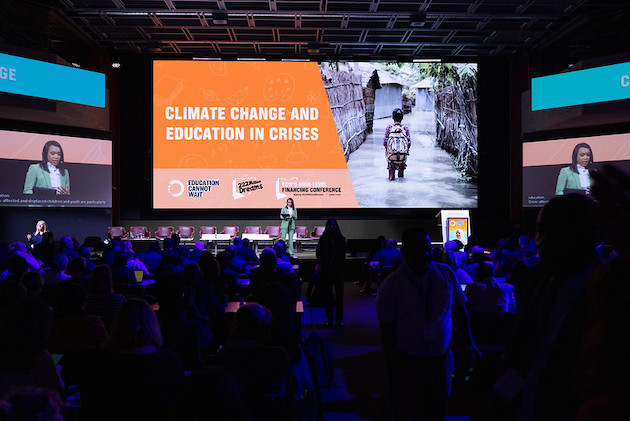
Today, child delegates from Nigeria and Colombia told the world that climate change is ruining their childhood and the world must act now, for 222 million dreams are at stake. They were speaking at the Education Cannot Wait High-Level Financing Conference held in Geneva.


Nafisa from Nigeria reminded delegates at the Education Cannot Wait High-Level Financing Conference held in Geneva that the climate emergency is a child’s rights issue. Credit: ECW

Nafisa from Nigeria reminded delegates at the Education Cannot Wait High-Level Financing Conference held in Geneva that the climate emergency is a child’s rights issue. Credit: ECW

“I am a girl champion with Save the Children and a member of the children’s parliament in Nigeria. Children are least responsible for the climate crisis, yet we bear the heaviest burden of its impact, now and in the future. Climate emergency is a child’s rights crisis, and suffering wears the face of a child,” said Nafisa.

In the spirit of listening to the most affected, most at risk, Pedro further spoke about Colombia’s vulnerability to climate change and the impact on children, and more so those in indigenous communities and those living with a disability, such as his 13-year-old cousin.

Pedro and Nafisa stressed that children must play a central role in responding to the climate crisis in every corner of the world. They said climate change affects education, and in turn, education has an important role.

This particular session was organized in partnership with the Geneva Global Hub for Education in Emergencies, Save the Children, and Plan International, in the backdrop of the first-ever High-Level Financing Conference organized in close collaboration with the Governments of Colombia, Germany, Niger, Norway, and South Sudan, ECW and Switzerland.

Birgitte Lange, CEO of Save the Children Norway, stressed that climate change is not only a threat to the future, “for the world’s 2.4 billion children, the climate crisis is a global emergency crisis today that is disrupting children and their education. Climate change contributes to, increases, and deepens the existing crisis of which children are carrying the burden.

“Last year, Save the Children held our biggest-ever dialogue, where we heard from at least 54,000 children in 41 countries around the world. They shared their thoughts on climate change and its consequences for them. Keeping children in school amidst a climate crisis is critical to the children’s well-being and their learning. Education plays a lifesaving role.”

Rana Tanveer Hussain, Federal Minister for Education and Professional Training in Pakistan, spoke of the severe impact of the floods on the country’s education system, “more than 34,000 public education institutions have been damaged or destroyed. At least 2.6 million students are affected. As many as 1 million children are at risk of dropping out of school altogether.

“During this crisis, ECW quickly came forward with great support, extending a grant of USD 5 million through the First Emergency Response Program in the floods-affected districts in September and October 2022, targeting 19,000 children thus far. In addition, ECW multiyear resilience program has also been leveraged to contribute to these great efforts. But the need is still great.”

Gregorius Yoris, a young leader representing Youth for Education in Emergencies in Indonesia, said despite children being at the forefront of the climate crisis, they have been furthest left behind in finding solutions to climate change.

Folly Bah Thibault, host and broadcast journalist, Al Jazeera and Founder and President, Elle Ira A L’Ecole Foundation Kesso Bah moderated the session on climate change in which child delegates told how children are being left furthest behind in the climate crisis. Credit: ECW

Folly Bah Thibault, broadcast journalist, Al Jazeera, and Founder and President, Elle Ira A L’Ecole Foundation Kesso Bah moderated the session on climate change in which child delegates told how children are being left furthest behind in the climate crisis. Credit: ECW

With one billion children, or nearly half of the world’s children living in countries at extremely high risk of climate change and environmental hazards, Dr Heike Kuhn, Head of Division, Education at the Federal Ministry for Economic Cooperation and Development in Germany, told participants it is time to raise climate resilient children.

“Weather-related disasters are growing, and young people are the most affected; we need three things in place: climate resilient schools, climate resilient teachers, and climate resilient students. We need climate-smart schools to stay safe when disaster strikes,” she explained.

“We must never forget about the teachers, for they must be agents of change, and teach children to use resources such as water and energy in a sustainable way. Children must also be taught how to behave during extreme weather changes such as earthquakes without leaving behind the most vulnerable children.”

As curtains fell on the landmark two-day conference, Yasmine Sherif, the Director of Education Cannot Wait, told participants, “The greatest feeling comes from the fact that all ECW’s stakeholders are here and we have raised these resources together, governments, civil society, UN agencies, private sector, Foundations.

“When I watched the panels and the engagements, I felt that everyone has that sense of ownership. Education Cannot Wait is yours. The success of this conference is a historic milestone for education in emergencies and protracted crises.”

In all, 17 donors announced pledges to ECW, including five contributions from new donors – a historic milestone for education in emergencies and protracted crises and ECW. Just over one month into the multilateral Fund’s new 2023-2026 Strategic Plan, these landmark commitments already amount to more than half of the USD 1.5 billion required to deliver on the Fund’s four-year Strategic Plan.

On the way forward, Sherif said ECW is already up and running, but with the additional USD 826 million, the Fund was getting a big leap forward toward the 20 million children and adolescents that will be supported with holistic child-centered education. This is in line with the new Strategic Plan, whose top priorities include localization, working with local organizations at grassroots levels, youths, and getting the children involved as well.

“We can no longer look at climate-induced disasters and education in silos. Conflict creates disruptions in education, so does climate-induced disasters and then the destiny of children and adolescents having to flee their home countries as refugees or forcefully displaced in-country,” she emphasized.

“Most of all, as we have seen in Afghanistan and across the globe, the right for every girl to access a quality education. And we are moving already, and that is where we are going from here. Thanks to the great contribution in the capital of humanitarian settings, we are bringing the development sector of education to those left furthest behind. Thank you, Switzerland, for hosting us.”

IPS UN Bureau Report


!function(d,s,id){var js,fjs=d.getElementsByTagName(s)[0],p=/^http:/.test(d.location)?’http’:’https’;if(!d.getElementById(id)){js=d.createElement(s);js.id=id;js.src=p+’://platform.twitter.com/widgets.js’;fjs.parentNode.insertBefore(js,fjs);}}(document, ‘script’, ‘twitter-wjs’);