DUBAI, Apr 1 2020 – Global crises need global solutions yet some adjustments will have to be made if the world has to adopt a multilateral approach toward tackling the Corona pandemic, a senior academic said on Tuesday, March 31.
Participating in an e-symposium organized by the think-tank, TRENDS Research & Advisory, Prof. Yong Wang of the School of International Studies and Director, Center for International Political Economy at Peking University, said the G-20 has already taken an initiative and more such efforts are needed.
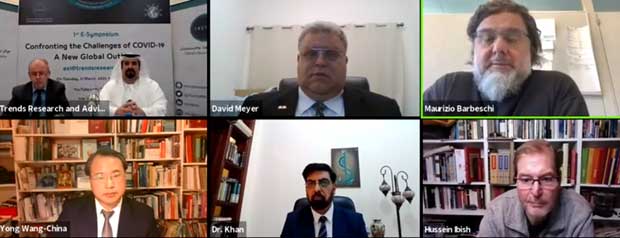
“We have our national interests but for facing challenges such as this we should work together,” he said. Prof. Wang was a panelist at the e-symposium – – Confronting the Challenges of COVID-19: A New Global Outlook – which was attended by several experts and researchers from around the world.
“Instead of scapegoating countries like China and India, countries like the US should look at their policies. We need to have a broader perspective on this,” said Prof. Wang.
Sharing China’s experience, he said that the country did the right thing by taking very tough measures such as the lockdown of Wuhan. “Indeed we are in the era of globalization and it has been rightly pointed out that this won’t be the last such outbreak,” he said.
“Chinese scientists shared genetic sequencing, which helped in data compilation and intelligence gathering to tackle the virus. The pandemic is under control in China and factories and companies are opening now. However, the government is still applying a very cautious approach,” he said.
Experts participating in this first-ever e-symposium of its kind highlighted the ongoing struggle between forces of globalization and protectionism but emphasized the need for a collective response to the Covid-19 challenge.
Prof. Maurizio Barbeschi, Adviser to the Executive Director, World Health Emergencies (WHE) Program at The World Health Organization (WHO), said the world has been preparing for pandemic since SARS and it is impressive how not prepared the planet was.
According to him, it is not just the peak of the pandemic but also the bumps and re-entry to normalcy will have to be managed. “Even vaccines may have to be handled with extreme care for not creating groups of haves and have-nots,” he said.
Prof. Barbeschi also said that it is obvious that travel bans did not work well. “The first reaction of governments so far wasn’t smart, quick or big or large enough to stop the exponential move of the virus,” he said.
Gulfaraz Khan, Professor of Viral Pathology and Chair, Department of Medical Microbiology and Immunology at the College of Medicine and Health Sciences, UAE University, said that the scientific community is united against Covid-19.
Prof. Khan said that it must be acknowledged that China identified and made the virus sequence available to the international community within two weeks of the outbreak. “We have also seen an unprecedented number of publications on Covid-19,” Prof. Khan said pointing out that the world failed to identify the threat early.
“We had approximately a month to look at the outbreak even though the disease was spreading. The majority of the world’s cases happened after February so we need to learn lessons as a global community,” he said.
Prof. Khan also ruled out the possibility of a vaccine coming out anytime soon. “It could take 12-18 months if you add the time needed in mass production and in making it available around the world,” he said.
Delivering an international security perspective, Dr. Hussein Ibish, Senior Resident Scholar at the Arab Gulf States Institute in Washington, said it is not yet clear whether parochialism will triumph over populism in the aftermath of this crisis.
“There is discourse emerging from Europe that may not reflect the ground reality. There seems to be an adrenaline rush for insularity and parochialism promoted by populism which is not helping,” he said.
According to Dr. Ibish, the crisis also poses a real threat to democracy in many countries. “Authoritarian states like China, in particular, say they are better at the discipline and population control needed to contain the virus,” he said. Dr. Ibish also argued that demagogues may use this crisis to consolidate power.
Dr. David Meyer, Associate Professor of Security and Global Studies and Program Director, Master of Arts in Diplomacy at the College of Security and Global Studies, the American University in the Emirates, said the US will continue to demand favorable trade deals as national interest cannot be wished away.
“After this crisis ends, protectionism will come back with a vengeance as more and more countries slip into recession. If the quarantine lasts more than six months then we are looking at economic depression,” he said.
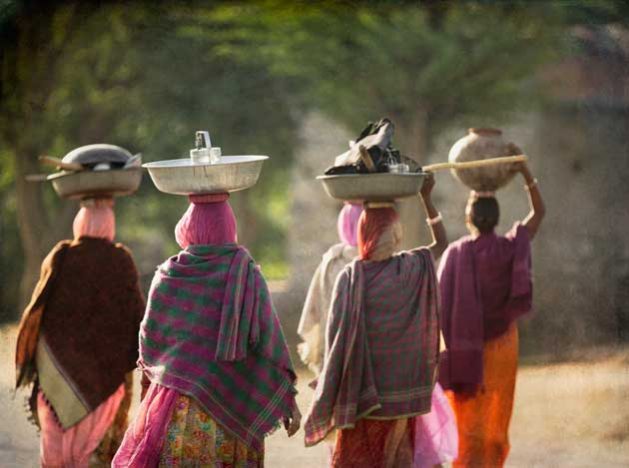
Women bear the brunt of climate change disasters. Credit: Women Deliver
NEW YORK, Mar 31 2020 (IPS) – Vanessa Nakate of Uganda may have been cropped out of a photograph taken at the World Economic Forum, but she along with Swedish activist Greta Thunberg have made the climate crisis centre stage.
Women Deliver Young Leader Jyotir Nisha discusses with Costa Rican President Carlos Alvarado Quesada on how to harness young people to overcome gender inequality and address climate change in a recent wide-ranging interview.
Quesada says key strategies to designing policy to fight climate change require unconventional decision-making to address challenges like climate change, biodiversity loss, the fourth industrial revolution, and inequality.
“These are intertwined factors that can hinder development if unattended but, if tackled, they could potentially accelerate progress and wellbeing for all,” he says.
“And, of course, this is a task that young leaders are able to handle and produce the timely answers that are necessary.”
Bringing in her experience in the non-profit sector, Nisha says training girls and women in up-cycling plastic waste to produce handmade goods has assisted them to contribute to their family income and their empowerment in the community. The question is, how can this be broadened.
Quesada says women, in particular young women, are leading the way.
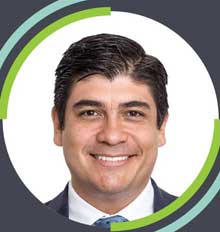
Costa Rican President Carlos Alvarado Quesada. Credit: Women Deliver
“From cooperative seed banks, to early warning networks, from solar engineers to women politicians carving a path of sustainable policymaking. They are at the forefront of forest conservation, sustainable use of resources, and community enhancement, and restoration of landscapes and forest ecosystems,” he says.
However, women’s roles are often underestimated, unrecognised, and unpaid.
“Women and girls with access to technology have already begun developing innovative tools to reduce emissions by targeting sustainable consumption and production practices, including food waste, community waste management, energy efficiency, and sustainable fashion.”
The solutions exist, but much more is needed.
“It takes a whole-of-society approach for collaboration and cooperation on a bigger and enhanced scale.”
The President suggests that the way investments are made could be fundamental to ensure a flow of finance to the communities, including women, and youth. This will, he believes, provide “a stable source of funding for businesses and services that contribute to the solution of social or environmental challenges.”
The impact of this will be partnerships between traditional sources of finance, like international cooperation and development banks, and new partners, like philanthropy, hedge funds, or pension funds.
“And what better than young people giving the thrust that all this requires?”
Nisha says she was pleased to see the massive mobilisation of young people at the inaugural Climate Action Summit last year. The summit had little good news for climate change with concerns raised that the accelerating rise in sea level, melting ice would have on socio-economic development, health, displacement, food security and ecosystems. However, beyond taking to the streets, they also need to hold decision-makers accountable.
“In the last months we have witnessed the irruption of massive mobilisations in different parts of the world, lead mostly by young people. This would seem surprising for a generation that has been accused several times of passivity, indifference, and individualism,” Quesada says. “I truly believe that, as long as these demands are channelled through democratic and pacifist means, they are extremely important to set a bar and a standard of responsibility for us, decision-makers — who are, by the way, more and more often, young people.”
He adds that world leaders owe them explanations of the decisions made.
“We must also have the wisdom to pay attention to these demands and take into account their opinions and proposals to reach agreements that have the legitimacy of consensus-building.”
However, Nisha notes, while campaigns like the Deliver for Good campaign is working across sectors reports at COP25, and the recent World Economic Forum (Davos), “climate change continues to threaten progress made toward gender equality across every measure of development.”
At WEF Global Gender Gap Report 2020 showed that it would take more than a lifetime, 99.5 years in 2019 for gender parity across health, education, work and politics to be achieved.
Quesada says the climate catastrophe “demands that policymakers and practitioners renew commitments to sustainable development — at the heart of which is, and must continue to be, advancing gender equality and women’s empowerment, and realising women’s rights as a pre-requisite for sustainable development.”
Costa Rica, he says, has been recognised internationally on two significant areas: the respect of human rights and environmental protection.
“The present Administration has taken these objectives a step further by paying particular attention to women’s rights, inclusion, and diversity, and including them as part of our core policy principles and our everyday practices,” he says. “We expect to increase women’s integration into productive processes and achieve women’s economic empowerment through specific policies linked to our long-term development strategy — the Decarbonization Plan — allowing the transformational changes our society needs.
However, the critical question, Nisha says, is: “What can world leaders and governments do today to ensure young people have a seat at the decision-making table?”
Quesada is confident that young people will be part of the solution.
“The challenges we are facing today are unprecedented precisely because previous generations did not have to face situations such as biodiversity loss, global warming, or the emergence of artificial intelligence and technology. Thus, we need new answers and solutions from Twenty-First Century people, and those should and will be put forward by the youth,” he says.
The importance of youth involvement was recently highlighted too at the meeting of African Leaders for Nutrition in Addis Ababa. African Development Bank (AfDB) President Akinwumi Adesina said Africa should invest in skills development for the youth so the continent’s entrepreneurs can leverage emerging technologies to transform Africa’s food system to generate new jobs. This is especially urgent as the population on the continent is expected to double to 2.5 billion people in 40 years putting pressure on governments to deliver more food and jobs in addition to better livelihoods.
In a recent interview with IPS International Institute for Tropical Agriculture (IITA) Director General, Nteranya Sanginga, explained that this change is neither easy or necessarily something all leadership has taken on board.
“Our legacy is starting a programme to change the mindset of the youth in agriculture. Unfortunately (with) our governments that is where you have to go and change mindsets completely. Most probably 90 per cent of our leaders consider agriculture as a social activity basically for them its (seen as a) pain, penury. They proclaim that agriculture is a priority in resolving our problems, but we are not investing in it. We need that mindset completely changed.”
Quesada is unequivocal that this attitude needs to change.
“My advice to world leaders is to have the humility to listen to the people and to allow more inclusive and participatory decision-making. And to the young people, I can only encourage them to own their future, and to act accordingly, with vision, courage, and determination.”
Experts from around the world to discuss factors behind the crisis and the steps needed to mitigate its negative effects worldwide
ABU DHABI, Mar 26 2020 – TRENDS Research & Advisory is organizing its first-ever E-Symposium to discuss the global impacts of the COVID-19 crisis and offer insights on the steps needed to mitigate its negative effects worldwide. This will be the first online symposium of its kind to be organized since the outbreak of the coronavirus in the Gulf and Middle East region.
To be held on March 31, 2020, at 7 pm UAE time, the E-Symposium – Confronting the Challenges of COVID-19: A New Global Outlook – will provide a unique and innovative online platform for international experts covering medical, geostrategic and economic perspectives.
Panelists will offer insights on the factors behind the emergence of the crisis and will also include a special perspective on how China coped with the initial outbreak of the pandemic and adopted measures and solutions that could offer valuable lessons for other countries.
Dr. Mohamed Al-Ali, the Director General of TRENDS Research & Advisory lauded the Center and its staff for their contributions under these exceptional circumstances. “Harnessing modern technology to hold this E-Symposium will feed into the Center’s ambitious goals of strengthening scientific research and providing policy and decision-makers in the region and around the world,” he said.
The Director General said that ideas and recommendations are needed to deal with the challenge of Covid-19, which has become an existential threat to humanity. Dr. Muhammad Al-Ali expressed his confidence that this international E-Symposium, the first of its kind in the Middle East, will come up with recommendations that enhance the current regional and international efforts to curb the rapid spread of this pandemic.
“The pandemic has so far claimed the lives of more than 12,000 people and infected more than 300,000, in addition to having a calamitous economic and strategic impact on the entire world. Nearly 600 million people in around 22 countries are under forced social quarantine and 400 million under curfew,” he said.
Dr. Mohamed Al-Ali said that think-tanks and research institutes should play their role in supporting governments and countries in today’s circumstances so that we collectively stop this human tragedy by providing workable ideas, recommendations, and solutions.
With the COVID-19 crisis representing a historical milestone for the global community, this symposium performs a critical function in helping its participants identify the continuities and changes expected in the months and years to come.
Due to the recent precautionary measures to combat the spread of the COVID19 taken by the Italian government, which will affect the movement of people in the whole country in the coming weeks, Seeds&Chips cannot take place as scheduled on May 18-20, 2020.
MILAN, Italy, Mar 12 2020 – In light of the ongoing public health emergency and in observance of the decree signed by the Italian Prime Minister, Giuseppe Conte, on Monday, March 9th – enacting forced quarantine for the whole Italian country, while banning all public events until April, 3 – we have taken the tough decision to postpone the Sixth Edition of Seeds&Chips – The Global Food Innovation Summit which would have been taking place on May 18-20, 2020 at MiCo, Milano Congressi.
“This is an announcement that we would never have wished to write but, sadly, as a consequence of the ongoing public health risks caused by COVID19 and according to what is laid down in decree of The Presidency of the Council of Ministers, on March 9th, 2020 – imposing restrictions on people’s movements and banning all public events and initiatives to prevent the outbreak of the COVID2019 – we have decided to postpone our Summit” said Marco Gualtieri, Founder of Seeds&Chips.
As an organization working tirelessly to advance sustainable, healthy and prosperous societies around the world, the safety of all attendees, speakers, startups, companies and everyone else involved, is and must remain our top priority at the basis of our decision.
We are a global community of ChangeMakers, growing up in a fast-changing, complex and unpredictable world. This has allowed us to overcome all difficult challenges we meet on our way.
“The scenario has changed significantly over the past two weeks. Until the end of last week, we were cautiously optimistic that the Summit would go ahead, as planned. The rapid deteriorating public health situation in Italy, in particular in Milan and in our Region, has obliged us to concretely think about an alternative plan” Marco Gualtieri added.
“We would like to take this opportunity to thank all the people who are working at Seeds&Chips to make our Summit possible every year, all moderators and speakers who put together their sessions with us, all attendees, journalists, sponsors and partners who have been with us to craft our event and helped us grow in the last years”.
Today is a sad day for Seeds&Chips – The Global Food Innovation Summit – Milan Edition, but we hope to be back soon with good news. In fact, we are evaluating the opportunity of the upcoming pre-COP26 in Milan at the end of September, to build a new exciting event, filled, as usual, with creativity, innovation and great passion.
***
Seeds&Chips – The Global Food Innovation Summit, founded by entrepreneur Marco Gualtieri, is the world’s flagship food innovation event. An exceptional platform to promote technologically advanced solutions and talents from all over the world. An exhibition area and conference schedule to present, tell and discuss themes, models and innovations that are changing the way food is produced, transformed, distributed, consumed and talked about.
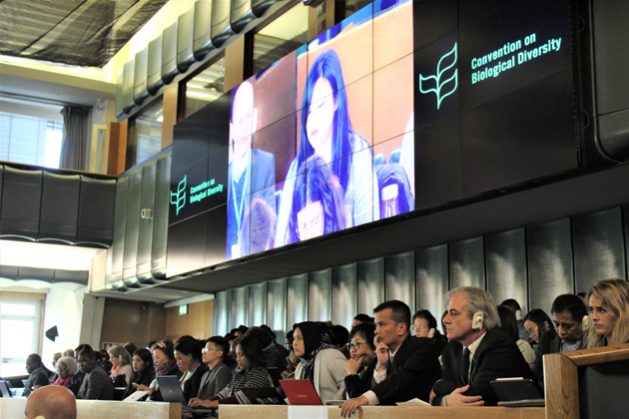
Delegates gather at FAO headquarters to advance negotiations of the post-2020 global biodiversity framework. Credit: Maged Srour/IPS
ROME, Feb 24 2020 (IPS) – “The world out there is watching and waiting for results,” Elizabeth Maruma Mrema warns while talking to IPS regarding the preservation of biodiversity of our planet.
The acting Executive Secretary of the Secretariat of the Convention on Biological Diversity, is referring to a worrying report[1] released by the Food and Agriculture Organization (FAO) which paints a grim picture of the planet.
“Many key components of biodiversity for food and agriculture at genetic, species and ecosystem levels are in decline and evidence suggests that the proportion of livestock breeds at risk of extinction is increasing,” the report says.
The FAO also warns that “nearly a third of fish stocks are overfished, and a third of freshwater fish species assessed are considered threatened”.
These are just some of the critical issues being debated during the open-ended working group on the post-2020 biodiversity framework. This round of negotiations is taking place at FAO headquarters from 24 to 29 February. In the run-up to October’s historic UN Biodiversity Conference, government officials, experts and activists from around the world gathered today at FAO headquarters, Rome, to forge ahead with negotiations. This round of talks was supposed to take place in Kunming, China, on the same dates. Due to the ongoing situation following the outbreak of the novel coronavirus 2019 (COVID-19), it was moved to Rome, Italy.
Background
The fourteenth meeting of the Conference of Parties (COP) to the Convention on Biological Diversity (CBD) had its meeting in Sharm el-Sheikh, Egypt, in 2018. It was here that the working group on the post-2020 global biodiversity framework was appointed. The working group’s mandate was to prepare the text of a framework that would guide the work of the Convention after the year 2020. At the working group’s first meeting held in Nairobi in August 2019, the Open-ended Working Group (WG2020) requested the Co-Chairs and the Executive Secretary to prepare a zero-draft text of the post-2020 global biodiversity framework. This framework is under consideration at its second meeting, which is currently taking place in Rome. The aim of the second meeting of the Working Group is to significantly advance the negotiation of the post-2020 global biodiversity framework, discussing the different aspects of the whole ambitious project.
‘Healthy Diets’ was among the proposed initiatives during the first day of the six-day event at FAO headquarters. The initiative emphasised the importance of ‘geographical indications’ for biodiversity, with examples and experiences from Africa and Eastern Europe. Credit: Maged Srour/IPS
Negotiations in Rome: Promoting a bi-directional approach
In the coming days, the working groups will be divided on a regional basis. They will discuss a wide variety of concerns including biodiversity, food, agriculture and fishing systems, to the importance of promoting an approach that leaves no one outside of this circuit. Civil society, the private sector, indigenous people, local communities, women and youth are all represented to create a functional framework for the whole society and at all levels. Many organisations, like Bioversity International, supported by a host of international agencies, have submitted research reports on biodiversity and food systems. It has also made representations on alternative models for access and benefit-sharing rules, practices and impacts in the Post-2020 Global Biodiversity Framework.
The voice of indigenous people
Key to the discussions is the role of indigenous people in biodiversity and Aslak Holmberg, the representative of the indigenous people, is convinced that policymakers can learn from these groups.
“There is a key message we want to share with other groups here during these negotiations,” he told IPS. “Indigenous peoples and local communities’ management of natural resources is (in fact) conserving biodiversity. (This is) because these management practices are built on a balanced relationship with the respective environment.
“Biological and cultural diversity are linked, and by this, I mean that (for indigenous communities) culture plays a fundamental role in the process of preserving biodiversity: it is in our culture to use our areas in a sustainable way. That is the message we want to share with others”.
The voice of the business sector
Representatives of the private sector too, in particular of the business world, wish to be part of the framework that will result from the negotiations and officially approved in October, in China. Eva Zabey, Executive Director of the Business for Nature Coalition, told IPS she was grateful to the CBD secretariat for giving business and opportunity to engage and contribute to the zero draft of the post-2020 framework.
This coalition is a unique global group of influential business and conservation organisations participating in the negotiations.
“Forward-thinking businesses are starting to change the way they operate, based on their understanding of the value of nature – but this is still the exception, not the norm,” she told IPS. “Therefore,” said Zabey, “Political leadership is needed now to transform our economic and financial systems in a way that places nature at the heart of global decision-making. It needs to create a level playing field and a stable operating environment for business.”
Zabey is looking forward to an ambitious post-2020 framework which will facilitate businesses’ involvement and create and positive “policy-business feedback loop,” she said.
Perspectives
Audrey Azoulay, United Nations Educational, Scientific and Cultural Organization (UNESCO) Director-General, perfectly summarised urgency at the negotiation.
Commenting on the global assessment report, she said: “The present generations have the responsibility to bequeath to future generations a planet that is not irreversibly damaged by human activity.”
“Our local, indigenous and scientific knowledge are proving that we have solutions and so no more excuses: we must live on earth differently”.
Zabey echoes Azouley. She said entrepreneurs are increasingly aware that the profit-sustainability ‘conflict’ is no longer feasible or conceivable.
“Companies planning on being successful in the future are starting to realise that financial performance is irrelevant on a dead planet.’
NEW YORK, Feb 15 2020 (IPS) – In a recent report by World Economic Forum (WEF) shows women suffer a “triple whammy” in the workplace. Without drastic action, gender parity will take more than a lifetime to achieve. This is the challenge that Katja Iversen, President and CEO of Women Deliver is staring down.
“We know that achieving gender equality is not a women’s issue. It is a societal issue. To be successful … boys and men must be involved at all levels and all ages,” said Iversen.
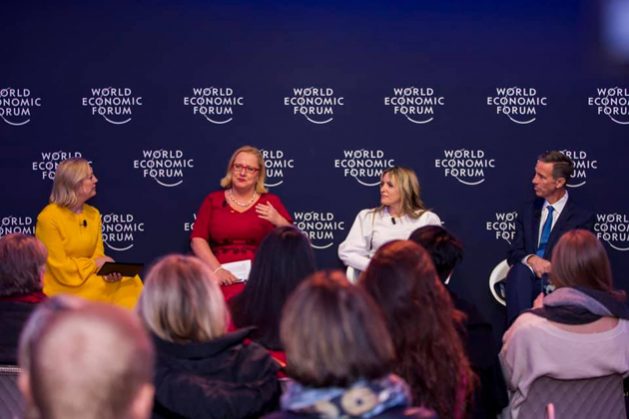
Iversen’s involvement WEF 2020 annual meeting in Davos increased the spotlight on gender equality. She was involved in a myriad of discussions, conversations, panel debates, midnight huddles and a social media drive. As the woman who heads leading global advocate for gender equality, health and rights of girls and women her role at the annual forum was clear cut.
“We provoked discussions using our ‘gender lens’ – a small magnifying glass. We gave this to leaders and influencers to bring down the mountain and apply to their businesses, governments, and lives,” Iversen said in an exclusive interview with IPS.
“Along with our partners, Promundo and Unilever/Dove Men+Care, we released a series of recommendations on male engagement in gender equality, condensed in a catchy infographic.”
Iversen went on to emphasise how “everybody – including the men and women in Davos – must apply a gender lens to every aspect of life, from leadership, to health systems, to schools, the workplace, and at home. That is an important step to change systems, to change harmful norms, and drive progress.”
This may seem a momentous task. The WEF report, released in December 2019, highlighted the factors that fuel the economic gender gap. This included a noticeably low level of women in leadership positions, wage stagnation, labour force participation and income.
The report highlights what it terms a ‘Triple Whammy’ for women in the workplace. Women, the report said, are highly represented in many of the roles that have been hit hardest by automation.
Moreover, not enough women are entering technology-driven professions where wage growth is more profound. This puts women into the middle to low wage categories that have been stagnant since the financial crisis in 2009.
Thirdly, a lack of access to capital prevents them from pursuing entrepreneurial activities, another key driver for income.
WEF aims to close the gender gap by setting up coalitions between relevant ministries and the largest employers to increase female labour force participation, increase women in leadership positions, close wage gaps and prepare women for jobs of the future. Additionally, the global business commitment on Hardwiring Gender Parity in the Future of Work mobilises businesses to commit to hiring 50% women for their five highest growth roles between now and 2022.
Iversen said women must be involved in the development and growth of Artificial Intelligence (AI) and ubiquitous digital technology for them to benefit.
“We know that innovation and technology hold a lot of power and can be used for good – but only if it works for girls and women and identifies the bias that holds them back,” she said.
While there was potential for digital technologies, like AI, to unlock better health access and information, new employment and leadership opportunities, and greater economic security for women – it could “just as likely leave big parts of the population behind and exacerbate existing inequalities”.
This was why the gender lens in the development and implementation of AI and other tech solutions is so critical, said Iversen. Having women involved in the growth of digital technology “can ensure technology is more representative and can eliminate unconscious bias in hiring, promotion, and recruitment”.
It is critical that women’s education, especially in the field of technology, is enhanced, enabling them to participate in future workforce equally.
“We also need to make sure we are investing in women’s lifelong education and training, particularly in science, technology, engineering, and math. It is key to their professional and financial security in the workforce of tomorrow.”
Investment in women and their participation in the economy has a ripple effect.
“Evidence and common sense confirm that when leadership and the workforce represent the population and include women, it leads to better economic, social, and political cohesion and puts us on a better, more sustainable path.”
The Secretary-General of the United Nations, António Guterres, noted in his speech at WEF 2020 that while problems were global, the responses were fragmented.
“If I had to select one sentence to describe the state of the world, I would say we are in a world in which global challenges are more and more integrated, and the responses are more and more fragmented, and if this is not reversed, it’s a recipe for disaster,” he warned.
Iversen explains that by putting the gender lens at the centre of the solutions, it would enhance society’s ability to achieve its Sustainable Development Goals. It would also mitigate the ‘fragmented responses’ to global challenges.
“Gender is cross-cutting, it is essential to progress and to achieving the Sustainable Development Goals. Conservation of our planet; eradicating poverty and ensuring health; education; peace, and prosperity for all need to be integrated. This requires putting a gender lens to the entire development agenda,” Iversen said.
“One of the reasons the world is facing so many challenges right now, including trade wars, conflict, climate change, and growing inequality, is that girls, women, and marginalised groups are prevented from accessing power, both political and financial. Big egos, narrow interests, and profit over people and planet have been, mistakenly, prioritised, and we are paying the price for that.”
Women Deliver’s President was emphatic that “development actors from across the spectrum must abandon siloed approaches. It was essential to work together to drive progress for the people and planet, including girls and women, both through financial investment and multi-sector partnerships.”
Iversen is confident. WEF was “good start to the Decade of Action for the Global Goals and the 2020 Generation Equality push, demanding women’s equal participation in political life and decision-making in all areas of life.”
Involving the younger generation was also paramount to achieving the Sustainable Development Goals.
“What was also clear coming down the Davos mountain is that any efforts to push the development agenda over the finish line will fail if they don’t involve young people. Because youth not only have a stake in reaching our ambitious development goals by 2030, they are also well-suited to identify solutions right now.”
To address and improve gender equality, Iversen emphasised that it required a global effort. The private sector has a vested interest and a significant role to play in advancing gender equality. “We want governments and business leaders to use the gender lens in all they do. They should complete a concrete analysis of what progress they have made and what gender gaps remain,” Iversen said.
Both should ask themselves: What policies and procedures are inhibiting or promoting progress? What gender norms are prevalent and need to be addressed? What investments in gender equality could be made?
“And once that analysis is complete – get to work!”
Women Deliver has been relentless in that message and in bringing the evidence to bear with great partners. “And in recent years we have seen that the world – including at WEF – has started to catch on. Our challenge now is to move from talking to mobilising dedicated action.”
Women Deliver continues to be serious advocates, speaking up for girls and women in every setting.
“We’ll continue to advise committees for big corporations and international agencies. We’ll continue to elevate the voices of young advocates and local organisations around the world. We will continue to push back on the pushback to protect our gains and drive further progress,” Iversen said.
“We will continue to communicate from podiums, in boardrooms and hallways of major summits, on the pages of major newspapers, on (television) screens and social media – with the clear message: In a gender-equal world, everybody wins.”
IPS asked about the trend of women participating as policy-makers at WEF. Just how prominent is women’s role? Iversen replied that “24% of the 2,700 formal WEF participants were women. While that is an improvement from previous years, it’s still way too small. WEF has pledged to double female participation by 2030, and we are ready to help to speed it up.”
“We have a long way to go, but I saw progress at WEF,” said Iversen, adding, “More and new world leaders – in business and government – are picking up the gender lens. There is still so much to be done, and progress is slow for an impatient optimist like myself. But I came down the Davos mountain more hopeful than I went up, and more ready than ever to power progress for girls, women and gender equality in the Super Year ahead.”
Iversen remains optimistic. “Ultimately, we want to work ourselves out of a job. Then sit back and see a world where gender inequality is a thing of the past, where it is something people make fun of like the ‘old days’. Where people say, ‘I can’t believe we didn’t do this sooner’.”