Explainer: Inside COP30’s 11th Hour Negotiations for Legacy-Building Belém Climate Deal

Climate Action, Climate Change, Climate Change Finance, Climate Change Justice, Conferences, COP30, Editors’ Choice, Environment, Featured, Global, Headlines, Human Rights, Humanitarian Emergencies, Latin America & the Caribbean, Sustainable Development Goals, TerraViva United Nations

COP30


The COP30 Presidency is urging all “negotiators to join in a true mutirão—a collective mobilization of minds, hearts, and hands,” saying this approach helps “accelerate the pace, bridge divides, and focus not on what separates us, but on what unites us in purpose and humanity.”

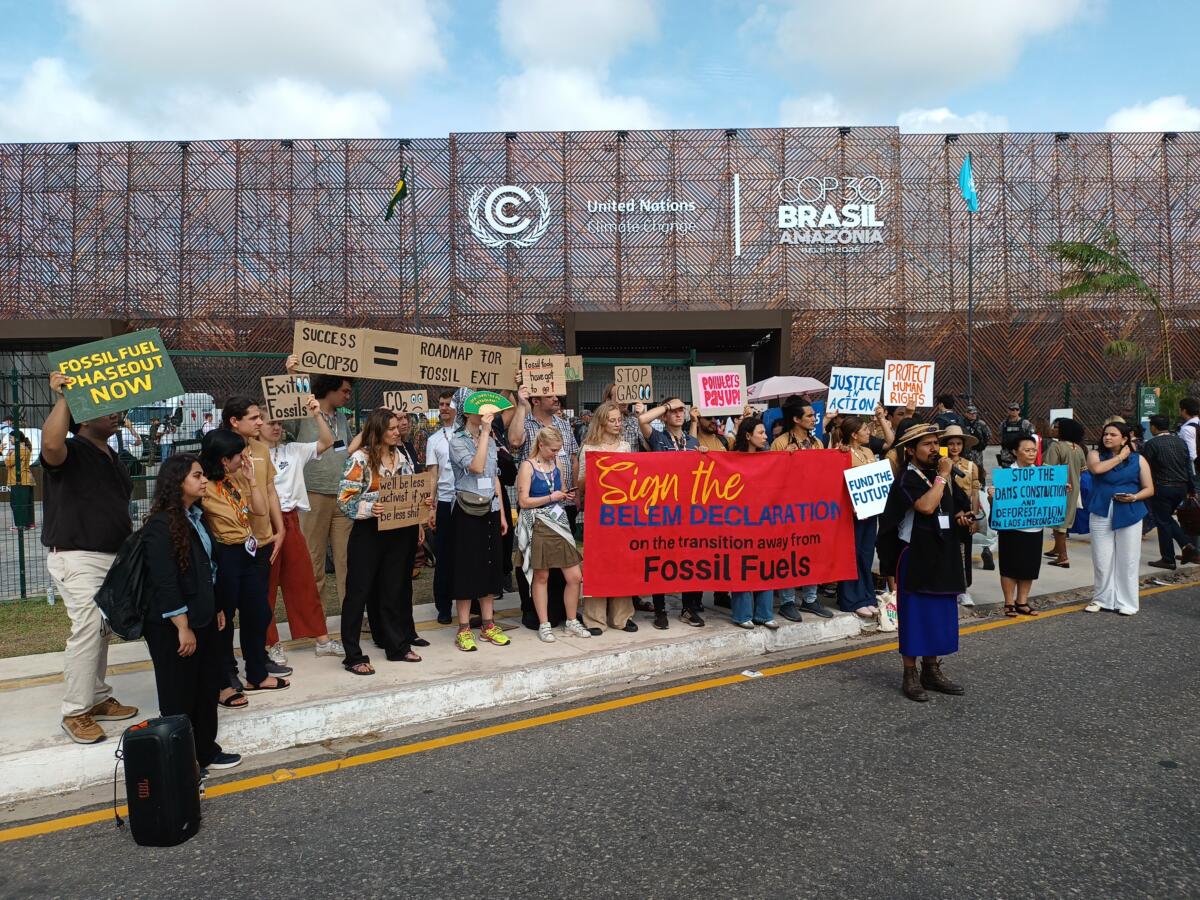
Negotiations take place throughout the day and now late into the night. Credit: UN Climate Change/Kiara Worth

Negotiations take place throughout the day and now late into the night. Credit: UN Climate Change/Kiara Worth

BELÉM, Brazil, Nov 19 2025 (IPS) – At a Conference of the Parties, where science intersects with politics, reaching agreements is often a tricky business. What is inside the last-minute negotiations as the COP presidency tries to get the parties to agreement at the final plenary?


COP negotiators are diplomats and government officials who meet at the Conference of the Parties to negotiate and agree on how to address climate change. They are also often joined by COP delegates’ representatives from civil society, social movements and businesses.

As representatives of their respective countries that are parties to the UNFCCC treaty, they discuss, debate, and haggle over their preferred wording of texts and legally binding agreements regarding how to address climate change during closed-door sessions.

Windowless Closed-Door Meetings

These closed-door meetings are often also windowless, and negotiators often lose track of time as they work through extensive documentation and diverse national positions to form a final agreement towards the end of the COP summit schedule.

COP 30, Belém, is posting a daily photographic glimpse into the collective effort to build trust, dialogue, and cooperation to accelerate meaningful climate action and deliver its benefits to all. Many hope this message will permeate inside these rooms.

The UN climate summit has now entered its final stages. The Brazilian COP30 Presidency has extended working hours, scheduling late-night meetings for the last two nights—Monday and Tuesday, Nov 17 and 18, 2025.

Tonight might not be any different, as the COP30 Presidency pushes for a rapid compromise and conclusion of a significant part of negotiations to pave the way for a “plenary to gavel the Belém political package.”

After all, the COP is where the science of the Paris Agreement intersects with politics.

The Elusive True Mutirão 

The COP30 Presidency is urging all “negotiators to join in a true mutirão—a collective mobilization of minds, hearts, and hands,” saying this approach helps “accelerate the pace, bridge divides, and focus not on what separates us, but on what unites us in purpose and humanity.”

But this is the point in the negotiations, even in a ‘COP of truth,’ as COP30 was staged to be, where the real claws come out amid accusations of protectionism, trade tensions and geopolitical dynamics as the worlds of business, politics and human survival intersect.

Even as UN officials urge parties to accelerate the pace, warning that “tactical delays and procedural obstructions are no longer tenable” and that deferring challenging issues to overtime results in collective loss, reconciling deep differences among nations is proving easier said than done even within the Global Mutirão—a concept championed by the COP30 presidency.

It calls for worldwide collective action on climate change, inspired by the Brazilian and Indigenous Tupi-Guarani tradition of mutirão, which means “collective effort.” The bone of contention at this juncture is what some parties see as weak climate commitments, insufficient financial pledges from the global North to South, and trade measures.

Protectionism

Trade measures are turning contentious and deeply debatable in Belém because of a difference of perspective—developing countries view them as protectionism, while some developed countries see them as necessary to level the playing field for their climate policies.

For developing countries, protectionism is a deliberate strategy by more developed countries to limit imports to protect their industries from foreign competition and therefore give them an undue advantage.  Developing nations say this is unfair because it restricts their ability to export and gain access to larger markets.

The core of the debate at COP30 is the inclusion of issues like the EU’s Carbon Border Adjustment Mechanism (CBAM) in climate talks. For some countries, CBAM is a direct part of climate action and belongs at COP. Others say it is an agenda best discussed at the World Trade Organization.

The EU’s Carbon Border Adjustment Mechanism (CBAM) is a tool to put a price on the carbon emissions of certain imported goods, ensuring that the carbon price for imports is equivalent to that for domestic EU production. Its main goals are to prevent “carbon leakage,” or companies moving production to countries with weaker climate policies, encourage cleaner production globally, and protect EU businesses by creating a level playing field.

How to Go About a Just Transition?

The business of climate change is not the only thing that is complex and divisive. There are also small island states calling for rapid emissions cuts vis-à-vis the positions of major emerging economies. G77 and China are an intergovernmental coalition of 134 developing countries that work together to promote their collective economic and developmental interests within the United Nations framework.

China is not an official member and does not pay dues. It has been a partner since 1976, providing significant financial support and political backing to the G77. Developed countries such as the UK, Norway, Japan, and Australia are pushing back against their proposed global just transition, thereby prolonging the negotiations.

Developed nations are refusing the global just transition proposal by the G77 and China because they see it as a new and unnecessary mechanism and a duplication of existing structures. They refuse to accept the financial and technical support these countries are asking for to facilitate this transition. Simply put, they want a less strict framework that allows their own interpretations of existing institutions and funding structures for the just transition.

Where is the Adaptation Financing?

Finance for adaptation is similarly a sticking point. Developed nations are dragging their feet around committing sufficient funds to support developing nations to adapt to climate impacts and transition their energy systems. It is still not clear whether financial commitments will be embedded inside adaptation goals or remain as they are—separate.

Lobbyists and the Fossil Fuel Debate

Amidst growing tensions, it is also not clear whether this COP will phase out or phase down fossil fuels in the final agreement. The large delegation of fossil fuel lobbyists suggests it is too early to call. On the Global Goal on Adaptation (GGA), those who want indicators for measuring adaptation progress directly linked to financial commitments will not budge. The settlement of this matter could potentially take two years (or more).

Disagreements are ongoing about the mandate of the Mitigation Work Program, which seeks to raise ambitions on national emissions reduction. In general, insiders to the negotiations are saying general negotiation tactics are at play.

Some participants are employing delay tactics to buy time and ultimately weasel out of certain commitments; a lack of trust continues, as it has in previous COPs, along with generally slow progress on building consensus around various contentious issues.

This feature is published with the support of Open Society Foundations.


IPS UN Bureau Report

 

Faith Leaders Endorse Fossil Fuel Non-Proliferation Treaty at COP30

Active Citizens, Africa, Civil Society, Climate Change, Climate Change Justice, Conferences, COP30, Editors’ Choice, Featured, Headlines, Human Rights, Humanitarian Emergencies, Latin America & the Caribbean, North America, Religion, Sustainable Development Goals, TerraViva United Nations

COP30


Some of you might be shocked that even though fossil fuels are 86 percent of the cause of climate change, it took 28 years before the words ‘fossil fuels’ could even be mentioned in the COP document. It is as absurd as Alcoholics Anonymous holding 28 years of conferences before they get the backbone to mention alcohol in an outcome document. —Kumi Naidoo, President of the Fossil Fuel Non-Proliferation Treaty

Kumi Naidoo with Brazilian First Lady Janja Lula da Silva and Brazilian Cultural Minister Margareth Menezes and others at a panel, “Narratives and Storytelling to Face the Climate Crisis” during the 30th Conference of the Parties (COP30). Credit: Aline Massuda/COP30

Kumi Naidoo with Brazilian First Lady Janja Lula da Silva and Brazilian Cultural Minister Margareth Menezes and others at a panel called “Narratives and Storytelling to Face the Climate Crisis” during the 30th Conference of the Parties (COP30). Credit: Aline Massuda/COP30

BELÉM, Brazil, Nov 18 2025 (IPS) – Decades ago, a little girl was born in a place called Cleveland, Ohio, in the heart of the United States of America. Born to a woman from the deep South, the place of Martin Luther King, her mother left her ancestral lands for the economic opportunities in the north.


“Off she went, making it all the way to the east side of Cleveland,” says Rev. Dr. Angelique Walker-Smith. “To the place where most people who look like me lived, and still live, and are subjected to policies of injustice, race and gender.”

Here, she found a more pressing issue.

“I couldn’t breathe, my mother couldn’t breathe, and we all couldn’t breathe,” she narrates.

This urbanization, driven by fossil fuels, occurred in Cleveland, Ohio, where her mother relocated and where her relatives still live today. During the Great Migration, over six million people of African descent traveled from the South, believing that economic opportunities would be better in the North.

Rev. Dr Angelique Walker-Smith, regional president of the World Council of Churches, speaks at an event titled ‘Faith for Fossil Free Future.’ Credit: IPS

Rev. Dr Angelique Walker-Smith, regional president of the World Council of Churches, speaks at an event titled ‘Faith for Fossil Free Future.’ Credit: IPS

“Upon our arrival, we discovered that we just couldn’t breathe.”

As one of eight regional presidents representing the World Council of Churches, Walker-Smith says for the World Council of Churches in over 105 countries, over 350 million adherents, and over 350 national churches all over the world, supporting the Fossil Fuel Non-Proliferation Treaty “is all about the issue of injustice, life and life more abundantly.”

“We are saying yes to the transition from fossil fuels to renewable life-giving energy.”

Kumi Naidoo, a prominent South African human rights and environmental justice activist and the President of the Fossil Fuel Non-Proliferation Treaty, says if the goal is renewable life-giving energy, the world has been going the wrong way for the past 30 years.

“If you come home from work and see water coming from the bathroom, you pick up the mop. But then you realized you left the tap running and the sink stopper on. What will you do first? Of course! You’ll turn off the water and pull the stopper. You will not start mopping the floor first.”

“For 30 years since the time science told us we need to change our energy system and many of our other systems, what we’ve been doing is mopping up the floor. If fossil fuels—oil, coal, and gas—account for 86 percent of what drives climate change, then we must turn off the tap.”

Masahiro Yokoyama was speaking at an event titled Faith for a Fossil-Free Future co-sponsored by Soka Gakkai International. Credit: Joyce Chimbi/IPS

Masahiro Yokoyama was speaking at an event titled Faith for a Fossil-Free Future co-sponsored by Soka Gakkai International. Credit: Joyce Chimbi/IPS

Naidoo was speaking at an event titled ‘Faith for Fossil Free Future’ co-sponsored by several organizations, including Soka Gakkai International (SGI), Laudato Si’ Movement, GreenFaith—a global interfaith environmental coalition and EcoJudaism, a Jewish charity leading the UK Jewish Community’s response to the climate and nature crisis.

He spoke about the contradiction of the climate talks at the doorsteps of the Amazon, while licensing for drilling is still ongoing in the Amazon even as the people in the Amazon protest, calling for a fossil-free Amazon.

Continuing with the thread of contradictions, Naidoo said, “Some of you might be shocked that even though fossil fuels are 86 percent of the cause of climate change, it took 28 years before the words ‘fossil fuels’ could even be mentioned in the COP document. It is as absurd as Alcoholics Anonymous holding 28 years of conferences before they get the backbone to mention alcohol in an outcome document.

If we continue on this path, we’ll warm up the planet to the point where we destroy our soil and water, and it becomes so hot we can’t plant food. The end result is that we’ll be gone. The planet will still be here. And the good news is, once we become extinct as a species, the forests will grow back, and the oceans will recover.

“And actually, staying with that analogy, can you imagine how absurd it is that the largest delegation to this COP this year, last year, and every year is not even the host country?

“It’s not even Brazil—for every 25 delegates that are attending the COP, one of them is from the fossil fuel industry. That’s the equivalent of Alcoholics Anonymous having the largest delegation to its conference annually from the alcohol industry.”

People, groups and movements of different faiths and consciousness are increasingly raising their voices in robust support of a rapid fossil fuel phase-out, a massive and equitable upsurge in renewable energy, and the resources to make it happen—in the form of a Fossil Fuel Non-Proliferation Treaty.

Naidoo says the treaty is “a critical success ingredient for us not (only) to save the planet, but to secure our children and their children’s future, reminding ourselves that the planet does not need any saving.

“If we continue on this path, we warm up the planet to the point where we destroy our soil and water, and it becomes so hot we can’t plant food. The end result is that we’ll be gone. The planet will still be here. And the good news is, once we become extinct as a species, the forests will grow back, and the oceans will recover.”

This treaty is a proposed global agreement to halt the expansion of new fossil fuel exploration and production and to phase out existing sources like coal, oil, and gas in a just and equitable manner.

The initiative seeks to provide a legal framework to complement the Paris Agreement by directly addressing the supply side of fossil fuels.

Its ultimate goal is to support a global transition to renewable energy and is supported by a growing coalition of countries, cities, organizations, scientists, and activists. More importantly, it has multi-faith support.

Masahiro Yokoyama of the SGI, which is a diverse global community of individuals in 192 countries and territories who practice Nichiren Buddhism, spoke about the intersection between faith and energy transition and why the fossil fuel phase-out cannot wait.

“The just transition is also about how young people in faith can be the driving force to transformations.”

“So, a fossil fuel non-proliferation treaty, in my view, is not only about phasing out other fossil fuels but it also represents an ethical framework.”

“It’s a way to move forward while protecting people’s livelihoods and dignity within the context of the environment and also the local business and economies. So, a just transition is not merely a technical issue but a question of ethics, inclusion and solidarity,” Masahiro Yokoyama said.

The most pressing issue at hand is how to implement the treaty in the current environmental context.

“The pathway that we are following is a pathway that has been followed before. We are not going to negotiate this treaty within the COP or within the United Nations system. We’re going to do what the Landmine Treaty did.

“The landmine treaty was negotiated by 44 countries outside of the UN system and then brought to the UN General Assembly for ratification. The second question that people ask, justifiably, is, what about the powerful exporting countries, for example?” Naidoo asked.

“They’re not going to sign it. And to that we find answers in the landmine treaty. Up to today, the United States, Russia and China have not signed the Landmine treaty. But once the treaty was signed, the social license to continue as business as usual was taken away. And you saw a drastic change.”

Note: This article is brought to you by IPS Noram in collaboration with INPS Japan and Soka Gakkai International in consultative status with ECOSOC.

IPS UN Bureau Report

  Source

Faith Leaders Endorse Fossil Fuel Non-Proliferation Treaty at COP30

Active Citizens, Africa, Civil Society, Climate Change, Climate Change Justice, Conferences, COP30, Editors’ Choice, Featured, Headlines, Human Rights, Humanitarian Emergencies, Latin America & the Caribbean, North America, Religion, Sustainable Development Goals, TerraViva United Nations

COP30


Some of you might be shocked that even though fossil fuels are 86 percent of the cause of climate change, it took 28 years before the words ‘fossil fuels’ could even be mentioned in the COP document. It is as absurd as Alcoholics Anonymous holding 28 years of conferences before they get the backbone to mention alcohol in an outcome document. —Kumi Naidoo, President of the Fossil Fuel Non-Proliferation Treaty

Kumi Naidoo with Brazilian First Lady Janja Lula da Silva and Brazilian Cultural Minister Margareth Menezes and others at a panel, “Narratives and Storytelling to Face the Climate Crisis” during the 30th Conference of the Parties (COP30). Credit: Aline Massuda/COP30

Kumi Naidoo with Brazilian First Lady Janja Lula da Silva and Brazilian Cultural Minister Margareth Menezes and others at a panel called “Narratives and Storytelling to Face the Climate Crisis” during the 30th Conference of the Parties (COP30). Credit: Aline Massuda/COP30

BELÉM, Brazil, Nov 18 2025 (IPS) – Decades ago, a little girl was born in a place called Cleveland, Ohio, in the heart of the United States of America. Born to a woman from the deep South, the place of Martin Luther King, her mother left her ancestral lands for the economic opportunities in the north.


“Off she went, making it all the way to the east side of Cleveland,” says Rev. Dr. Angelique Walker-Smith. “To the place where most people who look like me lived, and still live, and are subjected to policies of injustice, race and gender.”

Here, she found a more pressing issue.

“I couldn’t breathe, my mother couldn’t breathe, and we all couldn’t breathe,” she narrates.

This urbanization, driven by fossil fuels, occurred in Cleveland, Ohio, where her mother relocated and where her relatives still live today. During the Great Migration, over six million people of African descent traveled from the South, believing that economic opportunities would be better in the North.

Rev. Dr Angelique Walker-Smith, regional president of the World Council of Churches, speaks at an event titled ‘Faith for Fossil Free Future.’ Credit: IPS

Rev. Dr Angelique Walker-Smith, regional president of the World Council of Churches, speaks at an event titled ‘Faith for Fossil Free Future.’ Credit: IPS

“Upon our arrival, we discovered that we just couldn’t breathe.”

As one of eight regional presidents representing the World Council of Churches, Walker-Smith says for the World Council of Churches in over 105 countries, over 350 million adherents, and over 350 national churches all over the world, supporting the Fossil Fuel Non-Proliferation Treaty “is all about the issue of injustice, life and life more abundantly.”

“We are saying yes to the transition from fossil fuels to renewable life-giving energy.”

Kumi Naidoo, a prominent South African human rights and environmental justice activist and the President of the Fossil Fuel Non-Proliferation Treaty, says if the goal is renewable life-giving energy, the world has been going the wrong way for the past 30 years.

“If you come home from work and see water coming from the bathroom, you pick up the mop. But then you realized you left the tap running and the sink stopper on. What will you do first? Of course! You’ll turn off the water and pull the stopper. You will not start mopping the floor first.”

“For 30 years since the time science told us we need to change our energy system and many of our other systems, what we’ve been doing is mopping up the floor. If fossil fuels—oil, coal, and gas—account for 86 percent of what drives climate change, then we must turn off the tap.”

Masahiro Yokoyama was speaking at an event titled Faith for a Fossil-Free Future co-sponsored by Soka Gakkai International. Credit: Joyce Chimbi/IPS

Masahiro Yokoyama was speaking at an event titled Faith for a Fossil-Free Future co-sponsored by Soka Gakkai International. Credit: Joyce Chimbi/IPS

Naidoo was speaking at an event titled ‘Faith for Fossil Free Future’ co-sponsored by several organizations, including Soka Gakkai International (SGI), Laudato Si’ Movement, GreenFaith—a global interfaith environmental coalition and EcoJudaism, a Jewish charity leading the UK Jewish Community’s response to the climate and nature crisis.

He spoke about the contradiction of the climate talks at the doorsteps of the Amazon, while licensing for drilling is still ongoing in the Amazon even as the people in the Amazon protest, calling for a fossil-free Amazon.

Continuing with the thread of contradictions, Naidoo said, “Some of you might be shocked that even though fossil fuels are 86 percent of the cause of climate change, it took 28 years before the words ‘fossil fuels’ could even be mentioned in the COP document. It is as absurd as Alcoholics Anonymous holding 28 years of conferences before they get the backbone to mention alcohol in an outcome document.

If we continue on this path, we’ll warm up the planet to the point where we destroy our soil and water, and it becomes so hot we can’t plant food. The end result is that we’ll be gone. The planet will still be here. And the good news is, once we become extinct as a species, the forests will grow back, and the oceans will recover.

“And actually, staying with that analogy, can you imagine how absurd it is that the largest delegation to this COP this year, last year, and every year is not even the host country?

“It’s not even Brazil—for every 25 delegates that are attending the COP, one of them is from the fossil fuel industry. That’s the equivalent of Alcoholics Anonymous having the largest delegation to its conference annually from the alcohol industry.”

People, groups and movements of different faiths and consciousness are increasingly raising their voices in robust support of a rapid fossil fuel phase-out, a massive and equitable upsurge in renewable energy, and the resources to make it happen—in the form of a Fossil Fuel Non-Proliferation Treaty.

Naidoo says the treaty is “a critical success ingredient for us not (only) to save the planet, but to secure our children and their children’s future, reminding ourselves that the planet does not need any saving.

“If we continue on this path, we warm up the planet to the point where we destroy our soil and water, and it becomes so hot we can’t plant food. The end result is that we’ll be gone. The planet will still be here. And the good news is, once we become extinct as a species, the forests will grow back, and the oceans will recover.”

This treaty is a proposed global agreement to halt the expansion of new fossil fuel exploration and production and to phase out existing sources like coal, oil, and gas in a just and equitable manner.

The initiative seeks to provide a legal framework to complement the Paris Agreement by directly addressing the supply side of fossil fuels.

Its ultimate goal is to support a global transition to renewable energy and is supported by a growing coalition of countries, cities, organizations, scientists, and activists. More importantly, it has multi-faith support.

Masahiro Yokoyama of the SGI, which is a diverse global community of individuals in 192 countries and territories who practice Nichiren Buddhism, spoke about the intersection between faith and energy transition and why the fossil fuel phase-out cannot wait.

“The just transition is also about how young people in faith can be the driving force to transformations.”

“So, a fossil fuel non-proliferation treaty, in my view, is not only about phasing out other fossil fuels but it also represents an ethical framework.”

“It’s a way to move forward while protecting people’s livelihoods and dignity within the context of the environment and also the local business and economies. So, a just transition is not merely a technical issue but a question of ethics, inclusion and solidarity,” Masahiro Yokoyama said.

The most pressing issue at hand is how to implement the treaty in the current environmental context.

“The pathway that we are following is a pathway that has been followed before. We are not going to negotiate this treaty within the COP or within the United Nations system. We’re going to do what the Landmine Treaty did.

“The landmine treaty was negotiated by 44 countries outside of the UN system and then brought to the UN General Assembly for ratification. The second question that people ask, justifiably, is, what about the powerful exporting countries, for example?” Naidoo asked.

“They’re not going to sign it. And to that we find answers in the landmine treaty. Up to today, the United States, Russia and China have not signed the Landmine treaty. But once the treaty was signed, the social license to continue as business as usual was taken away. And you saw a drastic change.”

Note: This article is brought to you by IPS Noram in collaboration with INPS Japan and Soka Gakkai International in consultative status with ECOSOC.

IPS UN Bureau Report

  Source

‘No Land Rights, No Climate Justice,’ Say Activists at Peoples’ Summit

Active Citizens, Civil Society, Climate Action, Climate Change, Conferences, COP30, Editors’ Choice, Environment, Featured, Global, Headlines, Indigenous Rights, Latin America & the Caribbean, TerraViva United Nations

Civil Society

Brazilian Indigenous leader and environmentalist Cacique Raoni Metuktire (center) during the closing ceremony of the Peoples’ Summit in Belem on November 16, 2025. Credit: Tanka Dhakal/IPS

Brazilian Indigenous leader and environmentalist Cacique Raoni Metuktire (center) during the closing ceremony of the Peoples’ Summit in Belem on November 16, 2025. Credit: Tanka Dhakal/IPS

BELÉM, Brazil, Nov 17 2025 (IPS) – Brazilian Indigenous leader and environmentalist Cacique Raoni Metuktire appealed for support for Indigenous peoples and their land. From the podium of the Peoples’ Summit, Cacique Raoni warned negotiators at the UN climate conference in Belém that without recognizing Indigenous peoples’ land rights, there will be no climate justice.


“It is getting warmer and warmer. And a big change is going on with the earth. Air is harder to breathe; this is only the beginning,” he said on Sunday while addressing representatives of the global climate justice movement at the Peoples’ Summit. “If we don’t act now, there will be very big consequences for everyone.”

 Indigenous people and civil activists from around the world took part in the Peoples’ Summit. Credit: Tanka Dhakal/IPS

Indigenous people and civil activists from around the world took part in the Peoples’ Summit. Credit: Tanka Dhakal/IPS

While Belém city is hosting world leaders, government officials, scientists, policymakers, activists, and more than 1,600 fossil fuel lobbyists to decide the future course of global climate action, the Peoples’ Summit gathered frontline voices.

About nine kilometers from the COP30 venue, at the grounds of the Universidade Federal do Pará (UFPA-Federal University of Pará), activists engaged in diverse dialogue for five days and issued the “Declaration of the Peoples’ Summit Towards COP30” in the presence of Indigenous leaders like Raoni, which was handed over to the COP presidency.

The Declaration states that the capitalist mode of production is the main cause of the growing climate crisis. It claims that today’s environmental problems are “a consequence of the relations of production, circulation, and disposal of goods, under the logic and domination of financial capital and large capitalist corporations.” It demands the participation and leadership of people in constructing climate solutions, recognizing ancestral knowledge.

Artists performing indigenous folklore during the closing event of the Peoples’ summit. Credit: Tanka Dhakal/IPS

Artists performing indigenous folklore during the closing event of the Peoples’ summit. Credit: Tanka Dhakal/IPS

Sebastián Ordoñez Muñoz, associated with War on Want, a UK-based organization and part of the political commission of the Peoples’ Summit, said the political declaration constructed through the summit process reflects peoples’ demands and proposals. “It has our solutions, people’s solutions,” he said. He explained that crafting the declaration was a convergence of diverse voices, uniting around clarity on what needs to happen to address the climate crisis.

“It is an expression of the autonomy of people’s movements coming together, converging to develop clear proposals that are based on the real solutions happening on the ground-in the territories, in the forests, in the seas, in the rivers, and so on,” he added. “It’s important to hand it over because we need to make sure that our voices are represented there [at COP]. Any space that we have inside the COP has always been through struggle.”

As a space for community members to come together and deliver the public’s point of view, Peoples’ Summits have been organized as parallel conferences of the COP. It did not take place during the last three COPs. But in Brazil, civil society is actively making its case.

Peoples’ Summit attracted a large number of Indigenous leaders and community members, whereas at COP their access is limited. Credit: Tanka Dhakal/IPS

The Peoples’ Summit attracted a large number of Indigenous leaders and community members, whereas at COP their access is limited. Credit: Tanka Dhakal/IPS

“We need to continue making our voices heard there, but also not to beg-to state that we have the solutions and that we must be listened to, because none of these answers, none of these solutions are possible without the communities themselves,” Ordoñez Muñoz told IPS News from the Peoples’ Summit ground. “I think it’s a statement and a road map. Where do we go from here?”

Unlike COP30, the Peoples’ Summit attracted diverse groups of community members and civil society leaders. The COP venue follows the process of negotiations, while the summit emphasizes collaboration to find solutions and celebrate unity. It blends discussion with Indigenous folklore and music to bring stories of community.

“If you go into the COP summit, it’s so stale. It’s so sterile. It’s so monotonous. So homogeneous. So corporate,” Ordoñez Muñoz said. “Over here, what we have is the complete opposite. We have such diversity-differences in voice, vocabulary, language, and struggles.”

He added that the COP process is moving in one direction, unjust in nature, and reproducing many of the dynamics that led to the crisis in the first place.

“Over here, we’re all moving together. We have unity.”

This feature is published with the support of Open Society Foundations.

IPS UN Bureau Report


Without Truth, There Can Be No Climate Justice—Experts

Active Citizens, Artificial Intelligence, Civil Society, Climate Action, Climate Change Justice, Conferences, COP30, Editors’ Choice, Featured, Headlines, Human Rights, Sustainable Development Goals, TerraViva United Nations

COP30


The fossil fuel industry has polluted our art, and now it’s polluting our information. So, we clearly say: stop the lies. —Brazilian political scientist Rayana Burgos

Climate misinformation experts Rayana Burgos (right) and Pierre Cannet (left) at COP30. Credit: Tanka Dhakal/IPS

Climate misinformation experts Rayana Burgos (right) and Pierre Cannet (left) at COP30. Credit: Tanka Dhakal/IPS

BELÉM, Brazil, Nov 12 2025 (IPS) – Concerned scientists at the UN climate conference in Belém are appealing for collective action to combat climate change-related misinformation and disinformation.


The Union of Concerned Scientists (UCS) sounded the alarm over the widespread dissemination of climate disinformation across multiple fronts, including social media and traditional media platforms, warning that it impacts public health, undermines democracy, and weakens the effectiveness of climate policies.

“Disinformation is everywhere. It’s sophisticated. It’s evolving rapidly,” said J. Timmons Roberts, Professor of Environmental Studies and Sociology at Brown University. “Structural power deploys disinformation to preserve the status quo. The fossil fuel industry spends about 10 times as much as the environmental and renewable energy sectors combined.”

Experts at the Union of Concerned Scientists (UCS) climate information integrity press conference at COP30. Credit: Tanka Dhakal/IPS

Experts at the Union of Concerned Scientists (UCS) climate information integrity press conference at COP30. Credit: Tanka Dhakal/IPS

Roberts, the Executive Director of the Climate Social Science Network, emphasized the need to understand the tactics, key actors, and the flow of power, money, and information to tackle climate disinformation.

“There’s a series of tactics that offer effective solutions to this disinformation—for example, appealing to conservative identities, to the identities of the people you’re speaking to, and using debunking and pre-bunking strategies,” he said. “You have to have the right messengers.”

In an open letter, a global coalition of scientists, civil society groups, Indigenous Peoples, and faith leaders called on policymakers to take immediate action to combat climate misinformation and uphold information integrity. They emphasized that both the UN and the World Economic Forum have identified climate change and disinformation as among the greatest threats to humanity.

“Governments need to see this [climate disinformation] as a kind of public safety issue,” said Ben Backwell, CEO of the Global Wind Energy Council. “This is not freedom of speech. This is the control of libraries and communications by very confident people.”

He stressed the importance of democratizing media and increasing independent journalism to counter a media ecosystem dominated by a wealthy few.

At a press conference on Tuesday—designated as the official thematic day on information integrity—experts warned that climate misinformation causes real-time harm and that major platforms, including Meta, X, and TikTok, are actively spreading misinformation, disinformation, or false information.

“Disinformation and misinformation are their business model,” said Pierre Cannet, Global Head of Public Affairs and Policy at ClientEarth. “This is why we are calling on countries to join this effort for information integrity—not just at the conference, but also back home—and to enforce laws that address misinformation and disinformation.”

Experts emphasized that collaboration across all levels of society is essential to overcoming coordinated misinformation campaigns, which are often driven by profit motives, particularly from the fossil fuel industry.

Rayana Burgos, a Brazilian political scientist at the Network of Terreiro Communities for the Environment, stated that without truth, there can be no climate justice or final action.

“The fossil fuel industry has polluted our art, and now it’s polluting our information. So, we clearly say: stop the lies, stop the delay,” she added. “We need to act together. Access to information is a human right.”

This feature is published with the support of Open Society Foundations.

IPS UN Bureau Report

 

The Top Climate Leaders Are Now in The Global South

Biodiversity, Climate Action, Climate Change, Conferences, COP30, Development & Aid, Economy & Trade, Energy, Environment, Global, Green Economy, Headlines, Labour, Natural Resources, TerraViva United Nations

Opinion


As climate leaders gather in the Amazon, the world’s green transformation is speaking with a southern accent—powered by markets, technology, and a new economic logic.

Belém—30th Conference of the Parties (COP30). Credit: Antônio Scorza/COP30

Belém—30th Conference of the Parties (COP30). Credit: Antônio Scorza/COP30

OSLO, Norway, Nov 11 2025 (IPS) – When world leaders now gather in Belém, Brazil for the UN climate conference, expectations will be modest. Few believe the meeting will produce any breakthroughs. The United States is retreating from climate engagement. Europe is distracted. The UN is struggling to keep relevant in the 21st century.


But step outside the negotiation tents, and a different story unfolds—one of quiet revolutions, technological leaps, and a new geography of leadership. The green transformation of the world is no longer being designed in Western capitals. It is being built, at scale, in the Global South.

Ten years ago, anyone seeking inspiration on climate policy went to Brussels, Berlin or Paris. Today, you go to Beijing, Delhi or Jakarta. The center of gravity has shifted. China and India are now the twin engines of the global green economy, with Brazil, Vietnam and Indonesia closely behind.

Erik Solheim

This is not about rhetoric; it is about results. China accounts for roughly 60 percent of global capacity in solar, wind, and hydropower manufacturing. It dominates in electric vehicles, batteries, and high-speed rail. China’s 93 GW installation of solar in May 2025 is a historic high and exceeds the monthly or short‐term installation levels of any other country to date.

China has made the green transition its biggest business opportunity, turning green action into jobs, prosperity and global leadership. China is now making more money from exporting green technology than America makes from exporting fossil fuels.

India, too, is reshaping what green development looks like. I was in Andhra Pradesh last month, when I visited a wonderful six-gigawatt integrated energy park—solar, wind, and pumped storage. It delivers round-the-clock clean power. There is nothing like that in the West. In another state, Tamil Nadu, an ecotourism circuit is protecting mangroves and marine ecosystems while creating local jobs in tourism. The western state of Gujarat, long a laboratory for industrial innovation, has committed to 100 gigawatts of renewables by 2030, with the captains of Indian business – Adani and Reliance – driving large-scale solar and wind investments with the state government.

These are not pilot projects. They are national strategies. And they are succeeding because the economics have flipped.

The cost of solar power has fallen by over 90 percent in the last decade, largely thanks to the intense competition between Chinese solar companies. Battery storage is now competitive with fossil fuels. What was once an environmental aspiration has become a financial inevitability. In Indian Gujarat, solar-plus-storage projects are already cheaper than coal. Switching to clean energy is no longer a cost—it is a saving.

That is why climate action today is driven not by diplomacy, but by economics. The question is no longer if countries will go green, but who will own the technologies and industries that make it possible.

Europe, long the moral voice of the climate agenda, now risks losing the industrial race. After years of blocking imports from developing countries on grounds of “inferior” green quality, it now complains that Chinese electric vehicles are too good— too cheap and too efficient. Europe cannot have it both ways. The world cannot build a green transition behind protectionist walls. The markets must open to the best technologies, wherever they are made.

President Luiz Inácio Lula da Silva of Brazil understands this new reality. That is why he chose Belém, deep in the Amazon, as the site for climate talks. The location itself is a statement: the future of climate policy lies in protecting the rainforests and empowering the people who live within them.

Forests are not just carbon sinks; they are living economies. When I was Norway’s environment minister, we partnered with Brazil and Indonesia to reward them for reducing deforestation. Later, Guyana joined our effort—a small South American nation where nearly the entire population is of Indian or African origin.

Guyana has since turned conservation into currency. Under its jurisdictional REDD+ programme, the country now sells verified carbon credits through the global aviation market known as CORSIA. In the third quarter of this year, these credits traded at USD 22.55 per tonne of CO₂ equivalent, with around one million credits sold through a procurement event led by IATA and Mercuria.

The proceeds go directly to forest communities—building schools, improving digital access, and funding small enterprises. It is proof that the carbon market can deliver real value when tied to real lives. You cannot protect nature against the will of local people. You can only protect it with them. Last year in Guyana, I watched children play soccer and cricket beneath the jungle canopy—a glimpse of life thriving in harmony with the forest, not at its expense.

That, ultimately, is what Belém should represent: not another round of procedural debates, but a vision for linking markets, nature and livelihoods.

The Global South has also sidestepped one of the West’s greatest political failures: climate denial. In India, there is no major political party—or public figure, cricket star or Bollywood artist—questioning the reality of climate change. Leaders may differ on ideology, but not on this. Across Asia, from China to Indonesia, climate action unites rather than divides. Because here, ecology and economy move together.

Prime Minister Narendra Modi of India puts it simply: by going green, we also go prosperous. President Xi Jinping of China and President Lula of Brazil share that same message—a vision that draws people in, instead of lecturing them. It is this integration of growth and sustainability that explains why the Global South is moving faster than most of the developed world.

None of this means diplomacy is irrelevant. The UN still matters. But its institutions must evolve to reflect the realities of the 21st century. The Security Council, frozen in 1945, still excludes India and Africa from permanent membership. Without reform, multilateralism risks losing its meaning.

Yet, while negotiations stall, transformation continues. From solar parks in Gujarat to high-speed rail across China, from mangrove tourism in Tamil Nadu to carbon markets in Guyana—climate leadership is happening in real economies, not in press releases.

Belém will not deliver a grand agreement. But it doesn’t need to. The world is already moving—faster than our diplomats.

The story of Belem will not be written in communiqués, but in kilowatts, credits, and communities.

The real climate leaders are no longer in Washington or Brussels.

They are in Beijing, Delhi, São Paulo, and Georgetown.

The future of climate action is already here.

It just speaks with a southern accent.

The author is the former Executive Director of the United Nations Environment Programme and Norway’s Minister for Environment and International Development.

IPS UN Bureau