Georgia’s Dangerous Anti-LGBTQI+ Law

Civil Society, Crime & Justice, Europe, Featured, Gender Identity, Gender Violence, Global, Headlines, Human Rights, LGBTQ, Press Freedom, TerraViva United Nations

Opinion

Credit: Vano Shlamov/AFP via Getty Images

LONDON, Sep 30 2024 (IPS) – Georgia’s ruling party has put LGBTQI+ people firmly in the firing line ahead of next month’s election. On 17 September, parliament gave final approval to a highly discriminatory law that empowers the authorities to censor books and films with LGBTQI+ content, stop discussion of LGBTQI+ issues in schools, ban people from flying rainbow flags and prevent Pride events. The law excludes LGBTQI+ people from adopting children, bans gender affirmation surgery and refuses to recognise same-sex marriages of Georgians conducted abroad.


Latest troubling development

Georgia’s anti-LGBTQI+ law breaches a wide range of international human rights commitments. And it’s a repeat offence: in May, a bill became law designating civil society and media groups that receive at least 20 per cent of funding from international sources as ‘pursuing the interests of a foreign power’. The ‘foreign agents’ law will enable vilification, fuel public suspicion and tie organisations up in lengthy compliance procedures.

President Salome Zourabichvili, who is independent of the ruling Georgian Dream party, vetoed the foreign agents bill, calling it a ‘Russian law’, also the view of the mass protest movement that rose up to oppose it. But presidential powers are weak, and parliament quickly reversed the veto. Zourabichvili – Georgia’s last directly elected president, with future presidents to be picked by parliament after her term ends in October – has also pledged to veto the anti-LGBTQI+ law. But a similar parliamentary override seems certain.

Georgia Dream says its anti-LGBTQI+ law, known as the law on ‘family values and the protection of minors’, is needed to defend ‘traditional moral standards’. It also said its foreign agents law was needed to stop international funders sponsoring ‘LGBT propaganda’ and fomenting revolution.

Both laws are part of a growing climate of state hostility towards civil society, in a country that once stood out as an ex-Soviet state that broadly respected civic freedoms. Last year, the European Union (EU)-Georgia Civil Society Platform – a body established as part of negotiations towards the country potentially joining the EU – criticised a sustained government smear campaign against civil society. Freedom House pointed to growing harassment and violence against journalists.

The anti-LGBTQI+ law reflects a reassertion of influence by the Georgian Orthodox Church, the country’s dominant religion, and a closer alignment with Russia. The foreign agents law imitates one introduced in Russia in 2012, which paved the way for intense repression of civil society, while Georgia’s anti-LGBTQI+ law is also strikingly similar to that passed in Russia in 2013, which has been extensively used to criminalise and silence LGBTQI+ people.

The two laws can only move the country further away from the stated goal of joining the EU. They place Georgia at a fork in the road: the government and the church clearly see it as a socially conservative country that legitimately belongs in Russia’s orbit. But others – the many people, overwhelmingly young, who’ve protested and faced state violence in return – represent a different Georgian identity: one that’s democratic, inclusive and European.

Vilification and violence

Hostility has made it harder for Georgia’s LGBTQI+ people to claim visibility. Last year, violent far-right attacks forced the cancellation of the Tbilisi Pride parade. The authorities have consistently failed to ensure the safety of participants. When people first marched on 17 May 2013, they were attacked by a mob that included members of the clergy. In 2021, extremist groups also attacked journalists covering the event, as the police stood by and did nothing.

In 2014, the year after Pride first mobilised, the Church declared 17 May – the International Day Against Homophobia, Transphobia and Biphobia – to be Family Purity Day, an event marked with a public holiday. This year, Prime Minister Irakli Kobakhidze joined thousands at the Family Purity Day march in Tbilisi. In contrast, such was the level of hostility that Tbilisi Pride organisers decided to only hold virtual events. LGBTQI+ people were denied the chance to do the very thing Pride events exist for: assert visibility and normalise their public presence.

The new law reverses some recent progress civil society achieved in shifting homophobic social values, with young people particularly showing more tolerant attitudes. But now the law will have the effect similar legislation has had elsewhere: giving the green light to stigmatisation, vilification and violence. Activists have pointed to the recent murder of one of the country’s few high-profile transgender people, model Kesaria Abramidze, as a grim sign of what may come. Extremist groups can only be emboldened, confident the law is on their side when they commit acts of hatred.

The upcoming election

Georgian Dream seeks a fourth consecutive term when the country goes to the polls in October. With the opposition divided, it seems certain to come first again. But its support fell in the last election and opinion polls suggest it’s lost more votes since. Possibly worried about keeping its majority, it’s opted to vilify an already excluded group of people.

Georgian Dream may think hostility towards LGBTQI+ people and civil society groups is safer electoral territory than a more explicitly anti-western, pro-Russian stance. But its recent decisions signal how it will rule if its electoral strategy pays off: not by upholding the rights of all Georgians but by putting the interests of its socially conservative supporters first, and by tailoring policies to please Vladimir Putin.

Georgian Dream still pays lip service to the idea of joining the EU, but the party’s billionaire financier and behind-the-scenes leader Bidzina Ivanishvili recently made his position clear, accusing western countries of being part of a global conspiracy to drag Georgia into a repeat of its ill-fated 2008 war with Russia. Georgian-Russian relations have warmed since Russia launched its all-out war on Ukraine in 2022.

The EU, for its part, reacted to the foreign agents law by suspending financial aid and Georgia’s accession negotiations. It must take a firm line and make clear Georgia won’t be allowed to join until the human rights of all its people are recognised and civil society is respected.

Andrew Firmin is CIVICUS Editor-in-Chief, co-director and writer for CIVICUS Lens and co-author of the State of Civil Society Report.

A longer version of this article is available here.

For interviews or more information, please contact research@civicus.org.
  Source

15 Years After the Civil War Ended, Sri Lanka Faces Another Crucial Election

Armed Conflicts, Asia-Pacific, Civil Society, Crime & Justice, Development & Aid, Featured, Headlines, Human Rights, Humanitarian Emergencies, International Justice, Sustainable Development Goals, TerraViva United Nations

Democracy

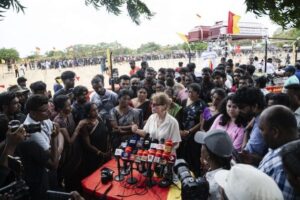
Agnes Callamard, Secretary General of Amnesty International, addresses the media and the community at the site of the Mullivaikal massacre. She says justice is overdue for the families of those killed and disappeared during the Sri Lankan civil war. Credit: Johan Mikaelsson/IPS

Agnes Callamard, Secretary General of Amnesty International, addresses the media and the community at the site of the Mullivaikal massacre. She says justice is overdue for the families of those killed and disappeared during the Sri Lankan civil war. Credit: Johan Mikaelsson/IPS

MULLIVAIKAL, Sri Lanka , Sep 16 2024 (IPS) – Thousands of Tamils are heading to Mullivaikal on the northeast coast of Sri Lanka, many of whom were here 15 years ago and still live in the region. They are there, May 18, to commemorate the massacre of civilians in a ‘no fire zone’ during the final stages of the civil war.


This was the last day of the bloody civil war, which raged mainly in the northern and eastern parts of the island since 1983. The Liberation Tigers of Tamil Eelam (LTTE) guerrillas had finally surrendered to the Sri Lankan government. The aftermath continues to rock the island.

The ethnic conflict between the island nation’s majority Sinhalese population and the minority Tamils (who were in the majority in the north and east) had escalated after 1948 when the country gained independence from Britain, the last in the line of colonial powers.

The whole island suffered during the war. Sri Lankan Tamils have been through a lot, especially those who lived in the war-torn north. Everyone who came to the beach on this day of remembrance wants to honor the memory of loved ones who fell victim and the blood that was spilled in the sand.

“Everyone here has a family member or relative who didn’t make it,” explains the teacher Shanmuganathan, who has stopped with his motorcycle by the road where porridge made from rice, the only thing that was available to eat in the war zone, is being offered before Memorial Day.

The war has left its mark. He shows scars from shrapnel and tells us that he lost his wife in the final stages of the war. He has continued to work and is involved in a teacher’s union.

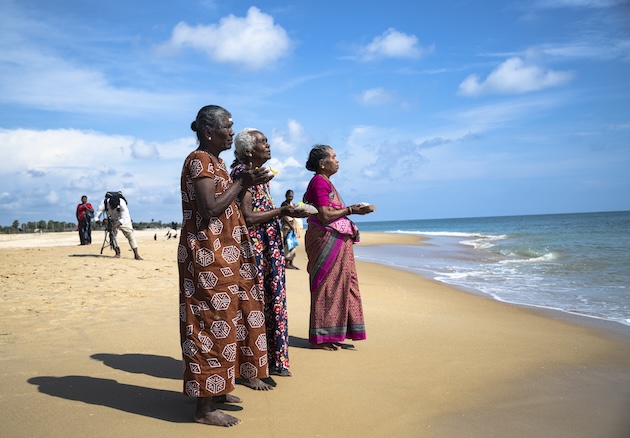
Women pray during the commemoration of the Mullivaikal massacre. Thousands died in no fire zones in the final days of the war. Credit: Johan Mikaelsson/IPS

Women pray during the commemoration of the Mullivaikal massacre. Thousands died in no fire zones in the final days of the war. Credit: Johan Mikaelsson/IPS

Internationally, the calls to investigate targeted bombings of civilians, mass executions of surrendering Tiger soldiers and leaders, widespread sexual violence and other torture are no longer as loud. Many of those who protested and demanded to know what happened to missing relatives have died without receiving any response from the government.

When war crimes are discussed, the government side highlights that the terrorist-branded LTTE carried out acts of terror against civilian targets in the south and that Tamils in the north were used as human shields.

The peace process that began in 2002 with a ceasefire and peace talks led by the Norwegian government and facilitator Erik Solheim stalled and the ceasefire agreement was torn apart by the parties. Sri Lankan government forces in 2008 launched a final offensive to capture the parts then still controlled by the LTTE, which had been fighting for a separate Tamil state in the northern and eastern parts of the island.

In early 2009, the Tigers abandoned their main stronghold, the town of Kilinochchi. The areas under guerrilla control were shrinking ever faster. Tiger leader Velupillai Prabhakaran did not listen to calls to lay down arms and surrender. Eventually, a narrow coastal strip remained, with several hundred thousand civilians and the remnants of the guerrilla movement pressed together and under fire from land, sea, and air.

For Remembrance Day, a school in the town of Puthukkudiyiruppu is organizing a poetry competition. One of the participants, Kamsaini, now 24, wants to share her experiences with the schoolchildren, who were born after the war.

“The generations after me know nothing about the pain I felt these days. We had neither food nor water and I lost several family members; some died, and my sister is missing,” explains Kamsaini.

In place under the hot sun in Mullivaikal is Agnes Callamard, Secretary General of Amnesty International. During her stay on the island, she has met President Ranil Wickremesinghe, who opened up for the visit, which was not a given. When the Rajapaksa brothers ruled the country (2005-2015, 2019-2022), the government allowed the military and police to prevent Tamils from observing commemorations linked to the war.

One reason why Callamard and Amnesty International want to be there is that she does not want Sri Lanka to “fall off the agenda,” which could happen if the main actor within the United Nations, the Office of the High Commissioner for Human Rights in Geneva, does not succeed with the latest in a series of resolutions on Sri Lanka voted through in the UN Human Rights Council.

She sees the issue of the war in Sri Lanka as a crucial test for the international community. A 30-year-long civil war must not be swept under the carpet, she believes

“Every time we fail to create justice, we all, including the international community, get a wound. We’re here because we don’t want that to happen. We feel the determination of many people in Sri Lanka and civil society, both Tamils and Sinhalese and a range of actors who are committed to seeing justice delivered,” says Callamard.

In this way, it represents a defining moment for the United Nations. Callamard is critical of the UN Security Council, which “has not taken a single step for Sri Lanka.”

Amnesty International advocates, as do a number of states, that the latest resolution must be implemented.

“Just a lot of ‘blah, blah, blah,’ something for the eyes, investments in so-called institutions and nothing, nothing, nothing. Fifteen years. Come on!” she urges.

Even on the island, there are far too many who have done nothing at all.

“The point is that the government in power must step forward, the political parties must step forward, the parliament must step forward, the religious leaders must step forward, cultural leaders must step forward. It should be an issue that everyone rallies around. The problem is that governments are being replaced. So it’s not good enough. Everyone must take their responsibility,” says Callamard.

In Mullivaikal, many people share memories. James Confucius, a Catholic priest, tells how he and a group of people barely made it out of the war zone alive.

“We waved a white flag, and we went in the direction of the soldiers to surrender, but then they shot at us, so we had to turn back,” he says.

They waited in a sand bunker and finally got another opportunity. The soldiers they encountered believed that an injured woman in the group was a Tiger soldier, because she had short hair. The priest pleaded and said she needed hospital treatment, but the soldiers said the woman had to stay.

The group had to move on and when they had gone only a short distance, they heard a shot.

“I turned around and saw that the woman had been shot,” says Confucius.

In total, roughly 300,000 people got out of the war zone. An estimate that has often been used is a death toll of 40,000 civilians in the final stages of the war alone. Tamils state higher numbers, while Sri Lankan authorities write low death tolls, including in the 2010 report by the Lessons Learned and Reconciliation Commission (LLRC), appointed by the government.

The then sitting president, Mahinda Rajapaksa, had previously said that “not a single Tamil civilian has been killed by the military.”

Experts have dismissed the statement as absurd. While the majority of Tamil politicians still refer to “genocide,” the issue of death tolls rarely receives the same attention as it did in the years after the civil war.

The UN Human Rights Council has voted through a number of non-binding resolutions that Sri Lanka is expected to follow, but no real action on the problem has been taken in Sri Lanka. There is also nothing to suggest that this will happen.

None of the main candidates in the presidential election on September 21 have highlighted truth-seeking, the rule of international law, regional power-sharing and reconciliation—what the UN is asking for. The economy is in focus, the nation and the citizens, and all candidates want to stop corruption.

The agreement that the government reached with the International Monetary Fund (IMF), is also being discussed. It was negotiated by President Ranil Wickremesinghe, who is not elected by the people but took over by a vote in Parliament after Gotabaya Rajapaksa resigned and fled the country as a result of the April-July 2022 Aragalya (meaning struggle in Sinhalese) protest movement. Before that, Rajapaksa had appointed Wickremesinghe as Prime Minister.

At the Ministry of Defense (MOD) on the outskirts of the capital Colombo, soldiers and officers move inside the compound, which is surrounded by high walls. For some, the Vesak holiday awaits when the full moon approaches. The armed forces also marked the end of the war and Victory Day, but more quietly than in previous years.

Colonel Nalin Herath is the MOD media spokesperson. Right now, work is being done to adapt the forces to actual needs. Herath says they will shrink to 100,000 by 2030. Many who were previously employed in the military have faced unemployment as civilians.

An urgent issue is trying to bring home hundreds of ex-soldiers who were lured by middlemen to go to Russia to work for Russia’s army. Most are said to have received promises not to take part in battle, which hasn’t been the case.

“We should not have mercenaries in war; it violates international law,” says Nalin Herath.

Some have also fought and died on Ukraine’s side. Herath emphasizes that Sri Lanka is neutral, adheres to non-alignment, and does not want to comment on whether it is worse to fight for Russia, which is waging an illegal war of invasion and committing war crimes.

Close to 20 men from Sri Lanka, who were on the Russian side of the front in June, were confirmed dead. An unknown number of men have surrendered to Ukrainian forces. Hundreds of former soldiers have not been heard from for a long time, which emerged after the Ministry of Defense in April-May opened a telephone line where relatives can call.

Sri Lankans who have become Russian citizens can effectively be stuck in a death trap, as the Sri Lankan government became aware after a delegation traveled to Moscow in June to discuss the matter with the Russian counterpart. It was explained that the Sri Lankans who became Russian citizens are now under Russian law.

As a spokesperson for a military organization, Herath talks about a general goal.

“War means destruction. Both parties suffer. This should not be an era of war. As a soldier, I want to see a peaceful world. The smartest thing would be to avoid the wars,” he states.

He highlights international humanitarian law, which he teaches, both in Sri Lanka and internationally. He mentions the good the Sri Lankan military has done. After the war, minefields were cleared, land was returned and soldiers donated blood to the hospitals.

But he cannot comment on Amnesty International’s statement. Political leaders are responsible for handling this. He nevertheless states:

“Violations occur in all wars. Here we are dealing with isolated cases,” he adds.

Consensus still lingers.

IPS UN Bureau Report

  Source

TOGO: ‘The International Community Must Send a Clear Message That Power Grabs Won’t Be Tolerated’

Africa, Civil Society, Crime & Justice, Democracy, Featured, Headlines, Press Freedom, TerraViva United Nations

Sep 11 2024 (IPS) –  
CIVICUS discusses the crackdown on civil society in Togo with a human rights defender who asked to stay anonymous for security reasons.


Political tensions in Togo have increased following the recent adoption of constitutional changes. Under the new parliamentary system, the president will be elected by parliament rather than popular vote, and a powerful new post of President of the Council of Ministers will be created. Suspicions are that the changes will enable President Faure Gnassingbé to stay in power. Gnassingbé has ruled Togo since 2005, when he took over from his father, who’d seized power in a 1967 coup. The government has banned protests against the changes, disrupted civil society meetings, arbitrarily arrested and detained protesters and suspended and deported journalists for covering the unrest.

What are the main constitutional changes and why have the political opposition and civil society objected to them?

On 25 March, Togo’s National Assembly adopted a new constitution that dramatically changes the country’s governance from a presidential to a parliamentary system. The changes were not put to a referendum, but were decided through opaque legislative procedures. The main changes are the abolition of direct presidential elections and the creation of the powerful role of President of the Council of Ministers. Similar to a prime minister, this president is elected by parliament for a six-year term that can be extended indefinitely if he retains majority support. This removes the two-term limit imposed by the 2019 constitution, which was introduced after massive public protests.

The new constitution sparked widespread controversy and came amid an already tense political climate, with parliamentary and regional elections originally scheduled for 13 April repeatedly postponed while lawmakers debated the constitutional changes. Political parties, civil society organisations (CSOs), the Catholic Church and part of the population see it as an attempt by the ruling family to cling to power, as the amendments would extend the 19-year presidency of Faure Gnassingbé and the 57-year dynastic rule of the Gnassingbé family.

We strongly condemn the adoption of the new constitution and the lack of transparency in the process. This is a constitutional coup that restricts citizens’ political rights, exacerbates political instability and undermines democratic governance.

What reforms are needed to ensure genuine multi-party democracy in Togo?

First, it’s crucial to restore direct presidential elections based on universal suffrage, because the electoral system should truly reflect the will of the people. But a president shouldn’t be allowed to rule indefinitely, so it’s also crucial to reintroduce term limits for the president and other key officials to prevent the concentration of power and promote accountability.

In addition, an independent electoral commission should be established to restore public confidence in a system that’s now perceived to be biased in favour of the ruling party. This commission should oversee all electoral processes and ensure they are free, fair and transparent.

It is also key to ensure equal access to campaign resources for all political parties. Fair media coverage and campaign financing would contribute to a more competitive and representative electoral process. It is equally important to strengthen legal safeguards. All parties should be allowed to operate freely without interference or fear of persecution and violence from state authorities.

We need to increase civic participation. Reforms should facilitate platforms for CSOs to engage in political debate. We must support grassroots movements with resources and training to help them mobilise people and educate them about democratic principles and their rights.

Togolese civil society is already pushing for these changes. Groups such as ‘Touche pas à ma constitution’ (‘Don’t touch my constitution’) are organising protests, raising awareness and holding community meetings to educate people and challenge the new constitution. They have also filed complaints with regional bodies such as the Economic Community of West African States (ECOWAS), calling for the annulment of the new constitution and the restoration of democratic norms. CSOs and democratic political parties are presenting a united front to demand democratic reforms.

How has the government responded to the protests?

The government has responded to the protests with a heavy-handed approach aimed at silencing dissent. Many opposition leaders and activists have been arrested. On 26 March, law enforcement and security forces banned two press conferences organised by political parties and CSOs on the grounds that the organisers didn’t have proper permits. This was a clear attempt by the government to stifle opposition voices. On 3 April, nine leaders of the political opposition party Dynamique Mgr Kpodzro were also arrested for ‘disturbing public order’. They were released six days later.

The use of violence, a hallmark of the Gnassingbé regime, has created a climate of fear. Anyone who takes part in opposition activities is framed as a criminal who threatens public order and is prosecuted. This has a chilling effect on civil society activism. Many people are afraid of being arrested or violently attacked if they engage in political discourse or take part in protests. This criminalisation undermines our ability to mobilise effectively and advocate for democratic reform.

With our freedoms of expression and assembly severely curtailed, we’ve found it increasingly difficult to organise events, hold press conferences or communicate our messages without interference from security forces. This has increasingly isolated us from the wider public. The crackdown on dissent has undermined public trust in both the government and CSOs, as people become disillusioned with the political process and the weak foundations of democracy.

How can the international community help address the suppression of civic freedoms in Togo?

The international community can play a key role by applying diplomatic pressure and supporting democratic reforms. Public condemnations and resolutions by international bodies such as the United Nations and the African Union can help highlight these issues and push for necessary changes. International bodies and representatives should engage directly with Togolese officials to address concerns.

They should also support local civil society by providing funding, resources and training. This support is essential to strengthen CSOs’ capacity to advocate for democracy and human rights, and to mobilise and empower people.

Independent monitoring and reporting mechanisms are essential to assess the political situation, ensure transparency in the upcoming elections and document human rights violations. If violations continue, the international community should consider sanctioning key officials and making development aid and assistance conditional on respect for democratic principles and human rights. This can serve as an incentive for the government to undertake meaningful reforms.

ECOWAS is also in a position to mediate between the government, the opposition and local civil society to promote a more inclusive and democratic environment. At a time when democracy is in retreat in West Africa, with four countries having suffered military coups since 2020 and 15 leaders having circumvented term limits, ECOWAS must take a firm stand against unconstitutional changes such as those recently seen in Togo and send a clear message that power grabs won’t be tolerated.

Civic space in Togo is rated ‘repressed’ by the CIVICUS Monitor.

  Source

INDIA: ‘Civil Society Organisations Are at the Forefront of the Fight Against Gender-based Violence’

Asia-Pacific, Civil Society, Crime & Justice, Featured, Gender Violence, Headlines, Health, TerraViva United Nations, Women’s Health

Sep 5 2024 (IPS) –  
CIVICUS discusses the recent wave of protests against gender-based violence (GBV) in India with Dr Kavitha Ravi, a member of the Indian Medical Association (IMA).


Protests erupted across India after a 31-year-old female medical trainee was raped and murdered in a Kolkata hospital on 9 August. The IMA called a strike, with protests held in major cities including Kolkata and Mumbai. While the official strike has ended, many doctors, particularly junior doctors, remain on strike and protests continue to demand justice, accountability and safer working conditions for women.

Kavitha Ravi

What triggered the recent protests against GBV in India?

Protests erupted after the tragic rape and murder of a young female doctor at the R G Kar Medical College in Kolkata on 9 August. This horrific incident shocked the nation and sparked widespread outrage. In response, a coalition of doctors, medical associations such as the IMA and various resident and faculty associations joined together in a nationwide strike to demand justice for the victim and better safety measures for health workers, particularly women who face significant risks in the workplace.

Protesters are calling for major reforms, including the adoption of a Hospital Protection Act, which would designate hospitals as safe zones and introduce measures to create a safer environment for health workers. Their demands are part of a larger movement to comprehensively address GBV, prevent similar tragedies in the future and create a safer and more supportive working environment for everyone in the health sector.

What steps have been taken so far to ensure justice and the safety of female health workers?

The judicial system has acted swiftly by transferring the case to a higher authority to ensure a thorough investigation after concerns were raised about the police’s initial inquiry, which was not accepted by the students or the victim’s family. They were sceptical, believing the police might be favouring the college authorities and supporting the accused.

This decision aims to ensure a detailed investigation so justice can be done. The Supreme Court of India is also overseeing the case to monitor its progress, address any issues that may arise and ensure all necessary steps are taken to uphold justice.

In parallel, several initiatives are underway to improve the safety of female health workers. The Ministry of Health has proposed establishing a committee to review and improve safety protocols in health facilities. There are also plans to increase security in hospitals and establish a new national taskforce dedicated to improving safety through better infrastructure, advanced technology and additional security measures. However, despite these efforts, more needs to be done to combat GBV and ensure that these measures effectively protect female health workers.

How have the authorities responded to the protests?

The authorities have taken a mixed approach to the nationwide strike, combining concessions with new measures to address immediate concerns. The Health Ministry has drawn up a detailed plan to increase security in central government hospitals. This includes installing high-resolution CCTV cameras, monitoring access points with identification badges, deploying trained security personnel for constant patrolling and securing duty rooms for female staff. Hospitals are also encouraged to develop and regularly update emergency response plans and conduct mock drills.

In response to these measures, the IMA suspended its strike. However, other doctors’ associations have continued to protest for more substantial reforms. Many people remain dissatisfied, particularly after recent incidents of police violence. While the Supreme Court’s intervention may have temporarily eased the tensions, protesters remain concerned about the new measures’ effectiveness and full implementation.

Why is GBV so prevalent in India, and what’s being done about it?

Deep-rooted cultural, social, economic and legal factors account for the high prevalence of GBV in India. This is a patriarchal country where traditional gender roles and the subjugation of women are deeply entrenched. Women tend to be economically dependent on men, which traps them in abusive relationships that make it difficult for them to seek help or escape. Intergenerational cycles of violence perpetuate the problem, as children who witness or experience abuse may come to see such behaviour as normal.

Low literacy rates, particularly in rural areas, further limit women’s understanding of their rights and the available support. When they do seek justice, the system often fails to protect the victims or hold perpetrators accountable. Systemic failures in law enforcement and justice help perpetuate GBV.

Many initiatives and campaigns have helped highlight and address this issue. But it has not been easy. A lack of consistent political will and weak implementation of policies have hindered substantial change. Feminist and social justice movements often face resistance from conservative parts of society, making it difficult to change these deeply entrenched cultural norms.

To combat GBV effectively, we need a comprehensive approach that includes better education, legal reform, economic empowerment and cultural change. Civil society organisations are at the forefront of this fight, actively advocating for stronger laws, better enforcement and increased public awareness. Continued and robust efforts are essential to address this widespread problem and ensure meaningful change.

Civic space in India is rated ‘repressed’ by the CIVICUS Monitor.

Get in touch with the Indian Medical Association through its website or Facebook page, and follow @IMAIndiaOrg on Twitter.

  Source

VIETNAM: ‘Human Rights Conditions Will Likely Worsen as the Country Descends into a Police State’

Asia-Pacific, Civil Society, Crime & Justice, Environment, Featured, Global Geopolitics, Headlines, Human Rights, Labour, TerraViva United Nations

Aug 29 2024 (IPS) –  
CIVICUS discusses recent leadership changes in Vietnam with David Tran, coordinator of the Alliance for Vietnam’s Democracy, a civil society platform that promotes democracy in Vietnam and the region through international cooperation and the strengthening of local civil society.


On 3 August, President Tô Lâm was confirmed as General Secretary of the Communist Party, Vietnam’s top position, following the death of long-serving General Secretary Nguyễn Phú Trọng. Lâm, who has been president since May, is known for leading an aggressive anti-corruption campaign that has seen many officials jailed and others forced to resign. He will continue as president while assuming the duties of general secretary, potentially enabling him to consolidate power ahead of the 2026 party congress, which will choose Vietnam’s top leaders for the next five years. Civil society fears the regime could become even more autocratic and repressive if Lâm retains both positions.

David Tran

What’s Vietnam’s political system like, and what’s the likely impact of the recent leadership change?

Vietnam is an authoritarian one-party state led by the Vietnamese Communist Party (VCP). There are four key positions of authority: the president, who is the ceremonial head of state, the prime minister, who heads the government, the chair of the National Assembly, the unicameral legislature, and the most powerful, the general secretary of the VCP.

Although the president is elected by the National Assembly, this body is overwhelmingly made up of VCP members, who usually approve all incumbents unopposed. On 3 August, following the death of the last VCP general secretary, Nguyễn Phú Trọng, Tô Lâm was confirmed as the new VCP leader.

This appointment is particularly significant because it puts a lot of power in the hands of one person. His dual role gives Tô Lâm considerable influence over the state and party, as well as greater control over the public security apparatus. While he appears set to continue the policies of his predecessor, there are several cracks beneath the surface. His power is likely to be challenged by several VCP members who’ve been forced into retirement by his ‘anticorruption’ campaign, effectively an initiative to eliminate competing factions. We can expect this infighting to continue and intensify.

What does Tô Lâm’s rise mean from a human rights perspective?

Tô Lâm has had a long career, including stints as minister of public security and a member of the politburo. The key role he played in the previous general secretary’s ‘anticorruption’ campaign saw him elected president in May, after his investigations into several high-profile politicians and businesspeople led to the resignation of his predecessor and other top officials.

The accumulation of power in the hands of the architect of a purge is unlikely to lead to improvements in civic space or human rights. Tô Lâm has been closely associated with the worsening human rights situation, as the Formosa and the Trinh Xuan Thanh cases clearly illustrate.

In April 2016, the Formosa company caused an environmental disaster when it discharged heavily polluted waste off Vietnam’s central coast. This caused widespread damage in at least four provinces and sparked protests. Instead of prosecuting Formosa, Tô Lâm, then minister of public security and in charge of the environmental police, suppressed peaceful protests and had 220 people sentenced to a total of 133 years in prison, not including probation after release. He said he was protecting Formosa from what he called ‘hostile forces’ – essentially anyone who criticised the company.

The second case involves Trinh Xuan Thanh, a former vice chair of Hau Giang Province, who fled to Germany in 2016 after being accused of ‘deliberately violating state regulations, causing serious consequences’. He was abducted on German soil by the Vietnamese secret service, which is under the Ministry of Public Security, and returned to Vietnam. Tô Lâm was directly involved in this operation, which Germany condemned as a ‘scandalous violation’ of its sovereignty and a ‘gross breach of international law’.

Given Tô Lâm’s track record, we expect human rights conditions to worsen under his leadership as Vietnam descends into a police state where human rights and the rule of law are ignored. The already limited space for civil society in Vietnam has shrunk under his watch, and we expect this trend to continue.

What are the challenges facing civil society in Vietnam?

Tô Lâm’s rise to power has been marked by his consistent efforts to stifle dissent. Under his leadership, the authorities, particularly the Ministry of Public Security, have increasingly tightened their grip on civil society organisations (CSOs). They have implemented new decrees that overregulate the registration and management of foreign CSOs and applied stricter rules to domestic organisations.

They have also weaponised tax laws and the criminal code to target civil society leaders, charging them with offences such as tax evasion and ‘abuse of democratic freedoms’. This has led to the imprisonment of prominent activists, including environmental and labour rights advocates.

Independent CSOs are subject to strict surveillance, with some being dismantled or forced to reorganise to conform to the authorities. This was exacerbated by the COVID-19 pandemic, which the authorities used as a pretext to impose further restrictions on civil society under the guise of public health measures.

Despite this repressive environment, some social service CSOs and philanthropic groups continue to operate and strive to make a positive impact. But their independence is severely restricted as they and their activists are constantly targeted.

What international support does Vietnam’s civil society need?

Human rights organisations and international bodies have raised concerns about the shrinking space for civil society in Vietnam. They have called for respect for freedoms of assembly, association and expression and urged the authorities to ease restrictions. While these statements are important, they must be accompanied by trade sanctions and other enforcement mechanisms. Words alone are not enough.

Unfortunately, human rights in Vietnam are also falling victim to geopolitics. As tensions with China escalate, the USA is increasingly seeing Vietnam as a counterweight to China. In this context, human rights and civic space are often sidelined, if not ignored altogether. We believe that a democratic Vietnam would be the best partner and ally in promoting a peaceful, open and stable Indo-Pacific region.

Even if Tô Lâm has a long way to go before he reaches a position comparable to Xi Jinping’s in China, consolidation of power is a general trend we’re seeing among the region’s communist states. Oddly enough, given how these two leaders came to power, it could be a sign that pressure for human rights and civic space, both domestically and internationally, is working. If the authorities feel compelled to respond by consolidating power and positioning figures like Tô Lâm to counter these movements, there is still hope we are on the right track.

Civic space in Vietnam is rated ‘closed’ by the CIVICUS Monitor.

Get in touch with the Alliance for Vietnam’s Democracy through its webpage or Facebook page.

  Source

Bangladesh Students, Community Moves to Protect Minorities Following Fall of Hasina Government

Active Citizens, Asia-Pacific, Civil Society, Crime & Justice, Featured, Freedom of Expression, Headlines, Human Rights, Humanitarian Emergencies, Religion, TerraViva United Nations

Active Citizens

Students and youth groups in Bangladesh stand guard outside temples and churches to protect those from vandalism during unrest after the Awami League government ouster. Credit: Rafiqul Islam/IPS

Students and youth groups in Bangladesh stand guard outside temples and churches to protect those from vandalism during unrest after the Awami League government ouster. Credit: Rafiqul Islam/IPS

DHAKA, Aug 28 2024 (IPS) – Immediately after the fall of the Sheikh Hasina government on August 5, 2024, following weeks of deadly demonstrations staged by students, people carried out attacks on the houses and temples of the Hindu community in Dacope of Khulna, about 225 kilometres from Dhaka. They particularly attacked and vandalized the houses of minorities believed to be involved in the politics of the ousted Awami League government.


At least 11 Hindu houses in Dacope were attacked and vandalized, with attackers claiming these were acts of political revenge.

But, in Dacope, local Muslim and Hindu students and the community soon joined together to guard the houses and temples of the minorities so that they would no longer be victimized due to the political changeover.

Beginning in mid-June 2024, peaceful student protests in Bangladesh turned violent, resulting in hundreds of people killed, including at least 32 children, and thousands injured. The protests were the result of the reinstatement of a quota system for the distribution of civil service positions.

The government resigned in response to the protests, and a civilian interim government took its place.

In other areas too, attacks were carried out on the offices of the Awami League (AL) and residences and establishments of the AL leaders and temples, churches and houses of minority communities across Bangladesh during unrest.

Nur Nabin Robin, a resident of Chattogram City, said many people from minority communities, including Hindus, Buddhist and ethnic people, live in the port city in harmony.

But when the Sheikh Hasina government fell on August 5, people of the minority communities began to feel insecure in Chattogram since attacks on minorities were reportedly being carried out in different parts of the country, he said.

“So, we patrolled in the city for two to three nights in groups and guarded the temples and houses of the minorities so that none could attack them. We also asked them to call us via mobile phone if they can sense any clue of attack on them,” Robin told IPS.

Their concerns were exacerbated because most police stations across the country ceased operating after the fall of the previous government.

General students and even madrasa students came forward to protect the houses and places of worship as the leaders of the Anti-Discrimination Student Movement asked supporters to guard temples and churches, responding to concerns voiced over reports of attacks on minority groups.

Jasim Uddin, a resident of Kuliarchar in Kishoreganj, told IPS that after the fall of Sheikh Hasina’s government, mobs torched and vandalized houses of many AL leaders in his locality, but members of the Hindu community remained safe during the political turmoil as local people voluntarily safeguarded their temples and properties.

While national monuments and government buildings in the capital, Dhaka, were looted, there were no reports of attacks on temples or churches there during the recent political turmoil.

In Dhaka, Muslim students were found guarding the Dhakeshwari National Temple, a Hindu place of worship. A Muslim was spotted offering prayers in front of Dhakeswari temple so nobody would attack the temple.

Professor Muhammad Yunus, Chief Adviser to the interim government of Bangladesh, visited Dhakeshwari National Temple on August 13, 2024, to express his solidarity with the Hindu community. During his visit, he called upon the minorities to keep patience and remain united.

Yunus condemned the attacks on minority communities in the country as “heinous.”

Religious harmony is the long tradition of Banglalees, while people from different religions—Islam, Hindu, Buddhist, Christian—have been living together from generation to generation.

“Over 90 percent people in Bangladesh do not believe in communalism. Attacks were carried out on minorities due to political reason or gaining personal interest. Those who carried out looting and vandalism were not involved in the student movement,” adviser to interim government Syeda Rizwana Hasan told a function recently in Dhaka.

She said madrasa students had safeguarded temples in many places of Bangladesh, which showed an example of the country’s religious harmony.

Barrister Sara Hossain, the honorary executive director of the Bangladesh Legal Aid and Services Trust (BLAST), said once miscreants carry out any attack on minorities, all should protect them.

CONCERN REMAINS

Following the fall of the Sheikh Hasina government, there was chaos across the country, with law enforcement officials retreating in many places for fear of retaliation.

According to a report of the Office of the High Commissioner for Human Rights (OHCHR) of the United Nations released on August 16, 2024, attacks were conducted against minorities, including Hindus, especially in the days immediately after the change of government.

The OHCHR report recognized the role of the student organizations and other ordinary people who were forming groups to protect the minorities.

It details some of the attacks against minorities, including Hindus, especially in the days immediately after the change of government. On August 5 and 6, Hindu houses and properties were reportedly attacked, vandalized and looted in 27 districts. A number of places of worship were also damaged, including an ISKCON temple in Meherpur, Khulna division, which was vandalized and set on fire.

On August 5 and 6, Hindu houses and properties were reportedly attacked, vandalized and looted in 27 districts, while many temples were also damaged, including an ISKCON temple in Meherpur, Khulna division, which was vandalized and set on fire.

The Bangladesh Hindu Buddhist Christian Unity Council (BHBCUC) claimed that around 200-300 Hindu homes and businesses were vandalized since August 5 last while 15-20 Hindu temples were damaged.

IPS UN Bureau Report

  Source