Mandela Day Reminder to Stand Witness to Human Rights Defenders

Nelson Mandela, then Deputy President of the African National Congress of South Africa, raises his fist in the air while addressing the Special Committee Against Apartheid in the General Assembly Hall, June 22, 1990. Global alliance CIVICUS commemorated Mandela Day with a reminder that many rights defenders are jailed and intimidated. Credit: UN Photo/Pernaca Sudhakaran

Nelson Mandela, then Deputy President of the African National Congress of South Africa, raises his fist in the air while addressing the Special Committee Against Apartheid in the General Assembly Hall, June 22, 1990. Global alliance CIVICUS commemorated Mandela Day with a reminder that many rights defenders are jailed and intimidated. Credit: UN Photo/Pernaca Sudhakaran

By Joyce Chimbi
NAIROBI , Jul 18 2023 (IPS)

As human rights increasingly deteriorate, rights defenders are being violently suppressed. Abducted, detained, tortured, and humiliated, many now live one day at a time. They have been told, in no uncertain times, that anything could happen. They are now asking the global community to stand as a witness.


“Like Nelson Mandela was, hundreds of human rights defenders around the world are in prison for their human rights activities. Just like him, they are unjustly treated, fictitious charges levelled against them and handed the most serious sentences that are often used against criminals. One of our priorities is to work with human rights defenders to advocate for their release,” says David Kode from CIVICUS, a global alliance of civil society with a presence in 188 countries around the world.

Inspired by the life story of the late iconic South African President Nelson Mandela, the Stand As My Witness Campaign was launched on Nelson Mandela Day in 2020 by CIVICUS, its members and partners.

In commemoration of the third anniversary of the Stand As My Witness campaign, CIVICUS and its partners, including human rights defenders, hosted a public event titled, ‘Celebrating Human Rights Defenders through Collaborative Advocacy Efforts’, to celebrate the brave contributions of human rights defenders and raise awareness about those who are still in detention.
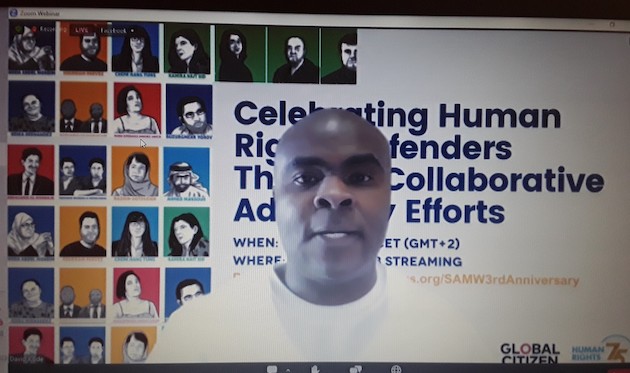
David Kobe said that CIVICUS had profiled at least 25 human rights defenders since the Stand As My Witness Campaign started three years ago. Credit: Joyce Chimbi/IPS

David Kobe said that CIVICUS had profiled at least 25 human rights defenders since the Stand As My Witness Campaign started three years ago. Credit: Joyce Chimbi/IPS

“Over the last three years, we have profiled more than 25 human rights defenders collectively because some human rights defenders are profiled as individuals and others, such as those in Burundi, are profiled as a group because they were arrested as a group. More than 18 human rights defenders have been released over the last three years. As we celebrate, we must recognize that the journey has just started, it is quite long, and the battle is far from over,” Kode said.

The event brought together families and colleagues of detained human rights defenders, previously detained human rights defenders, representatives from the Office of the High Commissioner for Human Rights (OHCHR) and other human rights mechanisms and civil society organisations.

Lysa John, the Secretary General of CIVICUS, spoke about how special Mandela Day is, for it is the one day of the year when the spirit of solidarity is celebrated in his memory. It is also a day to look back at what has been achieved and how much more could be achieved in solidarity.

She further addressed issues of civic space restrictions, closure of civic space and how these restrictions impact societies and individuals. John stressed that the event was held in the context of the 25th anniversary of the adoption of the UN Declaration on Human Rights Defenders and the 75th anniversary of the UNDHR or Human Rights 75 to promote their objectives.

“One-third of the population of the world live in contexts which are closed. Where attacks on people who speak out or exercise their civic freedoms are attacked or arrested without any accountability. More and more people in the world, in fact, the largest section of the world, estimated at 44 percent live in countries where civic space and civic freedoms are restricted. In this regard, civic society is more than ever reinventing itself, and there is increased support for them,” she said.

Birgit Kainz from OHCHR spoke about the importance of bringing to life the UN Declaration on Human Rights Defenders for its adoption was a consensus that human dignity is at the core of everything.

She spoke about the need to be deliberate in the defence of civic space as it enables people to shape their future and that of their children. Kainz said that protection and security are two sides of the same coin and urged participants to network and connect to improve civic space and to also play a complementary role. Further emphasizing the need to maintain data, especially about who is in detention and where in line with SDGs.
Maximilienne Ngo Mbe from Cameroon is one of the most prolific human rights defenders in Africa. She spoke about the need to create safe spaces for women rights defenders. Photo Joyce Chimbi.jpg

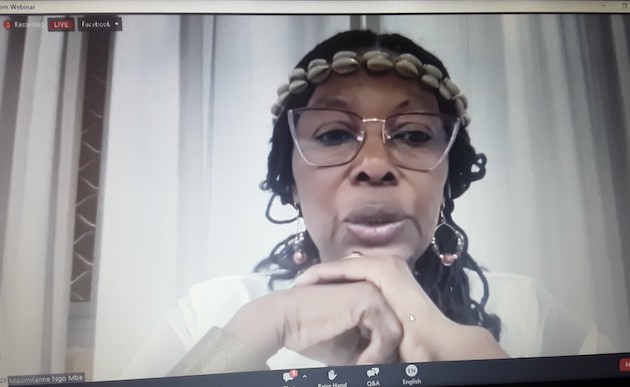
Maximilienne Ngo Mbe from Cameroon is one of the most prolific human rights defenders in Africa. She spoke about the need to create safe spaces for women rights defenders. Credit: Joyce Chimbi/IPS

Maximilienne Ngo Mbe spoke about the life and times of human rights defenders today. She is one of the most prolific human rights defenders in Africa and continues to receive a lot of restrictions for her fearless human rights activities that often have her fleeing from Cameroon to other countries for safety.

“We need a network for women rights defenders because of the special challenges they face as girls, wives, mothers and vulnerable people. Women are engaging less and less because of these challenges and the multiple roles they play in society,” she said.

The event was an opportunity for released human rights defenders such as Maria Esperanza Sanchez from Nicaragua to speak about resilience in the face of brutal regimes. She spoke about how armed men often came to her house to threaten and intimidate her. Of her arrest, humiliation and torture in 2020, being sentenced to 10 years in prison and her eventual release.

It was also an opportunity to speak on behalf of those who cannot. They include Khurram Parvez, a prolific human rights defender in India. At the time of his arrest for human rights activities, he was leading two critical organizations at the national and regional levels.

Parvez is being charged as a terrorist. His story aligns with that of Kenia Hernandez, a 32-year-old indigenous Amuzga woman, mother of two, lawyer and an advocate for human rights who is currently detained in a maximum-security prison in Mexico and has been sentenced to 21 years. Her story is illustrative of the high-risk female rights defenders and people from marginalized groups face.

Ruben Hasbun from Global Citizen spoke about how to effectively advocate for the release of human rights defenders, sharing lessons from Stand As My Witness campaigners.  The event further opened up space to address the role of the private sector.

Christopher Davis from Body Shop, a brand that continues to be at the forefront of supporting human rights and rights defenders, fighting social and environmental injustice.

At the end of the session, participants were invited to sign a petition to have the United Arab Emirates immediately and unconditionally release all those detained solely for the exercise of their human rights and end all abuse and harassment of detained critics, human rights defenders, political opposition members, and their families.

IPS UN Bureau Report


!function(d,s,id){var js,fjs=d.getElementsByTagName(s)[0],p=/^http:/.test(d.location)?’http’:’https’;if(!d.getElementById(id)){js=d.createElement(s);js.id=id;js.src=p+’://platform.twitter.com/widgets.js’;fjs.parentNode.insertBefore(js,fjs);}}(document, ‘script’, ‘twitter-wjs’);  

IPS – UN Bureau, IPS UN Bureau Report, CIVICUS

Source

Guatemala Clings to Democratic Promise

Credit: Silvia Rodríguez/AFP via Getty Images

By Inés M. Pousadela
MONTEVIDEO, Uruguay, Jul 5 2023 (IPS)

When Guatemalans went to the polls on 25 June, distrust and disillusionment were rife. First place in the presidential contest was claimed by none of the candidates: it went to invalid votes, at 17 per cent. Many didn’t bother, resulting in an abstention rate over 40 per cent.


But an unexpected development brought some hope: Bernardo Arévalo, leader of the progressive Movimiento Semilla, made it to the runoff.

Arévalo’s promise to fight against systemic corruption and bring back the numerous justice operators – people such as judges, prosecutors and public defenders – currently in exile to help clean up institutions is causing great concern for those who profit from the current state of affairs. The fact that Arévalo could become Guatemala’s next president has made the election results an instant object of contention.

Corruption and democratic decline

Guatemalan electoral processes aren’t pristine, but that isn’t where the most serious problems lie. Civic freedoms are steadily deteriorating and state institutions have been weakened by predatory elites and coopted by organised crime. Transparency International finds evidence of strong influence by organised criminals over politics and politicians, with some criminals themselves in office.

No wonder Guatemalans have a low level of confidence in state institutions. In the latest Latinobarómetro report, the church was by far the most trusted institution, winning the trust of 71 per cent of people, followed at some distance by the armed forces and police. But only nine per cent of people trust political parties, and trust is also very low in Congress, electoral bodies and the judiciary.

At 25 per cent, satisfaction with the performance of democracy is extremely low – as is the number of people who think the country is ruled for the benefit of all rather than just elites.

The run-up to the vote

Those denouncing corruption, collusion, illegal private sector practices and human rights abuses have increasingly been subjected to smear campaigns, surveillance, harassment and criminalisation by state authorities. Many have been pushed into exile. Rising violence against journalists and human rights defenders, including killings – the latest being that of journalist Orlando Villanueva – recently led the CIVICUS Monitor to downgrade its civic space rating for Guatemala to the second-worst category, repressed.

Restrictions on civic freedoms increased in the run-up to elections, ranging from smear campaigns to criminalisation. On 14 June, José Rubén Zamora, head of the newspaper elPeriódico, which had exposed more than 200 corruption cases, was sentenced to six years in prison for alleged money laundering. Zamora had been subjected to harassment and intimidation for years and had survived an assassination attempt.

An observation mission carried out by Reporters Without Borders and others ahead of voting warned that the absence of basic press freedoms made it impossible to guarantee a legitimate electoral process.

The process was indeed marred by multiple irregularities, starting with the disqualification of several contenders, including Indigenous leader Thelma Cabrera and her running mate, Jordán Rodas Andrade, the only left-wing candidacy polls showed stood a fighting chance. The candidate who led opinion polls, conservative business leader and TikTok star Carlos Pineda, was also disqualified.

What happened on 25 June

With two dozen candidates competing in the presidential race, it was no surprise that none reached the 50 per cent threshold required to avoid a runoff. What was unexpected was Arévalo’s good performance.

The front-runner, Sandra Torres of National Unity of Hope, is a political insider, Guatemala’s first lady between 2008 and 2011. Now standing for the third time in a row, she received 16 per cent of the vote. If elected, she would become Guatemala’s first female president. But she’s by no means a champion of women’s rights: she’s a vocal anti-abortion activist and her running mate is an evangelical pastor.

Runner-up Arévalo is an unusual politician at the head of an unusual party. Originally an academic with social-democratic views, he’s currently a member of Congress, where he leads a five-member progressive caucus. His running mate, low-key feminist Karin Herrera, is a microbiology researcher and university professor.

Unlike many Guatemalan parties, Arévalo’s party wasn’t created as a vehicle for someone’s presidential ambitions or corrupt interests: it was the creature of a group of concerned people that grew out of mass anti-corruption protests that broke out in 2015. In 2019, its presidential candidate was disqualified. But it found its footing among middle class groups, young people and women, particularly in Guatemala City.

The aftermath

Opinion polls had placed Arévalo eighth or ninth among the many contenders, so his performance caught elites off guard.

There’s no guarantee he’ll win the run-off. He’d have to gain the votes of the many who abstained or cast blank and invalid votes. But the fact that Arévalo might win has galvanised those who currently profit from the corrupt status quo, and they’re trying to push him out of the race. A majority of pro-establishment parties, including Torres’s party, have submitted complaints demanding a recount. Their supporters converged outside the Supreme Electoral Tribunal (TSE), quickly pushing further and calling for a rerun.

While various incidents were recorded on election day – including instances of vote buying, mostly by parties linked to the ruling alliance – international and domestic observers alike concluded that the results were valid and the gap of more than 200,000 votes between Semilla and the next contender, the outgoing president’s party, was insurmountable.

Mirador Electoral, a civil society platform, denounced pressures on the TSE as an attempted ‘electoral coup’. The European Union’s observer mission and the Organization of American States have called for the will of voters to be respected. Arévalo condemned it all as an intimidatory manoeuvre and called for the TSE, the Supreme Court and the Constitutional Court to act quickly and responsibly.

Instead, the Constitutional Court ordered the TSE to suspend official certification of results until complaints are resolved. Some fear an attempt to annul the elections will come next.

Guatemala stands at a crossroads. On the eve of voting it seemed on the verge of autocracy. An unexpected result hinted at the possibility of a much brighter path – one that fills many with hope but scares those who see their wealth and power endangered. The coming days and weeks will witness an arm-wrestling match between the past and the future, with three potential outcomes.

In the worst-case scenario, the runoff continues to be delayed by legal appeals and the task of appointing a president ultimately falls to Congress. In the second-worst scenario, a vote-by-vote recount is conducted instead of a simple cross-check of tally sheets, fraud occurs along the way and the ruling party’s candidate takes Arévalo’s runoff spot. Either way, the past wins.

Only if the recount is properly conducted, the results are corroborated and the runoff is held on 20 August will the future have a fighting chance. The corrupt establishment may still beat Arévalo – but this decision belongs to no one but the citizens of Guatemala.

Inés M. Pousadela is CIVICUS Senior Research Specialist, co-director and writer for CIVICUS Lens and co-author of the State of Civil Society Report.


!function(d,s,id){var js,fjs=d.getElementsByTagName(s)[0],p=/^http:/.test(d.location)?’http’:’https’;if(!d.getElementById(id)){js=d.createElement(s);js.id=id;js.src=p+’://platform.twitter.com/widgets.js’;fjs.parentNode.insertBefore(js,fjs);}}(document, ‘script’, ‘twitter-wjs’);  

Source

Myanmar: Military Junta Gets a Free Pass

Cover photo by Reuters/Stringer via Gallo Images

By Andrew Firmin
LONDON, Jun 23 2023 (IPS)

The violence keeps coming in Myanmar, under military rule since February 2021. The junta stands accused of war crimes and crimes against humanity, with evidence of systematic use of killings, rape, torture and other gross human rights violations in its attempt to suppress forces demanding a return to democracy.


Even humanitarian aid is restricted. Recently the junta refused to allow in aid organisations trying to provide food, water and medicines to people left in desperate need by a devastating cyclone. It’s far from the first time it’s blocked aid.

Crises like this demand an international response. But largely standing on the sidelines while this happens is the regional intergovernmental body, the Association of Southeast Asian Nations (ASEAN). Its recent summit, held in Indonesia in May, failed to produce any progress.

ASEAN’s inaction

ASEAN’s response to the coup was to issue a text, the Five-Point Consensus (5PC), in April 2021. This called for the immediate cessation of violence and constructive dialogue between all parties. ASEAN agreed to provide humanitarian help, appoint a special envoy and visit Myanmar to meet with all parties.

Civil society criticised this agreement because it recognised the role of the junta and failed to make any mention of the need to restore democracy. And the unmitigated violence and human rights violations are the clearest possible sign that the 5PC isn’t working – but ASEAN sticks to it. At its May summit, ASEAN states reiterated their support for the plan.

A major challenge is that most ASEAN states have no interest in democracy. All 10 have heavily restricted civic space. As well as Myanmar, civic space is closed in Cambodia, Laos and Vietnam.

It wouldn’t suit such states to have a thriving democracy on their doorstep, which could only bring greater domestic and international pressure to follow suit. States that repress human rights at home typically carry the same approach into international organisations, working to limit their ability to uphold human rights commitments and scrutinise violations.

Continuing emphasis on the 5PC hasn’t masked divisions among ASEAN states. Some appear to think they can engage with the junta and at least persuade it to moderate its violence – although reality makes this increasingly untenable. But others, particularly Cambodia – a one-party state led by the same prime minister since 1998 – seem intent on legitimising the junta.

Variable pressure has come from ASEAN’s chair, which rotates annually and appoints the special envoy. Under the last two, Brunei Darussalam – a sultanate that last held an election in 1965 – and Cambodia, little happened. Brunei never visited the country after being refused permission to meet with democratic leaders, while Cambodia’s prime minister, Hun Sen, visited Myanmar last year. The first post-coup visit to Myanmar by a head of government, this could only be construed as conferring legitimacy.

Indonesia, the current chair, hasn’t appointed a special envoy, instead setting up an office headed by the foreign minister. So far it appears to be taking a soft approach of quiet diplomacy rather than public action.

Thailand, currently led by a pro-military government, is also evidently happy to engage with the junta. While junta representatives remain banned from ASEAN summits, Thailand has broken ranks and invited ASEAN foreign ministers, including from Myanmar, to hold talks about reintegrating the junta’s leaders. A government that itself came to power through a coup but should now step aside after an election where it was thoroughly defeated looks to be attempting to bolster the legitimacy of military rule.

ASEAN states seem unable to move beyond the 5PC even as they undermine it. But the fact that they’re formally sticking with it enables the wider international community to stand back, on the basis of respecting regional leadership and the 5PC.

The UN Security Council finally adopted a resolution on Myanmar in December 2022. This called for an immediate end to the violence, the release of all political prisoners and unhindered humanitarian access. But its language didn’t go far enough in condemning systematic human rights violations and continued to emphasise the 5PC. It failed to impose sanctions such as an arms embargo or to refer Myanmar to the International Criminal Court (ICC).

Civil society in Myanmar and the region is urging ASEAN to go further. Many have joined together to develop a five-point agenda that goes beyond the 5PC. It calls for a strategy to end military violence through sanctions, an arms embargo and a referral of Myanmar to the ICC. It demands ASEAN engages beyond the junta, and particularly with democratic forces including the National Unity Government – the democratic government in exile. It urges a strengthening of the special envoy role and a pivoting of humanitarian aid to local responders rather than the junta. ASEAN needs to take this on board.

A fork in the road

ASEAN’s current plan is a recipe for continuing military violence, increasingly legitimised by its neighbours’ acceptance. Ceremonial elections could offer further fuel for this.

The junta once promised to hold elections by August, but in February, on the coup’s second anniversary, it extended the state of emergency for another six months. If and when those elections finally happen, there’s no hope of them being free or fair. In March, the junta dissolved some 40 political parties, including the ousted ruling party, the National League for Democracy.

The only purpose of any eventual fake election will be to give the junta a legitimising veneer to present as a sign of progress – and some ASEAN states may be prepared to buy this. This shouldn’t be allowed. ASEAN needs to listen to the voices of civil society calling for it to get its act together – and stick together – in holding the junta to account. If it doesn’t, it will keep failing not only Myanmar’s people, but all in the region who reasonably expect that fundamental human rights should be respected and those who kill, rape and torture should face justice.

Andrew Firmin is CIVICUS Editor-in-Chief, co-director and writer for CIVICUS Lens and co-author of the State of Civil Society Report.


!function(d,s,id){var js,fjs=d.getElementsByTagName(s)[0],p=/^http:/.test(d.location)?’http’:’https’;if(!d.getElementById(id)){js=d.createElement(s);js.id=id;js.src=p+’://platform.twitter.com/widgets.js’;fjs.parentNode.insertBefore(js,fjs);}}(document, ‘script’, ‘twitter-wjs’);  

Source

UN Cybercrime Convention: Could the Cure Be Worse than the Disease?

Civil Society, Crime & Justice, Featured, Global, Headlines, Human Rights, TerraViva United Nations

Opinion

Credit: CIVICUS

MONTEVIDEO, Uruguay, Jun 16 2023 (IPS) – If you’ve never heard of the Cybercrime Convention, you’re not alone. And if you’re wondering whether an international treaty to tackle cybercrime is a good idea, you’re in good company too.


Negotiations have been underway for more than three years: the latest negotiating session was held in April, and a multi-stakeholder consultation has just concluded. A sixth session is scheduled to take place in August, with a draft text expected to be approved by February 2024, to be put to a vote at the UN General Assembly (UNGA) later next year. But civil society sees some big pitfalls ahead.

Controversial beginnings

In December 2019, the UNGA voted to start negotiating a cybercrime treaty. The resolution was sponsored by Russia and co-sponsored by several of the world’s most repressive regimes, which already had national cybercrime laws they use to stifle legitimate dissent under the pretence of combatting a variety of vaguely defined online crimes such as insulting the authorities, spreading ‘fake news’ and extremism.

Tackling cybercrime certainly requires some kind of international cooperation. But this doesn’t necessarily need a new treaty. Experts have pointed out that the real problem may be the lack of enforcement of current international agreements, particularly the 2001 Council of Europe’s Budapest Convention.

When Russia’s resolution was put to a vote, the European Union, many states and human rights organisations urged the UNGA to reject it. But once the resolution passed, they engaged with the process, trying to prevent the worst possible outcome – a treaty lacking human rights safeguards that could be used as a repressive tool.

The December 2019 resolution set up an ad hoc committee (AHC), open to the participation of all UN member states plus observers, including civil society. At its first meeting to set procedural rules in mid-2021, Brazil’s proposal that a two-thirds majority vote be needed for decision-making – when consensus can’t be achieved – was accepted, instead of the simple majority favoured by Russia. A list of stakeholders was approved, including civil society organisations (CSOs), academic institutions and private sector representatives.

Another key procedural decision was made in February 2022: intersessional consultations were to be held between negotiating sessions to solicit input from stakeholders, including human rights CSOs. These consultations have given CSOs the chance to make presentations and participate in discussions with states.

Human rights concerns

Several CSOs are trying to use the space to influence the treaty process, including as part of broader coalitions. Given what’s at stake, in advance of the first negotiating session, around 130 CSOs and experts urged the AHC to embed human rights safeguards in the treaty.

One of the challenges it that, as early as the first negotiating session, it became apparent there wasn’t a clear definition of what constitutes a cybercrime and which cybercrimes should be regulated by the treaty. There’s still no clarity.

The UN identifies two main types of cybercrimes: cyber-dependent crimes such as network intrusion and malware distribution, which can only be committed through the use of information and communications technologies (ICTs), and cyber-enabled crimes, which can be facilitated by ICTs but can be committed without them, such as drug trafficking and the illegal distribution of counterfeit goods.

Throughout the negotiation process there’s been disagreement about whether the treaty should focus on a limited set of cyber-dependent crimes, or address a variety of cyber-enabled crimes. These, human rights groups warn, include various content-related offences that could be invoked to repress freedom of expression.

These concerns have been highlighted by the Office of the UN High Commissioner for Human Rights, which has emphasised that the treaty shouldn’t include offences related to the content of online expression and should clearly and explicitly reference binding international human rights agreements to ensure it’s applied in line with universal human rights principles.

A second major disagreement concerns the scope and conditions for international cooperation. If not clearly defined, cooperation arrangements could result in violations of privacy and data protection provisions. In the absence of the principle of dual criminality – where extradition can only apply to an action that constitutes a crime in both the country making an extradition request and the one receiving it – state authorities could be made to investigate activities that aren’t crimes in their own countries. They could effectively become enforcers of repression.

Civil society has pushed for recognition of a set of principles on the application of human rights to communications surveillance. According to these, dual criminality should prevail, and where laws differ, the one with the higher level of rights protections should be applied. It must be ensured that states don’t use mutual assistance agreements and foreign cooperation requests to circumvent domestic legal restrictions.

An uncertain future

Following the third multistakeholder consultation held in November 2022, the AHC released a negotiating draft. In the fourth negotiating session in January 2023, civil society’s major concerns focused on the long and growing number of criminal offences listed in the draft, many of them content-related.

It’s unclear how the AHC intends to bridge current deep divides to produce the ‘zero draft’ it’s expected to share in the next few weeks. If it complies with the deadline by leaving contentious issues undecided, the next session, scheduled for August, may bring a shift from consensus-building to voting – unless states decide to give themselves some extra time.

As of today, the process could still conclude on time, or with a limited extension, following a forced vote on a harmful treaty that lacks consensus and therefore fails to enter into effect, or does so for a limited number of states. Or it could be repeatedly postponed and fade away. Civil society engaged in the process may well think such a development wouldn’t be so bad: better no agreement than one that gives repressive states stronger tools to stifle dissent.

Inés M. Pousadela is CIVICUS Senior Research Specialist, co-director and writer for CIVICUS Lens and co-author of the State of Civil Society Report.

  Source

Hong Kong’s Lights of Freedom Extinguished

Asia-Pacific, Civil Society, Crime & Justice, Democracy, Education, Featured, Headlines, Press Freedom, TerraViva United Nations

Opinion

Credit: Yan Zhao/AFP via Getty Images

LONDON, Jun 9 2023 (IPS) – Nothing was more predictable than repression. Merely for holding candles and flowers, people were taken away by Hong Kong’s police.

The occasion was the anniversary of the Tiananmen Square Massacre, 4 June 1989. Hong Kong was until recently home to mass annual vigils where thousands gathered to keep alive the memory of that day. But that’s all gone now in the crackdown that followed large-scale protests for democracy that erupted in 2019.


Hong Kong’s authorities are evidently determined to erase any form of acknowledgement that the massacre ever happened. Memorials and artworks commemorating it have been removed. Books that mention the tragedy have disappeared from libraries. Shops selling the LED candles commonly used to mark the occasion were visited by the authorities in the run up to this year’s anniversary.

The organisation behind the vigil, the Hong Kong Alliance in Support of Patriotic Movements in China, closed itself down in 2021 following a police investigation. Several of its leaders were jailed in March.

Instead of hosting the usual vigil, this year Hong Kong’s Victoria Park was home to a carnival celebrating Chinese rule. People wanting to mark the occasion had to do so in private.

This is only the tip of the iceberg. People are mourning not only the many who died on 4 June 1989 but also the Hong Kong vanishing before their eyes.

Further than ever away from democracy

When Hong Kong was handed over to China by the UK in 1997, China agreed to maintain the country’s distinct political and economic structures for the next 50 years, under the banner of ‘one country, two systems’.

Hong Kong’s Basic Law guaranteed civic rights, including freedoms of association, peaceful assembly and expression. China committed to move towards universal suffrage for the election of Hong Kong’s Chief Executive, the head of government.

But following the democracy protests that burst out in 2019, China has unilaterally torn up that agreement. Three years ago, the government passed the National Security Law, a sweeping piece of legislation that criminalises criticism of the authorities. It’s been used alongside existing laws, such as the law on sedition, to jail leaders of the democracy movement.

China never made good on its promise of universal suffrage. It’s gone in the opposite direction. Current Chief Executive John Lee – who as security chief led the violent crackdown on democracy protests – was chosen last year by a hand-picked 1,500-member Election Committee, which duly endorsed him as the sole candidate.

The Legislative Council, Hong Kong’s parliament, had already been neutered. The number of directly elected seats has been slashed and people are disqualified from standing if they question China’s sovereignty over Hong Kong.

Now the District Councils are in the firing line. When the last elections for the municipal bodies were held, in the thick of democracy protests in November 2019, pro-democracy parties triumphed.

Such a result is now impossible. In 2021, a law was passed requiring all district councillors to swear an oath of allegiance affirming their ‘patriotism’ for China. Most of the pro-democracy candidates elected in 2019 were disqualified or resigned.

Now when new district councillors are chosen in November, only 20 per cent of seats will be directly elected. The authorities will fill the rest with their supporters, all vetted to ensure their ‘patriotism’. Little wonder that the Civic Party, one of Hong Kong’s leading pro-democracy parties, recently announced it was closing down.

A hollowed-out Hong Kong

Hong Kong was once a country where people felt safe to protest. It had a flourishing media and publishing industry. Now journalists are criminalised and key independent media have shut down.

Civil society organisations and trade unions have done the same. The remaining organisations are scattered, practising self-censorship. Protests continue to be heavily restricted: this year a planned International Women’s Day march was cancelled after police threats.

People continue to try to find ways to express dissent, but any small gesture can attract the state’s ire. The death of Queen Elizabeth II gave people an opportunity to use public mourning to express at with the regression since handover. But when a vigil was held during the Queen’s funeral, a harmonica player was arrested for daring to play the tune Glory to Hong Kong, associated with the democracy protests.

Last year five speech therapists were convicted of producing ‘seditious publications’. Their crime was to produce children’s books in which sheep defend their villages from wolves. This was taken to be an allegory of China’s control of Hong Kong.

Everyday repression is making Hong Kong a hollowed-out country, its population falling. Some schools face closure due to falling student numbers. Many have fled, not wanting their children to grow up in a country where education is indoctrination. The curriculum has been reworked to teach students loyalty rather than independent thought. Many teachers are leaving the country or taking early retirement.

With the legal system facing increasing interference and political pressure, lawyers are also among those fleeing.

A key test will be the trial of Jimmy Lai, former media owner and democracy campaigner. He’s already been found guilty on numerous counts. His newspaper, Apple Daily, once Hong Kong’s most widely read pro-democracy paper, shut down in 2021. He faces trial under the National Security Law, which could mean a life sentence.

The judges who will try Lai have been handpicked by John Lee. Meanwhile the authorities have tried to prevent Lai’s defence lawyer, UK barrister Tim Owen, representing him in court. In March they passed a law giving Lee the power to ban foreign lawyers working on national security cases. It isn’t looking promising.

Lai is one of Hong Kong’s 1,508 political prisoners. Even as the population shrinks, the imprisoned population just keeps getting bigger. The candles that commemorate the Tiananmen Square Massacre and the yearning for democracy will continue to flare around the world in exile – but those lights are being extinguished in Hong Kong.

Andrew Firmin is CIVICUS Editor-in-Chief, co-director and writer for CIVICUS Lens and co-author of the State of Civil Society Report.

  Source

Chile: New Constitution in the Hands of the Far Right

Credit: Martín Bernetti/AFP via Getty Images

By Inés M. Pousadela
MONTEVIDEO, Uruguay, May 19 2023 (IPS)

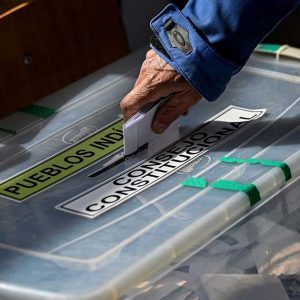
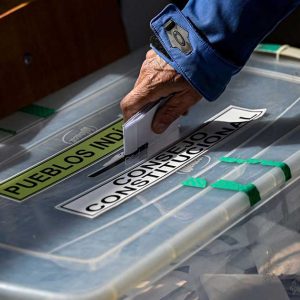
On 7 May, Chileans went to the polls to choose a Constitutional Council that will produce a new constitution to replace the one bequeathed by the Pinochet dictatorship – and handed control to a far-right party that never wanted a constitution-making process in the first place.


This is the second attempt at constitutional change in two years. The first process was the most open and inclusive in Chile’s history. The resulting constitutional text, ambitious and progressive, was widely rejected in a referendum. It’s now far from certain that this latest, far less inclusive process will result in a new constitution that is accepted and adopted – and there’s a possibility that any new constitution could be worse than the one it replaces.

A long and winding road

Chile’s constitution-making process was born out of mass protests that erupted in October 2019, under the neoliberal administration of Sebastián Piñera. Protests only subsided when the leaders of major parties agreed to hold a referendum to ask people whether they wanted a new constitution and, if so, how it should be drafted.

In the vote in October 2020, almost 80 per cent of voters backed constitutional change, with a new constitution to be drafted by a directly elected Constitutional Assembly. In May 2021, the Constitutional Assembly was elected, with an innovative mechanism to ensure gender parity and reserved seats for Indigenous peoples. Amid great expectations, the plural and diverse body started a one-year journey towards a new constitution.

Pushed by the same winds of change, in December 2021 Chile elected its youngest and most unconventional president ever: former student protester Gabriel Boric. But things soon turned sideways, and support for the Constitutional Assembly – often criticised as made up of unskilled amateurs – declined steadily along with support for the new government.

In September 2022, a referendum resulted in an overwhelming rejection of the draft constitution. Although very progressive in its focus on gender and Indigenous rights, a common criticism was that the proposed constitution failed to offer much to advance basic social rights in a country characterised by heavy economic inequality and poor public services. Disinformation was also rife during the campaign.

The second attempt kicked off in January 2023, with Congress passing a law laying out a new process with a much more traditional format. Instead of the large number of independent representatives involved before, this handed control back to political parties. The timeframe was shortened, the assembly made smaller and the previous blank slate replaced by a series of agreed principles. The task of producing the first draft is in the hands of a Commission of Experts, with a technical body, the Technical Admissibility Committee, guarding compliance with a series of agreed principles. One of the few things that remained from the previous process was gender parity.

Starting in March, the Commission of Experts was given three months to produce a new draft, to be submitted to the Constitutional Council for debate and approval. A referendum will be held in December to either ratify or reject the new constitution.

Rise of the far right

Compared with the 2021 election for the Constitutional Convention, the election for the Constitutional Council was characterised by low levels of public engagement. A survey published in mid-April found that 48 per cent of respondents had little or no interest in the election and 62 per cent had little or no confidence in the constitution-making process. Polls also showed increasing dissatisfaction with the government: in late 2022, approval rates had plummeted to 27 per cent. This made an anti-government protest vote likely.

While the 2021 campaign focused on inequality, this time the focus was on rising crime, economic hardship and irregular migration, pivoting to security issues. The party that most strongly reflected and instrumentalised these concerns came out the winner.

The far-right Republican Party, led by defeated presidential candidate José Antonio Kast, received 35.4 per cent of the votes, winning 23 seats on the 50-member council. The government-backed Unity for Chile came second, with 28.6 per cent and 16 seats. The traditional right-wing alliance Safe Chile took 21 per cent of the vote and got 11 seats. No seats were won by the populist People’s Party and the centrist All for Chile alliance, led by the Christian Democratic Party. The political centre has vanished, with polarisation on the rise.

 
What to expect

The Expert Commission will deliver its draft proposal on 6 June and the Constitutional Council will then have five months to work on it, approving decisions with the votes of three-fifths of its members – meaning 31 votes will be needed to make decisions, and 21 will be enough to block them. This gives veto power to the Republican Party – and if it manages to work with the traditional right wing, they will be able to define the new constitution’s contents.

 
The chances of the new draft constitution being better than the old one are slim. In the best-case scenario, only cosmetic changes will be introduced. In the worst, an even more regressive text will result.

People will have the final say on 17 December. If they ratify the proposed text, Chile will adopt a constitution that is, at best, not much different from the existing one. If they reject it, Chileans will be stuck with the old constitution that many rose up against in 2019. Either way, a once-in-a-generation opportunity to expand the recognition of rights will have been lost, and it will fall on civil society to keep pushing for the recognition and protection of human rights.

Inés M. Pousadela is CIVICUS Senior Research Specialist, co-director and writer for CIVICUS Lens and co-author of the State of Civil Society Report.


!function(d,s,id){var js,fjs=d.getElementsByTagName(s)[0],p=/^http:/.test(d.location)?’http’:’https’;if(!d.getElementById(id)){js=d.createElement(s);js.id=id;js.src=p+’://platform.twitter.com/widgets.js’;fjs.parentNode.insertBefore(js,fjs);}}(document, ‘script’, ‘twitter-wjs’);  

Source