The Nairobi Summit – Towards a Watershed Moment

Africa, Civil Society, Conferences, Crime & Justice, Development & Aid, Economy & Trade, Education, Featured, Gender, Gender Violence, Global, Headlines, Health, Human Rights, Inequity, TerraViva United Nations, Women’s Health

Opinion

NAIROBI, Kenya, Aug 8 2019 (IPS) – In 2019 a female scientist created an algorithm that gave the world the first ever images of a black hole. Working with a team of astronomers, physicists, mathematicians and engineers, a young woman led the development of a computer program that in her own words enabled them to “achieve something once thought impossible.”


Photo: Heshimi Kenya

During this same year, over 200 million women in developing countries will not have access to effective methods of contraception to delay or avoid pregnancy. Approximately 830 women a day will die during pregnancy or childbirth from preventable causes. And sexual and gender based violence including harmful practices like early marriage and female genital mutilation, will still plague millions of girls and young women. Girls and women denied basic human rights and robbed of their potential to achieve the impossible.

In 1994, the visionary Programme of Action was agreed to by 179 governments at the International Conference on Population and Development (ICPD) in Cairo, Egypt. The Programme of Action recognized that reproductive health and rights, as well as women’s empowerment and gender equality, are cornerstones of healthy robust societies that promote the well-being of populations and economic and social development of nations. Since ICPD, governments, civil society, youth networks have all worked towards decreasing maternal deaths, eliminating harmful practices and promoting gender equality.

The global community is now gearing up to mark 25 years since the historic ICPD through the Nairobi Summit on the International Conference on Population and Development, ICPD25 which will be held from 12-14 November 2019 under the theme “Accelerating the Promise”.

I am proud that my country Kenya, will be hosting this important Summit, which is aimed at mobilizing the political will, financial commitment and community support we need to fully realize the ICPD Programme of Action.

Indeed, by the time we leave Nairobi, we must ensure that everyone has agreed to play their part in reaching zero unmet need for family planning information and services, zero preventable maternal deaths, and zero sexual and gender-based violence and harmful practices against girls and women. Evidence shows that the benefits that would accrue from fulfilling the ICDP agenda would be far reaching in transforming lives and improving the wellbeing of families, communities, and nations.

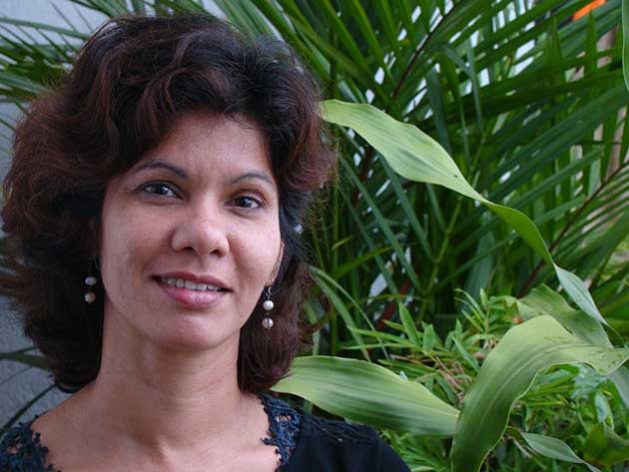
Dr. Ida Odinga, EGH

In Kenya, significant progress in health care has been made with Universal Health Coverage(UHC) a top priority for the Government. Thanks to the leadership, passion and commitment of the First Lady of Kenya, Ms Margret Kenyatta through her Beyond Zero campaign there has been a significant drop in maternal and child mortality. We have to now go for zero deaths. Reproductive, maternal, neonatal, child and adolescent health is key to achieving UHC.

High rates of teenage pregnancy, take girls out of school and compromises their health. Young people face stark challenges in employment as 1,000,000 people enter a labor force that can only absorb 150,000 new entrants. Access to health services and information, school retention and quality education will help these young girls stay in school and lead healthy lives. These are among the issues that the Summit will address.

However, in order for the Nairobi Summit to be a game changer, we need to speak for those that can’t speak, speak for those who are not heard and to add our voices to those who continue to work for sexual and reproductive rights for all. We must reaffirm our commitments to the ICPD goals and Agenda 2030. We must absorb the lessons learned over the last 25 years and do better.

For Kenya, the Nairobi Summit provides a platform to showcase our Big Four Development Agenda aimed at accelerating socioeconomic transformation and economic growth by intensifying investments and programme actions on: affordable housing, food security, universal healthcare and manufacturing.

I am delighted that my country is partnering with UNFPA and the Government of Denmark to host the Nairobi Summit and reaffirm the global commitment to ICPD. This is a watershed moment as we are a mere 10 years away from our commitment to fulfill the SDGs.

I look forward to seeing all the participants in Nairobi and hope everyone will follow the proceedings of the Nairobi Summit and learn how we can all play a role in bringing about change and keeping the promise of ICPD. Ensuring that all women and girls can reach for the stars and achieve the impossible.

Dr. Ida Odinga, EGH is spouse of Rt Hon. (Eng.) Raila Odinga and a passionate campaigner of women’s rights.

  Source

The Moral Responsibility for Arms Trade

Armed Conflicts, Civil Society, Crime & Justice, Global, Headlines, Human Rights, TerraViva United Nations, Trade & Investment

Opinion

What matters more: ethics or profit?

Global arms trade is booming and has become a lucrative business.

GENEVA, Aug 8 2019 (IPS) “I don’t want to see a single war millionaire created in the United States as a result of this world disaster.” 1

These were the words of US President Franklin D. Roosevelt on 22 May 1940 when he learned of individuals profiting because of the booming arms trade industry during the Second World War. Seven decades down the line, President Roosevelt’s warning against the rise of the military-industrial complex and war profiteers is more relevant than ever and a telling testimony that for many in safe places war means profit. But, should the pursuit of economic profit be allowed to supplant ethical considerations, especially when weapons often end up in the hands of terrorists, human rights violators and criminal governments?


There is no doubt that the global arms market remains a lucrative business. Arms trade raises numerous ethical issues both for the exporting and for the importing country. War profiteers operate with scant concern for ethical and moral considerations, being guided by the search for power or profit for their corporations. Those who produce and sell arms have been called “merchants of death.” 2 HH Pope Francis said it was hypocritical to speak of peace while fuelling the arms trade, which only serves the commercial interests of the arms industry. 3 It is of course the inalienable right of States to exercise their right to self-defence as stipulated in Article 51 of the United Nations Charter and to maintain independent military strength to deal with periodic armed conflict or threats that may emerge. Experience shows that arms exporters fuel conflict and create an atmosphere not at all conducive to peace and development in the world. A business model the feeds on armed conflict, violence and instability must be banned in the 21st century.

According to recent statistics from the Stockholm Peace Institute, arms sales of the world’s 100 largest arms-producing and military services companies totalled USD 398.2 billion in 2017. 4 That is more than the nominal cumulative GDPs of South Africa, Denmark, Singapore, Egypt, Algeria and Malaysia, a group of countries which is home to more than 200 million people. Since 2002, annual arms sales have surged 44% and are expected to continue growing in the years to come. 5 In other words, international arms trade is “big business” and a vector for economic growth in some countries, reminiscent of John Maynard Keynes’ vision of ‘Military Keynesianism’.

In the Middle East, the irregular and black-market arms trade – estimated at USD 10 billion a year – have weaponised extremism and fuelled instability. Disturbing images of civilian infrastructure being bombed and destroyed by extremist groups are telling testimonies that the flow of arms and weapons continues to exacerbate violent conflict in the Arab region. This is particularly the case in Syria, Libya and Iraq where the supply of weapons to the warring sides has prolonged the fighting and adversely affected the civilization population. The rebuilding of societies affected by armed conflict and violence in the Middle East and North Africa (MENA) region is estimated at USD 250 billion. A price tag that the next generations in the MENA region will have to repay for decades to come.

In this connection, world civil society must take action to curb future arms proliferation in regions prone to armed conflict and violence. Governments and arms traders must commit to respecting and to fulfilling the provisions set forth in the Guiding Principles on Business and Human Rights of the United Nations. 6 The aim should be to identify, prevent and mitigate as the case may be, the human rights-related risks of business activities in conflict-affected areas. Civilians should not have to bear the brunt, as they do now, of the devastating consequences of military conflict. The greed involved in the arms trade must be kept in check.

As foreseen in Sustainable Development Goal (SDG) 16 of the 2030 Agenda for Sustainable Development, the promotion of just, peaceful and inclusive societies rests on the ability of world society to promote a climate conducive to peace and sustainable development. According to the United Nations Office for Disarmament Affairs, the countries that are furthest from achieving the targets of the Sustainable Development Goals (SDG) are in, or emerging from, armed conflict and violence. The best investment to peace and prosperity therefore rests on the ability of decision-makers and governments to curb arms trade, prohibit economic gains from war, armed conflict and human suffering and instead commit to rally for a world where peace and justice prevails. The simple motto for all should be “disarmament for development”. What is most needed is a conversion strategy that will gradually transform war economies into sustainable peace economies. 7

1https://www.thenation.com/article/war-profiteering/
2https://www.foreignaffairs.com/reviews/capsule-review/1934-07-01/merchants-death
3https://cruxnow.com/vatican/2017/06/03/pope-franciss-prayer-stop-merchants-death/
4https://www.sipri.org/sites/default/files/2018-12/fs_arms_industry_2017_0.pdf
5 Ibid
6https://www.ohchr.org/documents/publications/GuidingprinciplesBusinesshr_eN.pdf
7 See 2014 report to the Human Rights Council by the UN Independent Expert on the Promotion of a Democratic and Equitable International Order, http://ap.ohchr.org/documents/dpage_e.aspx?si=A/HRC/27/51

Blerim Mustafa, Project and communications officer, the Geneva Centre for Human Rights Advancement and Global Dialogue. Postgraduate researcher (Ph.D. candidate) at the Department of Politics and International Relations, University of Leicester (UK).

  Source

Human Rights Watch Disappoints on Human Rights

Armed Conflicts, Civil Society, Crime & Justice, Global, Headlines, Human Rights, Migration & Refugees, Natural Resources, Peace, Press Freedom, TerraViva United Nations

Opinion

Michelle Bachelet, UN High Commissioner for Human Rights. Credit: Jean-Marc Ferré/UN Photo.

GENEVA, Jul 25 2019 (IPS) – On 22 July 2019, Kenneth Roth published an article in Publico, Lisbon, entitled: “UN Chief Guterres has disappointed on Human Rights”.


This essay lampooning Antonio Guterres is not a voice “against the tide” but very much mainstream – and demonstrably skewed. Major NGOs headquartered in rich advanced countries and enjoying generous funding from the Establishment may not always think “out of the box” and are as likely, as are the interest groups which support them, to politicize human rights and therefore to disappoint rights holders in smaller or weaker countries.

While they do contribute to exposing situations of human rights violations worldwide , they are not exempt from biases which reflect the structure of their central governing bodies or the cultural environment within which they operate. They cannot arrogate to themselves the sole legitimacy to speak in the name of the civil society of many countries , and when they claim to do so, they may disappoint rightsholders, particularly in the developing countries, whose priorities are frequently different from theirs.

Kenneth Roth’s bludgeoning of the UN Secretary General in this regard is yet another expression of grandstanding and even of a measure of arrogance. HRW’s criticism of China, Russia, Cuba, Nicaragua, Venezuela, would be more persuasive if the organisation addressed with the same intensity the egregious violations of human rights in many other countries

Sober analysis and stocktaking are necessary to determine whether and to what extent the priorities and agendas of NGOs’s like HRW are set by the overall interests of the established power-structures and multiple elites in many countries. Kenneth Roth’s article expressing disappointment at the human rights performance of Secretary General Antonio Guterres fails to identify the root causes of human rights violations.

His admonitions have little or no preventative value, and do not formulate constructive recommendations such as, for instance, the provision of advisory services and technical assistance to many countries that need it and have asked for it.

HRW’s “naming and shaming” strategy has been inconclusive at best because “naming and shaming” depends on the authority of the “namer” and the impartiality of the methodology. Kenneth Roth’s bludgeoning of the UN Secretary General in this regard is yet another expression of grandstanding and even of a measure of arrogance. HRW’s criticism of China, Russia, Cuba, Nicaragua, Venezuela, would be more persuasive if the organisation addressed with the same intensity the egregious violations of human rights in many other countries.

For instance, Mr. Roth does not mention the denial of the right of self-determination to millions of people, the retrogression in the enjoyment of economic, social and cultural rights (prohibited by the Covenant on Economic, Social and Cultural Rights), the looting of natural resources and degradation of the environment by transnational corporations and their neocolonial schemes, the impunity enjoyed by politicians who engage in aggressive wars and by paramilitaries and private security companies, the devastating human rights impact of blockades by source countries and economic sanctions on the populations of Gaza, Syria, Iran and Venezuela, which have caused and continue to cause tens of thousands of deaths.

The politicization or as we now witness with concern, the“weaponization” of human rights is taking the world on a slippery slope. When the Universal Declaration of Human Rights (UDHR)was adopted in 1948, Eleanor Roosevelt, Charles Malik, René Cassin and others spoke of human dignity and the inalienable rights of human beings, but article 29 of UDHR also reminded us that “everyone has duties to the community”.

Indeed, what is most necessary is global education in human rights, including the human right to peace, education in empathy and solidarity with others – compassion, not predatory competition in “the human rights industry” on a “holier than thou” ticket.

Meanwhile, Secretary-General Antonio Guterres should not be expected to act as a Human Rights NGO. This high office is not that of an unaccountable activist. It is neither that of a general that can blast any state at will nor is it a secretary that has to be subservient to the prevailing powers that be.

That high official must recognize the reality of the power balance that he cannot fundamentally alter but must strive with obduracy and at times courage to stretch the international community towards more compliance with the purposes and principles of the United Nations. Most importantly this means the promotion of peace through conflict-prevention, good offices, impartial mediation, disarmament and yes, human rights. When all diplomacy fails and only then may “naming and shaming” become an option. But it is a default option and a sign of diplomatic failure.

In the experience of both of us as Special Rapporteurs of the Human Rights Council, we have delivered on our mandates, not by openly challenging the authority of states or claiming to teach them lessons in human rights but by giving quiet diplomacy a chance .

This is how one of us together with another Independent Expert facilitated a lifting of the sanctions on Sudan and this is how we are again currently engaging with protagonists of other conflicts. We have succeeded in confidence-building and contributed to the release of detainees. Persevering and discrete advocacy bears fruit.

We want a SG that puts values above politics in human rights matters and this is, in our opinion, what Guterres is doing. We have a Secretary General that can speak for truth and can at least listen to the narratives of the smaller and weaker states who have no access to the world media and whose action is distorted by biased reporting.

Of course the murder of Khashoggi is a tragedy because beyond the tragic loss of a human life, it is the freedom of expression that is targeted. But Kenneth Roth does not mention the thousands of migrants whose lives end in the liquid graves of the oceans because saving them at sea is becoming a criminal offence in some « enlightened » nations.

Are there different values attached to life according to the « exploitability » of its loss for political aims? We do not think that the Secretary General should go down along this road, even if this may cause disappointment in some quarters.

We would be really concerned if the Secretary general were to follow the path of selective indignation advocated implicitly by Mr Roth, because he would lose the moral leadership that we all, people of good will, can identify with across the world. THAT would be a major disappointment.

We welcome in Antonio Guterres a Secretary General who does not hesitate to call a spade a spade, a SG who promotes peace and does not stoke conflict, who challenges unilateral economic sanctions, who supports the Right to Development1 and places the Secretariat of the United Nations in its service. We welcome a SG who, together with the new UN High Commissioner for Human Rights, Michelle Bachelet, are engaging all of humanity in the noble task – day by day – of implementing civil, cultural, economic, political and social rights in larger freedom – and in good faith.

Idriss Jazairy Special Rapporteur, UN Human Rights Council
Alfred de Zayas Former Independent Expert, UN Human Rights Council


The Precipitous Barbarisation of Our Times

Civil Society, Crime & Justice, Democracy, Education, Featured, Global, Globalisation, Headlines, Human Rights, Inequity, Migration & Refugees, TerraViva United Nations

Opinion

ROME, Jul 23 2019 (IPS) – When all is said and done, it appears that Thomas Hobbes, the 17th century English philosopher who had a dire vision of man, was not totally wrong.

From the frivolous to the serious, in just a week we have had four items of news which would not happen in a normal world. An English porn beauty with 86,000 followers on social media has put bottles of the water she bathes in on sale at 30 pounds a bottle and has sold several thousand bottles.


Roberto Savio

A survey in Brazil found out that 7% of citizens believe that the earth is flat (40 percent of American schools teach that the world was created in a week, according to the Bible, so there cannot be ancient civilisations) Another survey, this time of members of the British Tory party, who seem likely to elect Boris Johnson as prime minister (not exactly a triumph of reason) are so in favour of a “hard” Brexit that they do not care if this means the exit of Scotland and the end of the United Kingdom. Finally, in order to win election, US president Donald Trump has made racism one of his banners and, in a country of immigrants, this has given him an increase of 5 points in opinion polls.

There are so many signs of barbarisation that they would fill a book… and, as Euripides famously wrote: Whom the gods would destroy, they first make mad.

It is not a popular task, but we have to look at the reality and observe that, in the most scientifically and technologically developed period of history, we are living in times of precipitous barbarisation.

Social inequality has become the basis for the new economy. People have now lowered their expectations and are prepared to work part-time in a precarious job, where young people (according to the International Labour Organisation) can hope for a retirement pension of 600 euro a month. This has been accepted by the political system. We even have a study from Spain according to which, in the present housing market, nearly 87% of people need 90% of their salary just to rent a house.

Today, for many, a salary means survival, not a dignified life. The new economy has developed the so-called gig economy: you work to distribute food, but you are a co-entrepreneur without any of the rights of an employee, for an amount that will never allow you to marry. Children have grown accustomed to look at phenomena such as poverty or war as natural. And now politics are not based on ideas but on how you can successfully exploit the guts of the people, waving banners against immigrants (when we are witnessing a rapid fall in the birth rate) and splintering countries between ”We” who represent the people and “You” enemy of the country. The United States is the best example, where Republicans consider Democrats enemies of the United States. And this brings us to a central question: have Trump, Italy’s Matteo Salvini, Brazil’s Jair Bolsonaro and company not been elected democratically? And they are the symptom or the cause of the “populocracy” which is replacing democracy?

It is not possible to offer a sociological or historical study here. Let us just use a bite: we have gone from the Gutenberg era into a new era – the Zuckerberg era.

Those who greeted the arrival of the Internet with enthusiasm also did so because it would democratise communication and therefore bring about greater participation. The hope was to see a world where horizontal communication would replace the vertical system of information which Gutenberg made possible. Information was, in fact, a support for states and business that used it to reach citizens, who had no recourse to feedback. With Internet, people could now speak directly throughout the world and the propaganda which accompanied its arrival was not considered relevant: it is not important to know, it is important to know where to find It. Well, we have all the statistics on how Internet has affected the general level of culture and dialogue.

The attention span of people has declined dramatically. The majority of Internet users do not stay on an item more than 15 seconds. In the last five years, book volumes have been shortened by 29 pages. Today, articles longer than 650 words are not accepted by columnists’ services. The last meeting of editors of international news agencies decided to lower the level of news from the level of 22 years to that of 17 years. In Europe, the percentage of people who buy at least one book a year now stands at 22% (in the United States it is now 10.5%). According to a recent study in Italy, only 40% of the population is able to read and understand a book. In the same country, 13% of libraries have closed in the last ten years. A very popular transmission in Spain was ”59 seconds” which saw a number of people debate round a table; at the 59th seconds their microphones would disappear. Today, the dream of a TV interviewer is that the person interviewed will give a shorter answer than the question. Newspapers are for people over forty. And there is a unanimous complaint about the level of students entering the university: not all are free from mistakes of orthography and syntax. And the list could continue practically ad infinitum.

The problem of barbarisation has major relevance for political participation. The Gutenberg generations were accustomed to dialogue and discussion. Today, 83% of Internet users (80% under the age of 21), do so only in the virtual world they carved out for themselves. People of Group A gather only with people of Group A. If they come across somebody from Group B, they insult each other. Politicians have been able to adjust rapidly to the system. The best example is Trump. All US newspapers together have a circulation of 60 million copies (ten million those of quality, both conservative and progressive). Trump has 60 million followers who take Trump’s tweets as information. The do not buy newspapers, and if they watch TV it is Fox, which is Trump’s amplifier. No wonder that over 80% of Trump’s voters would vote for him again. And the media, which have lost the ability to offer analysis and cover processes, not just events, take the easy path. Let us follow famous people and make the famous more famous. Analytical journalism is disappearing. In the United States it exists thanks to grants … in every European country, there are few quality papers left, and the largest circulation goes to tabloids which spare their readers the effort of thinking. The Daily Mirror in Britain and Bild in Germany are the best examples.

Internet has made everybody a communicator. This is a fantastic achievement. But in this increasing barbarisation, people also use the Internet for transmitting false information, stories based on fantasy, without any of the quality controls that the media world used to have. And artificial intelligence has been taking over, creating many false accounts, which now interfere in the electoral process, as was proven in the last US elections. We have to add to this that the algorithms used by the owners of the Internet aim to trap the attention of users in order to keep them as much as possible. This month, El Pais published a long study entitled “The toxic effects of YouTube”, where it shows how its algorithms push the viewer to items that are of fantasy, pseudoscientific and of great attraction.

This is due to the fact that the owners have become fabulously rich by transforming citizens into consumers. They find out our identity, and they sell it to companies for their marketing, and also for elections. Those owners have unprecedented wealth, never achieved in the real world: not only in that of production, but even in the world of finance, which has become a casino with no control. The entire world of production of services and goods, man-made, is now close to a trillion dollars a day; that same day, financial flows reach 40 trillion dollars. Jeff Bezos ‘s divorce gave his wife 38 billion dollars. That is equal to the annual average income of 20,000 dollars of 19 million people. No wonder that 80 individuals now possess the same wealth as 2.3 billion people (in 2008, they were 1,200 individuals).

According to historians, greed and fear are great engines of change in history. That was also true in the Gutenberg era. But now, they have triggered a combination of both in a short period of time. After the fall of the Berlin Wall, the doctrine of liberal globalisation arrived with such strength that Margaret Thatcher (who with Ronald Reagan ushered in the new vision of individual profits and elimination of social goods) famously talked of TINA: There Is No Alternative.

The entire political system, including Social Democrats, accepted riding a system of values based on greed and unfettered competition at individual level, at state level and at international level. It took twenty years to understand that the poor have become poorer, and the rich richer, and that states have lost much of their sovereignty to multinational corporations and the world of finance. It is worth noting that, in 2009, in order to save a corrupt and inefficient financial system, the world spent 12 trillion dollars (the United States alone, 4 trillion). Since that rescue, banks have paid the impressive amount of 800 billion dollars in penalties for illicit activities.

The financial crisis of 2009 has triggered a wave of fear. Let us not forget that until 2009, there were no sovereignist, populist, xenophobic parties anywhere, except for Le Pen in France. Soon old traps such as “in name of the nation” and “the defence of religion” were resurrected by politicians able to ride fear. A new scapegoat – immigrants – was found and populocrats are now undermining democracy everywhere.

Populocracy is the new wave. Former Italian prime minister Silvio Berlusconi ushered in a new language, and that language has now been updated by Salvini, Trump and so on. Twitter, Facebook and Instagram are the new medium and now the medium is the message. The old elite had not found a new language.

The Zuckerberg era is an era of greed and fear. Zuckerberg is now attempting to create a global currency, the Libra, to be used by his 2.3 billion users. Until now, states were the only entities able to emit money, a symbol of the nation. Zuckerberg’s currency is based entirely on the Internet and will have no control or regulations. In case of a default, we will have a world crisis without precedent. In the Gutenberg era, this was not possible.

But who has made able Jeff Bezos to give 38 billion dollars to a former wife? Who has elected Trump and Salvini and company, who speak on behalf of the nation and the people, and turn those who do not agree into enemies of the nation and the people, creating an unprecedented polarisation, accompanied by an orgy of revolt against science and knowledge, which have supported the elite, and must now be put aside for the good of people.

This process of barbarisation should not obscure an old proverb: every country has the government it deserves. It is called democracy. However, the traditional elite has no code of communication with the new era. The answer will come from citizen mobilization.

A young Swedish girl, Greta Thunberg, has done more with her stubbornness to raise awareness about impending climate change than the entire political system. Even Trump (albeit for electoral reasons) has now declared that climate change is important.

Today, there many “points of light“ appearing in the world. The elections in Istanbul are a good example, as are the mobilisation in Hong Kong, Sudan and Nicaragua, among many others. Let us hope we will reach a point where people will take the reins of the process and awake the world from the precipitous course of barbarisation. Even Thomas Hobbes concluded that humankind will always, soon or later, find the right path, and give itself good governance. He thought that an elite would always be able to lead the masses.

Well, elites are now the Greta Thunbergs of the world.

Publisher of OtherNews, Italian-Argentine Roberto Savio is an economist, journalist, communication expert, political commentator, activist for social and climate justice and advocate of an anti neoliberal global governance. Director for international relations of the European Center for Peace and Development.. He is co-founder of Inter Press Service (IPS) news agency and its President Emeritus.


Are We Fighting a Losing Battle in the War Against Drugs?

Civil Society, Crime & Justice, Featured, Global, Global Governance, Headlines, Human Rights, IPS UN: Inside the Glasshouse, Peace, Poverty & SDGs, TerraViva United Nations

UNITED NATIONS, Jul 3 2019 (IPS) – How effective is the global war on drugs?

The latest statistics released by the UN Office on Drugs and Crime (UNODC) are staggering: 35 million people across the globe currently have a substance use disorder, and as of 2017, 585,000 people have died worldwide as a result of drug use.


According to a recently-released UNODC report, the lack of proficient drug treatment and facilities for those that need it is impacting mortality rates at alarming levels.

Hence, it stands to reason that treatment and prevention are immensely falling short of the mark on a global scale.

Prisons are also no exception to these shortcomings. In fact, the Report unmasked that those incarcerated for drugs are more likely to continue being exposed to drugs.

The Report also highlighted that out of the 149 countries that were surveyed, about 1 in 3 people reported that they consumed drugs in prison at least once while incarcerated, and 1 in 5 people who are currently incarcerated reported that they have used drugs within the past month.

“In terms of data, we did some data collection, always trying to get as much as possible, in terms of socio-economic characteristics, we would have this type of data, I imagine, and this is also something that will run throughout the new report, and is being discussed now.” Chloé Carpentier, Chief of the Drug Research Section told IPS.

The issue between drugs and human rights is on Secretary General António Guterres’ radar as well.

“Together, we must honour the unanimous commitments made to reduce drug abuse, illicit trafficking and the harm that drugs cause, and to ensure that our approach promotes equality, human rights, sustainable development, and greater peace and security.” Secretary General António Guterres stated on the International Day Against Drug Use and Illicit Trafficking.

“We will make sure that no one with a drug problem is left behind” Dr. Miwa Kato assured, during the official launch of the Report on June 26.

Dr. Kato continued to push this message throughout her speech and cited that “Health and justice need to work hand in hand.”

Beyond the UN, this is a topic of interest for the academia world as well, since young people are heavily susceptible to a substance use disorder.

“It is important that we say people— not user or addicts, that language itself is stigmatizing.” Dr. Danielle Ompad, Associate Professor, College of Global Public Health and Deputy Director, Center for Drug Use and HIV Research at New York University (NYU) told IPS.

Dr. Ompad highlighted the importance of person-first language, citing that “It is important how we refer to people, and view them as humans, and not just the behavior (the substance use).

In terms of the World Drug Report, she noted that “The war on drugs, if you look at it, hasn’t really been an effective war”, and elaborated that the focus should not be supply- side intervention, because in the long run, drugs are going to be produced and sold no matter what, which leads to mass incarceration, which doesn’t benefit any party.

It is also important to recognize that “not everyone needs treatment, and those that do should absolutely have access to it. But just because you use marijuana does not mean you are an addict”.

She went on to suggest a harm- reduction approach. The harm-reduction approach blends a plethora of strategies from safer use to managed use to abstinence- it meets the need of the person.

www.HarmReduction.org

Meanwhile, tracing back to the issue of treatment, the Report affirmed that over 80% of the world’s population lack access to adequate treatment with only 1 out of 7 people with a substance use disorder receiving treatment each year.

The Report showcased that women cited a strong sense of fear that kept them from seeking the help that they needed for a variety of reasons that ranged from possible legal issues to the lack of childcare while in treatment.

Another issue is several countries, particularly in Asia, is the death penalty for any person found guilty of a drug ‘offense.’

Last month, Sri Lanka’s President, Maithripala Sirisena signed death warrants for four convicts- thus pushing the notion that those who have a substance use disorder are ‘dirty’ and should be disposed of.

Similarly, in a 2014 study conducted by Johns Hopkins Bloomberg School of Public Health, it was shown that having a substance use disorder was viewed more negatively than mental illness. Ironically, however, the two are all but intertwined.

This is also evidenced by the Report- about half of the world’s population that develop a mental disorder will also experience a substance use disorder in their lifetime.

However, it is to be noted, that despite all of the above, the Report only cited the “lack of effective treatment interventions based on scientific evidence and in line with human rights obligations.” but made no further elaborations on the what’s and how’s and was only discussed briefly at the official Report launch.

That said, the issue of ensuring those that do have a substance use disorder are provided for while figuring out more beneficial and healthier initiatives to reduce drug rates across the globe are currently being discussed among the United Nations (UN) and United Nations Office on Drugs and Crime (UNODC).

Dr. Ompad said for better or worse, licit, and illicit drug use is part of our world.

“Focus a little bit more on harm reduction,” Dr. Ompad stated, and above all “We need to stop the war on the people who use drugs,” she declared.


Why the Prosecution of Julian Assange is Troubling for Press Freedom

Civil Society, Crime & Justice, Democracy, Featured, Global, Headlines, Human Rights, Press Freedom, TerraViva United Nations

Opinion

Alex Ellerbeck* is North America Program Coordinator at the Committee to Protect Journalists & Avi Asher-Schapiro* is North America Research Associate

NEW YORK, Apr 16 2019 (IPS) – After a seven-year standoff at the Ecuadorean embassy in London, British police last week arrested WikiLeaks founder Julian Assange–a development press freedom advocates had long feared.


For years, journalists and press freedom advocates worried the U.S. would prosecute Assange under the Espionage Act for the publication of classified information, a scenario that potentially would have set a devastating legal precedent for U.S. news organizations that regularly publish such material.

During the Obama administration, officials ultimately said they would not prosecute because of the possible consequences for press freedom.

It was unclear whether the Trump administration would have the same compunction: while Trump praised WikiLeaks, then-CIA Director Mike Pompeo labeled it a “non-state hostile intelligence service.”

Trump has shown little concern for freedom of the press, once allegedly urging then-FBI Director James Comey to jail journalists. (In response to news of Assange’s arrest, Trump said he would leave it to the Justice Department).

In this context, the charge on which Assange was arrested seemed modest: A single count of conspiracy (with former Army Pfc. Chelsea Manning) to “commit computer intrusion” under the U.S. Computer Fraud and Abuse Act, with a maximum penalty of five years.

Unlike the publication of classified information, hacking computers is not a tool for reporters. Some journalists were quick to point out this out.

“[The] charge here is attempting to help crack a password to steal classified material. Didn’t work but would news orgs do that? (Not in my experience.),” said Greg Miller, a national security reporter at The Washington Post, said on Twitter.

But press freedom advocates, and some journalists, have not expressed relief based on the indictment. A host of organizations, including CPJ, spoke out against the prosecution. Here’s why:

(1) The indictment is flimsy and could simply be a pretext to punish Assange for publishing classified information.

The diplomatic time and resources expended between three countries to detain Assange strikes some observers as disproportionate to the single computer misuse charge.

The indictment is vague about the exact nature of the aid Assange allegedly provided Manning in the course of their interaction, but it does not appear that Assange successfully hacked any password.

Even if his attempts were successful, they would have helped Manning cover her tracks, but not let her break into a system to which she didn’t already have access.

Prosecutors have wide range of latitude; it’s worth remembering that the Obama administration likely had all the same information, but declined to pursue an indictment.

Matthew Miller, a former Justice Department spokesperson in the Obama administration, told The New York Times that he thought the charge was justified but “This is not the world’s strongest case.”

So, is it just a pretext on the part of the U.S. government to punish Assange for the publication of classified information — a practice that should be constitutionally protected? The issue comes in a time of heightened concern for investigative journalists and national security reporters.

Since the September 11 attacks, the government has increasingly classified large amounts of material and punished those who share it with the press. CPJ has written extensively about the chilling effect of this crackdown on reporting in the public interest.

“Given the nature of the charge — a discussion 9 years ago about an unsuccessful attempt to figure out a password — I think it’s fair to debate whether this is a fig leaf for the government punishing someone for publishing stuff it doesn’t want published,” tweeted Scott Shane, a national security reporter for The New York Times.

“If it wasn’t Julian Assange, it would be very unlikely you’d see this prosecution,” Cindy Cohn, executive director of the Electronic Frontier Foundation, told CPJ. “This is what over-broad discretion in prosecution does, it gives them a pretext for going after people they don’t like.”

(2) The charge could be a placeholder, with more to come.

Another reason why the charge may seem so modest: It could be the first of several. Last week, CNN cited U.S. officials promising additional charges against Assange. The press freedom implications of any future charges could be significant–especially if they involve the Espionage Act.

“It may be part of a larger case,” Ben Wizner the director of the American Civil Liberties Union, told CPJ. The current indictment already cites the Espionage Act and describes the cracking of a password as part of a conspiracy to violate it.

The DOJ’s legal strategy could be to pile on more charges after Assange is extradited. The extradition treaty between the U.S. and the U.K. says an individual can only be charged for the “offense for which extradition was granted” or similar offenses, but it also stipulates how governments can waive this rule.

Assange has an extradition hearing on May 2, which gives the U.S. government time to develop new charges.

(3) The language of the case seems to criminalize normal journalistic activities.

While the charge against Assange relates to the alleged conspiracy to hack a password, the language of the indictment sweeps in a broad range of legally protected and common journalistic activity.

Count 20 of the indictment states, “It was part of the conspiracy that Assange encouraged Manning to provide information and records from departments and agencies of the United States.”

The indictment goes on to characterize a number of journalistic practices as part of a criminal conspiracy, including use of a secure message service, use of a cloud-based drop box, and efforts to cover Manning’s tracks.

The cultivation of sources and the use of encryption and other means to protect those sources are essential to investigative journalism. While the government may include these details to show intent or to describe the means and context for the alleged criminal action, they seem to go beyond what is necessary.

Barton Gellman, who led The Washington Post’s Pulitzer Prize-winning reporting on the Snowden documents, told CPJ, “If asking questions and protecting a source are cast as circumstantial evidence of guilt, we’ll be crossing a dangerous line.”

“A lot of the way the crime is described here could be applied to other journalists,” Wizner, at the ACLU, told CPJ. “If the government wanted to just target the attempted intrusion, they could have written a very different complaint.”

(4) The Computer Fraud and Abuse Act is incredibly broad.

In all of the concern over the Espionage Act, journalists may not have sufficiently raised alarm over the law under which the U.S. charged Assange: the Computer Fraud and Abuse Act (CFAA). “Thinking we should breathe a sigh of relief because it was the CFAA instead of the Espionage act is premature.” Cohn, of Electronic Frontier Foundation, told CPJ.

The CFAA carries its own set of free expression issues. While it encompasses clearly illegal behavior like hacking, it also criminalizes “unauthorized access to a computer.”

Manning was prosecuted under the CFAA in addition to the Espionage Act, but prosecuting a publisher under the under the CFAA for conspiracy in obtaining the classified information could potentially create a dangerous legal model.

While reporters do not conspire to decrypt passwords, they are often aware of, and might actively discuss with sources, activities that could fall under the broad frame of “unauthorized access.”

As the Cato Institute’s Julian Sanchez wrote on Twitter, “The way ‘helping to hack’ is being charged is as a conspiracy to violate 18 USC §1030 (a)(1) [of the Computer Fraud and Abuse Act]. And good reporters conspire with their sources to do that constantly.”

“For almost every reporter working with a source, the source is providing information in digital form. Anyone who is working with a source who obtained that info in a way that they weren’t supposed to has a CFAA risk,” Cohn said.

She added that any journalists who don’t think there are broader press freedom implications to the Assange prosecution are “whistling past the graveyard.”

(5) Ecuador’s withdrawal of asylum raises questions.

Assange’s arrest came after Ecuador withdrew his asylum protection. In a tweet on April 11, Ecuadorean President Lenin Moreno said the decision came after Assange’s “repeated violations to international conventions and daily-life protocols.”

In a video statement accompanying the tweet, he cited Assange’s repeated “intervening in the internal affairs of other states” via WikiLeaks publications.

Ecuador had previously restricted Assange’s access to the internet based on allegations that he was interfering in U.S. elections and in the referendum for Catalan independence from Spain.

While Assange’s unusual presence in a diplomatic mission created tensions–both inside the embassy and in Ecuador’s broader international relations–withdrawing asylum is an extreme measure, and one that could have troubling implications if it was done in response to publishing.

*Alexandra Ellerbeck, CPJ’s North America program coordinator, previously worked at Freedom House and was a Fulbright teaching fellow at the State University of Pará in Brazil. She has lived in Chile, Bolivia, and Brazil.

*Asher-Schapiro is CPJ’s research associate for North America. He is a former staffer at VICE News, International Business Times, and Tribune Media, and an independent investigative reporter who has published in outlets including The Atlantic, The Intercept, and The New York Times.