‘Angola produces large quantities of oil and diamonds, yet most people don’t see the benefits’

Active Citizens, Africa, Civil Society, Crime & Justice, Democracy, Development & Aid, Economy & Trade, Energy, Featured, Headlines, Human Rights, Labour, Natural Resources, TerraViva United Nations

Sep 5 2025 (IPS) –  
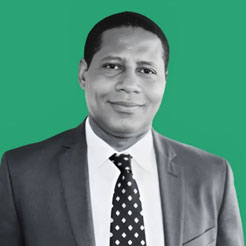
CIVICUS discusses recent protests in Angola with Florindo Chivucute, founder and executive director of Friends of Angola, a US-based civil society organisation established in 2014 that works to promote democracy, human rights and good governance in Angola.


The Angolan government’s 1 July decision to remove diesel subsidies, sharply pushing up public transport costs, triggered a series of protests. Angola is one of Africa’s biggest oil producers, but many have seen little benefit from its oil wealth and continue to live in poverty. People have taken to the streets in unprecedented numbers to demand an end to corruption and mismanagement, presenting the ruling party, in power for 50 years, with its biggest test. Security forces have responded to incidences of looting and vandalism with lethal violence. At least 30 people have been killed, 277 injured and over 1,500 arrested.

What triggered the protests?

Fuel subsidy cuts sparked the crisis. The protests began on 28 July, after the government’s decision to remove diesel subsidies immediately pushed up fuel prices. What started as a drivers’ strike in Luanda, the capital, quickly spread to other provinces and escalated into bigger protests.

The impact was devastating. For many families, even a small rise in fuel costs is crushing, because wages have been eroded by years of recession and currency devaluation. When transport costs rise, food prices and school fees rise too, leaving those already struggling unable to make ends meet.

But fuel was just the trigger. The unrest reflected much deeper frustrations, including high unemployment, particularly among young people, growing poverty and anger at corruption and mismanagement. People see public resources channelled into luxury spending and infrastructure deals benefiting a few powerful figures connected to the ruling People’s Movement for the Liberation of Angola (MPLA), while basic services and jobs are neglected. Combined with the immediate shock of higher fuel prices, these grievances fuelled widespread anger.

Why are people struggling in such a resource-rich country?

This is the irony at the heart of the crisis. Angola produces large quantities of oil, along with diamonds, yet most people don’t see the benefits. Mismanagement and entrenched corruption are central to the problem. Revenues from natural resources have too often been captured by networks close to political power and channelled abroad or invested in ways that don’t create jobs.

Angola’s dependence on fuel imports makes the situation worse. We don’t have sufficient domestic refining capacity. Instead of using oil revenues to build refineries and strengthen local industry, a system emerged in which those with political connections profited from importing refined products back into the country. This removed incentives to invest in local processing or agriculture. The result is a tiny wealthy elite and a large majority with very low wages and limited access to services.

What do these protests reveal about the government’s grip on power?

The protests have marked a turning point. The MPLA has dominated politics since independence in 1975, and large-scale protests are not common. The fact that so many people were willing to take to the streets, particularly in and around the capital, shows growing discontent with the government and ruling party.

The authorities’ reaction has been heavy-handed. Security forces have used teargas and live ammunition in some cases, and carried out numerous arrests, including of union leaders and journalists. In some areas protests were accompanied by looting and, tragically, by deadly clashes with security forces. Civil society has since called for investigations into the killings and for accountability for those responsible.

The government’s strategy risks backfiring. By responding with force and detentions, it risks creating a greater sense of mistrust and frustration, which could influence how people engage with political processes as we approach the 2027 election.

How is civil society organising and what challenges does it face?

Civil society – including church groups, trade unions and local associations — has mobilised quickly to call for accountability and transparency. New coalitions are forming; for example, groups such as the Bishops’ Conference of Angola and São Tomé and Príncipe’s Episcopal Commission for Justice and Peace, Friends of Angola, the Justice, Peace and Democracy Association and Pro Bono Angola are working with religious organisations to push for investigations into the killings and provide humanitarian support to families affected by the unrest.

But the environment is hostile. Funding for democracy and human rights work is scarce, so organisations struggle to pay staff or sustain programmes.

State surveillance creates another barrier. The state has invested heavily in surveillance infrastructure, and civil society organisations are often targeted by cyber intrusions and closely monitored. The legacy of communist authoritarian rule creates deep mistrust, which makes organising more difficult.

Language barriers limit international support. Much of the work happens in Portuguese, which limits reach to the wider international audience that often communicates in English, French or Spanish.

Additional restrictions threaten to further tighten civic space. Recent draconian measures include the 2024 National Security Bill and the Bill on the Crime of Vandalism of Public Goods and Services. In addition, the 2023 draft law on Non-Governmental Organizations, approved by presidential decree, imposed harsh regulations. These restrictive laws and policies undermine fundamental freedoms and, if fully implemented, risk worsening the already limited environment for civil society in Angola.

What would it take to address the underlying problems?

Strong political will is needed to tackle corruption and manage public finances transparently. This means opening up procurement and fiscal data, pursuing accountability for past abuses, and ensuring resource revenues are channelled into public priorities such as hospitals, local industry and schools. Investment in education, healthcare and small-scale agriculture would create jobs, strengthen livelihoods and reduce dependence on imports.

Institutional reform is equally vital. This means protecting property rights, improving the business environment so investment generates employment and strengthening an independent judiciary and electoral processes so people can seek change through democratic channels.

International partners have a role to play by supporting electoral transparency and demanding accountability from companies and governments that operate in Angola.

The 2027 election will offer a crucial test. The international community should pay close attention and support reforms that increase transparency and electoral integrity. Electoral reforms and the clear, public release of results at the local level would go a long way towards restoring confidence in democratic processes.

GET IN TOUCH
Website
Facebook
Instagram
LinkedIn
Twitter

SEE ALSO
Angola: ‘Criticising the government means risking arbitrary detention, intimidation and physical assault’ CIVICUS Lens | Interview with Pedro Paka 30.Jul.2025
Angola: Repressive new laws threaten civic space CIVICUS Monitor 15.Sep.2024
Angola: ‘The untrue government narrative reveals an aversion to civil society denouncing malpractice’ CIVICUS Lens | Interview with Emilio José Manuel 01.Jan.2025
  Source

Togo’s Young Generation Challenges Six Decades of Dynastic Rule

Active Citizens, Africa, Civil Society, Crime & Justice, Democracy, Energy, Featured, Headlines, Human Rights, Labour, Press Freedom, TerraViva United Nations

Opinion

Credit: Pascal.Van, licensed under CC BY-SA 2.0

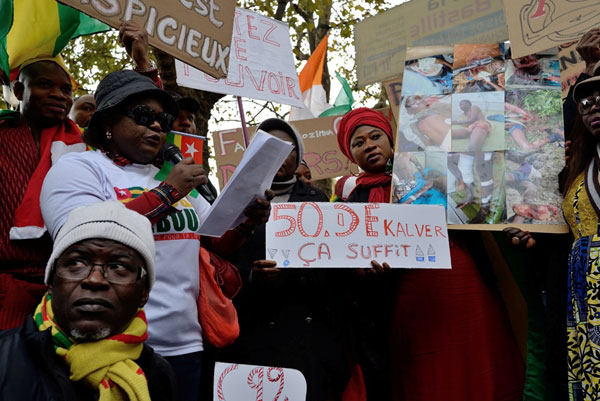
MONTEVIDEO, Uruguay, Sep 2 2025 (IPS) – In late June, thousands flooded the streets of Lomé, Togo’s capital, presenting the ruling dynasty with its biggest challenge in decades.

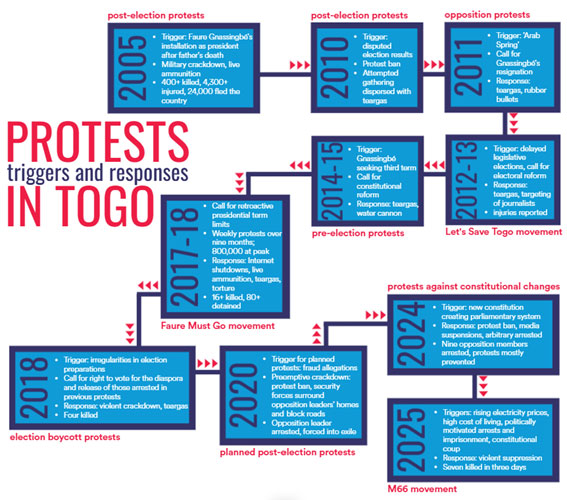
The catalyst was constitutional manoeuvring by President Faure Gnassingbé to maintain his grip on power. In March 2024, his government pushed through constitutional amendments that transformed Togo from a presidential to a parliamentary system. This created a new position, the President of the Council of Ministers – effectively Togo’s chief executive – elected by parliament rather than by popular vote, and with no term limits. Gnassingbé assumed this new role in May, making it abundantly clear the changes were only about keeping him in power indefinitely.


This constitutional manoeuvre was the latest episode in a 58-year family saga that began when Faure’s father, Gnassingbé Eyadéma, seized power in a 1967 coup. For 25 years, the elder Gnassingbé ruled over a one-party state, staging ritual elections that reached absurd heights in 1986 when he claimed re-election with close to 100 per cent of votes on an implausible 99 per cent turnout. Even after nominal multiparty democracy arrived in 1992, elections remained charades with predetermined outcomes, as opposition parties faced systematic obstacles that made fair competition impossible.

When Eyadéma died in 2005, the military simply appointed his son Faure as successor, despite the constitution mandating immediate elections. International pressure forced a hastily organised vote, but this followed the familiar script of violence, fraud and repression. The pattern repeated in 2010, 2015 and 2020, with each election offering a veneer of legitimacy for continued authoritarian rule – and eliciting successive waves of protest that were either violently repressed or pre-emptively suppressed.

Now, two decades after Faure took power, this latest constitutional gambit has triggered the most significant challenge to his rule. The constitutional changes designed to keep him in power have instead galvanised opposition, creating a focal point for decades of accumulated grievances.

The current protests differ from their predecessors by being overwhelmingly led by young people who’ve never known any other leaders than the Gnassingbés. Raised on promises of multiparty democracy, they’ve witnessed systematic electoral fraud to perpetuate a government wholly unresponsive to their needs. They connect their daily struggles with unemployment, power outages and crumbling infrastructure with the long-term denial of their democratic freedoms.

The arrest in May of a popular rapper and TikToker, Aamron – for posting a video calling for street protests to coincide with Gnassingbé’s birthday on 6 June – galvanised discontent, turning simmering frustration into organised resistance. Aamron’s detention sparked the formation of the 6 June Movement (M66), led by young artists, bloggers, diaspora-based activists and civil society figures who rely heavily on social media to coordinate protests, bypassing state-controlled channels.

The government’s response, however, has followed a familiar path of authoritarian crackdown. In late June, security forces killed at least seven people, including 15-year-old Jacques Koami Koutoglo, and they’ve also used teargas, beatings and mass arrests against protesters. The regime has detained journalists, forced deletion of protest footage and imposed internet shutdowns during protests. It has suspended international media outlets including France 24 and RFI for their protest coverage. it has even issued international arrest warrants for M66 leaders based abroad, accusing them of terrorism and subversion.

Protests have continued despite repression. The leadership of young people, less intimidated by the security apparatus and better connected through social media, has allowed for the diversification of opposition tactics, with activists shifting between street protests, legal challenges and international advocacy as circumstances dictate. The diaspora is also playing a role, with Togolese communities abroad organising solidarity protests and advocating with international organisations for sanctions against the Gnassingbé regime.

Significant obstacles however remain. Gnassingbé controls all levers of power, including security forces, the electoral commission and the Constitutional Court. For a democratic transition to result, international pressure would need to intensify, including the imposition of targeted sanctions on regime officials and their economic interests. Regional bodies, particularly the Economic Community of West African States, would need to act, including by threatening to suspend Togo until democratic reforms are implemented.

Whether these protests trigger democratic change or become yet another chapter in the history of repressed dissent will ultimately depend on the ability of pro-democracy forces to sustain pressure and whether the international community finally decides to act. Gnassingbé’s constitutional manoeuvre may prove to be his final act, not because it succeeded in keeping him in power, but because it awakened a new generation. Togo’s young people have discovered the power of collective action—and that could prove decisive.

Inés M. Pousadela is CIVICUS Senior Research Specialist, co-director and writer for CIVICUS Lens and co-author of the State of Civil Society Report.

For interviews or more information, please contact research@civicus.org

  Source

‘Israeli Offensive in Gaza City an Existential Threat to the Two-State Solution’

Armed Conflicts, Crime & Justice, Editors’ Choice, Featured, Freedom of Expression, Headlines, Human Rights, Humanitarian Emergencies, International Justice, Middle East & North Africa, Press Freedom, Sustainable Development Goals, TerraViva United Nations

Armed Conflicts

As Israel escalates its attack on Gaza City, the UN moves to stop further violence and humanitarian violations by renewing UNIFIL’s mandate for the last time.

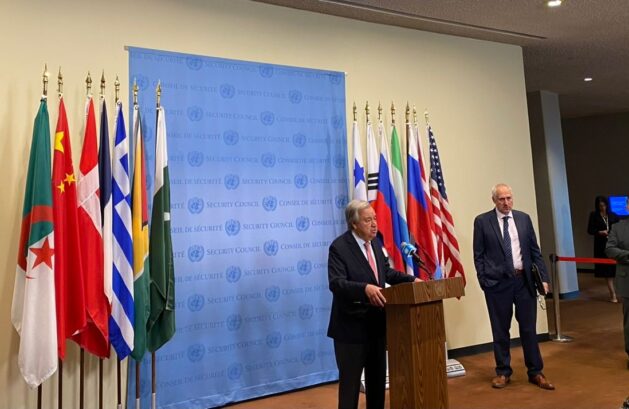
United Nations Secretary-General António Guterres at a press briefing on Israel’s plans to take over Gaza City. Credit: Jennifer Xin-Tsu Lin Levine/IPS

United Nations Secretary-General António Guterres at a press briefing on Israel’s plans to take over Gaza City. Credit: Jennifer Xin-Tsu Lin Levine/IPS

UNITED NATIONS, Aug 28 2025 (IPS) – Ahead of the Security Council meeting on the situation in the Middle East, United Nations Secretary-General António Guterres spoke to the press on the “unfolding tragedy that is Gaza,” calling Israel’s new plans to take over Gaza City with the military a “deadly escalation” and an “existential threat to the two-state solution.”


He warned that such a move could precipitate an unprecedented humanitarian catastrophe that imperiled any remaining prospects for negotiated peace.

The Secretary-General also reiterated his plea for an immediate ceasefire, emphasizing that capturing Gaza City would result in massive civilian casualties and widespread destruction—including severe impacts on the health sector already teetering on collapse.

At the daily press briefing, spokesperson for the Secretary-General Stéphane Dujarric reported on the displacement in Gaza since Israel’s most recent invasion, confirming the Secretary-General’s statements about refugees. UN experts report that the total number of people who have fled from north Gaza to south Gaza since August 14, when the Israeli invasion was announced, is 20,000.

The Secretary-General went on to address the most recent Israeli air strike on the Nasser Hospital in the southern Strip of Gaza, where at least 20 people were killed and 50 others were injured. Israel’s military defended the strike by asserting that it targeted a camera used by Hamas to surveil troop movements.

Dorothy Shea, United States ambassador to the United Nations, defended Israeli actions and urged condemnation of Hamas’ use of civilian facilities for military purposes. She also noted the Hamas members killed by the airstrike.

Prime Minister Benjamin Netanyahu issued a statement calling the strike a “tragic mishap” with no mention of a specific Hamas target. The Secretary-General called for an impartial investigation into these contrasting claims.

Although Netanyahu reaffirmed his respect for journalists on X, formerly known as Twitter, UNESCO reported at least 62 journalists and media workers killed in Palestine while working since October 2023. At least five journalists were killed in the Nasser air strike, according to World Health Organization Director Tedros Adhanom Gebreyesus.

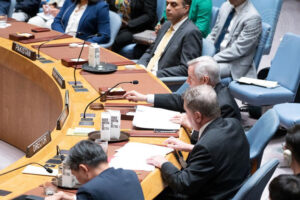
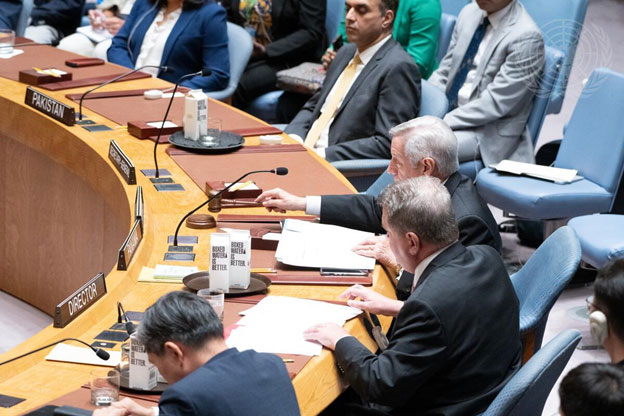
At the Security Council meeting debating whether or not to renew the mandate for the United Nations Interim Force in Lebanon (UNIFIL), many representatives acknowledged Israel’s current military action and called UNIFIL’s work “vital” in maintaining borders, minimizing conflict and stabilizing tensions.

The representative for Algeria Amar Bendjama was critical of UNIFIL’s failures, but spoke in favor of the renewal. He said, “We must ask, has UNIFIL fulfilled its mandate? Clearly, the answer is no. Lebanese lines remain under Israeli occupation, and we regret that our proposal to include a clear reference to the 1949 general armistice agreement was not retained. Without ending Israel’s occupation of Arab lands, peace and stability in the region will remain elusive.”

UNIFIL was initially created in 1978 to oversee Israeli withdrawal from Lebanon. The mandate was adjusted and has played a significant role in maintaining Lebanese army control on the border between Lebanon and Israel rather than Hezbollah, a paramilitary organization, taking over. Critics, led by the United States, see the mandate as a waste of money that has helped Hezbollah consolidate power.

Dujarrac emphasized the necessity of all participating parties to respect UNIFIL’s mandate for it to successfully fulfill its promises.

The Council ultimately voted to renew UNIFIL’s mandate, with many members stressing that the mission continues to play an important role in preventing further escalation along the Israel-Lebanon border.

Guterres’s warnings on Gaza and the debate over UNIFIL underscored the overlapping crises in the region that face the Security Council.

As displacement in Gaza mounts and humanitarian needs continue to fester, UNIFIL’s renewal has bought time rather than answers for a region caught between humanitarian crisis and unresolved conflict.

IPS UN Bureau Report

  Source

Human Rights Watch Warns of Surge in Executions in Saudi Arabia

Civil Society, Crime & Justice, Headlines, Human Rights, Middle East & North Africa, Press Freedom, TerraViva United Nations

Eloy Alfaro de Alba (with gavel), Permanent Representative of Panama to the United Nations and President of the Security Council for the Month of August, chairs the Security Council meeting on the situation in the Middle East. Credit: UN Photo/Evan Schneider

UNITED NATIONS, Aug 21 2025 (IPS) – Human rights groups have expressed alarm over the surge in unprecedented executions in Saudi Arabia in 2025. Humanitarian experts have underscored the Saudi Arabian monarchy’s use of the death penalty to silence peaceful dissent among civilians and impose justice for minor offenses, with little to no due process.


On August 11, Human Rights Watch (HRW) raised the alarm on the rise in executions of civilians and foreign nationals in Saudi Arabia. Their new report highlighted the June 14 execution of journalist Turki al-Jasser, who worked to expose corruption and human rights violations linked to the Saudi monarchy.

Following al-Jasser’s execution, Saudi Arabia’s Interior Ministry issued a statement in which it accused al-Jasser of committing “terrorist crimes” and “destabilizing the security of society and the stability of the state”. This follows the 2024 execution of Abdullah al-Shamri, a Saudi political analyst, after appearing as a political commentator on broadcast news for prominent media organizations.

“The June 2025 execution of Saudi journalist Turki al-Jasser, after seven years of arbitrary imprisonment on fabricated charges over his online publications, is a chilling testament to the kingdom’s zero tolerance to peaceful dissent and criticism, and a grim reminder of the peril journalists face in Saudi Arabia,” said Sylvia Mbataru, a researcher of civic space at CIVICUS Global Alliance.

HRW reports that Saudi authorities are pursuing the death penalty against Islamic scholar Salman al-Odah and religious reformist activist Hassan Farhan al-Maliki on vague charges related to the peaceful and public expression of their beliefs.

“Behind closed doors, Saudi Arabia is executing peaceful activists and journalists following politicized trials,” said Abdullah Alaoudh, senior director of countering authoritarianism at the Middle East Democracy Center. “These state-sanctioned killings are an assault on basic human rights and dignity that the world cannot afford to ignore.”

Figures from HRW show that as of August 5, Saudi authorities had carried out over 241 executions in 2025. including 22 alone on the week of August 4. Amnesty International reports that 2024 set a new record for annual executions in Saudi Arabia, documenting at least 345. The human rights organization Reprieve projects that if executions are carried out at the same rate, 2025 could exceed all prior records.

“Saudi authorities have weaponized the country’s justice system to carry out a terrifying number of executions in 2025,” said Joey Shea, researcher for Saudi Arabia and the United Arab Emirates at Human Rights Watch. “The surge in executions is just the latest evidence of the brutally autocratic rule of Crown Prince Mohammed bin Salman.”

Estimates from Reprieve show that roughly 162 of this year’s recorded executions were for minor drug-related offenses, with over half involving foreign nationals. HRW reports that none of these executions followed due process, making it highly unlikely that any of those executed received a fair trial.

“Saudi Arabia’s relentless and ruthless use of the death penalty after grossly unfair trials not only demonstrates a chilling disregard for human life; its application for drug-related offenses is also an egregious violation of international law and standards,” said Kristine Beckerle, Amnesty International’s Deputy Regional Director for the Middle East and North Africa.

“We are witnessing a truly horrifying trend, with foreign nationals being put to death at a startling rate for crimes that should never carry the death penalty. This report exposes the dark and deadly reality behind the progressive image that the authorities attempt to project globally.”

Earlier this year, Amnesty International, the European Saudi Organization for Human Rights, and Justice Project Pakistan documented the cases of 25 foreign nations who were on death row or have been executed in Saudi Arabia for drug-related offenses. The investigation found that the majority of individuals on death row were not afforded their fundamental human rights, such as access to a legal representative, interpretation services, and consular support. Additionally, Amnesty International reported that in many of these cases, individuals from disadvantaged socio-economic backgrounds faced heightened risks of discrimination in legal proceedings.

Furthermore, it was reported that at least four of these cases involved the use of torture and ill treatment in detention facilities to extract confessions from individuals charged with drug-related crimes. For many of these individuals, their families were not informed of the status of their convictions and were only notified of an execution the day prior. In all cases of execution, Amnesty International reported that the bodies of executed individuals were withheld by Saudi authorities.

The recent surge in executions has drawn immense criticism from human rights groups for violating international humanitarian law. Although Saudi Arabia has not acceded to the International Covenant on Civil and Political Rights (ICCPR), a multilateral treaty adopted by the UN that promoted an inherent right to life and due process, it has ratified the Arab Charter on Human Rights, which obligates that Saudi Arabian security forces are only to use the death penalty for the “most serious crimes”.

Mandeep Tiwana, the Secretary-General of CIVICUS Global Alliance, informed IPS that the current civic space conditions in Saudi Arabia are listed as “closed”, indicating that civilians hold little to no power and are bereft of the ability to represent themselves in governmental affairs and peacefully dissent. “This means that those who criticize the authorities or engage in protests of any kind or seek to form associations that demand transformational change can face severe forms of persecution including imprisonment for long periods, physical abuse and even death.”

IPS UN Bureau Report

  Source

Women in Sudan are Starving Faster than Men; Female-Headed Households Suffer

Active Citizens, Africa, Armed Conflicts, Civil Society, Crime & Justice, Food and Agriculture, Food Security and Nutrition, Gender, Headlines, Health, Human Rights, Humanitarian Emergencies, Migration & Refugees, TerraViva United Nations

In Sudan, women-led households are three times more likely to deal with serious food insecurity compared to male-led households. Credit: UN Women Sudan

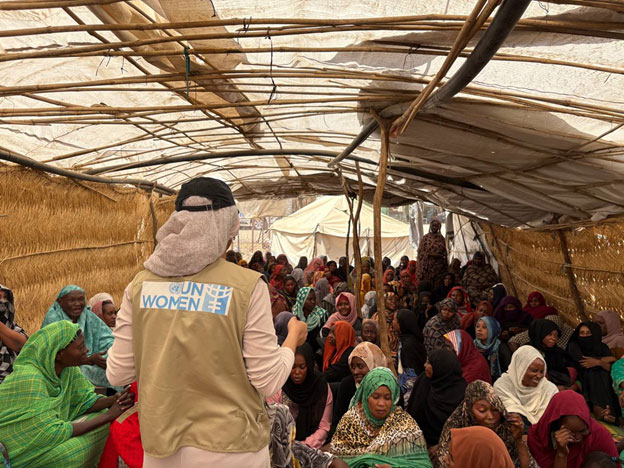
UNITED NATIONS, Aug 12 2025 (IPS) – The food crisis in Sudan is starving more day by day, yet it is affecting women and girls at double the rate compared to men in the same areas. New findings from UN-Women reveal that female-headed households (FHHs) are three times more likely to be food insecure than ones led by men.


Women and girls make up half of the starving in Sudan, at 15.3 million of the 30.4 million people currently in need. In the midst of the current humanitarian crisis brought on by the Sudanese civil war, women are increasingly seen to be leading households in the absence of men due to death, disappearances or displacement amidst the civil war, making simply living in a FHH a statistical predictor of hunger.

“With conditions now at near famine thresholds in several regions in the country, it is not just a food crisis, but a gender emergency caused by a failure of gender-responsive action,” said Salvator Nkuruniza, the UN-Women representative for Sudan.

Famine Risks for Sudan’s Women

This famine has left only 1.9 percent of FFHs food secure, compared to 5.9 percent of male-headed households (MHHs) reporting food security. 45 percent of the FHHs reported poor food consumption which was nearly double the rate as compared to MHHs at 25.7 percent. Considering this, only one third of FHHs have an acceptable diet in comparison to half of MHHs. In these worsening conditions 73.7 percent of women nationally are not meeting the minimum dietary diversity, which is limiting nutrient intake and thus endangering maternal and child health.

Rates of poor food consumption have doubled in one year across FHHs, meaning a longer drawn conflict will see even worse numbers leading to the ultimate starvation of many. Nearly 15 percent of FHHs are living in conditions that meet or are near famine thresholds compared to only 7 percent of MHHs meeting the same threshold.

With all available funding, the World Food Programme (WFP) has scaled assistance to support nearly 4 million people per month, leaving an additional 26 million people still in need of support. As one representative from the UN Office of the Coordination of Humanitarian Affairs (OCHA) told IPS, under these circumstances WFP has had to make tough calls, either shrinking assistance packages or reducing the amount of people who receive assistance. There have been cases where they have been forced to cut off all assistance in general.

Within Sudan’s civil society, women-led organizations (WLO) are playing a central role in delivering vital meals to affected groups across Sudan. Nkurunziza told IPS that “WLOS are the backbone of response in many areas,” who can access areas which the international system cannot reach. WLOs in West Kordofan are solarizing clinics, running nutrition outreach, managing mobile maternal health care, and operating informal shelters. In North Kordofan, WLOs. are running protection hotlines, distributing food, and helping displaced families find safety. Many times they are providing these services without institutional funding.

UN Women has been supporting 45 WLOs with institutional support, funding and technical assistance, which has allowed these organizations to operate across sixteen states. However, underfunding still remains a critical issue for WLOs. Nkurunziza explained how due to funding deficits, one WLO that operates across eight states was forced to shut down thirty-five of its sixty food kitchens. WLOs must also deal with serious logistical and digital constrains, making it nearly impossible to have any form of coordination meetings. Sudan is also facing the world’s largest displacement crisis, making a shrinking of operations among deteriorating consumption rates detrimental to attempts to elevate food security.

Aid Delivery Challenges

Amidst funding shortfalls, supply chains have struggled reaching critical locations due to Sudan’s size, lack of infrastructure, and weather difficulties. WFP shared that Sudan is “roughly the size of western Europe”, and as such they and other humanitarian actors are having to transport humanitarian items over 2500 kilometers across deserts and challenging terrain. They added that road infrastructure in remote areas such as Darfur and Kordofan has further increased the difficulty. The rainy season between April and October has also added further complications, which has made many roads completely flooded or impassable.

WFP said that the conflict has not only affected supply chains, but trade routes themselves. Among the besieged cities of El Fasher and Kadulgi, supplies remain limited and far and few. WFP is “extremely concerned about the catastrophic situation, especially in El Fasher and Kadulgi and urgently [needed] guarantees of safe passage to get supplies in – while we continue supporting with digital cash transfer”. This comes amidst not being able to deliver food and aid supplies by road.

Gender Disparities and Solutions

Nkurunziza told IPS that even before the conflict, women and girls “faced challenges in accessing their rights due to cultural norms and traditional practices”, adding that this conflict has only widened these gaps.

Food access is only one example of how gender inequality manifests during this crisis. Nkurunziza noted that food queues are often dominated by men compared to women from FHHs. He added that women have been “largely left out” of decision-making spaces, therefore their specific needs are “frequently overlooked”.

The search for food has caused an increase in harmful coping mechanisms like child marriage, sexual exploitation, female genital mutilation, and child labor. The nature of these harmful instances come from unchecked sexual exploitation and abuse due to the lack of law enforcement and government in many areas. Since April 2023, 1,138 cases of rape have been recorded, including 193 children. This number is expected to be even higher, as social and security fears may be preventing accurate reporting of gender-based violence crimes.

“The conflict has magnified every existing inequality,” Nkurunziza said, adding that this created the need for responsive action, moving beyond simple rhetoric.

In their report, UN Women outlined several measures that needed to be adopted in order to diminish famine conditions among women, including prioritizing food distribution and assistance planning to FHHs and establishing localized distribution sites, thus reducing movement-related risks for women. They also recommended increased representation in local aid committees and decision-making spaces by at least 40 percent. They called for increasing investment and funding to WLO’s, which are currently receiving less than 2 percent of humanitarian aid funds.

Despite these challenges, Nkurunziza said that WLOs are still working to feed families. “They are not waiting for permission — they are responding. The question is whether the system will finally recognize them as equal partners or continue to leave them behind.”

IPS UN Bureau Report


  Source

Bangladesh’s Democratic Promise Hangs in the Balance

Active Citizens, Asia-Pacific, Civil Society, Crime & Justice, Democracy, Economy & Trade, Featured, Headlines, Human Rights, Inequality, Labour, Press Freedom, TerraViva United Nations

Opinion

Credit: Abdul Goni/Reuters via Gallo Images

MONTEVIDEO, Uruguay, Jul 7 2025 (IPS) – When Bangladesh’s streets erupted in protest in mid-2024, few could have predicted how swiftly Sheikh Hasina’s regime would crumble. The ousting of the prime minister last August, after years of mounting authoritarianism and growing discontent, was heralded as a historic opportunity for democratic renewal. Almost a year on, the question remains whether Bangladesh is genuinely evolving towards democracy, or if one form of repression is replacing another.


The interim government, led by Nobel laureate Muhammad Yunus, confronts enormous challenges in delivering meaningful change. While it has taken significant steps – releasing political prisoners, initiating constitutional reforms, signing international human rights treaties and pursuing accountability for past violations – persistent abuses, political exclusion and economic instability continue to cast long shadows over the transition. The coming months will prove decisive in determining whether Bangladesh can truly break from its authoritarian past.

From electoral fraud to revolution

The roots of Bangladesh’s current upheaval trace back to the deeply flawed general election of 7 January 2024. The vote, which saw Hasina’s Awami League (AL) secure a fourth consecutive term, was widely dismissed as a foregone conclusion. The main opposition Bangladesh Nationalist Party boycotted the election in protest at the government’s refusal to reinstate a neutral caretaker system.

The government unleashed an intense crackdown ahead of the vote. It imprisoned thousands of opposition activists and weaponised the criminal justice system to silence dissent, leading to deaths in police custody and enforced disappearances. This repression extended to civil society, with human rights activists and journalists facing harassment, arbitrary detention and violence. The government sponsored fake opposition candidates to create an illusion of competition, resulting in plummeting voter turnout and a crisis of legitimacy.

When opposition rallies occurred, they were met with overwhelming force. On 28 October 2023, police responded to a major opposition protest in Dhaka with rubber bullets, teargas and stun grenades, resulting in at least 16 deaths, with thousands injured and detained.

The situation deteriorated further after the election. In June 2024, the reinstatement of a controversial quota system for public sector jobs triggered mass student-led protests that would ultimately topple Hasina’s government. These protests rapidly evolved into a broader revolt against entrenched corruption, economic inequality and political impunity.

The government’s response was systematically brutal. According to a United Nations fact-finding report, between July and August security forces killed as many as 1,400 people, including many children, often shooting protesters at point-blank range. They denied the injured medical care and intimidated hospital staff. The scale of violence eventually led the military to refuse further involvement, forcing Hasina to resign and flee Bangladesh.

Reform efforts amid political discord

The interim government identified three core priorities: institutional reforms, trials of perpetrators of political violence and elections. Its initial months brought significant progress. The government released detained protesters and human rights defenders, signed the International Convention for the Protection of All Persons from Enforced Disappearances and established a commission of inquiry into enforced disappearances.

This commission documented around 1,700 complaints and found evidence of systematic use of enforced disappearances to target political opponents and activists, with direct complicity by Hasina and senior officials. In October, the Bangladesh International Crimes Tribunal issued arrest warrants for Hasina and 44 others for massacres during the 2024 protests, although the tribunal has a troubled history and retains the death penalty, contrary to international norms.

The Constitution Reform Commission has proposed expanding fundamental rights, with a bicameral parliament and term limits for top offices. However, the process has been undermined by the exclusion of major political players – most notably the AL – and minority groups.

Political tensions escalated as the interim government faced mounting pressure to set a general election date. Opposition parties accused it of deliberate stalling. The army chief publicly demanded elections by the end of 2025, while student groups sought postponement until reforms and justice were secured. After initial uncertainty, the government announced the election would occur in April 2026.

The most dramatic escalation came in May, when the interim government banned all AL activities under the Anti-Terrorism Act following renewed protests. The Election Commission subsequently suspended the AL’s registration, effectively barring it from future elections and fundamentally altering Bangladesh’s political landscape.

Economic challenges compound these political difficulties. Bangladesh remains fragile after devastating floods in 2024, while the banking sector faces stress from surging non-performing loans. Inflation continues outpacing wage growth and economic austerity measures agreed with the International Monetary Fund have sparked fresh protests.

Authoritarian patterns persist

Despite promises of change, old patterns of repression prove stubborn. Human rights groups document ongoing security forces abuses, including arbitrary arrests of opposition supporters and journalists, denial of due process and continued lack of accountability for past crimes. In the first two months of 2025 alone, over 1,000 police cases were filed against tens of thousands of people, mainly AL members or perceived supporters. A February crackdown on Hasina’s supporters led to over 1,300 arrests.

Press freedom remains severely threatened. In November, the interim government revoked the accreditation of 167 journalists. Around 140 journalists viewed as aligned with the previous regime have faced charges, with 25 accused of crimes against humanity, forcing many into hiding. Attacks on media outlets continue, including vandalism of newspaper offices.

The draft Cyber Protection Ordinance, intended to replace the repressive Cyber Security Act, has drawn criticism for retaining vague provisions criminalising defamation and ‘hurting religious sentiments’ while granting authorities sweeping powers for warrantless searches. Rights groups warn this law could stifle dissent in the run-up to elections.

Uncertain path forward

Bangladesh’s journey demonstrates that democratic transitions are inherently difficult, nonlinear and deeply contested processes. Democracy isn’t a guaranteed outcome, but the chances improve when political leaders are genuinely committed to reform and inclusive dialogue, and political players, civil society and the public practise sustained vigilance.

While the interim government has achieved steps unthinkable under the previous regime, the persistence of arbitrary arrests, attacks on journalists and the exclusion of key political players suggests authoritarianism’s shadow still looms large.

The upcoming general election will provide a crucial test of whether Bangladesh can finally turn the page on authoritarianism. The answer lies in whether Bangladeshis across government, civil society and beyond are able to build something genuinely new. The stakes are high in a country where many have already sacrificed much for the promise of democratic freedom.

Inés M. Pousadela is CIVICUS Senior Research Specialist, co-director and writer for CIVICUS Lens and co-author of the State of Civil Society Report.

For interviews or more information, please contact research@civicus.org

  Source