Leprosy has a Cure, so has Prejudice, says Miss Universe for Brazil

Civil Society, Development & Aid, Featured, Gender, Headlines, Health, Human Rights, Inequity, TerraViva United Nations

Human Rights

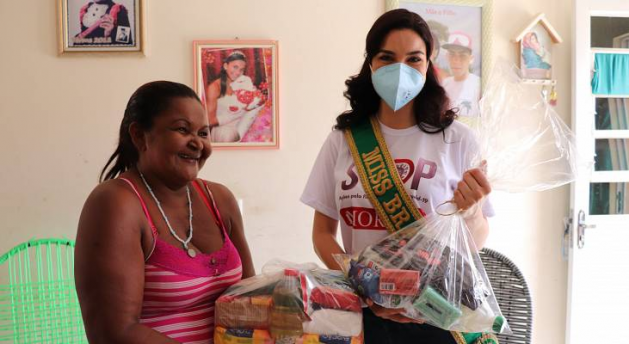
Julia Gama, Miss Brazil Universe working with Morhan to deliver food baskets to people affected by Hansen’s disease, with support from the Sasakawa Health Foundation. Credit: Morhan

NAIROBI, KENYA, Sep 29 2021 (IPS) – A new dawn has come, and it was through the work of Yohei Sasakawa, the WHO Goodwill Ambassador for Leprosy Elimination, that those affected by leprosy now had a voice to speak for themselves.


So said Faustino Pinto, a person affected by leprosy and Vice National Coordinator of Movement for the Reintegration of People Affected by Hansen’s disease (Morhan), at a webinar with the theme ‘Hansen’s Disease/Leprosy as Human Rights issue’.

Sasakawa, who is also the chairperson of the Nippon Foundation, and Dr Alice Cruz, UN Special Rapporteur on the Elimination of Discrimination against Persons Affected by Leprosy, addressed the webinar. Guests included Caroline Teixeira, Miss World Brazil 2021 and Julia Gama, Miss Universe Brazil 2020. The Sasakawa Health Foundation, in collaboration with Morhan, were co-conveners. The event forms part of a 10-month-long campaign dubbed ‘Do not Forget Leprosy’.

The celebrity guests applauded his sentiments.

Faustino Pinto, a person affected by leprosy and Vice National Coordinator of Morhan. Credit: Joyce Chimbi

Gama, also working with Morhan, told IPS: “Hansen’s disease has a cure, and I believe so does prejudice. I will use my voice to ensure that those who were silenced are heard. I believe togetherness is our strength, and together we can eradicate Hansen’s disease.”

Pinto praised Sasakawa for his lifelong commitment to improving the lives of those affected by the disease.

“We were taught to just accept what we were told: Take the medicine, keep the appointments, open your mouth to check if you did take the medicine, do not abandon the treatment,” says Pinto. This changed when Sasakawa became involved.

Pinto appealed for those affected by leprosy to be heard, seen, and involved in efforts towards zero leprosy.

He lauded the Sasakawa and the Foundation “for always talking about us and including us in the debate” and for “truly listening to us and giving us a voice”. It is this voice that Pinto used to appeal to the global community, saying, “Don’t Forget Hansen’s Disease. Don’t Forget Us.”

At the heart of discussions was the bid to draw the world’s attention to a disease in equal measure, a medical and social problem. Furthermore, the meeting was a key platform where participants were urged to approach leprosy as a human’s rights issue.

While concerted efforts have today led to less than one case of leprosy in a population of 10 000 people as per WHO estimates, with at least 200 000 new cases reported annually, experts say leprosy is still very much a concern.

“There are more than one billion people in the world living with disabilities, including persons affected by leprosy. We need to create an inclusive society where everyone can have an education, find work, and get married if they want to. People have passion and motivation. Often, all they lack is opportunity,” says Sasakawa.

Governments efforts to respond to COVID-19 is believed to have setback the progress towards zero leprosy.

“Persons affected by leprosy face multiple discrimination. They are often discriminated against on various grounds – like leprosy, but also gender, age, poverty, disability, sexuality, and race. They also struggle with violence from the State and society and with interpersonal violence,” says Cruz.

Caroline Teixeira, Miss World Brazil, with Morhan’s national coordinators Artur Custódio (centre) and Lucimar Batista (right), and the director of the National Beauty Contest and Morhan volunteer, Marina Fontes (left). Credit: Morhan

“There is such ability and potential in the world, and to have everyone participate in society will create a truly wonderful future. That is why it is important for persons affected by leprosy to have confidence and speak out,” Sasakawa emphasises.

“To support them, Sasakawa Health Foundation and The Nippon Foundation are helping them to build up their organisational capacity. I would like to see a society in which everyone is active, able to express their opinions to the authorities with confidence, and their contribution is valued,” he adds.

Over ten months, the campaign, which leverages Sasakawa’s 20th anniversary as Goodwill Ambassador, will raise awareness of why the world should stay focused on leprosy.

“It was a great honour to be chosen Miss World Brazil and thus become an ambassador of the fight against Hansen’s disease in Brazil, the country with the highest incidence of the disease in the world,” Teixeira told IPS.

“In the coming days, I will be part of a Morhan delegation visiting several cities in the north of the country, sensitising governments to action in defence of the rights of persons affected. We will certainly unite many voices so that Hansen’s disease is not forgotten,” she says.

Nevertheless, left untreated, leprosy can result in permanent disability. Worldwide, three to four million people live with some form of disability due to leprosy, as per WHO estimates.

There is growing concern that COVID-19 and the fear of discrimination could further prevent people from visiting hospitals, leading to diagnosis and treatment delays.

As it is, WHO’s 2020 statistics show an estimated 40 percent drop in the detection of new leprosy cases, which, experts warn, will lead to increased transmission of leprosy and more cases of disability.

Discrimination and stigma remain a primary concern for Sasakawa. He decries that “people who should be part of society remain isolated in colonies facing hardships. The more you look into it, the more you see the restrictions they live under, including legal restrictions in some cases. Is it not strange that someone cured of a disease cannot take their place in society?”

“I belatedly realised that if the human rights aspect wasn’t addressed, then elimination of leprosy in a true sense would not be possible. I would like to create a society where everyone feels fully engaged, able to express their opinions, and appreciated. The coming era must be one of diversity, and for that, we need social inclusion.”

  Source

Delivering On the Promise of Health For All Must Include Gender Equality and SRHR

Civil Society, COVID-19, Development & Aid, Gender, Global, Headlines, Health, Human Rights, Humanitarian Emergencies, Inequity, Labour, Poverty & SDGs, TerraViva United Nations, Women’s Health

Opinion

Health workers are at the frontlines in the fight against the new Corona Virus. Credit: John Njoroge

NEW YORK, Sep 29 2021 (IPS) – Gender-responsive universal health coverage (UHC) has the proven potential to transform the health and lives of billions of people, particularly girls and women, in all their intersecting identities. At tomorrow’s kick-off to the 2023 UN High-Level Meeting (HLM) on UHC, Member States and stakeholders will review progress made on the 2019 HLM’s commitments and set a roadmap to achieve UHC by 2030. We, as the co-convening organizations of the Alliance for Gender Equality and UHC, call on Member States to safeguard gender equality and sexual and reproductive health and rights (SRHR) as part of UHC implementation, especially in light of the gendered impacts of the COVID-19 pandemic.


To move forward, it is crucial to remember our cumulative past promises. In 2019, Member States adopted a Political Declaration that contained strong commitments to ensure universal access to SRHR, including family planning; mainstreaming a gender perspective across health systems; and increasing the meaningful representation, engagement, and empowerment of all women in the health workforce. Further, 58 countries put forward a joint statement that argued that investing in SRHR is affordable, cost-saving, and integral for UHC. These commitments were the result of the advocacy and hard work of civil society organizations, including members of the Alliance for Gender Equality and UHC, and set out a clear path on the steps needed to make gender-responsive UHC a reality.

However, following the 2019 HLM, the deadly and devastating COVID-19 pandemic drastically changed how individuals around the globe could access essential health services. Fundamental human rights, including hard-won gains made for UHC, SRHR, and gender equality, are now at risk as health and social services are strained and political attention is diverted. The protracted pandemic underscores how gender-responsive UHC is more important than ever.

We call on Member States to renew the commitments made in 2019 and affirm that delivering on the promise of health for all is only possible by way of gender-responsive UHC.

To truly deliver gender-responsive UHC, we offer the following five recommendations:

1. Design policies and programs with an intersectional lens that places SRHR and girls and women — in all their diversity — at the center of UHC design and implementation. To be effective, UHC must recognize and respond to the needs of women in all their intersecting identities, including by explicitly addressing the ways in which race, ethnicity, age, ability, migrant status, gender identity, sexual orientation, class, and caste multiply risk and impact health outcomes. What’s more, COVID-19 has deepened inequalities for marginalized populations, and special attention is needed, now more than ever, to deliver UHC for those pushed furthest behind.

2. Ensure UHC includes comprehensive SRH services, and provide access to SRH services for all individuals throughout the life course. These services must be free of stigma, discrimination, coercion, and violence, and they must be integrated, high quality, affordable, accessible, and acceptable. The World Health Organization (WHO) provides guidance in the UHC Compendium of interventions and supporting documents for what this can look like. The pandemic has given way to multiple interruptions to SRHR care. For example, an estimated 12 million women may have been unable to access family planning services due to the pandemic. COVID-19 response and recovery and UHC implementation must address these issues.

3. Prioritize, collect, and utilize disaggregated data, especially gender-disaggregated data. UHC policy and planning can only be gender-responsive when informed by data that are disaggregated by gender and other social characteristics. In the current pandemic, not all countries are reporting disaggregated data on infections and mortality from COVID-19 to the WHO, and most countries have not implemented a gendered policy response. In June 2021, only 50% of 199 countries reported data disaggregated by sex on COVID-19 infections and/or deaths in the previous month.1 The number of countries reporting sex-disaggregated statistics has also decreased over the course of the pandemic. Without this information, decision-makers are unable to base policies on evidence affirming how to address the health needs of all genders — a critical lesson for UHC.

4. Foster gender equality in the health and care workforce and catalyze women’s leadership. The approach to the health and care workforce in the pandemic has frequently not applied a gender lens, ignoring the fact that women are 70% of the global health workforce and powerful drivers of health services. Gender inequities in the health workforce were present long before the pandemic, with the majority of female health workers in lower-status, low-paid roles and sectors, often in insecure conditions and facing harassment on a regular basis. Moreover, although women have played a critical role in the pandemic response — from vaccine design to health service delivery — they have been marginalized in leadership on pandemic decision-making from parliamentary to community levels. In fact, 85% of national COVID-19 task forces have majority male membership. Urgent investment in safe, decent, and equal work for women health workers, as well as equal footing for women in leadership and decision-making roles, must be central to the delivery of UHC.

5. Back commitments to advancing SRHR, gender equality, and civil society engagement in UHC design and implementation with necessary funding and accountability. Now is the time to invest in health and the care economy, particularly in UHC. Governments everywhere are facing fiscal constraints from the pandemic. UHC is a critical part of investing in and building back resilient health and social systems to avoid catastrophic spending on future pandemics and global health emergencies. UHC must be designed intentionally, with appropriate accountability mechanisms, to reduce inequalities between and within countries — and especially gender inequality, which undermines social and economic rights and resilience.

We, along with our civil society partners in the Alliance for Gender Equality and UHC, stand ready to work hand-in-hand with governments, the UN, and all stakeholders to act on these recommendations on the road to the 2023 HLM on UHC. At this point in the COVID-19 pandemic, there is no time to waste in making the promise of health for all a reality, and this can only be achieved through gender-responsive UHC that centers gender equality and SRHR.

The authors are Ann Keeling of Women in Global Health, Divya Mathew of Women Deliver, Deepa Venkatachalam of Sama Resource Group for Women and Health, and Chantal Umuhoza of Spectra Rwanda. These four organizations are the co-conveners of the Alliance for Gender Equality and Universal Health Coverage.

1 Global Health 50/50 (globalhealth5050.org)

  Source

Food Systems Summit’s Scientistic Threat

Civil Society, Development & Aid, Economy & Trade, Food and Agriculture, Food Security and Nutrition, Food Sustainability, Global, Headlines, Poverty & SDGs, TerraViva United Nations

Opinion

KUALA LUMPUR, Malaysia, Sep 14 2021 (IPS) – Timely interventions by civil society, including concerned scientists, have prevented many likely abuses of next week’s UN Food Systems Summit (UNFSS). The Secretary General (UNSG) must now prevent UN endorsement of what remains of its prime movers’ corporate agenda.


Summit threat
The narrative on food challenges has changed in recent years. Instead of the ‘right to food’, ‘food security’, ‘eliminating hunger and malnutrition’, ‘sustainable agriculture’, etc, neutral sounding ‘systems’ solutions are being touted. These will advance transnational corporations’ influence, interests and profits.

Jomo Kwame Sundaram

The call for the Summit supposedly came from the SG’s office. There was little, if any prior consultation with the Rome-based UN food agency leaders. However, this apparent ‘oversight’ was quickly addressed by the SG, which led to the preparatory commission in Rome last month.

The Food and Agriculture Organization of the United Nations (FAO) was created by the UN-led post-Second World War multilateral system to address food challenges. Later, the World Food Programme (WFP) and the International Fund for Agricultural Development (IFAD) were also established in Rome under UN auspices.

President Donald Trump’s sovereigntist unilateralism accelerated earlier tendencies undermining UN-led multilateralism, especially after the US-led invasion of Iraq. A proliferation of ostensibly ‘multistakeholder’ initiatives – typically financed by transnational agribusinesses and philanthropic foundations – have also marginalised UN-led multilateralism and the Rome food agencies.

Thus far, the Summit process has resisted UN-led multilateral follow-up actions. To be sure, UN system marginalisation has been subtle, not ham-fisted. Besides the Rome trio, the UN Committee for World Food Security (CFS) and its High-Level Panel of Experts on Food Security and Nutrition (HLPE) have been casualties.

The CFS has evolved in recent years to involve a broad range of food system stakeholders, including private business interests and civil society. The latter includes social movements – of farmers, other food producers and civil society stakeholders – largely bypassed by Summit processes.

Through the FSS, World Economic Forum (WEF) and other initiatives have been presented as from the UN. In fact, these have minimally involved UN system leaders, let alone Member States. Many refer to the Summit without the UN prefix to reject its legitimacy, as growing numbers cynically call it the ‘WEF-FSS’.

Science-policy nexus takeover
The proposal for a new science-policy interface – “either by extending the mandate of the Summit’s Scientific Group, or by establishing a permanent new panel or coordinating mechanism in its mould” – is of particular concern.

The FSS Scientific Group overwhelmingly comprises scientists and economists largely chosen by the Summit’s prime movers. Besides marginalising many other food system stakeholders, its biases are antithetical to UN values and the Sustainable Development Goals.

Their assessments barely consider the consequences of innovations for the vulnerable. Prioritising technical over social innovations, they have not been transparent, let alone publicly accountable.

Their pretentiously scientistic approach is patronising, and hence, unlikely to effectively address complex contemporary food system challenges involving multiple stakeholders.

Extending the Scientific Group’s remit beyond the Summit, or by otherwise making it permanent, would betray the commitment that the FSS would support and strengthen, not undermine the CFS. The CFS “should be where the Summit outcomes are ultimately discussed and assessed, using its inclusive participation mechanisms”.

Such a new body would directly undermine the HLPE’s established “role and remit” to provide scientific guidance to Member States through the CFS. In July, hundreds of scientists warned that a new science panel would undermine not only food system governance, but also the CFS itself.

Saving UN-led multilateralism
Just as Summit preparations have displaced CFS, the proposal science-policy interface would marginalise the HLPE, undermining the most successful UN system reform to date in meaningfully and productively advancing inclusive multi-stakeholderism.

After the 2007-2008 food price crisis, CFS was reformed in 2009 to provide “an inclusive platform to ensure legitimacy across a broad range of constituencies”, and to improve the coherence of various diverse food-related policies.

Like the Intergovernmental Panel on Climate Change (IPCC), the HLPE consults widely and openly with stakeholders on its research assessments and work priorities. Its reports are subject to extensive peer reviews to ensure they serve CFS constituents’ needs, remain policy relevant, and address diverse perspectives.

Last week, several crucial civil society leaders, working closely with the UN system, warned that Summit outcomes could further erode the UN’s public support and legitimacy, and the ability of the Rome bodies to guide needed food system reform.

The group includes UN Special Rapporteur on the Right to Food Michael Fakhri, his predecessor Olivier De Schutter, now UN Special Rapporteur on Extreme Poverty and Human Rights, CFS chair Thanawat Tiensin and HLPE chair Martin Cole.

Their concerns reiterate those of hundreds of scientists, global governance experts, civil society groups, and the International Panel of Experts on Sustainable Food Systems (IPES-Food), among many. The main worry is about “the threat it poses to the role of science and knowledge in food system decision-making”.

Mindful of the controversy around the FSS from the outset, the four urge the SG, “In the wake of the Summit, it will be imperative to restore faith in the UN system…A clear commitment to support and strengthen the HLPE and the CFS would therefore be invaluable”.

They stress, “there is much to be done to ensure that the HLPE of the CFS is equipped to continue playing its crucial role at the interface of food system science and policy”. After earlier setbacks, the UNSG must defend the progress CFS and HLPE represent for meaningful UN-led multilateralism and engagement with civil society.

  Source

South-South & Triangular Cooperation to Help Achieve UN’s Development Goals

Civil Society, Development & Aid, Editors’ Choice, Featured, Global, Global Governance, Headlines, IPS UN: Inside the Glasshouse, Poverty & SDGs, Regional Categories, TerraViva United Nations

Opinion

Students of the Lira Integrated Fish Farm in Uganda, a South-South Cooperation Facility for Agriculture and Food Security, eat their lunch. Credit: FAO/Isaac Kasamani

UNITED NATIONS, Sep 10 2021 (IPS) – The 2021 high-level commemoration of the United Nations Day for South-South Cooperation, organized ahead of the opening of the seventy-sixth session of the United Nations General Assembly, provided an opportunity to discuss Southern solidarity in support of a more inclusive, resilient and sustainable future while effectively responding to the global COVID-19 crisis across the global South.


The 2021 United Nations Day for South-South cooperation presented the opportunity for stakeholders to highlight concrete follow-up to the twentieth session of the High-level Committee on South-South Cooperation (HLC), which took place from 1 to 4 June 2021 in New York.

“South-South and triangular cooperation must have a central place in our preparations for a strong recovery”, says Secretary-General António Guterres, reminding us that “we will need the full contributions and cooperation of the global South to build more resilient economies and societies and implement the Sustainable Development Goals”.

The General Assembly High-level Committee (HLC) on South-South Cooperation met in June to review progress made in implementing the Buenos Aires Action Plan (BAPA+40) and other other key decisions on South-South cooperation.

This HLC session considered follow-up actions arising from previous sessions and hosted a thematic discussion on “Accelerating the achievement of the SDGs through effective implementation of the BAPA+40 outcome document while responding to the COVID-19 pandemic and similar global crises”.

The HLC hosted 75 member states – including a Head of State and Ministers from around the world – as well as 23 intergovernmental organizations, 25 UN entities, civil society and the private sector. More than 400 people participated during side events which HLC Bureau Members took the lead in organizing on issues of importance to the South.

Deliberations focused on actions arising from the Report of the Secretary-General to the nineteenth session, which proposed concrete ways to enhance the role and impact of the United Nations Office for South-South Cooperation, as well as the key measures taken to improve the coordination and coherence of UN support to South-South cooperation.

In terms of important messages and statements, Member States highlighted that COVID-19 has taught the world that South-South development cooperation is critical to an effective response to emergencies.

South-South cooperation was strongly reaffirmed as the means to support countries’ national development priorities, alignment with the SDGs, and the acceleration of achievement toward the 2030 Agenda.

South-South cooperation was also recognized as an effective approach to accelerate and deepen the efforts to build back better, healthier, safer, more resilient and sustainable.

It was emphasized that over the past decade, the world has witnessed the increase in the scale, scope, and diversity of approaches of South-South and triangular cooperation.

Countries of the Global South have strengthened institutional capacities for cooperation by formulating and implementing national development policies, strategies, and agencies, and by developing information and performance management systems for data gathering, expertise and technology mapping, and impact assessment.

With the strengthening of national capacities on South-South and triangular cooperation there is opportunity to collect and exchange evidence of how much South-South and triangular cooperation is being done, how it benefits people, and how to create institutional mechanisms to help countries align South-South collaboration with their national and regional agendas.

As the world fights the COVID-19 pandemic and strives to build back better, international development organizations must offer innovative, timely responses to remain relevant. This includes new forms of coordination based on more “coherent” and “integrated support” capable of unleashing change on the ground.

Traditionally, South-South and triangular cooperation has taken place among governments on bilateral terms. As development becomes more dynamic in nature and unprecedented in scale, South-South and triangular cooperation is now used to source innovation from wherever it is.

Also highlighted was that South-South and triangular cooperation is increasingly recognized as an important complement to North-South cooperation in financing for sustainable development.

UNOSSC will continue to promote, coordinate and support South-South and triangular cooperation globally and within the UN system. It will also continue to support governments and the UN system to analyse and articulate evolving and emerging trends, dynamics and opportunities in South-South cooperation.

Adel Abdellatif. Credit: FAO/Isaac Kasamani

In response to Member States requests, UNOSSC consistently demonstrates strong convening power across the UN system and serves as secretariat of UN Conferences including BAPA+40. UNOSSC has developed research networks at the global level, compiling evidence of good practices in South-South cooperation toward achievement of the SDGs, and created a global network of think tanks on South-South and triangular cooperation. UNOSSC also offers the South-South Galaxy platform for sharing knowledge and brokering partnership. The Office also manages a number of South-South cooperation trust funds and programmes.

Given UNOSSC’s mandate to support South-South and triangular cooperation globally and within the UN system, the Secretary-General requested UNOSSC to coordinate the preparation and launch of the UN System-wide Strategy on South-South and Triangulation Cooperation for Sustainable Development with the engagement of the UN Inter-Agency Mechanism for South-South and Triangular Cooperation, and other stakeholders.

The Strategy’s objective is to provide a system-wide policy orientation to UN entities in order to galvanize a coordinated and coherent approach to policy, programmatic and partnership support on South-South and triangular cooperation and increase impact across UN activities at all levels: national, regional and global. Implementation is governed by each entity individually, based on its own mandate and programme of work.

UNOSSC is also currently developing its 2022-2025 Strategic Framework. It is an opportunity for the Office to catalyze the use of South-South and triangular cooperation to accelerate the speed and scale of action towards achieving the SDGs.

For example, the Office aims to offer a platform whereby: (i) countries of the Global South can exchange knowledge, develop capacities, and transfer technologies to address their own development priorities as well as coordinate and co-design solutions to shared development challenges; (ii) UN agencies, programs, and funds can strengthen their support to SSTC at the global, regional and country levels.

No country is too poor to contribute to South-South cooperation for development, and no country is too rich to lean from the South. All partners have important elements to contribute. So, it follows that triangular cooperation is an important element of our work.

The COVID-19 pandemic has laid bare severe and systemic inequalities.

The pandemic has also highlighted the importance of the digital revolution. Building institutional capacity in sub-Saharan Africa and LDCs through South-South and triangular cooperation is essential for countries to fully harness digital transformation and recovery.

Triangular cooperation is a flexible platform where partners can mobilize different funding capacities in support of developing countries’ priorities.

Triangular cooperation demands horizontality and shared governance approved by all parties. It is based on a clear respect for national sovereignty and the seeking of mutual benefit in equal partnerships.

Recovery from pandemic requires additional support, innovative development solutions and arrangements between public and private sectors. We must facilitate opportunities to expand development cooperation and its processes and to improve the effectiveness of multilateral cooperation. Fostering multi-dimensionality and multi-stakeholders approaches is the way forward to enhance development impact.

During the June HLC Member States highlighted that in the COVID and post-COVID era, the below priority areas for triangular cooperation could be considered: 1) health, 2) data infrastructure, 3) manufacturing capacity and supply chain for relevant medical material and equipment, as well as treatment; 4) solar energy and reducing carbon footprint; 5) a coalition for disaster resilient initiatives; and 6) currency swap arrangements from international financial institutions.

Adel Abdellatif is the Director, a.i., of the United Nations Office for South-South Cooperation. Before joining UNOSSC, he served as Deputy Director, a.i., and Senior Strategic Adviser in the Regional Bureau for Arab States of the United Nations Development Programme (UNDP). He came to UNDP following a two-decade career at the Ministry of Foreign Affairs of Egypt.

  Source

A Regional Agreement for Healthy Eco-Systems in Latin America & the Caribbean

Civil Society, Development & Aid, Editors’ Choice, Environment, Featured, Headlines, Latin America & the Caribbean, Poverty & SDGs, Regional Categories, TerraViva United Nations

Opinion

Community-led environmental monitors actively protecting the Amazon Rainforest’s biodiversity as well as their livelihoods in Ushpayacu, Pastaza River basin, Peru. Credit: UNDP Peru/Susan Bernuy

VANCOUVER, British Columbia, Sep 8 2021 (IPS) – In August 31st 2021, five Nations including Costa Rica – the country where the Escazú Agreement was adopted – announced publicly working towards a proposal for UN Human Rights Council to recognize globally the right to a clean, safe, healthy and sustainable environment at its 48th session in September.


In a world where social-ecological crises are all too prevalent, do we need a broader human rights frame where also empathy and hope through legal innovation have a prevalent place? Can we imagine a world in which everyone can effectively engage in public participation and have access information and justice?

Latin America and Caribbean (LAC), like other parts of the world, face significant social-ecological challenges. In 2018, the UN Economic Commission of LAC estimated that around 185 million people lived in situation of poverty.

As a result of the COVID-19 pandemic, these already high numbers are rising with more than one third of its 650 million population now living in poverty.

The pressures for healthy ecosystems in LAC range from climate change to pollution in land and water, and conversion of tropical forests to monoculture plantations. The LAC region presents a rising trend in major pressures on biodiversity with the highest proportion of threatened species on Earth.

Latin America – my home for many years – consistently tops the dire statistics of dangerous places to be an environmental human rights defender since Global Witness began to publish data in 2012.

Yet, there is also another story. A story of ordinary and courageous women and men, girls and boys. A story of empowered right-holders and responsible duty-bearers that day-to-day contribute to legal advances with a regional scope.

Vibrant grass-roots and civil society pushed and pulled in the negotiations of the Regional Agreement on Access to Information, Public Participation and Justice in Environmental Matters in Latin America and the Caribbean (Escazú Agreement).

Their continued energy and collective action together with the legislative, executive and judiciary in their respective countries, will be vital for the Agreement’s implementation.

The Escazú Agreement – that weaves together human rights law and environment law – entered into force on Earth Day in 2021, and has a been ratified by half of its 24 signatory countries.

In the words of the Secretary-General of the United Nations “…this landmark agreement has the potential to unlock structural change and address key challenges of our times.”

Human rights are legally binding obligations that have contributed to precipitate societal transformations such as the recognition of indigenous peoples, peasants and local communities individual and rights across many Latin America and Caribbean countries.

In my work – which for the past twenty years has focused on human rights and environment – I have seen how degradation of healthy ecosystems afflicts specially the rights of people in vulnerable situations.

However, I have also witnessed first-hand how people in vulnerable situations including women environmental rights defenders are often those triggering change to safeguard the rich biological and cultural diversity in the region. This biocultural diversity provides essential contributions to the economy and livelihoods.

I believe that is just as important to place a spotlight in innovations and people’s agency in LAC countries as it is to report on catastrophic environmental and social events affecting the region.

While reading international media, I often find a single narrative of catastrophe associated with the LAC region or certain countries. In my view, this narrative risks creating distance rather than bringing people together, emphasising differences rather than our equal human dignity that is at the core of human rights.

Leaving no-one behind involves recognizing the agency of all and supporting everyone’s participation in caring for our planet.

Rather than a narrative of fear and despair of the global scale of environmental challenges, action implementing the Escazú Agreement connecting local and global instruments can generate positive change.

The Escazú Agreement can build on innovative governance instruments such as participatory environmental monitoring schemes – in which people not only access but also generate environmental information.

Transnational collaboration can also help, for example the 2021 EU Parliament Resolution which calls the EU Commission and EU member states to support countries to implement the Escazú Agreement.

The Escazú Agreement can also synergize with the post-2020 global biodiversity framework and National Biodiversity Strategies and Action Plans required by the Convention on Biological Diversity. Other instruments include National Action Plans aiming to implement the UN Guiding Principles on Business and Human Rights (UNGPs).

Having already recognised the right to a healthy environment, the signatory Escazú Agreement countries have a historic opportunity to champion the global recognition of this right.

Already sixty nine States have endorsed a statement in favour of its by the Human Rights Council. Fifteen UN Agencies declared that “the time for global recognition, implementation, and protection of the human right to a safe, clean, healthy and sustainable environment is now”.

Complementary to the legal obligations that the Escazú Agreement generates, I consider that this agreement also provides an opportunity for right-holders and duty-bearers to place human rights narratives within a broader frame encompassing empathy and hope for present and future generations.

Strategically using legal innovations from the local to the global level can contribute to planetary stewardship and good quality of life in harmony with nature, leaving no-one behind.

Claudia Ituarte-Lima is a public international lawyer and scholar. She is researcher on international environmental law at Stockholm University, senior researcher at the Raoul Wallenberg Institute of Human Rights and Humanitarian Law and visiting scholar at School of Public Policy and Global Affairs at the University of British Columbia. Ituarte-Lima holds a PhD from the University College London and a MPhil from the University of Cambridge. Twitter: CItuarteLima

  Source

The Future of Food & Water Systems in Pakistan & Central Asia?

Asia-Pacific, Civil Society, Development & Aid, Editors’ Choice, Environment, Featured, Food and Agriculture, Headlines, Poverty & SDGs, Regional Categories, TerraViva United Nations, Water & Sanitation

Opinion

Clara Colton Symmes, Princeton-in-Asia Fellow, International Water Management Institute (IWMI), Sri Lanka

 
In an Interview with Dr Mohsin Hafeez, Country Representative – Pakistan, Regional Representative – Central Asia

Farmer working in a paddy field in Pakistan. Credit: Faseeh Shams / IWMI

COLOMBO, Sri Lanka, Sep 3 2021 (IPS) – An intense monsoon season in Pakistan means the country’s food system faces the challenge of both extreme floods and extended droughts.

In an effort to address these challenges through cross-sectoral collaboration, Dr. Mohsin Hafeez, IWMI’s Country Representative for Pakistan and Regional Representative for Central Asia, convened a regional dialogue in advance of the UN Food Systems Summit (which is scheduled to take place at the United Nations, September 23) .


Human actions are at the root of much water scarcity, but these international dialogues are an opportunity for humans to be a part of the solution by working to reconcile our damages through transforming how we approach food systems.

Pakistan ranks 88th out of 107 countries on the Global Hunger Index and extreme weather, intensified by climate change, has made farming a challenging venture there. Much of Pakistan’s food is now imported from overseas.

Dr. Hafeez’s work centers around improving the resiliency and efficiency of Pakistan’s water systems. This includes innovating water capture and storage systems in Islamabad and Rawalpindi, where he is working to introduce nature-based solutions like recharging groundwater with rainfall runoff.

By convening April’s regional dialogue and organizing four provincial dialogues in the time since, Dr. Hafeez provided the collaborative platforms necessary for reaching sustainably-managed water sources in his region. It is only through cross-sectoral dialogues and work that Pakistan will achieve sustainable food systems management.

“There is an urgent need for promoting inter-sectoral cooperation through evidence-based information to ensure water-food-energy security and environmental sustainability for food system transformation in Pakistan,” Dr. Hafeez said.

The pre-summit hosted in Italy was another opportunity to bring together diverse stakeholders in food systems in the leadup to the UNFSS. On the IWMI blog, we will be exploring what country managers in Uzbekistan and Pakistan hope to achieve through the UNFSS process.

A Q&A with Dr Hafeez:

How are water and food systems connected?

Water supply systems are first and fundamental in food systems. In Pakistan more than 90 to 95% of our total water resources is used for irrigating crops. It’s a water system intrinsically linked with the food system.

When there is a water shortage, we see a direct impact on food production because this is an arid environment, and farmers are not able to do agriculture without the artificial applying of water.

What are the most pressing challenges facing food and water systems in your region?

Pakistan is a food insecure country. We don’t even have food to eat, let alone nutritious options. Around 45% of the children have stunted growth. People don’t have enough food to meet their caloric needs. We’re importing all the other major crops in the last 4 to 5 years from overseas.

And the food system is dependent on water. When we don’t have enough water, the farmers are not able to grow anything, which impacts the lives and livelihoods of everyone.

If you’re talking about even the linkages between the water system and food system: the current water storage systems are only able to cope for 30 days of water supply.

Then there is also the issue of water quality. There is a lot of wastewater and effluents that mix directly into the into the water supply system including the canals and water networks. This also impacts the food system, so that what we grow may not have a same nutritious value.

Why is water storage so essential in Pakistan?

80% of annual rainfall happens during the monsoon season, which is around 60 to 90 days between July and September. The remaining nine months we receive only 16-20% of the water supply.

Water systems here are not resilient, so water storage capacity is quite low. And when we face extreme climate shocks like droughts, this stresses the water and food systems. Either we are facing three months of floods, or nine months without enough water.

What would a water secure world look like for Pakistan and what needs to happen in order to achieve that?

We need to make water systems more efficient, and that will only happen if we improve the efficiency of the irrigation system, which would make water more available for the other sectors. We also need to make water systems more resilient.

There has been a lot of focus on building large dams, but they require a lot of capital resources. I believe we should also focus on improving water resilience through nature-based solutions like rainwater harvesting and groundwater recharging at the localized level.

We need local, nature-based solutions and the government of Pakistan is planning to introduce 3000 small ponds across Pakistan so farmers will have more water available.

A holistic approach and reliable database on water resources and their usage across Pakistan is key to achieving food, water, and energy security. We are the fifth most climate-vulnerable country in the world and there is an urgent need for promoting inter-sectoral cooperation through evidence-based information.

We also need groundwater management policy. Even though we have a national water policy and provincial water acts, we don’t have a comprehensive groundwater plan. Ministries, like those for climate change and food security policy, must stop working in silos and collaborate.

The regional dialogue we convened did this. It brought ministries together and made them talk about how each could help the other in the water, food, energy (WEF) nexus.

How were you able to give voice during the dialogue to historically underrepresented groups like smallholder farmers, women, children, and rural communities?

We invited people from various government and private sectors and farmers. But because they were held in English, we faced the challenge of a language barrier. Many rural farmers do not speak English. So, we invited some and did what we could to help them with translators.

Another challenge is that this dialogue was conducted virtually, and many smallholder farmers did not have access to that. So, we had only two or three farmers participate.

But we had many government agencies that are directly involved in the farmers community. They were able to represent the farmers and a group called the Farmer’s Federation was also able to attend.

Woman working in a paddy field. Credit: Faseeh Shams / IWMI

How do events like the regional dialogues and then the larger UNFSS affect water systems in your region? And what would you like to see as a result of the UNFSS?

When people talk about the food systems, they talk about production, the food value chain, and consumption. And they often ignore the importance of water. This is really the first time in 10 years when we’re talking holistically about food in a way that includes every aspect of the system.

At a recent provincial dialogue, part of the Member State Dialogue, we had people working on nutrition, agriculture, the value supply chain, traditional agriculture, water, and policy. It provided a platform where people worked together and thought beyond their own specialty: identifying real issues and how they could be improved in the future together.

Pakistan joined a UNFSS coalition for developing countries facing food insecurity. The Pakistani government is emphasizing the need to build resilient societies and improve food accessibility. There will be actions and pledges made to invest more into food systems areas which have been typically ignored.

What upcoming IWMI projects do you think will affect the kind of food system transformation desired by the UNFSS?

IWMI and International Food Policy Research Institute are designing a CGIAR Initiative to scale up the integrated management of water, energy, food, land, biodiversity, and forests for inclusive, sustainable development in transboundary river basins in the context of a changing climate.

The NEXUS Gains Initiative will be a game changer, but also many other IWMI projects will be helpful in interconnected thinking about improving the food security and water systems.

As IWMI and the other One CGIAR centers work together, we will be able to make change in a more systematic, holistic way that will change the mindset around food systems and ultimately improve the resilience of water supply systems.

What is making you feel hope about the future of food and water systems in Pakistan and Central Asia?

The current government is Pakistan is saying that food security is one of their highest priorities. They have initiated so many social initiatives in that field, including a resource program where they are providing food to vulnerable communities, with a focus on gender and the stunted growth of children.

The government also emphasized a need to understand the challenges in agriculture sector, linking from the basic production system towards the value supply chain, because as I mentioned that 22% of the system level losses are there.

  Source