A Call for Concrete Changes to Achieve a More Gender Equal World

Civil Society, Development & Aid, Editors’ Choice, Featured, Gender, Global, Global Governance, Headlines, Human Rights, IPS UN: Inside the Glasshouse, TerraViva United Nations

Princess Sarah Zeid is a member of UNHCR’s Advisory Group on Gender, Forced Displacement, and Protection, a Special Advisor to the World Food Programme on Maternal and Child Health and Nutrition, and Chair of the Newborn Health in Humanitarian Settings Initiative.

AMMAN, May 29 2019 (IPS) – On the eve of the Women Deliver conference in Vancouver June 3-6, Princess Sarah Zeid of Jordan interviewed Dr. Olfat Mahmoud, a Palestinian refugee and women’s rights advocate.


Princess Sarah spoke with Dr. Olfat about what the humanitarian system would look like if organizations like hers could help shape it, and the messages she hopes to bring to Women Deliver.

Excerpts from the interview:

Princess Sarah: Tell me a little about yourself. What drew you to your work and why does it matter?

Dr. Olfat: I was born a Palestinian refugee, so witnessed injustice all my life. Yet what defines me is not that I grew up in a refugee camp in Lebanon, or that I spent most of my life in a war zone, but that I am a nurse and advocate in my community.

Even amid crisis, my parents were open-minded and encouraged me to be independent, so that is exactly what I set out to do. I studied and practiced nursing during the Lebanese civil war, and through that work witnessed the overlooked hardships faced by refugee women and children.

As a medical practitioner, I saw how essential services for girls and women of all ages – such as psychosocial support and sexual and reproductive health care– were chronically overlooked. And as an advocate in my community, I found that supporting women empowered me as well.

I established the Palestinian Women’s Humanitarian Organization (PWHO) to fill these gaps and fulfill the needs of refugee girls and women so they can lead better futures. Not a single international organization stepped up to do this important work – so I knew that change had to come from those of us within the community.

Princess Sarah: What are the main challenges girls and women face in your community? What makes women-focused civil society organizations (CSOs) like yours most well-equipped to respond to these challenges?

Dr. Olfat: For girls and women, life in refugee settings require superhuman strength. We are particularly vulnerable when it comes to access to essential health services, information, and education, and disproportionately suffer from gender-based violence.

Women-focused civil society organizations are most well-equipped to respond to these challenges because women are the best experts on our lives. Our lived experiences make us better advocates for ourselves and for others in similar situations.
For example, the PWHO women’s centers – staffed by refugee women themselves– have gained unparalleled trust from the community, and become a second home for many.

With that trust, we can more easily identify what women want and need – like access to non-discriminatory health services, psychosocial support, rights-based education, and leadership skills – and design programs that are tailored for them. We can also negotiate with local leaders to push for a more supportive environment for women’s rights – a key ingredient to driving lasting change in conservative contexts.

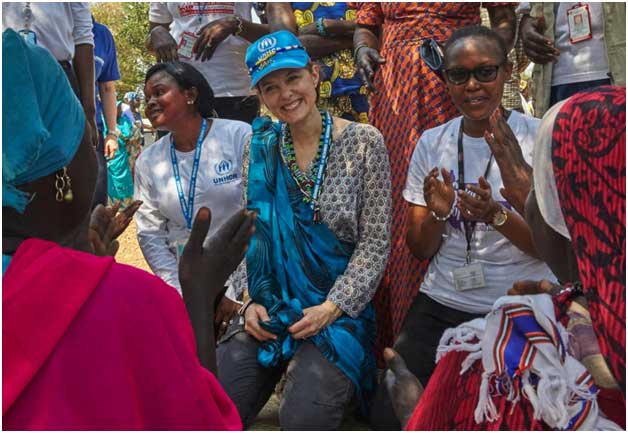
UNHCR Patron, HRH Sarah Zeid of Jordan, meets with a women’s group at Doro refugee camp in South Sudan. Credit: UNHCR/Jan Møller Hansen

Princess Sarah: What could the international community – including donors, decision-makers, and practitioners – do more or less of to maximize sustainable positive impact for the populations you serve?

Dr. Olfat: The international community wields a lot of power – especially the power of money and the power of influence. To drive real change in my community, international actors must use those powers more efficiently.

First, there is a critical need to fill funding gaps for programs that are specifically designed for refugee girls and women. With more girls and women displaced today than ever before in global history, their needs are rising – yet funding for them is decreasing.

We need smarter investments in programs that enable refugee girls and women to lead better futures, including through education and quality vocational and life skills training, as well as access to sexual and reproductive health care.

Yet money alone is not enough. The international community must also use their influence to challenge national and regional political barriers that hold us back.

This includes respecting and upholding international agreements, including UN resolutions, which support and protect refugees. It also means addressing legal restrictions that keep refugee women from working, obtaining formal education, and exercising other basic human rights in their host countries.

Princess Sarah: Currently only 3% of humanitarian aid goes to local and national organizations – and even less to those focused on girls and women. What types of concrete investments does your organization need to extend your impact and plan for the future?

Dr. Olfat: Right now, the needs we see are greater than the resources we have. To meet those needs, we don’t just need more funding – but more of the right kinds of funding.

Too often, grants and funding opportunities for women-focused CSOs are designed without consulting us on the types of investments we know girls and women in our communities need the most.

Other times, we aren’t able to access grants because of unrealistic reporting requirements that are either unsuitable or unmanageable for a small grassroots organization like ours.

For example, many grants for vocational programs in Lebanon require organizations to report success by the number of jobs their beneficiaries gain as a result – which isn’t possible in a context where refugees aren’t legally allowed to work. To support women-focused CSOs and the communities they serve, we must be more meaningfully engaged in setting investment agendas at the start.

We also need access to more flexible and sustainable funding opportunities, including core funding. It’s impossible to plan for the future when we rely on six- to twelve- month grants. We’re committed to supporting refugee girls and women in our community for as long as we’re needed – but require the right resources to fulfill that goal.

Princess Sarah: You have also been advocating for the international community to more meaningfully engage women-focused CSOs in humanitarian decision-making. In your view, what concrete steps can the international community take to put more power and influence in the hands of women-focused CSOs like yours, and why should this be an urgent priority?

Dr. Olfat: Women-focused CSOs must be heard in humanitarian policy meetings to ensure decisions reflect realities on the ground. This requires inviting us to important discussions held in New York and Geneva, but it also means making sure we can get there through travel and logistics support. And when we are there, it means carving out spaces for us to safely and honestly share the solutions we need with the assurance that we will be heard.

The alternative – excluding refugee women from decisions that affect their work and lives – isn’t acceptable and isn’t working. When we are engaged, we make humanitarian policy and practice stronger and more effective.

Princess Sarah: What do you hope to achieve at the Women Deliver Conference in Vancouver, Canada? What advocacy asks do you hope to bring forward at this meeting?

I hope to raise awareness to the needs of Palestinian refugee girls and women in Lebanon, to ensure that they are not forgotten. And I want to highlight solutions women-focused CSOs like PWHO need – money, influence, and power – to push for the change I’ve wanted to see all my life.

At the same time, I hope to learn from other advocates around the world, and build networks so we can collectively push for a humanitarian system that puts girls and women at the center. Solidarity is our strength and our power – and we need to be stronger together to achieve a better world for all of us.


Class Analyst: Global Income Inequality

Aid, Civil Society, Democracy, Development & Aid, Editors’ Choice, Featured, Global, Global Governance, Headlines, Inequity, Population, Poverty & SDGs, TerraViva United Nations

Opinion

CHRIS WELLISZ is on the staff of Finance & Development published by the International Monetary Fund*

Credit: IMF

WASHINGTON DC, May 24 2019 (IPS) – As a child growing up in Communist Yugoslavia, Branko Milanovic witnessed the protests of 1968, when students occupied the campus of the University of Belgrade and hoisted banners reading “Down with the Red bourgeoisie!”


Milanovic, who now teaches economics at the City University of New York, recalls wondering whether his own family belonged to that maligned group. His father was a government official, and unlike many Yugoslav kids at the time, Milanovic had his very own bedroom—a sign of privilege in a nominally classless society. Mostly he remembers a sense of excitement as he and his friends loitered around the edge of the campus that summer, watching the students sporting red Karl Marx badges.

“I think that the social and political aspects of the protests became clearer to me later,” Milanovic says in an interview. Even so, “1968 was, in many ways, a watershed year” in an intellectual journey that has seen him emerge as a leading scholar of inequality. Decades before it became a fashion in economics, inequality would be the subject of his doctoral dissertation at the University of Belgrade.

Today, Milanovic is best known for a breakthrough study of global income inequality from 1988 to 2008, roughly spanning the period from the fall of the Berlin Wall—which spelled the beginning of the end of Communism in Europe—to the global financial crisis.

The 2013 article, co-written with Christoph Lakner, delineated what became known as the “elephant curve” because of its shape (see chart). It shows that over the 20 years that Milanovic calls the period of “high globalization,” huge increases in wealth were unevenly distributed across the world.

The middle classes in developing economies—mainly in Asia—enjoyed a dramatic increase in incomes. So did the top 1 percent of earners worldwide, or the “global plutocrats.”

Meanwhile, the lower middle classes in advanced economies saw their earnings stagnate.

The elephant curve’s power lies in its simplicity. It elegantly summarizes the source of so much middle-class discontent in advanced economies, discontent that has turbocharged the careers of populists from both extremes of the political spectrum and spurred calls for trade barriers and limits on immigration.

“Branko had a deep influence on global inequality research, particularly with his findings on the elephant curve, which has set the tone for future research,” says Thomas Piketty, author of the bestselling Capital in the Twenty-First Century.

Piketty and his collaborators confirmed the findings in a 2018 study, which found that the top 1 percent globally captured twice as much of total growth as the bottom 50 percent from 1980 to 2016.

Milanovic’s findings “appear to be even more spectacular than what was initially suggested,” Piketty says. “The elephant looks more like a mammoth.”

Economists long disdained the study of inequality. Many lived in a theoretical world populated by a mythical figure known as homo economicus, or rational man, whose only attribute was a drive to maximize his well-being. Differences among people, or groups, were irrelevant. Variety was irrelevant. Only averages mattered.

In this world of identical rational actors, the forces of supply and demand worked their magic to determine prices and quantities of goods, capital, and labor in a way that maximized welfare for society as a whole. The distribution of wealth or income didn’t fit into the picture. It was simply a by-product of market forces.

“The market solves everything,” Milanovic says. “So the topic really was not—still is not—totally mainstream.”

Then came the global financial crisis of 2008, and with it “the rise of the realization that the top 1 percent or the top 5 percent have really vastly outstripped, in income growth, the middle class,” he says.

The study of inequality also got a boost from the explosion of data that can be mined with evermore powerful computers, making it easier to divide the anonymous masses of consumers and workers into groups with common characteristics. Big data, he says, “enables the study of heterogeneity, and inequality is by definition heterogenous.”

Data has always been one of Milanovic’s passions, alongside his interest in social classes, which flourished during his high school years in Brussels, where his economist father was posted as Yugoslav envoy to the then–European Economic Community.

“High school in Belgium—and I think it was the same in France—was very Marxist,” he says.

His classmates were divided between leftist kids, influenced by the student movements of the late 1960s and early 1970s, and “bourgeois” kids. As the privileged son of a diplomat representing an ostensibly workers’ government, young Branko didn’t quite fit either category. “It was a very peculiar situation,” he says.

At university in Belgrade, Milanovic initially leaned toward philosophy but decided economics would be more practical. It also offered a way to combine his interests in statistics and social classes.

Graduate studies led to a fellowship at Florida State University in Tallahassee, where he was impressed by American abundance—huge portions of inexpensive food, free refills of coffee, big cars—alongside stark income inequality and racial discrimination.

Two years later, he was back in Belgrade to work on his doctoral dissertation on inequality in Yugoslavia, mining rare household survey data supplied by a friend who worked in the federal statistical office.

While his dissertation raised eyebrows in Marxist Yugoslavia—along with his decision to avoid joining the Communist Party—it launched a two-decade career at the World Bank’s Research Department.

“Branko was really one of the leading experts, even at that time, on income distribution,” says Alan Gelb, who hired Milanovic to join a small team studying the transition to market economies in post-Communist eastern Europe. Milanovic focused on issues of poverty and income distribution.

The wealth of data the World Bank collects was a priceless resource, and it inspired Milanovic to carry out cross-country comparisons of inequality, which were a novelty. One day in 1995, Milanovic was talking with Gelb’s successor as the head of his unit.

“I suddenly had this idea: ‘Look, we have all this data from around the world. We study individual countries, but we never put them together.’ ” Four years later, he published the first study of global income distribution based on household surveys.

In the years that followed, Milanovic published widely and profusely. Alongside his work on post-Communist economies, he continued to explore inequality and its link with globalization. His articles and books display the broad range of his interests, which include history, literature, and sports.

In one article, he estimates the average income and inequality level in Byzantium in the year 1000. Another looks at the links between labor mobility and inequality in soccer, which he calls the most globalized sport.

He found that club soccer has become very unequal because a dozen top European teams can afford to recruit the world’s best players. On the other hand, the free movement of soccer players has reduced inequality among national teams. The reason: players from small countries can hone their skills at top club teams, then return home to compete for their national teams.

Literary conversations with his wife, Michele de Nevers, a specialist in climate finance at the Center for Global Development, inspired him to write an offbeat analysis of Jane Austen’s Pride and Prejudice.

Arguing that the book is as much about money as love, he estimates the incomes of various characters and looks at how wealth influences the choice of mates for Austen’s protagonist, Elizabeth Bennet.

He did the same for Leo Tolstoy’s Anna Karenina. Both essays were published in Milanovic’s 2011 book, The Haves and the Have-Nots: A Brief and Idiosyncratic History of Global Inequality .

Another book, Global Inequality: A New Approach for the Age of Globalization, was a milestone that synthesized years of his scholarship on inequality within and among countries since the Industrial Revolution.

In contrast to Piketty, who argues that inequality inexorably widens under capitalism, Milanovic sees it moving in waves or cycles under the influence of what he calls benign and malign forces.

In advanced economies, income disparity widened in the 19th and early 20th centuries until the malign forces of war and hyperinflation reduced it by destroying wealth. After World War II, benign forces such as progressive taxation, more powerful labor unions, and more widely accessible education pushed inequality down.

The fall of the Berlin Wall was a watershed. It brought the former Soviet bloc states into the global economy at a time when China also began opening up. Rapid growth in the developing world narrowed inequality between countries while widening it in the developed world, where middle-class incomes stagnated as the wealthy prospered.

What does the future hold? It looks good for much of the developing world and especially Asia, which will continue to catch up with the rich countries. In advanced economies, on the other hand, the outlook seems grimmer.

There, the twin forces of globalization and technological innovation will continue to squeeze the middle class. Social mobility will decline as an entrenched elite benefits from greater access to expensive higher education and wields its political clout to enact “pro-rich” policies, such as favorable tax regimes.

As income disparities grow, so will social tensions and political strife—a prognosis confirmed by events such as Brexit and protests in France that have occurred since the book’s publication in 2016.

Milanovic worries that this friction might lead to a “decoupling” of democracy and capitalism, resulting in plutocracy in the United States and populism or nativism in Europe.

While there has been considerable debate about inequality over the past decade, “nothing has really moved” in policy terms, he says. “We are on this automatic pilot which basically leads to higher inequality. But I am not totally losing faith.”

The traditional answer—redistribution of income—won’t work as well as it did in the past because of the mobility of capital, which allows the wealthy to shelter their incomes in tax havens. Instead, policy should aim for a redistribution of “endowments” such as wealth and education.

Measures would include higher inheritance taxes, policies that encourage companies to distribute shares to workers, and increased state funding for education.

“We cannot achieve that tomorrow,” he says. “But I think we should have an idea that we want to move to a capitalist world where endowments would be much more equally distributed than today.”

Milanovic also takes on the nettlesome issue of inequality between countries. He calculates that an American, simply by virtue of being born in the United States, will earn 93 times more than a person born in the world’s poorest country.

This is what Milanovic calls the “citizenship premium,” and it gives rise to pressure for migration as people born in poor countries seek their fortunes in richer ones.

Milanovic argues that halting migration is no more feasible than halting the movement of goods or capital. Yet it’s also unrealistic to expect citizens of advanced economies to open their borders. His solution: allow more immigrants but deny them the full rights of citizenship, and perhaps tax them to compensate citizens displaced in the labor force.

His current work, in a way, brings him back to his roots in Yugoslavia. It involves the study of class structure in the People’s Republic of China and, in particular, a close look at the top 5 percent of the income distribution. It forms a part of his next book, Capitalism, Alone, which argues that China has developed a distinct form of capitalism that will coexist with its liberal forebear.

Where is the study of inequality headed? Milanovic sees two frontiers, both driven by the availability of new data. One is wealth inequality, à la Piketty; the other is intergenerational inequality, a subject plumbed by economists such as Harvard’s Raj Chetty.

The two areas “appeal to young people who are now very socially aware,’’ he says. “On the other hand, they are very smart and want to work on tough topics.” He adds, “I am very optimistic in that sense.”

*Opinions expressed in articles and other materials are those of the authors; they do not necessarily reflect IMF policy.


Rural Education: Moving Past “Poor Solutions for Poor People”

Asia-Pacific, Civil Society, Development & Aid, Education, Headlines, Poverty & SDGs, Regional Categories, TerraViva United Nations

Education

People often believe that the problems in the education space have more to do with curricula or pedagogy, or with the capacity of teachers. We disagree. The main issue is that today, communities are missing from the school ecosystem.

Photo Courtesy: Sachin Sachdeva

NEW DELHI, May 6 2019 (IPS) – Communities are treated as passive recipients, giving them no say in the functioning of their schools. Here’s why this needs to change.


During our work with people living around the Ranthambhor National Park on issues of conservation, livelihoods, and eco-development, a constant question we were asked was how long we thought we could continue helping them. And then, an accompanying question — would their children never be in a position to help themselves? To advocate for and implement the change they wanted to see?

People had been led to believe that sending children to school was a precondition for a better future. Despite this, what they kept seeing was that the education system accessible to them was not equipping their children with the skills and abilities that they required to negotiate better futures for themselves.

Poor solutions for poor people

Working in Sawai Madhopur made us painfully aware of the community’s past experiences with education. Over time they had experienced the Shiksha Karmi Programme (which trained daughters-in-law to run schools), and the Rajiv Gandhi Pathshalas (which trained a young person who had passed Class 10, to run schools), not counting their countless experiences with government schools in the larger villages, most of which were sub-optimal.

When we look at the pitfalls of the government schooling system — be it teacher absenteeism, quality of textbooks, a lack of adequate infrastructure, constrained budgets and human resources — and the plans or schemes that have been created to address them, we realise that most of them could be categorised as ‘poor solutions for poor people’.

People often believe that the problems in the education space have more to do with curricula or pedagogy, or with the capacity of teachers. We disagree. The main issue is that today, communities are missing from the school ecosystem.

The current school system has made communities passive recipients of whatever the government tosses at them, giving them no say in the functioning of the school. It does not work with the community to help them actively engage with the process.

People don’t understand the gap between their aspirations and reality

The idea that any kind of education should lead to a job (preferably a government one) is prevalent amongst the communities we work with. However, what is less clear is how exactly that will happen, and what the probability is of it happening at all.

People had begun to realise that their education system was leaving children under prepared – they may have completed class 10 or 12, but their capacities and skill sets were far lower than they should have been – making it impossible for them to find the job they dreamed of, or continue on an educational path that would get them there.

What’s worse, by dedicating most of their time and resources to school, these children were sometimes unable to take up their traditional occupations – be it in agriculture or livestock rearing – making them incapable of earning a substantial income.

In such a situation, with huge gaps between their reality and aspirations, young people often found themselves helpless. There was scarcely anyone in the village who could have told them what needed to be done to become a doctor, engineer, bureaucrat, lawyer, entrepreneur – or what it entailed.

Despite this, children would go through their schools and come to urban centres looking for opportunities – be it that elusive government job or being a professional. It was only upon reaching the cities that they would realise how under-prepared they were, and as a result end up taking whatever work they could get–as waiters, drivers, cleaners, helpers, construction workers and similar positions in the informal sector.

It is no surprise then, that when it came to education, people in the community were losing faith in government schools.

Communities are the main stakeholder in their education

People often believe that the problems in the education space have more to do with curricula or pedagogy, or with the capacity of teachers. We disagree. The main issue is that today, communities are missing from the school ecosystem.

The community is the biggest stakeholder in the education space, and they need to be treated as such. People need to have a real idea of what they can expect from the system, and they need the system to be accountable to them. This has never happened.

So while there is plenty of work being done to train teachers, help principals, build the skills of School Management Committees (SMCs), design curriculum and change pedagogy, there is not enough being done with parents and community members. Even though parents make up the bulk of the SMC, they tend to be involved only in issues related to infrastructure or for instance, looking at teacher attendance or organising events – essentially any activity that is easy to monitor and does not demand engagement in processes.

It is time that we understood that education is about creating the right ecosystem for learning to happen, and that a village and its community are part of that process. When families have a better understanding of learning processes, they will also ensure that the home environment provides the right encouragement. When community members are able to offer their knowledge—as farmers, mechanics or officers in government—to students, they are teaching children about different possibilities in their future. It is only through involvement of the community that people will learn to ask the right questions, to seek accountability from the system. SMCs, being a subset of the community, offer a channel to do this. And if the community is aware, the SMCs will also function well.

For change to occur, communities must be more aware, and in charge of their education.

People often believe that the problems in the education space have more to do with curricula or pedagogy, or with the capacity of teachers. We disagree. The main issue is that today, communities are missing from the school ecosystem.

Photo Courtesy: Sachin Sachdeva

Working with communities to improve the education system

Having said that, we have to keep in mind that today, most communities, having been passive recipients of education thus far, are unprepared to challenge the system. It is therefore essential that we work to change this.

Based on our work at Gramin Shiksha Kendra (GSK) – an organisation which works with communities to enhance the quality of education in government schools – over the last 14 years, here are some suggestions on how this can be done:

1. Give them positions of seniority/power

Include members of the local community in your organisation board and involve them in the decision making. For example, at GSK we have people from the community on our board – some of them are parents who missed the opportunities of a quality education for their children, and two of them have never been to school but bring in their insights, wisdom and understanding of the local context.

These community members have guided and helped the organisation evolve its strategies, brought concerns and aspirations of the people to the board, and cautioned us against taking decisions that might not have the right impact.

2. Change your metrics of success

For example, we have kept the strength and management capacities of the school management committees as our apex indicator of success/failure, rather than only focussing on learning outcomes. We believe that when the schools and government-appointed school teachers become accountable to the SMC, and the SMC is in a position to guide and manage, the initiative will have succeeded.

3. Involve them in the work being done

Members from the community are invited to teach in the schools as guest teachers. Their experiences add to the curriculum of the school and are adapted for the schools. To be a teacher is still a valued profession, which gives parents a sense of importance and respect in the area.

Additionally, in an attempt to create a community-led ecosystem for education, we have an annual education festival called Kilol in our villages. The village community takes responsibility to organise Kilol’s and GSK shares, through exhibits and processes, our ways of teaching science, language, math, as well as the importance of components like pottery, sport and carpentry. The festival gives everyone in the community an opportunity to celebrate learning and understand what happens in school.

4. Give the initiative that is for them, to them

Our latest attempt is in handing over one of the schools that GSK set up back to the community to manage. That is when the school will become truly community-owned and community-managed.

We made this possible by, over the last 14 years, giving different members from the community a chance to be a part of the SMC. This has resulted in over 35 members in the community who have at one point or another been members of the SMC.

Because of their experience, the SMCs will soon be able to take over the management of the school and run it. GSK plans to facilitate this process and will help the SMC and the community evolve a future course of action – whether that leads to a science education initiative in the area, a comprehensive school, or an outreach programme.

This is important, as it defines our education initiative in the area. We don’t intend running the schools for ever, we want the community to take over. This will be our biggest success and we will continue providing them the technical support – or any other support that they may require. Most importantly, by giving the school back to the community, we are giving power back to the people – which is where it should be.

Sachin Sachdeva is a Co-Founder of Gramin Shiksha Kendra, www.graminshiksha.org.in , an organisation which works with communities to enhance the quality of education in government schools. Sachin has worked with development initiatives over the past 25 years and has been working with communities to help them look at their futures from a position of strength. GSK works with over 70 schools around the Ranthambhor National Park and along with the community runs three schools, one of which has been set up in a rehabilitated village. He is currently Director of the Paul Hamlyn Foundation’s India programme.

This story was originally published by India Development Review (IDR)


Want Social Change? Give Communities More Agency

Asia-Pacific, Civil Society, Development & Aid, Featured, Headlines, Human Rights, Poverty & SDGs, TerraViva United Nations

Human Rights

if issues around social justice had to be taken to scale, and if we wanted to create deeper impact,we needed to involve the communities affected.

Photo Courtesy: Jan Sahas.

DEWAS, India, May 3 2019 (IPS) – No external force can bring about real change in society. Only the community itself can.


There are 650 districts in India. However, most nonprofits work only in a few districts. Given how large our country is, there are only two types of people that can work towards creating change at scale – the communities that are facing the issues first hand, and the government.

The government has not been able to work on issues related to social justice in the last 60 years. Perhaps they think that this is not important enough, or there is no political will to do it. So, we at Jan Sahas, chose to involve the community.

We realised that if issues around social justice had to be taken to scale, and if we wanted to create deeper impact,we needed to involve the communities affected. If it didn’t become the community’s own initiative, or if they kept thinking that some civil society organisation or government agency would come and work on their issues, it would never be sustainable.

That’s why in 2001, we started a national campaign named Rashtriya Garima Abhiyan. Centred around the idea of dignity, this campaign was aimed at mobilising Dalit manual scavengers, all of whom were women. We wanted to empower them to move out of this work and enable them to scale up the programme on their own. We thought that working with manual scavengers would be a good entry point to work on ending exclusion.

Caste-based marginalised communities in our country have faced historical injustice — not just for the last five-six generations, but for the last 2,500 years

But caste-based marginalised communities in our country have faced historical injustice — not just for the last five-six generations, but for the last 2,500 years. Even if they earn money and stop doing caste-based work, the social stigma never goes away. Even if the person becomes a collector, or starts an enterprise, the discrimination continues.

We need three types of rehabilitation

If people have to come out of caste-based work, they need three types of rehabilitation:

1. Economic or livelihood rehabilitation

In the caste-based work of manual scavenging, the biggest issue is that the oppressor or employer provides them food, clothing and shelter. In rural India, they get two rotis every day, clothes twice a year — during Holi and Diwali, and the panchayat gives them a place to stay, So, in essence, their basic needs of roti-kapda-makaan are taken care of by the person or the institution that employs them. What this means though is that they are unable to negotiate with their employers.

If you are going to get paid in cash for work, you can negotiate. For instance, if the employer says ‘I will give you INR 20’, you can say, ‘No, I will charge INR 50’. But if your life itself is dependent on what they give you, then you can never negotiate.

Therefore, if we have to start changing the way caste is viewed and reinforced, we have to start with economic rehabilitation. If marginalised caste groups get work which pays them in cash, they can negotiate the terms for their wages, working conditions, dignity and relationships at the workplace.

However, this is only step one. The second, and more important one, is social rehabilitation.

2. Social rehabilitation

The government never thinks about this aspect. Under social rehabilitation, if someone gives up their (caste-based) work, they should be given work that factors in the social aspect as well.

For instance in 2013, we appealed to several state governments; we said that when you appoint ICDS workers and helpers — positions that do not require an educational background, offer INR 3,000-4,000 monthly salary and where the employee has to be a woman, give priority to the women from the manual scavenging community.These women could prepare the meals provided under the ICDS scheme, and all children regardless of their caste would eat that food.

This process was started in Uttar Pradesh but many powerful groups forced the state to rescind the order; today it is no longer compulsory. In Madhya Pradesh on the other hand, while there was some struggle to start with, it has now been firmly established in many districts.

The discrimination extends across several government schemes. In many villages, where the PMAY is being implemented, Dalit communities are given homes in a separate place. They call it a ‘colony’ and it is commonly understood to be land outside the village. However, all the resources such as electricity, water, anganwadis are available only inside the village.

If you want to stop caste-based practices, you cannot work with the excluded people alone. Other related stakeholders have to be held accountable. Like they say in the gender discourse — if you want to end sexual violence, you have to get the male members of the community involved.

3. Political rehabilitation

Being political is not about party politics. It is about the power of representation. If women from excluded communities want to be part of the local panchayat, they should have the space to do so. The problem is, that today, they don’t have this space.

For example, we started a campaign with rape survivors, that they should contest elections for the panchayat. As a result of this campaign, 104 women participated in panchayat elections. Almost 50 percent of them won. Many of them contested on unreserved seats. They fought and they won. The idea was for them to challenge the power structure.

In some places we had to work with their family members as well, in some with the society at large. When these excluded women gain power, then at some level, the discrimination stops.

We realised that if issues around social justice had to be taken to scale, and if we wanted to create deeper impact,we needed to involve the communities affected.

A Dalit woman stands outside a dry toilet located in an upper caste villager’s home in Mainpuri, in the northern Indian state of Uttar Pradesh. Credit: Shai Venkatraman/IPS

It takes years to break social barriers, even among the marginalised

Jan Sahas works with manual scavengers, rape survivors and young girls who have been forced into commercial sexual exploitation. One of the biggest challenges we face is that it is very difficult to make these communities come together. Getting ‘outsiders’ to change their social behaviour requires work at a different level. But even within these disadvantaged groups, people follow discrimination and untouchability practices.

For example, in Bhaurasa, a village in Madhya Pradesh, we had women who had managed to stop doing caste-based work.  There were 17 women from the Valmiki community, and 10 from the Hela community. Valmiki is a Dalit Hindu community, while Hela is a Muslim community. It took us three years to bring them together in one place for a meeting.

For two and a half years, we conducted meetings with adults in the community to convince them. Despite that we failed to change their beliefs. But when we started working with the young — using games and activities — it took almost no time.

One of the games we played was taking one child from the Valmiki community and the other from the Hela — one a Dalit and the other a non-Dalit. We told them that the Dalit child would become non-Dalit for a day, and vice versa.

We observed a big change in behaviour. The children soon realised that what one was doing with another human being was not based on any rationale. There is no rationale for caste discrimination, and that it didn’t make sense to follow this nonsensical practice.

The activities brought about a change in the children; they then started convincing their families and the families changed because of the children’s intervention.

At a rally in New Delhi, Dalit women burn baskets used to collect human waste as a sign of protest against the caste-based practice of ‘manual scavenging’. Credit: Shai Venkatraman/IPS

Communities can solve their own problems. All they need are platforms.

Most of us in civil society who work with marginalised communities feel that ‘we are going to give them something’, ‘deliver’ something. In reality though, no one really is in a position to deliver anything to the community. What do we really know about the communities? How can we assume leadership on their behalf when we don’t know enough?

Consider the Dignity March where 25,000 rape survivors travelled over 10,000 kms and spoke openly in public forums about being raped. Jan Sahas might have coordinated the march, but the idea was not ours.

We were conducting a meeting in a village. There were four rape survivors along with their family members. One of the women said that there had been a conviction in her case, while a second women said that she was still struggling with her case and was facing many problems. The families were fighting among themselves, and demanding answers from us, saying if  one woman’s case was solved, why wasn’t there a judgement yet in the second case?

One of the rape survivors told us: “You don’t explain what the problems are; let the woman who got the conviction explain to the others what steps need to be taken and how they can bring their own case to a closure”.

When she started explaining, the idea clicked in our minds; that instead of us doing this work — going to each village and talking to all the families about how to fight their cases — what if 1,000 rape survivors came together in one place and travelled all over the country and explained how to get a conviction to other survivors.

Nonprofits should only play the role of facilitators

We can’t be leaders of the manual scavengers, or rape survivors, or communities who are involved caste-based commercial sexual exploitation. They are their own leaders because they know what that pain has meant in how they live their lives. We cannot even imagine how much power or courage is required to change this situation.

No one else can do it — no Chief Minister or Prime Minister can work on it as effectively as a rape survivor can work on rape, or manual scavengers can work on their own issues. We need to understand this.

The role of the government or nonprofits is limited in this. We can help create appropriate forums for them; but it is they who will come up with the strategies. During the march, we observed this very clearly: people who’ve been facing oppression and discrimination, were ready to take up the struggle; they were ready to find solutions. What they needed was a platform to talk about their issues.

The current strategies which are made by the government or other institutions, rarely involve the affected communities. But no external force can bring about real change in society. Only the community itself can.

Translations from Hindi to English by Anupamaa Joshi.

Ashif Shaikh is an Indian social activist, known for his role in Rashtriya Garima Abhiyan, a campaign for the eradication of manual scavenging. He is also a co-founder of Jan Sahas, a human rights organisation. Since 2000, Jan Sahas has been working to end caste- and gender-based slavery and violence through the eradication of manual scavenging, caste-based sex work, forced labour, and trafficking. He has won several awards for this work, including the Sadbhavana Award and the Times of India Social Impact Award.

This story was originally published by India Development Review (IDR)


Global Governance and Information

Civil Society, Civilisations Find Alliances, Climate Change, Development & Aid, Education, Environment, Featured, Global, Global Governance, Headlines, Human Rights, Natural Resources, Peace, Poverty & SDGs, TerraViva United Nations

Opinion

Ambassador Walther Lichem* of Austria is President Inter Press Service (IPS).

VIENNA, Apr 16 2019 (IPS) – The past seventy years since the end of the second world war have been marked by profound changes in our international system. Relations between states have become more horizontally structured interactions with a rising significance of the common good articulated and pursued by newly-created international programmes and organisations.


Ambassador Walther Lichem

The international agenda increasingly consists of items addressing internationally and globally-shared challenges of dependencies and interdependencies.

The traditional security and peace focus has been broadened into areas of concern which require contributions and activities not only by states but by international organisations and programmes who jointly with non-state actors such as academic institutions and associations, civil society organisations, the private sector including those who joined the Global Compact, have contributed to a new pattern of leadership in the processes of defining our global goals and in the implementation of the related programmes of action.

Another characterizing element in our Global Agenda related-approach is the inter-sectoral interdependence reflected in the international community’s agenda marked by “AND” – “climate change and international security”, “human rights and societal cohesion” etc.

These agenda—and interrelated-ness—require, however, also institutional integration cutting across the institutional development marked by sectoral segregation. There is a rising need for each agenda sector to be fully up-to-date regarding the entire pattern of global challenges and the related plans of action, using this level of information for the development of institutional integration.

There is also a rising need for information flows between governmental/ intergovernmental and non-governmental organizations (NGOs).

The new global agenda benefits from the work and conclusions of academic institutions and programmes, a relationship which regrettably has not yet been fully recognized by the international system.

Many of our important global agenda items based their policy approach on research and academic discourse – e.g. the issue of environmental protection, the concept of sustainability, the process of climate change, the societal development needs and human rights etc.

Another dimension of the pluralisation of global governance affectedness and responsibility is the role of each and every citizen on the globe to know and understand these challenges and assume a rising responsibility in addressing them.

Certain agenda areas, such as environmental protection, the sustainable development and use of our natural resource systems, human rights and human security have given the citizen an almost central role in the achievement of the declared objectives.

Today, every citizen can contribute to the recognition of the dignity of the other and the related human rights. The impact of citizen-focused human rights programmes is visible in human rights cities in all regions of the world. The citizen creating conditions of societal cohesion also essentially contributes to peace and security.

Private sector decisions can make important contributions to both the natural resources related and societal cohesion-related challenges. Academic institutions must adjust their programmes of research and of university education to the global agenda-related challenges.

The cultural sector provides important inputs into the development of values and related behavioural patterns related to the challenges of pluri-identity societies and the integration of otherness.

All these new patterns of responsibility and contributions to achievements for our Global Agenda, however, do require qualified information. It must be recognized that complex academic or policy-process related studies and reports are not accessible to the general citizenship including those in positions of responsibility at local and national levels.

Even governmental institutions and the international diplomatic community cannot internalize all the documents which are to serve as a basis for multilateral negotiations.

The development of this new participatory system of global governance with intergovernmental institutions and processes, national governments and local authorities has led to the recognition of an urgent need for qualified patterns of information which translate challenges, achievements and failures to the political responsibilities at local, national and also international levels, to governmental, inter-governmental and non-governmental institutions who have increasingly shaped our Global Agenda and articulated the rising need for societal understanding and information.

Media are the classical providers of such information combining data with assessments and the vision of our common future. Yet, as analysis of the current situation underlines, there is an urgent need to strengthen qualified information systems which would provide not only governmental, intergovernmental and non-governmental institutions and the citizens but also the media with pertinent and needed information.

There is no way into a future of shared global responsibility without a qualified and also ethically committed system of information related to our processes of global change.

There is a need to recognize that such highly pertinent information related to our common future requires recognition and support from the global society as a contribution to our shared global public space.

This implies that support is to be provided from governmental, intergovernmental and non-governmental institutions. A respective policy discourse with participation from these institutions is to be envisaged in order to prevent the decay or elimination of qualified programmes like Inter Press Service.

*Walther Lichem, retired Austrian Ambassador with studies in law and oriental archaeology (Univ. of Graz, Austria) and political science (Univ. of North Carolina, Chapel Hill; Institute for Advanced Studies, Vienna) started his professional career in 1966 at the United Nations Secretariat in New York in the field of international water resources with development cooperation missions to Ethiopia (1971), Argentina (1971-74) and to the Senegal River Development Organisation (1980). He was also Rapporteur on international river basins at the International Conference on Water Law (Caracas, 1976) and at the IVth World Water Conference (Buenos Aires, 1982).
Ambassador Lichem undertook major assignments in the UN system at the Human Rights Summit in Vienna in 1992 and as Ambassador to Chile and to Canada, as a member of the UN Committee on the Peaceful Uses of Outer Space and as an adviser to the 16 countries sharing the Guinea Current in West and Central Africa on the creation of a regional organisation.


Civil Society Under Attack in Name of Counterterrorism

Active Citizens, Civil Society, Conferences, Development & Aid, Editors’ Choice, Featured, Global, Global Governance, Headlines, Human Rights, IPS UN: Inside the Glasshouse, Peace, Population, Regional Categories, TerraViva United Nations

Civil Society

This article is part of a series on the current state of civil society organisations (CSOs), which was the focus of International Civil Society Week (ICSW), sponsored by CIVICUS, and which took place in Belgrade, April 8-12.

More than 200 civil society leaders and human rights activists from some 100 countries took to the streets of Belgrade, Serbia in solidarity with those whose basic freedoms are at risk. They participated in the International Civil Society Week (ICSW), sponsored by CIVICUS, which took place in Belgrade, April 8-12. Courtesy: CIVICUS

UNITED NATIONS, Apr 15 2019 (IPS) – Counterterrorism measures are not only affecting extremist groups, but are also impacting a crucial sector for peace and security in the world: civil society.


Civil society has long played a crucial role in society, providing life-saving assistance and upholding human rights for all.

However, counterterrorism measures, which are meant to protect civilians, are directly, and often intentionally, undermining such critical work.

“Civil society is under increased assault in the name of countering terrorism,” Human Rights Watch’s senior counterterrorism researcher Letta Tayler told IPS, pointing to a number of United Nations Security Council resolutions as among the culprits.

“Nearly two decades after the September 11 attacks, we are seeing a very clear pattern of overly broad counterterrorism resolutions. We are seeing a clear pattern of violations on the ground that are being carried out in the name of complying with binding Security Council counterterrorism resolutions,” she added.

Just two weeks after September 11, 2001, the UN Security Council unanimously adopted Resolution 1373 which called states to adopt and implement measures to prevent and combat terrorism.

Since then, more than 140 countries have adopted counterterrorism laws.

The newly approved Resolution 2462, passed at the end of March, requires member states to criminalise financial assistance to terrorist individuals or groups “for any purpose” even if the aid is indirect and provided “in the absence of a link to a specific terrorist act.”

While the resolution does include some language on human rights protections, Tayler noted that it is not sufficient.

“It is not sufficiently spelled out to make very clear to member states what they can and cannot do that might violate human rights on the ground,” she said.

Blurred Lines

Among the major issues concerning these resolutions is that there is no universal, legal definition of terrorism, allowing states to craft their own, usually broad, definitions. This has put civil society organisations and human rights defenders (HRDs) alike at risk of detention and left vulnerable populations without essential life-saving assistance.

“I think it is irresponsible of the Security Council to pass binding resolutions that leave up to States to craft their own definitions of terrorism…that’s how you end up with counterterrorism laws that criminalise peaceful protest or criticising the state,” Tayler said.

Oxfam’s Humanitarian Policy Lead Paul Scott echoed similar sentiments to IPS, stating: “The Security Council, by being overly broad, is just giving [governments] the tools to restrict civil society.”

According to Front Line Defenders, an Irish-based human rights organisation, 58 percent of its cases in 2018 saw HRDs charged under national security legislation.

Special Rapporteur on the promotion and protection of human rights while countering terrorism Fionnuala Ní Aoláin found that 67 percent of her mandate’s communications regarding civil society were related to the use of counter-terrorism, and noted that country’s counterterrorism laws are being used as a “shortcut to targeting democratic protest and dissent.”

In April 2018, thousands of people took to the streets in Nicaragua to protest controversial reforms to the country’s social security system.

According to the Office of the UN High Commissioner for Human Rights, over 300 people have been killed, more than 2,000 injured, and 2,000 arrested—some of whom were reportedly subject to torture and sexual violence when detained.

Many of those arrested will also be tried as terrorists due to a new law that expanded the definition of terrorism to include a range of crimes such as damage to public and private property.

At least 300 people, including human rights defenders, face charges of terrorism.

The Central American country said that the law was passed to comply with the Financial Action Task Force (FATF), an intergovernmental body that works alongside the Security Council to combat terrorist financing.

A Civil Society Facing Uncivility

Tayler also pointed to the lack of consequences for States that pass counterterrorism laws that do not abide by their obligations under international law.

In Resolution 2462, member states are told to comply with international humanitarian law when cracking down on terrorist financing but does not require countries to consider the effect of such measures on humanitarian activities such as providing food and medical care.

“In the zeal to be as tough looking as they can possibly can, governments have overlooked very very easy ways to protect those of us who are providing life-saving aid,” Paul told IPS.

The lack of protections for civil society and its impacts was most visible during the 2011 famine in Somalia.

In an effort to restrict “material support” to terrorist groups, countries such as the United States enacted counterterrorism legislation which blocked aid into areas controlled by Al-Shabab.

This not only impeded local and international organisations from doing their job, but one report noted that the constraints contributed to the deaths of over 250,000 people in the East African nation.

The problem has only gotten worse since then, Paul noted.

“The measures imposed by governments are unnecessarily broad and they prevent us from working in areas that are controlled by designated terrorist entities. What they have essentially done is criminalise humanitarian assistance,” he said.

Tunisia has used its terrorism financing laws to shut down a number of civil society organisations.

According to the Euro-Mediterranean Human Rights Monitor, approximately 200 organisations were dissolved and almost 950 others were delivered notices, referring them to courts on charges of “financial irregularities” or “receiving foreign funds to support terrorism” despite the lack of substantive evidence.

Many of the dissolved organisations provided aid and relief for orphans and the disabled.

All Eyes on Deck

Tayler highlighted the importance of the UN and civil society to monitor how counterterrorism resolutions such as Resolution 2462 are used on the ground.

“While we would love to see amendments to this resolution, pragmatically the next best step is for all eyes—the eyes of civil society, the UN, regional organisations—to focus on just how states implement this resolution to make sure that overly broad language is not used by states to become a tool of repression,” she said.

“The UN and leaders of countries around the world should use International Civil Society Week as an opportunity to take stock of the risk that this trend has posed on both to life-saving aid organisations and human rights defenders and to reverse this dangerous trend,” Tayler added.

Paul pointed to the need to educate both the public and policymakers on counterterrorism and its spillover effects as well as the importance of civil society in the global system.

“Civil society is a key part of effective governance. We don’t get effective public services, we don’t get peace, we don’t get to move forward with the anti-poverty agenda if civil society actors aren’t strong and empowered,” he said.

“If governments aren’t careful about protecting our right to stand up for marginalised and vulnerable populations, everyone will hurt. Not just those populations. It will have an effect broadly on our societies,” Paul added.