When Democracy Freezes, Autocrats Rise

Civil Society, Democracy, Economy & Trade, Editors’ Choice, Global, Headlines, Human Rights, IPS UN: Inside the Glasshouse, TerraViva United Nations

Opinion

When Democracy Freezes, Autocrats Rise

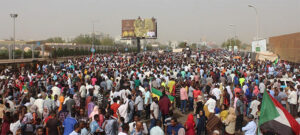
Pro-Democracy protesters gather in front of the headquarters of the Sudanese army in the capital, Khartoum. Credit: Masarib/Ahmed Bahhar via UN News

VIENNA, Austria, Jan 5 2026 (IPS) – Consider our political systems not merely as battlegrounds of passions, ideologies and economic interests, but as systematically functioning arrangements of interactions, akin to game theory. In recent decades, we have witnessed the dissolution of large homogeneous groups into numerous subgroups — a patchwork of minorities.


This fragmentation, compounded by individualisation and the resulting weakening of strong political bonds, has profound consequences for democratic governance.

In nations with majority voting systems, this process fragments the party system itself. As dissatisfaction with political parties grows – initially quietly but eventually becoming pronounced – new parties emerge, further splintering the political landscape.

This increasing fragmentation complicates government formation and makes majorities more precarious. Often, only coalitions that can agree on the lowest common denominator are formed. Consequently, the outcomes of politics do not necessarily improve; in most cases, they worsen.

A vicious circle

Decisive action, bold moves and clear leadership have become increasingly elusive. This reinforces dissatisfaction and the prevailing sentiment among voters that politicians are failing to achieve meaningful results. Doubts about the effectiveness of the political system become self-perpetuating, creating a situation where decisive politics is nearly impossible.

The rise of populists and right-wing extremists is both a consequence of this stagnation and a further catalyst — a ratchet effect. Right-wing agitators stoke discontent, transforming it into anger and outrage while exploiting negative emotions.

As they gain strength, democratic politics becomes more paralysed, often preoccupied with defending against radicalism, preventing the worst outcomes, and forming coalitions whose members can agree on little more than a lacklustre commitment to ‘more of the same’.

When social cohesion erodes, the radical right gains ground — which then leads to even more division. The perceived polarisation and alienation that accompanies the rise of right-wing extremism increases the perception of social disintegration and decay.

Democracy gives rise to its own threats

In a sense, right-wing radicalism is itself the problem that it then laments in a subsequent cycle. It is the disintegration that it denounces. In this way, it contributes to the chain of evidence that reinforces authoritarian reflexes. Authoritarianism feeds authoritarianism.

These framework conditions of political systems – fragmentation and the resulting weakness of action – lead German democracy theorist Veith Selk to diagnose that modernisation and social change are increasingly putting democracy under stress, making a reversal unlikely.

This presents a rather depressing diagnosis of decline: democracy gives rise to its own threats.

Additionally, globalisation necessitates ‘global governance’, which, even under favourable circumstances, has historically produced solutions at an unbearably slow pace and is now reaching its limits amid chaotic multilateralism.

Conversely, ‘de-globalisation’ – through national power politics, tariffs and trade wars – provides no relief and instead creates new problems, such as the loss of sales markets, disrupted supply chains and a consequent decline in economic growth, potentially destroying whole economic sectors.

Europe’s mounting crises

The emergencies of the future are already on the horizon. The climate catastrophe threatens not only our livelihoods but also has tangible economic repercussions. Crop failures due to droughts and floods are already contributing to rising inflation in the cost of living, particularly for vegetables and fruit.

This situation is certain to become much more severe. Even if successful, socio-economic transformation will be costly. Insurance companies may face financial difficulties, asset portfolios could lose value rapidly, and if we are unfortunate, a sudden ‘Minsky moment’ could trigger a downward spiral leading to a financial crisis.

Ageing populations are already straining public finances, with healthcare and care systems becoming increasingly expensive, pushing European welfare states to their financial limits.

Government debt is rising, and under current conditions, it will be more challenging to “grow out” of debt than it was in the past. Growth will be harder to mobilise, and austerity is not a viable alternative, as contraction strategies lead to dire consequences. These are all concerning prospects.

Here are a few highlights:

Germany’s economy has stagnated for six years, and private investment remains weak. France is facing a budget deficit of 5.8 per cent and a public debt ratio of 113 per cent of GDP, while sliding from one government crisis to another. Political actors are unable to achieve a socially just change of course that would reconcile savings in the pension system with additional revenue from wealth taxes.

Austria was projected to have a budget deficit of six per cent, prompting left-wing Keynesian Finance Minister Markus Marterbauer to assemble a package of tightening measures aimed at reducing the deficit to 4.5 per cent by 2025.

Ensuring that large fortunes contribute to costs through higher taxation is not only a matter of fairness but also an economic necessity — yet there is a lack of parliamentary majorities for decisive measures nearly everywhere.

There is a growing desire for politics to provide sensible solutions instead of getting bogged down in petty details.

A whole panorama of emergencies is unfolding before us. As noted earlier, most of those in power have little energy or flexibility to think and act beyond daily problems. This situation has tangible and psychopolitical effects: citizens feel that things are deteriorating and that serious trouble is brewing, while simultaneously sensing that those in power are merely tinkering with details.

For many, this leads to outright fear and a generally pessimistic mood, which in turn fuels the rise of right-wing radicals.

The political forces of the left and the conservative centre must, above all, demonstrate their ability to act together. A few years ago, the prevailing view was that various political camps should dare to engage in more conflict to make democratic life more vibrant.

At that time, there were complaints about everyone crowding into the centre and becoming interchangeable. However, we find ourselves in a different situation today.

There is a growing desire for politics to provide sensible solutions instead of getting bogged down in petty details or wasting time on pointless culture wars. The left may need to acknowledge that states are reaching their financial limits, while conservatives must recognise that clientele politics, which ensures free rides for the super-wealthy, is no longer viable.
Urgent issues require swift action, and all of this comes at a high cost.

Rhetoric is no longer effective, and pandering to the extreme right leads nowhere. Conservatives, in particular, need to understand this, as they sometimes give the impression that they view fascists as merely slightly more radical conservatives (or conservatives as moderate fascists).

This perception is not only misguided; it also highlights a significant identity crisis within traditional conservatism. Fortunately, some are beginning to realise that authoritarianism is not a relative; it is the enemy. The best way to undermine it is to demonstrate a commitment to action.

Robert Misik is a writer and essayist. He publishes in many German-language newspapers and magazines, including Die Zeit and Die Tageszeitung.

This is from a joint publication by Social Europe and IPS Journal.

Source: International Politics and Society (IPS), Brussels, Belgium

IPS UN Bureau
  Source

Refugees Forced to Fill Gaps as Funding, Power and Legal Recognition Move Out of Reach

Active Citizens, Africa, Armed Conflicts, Asia-Pacific, Civil Society, Development & Aid, Disaster Management, Editors’ Choice, Featured, Global, Human Rights, Humanitarian Emergencies, Middle East & North Africa, Migration & Refugees, Sustainable Development Goals, TerraViva United Nations

Migration & Refugees

A new global synthesis report and refugee voices from East Africa and the Middle East warn that reductions in humanitarian footprints risks breaking the refugee protection system.

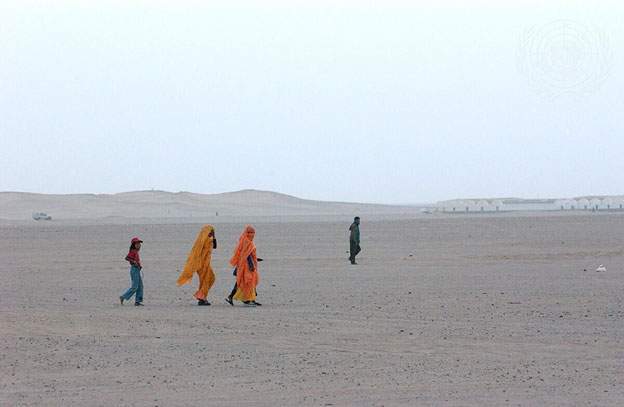
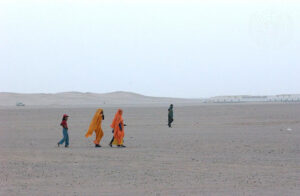
Sahrawi refugees walk near the Awserd Refugee Camp in the Tindouf Province of Algeria. Credit: UN Photo/Evan Schneider

Sahrawi refugees walk near the Awserd Refugee Camp in the Tindouf Province of Algeria. Credit: UN Photo/Evan Schneider

SRINAGAR, India, Dec 16 2025 (IPS) – The global refugee system is entering a period of deep strain. The delivery of protection and assistance is undergoing a transformation due to funding cuts, institutional reforms, and shifting donor priorities.


Against this backdrop, a new Global Synthesis Report titled From the Ground Up highlights the many issues faced by refugees in the Middle East and Africa.

Regional Perspectives on Advancing the Global Compact on Refugees has highlighted a rare, refugee-centered assessment of what is working, what is failing, and what must change. The report draws on regional roundtables held in East Africa and the Middle East and North Africa, followed by a global consultation in Geneva, to feed into the 2025 Global Refugee Forum progress review

According to the report, refugee-led and community-based organizations are increasingly taking on responsibilities, but they are not receiving power, funding, or legal recognition. As international agencies scale back under what is being called the Humanitarian Reset and UN80 reforms, refugees are expected to fill widening gaps without the authority or resources required to do so safely and sustainably.

The East Africa roundtables, held in Kampala with participation from refugee organizations in Uganda, Kenya, and Ethiopia, highlight a region often praised for progressive refugee policies. Countries here host millions displaced by conflict, hunger, and climate stress from South Sudan, Sudan, Somalia, and the Democratic Republic of the Congo.

Laws and regional frameworks promise freedom of movement, inclusion in national systems, and meaningful participation. The lived reality, however, remains uneven.

Education emerged as a central concern. Refugee children are enrolling in schools at higher rates, especially where they have been integrated into government-aided systems. Yet access remains unequal. Refugee students struggle to have prior qualifications recognized.

Many are treated as international students at universities and charged higher fees. Refugee teachers, often qualified and experienced, receive lower pay than nationals or are excluded from formal recognition. Language barriers and lack of psychosocial support further undermine learning outcomes. Refugee-led groups are already stepping in with mentorship, counseling, and bursary support, but they do so with fragile funding and limited reach.

Documentation and freedom of movement form another critical fault line. Uganda is widely cited for its rapid issuance of refugee IDs and settlement-based approach. Kenya and Ethiopia have made progress through new refugee laws and policy reforms. Still, gaps between policy and practice persist. Refugees in urban areas remain undocumented in large numbers. Identity documents often have short validity, forcing repeated renewals.

Travel documents are difficult to obtain, especially in Ethiopia, limiting cross-border movement, livelihoods, and participation in regional or global policy forums. Without documentation, refugees face arrest, harassment, and exclusion from services. For refugee organizations, lack of legal registration means operating in constant uncertainty.

Access to justice, described in the report as one of the least discussed yet most pivotal issues, cuts across all others. Refugees cannot claim rights or seek redress without functioning justice pathways. Language barriers in courts, xenophobic profiling, and lack of legal aid remain common.

Refugee-led organizations already provide mediation, paralegal support, and court accompaniment, often acting as the first point of contact between communities and authorities. Yet their work is rarely formalized or funded at scale.

These findings came alive during a webinar held at the launch of the report, where refugee leaders from different regions spoke directly about their experiences. One participant from East Africa reflected on repeated engagement in international forums. This event was his third such process, following meetings in Uganda and Gambia. He noted that participation was no longer symbolic. Governments and institutions were beginning to listen more closely.

He pointed to concrete differences across countries. In Kenya, refugees do not require exit visas. In Ethiopia, they do. Sharing such comparisons, he argued, helps governments rethink restrictive practices and adapt lessons from neighbors.

From the Middle East and North Africa, the discussion shifted to documentation and access to justice. A Jordan-based lawyer explained that civil documentation is not mere paperwork. It is the foundation of rights and accountability. Without birth registration, children cannot access education.

Without legally recognized marriages, women and children remain unprotected. Many Syrian refugees arrived in Jordan without documents, having lost them during flight or lacking legal awareness. Over time, Jordan introduced measures such as fee waivers, legal aid, and even Sharia courts inside camps like Zaatari to facilitate birth and marriage registration. Civil society groups have provided thousands of consultations and legal representations, bridging gaps between refugees and state systems.

The webinar also highlighted language as a structural barrier. In Jordan, Arabic serves as a common language for Syrians, easing communication. In East Africa, linguistic diversity complicates access to justice and services. Uganda hosts South Sudanese, Sudanese, and Congolese refugees, each with distinct languages, while official processes operate in English and Kiswahili. Governments have made efforts to provide interpretation, but gaps remain, particularly in courts and police interactions.

In Ethiopia, where Amharic dominates official institutions, refugee organizations often rely on founders or leaders who speak the language fluently, limiting broader participation.

As the conversation turned to the future of the humanitarian system, the tone grew more urgent. Participants acknowledged that funding cuts have already halted programs and exposed vulnerabilities. One speaker stressed that legal aid and documentation cannot be seen as optional sectors.

Without sustained support, entire protection systems risk collapse. Empowerment, he argued, goes beyond providing lawyers. It means building refugees’ confidence and capacity to navigate legal systems themselves.

Another participant addressed donors and UN agencies directly. Localization, he said, will fail if refugee organizations are treated only as implementers of predesigned projects. Power must shift alongside responsibility.

Refugee organizations should help design programs, raise resources, and make decisions based on community priorities. Otherwise, localization becomes another layer of outsourcing rather than a genuine transfer of agency.

The speaker’s final intervention starkly highlighted the stakes involved. With funding shrinking and uncertainty growing, refugees may soon have no option but to rely on themselves. Investing in refugee-led organizations, the speaker said, is not a luxury. This represents the final line of hope for refugees on the ground.

The MENA roundtables echo many of these concerns but in a more restrictive political context. Civic space is tighter. Legal recognition for refugee organizations is often impossible or risky. In Jordan, refugees cannot legally register organizations. In Egypt, civil society laws limit advocacy.

In Türkiye, registration is technically possible but bureaucratically daunting. Despite this, refugee-led initiatives have multiplied, filling gaps in education, protection, and livelihoods as international actors retreat.

The report warns of a dangerous paradox. Localization is advancing by necessity, not design. International agencies withdraw. Local actors step in. Yet funding, decision-making, and protection remain centralized. Refugee organizations absorb risk without safeguards. Participation is often tokenistic. Refugees are present in meetings but absent from real influence.

IPS UN Bureau Report

  Source

Farmers Earn While Reviving Native Forests Through a Blockchain-Powered App

Africa, Biodiversity, Civil Society, Development & Aid, Economy & Trade, Editors’ Choice, Environment, Featured, Food and Agriculture, Food Systems, Gender, Green Economy, Sustainable Development Goals, Trade & Investment, Women & Economy

Africa Climate Wire

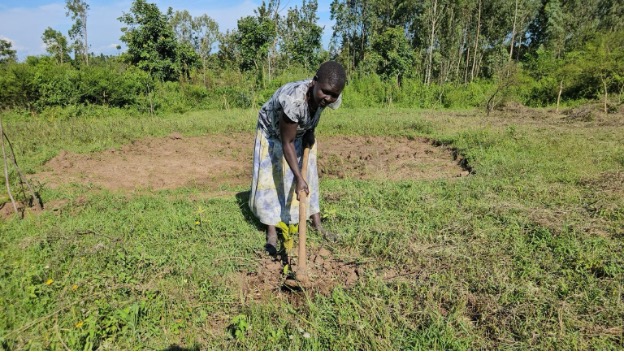
Caroline Awuor tends to tree seedlings on her farm in Siaya County, Western Kenya. She is a beneficiary of the My Farm Trees Project. Credit: Jackson Okata/IPS

Caroline Awuor tends to tree seedlings on her farm in Siaya County, Western Kenya. She is a beneficiary of the My Farm Trees Project. Credit: Jackson Okata/IPS

SIAYA, Kenya , Dec 8 2025 (IPS) – For years, Morris Onyango had been trying to reforest his degraded land on the shores of River Nzoia, in Siaya county, 430 kilometers from Kenya’s Capital, Nairobi. But every time he planted trees on his farm, his efforts bore little fruit, as floodwaters would not only wash away his tree seedlings but also fertile topsoil on his land.


“The land became unproductive and bare. I tried reclaiming the land through reforestation, but the trees’ survival rate was too low,” Onyango said.

Siaya County has a 5.23 percent forest cover and is ranked 44th out of Kenya’s 47 counties. Judy Ogeche, a scientist from the Kenya Forestry Research Institute (KEFRI), says that the compromised forest and tree cover in the county and the lack of any gazetted forests have discouraged the integration of tree and crop farming.

“Communities here do not see tree growing as a lucrative venture. Some myths and beliefs discourage tree growing. For example, some people believe that growing the Terminalia mentalis (often known as the Panga Uzazi) tree attracts death,” says Ogeche.

According to Ogeche, another challenge is gender inequality in land ownership, with men owning most available land and making decisions on what should be planted.

“We have many women interested in restoring tree cover, but their husbands would not allow it,” Ogeche said.

Across Africa, reforestation projects struggle to survive beyond the seedling stage. However, in parts of Kenya, a groundbreaking digital innovation is transforming the landscape by empowering rural farmers to earn a living while restoring degraded lands with native trees.

Tech and Reforestation

In a bid to restore lost biodiversity and enhance tree cover in Kenya, Alliance Bioversity International and CIAT, in partnership with the International Union for Conservation of Nature (IUCN), launched the My Farm Trees project, a blockchain-based platform that offers guidance to subsistence farmers on seed selection, planting, and post-plant care, ensuring that seedlings survive and thrive in harsh conditions.

Implemented in the counties of Siaya, Turkana and Laikipia, MFT emphasizes genetically robust native species that support biodiversity, improve soil health, and provide long-term ecological and economic benefits.

Ogeche observes that the My Farm Trees project has motivated communities in Siaya to grow trees.

“They are given free seedlings and taught how to plant and take care of them, and when the trees grow, they are paid,” she said.

To provide the right seedlings, the project is partnering with the Kenya Forestry Research Institute (KEFRI), the Kenya Forest Services (KFS) and private tree nursery operators in the respective counties.

For farmers like Onyango, the My Farm Trees Project gave them the much-needed solution to their degraded lands and soils

“The project gifted me 175 seedlings of various trees, which I planted along the riverbank. The trees have helped me reclaim my land, prevent erosion and get paid for taking care of my own trees,” Onyango says.

How it Works

In the My Farm Trees project, participating farmers are registered on the MyGeo Farm App, which allows them to monitor seedlings from planting to growing. Through the app, farmers can track and report progress.

Francis Oduor, the National Project Coordinator, says since its rollout, the project has seen over 1,300 farmers registered on the MyGeo Tree App, and over 100,000 seedlings have been planted across the three counties.

“The project is especially interested in using indigenous trees for landscape restoration, which are native to specific areas, and to enhance genetic diversity,” says Oduor.

Oduor explains that My Farm Trees uses monitoring, verification, and incentives to empower local communities to become leaders and stewards of tree-planting projects that provide immediate short-term benefits.

“The project does not just focus on payment to farmers but the long-term benefits of restored landscapes for improved agricultural productivity, water regulation, and climate resilience,” said Oduor.

To ensure the use of native varieties and guarantee the production of quality tree seedlings, the project team collaborates with KEFRI to provide technical assistance to local tree nursery operators.

Lawrence Ogoda, a tree nursery operator, is among the project beneficiaries. He has been trained on seed collection, raising seedlings and record keeping.

“Through the MyGeo Tree and MyGeo Nursery Apps, I can collect data and track progress on seed collection, propagation and development at the nurseries.”

Before joining the My Farm Trees project, Caroline Awuor had not given much attention to growing trees. She received 110 seedlings, 104 of which have successfully survived and are earning her cash incentives.

“Most of them are fruit trees, including mangoes, avocado and jackfruit, while there are also some timber trees. In addition to the incentives from the project, I also earn money by selling the fruit,” she says.

Caroline intends to plant an additional 1,000 tree seedlings on her land, strategically located near the River Nzoia.

According to Joshua Schneck, the Green Climate Fund (GCF) Portfolio Manager for Global Programs at IUCN, My Farm Trees is an innovative project driven towards sustainable transformation.

The Impact

In Kenya, My Farm Tree has supported 3,404 farmers, 56 percent of whom are women. A total of 210,520 trees have been planted, with a survival rate of over 60 percent beyond the first year, with 1,250 hectares of land being restored across Siaya, Turkana, and Laikipia counties.

The program has released KES 26 million (approximately USD 200,000) in digital payments, directly benefiting 1,517 farmers. Additionally, 13 local nurseries have been strengthened in partnership with the Kenya Forestry Research Institute.

Also implemented in Cameroon, the project has seen the restoration of 1,403 hectares of forest land with over 145,000 seedlings being planted and 2,200 farmers registered on the platform. The project has also seen the restoration of 423 community lands and 315 sacred forests, with USD 130,000 in incentives distributed to farmers.

Oduor noted that the My Farm Trees project offers a scalable blueprint for  forest restoration by combining science and Blockchain technology in tree selection, post-planting support, and farmer incentives, which gives it  global relevance.

“MFT is a scalable model that aligns with climate action, poverty reduction, and ecosystem recovery. This approach supports the goals of the Paris Agreement, the United Nations Convention to Combat Desertification, and the UN Decade on Ecosystem Restoration,” Oduor said.
IPS UN Bureau Report

  Source

‘Low- and Middle-Income Countries Need Better Data, Not Just Better Tech’

Conferences, Development & Aid, Economy & Trade, Editors’ Choice, Featured, Headlines, Sustainable Development Goals, TerraViva United Nations

Conferences

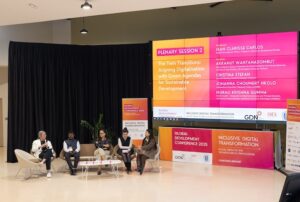
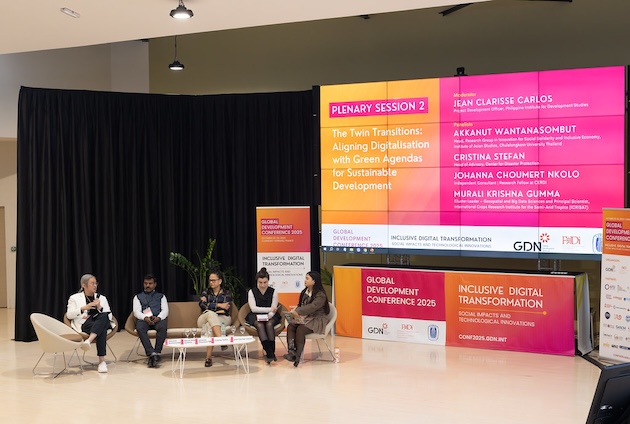
Johanna Choumert-Nkolo, third from right, speaking during a panel discussion at the Global Development Conference 2025 in Clermont-Ferrand, France. Credit: Athar Parvaiz/IPS

Johanna Choumert-Nkolo, third from right, speaking during a panel discussion at the Global Development Conference 2025 in Clermont-Ferrand, France. Credit: Athar Parvaiz/IPS

CLERMONT-FERRAND, France, Dec 4 2025 (IPS) – During the Global Development Conference 2025, development experts and researchers kept warning that low- and middle-income countries (LMICs) were being pushed into a wave of digital transformation without the basic statistical systems, institutional capacity, and local context needed to ensure that AI and digital tools truly benefited the poor.


Among the prominent voices shaping this conversation were Dr. Johannes Jütting, Executive Head of the PARIS21 Secretariat at the OECD, and development economist Johanna Choumert-Nkolo, who has over 15 years of research and evaluation experience. IPS interviewed both Jutting and Choumert-Nkolo following the conference, which concluded about five weeks ago, about the issues surrounding digitalization in LMICs.  Following is the summary of their responses.

How is Data the Weakest Link?

Much of the conversation around AI’s potential in the Global South centers on the promise of improved governance. But for Jutting, whose organization has been working on AI and data, there is a widening gap between the capacities of countries in the Global North and those in the Global South.

AI, he said, offers enormous potential. “For lower-income countries in particular, the production side is promising because AI can reduce the very high costs of traditional data collection. By combining geospatial data with machine learning, for instance, we can generate more granular and more timely data for policymaking, including identifying where poor populations live,” Jutting told IPS.

“But real challenges remain. Many low-income countries lack the fundamental conditions required to make use of AI. First, connectivity: without it, there is no practical AI application. Second, technical infrastructure such as data centers and reliable data transmission. Third, human capacity and skills, which require sustained investment. And fourth, governance and legal frameworks that must be updated to reflect new technologies,” he said.

There are also clear risks, particularly concerning confidentiality, privacy, and the fact that most large AI models are trained on data from the Global North, he told IPS and added that this creates potential biases and limits their usefulness for national statistical offices in the Global South.

Data collection processes, such as censuses and household surveys, are expensive, slow, and operationally difficult. According to him, many national statistical offices lack the workforce, training, and budget needed to maintain regular, reliable data production.

The challenge, he emphasized, is not simply technological.

“Digital transformation is not just a technology issue. It is a change management issue, a capacity development issue, a skills issue, and a political will issue.”

Dr. Johannes Jütting, second from right,speakingg during a panel discussion atthe Globall Development Conference 2025 in Clermont-Ferrand, France. Credit: Athar Parvaiz/IPS

Dr. Johannes Jütting, second from right, speaking during a panel discussion at the Global Development Conference 2025 in Clermont-Ferrand, France. Credit: Athar Parvaiz/IPS

Divide Within the Global South and Fiscal Constraints

While global debates often frame digital inequality as a problem between rich and poor nations, Jütting believes the more serious divide is emerging within the Global South itself. He argues that some LMICs are sprinting ahead while others fall further behind, a divergence he calls “one of the most worrying trends in development today.”

“What I see is a divide inside the Global South,” he said. “Countries like Rwanda, Kenya, the Philippines and Colombia are advanced—sometimes more advanced than OECD members. But others like Mali, Niger, and several small island states, are completely left behind.”

This divide is not only visible in connectivity and infrastructure but also in institutional readiness, technological skills and even access to basic demographic data. In some countries, he said, governments still lack reliable records of how many people are born each year or how many people live within their borders.

“How can we talk about fancy AI models when basic population data is missing?” he asked. “We have to start with the fundamentals.”

He also cautioned that development agencies may inadvertently widen this divide by focusing on “low-hanging fruits” that yield quick, measurable results, instead of supporting long-term system-building in fragile countries.

“There is donor fatigue, and funding is shrinking,” he said.

So, how do we move forward? First, Jutting said, every country needs a strong national strategy for the development of statistics (NSDS). This strategy must be fully aligned with national development plans, he said and added that only then can we ensure financing is efficient, coordinated, and aligned with country needs as well as international monitoring requirements, such as the SDGs or Africa’s Agenda 2063.

“Second, viable financing models will require greater domestic resource mobilization. Governments must be convinced to invest in their own data systems—and this requires demonstrating tangible impact.”

And third, he said, donors need to align their spending more effectively. “Our recent work on gender data financing shows a major disconnect: while gender equality funding is increasing, funding for gender data is not. This mismatch risks wasting money and undermining progress.”

He believes that there has to be a change on both fronts: national governments must allocate more domestic resources, and donors must invest in data in a more strategic, coherent, and results-oriented way.

Complexity of Measuring Digital Impacts

While Jütting focused on institutions and governance, Choumert-NKolo approached digitalization through the lens of climate resilience, human behaviour and evidence generation. Unlike many policy conversations that foreground tools and technologies, she emphasized the complexity of understanding real-world impacts.

“Digitalization is reshaping economies at a very fast pace,” she told IPS. “From a climate perspective, we need to understand what this means, both in terms of opportunities and risks.”

Her main concern is the long-term and layered nature of digital impacts. A digital tool deployed today may influence decisions in ways that take years to fully materialize.

“You never know how a tool will be used until people start making decisions with it,” she said. “Understanding behavioural change is complex, and attribution to one digital tool is extremely difficult.”

Despite these challenges, she emphasized that digital tools have significant potential to support climate adaptation. Farmers facing unpredictable weather patterns can benefit from climate information services delivered through mobile platforms. Communities vulnerable to storms or floods can receive alerts even through basic SMS networks. Such tools, she said, can save lives.

But she urged caution in assuming digital tools are universally accessible or understood.

“We must remember that not everyone can read or act on digital messages,” she said. “Literacy and accessibility gaps remain large in many countries.”

Her research experience in East Africa reinforced the importance of context. Mobile money, she said, became a major success story precisely because it solved local problems and fit local cultural and economic realities. But not every challenge requires a digital solution.

“Sometimes nature-based or low-cost solutions work better. The key is context. We must understand what problem we are trying to solve and whether digital tools are the right fit.”

She believes the way forward lies in identifying local needs, drawing from existing evidence and piloting new solutions where knowledge gaps remain. “There is a lot of hype around digitalization,” she said. “We need more comparative evidence on what works best in each setting.”

A Future That Must Be Shaped Carefully

One theme emerged with clarity from both experts: Digital transformation can support inclusive development, but only if countries invest in strengthening their statistical systems, building institutional capacity and grounding innovation in local realities.

“We need more and better data for better lives,” Jütting said. “But we must ensure the poorest countries are not left behind in this digital wave.”

Choumert-NKolo echoed that sentiment. “Digital tools offer huge opportunities,” she said. “But they must be rooted in context, evidence and local needs.”

For LMICs navigating the uncertainties of climate change, economic pressures and technological disruption, these warnings are timely. Digital transformation can be a powerful equalizer—or a new source of exclusion. The difference, experts said, will depend on whether governments and development partners prioritize the foundations that make digital inclusion truly possible.

  • “Travel (for reporting this story) to the Global Development Conference was supported by GlobalDev, the research communications platform of the Global Development Network (GDN). The 2026 Global Development Conference was organized in partnership with other members of the Pôle clermontois de développement international (PCDI)—Foundation for Studies and Research on International Development (FERDI) and Centre for International Development Studies and Research (CERDI). Reporting and research remain independent.”

IPS UN Bureau Report


COP30 Fails the Caribbean’s Most Vulnerable, Leaders Say: ‘Our Lived Reality Isn’t Reflected’

Climate Change Finance, Climate Change Justice, Conferences, COP30, Development & Aid, Editors’ Choice, Environment, Featured, Headlines, International Justice, Latin America & the Caribbean, Small Island Developing States, Sustainable Development Goals, TerraViva United Nations

COP30


Regional leaders say the outcome of the ‘mixed bag’ climate talks once again overlooks the real and mounting threats faced by Caribbean countries.

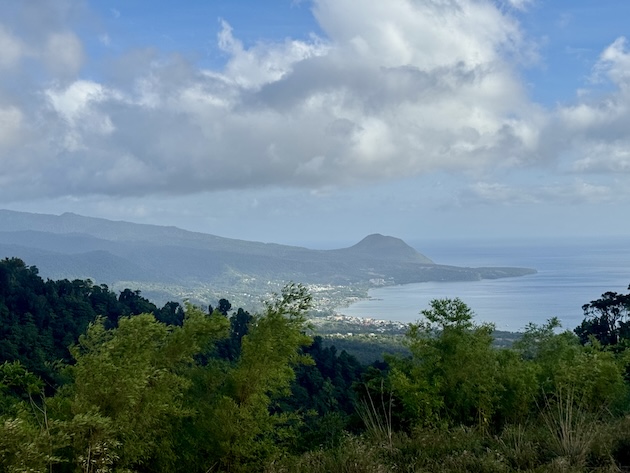
A coastal community in the Eastern Caribbean. Small island states say their extreme climate vulnerability is still not reflected in global finance decisions made at COP30. Credit: Alison Kentish/IPS

A coastal community in the Eastern Caribbean. Small island states say their extreme climate vulnerability is still not reflected in global finance decisions made at COP30. Credit: Alison Kentish/IPS

CASTRIES, St Lucia, Dec 1 2025 (IPS) – Caribbean small island states say this year’s UN climate conference has once again failed to deliver the urgency and ambition needed to tackle escalating climate devastation across the region. From slow-moving climate finance to frustrating political gridlock, leaders say COP30 did not reflect the realities that small islands are living through every day.


Jamaica is recovering from Hurricane Melissa, which left over 30 percent of the country’s GDP in losses and billions of dollars in damage. While the country has been able to respond rapidly thanks to a suite of innovative developmental finance tools, including a USD 150 million catastrophe bond, parametric insurance and a disaster savings fund, its Minister for Water, Environment and Climate Change, Matthew Samuda, warns that the vast majority of Caribbean islands do not have similar mechanisms.

Speaking at a press conference organized by Island Innovation and themed “Islands, the Climate Finance Gap, and COP30 Reflections,” Samuda said this is precisely why global negotiations must center the lived experiences of SIDS.

“I think I perhaps may be a little more disappointed than I am usually at the end of a COP because seeing what Jamaica is going through, seeing what Vietnam is going through, seeing extreme weather events pop up all around the world over the last 10 days, you would think that the urgency and the facts staring us in the face would have brought about greater ambition,” he said, adding that “unfortunately, the global geopolitical landscape didn’t allow for us to go much further.”

A Struggle Just to be Heard?

For many small islands and territories, simply participating meaningfully at COP30 was an uphill battle. The British Virgin Islands, like other Caribbean territories, had to rely on partners, including the Organisation of Eastern Caribbean States and the Caribbean Community Climate Change Centre for accreditation and access to the negotiations.

“We try to split up and cover as much as we can,” said Dr. Ronald Berkeley, Permanent Secretary in the Ministry of Environment, Natural Resources and Climate Change. “Our reliance on partners shows how limited our reach still is.”

Berkeley said that despite the Caribbean’s visible and worsening climate impacts, it remains difficult to get major emitters to understand the region’s urgency.

“For small islands, this is real. I’m not sure a lot of the big players believe us,” he said. “Until you live through being almost blown to smithereens by a Category Five hurricane, you will never understand.”

The BVI recently established its own climate trust fund, currently funded with about US$5.5 million, to address some financing shortfalls, but Berkeley emphasized that this cannot make up for reliable, large-scale climate funding.

Barriers to Pledges

Caribbean officials are echoing the same concern—that climate finance exists on paper but rarely reaches small, vulnerable nations at the speed or scale required.

“At COP there were positive commitments, about US$1.3 trillion annually by 2035 for climate action, the tripling of adaptation finance and operationalizing the Loss and Damage Fund,” said Dr. Mohammad Rafik Nagdee, Executive Director of the Caribbean Centre for Renewable Energy and Energy Efficiency (CCREEE).

“But the elephant in the room is the global finance gap,” he said. “Even where access exists, it’s not accessible at the speed the climate crisis demands. Processes are lengthy, requirements heavy and small governments simply don’t have the technical capacity.”

Nagdee said the region needs “greater predictability, simpler pathways and finance that is actually ready to disburse.”

Living Through it—Not Debating it

For Jamaica, which is emerging from one of the most devastating storms in its history, the mismatch between climate impacts and climate action is glaring.

“In the past four years, Jamaica has had its hottest day on record, its wettest day on record, its worst droughts, two tropical storms, a Category 4 hurricane and now what could be classified as a Category 6,” Samuda said. “That’s climate change in reality. That’s not an academic debate for us.”

Caribbean leaders widely described COP30 as a ‘mixed bag,’ with negotiations with incremental progress overshadowed by inadequate urgency.

“We cannot talk about building back better if the resources arrive slowly,” Nagdee said.

For small island states living on the frontlines of warming seas, rising temperatures and record-breaking storms, the message from COP30 is clear and becoming all-too familiar—that  climate change is accelerating and the price of delay is already being paid.

This feature is published with the support of Open Society Foundations.

IPS UN Bureau Report


COP30 Was Diplomacy in Action as Cooperation Deepens—Says Climate Talks Observer

Active Citizens, Civil Society, Climate Change Finance, Climate Change Justice, COP30, Development & Aid, Editors’ Choice, Environment, Featured, Gender, Humanitarian Emergencies, Sustainable Development Goals, TerraViva United Nations, Women & Climate Change | Analysis

COP30


These processes are all about people. We should never lose our humanity in the process. There should not be a ‘COP of the people’ pitted against a ‘COP of negotiators.’ We need to approach COP jointly as a conference of the people, by the people, and for people. —Yamide Dagnet, NRDC’s Senior Vice President, International

Yamide Dagnet, Senior Vice President, International at the Natural Resources Defense Council. Credit: Joyce Chimbi/IPS

Yamide Dagnet, Senior Vice President, International at the Natural Resources Defense Council. Credit: Joyce Chimbi/IPS

BELÉM, Brazil, Nov 24 2025 (IPS) – As observers at the Conference of Parties closely monitored proceedings in Belém, many, such as Yamide Dagnet, approached the UN Climate Summit as an implementation COP. They are advocating for tangible signals to ignite crucial climate action before the climate crisis reaches irreversible levels.


For Dagnet, Senior Vice President International at the Natural Resources Defense Council (NRDC), it is an all hands-on deck situation where talks need to turn into action on the ground, which in turn must inform the acceleration expected from the negotiations.

“As COP focuses more on how we do things, we know the stakes will be more complex,” said Dagnet. “This is why the Paris Agreement set up improvement five-year-policy cycles, acknowledging that we might not get it right the first time, despite good intentions, and in view of possible unintended consequences and trade-offs.”

As a former negotiator now overseeing the international program at NRDC, an international nonprofit environmental organization that uses science, law, convening, and advocacy to mobilize a wide range of stakeholders to safeguard the Earth, Dagnet understands all too well how difficult the task ahead will be.

She points out that with increased geopolitical headwinds and development remaining front and center for countries around the globe, “we are not dealing just with a climate COP but a socio-economic COP.” To succeed, the multilateral process and climate action need to be designed in a way that is just, inclusive, and participatory.

Like many other observers, Dagnet believes that cooperation among nations and across regions is still moving in the right direction despite the United States’ withdrawal from the Paris Agreement.

“This COP was about diplomacy in action. Only one country has withdrawn from the Paris Agreement; the rest broadly remain on course. There are many issues that will make or break this conference, including the matter of scaling up finance for adaptation and for limiting loss and damage due to climate change. To manage these challenges, you need to measure, and to measure, you need to be guided by indicators, especially those that actually help us to move from just risk and vulnerability assessments to opportunity frameworks and value creation.”

But mobilization cannot be left to the government alone, she cautions.

“It requires support from multilateral and domestic financial institutions, as well as private capital investment. The private sector has for far too long seen climate finance for adaptation as an investment that brings no financial or economic returns. But the tide is changing. Insurance companies, asset managers, pension funds, commercial development, and small and medium companies realize it is an imperative to address adaptation. We need to amplify and demonstrate how there are a multitude of financial resources that could be saved through adaptation,” says Dagnet.

The need of the hour is to design investment as well as financial and insurance models that work for climate scenarios. Insurance business models are largely based on making money from what the company believes is unlikely to happen or happens rarely.  Such is not the case when it comes to climate disasters, which there are going to be a lot more of.

A COP at the mouth of the Amazon and the proximity to the world’s largest tropical forest is not only symbolic but also provides the context to find new ways to value nature and attract funding to make nature and the people who depend on it, more resilient

Addressing whether the intense activism and lobbying at COP30 translated to shaping negotiation outcomes, Dagnet reminds us that the lobbyists from the fossil fuel industry have felt threatened by the Paris Agreement and are worried about the inevitable journey towards greener economies, something that challenges their business model.

“Over the past 10 years, lobbyists have become very good at using these spaces to delay transition,” added Dagnet. Analysis reveals one in 25 of COP30 participants represent the fossil fuel industry, with over 1600 lobbyists given access.

Sonia Guajajara, Minister for Indigenous Peoples of Brazil attends the "Global March: The Answer is Us" during the 30th Conference of the Parties (COP30). Credit: Hermes Caruzo/COP30

Sonia Guajajara, Minister for Indigenous Peoples of Brazil attends the “Global March: The Answer is Us” during the 30th Conference of the Parties (COP30). Credit: Hermes Caruzo/COP30

Indigenous-led protests in Belem have consistently called for climate action and justice, as well as fossil fuel phase-outs and a halt to deforestation. Dagnet has frequent interactions with the Indigenous People, especially women, in Brazil. This includes Puyr Tembe, the first Indigenous woman to head a state secretariat in Pará; Joenia Wapichana, current president of the National Commission for the Defense of the Rights of Indigenous Peoples; Sonia Guajajara, who followed in Wapichana’s steps; and Indigenous leader Célia Xakriabá.

Dagnet stresses the importance of ensuring the protection of these environmental and human rights guardians. Add to that, she pushes for the need to amplify their stories, told in their own words with their voices. She believes that the world has a lot to learn from indigenous communities about living in harmony with nature and also about the increasing and complex threats they face that often cost them their lives.

Dagnet also highlights that climate talks and actions must be inclusive, and no one should be left behind, least of all women, local communities, and indigenous people, who want to be at the table rather than on the menu. “We need to engage with them in a meaningful way and move beyond tokenism,” she says.

NRDC has been integrating gender equity into its environmental initiatives, especially in India. Their multifaceted approach includes promoting women’s economic agency. Implemented through partnerships with organizations like Self-Employed Women’s Association (SEWA) in India, NRDC fosters women’s access to clean energy in rural communities, helping them replace diesel water pumps with solar-powered ones, enabling clean cooking through biogas plants, and providing access to clean transportation. “This has helped increase their household income, improve health, save time and money, and position them as clean-energy leaders in their communities,” says Dagnet.

More recently, NRDC has identified finance as the connecting thread to various complex issues driven by climate change. At COP30, NRDC launched the Fostering Investable National Planning and Implementation (FINI) for Adaptation and Resilience collaborative in partnership with the Atlantic Council’s Climate Resilience Center. FINI connects capital to climate solutions. It is a collaborative effort to unite 100 organizations, including governments, philanthropies, investors, civil society, and more, to develop pipelines of USD 1 trillion worth of investments by 2028 for adaptation and resilience projects that will support countries and communities on the frontlines of the climate crisis.

When all is said and done at COP, with the negotiations, diplomacy, lobbying, and activism, Dagnet says, “These processes are all about people. We should never lose our humanity in the process. There should not be a ‘COP of the people’ pitted against a ‘COP of negotiators.’ We need to approach COP jointly as a conference of the people, by the people, and for people.”

IPS UN Bureau Report

  Source