LILONGWE-(MaraviPost)-Ward councillors have been challenged to lead in Lilongwe’s waste management awareness.
The Director of Programmes for Waste Advisors, John Chome observes that a knowledge gap among communities has contributed to poor waste disposal practices in Lilongwe City.
The Director, Chome, said limited understanding of waste management has resulted in indiscriminate dumping of waste, leading to increased pollution across the city.
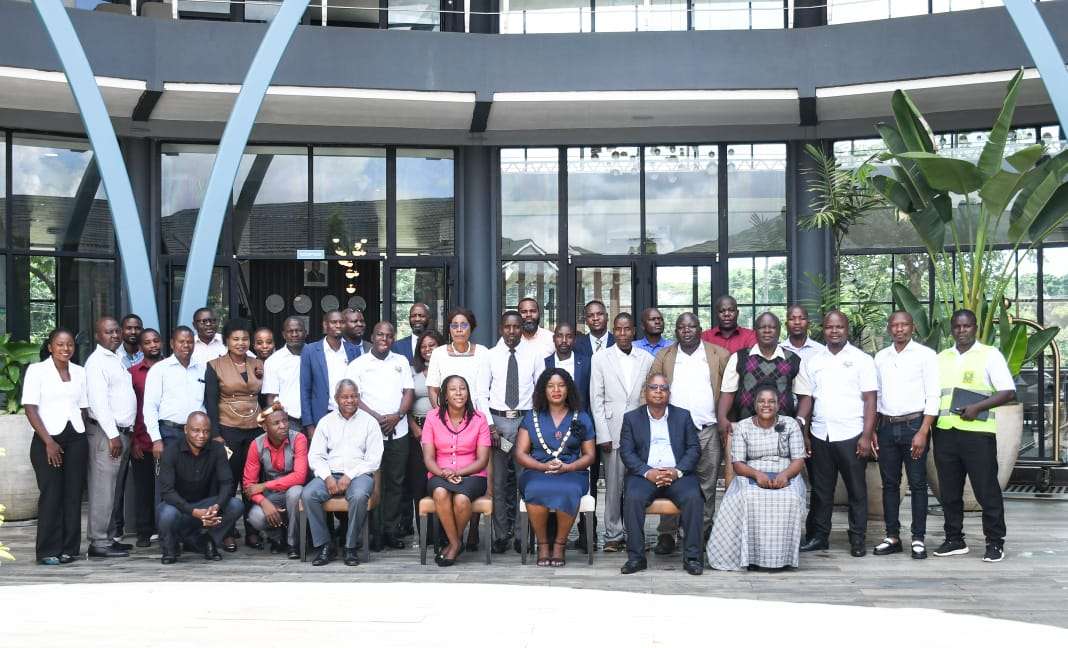
Chome made the remarks on thursday during the consultative meeting with Councillors on the possible establishment of ward recycling centers supported by Center for Environmental Policy and Advocacy under POSSIBLE project with funding from European Union in Lilongwe.
Speaking at the meeting, Chome described councillors as custodians of urban governance at the city level, stressing that engaging them is critical in addressing waste management challenges.
He said empowering councillors with the necessary knowledge would ease the establishment and sustainability of recycling centres.
“As custodians of the city, councillors must clearly understand the current waste management situation so they can make informed decisions.
“Working together, we can effectively address waste challenges and support the establishment of recycling centres,” said Chome.
Deputy Mayor of Lilongwe City Council, Triza Sillo, commended the Centre for Environmental Policy and Advocacy (CEPA) and other partners for organising the meeting, saying the engagement would strengthen advocacy efforts on waste management.
Sillo said councillors would use evidence-based information shared during the meeting to complement initiatives in their respective wards, particularly in promoting the establishment of recycling centres.
She further noted that waste management in Lilongwe should not be viewed as the responsibility of the council alone, but as a collective duty requiring support from all residents.
“As a Deputy Mayor, I am aware of the concerns raised by the public regarding cleanliness in our city. I therefore call upon residents of Lilongwe to work hand in hand with the council.
“If we jointly address littering and indiscriminate waste dumping, these concerns will be a thing of the past and the city’s outlook will improve,” said Sillo.
During the meeting, it was revealed that the Mtandire Waste Management Centre generated over K70 million after selling 6,000 bags of compost manure produced from waste at a price of K12,000 per 50-kilogramme bag.
The Centre for Environmental Policy and Advocacy (CEPA) is leading the POSSIBLE Project, which is being implemented by Waste Advisors with support from the European Union.
A recent report reveals that Asia faces about 100 natural disasters every year, affecting 80 million people. Beyond the statistics are the disrupted lives, damaged homes, and a cycle of repair that drains communities.
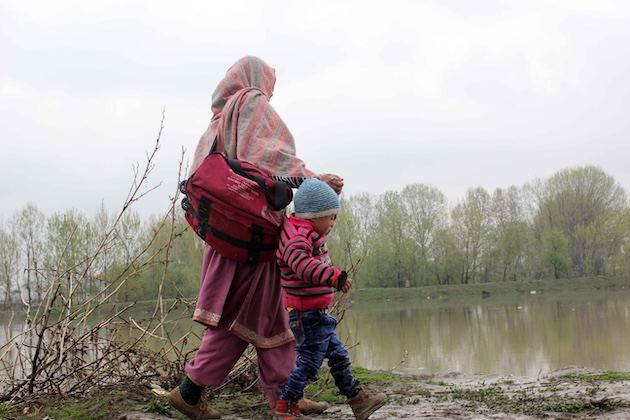
A woman in a remote hamlet in Kashmir, India, migrates to a safer location with her child as floodwater inundates her hometown. Credit: Umar Manzoor Shah/IPS
SRINAGAR & NEW DELHI, Feb 9 2026 (IPS) – When the rain begins in Kashmir’s capital Srinagar, Ghulam Nabi Bhat does not watch the clouds with relief anymore. He watches them with calculation. How much can the gutters take? How fast will the river rise? Which corner of the house will leak first? Where should the children sleep if the floor turns damp?
“Earlier, rain meant comfort,” said Bhat, a resident of a low-lying neighbourhood close to the city’s waterways. “Now it feels like a warning.”
On many days, the rain does not need to become a flood to change life. Streets fill up within hours. Shops shut early. The school van turns back. A phone call spreads across families, asking the same question, “How is your area?”
For millions across India and the wider region of emerging Asia (a group of rapidly developing countries in the region, including China, India, Indonesia, Malaysia, the Philippines, Thailand, and Vietnam), this is the new normal. Disasters no longer arrive as rare, once-in-a-generation ruptures. They come as repeated shocks, each one leaving behind repair bills, lost wages, and a deeper sense that recovery has become a permanent routine.
A recent analysis from the OECD Development Centre shows that emerging Asia has been facing an average of around 100 disasters a year over the past decade, affecting roughly 80 million people annually. The rising trend is powered by floods, storms, and droughts. The report estimates that natural disasters have cost India an average of 0.4 percent of GDP every year between 1990 and 2024.
Behind the national figure lies a quieter, more poignant story. It is the story of how repeated climate and weather shocks get absorbed by households and not just spreadsheets. By the savings a family built for a daughter’s education. By a shopkeeper’s stock bought on credit. By a farmer’s seed money saved from the last season.
In the north Indian state of Bihar’s flood-prone belt, Sunita Devi, a mother of three, says she has stopped storing anything valuable on the floor. Clothes sit on higher shelves. The grain container has moved to a safer corner. The family’s documents stay wrapped in plastic.
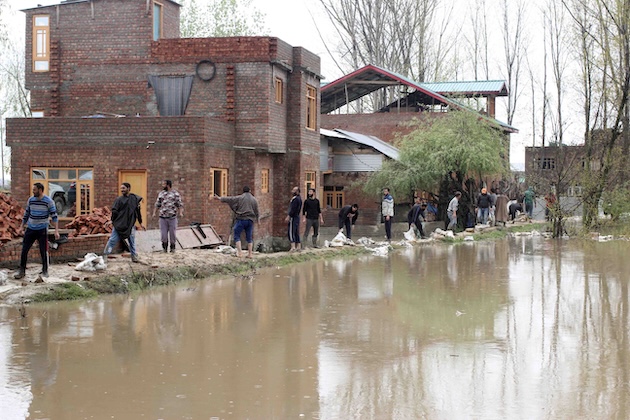
Local residents in Kashmir’s capital, Srinagar, stack sandbags to safeguard their homes from floods in 2025. Credit: Umar Manzoor Shah/IPS
“When water comes, you run with children,” she said. “The rest is left to fate. You can rebuild a wall. You cannot bring back the days you lost.”
Her village has lived with floods for decades, but she says what has changed is frequency, uncertainty, and cost. It is not only about big river floods that make headlines. It is also about sudden waterlogging, damaged roads, broken embankments, and illnesses that rise after the water recedes.
“Earlier we could predict. Now we cannot. Sometimes the water comes fast. Sometimes it stays. Sometimes it leaves and then comes again,” Devi told IPS.
Professor Kaveh Madani, director of the United Nations University’s Institute for Water, Environment, and Health, told IPS that water bankruptcy in Asia should be treated as a national security issue, not a sector issue.
“The priority is shifting from crisis response to bankruptcy management: honest accounting, enforceable limits, protection of natural capital, and a just transition that protects farmers and vulnerable communities,” said Madani.
Across emerging Asia, floods have emerged as one of the strongest rising trends since the early 2000s, the OECD Development Centre report notes. The reasons vary from place to place, but the result looks familiar: disrupted lives, damaged homes, and a cycle of repair that drains communities.
In Kashmir’s capital Srinagar, small shop owner Bashir Ahmad keeps an old wooden rack near the entrance. It is not for display. It is for emergencies. When rain intensifies, he quickly moves cartons of goods off the floor.
“My shop is small; my margin is smaller. One day of water is enough to destroy many things. Customers do not come. Deliveries stop. You just wait and watch,” Ahmad said.
He says the biggest loss is not always the damaged stock. It is the days without work. For families that live week to week, even a short shutdown becomes a long crisis. Rent does not pause. School fees do not pause. Loans do not pause.
The OECD analysis, while regional in scope, points to a hard truth that communities already know. It claims that disasters have economic aftershocks that last long after television cameras leave. When repeated losses occur every year, they reduce growth and reshape choices. Families postpone building stronger houses. They avoid investing in small businesses. They spend more time recovering than progressing.
“Disasters are no longer exceptional events. They have become recurring economic shocks. The problem is not only the immediate damage. It is the repetition. Repetition breaks household resilience,” Dr Ritu Sharma, a climate risk researcher based in Delhi, said.
Sharma says India’s disaster losses should not be viewed as a headline percentage alone.
They should be viewed as accumulated pressure on ordinary life.
“A flood does not only damage a bridge. It delays healthcare visits. It interrupts immunisation drives. It breaks supply chains for food and medicines. It can push vulnerable families into debt traps. What looks like a climate event becomes a social event. It becomes a health event. It becomes an education event.”
In the report’s regional comparisons, the burden is uneven. Some countries face higher average annual losses as a share of GDP, especially those exposed to cyclones and floods. India’s size allows it to absorb shocks on paper, but that size also means more people remain exposed. From Himalayan slopes vulnerable to landslides to coastal districts bracing for cyclones to plains dealing with floods and heat, risk is spread across geography and across livelihoods.
Prof. Nasar Ali, an economist who studies climate impacts, says the real damage is often hidden in the informal economy.
“A formal sector company can claim insurance, borrow on better terms, and restart faster. A vegetable vendor cannot. A small grocery shop cannot. A family with a single daily wage earner cannot. Their loss is immediate and personal. They also take the longest to recover,” Ali said.
He believes disaster impacts also deepen inequality because the poorest households lose what they cannot replace.
“A damaged roof for a rich family is a renovation problem. A damaged roof for a poor family can mean sleeping in damp rooms for weeks, infections, missed work and children dropping out temporarily.”
The report also turns attention toward a policy question that has become urgent across Asia: how should governments pay for disasters in a way that does not repeatedly divert development funds?
The analysis highlights disaster risk finance, tools that help governments prepare money in advance rather than relying mainly on post-disaster relief. This includes dedicated disaster funds, insurance mechanisms, and rapid financing that can be triggered quickly after a shock.
For communities, the debate may sound distant. But the outcomes are visible in the speed of recovery and the dignity of response.
“When a disaster happens, help should come fast,” said Meena Devi, who runs a small grocery shop in Jammu’s RS Pura area and has seen repeated waterlogging during intense rains. “We close our shop. Milk spoils. People cannot buy things. Then we borrow money to restart. If support is slow, we fall behind.”
She said her biggest fear is not a single disaster but the feeling that another one is always near.
“If it happens once, you survive. If it happens again and again, you get tired from inside,” she said.
For Sharma, preparedness must be more than emergency drills. It must include planning that reduces exposure in the first place.
“Some risks are unavoidable, but many are amplified by where and how we build,” she said. “If cities expand without drainage capacity, or if construction spreads into floodplains, then disasters become predictable. That is not nature alone. That is policy.”
In Srinagar, Bhat says residents often feel they fight the same battle every year. Cleaning drains. Stacking sandbags. Moving belongings. Calling relatives. Watching the river level updates. The work looks small, but it is exhausting because it never ends.
“We always think, maybe this year it will be better,” he said. “Then rain comes, and your heart starts beating faster.”
Asked what would make him feel safe, he did not talk about big promises. He spoke about basics. A drain that works. A road that does not collapse. A warning that comes early. Help that comes on time.
For Sunita Devi in Bihar, the dream is even simpler: a season where the family can plan without fear.
“We want to live like normal people. We want to save money, not spend it on repairing what the water broke,” she said.
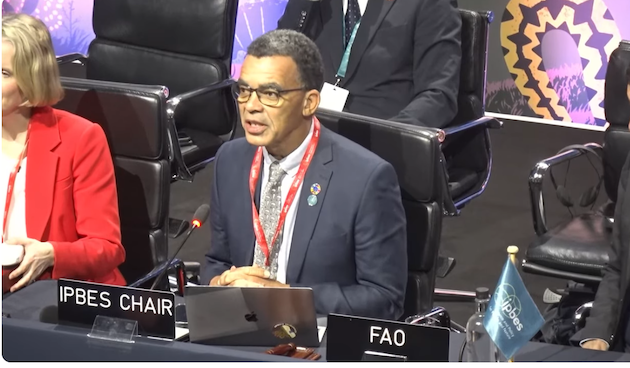
David Oburo, IPBES Chair. Credit: Busani Bafana/IPS
BULAWAYO, Feb 3 2026 (IPS) – British Monarch King Charles says science is the solution to protecting nature and halting global biodiversity loss, which is threatening humanity’s survival.
“We are witnessing an unprecedented, triple crisis of biodiversity loss, climate change, and pollution at a pace that far outstrips the planet’s ability to cope,” said King Charles in a message delivered by Emma Reynolds, United Kingdom Secretary of State for Environment, Food and Rural Affairs.
Science is the Solution
“The best available science can help inform decisions and actions to steward nature and, most importantly, to restore it for future generations, “ King Charles noted, pointing out that humanity has the knowledge to reverse the existential crisis and transition towards an economy that prospers in harmony with nature.
Delegates representing the more than 150 IPBES member governments, observers, Indigenous Peoples, local communities and scientists are meeting for the IPBES’ 12th Session, expected to approve a landmark new IPBES Business & Biodiversity Assessment. The report, a 3-year scientific assessment involving 80 expert authors from every region of the world, will become the accepted state of science on the impacts and dependencies of business on biodiversity and nature’s contributions to people. It will provide decision-makers with evidence and options for action to measure and better manage business relationships with nature.
The King lauded IPBES for bringing together the world’s leading scientists, indigenous and local knowledge, citizen science and government to share valuable knowledge through the Business and Biodiversity Report—the first of its kind.
“I pray with all my heart that it will help shape concrete action for years to come, including leveraging public and private finance to close by 2030 the annual global biodiversity gap of approximately USD 700 billion,” said King Charles.
IPBES Chair, Dr. David Obura, highlighted that the approval of the IPBES Business and Biodiversity Assessment is important just days after the World Economic Forum’s 2026 Global Risks Report again spotlighted biodiversity loss as the second most urgent long-term risk to business around the world.
“In transitioning and transforming, businesses should all experience the rewards of being sustainable and vibrant, benefiting small and large,” Obura emphasized. “The Business Biodiversity assessment synthesizes the many tools and pathways available to do this and provides critical support for businesses across all countries to work with nature and people and not to work against either or both.”
Addressing the same delegates, Emma Reynolds, UK Secretary of State for Environment, Food and Rural Affairs, highlighted the urgency of collective action, the critical role of science, and the opportunities for business in nature.
Reynolds noted there was momentum around the world as countries were restoring wetlands and forests, communities were reviving degraded landscapes and businesses were increasingly investing in nature after realizing that nature delivers real returns.
“The tide for nature is beginning to turn, but we cannot afford to slow down,” said Reynolds. “The window to halt diversity loss by 2030 is narrowing. We need to build on that momentum, and we need to do it now.”
Multilateralism, a must for protecting nature
Paying tribute to IPBES for supporting scientific research, Reynolds emphasized that the rest of the world must step forward when others are stepping back from international cooperation. This is to demonstrate that protecting and restoring nature was not just an environmental necessity but essential for global security and the economy.
“The UK’s commitment to multilateralism remains steadfast,” she said. “We believe that by working together, sharing knowledge, aligning policies, and holding one another accountable, we can halt and reverse the diversity loss by 2030,.“
In January 2026, the United States withdrew its participation in IPBES, alongside 65 international organizations and bodies, including the International Union for Conservation of Nature (IUCN), the UN Framework Convention on Climate Change (UNFCCC) and the Paris Agreement.
The United States was a founding member of IPBES, and since its establishment in 2012, scientists, policymakers, and stakeholders—including Indigenous Peoples and local communities—from the United States have been among the most engaged contributors to its work.
The approval of the Business and Biodiversity Assessment by IPBES government members this week will be multilateralism in action, she said, noting that the assessment would not be possible without the critical role of science.
Reynolds underscored the need to base sound policy on solid scientific evidence. Decisions made in negotiating rooms and capitals around the world must be guided by the best and most up-to-date science available. IPBES exists to provide exactly that.
Noting that the business depends on nature for raw materials, clean water, a stable climate, and food, Reynolds said companies that recognize their dependency on nature are proving that nature-positive investment works.
“Business as well as the government must act now to protect and restore nature… we have the science. We have the frameworks… What we need now is action.”
“Nature loss is now a systemic economic risk. That’s precisely why the assessment on business impact and dependencies is both urgent and necessary,” said Inger Andersen, executive director of the United Nations Environment Programme (UNEP).
“The first-ever business and diversity assessment will deliver authoritative evidence on how businesses depend on nature, how they impact it, and what that means for risk, for resilience, and for long-term value creation.”
Business and Biodiversity are linked
Underscoring that biodiversity loss is linked to the wider planetary crisis, Astrid Schomaker, executive secretary of the Convention on Biological Diversity, paid tribute to IPBES as a provider of science as a public good.
“IPBES has remained a ‘beacon of knowledge at a time when science and knowledge itself is under strain and when the voices of disinformation are sometimes louder than the facts,” said Schomaker, noting that ahead of the first global stocktake of progress in the implementation of the Kunming-Montreal Global Biodiversity Framework (KMGBF), the science provided by IPBES would be invaluable.
“The Business and Biodiversity assessment constitutes a win for everyone. Clarifying that biodiversity loss isn’t just an environmental issue; it’s a serious threat to economic systems, livelihoods, business profitability, and societal resilience. Biodiversity simply underpins and provides the stability we all need.”
Target 15 of the KMGBF, focuses on business reducing negative impacts on biodiversity and global businesses need to assess and disclose biodiversity-related impacts.
IPBES executive secretary, Dr. Luthando Dziba, said IPBES was on track to deliver, in the coming years, crucial knowledge and inspiration to support the implementation of current goals and targets of the KMGBF, and to provide the scientific foundation needed by the many processes now shaping the global agenda beyond 2030.
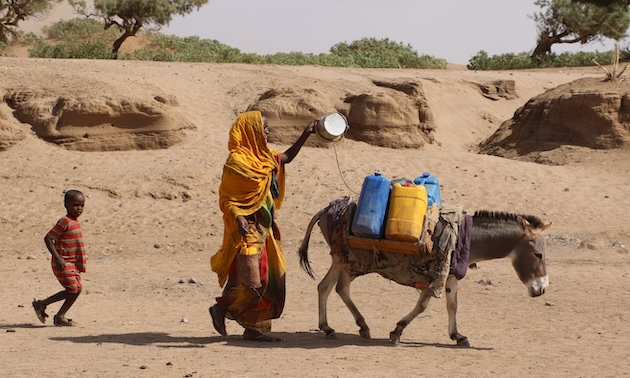
Collecting water in Ethiopia. A new report, ‘Global Water Bankruptcy: Living Beyond Our Hydrological Means in the Post Crisis Era’ warns that many of the earth’s water resources have been pushed to a point of permanent failure. Credit: EU/ECHO/Anouk Delafortrie/IPS
UNITED NATIONS & SRINAGAR, India, Jan 20 2026 (IPS) – The world has entered what United Nations researchers now describe as an era of Global Water Bankruptcy, a condition where humanity has irreversibly overspent the planet’s water resources, leaving ecosystems, economies, and communities unable to recover to previous levels.
The new report, released by the United Nations University Institute for Water, Environment and Health, titled Global Water Bankruptcy: Living Beyond Our Hydrological Means in the Post-Crisis Era. The report argues that decades of overextraction, pollution, land degradation, and climate stress have pushed large parts of the global water system into a permanent state of failure.
“The world has entered the era of Global Water Bankruptcy,” the report reads, adding that “in many regions, human water systems are already in a post-crisis state of failure.”
According to the report, the language of “water crisis” is no longer sufficient to explain what is happening. A crisis implies a shock followed by recovery. Water bankruptcy, by contrast, describes a condition where recovery is no longer realistically possible because natural water capital has been permanently damaged.
In an exclusive interview with Inter Press Service, former Deputy Head of Iran’s Department of EnvironmentProf. Kaveh Madani, who currently is the Director at United Nations University, Institute for Water, Environment and Health, said that declaring that the planet has entered the era of water bankruptcy must not be interpreted as universal water bankruptcy, as not all basins, aquifers, and systems are water bankrupt.
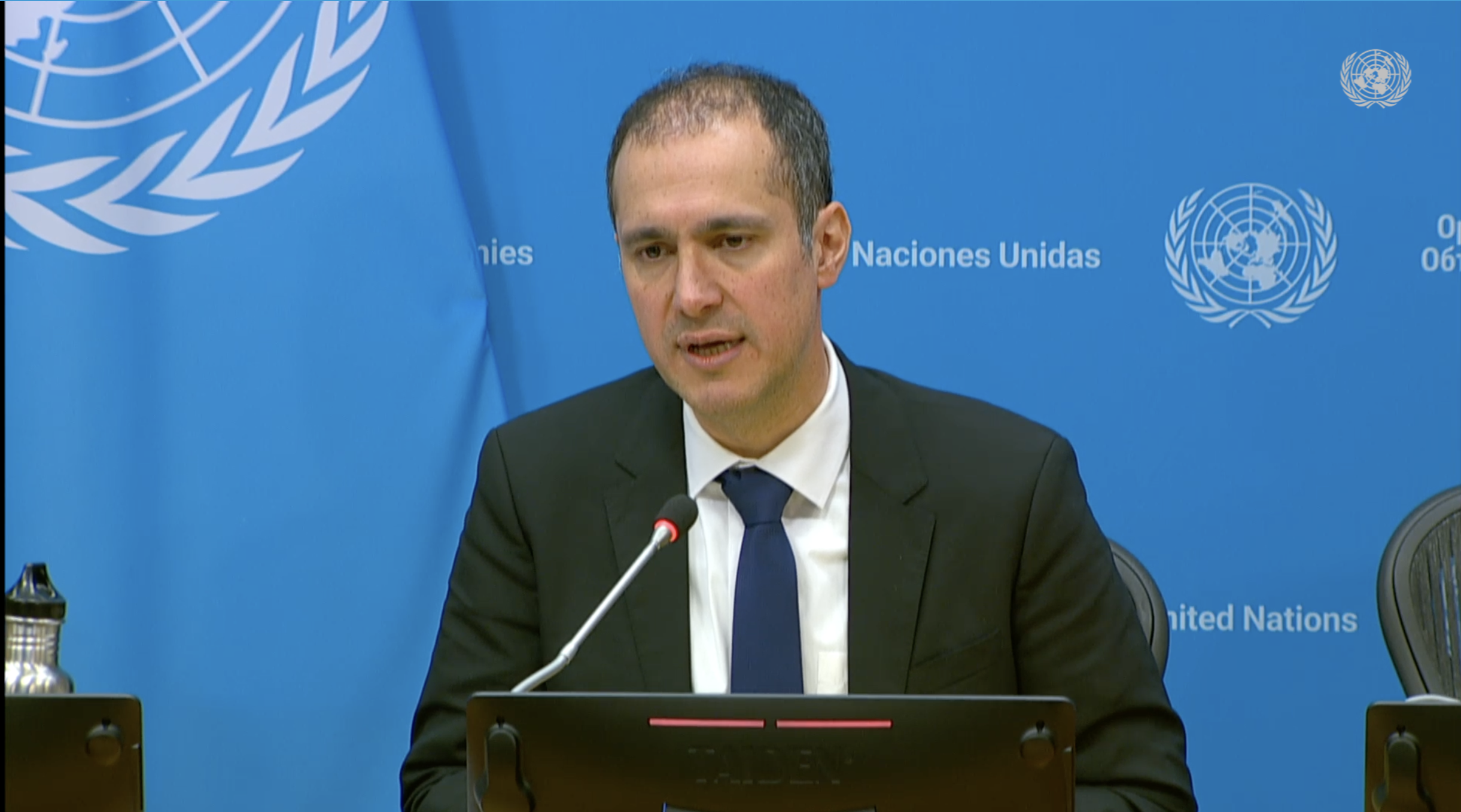
Prof. Kaveh Madani, Director at the United Nations University, Institute for Water, Environment and Health, addresses the UN midday press briefing. Credit: IPS
“But we now have enough critical basins and aquifers in chronic decline and showing clear signs of irreversibility that the global risk landscape is already being reshaped. Scientifically, we know recovery is no longer realistic in many systems when we see persistent overshoot (using more than renewable supply) combined with clear markers of irreversibility—for example aquifer compaction and land subsidence that permanently reduce storage, wetland and lake loss, salinization and pollution that shrink usable water, and glacier retreat that removes a long-term seasonal buffer. When these signals persist over time, the old “bounce back” assumption stops being credible,” Madani said.
“Over decades, societies have withdrawn more water than climate and hydrology can reliably provide, drawing down not only the annual income of renewable flows but also the savings stored in aquifers, glaciers, soils, wetlands, and river ecosystems,” the report says.
The scale of the problem, as per the report, is global. Nearly three-quarters of the world’s population now lives in countries classified as water insecure or critically water insecure.
Madani said, adding that water bankruptcy is best assessed basin by basin and aquifer by aquifer, not by country.
“Please note that, based on the water security definition used by the UN system, water insecurity and water bankruptcy are not equivalent. Water bankruptcy can drive water insecurity, but water insecurity can also stem from limited financial and institutional capacity to build and operate infrastructure for safe water supply and sanitation, even where physical water is available,” he explained.
Madani added that the regions most consistently closest to irreversible decline cluster in the Middle East and North Africa, Central and South Asia, parts of northern China, the Mediterranean and southern Europe, the southwestern United States and northern Mexico (including the Colorado River system), parts of southern Africa, and parts of Australia.
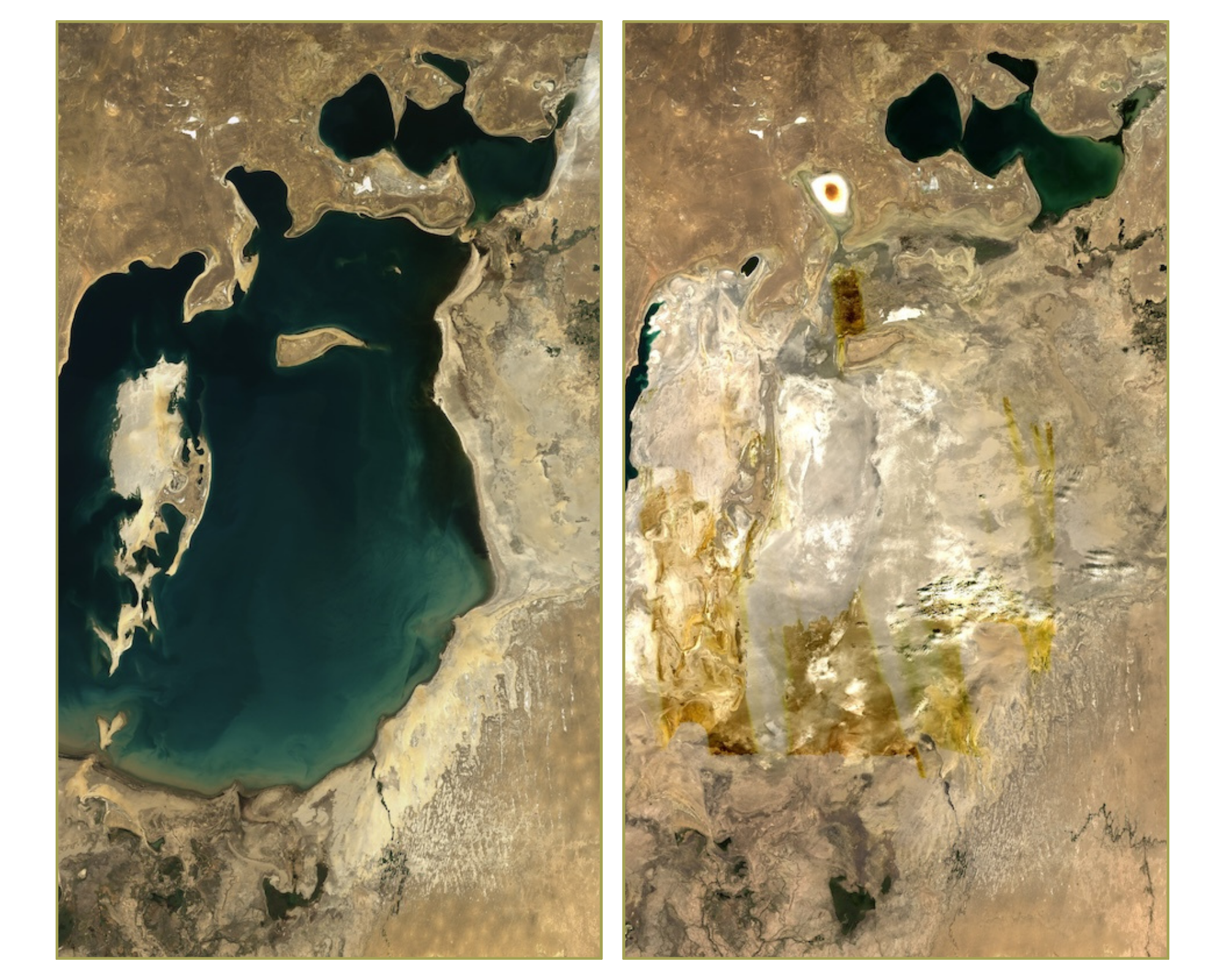
The Aral Sea, which lies between Kazakhstan and Uzbekistan, shows dramatic water loss between 1989 and 2025. Credit: UNU-INWEH
Surface Water Systems Are Shrinking Rapidly
The report shows how more than half of the world’s large lakes have lost water since the early 1990s, affecting nearly one quarter of the global population that depends directly on them. Many major rivers now fail to reach the sea for parts of the year or fall below environmental flow needs.
Massive losses have occurred in wetlands, which serve as natural buffers against floods and droughts. Over the past five decades, the report claims that the world has lost roughly 410 million hectares of natural wetlands, almost the size of the European Union. The economic value of lost ecosystem services from these wetlands exceeds 5.1 trillion US dollars.
Groundwater depletion is one of the clearest signs of water bankruptcy. Groundwater, says the report, now supplies about 50 percent of global domestic water use and over 40 percent of irrigation water. Yet around 70 percent of the world’s major aquifers show long-term declining trends.
“Excessive groundwater extraction has already contributed to significant land subsidence over more than 6 million square kilometers,” the report says, warning that in some locations land is sinking by up to 25 centimeters per year, permanently reducing storage capacity and increasing flood risk.
In coastal areas, overpumping has allowed seawater to intrude into aquifers, rendering groundwater unusable for generations. In inland agricultural regions, falling water tables have triggered sinkholes, soil collapse, and the loss of fertile land.
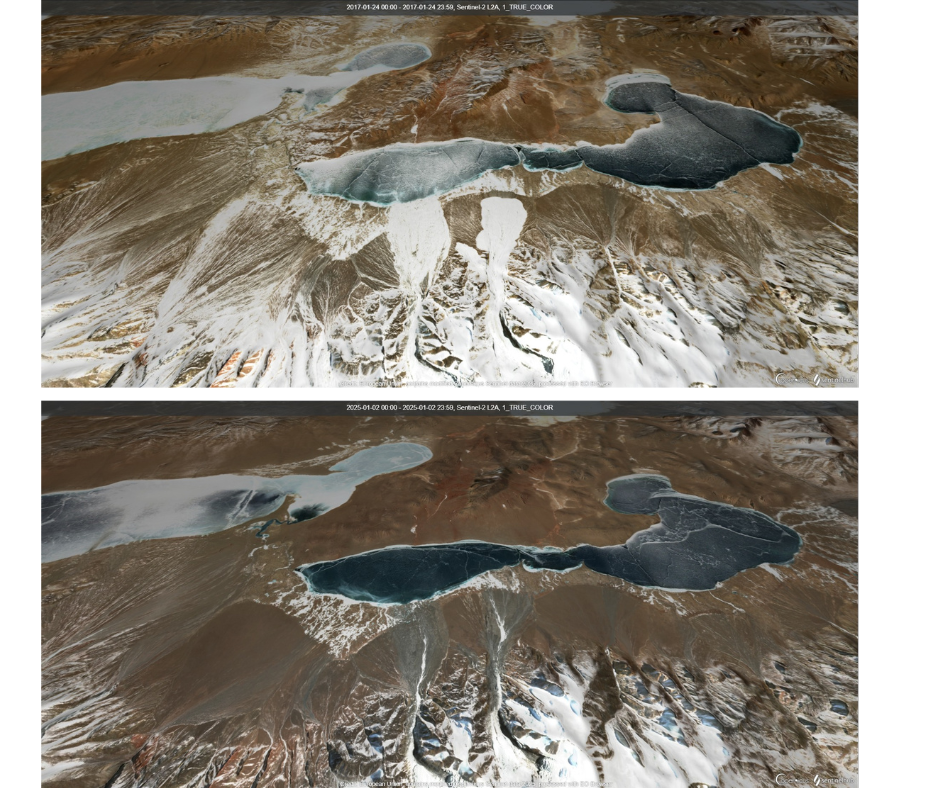
These satellite images show a dramatic impact of the Aru glacier collapses in western Tibet. First image was taken in 2017 and the second in 2025. Credit: UNU-INWEH
The cryosphere, glaciers and snowpacks that act as natural water storage systems are also being rapidly liquidated. The world has already lost more than 30 percent of its glacier mass since 1970. Several low- and mid-latitude mountain ranges could lose functional glaciers within decades.
“The liquidation of this frozen savings account interacts with groundwater depletion and surface water over-allocation to lock many basins into a permanent worsening water deficit state,” says the report.
This loss, as per the report, threatens the long-term water security of hundreds of millions of people who depend on glacier- and snowmelt-fed rivers for drinking water, irrigation, and hydropower, particularly in Asia and the Andes.
Madani said the biggest failure was treating groundwater as an unlimited safety net instead of a strategic reserve.
He says that when surface water tightened, many systems defaulted to “drill deeper” without enforceable caps.
“Authorities often recognize the consequences when it is already late, and meaningful action then faces major political barriers. For example, reducing groundwater use in farming can trigger unemployment, food insecurity, and even instability unless farmers are supported through short-term compensation and a longer-term transition to alternative livelihoods,” he added.
According to Madani, that kind of transition cannot be implemented overnight.
“So, business as usual continues. The result is predictable: groundwater gets “liquidated” to postpone hard choices, and by the time the damage is obvious, recovery is no longer realistic,” he told IPS news.
Agriculture Lies at the Heart of the Crisis
According to the report, farming accounts for approximately 70 percent of global freshwater withdrawals. About 3 billion people and more than half of the world’s food production are located in regions where total water storage is already declining or unstable.
The report states that more than 170 million hectares of irrigated cropland are under high or very high water stress. Land and soil degradation are making matters worse by reducing the ability of soils to retain moisture. The degradation of more than half of the global agricultural land is now moderate or severe.
Drought, once considered a natural hazard, is increasingly driven by human activity. Overallocation, groundwater depletion, deforestation, land degradation, and climate change have turned drought into a chronic condition in many regions.
“Drought-related damages, intensified by land degradation, groundwater depletion and climate change rather than rainfall deficits alone, already amount to about 307 billion US dollars per year worldwide,” the report states.
Water quality degradation further shrinks the usable resource base. Pollution from untreated wastewater, agricultural runoff, industrial effluents, and salinization means that even where water volumes appear stable, much of that water is unsafe or too costly to treat.
The report adds that the planetary freshwater boundary has already been crossed. Both blue water, surface and groundwater, and green water, soil moisture, have been pushed beyond a safe operating space.
Current governance systems, the authors argue, are not fit for this reality. Many legal water rights and development promises far exceed degraded hydrological capacity. Existing global agendas, focused largely on drinking water access, sanitation, and incremental efficiency gains, are inadequate for managing irreversible loss.
“Water bankruptcy must be recognized as a distinct post-crisis state, where accumulated damage and overshoot have undermined the system’s capacity to recover,” the report says.
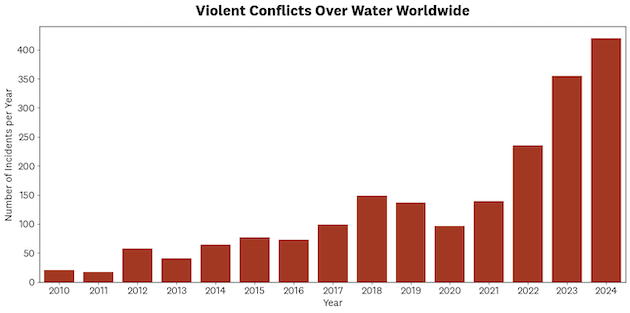
Water bankruptcy could result in a further increase in conflicts. Credit: UNU-INWEH
It warns that the implications of water bankruptcy are dire.
UN Under-Secretary-General Tshilidzi Marwala, Rector of UNU explains, “Waterbankruptcy is becoming a driver of fragility, displacement, and conflict. Managing it fairly—ensuring that vulnerable communities are protected and that unavoidable losses are shared equitably—is now central to maintaining peace, stability, and social cohesion.”
Policy Implications
Instead of crisis management aimed at restoring the past, the report actually pitches for bankruptcy management. That means acknowledging insolvency, accepting irreversibility, and restructuring water use, rights, and institutions to prevent further damage.
The authors lay stress on the fact that water bankruptcy is also a justice and security issue. The costs of overshoot fall disproportionately on small farmers, rural communities, women, Indigenous peoples, and downstream users, while benefits have often accrued to more powerful actors.
“How societies manage water bankruptcy will shape social cohesion, political stability, and peace,” the report warns.
Furthermore, it urges governments and international institutions to use upcoming UN Water Conferences in 2026 and 2028 as milestones to reset the global water agenda, calling for water to be treated as an upstream sector central to climate action, biodiversity protection, food security, and peace.
“This is about a crisis that might arrive in the future. The world is already living beyond its hydrological means,” reads the report.
When asked why the report frames water bankruptcy as a justice and security issue and how governments can implement painful demand reductions without triggering social unrest or conflict, Madani said the demand reduction becomes dangerous when it is treated as a technical exercise instead of a political economy reform. In many water-bankrupt regions, according to him, water is effectively a jobs policy: it keeps low-productivity farming and local economies afloat.
“If you cut water without an economic transition, you create unemployment, food insecurity, and unrest. So the practical pathway is to decouple livelihoods and growth from water consumption. In many economies, water and other natural resources are used to keep low-efficiency systems alive. In most places, it is possible to produce more strategic food with less water and less land, and with fewer farmers—provided that farmers are supported through a transition and offered alternative livelihoods.”
According to Madani, governments should protect basic needs but target the big reductions where most water is used, especially agriculture and besides that, pair caps with a just transition package for farmers—compensation, insurance, buy-down or retirement of water entitlements where relevant, and real income alternatives.
He further suggests that the governments should invest in diversification, including services, industry, value-added agri-processing, and urban jobs, so communities can earn a living without expanding water withdrawals.
“In short, you avoid conflict by making demand reduction part of a broader economic transition, not a standalone water policy.”
Phalombe-(MaraviPost)-Second Vice President Enock Chihana is presiding over the launch of this year’s 2025/2026 tree planting season at Mpata Primary School in Phalombe District, under the theme “Trees and Forests for Community Resilience.”
The event marks a significant milestone in Malawi’s efforts to enhance environmental sustainability and community resilience.
Chihana has planted fruit trees in Karama Village to mark the official launch, setting an example for others to follow.
He is accompanied by Minister of Natural Resources, Alfred Gangata, highlighting the government’s commitment to environmental conservation.
Other dignitaries include the Democtric Progressive Party Regional Governor for the South, Charles Mchacha, Mayor of Blantyre City, Isaac Jomo Osman, and senior government officials, underscoring the collaborative effort to promote tree planting.
The Department of Forestry says it has planned to plant over 41 million trees during the season, which started on 15 December and will end on 15 April, a ambitious target that requires collective action.
This initiative aims to make a tangible impact on Malawi’s environment and communities, promoting a greener future for all.
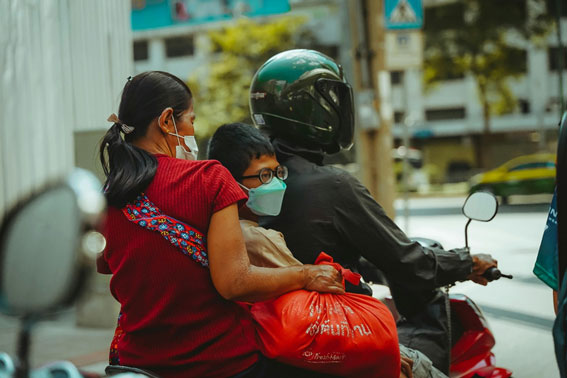
A mother and a son with mask were riding on a motorcycle in a street of Bangkok. The capital of Thailand experienced high level of PM2.5 particle pollution. Credit: Pexels/Maksim Romashkin
BANGKOK, Thailand, Jan 14 2026 (IPS) – Take a deep breath.
Did you know that in many countries in Asia and the Pacific, the air we breathe falls short of the safety standards for air quality set by the World Health Organization? While the start of a new year signals new beginnings, it also marks the continuation of the recurring air quality crisis across many countries in the region.
Oftentimes, when we think of air pollution, we associate it with car exhaust and factory chimneys belching black smoke. But air pollution is not just the cost of urban development – it is a multi-hazard crisis caused by wildfires, sand and dust storms, and volcanic eruptions that respect no borders. Access to clean air is a human right and countries who contribute the least to air pollution are often the most vulnerable.
Rising temperatures create a vicious cycle: rising heat leads to intensifying wildfires, releasing toxic smoke composed of carbon dioxide, carbon monoxide, and PM2.5 into the air we breathe. Furthermore, heat accelerates the breakdown of waste, generating even more pollutants.
Volcanic eruptions add sulfur dioxide and volcanic ash to the mix, and these pollutants can linger in the atmosphere for months. The result? Climate change exacerbates air pollution, which in turn aggravates the climate crisis — a feedback loop that puts both human health and ecosystems at risk and transforms local hazards into regional challenges.
Can a heavily polluted environment be restored? In principle, yes, but doing so requires transformative change and collective action in our economy and society. Improving urban mobility requires prioritizing efficient public transport, including low-emission vehicles, cleaner, greener alternatives such as walking, cycling, and ride-sharing.
Nature-based solutions, including green cooling corridors, can further improve air quality by lowering surface temperatures and providing buffers against desertification, land degradation, drought, and sand and dust storms.
However, not all sources of air pollution can be addressed through emission reductions alone. There are inherent limits to prevention at the source, particularly for air pollution caused by natural hazards. This requires a shift in focus from mitigation toward adaptation and preparedness.
Earth observation plays a critical role in monitoring, early warning, and informed decision-making. Advanced sensors aboard platforms such as Sentinel-5 Precursor and Geostationary Environment Monitoring Spectrometer (GEMS) detect key atmospheric pollutants including nitrogen dioxide (NO2), sulfur dioxide (SO2), tropospheric ozone, and carbon monoxide at unprecedented spatial and temporal scales.
The collaboration of ESCAP with regional partners for the Pan-Asia Partnership for Geospatial Air Pollution Information exemplifies how satellite data can be integrated with surface observations to create robust monitoring systems. These datasets enable tracking transboundary pollution events, from agricultural fire smoke to volcanic sulfur emissions to urban photochemical smog.
Satellites bridge the existing gaps from ground-based observations, providing authorities with the spatial coverage needed to understand and monitor air pollution and formulate effective policies.
The Clean Air for Sustainable ASEAN project recognizes that addressing the transboundary air pollution crisis requires strengthened monitoring and decision-making capacities enabled by technology-driven solutions. The application, Check Phoon (Thai: Phoon, meaning dust), or the PM2.5 Monitoring System, developed by the Geo-informatics Information and Space Technology Development Agency of Thailand, is an innovative platform that leverages space technology to support air quality monitoring and public health protection by providing real-time, high-resolution PM2.5 concentration data across Thailand.
The application is available in both web-based and mobile applications, and the system integrates satellite data, such as from Himawari, meteorological information, PM2.5 sources including hotspots (active fire detections), and ground-based validation from PM2.5 monitoring stations.
Building on the framework of SatGPT for flood hotspot mapping, an iteration of SatGPT for volcanic hazards has been proposed with potential to support the understanding and management of air pollution linked to volcanic activity. has been proposed with potential to support the understanding and management of air pollution linked to volcanic activity.
The Regional Action Programme on Air Pollution advances air quality management through science-based cooperation, sharing of best practices, and strengthened technical and financial support across ESCAP member States.
Complementing this effort, the Regional Space Applications Programme facilitates the sharing of Earth observation data and expertise that are critical for monitoring air pollution and assessing the impacts.
These initiatives contribute to accessible and actionable geospatial information that strengthens early warning systems, enabling authorities to forecast and quantify air quality with greater precision.
The transboundary nature of air pollution demands a stronger and more urgent call to action. While the Asia-Pacific region has demonstrated remarkable resilience in the face of cascading disasters, regional cooperation must accelerate to match the scale and pace of this evolving crisis.
Keran Wang is Chief of Space Applications Section, ESCAP; Sheryl Rose Reyes is Consultant, Space Applications Section, ESCAP; Taisei Ukita is former Intern, Space Applications Section, ESCAP.
The authors would like to thank Sangmin Nam, Director of the Environment and Development Division of ESCAP, for his contributions to this article.