International Women’s Day, 2023World Parliaments Could Take Another 80 Years to Achieve Gender Parity Among Legislators

Despite advances in gender representation in legislative bodies, the track record of women in the executive branches of government – as heads of state or heads of government — remains low.

By Thalif Deen
UNITED NATIONS, Mar 8 2023 (IPS)

For the first time in history, says a new report from the Inter-Parliamentary Union (IPU), not a single functioning parliament in the world is “male-only”.

Is the increasing number of women in parliaments a singular achievement for gender empowerment? Or is it the result of mandatory legislative quotas for women’s representation in world’s parliaments?


According to the latest IPU report, Women in Parliament 2022, women’s participation in parliament has never been as diverse and representative as it is in many countries today.

The findings are based on the 47 countries that held elections in 2022. In those elections, women took an average 25.8% of seats up for election or appointment. This represents a 2.3 percentage point increase compared to previous renewals in these chambers.

Brazil saw a record 4,829 women who identify as Black running for election (out of 26,778 candidates); in the US, a record number of women of colour (263) stood in the midterm elections; LGBTQI+ representation in Colombia tripled from two to six members of the Congress; and in France, 32 candidates from minority backgrounds were elected to the new National Assembly, an all-time high of 5.8% of the total.

The report said legislated quotas were again a decisive factor in the increases seen in women’s representation.

Thomas Fitzsimons, IPU’s Director of Communications told IPS there are many factors that explain the successes of the countries that have made progress.

For example, he pointed out, technological and operational transformations, largely due to the COVID-19 pandemic, have increased the potential for parliaments to become more gender-sensitive and family-friendly.

“The influence of gender issues on election outcomes, with increased awareness of discrimination and gender-based violence, as well as alliances with other social movements, also helped drive strong results for women in some of the parliamentary elections,” he noted.

“But if we had to choose one primary factor, it would be legislated quotas. Legislated quotas enshrined in the constitution and/or electoral laws require that a minimum number of candidates are women (or of the under-represented sex),” he said.

Chambers with legislated quotas or combined with voluntary party quotas produced a significantly higher share of women than those without in the 2022 elections (30.9% versus 21.2%).

“As for the future, we need to accelerate the momentum which is still too slow. At current rates of growth, it will take another 80 years before we reach parity,” Fitzsimons declared.

Antonia Kirkland Global Lead — Legal Equality and Access to Justice.at Equality Now, told IPS it is encouraging to see IPU’s data revealing that more women than ever are in political decision-making roles globally, and there has been an overall increase in the number of women in both government and parliamentary posts.

IPU’s data clearly demonstrates that quotas on women’s representation have had a positive, big impact. Countries applying quotas have enjoyed a 9.7% increase in women in parliaments in comparison to countries without, she said.

“However, it is lamentable that women are still so underrepresented at all levels of political decision-making, accounting for only 9.8% of Heads of Government and just over a quarter of MPs. It is also deeply concerning that gender parity in parliaments is at least 80 years away if we continue at the current pace.”

With the World Bank finding that only 14 countries have full legal equality between women and men, and UN Women gaging it will take another 286 years to eliminate gaps in legal protections, duty bearers must create a safe and empowering environment for women to engage in politics that fosters greater legal equality, said Kirkland.

She said more needs to be done to increase women’s political representation by understanding and removing obstacles that impede women’s participation in the public sphere and decision-making.

“To accelerate gender parity in parliaments, we need an end to sex-discriminatory laws in all areas of life which hold women back from engaging in politics in the first place.”

Political parties should highlight the importance and advantages of gender diversity, and implement initiatives that involve women in politics at all stages and within all branches of the political arena.

IPU’s report, she pointed out, shows that a shocking percentage of women in parliament are subjected to gender-based violence and sexual harassment in their own parliaments, on the streets, and in the digital world. Concerted efforts are required to tackle head-on gender-based violence and abuse targeting women politicians both online and offline.

Governments, parliamentarians, the private sector, and civil society need to seize every opportunity – such as the upcoming UN Global Digital Compact – to work together so that women are protected from online abuse. Perpetrates and those who facilitate or provide platforms for such abuse must be held accountable.

“Tackling this problem would result in less self-censorship by parliamentarians, greater interest from girls and young women to serve in government, and ultimately stronger democracies that are both more peaceful and gender-equal, declared Kirkland.

At the regional level, the report said, six countries now have gender parity (or a greater share of women than men) in their lower or single chamber as of 1 January 2023. New Zealand joined last year’s club of five consisting of Cuba, Mexico, Nicaragua, Rwanda and the United Arab Emirates (UAE), at the top of the IPU’s authoritative global ranking of women in parliament.

Other notable gains in women’s representation were recorded in Australia (the strongest outcome of the year with a record 56.6% of seats won by women in the Senate), Colombia, Equatorial Guinea, Malta and Slovenia.

High stakes elections in Angola, Kenya and Senegal all saw positive strides for women. Wide divides characterized results in Asia: record numbers of women were elected to the historically male-dominated Senate in Japan but in India, elections to the upper chamber led to women occupying only 15.1% of seats, well below the global and regional averages.

The Pacific saw the highest growth rate in women’s representation out of all the regions, gaining 1.7 percentage points to reach an overall average of 22.6% women in parliament. Every Pacific parliament now has at least one-woman legislator.

In the 15 European chambers that were renewed in 2022, there was little shift in women’s representation, stagnating at 31%.

In the Middle East and North Africa region, seven chambers were renewed in 2022. On average, women were elected to 16.3% of the seats in these chambers, the lowest regional percentage in the world for elections held in the year. Three countries were below 10%: Algeria (upper chamber: 4.3%), Kuwait (6.3%) and Lebanon (6.3%).

Bahrain is an outlier in the region with a record eight women elected to the lower chamber, including many first-time lawmakers. 73 women ran for election to the lower chamber (out of a total of 330 candidates) compared with the 41 women who ran in the last election in 2018. Ten women were also appointed to the 40-member upper chamber.

The IPU is the global organization of national parliaments. It was founded more than 133 years ago as the first multilateral political organization in the world, encouraging cooperation and dialogue between all nations. Today, the IPU comprises 178 national Member Parliaments and 14 regional parliamentary bodies. It promotes democracy and helps parliaments become stronger, younger, gender-balanced and more representative. It also defends the human rights of parliamentarians through a dedicated committee made up of MPs from around the world.

For more information about the IPU, contact Thomas Fitzsimons at e-mail: press@ipu.org or tf@ipu.org or tel: +41(0) 79 854 31 53

IPS UN Bureau Report


!function(d,s,id){var js,fjs=d.getElementsByTagName(s)[0],p=/^http:/.test(d.location)?’http’:’https’;if(!d.getElementById(id)){js=d.createElement(s);js.id=id;js.src=p+’://platform.twitter.com/widgets.js’;fjs.parentNode.insertBefore(js,fjs);}}(document, ‘script’, ‘twitter-wjs’);  

Excerpt:

This feature is part of a series to mark International Women’s Day, March 8. Source

How Emerging Economies Are Reshaping the International Financial System

The G20 or Group of Twenty is an intergovernmental forum comprising 19 countries and the European Union. It works to address major issues related to the global economy, such as international financial stability, climate change mitigation, and sustainable development.

By Ian Mitchell and Sam Hughes
LONDON, Feb 23 2023 (IPS)

It’s been 25 years since the 1997 Asian financial crisis led to the creation of the G20 forum for finance ministers; and 15 years since this became a leader-level meeting following the global financial crisis. During this period, there has been significant shift in the global finance and economic landscape.


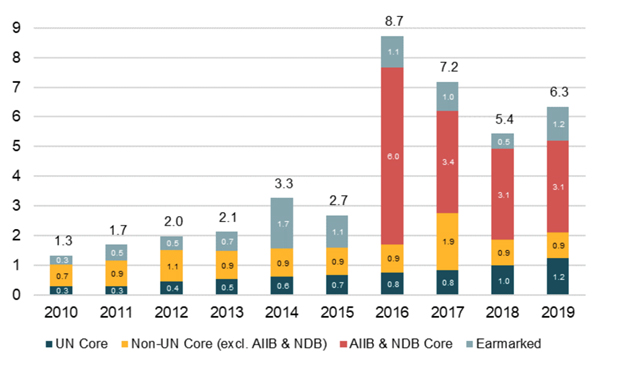
The ascent of several emerging economies has seen their contributions to the multilateral finance system that supports development rise significantly. Our new report collates those contributions over the last decade for the first time. It charts how China’s annual contributions to the UN and multilateral development banks rose twenty-fold from $0.1bn to $2.2bn.

But it also looks collectively at a group of 13 rising economies whose developmental contributions to multilateral finance institutions have risen five-fold to over $6bn over the last decade.

These contributions now make up an eighth of the total; and have seen the creation of two new multilateral finance institutions.

In this piece, we draw out key findings from our analysis, including the balance between funding existing and new institutions like the New Development Bank.

We consider whether continued growth in the 13 emerging actors could generate enough new funding for development over the next quarter century, and even create an institution as large at the World Bank’s fund for low-income countries (IDA).

Despite recent rhetoric around the return to a bipolar world order, this report is evidence that a wide group of countries are already playing major role in the global economic and development system, and will continue to do so in years to come

The transformational effect of economic growth on the multilateral system

In 1990 most people in the world lived in low-income countries; by 2020, this share had fallen dramatically to just seven percent of people. Meanwhile, the share of the global population living in middle-income countries swelled from 30 percent in 1990 to 73 percent in 2020.

Such a transformation implies a greater number of countries with the economic output to contribute internationally: widening and deepening participation in the multilateral system.

And this is just what we’ve seen. Over the decade to 2019, we find a group of emerging actors have significantly increased their contributions of development finance to multilateral organisations.

These include thirteen major economies outside the group of more established providers within the Development Assistance Committee (DAC), which tend to receive more attention.

Ten of these emerging actors are G20 members, including the BRICS—Brazil, Russia, India, China, and South Africa—but others have grown quickly too: Argentina, Chile, Indonesia, Israel, Mexico, Saudi Arabia, Turkey, and the United Arab Emirates. Collectively, we refer to these thirteen emerging actors as the “E13.”

Over the decade, the E13’s annual contributions of development finance to multilateral organisations (both core and funding earmarked for particular purposes) have increased almost five-fold, from $1.3bn in 2010 to $6.3bn in 2019 (up 377 percent). And their unrestricted core contributions have risen even more: increasing from $1.0bn to $5.2bn (up 410 percent).

Of these core contributions, we see that those to UN agencies more than quadrupled over the decade, steadily rising from $0.3bn to $1.2bn (up 330 percent). But by far the most striking development in E13 core contributions has come from the creation and capitalisation of two new multilateral organisations: the Asian Infrastructure Investment Bank (AIIB) and the New Development Bank (NDB).

The role of China

Although China has recently stepped back its bilateral finance efforts, its multilateral contributions increased steadily to 2019; and provided a third (34 percent) of the E13 total over the decade. Our colleagues have examined this in detail, including how China has the second highest aggregate voting share after the US in international finance institutions it supports.

Still, our analysis also highlights the importance of Russia, Brazil and India who each contributed over $3bn over the period and collectively contributed a further third of the total. While China’s multilateral contributions have been concentrated (59 percent) in new institutions it co-founded (see below), other providers have concentrated funding in traditional institutions: for example, Argentina, Chile and Mexico did not support the new institutions while for Saudi Arabia and UAE they were 17 percent and 21 percent respectively.

Creating new multilateral finance organisations

Over the ten-year period we examine, almost half of the E13’s core multilateral contributions were to the two new institutions (AIIB and NDB). After 2016, funding provided to these institutions made up over two-thirds of their contributions. Indeed, in 2016 the first financial contributions to AIIB and NDB causedE13 multilateral development finance to triple in a single year.

The E13 provided an additional $6.0bn of core funds for AIIB and NDB in 2016, without reducing their multilateral contributions through other channels.

Though annual contributions reduced to $3.1bn in 2019, AIIB and NDB still accounted for half of the E13’s multilateral development finance in that year, leaving their contributions at the end of the decade far ahead of the beginning.

Figure 1. E13 core and earmarked contributions of development finance to multilateral organisations (nominal USD billions)

Source: Authors’ analysis

Emerging actors fund a sixth of the UN system

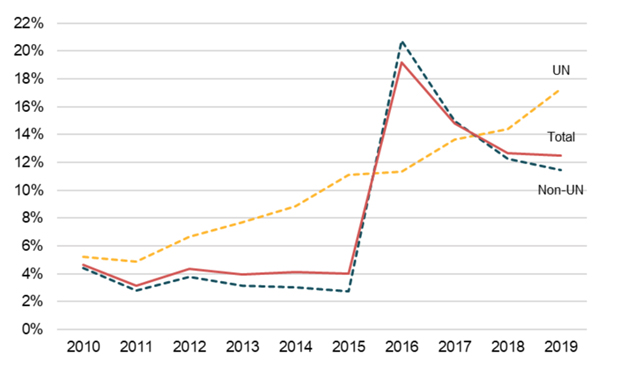
As well as higher absolute contributions (Figure 1), the E13’s role in the multilateral system has also grown in relative terms (Figure 2). As a share of the level of finance provided by the 29 high-income countries in the OECD DAC, the E13’s core multilateral contributions rose from 5 percent in 2010 to 12 percent in 2019—more than doubling their relative significance.

This was largely due to the effect of AIIB and NDB (clearly seen by the 2016 peak), but we also see that E13 core contributions to the UN system steadily and quickly rose as a share of the DAC level across the decade: from 5 percent in 2010 to 17 percent in 2019.

Figure 2. E13 core contributions of development finance to multilateral organisations as a share of contributions from DAC countries

Source: Authors’ analysis

A look to 2050—what role might the emerging economies play?

As the economies of the E13 continue to grow, what might this mean for their multilateral contributions in the future? Figure 3 shows how the share of economic output provided as development finance to multilateral organisations (either core or earmarked) tends to increase with higher levels of income per capita.

Though the relationship is steeper for the DAC than the E13, even the E13’s current trajectory implies a significant increase in future multilateral development finance from this group.

Ian Mitchell is Co-Director, Development Cooperation in Europe and Senior Policy Fellow at the Center for Global Development. Sam Hughes is a Research Assistant at the Center for Global Development.

IPS UN Bureau


!function(d,s,id){var js,fjs=d.getElementsByTagName(s)[0],p=/^http:/.test(d.location)?’http’:’https’;if(!d.getElementById(id)){js=d.createElement(s);js.id=id;js.src=p+’://platform.twitter.com/widgets.js’;fjs.parentNode.insertBefore(js,fjs);}}(document, ‘script’, ‘twitter-wjs’);  

Source

Climate Crisis is a Child Crisis and Climate-Resilient Children, Teachers and Schools Must Become Top International Agenda

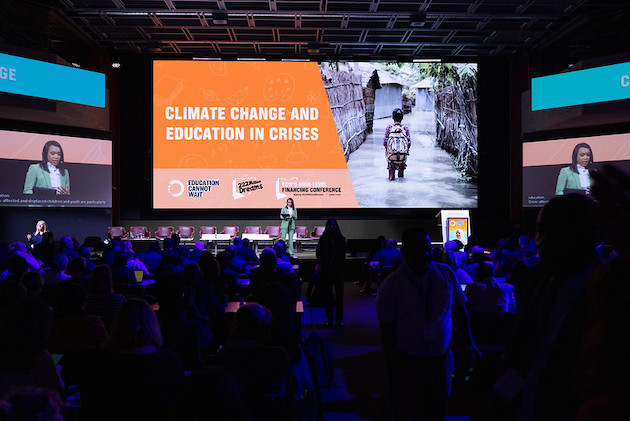
From climate change to child marriage, education is seen as the solution. ECW Director Yasmine Sherif protests early marriage with young delegates at the Education Cannot Wait Conference held in Geneva. Credit: ECW

From climate change to child marriage, education is seen as the solution. ECW Director Yasmine Sherif protests early marriage with young delegates at the Education Cannot Wait Conference held in Geneva. Credit: ECW

By Joyce Chimbi
GENEVA & NAIROBI, Feb 17 2023 (IPS)

From southern Ethiopia to northern Kenya and Somalia, the most severe drought in the last 40 years is unfolding. It is simply too hot to go to school on an empty stomach, and close to 3 million children are out of school, with an additional 4 million at risk of dropping out entirely across the Horn of Africa.


Further afield, months after unprecedented floods and landslides ravaged Pakistan, villages remain underwater, and millions of children still need lifesaving support. More recently, while children were sleeping, a most devastating earthquake intruded, and an estimated 2.5 million children in Syria and 4.6 million children in Turkey were affected.

Today, child delegates from Nigeria and Colombia told the world that climate change is ruining their childhood and the world must act now, for 222 million dreams are at stake. They were speaking at the Education Cannot Wait High-Level Financing Conference held in Geneva.


Nafisa from Nigeria reminded delegates at the Education Cannot Wait High-Level Financing Conference held in Geneva that the climate emergency is a child’s rights issue. Credit: ECW

Nafisa from Nigeria reminded delegates at the Education Cannot Wait High-Level Financing Conference held in Geneva that the climate emergency is a child’s rights issue. Credit: ECW

“I am a girl champion with Save the Children and a member of the children’s parliament in Nigeria. Children are least responsible for the climate crisis, yet we bear the heaviest burden of its impact, now and in the future. Climate emergency is a child’s rights crisis, and suffering wears the face of a child,” said Nafisa.

In the spirit of listening to the most affected, most at risk, Pedro further spoke about Colombia’s vulnerability to climate change and the impact on children, and more so those in indigenous communities and those living with a disability, such as his 13-year-old cousin.

Pedro and Nafisa stressed that children must play a central role in responding to the climate crisis in every corner of the world. They said climate change affects education, and in turn, education has an important role.

This particular session was organized in partnership with the Geneva Global Hub for Education in Emergencies, Save the Children, and Plan International, in the backdrop of the first-ever High-Level Financing Conference organized in close collaboration with the Governments of Colombia, Germany, Niger, Norway, and South Sudan, ECW and Switzerland.

Birgitte Lange, CEO of Save the Children Norway, stressed that climate change is not only a threat to the future, “for the world’s 2.4 billion children, the climate crisis is a global emergency crisis today that is disrupting children and their education. Climate change contributes to, increases, and deepens the existing crisis of which children are carrying the burden.

“Last year, Save the Children held our biggest-ever dialogue, where we heard from at least 54,000 children in 41 countries around the world. They shared their thoughts on climate change and its consequences for them. Keeping children in school amidst a climate crisis is critical to the children’s well-being and their learning. Education plays a lifesaving role.”

Rana Tanveer Hussain, Federal Minister for Education and Professional Training in Pakistan, spoke of the severe impact of the floods on the country’s education system, “more than 34,000 public education institutions have been damaged or destroyed. At least 2.6 million students are affected. As many as 1 million children are at risk of dropping out of school altogether.

“During this crisis, ECW quickly came forward with great support, extending a grant of USD 5 million through the First Emergency Response Program in the floods-affected districts in September and October 2022, targeting 19,000 children thus far. In addition, ECW multiyear resilience program has also been leveraged to contribute to these great efforts. But the need is still great.”

Gregorius Yoris, a young leader representing Youth for Education in Emergencies in Indonesia, said despite children being at the forefront of the climate crisis, they have been furthest left behind in finding solutions to climate change.

Folly Bah Thibault, host and broadcast journalist, Al Jazeera and Founder and President, Elle Ira A L’Ecole Foundation Kesso Bah moderated the session on climate change in which child delegates told how children are being left furthest behind in the climate crisis. Credit: ECW

Folly Bah Thibault, broadcast journalist, Al Jazeera, and Founder and President, Elle Ira A L’Ecole Foundation Kesso Bah moderated the session on climate change in which child delegates told how children are being left furthest behind in the climate crisis. Credit: ECW

With one billion children, or nearly half of the world’s children living in countries at extremely high risk of climate change and environmental hazards, Dr Heike Kuhn, Head of Division, Education at the Federal Ministry for Economic Cooperation and Development in Germany, told participants it is time to raise climate resilient children.

“Weather-related disasters are growing, and young people are the most affected; we need three things in place: climate resilient schools, climate resilient teachers, and climate resilient students. We need climate-smart schools to stay safe when disaster strikes,” she explained.

“We must never forget about the teachers, for they must be agents of change, and teach children to use resources such as water and energy in a sustainable way. Children must also be taught how to behave during extreme weather changes such as earthquakes without leaving behind the most vulnerable children.”

As curtains fell on the landmark two-day conference, Yasmine Sherif, the Director of Education Cannot Wait, told participants, “The greatest feeling comes from the fact that all ECW’s stakeholders are here and we have raised these resources together, governments, civil society, UN agencies, private sector, Foundations.

“When I watched the panels and the engagements, I felt that everyone has that sense of ownership. Education Cannot Wait is yours. The success of this conference is a historic milestone for education in emergencies and protracted crises.”

In all, 17 donors announced pledges to ECW, including five contributions from new donors – a historic milestone for education in emergencies and protracted crises and ECW. Just over one month into the multilateral Fund’s new 2023-2026 Strategic Plan, these landmark commitments already amount to more than half of the USD 1.5 billion required to deliver on the Fund’s four-year Strategic Plan.

On the way forward, Sherif said ECW is already up and running, but with the additional USD 826 million, the Fund was getting a big leap forward toward the 20 million children and adolescents that will be supported with holistic child-centered education. This is in line with the new Strategic Plan, whose top priorities include localization, working with local organizations at grassroots levels, youths, and getting the children involved as well.

“We can no longer look at climate-induced disasters and education in silos. Conflict creates disruptions in education, so does climate-induced disasters and then the destiny of children and adolescents having to flee their home countries as refugees or forcefully displaced in-country,” she emphasized.

“Most of all, as we have seen in Afghanistan and across the globe, the right for every girl to access a quality education. And we are moving already, and that is where we are going from here. Thanks to the great contribution in the capital of humanitarian settings, we are bringing the development sector of education to those left furthest behind. Thank you, Switzerland, for hosting us.”

IPS UN Bureau Report


!function(d,s,id){var js,fjs=d.getElementsByTagName(s)[0],p=/^http:/.test(d.location)?’http’:’https’;if(!d.getElementById(id)){js=d.createElement(s);js.id=id;js.src=p+’://platform.twitter.com/widgets.js’;fjs.parentNode.insertBefore(js,fjs);}}(document, ‘script’, ‘twitter-wjs’);  


China and Russia Fail to Defund UN Human Rights Work

Civil Society, Global, Global Governance, Headlines, Human Rights, Humanitarian Emergencies, TerraViva United Nations

Opinion

UN Human Rights Council meeting in Geneva

NEW YORK, Feb 15 2023 (IPS) – United Nations member states agreed to fully fund UN human rights mechanisms that China, Russia, and their allies had sought to defund in the 2023 budget. This should set a precedent for UN human rights funding in the future.


Human Rights Watch has warned for years about China and Russia-led efforts to slash funding for UN human rights work, which was aimed at undermining decisions by the UN Human Rights Council, General Assembly, and Security Council.

During the General Assembly’s budget negotiations in late 2022, China, Russia and allies proposed a resolution to defund human rights investigations in Sri Lanka, Iran, Venezuela, Russia, Ukraine, Nicaragua, North Korea, Belarus, Syria, and Eritrea. Ethiopia proposed a resolution to defund an investigation of war crimes and abuses in Ethiopia itself.

Israel also urged states to deny funding for an International Court of Justice advisory opinion on the legal consequences of its 55-year occupation of Palestinian territory.

All these efforts failed. The Czech Republic, as European Union president, countered by proposing full funding for human rights mechanisms at the level proposed by Secretary-General António Guterres. The resolution passed by a sizable majority.

There’s more good news. Not only did the defunding efforts fail, the highly problematic recommendations put forward by the UN Advisory Committee on Administrative and Budgetary Questions (ACABQ) were rejected.

The Advisory Committee is supposed to be an independent body of experts, but in recent years, its “experts” from countries like China and Russia have been pushing their governments’ anti-human rights agendas and advocating for sharp cuts in funding for human rights work, with no good reasons.

Due to divisions between Western countries and developing states, the standard UN funding compromise had become accepting the non-binding Advisory Committee recommendations. For example, if its recommendations had been adopted, the staff and budget for the Iran commission of inquiry would have been cut in half.

UN member countries should treat the successful UN budget outcome as a blueprint for the future. The job of the Fifth Committee – which oversees UN budget matters – is to allocate resources, not question mandates approved by UN legislative bodies.

They should also reform or replace the Advisory Committee on Administrative and Budgetary Questions with an advisory body staffed by genuinely independent experts, not diplomats doing the bidding of their governments.

Meanwhile, UN delegations should build on this success and ensure reliable full funding for all UN human rights mandates.

Louis Charbonneau is UN Director Human Rights Watch

IPS UN Bureau

  Source

Outlook for 2023: Children in ‘Polycrisis’

Armed Conflicts, Civil Society, Global, Global Governance, Headlines, Human Rights, Humanitarian Emergencies, TerraViva United Nations

Opinion

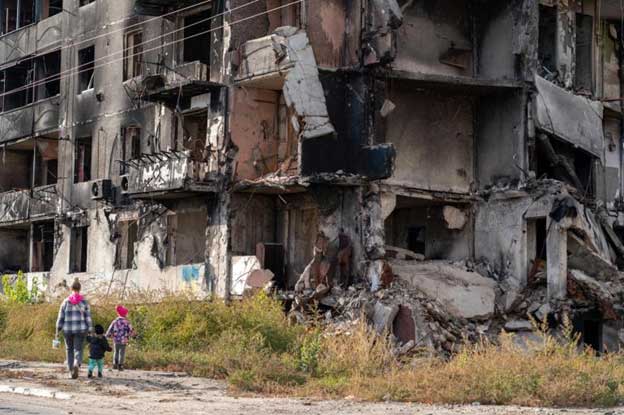
A family walks past a heavily damaged building in Borodianka, Ukraine. Multiple threats are converging to leave families reeling. But putting children at the centre of the response can help shape a brighter future. Credit: UNICEF/UN0765276/Filippov

UNITED NATIONS, Feb 14 2023 (IPS) – The year 2022 was incredibly difficult for people around the world. We were confronted by a series of major crises, including a continuing pandemic, a major war in Europe, an energy crisis, rising inflation and food insecurity.


These events hit children particularly hard, compounding the already severe impacts of the COVID-19 pandemic. Millions of children had to flee their homes because of conflict or extreme weather events. At the same time, child malnutrition and the number of children in need of humanitarian assistance rose.

The war in Ukraine, for example, has led to higher food and energy prices, which in turn has contributed to rising global hunger and inflation. Efforts to address inflation through rising interest rates in the US have driven up the value of the dollar against other currencies, making developing countries’ imports, debt repayments and their ability to access external financing more difficult.

As we explain in our new report, ‘Prospects for Children in the Polycrisis: A 2023 Global Outlook’, these realities have added up to what has been termed a ‘polycrisis’ – multiple, simultaneous crises that are strongly interdependent.

As we look to 2023, it’s clear that the polycrisis is likely to continue shaping children’s lives. The effects of these intertwined and far-reaching trends will be difficult to untangle, and solutions will be difficult to find as policymakers struggle to keep up with multiple urgent needs.

The situation is particularly dire in economically developing countries. Higher food and energy prices have contributed to a rise in global hunger and malnourishment, with children among the most affected.

The polycrisis is also limiting access to healthcare for many children, making it harder for them to receive treatment and routine vaccinations. Recovery from learning losses caused by the closure of schools will be slow and felt for years to come, while the shift to remote learning has left children from low-income families facing the greatest challenges in catching up.

At the same time, the combination of higher financing needs, soaring inflation and a tighter fiscal outlook will widen the education financing gap needed to achieve the Sustainable Development Goals.

Climate change, too, is also a part of this polycrisis, with visible effects, including devastating floods in Pakistan and droughts in East Africa, making it harder for children to access education, food and healthcare, and causing widespread displacement of populations.

All these factors have led UNICEF to estimate that 300 million children will be in need of humanitarian assistance this year. This staggering number highlights the urgency for international organizations and governments to step in and provide assistance.

But the polycrisis doesn’t have to lead to further instability or, ultimately, systemic breakdown. Some of the stresses we saw in 2022 have already weakened, and new opportunities may arise to alleviate the situation.

For example, food and oil prices have dropped from their peaks, and good harvests in some countries may help to lower global food prices. Fortunately, we know there are solutions and strategies that work.

One potential solution is to increase investment in social protection programmes, such as cash transfers and food assistance, which can help alleviate the immediate economic impacts of the polycrisis on families. These programmes can also help to build resilience and reduce vulnerabilities.

The establishment of learning recovery programmes will help tackle the learning losses and prevent children from falling further behind. And early prevention, detection and treatment plans for severe child malnutrition have been effective in reducing child wasting.

Ultimately, a coordinated and collective effort is needed to protect the rights and well-being of children. This includes not only providing immediate assistance but also addressing the underlying causes of the polycrisis and building resilience for the future.

This cannot be achieved without a more coordinated and collective effort from international organizations and governments to help mitigate the effects of the polycrisis and protect children’s futures.

And, crucially, we must listen to children and young people themselves so that we can understand the future they want to build and live in. In fact, we followed this approach when we were assessing trends for ‘Prospects for Children in the Polycrisis’, asking young people from across the world age 16 to 29 to give us their views on some of the challenges their generation faces.

It’s critical that we take action to protect the most vulnerable among us. The future may be uncertain, but by working together we can help to build a better future for our children.

Jasmina Byrne is Chief of Foresight and Policy, UNICEF Innocenti – Global Office of Research and Foresight.

Prospects for Children in the Polycrisis: A 2023 Global Outlook’, produced by UNICEF Innocenti – Office of Global Research and Foresight, unpacks the trends that will impact children over the next 12 months.

Source: UNICEF

IPS UN Bureau

  Source

Humanitarian Aid to Earthquake Victims Hindered by Politics– & Limited Access

Civil Society, Development & Aid, Editors’ Choice, Featured, Global, Headlines, Humanitarian Emergencies, TerraViva United Nations

Credit: World Health Organization (WHO)

UNITED NATIONS, Feb 13 2023 (IPS) – As the toll in last week’s earthquakes in Turkey and Syria exceeds a staggering 28,000 people dead and more than 78,000 injured–and counting– the United Nations is in an emergency-footing struggling to provide humanitarian aid, along with several international humanitarian organizations.


The devastated cities in both countries—by an earthquake described as one of the world’s top 10 deadliest in history at a magnitude of 7.8— are urgently in need of food, water, medicine, clothes and shelter—even as after-shocks have triggered the collapse of additional buildings with a new search for more survivors in a doomed scenario.

But the flow of aid is being hindered by several factors, including power politics, sanctions and limited border crossings in a 12-year long civil war in conflict-ridden Syria.

Asked about these limitations, UN Secretary-General Antonio Guterres told reporters last week: “This is the moment of unity, not to politicize or to divide, but it is obvious that we need massive support, and so I would be of course very happy if the Security Council could reach a consensus to allow for more crossings to be used, as we need also to increase our capacity to deliver on crossline operations into Idlib from Damascus.”

Over the years, Russia and China, two veto-wielding permanent members of the Security Council, have remained supportive of Syrian President Bashar al-Assad, while the remaining three permanent members, the US, UK and France, have been critical of Assad’s authoritarian regime accused of war crimes and use of chemical weapons.

But the humanitarian crisis in Syria is not likely to change the power politics in a divided Security Council.

Louis Charbonneau, United Nations Director at Human Rights Watch, told IPS: “We hope the UN Security Council moves quickly and Russia won’t block expansion of cross-border aid, as the secretary-general has requested.”

But Security Council approval, he pointed out, is not a legal prerequisite to conduct cross-border aid operations into Syria. Cooperation from de facto authorities on both sides of any border, in line with humanitarian law obligations, is.

“If the Security Council is deadlocked, and the UN determines it’s feasible and safe, the UN should push ahead to address the crisis and help victims,” he declared.

The White Helmets, a civil society organization which has been operating in opposition-held areas in Syria, was critical of the slow movement of aid.

“Had international rescue teams come into Syria in the first hours, or even the second day, there was a big hope that these people who were under the ruins could have been brought out alive”, Mohamed al—Shibli of the White helmets was quoted as saying.

At his press briefing, Guterres said: the first United Nations convoy crossed into northern Syria through the Bab al-Hawa crossing, and it included 6 trucks carrying shelter and other desperately needed relief supplies. “More help is on the way, but much more, much more is needed.”

But the New York Times ran a hard-hitting story February 10 under the headline: “UN Aid Trickles into Syria, but Residents say it is too Little, too Late”.

Still, the UN and its agencies have responded with all the means at their disposal, including assistance from the International Organization for Migration (IOM), the World Food Programme (WFP), the UN children’s agency UNICEF, the World Health Organization (WHO), the UN Population Fund (UNFPA), among others, and a task force led by the Emergency Relief Coordinator Martin Griffiths.

After his arrival in the Syrian capital February 12, United Nations Special Envoy for Syria
Geir O. Pedersen told reporters the earthquake was “one of the biggest humanitarian or natural disasters that we have seen recently”.

While expressing his condolences, he said: “And I think, you know, when we see the images, the heartbreaking images, we really feel the suffering. But we’re also seeing a lot of heroism, you see, you know, individuals, civilians, humanitarians trying to save lives, and it is this effort that we need to support.”

He assured that “the UN humanitarian family will do whatever they can to reach out to everyone that needs support. So, we are trying to mobilize whatever support there is. We are reaching out to countries, we are mobilizing funding, and we’re trying to tell everyone to put politics aside because this is a time to unite behind a common effort to support the Syrian people”.

Still, Pendersen said: “We need all the access we can have, crossline, cross-border and we need more resources. So, I’m in close touch with the UN humanitarian family, we’re working together to try to mobilize this support and that of course is my key message during this visit to Syria.

The issue of access was also raised by the US Ambassador to the UN Linda Thomas-Greenfield who said last week that she spoke with Presidents of InterAction and the International Rescue Committee, who both underscored the dire situation on the ground as humanitarian workers and first responders attempt to save lives while also facing personal tragedy.

She also spoke with representatives of Save the Children, CARE, and the White Helmets, who described the urgent need for shelter, clean water, and cash assistance, as well as increased access into Syria to allow local NGOs to deliver life-saving aid.

Ambassador Thomas-Greenfield voiced U.S. support for additional cross-border access points from Türkiye into northwest Syria to facilitate deliveries of earthquake-specific aid. She commended the search and rescue efforts by the White Helmets, which have saved thousands of people from collapsed buildings in northern Syria.

So far, the UN has released about $50 million from its emergency fund. But it is making a “Flash Appeal” for more funds from the international community.

Asked how much was needed, UN Spokesperson Stephane Dujarric said February 9: “We are trying to figure out how much. We’re still doing the needs assessment and I would also encourage – the public can also give through on the OCHA (Office for the Coordination of Humanitarian Affairs) website, the UN Foundation websites. There are ways for people, for the public to give to the appeal,” he said.

Meanwhile, the crisis in Turkey has also been tainted with domestic politics. The slow or belated response has been blamed on the Turkish government led by President Recep Tayyip Erdogan, up for re-election on May 14.

Kemal Kilicdaroglu, the leader of the opposition party and a potential presidential candidate, was quoted as saying: “It is the ruling party that has not prepared the country for an earthquake for 20 years”.

IPS UN Bureau Report

  Source