NDC Partnership: Supporting a Global Network of Youth Climate Advocates

Biodiversity, Civil Society, Climate Change, Combating Desertification and Drought, Development & Aid, Environment, Featured, Global, Green Economy, Headlines, Humanitarian Emergencies, Inequity, Natural Resources, NDC Partnership, Sustainability, TerraViva United Nations, Water & Sanitation, Youth
Climate Change

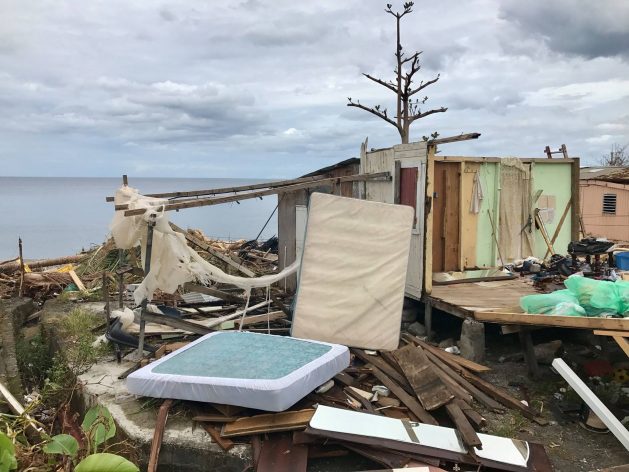
Madrelle, Loubiere, Dominica 2017, a few days after Category 5 Hurricane Maria struck the island. Credit: Alison Kentish/IPS

UNITED NATIONS, Aug 19 2021 (IPS) – Just over six months after launching its Youth Engagement Plan, the NDC Partnership, the coalition assisting governments with their climate action plans, has brought together youth climate advocates for its inaugural NDC Global Youth Engagement Forum.


NDCs, or Nationally Determined Contributions, refer to governments’ commitments to reduce greenhouse gas emissions, an integral part of the Paris Climate Agreement. NDCs are scheduled for revision every five years and are expected to be increasingly ambitious to tackle the climate crisis effectively.

Countries and the NDC Partnership want to ensure that, as agents of implementation, young people have platforms for engagement and a say in national climate action.

The Partnership recently brought youth together in 3 regional groupings: Africa, the Middle East, and Europe, Asia and the Pacific, and Latin America and the Caribbean. The young people engaged with representatives of partners such as the Food and Agriculture Organization (FAO) and the United Nations Children’s Emergency Fund (UNICEF) through sessions like ‘agriculture and climate change,’ and ‘equipping young people to engage in the NDC process.’

The NDC Partnership, the coalition assisting governments with their climate action plans, has brought together youth climate advocates for its inaugural NDC Global Youth Engagement Forum. Credit: NDC Partnership

The participants say the teaching element was bolstered by the opportunity to be heard, as the organizers asked for their input in areas that include NDC enhancement, structures needed to strengthen youth involvement, and ways young people are already impacting climate action.

For youth like Natalia Gómez Solano of Costa Rica, the forum provided a space to share experiences and ideas.

“Working for a more resilient and a more just, low-emissions world moves us, and that is why we are here today,” she told the virtual event.

“We are already experiencing the impacts of climate change, and they are worsening. We need increased adaptation and mitigation action, and the NDCs are the key instruments to achieve that. The NDCs are the roadmaps for climate ambition in which young people are key in bringing new climate solutions to the conversations and to raise action.”

Jamaica’s Permanent Secretary in the Ministry of Housing, Urban Renewal, Environment, and Climate Change, Dr Alwin Hales, told the Latin America and Caribbean forum that the virtual event and Youth Engagement Plan hope to leverage the ‘leadership and power’ of youth into NDC implementation and enhancement.

“Today’s children and young people are caught in the center of climate change, for it is they who have to live with and manage its consequences,” he said.

“The NDC Partnership launched the Youth Engagement Plan (YEP). It aims is to build young people’s capacity on climate change matters and engage the youth in global NDC partnership activities. This is in direct support of our mission to increase alignment, coordination, and access to resources to link needs with solutions.”

The forum was proposed by the NDC Partnership’s Youth Task Force but is a priority of the NDC Partnership’s Steering Committee and Co-Chairs, Jamaican Minister of Housing, Urban Renewal, Environment, and Climate Change Pearnel Charles Jr. and U.K. Minister Alok Sharma, who also serves as President of COP 26.

Noting that young people are vital to effective action on climate change, NDC Partnership Global Director Pablo Vieira Samper reminded them that their input also ensures that action is inclusive.

“We want to hear about what capacity or technical support is still needed and what learning you are eager to share with your peers,” he said.

“The Youth Engagement Plan was the starting point for greater action for youth engagement in NDCs. Today the NDC Partnership is thrilled to be turning this plan into concrete steps for more meaningful engagement and bringing new ideas to this framework to inspire action. We look forward to your insights as we collaborate across the Partnership to build a low carbon, climate-resilient future by supporting sustainable development.”

The youth attending the forum have described it as an important platform for highlighting the challenges faced by young climate activists.

“It is important to increase climate finance to support projects that are led by children and youth and integrate a rights-focused education curriculum in schools and universities,” said Xiomara Acevedo, the Founder and Chief Executive of Barranquilla+20, an NGO run by young people who empower their peers to tackle issues of biodiversity, sustainability, policy inclusion, and climate change.

Acevedo’s NGO has reached over 2,000 young people. She says it is clear that youth have a unique role to play in climate activism.

“We have seen that involving young people at the local and subnational level has also helped to ensure that a lot of citizens are seeing that climate action is not something beyond their territories, or is not only a topic that is managed at the national level. They can relate our message to their narrative, to their realities. We engage climate action as an important topic in the local agendas,” she said.

According to UNICEF, including youth in climate change action is important to achieving Sustainable Development Goals 13,2 which urges urgent action to combat climate change and its impacts; 16,3 which calls for the promotion of peaceful, inclusive societies for sustainable development and 17,4 with its target of assistance to developing countries in attaining debt sustainability.

The United Nations Framework Convention on Climate Change (UNFCCC) released its NDCs scorecard in February. It applauded countries for strengthening their commitments to the Paris Agreement but encouraged them to further step up their mitigation pledges, adding that greenhouse gas emissions targets were falling ‘far short’ of what is required to achieve the Agreement’s goals.

Young people like Natalia Gómez Solano say as custodians of the planet, youth must be mobilized, and their voices amplified to arrive at the deep emissions reductions needed in the NDCs.

“We need to integrate more voices and reach more places. As the Latin America and Caribbean Region, we need to keep working, keep asking, keep demanding, and doing more. Not all youth know how to be involved in climate action, and we need to work with more young people, for example, in the rural areas,” she said.

The delegates at the NDC Partnership’s inaugural Youth Engagement Forum say they are hoping for more opportunities at the table.

They say it takes persistence, organization, time, and passion to achieve climate goals. It also takes an empowered, well-connected, and financed global network of youth.
  Source

Multilateral Peace Operations in 2020: Developments & Trends

Armed Conflicts, Civil Society, Crime & Justice, Featured, Global, Global Governance, Headlines, Human Rights, Humanitarian Emergencies, IPS UN: Inside the Glasshouse, TerraViva United Nations

Opinion

The writer is a Researcher with the Peace Operations and Conflict Management Programme at the Stockholm International Peace Research Institute (SIPRI)

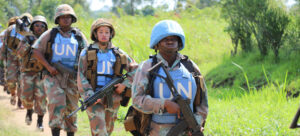
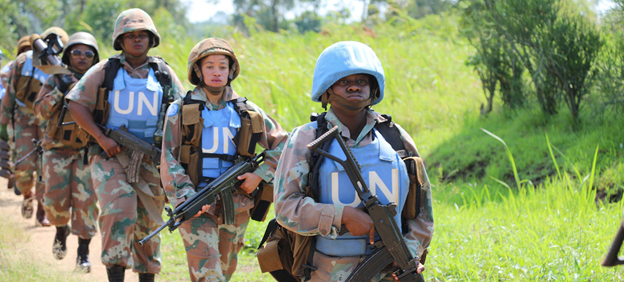
Female peacekeepers from South Africa on patrol in the Democratic Republic of the Congo. July 2021. Credit: MONUSCO/Michael Ali

STOCKHOLM / THE HAGUE, Aug 4 2021 (IPS) – The first year of the Covid-19 pandemic saw wide-ranging impacts on multilateral peace operations.

The crisis simultaneously affected all operations, host nations, headquarters and contributing countries. It caused major disruption—from the political-strategic level where mandates are drawn up, down to the operational and tactical levels.


Operations were forced to adapt in order to preserve continuity as far as was possible. While some of the effects of the pandemic are clearly reflected in the data—most notably in mission mortality rates—others are not.

For example, SIPRI data on personnel deployments cannot always capture delays in troop rotations or whether mission personnel were evacuated or working remotely for part of the year.

However, there is some evidence that Covid considerations did affect deployments, as is noted below.

Operations close in Guinea-Bissau and Sudan

There were 62 multilateral peace operations active in 2020, the same number as in 2019. The largest share of these (21) were conducted by the UN. Regional organizations such as the African Union (AU) and the European Union (EU) and alliances (such as the North Atlantic Treaty Organization, NATO) together conducted 36 operations. Ad hoc coalitions of states conducted 5 peace operations in 2020.

Two small operations in Guinea-Bissau closed in 2020. One was conducted by the Economic Community of West African States (ECOWAS): the ECOWAS Mission in Guinea-Bissau (ECOMIB), the other by the UN: the UN Integrated Peacebuilding Office in Guinea-Bissau (UNIOGBIS).

One other operation that closed during the year was the AU–UN Hybrid Operation in Darfur (UNAMID), which was launched in 2007. UNAMID had deployed between 20 000 and 25 000 international personnel at its height in 2009–14, and it still deployed around 6500 in 2020.

A small political mission based in Khartoum, the UN Integrated Transition Assistance Mission in the Sudan (UNITAMS), opened on 1 January 2021.

UNAMID’s closure is a landmark in contemporary peacekeeping. It is the fourth major UN peacekeeping operation to close since 2017; the UN Stabilization Mission in Haiti (MINUSTAH) and the UN Operation in Côte d’Ivoire (UNOCI) both closed in 2017 and the UN Mission in Liberia (UNMIL) in 2018.

Only seven operations comprising more than 5000 international personnel were still active at the start of 2021, and no operation deploying more than 1500 international personnel has been launched since 2014.

Three smaller operations open in CAR and Libya

The three operations that opened in 2020 were also in Africa. Two opened in the Central African Republic (CAR), in the wake of the 2019 Political Agreement for Peace and Reconciliation.

The AU Military Observers Mission to the CAR (MOUACA) was authorized in July 2020 to help monitor implementation of the agreement.

The EU Advisory Mission in the CAR (EUAM RCA), mandated to support security sector reform, had been established in December 2019 but was not launched until August 2020. Both operations have an authorized strength below 100 international personnel.

The AU Mission in Libya, the third new operation, was established by a decision of the AU Assembly in February 2020 to ‘upgrade’ the AU Liaison Office in Libya ‘to the level of mission’.

The Covid-19 pandemic seems to have complicated the deployment and build-up of these operations. In fact, while EUAM RCA was up and running at the end of 2020, albeit not at full capacity, there is little public information available on the status and activities of MOUACA or the AU Mission in Libya.

The latest edition of SIPRI’s Map of Multilateral Peace Operations shows all operations active as of 1 May 2021—including some that are outside the scope of SIPRI’s definition, such as the Multinational Joint Task Force (MNJTF) against Boko Haram, the Joint Force of the Group of Five for the Sahel (JF-G5S) and the EU Naval Force in the Mediterranean Sea (Operation Irini).

Personnel deployments fall

The number of international personnel deployed in multilateral peace operations globally fell by 7.7 per cent, from 137 781 in 2019 to 127 124 in 2020.

This was the largest year-on-year decrease since the drawdown of the International Security Assistance Force (ISAF) in Afghanistan in 2012–14. Around 87 per cent were military personnel, roughly the same proportion as in 2019.

Almost two-thirds of the deployed personnel in 2020 were serving in UN peace operations (66 per cent on average over the year). Almost three-quarters (74 per cent at the end of the year) were deployed in sub-Saharan Africa (both UN and non-UN operations).

The number of personnel deployed in UN peace operations globally and in multilateral peace operations (UN and non-UN) in sub-Saharan Africa declined for the fifth year in a row.

Both had peaked in 2015–16 following a period of rapid growth driven by the establishment of major operations in CAR and Mali and the expansion of major operations in Somalia and South Sudan.

The number of personnel deployed in UN peace operations fell by 2.4 per cent between 2019 and 2020 (from 88 849 to 86 712), reaching its lowest level since 2007.

Meanwhile, the number of personnel deployed in multilateral peace operations in sub-Saharan Africa decreased by 3.4 per cent (from 97 519 on 31 December 2019 to 94 201 on 31 December 2020), reaching its lowest level since December 2012.

Women continued to be under-represented among multilateral peace operations personnel in 2020, as reported in a SIPRI publication prepared for the 20th anniversary of UN Security Council Resolution 1325 on Women, Peace and Security last year.

Afghanistan: The end of NATO deployments imminent

The development that contributed most to the net reduction of peace operations personnel deployments last year was the agreement reached on 29 February 2020 between the United States Government and the Taliban on the withdrawal of all US forces from Afghanistan within 14 months.

Due to the subsequent drawdown of most US troops, the NATO-led Resolute Support Mission (RSM) shrank from 16 551 to 9592 personnel over the course of 2020.

The RSM was launched on 1 January 2015 and was mandated to train, advise and assist the Afghan National Security and Defense Forces following the departure of ISAF, which had been active from 2001 to 2014.

The new operation was originally supposed to end on 31 December 2016, but it was not until April 2021 that NATO leaders formally announced their intention to terminate the RSM. The decision came shortly after US President Joe Biden had ordered the withdrawal of the remaining US troops from Afghanistan by 11 September 2021.

As a result of the withdrawal of most US troops from the RSM, the USA started 2020 as the second largest troop contributor to multilateral peace operations (after Ethiopia) and ended the year as the tenth largest.

Fewer blue helmets killed in action, more by illness than in previous years

In 2020, UN peace operations lost 78 uniformed personnel, 13 international civilian personnel and 32 local staff. The fatality rate for uniformed personnel was 0.9 per 1000.

This was noticeably higher than in 2018 and 2019, but around the average for the period 2011–20.

Despite this, the rate of hostile deaths (i.e. deaths caused by malicious acts) among uniformed personnel was at its lowest since 2011, at 0.15 per 1000.

This decline could conceivably be partly an effect of the pandemic, for example because peacekeepers were not able to patrol as much as usual or were otherwise less exposed to the risk of violence due to pandemic-related restrictions.

Meanwhile, the number of deaths due to illness among international and local personnel in UN peace operations in 2020 was almost double that in 2019 (83 compared to 42), with most of these deaths occurring between June and September 2020.

This difference is almost certainly linked in large part to the Covid-19 pandemic and its impacts, which contributed to a record number of deaths across the UN during the year.

  Source

After Vilifying the UN, US Returns to the World Body

Civil Society, Development & Aid, Featured, Global, Global Governance, Headlines, Human Rights, IPS UN: Inside the Glasshouse, TerraViva United Nations

Credit: UN Photo/Evan Schneider

UNITED NATIONS, Aug 2 2021 (IPS) – Ed Koch, a sharp-tongued Mayor of New York city (1978-89), once stopped short of using a four-letter word to denounce the United Nations.

Instead, he opted for a five-letter word dismissing the UN as a “sewer” relegating it to the lower depths of degradation.


In a bygone era, some of the most vociferous rightwing, conservative US politicians never ceased to denounce the world body primarily because of a rash of UN resolutions condemning Israel for human rights violations in the occupied territories or for resolutions mis-perceived as anti-American.

The late Senator Jesse Helms, a Republican chairman of the powerful US Senate Foreign Relations Committee, once said “providing funds to the UN was like pouring money into a rat hole.”

“I disagree with the premises upon which the United Nations is built and with the illusion that it propagates,” Senator Helms, said in a letter to the World Federalist Association. “It would be one thing if the United Nations were just an international side show, but it plays a greater role. It is a vast engine for the promotion of socialism, and to promote this purpose the U.S. provides a quarter of its budget,” he said.

Helms, said he has long called for “our country’s departure from this Organization, and vice versa.”

Charles Lichtenstein, a former U.S. Deputy Permanent Representative to the U.N. Mission, once said he would urge members of the United Nations to move out of New York if they did not like the treatment they were receiving in the United States.

Helms — with tongue firmly entrenched in cheek — said he would join Lichtenstein in waving goodbye to U.N. member- states “as they sail away into the sunset.”

When the 193-member UN General Assembly elected some of the so-called “repressive regimes” as members of the Human Rights Commission (later the Human Rights Council), Congressman Dana Rohrabacher (Republican of California) hollered: “The inmates have taken over the asylum. And I don’t plan to give the lunatics any more American tax dollars to play with.”

And more recently, former President Donald Trump not only decried multilateralism and challenged the effectiveness of the world body but also dismissed it as “a club for people to get together, talk and have a good time.”

Trump pulled out of two historic international agreements: the Paris climate change agreement and the nuclear deal with Iran.

But things have dramatically changed since he was ousted from the White House— and the US is gradually returning to the UN, whose primary home is New York, even though most of its agencies are based outside the US, including in Geneva, Rome, Vienna, Paris, Bonn and Nairobi.

The administration of President Joe Biden, which took over from the Trump administration about six months ago, has not only returned to multilateralism but has also pledged to re-engage both with the World Health Organization (WHO) in Geneva and the UN Educational, Scientific and Cultural Organization (UNESCO) in Paris.

Additionally, the US has agreed to restore funding to the UN Relief and Works Agency for Palestine Refugees in the Near East (UNRWA) and the UN Population Fund (UNFPA), both of which suffered funding cuts under Trump.

Last April, the Biden’s administration said it plans to provide $235 million to Palestinians, restoring part of the assistance cut by Trump. Two-thirds will go to UNRWA, which has suffered a financial crisis since it lost $360 million of US funding in 2018.

In 2016, UNFPA received $69 million in funding from the U.S. And in July 2019, UNFPA expressed concerns over US withholding funds for the third consecutive year The Biden administration is expected to restore US funding.

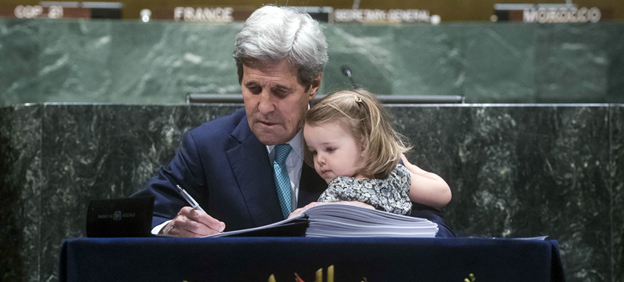
Former US Secretary of State John Kerry, accompanied by his grand-daughter, signs the Paris Agreement at UN headquarters in April 2016. Credit: UN Photo/Amanda Voisard

Penny Abeywardena, Commissioner for International Affairs at the Office of the New York city Mayor Bill de Blasio, welcomed the move by the United Nations to gradually return to near-normal after a 16-month pandemic lock down.

She said “the UN General Assembly has for decades been a staple of Fall in New York and as Host City to the UN, we have always been proud to welcome the international community who gather here”.

Kul Gautam, a former UN assistant secretary-general, told IPS the whole world, including the United Nations, breathed a sigh of relief at the advent of the Joe Biden administration in the US, following four years of the erratic and unpredictable Donald Trump presidency.

Mirroring Trump’s “America First” bravado, his senior diplomatic team, including Secretary of State Mike Pompeo and Ambassador Niki Haley showed little regard or diplomatic finesse in dealing with the complex issues high on the UN’s agenda, he pointed out.

Trump’s National Security Adviser John Bolton had so little respect for the UN that as the US Ambassador to the UN, he had once proclaimed that if the UN Secretariat building in New York “lost 10 stories, it wouldn’t make a bit of difference,” said Gautam, a former deputy executive director of the UN children’s agency UNICEF.

Similarly, his Trump-era successor Niki Haley told a Republican National Convention that the “UN was a place where dictators, murderers and thieves denounce America, and demand that we pay their bills.”

Gautam said in contrast to the Trump-era narrative of the UN being a largely bureaucratic and profligate anti-American organization, dominated by China and Third World countries, the Biden administration quickly proclaimed that “America was back” at the UN and would provide constructive leadership and support a multilateral approach to solving the world’s most pressing issues from COVID-19 to climate change.

Not only is Joe Biden himself a seasoned statesman in international affairs, said Gautam, but his senior aides, including Secretary of State Tony Blinken, UN Ambassador Linda Thomas-Greenfield, National Security Adviser Jake Sullivan and Special Envoy John Kerry are all consummate diplomats who believe in multilateralism.

Mandeep S. Tiwana, Chief Programmes Officer at CIVICUS, a global alliance of civil society organizations (CSOs) , told IPS the United States played a key role in establishing the UN Charter who’s opening words, ‘We the Peoples’, mirror the opening words of the US Constitution. Eleanor Roosevelt stewarded the drafting of what is arguably the UN’s finest achievement – adoption of the Universal Declaration of Human Rights.

“The Trump administration’s disdain for the UN devalued these historical achievements. Traditionally, the United States has been a supporter of rights and democratic values at the UN as core pillars of its foreign policy,” he said.

The Biden administration’s commitment to re-engage at the UN is being welcomed by many in civil society working to challenge discrimination and oppression, he said, pointing out, that it’s a step in the right direction for people-centered multilateralism which lies at the core of the UN’s founding.

Tiwana also said the Biden administration has an opportunity not just to repair the damage of the Trump years but to demonstrate commitment to laying the ground work for the ambitious advancement of justice, equality and sustainability for future generations.

Gautam said while Secretary-General Antonio Guterres was severely constrained from taking some bold initiatives during his first term due to fear of the veto-wielding and chest-thumping Trump administration’s non-cooperation, he should, in his second term, feel more empowered to act more decisively to push for the kind of bold vision he outlined in July 2020 in his Nelson Mandela Lecture: “Tackling the Inequality Pandemic: A New Social Contract for a New Era”.

The early and quick gestures of the Biden administration rejoining the Paris Climate Accord, the World Health Organization, the UN Human Rights Council, funding for UNFPA and COVAX and paying outstanding US arrears to the UN peace-keeping budget are all encouraging signs, he noted.

“The ball is now in Guterres’ —and his senior management team’s– court to harness the potential of the Biden administration’s goodwill to assert UN’s proactive role to help tackle the most pressing global challenges of our times”, said Gautam, author of “Global Citizen from Gulmi: My Journey from the Hills of Nepal to the Halls of the United Nations” (Nepalaya Publications 2018)

Thalif Deen, Senior Editor and Director at the UN Bureau of Inter Press Service (IPS) news agency, is the author of a newly-released book on the United Nations titled “No Comment -– and Don’t Quote Me on That.” Peppered with scores of anecdotes-– from the serious to the hilarious-– the book is available on Amazon worldwide. The link to Amazon via the author’s website follows: https://www.rodericgrigson.com/no-comment-by-thalif-deen/

  Source

UNFPA Calls for Protection & Justice for Women & Girls in Tigray

Armed Conflicts, Civil Society, Editors’ Choice, Featured, Gender, Global, Global Governance, Headlines, IPS UN: Inside the Glasshouse, TerraViva United Nations

Opinion

The writer is UNFPA Regional Director for East and Southern Africa.

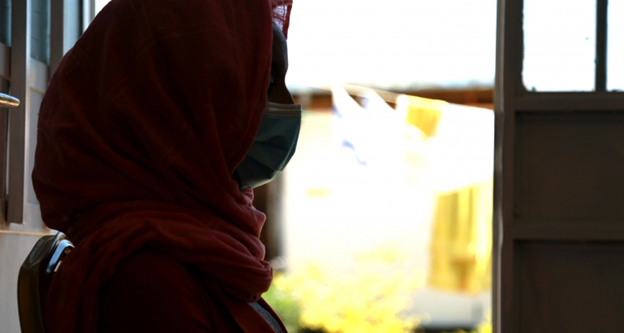
In retelling their stories, women in Tigray describe their attackers as “armed men”. Credit: UNFPA

UNITED NATIONS, Jul 26 2021 (IPS) – The 2018 Nobel Laureate, Dr. Denis Mukwege, a gynaecologist celebrated for his work with survivors of sexual assault in the Democratic Republic of the Congo’s Panzi Hospital once said: “Rape is a strategy of war – it is meant to destroy women and communities physically and mentally”.


Sadly, this destruction has become a daily reality for women and girls in the Tigray region in Ethiopia.
In recent weeks, women have come forward with the most devastating stories of sexual violation and physical abuse. Selam, 22, who found shelter in a safe house, is one of the survivors.

She recalls “running from place to place without food or shelter” and “constantly living in fear” after being displaced from her home and repeatedly facing harrowing incidents of sexual violence.

Persistent fighting, forced displacement, and dire living conditions over the past eight months in Tigray and the neighbouring regions of Afar and Amhara in northern Ethiopia, have created one of Africa’s most pressing humanitarian crises.

More than 5.2 million people in Tigray alone require humanitarian assistance; among them are 118,000 pregnant women and 1.3 million women of reproductive age. Amid the crisis, gross violations and abuses against civilians, including sexual violence, continue to be reported.

The health and well-being of women and adolescent girls are further threatened by food insecurity that is expected to worsen. The destruction and looting of health facilities – around a third are partially functioning, and a mere one per cent are offering clinical management of rape services – further complicates the situation amidst the threat of COVID-19.

Julitta Onabanjo

Selam’s experience is just one of the stories captured by health officials and UN agencies, but these testimonies likely represent only a fraction of the real prevalence.
Even under normal circumstances, given the high levels of stigma, among other factors, gender-based violence is largely unreported in Ethiopia. Only 24 per cent of survivors ever seek assistance, according to the 2016 Ethiopia Demographic Health Survey.

Devastating impact

Rape and other forms of sexual abuse have a devastating impact on women’s physical and mental well-being, rights and choices, and affect their ability to care for their children, support their families and contribute to their societies.

A social worker at the UNFPA-supported safe house where Selam now resides described the women as arriving “traumatized and depressed due to prolonged suffering, distress and horrendous violence”.

Even when women have not experienced sexual violence, the fear of rape or insecurity prevents them from accessing food distributing centres, critical health-care services for themselves or their children, and adolescent girls may stay away from school.

In the long-run, hiding from potential attacks contributes to malnutrition, poor health outcomes, and a lack of educational attainment among women and girls.

UN Member States have recognized the disproportionate and unique impact of armed conflict on women and girls. The UN Security Council-adopted Resolution 1325 on women, peace, and security, calls on all parties in hostilities to take special measures to “protect women and girls from gender-based violence, particularly rape and other forms of sexual abuse, in situations of armed conflict”.

The African Union also committed to “Silencing the Guns” by “ending all wars, civil conflicts, gender-based violence, violent conflicts and preventing genocide on the continent by 2020”.

Women’s bodies must not be the object of war or the collateral in conflict. Rather women must be the central subject and partner in peacebuilding.

In retelling their stories, women in Tigray describe their attackers as “armed men”. These serious violations of international humanitarian law and human rights law must be swiftly investigated and the perpetrators brought to justice.

Call to end hostilities

We urge the government of Ethiopia and the international community to step up efforts to end hostilities and all forms of violence in the country, including gender-based violence, to ensure the health and safety of women and girls.

As part of the Inter-Agency Standing Committee (IASC) system-wide scale up for the Tigray region activated in April 2021, UNFPA is expanding and accelerating support in its areas of responsibility — protection, prevention and response to sexual and gender-based violence (GBV) and delivering quality sexual and Reproductive health and rights (SRHR).

Safe houses

Women-friendly spaces, safe houses and one-stop centres in the conflict-affected regions have been set up to provide clinical management of rape and psychosocial counselling. These spaces connect women to a wide range of sexual and reproductive health services and legal services.

What transforms a rape victim into a rape survivor is justice. UNFPA is working with partners to ensure effective referral and prosecution systems are available.

We are working with the Ministry of Women, Children and Youth of Ethiopia to enable the capacity-building of armed personnel and the constitution of a Gender-Based Violence Task Force, in collaboration with the Ethiopian Police University and the Federal Police Commission.

UNFPA is also providing medical supplies, helping to restore health system services, and cumulatively, has distributed hundreds of Emergency Reproductive Health kits and thousands of Dignity Kits.

Additionally, to prevent COVID-19 infections among key staff providing SRH and GBV services and information in government and partner-run health facilities and one-stop centres, nearly 11,000 Personal Protective Equipment items have been distributed since November 2020.

Funds needed urgently

Providing adequate levels of these kinds of life-saving services requires urgent funding. We are calling on all that can help, including government and development partners, to assist us in addressing the immediate needs of women and girls and help us avert the medium to long-term repercussions of sexual violence. The immediate funding requirements for the next six months is $15 million.

The women and girls of Tigray have told us their stories, and we continue to hear them out. Our actions to deal with their trauma and rebuild their lives must be our urgent response.

For women to participate equally in society, they need to make decisions about their bodies freely and without fear. Rape and other forms of gender-based violence destroy the ability of women and girls to make choices and fulfil their sexual and reproductive health and rights.

Even in times of conflict, we must continue to defend and protect the rights of women and girls and devote the necessary attention and resources to prevent sexual violence and decisively ensure justice.

Source: Africa Renewal, United Nations

  Source

Beware UN Food Systems Summit Trojan Horse

Civil Society, Development & Aid, Economy & Trade, Environment, Financial Crisis, Food & Agriculture, Food Security and Nutrition, Food Sustainability, Global, Green Economy, Headlines, Inequity, Poverty & SDGs, Sustainability, TerraViva United Nations

Opinion

KUALA LUMPUR, Malaysia, Jul 26 2021 (IPS) – Undoubtedly, the world needs to reform existing food systems to better serve humanity and sustainable development. But the United Nations World Food Systems Summit (UNFSS) must be consistent with UN-led multilateralism.

For the first time ever, the World Economic Forum (WEF), a partnership of some of the world’s most powerful corporations, is partnering the UN in launching the Summit, now scheduled for September, with its ‘Pre-Summit’ beginning today.


Jomo Kwame Sundaram

Food insecurity is primarily due to inequalities and deprivations as victims lack the means to obtain the food they need. The UN should not serve those who cynically use hunger, starvation and deprivation to advance private commercial interests.

UN-led multilateralism threatened
The collapse of the Soviet Union, the end of the Cold War and seemingly unchallenged US dominance in the 1990s posed new threats to UN-led multilateralism. The World Trade Organization was set up in 1995 outside the UN system. Later, ‘recalcitrant’ Secretary-General (SG) Boutros-Ghali was blocked from a second term.

The four UN Development Decades from the 1960s ended with the lofty, Secretariat-drafted Millennium Declaration, bypassing Member State involvement. The Millennium Development Goals (MDGs) were then elaborated by the UN Development Programme with scant Member State consultation.

Growing corporate sway in the UN system got a big boost with the UN Global Compact. Such influences have affected governance of UN agencies, now better known as the World Health Organization struggles to contain the pandemic.

Difficult negotiations followed growing developing country disappointment with the MDGs, not delivering on climate finance as promised in 2009, and failure to better address the 2008 global financial crisis and its aftermath.

Hence, the negotiated Sustainable Development Goals (SDGs) compromise enjoys greater legitimacy than the MDGs. However, achieving Agenda 2030 was undermined from the outset as rich countries blocked needed funding at the third UN Financing for Development summit in mid-2015.

Summit bypasses UN processes
In the last dozen years after the 2008 world food price spike, the UN Committee on World Food Security (CFS) has become an inclusive forum for civil society and corporate interests to debate how best to advance food security. Unsurprisingly, CFS has long addressed food systems.

CFS’s High-Level Panel of Experts (HLPE) is widely acknowledged as competent, having prepared balanced and comprehensive reports on matters of current and likely future concern. In the UN system, CFS is now seen as a ‘multistakeholder’ engagement model for emulation. Yet, the Summit bypassed CFS from the outset.

Nominally answering to the UNSG, Summit processes have been largely set by a small, largely unaccountable coterie. UNFSS organisers initially moved ahead without representative stakeholder participation until his intervention led to some consultative processes.

Mainly funded by the WEF and some major partners, they remain mindful of who pays the piper. Hence, they mainly promote supposedly ‘game-changing’, ‘scalable’ and investment-inducing solutions claiming to offer technological fixes.

Agroecology innovation
An HLPE report has approvingly considered agroecology or ‘nature-based solutions’. Many scientists have been working with food producers for decades to increase food productivity, output, diversity and resilience through better agroecological practices, thus cutting costs and enhancing sustainability.

The evidence is unambiguous that agroecology has delivered far better results than ‘Green Revolution’ innovations. A survey of almost 300 large ecological agriculture projects in more than fifty poor countries reported rising farmer incomes due to lower costs and a 79% average productivity increase.

This contrasts with the record of the Alliance for a Green Revolution in Africa (AGRA) launched in 2006. With funding from the Gates and Rockefeller Foundations, it promised to double yields and incomes for 30 million smallholder farm households by 2020. Despite much government spending, yields hardly rose as rural poverty grew.

Agroecological innovations have proved effective against infestations. Thus, safer, more effective biopesticides that do not kill useful insects and microbes, and non-toxic alternatives to agrochemical pesticides have been created.

The UN Food and Agriculture Organization (FAO) hosted its first International Agroecology Symposium in 2014, before committing to ‘Scaling Up Agroecology’. But for Kip Tom, President Trump’s representative, FAO was no longer “science-based”.

Demonising agroecology
The Gates Foundation has been funding the Cornell Alliance for Science, ostensibly to “depolarize the GMO debates” by providing training in “advanced agricultural biotechnology communications”. Why traditional agricultural practices can’t transform African agriculture is only one instance of such sponsored propaganda masquerading as science.

Well-resourced lobbyists are using the UNFSS to secure support and legitimacy for commercial agendas. With abundant means, their advocacy routinely invokes ‘public-private partnerships’ and ‘science, technology and innovation’ rhetoric.

Forced to be more inclusive, Summit organisers are now using ‘solution clusters’ for advocacy. They then build broad ‘multi-stakeholder’ coalitions to advance purported solutions with the UNFSS mark of approval.

With strong and growing evidence of agroecology’s progress and potential, propaganda against it has grown in recent years. Agroecology advocates are caricatured as ‘Luddite eco-imperialists’, ‘Keeping Africa on the Brink of Starvation’, and condemning farmers to ‘poverty, malnutrition and death’.

A public relations consultant has accused agroecology advocates of being “the face of a ‘green’ neocolonialism” “idealizing peasant labour and retrograde subsistence farming” and denying “the Green Revolution’s successes”.

Agroecology solutions are the main, if not only ones consistent with the UN’s overarching commitment to sustainable development. But the propagandists portray them as uninformed barriers to agricultural and social progress. Such deliberate deceptions block needed food system reforms.

UN Special Rapporteur on the Right to Food Michael Fakhri alerted UNFSS Special Envoy Agnes Kalibata that agroecology is being dismissed as backward when it should be central to the Summit. Concurrently President of AGRA, with its particular commitment to needed food system reform, she is in an impossible position.

Best Summit money can buy?
Investing in the Summit is securing legitimacy and more resources from governments, the UN system, private philanthropy and others to further their commercial agendas. Meanwhile, many are working in good faith to make the most of the UN Summit.

Nevertheless, it is setting a dangerous precedent for the UN system. It has rashly opened a back door, allowing corporate-led ‘multi-stakeholderism’ to undermine well-tested, inclusive ‘multi-stakeholder’ arrangements developed over decades under multilateral Member State oversight.

UNFSS Science Days on 8 and 9 July indicated the Summit is being used to push for a new food science panel. This will undercut the HLPE, and ultimately, the CFS. Hence, the UNFSS seems like a Trojan Horse to advance particular corporate interests, inadvertently undermining what UN-led multilateralism has come to mean.

As both CFS and HLPE are successful UN institutions, the Summit will inevitably undermine its own achievements. Hence, for many Member States and civil society, UNFSS represents a step backward, rather than forward.

  Source

Conceptual Advances for United Nations 2.0

Civil Society, Development & Aid, Gender, Global, Headlines, Human Rights, IPS UN: Inside the Glasshouse, TerraViva United Nations

Opinion

The writer is a Research Analyst at Stimson Center

WASHINGTON DC, Jul 20 2021 (IPS) – The forthcoming UN Secretary-General’s “Our Common Agenda” report, to be released before this year’s UN General Assembly High-Level Week, is expected to offer ambitious recommendations to accelerate the realization of the UN75 Declaration as the world comes to grips with the COVID-19 pandemic.


Promote Peace & Prevent Conflicts. Credit: United Nations

While the report’s ideas are still undisclosed, three notions are likely to represent conceptual building blocks: a “new social contract,” a “new global deal,” and “networked and inclusive multilateralism” have each permeated current high-level discussions at the United Nations, especially in speeches of UN Secretary-General António Guterres.

While these three concepts are not mentioned explicitly in the UN75 Declaration, they are implicit in the framing of the declaration’s twelve commitments. Building on perspectives from past and present scholars, world leaders, policymakers, and practitioners, these powerful notions are each unpacked in Stimson Center’s recent report, “Beyond UN75: A Roadmap for Inclusive, Networked, and Effective Global Governance.”

Critics, including the United Nations, argue that the present state of the social contract is outdated and incapable of meeting the needs and challenges of the twenty-first century. The UN Secretary-General himself emphasized that a new social contract is “an opportunity to build back a more equal and sustainable world” from COVID-19.

A new, modernized social contract could, indeed, help advance a more just post-COVID-19 recovery and economic policies that consider the realization of human rights as an end in itself—rather than as one more channel to achieve high economic growth levels under outdated metrics.

It could include a global political commitment to securing social protection floors and universal access to educational systems, among other initiatives that seek to respond to the major economic, technological, and societal shifts now underway.

Similarly, an equitable, resilient, and sustainable social contract should rebuild people’s trust in governance institutions. Trust is a prerequisite that offers legitimacy to those governing, and it permits the existence of a contract in the first place.

With the “new social contract” being the vision and long-term goal for weaving a new normative fiber binding states and peoples together, the world also needs a more operational “new global deal.”

The UN Secretary-General suggested that a new global deal would entail a redistribution of power, wealth, and opportunities, and global political and economic systems that deliver critical global public goods: public health, climate action, sustainable development, and peace.

This echoes long-standing discussions about representativeness in the current system of global governance, considering, for example, the distribution of special drawing rights at the International Monetary Fund, which gives the United States a blocking minority share, or the setup of the Security Council with its five permanent, veto-wielding powers and ten non-permanent members.

Resource redistribution and redirection also need to be seen in light of calls for a “green recovery” from the COVID-19 pandemic and of the need to recalibrate the 2030 Sustainable Development Agenda.

Advancing a new social contract and new global deal further require a more networked and inclusive multilateralism. This would entail a paradigm shift from the state-centric international world order to one where myriad actors, beyond nation-states (especially traditional major powers), can collaboratively share and implement solutions to complex problems.

Delivering the future we want will not come from “polarized member states or politicized UN secretariats.” It will result from collaborations between international civil servants, Member States, and progressive networks of non-state actors—including scholars, academics, media, businesses, philanthropies, and other stakeholders.

In this spirit, the United Nations and other intergovernmental organizations must update their rules of engagement with non-state actors, to facilitate networked and inclusive multilateralism. There is no dearth of institutional innovation ideas that can help build inclusive multilateralism.

For instance, the Call for Inclusive Global Governance, released in April 2021 and endorsed by over 150 civil society organizations worldwide, provides three recommendations for promoting greater inclusion and participation of civil society at the UN: first, the creation of a formal instrument—a World Citizens’ Initiative—to enable individual citizens to influence the UN’s work; second, a UN Parliamentary Assembly to allow for the inclusion of elected representatives in agenda-setting and decision-making at the UN; and third, the appointment of a UN Civil Society Envoy to support greater civil society engagement at the UN.

Networked and inclusive multilateralism, going beyond classic intergovernmentalism, provides a platform and framework to carry out a new global deal (operational plan) in the service of establishing a new social contract (vision).

What is needed now is enlightened leadership, combined with a well-designed strategy for reform for channeling these ideas in support of a more interlinked and participatory global governance system.

Guided by these three powerful concepts, the Secretary-General’s “Our Common Agenda” can generate political momentum for a potential 2023 World Summit on Inclusive Global Governance for truly innovating the United Nations system to keep pace with present and future challenges and opportunities.

The 75th anniversary of the United Nations was believed to be a moment for laying the foundations for a new kind of multilateralism. Although adoption of the UN75 Declaration represents an important milestone, its vision is yet to be matched by a commensurate global plan for action.

Bouncing back now from the COVID-19 presents an opportunity to also rebuild a global system that can help all nations and peoples effectively overcome current global inequalities, injustices, and insecurity. It is incumbent on all of us to make 2021 a turning point for multilateralism.

  Source