The New Social Contract: an Opportunity for Deliberative Participation

Civil Society, Democracy, Global, Headlines, Human Rights, TerraViva United Nations
Opinion

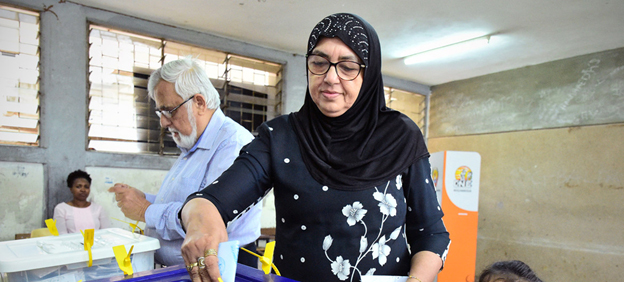
A woman, accompanied by a child, casts her vote during the general elections in Mozambique. Credit: UNDP/Rochan Kadariya

KATHMANDU, Nepal, Jul 9 2021 (IPS) – These days there hasn’t been certainly a shortage of reports portraying the decline of liberal democracy around the world.

With rising popularism and a divisive use of social media, we should not be surprised about a general malaise taking roots in most advanced liberal democracies.


From the Freedom in the World 2021 report published by the Freedom House to the Democracy Index 2020 released by the Economist Intelligence Unit to the IDEA’s Global State of Democracy Indices there is more and more evidence that liberal and representatives’ democracies are under duress.

Could the ongoing debate about a New Social Contract, a concept launched by UN Secretary General Antonio Guterres, help revive one of the essential elements of any democratic society, people’s interest and participation in the civic life?

If his recent re-election at the helm of the United Nations might have dissipated doubts that this new idea was just a fad, what are the chances for this debate surrounding the New Social Contract to become an opportunity to enhance public engagement at local levels without further dividing the gulf between classic liberal democracies on one side and other nations adopting less democratic, more authoritarian political systems?

Provocatively, could such debate instead help nearing such the gap?

To set aside any doubts, inevitably, the New Social Contract is not about enhancing democracy around the world.

This would clearly a utopian proposition for the Secretary General to embrace but rather an attempt to rethink and improve, regardless of the political system being adopted, the norms between citizens and the state.

Initially coined during the 18th Nelson Mandela Annual Lecture in 2020, Guterres made the case for a more just and inclusive society centered around the fights against inequalities and discriminations because, he said, “People want social and economic systems that work for everyone”.

Members of the Madheshi community of Biratnagar attend a political rally to demand autonomous federal regions and greater representation in parliament. Credit: UN Photo/Agnieszka Mikulska

“The New Social Contract, between Governments, people, civil society, business and more, must integrate employment, sustainable development and social protection, based on equal rights and opportunities for all”.

As vague as it is in terms of boundaries and ultimate goals, the New Social Contract can be seen as a framework that can, not only revitalize our societies but also build a fairer, cleaner and just economy able to overcome the multiple challenges created by the pandemic.

The Agenda 2030 and the Sustainable Development Goals attached to it, offer the blueprint upon which such idea can be built locally.

Being still a working in progress, the New Social Contract can offer an impetus not only at re-designing the relationships between social partners, governments, unions and businesses but it can also be a source to generate more interest among the population about public life.

Making sense of it especially from the perspective of youth can be challenging but it is essential doing so because we cannot imagine a renewed citizenry without including youth whose vast majorities are uninterested and disenchanted from the public discourse.

A possible pathway to generate new passions for civic life among youth would start from helping them being more informed about what is happening at local and national levels, something that can evolve to higher forms of deep interests.

The last stage of this continuum would be supporting them into embracing forms of direct engagement.

Engagement is driven by a strong interest for the public life and the willingness to turn such desire to know more into contributions, actions on the grounds.

Last year, UNV came up with a new volunteering framework that fully captures the different features and characteristics of giving your time, energies and skills for the public good.

Indeed, volunteerism with its different forms and dimensions, is one of the best tools to involve people and youth in particular in the public life.

That’s why it is not surprising that the upcoming UNV’s State of the World’s Volunteerism Report, is going to explain how volunteerism can be a true enabler for determinant for the New Social Contract.

More opportunities for public engagement will also generate more trust, an essential trait of any healthy and cohesive society and it is here where the ongoing efforts to localize the SDGs can make the difference by bringing people together for the common good, for achieving the goals at grassroots levels.

Achieving the SDGs at this level is not about just actions, about mobilization of resources of human, in kinds or financial nature. It is also about deliberation and here, after this long detour, I am reconnecting with the issue of democracy.

The design of a New Social Contract as a conducive platform to achieve the SDGs locally by involving people on the ground, can be a tool to elevate the quality of democratic discourse, generating platforms for a new form of shared decision making or shared governance.

Interestingly, while political parties wherever they operate, might become a hindrance to such change because their role as gatekeeper of public participation would be eroded, this conceptualization of shared governance might become of interest to nations not adhering to representative, parties dominated liberal systems.

In the field of political science there is a dynamic movement of social scientists exploring the concept of deliberative democracy that would allow, through different means, including sortition, to have new forms of real, rather than token, forms of public involvement and participation in the decision making.

It’s true that so far, most of the attempts putting in practice deliberative democracy have been applied in the contexts with solid liberal democratic traditions.

A diverse range of “experiments” have been carried out with the most successful probably being the Ostbelgien Modell adapted by the Parliament of the German-speaking Community of Belgium where there is a permanent Citizens’ Council that enable an ecosystem of Citizen’s Assemblies.

Ireland in the past used successfully some aspects of deliberative democracy to involve the general public in discussing and debating key constitutional issues that also helped generating consensus on gay marriage gender equality.

This legacy continues with a Citizens’ Assembly that recently submitted a report, after prolonged consultations and deliberations, on the issue of gender equality.

Iceland has been using a hybrid form of public deliberation, though led by a small number of elected citizens but with ample opportunities for people to crowdsource the nation’s constitution.

Other forms, with vary degree of success and with different level of inclusivity and decision-making power, were tried in two provinces of Canada, British Columbia and Ontario.

Within the growing area of deliberative democracy studies, there is now a great interest on the so-called “deliberative micro public” where a limited number of citizens gather to decide on certain issues of common interest.

If you have seen The Best of Enemies, a movie portraying an exercise of public deliberation about segregated learning in the Jim Crow’s United States in the early seventies, you get the idea about what these might look like.

Many of these lessons learned might also be of interest to policy makers whose political systems have not embraced democracy.

With the discussions still going on how the New Social Contract should look like at local levels and with the agenda of SDGs localization being recognized as instrumental to achieve the Agenda 2030, we could have an opportunity to advance stronger forms of public participation in the decision making locally and everywhere.

This would strengthen the meaning of good governance around the world while also creating new space for deliberations in contexts that normally shut them.

Perhaps deliberative participation, a term that might be easier to sell globally, if properly carried out at local levels, could become a cornerstone of the New Social Contract, reinvigorating classic democracy where already exists while creating space for others political systems to evolve and be more inclusive.

The Author, is the Co-Founder of ENGAGE, a not for profit in Nepal. He writes on volunteerism, social inclusion, youth development and regional integration as an engine to improve people’s lives.
  Source

UN Ready for Breakaway Nations but the Pace Remains Slow

Africa, Armed Conflicts, Civil Society, Editors’ Choice, Featured, Global, Global Geopolitics, Headlines, Human Rights, IPS UN: Inside the Glasshouse, TerraViva United Nations

Armed Conflicts

South Sudan’s independence from the rest of Sudan was the result of a January 2011 referendum held under the terms of the 2005 Comprehensive Peace Agreement (CPA) that ended the decades-long civil war between the North and the South.

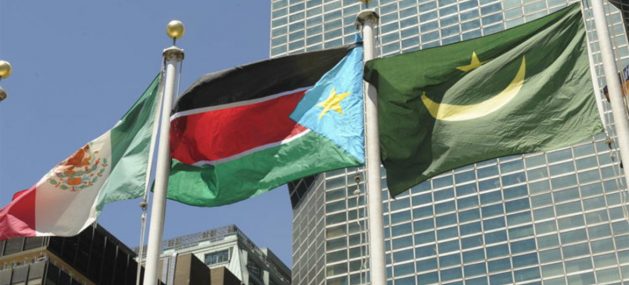
South Sudan’s national flag (centre) flies at UN Headquarters following its admission as the 193rd Member State. Credit: UN/E. Schneider

South Sudan’s national flag (centre) flies at UN Headquarters following its admission as the 193rd Member State. Credit: UN/E. Schneider

UNITED NATIONS, Jul 5 2021 (IPS) – When the United Nations renovated its building at a cost of over $2.1 billion, as part of a seven-year refurbishing project back in 2014, the seating in the cavernous General Assembly hall was increased from 193 to 204—primarily in anticipation of at least 11 new member states joining the world body sooner or later.


But the pace of new member states joining the UN, primarily from half a dozen breakaway regions dominated by separatist movements, has remained slow.

East Timor, described as the first new sovereign state of the 21st century, broke away from Indonesia and joined the UN in May 2002.

The UN played a significant role in supporting the democratic process in the country, now known as Timor-Leste. The UN Transitional Administration in East Timor (UNTAET) was deployed from 1992 to 2002 to administer the territory, exercise legislative and executive authority during the transition and support capacity-building for self-government.

Meanwhile, the Republic of South Sudan (population: 11.3 million), which seceded from Sudan, was the last of the 193 UN member states, joining the world body in July 2011.

But at least one potential member state— Kosovo– has been knocking at the door trying to seek admission rather unsuccessfully primarily because of opposition from one of the permanent members of the UN Security Council (UNSC).

The UN’s relatively new member states, beginning in the 1960s, included Singapore (1965), Bangladesh (1971) and six republics, including Bosnia and Herzegovina, Croatia, Macedonia, Montenegro, Serbia and Slovenia, resulting from the break-up of Yugoslavia in the 1990s.

Still, if political fantasies become realities, a lineup of new U.N. member states may include potential breakaway regions, including Kurdistan, Western Sahara, Chechnya, Abkhazia, Catalonia, Scotland and Palestine—not forgetting Tibet and Taiwan whose membership will be shot down by China, a veto-wielding permanent member of the UNSC.

But currently the most likely candidate is Tigray which is moving towards an independent state after nearly eight months of fighting against Ethiopian military forces, described as one of Africa’s most powerful, this time backed by Eritrea.

If it does happen, Ethiopia would have generated two breakaway states: first Eritrea which became independent of Ethiopia in 1993, and now Tigray, with a population of 7.1 million.

The Tigray Independence Party (TIP) has long campaigned for secession from Ethiopia which it described as an “empire”.

Debretsion Gebremichael, the leader of Tigray, was quoted by the New York Times as saying, “even if the conflict ends soon, Tigray’s future, as part of Ethiopia, is in doubt”.

In the Times report on July 4, Gebremichael said “The trust has broken completely. If they don’t want us, why should we stay?”. Still, he added, nothing has been decided because “It depends on the politics at the centre”.

Linda Thomas-Greenfield, US Ambassador to the UN, told reporters on July 2 the Security Council has held six closed-door meetings “and the situation in Tigray has not improved.”

She said the open meeting last week was the first opportunity to show that African lives matter as much as other lives around the world.

“But an open meeting is not enough,” she said, pointing out that “what we need to see is action on the ground.”

“We need to see a ceasefire that is permanent; that all of the parties agree to. We need to see the Eritrean troops return to their own border. We need to see unfettered access for humanitarian workers. “We need to see accountability for the atrocities that have been committed.”

“And at this moment I just want to express, again, our sympathy for the many losses of lives, including for MSF (Doctors Without Borders) staff who were killed recently,” she declared.

Meanwhile, the Brussels-based International Crisis Group (ICG) says the Tigray People’s Liberation Front is in control of most of the Tigray region, including major towns.

William Davison, ICG’s Senior Analyst, said the Front has achieved these gains “mainly through mass popular support and by capturing arms and supplies from adversaries.”

UN Secretary-General Antonio Guterres said last week he is deeply concerned with the present situation in Tigray.

“It is essential to have a real ceasefire paving the way for a dialogue able to bring a political solution to Tigray.” He said the presence of foreign troops is an aggravating factor of confrontation.

“At the same time, full humanitarian access, unrestricted humanitarian access must be guaranteed to the whole territory. The destruction of civilian infrastructure is totally unacceptable,” he declared. 

  Source

Stopping Marine Plastic Pollution: A Key IUCN Congress Goal

Civil Society, Climate Change, Conferences, Economy & Trade, Environment, Featured, Global, Headlines, Health, Natural Resources, Poverty & SDGs, Sustainability, TerraViva United Nations, Water & Sanitation

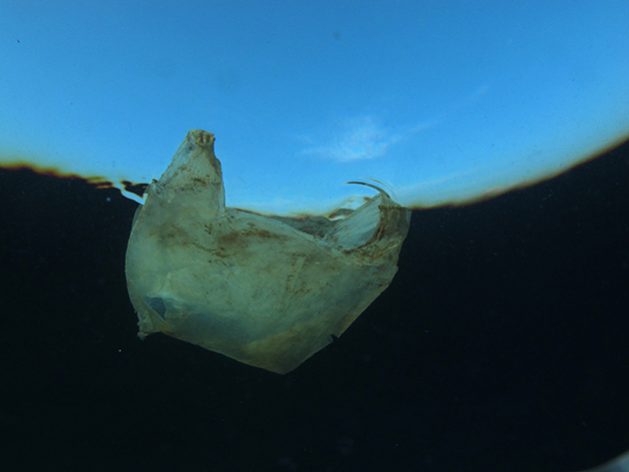
Plastic bags may remain intact for years in the marine environment. Plastic products certified to be industrially compostable are no solution for littering, as they do not degrade efficiently in the environment and continue to pose a threat to wildlife as they break down. Credit: Eleonora de Sabata / Clean Sea LIFE

St David’s, Wales, Jul 1 2021 (IPS) – Documented images of albatross chicks and marine turtles dying slow deaths from eating plastic bags and other waste are being seared into our consciences. And yet our mass pollution of Earth’s seas and oceans, fuelled by single-use plastics and throw-away consumerism, just gets worse.


Plastic debris is estimated to kill more than a million seabirds, 100,000 marine mammals and countless sea turtles every year. Plastics, with all their benefits and promises, have revolutionised societies and economies since their development in the 1950s, but now some 8 million tonnes end up in the oceans every year.

Waste plastic, making up to 80% of all marine debris from surface waters to deep-sea sediments, breaks down into micro-plastics which enter the digestive systems of sea and land animals and humans. Invisible plastic is in the water we drink, the salt we eat and the air we breathe. Experts are still working out the long-term impacts, such as cancer and impaired reproductive systems.

The fishing industry, nautical activities and aquaculture also leave a massive legacy in terms of ocean waste, poisoning and ensnaring sea life.

Hasna Moudud heads a small NGO in Bangladesh, working to protect coastal areas where vast rivers pour into the Indian Ocean, providing livelihoods and food for millions.

Her NGO, Coastal Area Resource Development and Management Association (Cardma), plants coastal trees, protects olive ridley sea turtles in a conservation hatchery in the Bay of Bengal, and helps women in cottage industries, using cane grass to make mats instead of plastic.

“Oceans are always neglected,” she tells IPS. “Small NGOs like myself take risks to save whatever we can of the fragile ecosystem that is left for our future generations.”

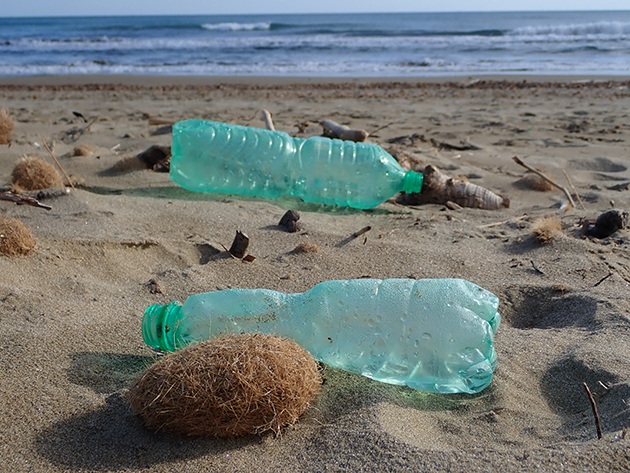
Plastic bottles and bottle caps are among the most frequent items found along Mediterranean shores. Credit: Eleonora de Sabata / Clean Sea LIFE

But to combine her NGO’s efforts with those of others, Moudud says she is “praying” to attend the IUCN World Conservation Congress 2020 in Marseille this September where government, civil society and indigenous peoples’ organisations from around the world will join discussions to set priorities and drive conservation and sustainable development action.

Meeting every four years – with this Congress delayed by the Covid pandemic – member organisations of the International Union for Conservation of Nature, vote on major issues to shape humanity’s response to the planet’s conservation crises. This particular Congress in Marseille is offering both in-person and virtual participation options, allowing those unable to make the trip to Marseille for the full Congress the opportunity to join discussions and provide their feedback.

Moudud’s NGO is a co-sponsor of Congress Motion 022: “Stopping the global plastic pollution crisis in marine environments by 2030.”

The broad resolution goes to the heart of the waste plastics issue. It notes that global production is due to increase by 40% over the next 15 years from current levels of around 300 million tonnes and that the world’s “predominant throwaway model” means that over 75% of the plastics ever produced to date are waste, “notably because the price of plastic on the market does not represent all of the costs of its lifecycle to nature or society”.

Recalling previous international efforts to set goals for ending marine plastic litter, the motion calls on the international community to reach a wide-ranging global agreement to combat marine plastic pollution. This would entail, among other measures, eliminating unnecessary plastic production, in particular single-use plastic waste; recycling and proper prevention of leakage into the environment; and public awareness campaigns.

Sunlight, salt and pounding waves grind marine litter down to plastic grains. Credit: Eleonora de Sabata / Clean Sea LIFE

Activists say previous international efforts to curb plastic pollution have been toothless. Moudud is among many who want mandatory and enforceable measures, accusing big business of what she calls “manipulative practices through sponsorship and malpractice without helping build the natural world”.

“No one is looking or holding the polluters responsible,” she says, calling for a toughening up of the resolution. “I am deeply involved in everything IUCN does to help save the natural world and sustainable living.”

Steve Trott, project manager for IUCN-member Watamu Marine Association which is tackling plastic pollution in their Marine Protected Area in Kenya, says Motion 022 clearly sets out the threats posed by plastic waste to marine and coastal environments, economies and human health and well-being.

“Watamu Marine Association and EcoWorld Recycling based on the Kenya coast embrace the IUCN call for action,” Trott told IPS.

Pushing circular economy initiatives, their NGO has created dynamic plastic value chains through partnerships between the hotels industry and local communities, sponsoring beach clean-ups and collecting plastic waste for recycling. This provides a second source of income for community waste collectors while local artists are also up-cycling plastic waste.

Reflecting one of the main themes of IUCN’s membership structure bringing together civil society and indigenous peoples and government authorities, Trott says Watamu is following a “win-win model which can be replicated and up-scaled, sending out an ‘Act Local, Think Global’ message to inspire others”. He hopes to attend the Congress in Marseille if all goes well.

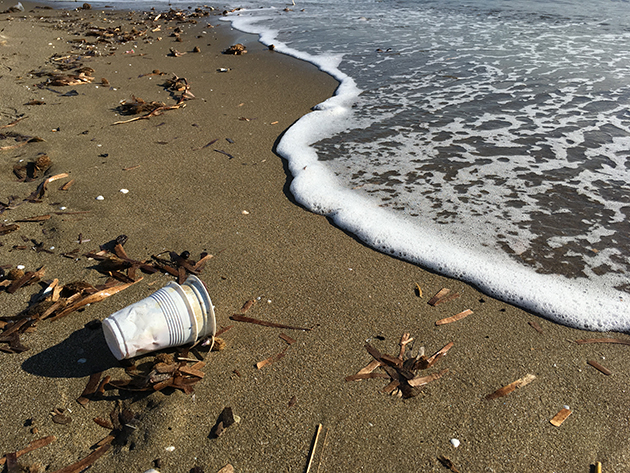
Single Use items are littering the world’s oceans. Credit: Eleonora de Sabata / Clean Sea LIFE

The Plastic Waste Makers index, a study by Australia’s Minderoo Foundation, identifies 20 companies producing more than half of all single-use plastic waste in the world. Some are state-owned and multinational corporations, whose plastic production is financed by major banks. The report notes that nearly 98% of single-use plastic is made from what is called virgin fossil fuels — plastic created without any recycled materials.

Single-use plastics explain why fossil fuel companies are ramping up their production as their two main markets of transport and electricity generation are being decarbonised. By 2050 plastic is expected to account for 5%-10% of global greenhouse gas emissions.

Humankind possesses unprecedented levels of knowledge but also the accompanying responsibility, knowing that oceans are in the poorest health since humans started exploiting them.

Single use plastics – and the estimated 130 million tonnes that are dumped each year around the world – have dominated studies and discussions on waste. Plastic bottles, food containers and wrappers, and single-use bags are the four most widespread items polluting the seas.

One element woven into similar narratives of how to tackle the world’s burning environmental issues – such as carbon emissions, species loss, and plastic waste – is the potential fix offered by technology. Motion 022 refers to the need for more investment in environmentally sound plastic waste collection, recycling and disposal systems as well as forms of recovery.

A study led by biologist Nikoleta Bellou at the Helmholtz-Zentrum Hereon institute focuses on inventive sea-cleaning solutions to date, including floating drones. But her paper suggests that it could take about a century to remove just 5% of plastics currently in the oceans using clean-up devices because plastic production and waste are accumulating so fast.

Activists welcome IUCN’s intervention on plastic waste pollution and the strong mandate a successful and unanimous motion can convey to governments and international institutions. But they also caution against taking too narrow an approach towards tackling marine pollution at the September 3-11 Congress.

Eleonora de Sabata, spokesperson for the Clean Sea Life project, co-funded by the European Union’s LIFE programme, told IPS that the narrative needs to shift away from single-use plastic to single-use everything. “Technology” has come up with so-called ‘bio’ plastics as a replacement for some plastics but only to create a whole suite of problems of their own.

“It’s the throwaway culture that creates problems, whether plastic or not. Green washing and sloppy leadership are filling our world of single use,” she argues. Washing our consciences by simply substituting single-use plastics with other single-use items, such as supposedly biodegradable bags and cutlery, are not the answer.


Towards an Equal Future in Parliaments

Civil Society, Editors’ Choice, Featured, Gender, Global, Global Governance, Headlines, IPS UN: Inside the Glasshouse, TerraViva United Nations

Opinion

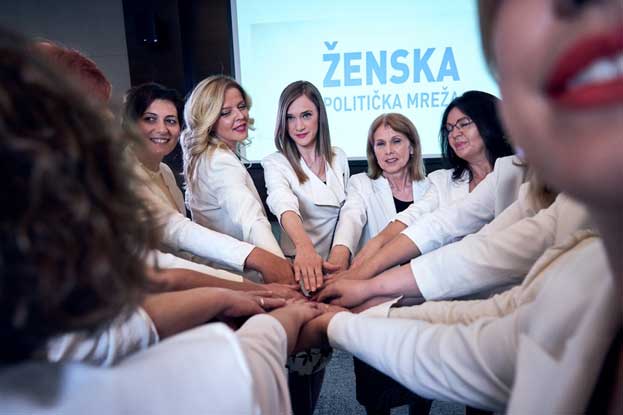
Women’s Political Network, Credit: UNDP Montenegro

The Women’s Political Network was established in Montenegro in November 2017 to promote equal political and economic rights and to combat gender-based-violence. The initiative was funded by the Delegation of the European Union to Montenegro and implemented by UNDP in partnership with the Ministry of Human and Minority Rights.

Meanwhile the UN will be commemorating International Day of Parliamentarism on June 30.

NEW YORK, Jun 28 2021 (IPS) – In elections last October in Georgia, women’s share of seats in parliament went up by nearly seven percent, following the enforcement of a 25 percent quota for women candidates.


In North Macedonia, Serbia and Croatia, which apply a 40 percent legislated gender quota, women exceeded 30 percent in parliament. And in Kosovo*, women won more seats in parliament during the 2021 February election than in any previous year, gaining a 40 percent share.

But, as heartening as these results are, they are rare stars for women in the political firmament.

Women worldwide hold just over a quarter of all seats in parliaments and all positions of speakers in 2020, with 53 countries having at least one woman speaker.

At this rate it will take 50 years for parliaments to reach gender parity. Other estimates lead to gloomier forecasts – such as 145.5 years to reach gender parity in legislative and executive branches of the government.

If recent electoral trends are any indication, parliaments in most countries covered by the United Nations Economic Commission for Europe (UNECE) will not reach gender parity by 2030.

Among countries that are likely to reach gender parity, more than half have adopted gender quotas. One of the most widely applied tools to accelerate progress on women’s political representation, legislated quotas allow more women to get elected and have a shot at changing gender social norms.

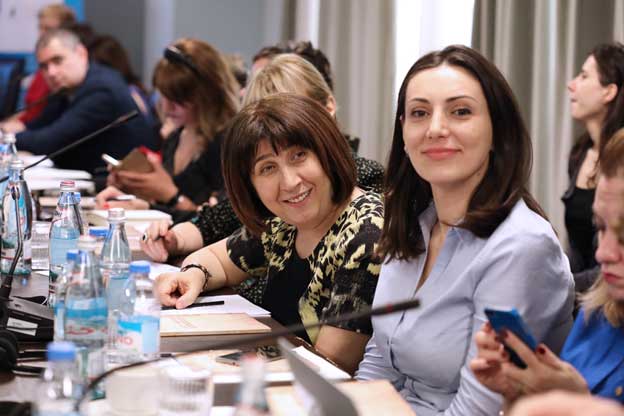
A 2017 survey conducted among top and middle management of parliamentary political parties in Georgia – complemented with the reports and personal experiences of female politicians and activists – highlighted the obstacles faced by Georgian women striving for a political career. Credit: Daro Sulakauri/UNDP Georgia

Numbers matter. Part of the solution to increasing women’s political participation lies in the ability to track progress and comparing data across countries. For example, legislated quotas – despite being a somewhat contested phenomenon – were applied last year in 81 states globally, including 25 countries and territories represented on UNDP’s recently updated Equalfuture platform.

Launched in 2020 to mark the 25th anniversary of the Beijing Declaration and Platform of Action, this online portal showcases progress in women’s participation in national parliaments in 57 countries and territories in the Europe and Central Asia region over the past 26 years.

Equalfuture now features updated data on women’s presence in electoral politics.

It shows that, despite progress, women in the ECA region have just over a fourth of seats in national legislatures. In only six countries in the region are women speakers of parliament – Azerbaijan elected a woman speaker for the first time in 2020 – while there are women speakers in just 20 of the 57 countries in the UNECE region.

To argue that there have never been so many opportunities open to women as there are today is to ignore the powerful hold of gender bias in society. Nearly half of the population in Europe and Central Asia (ECA) believe men make better political leaders than women. The bias ranges from more than 60 percent in Armenia, Kyrgyzstan and Tajikistan supporting this view to less than 30 percent in Croatia and Montenegro.

This could be one of many reasons why young women in 2020 made less than one percent of all parliamentarians worldwide.

Gender bias is just one in a constellation of factors in the slow crawl in women’s political representation.

Violence against women in politics is a formidable obstacle to women’s entry to the political sphere. This increasingly recognized phenomenon is alarmingly pervasive: in 45 UNECE countries, most women parliamentarians have suffered psychological violence or been the target of online sexist attacks on social media during their mandate. Almost half received death threats or threats of rape and beating, and a quarter suffered sexual violence.

Women aspiring to politics are also subject to vicious forms of cyberviolence not foreseen in the Beijing Platform for Action which called on parliaments to have no less than 30 percent of women in their ranks. Abusive online comments aimed at women politicians are inversely proportional to the number of women in political office. During the parliamentary elections campaign in Georgia in 2020, 40 percent of the abusive comments on Facebook targeted women candidates, who comprised only 22 percent of the monitored profiles. Most comments called on them to stay home and give up their political ambition.

Given the many gender fault lines laid bare by the COVID-19 pandemic, it is little surprise that women make up only 24 percent of the COVID-19 task force members worldwide. With its profound impacts on women’s paid and unpaid work, the pandemic has set back decades of hard-won gains in gender equality.

More women than men lost their jobs while their care burdens intensified during the pandemic. With fewer resources and less time to spend on the activities outside the household, fewer women are likely to engage in politics.

However, without women’s input, countries risk making poor decisions at a pivotal moment of recovery from crisis.

On the upcoming International Day of Parliamentarism (June 30), let us celebrate not only parliamentarians but gender-equal parliaments as a cornerstone of a well-functioning democracy. And let us redouble our efforts to dismantle the barriers and dislodge the biases that hold women back from an equal future in political decision-making.

Mirjana Spoljaric Egger is Assistant Secretary-General of the United Nations, Assistant Administrator of UNDP, and Director of the UNDP Regional Bureau for Europe and the CIS. She was appointed to this position by the UN Secretary-General in August 2018 and assumed duties in October 2018. She oversees UNDP operations in 18 countries and territories of Europe and Central Asia: https://www.eurasia.undp.org/content/rbec/en/home/about-us/about-the-region.html

Learn more about the progress of women’s participation in politics in 57 countries and territories over the past 26 years through UNDP Eurasia’s online platform Equalfuture.

* References to Kosovo shall be understood to be in the context of Security Council resolution 1244 (1999)

  Source

Weaponizing Science in Global Food Policy

Civil Society, Food & Agriculture, Food Security and Nutrition, Food Sustainability, Global, Green Economy, Headlines, Human Rights, Indigenous Rights, Poverty & SDGs, TerraViva United Nations, Trade & Investment

Opinion

SANTA CRUZ, California, Jun 25 2021 (IPS) – In July, the United Nations will convene “Science Days”, a high-profile event in preparation for the UN Food Systems Summit later this year. Over the course of two days, the world will be treated to a parade of Zoom sessions aimed at “highlighting the centrality of science, technology and innovation for food systems transformation.”


Maywa Montenegro

Nobody disputes the need for urgent action to transform the food system. But the UNFSS has been criticized by human rights experts for its top-down and non-transparent organization. Indigenous peoples, peasants, and civil society groups around the world know their hard-won rights are under attack. Many are protesting the summit’s legitimacy and organizing counter-mobilizations.

Scientists are also contesting a summit because of its selective embrace of science, as seen in a boycott letter signed by nearly 300 academics, from Brazil to Italy to Japan.

Through the Summit, “science” has been weaponized by powerful actors not only to promote a technology-driven approach to food systems, but also to fragment global food security governance and create institutions more amenable to the demands of agribusiness.

Recipe for Elite Global Governance

The UNFSS was announced in 2019 by the UN Secretary General as part of the Decade of Action to achieve the Sustainable Development Goals by 2030. The announcement came just after the UN signed a strategic partnership with the World Economic Forum. It also elicited outcry from social movements when Agnes Kalibata, President of the Alliance for a Green Revolution in Africa, was chosen to lead the forum — a powerful signal of UNFSS allegiances.

The “multi-stakeholder” structure of the summit has raised concerns from observers who recognize the privatization of multilateral public governance it presages. While Kalibata describes the UNFSS as an inclusive “peoples’ summit,” more than 500 smallholder and peasant organizations signed a letter criticizing the summit’s multi-stakeholder platforms: “Instead of drawing from the innovative governance experiences that the UN system has to offer, the UN-WEF partnership is helping to establishing “stakeholder capitalism” as a governance model for the entire planet.”

Matthew Canfield

Through one lens, multistakeholderism looks like a set of “inclusive” practices: the summit has five Action Tracks (e.g. “Ensuring Access to Safe and Nutritious Food for All” and “Boosting Nature Positive Production at Sufficient Scale”), an endless number of “dialogues,” and an elaborate online forum where anyone can participate.

However, this profusion of spaces obscures the fact that the UNFSS has no built-in structures of accountability. This is particularly troublesome because, as UN special rapporteurs have observed, the summit’s process was pre-determined by a small set of actors: “The private sector, organizations serving the private sector (notably the World Economic Forum), scientists, and economists initiated the process. The table was set with their perspectives, knowledge, interests and biases.”

The scientific ideas shaping those parameters, then, should invite our curiosity and concern. What kinds of science are included — and excluded? What are the implications for the future of global food system governance?

Defining Science as Investment-Friendly Innovation

A new Scientific Group of the UNFSS, created to support a “science- and evidence-based summit,” provides some clues. In theory, the Scientific Group works to “ensure the robustness, breadth and independence of the science that underpins the summit and its outcomes.” In practice, the Group’s practices impoverish the scientific base on which the summit is meant to make policies.

Unlike existing global science advisory panels where experts are nominated through an inclusive and democratic process, the Scientific Group is handpicking experts amenable to “game-changing” solutions — access to gene-edited seeds, digital and data-driven technologies, and global commodity markets.

Alastair Iles

As a result, key areas of expertise, such as agroecology, Indigenous knowledge, and human rights are being excluded while industry and investor-friendly viewpoints are promoted as visionary.

While the Scientific Group appears at first to be diverse in terms of disciplines and geographies, it in fact reflects a set of overlapping, elite networks. Partners include well-worn institutional champions of the Green Revolution (the CGIAR), the central nervous system for “free trade” policy globally (the World Trade Organization), and a powerful consortium of wealthy nation-states (the Organisation for Economic Cooperation and Development), among others.

By drawing on these networks, the Scientific Group is serving as a gatekeeper for determining the meaning and boundaries of “science.” An analysis of its publications reveals critical flaws stemming from the Scientific Group’s narrow approach to scientific expertise. These include:

    • Science, technology, and innovation are uprooted from their political-economic and social conditions. As a result, structural drivers that produce hunger even as they generate wealth (e.g. for Bill Gates) are eclipsed in favor of boosting productivity with a twist of sustainability.
    • Biotechnology, Big Data, and global value chains are offered as the solution to all agronomic problems and the crisis of overfishing.
    • Multicultural “digital” inclusion is redeployed to promote Black, Brown, and Indigenous incorporation into an imperial model of Science, Technology, and Innovation. This ignores the rich knowledge these communities already hold — and obscures that Indigenous and agroecological knowledge cannot survive without land.

Science can and should play a role in global food governance. But far from the current UNFSS model, science can support in all its complexity and breadth, alongside many other expertises with equal rights to shape the future of food.

Maywa Montenegro works as an assistant professor of Environmental Studies at the University of California, Santa Cruz, specializing in politics of knowledge, biotechnology, and agroecology.

Matthew Canfield is an assistant professor of Law and Society & Law and Development at Leiden Law School specializing in human rights and global food governance.

Alastair Iles works as an associate professor at the University of California, Berkeley, researching agroecology policies and sustainability transitions.

  Source

Maldives’ UN General Assembly Presidency Renews Hope for Small Island Developing States

Civil Society, Development & Aid, Economy & Trade, Featured, Global, Headlines, Human Rights, Inequity, TerraViva United Nations

Opinion

Taking Stock, Looking Forward. Credit UNESCO

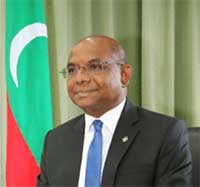
JEDDAH, Saudi Arabia , Jun 23 2021 (IPS) – Earlier this month, Abdulla Shahid, the Maldives’ foreign minister, was elected President of the 76th Session of the United Nations General Assembly (UNGA), which commences in September.


This is the sixth time a candidate from a Small Island Developing State (SIDS) has been elected to steer the work of the UN’s highest policy-making organ during its 76-year history:

Rudy Insanally of Guyana became the first president of the General Assembly elected from the UN-SIDS category in 1993; followed by Saint Lucia’s Julian Hunte in 2003; Haya Rashed Al-Khalifa of Bahrain in 2006; and the late John William Ashe of Antigua and Barbuda in 2013, while Peter Thomson of Fiji, took the helm during the GA’s 71st session in 2016.

https://www.un.org/ohrlls/content/list-sids

It may seem surprising that such small nations have so frequently been named to this high position—the aggregate population of all SIDS is only 65 million, less than one percent of the global population—but the UN’s 38 SIDS constitute one fifth of the international organization’s total voting membership.

This position gives SIDS outsized power as a voting bloc, which they have wielded to great effect, perhaps most significantly when it comes to climate change, which as we will see has benefited the entire global community.

Abdulla Shahid. Credit: United Nations

Far from representing a monolithic group, SIDS hail from every region of the world and are home to dozens of languages and a wide variety of social and economic characteristics. Some, like Guyana and Belize, are not even islands, but they all share unique social, economic and environmental vulnerabilities (like size, remoteness, and limited resources base) that the UN has recognized a distinct group of developing countries since 1992.

They are also highly vulnerable to the impacts of climate change, like extreme weather, sea level rise, and biodiversity loss, making them natural allies in the fight to cut the greenhouse gas emissions responsible for the crisis.

In fact, in 1989, the Maldives hosted one of the first international conferences on sea level rise, a consequential event in the international climate change fight and the inspiration for the creation of the Alliance of Small Island States (AOSIS), which has been credited to establish the the United Nations Framework Convention on Climate Change in 1992 and winning the inclusion of the 1.5 degree Celsius temperature goal in the Paris climate accord in 2015, the latter during the Maldives chairmanship of the group.

SIDS have also shown critical leadership in the creation of the UN’s Sustainable Development Goals (SDGs).

In 2014, SIDS helped lead the negotiations, ultimately creating what is known as the SAMOA Pathway, a blueprint to ensure priorities of SIDS were reflected in the final 17 SDGs.

Before that, John William Ashe skillfully set the stage for the SDGs by working with larger countries to create a process for the SDGs that truly had global buy in.

All along, SIDS main argument that the specific challenges they face need to be given special consideration, and today a number of the SDGs do just that, including sustainable management of fisheries, aquaculture, and tourism. Such recognition was further solidified in 2015 as part of the Addis Ababa Action Agenda adopted at the UN Conference on Financing for Development and again that year in the Sendai Framework for Disaster Risk Reduction.

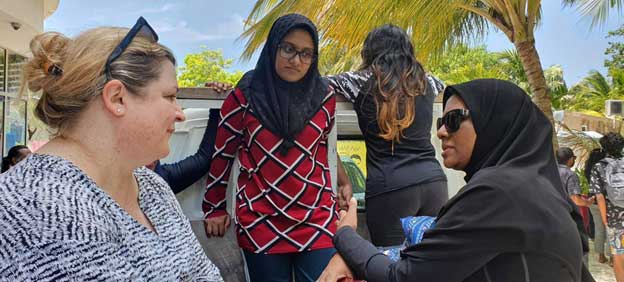
Catherine Haswell, the UN Resident Coordinator in the Maldives (left) meets a group of local women. May 2021. Credit: UN Maldives/Nasheeth Thoha

Unsurprisingly, another theme that has emerged in SIDS international diplomacy over the years is ocean conservation. In December 2017, under Peter Thomson’s leadership, the General Assembly decided to convene negotiations towards an international legally binding instrument under the UN Convention on the Law of the Sea (UNCLOS) on the conservation and sustainable use of marine biological diversity of areas beyond national jurisdiction, what is known as the high seas.

Thomson was also instrumental in developing the UN Ocean Conference that sets out to conserve and sustainably use ocean resources.

SIDS’ important endeavors during the General Assembly not only showcase the value of their contributions there, but of the GA itself, a place where all 193 UN countries, large and small, can elevate their concerns.

During the campaign for the post competing with Zalmai Rassoul, the candidate from Afghanistan, the Maldives’ Shahid launched “a presidency of hope”, noting that his priorities during the year-long presidency are to recover from the Covid-19 pandemic and rebuild economies better and greener.

“The General Assembly can boost efforts towards greater climate action” and “renew momentum” on issues of energy, biological diversity, sustainable fisheries, desertification and the oceans – that are at the heart of SIDS’ concerns.

The UN Secretary General Antonio Guterres, while welcoming the new President-elect Shahid commended his “selection of hope as the central theme in his vision statement” and noted that, “coming from a small island developing state, Mr. Shahid will bring unique insights to the 76th session of the General Assembly, as we prepare for COP26 in Glasgow in November.”

Shahid’s election, as with the SIDS leaders before him, not only offers new hope for islands, but the whole international community. At this precarious moment in history, it is truer than ever that by promoting the interests of SIDS, what we are really doing is protecting the future of mankind.

Ahmed Sareer was the Ambassador/ Permanent Representative of the Maldives to the United Nations from 2012 to 2017 and chairman of the Alliance of Small Island States from 2015 to 2017. He is presently serving at the General Secretariat of the Organization of Islamic Cooperation (OIC) based in Jeddah.

  Source