EU Policies Don’t Tackle Root Causes of Migration – They Risk Aggravating Them

Civil Society, Development & Aid, Environment, Global, Headlines, Human Rights, Migration & Refugees, TerraViva United Nations

Opinion

Lasse Juhl Morthorst* is a freelance writer and researcher. He mainly works on international politics, development, refugee- and human rights issues.
Credit: United Nations

COPENHAGEN, Dec 17 2019 (IPS) – According to political scientist Zaki Laïdi’s La tyrannie de l’urgence (The tyranny of emergency) from 1999, crisis and emergency situations leave no time for analysis, prevention or forecasting. As an immediate protective reflex, they prevent long-term solutions and pose a serious risk of jeopardising the future.


In emergency situations, participants lack perspective, and durable solutions to human problems are treated according to the logic of immediate results and expectations of direct outcomes.

The effects of globalisation’s deepening and fragmenting landscape highlights how governance with short-term efficiency has become normative when dealing with contemporary challenges.

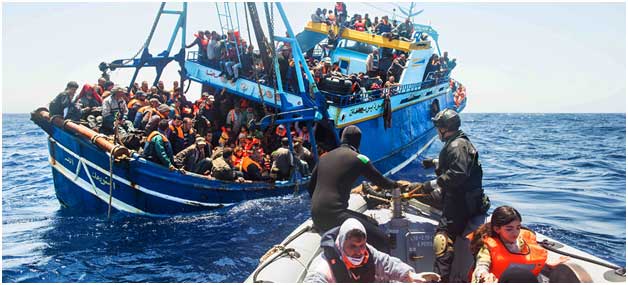
The so-called European refugee crisis from late 2014 and, if we buy its premise, its aftermath have come to symbolise such an emergency situation.

Contemporary political responses expose the electorate and the parties, who respectively gain and lose in the processes of globalisation.

This socio-political cleavage has allowed centre-right parties to take advantage of nationalistic values, with migration viewed through the lens of security – limitation of migration flows and the fight against terrorist groups – law and order, while the centre-left have had to bridge the working class’s fear of cheap labour and economic competition with the middle-class’s liberal socio-cultural preferences.

The European Union’s reaction towards the crisis and its aftermath cannot be seen as a political crisis reaction per se, since the solutions it initiated to manage migration built on existing legislation and practices, helping to consolidate these as routinising emergency in order to naturalise migration politics.

There is a clear political red line between addressing so-called root causes and managing migration by securing external borders and preventing movement of third-country nationals.

This is anchored in the European Commission’s comprehensive approach in the 1994 Communication to the Council, reconfirmed through the integrated approach at the 1999 European Council meeting in Tampere, and developed at the 2002 Seville meeting, where combating illegal migration and addressing root causes were top of the agenda.

What we are witnessing is rather a political crisis, which has lasted for more than a quarter of a century.

Lasse Juhl Morthorst

How did we get here?

As a result of a sceptical post-1973 oil crisis scenario, addressing root causes of migration emerged in the 1980s, with the aim of improving socio-economic conditions in the countries of migrants’ origin, to prevent unwanted migration towards Europe.

When the European Community was developing the single market, with the fluidity of the EU’s internal national borders to facilitate free internal mobility as an outcome, the fear of losing control of external migration became an increasing concern for member states.

The EU’s migration policies have, with their primary focus on securitisation, come to symbolise a harmful politicisation of humanitarianism, which seems to persist into the new Commission’s 2019-2024 period and very like beyond.

In the following years, little progress was made towards a unified European migration policy. As a result, the Commission proposed the idea of a comprehensive approach to migration in 1994.

This consisted of a threefold focus: action on migration pressure through third-country cooperation, controlling immigration to make it manageable and optimisation of integration policies for legal migrants.

The root cause approach was to be seen as a long-term humanitarian development solution to the migration ‘problem’. The ideas of cooperation and addressing root causes have become the popular political take on the EU’s migration challenges, which rhetorically attempt to circumvent the negative connotations of strict migration control and hostility.
Credit: United Nations

During the last decades, the EU has been searching for a new strategic rationalist raison d’être for its common asylum policy, through harmonisation of the EU asylum legal acts, the Common European Asylum System and attempting to solve the stalemate between member states and intra-institutionally, regarding the Dublin system’s tightening Gordian knot.

The EU has failed to solve the structural and systemic impasse in approaching migration flows, which will not end by continuing harshened border controls and security measures, earmarked development aid, externalisation processes or dubious bilateral agreements.

The EU’s migration policies have, with their primary focus on securitisation, come to symbolise a harmful politicisation of humanitarianism, which seems to persist into the new Commission’s 2019-2024 period and very like beyond.

Nothing new from Brussels?

Ursula von der Leyen’s new Commission is taking office in a situation shaped by vast global challenges of geopolitical turbulence and internal fragmentation, towards which she has proposed a rather pragmatic and strategic approach.

Through her manifesto and mission letters to the designated Commissioners, von der Leyen’s new ‘geopolitical Commission’ will focus on making the EU an outward-looking politically influential global powerhouse, which must protect the Union from omnipresent geopolitical and external value-based challenges.

She has proposed ‘a fresh start’ on European migration policy, via a new pact on migration and asylum, a relaunch of the Dublin reform and a new way of burden sharing (the Achilles heel of the Dublin reform).

In charge of this agenda will be Commission Vice-President for Promoting the European Way of Life Margaritis Schinas (Greece), who will work closely with Ylva Johansson (Sweden), the Commissioner for Home Affairs, and Development Commissioner Jutta Urpilainen (Finland).

There are clear tensions and ambiguity in von der Leyen’s agenda towards migration and development, which has toxically been coined with security politics, as it has to find a ‘common ground on migration by working towards a genuine European security union’.

The external dimensions of migration management are explicitly present in the mission letters to both Schinas and Johansson. In these letters, they are instructed to cooperate with the new High Representative of the Union for Foreign Affairs and Security Policy (Josep Borrell, Spain), to develop a ‘stronger cooperation with countries of origin and transit’ in the case of Johansson and ensure ‘the coherence of the external and internal dimensions of migration’ for Schinas.

The EU’s interaction with third countries and partnerships of border control are narrow and ultimately self-eroding.

Beyond the initial internal focus against the backdrop of the eurozone and financial crises, this aligns closely with the Juncker Commission’s focus on the external dimensions of migration.

In 2015, the European Union Emergency Trust Fund for Africa was founded to intensify cooperation with third countries. Migration is also, beyond the Trust Fund, a central element in EU foreign policy and it has further come to divide views in the debate regarding development policy.

It appears that the Union is proposing to work even more closely with partner countries to tackle human trafficking, secure borders, optimise effective returns and tackle root causes of migration through development initiatives. Schinas confirmed this at his hearing on 3 October 2019.

A reminder from the ‘field’

The collaboration with third countries regarding externalisation of borders is vastly problematic, since in some cases, as a trade-off through the funding of development aid earmarked for increased border control, it comes to support militias and authoritarian and hybrid governments.

A large amount of the support often ends up in quasi security organs of rebel groups, which have been seen continuously abusing human rights.

This can presently be witnessed in nations in the Sahel, Maghreb and MENA regions – where tight border control has led to the diversification of pre-colonial circular and reciprocal migrant routes into increasingly perilous areas and methods, along with the risk of promoting economic stagnation, recession and militia isolation.

The diversification of migration routes ultimately creates a favourable environment for the human smugglers that the Union is trying to eliminate.

The EU’s interaction with third countries and partnerships of border control are narrow and ultimately self-eroding. These policies do not tackle any root causes of migration; by aiding regional security units and military forces, they risk limiting democratic accountability and aggravating repression – some of the actual root causes of migration.

Agreements of principles and statements of intention do not compensate for the deflection of focus of an international community’s failure to get to grips with the need of today’s migrants for protection and recognition.

Von der Leyen’s agenda seems like an anachronistic reverberation of the unsuccessful policies introduced more than three decades ago, despite the opportunity to begin abolishing the tyranny of emergency.

*This article first appeared in International Politics and Society (IPS) published by the International Political Analysis Unit of the Friedrich-Ebert-Stiftung, Hiroshimastrasse 28, D-10785 Berlin.
  Source

Human Rights and the Global Protests: Addressing Systems as Well as Symptoms

Civil Society, Global, Headlines, Human Rights, TerraViva United Nations

Opinion

Ignacio Saiz is Executive Director, The Center for Economic and Social Rights

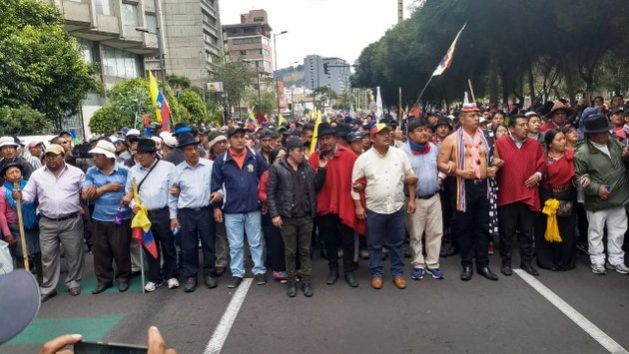
In Ecuador, indigenous-led protests compelled the government to reconsider an austerity package agreed with the International Monetary Fund (IMF) that included public sector wage cuts and fuel price hikes. Credit: Conaie.

In Ecuador, indigenous-led protests compelled the government to reconsider an austerity package agreed with the International Monetary Fund (IMF) that included public sector wage cuts and fuel price hikes. Credit: Conaie.

NEW YORK, Dec 10 2019 (IPS) – Human rights advocates should be as concerned with the economic injustices giving rise to recent worldwide demonstrations as with the repressive responses to them. 


In recent weeks, an extraordinary wave of mass protests has swept the globe. While their specific causes and contexts vary, many can be seen as part of a worldwide revolt against extreme inequality and the unjust economic and political systems driving it.

A common weave running through many of the protests is widespread indignation against austerity – the package of debt-reduction policies that scores of governments are now implementing.

In Ecuador, indigenous-led protests compelled the government to reconsider an austerity package agreed with the International Monetary Fund (IMF) that included public sector wage cuts and fuel price hikes.

Chile has seen million-strong protests against low wages, costly social services and the most extreme levels of economic inequality of any OECD country.

In Lebanon, a third of the population is estimated to have taken to the streets since the latest round of austerity; while Iraq has been rocked by mass protests against high unemployment, ailing public services and economic mismanagement.

These events follow large-scale demonstrations earlier this year against austerity in countries including Argentina, Honduras, Egypt, Sudan and Zimbabwe.

What has often begun as a spontaneous stand against fiscal injustice has burgeoned into a mass mobilization against the structural inequities underpinning it: political systems seen as corrupt, captured and unaccountable, and economic systems seen as generating inequality by privileging private profit over the public good

Many of the protests have been triggered by a specific fiscal measure–a tax on messaging apps in Lebanon or an increase in Santiago metro fares–perceived as emblematic of attempts by governing elites to foist the burden of national belt-tightening on ordinary working people and the already disadvantaged.

But what has often begun as a spontaneous stand against fiscal injustice has burgeoned into a mass mobilization against the structural inequities underpinning it: political systems seen as corrupt, captured and unaccountable, and economic systems seen as generating inequality by privileging private profit over the public good.

Demonstrations in Chile and Lebanon, for example, have continued far beyond the repeal of the offending measures or even the resignation of senior government figures, insisting on a more fundamental economic and political overhaul.

Another alarmingly common feature has been the repressive response of the authorities, who in most cases have addressed the protests as a threat to public security rather than a clamor for social justice.

From Quito to Cairo and from Santiago to Baghdad, security forces stand accused of excessive use of force, killings, ill-treatment and arbitrary arrest of demonstrators.

It is somewhat understandable, then, that where prominent international human rights actors have spoken up about these protests, it has largely been with respect to these abuses. The Office of the High Commissioner for Human Rights, for example, has sent a team to Chile to investigate breaches of international standards related to the use of force by security personnel.

A recently-concluded Inter-American Commission on Human Rights mission has gathered numerous testimonies of similar alleged abuses in Ecuador. Amnesty International and Human Rights Watch have done important work documenting excessive force against protestors in Baghdad, Beirut and elsewhere.

Abuses by the security forces have also been the primary if not sole focus of investigations by national human rights institutions such as the Instituto Nacional de Derechos Humanos in Chile or the Ecuadorian Defensoría del Pueblo.

Each of these organizations has, to different degrees, acknowledged that the protestors’ socio-economic grievances are also human rights concerns. But the economic and social rights dimensions of these crises have generally been relegated to the background and are yet to meaningfully inform their analysis and recommendations.

While the acute repression of civil and political rights in the wake of these protests clearly merits urgent scrutiny, the chronic denial of social and economic rights motivating them must also be addressed as a central human rights concern.

International human rights standards apply equally to governments’ use of fiscal policy as to their use of force.  Where austerity policies result in widening gender or racial disparities, push people into poverty or lead to avoidable backsliding in access to health or housing, they also breach international legal obligations on economic, social and cultural rights.

To relegate these violations to the margins of human rights concerns serves only to perpetuate the lack of accountability that has brought millions out on the streets.

The mass mobilizations against extreme inequality, like those against the closely-related crisis of climate change, beg a holistic approach to the human rights claims underpinning them. They should also prompt human rights actors to rethink their traditional agnosticism with regard to economic systems, and adopt a more frontal critique of neoliberal economic orthodoxy.

The protests demand that we call out the ravages of neoliberalism as human rights deprivations, challenge the fallacies sustaining this ideology and envision rights-centered alternatives.

Recent developments have consolidated the normative and methodological foundations for such a critique. For example, earlier this year the UN Human Rights Council adopted Guiding Principles for Human Rights Impact Assessments for Economic Reform Policies, which set out the human rights standards that should anchor economic policymaking, including fiscal adjustment.

These are informed by the practical experience of civil society organizations such as CESR in assessing austerity and its human rights impacts in numerous countries, as well the work of progressive economists bringing a human rights lens to challenge dominant economic paradigms.

Such efforts have focused on fiscal policy as a critical entry point for addressing structural injustice, as reducing inequality and fulfilling human rights are simply not possible without a radical redistribution of resources, wealth and power.

Systemic approaches to economic and social rights accountability are also targeting the responsibilities of international financial institutions and corporate actors in maintaining the unjust economic status quo. CESR’s efforts have been aimed at the IMF, whose complicity in prescribing austerity has fanned the flames of crises in many of the countries where protests have erupted.

For example, just last month the IMF pressed Lebanon to apply even more regressive adjustment measures, minimizing concerns about the potential for social tensions. Ongoing initiatives to codify the binding human rights obligations of business actors and overhaul the rules of international corporate taxation are equally critical fronts for systemically hard-wiring corporate accountability.

Of course, a truly “eco-systemic” human rights practice needs to go beyond normative elaboration and international policy reform. A challenge for those working internationally is to build stronger links between norm development, policy critique, context-specific advocacy and movement building, supporting the efforts of national human rights activists who are drawing attention to the structural and social rights dimensions of the crises.

We can likely expect more protests of this kind in 2020, as fiscal contraction spikes, the global economy slackens, and traditional spaces for civic engagement shrink.

There is a clear message emerging from the streets that human rights actors should get behind: there can be no democracy without economic and social justice. For this reason, any durable resolution to the current unrest must have economic and social rights accountability at its core.

  Source

Social Summit Demands Stronger Commitments in Climate Talks

Civil Society, Climate Change, Conferences, Development & Aid, Economy & Trade, Editors’ Choice, Environment, Featured, Global, Global Governance, Globalisation, Green Economy, Headlines, Human Rights, Indigenous Rights, IPS UN: Inside the Glasshouse, Poverty & SDGs, Regional Categories

Climate Change

One of the continuous protests staged at the Social Summit for Climate Action, meeting Dec. 7-13 parallel to the official 25th Conference of the Parties (COP25) on climate change. The Summit, hosted by the Complutense University of Madrid, is tackling issues such as the controversial trading of carbon credits, human rights in the climate struggle and opposition to the growing production of hydrocarbons. Credit: Emilio Godoy/IPS

One of the continuous protests staged at the Social Summit for Climate Action, meeting Dec. 7-13 parallel to the official 25th Conference of the Parties (COP25) on climate change. The Summit, hosted by the Complutense University of Madrid, is tackling issues such as the controversial trading of carbon credits, human rights in the climate struggle and opposition to the growing production of hydrocarbons. Credit: Emilio Godoy/IPS

MADRID, Dec 9 2019 (IPS) – As the COP25 deliberations enter the decisive final week, representatives of environmental and social organisations gathered in a parallel summit are pressing the governments to adopt stronger commitments in the face of a worsening climate emergency.


In the debates in the week-long Social Summit for Climate Action, which began Dec. 7 parallel to the Dec. 2-13 United Nations 25th Conference of the Parties (COP25) on climate change taking place in Madrid, skepticism has been expressed with respect to the results to come out of the official meeting.

“Nothing good is going to come out of it for Central America, only proposals that are going to make it more vulnerable. The damage is going to become more serious,” Carolina Amaya, representative of the Salvadoran Ecological Unit, told IPS, pointing out that the region is one of the most exposed to the climate crisis, facing persistent droughts, intense storms, rising sea levels and climate migrants.

The social summit is taking place at the public Complutense University, in the west of the Spanish capital, about 15 km from the IFEMA fairgrounds which are hosting COP25 after Chile pulled out on Oct. 30 from holding the event due to massive anti-government protests and social unrest.

The alternative activities, which also end on Friday Dec. 13, include a varied menu of issues, such as free trade and its socioenvironmental impacts, oil drilling in indigenous territories, the protection of forests, and opposition to trading reductions in greenhouse gas (GHG) emissions, which cause global warming.

They are also discussing the monetisation of environmental services, increased funding for the most vulnerable nations, climate justice and attacks against land rights activists.

The Madrid Social Summit is also holding sessions in Santiago de Chile, under the same slogan, “Beyond COP25: People for Climate”, although there are fewer representatives of organised civil society than at previous COPs because of the last minute change of venue.

Civil society groups are also organising activities at their green pavilion within the official COP25 compound of the United Nations Framework Convention on Climate Change (UNFCCC), where their participation is more formal and ceremonious.

The demands of civil society gained visibility thanks to the mass demonstration held in Madrid on Friday Dec. 6, with the participation of Swedish activist Greta Thunberg, the reluctant star of the official conference and social summit.

COP25 is the third consecutive COP held in Europe, this time under the motto “Time to act”.

The deliberations, which enter the crucial phase of the adoption of agreements Tuesday Dec. 10, are focusing on financing national climate policies, rules for emission reduction markets, and the preparation of the update of emissions reductions and funding of the Warsaw International Mechanism for Loss and Damage, designed to assist regions particularly affected by climate change.

COP25 is the climate summit that directly precedes the 2020 entrance into effect of the historic Paris Agreement on climate change, adopted in the French capital in 2015, which left key areas to be hashed out at the current conference, such as the controversial emissions market.

In their statement to the COP, the organisations criticise the economic model based on the extraction of natural resources and mass consumption, blaming it for the climate crisis, and complaining about the lack of results in the UNFCCC meetings.

“The scientific diagnosis is clear regarding the seriousness and urgency of the moment. Economic growth happens at the expense of the most vulnerable people,” says the statement, which defends climate justice “as the backbone of the social fights of our time” and “the broadest umbrella that exists to protect all the diversity of struggles for another possible world.”

At the social summit, the first “Latin American Climate Manifesto was presented on Monday Dec. 9, which lashes out at carbon credit trading, the role of corporations in climate change and the increase in production of hydrocarbons, while expressing support for the growth of agroecology, the defence of human rights and the demand for climate justice.

In addition, indigenous peoples are holding their own meeting, the “indigenous Minga“, with the message “Traditional knowledge at the service of humanity in the face of climate change.” They are demanding respect for their rights, participation in the negotiations and recognition of their role as guardians of ecosystems such as forests.

“We are here to raise our voices and offer our contribution to fight” against the climate emergency, Jozileia Kaingang, a chief of the Kaingang people and a representative of the non-governmental Articulation of the Indigenous Peoples of Brazil, told IPS.

Brazilian indigenous groups are in conflict with the government of far-right President Jair Bolsonaro because of its attempts to undermine their rights and encourage the commercial exploitation of their territories. In fact, the Brazilian government delegation does not include a single indigenous member – unprecedented in the recent history of the COPs.

Faced with this dispute and the critical situation of the Amazon jungle, Brazil’s indigenous people have sent representatives to Madrid to speak out and seek solidarity.

The murder of two leaders of the Guajajara people in northeastern Brazil on Saturday Dec. 7 shook the indigenous delegation. Two murders had already occurred in that native community in the last two months.

In 2017, the States Parties to the UNFCCC adopted at COP23 the Local Communities and Indigenous Peoples Platform for the exchange of experiences and best practices, thereby ensuring the participation of these groups in the negotiations of the convention.

The Platform’s facilitative working group, composed of delegates from seven States Parties and seven indigenous peoples, is currently developing its plan for the period 2020-2021.

Martín Vilela, a representative of the Bolivian Platform for Climate Change umbrella group of local organisations, questioned the effectiveness of the climate summits.

“The agreements are only paper. Emissions continue to rise and countries’ voluntary targets are insufficient. The countries have to be more ambitious if they really want to avoid major disasters,” he told IPS.

Social organizations fear that the Paris Agreement, when it replaces the Kyoto Protocol next year, will be stillborn, because countries are failing to keep their promises, even though scientists are warning that the goal of limiting global warming to 1.5 degrees Celsius is insufficient.

The Agreement sets mandatory emission reduction targets for industrialised countries and voluntary targets for developing countries in the South.

“The countries need to know that we’re monitoring them. We, the organisations, must prepare ourselves to demand better action,” said Amaya from El Salvador.

For her part, Brazil’s Kaingang argued that the climate struggle would only be effective if it includes indigenous peoples.

COP26 will be hosted by Glasgow, Scotland in November 2020, after pre-conference meetings in Germany and Italy.

This article was supported by the COP25 Latin American Journalistic Coverage Programme.


Indigenous Knowledge, a Lesson for a Sustainable Food Future

Biodiversity, Climate Change, Conferences, Development & Aid, Economy & Trade, Environment, Featured, Food & Agriculture, Food Sustainability, Global, Headlines, Health, Indigenous Rights, Poverty & SDGs, TerraViva United Nations, Trade & Investment

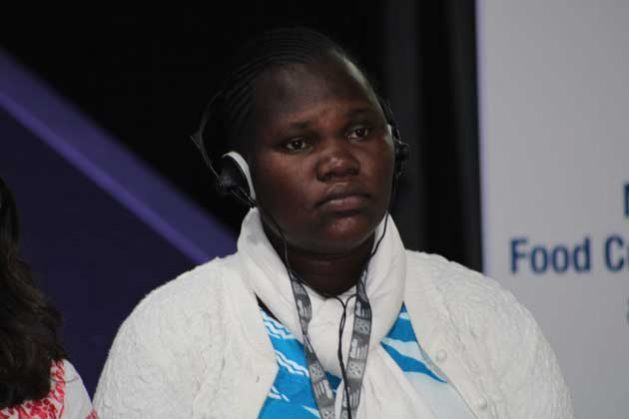
BCFN Yes winner Geraldin Lengai is researching bio-integrated crop management among tomato farmers in Tanzania. Credit: Busani Bafana / IPS

MILAN, Italy, Dec 4 2019 (IPS) – Local knowledge systems rooted in traditional practices and culture passed down generations provide sustainable solutions to food and nutritional insecurity on the back of climate change, a conference heard this week.


More than 370 million indigenous people, living in 70 countries, make up just 6 percent of the global population, according to the United Nations. But their food systems are models of diet diversity, innovation, conservation and local adaptability the world can benefit from in the face of risks such as climate change, delegates at the 10th Forum on Food and Nutrition convened by the Barilla Centre heard.

Speaking at a panel session on Preserving Mother Earth, Food Culture, Local Traditions and Biodiversity, Mattia Prayer Galletti, lead technical specialist on indigenous peoples and tribal issues at IFAD, said indigenous peoples have a connection with nature. They understand the concept of sustainability and the protection of natural resources.

IFAD has promoted an Indigenous People’s Forum to foster dialogue and consultant among indigenous people organisations and IFAD member countries. Through this Forum, IFAD has supported the economic empowerment of indigenous people, particularly women and the youth. IFAD has also contributed to the improvement in livelihoods of indigenous peoples through the Indigenous Peoples Assistance Facility which has provided small grants of up to US$50 000 for development projects.

He said indigenous food systems provide food security and biodiversity because indigenous communities have cultivated resilient foods, making them ideal in adapting to climate change. This despite the growing threats indigenous communities have faced, including marginalisation, loss of their ancestral lands and the destruction of their way of life.

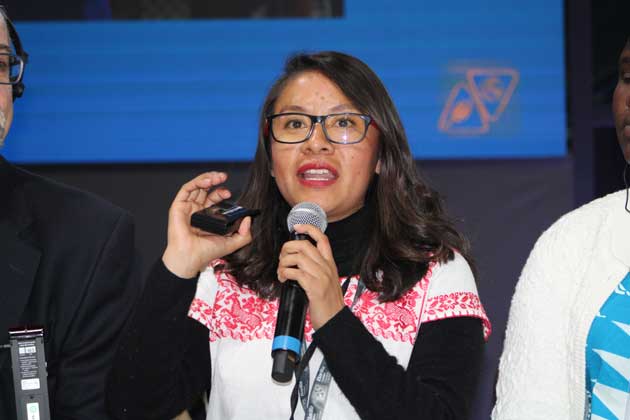
Dali Nolasco Cruz, an advisory board member of the Indigenous Terra Madre (ITM) from Mexico. Credit: Busani Bafana / IPS

Dali Nolasco Cruz, an advisory board member of the Indigenous Terra Madre (ITM) from Mexico, concurred saying indigenous people are being criminalised and killed by big powers that are extracting natural resources in their lands.

“We need alliances, we need to fight for Mother Earth,” Cruz said, “We need to transform our livelihoods by protecting the Earth to help others.”

Indigenous Innovations for food security

Indigenous knowledge provides innovations researchers are convinced can provide models for promoting resilience in our current food systems. Several researchers shared their on-going work on this.

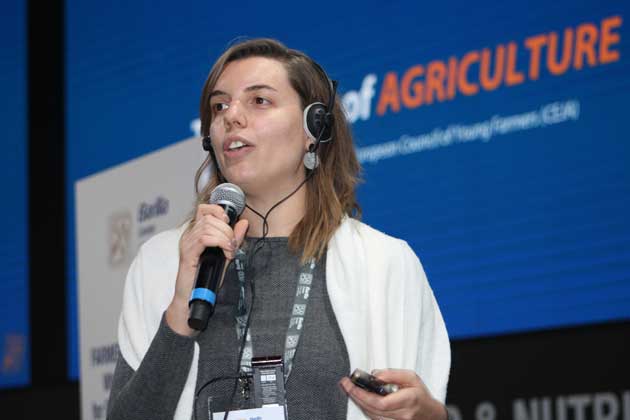
Martina Occelli, a PhD student at the Santa Anna School of Advanced Studies in Pisa, is undertaking multidisciplinary research on how smallholder farmer’s collective knowledge is shaping soil productivity in the Gera Gera region of Ethiopia among 300 smallholder farmers. The research has shown that collective knowledge within and between households which farmers learnt from their fathers was relevant in determining the soil ability, which is critical in food production and resilience.

Martina Occelli speaks at the 10th International Forum on Food and Nutrition. Credit: Busani Bafana / IPS

Occelli is a winner of 2018 BCFN Yes international multidisciplinary contest launched by the BCFN Foundation in 2012 to support research on promoting the intersection of food sustainability and environmental sustainability.

Geraldin Lengai, another BCFN Yes winner, is researching on enhancing sustainable agriculture through the adoption of bio-integrated crop management among tomato farmers in Tanzania comparing conventional and non-conventional farming methods. Her research expects to provide insights into the use of organic pesticide properties of ginger and turmeric – cash crops grown by farmers in Tanzania – in fighting pests and diseases in vegetables. Also, she has researched the efficacy of organic fertilisers such as goat manure and chicken manure on the productivity of the spice coriander and amaranthus, a plant cultivated as a vegetable.

“Sustainable agriculture is important because you need a doctor once in a while, but you need the farmer at least three times a day,” Lengai told IPS. “I believe people should have access to food that is safe and healthy. How we produce the food, process it and how the food reaches the end consumer is the business of sustainable agriculture, and my research is on crop protection because people use crop protection synthetically yet there are alternatives that nature has provides. Before synthetic pesticides, our forefathers used tobacco to control insects, and if we can look at other plants that have the same capacity, we can promote sustainable agriculture.”

Lengai said the benefits of manure has in producing vegetables and the near to zero cost for farmers who keep animals means farmers have a sustainable fertiliser for organic produce which is attractive for global markets. Citing the case of pesticides with the Kenya market for French beans, Lengai said organic produce had secured international markets which have traceability systems in place.

“Growing organic vegetables and using organic pesticides and fertilisers is a win-win for everybody for the environment, for the farmer for the consumer,” said Lengai. She added that synthetic pesticides are favoured because they are easy to apply and cheaper – but come at a cost to the environment and health.


Fixing the Business of Food

Conferences, Development & Aid, Economy & Trade, Environment, Featured, Food & Agriculture, Food Sustainability, Global, Headlines, Health, Poverty & SDGs, TerraViva United Nations, Trade & Investment

Delegates grappled with getting the business of food right. Credit: Busani Bafana / IPS

MILAN, Italy, Dec 4 2019 (IPS) – Milan is the city where Leonardo da Vinci painted his iconic Last Supper. Frozen in time is the moment Christ told his disciples there was a traitor among them. Visitors to the painting can examine the expressions on the faces of the disciples and look the food they might have eaten – the bread and wine, and of course the spilt salt. As one delegate to the 10th International Forum on Food and Nutrition noted, the diet did not seem varied or healthy.


Several centuries later, with the spotlight firmly on the state of our planet, global warming, delegates grappled solutions for producing and consuming food, nutrition and the state of the earth. Taking centre stage was the question of the roles, activists, workers, businesses and leadership play in the food cycle.

Mario Monti, Senator for Life of the Italian Republic; articulated the challenge succinctly. The forum with the theme Fostering Business and Innovation while preserving Mother Earth he said, provided a “beautiful challenge” dedicated to securing food for people to inhabit the planet.

Ertharin Cousin, from the Chicago Council on Global Affairs, referred to a conundrum that while in the United States 1450 deals were signed across 1000 agri-food tech start-ups none of the businesses focused on addressing the challenges of low-income people.

It was clear from the presentation by Jeremy Oppenheim, Founder and Managing Partner, SYSTEMIQ the food system’s hidden costs amounting to $12 trillion, including food subsidies – that the food system is dysfunctional.

Many speakers alluded to resolving the conundrum involving complex interplays between activism; innovative business practice and digital innovation, financing and political commitment.

Changing the culture of business and financing of companies was considered a major consideration which needed change to fix the food system.

Ben Valk, Lead Food and Agriculture Benchmark, commented that, for example, there were solutions which reduce the pressure on land and therefore on deforestation.

“First things we should do is to start to implement those solutions,” he said, but added that it astonishing to that so little money was allocated towards the Sustainable Development Goals. Change was needed and money allocated to sport for, example, should be reduced to ensure the SDGs were achieved.

Charlotte Ersbøll, representing the United Nations Global Compact, commented that businesses should be aware that employees were committed to sustainable practices. She referred to a study done in the US where half of all the staff would accept a salary cut if they were if they could work for a more climate-friendly company. “And if you look at the millennials, it would be two thirds. And, and all of them were frustrated that they really didn’t see the companies following through and really taking the lead.”

Oppenheim concluded his presentation with a note of caution. People at the conference were the converted, people already finding and looking at solutions to food and nutrition.

“What we need to do is to take this room and have thousands of rooms of like this … The real opportunity is to take this agenda to seize it with both hands to translate it into massive business opportunities.”


Right to Food Denied by Poor Policies and Inaction

Africa, Conferences, Development & Aid, Economy & Trade, Environment, Featured, Food & Agriculture, Food Sustainability, Global, Headlines, Health, Multimedia, Poverty & SDGs, TerraViva United Nations, Trade & Investment, Video

MILAN, Italy, Dec 3 2019 (IPS) – Global food systems are ripe for transformation if people are to be nourished and the planet sustainable, says Hilal Elver, Special Rapporteur of the Right to Food of the United Nations Human Rights Council.


Hilal Elver, Special Rapporteur of the Right to Food of the United Nations Human Rights Council speaking at the 10th International Forum on Food and Nutrition convened in Milan. Credit: Busani Bafana / IPS

Elver, told delegates at the 1oth International Forum on Food and Nutrition convened in Milan by the Barilla Centre, that the world needs food citizens who will act responsibly in promoting food equality and reducing food waste, which underlie global food and nutrition insecurity in the world today.

Food citizens are responsible for protecting the right to food through multi-actor actions including promoting a conducive environment that will secure food for all while promoting dialogue around food access, production and equitable distribution.

Citing the situation in Zimbabwe, Elver said the food crisis was a blot on the right to food that the world must respond to with urgency.

“The situation in Zimbabwe in mind boggling,” said Elver who has just returned from a mission to Zimbabwe to access the situation. “We need to know what is going as we talk about the need to diet, many in Zimbabwe eat once a day if they are lucky and food aid basically maize, just one meal a day. .. This is a very serious issue that we do not know it beyond the sustainable.”

Elver spoke with IPS on her mission to Zimbabwe. Excerpts of the interview:

IPS: You have just come back from Zimbabwe, what did you see?

Zimbabwe is an amazing country but if it facing a lot of challenges. It does not have basic public services and only four hours a day electricity and I understand that and government buildings, companies and some restaurants are using generators. But also you need fuel for the generators and for your car – if you have money to buy gas (fuel). The system is collapsing. People do not have time to work, because they either have to wait for gas for hours and hours and have to wait in front of the banks to get cash and 24 hours and transportation is very expensive. It is a vicious cycle and something should give in internally and externally because this has affected the food situation in the country too.

What has these challenges mean for the right to food?

That is a major problem. The root causes are a man-made journey to starvation. Every person in Zimbabwe has a responsibility to act. It did not come from drought. Yes drought is there. Other countries had a drought. Zambia had a drought, Mozambique had a drought and Cyclone Idai but Mozambique had huge aid from outside and Zimbabwe only got ten percent of it because of the sanctions.

What has been the impact of sanction on food security?

The intentional community should consider lifting the sanction because sanctions in the 20 years have had multiple impacts on the ordinary people’s lives. They talk about the targeted sanction but the sanctions are targeted by US, UK and EU, they are living perfectly fine and they do not travel a lot outside as they are high level government officials. It is okay for them but for the ordinary people it is not. They are suffering because all the international aid is blocked in one way or another. Investment is not coming. No one wants to invest in a country under sanctions.

Ask the IMF or World Bank why they cannot give the money to them. All the money they try to help Zimbabwe with goes to the NGOs and international organisations. If you are given $100 million, the people on the ground only get 20 percent of it. This is bad and this must change.

Is lifting sanctions everything to get Zimbabwe out of its challenges?

That is an important question. The government should make some democratic reforms, the freedom of speech, and freedom of association and give the opportunities to the people because the people are peaceful. The first thing is that the government should sit together with the opposition and all parties in a democratic manner and to think about how they can help their people together.

Land reform has been done in the last 20 years gradually here and there and there has been some kind of complaints as to why white farmers need compensation and black farmers are dysfunctional, these are myths going round. Black farmers are dysfunctional because they did not get any help from the government. You need first of all credit and you need technical help and you need seed and the government is in a terrible shape to give all these things. Of course there is disfunctionality but they cannot access resources there is land but they cannot do anything with it. If people find one square metres of land they just produce on it. The main problem is this corn based reliance. People are so obsessed with sadza, who brought maize to Zimbabwe? We should think about that.

Are you saying food diversification is a solution to the food problem?

Of course. The traditional food in Africa is very much good for the environmental conditions. Traditional small grains do to need too much water like maize and they should go back to this.

[embedded content]