MILAN, Italy, Dec 3 2019 (IPS) – A coffee producer will receive a cent and a half from a $2.50 cup of coffee. This one stark fact stood out as scientists, researchers, activists and grappled with solutions for change in food and nutrition practises, which would benefit the greater community.
While the solutions are many – slow food to artificial intelligence – it was clear that the delegates were united around one idea: Key to the solution is to ensure that the solutions need to be put in the hands of the broad community – not just in the hands of the powerful.
This also needs the commitment of every sector of society – from multi-national businesses to small scale local farmers.
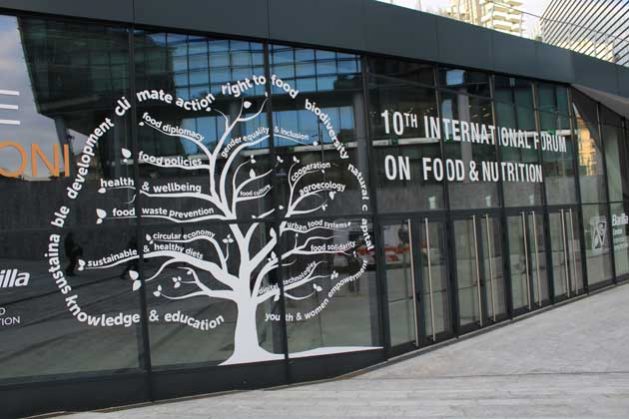
This message was reinforced by Guido Barilla, founder of the Barilla Centre for Food and Nutrition at the 10th International Forum on Food and Nutrition. The forum had the theme of Fostering Business and Innovation while preserving Mother Earth.
He urged all stakeholders come together and educate on the importance of sustainable and virtuous food systems.
Professor Angelo Riccaboni agreed – cooperation between institutions, corporations, NGOs, philanthropic institution and academia was crucial for changing the trajectory.
Ertharin Cousin reminded delegates that biologist Paul Ehrlich once predicted large scale famines, particularly in India – but through innovation in the agricultural sector and community of actors involved in the Green Revolution, these grim visions were overcome.
Even so, she said the challenges are huge – and research suggests that by 2030 half the world’s population would suffer from some form of malnutrition, whether from a shortage of food or micronutrient deficiency.
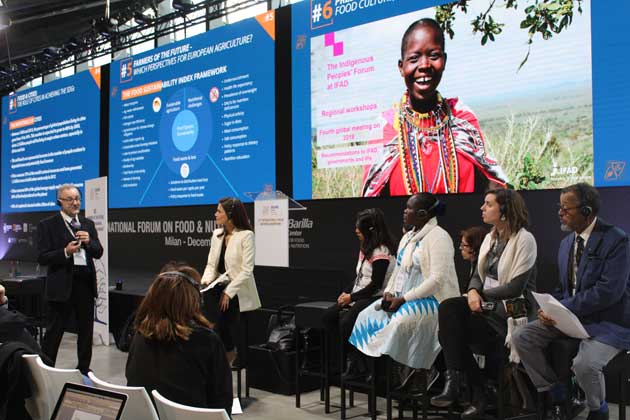
Delegates debate at the 10th International Forum on Food and Nutrition in Milan. Credit: Busani Bafana / IPS
Jeremy Oppenheim, founder of Systemiq, who used the example of the cup of coffee pointed out how starkly pointed out how unequal the chain of production, processing, distribution, consumption and the way it is disposed of requires a radical overall.
The mixed signals were unhelpful, he said.
“We’re sending all these mixed signals, every single day to people … In the next in the run up to Christmas again in the UK, food companies, and retailers will spend, 100 billion pounds – advertising largely unhealthy food.”
Mattia Galletti , IFAD Technical specialist, pointed out 70 million people in the world belong to different indigenous people and in studies in the Amazon, for example, where indigenous farming is practised there was no deforestation.
Carlo Petrini, Founder and President, Slow Food International, agreed. Local communities had the solution in their “DNA” and had essential answers to the critical problems of climate change.
“The biggest challenge today is climate change, and politicians are still ridiculing youth asking for climate justice,” says Petrini.
However, he warned that the economy needed to change – one that was rooted in local communities and not in the hands of a few. It was only then that sustainable development could be achieved. Any other solution was just “blah, blah, blah”, he warned.
However, Galina Peycheva-Miteva suggested that the “idea of farming” had to change.
“Farming is not considered prestigious by the young generation. We have to modernize and digitize farming. We have to make farming attractive again.”
If the return to traditional technologies and systems was a big discussion, so too was the use of modern technologies and artificial intelligence as a solution to food security and diet. The technology could be harnessed for everything from testing the soil, to encouraging people, through the use of Apps, to follow healthy diets.
What is clear, though, is that there needs to be a shared agenda for the future.
“We need everyone to work together, we must travel the same road. We need lawmakers to enact clear rules,” Barilla concluded.
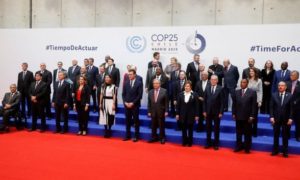
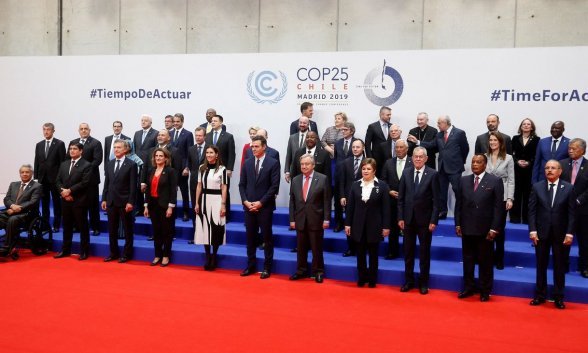
Family photo at the opening of the 25th Conference of the Parties (COP25) on climate change, taking place in Madrid Dec. 2 to 13. Credit: UNFCCC
MADRID, Dec 2 2019 (IPS) – Tens of thousands of delegates from state parties began working Monday Dec. 2 in the Spanish capital to pave the way to comply with the Paris Agreement on climate change, while at a parallel summit, representatives of civil society demanded that the international community go further.
Calls to combat the climate emergency marked the opening of the 25th Conference of the Parties (COP25) to the United Nations Framework Convention on Climate Change (UNFCCC), in light of the most recent scientific data showing the severity of the crisis, as reflected by more intense storms, rising temperatures and sea levels, and polar melting.
Pedro Sánchez, acting prime minister of Spain – selected as the emergency host country after the political crisis in Chile forced the relocation of the summit – called during the opening ceremony for Europe to lead the decarbonisation of the economy and move faster to reduce emissions of carbon dioxide (CO2), the greenhouse gas generated by human activities.
“Today, fortunately, only a handful of fanatics deny the evidence” about the climate emergency, Sánchez said at the opening of the COP, held under the motto “Time to act” at the Feria de Madrid Institute (IFEMA) fairgrounds.
COP25 is the third consecutive climate conference held in Europe. The agenda focuses on issues such as financing for national climate policies and the rules for emission reduction markets – outlined without specifics in the Paris Agreement, which was agreed four years ago and is to enter into force in 2020.
It will also address the preparation of the update of emissions reductions and funding of the Warsaw International Mechanism for Loss and Damage, designed to assist regions particularly vulnerable to the adverse effects of climate change.
In the 1,000 square metres where COP25 is being held, 29,000 people – according to estimates by the organisers – including some 50 heads of state and government, representatives of the 196 official delegations and civil society organisations, as well as 1,500 accredited journalists, will gather until Dec. 13.
But the notable absence of U.S. President Donald Trump, Russian President Vladimir Putin, Indian Prime Minister Narendra Modi, Chinese President Xi Jinping, Brazilian President Jair Bolsonaro, and UK Prime Minister Boris Johnson does not give cause for optimism.
These include the leaders of the countries that produce the most greenhouse gas (GHG) emissions, making their lack of interest in strengthening the Paris Agreement more serious.
On Nov. 4, U.S. Secretary of State Mike Pompeo said he submitted a formal notice to the United Nations to begin the process of pulling out of the climate accord.
U.N. Secretary-General António Guterres said during the opening ceremony that “The latest, just-released data from the World Meteorological Organisation show that levels of heat-trapping greenhouse gases in the atmosphere have reached another new record high.
“Do we really want to be remembered as the generation that buried its head in the sand, that fiddled while the planet burned?”
In its Emissions Gap Report 2019, the U.N. Environment Programme warned on the eve of the opening of COP25 of the need to cut emissions by 7.6 percent a year between 2020 and 2030 in order to stay within the 1.5 degree Celsius cap on temperature rise proposed in the Paris Agreement.
Many delegations admitted that the world is off track to achieving the proposed 45 percent reduction in GHG by 2030 and to becoming carbon neutral by 2050.
In fact, delegates pointed out on Monday, emissions reached an alarming 55.3 billion tons in 2018, including deforestation.
One of the hopes is that more countries, cities, companies and investment funds will join the Climate Ambition Alliance, launched by Chile, the country that still holds the presidency of the COP, and endorsed by at least 66 nations, 10 regions, 102 cities, 93 corporations and 12 large private investors.
More than 70 countries and 100 cities so far have committed to reaching zero net emissions by 2050.
Social summit
Parallel to the official meeting, organisations from around the world are gathered at the Social Summit for Climate under the slogan “Beyond COP25: People for Climate”, which in its statement to the conference criticises the economic model based on the extraction of natural resources and mass consumption, blaming it for the climate crisis, and complaining about the lack of results in the UNFCCC meetings.
“The scientific diagnosis is clear regarding the seriousness and urgency of the moment. Economic growth happens at the expense of the most vulnerable people,” says the statement, which defends climate justice “as the backbone of the social fights of our time” and “the broadest umbrella that exists to protect all the diversity of struggles for another possible world.”
The first week of the COP is expected to see the arrival of Swedish activist Greta Thunberg, who has unleashed youth mobilisation against the climate crisis around the world.
In terms of how well countries are complying, only Gabon and Nepal have met their Nationally Determined Contributions (NDCs), the mitigation and adaptation measures voluntarily adopted, within the Paris Agreement, to keep the temperature rise below 1.5 degrees Celsius.
But these two countries have practically no responsibility for the climate emergency.
The plans of Bhutan, Costa Rica, Ethiopia and the Philippines involve an increase of up to 2.0 degrees, while the measures of the rest of the countries range from “insufficient” to “critically insufficient”.
Latin America “has to be more ambitious: although progress has been made, the measures are insufficient. We need a multilateral response to the emergency. We have only 11 years to correct the course and thus reach carbon neutrality in 2050 and meet the goal of keeping the temperature rise to 1.5 degrees,” said Manuel Pulgar-Vidal, global head of Climate and Energy at the World Wildlife Fund (WWF).
The Marshall Islands already submitted their NDCs 2020, while 41 nations have declared their intention to update their voluntary measures and 68 nations – including those of the European Union – have stated that they plan to further cut emissions.
In its position regarding the COP25, consulted by IPS, Mexico outlined 10 priorities, including voluntary cooperation, adaptation, climate financing, gender and climate change, local communities and indigenous peoples.
Farhana Haque Rahman is Senior Vice President of IPS Inter Press Service; a journalist and communications expert, she is a former senior official of the United Nations Food and Agriculture Organization and the International Fund for Agricultural Development.
Climate change effects, such as extreme weather events, drive up environmental remediation costs. Credit: Jorge Luis Baños/IPS
ROME, Dec 2 2019 (IPS) – Mass public pressure backed by the weight of scientific reports is starting to bring governments to their senses as the annual UN climate summit kicks off in Madrid today.
But despite warnings that the planet is reaching critical tipping points, the two weeks of talks with nearly 30,000 participants and dozens of heads of government attending may still end in that familiar sense of disappointment and an opportunity missed.
The annual Conference of the Parties, this year being COP25, was to have been a highly arcane if crucial process of finding agreement on carbon markets, known in the jargon as Article 6 of the ‘rulebook’ to implement the 2015 Paris Agreement on stopping the planet from overheating.
Highly contentious, and in part pitting developing countries like Brazil, China and India against others, the Article 6 debate could not be resolved at last year’s summit – COP24 in Katowice, Poland – nor at meetings in Bonn in June and hence was left for COP25 to try and fix. The other big elephant in the room – setting more ambitious national targets to reduce carbon emissions – was conveniently going to be left to be settled at next year’s COP26 in Glasgow, Scotland.
But action is needed now, and senior officials representing nearly 200 countries have been put on notice that the climate emergency in all its forms is dominating the public sphere across the world. Just last week we saw student-led demonstrations and strikes in many places that appropriately fell on Black Friday, delivering a broadside against rampant consumerism as well as government inaction.
Farhana Haque Rahman
“Striking is not a choice we relish; we do it because we see no other options,” youth leaders Greta Thunberg of Sweden, Luisa Neubauer of Germany and Angela Valenzuela of Chile declared in a joint statement.
“We have watched a string of United Nations climate conferences unfold. Countless negotiations have produced much-hyped but ultimately empty commitments from the world’s governments—the same governments that allow fossil fuel companies to drill for ever-more oil and gas, and burn away our futures for their profit.”
UN Secretary General António Guterres has told COP25 that “the point of no return is no longer over the horizon”.
“In the crucial 12 months ahead, it is essential that we secure more ambitious national commitments – particularly from the main emitters – to immediately start reducing greenhouse gas emissions at a pace consistent to reaching carbon neutrality by 2050. We simply have to stop digging and drilling and take advantage of the vast possibilities offered by renewable energy and nature-based solutions,” Guterres said.
Just last month the UN Environment Programme’s annual Emissions Gap Report warned that the Paris Agreement ambition of keeping average temperatures within 1.5 degrees Celsius above pre-industrial times was “on the brink of becoming impossible”.
Global greenhouse gas emissions in 2030 would have to be under 25 billion tonnes of carbon dioxide equivalent to reach that target but, at current rates of growth, emissions are projected to reach more than double that level. Clearly drastic action is needed.
Reinforcing the sense of emergency, the World Meteorological Organization reported that atmospheric concentrations of carbon dioxide and other greenhouse gases reached new record highs in 2018. China is the world’s largest emitter.
Spain stepped in to offer Madrid as a venue for COP25 after Chile withdrew as host because of mass anti-government unrest. However Chile is still leading the conference and together with Spain will be pushing countries to act quickly to raise the ambition of their carbon emission reduction targets. Spanish Prime Minister Pedro Sanchez says the goal is for “the largest number of countries” to commit to net zero emissions by 2050.
From 2020 to 2030, emissions must be cut 7.6% a year to meet the 1.5 degrees Celsius goal, the UNEP says.
However the main negotiation process in Madrid is expected to focus on the unfinished business of the market-based mechanisms to create and manage new carbon markets under the Paris Agreement. This would allow countries and industries to earn credits for above-target emission reductions that can then be traded. Big developing countries have already accumulated huge amounts of carbon credits under the previous but now largely discredited carbon credit scheme. It is a highly complex tangle of interests.
Carbon Brief, a UK-based climate website, says the Article 6 debate has the potential to “make or break” implementation of the Paris Agreement which comes into force next year.
“To its proponents, Article 6 offers a path to significantly raising climate ambition or lowering costs, while engaging the private sector and spreading finance, technology and expertise into new areas. To its critics, it risks fatally undermining the ambition of the Paris Agreement at a time when there is clear evidence of the need to go further and faster to avoid the worst effects of climate change,” Carbon Brief explains.
While Article 6 is a highly technical area, the underlying issues are political, with some countries forming unofficial alliances to defend their own interests rather than the common good of the planet. But politicians have been put on notice that this time the world’s public is watching closely. Horse-trading cannot be allowed to put our futures at risk.
Farhana Haque Rahman is Senior Vice President of IPS Inter Press Service; a journalist and communications expert, she is a former senior official of the United Nations Food and Agriculture Organization and the International Fund for Agricultural Development.
Nature is declining globally at rates unprecedented and the rate of species extinctions is accelerating. Credit: UN
ROME, Nov 19 2019 (IPS) – Mottled and reddish, the Lake Oku puddle frog has made its tragic debut on the Red List, a rapidly expanding roll call of threatened species. It was once abundant in the Kilum-Ijim rainforest of Cameroon but has not been seen since 2010 and is now listed as critically endangered and possibly extinct.
Researchers attribute its demise to a deadly fungal disease caused by the chytrid fungus. As noted by the International Union for the Conservation of Nature (IUCN), the skin fungus has devastated amphibian populations globally and holds the distinction of being the world’s most invasive killer, responsible for the decline of at least 500 amphibian species, including 90 presumed extinctions.
The IUCN’s Red List has expanded to cover more than 105,000 species of plants and animals, and its most recent update in July found that 27 percent of those assessed were at risk of extinction. No species on the list was deemed to have improved its status enough since 2018 to be placed in a lower threat category.
Human exploitation is often responsible, as with the now endangered red-capped mangabey monkey hunted for bushmeat while its forest habitat in West Africa is destroyed for agriculture; or the East African pancake tortoise critically endangered because of the global pet trade. Thousands of tree species now make the list too.
Farhana Haque Rahman
In its multi-faceted approach towards combating species loss, the IUCN has launched its First Line of Defence against Illegal Wildlife Trade program in eastern and southern Africa, engaging rural communities as key partners in tackling wildlife crime. But this is just a small part of a much wider challenge.
As Grethel Aguilar, IUCN acting director general, noted: “We must wake up to the fact that conserving nature’s diversity is in our interest, and is absolutely fundamental to achieving the Sustainable Development Goals. States, businesses and civil society must urgently act to halt the overexploitation of nature, and must respect and support local communities and Indigenous Peoples in strengthening sustainable livelihoods.”
Jane Smart, global director of the IUCN Biodiversity Conservation Group, said the Red List update confirms the findings of the recent IPBES Global Biodiversity Assessment: “Nature is declining globally at rates unprecedented in human history.”
More than one million animal and plant species are now threatened with extinction, many within decades, “unless action is taken to reduce the intensity of drivers of bio-diversity loss”, according to a landmark report by IPBES, the Intergovernmental Science-Policy Platform on Biodiversity and Ecosystem Services.
It bleakly warns that the global rate of species extinction is already at least tens to hundreds of times higher than it has averaged over the past 10 million years, and the rate will accelerate if action is not taken.
A summary was released in May and the full report is expected to be approved soon, assessing changes over the past 50 years and offering possible future scenarios.
Frightening statistics detail how 32 million hectares of primary or recovering forest were lost across much of the highly biodiverse tropics between 2010 and 2015 alone. Put in perspective that totals an area nearly the size of all Germany.
“Ecosystems, species, wild populations, local varieties and breeds of domesticated plants and animals are shrinking, deteriorating or vanishing. The essential, interconnected web of life on Earth is getting smaller and increasingly frayed,” said Professor Josef Settele, co-chair of the report. “This loss is a direct result of human activity and constitutes a direct threat to human well-being in all regions of the world.”
Crucially, for the first time on such a scale of evidence, the report’s more than 400 authors rank the five main drivers of this global disaster. In descending order they are listed as: (1) changes in land and sea use; (2) direct exploitation of organisms; (3) climate change; (4) pollution and (5) invasive alien species.
Clearly such challenges are interwoven and cannot be tackled in isolation. Some species are affected by all of these main drivers, or a deadly combination. Researchers into the fungal diseases wiping out amphibians like the Lake Oku puddle frog believe the most important factor in the spread of the pathogens is the global trade in wildlife. Some have also suggested that local changes in climate have also enabled the chytrid fungus to flourish in new habitats.
That governments are failing to address these warnings comes as little surprise, however.
“Despite 40 years of global climate negotiations, with few exceptions, we have generally conducted business as usual and have largely failed to address this predicament,” declared 11,258 scientists grouped under the Alliance of World Scientists in a recent report, warning that the climate crisis is accelerating faster than most of them had expected and could reach potential irreversible climate tipping points, making large areas of Earth uninhabitable.
The UN Climate Change Conference, COP25, is to be held in Madrid from 2-13 December amidst severe signs of leadership stress. Brazil was to have hosted the summit but President Jair Bolsonaro ruled that out on his election and in the first nine months under his government over 7,600 sq km of rainforest were felled. The baton was then passed to Chile which pulled out because of ant-government unrest. And then this month President Donald Trump formally launched the process to withdraw the US from the 2015 Paris Agreement.
COP25 has unfinished business from COP24, held in Poland’s coal-mining area of Katowice, namely negotiating the final elements of the Paris Agreement ‘rulebook’. Work must also start on future emissions targets ahead of the crunch 2020 conference next November in Glasgow, in the knowledge that commitments submitted by governments and current greenhouse gas emission trajectories fall far short of what is needed to achieve the long-term goals of the Paris Agreement.
“Loss of species and climate change are the two great challenges facing humanity this century,” warns Lee Hannah, senior scientist in climate change biology at Conservation International. “The results are clear, we must act now on both…”
ROME, Nov 15 2019 (IPS) – This year the Worldwide Web is thirty years old. For the first time since 1435, a citizen from Brazil could exchange their views and information with another in Finland.
The Internet, the communications infrastructure for the Web is a little older. It was developed from the ARPANET, a US Defense Department project under the Advanced Research Projects Agency; the military designing it to decentralize communications in the case of a military attack.
That network enabled scientists to communicate over email in universities. Then in 1989 Tim Berners-Lee at CERN in Switzerland invented the Hyperlink and the Worldwide Web (the Web) rapidly moved from scientists automating information sharing between universities and research institutions to the first Websites now available to the general public.
In 2002 the first social media sites began as specialised websites. LinkedIn launched in 2003 then FaceBook in 2004, Twitter in 2006, Instagram in 2010 and so on…
Will the Internet become a tool for participation? How will this be done? These are questions that political institutions, if they really care for democracy, must address as soon as possible. The Zuckerberg era must make this choice now, in a few years time it will already be too late…
My generation regarded the arrival of the Web as a great prospect for democracy. We come from the Gutenberg era, an era that in 1435 changed the world. From manuscripts drafted by monks to be read by a few people in monasteries, the invention of reusable movable type meant that in just 20 years already eight million copies of printed books went all across Europe.
Among many other things it also meant the creation of information. People who heretofore had merely a scant horizon beyond their immediate surroundings, could suddenly access information about their country, and even the entire world. The first newspaper was printed in Strasbourg in 1605. From then until 1989, the world was filled with information.
Information had a very serious limit. It was a vertical structure. Just a few people sent news to a large number of recipients; there was little feedback. It wasn’t participatory, it required large startup investments, it was easily used by economic and political powers.
In the Third World, the media system was part of the State. In 1976, 88% of World news flows emanated from just three countries: the US, the UK and France. International news agencies based in these three countries included Associated Press (AP), United Press International (UPI), Reuters and Agence France Press (AFP).
The world’s media were dependent on their news services. Some alternative news agencies, like Inter Press Services, were able to put a dent in their monopoly. But what this Western media published, by and large was a biased window on the world.
Then came the Internet, and with it, came horizontal communication. Every receiver was also a sender. For the first time since 1435, media were no longer the only window on the world. Like-minded people could take part in social, cultural and economic interactions.
This change was evident in the United Nations Woman’s World Conference in Beijing, 1995. Women created networks prior to the conference, and came with a common plan of action. Governments were not so prepared, so the Declaration of Beijing was a turning point, one which was entirely unlike the bland declarations from the previous four World Conferences.
Another good example is the campaign to eliminate anti-personnel landmines, started by the Canadian activist Jody Williams in 1992. This soon blossomed into a large coalition of Non-Governmental Organizations from more than 100 countries.
Under mounting pressure Norway decided to introduce the issue to the UN, where the US, China, and other manufacturers of landmines like the USSR, tried to block the debate, declaring that they would vote against it.
Roberto Savio
The activists did not care, and 128 countries adopted the Mine Ban Treaty in 1997 with the US, China and the USSR voting against. A vast global movement was more powerful than the traditional role of the Security Council. The Internet had become the tool to create world coalitions.
Those are just two examples of how far the Internet could change the traditional system of Westphalian state sovereignty as defined at the Conference of Westphalia in 1648. The Internet spanned national frontiers to bring on a new era.
Let’s say, for the sake of symbolism, that the Internet brought us from the Gutenberg Era, to the Zuckerberg Era, to cite the inventor of Facebook and a leading instance of what went wrong with this medium.
The Internet came upon us with an unprecedented force. It took 38 years for the radio to reach 50 million people: television took 13 years; and the Web just four years. It had a billion users in 2005, two billion in 2011, and it now has three and a half billion users, three billion of those using social media.
So the two traditional pillars of power, the political system and the economic system, also had to learn how to use the Internet. The US provides a good example. All of American media (national and regional publications) involves printing 50 million copies daily.
Quality newspapers — both the conservative broadsheets like the Wall Street Journal, and progressive ones like the Washington Post or the New York Times — together print ten million copies a day. Trump has sixty three million followers on Twitter; they read Trump’s tweets but don’t buy newspapers.
The Web has had two unforeseen developments. One was the dramatic reinforcement of the consumer society. Today advertising budgets are ten times larger than budgets for education, and education only lasts a few years compared with a lifetime of advertisement.
With the development of social networks, people — now more consumers than citizens — have become objects for marketing goods and services, and recently also for political campaigns. All systems of information and communications extract our personal data, selling us on as consumers.
Now the TV can see us while we watch it. Smartphones have become microphones that listen in on our conversations. The notion of privacy is gone. If we could access our data, we would find out that we are followed every minute of the day, even into our bedrooms.
Secret algorithms form profiles of each and every one of us. Based on these profiles platforms provide us with the news, the products, and the people that these algorithms believe we will like, thus insulating us in our own bubbles.
Artificial intelligence learns from the data that it accumulates. China, with 1.35 billion people, will provide its researchers with more data than Europe and United States together. The Internet has given birth to a digital extractive economy, where the raw material is no longer minerals, but we humans.
The other development that went awry is that the digital extractive economy has created unprecedented wealth.
Amazon CEO Jeff Bezos was recently divorced from his wife. In the settlement she received 36 billion dollars yet Bezos remains among the 10 richest people in the world. This is just one story from an increasingly sad reality of social injustice, where 80 of the world’s richest persons hold the same wealth as nearly three billion poor people.
A new sector is evolving, the “surveillance capitalism” sector, where money is made not from the production of good and services, but from data extracted from people.
This new system exploits humans to give to the owners of this technology, a concentration of wealth, knowledge and power without precedent in history. The ability to develop facial recognition and other surveillance instruments no longer lies in the realms of science fiction.
The Chinese government has already given every citizen a digital number, where all their ‘good’ and ‘bad’ behaviours converge. If a citizen goes below a level, their children will not be allowed to go to a good school, and the citizen themselves, though they may still be able to travel by train, won’t have access to planes.
These technologies will soon be in use all over the planet. London town now has 627,000 surveillance cameras, one for every fourteen citizens; in Beijing it’s one for every seven. A study conducted by The Rand Corporation estimates that by 2050, Europe too would also have one camera for every seven citizens.
The interrelationship between democracy and the Internet is now creating a belated awareness in the political system. The European Parliament has just released a study, about the negative impact of the Internet. These impacts are:
Internet Addiction There is unanimity among doctors and sociologists that a new generation is coming, one which is very different from the previous one. Over 90% of those aged 15-24 uses the Internet, as against 11% for those over 55. Young people spend 21 hours per week on the PC, and 18 hours on a smart phone. This leaves little time for social and cultural interaction. 4.4% of European adolescents now show pathological Internet use “that affects their lives and health”. The American Academy of Psychology has officially included Internet Addiction as a new ailment. Magnetic resonance studies of those with Internet Addiction Disorder (IAD) show that they exhibit the same brain structure alterations as those who suffer from drug or alcohol addiction.
Harming cognitive development A particular warning is given about children under two years of age. More than 20 minutes a day of screen use reduces some of their neural development. People pushed to isolation tend to develop symptoms of distress, anger, loss of control, social withdrawal, familial conflicts, and an inability to act in real life. Internet users in tests were faster than non-users at finding data, but they were less able to retain data.
Information Overload The condition of having too much information hampers the ability to understand an issue, or to make effective decisions, an important issue for managers, consumers, and social media users. According to Microsoft, attention span for a title has gone from 12 seconds in 2000 down to 8 seconds in 2016. The attention span for reading has gone from 12 minutes to 8 minutes. Two new terms can be used: one, the ‘popping brain’, describes a brain less adept to adapt to a slower pace of real life and then there is ‘Neuroplasticity’; i.e. the ability to alter one’s behaviour after a new experience. Frequent immersion in virtual worlds can reduce neuroplasticity and also make it more difficult to adapt to the slower pace of real life. The need to compete in speed between social media channels is well known. For example Amazon estimates that one second of performance delay would cost 1.16 billion losses per year in sales.
Harmful effects in knowledge and belief The fact that social media deliberately tends to gather together users with similar views, tastes and habits, is fragmenting society in a negative way for democracy, resulting in closed systems that don’t allow for alternative viewpoints. Adolescents no longer discuss significant subjects. They go to their virtual world, and if they come across somebody from another group, they tend to insult each other. The Internet is full of fake news and misleading information, and users have great difficulty distinguishing accurate from inaccurate information. Echo chambers appear to be far more pervasive, and may unite those with more extreme and partisan political and ideological positions, therefore undermining possibilities for civil discourse and tolerance, supporting radicalization.
Harming public/private boundaries. The Internet blurs the distinction between the private and the public. Private life becomes public. This is especially negative for teenagers who lose the concept of privacy, for example by sending private photos across the Internet. One important observation is that teenagers now get their sexual education from pornography, where women are always an object to satisfy men’s sexual phantasies. This is in turn creating a lack of respect for women, and a new generation that risk, for new reasons, returning to a patriarchal society. Group violations of teenage girls are clearly a result of this trend.
Harming social relationships The Internet is clearly a powerful instrument to create new communities. However, when used negatively, it can also damage communities, because of the migration to Internet of many human activities such as shopping, commerce, socialising, leisure, professional activities and personal interaction. That migration creates impoverished communication, incivility and a lack of trust and commitment.
Harming democracy The Internet has been a powerful tool for participation, and therefore for democracy. However the study notes with concern that a growing number of activities are also harmful to democracy. These include: a) The incivility of many online political discourses, b) Political and ideological polarisation, uniquely possible using the Internet. c) Misinformation, and, in particular, fake news, d) Voter manipulations through profiling based on harvested social media information. We all know what happened in the US elections with Cambridge Analytica data, gathered by Facebook, and how thousands of false web users and bots now heavily interfere in elections.
We should add to this study some other considerations. The first is that finance now is now also run by algorithms. The algorithms do not only decide when to sell or buy shares, but now also decide where to invest.
The Exchange-Traded Funds (ETFs) last month reached 14,400 billion dollars in trades, more than that traded by humans. This trend will continue with the development of artificial intelligence and soon finance will become even more dehumanized. Even when Internet users invest themselves they too will be directed by machines and algorithms.
A second consideration is that young people read less and less. Reading a book is very different to scrolling a screen. We are experiencing a progressive reduction in levels of culture. It’s not uncommon to have university students that make grammar and spelling mistakes.
Let us remember that when the Internet was still new, its proponents told us: it is not important to know, rather it is important to know how to find. We are more and more dependent on search engines, learning less and less, and we are unable to connect that data in a personal holistic logical system.
There is clearly a need for regulation to reduce the negative aspects of the Internet and to reinforce positive values. The owners of social media platforms are now under increased scrutiny so they have taken the road of self-regulation.
Twitter, for instance, has decided that it cannot be used for political purposes. Zuckerberg is an exponent of market myths telling us that good news will automatically prevail over fake news. Except that platforms help users to read and find only what they like, to maintain our attention, providing us what is striking, unusual and provocative. This is not a free market.
The Zuckerberg era is clearly creating an entirely different generation, very different from the generations of the Gutenberg era. This raises many questions, from privacy to freedom of expression (now in private hands), from who will regulate, what to regulate and how.
A five year-old child is now very different from a Gutenberg five year-old. We are in a period of transition. The meaning of democracy is changing. International relations are moving away from the search for common values via multilateralism, to a tide of nationalist, xenophobic and selfish views of the world.
Terms like peace, cooperation, accountability, participation and transparency are becoming outdated. What is clear is that the present system is no longer sustainable. Policies disappear from debate, now referred to only as ‘politics’. Vision and paradigms are getting scarce.
Over and above all of this the threat of climate change is looming; yet last year toxic emissions from the five largest countries increased by 5%. Young people are largely absent from political institutions as is shown by the vote on Brexit where only 23% of the 18-25 age group participated.
At this very moment we have large demonstrations in thirteen countries all over the world. In those streets young people do participate, frequently demonstrating rage, frustration and violence. If we cannot bring back horizontal communication to the Internet and we do not free it from the commercial fracturing of young people, the future is hardly rosy.
Yet as the marches against Climate Change clearly demonstrate, if young people want to change the world, values and vision will return. It is evident that the Internet can be a very powerful tool. But who will redress these failings? Will the Internet become a tool for participation? How will this be done?
These are questions that political institutions, if they really care for democracy, must address as soon as possible. The Zuckerberg era must make this choice now, in a few years time it will already be too late…
Publisher of OtherNews, Italian-Argentine Roberto Savio is an economist, journalist, communication expert, political commentator, activist for social and climate justice and advocate of an anti neoliberal global governance. Director for international relations of the European Center for Peace and Development.. He is co-founder of Inter Press Service (IPS) news agency and its President Emeritus.
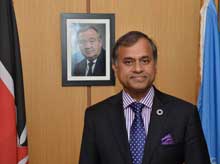
We need to empower young people to sustain our planet, and let peace and prosperity thrive says UN’s Resident Co-ordinator in Kenya, Siddharth Chatterjee speaks to IPS on reflections on the ICPD25 Summit.
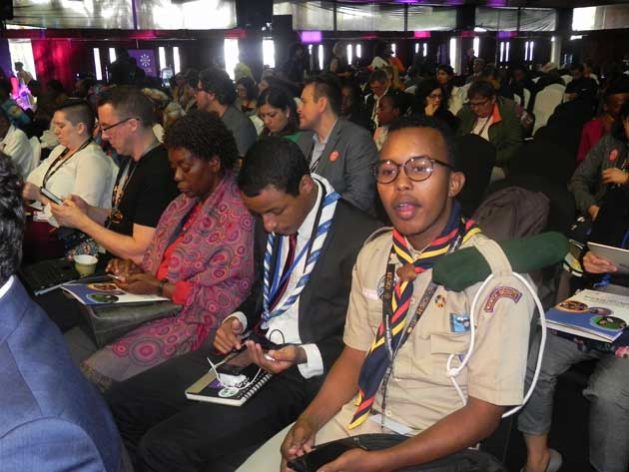
Young people at ICPD25 youth session. Credit: Mantoe Phakathi / IPS
NAIROBI, Kenya, Nov 15 2019 (IPS) – Q: At ICPD25 we heard that women and girls are still waiting for the unmet promises to be met? DO you think this time around there is a commitment to ensure that these promises are met?
The Nairobi Summit is about the Future of Humanity and Human Prosperity.
We all have an opportunity to repeat the message that women’s empowerment will move at snail-pace unless we bolster reproductive health and rights across the world. This is no longer a fleeting concern, but a 21st century socio-economic reality.
We can choose to take a range of actions, such as empowering women and girls by providing access to good health, education and job training. Or we can choose paths such as domestic abuse, female genital mutilation and child marriages, which, according to a 2016 Africa Human Development Report by UNDP, costs sub-Saharan Africa $95 billion per year on average due to gender inequality and lack of women’s empowerment.
Fortunately, the world has made real progress in the fight to take the right path. There is no lack of women trailblazers in all aspects of human endeavour. It has taken courage to make those choices, with current milestones being the result of decades of often frustrating work by unheralded people, politics and agencies.
Leaders like the indefatigable Dr. Natalia Kanem the Executive Director of UNFPA and her predecessors, are pushing the global change of paradigm to ensure we demolish the silo of “women’s issues” and begin to see the linkages between reproductive rights and human prosperity.
Siddharth Chatterjee
Numerous studies have shown the multi-generation impact of the formative years of women. A woman’s reproductive years directly overlap with her time in school and the workforce, she must be able to prevent unintended pregnancy in order to complete her education, maintain employment, and achieve economic security.
Denial of reproductive health information and services places a women at risk of an unintended pregnancy, which in turn is one of the most likely routes for upending the financial security of a woman and her family.
As the UN Resident Coordinator to Kenya, I am privileged to serve in a country, which has shown leadership to advance the cause of women’s right-from criminalizing female genital mutilation to stepping up the fight to end child marriage and pushing hard on improving reproductive, maternal and child health.
Q: At ICPD25 we heard that innovative partnerships are needed to ensure commitments to women and girls. 25 years on do you think this will happen? Can you site an example in Kenya or Africa on this?
Achieving the SDGs will be as much about the effectiveness of development cooperation as it will be about the scale and form that such co-operation takes. There is a lot of talk about partnership, but not enough practical, on-the-ground support to make partnerships effective in practice, especially not at scale.
Under the leadership of the Government of Kenya therefore, the UN System in Kenya in 2017 helped to spearhead the SDG Partnership Platform in collaboration with development partners, private sector, philanthropy, academia and civil society including faith-based stakeholders.
The Platform was formally launched by the Government of Kenya at the UN General Assembly in 2017 and has become a flagship initiative under Kenya’s new UN Development Assistance Framework 2018-2022 (UNDAF). As the entire UNDAF, the Platform is geared to contribute to the implementation of Kenya’s Big Four agenda in order to accelerate the attainment of the Country’s Vision2030.
In 2018, the Platform has received global recognition from UNDCO and the Dag Hammarskjold Foundation as a best practice to accelerate SDG financing. This clearly implies that we are on the right track, and as you can read in this report are developing a blueprint for how 21st Century SDG Partnerships can be forged and made impactful, but much more needs to be done.
Primary Healthcare (PHC) – in the SDG 3 cluster – has been the first SDG Partnership Platform window contributing to the attainment of the Universal Health Coverage as a key pillar of the Big Four agenda. We are living in a day and age where we have the expertise, technology and means to advance everyone’s health and wellbeing. It is our moral obligation to support Kenya in forging partnerships, find the right modalities to harness the potential out there and make it work for everyone, everywhere.
With leadership as from my co-chairs, Hon. Sicily Kariuki, Cabinet Secretary for Health in Kenya, and H.E Kuti, Chair of the Council of Governors Health Committee and Governor of Isiolo, and the strong political commitment, policy environment, and support of our partners we have in Kenya, I am convinced that Kenya can lead the way in attaining UHC in Africa, and accelerate the implementation of the ICPD25 agenda.
Q: Funding remains a crucial challenge- do you think there is a commitment to fund the initiatives?
Yes, there is a clear commitment to fund the ICPD Plan of Action.
I applaud partners whom have been doing so for long as the governments of Denmark, Netherlands, Sweden, Finland, Norway, and UK, and Foundations as the Bill and Melinda Gates Foundation.
But increasingly there is also the recognition that we cannot reach our ambitions through aid and grants.
At the global scale we need to let better regulation evolve for advancing greater equality and support to those furthest left behind.
Especially within middle-income-countries / emerging economies, our ICPD25 funding models need to be underpinned by shared-value approaches, and financed through domestic and blended financing.
I feel encouraged therefore by the Private Sector committing eight (8) billion fresh support to the acceleration of the ICPD Plan of Action.
Considering the trillions of dollars being transacted however by the private sector, this should be only the start and we should continue to advocate for bigger and better partnership between public and private sector targeting the communities furthest left behind to realize ICPD25.
Q: What do you think should be done to ensure young people’s participation?
Africa’s youth population is growing rapidly and is expected to reach over 830 million by 2050. Whether this spells promise or peril depends on how the continent manages its “youth bulge”.
Many of Africa’s young people remain trapped in poverty that is reflected in multiple dimensions, blighted by poor education, access to quality health care, malnutrition and lack of job opportunities.
For many young people–and especially girls– the lack of access to sexual and reproductive health services is depriving them of their rights and the ability to make decisions about their bodies and plan their families. This is adversely affecting their education and employment opportunities.
According to UNDP’s Africa Human Development Report for 2016, gender inequalities cost sub-Saharan Africa US$ 95 billion annually in lost revenue. Women’s empowerment and gender equality needs to be at the top of national development plans.
Between 10 and 12 million people join the African labour force each year, yet the continent creates only 3.7 million jobs annually. Without urgent and sustained action, the spectre of a migration crisis looms that no wall, navy or coastguard can hope to stop.
Africa’s population is expected to reach around 2.3 billion by 2050. The accompanying increase in its working age population creates a window of opportunity, which if properly harnessed, can translate into higher growth and yield a demographic dividend.
In the wake of the Second World War, the Marshall Plan helped to rebuild shattered European economies in the interests of growth and stability. We need a plan of similar ambition that places youth employment in Africa at the centre of development.
In the meantime, the aging demographic in many Western and Asian Tiger economies means increasing demand for skilled labour from regions with younger populations. It also means larger markets for economies seeking to benefit from the growth of a rapidly expanding African middle class.
Whether the future of Africa is promising or perilous will depend on how the continent and the international community moves from stated intent to urgent action and must give special priority to those SDGs that will give the continent a competitive edge through its youth.
The core SDGs of ending poverty, ensuring healthy lives and ensuring inclusive and equitable quality education all have particular resonance with the challenge of empowering youth and making them effective economic citizens.
Many young people in Africa are taking charge of their futures. There is a rising tide of entrepreneurship sweeping across Africa spanning technology, IT, innovation, small and medium enterprises.
They are creating jobs for themselves and their communities.
We need to empower young people to sustain our planet, and let peace and prosperity thrive.
Q: Lastly, we heard strong commitments from President Uhuru Kenyatta on the issue of FGM- do you think it will really happen by 2022?
President Uhuru Kenyatta needs to be lauded for his strong commitment to ending FGM.
Despite being internationally recognized as a human rights violation, some 200 million girls and women alive today have undergone FGM, and if current rates persist, an estimated 68 million more will be cut between 2015 and 2030.
We cannot accept this any longer and should step up for this cause.
Without leaders as H.E Kenyatta championing the fight to address cultural harmful practices as FGM – rapid strides will never be made.