Finland’s Education System Leads Globally

Civil Society, Education, Featured, Global, Global Governance, Headlines, Human Rights, IPS UN: Inside the Glasshouse, TerraViva United Nations
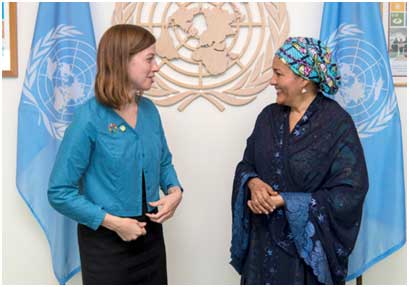
Deputy Secretary-General Amina Mohammed (right) meets with Li Andersson, Minister of Education of Finland.
18 July 2019. Credit: United Nations, New York

UNITED NATIONS, Jul 22 2019 (IPS) – Finland has garnered attention for its top-notch education, and the newly appointed Minister of Education for Finland is planning to continue with the success of her country’s education system through various and innovative approaches.


“In education, Finland has the lead according to many international comparisons,” Li Andersson, the newly appointed Minister of Education for Finland, said at a briefing at the Finnish consulate in New York on July 19.

Most recently, she pointed out, the London-based Economist ranked Finland as number one in delivering future-oriented skills through education.

“Thereby, Finland is best equipped to adapt education system to deliver skills for problem-solving and collaboration, as well as foster creativity, civic-awareness and participation,” she added.

The briefing was hosted by the Consulate General of Finland, with a guest speaker from Columbia University.

Andersson said investment in education is key to all of the successes “we have seen in Finnish society, so it is key for social cohesion, it is key for equality, and it is key for building economic progress and for economic growth.”

“The Finnish education system is one of the top performing education systems in the world,” she declared

Finland has been ranked as one of the happiest and successful countries in the world, and most recently having been ranked as the number one country for higher education by The Economist.

And in terms of data, in results released by the Programme for International Students Assessment (PISA), a test taken by pupils across the globe, Finland scored 550 points higher than any of their counterparts, including Sweden, Norway and the US, among others.

When asked whether the size of small schools that are abundant in Finland have anything to do with Finland’s success, Dr. Samuel Abrams, Director of the National Center for the Study of Privatization in Education at the Teachers College, Columbia University, told IPS: “I would not focus on the size of schools. That is not, as I said, a Finnish innovation”.

He said there has been a robust movement for small schools in the United States for a long time with many fine examples of excellent small public schools across the country.

“I merely brought up small schools as a part of the recipe for excellent schooling in Finland that may be threatened by financial pressure, generated in part by pension obligations”.

Because the pension obligations in an aging country like Finland are substantial, he said, budget cuts must be found. “Some of those budget cuts mean merging schools to achieve economies of scale.”

However, in terms of what other countries, such as the United States should learn from Finland, he had this to say: “We should follow Finland in testing only small samples of students rather than testing all students”.

“Our approach forces teachers to teach to the test. As we test all students in reading and math in grades 3-8, we generate undue stress for students, teachers, and parents alike”.

Moreover, he pointed out, “in focusing on reading and math, we crowd out time for history, science, music, art, crafts, and physical education. And students need those subjects as well as plenty of play for a well-rounded education.”

“Second, we should follow Finland in preparing teachers with high-quality master’s programs in pedagogical theory and practice.

Third, we should follow Finland in paying teachers well and giving them significant autonomy,” he added.

“Finally, we should follow Finland in funding our schools fairly. That means more money per student at schools in disadvantaged neighborhoods, not less. We base funding on property taxes, which means wealthy districts have significantly more money to spend per pupil than poor districts”.

None of this is rocket science. But that does not make it easy.

“We must follow in Finland’s path in altering the way we think about children and their future. This requires, one, thinking about child development through the eyes of the child, which means a well-rounded curriculum; two, reconceiving our social contract to ensure a high-quality education for all children; and three, esteeming teachers as pillars of the community.” Dr. Abrams concluded.

With that said, the education system in Finland has much room for improvement. “We see growing disparities in the learning results.” Andersson said, in terms of learning results.

“There is a difference between boys and girls and also some growing regional differences, and also a stronger difference where the pupils home background will affect the learning results more than before.”

“Inequality hampers growth and otherwise,” she added.

To combat these worrisome findings, Andersson and the Finnish government have set three main priorities to be tackled in the coming years.

“The first of these priorities is raising the educational level of the whole population.” Andersson said.

“We are also seeing a tendency where we are seeing the growing level of education has actually stopped.” She went on to cite that the generation of the 1970’s, and in Finland it is the current generation that has the highest level of education.

“The second priority of the government is reducing inequality gaps in education referring to what I said about earlier about the worrisome trends, and the third priority is focusing on continuous education…. learning should be something that we do all the time, and we should have the possibility to engage in all the time, no matter whether if we are working or outside working life or studying.”

For raising the level of education, Andersson plans on ensuring that all students have a degree on the upper secondary level and plans on raising the amounts of adults on the third educational level (post-secondary education) to 50% by 2030.

In order to implement this, Andersson intends on devising a Road Map, and a document that will reach Parliament.

She also highlighted the importance of addressing the equality gaps and strengthening the whole Finnish education system, from early childhood education to primary school.

She also intends on raising the compulsory education age to 18 years old. “16% of the overt generations in Finland are without a degree on the secondary level.” She noted.

“We know that the employment rate of people with only primary education backgrounds is around 40% at the moment, and that has been going down all the time.”

She cited the changing labor market, and how that calls for a change in the education system.

In terms of closing education gaps, Andersson cited a significant focus on early childhood development, as that is key.

Such actions to help assist this goal is to reduce group sizes for children over 3 years old and ensuring that every child has the right to at least 40 hours a week to early childhood education and care “no matter if their parents are working or unemployed.”

Andersson is also piloting a two- year preschool to see how it will affect participation rates in early childhood care, as well as to observe the effects it will have on learning results in primary education.

Furthermore, Andersson plans on providing support for maternity and childhood clinics.

For continuing education and the future of work, Andersson is unsure, as the labor market is drastically changing but noted that “It is clear that the knowledge requirement will grow.”

“Education is the best tool we have, and we should think of it as an investment not an expenditure.” She concluded.

She added that students should “just focus on things you’re motivated about, not too get too stressed, I think it is a shame there is a lot of pressure on the students now, with their stress with finances etc.”

But she offered encouragement and stated that students should “not think too much about what government is saying about how fast you should study and finally, “use the possibilities you have at the university”
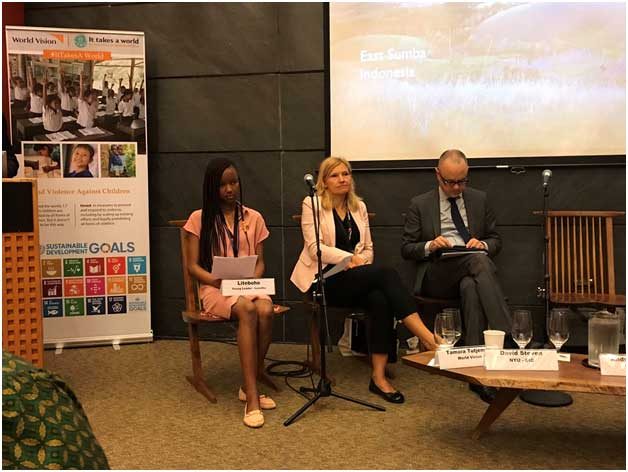
 

How Governments Still Allow Violence Against Children

Civil Society, Development & Aid, Education, Featured, Global, Global Governance, Headlines, Human Rights, Inequity, IPS UN: Inside the Glasshouse, Poverty & SDGs, TerraViva United Nations

Opinion

Tamara Tutnjevic Gorman is Policy Manager – Ending Violence against Children, World Vision

World Vision believes that it takes each and every one of us to end violence against children.

NEW YORK, Jul 16 2019 (IPS) – Despite what you might have heard, things are getting better, every year. We are making amazing progress on fighting diseases, reducing the preventable deaths of children, and investing huge amounts to advance medicine and knowledge and to create better living conditions.


However, this progress is too slow for some of the world’s most vulnerable children; those who have yet to experience the progress of the past 20 years. It’s hard to believe, but governments still allow violence against children to continue.

Approximately 1.7 billion children still experience some form of violence every year. To understand the reasons why, World Vision has investigated the commitments by 20 governments to address violence against children and has found that, while there has been tremendous progress in prohibiting violence, there are still too many gaps in legislation.

Cracks in laws, data, coordination, accountability and funding are becoming big gaps that ruin children’s lives and futures.

As a global community, we made exciting promises to end violence against all children 30 years ago when we adopted the United Nations Convention on the Rights of the Child. In those 30 years, we’ve developed laws and policies, come to better understanding about the complexity of violence and its forms, discovered and agreed to evidence-based solutions, and created a movement that has shone a spotlight on the issue.

We renewed our commitment to ending violence against children by committing to the Sustainable Development Goals four years ago. Yet, the inconsistent stats we have and self-reported data show that violence against children is not reducing at the pace necessary to meet the important target of ending all forms of violence against children.

This means today’s children, and their children, will live with violence’s life-long consequences – pushing them to life at the margins of society: severe health problems, difficulties acquiring an education and a decent job, and relationship issues. The lack of decisive action to end violence against children is simply not good enough.

Where legal bans exist, they do not yet cover all forms of violence. Ambitious declarations about National Plans of Action are not followed by the resources necessary to implement them. Fragmented initiatives are not enough to support victims, or more importantly, to ensure prevention.

There is some reporting on progress, but far too little new data to report on. And out of all the children experiencing violence, far too few have been consulted on the policies that affect their lives.

World Vision believes that it takes each and every one of us to end violence against children. A critical step in the right direction is for governments to make all forms of violence illegal and to put in place a comprehensive set of national laws and policies that provide for strong prevention and response measures.

The lack of commitment to zero tolerance is perhaps the most worrying. Government policies often turn a blind eye to socially or traditionally acceptable corporal punishment in schools, beating at home, child marriage and more.

Millions of children are unnecessarily drawn into a cycle of violence because of the failure to prevent it. When a child survives such violence and doesn’t get justice or appropriate support, the message they receive from authorities is that violence is permitted, or even condoned by those in power. This sends a powerful message that as society we have agreed to accept certain levels of violence.

Moreover, when families or communities experience crisis due to conflicts or natural disasters, the boundaries of what violence is considered acceptable tend to stretch. This makes it difficult to stop. Before we know it, violence can become a way of life. As a global community, we all must do more to plug the gaps that persist.

As governments at the High-Level Political Forum (July 16-19) present on progress so far and work on plans for the future, it is important that they address the seven cracks that have been identified in current efforts to end violence against children. This means they must commit to:

      1. Prohibiting all forms of violence against children in all settings.
      2. Investing in prevention programs and reporting mechanisms.
      3. Being a global champion for the prevention of violence against children.
      4. Increasing funding and transparency in budgets allocated to interventions to end violence against children.
      5. Prioritising and investing in regular data collection.
      6. Mandating, resourcing and planning for child consultations in policy development, reviews, monitoring and reporting.
      7. Increasing government delivery of community education and awareness campaigns.

    The 193 UN Member States have incredibly diverse energy, expertise and resources. We are calling for each and every one of them to join us and become champions for ending violence against children. It takes political leadership, and the time to drive action is now

    To read the full report Small Cracks, Big Gaps: How governments allow violence against children to persist click here.


    How NGOs in Rich Countries Control their Counterparts in Poor Countries..and Why they Refuse to Resolve it

    Aid, Civil Society, Development & Aid, Featured, Global, Headlines, Regional Categories, TerraViva United Nations

    Civil Society

    Paul Okumu is head of secretariat for the Africa Platform on Governance, Responsible Business and the Social Contract. He is also head of strategy at the Internet of Things Solutions Africa.

    2.1 percent is the total amount of global funding that goes directly to civil society in the Global South. The remaining 97.9 percent is given directly to International Civil Society Organizations, who then sub contract 87 percent of the project delivery to Civil Society in the Global South to deliver on projects. Credit: Priyanka Borpujari/IPS

    NAIROBI, Jul 12 2019 (IPS) – Many NGOs around the world are fighting inequality between the rich and the poor, between the policies that make rich countries richer, and poor countries poorer. So while Civil Society Organizations claim to be equal and are are fighting together to secure space for engagement and to work, the bigger NGOs should also ask themselves why they are unwilling to let others who are less resourced take up the space where their voice can be heard. Why are they unwilling to fight policies that keep rich NGOs richer?


    Here are some numbers to show you why this is a battle no Global NGOs is willing to take on.

    2.1%

    The total amount of global funding that goes directly to civil society in the Global South. The remaining 97.9% is given directly to International Civil Society Organizations, who then sub contract 87% of the project delivery to Civil Society in the Global South to deliver on projects.

    This is according to the UN Office for Coordination of Humanitarian Affairs, and analysis based on working statistics from the OECD Data on allocation of funds to Civil Society and the DAC and CRS Code list.

    Despite attempts by Southern Civil Society Organizations to reverse this trend, Northern NGOs have had the standard response for the past ten years “We acknowledge its a problem, but its more complicated than you think.” (Read the latest debate here during the Humanitarian Summit in 2016.)

    Attempts to change for Humanitarian NGOs under the Grand Bargain campaign, has hit a deadlock because of very curious reason- disagreement on who is “local”.  These goes to demonstrate just how embedded the INGOs are with their Governments.in one classic study, it was found that “while Syrian humanitarian actors were responsible for delivering 75% of the humanitarian assistance in 2014, they received only 0.3% of the direct and 9.3% of the indirect cash funding available for the overall Syria response. Despite their crucial role, Syrian NGO’s struggled to get their most basic costs covered in the sub-contracting and partnership agreements they have with international agencies. While international actors are all committed to transparency, 30% of the known funding remains unknown in terms of which humanitarian actor actually received the funding.” (Read Full study here)

    $21,500

    The average annual Salary of a Chief Executive from the Global South. This is equivalent to the average salary of a Junior Project Officer from any civil society Organization from the Europe or North America (including those working in the Global South) and is 11.6 times less than the average salary of a Chief Executive of the Civil Society in the North.

    This is according to data derived from IRS Returns of NGOs in the US (Charity Navigator), the Report of the Charity Pay Study by the Third Sector , UK, studies in pay gap between local and international staff by Massey University, studies by Science Direct, Pay studies in developing countries such as Kenya, and analysis of advertised salaries for locals and international staff posted on the UN information and recruitment website Relief Web.

    Chief Executives of Southern Civil Society that are considered International in Scope earn just slightly over $35,000 in annual pay-with one exception, BRAC. BRAC is an exception in that while it is technically a Southern NGO, it is considered the largest NGO in the world, and the most well funded, with a vast catalogue of social enterprises, government of Bangladesh Funding and Foreign Government grants for its mainly MDG-type development agenda.

    According to a study by Global to Local “The issue of large salary differences between local and international NGOs/agencies 22 have a direct negative impact on capacity and capacity building for local organisations – not least when it comes to crucial staff positions such as project and finance staff. Continuously building the capacity of their staff, just to see them leave for better-paid positions with INGO’s and UN agencies (their so-called partners) is an uphill battle for local actors. One that continues to keep them locked into an ‘underdog’ position vis-à-vis international actors. This kind of continuous “brain drain” is global.”

    90%

    Percentage of local staff out of the total humanitarian workers in Syria who die in line of duty, according to a study mainly. This is mainly because the poor pay means local actors cannot afford the security measures needed to keep them safe, but also because being their community they tend to be closer to the conflict and respond with greater passion because International NGO Staff are either not in the field, or restrict their movements to security zones in conflict countries.This trend is noted in several other conflict areas around the world

    99.1%

    These studies also show that a record 99.1 % of NGOs in the Global South (that is nearly all of them) are working on a sub-grant basis by the International NGOs, meaning they effectively do not have an agenda of their own and must conform to what is known in the Development Sector as “Shifts in Donor Interests”. Hence, less than 10% of local NGOs are truly local. The negative impact of this on legitimacy, independence and objectivity of local Civil Society Organizations have been analyzed and documented. When asked why they do not give directly to local NGOs, Foreign Governments (commonly known as Donors) have given these five reasons since 1999 (they keep repeating it…See here in this article by BOND, for example;

    ·         Lots of southern and smaller CSOs do not have the capacity to fill in all our forms, let alone spend our money effectively.

    ·         We do not have the administrative capacity to give smaller amounts of money.

    ·         We need to channel money through a few, trusted partners so that we can manage risk and comply with our own rules.

    ·         We have strict anti-terror and anti-money laundering rules that make giving directly difficult.

    ·         We are under domestic political pressure to fund through CSOs in our home country.

    17.3%

    The number of NGOs from the Global South that have access and resources to attend Global Platforms such as UN Meetings, OECD Sessions, World Trade Organization meetings or World Bank Meetings. Most Global Platforms are still a preserve of Northern NGOs.

    If you include attendance by Global South sub grantees who generally represent the voice and Agenda of the main International NGO sub granter, this figure falls to less than 3%, meaning Global Advocacy is still for and about a Northern Agenda. For example, over 3000 NGOs engaged with the Intergovernmental process leading the development of the Agenda 2030 for Sustainable Development (commonly known as the SDGs). Of these less than 100, or 3.3% were from the Global South.

    And this was only possible because of the push by Southern Member states for ECOSOC to dedicate special funding for Civil Society Organizations from the Global South. Interestingly this concern was analyzed as way back as 1999 by the Global Policy Forum. The CARDOSO Report raised a similar concern, even offering proposals, way back in 2004.Civil Society Organizations in the Global South are still waiting to have it resolved!

    $300,000

    The size of a project beyond which most European Governments require Southern Civil Society Organization to receive funding through a European NGO, and must have a European Staff to oversee all or part of the leadership of the project, paid for by the grant, at European Rates. This not only significantly depletes the resources available to the Southern Civil Society to implement projects, but forces to recruit European staff with discrepancy pay while deliberately undermining the ability of local Organizations to build their capacity.

    8

    The number of Governments and Philanthropists that account for 87.6% of Total Funding to Civil Society around the world.This is according to OECD figures and figures from Philanthropic Organizations. Within the OECD, five countries account for nearly 70% of AID to Civil Society Organizations. In 2018 these were the US, Germany,the UK, Japan (mainly to its own NGOs), and, France (primarily to NGOs in its former colonies).

    Critiques have raised concern that with so few Governments controlling such a large number of Civil Society Organizations,they are likely to exert undue influence over Policies and advocacy, especially in the knowledge of the fact that all AID is intended to achieve the ever shifting terms for what is essentially a 3D Agenda as a form of soft power (Development, Defense and Diplomacy). Over the last ten years, the concerns have heightened, with Northern Governments accused of hiding behind Aid to control and shape friendly economic and social policies under the new AID Tendering system known as Request for Proposals (RFPs).

    11.1%

    The total number of Civil Society from the Global South that can afford the $4000 Travel and Accommodation Budget needed to attend WEF (the individual fee of $75,000 and annual institutional fee of $675,000 is waived for Civil Society). Most Southern Organizations have budgets that are tied to specific projects, making it almost impossible to get the extra funding needed to attend advocacy spaces such as WEF

    So while Civil Society Organizations are fighting together to secure space for Civil Society, we who are already inside should also ask ourselves why we are unwilling to let others who are less resourced take up the space where their voice can be heard.


    Sri Lanka on Security Alert Long After Easter Bombings

    Asia-Pacific, Civil Society, Featured, Global, Global Governance, Headlines, Human Rights, IPS UN: Inside the Glasshouse, Peace, TerraViva United Nations

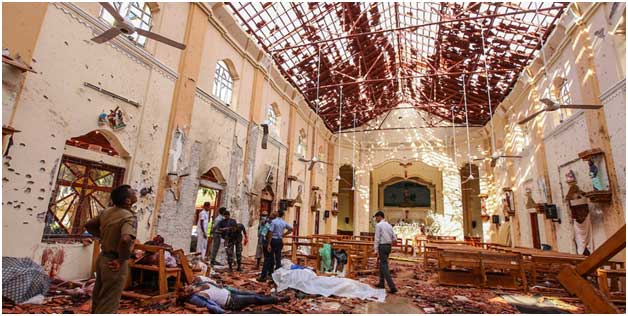
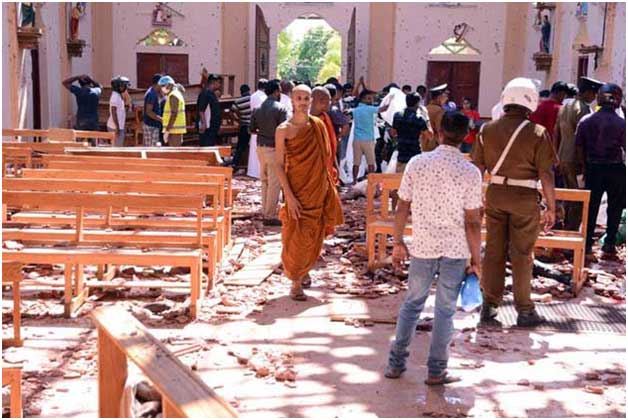
    NEW YORK, Jul 3 2019 (IPS) – Sri Lanka continues to be on a security alert long after the devastation caused by a string of bombings on Easter Sunday this year.

    Raisa Wickrematunge, Editor of Groundviews, told IPS: “There has been a tightening of security. There are now security checks being carried out outside hotels and shopping malls – either through scanners or bag and body searches”.


    “At the St Anthony’s Church, where the first blast occurred, there are bag and body searches conducted before worshippers can go inside, and bags are left outside the Church premises. Many churches and some schools have also increased their security.”

    Curfews were put into place and a social media ban was enacted temporarily, in order to prevent the graphic nature of the tragedies from being broadcast publicly. There has been much damage of the emotional and physical varieties in the once war ridden nation.

    For one thing, this attack was not expected by the Christian minority in Sri Lanka. Despite this, they have persevered.

    Father Rohan Dominic of the Claretian NGO told IPS: “For quite some time, there were attacks on the Muslim and Christian minorities by extremist Buddhists. In places, where the Buddhists were the majority, Christians lived in fear.”

    However, in a turn of events that left many in shock, one of the minority groups seemed to be the ones that initiated the attacks that occurred on Easter.

    All seven of the perpetrators allegedly belonged to a local Islamist group, National Thowheeth Jama’ath, according to government officials from the country.

    In response to this, there have been bans put in place for burqas and niqabs, traditional facial coverings worn by Muslims and people have been denied entrance into establishments, even while wearing hijabs.

    There were smaller bombings in Dematagoda and Dehiwala later on that same day. With a death toll of 290 people and 500 injured, domestic measures to protect the citizens were taken.

    After its 26 year long civil war between the Tamil and Sinhalese ethnic groups came to an end in 2009, conditions in Sri Lanka were mostly calm.

    However, on 21 April, 2019, the country erupted into violence. Three churches in the cities of Negombo, Batticaloa and Colombo, along with three hotels in the city of Colombo, were targeted in bombings by a group of seven Sri Lankan citizens.

    The churches were St. Sebastian’s Church, Shrine of St. Anthony Church and Zion Church and the hotels were Cinnamon Grand, Kingsbury Hotel and Shangri-La Hotel.

    Sri Lanka is a country that is primarily Buddhist with a large Hindu population and Christian and Muslim minorities.

    Father Dominic said that, “The Catholic Church in Sri Lanka was able to recover from the attack quickly and aided the survivors and the families of the victims by consoling and caring for them. The Church also has guided the Christian community at moments of anger and frustration in controlling their emotions and not to blame the Muslims. This position of the Church has helped to prevent violence and created common understanding and religious harmony.”

    According to Wickrematunge, there has been much help in helping the community adjust to life after the attacks and in restoring what has been lost.

    Other efforts have been led by organisations such as the Red Cross, Kind-hearted Lankans, the Archbishop of Colombo and the Church of the American Ceylon Mission in Batticaloa. There have also been crowdfunding efforts on popular websites like GoFundMe.

    Since the attacks have affected lives in a physical and emotional way, the state has given financial support to the affected as of 21 June.

    There has also been a trust fund set up for children who have lost family members to the attacks.

    Some of the industries affected, such as tourism, have been offered subsidized loans in order to help with paying employees. Psychological support and educational resources are being provided to citizens as well.

    While it has only been three months since the attacks affected the lives of many, steps towards rebuilding have been made and the future appears to be promising.


    Are We Fighting a Losing Battle in the War Against Drugs?

    Civil Society, Crime & Justice, Featured, Global, Global Governance, Headlines, Human Rights, IPS UN: Inside the Glasshouse, Peace, Poverty & SDGs, TerraViva United Nations

    UNITED NATIONS, Jul 3 2019 (IPS) – How effective is the global war on drugs?

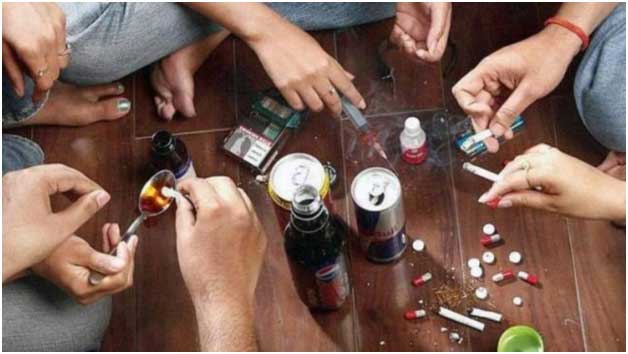
    The latest statistics released by the UN Office on Drugs and Crime (UNODC) are staggering: 35 million people across the globe currently have a substance use disorder, and as of 2017, 585,000 people have died worldwide as a result of drug use.


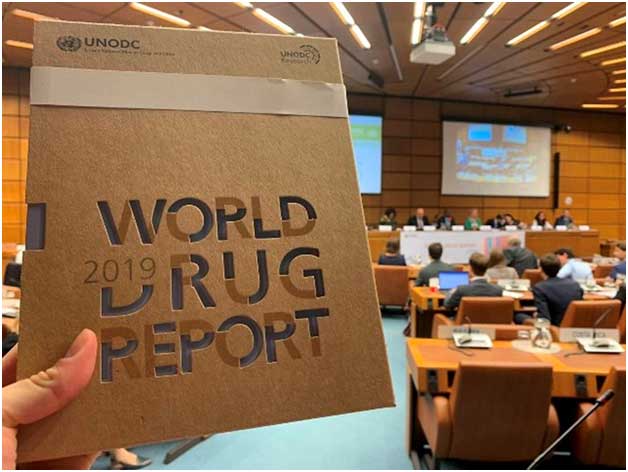
    According to a recently-released UNODC report, the lack of proficient drug treatment and facilities for those that need it is impacting mortality rates at alarming levels.

    Hence, it stands to reason that treatment and prevention are immensely falling short of the mark on a global scale.

    Prisons are also no exception to these shortcomings. In fact, the Report unmasked that those incarcerated for drugs are more likely to continue being exposed to drugs.

    The Report also highlighted that out of the 149 countries that were surveyed, about 1 in 3 people reported that they consumed drugs in prison at least once while incarcerated, and 1 in 5 people who are currently incarcerated reported that they have used drugs within the past month.

    “In terms of data, we did some data collection, always trying to get as much as possible, in terms of socio-economic characteristics, we would have this type of data, I imagine, and this is also something that will run throughout the new report, and is being discussed now.” Chloé Carpentier, Chief of the Drug Research Section told IPS.

    The issue between drugs and human rights is on Secretary General António Guterres’ radar as well.

    “Together, we must honour the unanimous commitments made to reduce drug abuse, illicit trafficking and the harm that drugs cause, and to ensure that our approach promotes equality, human rights, sustainable development, and greater peace and security.” Secretary General António Guterres stated on the International Day Against Drug Use and Illicit Trafficking.

    “We will make sure that no one with a drug problem is left behind” Dr. Miwa Kato assured, during the official launch of the Report on June 26.

    Dr. Kato continued to push this message throughout her speech and cited that “Health and justice need to work hand in hand.”

    Beyond the UN, this is a topic of interest for the academia world as well, since young people are heavily susceptible to a substance use disorder.

    “It is important that we say people— not user or addicts, that language itself is stigmatizing.” Dr. Danielle Ompad, Associate Professor, College of Global Public Health and Deputy Director, Center for Drug Use and HIV Research at New York University (NYU) told IPS.

    Dr. Ompad highlighted the importance of person-first language, citing that “It is important how we refer to people, and view them as humans, and not just the behavior (the substance use).

    In terms of the World Drug Report, she noted that “The war on drugs, if you look at it, hasn’t really been an effective war”, and elaborated that the focus should not be supply- side intervention, because in the long run, drugs are going to be produced and sold no matter what, which leads to mass incarceration, which doesn’t benefit any party.

    It is also important to recognize that “not everyone needs treatment, and those that do should absolutely have access to it. But just because you use marijuana does not mean you are an addict”.

    She went on to suggest a harm- reduction approach. The harm-reduction approach blends a plethora of strategies from safer use to managed use to abstinence- it meets the need of the person.

    www.HarmReduction.org

    Meanwhile, tracing back to the issue of treatment, the Report affirmed that over 80% of the world’s population lack access to adequate treatment with only 1 out of 7 people with a substance use disorder receiving treatment each year.

    The Report showcased that women cited a strong sense of fear that kept them from seeking the help that they needed for a variety of reasons that ranged from possible legal issues to the lack of childcare while in treatment.

    Another issue is several countries, particularly in Asia, is the death penalty for any person found guilty of a drug ‘offense.’

    Last month, Sri Lanka’s President, Maithripala Sirisena signed death warrants for four convicts- thus pushing the notion that those who have a substance use disorder are ‘dirty’ and should be disposed of.

    Similarly, in a 2014 study conducted by Johns Hopkins Bloomberg School of Public Health, it was shown that having a substance use disorder was viewed more negatively than mental illness. Ironically, however, the two are all but intertwined.

    This is also evidenced by the Report- about half of the world’s population that develop a mental disorder will also experience a substance use disorder in their lifetime.

    However, it is to be noted, that despite all of the above, the Report only cited the “lack of effective treatment interventions based on scientific evidence and in line with human rights obligations.” but made no further elaborations on the what’s and how’s and was only discussed briefly at the official Report launch.

    That said, the issue of ensuring those that do have a substance use disorder are provided for while figuring out more beneficial and healthier initiatives to reduce drug rates across the globe are currently being discussed among the United Nations (UN) and United Nations Office on Drugs and Crime (UNODC).

    Dr. Ompad said for better or worse, licit, and illicit drug use is part of our world.

    “Focus a little bit more on harm reduction,” Dr. Ompad stated, and above all “We need to stop the war on the people who use drugs,” she declared.


    Indigenous Rights Approach a Solution to Climate Change Crisis

    Biodiversity, Civil Society, Climate Change, Conferences, Development & Aid, Environment, Featured, Global, Headlines, Human Rights, Indigenous Rights, Sustainability, TerraViva United Nations

    Indigenous Rights

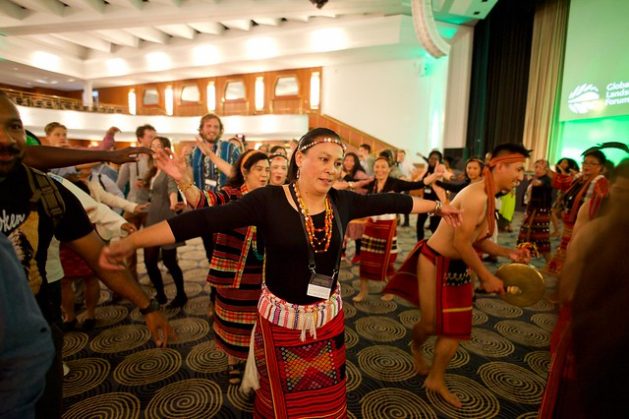
    The Global Landscapes Forum (GLF) was held in Bonn, Germany and focused on how to give land rights the visibility needed to showcase that a rights approach, particularly when it comes to indigenous people, is a solution to the climate change crisis. Courtesy: Pilar Valbuena/GLF

    Jun 29 2019 (IPS) – The Global Landscapes Forum (GLF) was held in Bonn, Germany to rally behind a new approach to achieving a future that is more inclusive and sustainable than the present – through the establishment of secure and proper rights for all.


    On Jun. 22 and 23, experts, political leaders, NGOs and indigenous peoples and communities gathered to deliberate on a methodology that emphasises rights for indigenous peoples and local communities in the management and perseveration of landscapes. The forum took place alongside the  United Nations Framework Convention on Climate Change Bonn Climate Change Conference.

    The forum focused giving land rights the visibility needed to showcase that a rights approach is a solution to the climate change crisis, and to develop a ‘gold standard’ for rights.

    Indigenous peoples, local communities, women and youth, are believed to be the world’s most important environmental stewards but they are also among the most threatened and criminalised groups with little access to rights.

    “We’re defending the world, for every single one of us,” said Geovaldis Gonzalez Jimenez, an indigenous peasant leader from Montes de María, Colombia.

    But industries such as fossil fuels, large-scale agriculture, mining and others are not only endangering landscapes but also the lives of the people therein.

    Already this year, said Gonzalez, his region witnessed 135 murders, adding that the day before the start of the GLF a local leader was killed in front of a 9-year-old boy.

    According to the United Nations, the land belonging to the 350 million indigenous peoples across the globe is one of the most powerful shields against climate change as it holds 80 percent of the world’s biodiversity and sequesters nearly 300 billion metric tons of carbon

    It is for this reason that amid the urgency to meet Sustainable Development Goals (SDGs) under pressure from the climate threat, dialogues about the global future have begun to wake up to the fact that indigenous peoples’ relationships with the natural world are not only crucial to preserve for their own sakes, but for everyone’s.

    The drafting of the document of rights was led by Indigenous Peoples Major Group (IPMG) for Sustainable Development and the Rights and Resources Initiative in the months leading up to the GLF.

    Wider discussions and workshops over the two days served as a consultation on the draft (which is expected to be finalised by the end of the year) as a concrete guide for organisations, institutions, governments and the private sector on how to apply different principles of rights. This includes the rights to free, prior and informed consent; gender equality; respect to cultural heritage; and education.

    U.N. Special Rapporteur on the Rights of Indigenous Peoples Vicky Tauli-Corpuz said lands managed by indigenous peoples with secure rights have lower deforestation rates, higher biodiversity levels and higher carbon storage than lands in government-protected areas.

    But Diel Mochire Mwenge, who leads the Initiative Programme for the Development of the Pygme in the Democratic Republic of Congo (DRC), one of the largest indigenous forest communities in Central Africa, said he has witnessed more than one million people being evicted from the national parkland where they have long lived. He explained that they had not been given benefits from the ecotourism industries brought in to replace them and were left struggling to find new income sources.

    “Our identity is being threatened, and we need to avoid being completely eradicated,” said Mwenge.

    In Jharkhand, India, activist Gladson Dungdung, whose parents were murdered in 1990 for attending a court case over a local land dispute, said an amendment to India’s Forest Rights Act currently being reviewed by the Supreme Court could see 7.5 million indigenous peoples evicted from their native forest landscapes. The act can impact a further 90 million people who depend on these forests’ resources for their survival, he said.

    The amendment, Dungdung said, would also give absolute power to the national forest guard; if a guard were to see someone using the forest for hunting or timber collection, they could legally shoot the person on-sight.

    “Indigenous peoples are right on the frontline of the very real and dangerous fight for the world’s forests,” said actor and indigenous rights activist Alec Baldwin in a video address.

    “Granted that indigenous peoples are the superheroes of the environmental movement,” Jennifer Morris, president of Conservation International wondered why they are not heard until they become victims. “Why do we not hear about these leaders until they’ve become martyrs for this cause?”

    The examples of intimidation, criminalisation, eviction and hardship shared throughout the first day clearly showcased what indigenous peoples and local communities go through to preserve the forests or ‘lungs of the earth’.

    The rights approach, according to conveners of the GLF, aims to strengthen respect, recognition and protection of the rights of indigenous peoples and local communities as stewards and bearers of solutions to landscape restoration, conservation, and sustainable use. It also aims to end persecution of land and environment defenders; build partnerships to enhance engagement and support for rights-based approaches to sustainable landscapes across scales and sectors; and, scale up efforts to legally recognise and secure collective land and resource rights across landscapes.

    “By implementing a gold standard, we can both uphold and protect human rights and develop conservation, restoration and sustainable development initiatives that embrace the key role Indigenous peoples and local communities are already playing to protect our planet,” said Joan Carling, co-convener of IPMG.

    IPMG recognises that indigenous and local communities are bearers of rights and solutions to common challenges.

    “This will enable the partnership that we need to pave the way for a more sustainable, equitable and just future,” added Carling.

    And the Center for International Forestry Research (CIFOR) Director General, Robert Nasi, said when rights of local communities and indigenous peoples are recognised, there are significant benefits for the fight against climate change and environmental degradation.

    “Whoever controls the rights over these landscapes has a very important part to play in fighting climate change,” he said.

    In the climate and development arenas, the most current alarm being sounded is for rights–securing the land rights and freedoms of indigenous peoples, local communities and the marginalised members therein.

    How can these custodians of a quarter of the world’s terrestrial surface be expected to care for their traditional lands if the lands don’t, in fact, belong to them? Or, worse, if they’re criminalised and endangered for doing so?

    The basic principles of a ‘gold standard’ already exist, such as free, prior and informed consent, according to Alain Frechette of the Rights and Resources Initiative (RRI). What has been lacking, he said, is the application of principles that could be boosted by high-level statements that could “spur a race to the top”.