Homeless Camps, a Reflection of Growing Inequality in Chile

Active Citizens, Civil Society, Development & Aid, Editors’ Choice, Featured, Headlines, Human Rights, Latin America & the Caribbean, Population, Poverty & SDGs, Regional Categories

Development & Aid

On Cerro 18, above the affluent municipality of Lo Barnechea, in the coveted eastern sector of Santiago de Chile with a stunning view of the valley and the Andes Mountains, 300 families live in five camps or irregular settlements, many without water, electricity or sewage. CREDIT: Orlando Milesi/IPS

SANTIAGO, Dec 10 2021 (IPS) – Camps made up of thousands of tents and shacks have mushroomed in Chile due to the failure of housing policies and official subsidies for the sector, aggravated by the rise in poverty, the covid-19 pandemic and the massive influx of immigrants.


“Three years ago we were about to be evicted and when my children would head off to school they never knew if our little house would be there when they got home. One morning we were going to school and the carabineros (militarized police) were coming. Many times I had to go home early from work. It was chaotic, difficult and distressing,” Melanni Salas told IPS during a visit to the site.

Salas, 33, presides over Senda 23, one of the five camps that bring together 300 families who occupied public land in Cerro 18, in the municipality of Lo Barnechea, on the east side of Santiago. They have been building shacks with wood and other materials within their reach, which they are gradually trying to improve.

The threat of eviction ceased at the start of the covid pandemic, but the shadow still hangs over their heads because the municipality “built us a septic tank and gave us gifts for Christmas, but has said nothing about housing,” she said.

The community activist previously lived for 19 years as an “allegada”, the name given in Chile to people or families who share a house with relatives or friends, in overcrowded conditions. In 2016 she occupied the land where she and her husband Jorge built the precarious dwelling where she now lives with her three children aged 15, 13 and five years old.

“This used to be a garbage dump and now it is clean and there are houses,” said Salas. “Mine gets a little wet inside when it rains because it is made of wood and because of the strong wind. But I have drinking water, electricity and sewerage thanks to my mother-in-law who lives further up. The neighboring family has neither water nor sewage. They are a couple with three children and one of them, Colomba, was born a week ago.”

She explains that her neighbors “use the bathroom at their brother’s place who lives nearby, but during the pregnancy she went back to her mother’s house.”

In the camps people cook, wash, sleep and live together, observed by passers-by who have become accustomed to this new urban landscape. CREDIT: Orlando Milesi/IPS

In the camps people cook, wash, sleep and live together, observed by passers-by who have become accustomed to this new urban landscape. CREDIT: Orlando Milesi/IPS

Hundreds of homeless tents now line the main avenues of Santiago de Chile.

Explosive situation

“Every day more than 10 families come to live in an encampment in Chile,” says Fundación Techo Chile, a social organization dedicated to fighting against housing exclusion in the cities of this South American country.

The problem is also seen along the avenues and in the parks where hundreds of men and women set up tents to sleep, cook, wash and live together in full view of passers-by who have become accustomed to the scene.

In the last two years, the number of families living in 969 of these camps with almost no access to water, energy and sanitation services has increased to 81,643, a survey by the Fundación Techo Chile found.

In Chile, the term “campamentos” or camps has also come to refer to slums or shantytowns known traditionally as “callampas”, such as the one where Salas lives, which are built on occupied land and consist of houses made of light materials, although the neighborhoods are sometimes later improved and upgraded, but still lack basic services.

These slums are mainly in Santiago and Valparaíso, 120 kilometers north of the capital, in central Chile. But they are also found in the northern cities of Arica and Parinacota and the southern city of Araucanía.

They are home to 57,384 children under the age of 14 and some 25,000 immigrants, mostly Colombians, Venezuelans and Haitians. “Today, families live there who six months or two years ago were ‘allegados’ living in overcrowded, informal, precarious or abusive conditions. That is what is understood as a housing deficit,” Fundación Techo Chile’s executive director, Sebastián Bowen, told IPS.

“The 81,000 families living in camps are the most visible part of the problem, but the housing deficit, covering all the families who do not have access to decent housing, exceeds 600,000,” he said.

The State provides some 20,000 social housing solutions each year, a figure that is highly insufficient to meet the current need.

According to Bowen, “if we want to solve the problem of the camps, we must structurally change our housing policy to guarantee access to decent housing, especially for the most vulnerable families.”

This explosion coincided with the social protests that began in October 2019 and with the arrival of coronavirus in the country in March 2020.

According to the National Socioeconomic Characterization Survey (Casen), 10.8 percent of Chileans currently live in poverty, which means more than two million people, although social organizations say the real proportion is much higher.

Chile, with a population of 19 million people, is considered one of the most unequal countries in the world, as reflected by the fact that the 10 percent of households with the highest incomes earn 251.3 times more than the 10 percent with the lowest income.

View of some of the houses in Cerro 18, a shantytown where 300 families live, most of them without even the most basic services. In what used to be a garbage dump, on the hillside of one of the wealthy neighborhoods of the Chilean capital, they have built their houses using scrap wood and waste materials. CREDIT: Orlando Milesi/IPS

View of some of the houses in Cerro 18, a shantytown where 300 families live, most of them without even the most basic services. In what used to be a garbage dump, on the hillside of one of the wealthy neighborhoods of the Chilean capital, they have built their houses using scrap wood and waste materials. CREDIT: Orlando Milesi/IPS

The new constitution holds out hope

Benito Baranda, founder of the Fundación Techo, an organization that now operates in several Latin American countries, believes that the housing policy failed because it focuses on “market-based eradication, forming housing ghettos on land where people continue to live in a segregated manner.”

This policy is also based on a structure of subsidies “born during the dictatorship and which has remained in place because housing is not a right recognized in the constitution,” Baranda, now a member of the Constitutional Convention that is drafting a new constitution, which will finally replace the one inherited from the 1973-1990 military dictatorship of General Augusto Pinochet, told IPS.

“The decision of where people are going to live was handed over to the market. Not only the construction of housing. And the land began to run out and the available and cheap places were in the ghettos,” he explained.

Baranda criticized the policy of “eradication”, “which created ghettos and generated much greater harm for people,” referring to the forced expulsions of slumdwellers and their relocation to social housing built on the outskirts of the cities, a policy initiated during the Pinochet dictatorship and which crystallized social segregation in the capital.

According to Baranda, “in the last four governments there has been the least construction of housing for the poorest families.”

Baranda was elected to the constituent assembly in a special election in May and proposes “to generate a mechanism that will progressively reduce the waiting times for housing, which today can stretch out to 20 years.”
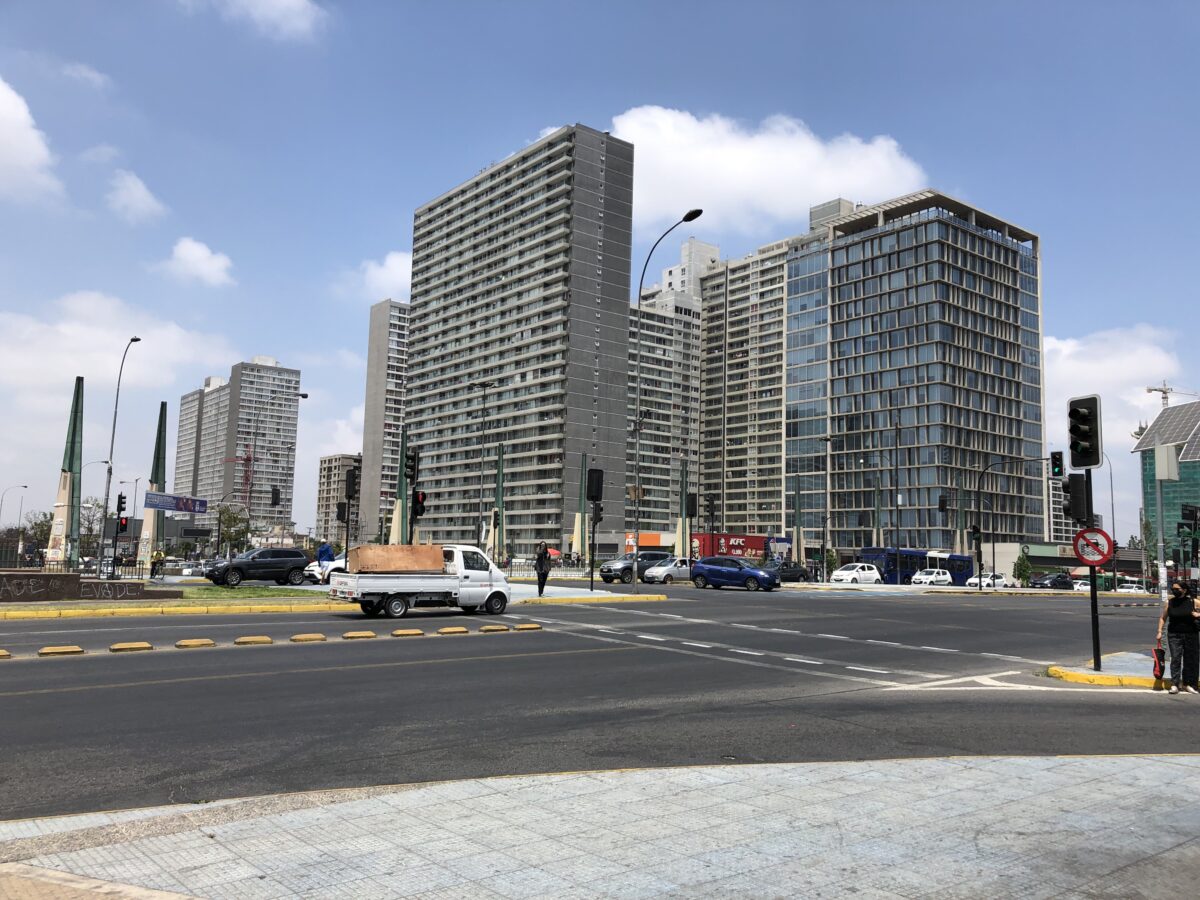
Twenty-story buildings, where each floor has 50 17-square-meter apartments, are called "vertical ghettos" and are inhabited mainly by immigrants. These ones are located in the Estación Central neighborhood, along Alameda Avenue that crosses Santiago de Chile. CREDIT: Orlando Milesi/IPS

Twenty-story buildings, where each floor has 50 17-square-meter apartments, are called “vertical ghettos” and are inhabited mainly by immigrants. These ones are located in the Estación Central neighborhood, along Alameda Avenue that crosses Santiago de Chile. CREDIT: Orlando Milesi/IPS

Privatization of social housing

Isabel Serra, an academic at the Diego Portales University Faculty of Architecture, believes that “the housing issue in Chile will be solved in some way through family networks…There is a lot of overcrowding here and small families are becoming the norm,” she told IPS.

According to Serra, the mushrooming of camps “clearly has to do with the influx of immigrants and this has grown especially in cities that are also functional or productive or extractivist hubs.”

She criticized the subsidy policy because these “are transferred to the private sector and what they do is drive up housing prices… and most of them are not used because they are not in line with the price of land and housing.”

“A highly financialized private market has made housing a tool for economic speculation…investors have decided to put their funds into the real estate market,” she said.

The problem has already reached the 155-member Constitutional Convention, which has been functioning since Jul. 4 and has a 12-month deadline to draft the new constitution, which must then be ratified in a plebiscite.

In September Melanni Salas and representatives of eight organizations met with Elisa Loncón, president of the Convention, to present her with the book “Constitution and Poverty”, which includes proposals to guarantee the right to housing.

“I hope they include this in the new constitution. The proposals were made by 25,000 excluded people…this document seeks to ensure that we are not left on the sidelines as always,” the community organizer explained.

A human right

Baranda said “in the constituent assembly we are working to get this enshrined as a right and to get the State to assume a leading role, not in the construction of housing itself, but in determining where people are going to live and creating the land bank that people have been demanding for so long.”

“We need the policies, by making land available and expropriating property that is not owned by the State, to create housing projects in places where there is social inclusion,” he stressed.

Serra agreed that “when the issue of housing is discussed in the constituent assembly, it will have to look at how the State buys and sells land.

“Housing is a basic human right and should be enshrined in the constitution, with all the parameters that are established for decent housing,” she argued.

Serra also called for “modernizing the instruments and the institutional framework dedicated to the provision of housing” because, she said, “currently the role of housing provision is clearly played by the market.”

She said it would require “a great deal of political will because land issues in general are political issues, very difficult to implement because there are many economic interests involved.”

Celia “Charito” Durán lives in the Mesana camp on Mariposas hill in the port city of Valparaíso, along with 165 other families, and counting.

The municipality delivers 3,000 liters of water per week to each house, using tanker trucks.

Durán said, however, that the priority is access “because if there is no road, we are cut off from everything: firefighters, water, ambulances.”

In Mesana there is no sewage system, only “cesspools, septic toilets and pipes through which people dump everything into the creek,” she told IPS by telephone.

On the hilltop the wind is very strong and every winter roofs are blown off and houses leak when it rains.

Durán, 56, has lived there since she was 37. She is confident that a solution to the social housing deficit will come out of the constituent assembly, after participating in meetings with Jaime Bassa, vice-president of the Constitutional Convention.

“We have the hope and expectation that the right to housing will be included. So, if tomorrow it is not fulfilled, you could go to the authorities with the right to protest about it,” she said.

“We want to be part of the city and not be segregated and forced to return to the camps,” Durán said.

  Source

Building a Disability-Friendly Workplace: Why Includability Matters

Asia-Pacific, Civil Society, Headlines, Health, Labour

Opinion

An includable leader knows that not everyone comes from the same space with the same privileges. They are aware of systemic barriers that dictate interactions between people of different genders, classes, or abilities, according to the author. Credit: United Nations - Awareness of differences is not the barrier to includability. It is the inability to create a common ground for dialogue, which requires strategic planning and building competency

An includable leader knows that not everyone comes from the same space with the same privileges. They are aware of systemic barriers that dictate interactions between people of different genders, classes, or abilities, according to the author. Credit: United Nations

BENGALURU, India, Dec 2 2021 (IPS) – In her famous speech ‘The Danger of a Single Story’, Nigerian writer Chimamanda Ngozi Adichie warns us against a singular narrative of a person—a stereotype. This, Adichie asserts, is not because stereotypes are untrue, but because they are incomplete—“They make one story become the only story.” This is true in all walks of life, including in our interactions with people with disabilities at workplaces.


The consequence of the single story, according to Adichie, is that it robs people of dignity. “It makes our recognition of our equal humanity difficult. It emphasises how we are different rather than how we are similar.”

Take the example of my brother, Hari. He topped the MBA programme in Narsee Monjee Institute of Management Studies. He has a visual disability, and he managed his education with the help of audio cassettes, screen reader software, and the internet. But when it came to his placement, none of the employers wanted to hire him because of his ‘blindness’. He went through 70 interviews.

To go beyond the differences, leaders must focus on the commonalities between them and the person they are interacting with. To be an includable leader, one must do away with the us-versus-them narrative

The problem was not that the interviewers saw him as a person with vision impairment, but that they could see only one ‘story’ of him—his disability. It created fear and discomfort, and took precedence over any other stories that would have helped the interviewers see his personality, conduct the interview, and gauge his competence.

They focused so much on how he was different from them that they did not even try to look for similarities. Hari likes cricket, a sport with billions of admirers across the country, and this could have been a conversation starter for some of them. Or someone could have simply said, “Hey, I have never met a blind person. How do I interview you?”

EnAble India’s idea of includability—the ability to include—emerged from this and many other experiences I had with leaders, managers, and employees across organisations. I realised that awareness of differences is not the barrier to includability. It is the inability to create a common ground for dialogue, which requires strategic planning and building competency.

What is includability quotient?

Becoming an includable leader requires cultivating what we call an includability quotient (IncQ)—a competency framework for leaders on how to include diverse people in their organisation. A leader with a high IncQ is able to get the most out of their team, and is guided by three broad principles:

1. Internalising the landscape

An includable leader knows that not everyone comes from the same space with the same privileges. They are aware of systemic barriers that dictate interactions between people of different genders, classes, or abilities. They are also aware of how these barriers intersect, and actively plan strategies to overcome them.

For example, disability, lack of access to education, and poverty are often interlinked. To overcome this, we urged the leaders in a multinational corporation (MNC) we had worked with to hire persons with disabilities who had earned diplomas—for a position for which a degree was otherwise necessary.

The leader took the right decision to hire and provided a level playing field to overcome the inequities which come with the landscape. Their next step was to offer the employees a scholarship to pursue their degree later. Similarly, there are information technology (IT) companies that provide a loan for modified two-wheelers to people with disabilities for easy access to the workplace. In each example, the leader used their competency to distinguish a level playing field from an ‘excuse’.

2. Normalising the differences

To go beyond the differences, a leader must focus on the commonalities between them and the person they are interacting with. An includable leader does not function with an us-versus-them narrative. They actively try to facilitate conversations by using appropriate language and triggers.

However, like all conversations, this normalisation of differences is a two-way process. Employees with disabilities must be equipped with self-advocacy tools that help them to identify as more than their disability. The tools can include hobbies, adjectives, and aspirations that might spark an exchange.

For example, when a leader met Ajay*, a person with intellectual disability who is 38 years old and speaks in monosyllables, the leader didn’t know what to say. However, when Ajay presented them with a card where he described himself as a cricket lover and as Mr Dependable, the leader asked him about cricket. With this topic, Ajay gradually opened up and spoke a couple of sentences. The leader could see his personality, which may not have been possible if only the term ‘intellectual disability’ was ringing in his head.

In another instance, a manager had to familiarise his interns with domain-related video content in an American accent. To make it easier for the interns who might have found a non-Indian accent a barrier to understanding, the manager first introduced similar content in an Indian accent to them. This was a learner-centric approach that worked for people from different backgrounds.

3. Changing expectations    

Every person is capable of growth. Our inadequacy as leaders and managers is that at times we fail to remember this. An includable leader uses appreciative inquiry (AI)—an evaluation mechanism that focuses on the strengths rather than the weaknesses of an employee. This is applicable to employees coming from all kinds of spaces—be it a person with or without disability. And it is done with the belief that what you focus on will grow.

Whenever a new employee joins the team, the leader figures out their strengths and gains an understanding of the systemic barriers they face. From here both of them can go on to co-create solutions. Once this is done, the boundaries need to be pushed by focusing on the employee’s strengths.

Take, for instance, the case of an MNC that hired a person with intellectual disability for an internship. In the initial days, the intern mostly interacted with their manager and a colleague who was assigned to them as a buddy. With time the intern was made to attend presentations, which interested them enough to want to present on their own.

The MNC’s strategy was to make the intern speak on any topic of their choice for five minutes to a small team. As a second step, the management provided the intern with the topic to speak on. And, finally, the intern was asked to make a formal presentation to a larger team.

The MNC’s process of gradually moving the metre helped the intern gain confidence to speak in front of people and accumulate technical knowledge from the interactions. This kind of intervention helps employees not only in their current job but also going forward in their career. Additionally, a leader skilled enough to design and implement such a process gathers the confidence to work with team members from various facets of society.

Lessons for nonprofits

These are not easy lessons to learn for even the most eager leaders and managers—not because they do not want to engage, but often because they do not have a language to communicate their guilt, worries, and discomfort when they encounter a person they see as different from themselves.

Finding that common language requires a leader and a colleague to first learn to self-include. This involves feeling comfortable about themselves by gaining awareness of their own space, which comes with its own difficulties. It includes being able to speak openly about their problems and concerns—be it personal or professional. It is only then that a workplace can become truly inclusive.

As facilitators working with organisations, our job is to make space for these conversations at various levels. This requires us to build a nuanced understanding of the various elements that form an organisation—only then can we come up with tools, methods, and strategies. Here are some of the lessons I have learnt over the years:

1. An includable workplace is more than the leader

While speaking with and educating leaders is an essential part of creating an inclusive workplace, the idea needs to travel across the organisation. The leadership has to play the role of an implementer in bringing changes at various levels. This includes individuals being comfortable with and understanding the needs of a colleague with disability, as well as people with disabilities being able to assert an identity that is more than their disability.

2. ‘Peacetime’ interactions go a long way

We have seen that people with disabilities and those without have more fruitful interactions when these are facilitated during ‘peacetime’—an informal, non-work setting. For instance, when a person without disability studies with a person with disability at school or when they work together as volunteers, there’s a chance that they might be able to build a sustainable bond that’s beyond notions of ability and disability. Peacetime creates an exposure opportunity where the knowing and acceptance happens in a non-threatening way.

3. Facilitators need to keep introspecting

Conversations around disabilities demand a space of vulnerability. This is true for participants across the intersections of people with disabilities, non-profit facilitators working with people with disabilities, and leaders. It is easy to form attachments, look out for each other, and become protective of each other. However, as facilitators, we must be wary of our actions that stem from these emotions.

Our well-intentioned protectiveness can stand in the way of a person being able to push their limits and prepare for the competitive world of employment. This is a clear deviation from our own idea of building together a more equitable world. Thus, we need to constantly evaluate our actions. Because that equitable world—in Adichie’s words, “a kind of a paradise”—will emerge not from our guilt or pity, but from our rejection of the singular narratives of individuals.

*Name changed to maintain confidentiality.

With contributions from Gayatri Gulvady.

Shanti Raghavan, the author of this article, is a social entrepreneur and the co-founder of EnAble India, which works towards providing economic independence to persons with disability

This story was originally published by India Development Review (IDR)

  Source

School Meals Coalition Hopes to Provide a Meal to Every Child

Aid, Civil Society, Development & Aid, Education, Featured, Food Security and Nutrition, Global, Headlines, Health, Humanitarian Emergencies, Inequity, Poverty & SDGs, TerraViva United Nations

Food Security and Nutrition

School meals have a host of benefits, including improving enrollments and preventing malnutrition. Now the School Meals Coalition plans to recruit local food producers to assist in the programme. Credit: Bill Wegener/Unsplash

United Nations, Nov 26 2021 (IPS) – Meals at schools not only give each child a nutritious meal but increase enrolments, among other benefits.


This emerged at a recent launch of the School Meals Coalition, a new initiative that aims to give every child a nutritious meal by 2030 through bolstering health and nutrition programmes. The coalition comprises over 60 countries and 55 partners dedicated to restoring, improving and up-scaling meal programs and food systems. Among their partners are UN agencies UNICEF, World Food Programme (WFP), UN Nutrition, Food and Agriculture Organization (FAO), and UNESCO.

In the briefing, the speakers identified School Meals Coalition’s primary goals to restore school meal programmes to the status before the COVID-19 pandemic and reach children in vulnerable areas who have not accessed these plans before. The member countries’ political leaders have come together to support this “important initiative”, according to the permanent representative of Finland to the United Nations, Jukka Salovaara.

“School meals are so much more than just a plate of food. It’s really an opportunity to transform communities, improve education, and food systems globally,” he said.

School meal programmes are a significant safety net for children and their communities. As one of the primary means for children to get healthy meals, they help combat poverty and malnutrition. Their impact on education is seen in increased engagement from students. They also serve as incentives for families to send their children, especially girls, to schools, thus supporting children’s rights to education, nutrition and well-being.

“We see documented jumps of 9 to 12 per cent in enrollment increases just because the meals are present,” WFP Director of School-Based Programmes Carmen Burbano said. “So, these are really important instruments to bring [children] to school.”

The programmes would also provide opportunities for sustainable development practices and transformations in food systems. One key strategy is to promote and maintain home-grown school meal programmes, recruiting local farmers and markets to provide food supplies. Investing in school meal programmes, especially through domestic spending, has proven to increase coverage. In low-income countries, the number of children receiving school meals increased by 36 percent when their governments increased the budgets for these programs.

A WFP study found that at the beginning of 2020, over 380 million children globally received meals through school meal programmes. The closure of schools due to the COVID-19 pandemic effectively disrupted those programmes, depriving 370 million children of what was effectively their main meal for the day. While there have been marked improvements since schools re-opened worldwide, with 238 million children accessing the school meals, there are still 150 million children that don’t have access.

The School Meals Coalition aims to close this gap through a system of collaboration between member countries and their partners. Among their initiatives will be a monitoring and accountability mechanism that is being developed by the WFP and its partners, which will be used to follow the coalition’s accomplishments, and a peer-to-peer information-sharing network, spearheaded by the German government, between members and partners that will use findings to influence their programme output.

Even before the pandemic, school meal programmes did not reach the most vulnerable children, 73 million, who could not access these programmes. Reaching children that have fallen through the cracks can be challenging, but it is significantly more difficult in countries affected by conflict or environmental disruptions.

Education Cannot Wait (ECW) and the World Food Programme (WFP) earlier signed a memorandum of understanding to feed children in protracted crises.

At the signing, WFP Assistant Executive Director, Valerie Guarnieri said: “Simply put, sick children cannot attend school and hungry children cannot learn. It is essential we invest more in the health and nutrition of young learners, particularly girls.”

ECW Director, Yasmine Sherif said a feeding scheme made a massive difference in children’s lives.

“For many children and youth in crisis-affected countries, a meal at school may be the only food they eat all day and can be an important incentive for families to send and keep girls and boys in school. It is also essential for a young person to actually focus and learn,” she said.

The coalition plans to find ways to break the barriers to enable children to reach school or look for alternative learning pathways to reach children who could not physically attend school.

The factors that can prevent children from fully attending schools, such as poverty, complexity in family lives, or conflict, have only been exacerbated over the last nearly two years, thanks mainly to the COVID-19 pandemic. As more schools open worldwide, the restoration of school meal programmes is expected to provide much-needed support for children and their communities in turn.

“This is a very urgent and timely priority,” said Head of the Sustainable Development Unit of the Permanent Mission of France to the United Nations, Olivier Richard. “Because school meals are very important for the recovery of our societies from the impact of the COVID-19 pandemic.”

To learn more about the School Meal Coalitions, you can follow their page.

  Source

No Vaccine for the Pandemic of Violence Against Women in Latin America

Active Citizens, Civil Society, Editors’ Choice, Featured, Gender, Gender Violence, Headlines, Human Rights, Indigenous Rights, Latin America & the Caribbean, Regional Categories

Gender Violence

This article is part of IPS coverage of the International Day for the Elimination of Violence against Women on Nov. 25, which kicks off 16 days of activism on the issue around the world.

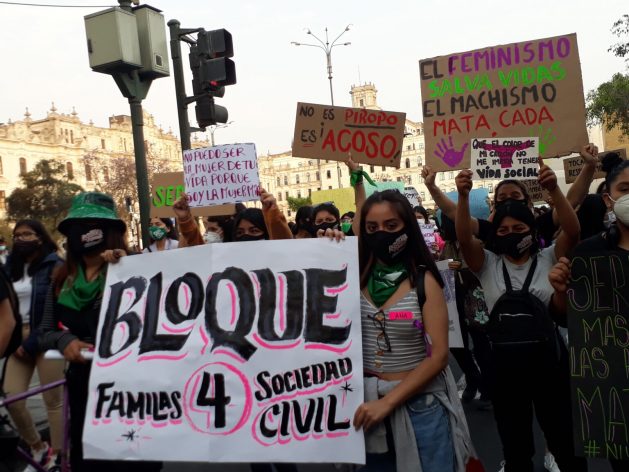
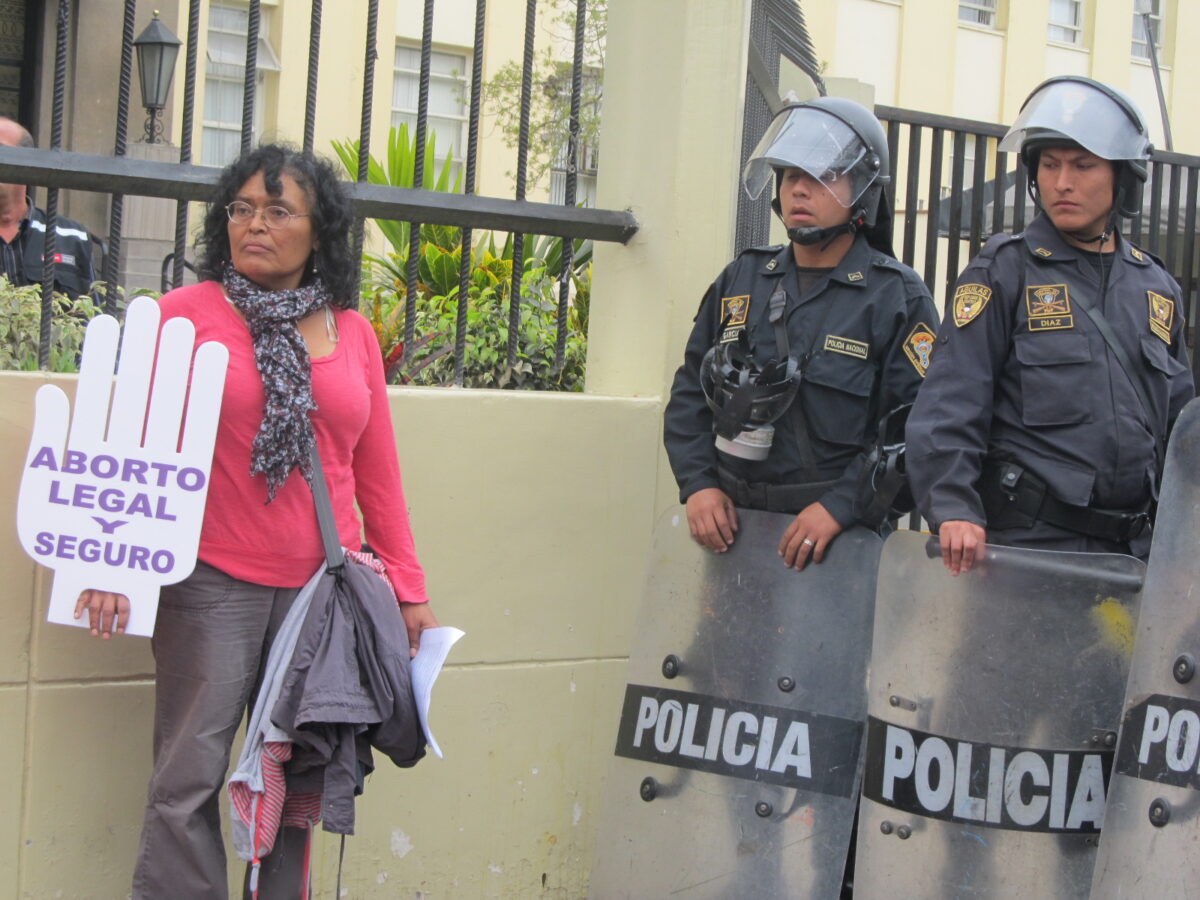
Despite restrictions due to covid, women from various feminist, youth and civil society groups gathered in the central Plaza San Martin in Lima and marched several blocks demanding justice and protesting impunity for violence against women, on Nov. 25, 2020. CREDIT: Mariela Jara/IPS

Despite restrictions due to covid, women from various feminist, youth and civil society groups gathered in the central Plaza San Martin in Lima and marched several blocks demanding justice and protesting impunity for violence against women, on Nov. 25, 2020. CREDIT: Mariela Jara/IPS

LIMA, Nov 24 2021 (IPS) – Despite significant legal advances in Latin American countries to address gender-based violence, it continues to be a serious challenge, especially in a context of social crisis aggravated by the covid-19 pandemic, which hits women especially hard.


“Existing laws and regulations have not stopped the violence, including femicide (gender-based murders). There is a kind of paralysis at the Latin American level, on the part of the State and society, where we don’t want to take much notice of what is happening, and women are blamed,” said María Pessina Itriago, a professor and researcher and the director of the Gender Observatory at UTE University in Quito.

Pessina, a Venezuelan who lives in the Ecuadorian capital and spoke to IPS by telephone from the university, said violence against women is ageold, and “we are still considered second-class citizens who are not recognized as social subjects.” And this dates way back – to the slaughter of “witches” in Europe in the Middle Ages, for example, she added.

“It hasn’t been easy to achieve my independence, have my own income and raise my children. I have suffered humiliation and slander, but I knew who I was and what I wanted: to live in peace and have a home without violence.” — Teresa Farfán

“The genocide of women is something that has not stopped and now in the context of the pandemic has become more serious. I believe that, in reality, the pandemic that we have experienced for many years is precisely this, that of gender violence,” she remarked.

Her reflection came ahead of the International Day for the Elimination of Violence against Women, which is celebrated on Thursday, Nov. 25 and kicks off 16 days of activism up until Dec. 10, World Human Rights Day.

The World Health Organization (WHO) and U.N. Women warned in March that globally one in three women suffers gender-based violence. And that the problem, far from diminishing, had grown during the covid pandemic and the restrictions and lockdowns put in place to curb it.

The study “Global and regional estimates of violence against women: prevalence and health effects of intimate partner violence and non-partner sexual violence”, which analyzed data from 2000 to 2018, is the most far-reaching produced by WHO on the topic.

The report, published in March of this year, stresses that violence against women is “pervasive and devastating” and affects one in three women with varying degrees of severity.

For Latin America and the Caribbean, the study puts the prevalence rate of violence among women aged 15 to 49 at 25 percent.

María Pessina Itriago is a professor, researcher and director of the Gender Observatory at UTE University in Quito. CREDIT: Courtesy of María Pessina

María Pessina Itriago is a professor, researcher and director of the Gender Observatory at UTE University in Quito. CREDIT: Courtesy of María Pessina

A regional epidemic during the global pandemic

With respect to femicides, the Gender Equality Observatory of the Economic Commission for Latin America and the Caribbean (ECLAC) reports that 4640 women died from this cause in 2019. The organization also called attention to the intensification of violence against girls and women during the pandemic.

The panorama is compounded by the gendered impacts of the pandemic on employment, which reduces women’s economic autonomy and makes them more vulnerable to violence.

According to the International Labor Organization (ILO), the region of the Americas experienced the largest reduction in female employment during covid, a situation that will not be reversed in 2021.

Peruvian sociologist Cecilia Olea, of the non-governmental Articulación Feminista Marcosur (AFM), which is made up of 17 organizations from 11 countries – nine South American nations, Mexico and the Dominican Republic – said there have been significant advances in the last 30 years in the fight against gender violence.

Among them, she cited the fact that States recognize their responsibility for the problem and no longer consider it a private matter.

She also pointed out that Latin America is the only region in the world with a specific human rights treaty on the issue: the Inter-American Convention on the Prevention, Punishment and Eradication of Violence against Women, known as the Convention of Belem do Para after the Brazilian city where it was approved in 1994, which established women’s right to live free of violence and set the framework for national laws to address this violation of women’s rights.

However, Olea said in an interview with IPS in Lima that the legal and regulatory framework has not been accompanied by political strategies to change the social imaginary of masculinity and femininity, which would provide incentives to modify the culture of inequality between men and women; on the contrary, she said, the violence forms part of a culture of impunity.

“Males feel free to oppress and governments are failing in their responsibility to guarantee comprehensive sex education throughout the educational system, in primary school and technical and higher education; this program exists by law but implementation is deficient due to lack of training for teachers and the opportunity to train people in new forms of masculinity is lost, for example,” she remarked.

Olea, a feminist activist and one of the founders of the AFM, said that not only do governments have a responsibility to prevent, address and eradicate gender violence, but there is also an urgent need to ensure health services; justice with due diligence, as the current delays revictimize and inhibit the use of regulatory instruments; and budgets to correct the current shortfall that prevents a better response to this social problem.

Peruvian sociologist Cecilia Olea, a member of the Articulación Feminista Marcosur (AFM), which brings together feminist networks from 11 Latin American countries, takes part in a demonstration outside the Peruvian Health Ministry in Lima, demanding reproductive rights. CREDIT: Mariela Jara/IPS

Peruvian sociologist Cecilia Olea, a member of the Articulación Feminista Marcosur (AFM), which brings together feminist networks from 11 Latin American countries, takes part in a demonstration outside the Peruvian Health Ministry in Lima, demanding reproductive rights. CREDIT: Mariela Jara/IPS

Cultural change in the new generations

Raised in a machista home, Pessina rebelled against gender norms from an early age and her constant questioning led her to come up with a new definition of how a good person should act.

“I believe that good people do not tolerate injustice or inequality of any kind, which is why I became a feminist about 15 years ago and I am very happy to be able to contribute a grain of sand with my students,” she said.

Pessina said the challenges to progress in the eradication of violence against women are to provide public policies with a budget to make them work; and to achieve an alliance between the State, civil society organizations and feminist movements to create a road map that incorporates excluded voices, such as those of indigenous women.

“The places where they can file reports are not near their towns, they have to go to other towns and when they get there they often cannot communicate in their own language because of the colonialist view that everything must be in Spanish, and there are no interpreters,” she complained.

Another part of the problem, she said, is that “the State itself blocks complaints and keeps these people marginalized, and they are not taken into account in the countries’ statistics on violence.”

The third challenge was to work with the media in Latin America because of their role in the construction of imaginaries, in order to generate the figure of the ombudsperson focused on gender to ensure that information is treated in a way that contributes to equality and does not reproduce discriminatory stereotypes.

Pessina said that what is needed is a cultural transformation driven by the new generations, in favor of gender equality.

“We see more young feminist women activists mobilizing to make it happen and they will make a turnaround; not now, but maybe in a decade we will be talking about other things. These new generations not only of women but of men, I think they are our hope for change,” she said.

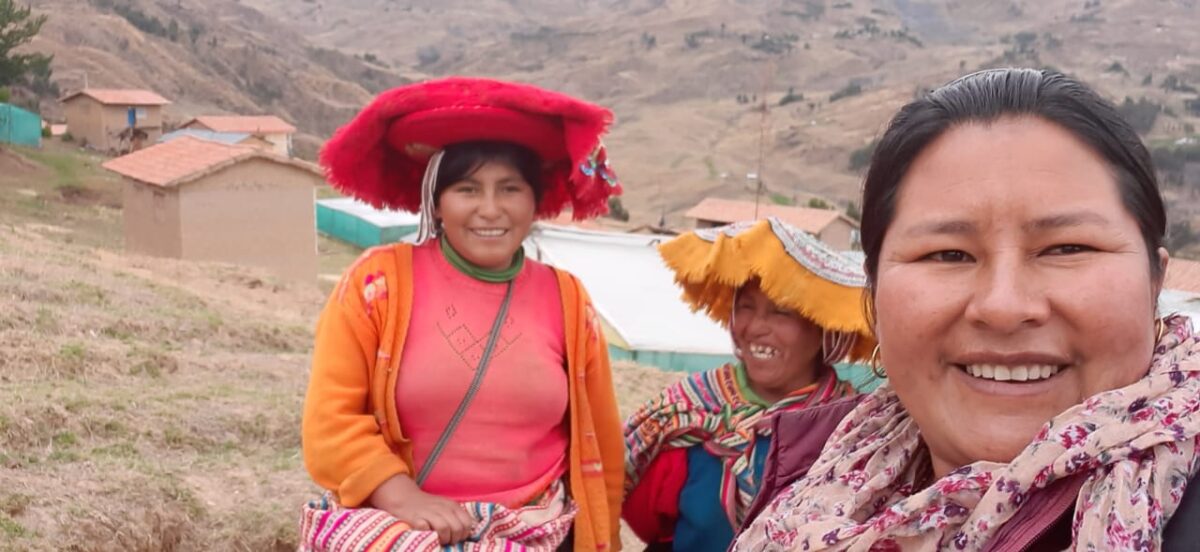
Quechua Indian woman Teresa Farfán, in the foreground, stands with two other rural women with whom she shares work and experiences in her Andes highlands community in Peru. She is convinced that telling her personal story of gender-based violence can help other women in this situation to see that it is possible to escape from abuse. CREDIT: Courtesy of Teresa Farfán

Quechua Indian woman Teresa Farfán, in the foreground, stands with two other rural women with whom she shares work and experiences in her Andes highlands community in Peru. She is convinced that telling her personal story of gender-based violence can help other women in this situation to see that it is possible to escape from abuse. CREDIT: Courtesy of Teresa Farfán

“I wanted a home without violence”

Teresa Farfán reflects the lives of many Latin American women who are victims of machista violence, but with a difference: she left behind the circle of gender violence that so often takes place in the home itself.

She is 35 years old and describes herself as a peasant farmer, a single mother and a survivor of an attempted femicide. She was born and lives in the town of Lucre, an hour and a half drive from the city of Cuzco, the capital of ancient Peru, in the center of the country.

Like most of the local population, she is dedicated to family farming.

Nine years ago she separated from the father of her children who, she says, did not let her move forward.

“He wanted me just to take care of the cows, but I wanted to learn, to get training, and that made him angry. He even beat me and it was horrible, and at the police station they ignored my complaint. He kicked me out of the house and thought that out of fear I would come back, but I took my children and left,” she told IPS during a day of sharing with women in her community.

At her moment of need she didn’t receive the support of her family, who urged her to return, “because a woman must do what her husband says.”

But she did have supportive friends who gave her a hand, both inside and outside her community, as part of a sisterhood of Quechua indigenous peasant women like her in the Peruvian highlands.

“It hasn’t been easy to achieve my independence, have my own income and raise my children. I have suffered humiliation and slander, but I knew who I was and what I wanted: to live in peace and have a home without violence,” she said. A wish that remains elusive for millions of Latin American women.

  Source

The Good, the Bad, the Ugly: What Went Wrong During India’s COVID-19 Response

Asia-Pacific, Civil Society, Headlines, Health

Opinion

During the pandemic, there was little support from the government when it came to making funding and resources available to the nonprofits that were working closely with communities. | Picture courtesy: Digital Empowerment Foundation

Nov 23 2021 (IPS) – From its devastating economic impact and the migrant crisis to the startling death toll, the COVID-19 pandemic in India unfurled one crisis after the other. The glaring gaps in our system, which had always been there, became even more prominent during the pandemic. There is one question at the back of everyone’s mind that still remains unanswered: What went wrong?


No entity can operate in isolation, be it the government, the private sector, or civil society. During times of crisis, the government must ensure that all cogs in the wheel continue to work effectively. Civil society—local communities and nonprofits—must enable delivery of public services up until the last mile. And, finally, the private sector needs to step up in terms of financial resources and leveraging of networks and influence.

Nonprofits in 13 states and union territories were able to provide meals to more people during the lockdown than the concerned state governments – Would a collaborative relationship between the government and the social sector have aided a better response to the COVID-19 crisis?

However, when the pandemic was at its peak in India, these three entities failed to come together and work collaboratively to cushion the devastating effects of COVID-19 on the people.

The missing link between the government and the social sector

According to our village-level digital entrepreneurs in the SoochnaPreneur programme at Digital Empowerment Foundation (DEF), the four essential systems that were massively hit by the pandemic were education, healthcare, finance, and citizen entitlements. When the pandemic was raging, our SoochnaPreneurs reported that all people wanted was food and rations, a device to access online education for their children, the ability to talk to a doctor or health worker to learn how to keep themselves safe, and to make some money to meet their daily needs from the confines of their homes. Ironically, given the stringent nature of the lockdowns, all this needed access to the internet.

However, across the country, lack of access to resources, high levels of digital illiteracy, and the deepening digital divide exacerbated by the pandemic acted as major roadblocks in India’s COVID-19 response. Even as the government announced relief packages—food grains and cash payments—the mechanisms of delivery to beneficiaries at the last mile were unclear.

For instance, common service centres (CSCs), which are supposed to work as access points that enable digital delivery of services such as banking and finance across rural India, were mostly non-functional. During the pandemic, the government claimed that people could use their local CSCs to access various digital services including telehealth and registration for vaccinations. However, like any other office, shop, or business centre, almost all CSCs had closed their operations due to the strict lockdown rules in various states.

With government services not always being available, the social sector stepped up. Whether it was making access to digital tools and digital literacy a priority or the distribution of essentials, nonprofits across the country filled in the gaps. According to one report, nonprofits in 13 states and union territories were able to provide meals to more people during the lockdown than the concerned state governments.

The question that arises is: Would a collaborative relationship between the government and the social sector have aided a better response to the COVID-19 crisis?

For instance, the distribution of food grains could have been made efficient from the get-go if, rather than having long queues of people waiting at shops, organisations with the digital know-how had been allowed to deliver ration at the doorsteps of people with a biometric machine in hand. This synchronisation and management of resources is something that should have been under the government’s purview, while a partnership with civil society organisations could have helped with execution and delivery. Considering that hundreds of thousands of nonprofits working at the grassroots were tasked as frontline workers, the government could have tapped into this already existing infrastructure and network.

The lack of trust between the social sector and the government didn’t help. During the pandemic, there was little support from the government when it came to making funding and resources available to the nonprofits that were working closely with communities. For instance, while local nonprofits worked as service providers during the pandemic, funds lying with local government bodies could have been diverted to their operations to successfully navigate the panic-like situation brought on by the first lockdown when everything came to a halt.

The Foreign Contribution (Regulation) Amendment Bill, 2020, also imposed difficult conditions on what could be considered eligible expenses for nonprofit organisations, thus creating more obstacles in raising and distributing crucial aid. Even as the prime minister called for nonprofits to step in, many organisations found their hands tied due to certain rules imposed in the middle of the pandemic.

Moreover, during the first lockdown, there was a diversion of CSR funds to PM Cares. At present, not only is there a lack of transparency on how these funds have been deployed, but this diversion of funds has also been a huge blow to nonprofits who have been struggling to look after their own employees and their organisations while providing relief to communities on the ground.

The private sector did not step up either

There was lack of communication and collaboration across business, and a piecemeal approach was adopted. Industry associations could have encouraged CEOs and company heads to interact with each other and solve issues on a larger scale. For instance, industry bodies such as the Confederation of Indian Industry (CII), Federation of Indian Chambers of Commerce & Industry (FICCI), and Associated Chambers of Commerce and Industry of India (ASSOCHAM) could have deployed their resources to help manage the mass migration of workers from industrial towns and urban centres more systematically and humanely.

In pre-pandemic times, CSR within corporates would ask nonprofits to work in areas where they have manufacturing facilities and offer localised support. Corporates could have extended this reasoning during the lockdown as well and enlisted the support of their nonprofit partners to help those workers and informal sector migrants who were homebound, while providing the nonprofits with the required monetary and infrastructure support.

There was also a reluctance from corporates to innovate in times of need. Since DEF works on digital integration to fight poverty, we reached out to many CSR funders to provide funds for buying smartphones, tablets, projectors, and other electronic devices to provide digital infrastructure in the villages. However, it took us more than a year to convince some of them to help us offer support to people with no digital access and empowerment through our Digital Daan initiative.

It is important to contextualise the social and economic support at the time of disaster and that can happen only if there is a relationship of trust between the stakeholders.

What the social sector could have done better

The onset of the pandemic brought with it uncertainty for most nonprofits. In addition to lack of funding and overstretched resources, many nonprofits had to take up the role of relief workers and divert efforts from their primary objectives, which would have been domestic violence, child protection, water and sanitation, and so on.

One important factor missing in this entire conversation was the inability of many nonprofits to adopt digital tools to improve operations, efficiency, and delivery of services. While webinars became a recurring feature in their calendars, thus creating a space for knowledge sharing, grassroots nonprofits were often not a part of these dialogues. Smaller nonprofits were also overwhelmed with work on the ground due to the needs of their communities coupled with inadequate support from either their funders or governments; hence, many of them had little time or resources to think or build their capacity to go digital.

The pandemic did however push several nonprofits to adopt digital tools for operations and delivery of services. Larger nonprofits with their own networks, adequate funding, and a strong digital presence were able to leverage digital platforms. However, many of the smaller nonprofits and those at the frontlines had to innovate to reach beneficiaries digitally.

Moreover, with the government aggressively pushing Digital India—from telehealth to online education and even the vaccine roll-out—it became imperative for organisations to incorporate digital and technological solutions in their everyday operations. Many nonprofits therefore had to work on building in-house digital capacity and infrastructure during the pandemic, while also serving their communities and raising funds.

In the case of mobilising money, digital platforms could have been a powerful tool for the sector, and they did help many nonprofits raise funds. However, this was not the case for the entire social sector.

According to the India Giving Report 2021 by the Charities Aid Foundation, individual donations were at an all-time high during the pandemic. Crowdfunding platforms such as GiveIndia provided people easy access to donate to various causes. However, this giving may not have been as diversified—the absence of reliable information online acted as a barrier for many givers while donating. Therefore, givers may have chosen to stick to organisations they trusted. And many local nonprofits with limited digital know-how had to rely on local giving or local resource mobilisation.

For example, our colleague Mohamed Arif, whom we lost in the second wave, was in charge of DEF’s digital centre at Nuh, Haryana. He was digitally savvy and active on social media and was thus able to raise approximately INR 25 lakh (in cash and food grains, and other essentials) through his personal Facebook profile and networks.

However, while the pandemic did push many nonprofits to incorporate technology-led solutions, I find that urgency dwindling again. Digital empowerment of the sector requires sustained efforts wherein organisations put aside certain funds every year for digitally upskilling their employees, maintaining digital collaterals, and modifying their approach to include technology in their everyday operations.

I see the pandemic as an inflection point in the future of nonprofits and civil society as a whole. Which organisations survive this period of transition will largely depend on how well they can adapt to these changing times. According to me, one of the key changes the sector will have to make to stay relevant is to become more digitally aligned.

Osama Manzar, the author of this article, is the founder and director of Digital Empowerment Foundation. He is a Senior Ashoka Fellow, a Chevening Scholar, and has served on several boards such as the Association for Affordable Internet, Association of Progressive Communications, World Summit Awards, and Down To Earth. He specialises in creating digital models for poverty alleviation and has travelled to more than 10,000 villages. Get in touch with him on Twitter: @osamamanzar

This story was originally published by India Development Review (IDR)

  Source

Climate Injustice at Glasgow Cop-Out

Civil Society, Climate Action, Climate Change, Development & Aid, Environment, Featured, Global, Headlines, Poverty & SDGs, TerraViva United Nations

Opinion

SYDNEY and KUALA LUMPUR, Nov 23 2021 (IPS) – The planet is already 1.1°C warmer than in pre-industrial times. July 2021 was the hottest month ever recorded in 142 years. Despite the pandemic slowdown, 2020 was the hottest year so far, ending the warmest decade (2011-2020) ever.

Betrayal in Glasgow
Summing up widespread views of the recently concluded Glasgow climate summit, former Irish President Mary Robinson observed, “People will see this as a historically shameful dereliction of duty,… nowhere near enough to avoid climate disaster”.


Anis Chowdhury

A hundred civil society groups lambasted the Glasgow outcome: “Instead of a multilateral agreement that puts forward a clear path to address the climate crisis, we are left with a document that takes us further down the path of climate injustice.”

Even if countries fulfil their Paris Agreement pledges, global warming is now expected to rise by 2.7°C from pre-industrial levels by century’s end. Authoritative projections suggest that if all COP26 long-term pledges and targets are met, the planet will still warm by 2.1℃ by 2100.

The United Nations Environment Programme suggests a strong chance of global warming disastrously rising over 1.5°C in the next two decades. Earlier policy targets – to halve global carbon emissions by 2030, and reach ‘net-zero’ emissions by 2050 – are now recognized as inadequate.

The Glasgow UN Framework Convention on Climate Change 26th Conference of Parties (COP26) was touted as the world’s ‘last best hope’ to save the planet. Many speeches cited disturbing trends, but national leaders most responsible for greenhouse gas (GHG) emissions offered little.

Thus, developing countries were betrayed yet again. Despite contributing less to accelerating global warming, they are suffering its worst consequences. They have been left to pay most bills for ‘losses and damages’, adaptation and mitigation.

Glasgow setbacks
Glasgow’s two biggest hopes were not realized: renewing targets for 2030 aligned with limiting warming to 1.5℃, and a clear strategy to mobilize the grossly inadequate US$100bn yearly – promised by rich country leaders before the Copenhagen COP in 2009 – to help finance developing countries’ efforts.

Jomo Kwame Sundaram

An exasperated African legislator dismissed the Glasgow Leaders’ Declaration on Forests and Land Use as an “empty pledge”, as “yet another example of Western disingenuousness … taking on the role of ‘white saviour’” while exploiting the African rain forest.

Meanwhile, far too many loopholes open to abuse remain, undermining efforts to reduce emissions. Further, no commitment to end fossil fuel subsidies globally – at US$11 million every minute, i.e., around US$6 trillion annually – was forthcoming.

No new oil and gas fields should be developed for the world to have a chance of getting to net-zero by 2050. Nevertheless, governments are still approving such projects, typically involving transnational corporate giants.

Various measures – e.g., ‘carbon capture and storage’ and ‘offsetting’ – have been touted as solutions. But carbon capture and storage technologies remain controversial, unproven at scale, expensive and rarely cost-competitive.

The Glasgow outcome did not include any commitment to fully phase out oil and gas. Meanwhile, the language on coal has been diluted to become virtually toothless: coal-powered plants will now be ‘phased down’, instead of ‘phased out’.

Offsets off track
Offset market advocates claim to reduce emissions or remove GHGs from the atmosphere by some to ‘off-set’ emissions by others. Thus, offsetting often means paying someone poor to cut GHG emissions or forcing them to pay someone else to do so. With more means, big business can more easily afford to ‘greenwash’.

Carbon offset markets have long overpromised, but underdelivered. As they typically exaggerate GHG emission reduction claims, offsetting is a poor substitute for actually cutting fossil fuel use. Meanwhile, disagreements over offset rules have long stalled international climate change negotiations.

Buying offsets allows GHG emitters “to keep polluting”, albeit for a fee. Highly GHG emitting activities by wealthier individuals, companies and nations can thus continue, after “transferring the burden of action and sacrifice to others” – typically to those in poorer nations – via the market.

For Tariq Fancy – who managed ‘sustainable investing’ at BlackRock, the world’s largest fund manager – the market for offsets is a “deadly distraction”, “leading the world into a dangerous mirage, … burning valuable time”.

Meanwhile, most established offset programmes – e.g., the United Nations’ REDD+ programme or the Kyoto Protocol’s Clean Development Mechanism – have clearly failed to meaningfully reduce GHG emissions.

More than 130 countries have committed to achieve net-zero by 2050. But net-zero targeting has actually allowed the world to continue kicking the can down the road, instead of acting decisively and urgently to verifiably cut GHG emissions.

Hence, it is seen as a cynical “scam”, “nothing more than an expensive cover-up for continued toxic emissions”. Trading non-verifiable offsets – supposedly to achieve net-zero – allows continuing GHG emissions with business almost as usual.

Loss and damage?
Vulnerable and poor nations have argued for decades that rich countries owe them compensation for irreversible damage from global warming. In fact, no UN climate conference has delivered any funding for losses and damages to countries affected.

Rich countries agreed to begin a ‘dialogue’ to discuss “arrangements for the funding of activities to avert, minimize and address loss and damage”. Representing developing nations, Guinea expressed “extreme disappointment” at this ruse to delay progress on financing recovery from and rebuilding after climate disasters.

Developed nations account for two-thirds of cumulative emissions compared to only 3% from Africa. Carbon emissions by the wealthiest 1% of the world’s population were more than twice those of the bottom half between 1990 and 2015!

Low-lying small island nations – from the Marshall Islands to Fiji and Antigua – fear losing much of their land to rising sea levels. But their longstanding call to create a ‘loss and damage’ fund was rejected yet again.

South Pacific island representatives have expressed disappointment at lack of funding for losses and damages, and the watered down language on coal. For them, COP26 was a ‘monumental failure’, leaving them in existential peril.

Although historical responsibility for GHG emissions lies primarily with the wealthy countries, especially the US and the European Union, once again, they have successfully evaded serious commitments to address such longstanding problems due to global warming.

Climate injustice
For the UN Secretary-General, “[o]ver the past 25 years, the richest 10% of the global population has been responsible for more than half of all carbon emissions, and the poorest 50% were responsible for just 7% of emissions”.

The World Bank estimates that, if left unchecked, climate change will condemn 132 million more people into poverty over the next decade, while displacing more than 216 million from their homes and land by 2050.

Meanwhile, poorer countries – who have contributed least to cumulative GHG emissions – continue to suffer most. To address climate injustice, rich countries – most responsible for GHG emissions and global warming – must do much more.

Their finance for developing countries ought to be much more ambitious than US$100bn yearly. Financing terms should be far more generous than currently. Also, funding should prioritize adaptation, especially for the poorest countries most at risk.

  Source