A Lifelong Battle Against the “Disease of Silence”

Civil Society, Development & Aid, Editors’ Choice, Featured, Headlines, Health, Latin America & the Caribbean, Population, Poverty & SDGs, Regional Categories

Health

Mario Osava interviews YOHEI SASAKAWA, president of the Nippon Foundation
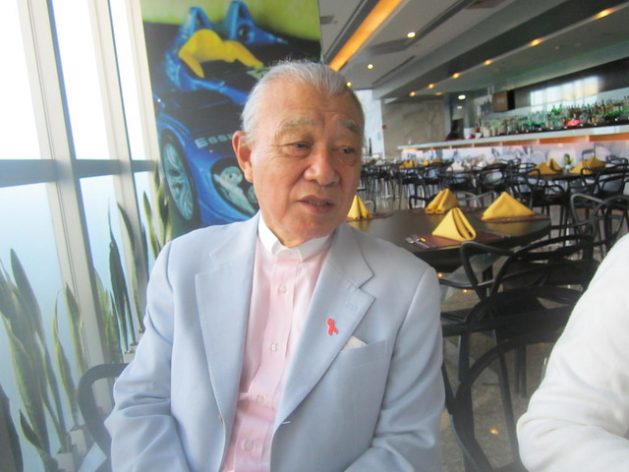
Yohei Sasakawa, president of the Nippon Foundation, is interviewed by IPS in the Brazilian capital, where he concluded a tour of the country aimed at promoting the elimination of Hansen's Disease, better known as leprosy, and also the stigma that make it the "disease of silence.” Credit: Mario Osava/IPS

Yohei Sasakawa, president of the Nippon Foundation, is interviewed by IPS in the Brazilian capital, where he concluded a tour of the country aimed at promoting the elimination of Hansen’s Disease, better known as leprosy, and also the stigma that make it the “disease of silence.” Credit: Mario Osava/IPS

BRASILIA, Jul 10 2019 (IPS) – Yohei Sasakawa has dedicated half of his 80 years of life to combating the “disease of silence” and is still fighting the battle, as president of the Nippon Foundation and World Health Organisation (WHO) goodwill ambassador for elimination of leprosy, formally known as Hansen’s Disease.


His current emphasis is on combating the discrimination, prejudice and stigma that aggravate the suffering of people with leprosy, their families and even those who have already been cured. They also stand in the way of treatment, because people with the disease keep silent out of fear of hostility, he told IPS in an interview in the Brazilian capital.

“I travel around the world and speak out against the discrimination that marginalises those affected by the disease. But these are prejudices that have existed for 2,000 years; they cannot be overcome in two or three years. Many share my viewpoint and accompany me in the struggle. One day the discrimination will end. It is more difficult to cure the disease that plagues society than the illness itself. My effort is to hold a dialogue with presidents and ministers, people in positions of leadership, so that my message acquires political strength and can lead to a solution.”

Sasakawa visited Brazil Jul. 1 to 10, as part of his activism aimed at reducing the prevalence and social impacts of a disease stigmatised since biblical times. In Brasilia, he mobilised President Jair Bolsonaro, legislators and health and human rights officials to promote more intense efforts against the disease.

The idea of holding a national conference on Hansen’s Disease emerged from the meetings, with the political objective of disseminating knowledge and bolstering the disposition to eradicate prejudice, and the technical goal of improving strategies and efforts against the disease.

Brazil is second only to India with respect to the number of new infections diagnosed each year. The country implemented a National Strategy to Combat Hanseniasis from 2019 to 2022, with plans also at the level of municipalities and states, tailored to the specific local conditions.

The Tokyo-based Nippon Foundation is funding several projects and is preparing to support new initiatives in Brazil.

Brazil and Japan abolished the word leprosy from their medical terminology, due to the stigma surrounding it, and adopted the term Hanseniasis to refer to the disease caused by the Mycobacterium leprae bacillus. Sasakawa used this name during his interview with IPS, even though the WHO continues to employ the term leprosy.

IPS: Why did you choose as your mission the fight against Hansen’s Disease and the different kinds of harm it causes to patients and their families?

YOHEI SASAKAWA: It started with my father, the founder of the Nippon Foundation, who as a young man fell in love with a young woman who suddenly disappeared when she was taken far away and put in isolation. My father was appalled by the cruelty and, driven by a spirit of seeking justice, he started this movement. No one discussed the reason she was taken away, but I sincerely believe it was because she had Hanseniasis.

Later my father built hospitals in different places, including one in South Korea, where I accompanied him to the inauguration. On that occasion I noticed that my father touched the hands and legs of the patients, even though they had pus. He hugged them. That impressed me.

I was surprised for two reasons. It frightened me that my father so easily embraced people in those conditions. Besides, I wasn’t familiar with the disease yet. I saw people with a sick, unhealthy pallor. They were dead people who were still alive, the living dead, abandoned by their families.

I was filled with admiration for my father’s work and immediately decided that I should continue it.

IPS: What are the main difficulties in eradicating Hanseniasis?

YS: In general, when faced with a problem specialists and intellectuals come up with 10 reasons why it’s impossible to solve. I have the strong conviction that it is possible, and that’s why I address the problem in such a way that I can identify it and at the same time find a solution.

The people who find it difficult generally work in air-conditioned offices pushing around papers, studying the data. The most important thing is to have the firm conviction that the problem can be solved and then begin to take action.
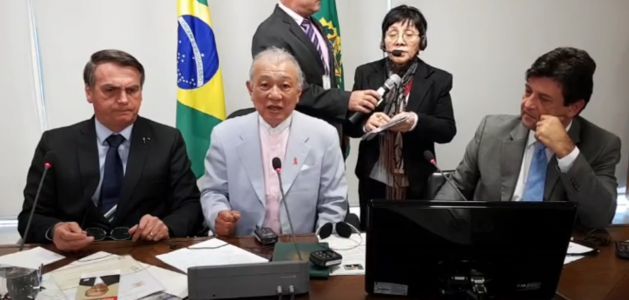
The president of the Nippon Foundation, Yohei Sasakawa (C) is seen meeting with the president of Brazil, Jair Bolsonaro (L), in an IPS screen capture from the video that the president broadcast on Facebook to raise public awareness about the importance of eliminating Hansen's Disease, better known as leprosy, and eradicating the prejudice faced by patients and their families. Credit: IPS

The president of the Nippon Foundation, Yohei Sasakawa (C) is seen meeting with the president of Brazil, Jair Bolsonaro (L), in an IPS screen capture from the video that the president broadcast on Facebook to raise public awareness about the importance of eliminating Hansen’s Disease, better known as leprosy, and eradicating the prejudice faced by patients and their families. Credit: IPS

Since the 1980s more than 16 million people have been cured of Hansen’s Disease. Today, 200,000 patients a year are cured around the world.

IPS: What role do prejudice, stigma and discrimination play in the fight against this disease?

YS: That is a good question. After working for many years with the WHO, focusing mainly on curing the disease, I realised that many people who had already been cured could neither find work nor get married; they were still suffering the same conditions they faced when they were sick.

I concluded that Hanseniasis was like a two-wheeled motorcycle – the front one is the disease that can be cured and the back one is the prejudice, discrimination and stigma that surround it. If you don’t cure both wheels, no healing is possible.

In 2003, I submitted to the United Nations Commission on Human Rights a proposal to eliminate discrimination against Hanseniasis. After seven years of paperwork and procedures, the 193-member General Assembly unanimously approved a resolution to eradicate this problem that affects the carrier of the disease as well as those who have been cured, and their families.

But this does not mean that the problem has been solved, because prejudice and discrimination are the disease plaguing society.

People believe that Hanseniasis is a punishment from God, a curse, a hereditary evil. It’s hard to eradicate this judgment embedded in people’s minds. Even today there are many patients who have recovered and are totally healed, who cannot find a job or get married. In spite of the new laws, their conditions do not improve, because of the prejudice in people’s hearts.

In Japan, several generations of the family of someone who had the disease were unable to marry. This is no longer the case today.

That’s why I travel the world and speak out against the discrimination that marginalises those affected by the disease. But these are prejudices that have existed for 2,000 years; they cannot be overcome in two or three years.

Many share my viewpoint and accompany me in the struggle. One day the discrimination will end. It is more difficult to cure the disease that plagues society than the illness itself.

My effort is to hold a dialogue with presidents and ministers, people in positions of leadership, so that my message acquires political strength and can lead to a solution.

IPS: How did Japan manage to eradicate Hansen’s Disease?

YS: One way was the collective action of people who had the disease. Long-term media campaigns were conducted to spread knowledge about the disease. Movies, books and plays were also produced.

In Japan, Hanseniasis ceased to be the ‘disease of silence’. The nation apologised for the discrimination and compensated those affected. But in other countries, people affected by the disease have not yet come together to fight. Brazil, however, does have a very active movement.

IPS: As an example of what can be done, you cite Brazil’s Movement for the Reintegration of People Affected by Hanseniasis, MORHAN. Are there similar initiatives in other countries?

YS: Morhan really stands out as a model. Organisations have been formed by patients in India and Ethiopia, but they still have limited political influence. The Nippon Foundation encourages such movements.

IPS: You’ve visited Brazil more than 10 times. Have you seen any progress on this tour of the states of Pará and Maranhão, in the north, and in Brasilia?

YS: On that trip we couldn’t visit patients’ homes and talk to them, but we did see that the national, regional and local governments are motivated. We will be able to expand our activities here. In any country, if the highest-level leaders, such as presidents and prime ministers, take the initiative, solutions can be accelerated.

We agreed to organise a national meeting, promoted by the Health Ministry and sponsored by the Nippon Foundation, if possible with the participation of President Jair Bolsonaro, to bolster action against Hanseniasis.

We believe that this would generate a strong current to reduce the prevalence of Hanseniasis to zero and also to eliminate discrimination and prejudice. If this happens, my visit could be considered very successful.

IPS: What would you emphasise about the results of your visit?

YS: The message that President Bolsonaro spread directly to the population through Facebook during our meeting, with his view addressed to all politicians, to his team and and to all government officials on the need to eliminate the disease. I feel as if I have obtained the support of a million people who will work with us.
 

Right to Information in Latin America & the Caribbean

Civil Society, Democracy, Featured, Headlines, Human Rights, Latin America & the Caribbean, Press Freedom, TerraViva United Nations

Opinion

Luis Felipe López-Calva is UN Assistant Secretary-General and UNDP Regional Director for Latin America and the Caribbean

UNITED NATIONS, Jul 9 2019 (IPS) – Transparency is a critical element of making governance more effective. By making information available, it creates a foundation for greater accountability to citizens.


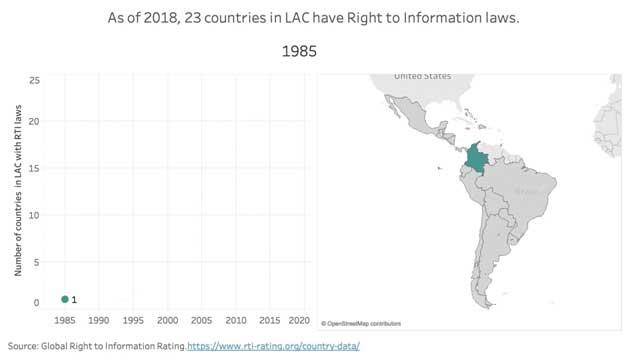
In recent decades, transparency has been on the rise across Latin America and the Caribbean. According to data from the Global Right to Information Rating, 23 countries in LAC have laws securing citizens’ right to information.

Colombia was the first country in the region to pass such a law in 1985, and Saint Kitts and Nevis was the most recent country to do so in 2018.

While transparency is a necessary condition for promoting accountability, it is not a sufficient condition. We can think about transparency as a first step.

While transparency makes information available, we also need publicity to make information accessible, and accountability mechanisms to make information actionable.

Information, per se, is nothing without publicity and accountability. If information does not reach the interested audiences, its effect is negligible. Similarly, even if information reaches the public, if it does not lead to consequences, its effect is not only negligible but potentially harmful.

For example, we have seen, unfortunately, many cases in our region where people can access detailed information about corruption cases, but nothing happens to those who are responsible. This leads to frustration and destroys trust.

Luis Felipe López-Calva

We can think about this progression from transparency to accountability as the “information value chain.” Recently, one way in which the information value chain has been broken in Latin America and the Caribbean is the intentional creation and spread of false information (what is known as “disinformation”).

In many cases these pseudo-facts are created for political purposes and target specific audiences, with the intention to induce certain outcomes (for example, by influencing voting behavior).

This system has been called the “fake news” industry—a term widely used by politicians in recent times. It’s important to note that false information can also be spread unintentionally (what is known as “misinformation”).

The rise of disinformation and misinformation has been facilitated by the rise of technology. Technology—particularly the rise of social media and messaging apps—has reduced the cost of disseminating information to massive audiences.

This has made the “publicity” industry more competitive and created a new social dynamic in which people often take access to information as equivalent to knowledge.

While knowledge is difficult to build and constantly update, information has become easy to get, and public debates are increasingly based on false—and often deliberately false—information.

Indeed, a recent study by scholars at MIT found that false news spreads much more rapidly than true news—and this effect is particularly salient for false political news (in comparison to false news about topics such as terrorism, natural disasters, science, urban legends, or financial information).

According the 2018 Reuters Institute Digital News Report, citizens in LAC countries are facing high exposure to false information, and are very concerned about what news is real and what news is fake on the internet.

In each of the four LAC countries included in the study (Brazil, Chile, Mexico, and Argentina), over 35% of respondents stated that they were exposed to completely made-up news in the last week—reaching as high as 43% of the sample in Mexico.

Moreover, over 60% of respondents stated that they are very or extremely concerned about what is real and what is fake on the internet when it comes to news—reaching as high as 85% of the sample in Brazil.

This high level of concern is consistent with recent experiences with political disinformation in the region—for example, the use of automated bots to influence public opinion in Brazil, Argentina, and Venezuela.

This problem carries with it the concern for broader potential consequences such as deepening political polarization or the erosion of trust in the media. Indeed, over the past few decades years, the dissemination of false information by political parties and levels of political polarization are increasing in tandem in LAC.

This is a challenge not only in LAC, but in many regions around the world. This global preoccupation was reflected in the theme chosen for this year’s World Press Freedom Day—which focused on journalism and elections in times of disinformation.

Several of the countries in Latin America are holding presidential elections later this year: Argentina, Bolivia, Guatemala, and Uruguay. There is a concern in the region about how disinformation campaigns, coupled with microtargeting of political messages and sophisticated online advertising through social networks and online platforms, could affect the outcome of elections.

There is a lot we can do in this area to protect the information value chain and the quality of elections—such as “clean campaign” agreements between political parties, the creation of independent fact-checking services, greater enforcement by social media companies, and the promotion of information literacy among citizens.

In Latin America, these initiatives are still nascent, but they are growing. It is important to recognize, however, that combatting the challenge of disinformation campaigns will require the coordinated action of multiple stakeholders such as electoral courts, the media, civil society, academia and tech businesses (such as Facebook, Google, WhatsApp, and Twitter).

Without a strong coalition of actors, it will be difficult to successfully repair the information value chain and achieve accountability.


​Media and Web Freedom Threatened in Sudan Turbulence

Africa, Civil Society, Featured, Global Governance, Headlines, Human Rights, IPS UN: Inside the Glasshouse, Peace, Press Freedom, Regional Categories, TerraViva United Nations | Analysis

Press Freedom

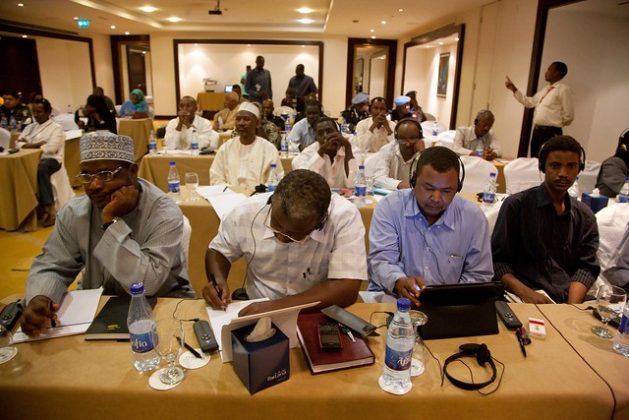
The United Nations said the current internet shutdown in Sudan forms part of a larger effort to stifle the free expression and association of the Sudanese population, and to curtail the ongoing protests in the country. In this dated picture, Sudanese journalists attend a press conference. Courtesy: Albert González Farran /UNAMID

UNITED NATIONS, Jul 9 2019 (IPS) – The United Nations has condemned an internet shutdown and the blocking of social media channels during Sudan’s political crisis, as fears persisted over a crackdown on media freedoms in the turbulent African country.


The U.N.’s independent expert on the human rights situation in Sudan, Aristide Nononsi, and two other officials, said in a statement that web blocking by Zain-SDN and other internet providers was stifling the freedoms of expression and association.

“In the past few weeks, we have continued to receive reports on internet blocking of social media platforms by the Transitional Military Council [TMC],” the experts said, referencing the TMC, which has run Sudan since the ouster of former president Omar al-Bashir in April.

“The internet shut down is in clear violation of international human rights law and cannot be justified under any circumstances. We urge the authorities to immediately restore internet services.”

The statement was co-signed by Clement Nyaletsossi Voule, the U.N.’s Special Rapporteur on rights to freedom of peaceful assembly and of association, and David Kaye, a special rapporteur Special Rapporteur on the promotion and protection of the right to freedom of opinion and expression .

The three officials said mobile operator Zain-SDN was behind the “most extensive blocking scheme” and had closed access to all key social platforms, which are used to share news and to arrange protests. Other providers MTN, Sudatel and Kanartel had also cut web access, they said.

“The internet shutdown forms part of a larger effort to stifle the free expression and association of the Sudanese population, and to curtail the ongoing protests,” the experts said in a statement on Monday.

“Restricting or blocking access to internet services not only adversely affects the enjoyment of the rights to freedom of expression, assembly and participation, but it also has severe effects on protesters demands’ regarding economic and social rights.”

Sudan’s military rulers ordered the internet blackout as a security measure on Jun. 3, when security forces also killed dozens of protesters as they cleared a sit-in outside the Defence Ministry in the centre of the capital, Khartoum.

The web blackout has affected most ordinary users of mobile and fixed line connections and is reportedly harming the economy and humanitarian operations in the African nation of some 40 million people.

Sudanese journalists have also raised concerns about the treatment of reporters during the ongoing political crisis.

On Jun. 20, journalist Amar Mohamed Adam was arrested and detained by the Rapid Support Forces (RSF), a paramilitary outfit under the TMC, before being handed over to the intelligence services, according to the Sudanese Journalists Network.

At the end of May, the TMC also ordered Qatar-based Al Jazeera Television offices in Khartoum closed, with officers from various Sudanese security branches turning up at the premises and seizing broadcast gear.

Sherif Mansour, a regional coordinator for the Committee to Protect Journalists, a watchdog and campaign group, described a “worrying sign” designed “to suppress coverage of pro-democracy events”. He urged the TMC to “reverse course”.

Protesters had been demanding the restoration of internet services as one of their conditions for getting back around the negotiation table with the TMC and forming a transitional administration made up of civilians and military officers.

Hopes were raised of a breakthrough last week, after Sudan’s military chiefs and protest leaders announced they had struck a deal on the disputed issue of a new governing body in talks aimed at ending the country’s months-long political crisis

The two sides reportedly agreed on a joint sovereign council to rule for a little over three years while elections are organised. Both sides say a diplomatic push by the United States and its Arab allies was key to ending a standoff that had raised fears of all-out civil war.


Chilean Schools Recycle Greywater to Combat Drought

Active Citizens, Civil Society, Climate Change, Combating Desertification and Drought, Development & Aid, Editors’ Choice, Education, Environment, Featured, Headlines, Integration and Development Brazilian-style, Latin America & the Caribbean, Population, Poverty & SDGs, Projects, Regional Categories, Special Report, Water & Sanitation

Water & Sanitation

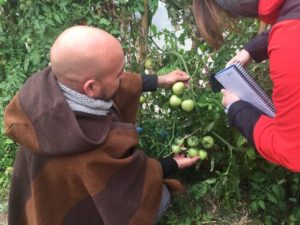
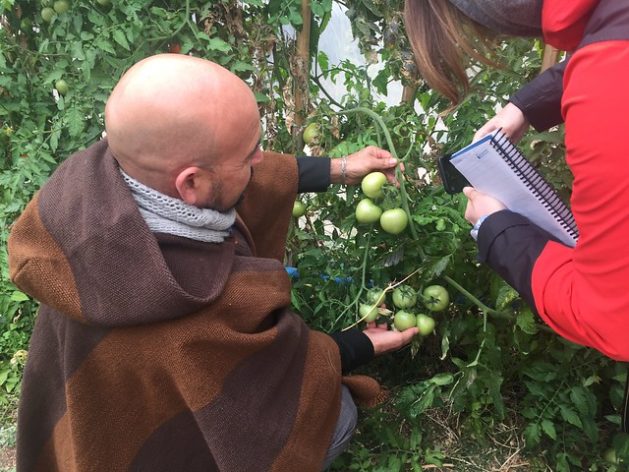
The principal of the Samo Alto rural school, Omar Santander, shows organic tomatoes in the greenhouse built by teachers, students and their families, who raise the crops irrigated with rainwater or recycled water in Coquimbo, a region of northern Chile where rainfall is scarce. Credit: Orlando Milesi/IPS

The principal of the Samo Alto rural school, Omar Santander, shows organic tomatoes in the greenhouse built by teachers, students and their families, who raise the crops irrigated with rainwater or recycled water in Coquimbo, a region of northern Chile where rainfall is scarce. Credit: Orlando Milesi/IPS

OVALLE, Chile, Jul 4 2019 (IPS) – Children from the neighboring municipalities of Ovalle and Río Hurtado in northern Chile are harvesting rain and recycling greywater in their schools to irrigate fruit trees and vegetable gardens, in an initiative aimed at combating the shortage of water in this semi-arid region.


And other youngsters who are completing their education at a local polytechnic high school built a filter that will optimise the reuse and harvesting of water.

“The care of water has to start with the children,” Alejandra Rodríguez, who has a son who attends the school in Samo Alto, a rural village on the slopes of the Andes Mountains in Río Hurtado, a small municipality of about 4,000 inhabitants in the Coquimbo region, told IPS.

“My son brought me a tomato he harvested, to use the seeds. For them, the harvest is the prize. He planted his garden next to the house and it was very exciting,” said Maritza Vega, a teacher at the school, which has 77 students ranging in age from four to 15.

The principal of the school, Omar Santander, told IPS during a tour of rural schools in the area involved in the project that “the Hurtado River (which gives the municipality its name) was traditionally generous, but today it only has enough water for us to alternate the crops that are irrigated, every few days. People fight over watering rights.”

The Samo Alto school collects rainwater and recycles water after different uses. “The water is then sent to a double filter,” he explained, pointing out that they have a pond that holds 5,000 liters.

The monthly water bill is much lower, but Santander believes that the most important thing “is the awareness it has generated in the children.”

“There used to be water here, and the adults’ habits come from back then. The students help raise awareness in their families. We want the environmental dimension to be a tool for life,” he said.

For Admalén Flores, a 13-year-old student, “the tomatoes you harvest are tastier and better,” while Alexandra Honores, also 13, said “my grandfather now reuses water.”

El Guindo primary school, located 10 kilometers from the city of Ovalle, the municipal seat, in a town known as a hotspot for drug sales, performed poorly in tests until three years ago.

At that time, the principal, Patricio Bórquez, and the science teacher, Gisela Jaime, launched a process of greywater recovery. They also planted trees and native species of plants to adapt to the dry environment of the municipality of 111,000 inhabitants, located about 400 kilometers north of Santiago.

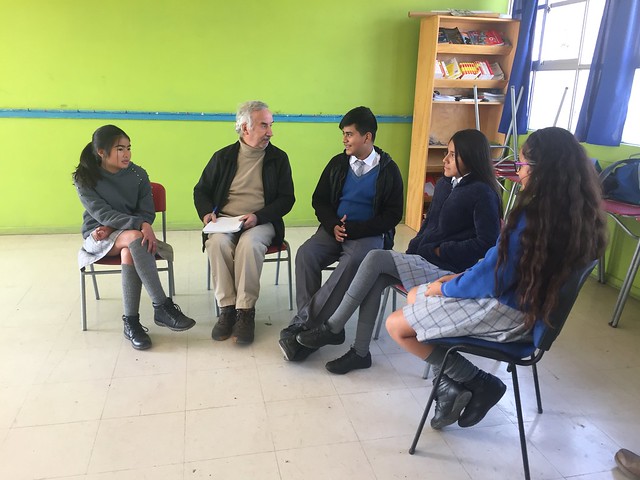
Four students, ages 13 and 14, talk to IPS about how the water reuse project has made them aware of the importance of taking care of water in the semi-arid territory where they live, in a classroom at the rural school of El Guindo, in the municipality of Ovalle, Chile. Credit: Orlando Milesi/IPS

Four students, ages 13 and 14, talk to IPS about how the water reuse project has made them aware of the importance of taking care of water in the semi-arid territory where they live, in a classroom at the rural school of El Guindo, in the municipality of Ovalle, Chile. Credit: Orlando Milesi/IPS

“The project was born because there was no vegetation,” said the teacher. Today they recover 8,000 litres of water a month. “Teaching care for the environment provides a life skill,” said Bórquez.

“Our school had the stigma of being in a place rife with drug addiction. Today in Ovalle we are known as the school with the most programs. We placed third in science,” she said.

Jaime described the experience as “gratifying” because it has offered “tools to grow and create awareness among children and the entire community about the importance of caring for water and other resources.”

Geographer Nicolás Schneider, founder of the “Un Alto en el Desierto” Foundation, told IPS that his non-governmental organisation estimates that one million litres of greywater have been recovered after eight years of work with rural schools in Ovalle.

In this arid municipality with variable rainfall, “only 37.6 mm of rainwater fell in 2018 – well below the normal average for the 1981-2010 period of 105.9 mm,” Catalina Cortés, an expert with Chile’s meteorology institute, told IPS from Santiago.

Schneider describes the water situation as critical in the Coquimbo region, which is on the southern border of the Atacama Desert and where 90 percent of the territory is eroded and degraded.

“Due to climate change, it is raining less and less and when it does, the rainfall is very concentrated. Both the lack of rain and the concentration of rainfall cause serious damage to the local population,” she said.

Innovative recycling filter

With guidance from their teachers, students at the Ovalle polytechnic high school built a filtration system devised by Eduardo Leiva, a professor of chemistry and pharmacy at the Catholic University. The filter seeks to raise the technical standard with which greywater is purified.

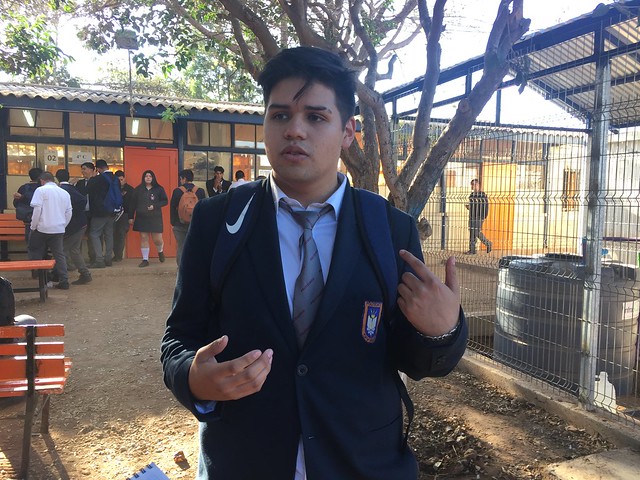
Duan Urqueta, 17, a fourth-year electronics student at the Ovalle polytechnic high school, describes the award-winning greywater filter he helped to build. Initially, units will be installed in eight rural schools in this municipality in northern Chile. Credit: Orlando Milesi/IPS

Duan Urqueta, 17, a fourth-year electronics student at the Ovalle polytechnic high school, describes the award-winning greywater filter he helped to build. Initially, units will be installed in eight rural schools in this municipality in northern Chile. Credit: Orlando Milesi/IPS

The prototype recycles the greywater from the bathrooms used by the 1,200 students at the polytechnic high school. This water is used to irrigate three areas with 48 different species of trees. Similar filters will be installed in eight rural schools in Ovalle.

The quality of the recovered water will improve due to the filter built thanks to a project by the Innovation Fund for Competitiveness of the regional government of Coquimbo, with the participation of the Catholic University, the “Un Alto en el Desierto” Foundation, and the Ovalle polytechnic high school.

The prototype was built by 18 students and eight teachers of mechanics, industrial assembly, electronics, electricity and technical drawing, and includes two 1,000-litre ponds.

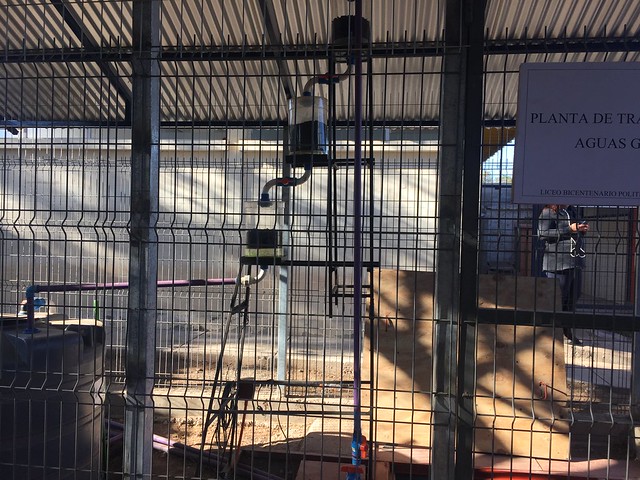
The primary pond holds water piped from the bathroom sinks by gravity which is then pumped to a filter consisting of three columns measuring 0.35 meters high and 0.40 meters in diameter.

“The filter material in each column…can be activated charcoal, sand or gravel,” said Hernán Toro, the head teacher of industrial assembly.

Toro told IPS that “the prototype has a column with zeolite and two columns of activated charcoal. The columns are mounted on a metal structure 2.60 meters high.”

View of the water cleaning filter designed at the Ovalle polytechnic high school and built by a group of teachers and students with funding from the government of the region of Coquimbo, in northern Chile. Each unit costs 2,170 dollars and it will promote water recycling in the schools in the semi-arid municipality. Credit: Orlando Milesi/IPS

View of the water cleaning filter designed at the Ovalle polytechnic high school and built by a group of teachers and students with funding from the government of the region of Coquimbo, in northern Chile. Each unit costs 2,170 dollars and it will promote water recycling in the schools in the semi-arid municipality. Credit: Orlando Milesi/IPS

The water is pumped from the pond to the filter’s highest column, passes through the filter material and by gravity runs sequentially through the other columns. Finally, the water is piped into the secondary pond and by means of another electric pump it reaches the irrigation system.

Duan Urqueta, a 17-year-old electronics student, told IPS that they took soil and water samples in seven towns in Ovalle and “we used the worst water to test the filter that is made here at the high school with recyclable materials.”

In 2018, “we won first place with the filter at the Science Fair in La Serena, the capital of the region of Coquimbo,” he said proudly.

Pablo Cortés, a 17-year-old student of industrial assembly, said the project “changed me as a person.”

Toro said the experience “has been enriching and has had a strong social impact. We are sowing the seeds of ecological awareness in the students.”

“It’s a programme that offers learning, service, and assistance to the community. Everyone learns. We have seen people moved to the point of tears in their local communities,” the teacher said.

Now they are going to include solar panels in the project, which will cut energy costs, while they already have an automation system to discharge water, which legally can only be stored for a short time.

Eight schools, including the ones in Samo Alto and El Guindo, are waiting for the new filters, which cost 2,170 dollars per unit.

Schneider believes, however, that at the macro level “water recycling is insufficient” to combat the lack of water in this semi-arid zone. And he goes further, saying “there is an absence of instruments for territorial planning or management of watersheds.”

“Under the current water regulatory framework, the export agribusiness, mainly of fruit, has taken over the valleys, concentrating water use…and the government turns a blind eye,” he complained.


Sri Lanka on Security Alert Long After Easter Bombings

Asia-Pacific, Civil Society, Featured, Global, Global Governance, Headlines, Human Rights, IPS UN: Inside the Glasshouse, Peace, TerraViva United Nations

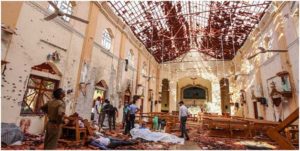
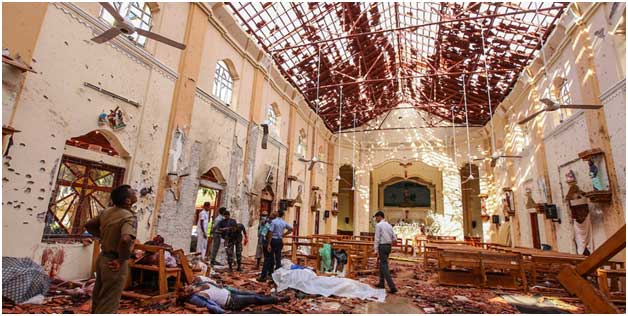
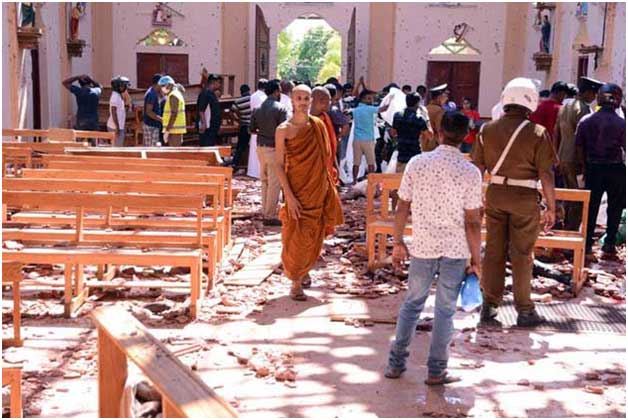
NEW YORK, Jul 3 2019 (IPS) – Sri Lanka continues to be on a security alert long after the devastation caused by a string of bombings on Easter Sunday this year.

Raisa Wickrematunge, Editor of Groundviews, told IPS: “There has been a tightening of security. There are now security checks being carried out outside hotels and shopping malls – either through scanners or bag and body searches”.


“At the St Anthony’s Church, where the first blast occurred, there are bag and body searches conducted before worshippers can go inside, and bags are left outside the Church premises. Many churches and some schools have also increased their security.”

Curfews were put into place and a social media ban was enacted temporarily, in order to prevent the graphic nature of the tragedies from being broadcast publicly. There has been much damage of the emotional and physical varieties in the once war ridden nation.

For one thing, this attack was not expected by the Christian minority in Sri Lanka. Despite this, they have persevered.

Father Rohan Dominic of the Claretian NGO told IPS: “For quite some time, there were attacks on the Muslim and Christian minorities by extremist Buddhists. In places, where the Buddhists were the majority, Christians lived in fear.”

However, in a turn of events that left many in shock, one of the minority groups seemed to be the ones that initiated the attacks that occurred on Easter.

All seven of the perpetrators allegedly belonged to a local Islamist group, National Thowheeth Jama’ath, according to government officials from the country.

In response to this, there have been bans put in place for burqas and niqabs, traditional facial coverings worn by Muslims and people have been denied entrance into establishments, even while wearing hijabs.

There were smaller bombings in Dematagoda and Dehiwala later on that same day. With a death toll of 290 people and 500 injured, domestic measures to protect the citizens were taken.

After its 26 year long civil war between the Tamil and Sinhalese ethnic groups came to an end in 2009, conditions in Sri Lanka were mostly calm.

However, on 21 April, 2019, the country erupted into violence. Three churches in the cities of Negombo, Batticaloa and Colombo, along with three hotels in the city of Colombo, were targeted in bombings by a group of seven Sri Lankan citizens.

The churches were St. Sebastian’s Church, Shrine of St. Anthony Church and Zion Church and the hotels were Cinnamon Grand, Kingsbury Hotel and Shangri-La Hotel.

Sri Lanka is a country that is primarily Buddhist with a large Hindu population and Christian and Muslim minorities.

Father Dominic said that, “The Catholic Church in Sri Lanka was able to recover from the attack quickly and aided the survivors and the families of the victims by consoling and caring for them. The Church also has guided the Christian community at moments of anger and frustration in controlling their emotions and not to blame the Muslims. This position of the Church has helped to prevent violence and created common understanding and religious harmony.”

According to Wickrematunge, there has been much help in helping the community adjust to life after the attacks and in restoring what has been lost.

Other efforts have been led by organisations such as the Red Cross, Kind-hearted Lankans, the Archbishop of Colombo and the Church of the American Ceylon Mission in Batticaloa. There have also been crowdfunding efforts on popular websites like GoFundMe.

Since the attacks have affected lives in a physical and emotional way, the state has given financial support to the affected as of 21 June.

There has also been a trust fund set up for children who have lost family members to the attacks.

Some of the industries affected, such as tourism, have been offered subsidized loans in order to help with paying employees. Psychological support and educational resources are being provided to citizens as well.

While it has only been three months since the attacks affected the lives of many, steps towards rebuilding have been made and the future appears to be promising.


Are We Fighting a Losing Battle in the War Against Drugs?

Civil Society, Crime & Justice, Featured, Global, Global Governance, Headlines, Human Rights, IPS UN: Inside the Glasshouse, Peace, Poverty & SDGs, TerraViva United Nations

UNITED NATIONS, Jul 3 2019 (IPS) – How effective is the global war on drugs?

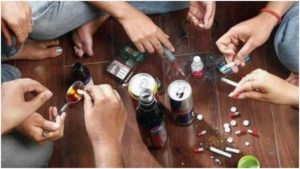
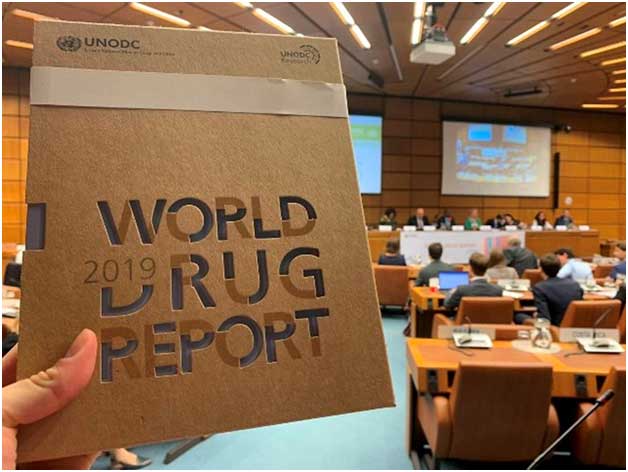
The latest statistics released by the UN Office on Drugs and Crime (UNODC) are staggering: 35 million people across the globe currently have a substance use disorder, and as of 2017, 585,000 people have died worldwide as a result of drug use.


According to a recently-released UNODC report, the lack of proficient drug treatment and facilities for those that need it is impacting mortality rates at alarming levels.

Hence, it stands to reason that treatment and prevention are immensely falling short of the mark on a global scale.

Prisons are also no exception to these shortcomings. In fact, the Report unmasked that those incarcerated for drugs are more likely to continue being exposed to drugs.

The Report also highlighted that out of the 149 countries that were surveyed, about 1 in 3 people reported that they consumed drugs in prison at least once while incarcerated, and 1 in 5 people who are currently incarcerated reported that they have used drugs within the past month.

“In terms of data, we did some data collection, always trying to get as much as possible, in terms of socio-economic characteristics, we would have this type of data, I imagine, and this is also something that will run throughout the new report, and is being discussed now.” Chloé Carpentier, Chief of the Drug Research Section told IPS.

The issue between drugs and human rights is on Secretary General António Guterres’ radar as well.

“Together, we must honour the unanimous commitments made to reduce drug abuse, illicit trafficking and the harm that drugs cause, and to ensure that our approach promotes equality, human rights, sustainable development, and greater peace and security.” Secretary General António Guterres stated on the International Day Against Drug Use and Illicit Trafficking.

“We will make sure that no one with a drug problem is left behind” Dr. Miwa Kato assured, during the official launch of the Report on June 26.

Dr. Kato continued to push this message throughout her speech and cited that “Health and justice need to work hand in hand.”

Beyond the UN, this is a topic of interest for the academia world as well, since young people are heavily susceptible to a substance use disorder.

“It is important that we say people— not user or addicts, that language itself is stigmatizing.” Dr. Danielle Ompad, Associate Professor, College of Global Public Health and Deputy Director, Center for Drug Use and HIV Research at New York University (NYU) told IPS.

Dr. Ompad highlighted the importance of person-first language, citing that “It is important how we refer to people, and view them as humans, and not just the behavior (the substance use).

In terms of the World Drug Report, she noted that “The war on drugs, if you look at it, hasn’t really been an effective war”, and elaborated that the focus should not be supply- side intervention, because in the long run, drugs are going to be produced and sold no matter what, which leads to mass incarceration, which doesn’t benefit any party.

It is also important to recognize that “not everyone needs treatment, and those that do should absolutely have access to it. But just because you use marijuana does not mean you are an addict”.

She went on to suggest a harm- reduction approach. The harm-reduction approach blends a plethora of strategies from safer use to managed use to abstinence- it meets the need of the person.

www.HarmReduction.org

Meanwhile, tracing back to the issue of treatment, the Report affirmed that over 80% of the world’s population lack access to adequate treatment with only 1 out of 7 people with a substance use disorder receiving treatment each year.

The Report showcased that women cited a strong sense of fear that kept them from seeking the help that they needed for a variety of reasons that ranged from possible legal issues to the lack of childcare while in treatment.

Another issue is several countries, particularly in Asia, is the death penalty for any person found guilty of a drug ‘offense.’

Last month, Sri Lanka’s President, Maithripala Sirisena signed death warrants for four convicts- thus pushing the notion that those who have a substance use disorder are ‘dirty’ and should be disposed of.

Similarly, in a 2014 study conducted by Johns Hopkins Bloomberg School of Public Health, it was shown that having a substance use disorder was viewed more negatively than mental illness. Ironically, however, the two are all but intertwined.

This is also evidenced by the Report- about half of the world’s population that develop a mental disorder will also experience a substance use disorder in their lifetime.

However, it is to be noted, that despite all of the above, the Report only cited the “lack of effective treatment interventions based on scientific evidence and in line with human rights obligations.” but made no further elaborations on the what’s and how’s and was only discussed briefly at the official Report launch.

That said, the issue of ensuring those that do have a substance use disorder are provided for while figuring out more beneficial and healthier initiatives to reduce drug rates across the globe are currently being discussed among the United Nations (UN) and United Nations Office on Drugs and Crime (UNODC).

Dr. Ompad said for better or worse, licit, and illicit drug use is part of our world.

“Focus a little bit more on harm reduction,” Dr. Ompad stated, and above all “We need to stop the war on the people who use drugs,” she declared.