Toothless Global Financial Architecture Fuelling Africa’s Climate Crisis

Africa, Biodiversity, Climate Action, Climate Change, Climate Change Finance, Climate Change Justice, Conferences, Editors’ Choice, Environment, Featured, Food and Agriculture, Headlines, Humanitarian Emergencies, Sustainable Development Goals, TerraViva United Nations

Climate Change Justice

Africa needs approximately USD 579.2 billion in adaptation finance over the period 2020 to 2030, and yet the current adaptation flows are five to 10 times below estimated needs.
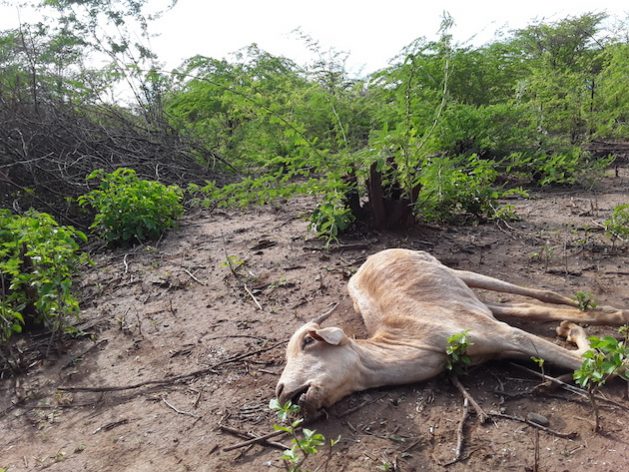
 

This goat died of starvation while surrounded by an inedible invasive plant. Lives hang in the balance as Kenya’s dryland is ravaged by a severe prolonged drought. Credit: Joyce Chimbi/IPS

This goat died of starvation while surrounded by an inedible invasive plant. Lives hang in the balance as Kenya’s dryland is ravaged by a severe prolonged drought. Credit: Joyce Chimbi/IPS

NAIROBI, Sep 5 2023 (IPS) – As thousands convene in Kenya’s capital, Nairobi, for the Africa Climate Summit, the first time the African Union has summoned its leaders to solely discuss climate change under the theme ‘Driving Green Growth and Climate Finance Solutions for Africa and the World’, the backdrop is a country on the frontlines of a climate crisis.


The severe, sharp effects of climate change are piercing the very heart of an economy propped up by rainfed agriculture and tourism – sectors highly susceptible to climate change. After five consecutive failed rainy seasons, more than 6.4 million people in Kenya, among them 602,000 refugees, need humanitarian assistance – representing a 35 per cent increase from 2022.

It is the highest number of people in need of aid in more than ten years, says Ann Rose Achieng, a Nairobi-based climate activist. She tells IPS that Kenya is hurtling full speed towards a national disaster in food security as “at least 677,900 children and 138,800 pregnant and breastfeeding women in Kenya’s arid and semi-arid regions alone are facing acute malnutrition. Nearly 70 per cent of our wildlife was lost in the last 30 years.”

Despite Kenya contributing less than 0.1 per cent of the global greenhouse gas emissions per year, the country’s pursuit of a low carbon and resilient green development pathway produced a most ambitious Nationally Determined Contribution (NDC) to cut greenhouse gasses by 32 per cent by 2030 in line with the Paris Agreement.

But as is the case across Africa, there are no funds to actualise these lofty ambitions. Africa needs approximately USD 579.2 billion in adaptation finance over the period 2020 to 2030, and yet the current adaptation flows to the continent are five to ten times below estimated needs. Globally, the estimated gap for adaptation in developing countries is expected to rise to USD 340 billion per year by 2030 and up to USD 565 billion by 2050, while the mitigation gap is at USD 850 billion per year by 2030.
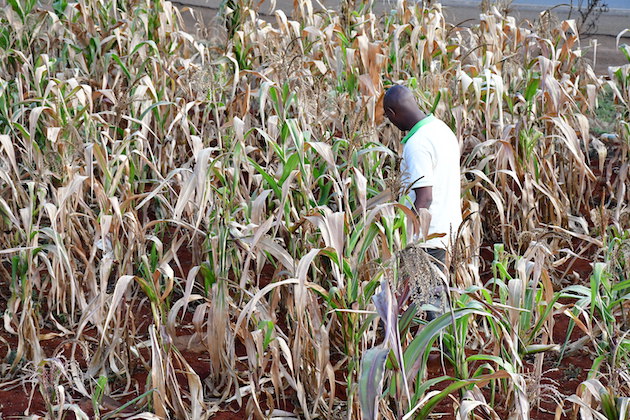
After five consecutive failed rainy seasons, food insecurity is expected to escalate as maize crop has failed to flourish due to erratic weather patterns. Credit: Joyce Chimbi/IPS
After five consecutive failed rainy seasons, food insecurity is expected to escalate as maize crop has failed to flourish due to erratic weather patterns. Credit: Joyce Chimbi/IPS

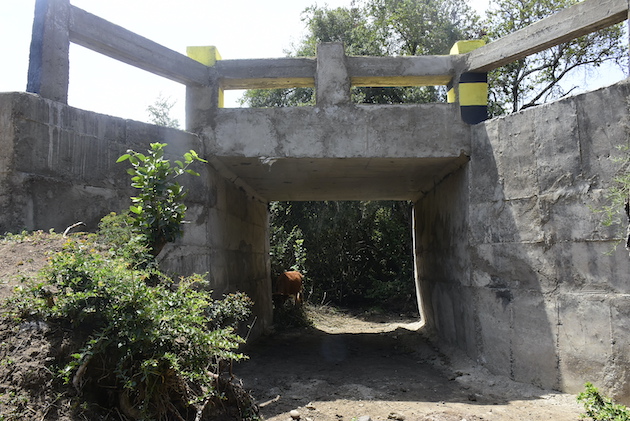
As dams and rivers dry up, Kenya will continue to be on the frontlines of a climate crisis unless climate change adaptation and mitigation efforts are escalated. Credit: Joyce Chimbi/IPS

As dams and rivers dry up, Kenya will continue to be on the frontlines of a climate crisis unless climate change adaptation and mitigation efforts are escalated. Credit: Joyce Chimbi/IPS

Frederick Kwame Kumah, Vice President of Global Leadership African Wildlife Foundation, tells IPS a big part of the problem is Africa’s burgeoning gross public debt which increased from 36 per cent of Gross Domestic Product (GDP) to 71.4 per cent of GDP between 2010 and 2020 – a drag on its development progress and a disincentive for climate finance flows.

“There is a concern that climate finance, if and when provided, will be used to first service Africa’s debt burden. The first step to addressing Africa’s Climate Finance must be action towards debt relief for Africa. Freeing up debt servicing arrangements will release resources for continued development and climate finance purposes,” Kumah explains.

He says there is an urgent need to challenge the existing unfair paradigm for financing by developing countries. It is very expensive for developing countries to borrow for development purposes. Africa must then leverage its natural capital towards seeking innovative financing mechanisms such as green bonds and carbon credits to address its development and climate change challenges.
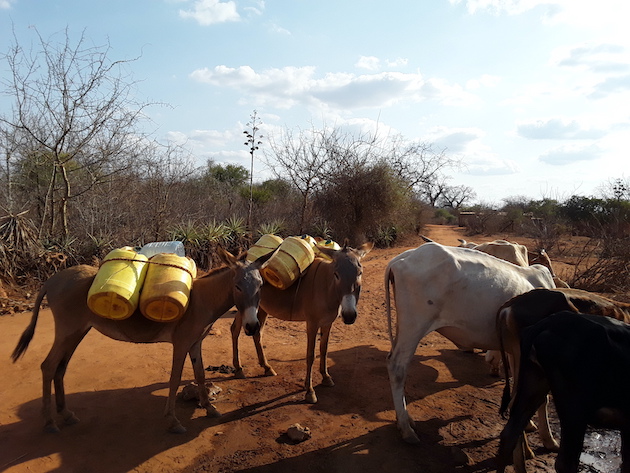
Nearly half, 23 out of 47 counties in Kenya, are classified as arid and semi-arid. Livelihoods are at risk as pastoralists are unable to cope with drastic weather changes. Credit: Joyce Chimbi/IPS
Nearly half, 23 out of 47 counties in Kenya, are classified as arid and semi-arid. Livelihoods are at risk as pastoralists are unable to cope with drastic weather changes. Credit: Joyce Chimbi/IPS

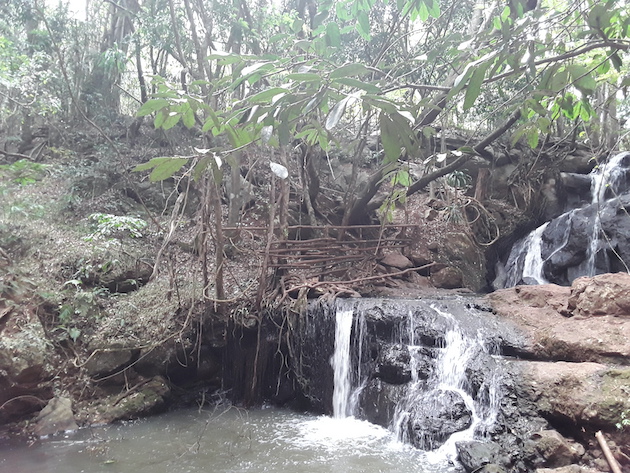
This waterfall is on the verge of drying up. Kenya's economy is heavily dependent on tourism and agriculture. The two sectors are highly susceptible to climate change. Credit: Joyce Chimbi/IPS

This waterfall is on the verge of drying up. Kenya’s economy is heavily dependent on tourism and agriculture. The two sectors are highly susceptible to climate change. Credit: Joyce Chimbi/IPS

“Climate finance was, as expected, a key part of COP27. It is a grave concern for Africa that developed countries’ commitment to provide $100 billion annually has yet to be met, even though the need for finance is becoming increasingly obvious. In COP27, we noted that new climate finance pledges were more limited than expected. Countries such as those in Africa are still waiting for previous pledges to be fulfilled,” says Luther Bois Anukur, Regional Director, IUCN (International Union for Conservation of Nature).

Meanwhile, Anukur tells IPS negotiations on important agenda items, most notably the new finance target for 2025, stalled. In COP27, Parties concentrated on procedural issues – deferring important decisions about the amount, timeframe, sources, and accountability mechanisms that may be relevant to a new finance goal in the future. African countries and many other vulnerable countries are in the fight for our lives, and sadly they are losing.

Anukur stresses that Africa’s natural resources are depleted, eroded, and biodiversity lost due to extreme effects of climate change leading to loss of lives and ecosystem services and damage to infrastructure at an alarming rate. Yet climate finance pledges have not materialised. The Africa Climate Summit should be the platform for Africa and developing partners to address existing finance gaps with clear programmatic and project approaches.

Africa must use the Summit to assess and prepare their position for the COP28 in the United Arab Emirates towards strengthening partnerships for the delivery of desired climate finance. Kumah adds that the principle of equal but differentiated responsibilities of nations must be adhered to for climate justice and to enable developing countries, who are least responsible for the effects of climate, to have much-needed resources to cope and adapt to biodiversity loss and climate change.

“In that respect, the creation of a dedicated funding mechanism to address loss and damage and another for adaptation and mitigation to redress historical and continued inequities in contributions towards biodiversity loss and climate change. We must rethink how private investments can be reshaped and harnessed for the benefit of biodiversity and climate action,” Kumah expounds.

“Private investments can be scaled through green bonds, carbon markets, sustainable agricultural, forestry and other productive sector supply chains.  Transformative financing architecture is necessary at the domestic and international levels to bring the private and public sectors together to secure the critical backbone of Africa’s natural infrastructure.”
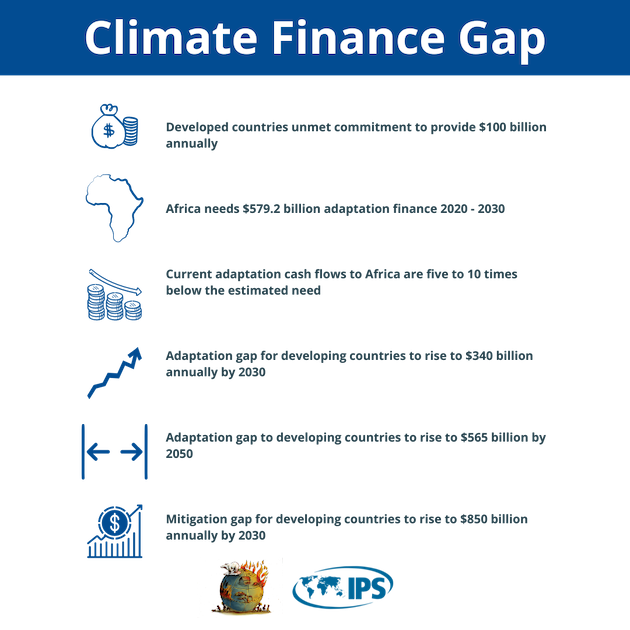
Climate finance gap. Graphic: Joyce Chimbi & Cecilia Russell

Climate finance gap. Graphic: Joyce Chimbi & Cecilia Russell

While developing countries submitted revised and ambitious National Adaptation Plans and NDCs as requested, Anukur says complicated processes to access financing for their climate actions persist. Stressing the need for reforming the international financial architecture, starting with multilateral development banks.

“The 2023 Summit for New Global Financing Pact held in Paris committed to a coalition of 16 philanthropic organizations to mobilize investment and support UN’s SDG priorities by unlocking new investment for climate action in low- and middle-income countries while reducing poverty and inequality,” Anukur observes.

Civil society organizations and activists such as Achieng have expressed concerns that such announcements are insufficient considering the scale of the challenges facing planet Earth. The Summit will have failed if the global financial architecture is not overhauled in line with the needs of the African continent, she says.

Anukur says the Summit must therefore propel Africa to new heights of climate financing to help reduce Africa’s vulnerability to climate change and increase its resilience and adaptive capacity in line with the Global Goal on Adaptation. Ultimately expressing optimism that the opportunity to unlock the potential of climate financing – breaking the shackles of debt and building a climate-resilient and prosperous Africa is, at last, in sight.

IPS UN Bureau Report


Lawmakers Call on G20 to Prioritise Spending on Youth, Gender, and Human Security

Asia-Pacific, Conferences, Development & Aid, Gender, Headlines, Humanitarian Emergencies, Population, Poverty & SDGs, Sustainable Development Goals, Youth

Population

Asian Parliamentarians believe it’s important to prioritise spending on ageing and youth populations. Credit: APDA

Asian Parliamentarians believe it’s important to prioritise spending on ageing and youth populations. Credit: APDA

NEW DELHI, Sep 5 2023 (IPS) – Legislators from around the world, this week, officially submitted to the Sherpa of the G20 meeting set for September in New Delhi a declaration calling on governments to prioritise spending on ageing, youth, gender, human security, and other burning population issues.


The submission to the G20 Sherpa follows a workshop held on August 22 in New Delhi to discuss the Declaration first presented at the G7 Hiroshima summit in April by the Global Conference of Parliamentarians on Population and Development (GCPPD) under the UNFPA

“We have now submitted the Declaration to Amitabh Kant, Sherpa to the G-20 so that it can be taken up,” Manmohan Sharma, Executive Secretary of the Indian Association of Parliamentarians on Population and Development (IAPPD), told IPS.

Deepender Hooda, Vice Chair of the AFPPD and a member of India’s Parliament, said the workshop in New Delhi was significant not only because India is hosting the G-20 summit but also because India was expected to have overtaken China as the world’s most populous country reaching 1,425,775,850 people in April.

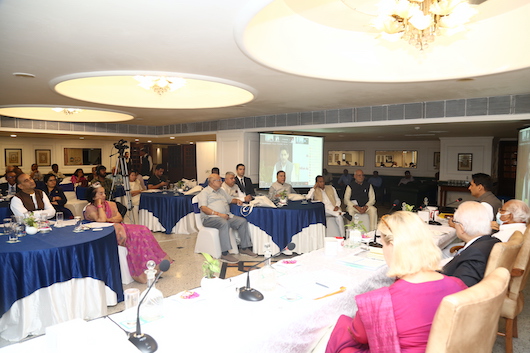
Lawmakers met in New Delhi to discuss the prioritisation of resources to prepare a declaration to the G20. Credit: APDA

Lawmakers met in New Delhi to discuss the prioritisation of resources to prepare a declaration to the G20. Credit: APDA

Keizo Takemi, member of the House of Councillors, Japan, and Chair of the AFPPD, observed that India faced many challenges that are hard to overcome, and these included the large size of its population, limited school attendance, and a high rate of unemployment. “Prioritisation of population issues is the most important,” he emphasised.

Hooda, a leader of the opposition Congress party from the state of Haryana, said he was concerned at the dwindling budgetary outlay in social sectors like health and education over the last few years in India. “Currently, for some reason, inclusive growth in education and health has fallen,” he told delegates.

A presentation to the workshop by Suneeta Mukherjee indicated that India is among the top five nations leading the ‘out-of-school’ category, with 1.4 million children in the 6-11-years-old age category not attending school. Also, out of every 100 students, 29 per cent drop out of school before completing elementary education.

Mukherjee, an Indian career bureaucrat who has served at the UNFPA, said the situation appeared to be worsening at the upper primary level given that the dropout rate at the upper primary level had gone up to 3 per cent in 2021-2022 while it was only 1.9 per cent in 2020-2021. The annual dropout rate of secondary school students was 14.6 in 2020-2021.

Citing recent studies in her presentation, Mukherjee said 36 per cent of Indians between the ages of 15 and 34 believe that unemployment is the biggest problem facing the country. She said one survey showed 40 per cent of graduates identified unemployment as their most pressing concern.

Said P.J. Kurien, chairperson of IAPPD: “It is important that all MPs take up population-related issues. They need to ask what percentage of the budget is devoted to education and health and ensure that every child goes to school with special attention given to girls.”

Echoing Kurien, Sharma said it was up to members of parliament to ensure that no child is left out in his or her constituency. “The solution is in your hands, but the prioritisation is missing.”

Delegates outlined at the workshop legislative steps taken by Parliamentarians in their countries in implementing the International Conference on Population Development’s Programme of Action and 2030 Agenda.

Josephine Veronique Lacson-Noel, Member, House of Representatives of the Philippines, said over the last two decades, her country had enacted such legislations as the Magna Carta of Women, Reproductive Health Law, 105-Day Expanded Maternity Leave, Act Prohibiting Child Marriage, Universal Health Care Act, Youth Council Reform and Empowerment Act, and an Act to enable conditional cash transfers.

On the anvil, she said, is the Adolescent Pregnancy Prevention Bill, a law to recognise, evaluate and redistribute unpaid care and domestic work done by women, and another to accord social protection for older persons and the promotion of active aging.

For 2023, the budget allocation for reproductive health was $14.9 million dollars, and that for training teachers to implement comprehensive sexuality education was $13.8 million, Lacson-Noel said.

Andrea W. Wojnar, UNFPA India representative and country director for Bhutan, said with the right expertise and skills, India’s 1.4 billion people could be turned into 1.4 billion opportunities.

Wojnar said India, with its large youth cohort — its 254 million youth in the 15-24 age bracket — can be a source of innovation and solutions, especially if girls and women are provided educational opportunities and skills to access new technologies and are empowered to fully exercise their reproductive rights and choices.

With close to 50 per cent of its population below the age of 25, India has a time-bound opportunity to benefit from the demographic dividend, according to Wojnar.

“Women and girls should be at the centre of sexual and reproductive policies and programmes. When rights, choices, and equal value of all people are truly respected and held, only then can we unlock a future of infinite possibilities,” Wojnar said in a statement.

“As the national fertility rate falls below 2.1 (the replacement level), India is at a unique historical opportunity, witnessing a great demographic transition as a youthful nation,” Wojnar said, adding that India also has the largest number of outmigrants and is affected by ageing, urbanisation and issues around sustainable development.

Wojnar warned that, overall, the Asia Pacific region was six times more likely to be affected by disaster events than other regions and is highly susceptible to changing weather patterns, calling for special attention by governments.

The Declaration presented to the Sherpa of the G-20 called on governments, among other things, to implement comprehensive legislation and policies that address all forms of gender-based violence and eradicate harmful practices such as child marriage, early and forced.

It also called for investment in sexual and reproductive health and rights, as well as comprehensive sexuality education toward making future societies economically dynamic and for building peaceful, inclusive, and sustainable societies. Support for political and economic participation by women and girls could ensure the development of societies that guarantee liberty and individual choice for women and girls, it said.

Governments were asked to promote and assure equitable access to health innovation, finance, technology, and medicines in the global community which can support human security, leaving no one behind.

Acknowledgement of the grave impacts of environment/climate change and global warming was important, as also the need to promote policies that address the needs of geographically vulnerable countries, which is a threat to health and human security, the Declaration said.

Investing in young people by providing decent work opportunities and enabling them to become a driving force for sustainable development was important as also addressing active and healthy ageing to enhance people’s overall quality of life by improving areas such as health and long-term care through resilient universal health coverage, physical security, and income stability.

Governments were also asked to enact national legislation and policies and ensure political will through allocation, oversight, and monitoring of budgetary resources to build universal health coverage, which is vital to enhance the global health framework.

IPS UN Bureau Report

  Source

Alleviating Urban Poverty Through Livelihood Generation

Aid, Asia-Pacific, Civil Society, Development & Aid, Featured, Headlines, Humanitarian Emergencies, Poverty & SDGs, Sustainable Development Goals, TerraViva United Nations

Poverty & SDGs

BRAC International recently signed a memorandum of understanding with the Bihar Government’s Rural Livelihoods Promotion Society to launch Satat Jeevikoparjan Yojana Shahari, the first government-led urban Graduation programme in Asia. Credit: BRAC

BRAC International recently signed a memorandum of understanding with the Bihar Government’s Rural Livelihoods Promotion Society to launch Satat Jeevikoparjan Yojana Shahari, the first government-led urban Graduation programme in Asia. Credit: BRAC

PUNE, INDIA, Aug 30 2023 (IPS) – In a bid to tackle the complexities of urban poverty, the Government of Bihar’s Rural Livelihoods Promotion Society (BRLPS) has launched Satat Jeevikoparjan Yojana Shahari (SJY Urban). The program will include a time-bound series of multifaceted interventions addressing food security, social inclusion, and sustainable economic livelihoods to enable participating households to achieve a better standard of living.


As part of this program, BRLPS has signed a Memorandum of Understanding (MoU) with BRAC International, which will serve as a thought partner to the Government of Bihar for the project development and also is building a consortium of partners to support the government in its implementation. Project Concern International (PCI), for example, is taking on management responsibilities and will also host thematic workshops across departments and with civil society experts to support inclusive learning and dialogue.

Mobile Creches will create a community cadre of childcare providers who will support maternal and child health. They have a 50-year-old history of providing childcare support, maternal and nutritional health, and WASH training to urban women in the slums of Delhi, Mumbai, and Pune. Quicksand will support the learning process to consolidate the design through ethnographic methods, prototyping, and other design elements. These learnings will help inform the project about the fabric of each respective urban community and provide a feedback loop once the rollout starts.

SJY Urban was inspired by the existing rural programme, Satat Jeevikoparjan Yojana (SJY), locally known as JEEVIKA, the largest government-led Graduation programme in the world, which has reached over 150,000 households as of early 2023 and is still expanding. SJY Urban is modelled on the rural programme’s six basic modules: 1) Building up the aspirations and confidence of households; 2) Financial Inclusion; 3) Improvement of Health, Nutrition, and Sanitation; 4) Social Development; 5) Livelihood generation; and 6) Government Convergence.

While taking inspiration from JEEVIKA, the Urban Programme will be adapted to respond to the unique challenges people in poverty face within the urban context.

“Urban poverty is complex and inadequately addressed,” said Shweta S Banerjee, Country Lead – India, BRAC International. “SJY Shahari is a unique project in the many challenges it has accepted, including supporting project participants during extreme heat waves. BRAC is excited and committed to serving as a thought partner to the Government of Bihar as we take the time to test, learn, relearn, and deploy the project design.”

Applying Learnings from the Rural Programme to the Urban

The 36-month SJY Urban Programme will be launched in five wards in Patna and five wards in Gaya for now and will be scaled up in a year’s time. Given the unique challenges in urban settings, where research and solutions are more limited in comparison to rural settings, the programme will incorporate learnings from the SJY programme.

“In keeping with the requirements in an urban setting, we intend to provide improved skill sets in carpentry, plumbing, welding, and the like that can help workers access better employment opportunities both within and outside Bihar. For instance, there are around 50,000 to 100,000 Bihar workers in the Tiruppur hosiery industry. We intend to provide them with the necessary skill certification through the National Skill Development Council,” Jeevika CEO Rahul Kumar told IPS.

Designed with a focus on women’s empowerment, SJY has made a pronounced difference for people living in extreme poverty in Bihar, particularly through inclusive livelihood development and access to financial security through self-help groups (SHGs). The urban programme will also utilise SHGs to improve financial opportunities along with sustainable livelihood options.

While the livelihood options are different, there is still a great opportunity for skill development for people living in urban poverty. JEEVIKA plans to pursue livelihoods for participants through conventional entrepreneurship, building up specific skills for trades, and partnerships with public utilities. The existing bank sakhi programme, a program that has trained rural women to assist customers in opening accounts and other administrative bank-related services, as part of JEEVIKA, saw 2,500 bank sakhis leverage Rs 10,000 crore in business for various banks.

According to Rahul Kumar, the bank sakhi programme could be introduced in across Bihar and offer additional financial products such as insurance and mutual funds.

There are also climate-responsive livelihoods that have been utilised in the rural programme that can work for an urban setting as well, such as waste management, recycling of waste, and the use of e-rickshaws. With climate change contributing to rapid urbanisation across Asia and driving millions more into poverty, affecting those furthest behind first, sustainable, resilient livelihood development will be a critical component of SJY Urban. The programme will work to further enhance resilience among participants by providing them with resources and training to develop food security and social inclusion.

Creating a Stronger Ecosystem Through Convergence

Similar to the rural programme, SJY Urban will bring together different existing government schemes and agencies to best serve those living in extreme poverty. The programme will also leverage the existing enterprises within the rural programme and promote them in the urban programme as well, such as market poultry and dairy products.

There are existing livelihood initiatives that rural participants are driving forward, such as running nurseries across the state, which have provided saplings to the Environment, Forest, and Climate Change Department for planting. These saplings can be used by urban plantations and gardens that are also under the department. Similarly, there are kiosk carts that sell Neera or palm nectar that are processed and made by JEEVIKA participants. There is an opportunity to expand this enterprise to the urban setting as well.

JEEVIKA will also engage other government agencies to support the design and implementation of the urban programme. Most recently, JEEVIKA and BRAC convened an inaugural workshop in preparation for launching the Urban Poor Graduation Project, in collaboration with the Departments of Urban Development and Housing, Labour Resources, Social Welfare, Women and Child Development Corporation. The workshop brought together government representatives and experts with diverse sectoral expertise to reflect on existing solutions for urban poverty and share key insights that could help inform the design and delivery of the Urban Poor Graduation Project. The workshop also brought together practitioners and leveraged knowledge from Graduation-based programmes outside Bihar and India.

The shared expertise and convergence in existing government schemes and partnerships will allow the programme to address unique challenges facing the urban environment and enhance coordination, which will ultimately improve overall impact.

Challenges and Learning Opportunities in an Urban Environment

This will be one of the first urban Graduation programmes at scale that combine skills development and livelihood support to alleviate urban poverty.

The unique constraints presented by the urban environment in Bihar, such as limited land availability, the migratory nature of the population in urban poor neighbourhoods, and heatwaves impacting the ability to work, present an opportunity to learn and adapt programming further to test what works.

“The kind of social cohesion prevalent in rural areas is lacking in urban centres. This makes social mobilisation, on which the programme rests, a difficult task,” Kumar said.

The first phase in designing the programme, along with the learnings from the first cohort of participants, will offer valuable insights on how to combat the challenges of those living in urban poverty face. Such learnings can then be shared across the Global South to support broader efforts to respond to rapid urbanisation and an increase in urban poverty.

SJY Urban is poised to move head-on, with its consultants scheduled to hammer out a clear strategy in the coming months. In a year’s time, Kumar says the programme aims to cover all 240 urban local bodies in the state.
IPS UN Bureau Report

  Source

Empowering Women in Assam: Livestock Farming Brings Economic Relief Post-COVID

Aid, Asia-Pacific, Civil Society, Development & Aid, Editors’ Choice, Featured, Food and Agriculture, Food Security and Nutrition, Food Sustainability, Headlines, Humanitarian Emergencies, Poverty & SDGs, Sustainable Development Goals, TerraViva United Nations

Food and Agriculture

Goat rearing is contributing to economic independence and improved livelihoods of women thanks to a post-COVID-19 empowerment project. CREDIT: Umar Manzoor Shah/IPS

Goat rearing is contributing to economic independence and improved livelihoods of women thanks to a post-COVID-19 empowerment project. CREDIT: Umar Manzoor Shah/IPS

MILONPUR, INDIA, Aug 8 2023 (IPS) – Seema Devi is a 39-year-old woman hailing from India’s northeastern state of Assam. She lives in a village called Milonpur, a small hamlet with no more than 1 000 inhabitants. While most men from the village, including Devi’s husband, move to cities and towns in search of work, women are left behind to take care of the house and kids.


Devi says that after the COVID-19 lockdown in India in the year 2020, the family income drastically plummeted. As most of the factories were shut for months, the workers, including Devi’s husband, were jobless. Even after the lockdown ended and workers were called back to the factories, the wages dipped.

“Earlier my husband would earn no less than Rs 10 000 a month (125 USD), and after the lockdown, it wasn’t more than a mere 6 000 rupees (70 USD). My children and I would suffer for the want of basic needs like medicine and clothing, but at the same time, I was considerate of the situation and helplessness of my husband,” Devi told IPS.

However, there were few alternatives available at home that could have mitigated Devi’s predicament. With the small area of ancestral land used for cultivation, the change in weather patterns caused her family and several households in the village to reap losses.

However, in 2021, a non-government organization visited the hamlet to assess the situation in the post-COVID scenario. The villagers told the team about how most of the men in the village go out to cities and towns in search of livelihood and work as labourers in factories and that their wages have come down due to economic distress in the country.

After hectic deliberations, about ten self-help groups of women were created. They trained in livestock farming and how this venture could be turned into a profitable business.

The women were initially reluctant because they were unaware of how to make livestock farming profitable. They would ask the members of the charitable organisation questions like, “What if it fails to yield desired results? What if some terrible disease affects the animals, and what if the livestock wouldn’t generate any income for them?”

Wilson Kandulna, who was the senior member of the team, told IPS that experts were called in to train the women about cattle rearing and how timely vaccinations, proper feed, and care could make livestock farming profitable and mitigate their basic living costs. “At first, we provided ten goat kids to each women’s group and made them aware of the dos and don’ts of this kind of farming. They were quick to learn and grasped easily whatever was taught to them,” Wilson said.

He added that these women were living in economic distress due to the limited income of their husbands and were desperately anxious about the scarcity of proper education for children and other daily needs.

Devi says that as soon as she got the goat kids, she acquired basic training in feeding them properly and taking them for vaccinations to the nearby government veterinary hospital.

“Two years have passed, and now we have hundreds of goats as they reproduce quickly, and we are now able to earn a good income. During the first few months, there were issues like feeding problems, proper shelter during monsoons and summers, and how and when we should take them out for grazing. As time passed and we learned the skills, we have become very trained goat rearers,” Devi said.

Renuka, another woman in the self-help group, told IPS that for the past year, they have been continuously getting demands for goat milk from the main towns. “People know about the health benefits of goat milk. They know it is organic without any preservatives, and that is the reason we have a very high demand for it. We sell it at a good price, and at times, demand surpasses the supply,” Renuka said.

For Devi, livestock farming has been no less than a blessing. She says she earns more than five thousand rupees a month (about 60 USD) and has been able to cover daily household expenses all by herself. “I no longer rely on my husband for household expenses. I take care of it all by myself. My husband, too, is relieved, and things are getting back on track,” Devi said, smiling.

Kalpana, a 32-year-old member of the group, says the goats have increased in number, and last year, several of them were sold in the market at a good price.

“The profits were shared by the group members. Earlier, women in this village were entirely dependent on their husbands for covering their basic expenses. Now, they are economically self-reliant. They take good care of the house and of themselves,” Kalpana told IPS News.

Note: Names of some of the women have been changed on their request.

IPS UN Bureau Report

  Source

Afghan Girls, Women Deprived of Education, Find Hope in Africa

Shabana Basij-Rasikh, co-founder and President of SOLA, speaks at the Women Deliver conference in Rwanda. Credit: Aimable Twahirwa/ IPS

Shabana Basij-Rasikh, co-founder and President of SOLA, speaks at the Women Deliver conference in Rwanda. Credit: Aimable Twahirwa/IPS

By Aimable Twahirwa
KIGALI, Aug 1 2023 (IPS)

When providing education to her small group of Afghan girls, who had been studying at a boarding school back home, became tenuous, Shabana Basij-Rasikh, relocated them to Rwanda.


She had set up a pioneering school under the project SOLA, the Afghan word for peace, and a short form for School of Leadership Afghanistan. But as the Taliban swept to power in August 2021, she closed the doors of the school, destroyed any school records which could help identify the girls, and on August 25, relocated 250 members of the SOLA community, including the student body and graduates from the programme, totally more than 100 girls, to Rwanda.

Basij-Rasikh, co-founder and SOLA’s President said a major challenge had been the lack of resources and capacity to teach Afghan girls after the return of the Taliban deprived right to education of girls in secondary schools and above.

As the Taliban swept back into power in Afghanistan in the summer of 2021, Shabana Basij-Rasikh, the founder of the nation’s only all-girls boarding school, initially ran the school out of a former principal’s living room. But that soon became untenable.

Speaking on the sidelines of The Women Deliver 2023 Conference (WD2023), which took place in Kigali from 17-20 July 2023, Basij-Rasikh, who completed her undergraduate studies in the United States, explained that when Kabul fell under the control of the Taliban, she managed within a short time to evacuate the entire school community to Rwanda.

“Although we managed to move the school to a safe country, it is still embarrassing and shameful for me since Afghanistan is the only country in the world where women and girls’ access to education has been suspended,” she said.

Initially, SOLA started as a scholarship program where Afghan youth would be identified and could access quality education abroad and, later on, go back to their home country as highly-skilled Afghans in whichever profession they chose.

“When the US announced that they were to withdraw their troops in Afghanistan, it created a lot of anxiety among young Afghans who were in the West hoping to return to the country.”

Basij-Rasikh regrets that some of her former students, who were able to leave Afghanistan after the Taliban’s return, are still struggling to continue their education overseas.

“We wish to see many Afghan girls return to schools,” she said, explaining that the migration status of the students in many countries restricted their access to education.

Since the school opened last year’s admissions season, Shabana Basij-Rasikh and her team have been inviting Afghan girls worldwide to apply and join the rest in Rwanda. Last year they enrolled 27 girls in their first intake.

“The major challenge is that there are several hundreds of thousands of girls who want to join our campus, but space is limited, and so places are being granted on merit and need,” Shabana told IPS.

Shabana argues investing in girls’ education is a smart investment; she is convinced that the current situation in Afghanistan must and should not be accepted or supported by any country around the world.

On September 18, 2021, a month after taking over the country, the Taliban ordered the reopening of only boys’ secondary schools. A few months later, in March 2022, according to human rights organizations, the Taliban again pledged to reopen all schools, but they officially closed girls’ secondary schools.

“These girls deserve the opportunity to realize their full potential, and the international community has an important role to play,” Shabana said.

UNESCO’s latest figures show that 2,5 million or 80 percent of school-aged Afghan girls and women are out of school.  The order suspending university education for women, announced in December last year, affects more than 100,000 students attending government and private institutions, according to the UN agency.

On the sidelines of the Women Deliver Conference 2023, Senegalese President Macky Sall pledged that his government would offer 100 scholarships for women who have seen their right to education decimated under Taliban rule in Afghanistan to pursue their university degrees in Senegal.

Rwanda is one of several African countries that agreed to temporarily host evacuated Afghans.

Sall, who was reacting to the concerns raised by Basij-Rasikhat, said his Government was ready to give chance to Afghan girls to pursue their studies.

So far, SOLA school has received 2,000 applications across 20 countries where some Afghans are living.

In 2022, it received 180 applications from Afghans living in 10 countries, but only 27 girls were admitted.

“That explains how families in Afghanistan are ready to support the girls in moving abroad to pursue their education,” Shabana said.

“Boarding schools that allow Afghan girls to study and live together are the best way to promote their education.”

IPS UN Bureau Report


!function(d,s,id){var js,fjs=d.getElementsByTagName(s)[0],p=/^http:/.test(d.location)?’http’:’https’;if(!d.getElementById(id)){js=d.createElement(s);js.id=id;js.src=p+’://platform.twitter.com/widgets.js’;fjs.parentNode.insertBefore(js,fjs);}}(document, ‘script’, ‘twitter-wjs’);  

Civil Society Space in Southern Africa Shrinking as Government Repression Rises

Several Southern African countries have or are in the process of enacting legislation that limits the civil society space, with implications for human rights. Credit: CIVICUS Monitor

Several Southern African countries have or are in the process of enacting legislation that limits the civil society space, with implications for human rights. Credit: CIVICUS Monitor

By Busani Bafana
BULAWAYO, Jul 31 2023 (IPS)

Freedom of expression is under threat as governments in Southern Africa have enacted laws restricting civil society organizations, says global rights advocacy organisation, CIVICUS, warning that human rights violations are on the increase globally.


“The state of civil society is unfortunately not improving; civil restrictions continue across the world,” said David Kobe, the advocacy Lead at CIVICUS.

“More than 2 billion people live in countries that are rated as closed, which is the worst rating any country can have – this means that 28 percent of the world’s population are not able to speak out when there is corruption or human rights violations restrictions or cannot write articles as journalists without facing appraisals,” Kobe told IPS in an interview, noting that the organization’s human rights tool is indicating growing suppression of civil space across the world.

The CIVICUS Monitor, a tool accessing the state of civic space in more than 190 countries, provides evidence of restrictions on human rights by governments. The CIVICUS Monitor rates the state of civil space ‘open, ‘repressed’, and ‘closed’ according to each country.

Kobe notes that human rights violations are increasing globally with more restrictions on civil society in Australia, the United Kingdom and the United States. The picture is not different in the Southern Africa region where restrictions on civil space have been continuing, and these have included censorship, violent response to protests and restrictive laws as seen in Angola, Mozambique and Zimbabwe

Closing Civil Society Space

Zimbabwe remains on the CIVICUS Monitor Watchlist as attacks on civic space continue ahead of the scheduled 2023 national elections.

Last November, Zimbabwe approved the Criminal Law (Codification and Reform) Amendment Bill, 2022, known as the Patriotic Act. The law seeks to create the offence of “wilfully damaging the sovereignty and national interest of Zimbabwe” and will essentially criminalise the lobbying of foreign governments to extend or implement sanctions against Zimbabwe or its officials.

Furthermore, the Zimbabwe government gazetted the Private Voluntary Organisations Amendment Bill in November 2021, amending the Private Voluntary Organisations Act, which governs non-profit organizations. The main aim of the Bill is to comply with the Financial Action Task Force (FATF) recommendations to strengthen the country’s legal framework to combat money laundering, financing terrorism and proliferation.

Civil society organizations warn that the Bill could hinder their activities and financing with potential adverse impacts on economic development. Besides, NGOs argue that they are a low-risk sector with no precedence of financing terrorism and money laundering.

Musa Kika, Executive Director of Zimbabwe Human Rights NGO Forum, says the PVO will affect the operations of NGOs, including deterring donors from funding PVOs, fearing the money could end up under the grip of the government. Besides, the Bill has a provision giving the Minister of Justice unfettered powers to place under supervision or surveillance, using subjective discretion, those PVOs the Minister deems to be high risk.

“Continued hostility and harassment on the part of the government towards the work of CSOs in the country will thus only result in a hugely detrimental effect on their efforts in advancing the protection of and respect for the basic human rights and freedoms of ordinary Zimbabwean civilians as espoused under Zimbabwe’s Constitution,” Kika said. He noted that civil society organisations were operating in a tough environment in Zimbabwe where the government does not trust them, especially those working in the fields of governance and human rights.

“We have a government that does not want to account,” said Kika. “We have had many human rights activists who have been arrested on flimsy charges…Terrorism finance is being used as a cover, but the motive is to close the democratic space because the government and accountability in human rights and governance are sworn enemies.”

In Zimbabwe, NGOs have, in partnership with the government, supported development, providing a range of services in health, education, social protection, humanitarian assistance, environmental management, emergency response and democracy building.  A research report commissioned by the Zimbabwe Human Rights NGO Forum in collaboration with the Southern Defenders and Accountability Lab has warned of huge job and financial losses if the Bill is passed into law.

United Nations experts have urged Zimbabwe’s President Emerson Mnangagwa to reject enacting a bill that would severely restrict civic space and the right to freedom of association in the country.

However, President Mnangagwa has defended the passage of the PVO Bill, vowing to speedily “sign it into law once it reaches my desk”. In a commentary in his weekly column published by the government-owned Sunday Mail, Mnangagwa said signing the bill into law will usher Zimbabwe into a “new era of genuine philanthropic and advocacy work, unsullied by ulterior political or financial motives.”

Mnangagwa said the law was meant to defend the country from foreign infiltration.

Engendering Patriotism but Endangering Democracy

Zimbabwe has also recently approved another repressive law known as the ‘Patriot Act’.

“The Patriotic Act is an extremely repressive and unconstitutional piece of legislation that has serious ramifications for citizens’ rights, particularly the rights of freedom of expression in the lead up to the elections,” human rights lawyer, Dough Coltart, tells IPS in an interview.

“There is a very real need to educate the citizens on what the ramifications of this Act are for people’s lives because the Act has far-reaching consequences for the entire country and will essentially stifle any public dialogue around the challenges we are facing as a country.”

“The Patriot law is a bad piece of legislation which is an affront to the practice of ethical journalism in Zimbabwe,” Njabulo Ncube, Coordinator of the Zimbabwe National Editors’ Forum (ZINEF), told IPS. “It stinks to the highest skies as it criminalizes the practice of good journalism. It is anti-media freedom and free expression…civil society organisations have also been caught in the mix; they cannot effectively make government account for its actions.”

Democracy Dimming

The situation in Zimbabwe is echoed in some countries across Southern Africa, where governments are cracking down on CSOs in the name of protecting national sovereignty and the threats of money laundering and terrorism financing.

In Angola, the country’s National Assembly, on May 25 2023, passed a draft NGO Statute, which CSOs have criticized for limiting freedom of association by giving the state excessive powers to interfere with civil society activities.

According to the Movimento de Defensores de Direitos Humanos de Angola (Movement of Human Rights Defenders of Angola, KUTAKESA), the government has targeted civil society with legislation that is meant for terrorists and money launderers, though it has never been proven in any court that a CSO has committed an act of terrorism in Angola.

On the contrary, the rationale of this legislation constitutes institutional terrorism, the target of which are CSOs, said Godinho Cristóvão, a jurist, human rights defender and executive director of KUTEKA in an interview with the CIVICUS Monitor.

“The Angolan authorities should have aligned themselves with the democratic rule of law and respected the work of CSOs and HRDs,” Cristóvão is quoted as saying.

“Instead, there has been an increase in threats, harassment and illegal arrests of human rights defenders who denounce or hold peaceful demonstrations against acts of bad governance and violations of citizens’ rights and freedoms. There have been clear setbacks with regard to the guarantee of fundamental rights and freedoms enshrined in the constitution, as well as the rights set out in the African Charter on Human and Peoples’ Rights and other human rights treaties Angola has ratified.”

In Mozambique, a new NGO on Anti-Money Laundering and Terrorist Financing Act, which overregulates CSOs, is seen as the death knell for the civic movement in the country. The Act was approved in October 2022 under the pretext of fighting terrorism. It has further curtailed freedoms of expression, information, press, assembly and public participation.

Paula Monjane, Executive Director of the Civil Society Learning and Capacity Building Centre (CESC), a Mozambican non-profit civil society organisation, said currently, the legislation was being proposed to silence dissenting voices and people fighting for better governance of public affairs and the protection of human rights in the country.

The draft Anti-Money Laundering and Terrorism Financing Act law establishes a legal regime for the creation, organisation and functioning of CSOs, and Monjane highlighted that it contains several norms that violate freedom of association despite this right being safeguarded by the constitution and international human rights treaties.

“It gives the government absolute and discretionary powers to ‘create’, control the functioning of, suspend and extinguish CSOs,” said Monjane, adding, “If the bill is approved, it will legitimise already existing practices restricting civic space, allowing the persecution of dissenting voices and organisations critical of the government, up to banning them from continuing to operate.”

Monjane said if the bill is passed into law CSOs in Mozambique will push for it to be declared unconstitutional and will ask the African Union, through the African Commission on Human and Peoples’ Rights, and the United Nations, through the Special Rapporteur on the rights to freedom of peaceful assembly and of association to urgently condemn it.

On actions to foster human rights and human rights defenders, Kobe said civil society organisations must be supported to hold governments accountable for upholding national and international human rights conventions that they have subscribed to.

The Universal Periodic Review, an assessment of the state of civic and human rights of a country over a four-year period, provides recommendations to governments enabling them to open civic space and remove restrictive laws.

“Governments need to implement the recommendations of the UPR and not treat them as a formality for them to be seen by the international community as respecting human rights when they are not,” said Kobe, adding that encouraging governments to implement the 2030 Agenda on Sustainable Development was also a way of getting them to see development alongside human rights.

IPS UN Bureau Report


!function(d,s,id){var js,fjs=d.getElementsByTagName(s)[0],p=/^http:/.test(d.location)?’http’:’https’;if(!d.getElementById(id)){js=d.createElement(s);js.id=id;js.src=p+’://platform.twitter.com/widgets.js’;fjs.parentNode.insertBefore(js,fjs);}}(document, ‘script’, ‘twitter-wjs’);  

Source