As a Humanitarian Crisis Engulfs Afghanistan, Education Cannot Wait Makes Urgent Appeal for Access to Quality Learning for All Children

Civil Society, Development & Aid, Editors’ Choice, Education, Education Cannot Wait. Future of Education is here, Featured, Headlines, Human Rights, Humanitarian Emergencies, Inequity, Middle East & North Africa, TerraViva United Nations

Education Cannot Wait. Future of Education is here
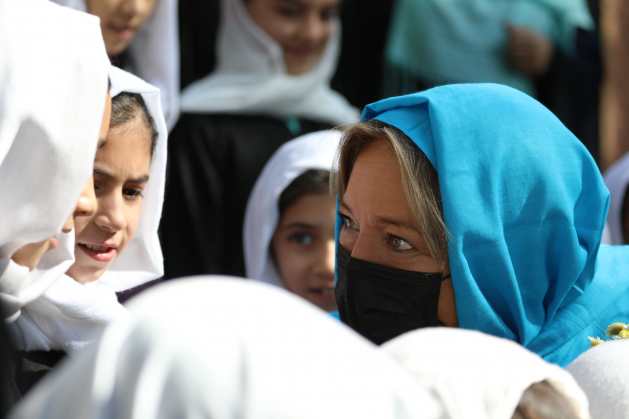
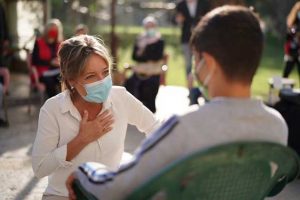
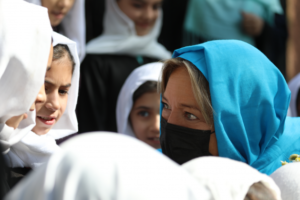
Yasmine Sherif, Director of Education Cannot Wait, is welcomed by teachers and students at a girls’ primary school in Kabul, Afghanistan.
Credit: Omid Fazel/ECW

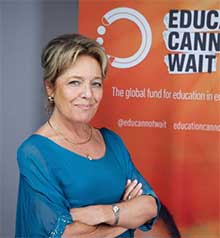
New York, Nov 5 2021 (IPS) – After leading a landmark, first-ever all-women mission to Afghanistan last week, Yasmine Sherif, Director of Education Cannot Wait, the United Nations global fund for education in emergencies and protracted crises, says that schools must reopen for all children and that girls, in particular, must be able to return to secondary school classrooms.


Sherif visited a girls’ school in Kabul and spoke to students, female teachers, and administrators as part of her Afghan mission. She also met with the de facto education authorities at the Ministry of Education to advocate the right of all children to quality education. The ECW mission comes less than a month after ECW launched a US$4 million First Emergency Response grant to provide ‘quality, flexible learning and psychosocial support for children and adolescents caught in the escalating crisis.

“We need to act fast. When you are in the midst of a humanitarian emergency like Afghanistan, where there is no money in circulation, starvation is a very real fact and poverty is extreme,” Sherif told IPS. “Schools need to continue to reopen and education must be sustained. Not only at primary school levels but through secondary schools – and girls have to go back to secondary schools.”

Sherif, a human rights lawyer, worked in Afghanistan in the early 1990s. She was part of a mission to the country after the first Taliban takeover in 1999 and has visited the country periodically over the last 20 years. She spoke to IPS about her observations from this ground-breaking mission to Kabul a few days ago – the first of its kind since the Taliban take-over in August.
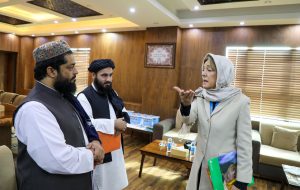
Yasmine Sherif, Director of Education Cannot Wait, meets with de facto education authorities in Afghanistan.
Credit: Omid Fazel/ECW

“There are more women on the streets of Kabul today. I even saw women demonstrating for health care. I visited a girls’ primary school whose teachers and administration were all women,” Sherif said.

“The school’s headmaster is a woman, the school’s doctor is a woman, administrators and teachers are women. There are educated, strong women who are working, but they do not get salaries, because there are no salaries for basic services as a result of the funding freeze to Afghanistan.”

The World Bank, the International Monetary Fund, and the European Union are just a few of the international bodies that have cut off Afghanistan’s access to financing. According to the World Bank, the country relies on grant funding for more than 75 percent of public spending, with expenditure of US$411 billion and government revenue of US$2.5 billion.

With that grant funding frozen, the country is on the brink of economic collapse.

Sherif is appealing for direct funding through UN agencies like ECW and UNICEF, which has the proven mechanisms in place to ensure that funds are used to support teachers and students.

“Teachers are not being paid. UNICEF has a very strong process on the ground. If money were to be given today or tomorrow to pay all teacher salaries, UNICEF has capacities in place to deliver on that funding, even if this would typically have been done through the World Bank or other development actors, but now we are in humanitarian crisis so you cannot use regular development aid approaches,” Sherif told IPS.

“The same goes for all UN agencies like the World Food Programme and UNHCR, the UN Refugees agency. Funding can be channeled through them directly to implement aid programmes. Nothing needs to, nor will go through, the de facto authorities.”

The ECW Director is cautiously optimistic following her meeting with the de facto education authorities, to whom she appealed for a return to secondary school for girls.
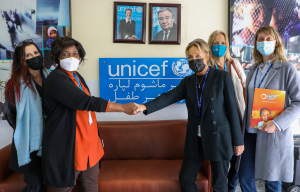
UNICEF Deputy Representative Alice Akunha and Chief of Education Jeannette Vogelaar greet the Education Cannot Wait all-women delegation to Afghanistan, led by Director Yasmine Sherif and her colleagues, Michelle May and Anouk Desgroseilliers.
Credit: Omid Fazel/ECW

“Primary schools have opened for girls’ education and for girls’ secondary education, the de facto authorities told us that they are developing a plan. I stressed that the girls have no time to lose and that the benefits of educating girls are crucial to the future of the country,” she said.

The ECW Director has commended international and national civil society organizations that now work with religious scholars as they negotiate the resumption of secondary school education at the grassroots level. “By bringing an Islamic scholar with them, these NGOs have actually managed to build trust. So secondary schools have opened in some provinces, a few in the north and a few in the south. It is important to stand firm on human rights and girls’ rights, but you must also have the ability to build trust as well,” she said.

ECW is already prepared to swiftly scale up its support and adapt its programming in Afghanistan. New challenges and more children in need of help demand pivoting and quick response. Sherif says ECW was created for crises like these.

“As the UN’s global fund for education in emergencies and protracted crises, we are agile, quick, and flexible. We use decades of lessons learned across the UN system to respond to crises. Traditional development aid modalities that are not crisis-sensitive are not going to work; not in this situation,” she said.

Sherif says that an estimated $1 billion is urgently required for United Nations agencies and international and local NGOs to meet the pressing education needs across the country.

“It’s about how can we save the Afghan population from a humanitarian catastrophe. How can we ensure that every Afghan girl and boy in the country can go to primary and secondary school? It’s about how we can ensure that teachers receive their salaries, so they are able to continue to teach. It is about providing teaching and learning materials and safe learning environments. It is about ensuring that the rights of adolescent girls to access education are fulfilled. That is why it was important for us to do an all-women mission to Afghanistan and to make clear where we stand on girls’ education.”

Sherif is hoping that the visit can give the world an open window view into life in Afghanistan and provide concrete recommendations for international aid to be immediately scaled up and invested to support quality education for both girls and boys.

“Afghanistan cannot wait. The girls of Afghanistan cannot wait. Education cannot wait.”
  Source

COP26 Could Get Hot, but Southern African Region Needs it to be Cool and Committed

Africa, Biodiversity, Climate Action, Climate Change, Conferences, Environment, Featured, Food and Agriculture, Headlines, Humanitarian Emergencies, TerraViva United Nations

Climate Action

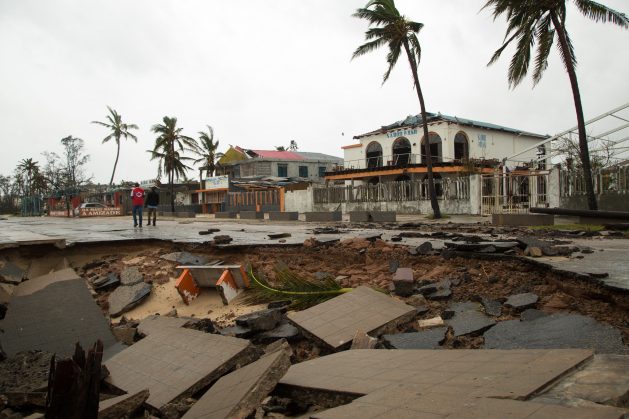
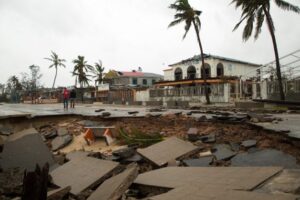
The Southern African region is particularly vulnerable to climate change while only being responsible for a fraction of emissions. It is hoped that COP26 will deliver tangible benefits to the area which has already suffered severe impacts of climate change like the effects of Cyclone Idai, Mozambique, in March 2019. Credit: Denis Onyodi: IFRC/DRK/Climate Centre

Johannesburg, Oct 26 2021 (IPS) – COP26 is almost upon us, and dire warnings abound that it’s boom or bust for a greener future. Meanwhile, everybody boasts about what they will do to cool down our planet, but there is a disjuncture between talk and action. Even Queen Elizabeth II of the host country, the United Kingdom, has grumbled publicly that not enough action is taking place on climate change.


In the Southern Africa region, the SADC’s member countries are clear that the developed countries must stump up the money to help them deliver their promises to reduce carbon emissions and carry out a raft of measures to combat global warming. All the SADC countries are signatories to the Paris Agreement.

The region has joined the cry of other African countries that the continent suffers most from climate change but hardly contributes to the causes of the phenomenon – emitting less than 4% of the world’s greenhouse gasses.
According to research undertaken on behalf of the UN, climate change adaptation needs for Africa were estimated to be $715 billion ($0.715 trillion) between 2020 and 2030.

In southern Africa, each country has its own Nationally Developed Contribution plan for dealing with climate change, including costs. Of course, funding will be needed to achieve these goals. Developing countries have pledged a $100bn annual target to help the developing world tackle climate change. All the Southern African countries will need a slice of this funding. The Green Climate Fund was established under the Cancun Agreements in 2010 as a dedicated financing vehicle for developing countries.

In the lead up to COP26, the fund is under scrutiny. Tanguy Gahouma, chair of the African Group of Negotiators at COP26, has said: “African countries want a new system to track funding from wealthy nations that are failing to meet the $100bn annual target.”

The Organisation for Economic Co-operation and Development (OECD) estimates this funding stood at $79.6bn in 2019. OECD data reveals that from 2016-19 Africa only got 26 percent of the funding.

Gahouma said a more detailed shared system was needed that would keep tabs on each country’s contribution and where it went on the ground.

“They say they achieved maybe 70 percent of the target, but we cannot see that,” Gahouma said.
“We need to have a clear road map how they will put on the table the $100bn per year, how we can track (it),” he said. “We don’t have time to lose, and Africa is one of the most vulnerable regions of the world.”

Amar Bhattacharya, from the Brookings Institution, says about the fund, “Some progress has been made – but a lot more needs to be done.”

Denmark’s development coordination minister Flemming Møller Mortensen has warned that only a quarter of international climate finance for developing countries goes to adaptation.

COP26 may turn into a squabble over money and perhaps an attack on developed countries as they are blamed for creating the problems of climate change in the first place by using fossil fuels for the last two centuries. G20 countries account for almost 80% of global greenhouse gas emissions.

Again, it is all about the money. Many developed countries do not want to change; their economies (and their rich elites) are wedded to fossil fuels. There are also problems with paying for adaptation. Will the rich countries fund the developing countries to green themselves up?

Southern Africa will need to deal pragmatically with the outcomes of COP26 as it becomes crucial to deal with climate change impacts – like the vulnerability to intense storms like Cyclone Idai, which hit Mozambique in March 2019. Credit: Denis Onyodi: IFRC/DRK/Climate Centre

Professor Bruce Hewitson, the SARCHI Research Chair in Climate Change Climate System Analysis Group, Dept Environmental & Geographical Sciences at the University of Cape Town, told IPS: “The well-cited meme that Africa is the continent most vulnerable to climate change impacts is true, as is the common response that Africa needs external aid to implement adaptation and development pathways compatible to climate mitigation. However, such messages hide a myriad of political realities about the difference between what is ideal and what is likely.”

Hewitson argues that what emerges from COP26 is an exercise in hope and belief.

“It’s a tightrope walk trying to balance competing demands and self-interests. At the end of the day, Africa will need to pragmatically deal with a compromised outcome and face the climate challenges as best possible under limited resources,” he says.

If Africa goes to COP26 with a begging bowl attitude, it could face the risk of dancing to the strings of the powerful and rich nations.

“Climate change impacts Africa in a multiplicity of ways, but at the root is when the local climate change exceeds the viability threshold of our infrastructural and ecological systems. Hence, arguably the largest challenge to responding to climate change is to expand and enable the regional capacity of the science and decision-makers to responsibly steer our actions in an informed and cohesive way; Africa needs to lead the design of Africa’s solutions,” says Hewitson.

While he argues that some of the best innovation is happening in Africa, it requires resources, and the COVID-19 pandemic has decreased international funding.

“Each community has unique needs and unique challenges, needing unique local solutions that are context-sensitive and context-relevant, and this will inevitably include the pain of some socio-economic and political compromise.”
The southern African region’s climate woes chime with the problems faced by a legion of developing countries. We have Mauritius’s threatened Indian Ocean islands, Seychelles, Madagascar, Comoros and those offshore of Tanzania and Mozambique, plus many thousands of miles of coastline. We have inland waterways. We have jungles, forests, vast plains and deserts. All prey to the viciousness of global warming.

The SADC’s climate change report quotes an academic paper by Rahab and Proudhomme that from 2002 “there has been a rise in temperatures at twice the global average.”

According to the SADC, “A Climate Change Strategy is in place to guide the implementation of the Climate Change Programme over a Fifteen-year period (2015 – 2030). The plan is innovative in terms of food security, preserving and expanding carbon sinks (which play a major role in stabilising the global climate) and tackling problems in urban areas that cause global warming like high energy consumption, poor waste management systems and inefficient transport networks.

Out of the region’s fifteen member countries, South Africa is the biggest culprit when it comes to greenhouse gas emissions.

South African President Cyril Ramaphosa recently said, “We need to act with urgency and ambition to reduce our greenhouse gas emissions and undertake a transition to a low-carbon economy.”

This is a big ask for the region’s economic powerhouse with entrenched mining interests, an abundance of coal and a huge fleet of coal-fired power stations.

Recently, Mining and Energy Minister Gwede Mantashe said South Africa must systematically manage its transition away from coal-fired power generation and not rush a switch to renewable energy sources.

“I am not saying coal forever… I am saying let’s manage our transition step by step rather than being emotional. We are not a developed economy, we don’t have all alternative sources.”

Angola has some of the most ambitious targets for transition to low-carbon development in Africa. The country committed to reducing up to 14% of its greenhouse gas emissions – commentators have met this with scepticism.
Mozambique, not – as yet – a significant carbon emitter, has potential, through its vast natural gas resources, to provide the wherewithal to heat the planet in a big way.

The Democratic Republic of the Congo – a least-developed country, has committed to a 17% reduction by 2030 in emissions. The DRC has the world’s second-largest tropical rainforest – a major carbon sink.

Other SADC countries that suffer from climate change but do very little to cause it are Lesotho, Swaziland, Botswana, Madagascar, which is currently suffering from a climate-induced famine; Malawi, Tanzania, Namibia and Zambia.

While talking up the need to cut emissions, Zambia’s neighbour Zimbabwe said it would increase electricity and coal supply to the iron and steel sectors, thus adding to emissions.

Mauritius, Seychelles and Comoros are all vulnerable Island economies and have a lot in common with the many other island states throughout the world and are very low carbon emitters but extremely vulnerable to climate change especially rising sea levels.

Despite all the problems emerging in the lead up to COP 26, we need to take to heart the fact that scientists and commentators worldwide are warning that COP26 must deliver a way forward that works for our planet and our people. Southern Africa and the African continent as a whole can contribute with innovation and enthusiasm by tapping into the vast potential of our youthful population.


Bringing Quality Education to Syria’s Most Vulnerable, Crisis-Impacted Children – Their Education Cannot Wait

Armed Conflicts, Civil Society, Development & Aid, Education, Education Cannot Wait. Future of Education is here, Featured, Headlines, Human Rights, Humanitarian Emergencies, Inequity, Middle East & North Africa, Poverty & SDGs, TerraViva United Nations

Education Cannot Wait. Future of Education is here

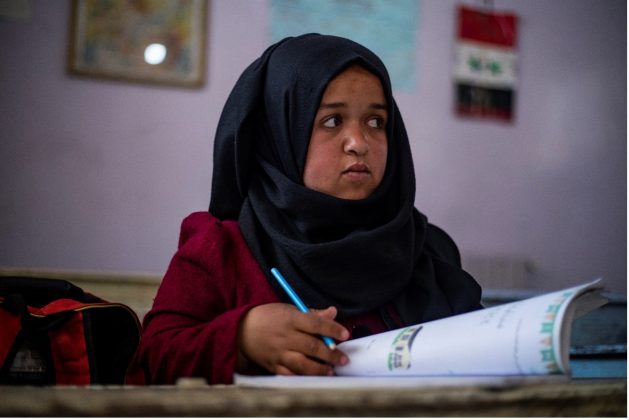
Kawthar, 13, takes notes while attending Grade 3 at a UNICEF-supported self-learning centre in Al-Hasakeh, northeast Syria. She says she always wanted to be like other children and grab her bag and go to school like other children. With Education Cannot Wait assisted schooling, this dream has become a reality. Credit: UNICEF/ Syria 2020/ Delil Souleiman

DOMINICA, Oct 21 2021 (IPS) – In war-torn Syria, the support of Education Cannot Wait (ECW) – the United Nations global fund for education in emergencies and protracted crises – is bringing positive, life-changing educational opportunities tailored to children like 11-year-old Ali.


Ali, who lives in Raqqa with his two siblings and parents, has to work to help support his family. He and his brother did not attend school. Ali heard about registration for ECW-supported educational activities near the industrial area in which he works. They are part of courses being offered in three centres in the city – alongside psychosocial support for children who have experienced war for most of their lives.

Ali initially registered his siblings in the ECW-supported programme but held out himself for fear of losing his job. The centre proposed a flexible learning schedule – one that would allow the brothers to work and attend classes. Programme officials had to convince his family and employers at the industrial centre that school is essential for children’s development. Now he is part of a class of 16 children from the area who attend classes from 7:30 am to 10:00 am. After class, they go to work.

Ali’s story is one of the many stories of vulnerable children and adolescents embroiled in Syria’s protracted conflict that ECW’s investments are helping bring back to school in partnership with education partners on the ground. ECW’s multi-year response in Syria was initiated in 2017 through an initial investment which was further expanded into a Multi-Year Resilience Programme which will continue until 2023 with a cumulative budget of US$45 million.

Yasmine Sherif, the Director of Education Cannot Wait, says too many children and adolescents in Syria have only seen the brutal reality of war, forced displacement, and the hardship of living in areas affected by armed conflict in their short lives.  Credit: Education Cannot Wait (ECW)

“Too many children and adolescents in Syria have only seen the brutal reality of war, forced displacement, and the hardship of living in areas affected by armed conflict in their short lives. For them, education is a beacon of hope. It is an opportunity to thrive and become positive changemakers to rebuild their communities and ensure a more peaceful and prosperous future for all,” said Yasmine Sherif, the Director of Education Cannot Wait. “Working together with our partners on the ground, ECW is dedicated to fulfilling the right to a quality education for the most vulnerable girls and boys in Syria.”

Save the Children has key actor status in the education sector in Syria and has been involved since the inception of ECW’s multi-year response, providing sector-specific technical expertise and guiding in the development of a programme framework that is responsive to the extensive education needs of children in Syria,” Sara Dabash, Awards Officer for the ECW programme in Syria, told IPS.

Children and adolescents already suffering from the impacts of a decade-long war are also bearing the brunt of the COVID-19 pandemic, particularly due to school closures and movement restrictions.

“The disruption of access to quality education for children has dramatically impacted learning and child well-being. In addition, lack of access to safe learning environments and continued isolation exposes children to higher risks of child labour, early marriage, and other negative coping mechanisms. The limited social interactions also compromise access to psychosocial support and other protection services,” Dabash said.

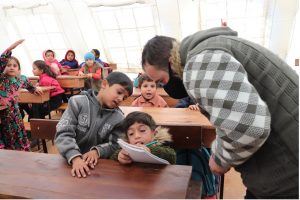
Emad, 9, who lives with a disability, shows his writing to his teacher to check if he is doing right in the class of Arabic subject in the ECW supported temporary learning space in Idleb, northwest Syria. Credit: UNICEF/ Syria 2020

According to Dabash, blended learning options have been introduced, using devices such as mobile phones for remote learning. This option has its downsides as many children have limited to no access to phones or internet connections.

Figures provided by Save the Children put almost 7 million people in need of humanitarian education assistance. Children make up 97 percent of that number. Dabash says, however, that in the “determined locations of implementation within the ECW Programme in northeast Syria, Save the Children, with the support of its partners, has identified around 15,000 children as the most vulnerable and in need of education assistance.”

Since 2017, ECW is also partnering with UNICEF to provide quality education services for the most vulnerable children in the country.

“With funding from ECW, UNICEF provides children across Syria with opportunities to continue their learning through a holistic package of activities tailored to the needs of the children. To support learning, the package of activities generally includes providing learning supplies and psychosocial support through recreational activities. Where classrooms do not exist or continue to be unsafe or overcrowded, we establish new classrooms and rehabilitate existing ones,” Karen Bryner, Education Specialist and ECW Programme Manager in Syria, told IPS.

Bryner says the partnership provides training, teaching supplies and stipend payments to teachers.

The goal is to get as many girls and boys as possible enrolled and attending school regularly. According to UNICEF, ‘children have experienced psychological distress due to violence and instability. Many have missed years of education, with over 2.4 million currently out of school.’

The COVID-19 pandemic has challenged that goal with intermittent school closures. However, Bryner says when face-to-face instruction was not an option, the ECW-supported students transitioned to electronic and paper-based distance education.

“Various modalities were used over the last year, including WhatsApp groups by teachers to deliver daily instruction where connectivity allowed; blended learning with face-to-face instruction two days a week and home-based learning (worksheets and assignments) for the other days, conducting lessons in smaller groups closer to children’s homes, and home delivery of biweekly learning packs and retrieval of students’ work by teachers,” she told IPS.

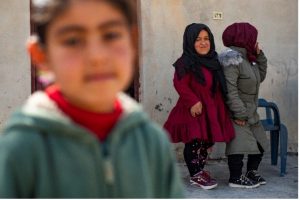
Kawthar, 13, hangs out with her cousin Juhaina outside her house in Ghwairan neighbourhood, Al-Hasakeh. Since 2019, she has benefitted from the self-learning programme, helping her catch up on the education she had missed due to displacement, her disability, and the financial challenges her family had. Credit: UNICEF/ Syria 2020/ Delil Souleiman

The story of 13-year-old Kawthar is a testament to the positive impact of ECW’s support for the most marginalised children Displaced five times and suffering from growth-related issues due to stunting, she could not walk to school, and her family could not afford transportation. Two years ago, Kawthar, originally from Al-Hasakeh City, enrolled in the ECW-supported self-learning programme implemented by UNICEF– a course that gives out-of-school children the tools to catch up to their peers. She also receives transportation to classes.

“I always wanted to be like all other children; to grab my bag and head to school; to read, write and learn,” says Kawthar. “I wish for all children to be able to go to school. And I certainly hope that nobody gets displaced anymore and that we all remain safe.”

According to UNICEF, with ECW funding, since November 2020, the self-learning programme has been able to reach 2,600 out-of-school children in Al-Hasakeh. Despite this progress, challenges remain to fulfil the right to inclusive, quality education for every child in Syria.

UNICEF states that there has been a 20 percent increase in the number of children in need of humanitarian assistance, and agencies will need scaled-up support as they continue to bring hope to Syria’s children.

  Source

Guess Who’s Behind Paralysis on COVID19 in the UN Committee on World Food Security

Aid, Civil Society, COVID-19, Economy & Trade, Food and Agriculture, Food Security and Nutrition, Global, Headlines, Human Rights, Humanitarian Emergencies, IPS UN: Inside the Glasshouse, TerraViva United Nations

Opinion

ROME, Oct 19 2021 (IPS) – ‘COVID 19 has multiplied hunger and malnutrition challenges. We need transformative action!’ The first speaker at the UN Committee on World Food Security’s (CFS) 49th Plenary Session, the Secretary-General of the United Nations, turned the spotlight on the disastrous impacts of the pandemic that have afflicted communities around the world for close to two years.


Nora McKeon

He was echoed by the presenter of the 2021 edition of the State of Food Security and Nutrition in the World for whom ‘COVID is only the tip of the iceberg’, while keynote speaker, Jeffry Sachs, emphasized the multifaceted nature of the crisis, with chronic poverty and conflict at the center.

Delegation after delegation took the virtual floor to share their concerns: Kenya speaking for the Africa Group, Colombia, Cuba, Costa Rica, Norway, Morocco, Peru, Spain, Indonesia, Mexico, Malaysia, Mali, Cape Verde, South Africa, Uganda, Saint Lucia and more. The impacts of Covid 19 on food security and nutrition are heavy and lasting. The vulnerable are the most effected, within and between countries. Covid has deepened and exacerbated existing structural fragilities and injustices in our food systems. Its causes are multisectoral and cannot be treated in a siloed way.

‘Multilateralism, solidarity and cooperation are key to the way forward’, the President of ECOSOC added, and ‘the CFS is a unique multilateral forum because it brings all the actors together in the name of the right to food’. The text adopted at the end of Day 1 summarized all of these contributions, and deepened concern by drawing attention to the possibility of recurrent pandemics.

With this kind of an opening one could have expected a standing ovation when it was proposed, the following day, that the CFS put together a globally coordinated policy response to the impacts of COVID 19 on food security and nutrition and a proposed precautionary approach towards possible future shocks of this kind.

This proposal was a long time in the building. For a year and a half the CFS’s Civil Society and Indigenous Peoples’ Mechanism (CSM) had been documenting the experience and proposals of its constituencies and communities and bringing this evidence from the ground into the global debate. Earlier this year an informal ‘Group of Committed’ governments and other CFS participants had come together to push for the CFS to take determined action. How could it fail to live up to its mandate in the face of the most serious threat to global food security the world has faced since the 2007-2008 food crisis?

Just a week before CFS49 the Group of Committed had held a seminar where evidence and proposals for global policy action were presented by national governments, regional and local authorities, small-scale food producers, the urban food insecure, along with UN agencies, the Special Rapporteur on the Right to Food, and the CFS’s own High-Level Panel of Experts.

The seminar demonstrated that action is being taken by different actors and authorities at local, national and regional levels, while UN agencies have developed and adopted relevant policy instruments and programmes in their respective sectors. What has been missing thus far is a way of putting the different perspectives and initiatives together into a multisectoral, multilaterally coordinated approach. Filling this gap was the proposal that was put on the table in CFS49.

‘We need a globally coherent and coordinated response to support governments’ efforts and the CFS is the appropriate place for this to happen,’ the Ambassador of Mali had exhorted in his opening address.

So what about the standing ovation? The proposal was supported by countries from the Global South led by African countries, the most affected by injustice in access to vaccines, dependency on food imports, and indebtedness, but including also Mexico, Peru, Morocco, the CSM and the Special Rapporteur on the Right to Food. ‘This is the place to deal with COVID!’ he said. ‘It is the priority food issue today. It wasn’t addressed by the UN Food Systems Summit. The CFS has the mandate and the tools, and the other UN agencies are highly committed to cooperate.’

But, incredibly and unacceptably, the proposal did not pass. It was blocked on specious, procedural grounds by a steamroller coalition of big commodity exporters who push back on any possible limitation that might be placed on global trade in the name of human rights, equity, environmental concerns: the US, Canada, Argentina, Brazil, Russia. The EU, shamefully, was silent.

The implications for inclusive multilateralism, democracy, the needed radical transformation of our food systems are severe. ‘A key barrier to transformation is interference from corporations,’ stated the delegate of Mexico. ‘Governments need to assume their role as agents of change, regulators of food systems, and protectors of the planet, but we can’t do it alone. Global attention is needed and the CFS is the right place for it.’

But The CFS is being held hostage. The arrogance with which a few are ignoring reality, evidence and urgency is leading to an unacceptable increase in the violation of the human rights of the many. Patience is wearing thin. ‘If I’m in this room it’s to honor the concerns of those most affected in my region,’ a member of the Group of Committed asserted in the aftermath of the session.

And the people of her region, along with others from around the world, are raising their voices ever more loudly, as in the counter mobilization to transform corporate food systems organized last July in parallel to the Pre-Summit of the UNFSS [hyperlink]. Radical food system transformation is being built from the ground up and the CFS, however handicapped, is the most resounding global echo chamber for people’s claims.

  Source

Winning the Human Race, Together

Armed Conflicts, Civil Society, Climate Change, COVID-19, Development & Aid, Education, Education Cannot Wait. Future of Education is here, Environment, Gender, Global, Headlines, Health, Human Rights, Humanitarian Emergencies, Migration & Refugees, Poverty & SDGs, TerraViva United Nations

Opinion

NEW YORK, Oct 14 2021 (IPS) – “Now is the time for a stronger, more networked and inclusive multilateral system anchored in the United Nations,” said UN Secretary-General António Guterres in his latest report “Our Common Agenda.” Indeed, there is a fork in the road: we can either choose to breakdown or to breakthrough.


Yasmine Sherif

Making this moral choice and adopting this legal imperative is more relevant today than ever. The estimated 75 million children and adolescents caught in emergencies and protracted crisis who suffer from disrupted education has now dramatically increased from 75 million to 128 million due to the pandemic. These vulnerable girls and boys are now the ones left furthest behind in some of the world’s toughest contexts, in Afghanistan, the Middle East, Sub-Saharan Africa and South America.

The current education financing gap amounts to US$1.48 billion for low- and middle-income countries. A gap that is increasingly widening. In reviving the multilateralism that is so urgently needed, the UN Secretary-General will convene a crucial, timely summit on Transforming Education in 2022.

Despite all that we do, despite all our investments, we cannot win ‘the human race’ unless we invest in our fellow human beings, now. It is the children and young people impacted by armed conflicts, climate-crisis induced disasters, forced displacement and protracted crises who are in a sprint against time, with their lives and futures on the line.

We can no longer let “an entire generation facing irreversible losses be left behind in the ruins of armed conflicts, in protracted refuge, on a planet whose climate-change threatens us all,” as the UN Special Envoy for Global Education and Chair of Education Cannot Wait’s High-Level Steering Group, The Rt. Hon. Gordon Brown stated at the launch of Education Cannot Wait’s Annual Results Report: Winning the Human Race, on 5 October 2021.

Education is the foundation, the DNA and the absolute prerequisite for achieving all other Sustainable Human Development Goals and Universal Human Rights. Education means investments in the limitless possibilities of human potential: the workforce, governance, gender-equality, justice, peace and security.

“Access to quality education is key to addressing 21st century challenges, including accelerating the fight to end poverty and climate change,” says The LEGO Foundation’s new CEO, Anne-Birgitte Albrectsen, in this month’s ECW Newsletter high-level interview.

The time has come to connect the dots between individual human beings and our collective humanity and life on this planet. We are now investing more and more in Mother Earth through significant climate change financing. We must now also invest in the human beings populating the planet. The correlation between the positive impact of education upon on all aspects of life on the planet is indispensable and inescapable.

    Higher education levels lead to higher concern for the environment, and adaptation to climate change. If education progress is stalled, it could lead to a 20% increase in disaster-related fatalities per decade.
    Education is the one unique investment that can prevent conflict and forced displacement. High levels of secondary school enrollment have been shown to be associated with an increase a country’s level of stability and peace and reduce crime and violence.
    Every additional year of schooling reduces an adolescent boy’s risk of becoming involved in conflict by 20 percent. This effect reflects both education’s economic benefits and its role in social cohesion and national identity.
    Conversely, lack of education often leads to political disempowerment and regression to group allegiances. Across 22 countries in sub-Saharan Africa, sub-national regions with very low average education had a 50 per cent probability of experiencing the onset of conflict within 21 years, while the corresponding interval for regions with very high average education was 346 years.
    Education is also the most secure means of ending extreme poverty. For nations, each additional year of schooling can add up to 18 per cent to GDP per capita. For individuals, one more year of education brings a 10 per cent increase in personal income. If all children were to learn basic reading skills, the impact would be 171 million fewer people living in extreme poverty. *Footnotes below.

Education Cannot Wait is a multilateral global UN fund. Our Annual Results Report of 2020, Winning the Human Race, launched at the UN in Geneva this month, testifies to what we can achieve when we think and act multilaterally: when we connect the dots, become one, and act for all.

Through multilateralism, we reached more than 29 million crisis-affected girls and boys in 2020 alone through ECW’s COVID-19 emergency response, working with our strategic partners, including host governments, our 21 donors, UNICEF, UNHCR, UNESCO, UNDP, WFP, our civil society partners, such as INEE, Jesuit Refugee Service, AVSI, Save the Children, Plan International, Norwegian Refugee Council, International Rescue Committee and numerous local civil society organizations across 34 countries. Through joint programming, we were also able to jointly deliver quality education to more than 4.6 million children and youth, of whom 51% were girls and adolescent girls, 38% were refugees – all while we increased ECW allocations to children and youth with disabilities.

This is made possible because ODA governments, private sector and philanthropic partners are scaling up their support for the catalytic ECW global fund whereby their investments are part of multilateral efforts that work as closely as possible to those we serve, establishing links conducive to numerous, diverse SDGs and human rights. The full list of our 21 generous donor partners can be found at the end of this Newsletter.

In connection with the UNGA week this year, ECW strategic donors advancing multilateralism, such as Germany, the United States, the European Union/European Commission, France, The LEGO Foundation and Porticus took giant steps and committed $138.1 million to ECW, bringing the total resources mobilized thus far in 2021 alone to $156.1 million and the total since ECW’s inception to $1.85 billion ($827 million mobilized for the Trust Fund; and, over $1 billion worth of programmes aligned with ECW MYRPs, as leveraged by ECW with partners).

Furthermore, the Global Hub for Education in Emergencies celebrated its new collective space under the ECW umbrella in Geneva, thanks to Switzerland which is the second biggest UN capital for humanitarian and development actors after New York City. The Global Hub brings together NGOs, the UN, academia, foundations, and governments to inspire more commitment and resources to quality education for those left furthest behind in emergencies and protracted crisis.

Multilateralism through the United Nations works.

Still, this is just the start of a major global effort to work through the multilateral coordination system to reach those left furthest behind and bring education from the margins to the center. Based on empirical evidence, ECW calls for an additional $1 billion to contribute to an innovative model that has proven to work.

Political leaders, governments, private sector, UN and civil society – all part of ECW’s multilateral UN system – recognize that education is a precondition for achieving the Sustainable Development Goals and Universal Human Rights. Together, we think long-term and act now. Together, we connect the dots and see things from afar and within. Together, we work on what the world needs most right now: A Common Agenda to Win the Human Race.

Yasmine Sherif is Director,
Education Cannot Wait
The UN Global Fund for Education in Emergencies and Protracted Crises

  Source

Delivering On the Promise of Health For All Must Include Gender Equality and SRHR

Civil Society, COVID-19, Development & Aid, Gender, Global, Headlines, Health, Human Rights, Humanitarian Emergencies, Inequity, Labour, Poverty & SDGs, TerraViva United Nations, Women’s Health

Opinion

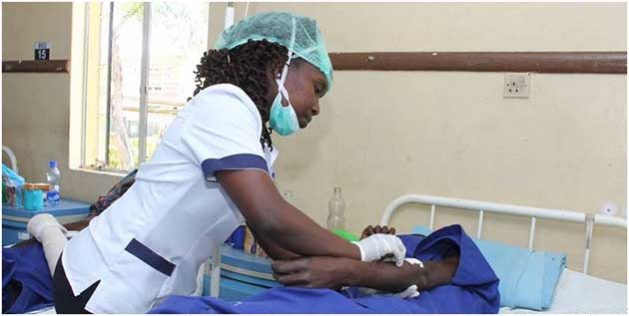
Health workers are at the frontlines in the fight against the new Corona Virus. Credit: John Njoroge

NEW YORK, Sep 29 2021 (IPS) – Gender-responsive universal health coverage (UHC) has the proven potential to transform the health and lives of billions of people, particularly girls and women, in all their intersecting identities. At tomorrow’s kick-off to the 2023 UN High-Level Meeting (HLM) on UHC, Member States and stakeholders will review progress made on the 2019 HLM’s commitments and set a roadmap to achieve UHC by 2030. We, as the co-convening organizations of the Alliance for Gender Equality and UHC, call on Member States to safeguard gender equality and sexual and reproductive health and rights (SRHR) as part of UHC implementation, especially in light of the gendered impacts of the COVID-19 pandemic.


To move forward, it is crucial to remember our cumulative past promises. In 2019, Member States adopted a Political Declaration that contained strong commitments to ensure universal access to SRHR, including family planning; mainstreaming a gender perspective across health systems; and increasing the meaningful representation, engagement, and empowerment of all women in the health workforce. Further, 58 countries put forward a joint statement that argued that investing in SRHR is affordable, cost-saving, and integral for UHC. These commitments were the result of the advocacy and hard work of civil society organizations, including members of the Alliance for Gender Equality and UHC, and set out a clear path on the steps needed to make gender-responsive UHC a reality.

However, following the 2019 HLM, the deadly and devastating COVID-19 pandemic drastically changed how individuals around the globe could access essential health services. Fundamental human rights, including hard-won gains made for UHC, SRHR, and gender equality, are now at risk as health and social services are strained and political attention is diverted. The protracted pandemic underscores how gender-responsive UHC is more important than ever.

We call on Member States to renew the commitments made in 2019 and affirm that delivering on the promise of health for all is only possible by way of gender-responsive UHC.

To truly deliver gender-responsive UHC, we offer the following five recommendations:

1. Design policies and programs with an intersectional lens that places SRHR and girls and women — in all their diversity — at the center of UHC design and implementation. To be effective, UHC must recognize and respond to the needs of women in all their intersecting identities, including by explicitly addressing the ways in which race, ethnicity, age, ability, migrant status, gender identity, sexual orientation, class, and caste multiply risk and impact health outcomes. What’s more, COVID-19 has deepened inequalities for marginalized populations, and special attention is needed, now more than ever, to deliver UHC for those pushed furthest behind.

2. Ensure UHC includes comprehensive SRH services, and provide access to SRH services for all individuals throughout the life course. These services must be free of stigma, discrimination, coercion, and violence, and they must be integrated, high quality, affordable, accessible, and acceptable. The World Health Organization (WHO) provides guidance in the UHC Compendium of interventions and supporting documents for what this can look like. The pandemic has given way to multiple interruptions to SRHR care. For example, an estimated 12 million women may have been unable to access family planning services due to the pandemic. COVID-19 response and recovery and UHC implementation must address these issues.

3. Prioritize, collect, and utilize disaggregated data, especially gender-disaggregated data. UHC policy and planning can only be gender-responsive when informed by data that are disaggregated by gender and other social characteristics. In the current pandemic, not all countries are reporting disaggregated data on infections and mortality from COVID-19 to the WHO, and most countries have not implemented a gendered policy response. In June 2021, only 50% of 199 countries reported data disaggregated by sex on COVID-19 infections and/or deaths in the previous month.1 The number of countries reporting sex-disaggregated statistics has also decreased over the course of the pandemic. Without this information, decision-makers are unable to base policies on evidence affirming how to address the health needs of all genders — a critical lesson for UHC.

4. Foster gender equality in the health and care workforce and catalyze women’s leadership. The approach to the health and care workforce in the pandemic has frequently not applied a gender lens, ignoring the fact that women are 70% of the global health workforce and powerful drivers of health services. Gender inequities in the health workforce were present long before the pandemic, with the majority of female health workers in lower-status, low-paid roles and sectors, often in insecure conditions and facing harassment on a regular basis. Moreover, although women have played a critical role in the pandemic response — from vaccine design to health service delivery — they have been marginalized in leadership on pandemic decision-making from parliamentary to community levels. In fact, 85% of national COVID-19 task forces have majority male membership. Urgent investment in safe, decent, and equal work for women health workers, as well as equal footing for women in leadership and decision-making roles, must be central to the delivery of UHC.

5. Back commitments to advancing SRHR, gender equality, and civil society engagement in UHC design and implementation with necessary funding and accountability. Now is the time to invest in health and the care economy, particularly in UHC. Governments everywhere are facing fiscal constraints from the pandemic. UHC is a critical part of investing in and building back resilient health and social systems to avoid catastrophic spending on future pandemics and global health emergencies. UHC must be designed intentionally, with appropriate accountability mechanisms, to reduce inequalities between and within countries — and especially gender inequality, which undermines social and economic rights and resilience.

We, along with our civil society partners in the Alliance for Gender Equality and UHC, stand ready to work hand-in-hand with governments, the UN, and all stakeholders to act on these recommendations on the road to the 2023 HLM on UHC. At this point in the COVID-19 pandemic, there is no time to waste in making the promise of health for all a reality, and this can only be achieved through gender-responsive UHC that centers gender equality and SRHR.

The authors are Ann Keeling of Women in Global Health, Divya Mathew of Women Deliver, Deepa Venkatachalam of Sama Resource Group for Women and Health, and Chantal Umuhoza of Spectra Rwanda. These four organizations are the co-conveners of the Alliance for Gender Equality and Universal Health Coverage.

1 Global Health 50/50 (globalhealth5050.org)

  Source