Fear as Russian Anti-LGBT Law Comes into Effect

Civil Society, Crime & Justice, Democracy, Editors’ Choice, Europe, Featured, Freedom of Expression, Gender, Headlines, Human Rights, LGBTQ, TerraViva United Nations

Human Rights

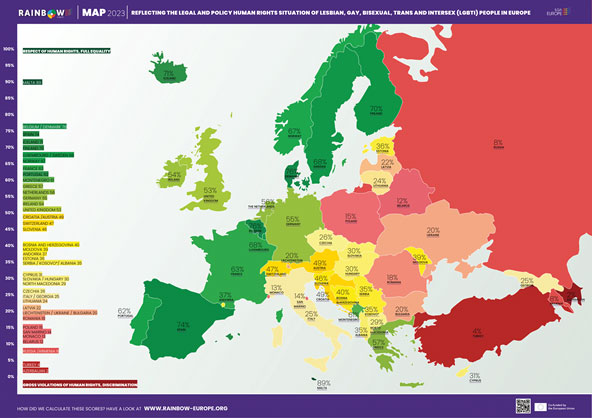
The Russian Supreme Court ruling making the “international LGBT movement” an extremist organization will come into effect on January 9, 2024. Graphic: IPS

The Russian Supreme Court ruling making the “international LGBT movement” an extremist organization will come into effect on January 9, 2024. Graphic: IPS

BRATISLAVA, Jan 3 2024 (IPS) – “This is what you get after ten years of state propaganda and brainwashing,” says Anatolii*.

The Moscow-based LGBT rights activist’s ire is directed at a recent ruling by Russia’s Supreme Court declaring the “international LGBT movement” an extremist organization.


Details of the ruling, made on November 30 after a closed hearing, have yet to be made public—it will not be enforced until January 9, 2024, and until then, no one is likely to be any the wiser about its practical implementation, says Anatolii.

But its vagueness—critics point out that no “international LGBT movement” exists as an organization—has already fueled fears that it could lead to the arbitrary prosecution of anyone involved in any activities supporting the LGBT community.

And the potential punishments for such support are draconian, with participating in or financing an extremist organization carrying a maximum 12-year prison sentence under Russian law.

In the weeks since the ruling was announced, fear has spread among LGBT people.

“Russian queers are really scared,” Anatolii tells IPS.

But while fearful, many see it as the latest, if potentially the most drastic, act in a decade-long campaign by the Kremlin to marginalise and vilify the LGBT community in the country through legislation and political rhetoric.

The first legislative attack on the community came in 2013, not long after Vladimir Putin had returned to power as President, when a law came into effect banning “the propaganda of non-traditional sexual relations” to anyone under the age of 18.

This was followed by increasingly homophobic political discourse, and Kremlin campaigns—prominently backed by the country’s powerful Orthodox Church—promoting ‘traditional family values’ in society and casting LGBT activism as a product of the degenerate West and a threat to Russian identity.

Then in 2022, the ban on “LGBT propaganda” was extended to cover all public information or activities supporting LGBT rights or displaying non-heterosexual orientation and implicitly linked the LGBT community with paedophilia—the law refers to the “propaganda of nontraditional sexual relations and/or preferences, paedophilia, and sex change.”

A ban on same sex marriage has also been written into the constitution; authorities have labelled a number of LGBT organizations as “foreign agents,” stigmatizing them and forcing them to adhere to a set of funding and bureaucratic requirements that can be liquidating, and earlier this year a law was passed banning transgender people officially or medically changing their gender.

With each new piece of pernicious legislation, and an accompanying rise in intensity and normalization of homophobic hate speech from politicians, the LGBT community has suffered, its members say.

“The Supreme Court ruling is just a continuation of Russia’s homophobic policies. The amount of physical violence against LGBT people has been growing in Russia for 10 years. After each such law, it intensifies even more noticeably,” Yaroslav Rasputin, editor at the Russian-language LGBT website www.parniplus.com, told IPS.

“We expect homophobes will feel justified in attacking LGBT people [after the ruling], both through cyberbullying and physical assaults,” he added.

Members of the LGBT community and rights campaigners who spoke to IPS said there was a desperate fear among many LGBT people now. While the threat of physical violence was often felt as being very real, there was also a crippling concern over the uncertainty many would now face in their daily activities.

Many do not know what will constitute “support” for the LGBT community. Some are trawling through years of social media records, deleting any possible positive references to LGBT or reposted messages on the topic for fear of the information being used against them by authorities.

And there are worries that simply being openly gay could somehow be interpreted as extremism.

Lawyers who have advised LGBT people and groups in the past say that it will be much easier for security forces to initiate and prosecute cases of extremism than propaganda, as the latter is more difficult to prove.

“Although the government says these ‘repressions’ concern only political activists, in reality this is not the case. We know this from previous homophobic laws. Sometimes people spontaneously get caught for who they are. No one knows when it will be safe to come out and when not,” said Rasputin.

Anatolii said the organisation he works for has been inundated with calls from people “in panic and despair” over the ruling, many of whom are looking for help to leave the country.

LGBT groups outside Russia have also reported a huge uptick in calls from people trying to find safe passage to other countries.

“We have seen a dramatic increase in the number of people contacting us, perhaps three or four times more. LGBT people in Russia are really worried about the ruling; they don’t know what might be defined as extremist,” Aleksandr Kochekovskii from the Berlin-based organisation Quarteera e. V, which helps LGBT refugees and migrants to arrive and find their way around Germany, told IPS.

“Unfortunately, a lot of people will leave Russia because of this ruling because they feel in danger. There is a ubiquitous psychological pressure on LGBT people in Russia now,” he added.

Even some openly gay figures in Russia have publicly acknowledged that LGBT people may be forced to flee the country.

“This is real repression. There is panic in Russia’s LGBT community. People are emigrating urgently. The actual word we’re using is evacuation. We’re having to evacuate from our own country. It’s terrible,” Sergei Troshin, a gay municipal deputy in St Petersburg, told the BBC.

But others warn the Kremlin may be looking to use the ruling to crack down on the community as a whole as much as individuals.

“At this point, the state’s main goal is to erase the LGBT community from society and [the country’s] history,” Mikhail*, a Russian LGBT activist who recently left the country and now works for a pan-European NGO campaigning for minority health rights, told IPS. “It is hard to imagine how many organisations defending the rights of LGBT people will be able to exist in Russia any more since such support is [considered to be] advocating terrorism,” he added.

Some such organisations have already decided to close in the wake of the ruling. The Russian LGBT Sports Federation announced it had stopped its activities, and one of the most prominent LGBT groups in the country, Delo, which provided legal assistance to people in the community, also closed following the court decision.

But other mainstays of the LGBT community are also shutting their doors. The owners of one of the oldest gay clubs in Russia, “Central Station” in St Petersburg, said they had been forced to close the club after the site’s owners refused to rent to them. Its closure came as other gay clubs and bars in Moscow were raided by police just 24 hours after the Supreme Court ruling. People’s names taken, and ID documents copied.

Although police said the raids were part of anti-drug operations, LGBT activists said they could see the true purpose behind them.

“The state has made it very clear that it is ready to use the apparatus of force against LGBT people in Russia,” said Mikhail.

But the ruling is also expected to have effects for LGBT people beyond their interactions with other individuals or groups within the community.

Accessing specific healthcare services, for instance, seems likely to become more difficult.  Some practitioners, such as psychiatrists and psychologists, have until now openly indicated their services as LGBT-friendly. But according to some Russian media reports, it is thought many will no longer be able or willing to do so, and that others may simply stop providing their services to LGBT people altogether out of fear of repercussions.

Experts warn that without qualified help, the risks of suicide, PTSD, and the development of other mental disorders will rise, especially among children, something that was seen after the first law banning the promotion of LGBT to minors was passed in 2013.

International rights groups have condemned the court ruling and urged other countries to provide a safe haven for those forced to flee Russia and to support Russian LGBT activists working both inside and outside the country.

Whatever the effects of the law eventually are once it is fully implemented, it looks unlikely there will be any improvement for the LGBT community in the near future.

Activists predict anti-LGBT political rhetoric will probably only intensify as President Putin looks to cement support among voters ahead of elections in March, and as the Kremlin tries to draw the public’s attention away from the country’s problems, not least those connected to the war raging in Ukraine.

“It’s easier to create an artificial enemy than to struggle with the real problems the war has caused. The LGBT+ community in Russia is a kind of collective scapegoat, taking a punch and feeling the people’s wrath,” said Anatolii.

Others say that as the war drags on, repression of the LGBT community may start being repeated among other minority groups.

“Everything the Kremlin does in Russia is an attempt to divert people’s attention from the war. ‘Othering’ is typical for all dictatorial regimes. I am quite sure that soon [the Kremlin] will start targeting other groups like migrants and foreigners,” Nikolay Lunchenkov, LGBT Health Coordinator for the Eurasian Coalition on Health, Rights, Gender, and Sexual Diversity NGO, which works with the LGBT community in Russia, told IPS.

Note: *Names have been changed for safety reasons.

IPS UN Bureau Report

  Source

Latvia: A Vital First Step Towards Marriage Equality

Civil Society, Europe, Featured, Gender, Gender Identity, Headlines, Human Rights, LGBTQ, TerraViva United Nations

Opinion

Credit: Ilmars Znotins/AFP via Getty Images

MONTEVIDEO, Uruguay, Dec 12 2023 (IPS) – Last month the Saeima, Latvia’s parliament, passed a package of eight laws recognising same-sex civil unions and associated rights. The new legislation came in response to a 2020 Constitutional Court ruling that established that same-sex couples have a constitutional right to the benefits and legal protections afforded to married opposite-sex couples.


Equal marriage rights are still a long way away, and civil unions are only a first step in the right direction. But in one of Europe’s most restrictive countries for LGBTQI+ rights, activists view it as a significant shift, achieved after numerous attempts over more than two decades. Anti-rights forces agree, and they’re not going to let it happen quietly. They’ve already responded with an attempt to stop the new law being adopted by campaigning for a referendum.

The breakthrough

The first registered partnership bill was submitted by the National Human Rights Office in 1999 but rejected by parliament’s Human Rights and Public Affairs Committee and never debated. Initiatives accelerated in the mid-2010s but were all rejected – the latest attempts coming in 2020 and 2022.

On 29 October 2020, a popular initiative calling for the passage of a civil union law that had gathered more than 10,000 signatures was voted down by parliament. Campaigners immediately started a new initiative for the ‘legal protection of all families’, which attracted over 23,000 signatures – but that too was rejected by parliament in December 2022.

Following the 2020 parliamentary vote, however, two court rulings catalysed change. In November 2020, the Constitutional Court found the labour law in violation of the constitution because it didn’t provide for parental leave to the non-biological parent in a same-sex relationship.

As the result of a 2006 anti-rights initiative to ban same-sex marriage, the Latvian Constitution defines marriage as a union between a man and a woman. The concept of family, however, isn’t explicitly defined in reference to marriage, and the court understood it more broadly as a stable relationship based on understanding and respect. It concluded that the constitution demanded protection for same-sex partners and gave parliament a deadline of 1 June 2022 to amend the law to provide a way for same-sex couples to register their relationship.

A year later, in December 2021, the Supreme Court ruled that if the deadline was missed, same-sex couples would be allowed to resort to the courts to have their relationship recognised.

Anti-rights backlash

The anti-rights reaction was quick in coming. Two months after the Constitutional Court ruling, parliament introduced a constitutional amendment that went further than ratifying the definition of marriage as being between a man and a woman, defining family as based on marriage.

To comply with the Constitutional Court’s ultimatum, in February 2022 the Ministry of Justice submitted a civil union bill and two months later, despite an attempted boycott to deny a quorum, parliament approved its first reading.

When it became apparent that the court’s deadline would be missed, same-sex couples started petitioning the courts for recognition as family units. The first of dozens of positive rulings was issued on 31 May 2022.

That same day a tight parliamentary vote resulted in the appointment of Latvia’s first out gay president. Momentum was building, and parliament finally passed a law to allow same-sex civil unions on 9 November 2023.

But conservative politicians managed to put the new law on hold as they seek to gather the signatures required to force a referendum that they hope will prevent its entry into force.

A long way to go

Even if it survives the challenge, the new law is no panacea. Ultimately, access to marriage is the only way to ensure LGBTQI+ couples have the same legal rights as heterosexual couples. Recognition of same-sex relationships is a step forward, but still leaves Latvia behind neighbouring Estonia, which legalised same-sex marriage in June.

If upheld, the new legislation will give registered same-sex couples some but not all the rights associated with marriage – they’ll have hospital visitation rights and tax and social security benefits, but not inheritance rights or the right to adopt children.

Beyond the legal sphere, the biggest challenge will come in influencing public attitudes, as signalled by Latvia’s scores on Equaldex’s Equality Index. This ranking combines a legal index that assesses key laws and a public opinion index that measures attitudes towards LGBTQI+ people. Latvia scores far lower for public opinion than for its laws. A 2019 Special Eurobarometer poll found that only 49 per cent of Latvians thought that LGBTQI+ people should have the same rights as heterosexuals.

The message is clear: changing laws and policies won’t be enough – and any legal victories will remain in peril unless social attitudes change.

Latvian LGBTQI+ organisations are fully aware of this, which is why they’ve worked on both fronts for many years. A centrepiece of their work to challenge prejudice is the annual Pride event, which Latvia pioneered for the Baltic region in 2005. As recounted by its organisers, Latvia’s Pride grew from 70 participants who faced 3,000 protesters in 2005 to 5,000 participants at EuroPride 2015, held in Latvia’s capital Riga, and 8,000 in the 2018 Baltic Pride, also held in Riga. Pride was repeatedly banned by Riga City Council, and it invariably faced hostile counter-protesters – but fewer each time, while the number of Pride participants has grown, boosting people’s self-confidence.

Global trends show progress towards the recognition of LGBTQI+ rights to be much stronger than regression. Latvian LGBTQI+ advocates will continue to push forward on both the policy and awareness-raising fronts. They’ll continue working to secure what they’ve already achieved while striving for more. They’re on the right course.

Inés M. Pousadela is CIVICUS Senior Research Specialist, co-director and writer for CIVICUS Lens and co-author of the State of Civil Society Report.

  Source

Maldives Election: What Now for Civil Society?

Asia-Pacific, Civil Society, Crime & Justice, Featured, Gender, Headlines, Human Rights, LGBTQ, Press Freedom, TerraViva United Nations

Opinion

Credit: Mohamed Afrah/AFP via Getty Images

LONDON, Oct 12 2023 (IPS) – Ahead of the presidential election, Solih faced accusations of irregularities in his party’s primary vote, in which he defeated former president Mohamed Nasheed. The Electoral Commission was accused of making it harder for rival parties to stand, including the Democrats, a breakaway party Naheed formed after the primary vote. The ruling party also appeared to be instrumentalising public media and state resources in its favour. Solih’s political alliances with conservative religious parties were in the spotlight, including with the Adhaalath Party, which has taken an increasingly intolerant stance on women’s and LGBTQI+ rights.


Big beasts battle for influence

If the two candidates seemed similar in their attitudes towards civil society, they stood on opposite sides of a geopolitical divide. In recent years Maldives, a chain of small Indian Ocean islands with a population of around half a million, has become a major site of contestation in the battle for supremacy between China and India. The location is seen as strategic, not least for control of shipping routes, vital for the transport of oil from the Gulf to China.

Civic space under pressure

Solih quickly conceded defeat and thanked voters for playing their part in a democratic and peaceful process. It’s far from rare for incumbents to lose in Maldives: there’s been a change at every election since the first multiparty vote in 2008. But there are concerns that Muizzu will follow the same course as former president Abdulla Yameen, leader of his party, the People’s National Congress.

Yameen, in office from 2013 to 2018, wanted to run again, but the Supreme Court barred him because he’s serving an 11-year jail sentence for corruption and money-laundering. Critics question the extent to which Muizzu will be his own person or a proxy for Yameen. Perhaps there’s a clue in the fact that Yameen has already been moved from jail to house arrest on Muizzu’s request.

The question matters because the human rights situation sharply deteriorated under Yameen’s presidency. The 2018 election was preceded by the declaration of a state of emergency enabling a crackdown on civil society, the media, the judiciary and the political opposition. Judges and politicians were jailed. Protests were routinely banned and violently dispersed. Independent media websites were blocked and journalists subjected to physical attacks.

Ultimately, Yameen was roundly defeated by a united opposition who capitalised on widespread alarm at the state of human rights. Some positive developments followed, including repeal of a criminal defamation law. But many challenges for civil society remained and hopes of significant progress were largely disappointed.

A restrictive protest law stayed in effect and parliament rejected changing it in 2020. Police violence towards protesters continued, as did impunity. Civil society groups were still smeared and vilified if they criticised the government. Activists have been subjected to smears, harassment, threats and violence from hardline conservative religious groups. Women’s rights activists have been particularly targeted.

In 2019, a prominent civil society organisation, the Maldivian Democracy Group, was deregistered and had its funds seized following pressure from religious groups after it published a report on violent extremism. It now operates from exile.

Ahead of the presidential election, Solih faced accusations of irregularities in his party’s primary vote, in which he defeated former president Mohamed Nasheed. The Electoral Commission was accused of making it harder for rival parties to stand, including the Democrats, a breakaway party Naheed formed after the primary vote. The ruling party also appeared to be instrumentalising public media and state resources in its favour. Solih’s political alliances with conservative religious parties were in the spotlight, including with the Adhaalath Party, which has taken an increasingly intolerant stance on women’s and LGBTQI+ rights.

Big beasts battle for influence

If the two candidates seemed similar in their attitudes towards civil society, they stood on opposite sides of a geopolitical divide. In recent years Maldives, a chain of small Indian Ocean islands with a population of around half a million, has become a major site of contestation in the battle for supremacy between China and India. The location is seen as strategic, not least for control of shipping routes, vital for the transport of oil from the Gulf to China.

India has historically had close connections with Maldives, something strongly supported by Solih. But Muizzu, like his predecessor Yameen, seems firmly in the China camp. Under Yameen, Maldives was a recipient of Chinese support to develop infrastructure under its Belt and Road Initiative, epitomised in the 1.4 km China-Maldives Friendship Bridge.

India has come to be a big issue in Maldivian politics. Under Solih, India established a small military presence in Maldives, mostly involved in providing air support for medical evacuations from isolated islands. But the development of a new India-funded harbour prompted accusations that the government was secretly planning to give India’s military a permanent base.

This sparked opposition protests calling for the Indian military to be expelled. Protests faced heavy restriction, with many protesters arrested. In 2022, Solih issued a decree deeming the protests a threat to national security and ordering them to stop. This high-handed move only further legitimised protesters’ grievances.

Muizzu’s campaign sought to centre the debate on foreign interference and Maldives’ sovereignty. He used his victory rally to reiterate his promise that foreign soldiers will be expelled.

In practice, the new administration is likely to mean a change of emphasis rather than an absolute switch. Maldives will still need to trade with both much bigger economies and likely look to play them off against each other, while India will seek to maintain relations, hoping that the political pendulum will swing its way again.

Time to break with the past

International relations were far from the only issue. Economic strife and the high cost of living – a common issue in recent elections around the world – was a major concern. And some people likely switched votes out of unhappiness with Solih’s failure to fulfil his 2018 promises to challenge impunity for killings by extremists and make inroads on corruption, and to open up civic space.

Neither India, where civic freedoms are deteriorating, nor China, which stamps down on all forms of dissent, will have any interest in whether the Maldives government respects the space for civil society. But there’s surely an opportunity here for Muizzu to prove he’ll stand on his own feet by breaking with both the dismal human rights approach of Yameen and the increasingly compromised positions of Solih. He can carve out his own direction by committing to respecting and working with civil society, including by letting it scrutinise and give feedback on the big development decisions he may soon be taking in concert with China.

Andrew Firmin is CIVICUS Editor-in-Chief, co-director and writer for CIVICUS Lens and co-author of the State of Civil Society Report.

  Source

Nepal’s Same-Sex Marriage Breakthrough

Credit: Prakash Mathema/AFP via Getty Images

By Andrew Firmin
LONDON, Jul 28 2023 (IPS)

Nepal is the latest country to join the global wave of marriage equality. On 28 June, its Supreme Court ruled that the government must immediately offer temporary registration of same-sex marriages, pending a change in the law. Around 200 couples reportedly sought to register as soon as the court judgment was made.


Nepal will therefore become the second country in Asia, after Taiwan, to recognise the right of all couples to marry. It’s little surprise that, as in many countries that have achieved marriage equality, it’s civil society that’s making the change happen, having brought the decisive court case.

Civil society’s breakthrough

Each year brings further important steps forward on two crucial fronts: decriminalisation of same-sex relations in the many countries where they’re still criminalised and recognition of marriage equality in countries that have made more progress.

Only last month a landmark was achieved in Estonia, which became the first post-Soviet state to legalise same-sex marriage. Now Nepal should become the 36th country in the world where LGBTQI+ people can marry, and the ninth this decade.

In Nepal, these efforts built on an earlier legal breakthrough, when in 2007 the Supreme Court ruled that the government must take measures to guarantee equal rights and end discrimination against LGBTQI+ people. This too was the result of a legal petition filed by several LGBQTI+ rights organisations following the country’s transition from a monarchy to a democratic republic. LGBTQI+ people had been as active as anyone else in demanding democracy but LGBTQI+ rights weren’t immediately recognised in the new Nepal.

The 2007 ruling unlocked significant progress: laws that banned gay sex were repealed that year. In 2015, Nepal’s new constitution recognised the fundamental rights of LGBQTI+ people and forbade discrimination. The court also recognised a third gender – a longstanding identity in the cultures of Nepal and other South Asian countries – and the right to have it registered on official documents.

Nepali schools now offer comprehensive sexuality education to students aged 13 to 15, which includes discussion of LGBTQI+ issues. This came as a result of a campaign by the Blue Diamond Society, a civil society organisation that has led the fight for LGBTQI+ rights in Nepal since 2001.

As further rights were recognised, continuing marriage discrimination increasingly stood out. A bill to legalise it was drafted soon after the 2007 ruling, consistent with the court’s order to guarantee equal rights, but not much happened after that. It fell on civil society to hold the government to account.

There are still challenges ahead. As yet, the government hasn’t responded to the court ruling, which suggests it’s hardly in a hurry to legislate. That means people’s rights remain vulnerable to administrative resistance, leading to uneven enforcement. On 13 July, for instance, the Kathmandu District Court rejected an application from a male couple to register their marriage.

Anti-rights backlash

Litigation has become the key means by which civil society wins change on LGBTQI+ rights, as reflected by a recent string of decriminalisation rulings in Caribbean countries. This strategy has the potential to bring legal and policy changes that are ahead of social attitudes. That’s been the case in Nepal, where there’s still stigma, social bias and discrimination, and in Nepal’s often fractious politics, some politicians seek to capitalise on that.

Globally, progress towards the recognition of LGBTQI+ rights is a much stronger trend than regression. But steps forward are inevitably followed by an anti-rights backlash, combined with politically opportunistic efforts to mobilise anti-LGBQTI+ sentiment.

This backlash is seen in the USA, from which emanates most of the funding that enables anti-rights campaigning around the world, as well as in European countries, including Hungary, Spain and Turkey.

But it’s felt most strongly in global south countries, where forces opposing LGBTQI+ rights spread disinformation that these are some kind of western imposition. This is apparent in several countries in Africa – such as Kenya, Nigeria and Uganda – and Asia – including Indonesia, where a new criminal code effectively criminalises same-sex activity, and Malaysia, where politicians profit from vilifying LGBTQI+ people.

That’s why positive moves in Africa and Asia are so valuable: they offer hope to embattled LGBTQI+ people not just domestically but around the world.

Progress in Nepal should particularly give heart to activists in India, where the Supreme Court is currently considering a case demanding the recognition of same-sex marriage, and Japan, where attempts to win court judgments have encountered setbacks. The good news should also resonate in Thailand, a country with a relatively progressive reputation on LGBTQI+ rights but where same-sex marriage still isn’t allowed.

(function(d){var js, id=”pikto-embed-js”, ref=d.getElementsByTagName(“script”)[0];if (d.getElementById(id)) { return;}js=d.createElement(“script”); js.id=id; js.async=true;js.src=”https://create.piktochart.com/assets/embedding/embed.js”;ref.parentNode.insertBefore(js, ref);}(document));

Shifting attitudes

Evidence from the countries that have adopted marriage equality shows that public attitudes to same-sex marriage tend to shift in the wake of legal change. In the countries that introduced it in the early years of this century, it now has majority support.

That’s also the case in Taiwan, which legalised same-sex marriage in 2019. And there, changing social attitudes have gone hand-in-hand with further reforms: in January, the government recognised same-sex marriages of Taiwanese people with foreign partners. In May, same-sex couples were given full adoption rights.

When it comes to changing social attitudes in Nepal, the annual roster of Pride events – the main Nepali Pride Parade held each June, a trans parade in December and an LGBQTI+ women’s rally that marks International Women’s Day each March – will remain vital spaces to make LGBTQI+ people more visible and assert their right to exist in public space.

Nepali civil society will hope that by the next Pride event, the law will have changed. But they’ll do more than hope. They’ll keep campaigning until the law is changed – and after that, they’ll stay alert to backlash and keep pushing back against discrimination.

Andrew Firmin is CIVICUS Editor-in-Chief, co-director and writer for CIVICUS Lens and co-author of the State of Civil Society Report


!function(d,s,id){var js,fjs=d.getElementsByTagName(s)[0],p=/^http:/.test(d.location)?’http’:’https’;if(!d.getElementById(id)){js=d.createElement(s);js.id=id;js.src=p+’://platform.twitter.com/widgets.js’;fjs.parentNode.insertBefore(js,fjs);}}(document, ‘script’, ‘twitter-wjs’);  

Source

World Youth Call to Governments to Ban All Hin Drances to LGBTQI Communities

Africa, Conferences, Crime & Justice, Development & Aid, Economy & Trade, Education, Featured, Gender, Gender Violence, Global, Headlines, Health, Human Rights, LGBTQ, TerraViva United Nations

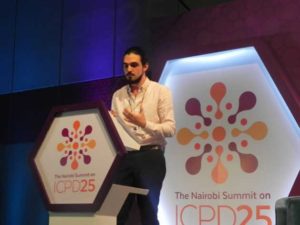
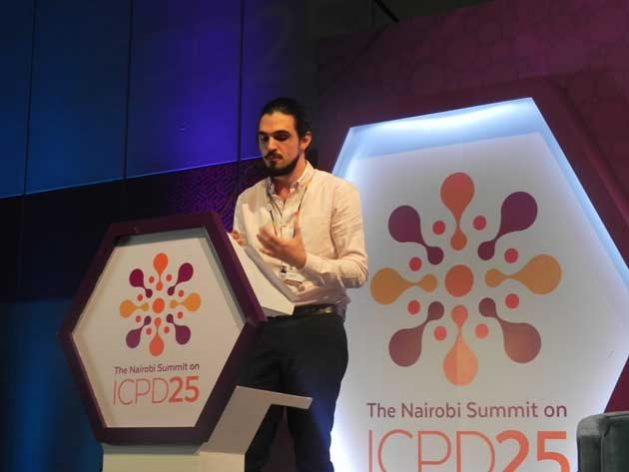
MARTIN KARADZHOV, Global Youth Commitee speaking at ICPD25. Credit: Mantoe Phakathi / IPS

NAIROBI, Kenya, Nov 13 2019 (IPS) – Governments across the world must ban all state-implemented harmful practices against the Lesbian, Gay, Bisexual, Transgender, Queer and Intersex (LGBTQI) community delegates at the ICPD25 tells IPS.


Adding his voice in bridging the gap of Sexual Reproductive Health Rights (SRHR) among the youth, Martin Karadzhov, chair for Global Youth Steering Committee, told delegates at a youth event themed “our bodies, our lives, our world”, at the 25thInternational Conference on Population Development (ICDP25).

LGBTQI young people remain voiceless

Although there are 1.8 billion youths between the ages of 10 and 24 years, they continue to be marginalised when it comes to SRHR issues. Karadzhov said LGBTQI youth in many countries were subjected to harmful practices including pressure on them to convert, a practice with no scientific basis which is also unethical and, in most instances, a torture. “Justice for one is justice for all,” he said.

He urged governments to repeal discriminatory laws against the LGBTQI community, adding that they were denied access to Sexual Reproductive Health (SRH) services on the basis of their sexuality. “Our human rights are not controversial,” said Karadzhov.

Young people often only a statistic

Echoing his sentiments was Mavis Naa Korley Aryee, a youth programme national radio host at Curious Minds. She said although there are 1. 8 billion reasons why young people should be involved in decision-making process, they are only mentioned as statistics.“Being part of a minority should not be a reason for discrimination,” said Aryee.

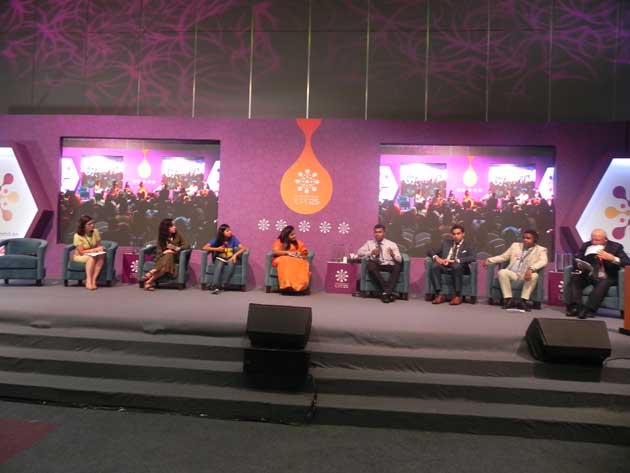
Young people speak out at Nairobi Summit. Credit: Mantoe Phakathi / IPS

She advocated for access to SRH services to be made available to all young people, adding that they have a right to make choices about their bodies. She was, however, encouraged by the way the global youth had stood up to be counted despite the challenges they face. Aryeenoted that the youth contributed to the development agenda leading to ICPD25, adding that the UN Sustainable Development Goals (SDGs) are also about them.

“We have then numbers. No one will ignore 1.8 billion reasons. The more we collaborate, the more we advance our agenda,” she said.

Fighting for a seat a the table

The global youth is fighting for a seat on the decision-making table where Marco Tsaradia, a Member of Parliament from Madagascar, said young people are told: “things have always been done like this”. He said the youth are keen to bring about new ideas because they are talented and innovative. However, he complained that the existing decision-making structure prevented them from achieving this objective.

It gets worse if young persons with disabilities want to enter the table because, said Leslie Tikolitikoca from the Fiji Disabled Peoples Federation, they tend to be “judged on their disabilities rather than their abilities”. For example, he said, instead of providing services to those who are unable to hear or see, those in power would rather make decisions on their behalf instead of helping them to contribute to the discussion.

“How are we going to ensure that we leave no one behind if we don’t involve all young people?” he wondered.

EU commits funding

Following the youth’s proposed solutions to their SRHR, Henriette Geiger, from the directorate of people and peace at the European Union Commission, said it was time to act. She said the EU has proposed that governments should consider reducing the voting age to 16 years.

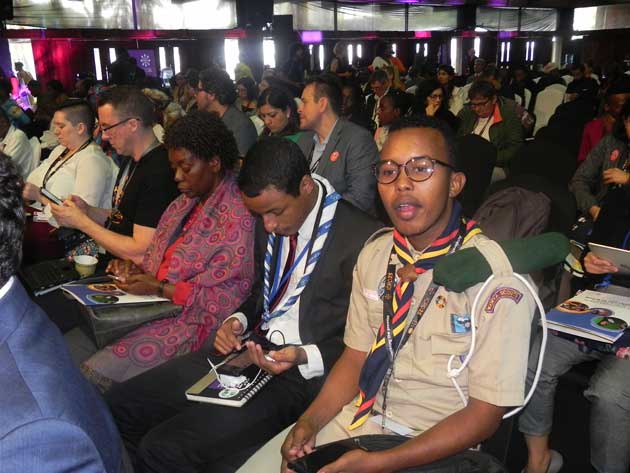
Young people at ICPD25 youth session. Credit: Mantoe Phakathi / IPS

“That would make a huge impact in decision-making on youth policy,” she said, adding that the EU was funding key initiatives to change public perceptions about the LGBTQI community by using film.

Although she said the EU was involved in many SRHR programmes in Africa, she further pledged €29 million towards SRHR programmes for the youth, urging organisations to take advantage of this initiative.

Not all doom and gloom

During the opening address of the ICPD25, the United Nations Population Fund (UNFPA) executive director, Natalia Kanem, told delegates “good progress is not good enough”, insisting that the promises made to girls, women and everyone should be kept.

Kanem paid special tribute to the youth, for bringing new ideas and resources to make rights and choices a reality.

“To the youth, you’re inspiring in pushing us to go further Thank you,” said Kanem.

It is not all sad and gloomy for the youth, said Ahmed Alhendawi, the secretary-general of the World Organisation of the Scouts Movement. The fact that the youth have formed themselves into a global youth movement should be celebrated because that is how they are going to win the fight to be part of decision-making processes.