Over 25,500 Palestinians Killed: Absence of Accountability is Nothing Short of Shameful

Armed Conflicts, Civil Society, Crime & Justice, Democracy, Headlines, Human Rights, IPS UN: Inside the Glasshouse, Middle East & North Africa, TerraViva United Nations
Opinion

Over 25,500 Palestinians Killed: Absence of Accountability is Nothing Short of Shameful

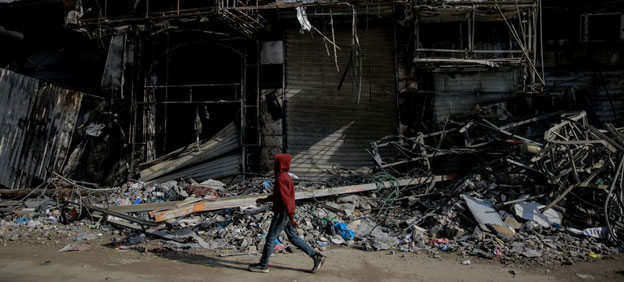
A boy walks through a destroyed neighbourhood in Gaza City. Credit: UNICEF/Omar Al-Qattaa

 
UN High Commissioner for Human Rights, Volker Türk’s remarks to the Interactive Dialogue on the human rights situation in the Occupied Palestinian Territory, at the 61st session of the Human Rights Council in Geneva on February 26 2026.

GENEVA, Feb 27 2026 (IPS) – The situation in the Occupied Palestinian Territory is a human-made disaster.

The report before you sets out events between 1 November 2024 and 31 October 2025 that show Israel’s utter disregard for human rights in Gaza and the West Bank, and the serious violations also committed by Hamas and other Palestinian armed groups.


The evidence gathered by my Office reveals a consistent pattern of gross violations and abuses of human rights, serious violations of international humanitarian law and atrocity crimes – that remain unpunished.

Israel’s continued attacks on residential buildings and makeshift tents, destroying entire neighbourhoods, caused mass civilian deaths. More than 25,500 Palestinians were killed, including entire families, and more than 68,800 were injured during the reporting period.

Among those killed were many Palestinian journalists. My Office has verified that 292 were killed in Israeli operations since 7 October 2023.

Israel’s militarization of humanitarian aid, through the Gaza Humanitarian Foundation, also led to large-scale killings. Between late May and 8 October 2025, my Office recorded 2,435 Palestinians killed by the Israeli military near food collection points — mostly young men and boys.

In August 2025, famine was declared in Gaza, affecting more than half a million people. According to the Palestinian Ministry of Health, at least 463 Palestinians, including 157 children, died from starvation. This was the direct result of Israel’s blocking of humanitarian aid and other deliberate actions.
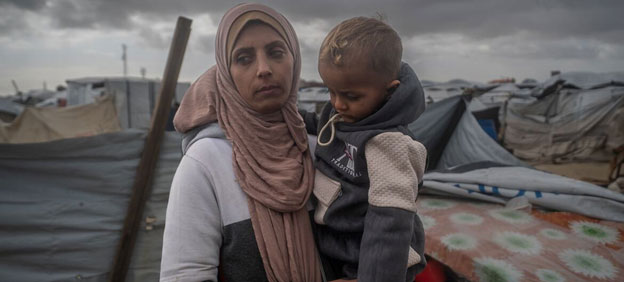
A woman holds a child as a storm approaches Khan Younis in Gaza. Credit: WFP/Maxime Le Lijour

Israeli forces continued to kill humanitarian and medical personnel during this period, and to make mass arrests of Palestinians across Gaza and the West Bank. These arrests often amounted to arbitrary detention, and included enforced disappearances.

Since 7 October 2023, my Office has verified that at least 89 Palestinians have died in Israeli custody. Torture and other ill-treatment of Palestinians in Israeli detention remain widespread.

Israeli operations destroyed some 80 percent of civilian infrastructure in Gaza – including homes, schools, hospitals, cultural sites, and water treatment plants.

During the reporting period, Israel continued to forcibly displace Palestinians, into ever-shrinking areas of the Gaza strip. Over the course of 2025, Hamas and other Palestinian armed groups continued to hold hostages in blatant violation of international law.

Fifty-one hostages who were seized on 7 October 2023 were returned to their loved ones. On their release, the hostages recounted their traumatic ordeals, including sexual and gender-based violence, torture, beating, and prolonged confinement underground.

In June, there were reports that armed men, allegedly affiliated with Hamas, summarily executed 12 Palestinians associated with the Gaza Humanitarian Foundation. In the West Bank, including East Jerusalem, Israeli security forces continued to launch airstrikes and use unlawful force, killing hundreds of Palestinians.

In January 2025, Israeli forces launched Operation Iron Wall in the northern West Bank, which is still ongoing. So far, they have forced 32,000 Palestinians from their homes.

Meanwhile, Palestinian security forces increased the use of unnecessary or disproportionate force, resulting in the unlawful killing of at least 8 Palestinians. They also arbitrarily detained and ill-treated more than 300 Palestinians.

The ceasefire of 11 October 2025 brought some measure of relief. But we must not mistake this for peace or safety. People are still dying in Gaza from Israeli fire, cold, hunger, and treatable diseases and injuries.

Since the ceasefire, Israeli attacks in Gaza have killed more than 600 Palestinians and injured more than 1,600, according to the Palestinian Ministry of Health. Anywhere else, this would be considered a major crisis.

My Office has also recorded at least 80 reported killings of Palestinians by Hamas since the ceasefire, mostly by summary executions and in clashes with rival factions. Gaza now has the highest number of amputee children per capita in the world.

Israel continues to destroy civilian infrastructure and forcibly transfer Palestinians within the Occupied Palestinian Territory. The humanitarian situation is still extremely precarious, as Israel continues to impede the humanitarian community’s ability to bring in food, shelter, fuel, medical supplies, and other essential items.

Since the ceasefire, at least 11 children have died from hypothermia. I deplore Israel’s decision at the end of last year to suspend some 37 aid groups from Gaza. I also deplore the ban on UNRWA operations and the demolition of its premises in East Jerusalem in blatant violation of international law.

Today, the situation in the West Bank is particularly disturbing. Recent Israeli measures expanding land expropriation consolidate the annexation of Palestinian territory. This is in flagrant breach of the Palestinian right to self-determination.

Israeli security forces continue to use unnecessary and disproportionate force, and have killed 1,020 Palestinians since 7 October 2023, according to figures verified by my Office.

Taken together, Israel’s actions appear aimed at making a permanent demographic change in Gaza and the West Bank, raising concerns about ethnic cleansing.

The absence of accountability for the egregious violations committed is nothing short of shameful. Instead, there are efforts to obstruct accountability. The unilateral sanctions imposed on 11 judges and prosecutors of the International Criminal Court are completely unacceptable.

As are those imposed on the Special Rapporteur on the Occupied Palestinian Territory, appointed by this Council. Time and again, I stand before this Council and brief on the litany of violations. I make recommendations, plead for accountability, and for respect for international law.

I do so again today, because it is crucial. The ongoing violations of international law in Gaza must stop. I need to issue a stark warning about the rapidly deteriorating situation in the West Bank. Israel must end its unlawful occupation, in line with the conclusion of the International Court of Justice. And Israel must lift undue restrictions on the flow of humanitarian aid.

We have thought a lot about the contribution my Office can make to shift the trajectory of this awful situation. It may seem incongruous or inappropriate to talk about reconstruction as the suffering continues unabated.

But we have a responsibility to think about what is needed to break this senseless cycle. To talk about lasting peace. Human rights have been crushed in the Occupied Palestinian Territory.

Any realistic effort to rebuild and move toward lasting stability will have to be anchored in human rights. And this is urgent. The reconstruction of Gaza is not a logistics exercise.

Rebuilding Gaza and restoring human rights throughout the Occupied Palestinian Territory requires focusing on what people have lived through over many generations and cutting through the contested narratives.

I see five elements that can help us get there.

First, there need to be meaningful steps towards accountability for all human rights violations and abuses. My Office’s reports form part of this record. Continued monitoring and reporting of the human rights situation is critical.

Second, there must be the long-overdue realization of Palestinians’ right to self-determination, including full responsibility for their own governance and control over their land and resources. Palestinians must be able to shape their own futures and lead reconstruction efforts in Gaza.

Third, security is more than weapons and walls. Unequal treatment is feeding grievances. People can only feel safe when they have faith in equal justice and the rule of law. All segregationist laws and policies that resemble the kind of apartheid system we have seen before must be dismantled.

Fourth, Palestinian and Israeli civil society organizations and human rights defenders that are trusted by their communities need to be central partners in safeguarding human rights going forward. They need the support and protection of the international community.

And finally, we need understanding and healing among Palestinian communities, and between Palestinians and Israelis. This means working to undo the dehumanization which has fuelled this decades-long conflict.

The voices of peace movements – Palestinian, Israeli, and those that bring together Palestinians and Israelis – must be heard and heeded. This can strengthen the constituency for dialogue and increase the space for shared narratives.

The international community needs to step into the moral vacuum and seize the moment – not to return to the pre-October 2023 status quo, but to finally address the underlying causes of this conflict.

Member States need to pursue a path to sustainable peace — one in which Palestine and Israel live side by side in equal dignity and rights, in line with UN resolutions and international law.

IPS UN Bureau
  Source

Iran: A Regime with Nothing Left but Force

Active Citizens, Civil Society, Crime & Justice, Economy & Trade, Featured, Headlines, Health, Human Rights, Labour, Middle East & North Africa, Migration & Refugees, Press Freedom, TerraViva United Nations

Opinion

Iran: A Regime with Nothing Left but Force

Credit: Georgios Kostomitsopoulos/NurPhoto via Getty Images

MONTEVIDEO, Uruguay, Feb 24 2026 (IPS) – The Islamic Republic of Iran has put down another uprising, with a ferocity that makes previous crackdowns seem restrained. The theocratic regime has survived, but it has done so by substituting violence for the economic security it cannot provide and the political legitimacy it no longer has. Its show of force is also an admission of weakness.


The protests that began on 28 December were triggered by a specific event — the collapse of the rial to a record low — but rooted in years of accumulated grievances. The second half of 2025 alone saw at least 471 labour protests across 69 Iranian cities. Inflation stood at 49.4 per cent. The 12-day war with Israel in June sent the Tehran Stock Exchange down around 40 per cent and cost many people their jobs. The United Nations Security Council reimposed sanctions in September. The government cut fuel subsidies in November and slashed exchange-rate subsidies in December. Over 40 per cent of Iranian households now live below the poverty line and around half the population consume fewer than the recommended 2,100 calories per day.

It was this collapse that brought typically conservative bazaar merchants onto the streets. Within two weeks, the protests had spread to all of Iran’s 31 provinces, drawing in the urban middle class, working-class communities and people from rural provinces who had historically been among the regime’s most reliable supporters. What began as an economic stoppage rapidly became political defiance. For the millions who joined the striking merchants, the plummeting currency and rising cost of food were not market failures; they were proof of the regime’s corruption and ineptitude. Generation Z played a central role, demanding not reform but profound change. Lethal repression provided further confirmation the system was beyond reform.

The state’s response evolved. Initially it offered token economic concessions alongside its usual crowd control violence such as batons and teargas. When it became clear that a widespread movement with political demands had taken hold, it shifted to total attrition. On 8 January, authorities imposed a near-total internet shutdown and authorised security forces to use military-grade weapons against crowds. The Islamic Revolutionary Guard Corps (IRGC) – a parallel military structure, major political force and economic empire with a direct stake in the regime’s survival – spearheaded the crackdown, with its affiliated Basij paramilitary networks playing a central role in street-level violence.

The casualty figures were deliberately obscured by the internet blackout, but all evidence points in the same direction. Hengaw Organisation for Human Rights reported that at least 3,000 civilians — including 44 children — were killed in the first 17 days. Iran Human Rights, citing Ministry of Health sources, documented a minimum of 3,379 deaths across 15 provinces. The US-based Human Rights Activists News Agency reported around 7,000 verified fatalities by mid-February, with 12,000 further cases under review. Time magazine cited hospital records suggesting the toll may have reached 30,000. Even the lowest of these figures vastly eclipses the 537 deaths recorded during the 2022-2023 Woman, Life, Freedom protests. Supreme Leader Ali Khamenei’s concession that ‘several thousand’ had been killed confirmed the order of magnitude.

By 16 January the streets had been cleared, but a quieter repressive campaign continued, with nighttime raids, enforced disappearances and mass detentions in unofficial holding sites outside the legal system, targeting not only protesters but also doctors who treated the wounded, lawyers who provided legal assistance, bystanders who helped and people who posted supportive statements online. Authorities have detained over 50,000 people. Revolutionary Courts have fast-tracked mass indictments through summary trials, often conducted online and lasting mere minutes, with defendants denied independent legal counsel and confessions extracted under torture. Eighteen-year-old Saleh Mohammadi, whose retracted confession was obtained after interrogators broke bones in his hand, has been sentenced to be publicly hanged at the site of his alleged crime. Dozens more face imminent execution.

The regime has, for now, held: its security forces have not fractured, there have been no significant elite defections, and the IRGC has maintained its capacity for suppression. But it rules over a country with a wrecked economy, a battered nuclear programme, weakened regional proxies and a population that has run out of reasons to comply. Each protest cycle has required a higher threshold of state violence to suppress, a sign the regime has no other tool left.

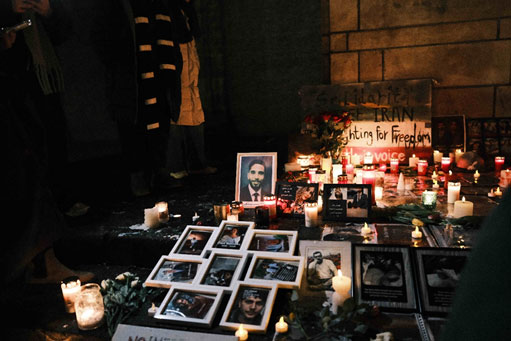
What prevents weakness from becoming collapse is the absence of any alternative. The international response briefly suggested external pressure might tell – but did not. Donald Trump told Iranian protesters that ‘help is on its way’. The European Union listed the IRGC as a terrorist organisation. The UK imposed fresh sanctions. The Iranian diaspora held at least 168 protests across 30 countries. But the international noise simply enabled the regime to spread the narrative that the uprising was foreign-directed.

The exiled opposition is fragmented along ethnic, ideological and generational lines, seemingly more consumed by internal rivalries than the task of converting widespread discontent into sustained political pressure. Inside Iran, the most credible opposition voices — Nobel laureate Narges Mohammadi, reformist politician Mostafa Tajzadeh and veteran leader Mir Hossein Mousavi — are imprisoned or cut off from public life.

A weakened regime facing a leaderless opposition can endure, but what it cannot do is reverse its decay. Violence may clear the streets, but it cannot rebuild the economy, restore trust or give Iran’s young people a reason to stay. The regime has bought time, at an ever-rising price, but the crisis it’s suppressed isn’t going away.

Inés M. Pousadela is CIVICUS Head of Research and Analysis, co-director and writer for CIVICUS Lens and co-author of the State of Civil Society Report. She is also a Professor of Comparative Politics at Universidad ORT Uruguay.

For interviews or more information, please contact research@civicus.org

  Source

IRAN: ‘Sustainable Change Will Depend on Domestic Organisational Capacity, Not External Force’

Active Citizens, Civil Society, Crime & Justice, Economy & Trade, Featured, Headlines, Human Rights, Middle East & North Africa, Migration & Refugees, Press Freedom, TerraViva United Nations

Feb 16 2026 (IPS) –  
CIVICUS discusses the recent protests in Iran with Sohrab Razaghi, executive director of Volunteer Activists, a Netherlands-based diaspora organisation empowering Iranian civil society.


IRAN: ‘Sustainable Change Will Depend on Domestic Organisational Capacity, Not External Force’

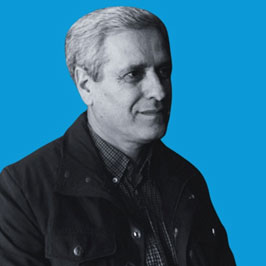
Sohrab Razaghi

Protests triggered by economic grievances erupted across Iran on 28 December, quickly evolving into broader anti-regime protests. The crackdown that followed resulted in what may be the largest massacre in modern Iranian history.

What sparked the protests, and in what ways were they different from previous ones?

Rising prices and the collapse of the national currency initially sparked the protests, but these quickly expanded beyond economic grievances. At least in part, this is because the economy is no longer seen as a purely technical issue but as a measure of the state’s ability to govern. A central question among social groups now is whether the government can manage crises and provide sustainable solutions.

Anger has built up, reflecting broken promises and lost futures. Over the past three decades, four major protest waves – in 2009, 2017, 2019 and 2022 – were met with repression, denial or superficial reforms. This pattern has produced a strong sense of humiliation and political voicelessness.

But perhaps the most decisive factor in the latest wave of protests has been the role of Generation Z, a generation that did not experience the 1979 revolution or the war with Iraq and does not have the ideological attachments of earlier generations. The dividing line is not just age but also expectations, lifestyles and values. While previous generations used to hope for gradual reform within the system, now many young people see no viable future within the current framework. For them, the most rational responses to what they perceive as a structural dead end are disengagement, migration or radical protest.

Recent protests, particularly those of 8 and 9 January, also reflected shifts in protest dynamics, with higher levels of violence visible in both rhetoric and practice. This escalation likely reflects accumulated frustration and political deadlock, but doesn’t necessarily indicate that the state has weakened. Security forces so far appear cohesive and operationally effective, and there are no clear signs of fragmentation inside the coercive apparatus.

But the rise in violence is troubling for democratic forces and civil society. When violent tactics become prominent, organised civic initiatives are marginalised and security-driven narratives prevail, weakening sustained civic action.

Additionally, Israeli and US statements expressing support for protesters and threatening military action had contradictory and largely negative effects.

While such rhetoric initially generated hope among some protesters, the lack of follow-up produced disillusionment and scepticism. Most importantly, statements by foreign governments, including Israel and the USA, strengthened the regime’s narrative. They enabled the authorities to frame protests as the products of foreign interference and protesters as instruments of external powers, including claims of involvement by Mossad agents. This narrative was very useful to justify securitisation and repression.

How have civil society and the media documented human rights violations amid internet shutdowns?

During near-total internet blackouts, local and community-based groups played crucial roles. They recorded the time and location of incidents, collected testimonies from multiple sources and preserved legal, medical and visual documentation while observing basic digital security principles.

When limited internet access became available, information was shared securely with international partners and diaspora networks. These networks helped archive data, liaise with human rights organisations and media and reduce pressure on activists operating inside Iran. International human rights organisations then cross-checked and verified reports before incorporating them into official documentation. Because communication shutdowns, security risks and restricted access to evidence prevented full documentation, they typically presented casualty figures and details of repression conservatively. At the same time, fake news and baseless casualty figures are also prevalent in diaspora and international media reports. It is essential to interrogate such reporting to preserve the credibility of fact-checked, evidence-based reports.

Under severe restrictions, independent and evidence-based documentation has been essential to preserve truth, counter denial and lay the groundwork for future accountability.

What’s limiting sustained pressure for change?

Recent protests have not expanded into broader forms of social organisation. Participation by labour unions, local networks and professional associations has been limited, restricting the potential for sustained institutionalised pressure. Without stronger organisational structures, documentation of abuses won’t necessarily translate into coordinated civic action. Social media-based coordination and mobilisation are effective for the start and first phase of protests, but on-the-ground leadership, networks and organising capacity are instrumental for sustaining protests and increasing pressure for change.

At the discursive level, significant attention has focused on appeals for foreign pressure rather than on building internal coalitions among social groups. In some cases, rhetoric has centred on state collapse rather than democratic transition, a framework that risks instability and further social fragmentation. The use of profanity and violent language – both inside Iran and among the diaspora community – has also alienated families and moderate groups, narrowing rather than broadening support.

Ultimately, for protests to evolve into movements capable of exerting sustained pressure for change, what’s needed is inclusive organisation, coalition-building and a unifying narrative.

What should the international community do to strengthen Iranian civil society?

Sustainable change will depend on domestic organisational capacity, leadership and representation, not external force. So international leaders should avoid war rhetoric and avoid engaging in any form of military intervention. Historical experience suggests that even limited foreign military intervention is unlikely to weaken domestic repression. Instead, it may well increase regime cohesion, at least in the short term, intensify nationalist sentiment and raise the costs faced by civil society activists, who can be easily portrayed as collaborators and traitors.

When supporting Iranian civil society, international allies should prioritise independent, nonviolent civil society organisations rather than opposition groups advocating violence. Narratives of ‘collapse at any cost’ marginalise civic initiatives and undermine the prospects of democratisation.

Long-term investment in capacity strengthening is essential. This includes supporting civic organising skills, digital security, democratic advocacy, nonviolent action and secure communication tools. Over recent decades, resources and repertoires for change within civil society have been weakened. Sustained engagement is required to rebuild these capacities, with up-to-date resources, techniques and tools.

Monitoring, documentation and evidence-based reporting grounded in credible local sources are among the most effective forms of support. Accurate reporting strengthens prospects for accountability and limits the space for propaganda.

Ultimately, sustainable democratic change in Iran will depend on civil society acting independently, rooted in domestic capacities and supported by context-aware, non-interventionist international engagement.

CIVICUS interviews a wide range of civil society activists, experts and leaders to gather diverse perspectives on civil society action and current issues for publication on its CIVICUS Lens platform. The views expressed in interviews are the interviewees’ and do not necessarily reflect those of CIVICUS. Publication does not imply endorsement of interviewees or the organisations they represent.

GET IN TOUCH
Website
LinkedIn
Sohrab Razzaghi/LinkedIn

SEE ALSO
‘The unprecedented level of violence points to a deep crisis of legitimacy’ CIVICUS Lens | Interview with Feminists for Freedom 09.Feb.2026
‘When international attention decreases, state violence often intensifies’ CIVICUS Lens | Interview with Hengaw Organization for Human Rights 27.Jan.2026
Israel vs Iran: new war begins while Gaza suffering continues CIVICUS Lens 19.Jun.2025

  Source

The Iranian Military Is the Only Institution Capable of Catalyzing the Downfall of the Regime

Armed Conflicts, Civil Society, Featured, Global Governance, Headlines, Human Rights, International Justice, IPS UN: Inside the Glasshouse, Middle East & North Africa, TerraViva United Nations

The Iranian Military Is the Only Institution Capable of Catalyzing the Downfall of the Regime

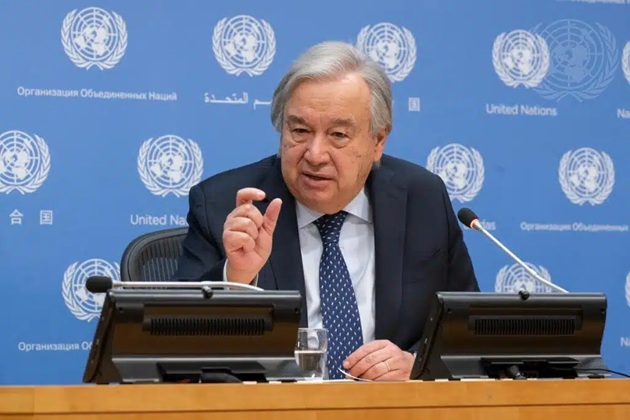
UN Secretary-General Antonio Guterres, “shocked by reports of violence and excessive use of force by Iranian authorities against protesters”, is urging restraint and immediate restoration of communications, as unrest enters its third week. 11 January 2026. Credit: United Nations

NEW YORK, Jan 15 2026 (IPS) – Unlike ever before, Iran’s Islamic regime is facing a revolt led by a generation that has lost its fear. Young and old, men and women, students and workers, are flooding the streets across the country.


Iran’s future may well hinge on whether its military chooses to act and save the country, driven by economic collapse, corruption, and decades of repression. Women and girls are at the forefront, protesting without headscarves, defying the clergy that once controlled every aspect of their lives. They don’t want reform; they are demanding freedom, economic relief, and the end of authoritarianism.

Shutting down the internet, arresting nearly 17,000 protesters, killing at least 3,000, including children, and Trump’s threat to use force to stop the Iranian regime have not prevented the mullahs from continuing their onslaught. The regime’s ruthless crackdown has been a calamitous wave of repression, taking thousands of lives in a brutal attempt to crush dissent. Yet even in the face of such peril, the public remains undeterred, determined to continue their fight.

Now, however, they need the support of the most powerful domestic—not foreign—power to come to their aid. The Iranian military is the most pivotal institution in the country, capable of catalyzing the downfall of the regime. The military is the key player, with significant internal influence and the capability to drive the necessary change from within, ultimately leading to regime change.

Every officer in the military should stop and think, how do I want to serve my country.

Do I want to continue to prop up a bunch of reactionaries, self-obsessed old men who have long since lost their relevance, wearing the false robe of piety to appear sanctimonious while subjugating the people to hardship and hopelessness?

Should I not support the younger generation who are yearning for a better life, for opportunity, for a future that gives meaning to their existence?

Should I not participate in sparking the revival of this magnificent nation from the doldrums of the past 47 years that have consumed it from within?

Should I continue to prepare for war against Israel, or extend a peaceful hand and invest in building my country with such immense natural and human riches and be in the forefront of all other modern democratic and progressive nations, and restore the glory of ancient Persia?

Do I truly want to continue to wear blinders and let my country be destroyed from within, or should I become part of a newly reborn nation and take personal pride in helping to revive it?

The answer to these questions should be clear to every officer. The military should establish a transitional government and pave the way for a legitimate, freely elected government, and restore the Iranian people’s dignity and their right to be free.

The idea that the Shah’s son, Reza Pahlavi, could return and restore a monarchy is just the opposite of what the Iranian people need. Instead of another form of corruption or an old kingdom, they deserve a democracy and genuine freedom.

In the final analysis, Iran’s destiny may rest on a single profound choice—whether its military steps forward to reshape the nation’s destiny.

Dr. Alon Ben-Meir is a retired professor of international relations, most recently at the Center for Global Affairs at NYU. He taught courses on international negotiation and Middle Eastern studies.

  Source

Gaza: Physicians Call For Unimpeded Aid To Restore Reproductive Healthcare

Aid, Armed Conflicts, Civil Society, Development & Aid, Editors’ Choice, Featured, Gender, Headlines, Health, Human Rights, Humanitarian Emergencies, Middle East & North Africa, Population, Sustainable Development Goals, TerraViva United Nations, Women’s Health

Armed Conflicts

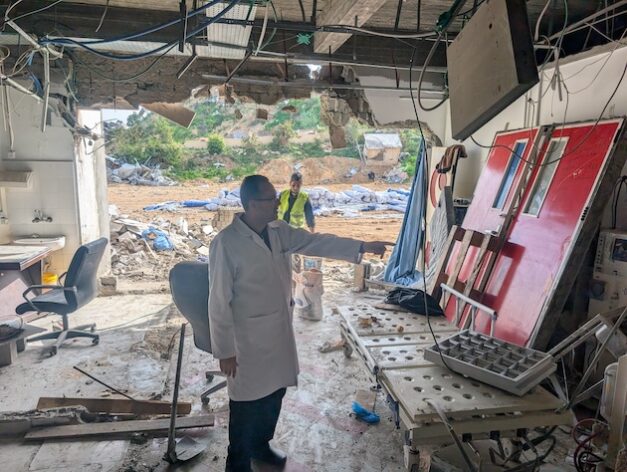
Cardiologist Dr. Marwan Sultan, then Director of the Indonesian Hospital in north Gaza, in February 2025 showing damage to hospital equipment following an Israeli attack on the facility a few months prior. In July 2025, Dr. Sultan was killed in an Israeli strike on the apartment where he was sheltering with his family. Credit: PHR/GHRC

Cardiologist Dr. Marwan Sultan, then Director of the Indonesian Hospital in north Gaza, in February 2025 showing damage to hospital equipment following an Israeli attack on the facility a few months prior. In July 2025, Dr. Sultan was killed in an Israeli strike on the apartment where he was sheltering with his family. Credit: PHR/GHRC

BRATISLAVA, Jan 14 2026 (IPS) – Israel must lift all restrictions on medicine, food and aid coming into Gaza, rights groups have demanded, as two reports released today (Jan 14) document how maternal and reproductive healthcare have been all but destroyed in the country.


In two separate reports released jointly, Physicians for Human Rights (with the Global Human Rights Clinic at the University of Chicago Law School) and Physicians for Human Rights–Israel (PHR-I) show how the war in Gaza has led to rising maternal and neonatal mortality, births under dangerous conditions, and the systematic destruction of health services for women in Gaza.

The reports from the two groups, which are independent organizations, provide both detailed clinical analysis of the collapse of Gaza’s health system and its medical consequences as well as firsthand testimonies from clinicians and pregnant and breastfeeding women in Gaza forced to live and care for their newborns in extreme conditions.

And the organizations say that with conditions improving only marginally for many women despite the current ceasefire, Israel must roll back restrictions placed on aid and immediately help ensure people in Gaza get access to the healthcare they need.

Israel’s destruction of Gaza’s health infrastructure, combined with untreated malnutrition resulting from restrictions on food and medical supplies, including baby formula, has created an environment in which the fundamental biological processes of reproduction and survival have been systematically destroyed, resulting in known and foreseeable harm, pain, suffering, and death,” Sam Zarifi, Physicians for Human Rights (PHR) Executive Director, said.

“Israel must immediately allow food and essential medical material to enter Gaza with a proper medical plan for helping the besieged population,” he added.

Israeli military operations following Hamas’s attack on Israel on October 7, 2023, have left massive destruction across Gaza, including to healthcare facilities. According to UNICEF, 94 percent of hospitals have been damaged or destroyed.

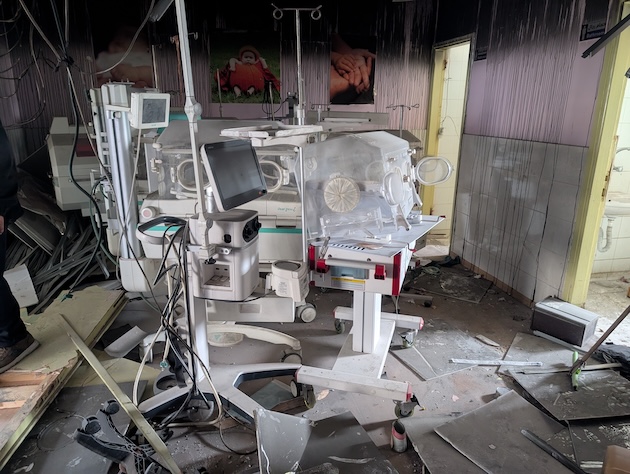
1.Destroyed incubators and equipment at the Kamal Adwan Hospital Neonatal Intensive Care Unit in north Gaza, following the targeting and raid of the facility by the Israeli forces in December 2024. Credit: PHR/GHRC

Destroyed incubators and equipment at the Kamal Adwan Hospital Neonatal Intensive Care Unit in north Gaza, following the targeting and raid of the facility by the Israeli forces in December 2024. Credit: PHR/GHRC

Maternal and reproductive healthcare has suffered. Before the war, Gaza had eight neonatal intensive care units with 178 incubators. Today, the number of incubators has dropped by 70 percent. In the north, there were 105 incubators across three NICUs, now there are barely any functional units remaining, UNICEF told IPS.

It says that the numbers of low birth weight babies have nearly tripled compared to pre-war levels and the number of first-day deaths of babies increased by 75 percent.

The PHR and PHR-I reports paint a similar picture.

The PHR report, which focuses on the period between January 2025 and October 2025 when a ceasefire was agreed, details how between May and June last year, the Palestinian Ministry of Health reported a 41 percent decrease in the birth rate in Gaza compared to the same time period in 2022; there was a significant increase in miscarriages that affected more than 2,600 women, and 220 pregnancy-related deaths that occurred before delivery.

The ministry also reported a sharp increase in premature births and low birth weight cases; over 1,460 babies were reported to be born prematurely, while more than 2,500 were admitted to neonatal intensive care. Newborn deaths also increased, with at least 21 babies reported to have died on their first day of life.

Meanwhile, the PHR-I report includes personal testimonies illustrating the severe problems pregnant women and women with newborns have faced in Gaza during the war, from lacking safe routes to care and being forced to give birth in unsanitary, dangerous conditions to battling hunger and severe food shortages as they try to breastfeed their children.

One woman, Samah Muhammad Abu Mustafa, a 30-year-old mother of two from Khuza’a, Khan Youni, described how when her contractions began in the middle of the night, because there were no vehicles and very few ambulances, which are reserved for shelling or other critical emergencies, she had to walk a long distance through rain. When she eventually reached the hospital, she said it was “horrifying.”

“I swear, one woman gave birth in the corridor, and her baby died. It was very crowded, and the doctors worked nonstop. I felt as though I could give birth at any moment. After giving birth to my eldest daughter, I was told I should not deliver naturally again because my pelvis was too narrow. Despite this, the doctors said I would have to deliver naturally because a cesarean section required anesthesia, and there was not enough available. I stood for three hours until it was finally my turn, without sitting even for a moment,” she said.

But despite the October 2025 ceasefire, massive problems remain with women’s access to and the provision of, maternal and reproductive healthcare in Gaza.

“Maternal health units in Gaza are largely non-functional and face critical shortages of essential medicines, consumables, and equipment,” Lama Bakri, project coordinator in the Occupied Territories Department at PHR-I, told IPS.

“Neonatal and diagnostic equipment remains scarce or blocked, including portable incubators for premature and low-birth-weight newborns. Although some aid has entered since the ceasefire, these gaps are not being addressed at the scale required, and meaningful improvement in the immediate future remains unlikely.”

Malnutrition also remains a serious problem.

“The ceasefire has allowed us to significantly scale up our nutrition response, but we are still treating pregnant and breastfeeding women for acute malnutrition in alarmingly high numbers,” Ricardo Pires, Communication Manager, Division of Global Communications & Advocacy at UNICEF, told IPS.

He said that between July and September 2025 about 38 percent of pregnant women screened were diagnosed with acute malnutrition.

“In October alone, we admitted 8,300 pregnant and breastfeeding women for treatment, about 270 a day, in a place where there was no discernible malnutrition among this group before October 2023,” he added.

UNICEF has documented almost 6,800 children admitted for acute malnutrition treatment in November 2025 compared to 4,700 cases in November 2024. So far, the number of admitted cases more than doubled in 2025 compared to 2024: almost 89,000 admissions of children to date in 2025, compared to 40,000 cases in 2024, and almost none before 2023.

“What we’re seeing is that no child meets minimum dietary diversity standards, and two-thirds of children are surviving on just two food groups or less. Around 90 percent of caregivers reported their children had been sick in the previous two weeks, which compounds the malnutrition crisis,” Pires said.

And there are fears for the longer-term demographic future of Gaza given the damage to maternal and reproductive healthcare.

“For Gaza’s demographic future, the implications are serious. Even with reconstruction, we will be dealing with a generation of children who were scarred before they took their first breath, children who may face lifelong health complications, developmental challenges, and the effects of stunting. The rebuilding must start now, but we should be clear-eyed: the damage to maternal and newborn health will echo for years, potentially decades,” said Pires.

But others say that with cooperation between international actors and the right political will, the situation need not remain so dire.

“To rehabilitate the population after everything that has happened is going to be a real issue, [but] now there is a Board of Peace, the needs of pregnant women and maternal and reproductive healthcare can be prioritized,” Zarifi told IPS.

“The capacity and the will exist among Gazans and Gazan healthcare workers to rebuild the healthcare system, including maternal and reproductive health services,” added Bakri. “The primary obstacle is not technical or professional but political: Israel’s control over Gaza’s borders and the restrictions on the entry of essential equipment, medical supplies, and reconstruction materials. With unrestricted access to what is needed to rehabilitate hospitals, rebuild destroyed units, and restock essential medicines, recovery is entirely feasible. Whether maternal and reproductive healthcare can return to pre-war levels depends on sustained international pressure to allow that access.”

Although some aid has entered since the ceasefire, these gaps are not being addressed at the scale required, and meaningful improvement in the immediate future remains unlikely.

However, while both NGOs like PHR and PHR-I and others, alongside international bodies like the UN, stress that any recovery and reconstruction in Gaza requires the ceasefire to hold and consolidate, repeated violations underline its fragility, and the effect that has on women.

Meanwhile, PHR and PHR-I point out that extreme weather and ongoing Israeli restrictions on medicine and food getting to Gaza to this day continue to severely affect pregnant women, new mothers, and babies. On top of this, Israel has also announced it will bar 37 international aid groups from working in Gaza, potentially compounding the problems.

Bakri said such measures were jeopardizing what small gains had been made since the ceasefire and “raise serious concerns about whether the situation can improve.”

“Even after the ceasefire, while bombardment has decreased, the reality these women face remains catastrophic – not only for their bodies and well-being but for the survival of the entire society,” said Bakri.

Zarifi added, “We are worried that the restrictions placed by Israel on some of the major actors in the humanitarian response will hamper access to assistance for those that need it. We have raised questions with the Israeli government as to why specific medicines are not allowed to be brought into Gaza and they say that they are not stopping them from being brought in but they can be brought in by commercial means. That is hard for people who can barely put any money together. These medicines should definitely be coming in through humanitarian channels.”

He also highlighted how important the issue of accountability is in ensuring any progress is made in rebuilding healthcare in Gaza and also limiting the probability of similar devastation in the future.

Both reports concluded that the harms caused by Israeli attacks are not isolated incidents but part of an ongoing pattern of systematic damage to the health of women and their children in Gaza, amounting to reproductive violence.

Israel has denied this and said that attacks on hospitals in Gaza have been because the medical facilities are being used by Hamas, and it has maintained that its forces adhere to international law.

While under international law healthcare facilities have special protection even in war, and attacks on them are prohibited, that protection is lost if they are deemed to fulfill criteria to be considered military objectives, such as housing militaries and arms.

However, any attack on them must still comply with the fundamental principles of distinction, proportionality and precautions in attack and failure to respect any of these principles constitutes a breach of international humanitarian law, according to the UN.

“These attacks are part of a deliberate policy designed to create a domino effect of suffering. From starvation and militarized aid distribution by the GHF, to lack of access to clean water, repeated displacement orders, living in shelters under continuous bombardment, and exposure to infections, disease, and harsh weather, the attacks on maternal and reproductive healthcare are another piece of this puzzle. Together, these conditions were created to systematically destroy the fabric of life in Gaza and reduce the population’s ability to survive,” said Bakri.

“The Israeli government has justified attacks on healthcare facilities by saying this was a problem caused by Hamas. We haven’t had an indication of this but it might be true. But in any case there has to be an investigation of these incidents and we hope the Israeli government will carry out such an investigation,” said Zarifi.

“But what is really alarming to us is that the norms prohibiting attacks on healthcare have been repeatedly violated, and there are also laws governing the protection of women and children that appear to have been violated. The only thing that makes these norms work is accountability. There has to be accountability for what happened, as it is the only way we can ensure that what has happened won’t happen in other conflicts. Impunity is watched by other actors around the world,” he added.

IPS UN Bureau Report

  Source

Refugees Forced to Fill Gaps as Funding, Power and Legal Recognition Move Out of Reach

Active Citizens, Africa, Armed Conflicts, Asia-Pacific, Civil Society, Development & Aid, Disaster Management, Editors’ Choice, Featured, Global, Human Rights, Humanitarian Emergencies, Middle East & North Africa, Migration & Refugees, Sustainable Development Goals, TerraViva United Nations

Migration & Refugees

A new global synthesis report and refugee voices from East Africa and the Middle East warn that reductions in humanitarian footprints risks breaking the refugee protection system.

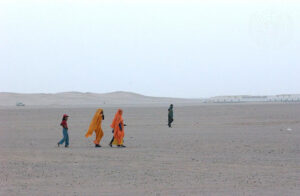
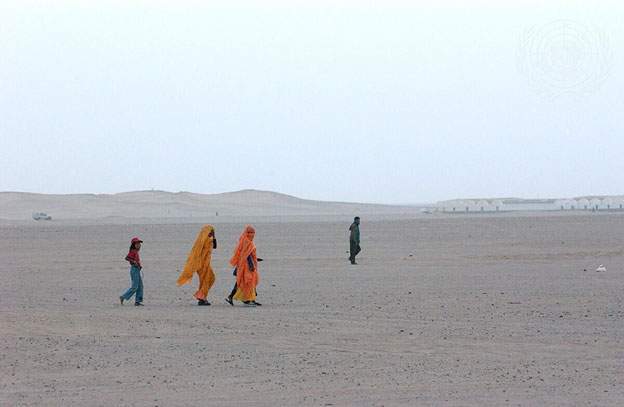
Sahrawi refugees walk near the Awserd Refugee Camp in the Tindouf Province of Algeria. Credit: UN Photo/Evan Schneider

Sahrawi refugees walk near the Awserd Refugee Camp in the Tindouf Province of Algeria. Credit: UN Photo/Evan Schneider

SRINAGAR, India, Dec 16 2025 (IPS) – The global refugee system is entering a period of deep strain. The delivery of protection and assistance is undergoing a transformation due to funding cuts, institutional reforms, and shifting donor priorities.


Against this backdrop, a new Global Synthesis Report titled From the Ground Up highlights the many issues faced by refugees in the Middle East and Africa.

Regional Perspectives on Advancing the Global Compact on Refugees has highlighted a rare, refugee-centered assessment of what is working, what is failing, and what must change. The report draws on regional roundtables held in East Africa and the Middle East and North Africa, followed by a global consultation in Geneva, to feed into the 2025 Global Refugee Forum progress review

According to the report, refugee-led and community-based organizations are increasingly taking on responsibilities, but they are not receiving power, funding, or legal recognition. As international agencies scale back under what is being called the Humanitarian Reset and UN80 reforms, refugees are expected to fill widening gaps without the authority or resources required to do so safely and sustainably.

The East Africa roundtables, held in Kampala with participation from refugee organizations in Uganda, Kenya, and Ethiopia, highlight a region often praised for progressive refugee policies. Countries here host millions displaced by conflict, hunger, and climate stress from South Sudan, Sudan, Somalia, and the Democratic Republic of the Congo.

Laws and regional frameworks promise freedom of movement, inclusion in national systems, and meaningful participation. The lived reality, however, remains uneven.

Education emerged as a central concern. Refugee children are enrolling in schools at higher rates, especially where they have been integrated into government-aided systems. Yet access remains unequal. Refugee students struggle to have prior qualifications recognized.

Many are treated as international students at universities and charged higher fees. Refugee teachers, often qualified and experienced, receive lower pay than nationals or are excluded from formal recognition. Language barriers and lack of psychosocial support further undermine learning outcomes. Refugee-led groups are already stepping in with mentorship, counseling, and bursary support, but they do so with fragile funding and limited reach.

Documentation and freedom of movement form another critical fault line. Uganda is widely cited for its rapid issuance of refugee IDs and settlement-based approach. Kenya and Ethiopia have made progress through new refugee laws and policy reforms. Still, gaps between policy and practice persist. Refugees in urban areas remain undocumented in large numbers. Identity documents often have short validity, forcing repeated renewals.

Travel documents are difficult to obtain, especially in Ethiopia, limiting cross-border movement, livelihoods, and participation in regional or global policy forums. Without documentation, refugees face arrest, harassment, and exclusion from services. For refugee organizations, lack of legal registration means operating in constant uncertainty.

Access to justice, described in the report as one of the least discussed yet most pivotal issues, cuts across all others. Refugees cannot claim rights or seek redress without functioning justice pathways. Language barriers in courts, xenophobic profiling, and lack of legal aid remain common.

Refugee-led organizations already provide mediation, paralegal support, and court accompaniment, often acting as the first point of contact between communities and authorities. Yet their work is rarely formalized or funded at scale.

These findings came alive during a webinar held at the launch of the report, where refugee leaders from different regions spoke directly about their experiences. One participant from East Africa reflected on repeated engagement in international forums. This event was his third such process, following meetings in Uganda and Gambia. He noted that participation was no longer symbolic. Governments and institutions were beginning to listen more closely.

He pointed to concrete differences across countries. In Kenya, refugees do not require exit visas. In Ethiopia, they do. Sharing such comparisons, he argued, helps governments rethink restrictive practices and adapt lessons from neighbors.

From the Middle East and North Africa, the discussion shifted to documentation and access to justice. A Jordan-based lawyer explained that civil documentation is not mere paperwork. It is the foundation of rights and accountability. Without birth registration, children cannot access education.

Without legally recognized marriages, women and children remain unprotected. Many Syrian refugees arrived in Jordan without documents, having lost them during flight or lacking legal awareness. Over time, Jordan introduced measures such as fee waivers, legal aid, and even Sharia courts inside camps like Zaatari to facilitate birth and marriage registration. Civil society groups have provided thousands of consultations and legal representations, bridging gaps between refugees and state systems.

The webinar also highlighted language as a structural barrier. In Jordan, Arabic serves as a common language for Syrians, easing communication. In East Africa, linguistic diversity complicates access to justice and services. Uganda hosts South Sudanese, Sudanese, and Congolese refugees, each with distinct languages, while official processes operate in English and Kiswahili. Governments have made efforts to provide interpretation, but gaps remain, particularly in courts and police interactions.

In Ethiopia, where Amharic dominates official institutions, refugee organizations often rely on founders or leaders who speak the language fluently, limiting broader participation.

As the conversation turned to the future of the humanitarian system, the tone grew more urgent. Participants acknowledged that funding cuts have already halted programs and exposed vulnerabilities. One speaker stressed that legal aid and documentation cannot be seen as optional sectors.

Without sustained support, entire protection systems risk collapse. Empowerment, he argued, goes beyond providing lawyers. It means building refugees’ confidence and capacity to navigate legal systems themselves.

Another participant addressed donors and UN agencies directly. Localization, he said, will fail if refugee organizations are treated only as implementers of predesigned projects. Power must shift alongside responsibility.

Refugee organizations should help design programs, raise resources, and make decisions based on community priorities. Otherwise, localization becomes another layer of outsourcing rather than a genuine transfer of agency.

The speaker’s final intervention starkly highlighted the stakes involved. With funding shrinking and uncertainty growing, refugees may soon have no option but to rely on themselves. Investing in refugee-led organizations, the speaker said, is not a luxury. This represents the final line of hope for refugees on the ground.

The MENA roundtables echo many of these concerns but in a more restrictive political context. Civic space is tighter. Legal recognition for refugee organizations is often impossible or risky. In Jordan, refugees cannot legally register organizations. In Egypt, civil society laws limit advocacy.

In Türkiye, registration is technically possible but bureaucratically daunting. Despite this, refugee-led initiatives have multiplied, filling gaps in education, protection, and livelihoods as international actors retreat.

The report warns of a dangerous paradox. Localization is advancing by necessity, not design. International agencies withdraw. Local actors step in. Yet funding, decision-making, and protection remain centralized. Refugee organizations absorb risk without safeguards. Participation is often tokenistic. Refugees are present in meetings but absent from real influence.

IPS UN Bureau Report

  Source