VENEZUELA: ‘An Economically Stable Authoritarian Model Could Become Entrenched’

Active Citizens, Civil Society, Crime & Justice, Democracy, Economy & Trade, Energy, Featured, Headlines, Human Rights, Latin America & the Caribbean, Migration & Refugees, TerraViva United Nations

Mar 11 2026 (IPS) –  
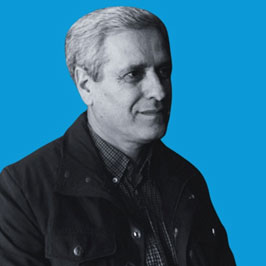
CIVICUS discusses the situation in Venezuela following US intervention and the ousting of President Nicolás Maduro with Verónica Zubillaga, a Venezuelan sociologist who specialises in urban violence, state repression and community responses to armed violence.


Verónica Zubillaga

In late January, the interim government led by Delcy Rodríguez announced an amnesty for political prisoners, coinciding with a rapprochement with the USA driven by oil interests. It is unclear whether this represents the beginning of a genuine opening or is an attempt by the government to gain international legitimacy without relinquishing power. In a country with millions of migrants and exiles, a historically fragmented opposition and a civil society that has faced brutal repression for years, it remains to be seen whether recent changes will create space for democracy or lead to the consolidation of economically stable authoritarianism.

Is the recently announced amnesty a real opening or a strategic manoeuvre?

We are at an unprecedented crossroads. Venezuela and its Chavista regime, under US tutelage and despite two decades of anti-imperialist rhetoric, are reconfiguring themselves in such a way that some opening could result. However, there is still a risk that an authoritarian model will be consolidated, with economic and humanitarian concessions, but without real democratisation.

The release of political prisoners — a constant demand in all negotiations with international support, and a low-cost form of early opening for the interim government that has taken over from Maduro — could function as a stepping stone towards democratisation. The restoration of civil, political and social rights will be a difficult and lengthy struggle in this context of such deprivation, in which our rights have been violated for so long.

In the first half of February, there were partial and gradual releases, but hundreds of people remained in detention. The enactment of the Amnesty Law on 19 February has accelerated the releases.

The announcement was presented as a political concession, not as a recognition of the extensive human rights violations committed by Maduro’s government. There has been no mention yet of initiating processes to seek the truth, hold those responsible accountable, provide reparations or dismantle the repressive apparatus, which are urgent.

We therefore need to react with caution. The release of people deprived of their liberty for political reasons is essential, but it cannot replace a broader agenda of justice, reparation and institutional transformation.

How has civil society worked to keep this issue at the centre of the debate?

The cause of political prisoners is cross-cutting. There are detained people of different ages, social classes and political backgrounds. In a society as polarised as ours, this is one of the few causes around which there is broad consensus.

After the results of the presidential election of 28 July 2024, which the opposition clearly won, were disregarded, it was mainly people from the working classes who took to the streets to protest. Many young people, including teenagers, were arrested and imprisoned. This situation significantly deepened the social dimension of the problem, highlighted the break between the ruling party and its traditional base and consolidated the brutally authoritarian nature and illegitimacy of Maduro’s government.

There is also an important gender dimension. While many young men are in prison, it is women – mothers, sisters and other relatives – who have organised committees, vigils and public actions demanding their release. Symbolically, the figure of the grieving mother demanding the release of her children is particularly powerful. It is a symbol that appeals to the Latin American imagination about women and their cries for democratisation, justice and reparation in the context of crumbling authoritarian regimes.

Recently, the demand for the release of political prisoners has also been raised by the student movement in its call for a rally at the Central University of Venezuela. After a year and a half of brutal repression following the 2024 election, which emptied the streets and created a climate of widespread fear, any public demonstration is a significant sign that could trigger a chain of progressive demands and the vindication of civil, political and social rights.

What has been the impact of the USA’s renewed interest in Venezuelan oil?

It is clear that the Trump administration is fixated on oil and investment opportunities and completely disregards democracy and human rights. The part of the opposition represented by María Corina Machado has been stunned by its exclusion from key decision-making despite its efforts to gain Donald Trump’s attention. This exclusion has altered the internal political balance.

Historically, there has been tension within the Venezuelan opposition between those who favour resorting to external pressure and those who prioritise internal negotiation strategies. Since 2014, two main strategies have coexisted: one that is more confrontational, demanding the immediate end of the government, and another favouring negotiation or elections. Civil society mirrors these same divisions. One of the difficulties of the Venezuelan process is this constant fragmentation and internal disagreements within the opposition. As the government has become more authoritarian, these divisions have prevented more powerful coordinated political action. It is important for the opposition to coordinate strategies and, instead of wearing itself down in these disagreements, coordinate efforts to move strategically between confrontation and negotiation.

Whenever the opposition has managed to coordinate, as in the 2015 legislative and 2024 presidential elections, it made significant gains. During the 2024 campaign led by Machado, the opposition achieved an unprecedented level of coordination, generating enormous collective hope, particularly with regard to the prospect of family reunification in a country with over eight million migrants. This situation affects people of all social classes and political ideologies. But in response, the government redoubled its repression and consolidated the dictatorship. This led to frustration, demobilisation and further fragmentation. The opposition lacked a long-term strategy to sustain its gains and withstand setbacks. This is still one of the biggest challenges today.

What should the international community do to contribute to real democratisation?

The international community, and Latin American states in particular, could have taken a firmer stance after the 2024 electoral fraud. Silence and a lukewarm approach weakened the defence of democracy. Now it should not repeat that mistake. Beyond Maduro’s profound delegitimisation, the US military operation in Venezuela is a sign of what could happen to any Latin American country under the US government’s new national security strategy.

With the USA as an imperial power primarily concerned with its geostrategic interests and oil resources, demands for democratisation may take a back seat. An authoritarian model that is economically stable but without real democratisation could become entrenched.

In this context, the USA’s prioritisation of energy interests is worrying. It is an unprecedented scenario in which external intervention and the permanence of the ruling party in power coexist. The situation is highly volatile, and this has only just begun. A period of instability and political violence could follow if the civil-military coalition in power breaks down, which may happen given the tradition of anti-imperialist discourse rooted in the armed forces during the two and a half decades of Chavista rule.

Ironically, the USA’s focus on energy interests could result in the defence of sovereignty becoming a new unifying cause for the Venezuelan opposition, potentially leading to basic agreements between the ruling party post-Maduro and the opposition to defend Venezuelan oil interests. What’s at stake is recovering politics as an exercise involving conflict and struggle, as well as recognition and exchange for democratic coexistence — something we have lost, particularly over the past decade.

CIVICUS interviews a wide range of civil society activists, experts and leaders to gather diverse perspectives on civil society action and current issues for publication on its CIVICUS Lens platform. The views expressed in interviews are the interviewees’ and do not necessarily reflect those of CIVICUS. Publication does not imply endorsement of interviewees or the organisations they represent

GET IN TOUCH
LinkedIn
Twitter

SEE ALSO
‘Although the repressive architecture remains intact, a small window of hope has opened’ CIVICUS Lens | Interview with Luz Mely Reyes 05.Feb.2026
Venezuela: democracy no closer CIVICUS Lens 29.Jan.2026
‘We are seeing an economic transition, but no democratic transition’ CIVICUS Lens | Interview with Guillermo Miguelena 26.Jan.2026
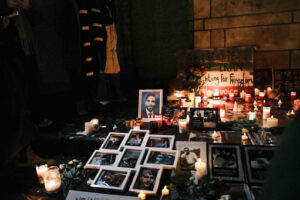
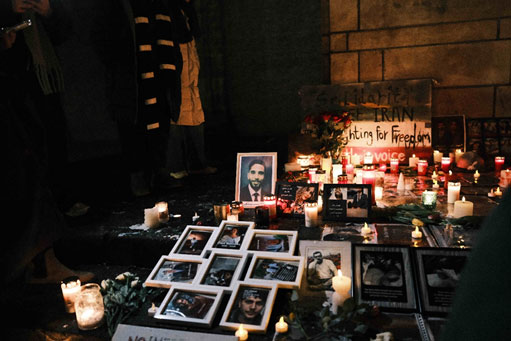
  Source

Iran: A Regime with Nothing Left but Force

Active Citizens, Civil Society, Crime & Justice, Economy & Trade, Featured, Headlines, Health, Human Rights, Labour, Middle East & North Africa, Migration & Refugees, Press Freedom, TerraViva United Nations

Opinion

Iran: A Regime with Nothing Left but Force

Credit: Georgios Kostomitsopoulos/NurPhoto via Getty Images

MONTEVIDEO, Uruguay, Feb 24 2026 (IPS) – The Islamic Republic of Iran has put down another uprising, with a ferocity that makes previous crackdowns seem restrained. The theocratic regime has survived, but it has done so by substituting violence for the economic security it cannot provide and the political legitimacy it no longer has. Its show of force is also an admission of weakness.


The protests that began on 28 December were triggered by a specific event — the collapse of the rial to a record low — but rooted in years of accumulated grievances. The second half of 2025 alone saw at least 471 labour protests across 69 Iranian cities. Inflation stood at 49.4 per cent. The 12-day war with Israel in June sent the Tehran Stock Exchange down around 40 per cent and cost many people their jobs. The United Nations Security Council reimposed sanctions in September. The government cut fuel subsidies in November and slashed exchange-rate subsidies in December. Over 40 per cent of Iranian households now live below the poverty line and around half the population consume fewer than the recommended 2,100 calories per day.

It was this collapse that brought typically conservative bazaar merchants onto the streets. Within two weeks, the protests had spread to all of Iran’s 31 provinces, drawing in the urban middle class, working-class communities and people from rural provinces who had historically been among the regime’s most reliable supporters. What began as an economic stoppage rapidly became political defiance. For the millions who joined the striking merchants, the plummeting currency and rising cost of food were not market failures; they were proof of the regime’s corruption and ineptitude. Generation Z played a central role, demanding not reform but profound change. Lethal repression provided further confirmation the system was beyond reform.

The state’s response evolved. Initially it offered token economic concessions alongside its usual crowd control violence such as batons and teargas. When it became clear that a widespread movement with political demands had taken hold, it shifted to total attrition. On 8 January, authorities imposed a near-total internet shutdown and authorised security forces to use military-grade weapons against crowds. The Islamic Revolutionary Guard Corps (IRGC) – a parallel military structure, major political force and economic empire with a direct stake in the regime’s survival – spearheaded the crackdown, with its affiliated Basij paramilitary networks playing a central role in street-level violence.

The casualty figures were deliberately obscured by the internet blackout, but all evidence points in the same direction. Hengaw Organisation for Human Rights reported that at least 3,000 civilians — including 44 children — were killed in the first 17 days. Iran Human Rights, citing Ministry of Health sources, documented a minimum of 3,379 deaths across 15 provinces. The US-based Human Rights Activists News Agency reported around 7,000 verified fatalities by mid-February, with 12,000 further cases under review. Time magazine cited hospital records suggesting the toll may have reached 30,000. Even the lowest of these figures vastly eclipses the 537 deaths recorded during the 2022-2023 Woman, Life, Freedom protests. Supreme Leader Ali Khamenei’s concession that ‘several thousand’ had been killed confirmed the order of magnitude.

By 16 January the streets had been cleared, but a quieter repressive campaign continued, with nighttime raids, enforced disappearances and mass detentions in unofficial holding sites outside the legal system, targeting not only protesters but also doctors who treated the wounded, lawyers who provided legal assistance, bystanders who helped and people who posted supportive statements online. Authorities have detained over 50,000 people. Revolutionary Courts have fast-tracked mass indictments through summary trials, often conducted online and lasting mere minutes, with defendants denied independent legal counsel and confessions extracted under torture. Eighteen-year-old Saleh Mohammadi, whose retracted confession was obtained after interrogators broke bones in his hand, has been sentenced to be publicly hanged at the site of his alleged crime. Dozens more face imminent execution.

The regime has, for now, held: its security forces have not fractured, there have been no significant elite defections, and the IRGC has maintained its capacity for suppression. But it rules over a country with a wrecked economy, a battered nuclear programme, weakened regional proxies and a population that has run out of reasons to comply. Each protest cycle has required a higher threshold of state violence to suppress, a sign the regime has no other tool left.

What prevents weakness from becoming collapse is the absence of any alternative. The international response briefly suggested external pressure might tell – but did not. Donald Trump told Iranian protesters that ‘help is on its way’. The European Union listed the IRGC as a terrorist organisation. The UK imposed fresh sanctions. The Iranian diaspora held at least 168 protests across 30 countries. But the international noise simply enabled the regime to spread the narrative that the uprising was foreign-directed.

The exiled opposition is fragmented along ethnic, ideological and generational lines, seemingly more consumed by internal rivalries than the task of converting widespread discontent into sustained political pressure. Inside Iran, the most credible opposition voices — Nobel laureate Narges Mohammadi, reformist politician Mostafa Tajzadeh and veteran leader Mir Hossein Mousavi — are imprisoned or cut off from public life.

A weakened regime facing a leaderless opposition can endure, but what it cannot do is reverse its decay. Violence may clear the streets, but it cannot rebuild the economy, restore trust or give Iran’s young people a reason to stay. The regime has bought time, at an ever-rising price, but the crisis it’s suppressed isn’t going away.

Inés M. Pousadela is CIVICUS Head of Research and Analysis, co-director and writer for CIVICUS Lens and co-author of the State of Civil Society Report. She is also a Professor of Comparative Politics at Universidad ORT Uruguay.

For interviews or more information, please contact research@civicus.org

  Source

IRAN: ‘Sustainable Change Will Depend on Domestic Organisational Capacity, Not External Force’

Active Citizens, Civil Society, Crime & Justice, Economy & Trade, Featured, Headlines, Human Rights, Middle East & North Africa, Migration & Refugees, Press Freedom, TerraViva United Nations

Feb 16 2026 (IPS) –  
CIVICUS discusses the recent protests in Iran with Sohrab Razaghi, executive director of Volunteer Activists, a Netherlands-based diaspora organisation empowering Iranian civil society.


IRAN: ‘Sustainable Change Will Depend on Domestic Organisational Capacity, Not External Force’

Sohrab Razaghi

Protests triggered by economic grievances erupted across Iran on 28 December, quickly evolving into broader anti-regime protests. The crackdown that followed resulted in what may be the largest massacre in modern Iranian history.

What sparked the protests, and in what ways were they different from previous ones?

Rising prices and the collapse of the national currency initially sparked the protests, but these quickly expanded beyond economic grievances. At least in part, this is because the economy is no longer seen as a purely technical issue but as a measure of the state’s ability to govern. A central question among social groups now is whether the government can manage crises and provide sustainable solutions.

Anger has built up, reflecting broken promises and lost futures. Over the past three decades, four major protest waves – in 2009, 2017, 2019 and 2022 – were met with repression, denial or superficial reforms. This pattern has produced a strong sense of humiliation and political voicelessness.

But perhaps the most decisive factor in the latest wave of protests has been the role of Generation Z, a generation that did not experience the 1979 revolution or the war with Iraq and does not have the ideological attachments of earlier generations. The dividing line is not just age but also expectations, lifestyles and values. While previous generations used to hope for gradual reform within the system, now many young people see no viable future within the current framework. For them, the most rational responses to what they perceive as a structural dead end are disengagement, migration or radical protest.

Recent protests, particularly those of 8 and 9 January, also reflected shifts in protest dynamics, with higher levels of violence visible in both rhetoric and practice. This escalation likely reflects accumulated frustration and political deadlock, but doesn’t necessarily indicate that the state has weakened. Security forces so far appear cohesive and operationally effective, and there are no clear signs of fragmentation inside the coercive apparatus.

But the rise in violence is troubling for democratic forces and civil society. When violent tactics become prominent, organised civic initiatives are marginalised and security-driven narratives prevail, weakening sustained civic action.

Additionally, Israeli and US statements expressing support for protesters and threatening military action had contradictory and largely negative effects.

While such rhetoric initially generated hope among some protesters, the lack of follow-up produced disillusionment and scepticism. Most importantly, statements by foreign governments, including Israel and the USA, strengthened the regime’s narrative. They enabled the authorities to frame protests as the products of foreign interference and protesters as instruments of external powers, including claims of involvement by Mossad agents. This narrative was very useful to justify securitisation and repression.

How have civil society and the media documented human rights violations amid internet shutdowns?

During near-total internet blackouts, local and community-based groups played crucial roles. They recorded the time and location of incidents, collected testimonies from multiple sources and preserved legal, medical and visual documentation while observing basic digital security principles.

When limited internet access became available, information was shared securely with international partners and diaspora networks. These networks helped archive data, liaise with human rights organisations and media and reduce pressure on activists operating inside Iran. International human rights organisations then cross-checked and verified reports before incorporating them into official documentation. Because communication shutdowns, security risks and restricted access to evidence prevented full documentation, they typically presented casualty figures and details of repression conservatively. At the same time, fake news and baseless casualty figures are also prevalent in diaspora and international media reports. It is essential to interrogate such reporting to preserve the credibility of fact-checked, evidence-based reports.

Under severe restrictions, independent and evidence-based documentation has been essential to preserve truth, counter denial and lay the groundwork for future accountability.

What’s limiting sustained pressure for change?

Recent protests have not expanded into broader forms of social organisation. Participation by labour unions, local networks and professional associations has been limited, restricting the potential for sustained institutionalised pressure. Without stronger organisational structures, documentation of abuses won’t necessarily translate into coordinated civic action. Social media-based coordination and mobilisation are effective for the start and first phase of protests, but on-the-ground leadership, networks and organising capacity are instrumental for sustaining protests and increasing pressure for change.

At the discursive level, significant attention has focused on appeals for foreign pressure rather than on building internal coalitions among social groups. In some cases, rhetoric has centred on state collapse rather than democratic transition, a framework that risks instability and further social fragmentation. The use of profanity and violent language – both inside Iran and among the diaspora community – has also alienated families and moderate groups, narrowing rather than broadening support.

Ultimately, for protests to evolve into movements capable of exerting sustained pressure for change, what’s needed is inclusive organisation, coalition-building and a unifying narrative.

What should the international community do to strengthen Iranian civil society?

Sustainable change will depend on domestic organisational capacity, leadership and representation, not external force. So international leaders should avoid war rhetoric and avoid engaging in any form of military intervention. Historical experience suggests that even limited foreign military intervention is unlikely to weaken domestic repression. Instead, it may well increase regime cohesion, at least in the short term, intensify nationalist sentiment and raise the costs faced by civil society activists, who can be easily portrayed as collaborators and traitors.

When supporting Iranian civil society, international allies should prioritise independent, nonviolent civil society organisations rather than opposition groups advocating violence. Narratives of ‘collapse at any cost’ marginalise civic initiatives and undermine the prospects of democratisation.

Long-term investment in capacity strengthening is essential. This includes supporting civic organising skills, digital security, democratic advocacy, nonviolent action and secure communication tools. Over recent decades, resources and repertoires for change within civil society have been weakened. Sustained engagement is required to rebuild these capacities, with up-to-date resources, techniques and tools.

Monitoring, documentation and evidence-based reporting grounded in credible local sources are among the most effective forms of support. Accurate reporting strengthens prospects for accountability and limits the space for propaganda.

Ultimately, sustainable democratic change in Iran will depend on civil society acting independently, rooted in domestic capacities and supported by context-aware, non-interventionist international engagement.

CIVICUS interviews a wide range of civil society activists, experts and leaders to gather diverse perspectives on civil society action and current issues for publication on its CIVICUS Lens platform. The views expressed in interviews are the interviewees’ and do not necessarily reflect those of CIVICUS. Publication does not imply endorsement of interviewees or the organisations they represent.

GET IN TOUCH
Website
LinkedIn
Sohrab Razzaghi/LinkedIn

SEE ALSO
‘The unprecedented level of violence points to a deep crisis of legitimacy’ CIVICUS Lens | Interview with Feminists for Freedom 09.Feb.2026
‘When international attention decreases, state violence often intensifies’ CIVICUS Lens | Interview with Hengaw Organization for Human Rights 27.Jan.2026
Israel vs Iran: new war begins while Gaza suffering continues CIVICUS Lens 19.Jun.2025

  Source

‘After Decades of Denial and Silence, the Suffering of Rohingya People Is Being Heard at the World’s Highest Court’

Active Citizens, Armed Conflicts, Asia-Pacific, Civil Society, Crime & Justice, Featured, Gender Violence, Headlines, Human Rights, Migration & Refugees, TerraViva United Nations

Feb 9 2026 (IPS) –  
CIVICUS discusses the genocide case against Myanmar at the International Court of Justice (ICJ) with Mohammed Nowkhim of the Arakan Rohingya Society for Peace & Human Rights (ARSPHR), a civil society organisation led by Rohingya people born out of refugee camps in Bangladesh to document atrocities, preserve survivor testimony and advocate for accountability and justice.


‘After Decades of Denial and Silence, the Suffering of Rohingya People Is Being Heard at the World’s Highest Court’

Mohammed Nowkhim

On 12 January, the ICJ began hearings in the genocide case brought by The Gambia against Myanmar over the military’s treatment of the Rohingya Muslim minority. The Gambia, representing the Organisation of Islamic Cooperation’s 57 members, accuses Myanmar of breaching the Genocide Convention. The Gambia’s justice minister presented evidence of mass killings, sexual violence and village destruction during a government crackdown in 2017 that forced over 700,000 Rohingya people to flee to Bangladesh. Rohingya survivors testified in closed sessions. Myanmar denies genocidal intent, characterising its actions as counterterrorism. A final judgment is expected before the end of the year.

What atrocities were committed against Rohingya people and what is being examined in court?

During what were called ‘clearance operations’ in 2017, Myanmar security forces burned entire villages, raped women, killed children and threw them into fires and wells. According to documented reports, over 10,000 people were killed and around 700,000, including me, were forced to flee Myanmar. These were not random acts of violence; they were systematic and targeted attacks aimed at erasing our community.

In 2019, The Gambia, supported by 11 other states, filed a case against Myanmar at the ICJ, accusing it of genocide. Judges are now examining evidence of mass killings, sexual violence, village destruction and forced displacement. They are also reviewing official policies and actions that show intent to destroy Rohingya people as a group, including patterns of violence, coordination by state forces and the systematic denial of basic rights.

This case shows that genocide claims can be examined through law rather than dismissed for political convenience. But for the Rohingya, this is not just a legal process. It represents acknowledgment and a source of hope for present and future generations. After decades of denial and silence, our suffering is being heard at the world’s highest court and recognised in a legal space where truth matters. The hearings can’t erase our wounds, but they can offer some solace and a path towards justice.

What evidence supports the case against Myanmar?

The case was built on years of evidence-gathering. The Gambia relied on extensive material from the Independent Investigative Mechanism for Myanmar and United Nations (UN) fact-finding missions, as well as documentation collected over many years by human rights organisations, including Fortify Rights, Human Rights Watch and Rohingya-led groups.

Civil society played a key role when states failed to act. Even when the world looked away, organisations continued to document the truth and refused to let these crimes be erased or rewritten. Long before any court agreed to listen, groups including the ARSPHR were collecting survivor testimonies, documenting violations and carefully preserving evidence, knowing it might one day be used in court. Without that work, much of what happened would have been lost and perpetrators couldn’t have been challenged.

In a way, civil society became the memory of the Rohingya people. Today, this evidence forms part of the case before the ICJ.

Why is accountability so difficult?

Politics often protects perpetrators. Those with power choose stability over justice and shield those responsible for crimes. Myanmar’s authorities continue to deny wrongdoing and refuse to cooperate, which delays justice.

International law also has its limits. Justice moves slowly because ICJ rulings do not automatically lead to consequences. International courts can establish the truth, but they can’t force states to act. Enforcement depends on political will, often through the UN Security Council, where countries such as China and Russia can block action, even when crimes are clear and well documented.

What must happen to ensure justice?

There must be real action. Perpetrators must be held accountable, Rohingya citizenship must be restored and discriminatory laws that enabled genocide must be removed. Any return of refugees must be voluntary, safe and dignified. It can’t happen without international monitoring and guarantees of protection. People can’t be sent back to the same conditions that forced them to flee.

Ultimately, justice is not only about the past, but also about ensuring that future generations of Rohingya can live with rights, safety and dignity. This case is only the beginning. What happens after the judgment will decide whether justice is real or only symbolic.

CIVICUS interviews a wide range of civil society activists, experts and leaders to gather diverse perspectives on civil society action and current issues for publication on its CIVICUS Lens platform. The views expressed in interviews are the interviewees’ and do not necessarily reflect those of CIVICUS. Publication does not imply endorsement of interviewees or the organisations they represent.

GET IN TOUCH
Website
Facebook
Instagram
LinkedIn
Threads
Twitter
Mohammed Nowkhim/Facebook
Mohammed Nowkhim/LinkedIn

SEE ALSO
Myanmar’s junta tightens its grip CIVICUS Lens 12.Dec.2025
International Court of Justice offers hope of rules-based order CIVICUS Lens 19.May.2025
Myanmar at a crossroads CIVICUS Lens 28.Oct.2024

  Source

World Living Beyond Its Means: Warns UN’s Global Water Bankruptcy Report

Armed Conflicts, Climate Change, Combating Desertification and Drought, Conferences, Conservation, Editors’ Choice, Environment, Featured, Global, Headlines, Migration & Refugees, Natural Resources, Sustainable Development Goals, TerraViva United Nations

Water & Sanitation

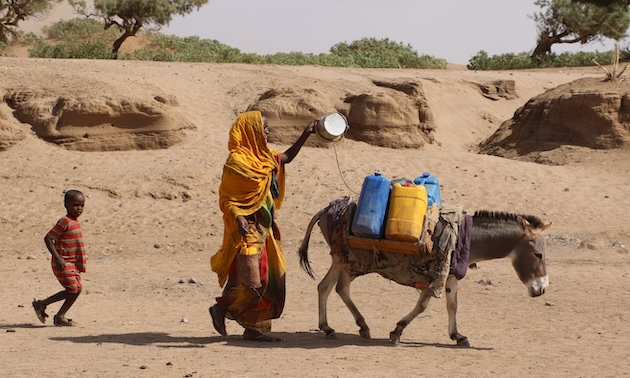
Collecting water in Ethiopia. A new report, ‘Global Water Bankruptcy: Living Beyond Our Hydrological Means in the Post Crisis Era’ warns that many of the earth’s water resources have been pushed to a point of permanent failure. Credit: EU/ECHO/Anouk Delafortrie/IPS

Collecting water in Ethiopia. A new report, ‘Global Water Bankruptcy: Living Beyond Our Hydrological Means in the Post Crisis Era’ warns that many of the earth’s water resources have been pushed to a point of permanent failure. Credit: EU/ECHO/Anouk Delafortrie/IPS

UNITED NATIONS & SRINAGAR, India, Jan 20 2026 (IPS) – The world has entered what United Nations researchers now describe as an era of Global Water Bankruptcy, a condition where humanity has irreversibly overspent the planet’s water resources, leaving ecosystems, economies, and communities unable to recover to previous levels.


The new report, released by the United Nations University Institute for Water, Environment and Health, titled Global Water Bankruptcy: Living Beyond Our Hydrological Means in the Post-Crisis Era. The report argues that decades of overextraction, pollution, land degradation, and climate stress have pushed large parts of the global water system into a permanent state of failure.

“The world has entered the era of Global Water Bankruptcy,” the report reads, adding that “in many regions, human water systems are already in a post-crisis state of failure.”

According to the report, the language of “water crisis” is no longer sufficient to explain what is happening. A crisis implies a shock followed by recovery. Water bankruptcy, by contrast, describes a condition where recovery is no longer realistically possible because natural water capital has been permanently damaged.

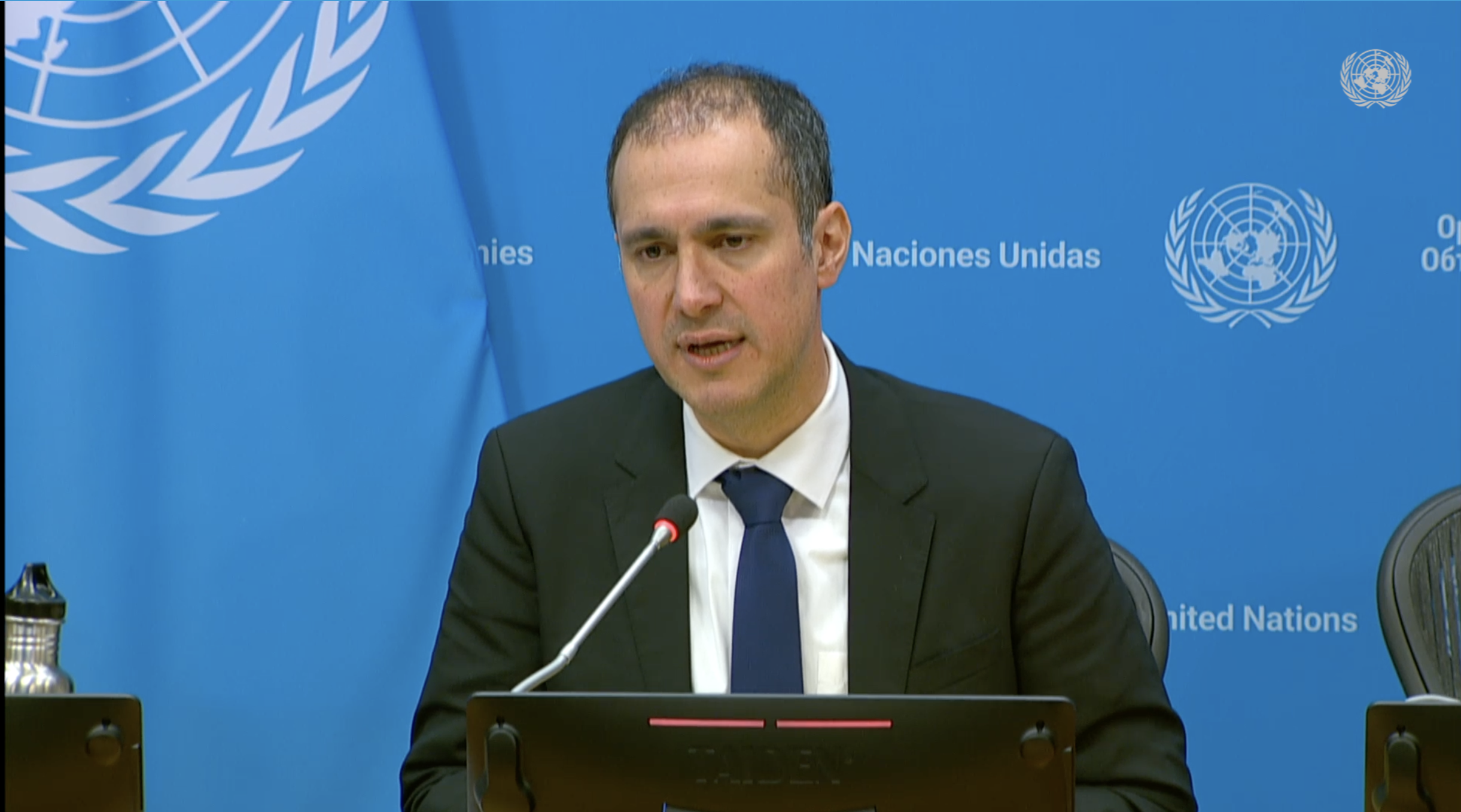
In an exclusive interview with Inter Press Service, former Deputy Head of Iran’s Department of Environment  Prof. Kaveh Madani, who currently is the Director at United Nations University, Institute for Water, Environment and Health, said that declaring that the planet has entered the era of water bankruptcy must not be interpreted as universal water bankruptcy, as not all basins, aquifers, and systems are water bankrupt.

 Prof. Kaveh Madani, Director at the United Nations University, Institute for Water, Environment and Health, addresses the UN midday press briefing. Credit: IPS

Prof. Kaveh Madani, Director at the United Nations University, Institute for Water, Environment and Health, addresses the UN midday press briefing. Credit: IPS

“But we now have enough critical basins and aquifers in chronic decline and showing clear signs of irreversibility that the global risk landscape is already being reshaped. Scientifically, we know recovery is no longer realistic in many systems when we see persistent overshoot (using more than renewable supply) combined with clear markers of irreversibility—for example aquifer compaction and land subsidence that permanently reduce storage, wetland and lake loss, salinization and pollution that shrink usable water, and glacier retreat that removes a long-term seasonal buffer. When these signals persist over time, the old “bounce back” assumption stops being credible,” Madani said.

According to the report, over decades, societies have drawn down the renewable flow of rivers and rainfall besides long-term reserves stored in aquifers, glaciers, wetlands, and soils. At the same time, pollution and salinization have reduced the share of water that is safe or economically usable.

“Over decades, societies have withdrawn more water than climate and hydrology can reliably provide, drawing down not only the annual income of renewable flows but also the savings stored in aquifers, glaciers, soils, wetlands, and river ecosystems,” the report says.

The scale of the problem, as per the report, is global. Nearly three-quarters of the world’s population now lives in countries classified as water insecure or critically water insecure.

Around 2.2 billion people still lack safely managed drinking water, while 3.5 billion lack safely managed sanitation. About 4 billion people, as per the report findings, experience severe water scarcity for at least one month every year.

Madani said, adding that water bankruptcy is best assessed basin by basin and aquifer by aquifer, not by country.

“Please note that, based on the water security definition used by the UN system, water insecurity and water bankruptcy are not equivalent. Water bankruptcy can drive water insecurity, but water insecurity can also stem from limited financial and institutional capacity to build and operate infrastructure for safe water supply and sanitation, even where physical water is available,” he explained.

Madani added that the regions most consistently closest to irreversible decline cluster in the Middle East and North Africa, Central and South Asia, parts of northern China, the Mediterranean and southern Europe, the southwestern United States and northern Mexico (including the Colorado River system), parts of southern Africa, and parts of Australia.

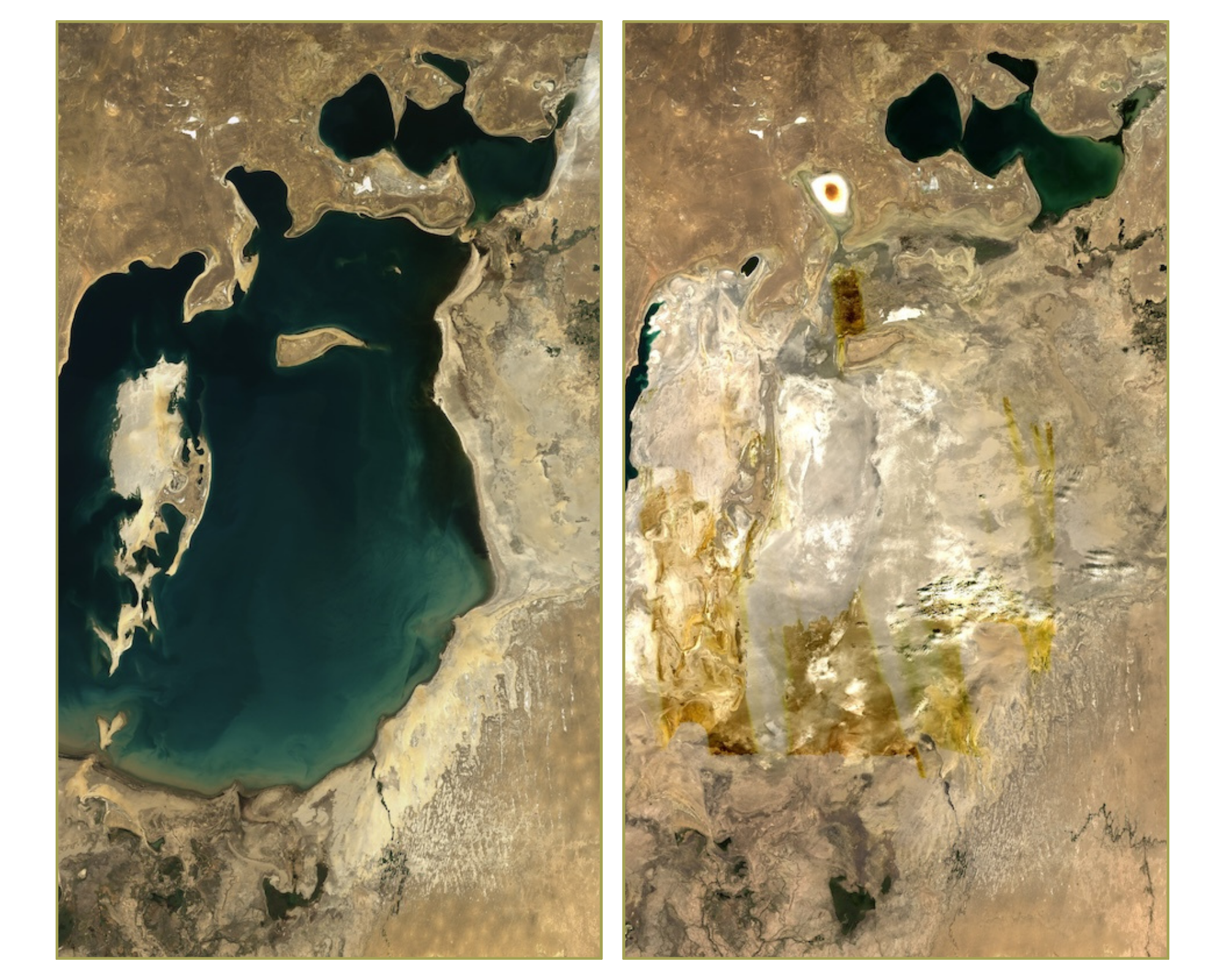
The Aral Sea, which lies between Kazakhstan and Uzbekistan shows dramatic water loss between 1989 and 2025. Credit: UNU-INWEH

The Aral Sea, which lies between Kazakhstan and Uzbekistan, shows dramatic water loss between 1989 and 2025. Credit: UNU-INWEH

Surface Water Systems Are Shrinking Rapidly

The report shows how more than half of the world’s large lakes have lost water since the early 1990s, affecting nearly one quarter of the global population that depends directly on them. Many major rivers now fail to reach the sea for parts of the year or fall below environmental flow needs.

Massive losses have occurred in wetlands, which serve as natural buffers against floods and droughts. Over the past five decades, the report claims that the world has lost roughly 410 million hectares of natural wetlands, almost the size of the European Union. The economic value of lost ecosystem services from these wetlands exceeds 5.1 trillion US dollars.

Groundwater depletion is one of the clearest signs of water bankruptcy. Groundwater, says the report, now supplies about 50 percent of global domestic water use and over 40 percent of irrigation water. Yet around 70 percent of the world’s major aquifers show long-term declining trends.

“Excessive groundwater extraction has already contributed to significant land subsidence over more than 6 million square kilometers,” the report says, warning that in some locations land is sinking by up to 25 centimeters per year, permanently reducing storage capacity and increasing flood risk.

In coastal areas, overpumping has allowed seawater to intrude into aquifers, rendering groundwater unusable for generations. In inland agricultural regions, falling water tables have triggered sinkholes, soil collapse, and the loss of fertile land.

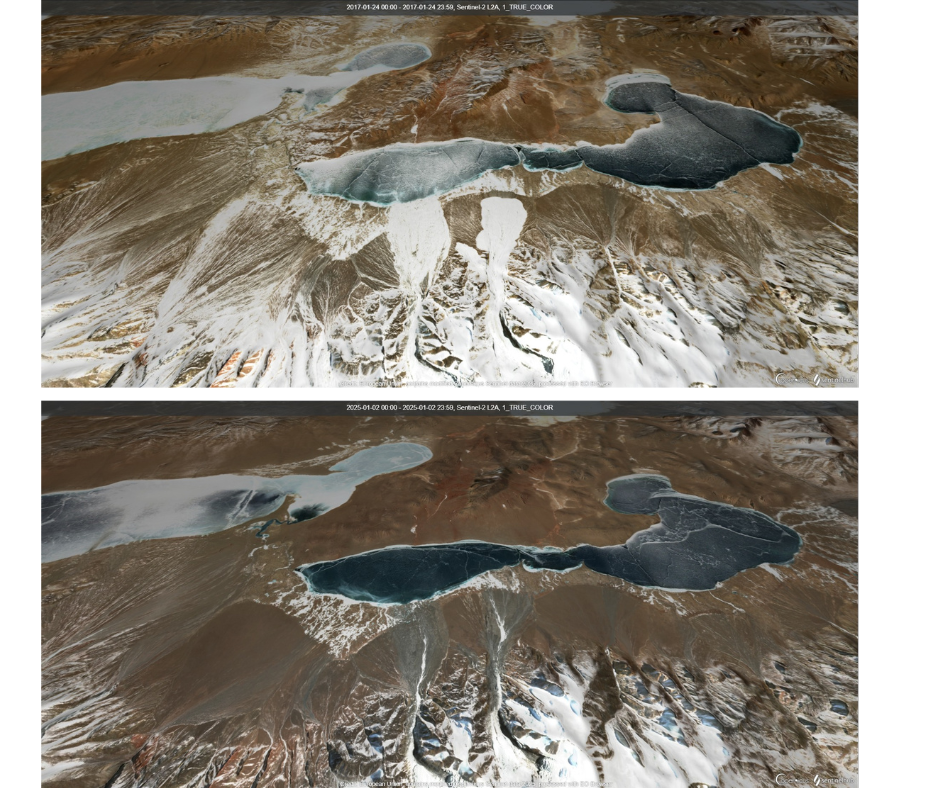
These satellite images show a dramatic impact of the Aru glacier collapses in western Tibet. First image was taken in 2017 and the second in 2025. Credit: UNU-INWEH

These satellite images show a dramatic impact of the Aru glacier collapses in western Tibet. First image was taken in 2017 and the second in 2025. Credit: UNU-INWEH

The cryosphere, glaciers and snowpacks that act as natural water storage systems are also being rapidly liquidated. The world has already lost more than 30 percent of its glacier mass since 1970. Several low- and mid-latitude mountain ranges could lose functional glaciers within decades.

“The liquidation of this frozen savings account interacts with groundwater depletion and surface water over-allocation to lock many basins into a permanent worsening water deficit state,” says the report.

This loss, as per the report, threatens the long-term water security of hundreds of millions of people who depend on glacier- and snowmelt-fed rivers for drinking water, irrigation, and hydropower, particularly in Asia and the Andes.

Madani said the biggest failure was treating groundwater as an unlimited safety net instead of a strategic reserve.

He says that when surface water tightened, many systems defaulted to “drill deeper” without enforceable caps.

“Authorities often recognize the consequences when it is already late, and meaningful action then faces major political barriers. For example, reducing groundwater use in farming can trigger unemployment, food insecurity, and even instability unless farmers are supported through short-term compensation and a longer-term transition to alternative livelihoods,” he added.

According to Madani, that kind of transition cannot be implemented overnight.

“So, business as usual continues. The result is predictable: groundwater gets “liquidated” to postpone hard choices, and by the time the damage is obvious, recovery is no longer realistic,” he told IPS news.

Agriculture Lies at the Heart of the Crisis

According to the report, farming accounts for approximately 70 percent of global freshwater withdrawals. About 3 billion people and more than half of the world’s food production are located in regions where total water storage is already declining or unstable.

The report states that more than 170 million hectares of irrigated cropland are under high or very high water stress. Land and soil degradation are making matters worse by reducing the ability of soils to retain moisture. The degradation of more than half of the global agricultural land is now moderate or severe.

Drought, once considered a natural hazard, is increasingly driven by human activity. Overallocation, groundwater depletion, deforestation, land degradation, and climate change have turned drought into a chronic condition in many regions.

“Drought-related damages, intensified by land degradation, groundwater depletion and climate change rather than rainfall deficits alone, already amount to about 307 billion US dollars per year worldwide,” the report states.

Water quality degradation further shrinks the usable resource base. Pollution from untreated wastewater, agricultural runoff, industrial effluents, and salinization means that even where water volumes appear stable, much of that water is unsafe or too costly to treat.

The report adds that the planetary freshwater boundary has already been crossed. Both blue water, surface and groundwater, and green water, soil moisture, have been pushed beyond a safe operating space.

Current governance systems, the authors argue, are not fit for this reality. Many legal water rights and development promises far exceed degraded hydrological capacity. Existing global agendas, focused largely on drinking water access, sanitation, and incremental efficiency gains, are inadequate for managing irreversible loss.

“Water bankruptcy must be recognized as a distinct post-crisis state, where accumulated damage and overshoot have undermined the system’s capacity to recover,” the report says.

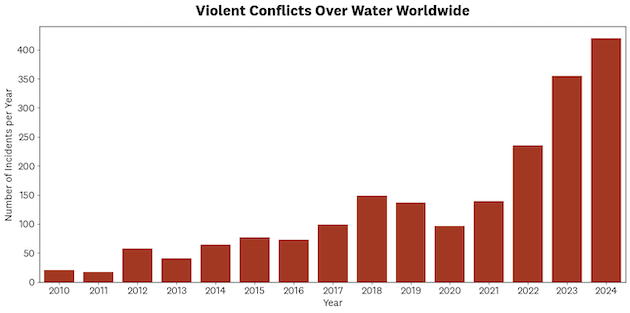
Water bankruptcy could result in an increase in conflicts. Credit: UNU-INWEH

Water bankruptcy could result in a further increase in conflicts. Credit: UNU-INWEH

It warns that the implications of water bankruptcy are dire.

UN Under-Secretary-General Tshilidzi Marwala, Rector of UNU explains,  “Water bankruptcy is becoming a driver of fragility, displacement, and conflict. Managing it fairly—ensuring that vulnerable communities are protected and that unavoidable losses are shared equitably—is now central to maintaining peace, stability, and social cohesion.”

Policy Implications

Instead of crisis management aimed at restoring the past, the report actually pitches for bankruptcy management. That means acknowledging insolvency, accepting irreversibility, and restructuring water use, rights, and institutions to prevent further damage.

The authors lay stress on the fact that water bankruptcy is also a justice and security issue. The costs of overshoot fall disproportionately on small farmers, rural communities, women, Indigenous peoples, and downstream users, while benefits have often accrued to more powerful actors.

“How societies manage water bankruptcy will shape social cohesion, political stability, and peace,” the report warns.

Furthermore, it urges governments and international institutions to use upcoming UN Water Conferences in 2026 and 2028 as milestones to reset the global water agenda, calling for water to be treated as an upstream sector central to climate action, biodiversity protection, food security, and peace.

“This is about a crisis that might arrive in the future. The world is already living beyond its hydrological means,” reads the report.

When asked why the report frames water bankruptcy as a justice and security issue and how governments can implement painful demand reductions without triggering social unrest or conflict, Madani said the demand reduction becomes dangerous when it is treated as a technical exercise instead of a political economy reform. In many water-bankrupt regions, according to him, water is effectively a jobs policy: it keeps low-productivity farming and local economies afloat.

“If you cut water without an economic transition, you create unemployment, food insecurity, and unrest. So the practical pathway is to decouple livelihoods and growth from water consumption. In many economies, water and other natural resources are used to keep low-efficiency systems alive. In most places, it is possible to produce more strategic food with less water and less land, and with fewer farmers—provided that farmers are supported through a transition and offered alternative livelihoods.”

According to Madani, governments should protect basic needs but target the big reductions where most water is used, especially agriculture and besides that, pair caps with a just transition package for farmers—compensation, insurance, buy-down or retirement of water entitlements where relevant, and real income alternatives.

He further suggests that the governments should invest in diversification, including services, industry, value-added agri-processing, and urban jobs, so communities can earn a living without expanding water withdrawals.

“In short, you avoid conflict by making demand reduction part of a broader economic transition, not a standalone water policy.”

IPS UN Bureau Report


Myanmar’s Sham Election: Trump Legitimises Murderous Military Dictatorship

Active Citizens, Armed Conflicts, Asia-Pacific, Civil Society, Crime & Justice, Democracy, Featured, Headlines, Human Rights, Migration & Refugees, Press Freedom, TerraViva United Nations

Opinion

Credit: Issei Kato/Reuters via Gallo Images

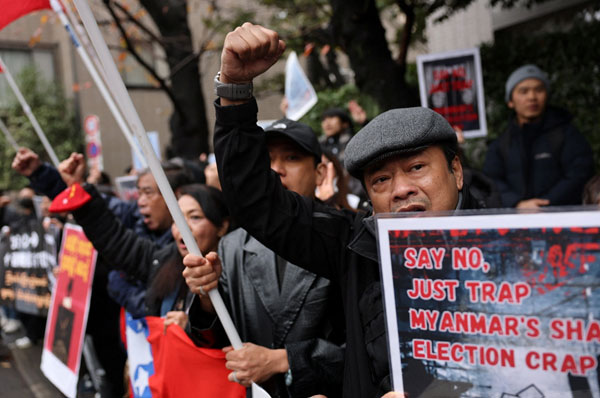
MONTEVIDEO, Uruguay, Dec 22 2025 (IPS) – Myanmar is heading for an election, beginning on 28 December, that’s ostensibly an exercise in democracy – but it has clearly been designed with the aim of conferring more legitimacy on its military junta.


Almost five years after its February 2021 coup, the regime continues to fight pro-democracy forces and ethnic armed organisations, barely controlling a fifth of Myanmar’s territory. The junta has acknowledged that voting won’t be possible in much of the country.

The upcoming election fails every test of democratic legitimacy. The main democratic parties — the National League for Democracy and the Shan Nationalities League for Democracy — are banned. What remains is the Union Solidarity and Development Party, the military’s puppet party, plus minor groups that won no seats in the democratic election held in 2020. Independent media outlets have been crushed, journalists are arrested and intimidated daily and internet access is heavily restricted. In areas that resist military rule, civilians face escalating violence and arbitrary detention.

This election is designed not to reflect the popular will but to entrench military power. It comes as the regime continues its systematic campaign of violence against civilians: weeks before the junta announced the vote, Myanmar’s air force bombed a school in Oe Htein Kwin village, killing two teachers and 22 children, the youngest only seven years old.

The Assistance Association for Political Prisoners has confirmed 6,231 civilians have been killed by the military since the coup, though true figures could be much higher. Nearly half of all civilian deaths are estimated to have been caused by airstrikes. These are not indiscriminate military operations where civilians are collateral damage; they are deliberate attacks where civilians are the targets. The majority of locations of airstrikes have been sites with protected status under international law: camps for displaced people, churches, clinics and schools, often with no presence of armed groups nearby.

The junta has some powerful international allies. China backs it with billions in aid and advanced weapons. Russia supplies the fighter jets that drop bombs on civilians. India quietly sells arms. The three have long provided diplomatic cover and shielded the junta from international accountability. Meanwhile, the Association of Southeast Asian Nations (ASEAN) continues pursuing its failed Five-Point Consensus agreed with the regime in April 2021, despite its systematic violation of every commitment. Regional powers have negotiated exclusively with the junta without input from the National Unity Government — the government in exile formed by democratically elected lawmakers — effectively treating the military regime as Myanmar’s legitimate rulers.

Now recent decisions by the Trump administration threaten to tip the balance decisively in favour of legitimising military rule. Trump has lifted sanctions, cut independent media funding and eliminated the protections formerly afforded to Myanmar’s refugees in the USA. Consistent with his transactional approach, he’s choosing access to rare earth minerals over democracy.

The concern now is that ASEAN member states may follow suit, using the sham election as justification to normalise relations with the military regime. Some have already started moving in this direction, with the junta leader invited to regional meetings.

Myanmar’s pro-democracy forces continue to resist despite the shifting international context. The People’s Defence Forces and ethnic armed groups maintain coordinated operations across most of the country. Civil society continues documenting violations, providing aid to displaced people and advocating for international action. They deserve better than to watch the world legitimise their oppressors.

The junta’s control on the ground remains tenuous, but its diplomatic position is strengthening. Whether this consolidation continues depends on how the world responds to the election. The international community must be clear that treating the election as legitimate would signal to authoritarians everywhere that democratic institutions can be overthrown with impunity, war crimes carry no real consequences and regimes that bomb schools and imprison elected leaders can secure international acceptance.

Inés M. Pousadela is CIVICUS Head of Research and Analysis, co-director and writer for CIVICUS Lens and co-author of the State of Civil Society Report. She is also a Professor of Comparative Politics at Universidad ORT Uruguay.

For interviews or more information, please contact research@civicus.org

  Source