25TH Anniversary Message to the UN: Prioritize the Culture of Peace in its Leadership Agenda

Civil Society, Democracy, Education, Featured, Global, Global Governance, Headlines, Human Rights, IPS UN: Inside the Glasshouse, Peace, TerraViva United Nations

Opinion

NEW YORK, Sep 13 2024 (IPS) – This opinion piece is being published exactly on the date when twenty-five years ago today the UN took its most forward-looking stride in ensuring a peaceful planet for all of us since the signing of the Charter of the United Nations in 1945.


The UN Charter arose out of the ashes of the Second World War and the UN Declaration and the Programme of Action on a Culture of Peace emerged in the aftermath of the long-drawn Cold War.

On this very day, the United Nations adopted by consensus and without reservation a monumental document on the Culture of Peace that transcends boundaries, cultures, societies, and nations.

Arduous journey

It was an honour for me to Chair the nine-month long open-ended negotiations that led to the agreement on that historic norm-setting document which is considered as one of the most significant legacies of the United Nations that would endure generations.

I introduced the agreed text of that document (A/RES/53/243) on behalf of all Member States for adoption by the Assembly with its President Didier Opertti of Uruguay chairing the meeting. Through this landmark adoption, the General Assembly laid down humanity’s charter for the new approaching millennium.

Ambassador Anwarul K. Chowdhury

This document explains, outlines, and defines everything that the international community has agreed on as the focus of the culture of peace. I would always treasure and cherish the opportunity to lead the process in its adoption and in its subsequent advocacy.

For me this has been a realization of my personal commitment to peace and my humble contribution to humanity. For more than two and a half decades, my focus has been on advancing the culture of peace and I have continued to devote considerable time, energy, and effort to do that.

It has been a long, arduous journey – a journey ridden curiously with both obstacles and indifference. Since July 1997, when I took the initiative to write to our much-loved and highly respected Secretary-General Kofi Annan to create a separate item of agenda of the General Assembly, the path and progress of the culture of peace at UN have been uneven to say the least. For being a part of this journey, I pay tribute to Bangladeshi diplomats who have been true co-travellers.

My life’s experience has taught me to value peace and equality as the essential components of our existence. They unleash the positive forces of good that are so needed for human progress. It is essential to remember that the culture of peace requires a change of our hearts, change of our mindset.

The objective of the culture of peace is the empowerment of people. We should not isolate peace as something separate. It is important to realize that the absence of peace takes away the opportunities that we need to better ourselves, to prepare ourselves, to empower ourselves to face the challenges of our lives, individually and collectively.

Transformation is the essence

The essence of the culture of peace is its message of self-transformation and its message of inclusiveness, of global solidarity, of the oneness of humanity. These elements—individual and global, individual to global—constitute the way forward for the culture of peace.

‘Transformation’ is of the most essential relevance here. The Programme of Action identifies eight specific areas which encourage actions at all levels – the individual, the family, the community, the national, the regional and, of course, the global levels.

Though the Declaration and Programme of Action is an agreement among nations, governments, civil society, media, and individuals are all identified in this document as key actors.

The culture of peace begins with each one of us – unless we are ready to integrate peace and non-violence as part of our daily existence, we cannot expect our communities, our nations, our planet to be peaceful. We should be prepared and confident in resolving the challenges of our lives in a non-aggressive manner. In today’s world, more so, the humanity’s creed should be based on inner oneness and outer diversity.

Enhancing Member States engagement

To accord an enhanced profile to the concept of the culture of peace, since 2012, successive UN General Assembly Presidents convened an annual UN High Level Forum on The Culture of Peace to provide an inclusive, participatory platform for UN Member States, civil society, media, private sector and other interested parties to exchange ideas on the implementation of the Declaration and Programme of Action.

Since 2012, when the first UN High Level Forum was convened by the President of the 66th Session of the General Assembly Ambassador Nassir Al-Nasser, the UNGA mandated this annual Forum as “an opportunity for renewing the commitments to strengthen further the global movement for the culture of peace.”

At the global level, the Global Movement for The Culture of Peace (GMCoP), a coalition of civil society organizations, have been spearheading advocacy initiatives effectively since 2011 as well as in organizing the annual High-Level Forums on The Culture of Peace convened by the President of UN General Assembly.

Peace and Culture of Peace

Many treat peace and culture of peace synonymously. When we speak of peace, we expect others namely politicians, diplomats, or other practitioners to take the initiative while when we speak of the culture of peace, we know that initial action begins with each one of us.

SDGs and the Culture of Peace

The UN General Assembly decided on the culture of peace before the Millennium Development Goals. SDGs came 15 years later. Many would recall that Goal 16 – the so-called peace goal – was almost dropped when the developing countries wanted to include a reference to the culture of peace.

A compromise excluded it so that the negotiated Goal 16 could be agreed without it. Bangladesh brought the reference to the culture of peace in Goal 4 in its target 4.7 which identified culture of peace and non-violence as well as global citizenship in educational context.

All eight areas of action in the culture of peace programme are reflected in various SDGs. I can however say with pride that the Culture of Peace would outlast the SDGs and make more deep-rooted and longer-lasting contribution to a sustainable and peaceful planet of ours when the UN observes the 30th anniversary of The Culture of Peace.

Let me end by outlining the three integrated mainstream for the coming years bolstering the global movement for the culture of peace.

Education for global citizenship

Number one: education. All educational institutions need to offer opportunities that prepare the students not only to live fulfilling lives but also to be responsible and productive citizens of the world. This should more appropriately be called “education for global citizenship”. If our minds could be likened to a computer, then education provides the software with which to “reboot” our priorities and actions for transition from force to reason, from conflict to dialogue.

Equality of women’s participation

Number two: women. As I always say emphatically –
“Without peace, development cannot be realized, without development, peace is not achievable, but without women, neither peace nor development is possible.”

Youth and children

And number three: youth and children. It is essential to recognize the empowerment of young people as a major element in building the culture of peace. Young people of today should embrace the culture of peace in a way that can not only shape their lives but can also shape the future of the world.

For this, I believe that early childhood affords a window of opportunity for us to sow the seeds of transition to the culture of peace from an early life.

Way forward

As former Secretary-General of the United Nations and Nobel Peace laureate Kofi Annan had profoundly said, “Over the years we have come to realize that it is not enough to send peacekeeping forces to separate warring parties. It is not enough to engage in peace-building efforts after societies have been ravaged by conflict. It is not enough to conduct preventive diplomacy. All of this is essential work, but we want enduring results. We need, in short, the culture of peace.”

How do we build and promote the culture of peace? To turn the culture of peace into a global, universal movement, the most crucial element that is needed is for every one of us to be a true believer in peace and non-violence. A lot can be achieved in promoting the culture of peace through individual resolve and action.

By immersing ourselves in a culture that supports and promotes peace, individual efforts will–over time–combine and unite, and peace, security and sustainability will emerge. This is the only way we shall achieve a just and sustainable peace in the world.

The culture of peace is not a quick fix. It is a movement, not a revolution.

The seed of peace exists in all of us. It must be nurtured, cared for and promoted by us all to flourish. Peace cannot be imposed from outside – it must be realized from within.

Ambassador Anwarul K. Chowdhury, is Former Permanent Representative of Bangladesh to the UN; President of the UN Security Council (2000 and 2001); Senior Special Adviser to UN General Assembly President (2011-2012) and Former Under-Secretary-General and High Representative of the UN.

IPS UN Bureau
  Source

The Deadly US Weapons of Civilian Destruction

Armed Conflicts, Civil Society, Democracy, Featured, Global Governance, Headlines, Human Rights, IPS UN: Inside the Glasshouse, Middle East & North Africa, Peace, TerraViva United Nations

Much of the Gaza Strip has been destroyed in the conflict. Credit: UNRWA

UNITED NATIONS, Sep 13 2024 (IPS) – As the devastating 11-month-old conflict in Gaza keeps escalating, with over 41,000 mostly civilian killings, and more than 92,000 Palestinians injured –in retaliation for the 1,200 killings inside Israel last October– the Israelis continue to defy the United States which maintains its uninterrupted flow of heavy weapons to Tel Aviv.


There are two hardcore lessons in this conflict. Perhaps Israel should realize that you cannot continue biting the hand that feeds you while the Biden administration should realize that you cannot continue to feed the mouth that bites you.

The world’s weapons of mass destruction (WMDs) are categorized mostly as nuclear, chemical, biological and radiological weapons. But the US-supplied missiles and 2,000-pound bombs dropped on Gaza are best described as weapons of civilian destruction (WCDs) which have also reduced cities to rubble.

On September 11, the New York Times ran a story on the latest killings of civilians, titled “Israel Kills Gazans as its Air Power Hits a Humanitarian Zone”

The Times quoted Trevor Ball, a former US army explosive ordnance-disposal technician, as identifying a fragment found at the most recent bombing in Gaza as “the tail section of a SPICE-2000 kit, a precision guided kit used with 2,000-pound bombs.

If Israel is accused of genocide and war crimes, where does the US fit in as the major supplier of arms that are killing all these civilians?

And, on August 13, as the civilian killings continued unabated, the Biden Administration formally notified Congress of its plan to authorize the sale of a staggering list of arms to Israel including:

An $18.8 billion sale of 50 F-15 fighter jets and related equipment;
A $774 million sale of up to 32,739 120mm tank cartridges and related equipment;
A $583 million sale of Family of Medium Tactical Vehicles (FMTV)s and related equipment;
A $102 million sale of 30 Advanced Medium Range Air-to-Air Missiles (AMRAAM) and related equipment; and, A $61 million sale of 50,000 M933A1 120mm High Explosive mortar cartridges and related equipment.

In June 2024, Reuters reported that the Administration had transferred at least 14,000 MK-84 2,000-pound bombs, 6,500 500-pound bombs, 3,000 Hellfire precision-guided air-to-ground missiles, 1,000 bunker-buster bombs, 2,600 air-dropped small-diameter bombs, and other munitions.

Dr Ramzy Baroud, a journalist and Editor of The Palestine Chronicle, told IPS “for Israel to commit its genocide against Palestinians in Gaza, it requires a large and steady supply of weapons. Most of these weapons come from the United States.”

“In fact, over 11 months of Israeli genocide and following numerous reports by international organizations, we know precisely how US bunker busters and other weapons and munitions intended for mass killings have been used,” he pointed out.

Yet, despite all of this, the US continues to give Israel all the bombs and rockets necessary to inflict most deadly violence against Palestinians, including those sheltered in displacement camps, at UN schools, at hospitals, and other areas that are intended to be ‘safe zones’.

But American support for Israel cannot be confined to that of weapon supplies, Dr Baroud said, because Washington remains Israel’s strongest backer and defender at international institutions, including the UN Security Council. This blind and unconditional support has emboldened Israel to carry on with the most despicable genocide against an innocent and besieged nation.

Even Biden’s so-called ‘ceasefire proposal’ last May was supposedly communicated on behalf of Israel, then, oddly rejected also on behalf of Israel.

There can be no other interpretation of this: the genocide of the Palestinians in Gaza is carried out jointly by Israel and the United States, said Dr Baroud, a Non-resident Senior Research Fellow at the Center for Islam and Global Affairs (CIGA). www.ramzybaroud.net

According to a Cable News Network (CNN) report early this week US Secretary of State Anthony Blinken has called for “fundamental changes” to the way Israeli forces operate in the occupied West Bank after the killing of American activist Aysenur Ezgi Eygi at a protest last week.

US President Joe Biden condemned Eygi’s killing on Wednesday. ““I am outraged and deeply saddened by the death of Aysenur Eygi,” Biden said in a statement, adding that the shooting “is totally unacceptable.”

Biden called for “full accountability” for her death after Israel “has acknowledged its responsibility.” Israel, he added, “must do more to ensure that incidents like this never happen again.”

As an old Middle East saying goes: The dogs bark but the caravan moves on.

Is this a reflection of the unrestrained power of the Israeli lobby in the US Congress, which one-time Republican US presidential candidate Pat Buchanan, called “Israeli-occupied territory”? Does this now include the White House?

Unfortunately, there will be no accountability for the killing of the American-Turkish activist, Dr Baroud pointed out. “We know this for a fact because there has never been a precedent in history in which the US has held Israel accountable for anything”.

The family of American activist Rachel Corrie, who was deliberately run over by an Israeli army bulldozer, knows exactly how frivolous the US use of language in this kind of situation can be.

The US speaks of “accountability”, “responsibility”, “full investigations”, yet ultimately accepts the Israeli narrative as the truth. More recently, the US has used similar language following the murder of Palestinian journalist Shireen Abu Akleh, before circling back to accepting the Israeli story that her killing was not deliberate and was not part of a larger policy to target civilians.

Infuriatingly, but still unsurprisingly, the US is using the above language at a time when over 41,000 Palestinians have been confirmed killed in Gaza, with thousands more missing and tens of thousands wounded, he said.

Not only no such accountability has been achieved or even called for, but the US continues to give Israel the very murder weapon so that it may continue its genocide against Palestinian civilians, said Dr Baroud.

Meanwhile, UN Secretary-General Antonio Guterres condemned the death of at least 18 people, including children, women, and six UNRWA staff, in Israeli airstrikes that hit a school serving as a shelter in Nuseirat on 11 September.

This incident raises the number of UNRWA staff killed in this conflict to 220. The IDF stated that they had targeted a command-and-control center in the compound. This incident must be independently and thoroughly investigated to ensure accountability.

The continued lack of effective protection for civilians in Gaza is unconscionable. Civilians and the infrastructure they rely on must be protected and the essential needs of civilians met. The Secretary-General calls upon all parties to refrain from using schools, shelters, or the areas around them for military purposes. All parties to the conflict have the obligation to comply with international humanitarian law at all times.

The Secretary-General also reiterated his call for an immediate ceasefire and the immediate and unconditional release of all hostages. This horrific violence must stop, he declared.

According to an October 2023 report from the US State Department’s Bureau of Political-Military Affairs, steadfast support for Israel’s security has been a cornerstone of American foreign policy for every U.S. Administration since the presidency of Harry S. Truman.

Since its founding in 1948, the United States has provided Israel with over $130 billion in bilateral assistance focused on addressing new and complex security threats, bridging Israel’s capability gaps through security assistance and cooperation, increasing interoperability through joint exercises, and helping Israel maintain its Qualitative Military Edge (QME).

This assistance has helped transform the Israel Defense Forces into “one of the world’s most capable, effective militaries and turned the Israeli military industry and technology sector into one of the largest exporters of military capabilities worldwide”.

Israel has also been designated as a U.S. Major Non-NATO Ally under U.S. law. This status provides foreign partners with certain benefits in the areas of defense trade and security cooperation and is a powerful symbol of their close relationship with the United States.

Thalif Deen, Senior Editor, UN Bureau, Inter Press Service (IPS) news agency, is a former Director, Foreign Military Markets at Defense Marketing Services; Senior Defense Analyst at Forecast International; military editor Middle East/Africa at Jane’s Information Group, USA; and one-time UN correspondent for Jane’s Defense Weekly, London.

IPS UN Bureau Report

  Source

UNWRA Chief Warns Agency’s Fate ‘Hangs in the Balance’

Aid, Civil Society, Development & Aid, Featured, Headlines, Humanitarian Emergencies, IPS UN: Inside the Glasshouse, Middle East & North Africa, Peace, Sustainable Development Goals, TerraViva United Nations

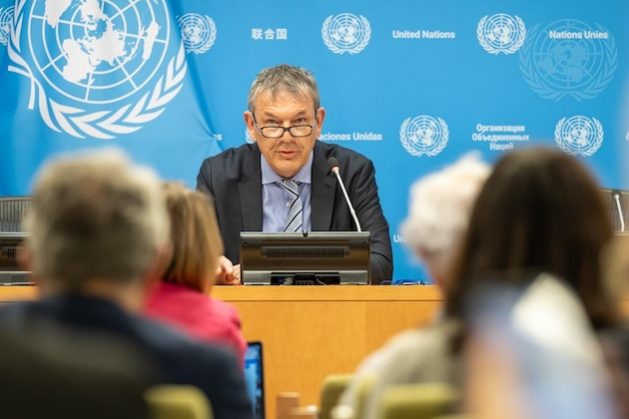
Philippe Lazzarini, Commissioner-General of the United Nations Relief and Works Agency for Palestine Refugees in the Near East (UNRWA), briefs reporters at UN Headquarters.

Philippe Lazzarini, Commissioner-General of the United Nations Relief and Works Agency for Palestine Refugees in the Near East (UNRWA), briefs reporters at UN Headquarters.

UNITED NATIONS, Mar 6 2024 (IPS) – UNRWA Commissioner-General Philippe Lazzarini asked the UN General Assembly to urge member states to support the organization’s mandate during this period of unprecedented crisis for the region and the agency. He also called for member states to facilitate a “long-overdue political process” for the two-state solution for Israel and Palestine. Only then, in this context, should UNRWA be allowed to transition.


He was speaking at an informal session of the General Assembly on the United Nations Relief and Works Agency for Palestinian Refugees in the Near East (UNRWA). This was convened to discuss the ongoing situation with UNRWA’s capacity as a humanitarian and human development agency in Gaza.

Despite its existence for 75 years, UNRWA’s presence was always intended to be temporary. “It is a stain on our collective conscience that for 75 years, UNRWA has had to fill a vacuum left by the lack of a political solution and genuine peace,” said Lazzarini.

The ongoing hostilities in the Gaza Strip and the resulting destruction of UNRWA facilities, which have disrupted humanitarian services in the region, have led to calls to seek alternatives that can deliver on the scale of the agency or to raise concern about whether other agencies can deliver the necessary humanitarian aid.

“UNRWA is facing a deliberate and concerted campaign to undermine its operations and ultimately end them,” said Lazzarini.

Lazzarini argued that dismantling UNRWA during the current crisis would be shortsighted, given that the agency was designed to provide public services such as education and primary healthcare in a region without state authority. “The notion that the Agency can be dismantled without violating a host of human rights and jeopardizing international peace and security is naïve at best,” he said.

Speaking at a press briefing that same day, Lazzarini told reporters, “We can only feel that the worst is yet to come.” He remarked that since January, aid delivery to Gaza has decreased by 50 percent. Since then, famine has become all but inevitable.

Remarking on the dual investigations into UNRWA’s operations, Lazzarini stated that the investigations were necessary as an accountability measure. These investigations were announced after it was revealed that he had terminated the contracts of 12 staff members who were allegedly involved in the October 7 attacks. Lazzarini added that the “swift decision” to terminate the contracts, as well as the investigations, would likely reflect the agency’s ability to follow through on recommendations from a risk management review.

Lazzarini admitted, however, that he had not anticipated the swift action that 16 donor countries took to suspend their funding in the wake of the allegations, which he revealed were conveyed to him in an oral manner.  “I have no regret,” he said, referring to his response to the allegations, “but to be honest, I did not expect that… over the weekend, 16 countries would take that decision.”

The UNRWA chief also indicated that most donor countries would consider resuming their support. For those donor countries, the pressure to pull support came from domestic or public opinion that seems divided over UNRWA rather than foreign policy considerations.

There is some promise that UNRWA will continue to deliver on its mandate with the help of donor states, as was seen with the European Commission’s decision to continue funding the agency, starting with a pledge of 50 million euros. However, this will only go partway into filling the gap of 450 million USD left by the 16 donor countries. Lazzarini warned that without additional funding, the agency would be in “uncharted territory” and would have “serious implications for global peace and security.”

The atrocities that were committed on and since October 7 have only resulted in increasing devastation and tragedy. The international community, as embodied by the General Assembly on Monday, seems largely united in their calls for a humanitarian ceasefire in Gaza and for the safe release of all hostages.

Yet the ongoing hostilities in the region have prevented the UN and its agencies from fulfilling their mandate to safely provide critical emergency aid. Five months on, there is a seeming lack of forward momentum within the Security Council to deliver a ceasefire resolution. UNRWA has been contending with compounding existential questions about its survival as an agency from hostile forces in the Gaza Strip and beyond who call for its dissolution.

IPS UN Bureau Report

  Source

Kazakhstan’s Transition: From a Nuclear Test Site to Leader in Disarmament

Armed Conflicts, Asia-Pacific, Conferences, Headlines, Health, Nuclear Energy – Nuclear Weapons, Peace, TerraViva United Nations

Opinion

A Group photo of participants of the regional conference on the humanitarian consequences of nuclear weapons and nuclear-free-zone in Central Asia held on August 29, 2023. Credit: Jibek Joly TV Channel

ASTANA, Kazakhstan, Sep 7 2023 (IPS) – Exactly 32 years ago, on September 29, 1991, Kazakhstan, then part of the Soviet Union, made a historic decision that would alter its fate. On that day, Kazakhstan permanently closed the Semipalatinsk Nuclear Test Site, defying the central government in Moscow. This marked the start of Kazakhstan’s transformation from a nuclear-armed state, possessing the fourth-largest nuclear arsenal at the time, to a non-nuclear-weapon state. Kazakhstan’s audacious move to eliminate its nuclear weapons was rooted in a profound commitment to global disarmament, setting an inspiring precedent.


Eighteen years later, in 2009, the United Nations General Assembly adopted a resolution, led by Kazakhstan, designating August 29 as the International Day Against Nuclear Tests. This day serves as a solemn reminder of the catastrophic consequences of nuclear weapons and underscores the urgent imperative for disarmament.

In a world where the threat of nuclear weapons being used again remains a grim reality, a pivotal question looms: Can we genuinely aspire to a world free of nuclear arms? To delve deeper into this pressing concern and comprehend the menace posed by nuclear weapons testing and deployment, we interviewed Karipbek Kuyukov and participants of the “Humanitarian Impact of Nuclear Weapons and the Central Asian Nuclear-Weapon-Free Zone” regional conference. This conference, organized by the Ministry of Foreign Affairs of Kazakhstan in partnership with the Center for International Security and Policy (CISP), Soka Gakkai International (SGI), the International Committee of the Red Cross (ICRC), and the International Campaign to Abolish Nuclear Weapons (ICAN), took place in Astana, Kazakhstan to commemorate this year’s International Day Against Nuclear Tests.

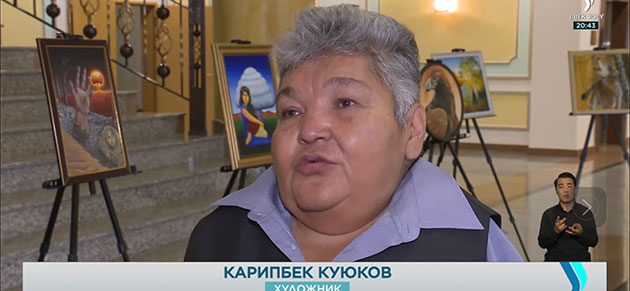
Karipbek Kuyukov is an armless painter from Kazakhstan, and global anti–nuclear weapon testing & nonproliferation activist. Credit: Jibek Joly TV Channel

One of the most poignant moments during the conference came from Dmitriy Vesselov, a third-generation survivor of nuclear testing. He provided a heartfelt testimony about the profound human toll exacted by nuclear testings on his family and the broader community. The nuclear tests conducted at the Semipalatinsk Nuclear Test Site over four decades unleashed explosions 2,500 times more potent than the atomic bombs dropped on Hiroshima and Nagasaki. The repercussions of these tests have echoed through generations, inflicting severe health problems and untold suffering.

Kuyukov, a renowned Kazakh artist born without hands due to radiation exposure in his mother’s womb, has devoted his life to raising awareness about the horrors of nuclear testing. His powerful artwork, created using his lips or toes, depicts the survivors of nuclear tests and serves as a poignant tribute to those who perished. Kuyukov’s unwavering commitment reflects the indomitable human spirit in the face of unimaginable adversity.

Dmitriy Vesselov’s testimony shed light on the ongoing challenges faced by survivors. He candidly shared his struggles with health issues, including acromioclavicular dysostosis, a condition severely limiting his physical capabilities. Vesselov expressed his deep concern about the potential transmission of these health problems to future generations. Consequently, he has chosen not to have children. The conference underscored the imperative of averting the repetition of history by delving into the past tragedies inflicted by nuclear weapons testings.

Hirotsugu Terasaki, Director General of Peace and Global Issues of SGI, commenting on the event said “I believe that this regional conference is a new milestone, a starting point for representatives from five countries of Central Asia to discuss how we can advance the process toward a nuclear-weapon-free world, given the ever-increasing threat of nuclear weapons.”

Terasaki observed that the international community is actively deliberating Articles 6 and 7 of the Treaty on the Prohibition of Nuclear Weapons (TPNW), mandating state parties to provide support to victims and address environmental remediation. He accentuated Kazakhstan’s pivotal role as a co-chair of the working group central to these discussions.

Kazakhstan does provide special medical insurance and benefits to victims of nuclear tests. However, these benefits are predominantly extended to individuals officially certified as disabled or a family member of those who succumbed to radiation-related illnesses. Numerous victims, like Vesselov, who do not fall within these categories, remain ineligible for assistance.

Despite his daunting challenges, Mr. Vesselov maintains an unwavering sense of hope. He hopes that his testimony will serve as a stark reminder of the perils of nuclear weapons and awaken global consciousness regarding the dangers posed by even small tactical nuclear weapons and the specter of limited nuclear conflicts. Ultimately, his deepest aspiration, shared by all victims of nuclear weapons, is that the world will never bear witness to such a devastating tragedy again.

As Kazakhstan assumes its role as President-designate of the third Meeting of States Parties to the TPNW, it reaffirms its steadfast commitment to global peace and disarmament. President Kassym-Jomart Tokayev’s resolute words resonate with the sentiment of a nation that has borne the scars of nuclear testing: “Such a tragedy should not happen again. Our country will unwaveringly uphold the principles of nuclear security.”

At the conference, member states of the Treaty of Semipalatinsk were encouraged to support Kazakhstan in this endeavor, and in its efforts to represent the Central Asian region’s contribution to nuclear disarmament, through attending the second Meeting of States Parties of the TPNW, at least as observers, which will take place at the United Nations Headquarters in New York between 27 November and 1 December this year, and by signing and ratifying the TPNW at the earliest opportunity.

In a world still grappling with the looming specter of nuclear devastation, Kazakhstan’s journey from a nuclear test site to a leading advocate for disarmament serves as a beacon of hope. Kazakhstan’s unwavering commitment to peace stands as a testament to the enduring legacy of a nation that once bore the weight of nuclear tests and now champions a safer, more secure world for all.

Katsuhiro Asagiri is President of INPS Japan and Kunsaya Kurmet-Rakhimova is a reporter of Jibek Joly(Silk Way) TV Channel.

IPS UN Bureau


The UN’s Own Relevance Is at Stake at This Year’s General Assembly

Armed Conflicts, Civil Society, Climate Change, Crime & Justice, Development & Aid, Featured, Global, Headlines, Health, Human Rights, Inequality, Peace, Sustainable Development Goals, TerraViva United Nations

Opinion

United Nations Secretary General Antonio Guterres addresses the 22nd session of the Permanent Forum on Indigenous Issues at the General Assembly Hall of the United Nations headquarters in New York City on 17 April 17 2023. Credit: Ed Jones/AFP via Getty Images

NEW YORK, Sep 7 2023 (IPS) – This September, world leaders and public policy advocates from around the world will descend on New York for the UN General Assembly. Alongside conversations on peace and security, global development and climate change, progress – or the lack of it – on the Sustainable Development Goals (SDGs) is expected to take centre-stage. A major SDG Summit will be held on 18 and 19 September. The UN hopes that it will serve as a ‘rallying cry to recharge momentum for world leaders to come together to reflect on where we stand and resolve to do more’. But are the world’s leaders in a mood to uphold the UN’s purpose, and can the UN’s leadership rise to the occasion by resolutely addressing destructive behaviours?


Sadly, the world is facing an acute crisis of leadership. In far too many countries authoritarian leaders have seized power through a combination of populist political discourse, outright repression and military coups. Our findings on the CIVICUS Monitor – a participatory research platform that measures civic freedoms in every country – show that 85% of the world’s population live in places where serious attacks on basic fundamental freedoms to organise, speak out and protest are taking place. Respect for these freedoms is essential so that people and civil society organisations can have a say in inclusive decision making.

UN undermined

The UN Charter begins with the words, ‘We the Peoples’ and a resolve to save future generations from the scourge of war. Its ideals, such as respect for human rights and the dignity of every person, are being eroded by powerful states that have introduced slippery concepts such as ‘cultural relativism’ and ‘development with national characteristics’. The consensus to seek solutions to global challenges through the UN appears to be at breaking point. As we speak hostilities are raging in Ukraine, Sudan, the Occupied Palestinian Territories and the Sahel region even as millions of people reel from the negative consequences of protracted conflicts and oppression in Afghanistan, Ethiopia, Myanmar, Syria and Yemen, to name a few.

Article 1 of the UN Charter underscores the UN’s role in harmonising the actions of nations towards the attainment of common ends, including in relation to solving international problems of an economic, social, cultural or humanitarian character, and to promote respect for human rights and fundamental freedoms for all. But in a time of eye-watering inequality within and between countries, big economic decisions affecting people and the planet are not being made collectively at the UN but by the G20 group of the world’s biggest economies, whose leaders are meeting prior to the UN General Assembly to make economic decisions with ramifications for all countries.

Economic and development cooperation policies for a large chunk of the globe are also determined through the Organisation for Economic Cooperation and Development (OECD). Established in 1961, the OECD comprises 38 countries with a stated commitment to democratic values and market-based economics. Civil society has worked hard to get the OECD to take action on issues such as fair taxation, social protection and civic space.

More recently, the BRICS – Brazil, Russia, India, China and South Africa – grouping of countries that together account for 40 per cent of the world’s population and a quarter of the globe’s GDP are seeking to emerge as a counterweight to the OECD. However, concerns remain about the values that bind this alliance. At its recent summit in South Africa six new members were admitted, four of which – Egypt, Iran, Saudi Arabia and the United Arab Emirates – are ruled by totalitarian governments with a history of repressing civil society voices. This comes on top of concerns that China and Russia are driving the BRICS agenda despite credible allegations that their governments have committed crimes against humanity.

The challenge before the UN’s leadership this September is to find ways to bring coherence and harmony to decisions being taken at the G20, OECD, BRICS and elsewhere to serve the best interests of excluded people around the globe. A focus on the SDGs by emphasising their universality and indivisibility can provide some hope.

SDGs off-track

The adoption of the SDGs in 2015 was a groundbreaking moment. The 17 ambitious SDGs and their 169 targets have been called the greatest ever human endeavour to create peaceful, just, equal and sustainable societies. The SDGs include promises to tackle inequality and corruption, promote women’s equality and empowerment, support inclusive and participatory governance, ensure sustainable consumption and production, usher in rule of law and catalyse effective partnerships for development.

But seven years on the SDGs are seriously off-track. The UN Secretary-General’s SDG progress report released this July laments that the promise to ‘leave no one behind’ is in peril. As many as 30 per cent of the targets are reported to have seen no progress or worse to have regressed below their 2015 baseline. The climate crisis, war in Ukraine, a weak global economy and the COVID-19 pandemic are cited as some of the reasons why progress is lacking.

UN Secretary-General Antonio Guterres is pushing for an SDG stimulus plan to scale up financing to the tune of US$500 billion. It remains to be seen how successful this would be given the self-interest being pursued by major powers that have the financial resources to contribute. Moreover, without civic participation and guarantees for enabled civil societies, there is a high probability that SDG stimulus funds could be misused by authoritarian governments to reinforce networks of patronage and to shore up repressive state apparatuses.

Also up for discussion at the UN General Assembly will be plans for a major Summit for the Future in 2024 to deliver the UN Secretary-General’s Our Common Agenda report, released in 2021. This proposes among other things the appointment of a UN Envoy for Future Generations, an upgrade of key UN institutions, digital cooperation across the board and boosting partnerships to drive access and inclusion at the UN. But with multilateralism stymied by hostility and divisions among big powers on the implementation of internationally agreed norms, achieving progress on this agenda implies a huge responsibility on the UN’s leadership to forge consensus while speaking truth to power and challenging damaging behaviours by states and their leaders.

The UN’s leadership have found its voice on the issue of climate change. Secretary-General Guterres has been remarkably candid about the negative impacts of the fossil fuel industry and its supporters. This July, he warned that ‘The era of global warming has ended; the era of global boiling has arrived’. Similar candour is required to call out the twin plagues of authoritarianism and populism which are causing immense suffering to people around the world while exacerbating conflict, inequality and climate change.

The formation of the UN as the conscience of the world in 1945 was an exercise in optimism and altruism. This September that spirit will be needed more than ever to start creating a better world for all, and to prove the UN’s value.

Mandeep S. Tiwana is chief officer for evidence and engagement + representative to the UN headquarters at CIVICUS, the global civil society alliance.

  Source

Taking Humanitarianism Hostage – the Case of Afghanistan & Multilateral Organisations

Armed Conflicts, Asia-Pacific, Civil Society, Featured, Gender, Gender Violence, Headlines, IPS UN: Inside the Glasshouse, Peace, TerraViva United Nations

Opinion

Women receive food rations at a food distribution site in Herat, Afghanistan. Credit: UNICEF/Sayed Bidel

NEW YORK, Jan 12 2023 (IPS) – Can you imagine what it would be like if women were simply not allowed to step outside of their homes, let alone to work for a living? When women choose to do so, and they can afford it, then it is a matter of choice. When women mostly cannot, as is the case in Afghanistan now, not only is half the population imprisoned, but children go hungry, and communities sink deeper into poverty.


World Bank data (as incomplete as it is), indicates that the average number of female-headed households (i.e. households where women are the primary – if not the only – breadwinners), is around 25%.

What that means is, that on average, a quarter of all households around the world depend on women earning an income. Children, families, communities, and nations –depend on women’s work, to the tune of a quarter of their labour force.

Economists are still pointing to the obvious challenges of counting female labour, which often lies disproportionately on the frontiers of the formal economy, such that women continue to serve as reserve armies of labour and frontline workers during industrialization.

Economists who work to document these specificities, also point out that as soon as these frontiers expand or change, women are expelled or relegated to the shadows of the informal economy and piece-rate labour, identifying this as an all too frequent failure to recognize the importance of the kind of work many women engage in, which both keeps an economy running, and enables its expansion and growth.

The Covid-19 Pandemic should have resulted in a clear realisation that all hands are necessary on deck, with so many women actually needed as first responders–the backbone of the public health crisis – everywhere in the world.

As economies take a nosedive and the realities of recession hit many of us, all economies need to be kept running, if not to expand and grow.

And beyond these very real challenges to counting women’s work – and making that work count – there is another very critical reality: culture. Lest we think only of the vagaries of women who take over “men’s jobs” (whatever that means in today’s world), we need to stop being blind to the fact that women are needed to serve other women.

In fact, in many parts of the world, including the supposedly liberal and ‘egalitarian’ Western world, many women still prefer to receive life-saving direct services from other women – in public health, in sanitation, in all levels of education, in nutritional spaces, and many, many others.

Now let us pause a moment and consider humanitarian disaster zones, where women and girls often need to be cared for – and this can only be done by and through other women.

Then let us envision a reality one step further – let’s call it a socially conservative country, which is facing humanitarian disaster, and is heavily dependent on international organisations (governmental and non- governmental) for the necessary humanitarian support.

How is it conceivable that in such a context, women can be excluded from serving? And yet this is precisely what the Taliban have decreed on December 24, when it barred women from working in national and international NGOs. And this is after they banned women from higher education.

Many international NGOs halted their work in Afghanistan, explaining that they cannot work without their women staff – as a matter of principle, but also as a question of practical necessity. Yet, the United Nations – the premier multilateral entity – continues to see how they could compromise with the Taliban rule, for the sake of ‘the greater good – real humanitarian needs’.

Thank goodness they are letting the UN continue to work with their women employees, runs one way of thinking. We will not fail to deliver humanitarian needs, runs another UN way of thinking.

Of course, humanitarian needs are essential to human survival – and thus, should never be held hostage. But why is the United Nations being accountable for humanitarian needs only?

Meanwhile, the Taliban claim that these edicts about womens’ work and education are a matter of religious propriety, a claim which, as of this moment, is not strongly challenged by another multilateral entity – the Organisation of Islamic Cooperation (OIC), encompassing 56 governments and members of the United Nations.

While individual governments have spoken out, this multilateral entity has remained relatively silent on the Islamic justice of such a decree. Is it because this multilateral religious entity sees no need to speak to humanitarian needs?

Or is it because it sees no value to hard economic realities where women’s agency plays a central role? Or perhaps it is because there is no unanimity on the Islamic justification behind such decrees?

In light of this hostage-taking of humanitarian relief efforts, a group of women of faith leaders, have come together to ask some simple questions of the two multilateral entities involved. They have sent a letter with over 150 international NGO sign ons.

Multilateralism is supposed to be the guarantor of all human rights and dignity, for all people, at all times. But as governmental regimes weaken, so do traditional multilateral entities heavily reliant on those governments. Time for community based transnational networks based on intergenerational, multicultural, gender sensitive leaders.

Rev Dr Chloe Bryer is Executive Director, Interfaith Center of New York; Prof Azza Karam is Secretary General, Religions for Peace; Ruth Messinger is Social Justice Consultant, Jewish Theological Seminary; and Negina Yari is Country Director, Afghans4Tomorrow

IPS UN Bureau

  Source