Vaccination Is the Best Bet Against Drug-Resistant Superbugs — Experts

Experts encourage parents to vaccinate their children against typhoid to ensure that the child has access to clean drinking water. Credit: Zofeen Ebrahim/IPS

Experts encourage parents to vaccinate their children against typhoid to ensure that the child has access to clean drinking water. Credit: Zofeen Ebrahim/IPS

By Zofeen Ebrahim
KARACHI, Jul 6 2023 (IPS)

The first thing you notice about eight-month-old Manahil Zeeshan is how tiny she looks on the adult-size hospital bed at the government-run Sindh Institute of Child Health and Neonatology (SICHN) in Korangi, a neighbourhood in Karachi.


Her right foot is taped with a cannula, and she whimpers incessantly. “I have been in and out of the hospital for the last seven days,” said Uzma Mohammad, Zeeshan’s mom, with worry lines on her forehead. “High fever that refused to come down, severe cough for days and breathlessness,” were some of the symptoms Mohammad described. She was convinced someone had “put a spell” on her daughter.

The doctors, however, suspected she had typhoid.

Salmonella Typhi bacteria cause typhoid fever, and Salmonella Paratyphi bacteria cause paratyphoid fever. According to the US-based public health agency, Centers for Disease Control and Prevention, along with a fever that can be as high as 103 to 104°F (39 to 40°C), the sick person can have weakness, stomach pain, headache, diarrhoea or constipation, cough, and loss of appetite. Some people have a rash of flat, rose-coloured spots.  Internal bleeding and death can occur but are rare. It affects between 11 and 20 million people each year, leading to 128,000 to 161,000 deaths, according to the World Health Organization (WHO). The highest fatality rates are reported in children under four years of age.

While Zeeshan’s blood culture report had yet to come to ascertain the cause of her sickness, she needed urgent medical care, said Dr Shabita Bai, who had admitted her.

“We could not wait for five days for the blood culture report as she was not doing well. And because she had already been given an antibiotic (a medicine used to kill bacteria) from outside, our chances of finding if the baby had typhoid for sure were slim, and we had to rely on the history,” justified Bai.

Decisions had to be made. Based on her condition, symptoms, and clinical diagnosis, the baby was given Ceftriaxone, an intravenous antibiotic, but she showed no improvement. The doctors then administered the stronger Meropeneme intravenously, a last-resort antibiotic.
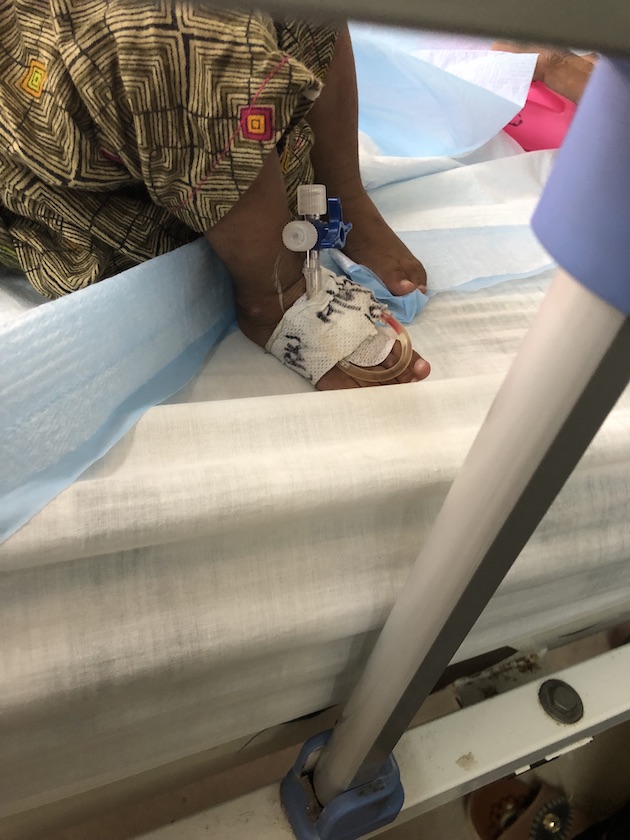
Manahil Zeeshan's foot has a drip in an effort to bring her temperature down and fight suspected typhoid. Credit: Zofeen Ebrahim/IPS

Manahil Zeeshan’s foot has a drip in an effort to bring her temperature down and fight suspected typhoid. Credit: Zofeen Ebrahim/IPS

Battling the Superbug

But even if she had typhoid, the bacteria in her body had taken on the form of a superbug — the extensively drug-resistant (XDR) typhoid and the current antimicrobials had become ineffective, said paediatrician Dr Jamal Raza, the executive director of the SICHN.

According to a Lancet study published in 2022, multidrug-resistant (MDR) typhoid has been seen in Pakistan, while typhoid bacteria resistant to the widely-used antibiotic azithromycin have been found in Bangladesh, Nepal and India. “Our analysis revealed a declining trend of MDR typhoid in south Asia, except for Pakistan, where XDR S Typhi emerged in 2016 and rapidly replaced less-resistant strains,” stated the study, which researchers claim is the largest ever examination of the S.Typhi bacterium.

The reason why antibiotics are losing their punch against some types of bacteria, said Raza, was the “indiscriminate use of antibiotics” that health practitioners prescribe to provide immediate relief. Another big problem was self-medication by people. “I know people often use an old prescription by a doctor to get the same medicine if they feel they have the same symptoms, thinking they do not need to visit the doctor.”

But he pointed out viruses, which are also small germs like bacteria, are causing bacteria-like infections, like a cold or the flu.

“Taking an antibiotic for the latter does not treat the disease; it only leads to antibiotic resistance,” said Raza.

A study conducted by researchers from three medical institutions, namely, the Aga Khan University (AKU) in Karachi, the Armed Forces Institute of Pathology (AFIP) in Rawalpindi, and the Shaukat Khanum Memorial Cancer Hospital & Research Center (SKH) in Lahore in 2018, found indiscriminate use of antibiotics to be causing new drug-resistant “superbugs.”

It found a high prevalence of multidrug and fluoroquinolone resistance for both S.Typhi and S. Paratyphi strains of typhoid bacteria. From 20% in 1992, the resistance was found to have increased to around 50% in 2015. The stubborn bacteria were resistant to antibiotics like ampicillin, chloramphenicol (and co-trimoxazole), as well as fluoroquinolone (ciprofloxacin and/or ofloxacin).

“The situation is quite grim,” said Dr Mashal Khan, chairperson of the government-run paediatric medicine department at Karachi’s National Institute of Child Health, referring to the increase in the number of children developing resistance to typhoid drugs. His worry is not that the bacteria has spread; his concern is the bacteria has mutated and become resistant to the drug.

“We’re running out of new antibiotics to treat bacterial infections; Meropeneme is the last one, and a very expensive one too,” he said resignedly, adding: “Although the development of newer antibiotics is the need of the day, I must emphasise the rational use of the ones being used is more urgent.”

Developing new drugs is challenging, and antibiotics more so, as the science is tricky.

“Antibiotics are not the most lucrative drugs to develop for pharmaceuticals as their utility is limited in the future due to the bacteria developing the ability to resist them,” said Infectious Diseases specialist and epidemiologist Dr Faisal Mahmood at the Aga Khan University Hospital in Karachi. “A lot of money goes into developing new drugs, and since most of the funding is from the global north, they prefer to work on infections which concern them directly. Typhoid is unfortunately endemic in the low and middle-income countries in the South, which have poorer water quality and have warmer, more humid climates.”

And that is why the only sure-shot way of reducing the disease burden of typhoid is to vaccinate the children.

In 2019, Pakistan became the first country to get the World Health Organization (WHO)-recommended single-dose typhoid conjugate vaccine (TCV) injected intramuscularly, added to its routine immunisation (RI) regime. This is given to babies at nine months, alongside measles-rubella vaccinations, without impacting either vaccine.

“Childhood vaccination complemented with clean drinking water and improved hygiene practices is the much more cost-effective way of eradicating typhoid than pumping antibiotics in a child,” said Raza. Meropenem costs as much as Rs. 30,000 (USD 105) for a 10-day course, and if hospitalisation is included, it can go up to Rs 100,000 ($349), said the doctor. Being in a government hospital, Zeeshan is treated free of cost.
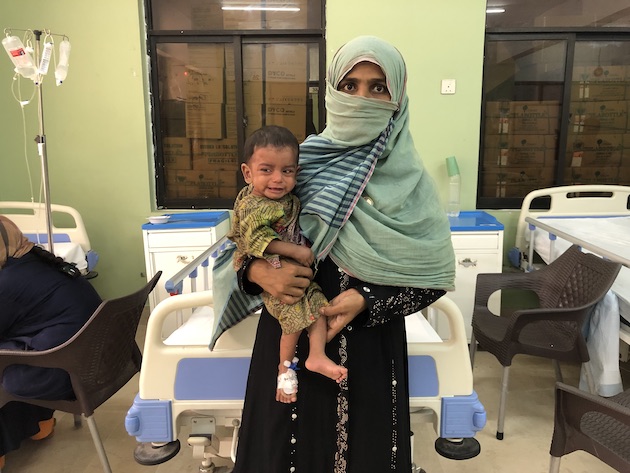
Eight-month-old Manahil Zeeshan is treated for typhoid at the government-run Sindh Institute of Child Health and Neonatology (SICHN) in Korangi, a neighbourhood in Karachi. Credit: Zofeen Ebrahim/IPS

Eight-month-old Manahil Zeeshan is treated for typhoid at the government-run Sindh Institute of Child Health and Neonatology (SICHN) in Korangi, a neighbourhood in Karachi. Credit: Zofeen Ebrahim/IPS

Typhoid Vaccine Launch Hits a Snag as Covid-19 Surfaces

The 2019 TCV campaign was first launched in the two cities of Sindh – Karachi and Hyderabad (children up to 15 years of age were also given a shot), which reported the highest number of typhoid cases among children. There was a pause when Covid-19 hit the world. But by 2022, TCV had been launched across Pakistan, and 35.5 million children were vaccinated, after which it was added to the government-run Expanded Programme on Immunisation (EPI) programme.

“Many parents do not know that the TCV is a more effective vaccine but only available at government vaccination centres, and not at private clinics and hospitals as Gavi has only given it to the government of Pakistan,” said paediatrician Dr D.S. Akram.

“There is another typhoid vaccine available in the private sector (typhoid polysaccharide vaccine), but it can only be given to children over two years of age, and it needs boosters every three years. My advice to parents is to vaccinate their kids against typhoid bacteria at nine months,” she said.

But it is still a drop in the ocean, and the fight against typhoid and other childhood diseases continues. The WHO places Pakistan among the ten countries that account for almost two-thirds of the world’s unimmunised children.

When Covid-19 hit the country’s already crumbling health system, it also brought the country’s immunisation programme to a halt too. An estimated 1.5 million children across Pakistan missed out on basic vaccines from March to May 2020, according to Gavi.

For Pakistan, which already has low immunisation coverage (the percentage of fully immunised children aged 12-23 months is just 66%), it meant a further dip in coverage which led to an unprecedented rise in the number of zero-dose children (those that have not received any routine vaccine). Add to these were the almost 19,000 new births every day. But when the lockdown eased and vaccinators returned to work, there was less demand for vaccination, having been replaced by fear of the new virus.

While Pakistan has yet to reach the optimal immunisation coverage of 90%, during Covid-19, Pakistan’s EPI received plaudits internationally for taking both vaccine coverage and the number of zero-dose children close to pre-pandemic levels in 2021. “What Pakistan achieved needs to be celebrated. In fact, Pakistan and Chad are used as examples internationally of how to get it right in an emergency,” said Huma Khawar, an immunisation and child health advocate working closely with EPI.

“Despite a year’s delay due to Covid-19, which was unforeseen, I think it is the best thing that the government has done for its country’s children,” said Khawar. She credited the RI programme that bounced back to the pre-pandemic level in 2021.

Clean water, Good Hygiene Key to Preventing typhoid

While immunisation can protect children from getting infected, clean drinking water and improved hygiene practices can reduce the risk of catching the disease to a great extent.

“Vaccines provide immunity when there is exposure to the bacteria,” agreed Dr Jai Das, assistant director at the Institute for Global Health and Development at the Aga Khan University and one of the co-authors of the 2018 report on typhoid, but emphasised the need for improved water and sanitation, a situation that continues to remain dismal and compromised in Pakistan.

The same study not only found a strong correlation between water and sanitation but to literacy levels as well. In addition, it stressed improving the country’s food safety protocols and implementing regulations.

While Mohammad believes that her daughter is under a curse, one reason could be that the unpasteurised cow’s milk she gives her daughter may not be properly boiled at home. “I was unable to breastfeed her,” she said. Further, she confessed to diluting it with unboiled tap water to make it last longer.

Doctors say giving Pakistani babies a lease of life is simple and costs nothing. “Exclusive breastfeeding up to at least six months of age (right now it is only 43%), attaining 90% coverage of RI across Pakistan and improving water and sanitation quality,” according to Dr Akram.

Bacteria Don’t Respect Geographic Borders

The XDR typhoid bacteria propagating in Pakistan has crossed borders and reached as far as the UK, Canada and the US. Earlier this year, a team of Pakistani and US researchers published their findings in the American Journal of Tropical Medicine and Hygiene, stating that with numerous typhoid bacteria variants circulating in Pakistan have also been identified in Southeast Asia and Eastern and Southern Africa and have been introduced into the United Kingdom, Canada, and the United States by travellers.

The Lancet study said strains from South Asia had spread 200 times to other countries since 1990. When these superbugs grow and spread, they can cause infections that are hard to treat. Sometimes they can even spread the resistance to other bacteria they meet.

The future looks frightening. While the need for improving water and sanitation cannot be overemphasised, along with the need for vaccinating children, newer and stronger antibiotics need to be developed and fast as typhoid may surface in deadlier ways than now since very few antibiotics remain effective against the bacteria.

Note: This story was supported by the Sabin Vaccine Institute and Internews

IPS UN Bureau Report


!function(d,s,id){var js,fjs=d.getElementsByTagName(s)[0],p=/^http:/.test(d.location)?’http’:’https’;if(!d.getElementById(id)){js=d.createElement(s);js.id=id;js.src=p+’://platform.twitter.com/widgets.js’;fjs.parentNode.insertBefore(js,fjs);}}(document, ‘script’, ‘twitter-wjs’);  

Excerpt:

Childhood vaccination, complemented with clean drinking water and improved hygiene practices, are the key to eradication of typhoid XDR, not indiscriminate use of antibiotics, say Pakistan health experts. Source

Parliamentarians Ask G7 Hiroshima Summit to Support Human Security and Vulnerable Communities

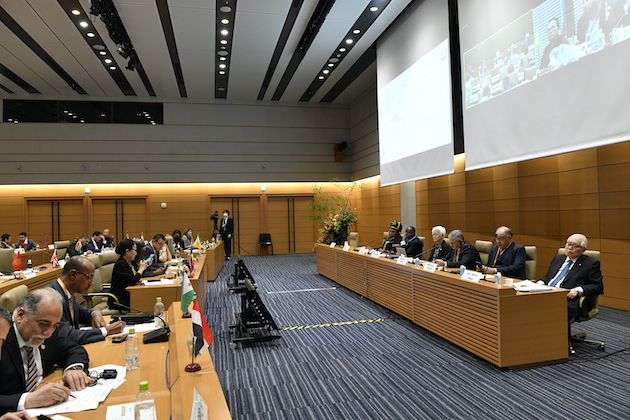
Parliamentarians attending the Global Conference of Parliamentarians on Population and Development Toward the 2023 G7 Hiroshima Summit. Credit: APDA

Parliamentarians attending the Global Conference of Parliamentarians on Population and Development Toward the 2023 G7 Hiroshima Summit. Credit: APDA

By Cecilia Russell
JOHANNESBURG, May 9 2023 (IPS)

Parliamentarians from more than 30 countries agreed to send a strong message to the G7 Hiroshima Summit in Japan later this year, focusing on human security and support of vulnerable communities, including women, girls, youth, aging people, migrants, and indigenous people, among others.


The wide-ranging declaration also called on governments to support active political and economic participation for women and girls, enhancing and implementing legislation that addresses gender-based violence (GBV) and eradicating harmful practices like child, early, and forced marriages. During discussions and in the declaration, a clear message emerged that budgetary requirements for Universal Health Care (UHC) should be prioritized and the exceptional work done by health workers during the pandemic be recognized.

In his keynote address, Japan’s Prime Minister Kishida Fumio reminded delegates that Covid-19 had exposed the “fragility of the global health architecture and underscored the need for UHC.”

Kishida said that the central vision of the G7 Hiroshima Summit was to emphasize the importance of addressing human security – through building global health architecture, including the “governance for prevention, preparedness, and response to public health crises, including finance. We believe it is important for the G7 to actively and constructively contribute to efforts to improve international governance, secure sustainable financing and strengthen international norms.”

Apart from contributing to resilient, equitable, and sustainable UHC, health innovation was needed to promote a “more effective global ecosystem to enable rapid research and development and equitable access to infectious disease crisis medicines … and to support aging society,” Kishida said.

Former Prime Minister of Japan Fukuda Yasuo, Chair of APDA, and Honorary Chair of JPFP said this conference and its declaration would follow in a tradition of delivering strong messages to the G7 that improving reproductive health was crucial to the development and the future of a planet which now had 8 million people living on it.

“International Community is becoming increasingly confrontational and divided, and there is the emergence of a national leader who is threatening the use of nuclear weapons. No nuclear weapons have been used in the nearly 80 years since Hiroshima and Nagasaki. We must work together to prevent the use of nuclear weapons, which can take many precious lives and people’s daily lives. In this instance, I would like you to search for the path toward appeasement and not division. We must keep all channels of dialogue open so as to ease tension,” Fukuda asked of the conference.

While calling on parliamentarians to work together to address challenges, Fukuda also expressed concern about the widening inequities caused by Covid-19 and climate change and noted: “This network of parliamentarians on population and development has been a vital resource for parliamentarians who share the same concern for not only their own countries but for the entire planet and future generations.”

Kamikawa Yoko, MP Japan, Chair of JPFP, said that with a world population of 8 billion, it was essential to “realize a society where no one is left behind … and Japan would share its experiences of being on the frontlines of an aging society with declining birth rates. “We are living in an aging society … and given these challenges in Japan, we will try to share with you our experience and lessons through our diplomacy while trying to deepen our discussions and exchanges to seek solutions.”

Japan’s Foreign Affairs Minister Hayashi Yoshimasa said it was essential for all to cooperate during the “Anthropocene era, when human activities have promised to have a major impact on the global environment, global issues that transcend national borders, such as climate change, and the spread of infectious diseases, including Covid-19 are becoming more and more prevalent.”

He reminded the delegates that at the center of Japan’s economic growth post World War II was mainly through health promotion and employment policies.

Delegates of the Global Conference of Parliamentarians on Population and Development Toward the 2023 G7 Hiroshima Summit agreed to send a strong message on human security to the Summit. Credit: APDA

Delegates of the Global Conference of Parliamentarians on Population and Development Toward the 2023 G7 Hiroshima Summit agreed to send a strong message on human security to the Summit. Credit: APDA

Director of the Division for Communications and Strategic Partnerships of UNFPA, Ian McFarlane, said it was not about the “numbers of people but the rights of the people that matter. It’s not about whether we are too many or too few, but whether women and girls can decide if, when, and how many children to have.”

A recent UNFPA report indicated that nearly half of the women across the globe could not exercise their rights and choices, their bodily autonomy, and expressed hope that policies in the future continue to focus on humanity and universal human rights.

Despite being close to the 30th anniversary of the International Conference on Population and Development (ICPD), the conference heard that much still needed to be done regarding women’s rights.

New Zealand MP and co-chair of AFPPD Standing Committee on Gender Equality and Women Empowerment, Angela Warren-Clark, reminded the audience that women still only held 26 percent of parliamentarian seats globally. While women make up 70 percent of the workforce in the health sector, only 25 percent have senior leadership positions.

“It is women in this pandemic who bore the increased burden of unpaid work at home as schools were closed, and it is girls and the poorest families who were taken out of school and forced into early marriages … We believe that if women had an equal say in decision-making during the pandemic, some of these mistakes would have been avoided.”

Baroness Elizabeth Barker, MP from the United Kingdom, told parliamentarians their role was to ensure that “no person on earth, from the head of G7 country to a poor person in a village, can say that they do not know what gender equality is. And they do not know what gender violence is.”

Barker suggested they use international standards, like the Istanbul Convention on Violence Against Women, to compare countries. “And you know that if your country doesn’t come out very well, they really don’t like it.”

She pointed to two successes in the UK, including stopping virginity testing and tackling the practice of forced marriages. She also warned the delegates that there was a right-wing campaign aimed at destroying human rights gained, and they chose different battlegrounds. The overturning of abortion rights in the United States in the Roe vs. Wade case was an example, as was the anti-LGBTQ legislation in Uganda.

Hassan Omar, MP from Djibouti, gave a host of achievements in his country, including ensuring that women occupy 25 percent roles in politics and the state administration and the growing literacy of women numbers in his country.

Risa Hontiveros, MP Philippines, painted a bleak picture of the impact of Covid in her country.

Hontiveros said GBV increased during Covid and extended to the digital space.

“The Internet has become a breeding ground for predators and cyber criminals to prey on children, especially young women, and girls. The online sexual abuse and exploitation of children … has become so prevalent in the Philippines that we have been tagged as the global hotspot.”

In a desperate attempt to provide for their families, even parents produced “exploitative material of their own children and sold them online to pedophiles abroad.”

To address these, she filed a gender-responsive and inclusive Emergency Management Act bill, which seeks to address the gender-differentiated needs of women and girls, because they were “disproportionately affected in times of emergencies.”

Former MP from Afghanistan Khadija Elham’s testimony united many in the conference and even resulted in proposals from the floor to include a condemnation of the Taliban’s women’s policies.

Elham said GBV had increased since the Taliban took over – women were forced to wear a burqa in public, they were not allowed to work, and those who wish to “learn science or (get an) education are forced to continue their studies and hidden places like basements.”

If their secret schools are exposed, they face torture and imprisonment. During the last two months, 260 people, including 50 women, were publicly whipped – a clear violation of their human rights. Women’s representation in political life has been banned, and women are no longer allowed to work in NGOs – and it has been “550 days since women could attend high schools and universities.”

She called on the international community, the United Nations, to pressure the Taliban to restore women’s work and education rights.

Nakayama Maho, Director of the Peacebuilding Program at the Sasakawa Peace Foundation, announced new research on factors contributing to men’s propensity to GBV. The research found that the higher a man’s educational attainment, the lower the level of violence. There were also lower levels of violence with “positive” masculinity – such as a man being employed, married, and capable of protecting his family. Men who experienced violence during times of conflict tended to support violence to instill discipline, or protect women and communities.

Dr Roopa Dhatt, Executive Director of Women in Global Health, summed up this critical session by saying, “Equal leadership for women in all fields is a game changer, particularly in politics and health.”

Japan’s Health, Labour and Welfare Minister, Kato Katsunobu, noted during his closing address that the G7 countries “share the recognition that investment in people is not an expense, but an investment… and as you invest in people you can create a virtuous cycle between workers well-being and social and economic activities.”

He said Japan had a lot to offer concerning aging populations.

“Japan has been promoting the establishment of a comprehensive community-based care system so that people can continue to live in their own way in their own neighborhood until the end of their lives and is in the position to provide knowledge to the G7 countries and other countries who will be facing (an aging population) in the future.”

Dr Alvaro Bermejo, Director-General of IPPF, commended the conference and said he was “thankful” that the conference declaration would tell G7 governments to set an example. “Marginalized and excluded populations are at the heart of human security and can only be achieved in solidarity, and that message from this conference is clear.”

Professor Takemi Keizo, MP Japan, Chair of AFPPD, summed up the proceeding by saying that parliamentarians as representatives of the electorate were vital to creating a “positive momentum in this global community and overcoming so many difficult issues.”

Takemi elaborated on some issues facing the world now, including climate change and military conflicts, but as parliamentarians, there was the opportunity to “build up the new basis of the global governance, which can be very beneficial.”

NOTE: Global Conference of Parliamentarians on Population and Development Toward the 2023 G7 Hiroshima Summit was organized by the Asian Population and Development Association (APDA), the Asian Forum of Parliamentarians on Population and Development (AFPPD), and the Japan Parliamentarians Federation for Population (JPFP).

It was supported by the Ministry of Foreign Affairs of Japan (MOFA), United Nations Population Fund (UNFPA), Japan Trust Fund (JTF), and Keidanren-Japan Business Federation in cooperation with the International Planned Parenthood Federation (IPPF).

IPS UN Bureau Report


!function(d,s,id){var js,fjs=d.getElementsByTagName(s)[0],p=/^http:/.test(d.location)?’http’:’https’;if(!d.getElementById(id)){js=d.createElement(s);js.id=id;js.src=p+’://platform.twitter.com/widgets.js’;fjs.parentNode.insertBefore(js,fjs);}}(document, ‘script’, ‘twitter-wjs’);  

Three Ways to End Gender-based Violence

Civil Society, Featured, Gender, Gender Violence, Global, Headlines, Health, IPS UN: Inside the Glasshouse, Poverty & SDGs, TerraViva United Nations, Women’s Health

Opinion

Testing new approaches for preventing gender-based violence to galvanize more and new partners and resources. Credit: UN Women

UNITED NATIONS, Nov 30 2022 (IPS) – How are the multiple shocks and crises the world is facing changing how we respond to gender-based violence? Almost three years after the COVID-19 pandemic triggered high levels of violence against women and girls, the recent Sexual Violence Research Initiative Forum 2022 (SVRI) shed some light on the best ways forward.


Bringing together over 1,000 researchers, practitioners, policymakers and activists in Cancún, Mexico, the forum highlighted new research on what works to stop and address one of the most widespread violations of human rights.

While some participants candidly – and bravely – shared that their initiatives did not have the intended impact, many discussed efforts that transformed lives, in big and small ways.

After 5 days of the forum one thing was clear; a lack of evidence is not what is standing in the way of achieving a better future. It is a lack of opportunities and the will to apply that evidence.

Among the many shared findings, UNDP presented its own evidence.

Since 2018, the global project on Ending Gender-based Violence and Achieving the Sustainable Development Goals (SDGs), a partnership between UNDP and the Republic of Korea, and in collaboration with United Nations University International Institute for Global Health, has tested new approaches for preventing and addressing gender-based violence, to galvanize more and new partners, resources, and support to move from rhetoric to action.

Three key strategies have emerged.

1. We need to integrate

Gender-based violence (GBV) intersects with all areas of sustainable development. That means that every development initiative provides a chance to address the causes of violence and to transform harmful social norms that not only put women disproportionately at risk for violence, but also limit progress.

Bringing together diverse partners to jointly incorporate efforts to end GBV into “non-GBV” programmes has been central to the Ending GBV and Achieving the SDGs project. Pilots in Indonesia, Peru and the Republic of Moldova integrated a GBV lens into local development planning.

The results were local action plans that focused on needs and solutions identified by the communities themselves, including evidence-based GBV prevention programming such as the Common Elements Treatment Approach, which has been proven to reduce violence along with risk factors such as alcohol abuse. This approach is growing, opening up new and more spaces for this work.

2. We need to elevate

While evidence is crucial to creating change, the work doesn’t stop there. We also need to elevate this evidence to policy makers and to support them in putting the findings into action. In our global project, we went about this in different ways.

In Peru women’s rights advocates and the local government worked together to draft a local action plan to address drivers of violence in the community of Villa El Salvador (VES). By working collaboratively and building trust between key players, the project was able to take a more holistic approach and to create stronger alliances to boost its sustainability and impacts.

In particular, the local action plan was informed by cost analysis research that showed that this approach would pay for itself if it prevented violence for only 0.6 percent of the 80,000-plus women in VES who are at risk for violence every year.

Since the pilot’s launch, more than 15 other local governments have expressed interest in the model, and it has already been replicated in three.

3. We need to finance

Less than 1 percent of bilateral official development assistance (ODA) and philanthropic funding is given to prevent and address GBV, despite the fact that roughly a third of women have experienced physical or sexual violence.

The “Imperative to Invest” study, funded by the EU-UN Spotlight Initiative and presented at the SVRI Forum, shows just what can be achieved with a US$500 million investment. The study highlights that Spotlight’s efforts will have prevented 21 million women and girls from experiencing violence by 2025.

The Ending GBV and Achieving the SDGs project also finds positive results when financing local plans. Through pilot initiatives in Peru, Moldova and Indonesia, it was possible to mobilize funds when different municipal governments take ownership of participatory planning processes at an early stage.

The local level is a key, yet an often overlooked, entry point to identifying community needs and, through participatory, multi-sectoral partnerships, to translate them into funded solutions.

In Moldova the regional government of Gagauzia assigned funds to create the region’s first safe space, with the support of the community.

The SVRI Forum was living proof that a better future is possible. It offered profound moments for thoughtful exchange, learning with partners and peers, and deepened our own reflections on the outcomes and next steps for this global project.

As we approach the final countdown to meeting the SDGs, including SDG5.2 on eliminating violence against women and girls, it has never been more urgent to take all this evidence and turn it into action against gender-based violence. Let’s act today.

Jacqui Stevenson is Research Consultant UNU International Institute for Global Health, Jessica Zimerman is Project Specialist, Gender-based Violence, UNDP, and Diego Antoni is Policy Specialist Gender, Governance and Recovery, UNDP.

Source: UNDP

IPS UN Bureau

  Source

We Need Urgent Commitment, Resources & Action to Tackle Hunger Crisis

Civil Society, Development & Aid, Editors’ Choice, Featured, Food and Agriculture, Global, Headlines, Population, Poverty & SDGs, TerraViva United Nations

Opinion

Conversation at the UN General Assembly Side Event on Responding to the Urgent Humanitarian Needs in the Horn of Africa. Credit: Karelia Pallan/Oxfam

NEW YORK, Sep 27 2022 (IPS) – Last week, as world leaders gathered in New York for the 77th United Nations General Assembly, one topic came up more than most: looming famine. That’s because despite a global commitment to make famine a relic of the past, it is once again knocking at our door.


In Somaliland two weeks ago, I witnessed communities past their breaking points. Grandparents there told me they could not recall a drought like this in their lifetimes.

At UNGA, I was honored to take part in many discussions on this and other topics – in particular a panel about the urgent humanitarian needs in the Horn of Africa. The region is facing several interlinked issues, including hunger, conflict, climate, and COVID-19. As we discuss – and more importantly, respond to – the crisis, we should keep in mind three themes: the urgency of the moment, the need for more access and more funding, and the implementation of a systemic solution.

The humanitarian crisis in the Horn needs to be at the top of the international agenda, and we need commitment, resources and action urgently. We have seen the warning signs that famine is coming for quite some time – and now we have been warned that it could be declared in Somalia as soon as next month.

Often, the international community is reactionary to crises, but this time we must also be anticipatory in assessing and responding to the needs of the region. In my trip to Somaliland, I spoke to farmers, pastoralists, and visited communities impacted by conflict, climate, and COVID-19. It was my first visit back to Somaliland in more than 20 years, which offered an interesting perspective of the arc of change.

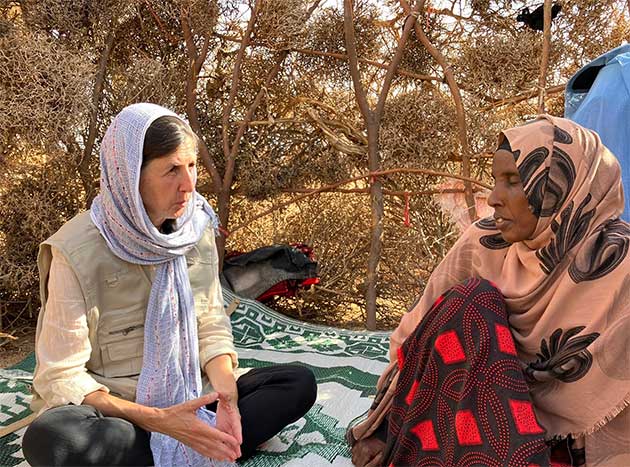
Abby Maxman speaks with Safia, a woman forced to leave her home in Somaliland amid the drought and growing hunger. Credit: Chris Hufstader/Oxfam

Their shared experience is clear: their livelihoods and way of life – and that of their ancestors – are in danger and the need for action now is more urgent than ever. It is dispiriting that these preventable tragedies continue to repeat when the world has the resources and know-how to prevent them.

I spoke with Safia, a 38-year-old divorced mother of eight children, who lost 90% of her livestock. She stayed as long as she could in her community until she felt unsafe as the weak and dead livestock attracted hyenas at night, compelling her to make the five-day journey to reach the Dur-Dur IDP (Internally Displaced Person) camp near Burao.

At Dur Dur they were welcomed with clean water, some food, and materials to build a shelter. She and her children have been there for about three months. They are struggling to get enough food and might eat one meal a day, if they can. Oxfam and others are there offering support, but it’s not nearly enough to meet their basic needs.

Safia’s experience was just one of countless more of those who are bearing the brunt of the dual global hunger and climate crises that has been brought on by distant forces who are prioritizing profits over people and planet.

Earlier this year, Oxfam’s research estimated that one person is dying from acute hunger in the region every 48 seconds. Since then, the situation has only gotten worse. We have a narrow window of opportunity to stave off hunger in the horn. It is not too late to avert disaster, but more needs to be done immediately.

We know that anticipatory action saves lives, livelihoods, and scarce aid money, and across Oxfam and with our partners we have been sounding the alarm of this slow, onset emergency at local, national, and global levels for the past two years. Yet we are witnessing a system that is failing the people who are least responsible for this crisis.

We need more access and a lot more funding that supports frontline organizations and leaders. During the panel, it was encouraging to hear Under-Secretary-General for Humanitarian Affairs and Emergency Relief Coordinator Second Martin Griffiths put such emphasis on funding local organizations and leaders who have the knowledge, access, and courage to make real impact.

Local organizations know where the most vulnerable people are located, they can reach disaster zones quickly, and they understand the languages, cultures, geography, and political realities of the affected communities far better than outsiders.

These local leaders should be given the resources and space to make decisions to have the most effective response that will save lives now and in the long run. This may mean that international donors and organizations need to be more flexible in how they coordinate, fund, and implement a humanitarian response. The old way may not be the most effective – in fact we know it is not – especially where there are access challenges.

Finally, we must take a systemic approach in tackling these issues. We know that hunger, climate, and conflict do not happen in silos – they are inextricably linked. We must make sure we are fighting these interlinked crises, especially hunger and climate, together.

Climate change is causing more extreme weather events like droughts, floods, and heatwaves, which devastate crops and displace vulnerable communities. In fact, hunger has more than doubled in 10 of the worst climate hotspots in recent years.

Countries that have contributed the least to emissions are bearing the worst impacts of the climate crisis, while fossil fuel companies see record-breaking profits. Less than 18 days of profits from fossil fuel companies could cover the whole UN humanitarian appeal of $48.82 billion for 2022.

These conversations and convenings are important, but we must do more than raise the alarm – we must see action to follow them up. I hope that leaders recommit the political will to fulfill their moral obligation to meet this crisis in the Horn head on.

Safia is doing all she can to ensure her family’s survival – we must see leaders do all in their power, right now, to make sure she and millions more get the urgent aid they need now to survive, and see their right to a safe, healthy future recognized and realized in years to come.

Abby Maxman is President and CEO Oxfam America.

IPS UN Bureau

  Source

U.S.-Latin America Immigration Agreement Raises more Questions than Answers

Active Citizens, Civil Society, Development & Aid, Editors’ Choice, Featured, Headlines, Human Rights, Latin America & the Caribbean, Migration & Refugees, Population, Poverty & SDGs, Regional Categories

Migration & Refugees

A hundred Central American migrants were rescued from an overcrowded trailer truck in the Mexican state of Tabasco. It has been impossible to stop people from making the hazardous journey of thousands of kilometers to the United States due to the lack of opportunities in their countries of origin. CREDIT: Mesoamerican Migrant Movement

A hundred Central American migrants were rescued from an overcrowded trailer truck in the Mexican state of Tabasco. It has been impossible to stop people from making the hazardous journey of thousands of kilometers to the United States due to the lack of opportunities in their countries of origin. CREDIT: Mesoamerican Migrant Movement

SAN SALVADOR, Jul 19 2022 (IPS) – The immigration agreement reached in Los Angeles, California at the end of the Summit of the Americas, hosted by U.S. President Joe Biden, raises more questions than answers and the likelihood that once again there will be more noise than actual benefits for migrants, especially Central Americans.


And immigration was once again the main issue discussed at the Jul. 12 bilateral meeting between Mexican President Andrés Manuel López Obrador and Biden at the White House.

At the meeting, López Obrador asked Biden to facilitate the entry of “more skilled” Mexican and Central American workers into the U.S. “to support” the economy and help curb irregular migration.

Central American analysts told IPS that it is generally positive that immigration was addressed at the June summit and that concrete commitments were reached. But they also agreed that much remains to be done to tackle the question of undocumented migration.

That is especially true considering that the leaders of the three Central American nations generating a massive flow of poor people who risk their lives to reach the United States, largely without papers, were absent from the meeting.

Just as the Ninth Summit of the Americas was getting underway on Jun. 6 in Los Angeles, an undocumented 15-year-old Salvadoran migrant began her journey alone to the United States, with New York as her final destination.

She left her native San Juan Opico, in the department of La Libertad in central El Salvador.

“We communicate every day, she tells me that she is in Tamaulipas, Mexico, and that everything is going well according to plan. They give them food and they are not mistreating her, but they don’t let her leave the safe houses,” Omar Martinez, the Salvadoran uncle of the migrant girl, whose name he preferred not to mention, told IPS.

She was able to make the journey because her mother, who is waiting for her in New York, managed to save the 15,000-dollar cost of the trip, led as always by a guide or “coyote”, as they are known in Central America, who in turn form part of networks in Guatemala and Mexico that smuggle people across the border between Mexico and the United States.

The meeting of presidents in Los Angeles “was marked by the issue of temporary jobs, and the presidents of key Central American countries were absent, so there was a vacuum in that regard,” researcher Silvia Raquec Cum, of Guatemala’s Pop No’j Association, told IPS.

In fact, neither the presidents of Honduras, Xiomara Castro, of Guatemala, Alejandro Giammattei, or El Salvador, Nayib Bukele, attended the conclave due to political friction with the United States, in a political snub that would have been hard to imagine just a few years ago.

Other Latin American presidents boycotted the Summit of the Americas as an act of protest, such as Mexico’s López Obrador, precisely because Washington did not invite the leaders of Cuba, Nicaragua and Venezuela, which it considers dictatorships.

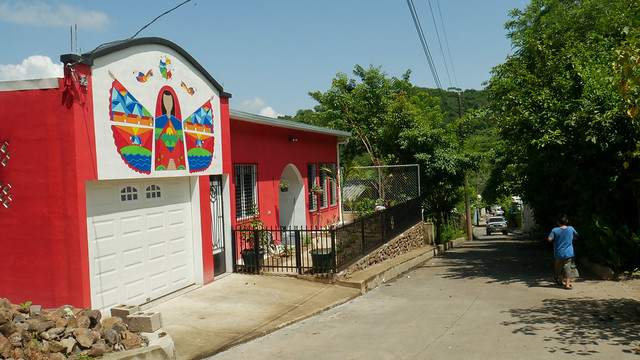
 From rural communities like this one, the village of Huisisilapa in the municipality of San Pablo Tacachico in central El Salvador, where there are few possibilities of finding work, many people set out for the United States, often without documents, in search of the "American dream". CREDIT: Edgardo Ayala/IPS

From rural communities like this one, the village of Huisisilapa in the municipality of San Pablo Tacachico in central El Salvador, where there are few possibilities of finding work, many people set out for the United States, often without documents, in search of the “American dream”. CREDIT: Edgardo Ayala/IPS

More temporary jobs

Promoting more temporary jobs is one of the commitments of the Los Angeles Declaration on Migration and Protection adopted at the Summit of the Americas and signed by some twenty heads of state on Jun. 10 in that U.S. city.

“Temporary jobs are an important issue, but let’s remember that economic questions are not the only way to address migration. Not all migration is driven by economic reasons, there are also situations of insecurity and other causes,” Raquec Cum emphasized.

Moreover, these temporary jobs do not allow the beneficiaries to stay and settle in the country; they have to return to their places of origin, where their lives could be at risk.

“It is good that they (the temporary jobs) are being created and are expanding, but we must be aware that the beneficiaries are only workers, they are not allowed to settle down, and there are people who for various reasons no longer want to return to their countries,” researcher Danilo Rivera, of the Central American Institute of Social and Development Studies, told IPS from the Guatemalan capital.

The Los Angeles Declaration on Migration and Protection states that it “seeks to mobilize the entire region around bold actions that will transform our approach to managing migration in the Americas.”

The Declaration is based on four pillars: stability and assistance for communities; expansion of legal pathways; humane migration management; and coordinated emergency response.

The focus on expanding legal pathways includes Canada, which plans to receive more than 50,000 agricultural workers from Mexico, Guatemala and the Caribbean in 2022.

While Mexico will expand the Border Worker Card program to include 10,000 to 20,000 more beneficiaries, it is also offering another plan to create job opportunities in Mexico for 15,000 to 20,000 workers from Guatemala each year.

The United States, for its part, is committed to a 65 million dollar pilot program to help U.S. farmers hire temporary agricultural workers, who receive H-2A visas.

“It is necessary to rethink governments’ capacity to promote regular migration based on temporary work programs when it is clear that there is not enough labor power to cover the great needs in terms of employment demands,” said Rivera from Guatemala.

He added that despite the effort put forth by the presidents at the summit, there is no mention at all of the comprehensive reform that has been offered for several years to legalize some 11 million immigrants who arrived in the United States without documents.

A reform bill to that effect is currently stalled in the U.S. Congress.

Many of the 11 million undocumented migrants in the United States come from Central America, especially Honduras, Guatemala and El Salvador, as well as Mexico.

While the idea of immigration reform is not moving forward in Congress, more than 60 percent of the undocumented migrants have lived in the country for over a decade and have more than four million U.S.-born children, the New York Times reported in January 2021.

This population group represents five percent of the workforce in the agriculture, construction and hospitality sectors, the report added.

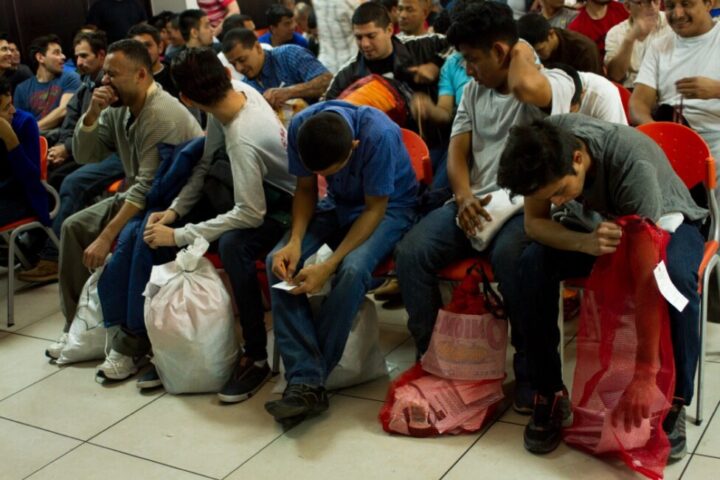
 Despite the risks involved in undertaking the irregular, undocumented journey to the United States, many Salvadorans continue to make the trip, and many are deported, such as the people seen in this photo taken at a registration center after they were sent back to San Salvador. CREDIT: Edgardo Ayala/IPS

Despite the risks involved in undertaking the irregular, undocumented journey to the United States, many Salvadorans continue to make the trip, and many are deported, such as the people seen in this photo taken at a registration center after they were sent back to San Salvador. CREDIT: Edgardo Ayala/IPS

More political asylum

The Declaration also includes another important component of the migration agreement: a commitment to strengthen political asylum programs.

For example, among other agreements in this area, Canada will increase the resettlement of refugees from the Americas and aims to receive up to 4,000 people by 2028, the Declaration states.

For its part, the United States will commit to resettle 20,000 refugees from the Americas during fiscal years 2023 and 2024.

“What I took away from the summit is the question of creating a pathway to address the issue of refugees in the countries of origin,” Karen Valladares, of the National Forum for Migration in Honduras, told IPS from Tegucigalpa.

She added: “In the case of Honduras, we are having a lot of extra-regional and extra-continental population traffic.”

Valladares said that while it is important “to enable refugee processes for people passing through our country, we must remember that Honduras is not seen as a destination, but as a transit country.”

Raquec Cum, of the Pop No’j Association in Guatemala, said “They were also talking about the extension of visas for refugees, but the bottom line is how they are going to carry out this process; there are specific points that were signed and to which they committed themselves, but the how is what needs to be developed.”

Meanwhile, the Salvadoran teenager en route to New York has told her uncle that she expects to get there in about a month.

“She left because she wants to better herself, to improve her situation, because in El Salvador it is expensive to live,” said Omar, the girl’s uncle.

“I have even thought about leaving the country, but I suffer from respiratory problems and could not run a lot or swim, for example, and sometimes you have to run away from the migra (border patrol),” he said.

  Source

Healthy Planet Needs ‘Ocean Action’ from Asian and Pacific Countries

Asia-Pacific, Climate Action, Climate Change, Conferences, Development & Aid, Economy & Trade, Environment, Headlines, Poverty & SDGs, Sustainability, TerraViva United Nations

Opinion

BANGKOK, Thailand, Jun 27 2022 (IPS) – As the Second Global Ocean Conference opens today in Lisbon, governments in Asia and the Pacific must seize the opportunity to enhance cooperation and solidarity to address a host of challenges that endanger what is a lifeline for millions of people in the region.


Armida Salsiah Alisjahbana

If done right ocean action will also be climate action but this will require working in concert on a few fronts.

First, we must invest in and support science and technology to produce key solutions. Strengthening science-policy interfaces to bridge practitioners and policymakers contributes to a sound understanding of ocean-climate synergies, thereby enabling better policy design, an important priority of the Indonesian Presidency of the G20 process. Additionally policy support tools can assist governments in identifying and prioritizing actions through policy and SDG tracking and scenarios development.

We must also make the invisible visible through ocean data: just three of ten targets for the goal on life below water are measurable in Asia and the Pacific. Better data is the foundation of better policies and collective action. The Global Ocean Accounts Partnership (GOAP) is an innovative multi-stakeholder collective established to enable countries and other stakeholders to go beyond GDP and to measure and manage progress towards ocean sustainable development.

Solutions for low-carbon maritime transport are also a key part of the transition to decarbonization by the middle of the century. Countries in Asia and the Pacific recognized this when adopting a new Regional Action Programme last December, putting more emphasis on such concrete steps as innovative shipping technologies, cooperation on green shipping corridors and more efficient use of existing port infrastructure and facilities to make this ambition a reality.

Finally, aligning finance with our ocean, climate and broader SDG aspirations provides a crucial foundation for all of our action. Blue bonds are an attractive instrument both for governments interested in raising funds for ocean conservation and for investors interested in contributing to sustainable development in addition to obtaining a return for their investment.

These actions and others are steps towards ensuring the viability of several of the region’s key ocean-based economic sectors, such as seaborne trade, tourism and fisheries. An estimated 50 to 80 per cent of all life on Earth is found under the ocean surface. Seven of every 10 fish caught around the globe comes from Pacific waters. And we know that the oceans and coasts are also vital allies in the fight against climate change, with coastal systems such as mangroves, salt marshes and seagrass meadows at the frontline of climate change, absorbing carbon at rates of up to 50 times those of the same area of tropical forest.

But the health of the oceans in Asia and the Pacific is in serious decline: rampant pollution, destructive and illegal fishing practices, inadequate marine governance and continued urbanization along coastlines have destroyed 40 per cent of the coral reefs and approximately 60 per cent of the coastal mangroves, while fish stocks continue to decline and consumption patterns remain unsustainable.

These and other pressures exacerbate climate-induced ocean acidification and warming and weaken the capacity of oceans to mitigate the impacts of climate change. Global climate change is also contributing to sea-level rise, which affects coastal and island communities severely, resulting in greater disaster risk, internal displacement and international migration.

To promote concerted action, ESCAP, in collaboration with partner UN agencies, provides a regional platform in support of SDG14, aligned within the framework of the UN Decade of Ocean Science for Sustainable Development (2021-2030). Through four editions so far of the Asia-Pacific Day for the Ocean, we also support countries in identifying and putting in place solutions and accelerated actions through regional dialogue and cooperation.

It is abundantly clear there can be no healthy planet without a healthy ocean. Our leaders meeting in Lisbon must step up efforts to protect the ocean and its precious resources and to build sustainable blue economies.

Armida Salsiah Alisjahbana is an Under-Secretary-General of the United Nations and Executive Secretary of the Economic and Social Commission for Asia and the Pacific (ESCAP)

IPS UN Bureau