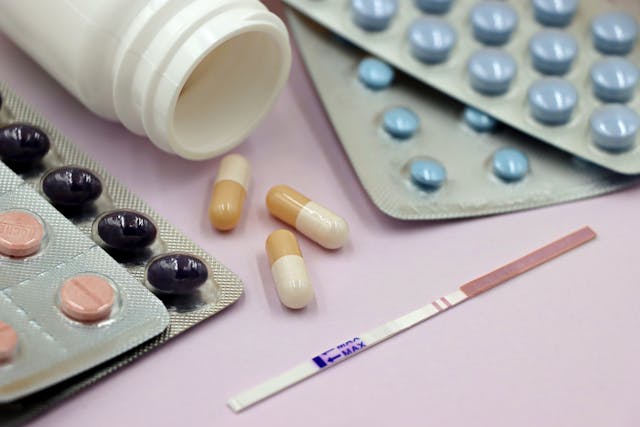
Concerns are mounting that the Trump administration may be storing $9.7 million in contraceptives in Belgium until they expire.
Concerns are rising over the Trump administration’s decision to store $9.7 million worth of U.S.-purchased contraceptives in Belgian warehouses until they expire.
The undelivered contraceptives, initially intended for donation to various African countries and procured by the U.S. Agency for International Development (USAID) under the Biden administration, are now being stored indefinitely in Belgian warehouses, CNN reported, as many U.S. foreign aid programs have been discontinued under Trump.
With most products set to expire in 2028 or 2029, and the earliest batch expiring in April 2027, aid workers fear the U.S. government may be allowing the supplies to sit until they become unusable or ineligible for export.
Elsewhere, the International Planned Parenthood Federation (IPPF) says that most of the supplies are intended for Tanzania, which enforces minimum shelf-life requirements for medical imports. Marcel Van Valen, head of Supply Chain at IPPF, said that around one million injectable vials and over 400,000 implants, together valued at $3.97 million, will no longer meet Tanzanian import standards by the end of this year or mid-next year. Under Tanzanian regulations, “any device with a shelf life of more than 24 months whose remaining shelf life is less than 60%” cannot be imported.
“It’s urgent that we receive these resources before they become ineligible for import,” said Dr. Bakari Omary, the project coordinator at the NGO Umati, which is IPPF’s member organization in Tanzania. “The contraceptives being held represent 28% of the country’s total annual need, and not having them is already impacting clients’ reproductive health and family planning freedoms.”
The U.S. State Department previously stated that it had made a “preliminary decision” to destroy the contraceptives stored in Belgium by incineration for $167,000. However, the plan was blocked by regulations in Flanders, Belgium, which prohibit the incineration of reusable medical devices.
Since the incineration plans became public knowledge, aid workers have urged the Trump administration to deliver the contraceptives to women in Tanzania, Mali, Kenya, and other countries, or to sell them to NGOs that could distribute them. They warn that the undelivered supplies, combined with cuts to family planning programs, could lead to higher maternal deaths, unsafe abortions, and economic hardship from unplanned pregnancies.
However, representatives from the United Nations Population Fund (UNFPA), the International Planned Parenthood Federation (IPPF), and MSI Reproductive Choices all claim that the U.S. government has ignored or rejected their offers to purchase the contraceptives.
“Destination countries, including Tanzania (the main recipient), as well as others such as Malawi, Bangladesh, DR Congo, Kenya, apply importation rules that limit entry to medicines with a specific percentage of remaining shelf life,” IPPF’s head of supply chain Marcel Van Valen said.”
The contraceptives consist mainly of long-acting birth control methods, including intrauterine devices (IUDs), rod implants, injections, and tablets containing levonorgestrel and ethinyl estradiol. However, a U.S. State Department spokesperson previously described the supplies in Belgium as “certain abortifacient birth control commodities from terminated Biden-era USAID contracts,” a controversial remark reflecting ongoing U.S. debates over when life begins.
“Contraceptives save lives. Around the world, there are over 250 million women who want to avoid pregnancy but are not able to access family planning,” UNFPA said in a statement. “UNFPA and its partners estimate that filling this unmet need for family planning could reduce maternal deaths by approximately 25%.”
The Pentagon is cherry picking data when it tries to shoot down a popular new movie’s portrayal of America’s $50 billion nuclear missile defenses … at least according to national security analyst Joseph Cirincione, who says ‘House of Dynamite’…
Share this:
Like this:
LikeLoading…
Discover more from The Maravi Post
Subscribe to get the latest posts sent to your email.
HARARE-(MaraviPost)-Zimbabweans were left in disbelief on Tuesday night when President Emerson Mnangagwa’s highly anticipated national address was dramatically interrupted by a sudden power outage, live on national television.
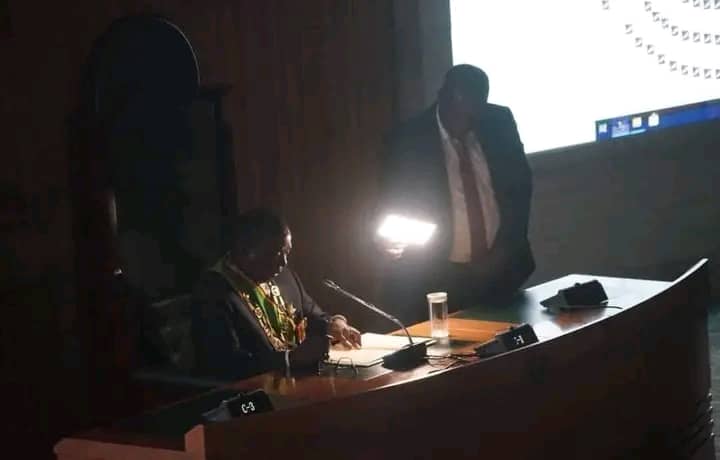
The blackout, which struck just minutes after the president began his speech, forced him to continue reading his notes using a flashlight an image that instantly went viral.
The national address, broadcast from State House in Harare, was meant to highlight the government’s achievements and outline economic recovery strategies.
However, the event took an unexpected turn when the lights suddenly went out, leaving the room in complete darkness.
For a few tense seconds, the television feed showed confusion among journalists and officials as technicians scrambled to restore power.
In a rare display of calm, President Mnangagwa decided not to stop the address. Instead, he continued speaking with the aid of a small flashlight held by one of his aides.
The moment drew mixed reactions from viewers with some commending his composure while others mocked the irony of the situation, given the country’s long-standing electricity challenges.
Social media platforms lit up almost instantly, with hashtags like #Zativuta, #PowerToThePeople, and #MnangagwaInTheDark trending across X (formerly Twitter) and Facebook.
Memes, edited videos and humorous captions flooded timelines, turning what was meant to be a serious state address into a national talking point.
Critics quickly pointed out that the incident reflected the deep rooted infrastructure issues that Zimbabwe continues to face.
Frequent power outages, known locally as load shedding, have disrupted industries, hospitals and schools for years and the president’s experience only added fuel to public frustration.
“This is the perfect summary of our situation.Even the highest office in the land cannot escape the darkness we live in every day. Zativuta kwambili (we are in real trouble),”said Tafadzwa Moyo concerned citizen from Zibambwe.
Meanwhile, the state-owned power company, ZESA Holdings, has remained silent on the cause of the outage.
Sources within the energy sector hinted that the blackout may have been triggered by a technical fault affecting parts of Harare, though investigations are still underway.
Opposition figures seized the opportunity to criticize the government’s handling of the energy crisis.
Nelson Chamisa, a prominent opposition leader, remarked online that the blackout was “a powerful metaphor for a nation in the dark both literally and politically.”
His comment received thousands of shares within hours.
Despite the setback, Mnangagwa eventually concluded his address under dim lighting, reaffirming his administration’s commitment to stabilizing the economy and improving essential services.
However, many citizens felt that the incident itself spoke louder than the promises made in the speech.
Share this:
Like this:
LikeLoading…
Discover more from The Maravi Post
Subscribe to get the latest posts sent to your email.
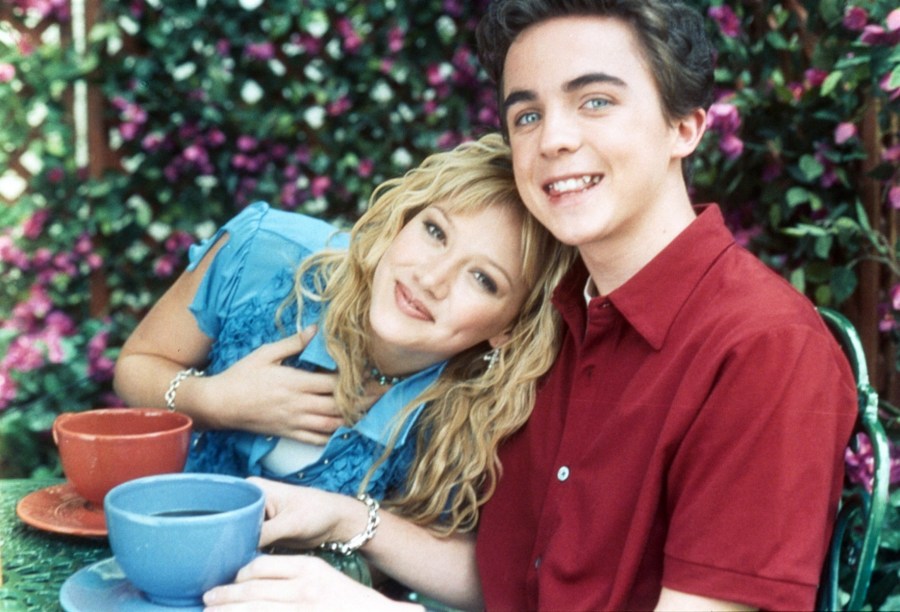
Frankie Muniz is ready to set the record straight on where his relationship with former costar Hilary Duff currently stands.
“There’s another story I haven’t told, and I don’t know if I want to tell it, but maybe I will. It’s been a long time,” Muniz, 39, shared on a September episode of “The Joe Vulpis Podcast” hosted by Joe Vulpis. “I was on the set of Lizzie McGuire, and I was in Hilary’s dressing room and her mom was there. Her mom was — I’m going to say — the epitome of a stage mom, momager. … Hilary was so cool, we had an awesome relationship, but her mom was super intense. My mom was the opposite.”
After Lizzie McGuire premiered in 2001, Duff, 38, asked Muniz — who was starring in Malcolm in the Middle at the time — to appear on her Disney Channel show as himself.
The actor said that Duff was one of the “first friends” he met after moving to Los Angeles, but their friendship was not able to stand the test of time after the actor claimed Duff’s mom questioned his career plans.
“Her mom was like, ‘Do you know what you’re doing this summer? What are you doing this summer?’” he recalled. “And I go, ‘Oh, I’m filming this movie where I’m playing like a junior James Bond. It’s called Agent Cody Banks.’”
When Duff’s mom questioned if the movie’s team was looking for an actress, Muniz stayed mum but knew “I had the say of who the girl was going to be.”
Although he initially thought Smallville’s Kristin Kreuk was going to take the role, he was surprised to learn Duff booked the film one day later.
“Needless to say, I wasn’t thrilled about it. And not because I didn’t want it to be Hilary,” he said. “I don’t know how much I want to say. I’m trying to think about it because I’ve already said way too much.”
Hilary Duff, Frankie MunizWalt Disney Enterprises / Courtesy Everett Collection
Although Agent Cody Banks was released in 2003 and was a hit at the box office, the movie’s leading characters didn’t exactly stay close.
“I’ve never talked to Hilary since the last day of filming,” Muniz said. “I’ve not said one word to her since then. So that’s the truth of that. No one knows about my Hilary Duff story.”
Us Weekly has reached out to Duff’s reps for comment.
To this day, Muniz said he doesn’t hold any ill feelings towards the former Disney Channel star. In fact, he said he regrets “not just continuing to be friends with her because we had a great friendship for such a long time.”
“I would love to catch up with her,” Muniz added. “I would love to even talk about that because I’m sure she doesn’t know any of that happened.”
As for Duff, she recently signed a deal with Atlantic Records to release new music. The “So Yesterday” singer also has a docuseries in the works that will document her long-awaited musical return and personal journey.
Share this:
Like this:
LikeLoading…
Discover more from The Maravi Post
Subscribe to get the latest posts sent to your email.
There was a robbery caught on camera in Santa Cruz … committed by an otter! It was just about the cutest mugging you’ll ever see … The video, posted Tuesday, starts with the otter already on top of the board with the surfer underneath. In an…
Share this:
Like this:
LikeLoading…
Discover more from The Maravi Post
Subscribe to get the latest posts sent to your email.
Having taught Physics for over 30 years to young girls, when experts called for transforming teachers and teaching for young people’s health, well-being and gender equality, it resonated strongly with me.
Before world’s largest gathering on sexual and reproductive health, rights and justice (International Conference on Family Planning or ICFP 2025) opens next week in Colombia, several experts are underpinning the importance of transforming teachers and teaching for adolescent health, well-being, gender equality and human right to health.
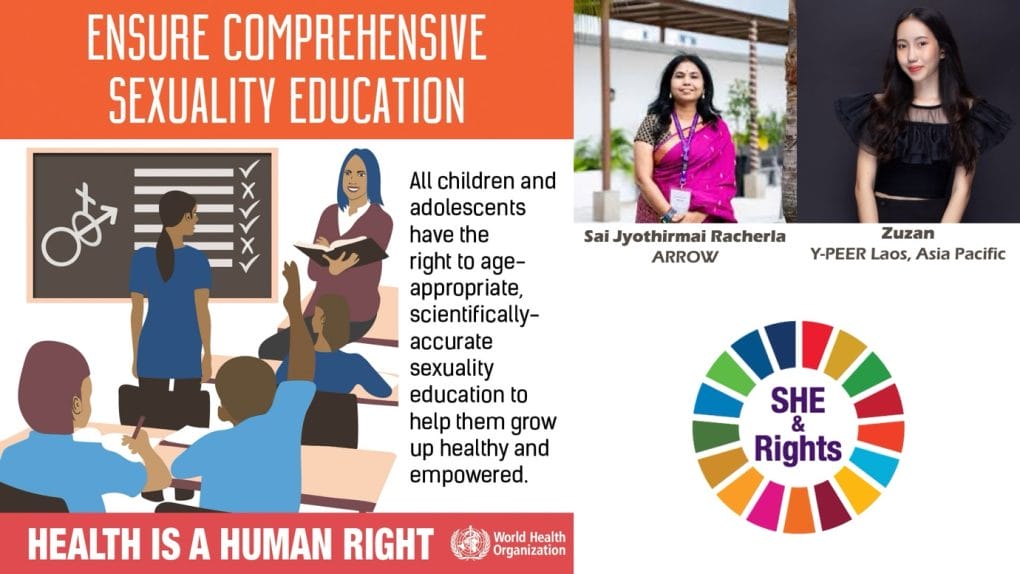
“Every child, adolescent, and young person, regardless of who they are and where they live, deserves an opportunity to learn and develop skills that will enable them to make safe and confident choices about their lives – and comprehensive sexuality education is one such life skill,” said Sai Jyothirmai Racherla, Deputy Executive Director, The Asian-Pacific Resource & Research Centre for Women (ARROW).
Provide CSE within the education ecosystem
“Though comprehensive sexuality education is such a taboo, it is an important aspect of children, adolescents, and young people’s well-being. However, we have so many barriers in advancing comprehensive sexuality education. As SRHRJ (sexual and reproductive health, rights and justice) advocates, one of our key agenda has been to ensure that we provide access to comprehensive sexuality education within the education ecosystem,” added ARROW leader Sai.
ARROW with partners had organised an important Asia Pacific regional multistakeholder technical meeting which had put teachers and teaching centre-stage while deliberating upon comprehensive sexuality education and broader SRHRJ.
Teachers can be good enablers to provide CSE
“We see teachers as one crucial stakeholder group and this multistakeholder technical meeting had pinned down on the teachers and how teachers can be good enablers to provide comprehensive sexuality education. Global research also says that teachers are most important school-related factors affecting students’ learning. Evidence also shows that addressing learners’ health, well-being and education, improves school education, school attendance, retention and learning quality,” said Sai.
Just providing comprehensive sexuality education not only improves the life skills but also it improves the learning capabilities across other learning arenas.
Teachers and teaching and young people remained central to SRHRJ agenda of this meet organised by ARROW, UNESCO South-East Asia, UNESCO South Asia, UNICEF East Asia Pacific, UNICEF South Asia, UNFPA Asia-Pacific and Education International Asia-Pacific in collaboration with SDG for Youth Student Network and Y-PEER Asia-Pacific Centre.
Over 160 people took part including civil society, youth, academic institutions, but most important stakeholder group were government officials from the Ministry of Education of 20 countries in South Asia and Southeast Asia regions. So many ministries of education officials coming together to advance adolescent health and well-being – and comprehensive sexuality education was one crucial pivot – was in itself a big milestone, said Sai.
Gender transformative education
“This meeting also furthered the agenda of gender transformative education,” said Sai Jyothirmai Racherla of ARROW. “Whole school and gender transformative approaches should connect curricula, learning environment and well-being. A whole school approach and a gender transformative approach must be included in teachers’ training too.”
“Grassroots voices and lived experiences of teachers were highlighted from the perspective of teachers. We need to better understand what is required for teachers to provide quality comprehensive sexuality education.”
Invest in teacher training on CSE
“One of the recommendations from this meet called on investing in high quality and inclusive pre- and in-service teacher training for comprehensive sexuality education. This is very important. We are not only talking about students’ curricula, which is also very important, and that is the agenda that we are all pushing forward, but in addition to students’ curricula we are also talking about teachers’ pre- and in-service teacher training curricula which should mandatorily include comprehensive sexuality education,” said Sai.
“We also advocated for stronger education system policies and investments in teacher training so that they can promote adolescent health and well-being. We also talked about the meaningful inclusion of youth, adolescents, and teachers themselves in the development of pre-service and in-service training curricula. When the training curricula of the teachers is being developed, there needs to be consultations of the teachers themselves and there also needs to be the consultation of youth and adolescents into such curricula,” said Sai.
Teacher class action research
“One of the other recommendations that came out of this process was teacher action research. So, within the classroom practices we need to enable teacher class action research so that classroom practices and the pedagogy can be improved and it can be more resilient to meet the needs of students seeking such education,” shared Sai Jyothirmai Racherla, who would also be speaking at the upcoming ICFP 2025 next week in Bogota, Colombia.
“There was also focus on how we measured teaching and learning of comprehensive sexuality education within education systems and the data that needs to be collected at scale across the systems,” added Sai.
Are we taking care of the teachers’ well-being and health?
“Another important discussion at this technical convening was around if we are taking care of teachers’ psychosocial health and well-being because teachers’ health and well-being also impact students’ health and well-being. So, we cannot just look at a very extractive way of ‘how we need to provide comprehensive sexuality education to students’ irrespective of what is the state of the teachers. Are the teachers having the right resources? Are the teachers having the right education materials? Are the teachers in the first place having proper facilities for them to be in a well-being status for them to provide comprehensive sexuality education?” rightly said Sai.
Youth voices echo in unison for CSE
“Beijing+30 are not only reflections and past commitments, but it is a call to action for the future. From the Asia Pacific regional multistakeholder dialogue on comprehensive sexuality education, youth voice echoed clearly that we need comprehensive sexuality education that is inclusive, right spaced and adaptable to our diverse realities,” said Zuzan, Y-PEER Laos and Y-PEER Asia Pacific Centre.
“Even today, many young people still face stigma, lack of access and misinformation when it comes to sexual and reproductive health. So, without addressing these barriers, SDG-3 and SDG-5, will remain out of reach,” added Zuzan. “Teachers are not just knowledge providers but role models who can inspire values of equality, respect and empathy in the next generation. Equipping teacher with the right training mean equipping adults with a skill to think critically, to make informed choices and to treat other with respect and dignity.”
“Youth participation should go beyond consultation. Young people must be a part of designing, implementing and monitoring programmes of comprehensive sexuality education. This means establishing mechanisms for youth-led accountability such as youth advisory roles, comprehensive sexuality education monitoring committees and intergenerational dialogues that allow feedback to reach policy making. Because accountability is not only about tracking progress, but also about sharing power and trust with young people,” said Zuzan.
“Looking ahead, accountability must mean more than just tracking promises – it must mean resourcing and implementing them. That means investing in youth leaderships not only through words but through real funding and capacity building, integrating comprehensive sexuality education into national policies and curricula, ensuring no young person is left behind, especially those from marginalised communities, building stronger partnership across sectors to break silos and accelerate progress on SDG-3 and SDG-5 and creating mechanisms for youth-led accountability so that young people have a real seat at the table monitoring and evaluating progress on Beijing+30 commitments,” concluded Zuzan.
Zuzan and Sai Jyothirmai Racherla were keynote speakers at SHE & Rights (Sexual Health with Equity & Rights) session held ahead of International Conference on Family Planning or ICFP 2025 which will open next week in Bogota, Colombia. SHE & Rights session was on the theme: “It is time for accountability and action after UNGA High Level Meeting around Beijing+30.”
This SHE & Rights session was together hosted by Global Center for Health Diplomacy and Inclusion (CeHDI), International Conference on Family Planning (ICFP) 2025, Y-PEER Asia Pacific, Y-PEER Laos, Family Planning News Network (FPNN), International Planned Parenthood Federation (IPPF), Asian-Pacific Resource and Research Centre for Women (ARROW), Women’s Global Network for Reproductive Rights (WGNRR), Asia Pacific Media Alliance for Health and Development (APCAT Media) and CNS.
Shobha Shukla – CNS (Citizen News Service)
(Shobha Shukla is a feminist, health and development justice advocate, and an award-winning founding Managing Editor and Executive Director of CNS (Citizen News Service). She was also the Lead Discussant for SDG-3 at United Nations inter-governmental High Level Political Forum (HLPF 2025). She is a former senior Physics faculty of prestigious Loreto Convent College; current President of Asia Pacific Regional Media Alliance for Health, Gender and Development Justice (APCAT Media); Chairperson of Global AMR Media Alliance (GAMA received AMR One Health Emerging Leaders and Outstanding Talents Award 2024); and Host of SHE & Rights (Sexual Health with Equity & Rights). Follow her on Twitter/X @shobha1shukla or read her writings here www.bit.ly/ShobhaShukla)
Share this:
Like this:
LikeLoading…
Discover more from The Maravi Post
Subscribe to get the latest posts sent to your email.