LILONGWE (MaraviPost) — Blantyre South East Member of Parliament Jeremiah Jumbe has called on the government to prioritize construction of a Blantyre bypass road, saying the project is essential for easing congestion and boosting the city’s long-term development.
Speaking in an interview with The MaraviPost on Wednesday, Jumbe said the proposed road would reduce traffic pressure in the city center and open new areas for investment, residential growth, and commercial expansion.
Jumbe argued that development efforts currently taking place in major cities particularly Lilongwe must be matched with similar infrastructure projects in Blantyre to ensure balanced national progress.
“Road infrastructure is a key driver of development,” he said. “I would love to see government continue the development agenda that President Peter Mutharika launched in 2019. Constructing a bypass road for Blantyre would significantly align the city with the improvements we are seeing elsewhere.”
The lawmaker noted that Blantyre’s rapid population growth and increasing vehicle traffic demand modern road networks to support economic productivity.
Jumbe also emphasized that opening new transport corridors would stimulate private sector activity, attract investors, and create job opportunities for local communities.
Residents and business owners have long expressed concerns over traffic congestion in Blantyre, especially during peak hours. A bypass road has been proposed several times over the past decade, but implementation has stalled due to funding limitations and shifting government priorities.
Jumbe said he intends to lobby both the Ministry of Transport and Parliament’s Public Works Committee to revive feasibility studies and push the project back onto the national agenda.
“The people of Blantyre deserve modern infrastructure and we cannot grow our economy if our roads remain outdated and overwhelmed.”he said.
Share this:
Like this:
LikeLoading…
Discover more from The Maravi Post
Subscribe to get the latest posts sent to your email.
LILONGWE-(MaraviPost)-In a rare show of legislative self-restraint, Anthony Masamba has called on Malawi’s Members of Parliament to reduce their own salaries and fuel allowances in support of President Peter Mutharika’s government’s austerity measures.
Masamba posed a pointed question in Parliament — “Is it right for us to enjoy full salaries and fuel benefits while imposing punitive measures on poor Malawians?”
His appeal underscores a growing recognition among some lawmakers that public servants should share the pain in times of national economic distress.
Masamba’s stance comes as the government rolls out a sweeping package of budget-cutting measures intended to rein in recurring expenditure and stabilise public finances.
Among the austerity steps recently announced are a freeze on new staff recruitment, a suspension of promotions without Treasury approval, and a prohibition on the purchase of new government vehicles.
Fuel entitlements for ministers and senior public officers — a traditional perk enjoyed by the political elite — have been cut by 30%.
These moves follow pressure from economic experts, who warn that growing public debt, inflation and fiscal imbalance demand urgent corrective action.
Against this backdrop, Masamba’s call resonates as both morally compelling and politically significant.
He argued that lawmakers cannot in good conscience retain full benefits when ordinary Malawians face rising hardship — a point that taps directly into questions of equity, legitimacy, and public trust.
His remarks triggered murmurs of disagreement in the chamber, showing that not all legislators are ready to embrace austerity in their own ranks.
The First Deputy Speaker responded by urging Masamba to formalise the proposal through a Private Member’s Bill if he wished to advance the idea.
Beyond the symbolism, the proposal has significant structural implications for governance in Malawi.
If implemented, a cut in MPs’ remuneration and perks could meaningfully reduce the wage burden on the exchequer — a burden which, according to recent budget data, has swollen alarmingly.
Statutory payments — including wages, pensions and debt servicing — now consume about 89 percent of domestic revenue, squeezing out resources for development, education, and health.
Indeed, debt-servicing costs have grown so large that they reportedly exceed combined allocations for education and health in the 2025/26 budget.
In such a context, even modest reductions in allowances and perks for high-income public officials could free up resources for critical sectors.
Masamba’s appeal also raises broader questions about political accountability and the social contract between representatives and the citizenry.
If MPs are willing to share the sacrifice — rather than merely demand more from taxpayers — it could strengthen public confidence in political leadership.
Conversely, failure to act might reinforce perceptions of privilege, disconnect, and hypocrisy among the political class — especially at a time when many Malawians struggle to cope with rising cost of living, inflation, and reduced public services.
The call for internal austerity among lawmakers also complements external pressure from economists and civil society groups demanding disciplined public spending and prudent fiscal management.
But for such a shift to materialize, structural reforms and political will are needed.
A Private Member’s Bill, as suggested by the First Deputy Speaker, would need to be drafted, debated, and passed — a process that could test political courage and unity, especially among those accustomed to generous allowances.
Moreover, any reduction must be transparent and legally binding, to avoid symbolic gestures that are reversed as soon as public attention wanes.
In a country where government debt is soaring, borrowing is increasing, and revenue mobilisation remains fragile, Masamba’s call signals a potential turning point.
It aligns with the logic of austerity but also injects a moral dimension: that those who benefit most when times are good should also share the burden when times are hard.
For Malawi, this could mark the beginning of a deeper paradigm shift — from public service as a pathway to personal enrichment, to public service as a genuine act of stewardship.
If the idea gains momentum, it could pave the way for more far-reaching reforms: a leaner legislature, reduced perks, and a stronger alignment between public interest and political remuneration.
Ultimately, the test will be whether words translate into action.
Will MPs be willing to lead by example, sacrificing their own perks for the greater good? Or will this remain a symbolic gesture, aborted by entrenched interests?
Only time — and the courage of the Legislature — will tell.
Share this:
Like this:
LikeLoading…
Discover more from The Maravi Post
Subscribe to get the latest posts sent to your email.
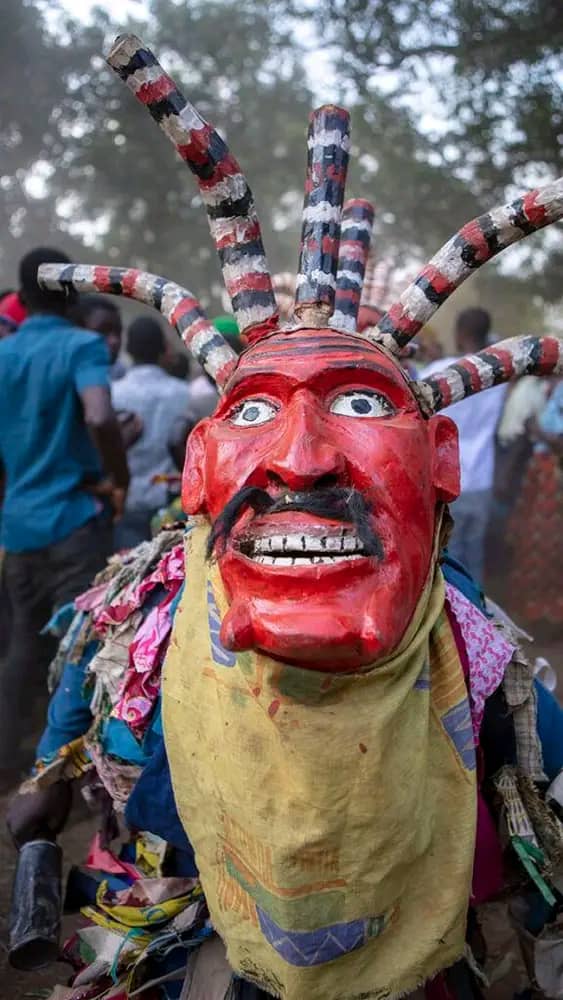
KASUNGU-(MaraviPost)-A group of Gule Wamkulu masqueraders stormed Chulu Primary School in Kasungu, causing panic among learners and teachers.
The masked performers, regarded as sacred figures in Chewa culture, reportedly arrived atu the school searching for a teacher they accuse of revealing spiritual secrets to pupils.
According to information from the school, the targeted teacher allegedly told learners during class that Gule Wamkulu characters are ordinary people.
He is also said to have claimed that the dancers go to the graveyard to dress in their traditional regalia as a way of frightening communities.
These remarks have angered local chiefs and community leaders, who believe the teacher’s statements undermine the cultural values of the Chewa people.
Traditional authorities argue that such teachings risk eroding the children’s respect for Gule Wamkulu and weakening their connection to their heritage.
They maintain that cultural institutions should be upheld and protected, especially within Chewa communities where Gule Wamkulu plays an important spiritual and social role.
Some community leaders have demanded that the teacher be removed from the school as a consequence of his alleged comments.
They have warned that failure to take action may force them to “handle the matter themselves,” a threat that has increased tension around the school.
Teachers and learners at Chulu Primary School remain frightened after the incident, with some describing the unexpected appearance of the dancers as traumatising.
Education officials in the district are expected to intervene to restore calm and ensure that learning continues without further disruption.
The situation has highlighted the delicate balance between cultural preservation, education, and modern teaching practices in Malawi’s rural schools.
Community leaders insist that cultural respect must be maintained, while education authorities caution that schools should remain safe spaces for learners and teachers.
The incident has sparked a wider debate on how cultural traditions should be handled within the education system.
For now, parents and teachers are hoping for a peaceful resolution that protects both cultural values and the safety of everyone at Chulu Primary School.
Share this:
Like this:
LikeLoading…
Discover more from The Maravi Post
Subscribe to get the latest posts sent to your email.
In a dramatic escalation of international political tensions, a series of high-stakes statements from global leaders have sent shockwaves through diplomatic circles and the world’s media.
U.S. President Donald Trump has issued a striking ultimatum to Venezuelan President Nicolás Maduro, demanding that he flee the country immediately to “save yourself and those closest to you.”
This bold directive comes amid growing instability in Venezuela and reflects the persistent friction between the United States and the Maduro regime.
Trump’s order is not just a call for a change in leadership but a stark warning that the United States is prepared to exert significant pressure on Venezuela.
The message underscores the urgency and gravity with which Washington views the situation, signaling a no-nonsense approach that could potentially lead to drastic consequences if ignored.
The implication is clear: the window for Maduro’s peaceful exit is closing rapidly, and the consequences of defiance could be severe.
This ultimatum has elicited an immediate response from China, which has cautioned the United States against any military intervention in Venezuela.
Beijing’s warning highlights the complex geopolitical stakes involved, emphasizing that Venezuela is a country where China holds substantial investments and strategic interests.
China’s position serves as a reminder that the Venezuelan crisis is not merely a regional issue but a flashpoint in the broader contest for influence between major world powers.
The Chinese government’s admonition reflects its broader foreign policy of opposing unilateral military actions that threaten sovereign nations, especially where Chinese economic and diplomatic interests are concerned.
By publicly challenging Washington’s potential intentions, China is signaling its readiness to defend its investments and maintain its foothold in Latin America, further complicating the already tense situation.
Meanwhile, in a separate but equally momentous development, Russian President Vladimir Putin issued a chilling message to Europe, stating that Russia is prepared to fight if Europe desires war.
This declaration intensifies fears of a renewed and dangerous confrontation on the European continent, where tensions between Russia and Western countries have been simmering for years.
Putin’s words carry a dual warning: a readiness to defend Russian interests at all costs and a stark challenge to Europe’s political will to escalate conflict.
Putin’s statement cannot be viewed in isolation. It comes at a time when Europe is navigating a complex security environment marked by energy disputes, military posturing, and diplomatic standoffs. The readiness to “fight if Europe wants war” is a stark reminder of the fragile peace and the high stakes involved in diplomatic interactions between Russia and European nations.
It raises concerns about the potential for miscalculations that could spiral into broader conflict.
Adding another layer to this geopolitical puzzle is Ukrainian President Volodymyr Zelensky’s candid admission of fear that the United States might lose interest in Ukraine’s ongoing conflict.
Zelensky’s statement reveals a deep anxiety about sustaining international support in a protracted and challenging war environment.
The U.S. has been a critical ally to Ukraine, providing military aid, financial support, and diplomatic backing. Any perceived waning of this support risks undermining Ukraine’s position and morale.
Zelensky’s concern reflects the broader uncertainty faced by countries caught in geopolitical struggles dependent on external support.
The possibility of diminished U.S. engagement could embolden opposing forces and shift the balance of power in the region, with far-reaching consequences for European and global security.
Taken together, these developments paint a picture of a world teetering on the edge of heightened conflict and instability.
The Trump administration’s ultimatum to Maduro, China’s warning against U.S. military action, Putin’s readiness to confront Europe militarily, and Zelensky’s fears of declining American interest all signal a period of intense rivalry and precarious diplomacy.
The connections between these statements are deeply intertwined.
The Venezuelan crisis, while geographically distant from Europe and Ukraine, is a critical arena where global powers are vying for influence.
The U.S. push against Maduro is not just about Venezuela’s internal politics but also involves challenging China’s expanding reach in Latin America.
China’s swift warning to Washington underscores the global nature of this contest, where economic and military interests overlap.
Simultaneously, Russia’s belligerent posture toward Europe reflects its broader strategic calculation to assert dominance and deter Western influence near its borders.
This posture has a ripple effect on the security dynamics surrounding Ukraine, where Moscow’s ambitions have already led to conflict.
Zelensky’s worries about U.S. commitment highlight the fragile alliances underpinning the current balance of power.
This convergence of geopolitical flashpoints underscores the complexity and interconnectedness of global politics today.
Each leader’s statement not only addresses a specific regional issue but also reverberates across continents, influencing diplomatic calculations and military strategies worldwide.
The urgency in Trump’s demand for Maduro to flee suggests an attempt to force a rapid resolution in Venezuela, potentially preempting further deterioration or foreign intervention.
However, China’s cautionary stance signals that any U.S. military action may provoke wider diplomatic and economic repercussions, including a hardening of Sino-American relations.
Putin’s readiness to engage militarily if provoked by Europe serves as a stark reminder that the specter of conflict remains alive in Europe, despite efforts at diplomacy and sanctions.
His message is a warning to European nations to carefully weigh their actions and avoid missteps that could escalate tensions beyond control.
Zelensky’s public expression of concern about U.S. interest highlights the fragility of international coalitions and the critical role that sustained support from powerful allies plays in conflict zones.
It also serves as a call for renewed engagement and reassurance from Washington to prevent any erosion of commitment.
In sum, these developments collectively represent a moment of heightened alert in international affairs.
The interplay between the United States, China, Russia, Europe, Venezuela, and Ukraine illustrates the multidimensional challenges facing global peace and security.
The world watches anxiously as these leaders navigate a precarious path, where decisions made in the coming days and weeks could shape the geopolitical landscape for years to come.
The urgency, warnings, and fears expressed by these key figures serve as both a reflection of current tensions and a cautionary tale about the dangers of escalating conflicts in a highly interconnected world.
The international community’s response to these developments will be crucial in determining whether diplomacy can prevail or if the world is headed toward a more volatile and uncertain future.
Share this:
Like this:
LikeLoading…
Discover more from The Maravi Post
Subscribe to get the latest posts sent to your email.
LILONGWE-(MaraviPost)-In a rare insightful and adorable of people centred legislator for Malawi Congress Party (MCP)’s Mchinji North East Anthony Masamba has called on lawmakers consider reducing their own salaries and fuel allowances to support President Peter Mutharika’s government austerity measures.
Despite Masamba’s good intention for the country amid ailing economy, many greedy Members of Parliament (MPs) stood against him in Parliament on Tuesday afternoon.
The well-trained media personnel Masamba raised the point while contributing to debate on an amendment bill seeking to revise the Value Added Tax (VAT) rate.
“Is it right for us to enjoy full salaries and fuel benefits while imposing punitive measures on poor Malawians?
“Why can’t we trim our benefits to save some money for our people?” He asked, prompting murmurs—mostly in disagreement—across the chamber.
First Deputy Speaker Victor Musowa responded Masamba by urging him to pursue the idea through a Private Member’s Bill.
“The chair has received your request. If you want to implement it, present it during Private Members Business and this House will support you,” Musowa appealed.
Meanwhile, Malawians across the country have lauded Masamba for showing a true colour of legislator who puts the nation first than personal interests.
“Titakhalanawo 20 ma MPs ngati akulu awawa, it’s my hope kuti Malawi athakukhala dziko lokoma kwambiri. Aliyense waona yekha kuti ma MPs aja tidawavotera aja amangotinamiza kuti amakonda ma constituencies athu, anthu aja amangowona zammimba mwawo.
“Ulemu wanu Honourable Anthony Masamba Mulungu azikudalitsani. Zangovuta kuti inuyo mulinokha ku parliament yemwe mumalakalaka kuona a Malawi akukhala moyo woyenera,” lauds Limbani Chisale from Ntcheu.
Share this:
Like this:
LikeLoading…
Discover more from The Maravi Post
Subscribe to get the latest posts sent to your email.
Stable Ronaldo from the FaZe Clan was doing what he does best Tuesday afternoon — streaming live on social media — but things went sideways after cops say he became the subject of a “swatting” call in L.A. LE sources tell TMZ … the FaZe Clan…
Share this:
Like this:
LikeLoading…
Discover more from The Maravi Post
Subscribe to get the latest posts sent to your email.