Need a little inspo to pull up to “TMZ After Dark?” Look no further — Natasha Graziano hopped on the party bus this weekend, hosting the whole vibe and living it all the way up! Natasha brought all the festive vibes during a Saturday-night bar…
Share this:
Like this:
LikeLoading…
Discover more from The Maravi Post
Subscribe to get the latest posts sent to your email.
Dr. Jeffrey Lieberman — formerly the president of the American Psychiatric Association — stopped by “TMZ Live,” sharing some disturbing insight into the multiple rehab facilities … which ultimately failed Rob and Michele Reiner’s son Nick.…
Share this:
Like this:
LikeLoading…
Discover more from The Maravi Post
Subscribe to get the latest posts sent to your email.
A recently engaged Wisconsin woman will spend the next six years in prison after allegedly admitting to kissing an 11-year-old boy in her classroom — and later sending him 35,000 explicit text messages.
Madison Bergmann, 26, was working as a fifth grade teacher at River Crest Elementary School in Hudson, Wisconsin, until the victim’s father discovered the deluge of texts.
The boy’s dad told the court during Bergmann’s sentencing on Friday, December 19, that he found the messages “disturbing.”
The messages were sent over just three months, meaning she sent an average of over 2,000 messages to the victim every day. In the texts, Bergmann allegedly professed her affections for the boy and expressed her eagerness at touching him and “making out” with him again.
Her former coworker at the school, Abigail Faust, is also facing charges for inappropriate relationships with children, including a child whom she nannied in Washington County.
Bergmann pleaded guilty to one count of child enticement and two counts of sexual misconduct by school staff back in September.
After the father brought the text messages to the police, officers searched her classroom and found a folder with the victim’s name on it containing handwritten love letters that indicated they had kissed.
Bergmann was supposed to get married in 2024. It is unclear when she got engaged.
She started to cry as soon as she entered the courtroom for her sentencing. The state had been seeking a 12-year sentence for the disgraced teacher.
Bergmann’s lawyers had been pushing for a one-year sentence.
“I want to make it absolutely clear that I take full accountability for every boundary that was crossed,” she said through tears. “I hope that your family has been able to begin to heal and find some peace in your lives again. I know the journey will be long for your family.”
“To his own credit, [my son] is like ‘I have to live with this forever. Whatever punishment she receives should be forever,’” the victim’s father said, according to KARE11. “When I review the texts too, it’s very deliberate — talking about touching his leg, talking to my 11-year-old son about her period, talking about his erections … to me it’s very disturbing stuff.”
Bergmann pleaded guilty as part of a plea deal from prosecutors that saw a number of charges against her dropped, including first-degree sexual assault of a child, using a computer to facilitate a child sex crime, exposing a child to harmful descriptions, and additional counts of sexual misconduct by school staff and child enticement.
When she is released from prison in six years, Bergmann will need to register as a convicted sex offender. She will also be placed on six years of extended supervision and is barred from having contact with minors without approval. The court has also placed restrictions on her internet use, according to KARE11.
Share this:
Like this:
LikeLoading…
Discover more from The Maravi Post
Subscribe to get the latest posts sent to your email.
Never in director Paul Feig’s wildest dreams did he think Taylor Swift would approve of her song being featured in The Housemaid.
Warning: This post contains spoilers for The Housemaid.
Feig told Deadline at the film’s red carpet premiere last week that he was convinced Swift, 36, was “never gonna clear” her “perfect” 2017 song “I Did Something Bad” from Reputation.
“Well, that’s the thing; you want to put a Taylor song in your movie, but she and her company have to approve it,” he explained.
Taylor Swift.Kate Green/Getty Images
He continued, “So, we were tempting with it, and we were like, ‘It’s so perfect, but she’s never gonna clear this.’ Then we showed she and her people the movie, and she approved it. So, I guess she likes it. Thank you Taylor!”
The Housemaid is based on Freida McFadden’s 2022 novel of the same name, which spawned two more books and a novella. The story follows young housemaid Millie (Sydney Sweeney), who moves into Andrew Winchester (Brandon Sklenar) and Nina Winchester (Amanda Seyfried)’s home. Millie quickly discovers she was hired for more than just cleaning, but to help Nina plan an escape from her abusive husband.
Swift’s track was used as the end credits song after the film’s final scene, where Millie is interviewing for a position with a new family — and the new boss explains that she was recommended to her by Nina. The camera then shows a bruise on her wrist, suggesting Millie might be helping the new boss with a similar situation.
While no sequel has been officially announced, Sweeney, 28, and Seyfried, 40, have weighed in on whether they would be game.
“I think that we’ll just have to wait and see,” Sweeney told Entertainment Weekly in an interview published on Sunday, December 21. “I hope that the audience loves the movies just like we love the books, and we can continue to hopefully share that love within more of the films.”
Seyfried, meanwhile, said she’d “absolutely” want to do more films. “Listen, if it doesn’t do well, you can call it off, but if it does, well, it’s absolutely a franchise,” Seyfried told the outlet. “I didn’t sign on for anything but this one because my story ends, but they know that if they make another one, I’ll be a part of it, because I had so much fun with Paul.”
Feig, meanwhile, told The Hollywood Reporter at The Housemaid’s premiere that because the story is part of a series, “if people show up and see it, I would love to see what Millie does next.”
Before the movie was released, Seyfried shared that the film had “the support” of McFadden.
“We felt empowered because we had her blessing,” Seyfried said on an episode of the “Bookmarked” podcast earlier this month, sharing that Feig was also helpful. “You know, this movie is going to be special and surprising, even for the book lover. I almost feel like I need to read the book again.”
The Housemaid is in theaters now.
Share this:
Like this:
LikeLoading…
Discover more from The Maravi Post
Subscribe to get the latest posts sent to your email.
The recent uproar over Vice President Jane Ansah’s scheduled private visit to the United Kingdom, accompanied by a delegation of 15 officials, is not only misplaced but reflects a fundamental misunderstanding of the role of opposition politics in Malawi.
The criticism from the Malawi Congress Party (MCP) and other detractors appears to be less about genuine concern for austerity and more about political posturing and opposition for opposition’s sake.
First and foremost, the size of Vice President Ansah’s entourage—15 people—is modest and reasonable, especially given the nature of her position. It is crucial to understand that high-ranking officials, even during private trips, require a support team that includes protocol officers, security personnel, medical staff, and personal assistants to ensure their safety, dignity, and the seamless execution of their duties. This is not an extravagant display but a necessary operational reality.
To label this as an act of impunity or arrogance is to ignore the practicalities of state protocol and the importance of maintaining continuity and security.
Contrary to the accusations, the Democratic Progressive Party (DPP) government has demonstrated commendable commitment to austerity measures. Since taking office, austerity has been a guiding principle, with clear directives that all ministers, including the Vice President, should travel with as lean a team as possible without compromising their security or functional needs.
In this context, 15 members accompanying the Vice President is not only reasonable but reflects a disciplined approach compared to previous administrations.
It is instructive to remind the critics from MCP that during their tenure, private trips by officials often involved entourages exceeding 30 people, more than double the number currently accompanying Vice President Ansah. This historical fact exposes the hypocrisy of the current opposition’s criticism.
Instead of constructive engagement, MCP seems intent on undermining the government regardless of facts or context, failing to appreciate that austerity is not about eliminating all support but about prudent and efficient use of resources.
The Ministry of Foreign Affairs and International Cooperation’s involvement in facilitating appropriate diplomatic coordination and security arrangements is standard practice, underscoring the professionalism with which the government manages such visits.
This coordination ensures Malawi’s high-ranking officials are accorded appropriate respect abroad, which is vital for sustaining diplomatic relations and national prestige.
To clarify what austerity means in this case: it is a government strategy aimed at reducing unnecessary expenditure while ensuring that government functions are not hindered. It is about balancing fiscal responsibility with operational necessity.
The DPP government’s austerity measures have been carefully calibrated to avoid the excesses of the past while maintaining the dignity and security of public office holders.
The criticism of Vice President Jane Ansah’s entourage is largely a politically motivated attack that ignores the realities of statecraft and protocol.
The 15-person delegation is not an extravagance but a reasonable and justified requirement for a private trip by a high-ranking official.
The DPP government deserves credit for its ongoing austerity efforts, which are more disciplined than previous administrations.
The opposition should focus on constructive criticism rooted in facts rather than reflexive opposition that damages national unity and progress.
Share this:
Like this:
LikeLoading…
Discover more from The Maravi Post
Subscribe to get the latest posts sent to your email.
Given the medical advancements today – in an ideal world, all children should be born free of infections like HIV, syphilis or hepatitis-B; all pregnant women should be accessing full spectrum of maternal and newborn care (including services to prevent vertical transmission of HIV, syphilis or hepatitis-B); and all people living with HIV should lead normal and healthy lives.
We have proven science- and evidence-based tools and person-centred and rights-based approaches to help us achieve these public health outcomes. But sadly, this is not an ideal world yet – and intersectional social inequities, injustices and inequalities mar lives of so many of us.
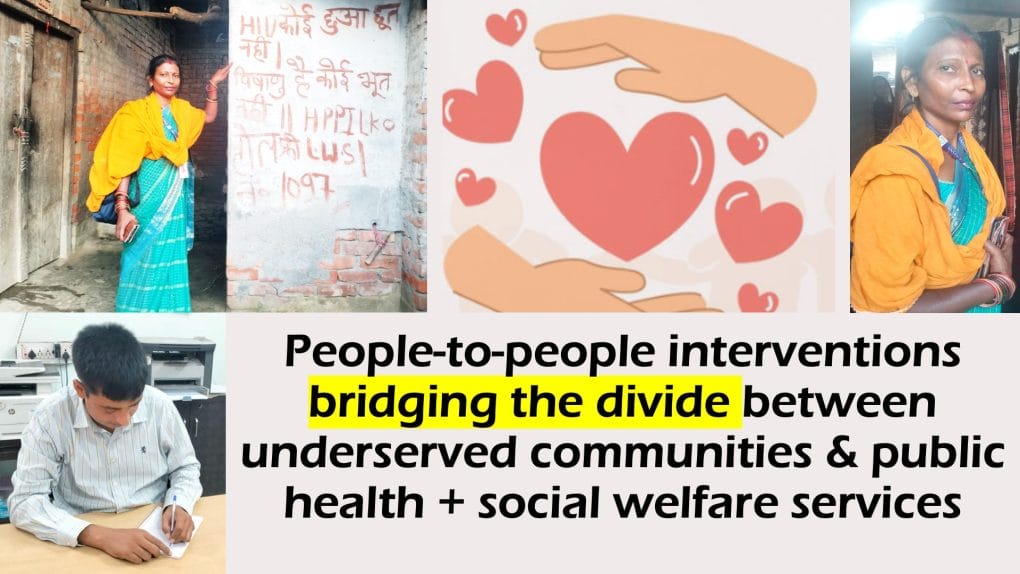
As the year 2025 draws to a close soon, we spoke to carers of a child living with HIV. Trained frontline community health workers, backed by support from their multi-tiered backbone team, is helping bridge the gap between key and other vulnerable populations and lifesaving essential public health and social welfare services.
Barriers which underserved communities face in accessing health services
We met Baba (name changed), a 4-year-old orphan boy from Uttar Pradesh. Baba was born with HIV, and his primary caregivers include his paternal aunt and his grandmother.
Before returning to their native hometown in UP, Baba’s parents were migrant workers in Mumbai who, for a brief period, also did labour work in Saudi Arabia. After returning to Mumbai, they both got diagnosed with HIV and received lifesaving antiretroviral therapy. But their treatment got disrupted (reasons not known). Unsurprisingly, their health started deteriorating.
For reasons best known to them, they did not disclose their HIV status to their family members.
By the time Baba’s mother became pregnant, the health of both parents had plummeted considerably. Baba’s mother developed TB too. People with HIV have up to 29 times more risk of developing active TB disease. When his father’s condition worsened, the couple moved from Mumbai to Delhi and eventually back to their native place in UP.
Baba was born at his grandparents’ home in UP. His mother did not undergo institutional delivery. Shortly after his birth, both parents passed away. Till this time, family members of Baba were not aware of the HIV status of Baba or his parents.
According to 5th National Family Health Survey (NFHS-5) conducted in 2019-2021, “the institutional delivery rate in UP is 83.4%, and that in public health facilities is 57.7%.”
Baba’s chronic ill-health during his first year – marked by extreme weakness and delayed physical development – were a cause of worry for his carers.
Journey from shadow to light
During routine door-to-door health awareness and screening visits, Sarojini, a frontline community health worker of Humana People to People India, learnt about the ill health of Baba.
She counselled them and accompanied them to the nearest government doctor, who recommended HIV and TB testing. This led to further referral to the nearest government-run tertiary care hospital in Lucknow (King George’s Medical University – KGMU which was around 30 kilometres away), where Baba tested negative for TB disease but tested positive for HIV.
Pre-test and post-test HIV counselling were crucial. Government counsellor and health workers like Sarojini counselled Baba’s carers to dispel fear, despair and doubts too. Soon after, Baba started receiving antiretroviral treatment.
Now Sarojini’s role became even more pronounced to help support Baba’s carers to ensure treatment adherence and attend to his other care needs on an ongoing basis.
Government of India’s National AIDS Control Organisation (NACO) has supported Humana People to People India to implement its Link Workers Scheme which is how Sarojini got trained by NACO and Humana as a Cluster Link Worker to help support people (like Baba and his family) in 9 villages. She is backed by an elaborate network of team at Humana People to People India which enables her to keep making a difference in the lives of people (and children).
Embracing HIV treatment, care and support
Administering medication posed significant challenges for Baba’s aunt. Initially his regimen of antiretroviral medicines consisted of four crushed capsules mixed with water – whose taste the child found intolerable. He frequently refused the medication or vomited after eating it, requiring his aunt to administer it forcibly at times. Sarojini’s regular follow up was important not only to ensure treatment adherence but also to help solve any other problems his carers might be encountering.
Thankfully, soon after Baba began receiving antiretroviral medicines in the form of fixed-dose combination (1 pill) to be taken once daily and at the same time. This eased the daily caregiving routine.
After 2-3 months of initiating antiretroviral therapy, Baba also received TB preventive therapy to protect him from TB disease. Sarojini’s regular follow up and support bore fruits as his health started showing substantial improvement.
Counselling remains centre-stage, and so does trust, which Sarojini and Baba’s carers share.
Sarojini guides the family on treatment adherence, precautions they need to take to stay healthy, and monitor their health and wellbeing, among addressing other issues.
Regular health screenings are vital
She also accompanies them to the antiretroviral therapy centre for periodic testing. Carers of Baba are screened for HIV once every 6 months. Baba’s CD4 test is done once every 6 months and his viral load test is done annually. As of now, his viral load has remained undetectable as shared by Pop Singh, a programme manager with Humana People to People India. This is an important indicator that Baba’s HIV treatment is working, HIV is undetectable and untransmittable, and he is healthy.
When we spoke with Baba’s aunt, she said that she clearly understands the importance of daily treatment adherence although unaware of the exact names of his medications.
Thanks to Sarojini for the facilitation, Baba currently attends an Anganwadi centre, part of India’s government-run early childhood care and development system. The Anganwadi workers provide supplementary nutrition, preschool education, health check-ups and immunisation. Staff members are aware that Baba is on medication, though his HIV status has not been disclosed.
Impacting positive change for those left behind
Baba is among over 130 people living with HIV (including children living with HIV) supported under NACO’s Link Workers Scheme implemented by Humana People to People India across 100 villages of Lucknow.
Each Cluster Link Worker, like Sarojini, is a trained local community member, who screens high-risk groups (such as, migrant workers, truckers, female sex workers, men who have sex with men, and persons who inject drugs) for HIV, syphilis and TB in approximately 5 villages. Cluster link workers are supported by their zonal supervisors (one person for every 10 cluster link workers) and overseen by a programme manager.
Those who are screened positive for presumptive TB by Cluster Link Workers, are linked to public TB services for further medical management. Those who test positive for TB disease are also helped to avail of government-run social welfare benefits.
Teams of Humana People to People India go door-to-door to raise health awareness and offer screening for HIV, sexually transmitted infections like Syphilis, and TB. Health education and dispelling myths and misconceptions also help fight stigma and discrimination. They are at times accompanied by Indian government’s National TB Elimination Programme team which performs street plays for public education and sensitisation. Humana team has also leveraged other opportunities for health awareness and screening, such as village council (Gram Panchayat) meetings.
Disease prevention is also a mainstay of key messaging
For example, promoting consistent and correct condom use to protect oneself from HIV, STIs and unplanned pregnancies, is a role donned by frontline workers like Sarojini.
Key and other vulnerable populations face a range of barriers when they try to access healthcare services. This is where frontline community health workers become so essential to link them with public health and social welfare services and support as and when needed.
Rethink, rebuild and rise
Ahead of world’s largest HIV/AIDS conference in 2026 (the 26th International AIDS Conference or AIDS 2026 in Rio de Janeiro, Brazil), we need to rethink where gaps in HIV responses are, rebuild so that we can put people first at every level of HIV response, and rise to bring the world on track to end AIDS by 2030.
While groups like Humana People to People India continue to serve the underserved, our health systems also need to ensure that all people with HIV (including key and other vulnerable populations) are able to access antiretroviral therapy and full range of HIV care services with equity and rights, all women receive institutional delivery and continuum care for maternal and newborn health, and all children are born free of preventable infections like HIV, syphilis or hepatitis-B.
Shobha Shukla – CNS (Citizen News Service)
(Shobha Shukla is a feminist, health and development justice advocate, and an award-winning founding Managing Editor and Executive Director of CNS (Citizen News Service). She was also the Lead Discussant for SDG-3 at United Nations inter-governmental High Level Political Forum (HLPF 2025). She is a former senior Physics faculty of prestigious Loreto Convent College; current President of Asia Pacific Regional Media Alliance for Health, Gender and Development Justice (APCAT Media); Chairperson of Global AMR Media Alliance (GAMA received AMR One Health Emerging Leaders and Outstanding Talents Award 2024); and Host of SHE & Rights (Sexual Health with Equity & Rights). Follow her on Twitter/X @shobha1shukla or read her writings here www.bit.ly/ShobhaShukla)
– Shared under Creative Commons (CC)
Share this:
Like this:
LikeLoading…
Discover more from The Maravi Post
Subscribe to get the latest posts sent to your email.