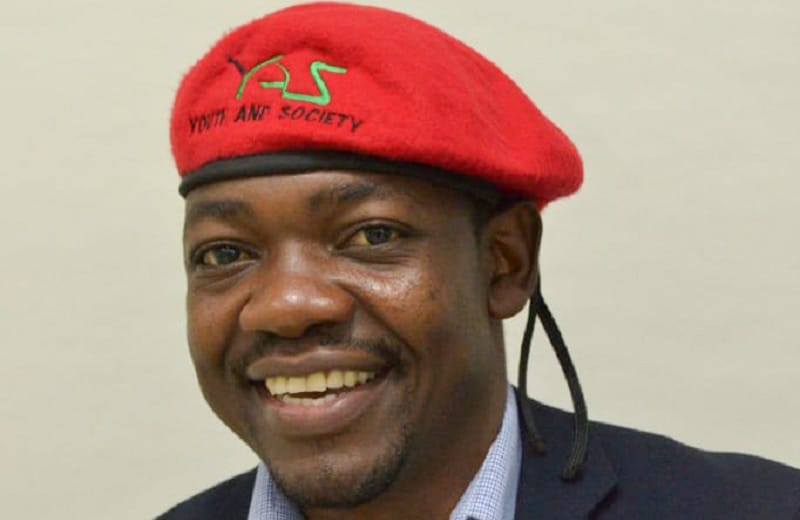
BLANTYRE-(MaraviPost)-A frontline human rights activist and governance advocate Charles Kajoloweka has declined his appointment to the board of the Technical, Entrepreneurial and Vocational Education and Training Authority (TEVETA).
In a letter dated December 15, 2025, addressed to Chief Secretary Justin Saidi, Kajoloweka who is also the founder and Executive Director (ED) of Youth and Society (YAS) says his decision has been made based on the principles of ethics, accountability, and institutional integrity.
He notes that accepting the appointment could potentially compromise, or be perceived to compromise, the independence of YAS and the credibility of its advocacy work.
“It is therefore in the best interests of accountable governance, public trust, and institutional clarity that I respectfully decline the offer,” says Kajoloweka Kajoloweka in the statement.
This is not the first time Kajoloweka has turned down a public appointment.
In September 2020, he also declined an appointment to the board of the National Youth Council (NYC).
Share this:
Like this:
LikeLoading…
Discover more from The Maravi Post
Subscribe to get the latest posts sent to your email.
Europe’s push to shift asylum procedures to third countries risks outsourcing not only refugees, but also its moral and political responsibility.
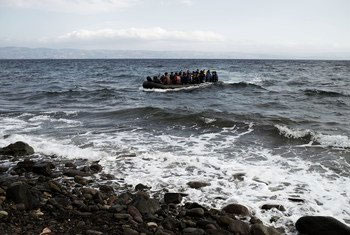
VIENNA, Austria, Dec 16 2025 (IPS) – The debate on reforming the European asylum system has gained significant momentum following the agreement reached by EU interior ministers last week. Alongside questions of solidarity and distribution, the possibility of establishing ‘return hubs’ outside the EU was at the heart of the meeting.
Outsourcing asylum procedures – or at least those concerning rejected asylum seekers – has long been a desire of many heads of state and government, and the European Commission now aims to make this possible by creating the necessary legal foundations, for example by scrapping the so-called connection criterion. In future, rejected asylum seekers would therefore no longer need to demonstrate a personal link to the third country to which they are transferred.
Previously, such links included earlier stays or family members living there. Yet the EU remains a long way from concrete implementation.
One reason is the high cost of such outsourcing projects. According to the UK’s National Audit Office, the British Rwanda deal cost the equivalent of more than €800 million, with limited effect: only four asylum seekers were relocated over two years.
Under Prime Minister Keir Starmer, the plan was shelved for good due to excessive costs and minimal benefit. And despite the heated migration debate in the United Kingdom, a revival appears unlikely. Denmark faced a similar situation with its own Rwanda plans, which the country put on hold in 2023 due to unfeasibility. And then there is the much-cited Italy–Albania agreement, whose original idea – conducting asylum procedures under Italian law on Albanian soil – was never implemented.
Practical implementation remains doubtful
What third countries gain from allowing such outsourcing on their territory is obvious: money, and even more importantly, political capital. Speaking on a panel at the ‘Time to Decide Europe’ conference organised by the Vienna-based ERSTE Foundation, Albania’s Prime Minister and Socialist Edi Rama stated openly that his small country of just under three million people must join any alliance willing to take it in.
This includes – and above all – the EU. For Albania, which is an EU candidate country, it therefore makes sense to appear accommodating to a not insignificant member state with which it is also historically closely connected, and to help solve its unpopular ‘migration question’, at least to the extent that refugees arriving in Italy do receive protection, but, in practice, ‘not in my backyard’.
So far, however, this principle has not been put into action due to objections raised by Italian courts. That is also why – and to put the costly asylum camps built in the Albanian towns of Shëngjin and Gjadër (construction and operations are believed to have already cost hundreds of millions of euros) to some use – the European Commission created the option of return hubs, which were formally adopted last week at the meeting of EU ministers.
Italy can therefore repurpose the facilities originally intended for asylum procedures as deportation centres for asylum seekers who were already on Italian territory and whose applications have been legally rejected. Here too, the number of cases remains limited, and it is unclear on what legal basis those transferred there could be held for extended periods to prevent them from re-entering the EU via Montenegro and Bosnia. De facto detention, however, would present yet another legal complication, even if the connection criterion and other EU-law barriers are removed.
Anyone striving for ‘fair burden-sharing’ would have to redistribute towards Europe, not away from it.
There is, therefore, still a long way to go before any concrete return hubs become reality. Not only because, in the usual trilogue process, the European Parliament must also give its approval — and some MEPs, including Birgit Sippel of the Socialists and Democrats group, have already announced their opposition.
But even if a parliamentary majority can be secured, the practical implementation remains doubtful: where are the trustworthy and willing third countries; how can infrastructure be built there; how can respect for human rights standards be monitored and enforced from Europe (which proves difficult even within an EU member state such as Hungary); and how should looming legal disputes be handled?
Among the countries mentioned so far are several that themselves regularly appear among the places of origin of refugees arriving in Europe. Alongside Rwanda, the East African state of Uganda is frequently cited; it already hosts the largest number of refugees from other parts of Africa, especially from Sudan, South Sudan, Burundi and the Democratic Republic of Congo. Like Rwanda, it lies directly next to regional conflict zones; the protection rate for Ugandan nationals in European host countries stands at around 60 per cent.
The country is considered authoritarian — and precisely for that reason, it has an interest in striking an outsourcing deal with EU member states, such as the one it has already concluded with the Netherlands. Such an agreement implicitly acknowledges and legitimises the Ugandan government.
The notorious EU–Turkey Statement of 2016 demonstrated how refugees accommodated in third countries can repeatedly be used as leverage in foreign policy disputes, for example when Prime Minister Erdoğan had them bussed to the Greek border to put pressure on the EU. EU strategists may euphemistically call this ‘migration diplomacy’, but for the layperson, it is simply blackmail.
The example of Uganda illustrates not only how Europe, through deals with third countries, outsources not just refugees but also bargaining power and control; it also reflects the fundamental imbalance in a one-sided debate on externalisation.
Already today, 71 per cent of all refugees find protection in developing and emerging countries, with 66 per cent hosted in neighbouring countries in the Global South or the Middle East and North Africa. Anyone striving for ‘fair burden-sharing’ would therefore have to redistribute towards Europe, not away from it.
Europe’s answer cannot, under any circumstances, be to emulate the Trump administration by resorting to ever-tougher asylum policies.
This leads to the fundamental questions that EU policymakers appear increasingly unwilling to ask, let alone answer: How does Europe want to position itself in future with regard to global refugee protection? How will people in need of protection from persecution – whose numbers are rising in an ever more unstable world – gain access to that protection?
How can the liberal post-war order be preserved, including and especially the Geneva Conventions, which were created in response to the lessons of the two World Wars and the Shoah? How should Europe position itself vis-à-vis an increasingly illiberal, in parts authoritarian United States, which now tends to view Europe more as an adversary than a partner?
A confident response to the new US national security strategy – which claims that migration threatens Europe with ‘civilisational erasure’ – must lie in emphasising Europe’s civilisational achievements since 1945. These include, above all, the prohibition of torture enshrined in Article 3 of the European Convention on Human Rights: it applies absolutely, and therefore also to asylum seekers who are obliged to leave and who may not be deported to countries where they risk inhuman treatment. This is precisely where the line between civilisation and barbarism lies.
Furthermore, a united Europe that wants to stand its ground against attacks from former allies must recognise societal diversity as one of its strengths, and acknowledge the indispensable contribution that migrants – from guest workers and refugees to highly skilled expats – have made to Europe’s reconstruction and prosperity.
Europe’s answer cannot, under any circumstances, be to emulate the Trump administration by resorting to ever-tougher asylum policies that effectively validate the American assessment.
For that would indeed amount to an obliteration — an obliteration of the founding idea of a united, open and liberal Europe which, let us not forget, received the Nobel Peace Prize in 2012 and stands for a rules-based order that has ensured decades of peace as well as economic prosperity. In short: for the very life that we are fortunate enough to enjoy day after day, in diversity, security and freedom.
Dr Judith Kohlenberger heads the FORM research institute at WU Vienna and is affiliated with the Austrian Institute for International Affairs, the Jacques Delors Centre Berlin and the Einstein Centre Digital Future. Her book Das Fluchtparadox (The Flight Paradox) was named Austrian Science Book of the Year in 2023 and nominated for the German Non-Fiction Prize. Her most recent publication is Migrationspanik (Migration Panic) (2025).
Source: International Politics and Society (IPS), Brussels, Belgium
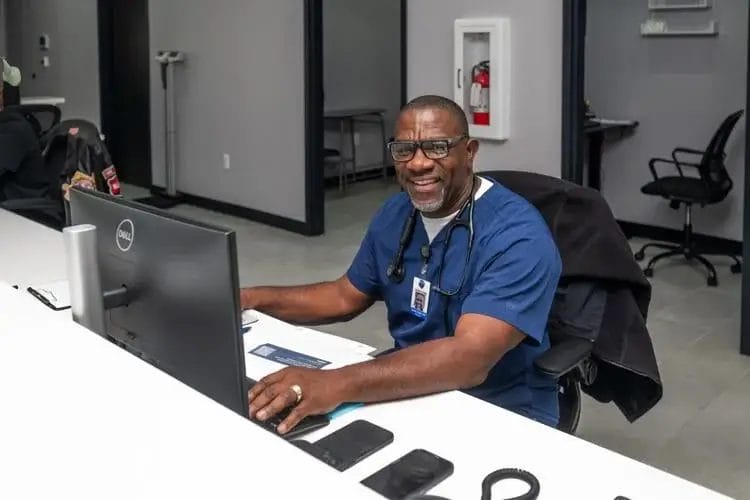
Dr. Lincoln Coffie remembers the day back in his native Jamaica when his life changed forever.
It was 1989 and he was a senior in high school, living with a foster family since his father died when he was 13 years old. There was a school trip to Miami, Florida, coming up and his foster parents sat him down and told him that when the trip was over, they were going to arrange for him to stay in the U.S. instead of coming back to Jamaica.
“In Jamaica, the students would go to Miami every year to compete in different sporting activities. I came up to do the shot put and discus. The family I was living with had three children and they pretty much said, ‘We’re going to send you on this trip, but we don’t have plans for your future, so just don’t come back. There’s really nothing here for you after you graduate school in a few months.’
“One of their sons was the same age as myself, and they would have had to try and send two boys to college. They said they would try and coordinate with some family (members) I had in America to come pick me up from the school trip. I had an aunt and uncle living in New York, and there was an aunt in Florida.
“The way I saw it then was they were trying to help my future. The way they put it to me, I didn’t feel like they were doing me a disservice. I didn’t think it was vindictive or anything like that. I knew they were doing something to try and help me, instead of putting me out of their family. I was looking forward to what was ahead of me … my future. I would have been on the streets in a couple months after I left school because there was no plan for me. So this was my way to have some kind of future.”
Coffie wound up going to live with an aunt and uncle he had never met who lived in New York City. They drove down and picked him up from Miami, took him home and put him to work.
“I didn’t know what was happening,” Coffie said. “I had never been in America before. I just knew I couldn’t go back to Jamaica.”
It was a difficult situation for the youngster. He worked in construction for a while and finished high school but found himself facing homelessness after going to work at a cousin’s mechanic shop.
“I remember my first paycheck as a construction worker … my aunt held the money for me, even though I didn’t know it would be indefinitely,” he said. “I never got that money back, and several other paychecks.
“I didn’t have any I.D. — my teacher had held onto my passport — so I couldn’t start school. I was finally able to get some school paperwork from Jamaica and got my passport back from the teachers. It was a big deal to get that back. Then I started back to school in 10th grade at James Monroe High School in the Bronx.”
Still without a green card or Social Security number, he started working at a cousin’s mechanic shop in the south Bronx and also tried his hand at selling toys for a while on the city streets.
“Walking Queens Boulevard selling Sesame Street toys,” Coffie said. “One day, I came home and the feds had raided the house. They (his cousins) were selling heavy drugs out of the house (and) I didn’t even know. I was so naïve. Two weeks before
this happened, I had met this lady in Astoria, Queens, when I was selling toys on the street, and I ended up going to live with her and her two kids in the projects. I didn’t have anywhere else to go.
“I was able to save some money, and one of my aunts knew a lawyer in the Bronx and he got me a Social Security card for $1,500, and an American birth certificate. That was the first official (documentation) that I had. The Social Security number actually came from the Social Security office. I don’t know how he did it, but it came in the mail, and I still have that same number today. When I got my citizenship, they told me to keep it because it was legal and already in the system.
“Next, I got a driver’s license, so that’s when I started to work parking cars in Manhattan. That was my first job on the books.
“It was a big turning point for me. I still couldn’t travel to Jamaica, but at least I could get a job. I met a young lady when I was in high school, and she became my first wife and the mother of my first two sons. One is 31 now and one is 27. When I got married, she was the one who started the paperwork for my green card.”
The young couple got married in 1993. Two years later, Coffie had acquired his coveted green card, but his problems were not over just yet.
“We were not in a good place. Our marriage wasn’t going well,” he said. “I think the big challenge was that I couldn’t convince her that I was with her because I loved her. Her family was telling her I was only with her because of the green card.
“Now, the first phase of the green card is a two-year temporary, before you get the 10-year green card. If my marriage didn’t prove (to be) sound, I would have risked my green card (and having) the whole process reversed.”
Although he was now working legally as a parking garage manager in Manhattan, concerns over his marriage failing and possibly losing the temporary green card caused Coffie to circle the wagons and look for other options.
“I could stay in New York and risk everything falling apart, but if I went into the military, I felt like I would be taken care of, as far as my green card,” he said. “The military was like a safe haven for me to keep things together.
“My wife was OK with it because I was the breadwinner and with me being gone, she was going through financial stuff, too. At the end of the day, we got health insurance (and) she came down to Kentucky with me for basic training.”
In Monday’s Killeen Daily Herald, Dr. Coffie talks about joining the U.S. Army, using the G.I. Bill to go to college when he got out, graduating med school, and settling in Killeen, where he owns an urgent care clinic and other businesses.
Nick Reiner — the son of Rob and Michele Reiner, who’s been arrested on suspicion of murdering his parents — stuck out like a sore thumb at Conan O’Brien’s Christmas party … and he was acting out of place. Sources at the party, which went down…
Share this:
Like this:
LikeLoading…
Discover more from The Maravi Post
Subscribe to get the latest posts sent to your email.
Soledad O’Brien stopped by “TMZ Live” Monday, still reeling from the loss of her collaborator Rob Reiner and his wife Michele … and Soledad had some choice words for Donald Trump’s disparaging post about the late actor-director. Soledad got to…
Share this:
Like this:
LikeLoading…
Discover more from The Maravi Post
Subscribe to get the latest posts sent to your email.
As FBI heads into its winter hiatus, Jeremy Sisto warns that Jubal’s team is in for an “exciting” and “horrible” case with many twists and turns.
“It’s scary,” Sisto, who plays ASAC Jubal Valentine, exclusively told Us Weekly of the show’s two-part fall finale airing on Monday, December 15.
He teased that Jubal is “at the center of the storm in this one,” and so is his son, Tyler (Caleb Reese Paul).
Monday’s double feature begins with “Lone Wolf,” which, according to Sisto, 51, starts with the FBI team being alerted to a crime by the tip line, “which is not something [that] usually leads us anywhere.”
Sisto revealed that FBI analyst Kelly Moran (Taylor Anthony Miller) has an “instinct” about one of the calls, and “heads out with our agents, and they find three dead sex workers.”
Throughout the episode, the special agents discover that the murderer has connections to a “radical accelerationist movement that is committed to resetting society because it’s gotten so, so rotten.”
The actor explained that the terrorist group’s “plan is big” and includes “disrupting cell and internet connectivity,” which impacts how Jubal and the team investigate. “[It’s] very frustrating when you get disconnected, but even worse when you’re trying to stop further damage [from happening],” Sisto shared.
“It rises to a pretty drastic, pretty dramatic threat,” Sisto told Us, noting all of the agents become “concerned” with their families “being in the wrong place at the wrong time when there is an active threat.”
That threat hits especially close to Jubal, whose high-school aged son is “in the city for the day with a friend” as the events unfold.
“[He’s] just hoping he’s not at the wrong place, at the wrong time,” Sisto said of his character’s arc, teasing that fans should pay special attention to Tyler and his conversations with dad Jubal in both parts of the fall finale.
Bennett Raglin/CBS
Sisto confirmed, “In the beginning, you know something is going to get dirty with this plot,” teasing that in part two, titled “Wolf Pack,” the team must track down the bad guys without their usual communication tools in place.
Even with the disruption to their comms system, Sisto said the team will do their best to “search every square inch” of New York City to find the culprits — but it won’t be without a few mishaps.
“In this particular case, we don’t find them quick enough before some very bad stuff happens,” Sisto explained, hinting that Jubal’s personal connection to the case will be part of the “bad stuff” that transpires.
He teased that the second half of the fall finale is all about “finding [the culprits] before even more horrible things happen.”
“It’s definitely not a victory throughout,” Sisto ominously warned. “That’s why it takes two hours to get through the story. Because there’s some pretty, pretty bad losses along the way.”
FBI’s two-part fall finale airs on CBS Monday, December 15, at 8 p.m. ET. The show will resume with new episodes in February 2026.
Share this:
Like this:
LikeLoading…
Discover more from The Maravi Post
Subscribe to get the latest posts sent to your email.