LILONGWE-(MaraviPost)–The Economic Consumers Association of Malawi (ECAMA) has commended the State of the Nation Address (SONA), describing it as concise yet focused on critical economic recovery measures.
ECAMA representative Bertha Bangala said the address clearly outlined government plans aimed at stabilizing the country’s foreign exchange (forex) situation, which remains one of the key drivers of Malawi’s economic challenges.
“The SONA was short, but it strongly addressed economic recovery plans, especially in terms of forex availability and stabilization,” Bangala said.
She noted that improved access to foreign exchange would help ease pressure on businesses and consumers, ultimately contributing to price stability and economic growth.
Bangala also welcomed the government’s continued commitment to free education, describing it as a long-term investment in human capital development.
She said expanding access to education would equip young people with the skills necessary to support economic transformation.
In addition, she highlighted infrastructure development particularly road construction and rehabilitation as another positive step toward economic recovery.
According to Bangala, improved road networks enhance trade, lower transportation costs, and stimulate local economic activity.
She emphasized that while implementation will be key, the outlined measures signal a strategic direction toward stabilizing and rebuilding the economy.
Concurring with Bangala, Japanese Ambassador to Malawi, Natoya Yasuchi, also expressed admiration for the SONA, saying he was impressed with its focus on stimulating economic growth.
MZUZU-(MaraviPost)-A shift in priorities by major donor countries toward wars in Ukraine, Iran, and parts of Africa—coupled with punitive legal frameworks—continues to undermine global efforts against the deadly HIV/AIDS epidemic.
United States President Donald Trump implemented a policy that reduced foreign aid by 75%, cut the State Department’s budget by 50%, and eliminated funding for the United Nations and the North Atlantic Treaty Organization (NATO).
As a result, major donors are now allocating more resources to defense while reducing HIV funding, citing the Russia–Ukraine conflict and the financial strain on more than 20 international organizations.
Locally, the central government’s failure to adequately fund HIV/AIDS awareness and prevention initiatives at town and district council levels has nearly crippled outreach programs targeting both ordinary citizens and key populations at risk.
On Friday in Mzuzu, the Mzuzu City Executive Committee approved the commencement of the 17‑month Powerful Prevention Project, a United Nations Development Programme (UNDP) funded initiative implemented by the Community Health Rights Advocacy (CHeRA).
Stakeholders at the meeting lamented the chronic shortage of resources for HIV/AIDS interventions.
CHeRA Programmes Manager Alex Dalitso Kaomba underscored Malawi’s persistent struggle with high HIV prevalence, particularly among key populations—men who have sex with men (12.9%), female sex workers (49.9%), transgender people, and people who use drugs.
He warned that the recent taxation on condoms poses “a huge setback in the prevention of the deadly virus,” adding:
“It is no longer a secret, many projects have failed following the suspension of UNAIDS‑funded initiatives both at national and district levels, necessitating the need to improvise sustainable HIV‑AIDS prevention measures.”
Kaomba praised the consortium of 40 civil society organizations under the Mzuzu City Society Network (MCSN) for supporting CHeRA’s transparent and inclusive implementation of the UNDP‑funded project.
Echoing his concerns, CHeRA Technical Assistant Dingani Mithi called for the repeal of outdated punitive legal provisions that criminalize the existence of key populations, noting that such laws only fuel stigmatization.
“Indeed some of the legal provisions need to be revisited as they do not conform with technologies in the fight against the deadly global epidemic. It is tricky at the moment to operate in an environment where interventions conflict with the law,” Mithi said.
Mzuzu City Council’s Principal Nutrition and HIV‑AIDS Officer Augustin Gama lamented the withdrawal of U.S. government funding, stressing the urgent need for sustainable interventions.
“We need sustainable interventions in the fight against the deadly HIV‑AIDS pandemic following the withdrawal of funding by UNAIDS. The CHeRA project must be commended as it tackles the hard‑to‑reach key populations,” Gama said.
Mzuzu City, within Mzimba North District, has identified HIV/AIDS hotspot areas at Zolozolo Health Clinic, Mzuzu Urban Health Centre, and Mzuzu University Health Clinic, where alarming transmission rates continue to concern health officials.
Despite these challenges, Council Chairperson Gama reaffirmed the city’s commitment to achieving the global 95‑95‑95 targets aimed at ending the pandemic by 2030.
However, in early 2025, the U.S. government paused foreign assistance, severely disrupting PEPFAR‑funded HIV/AIDS programs across Africa.
The suspension affected services for more than 20 million people, leading to immediate shortages of antiretroviral (ART) medicines, clinic closures, and the halting of prevention outreach—particularly in countries such as Kenya, Uganda, Zimbabwe, Malawi, and South Africa.
For Malawi, the impact was especially dire. HIV/AIDS has long acted as a drag on economic development, reducing annual GDP growth by an estimated 1.2% to 1.5%.
While expanded access to ART has helped mitigate some of these effects, the epidemic continues to impose heavy indirect costs on labour productivity, household income, and the public sector.
In response, initiatives like the CHeRA project have stepped in to strengthen prevention and treatment. With a budget of MK66,690,000, the project covers Blantyre, Lilongwe, Mangochi, and Mzimba North, targeting 500 key populations on antiretroviral therapy.
It forms part of the global Powerful Prevention campaign supported by UNDP, underscoring the importance of sustained international cooperation in the fight against HIV/AIDS.
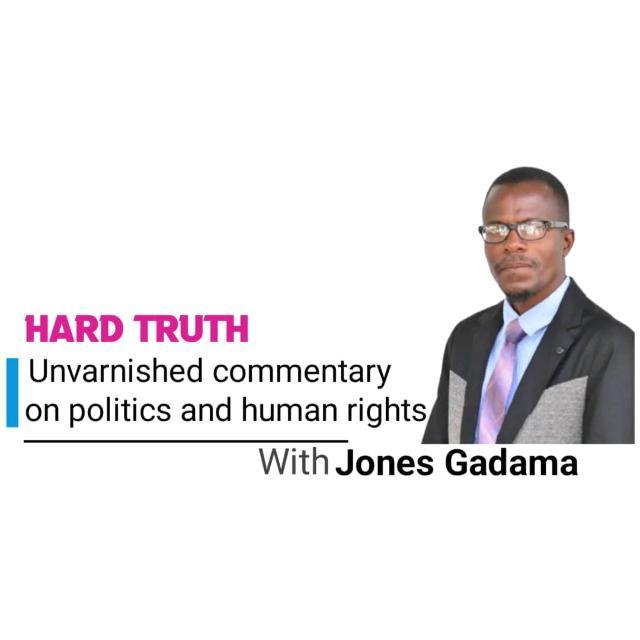
The recent High Court ruling in Lilongwe that quashed the redeployment of five senior Malawi Defence Force (MDF) officers to the civil service epitomizes a judiciary deeply entangled in politics and far removed from the true essence of justice.
This ruling, and several others like it, reveal a disturbing trend: the Malawian judiciary appears less as an independent arbiter of law and more as a political actor obstructing the legitimate efforts of the government to implement its policies.
It is high time this uncomfortable reality is confronted honestly and without fear, for the good of Malawi and its future.
The Democratic Progressive Party (DPP), under the visionary leadership of Professor Arthur Peter Mutharika, has charted a clear path for Malawi’s development. Their government has demonstrated a commitment to reforms and to steering the country towards greater prosperity.
Yet, despite these noble intentions, the judiciary persistently stands as a formidable barrier, frustrating and nullifying executive decisions that are essential to the functioning of the state and the advancement of national interests.
The ongoing standoff between the executive and the judiciary is now undeniable, and the consequences of this power struggle are detrimental to Malawi’s progress.
Consider the redeployment of MDF senior officers—a routine administrative action that has been a normal feature of government operations, including during the previous Malawi Congress Party (MCP) regime.
Redeployment is not dismissal; it is a strategic repositioning within government ranks to meet evolving institutional needs. It is baffling, therefore, that the judiciary should intervene to halt such a standard practice.
One must ask: Why did the judiciary raise an alarm over redeployments under the DPP, when similar transfers occurred without controversy during MCP’s tenure? Is this selective legal activism, or worse, political interference masquerading as judicial prudence?
The hard truth is that the judiciary seems to be serving partisan interests rather than the rule of law. Its actions suggest a clear bias against the current administration.
By obstructing government moves such as redeploying MDF officers, the courts are effectively undermining the chain of command and the authority vested in the executive by the Constitution.
The military, by its very nature, is disciplined and hierarchical. Orders from senior commanders, including the Commander-in-Chief, must be obeyed promptly and without question.
The decision by some senior MDF officers to seek judicial intervention rather than comply with redeployment orders is a direct challenge to military discipline and the principle of obedience that underpins effective defense forces worldwide.
The judiciary should understand this fundamental aspect of military operations. Redeployment does not equate to job loss or demotion; it is a standard personnel management practice.
Instead of supporting the executive’s lawful directives, the courts have sided with officers who flout military discipline, thereby encouraging insubordination.
This is dangerous precedent-setting that threatens both national security and the principle of civilian oversight over the military.
Moreover, the judiciary’s penchant for nullifying executive decisions has broader implications.
It sends a message that every viable government initiative, no matter how reasonable or necessary, can be stalled or overturned by judicial fiat. If the DPP government fails to deliver on its promises, it will not be for lack of vision or effort, but because the judiciary has systematically hampered its ability to govern effectively.
This politicization of the judiciary is a betrayal of the very people the courts purport to serve.
Judge Kenyatta Nyirenda’s recent public tirades against the media further illustrate the judiciary’s troubling conduct.
His accusations of ignorance and propaganda directed at Malawi’s journalists are not only baseless but also deeply disrespectful to an institution that plays a critical role in democracy. The media—professional, dedicated, and often under-resourced—works tirelessly to inform the public and hold power to account.
The judge’s disparaging remarks, including questioning journalists’ credentials and competence, reveal a profound misunderstanding of the media’s role and an alarming intolerance for scrutiny.
The hard truth here is that Kenyatta Nyirenda, despite his legal expertise, is neither a media expert nor an authority on journalism. His attempt to undermine and belittle the press is an abuse of his position and an affront to the democratic principles of freedom of expression and information.
The judiciary must respect the independence of other institutions, especially those that serve as watchdogs over government and society.
Judges should confine their critiques to legal matters and refrain from launching unwarranted attacks on the media, which only serve to erode public confidence in the judiciary itself.
This situation is exacerbated by the judiciary’s own operational shortcomings. Malawi’s courts are notorious for delays and inefficiencies. It is common knowledge that while litigants arrive early, often as early as 7:30 am, court sessions do not commence until well after 10:30 am.
Such delays undermine public trust and deny timely justice to those who need it most. Worse still, there is rarely an apology or explanation for these delays, signaling a lack of accountability and respect for the public.
If the judiciary claims to be the guardian of justice, it must first demonstrate professionalism and commitment to serving the people efficiently.
Malawi’s judiciary is far from infallible; it is not a demigod or a semi-god institution that should intimidate or threaten the citizenry.
The reverence accorded to the courts must be balanced with a critical appraisal of their performance and impartiality.
When judges stray from the law to serve political interests or personal biases, they do a disservice to the country’s democratic foundations.
The judiciary’s perceived partisanship and questionable rulings erode the public’s faith in the justice system and fuel cynicism about the rule of law in Malawi.
The hard truth is that Malawi’s judiciary is in desperate need of a complete overhaul. Structural reforms, enhanced transparency, accountability mechanisms, and rigorous training focused on judicial ethics and independence are urgently required.
Without these changes, the judiciary will continue to be a stumbling block to national development and a source of injustice for ordinary Malawians.
The judiciary’s interference in the redeployment of MDF officers, its antagonism towards the media, and its operational inefficiencies paint a grim picture of an institution that has strayed from its constitutional mandate.
The courts must cease using their authority to frustrate government policies and must respect the disciplined nature of military service.
Judge Kenyatta Nyirenda and his colleagues should recognize that their role is to interpret the law impartially, not to engage in political battles or vilify other democratic institutions.
Malawi deserves a judiciary that is independent, professional, and committed to delivering justice without fear or favor.
Until then, the country’s democratic progress will remain hostage to judicial overreach and partisanship. The time for candid reflection and bold reform is now. The future of Malawi depends on it.
CAIRO-(MaraviPost)-The President of Confederation of African Football (CAF), Patrice Motsepe, has officially confirmed that the 2027 Africa Cup of Nations will be played as scheduled, dismissing speculation that the tournament could be postponed to 2028.
Motsepe made it clear that there are no plans to delay the continent’s biggest football showpiece, emphasizing that preparations are progressing and that CAF remains confident in the host nations’ readiness.
The tournament is scheduled to run from June 19 to July 18, 2027, setting the stage for a month long celebration of African football.
The confirmation brings relief to fans, players and participating nations who had been uncertain following widespread rumors.
The 2027 edition will be jointly hosted by Kenya, Tanzania and Uganda, marking a historic moment for the East African region.
It will be the first time in the tournament’s history that three countries co-host the competition.
The joint bid, popularly known as the “Pamoja” initiative meaning “together” in Swahili symbolizes regional unity and cooperation.
The three nations aim to use the tournament not only to showcase football talent but also to boost tourism, infrastructure development and regional integration.
Speculation about a possible postponement had emerged amid concerns about infrastructure readiness and scheduling challenges.
However, Motsepe dismissed such claims as unfounded, reiterating CAF’s commitment to ensuring the event proceeds as planned.
CAF has reportedly been conducting regular inspections and offering technical support to the host nations to ensure stadiums, training facilities and accommodation meet international standards well before kickoff.
The confirmation also settles debate about the tournament calendar, as CAF had been reviewing its long term scheduling strategy.
While discussions continue about possible adjustments to future editions, the 2027 tournament remains firmly on track.
For East Africa, hosting the competition is seen as a transformative opportunity.
The event is expected to draw thousands of international visitors and millions of television viewers worldwide.