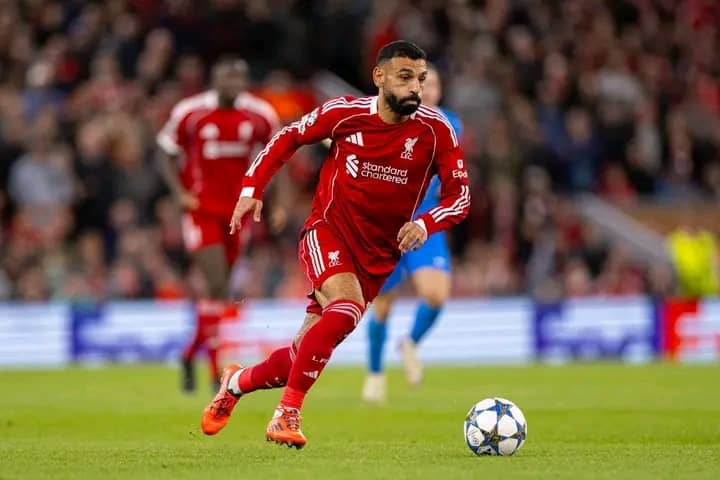

Liverpool star Salah feels betrayed after third game on bench

By Shaffie A Mtambo

LONDON-(MaraviPost)-Liverpool star Mohamed Salah has voiced strong frustration after being left on the bench for the entire match during his team’s draw with Leeds on Saturday, calling it one of the most surprising and disappointing moments of his career.

Speaking after the game, the forward said this was the third time this season he has started on the bench something he believes has never happened before.

Salah admitted he is “very, very disappointed,” especially considering his long standing service and contribution to the club.

As a player who has consistently delivered goals, assists and leadership, he expressed shock at the sudden change in his role.

Looking back on last season, Salah highlighted how much he gave to ensure Liverpool stayed competitive. From crucial goals to tireless performances, he said he expected his commitment to be recognized and valued differently.

Now, however the Egyptian forward says he feels sidelined without explanation.

“I’m sitting on the bench and I don’t know why,” he said, adding that the situation has left him with more questions than answers.

Salah went on to suggest that the club may have left him exposed to criticism.

According to him, it feels as though “the club has thrown me under the bus,” placing him in a position where he is taking blame he does not deserve.

He further hinted at internal issues, saying it seems clear that someone behind the scenes wants him to take all the blame for the team’s struggles.

This comment has sparked conversations about possible tensions within the club’s management.

The forward also opened up about promises made to him during the summer.

He stated that he was given assurances about his role and future at Liverpool assurances that have not been fulfilled so far.

Despite expecting to feature regularly, Salah has now been benched for three matches, leaving him feeling misled.

The gap between what he was told and what has happened on the pitch has intensified his concerns.

The unfolding situation raises doubts about Salah’s future at Anfield.

With emotions running high and trust seemingly shaken, questions are emerging about whether the relationship can be repaired.


Discover more from The Maravi Post

Subscribe to get the latest posts sent to your email.

The Maravi Post

Superstition and dark side of football

Shaffie A Mtambo
Shaffie A Mtambo

Across Africa, football is more than just a sport it is passion, culture and identity but mixed within this passion is a deep belief that supernatural forces can influence matches.

Some insist that “makhwala achikuda” can change the outcome of a game, while others argue that only skill and tactics matter.

In Malawi, this belief continues to grow despite years of intense debate. Whenever a match becomes tense or a team struggles to score, supporters resort to strange behaviours. From the stands, someone suddenly breaks loose, jumps the fence and rushes to the goalpost to pour an unknown liquid believed to “open the goal.”

Those who perform these rituals believe they help their teams break deadlocks but because sometimes the rituals appear to work and sometimes they don’t, the confusion fuels the superstition even more. Meanwhile, others dismiss it as pure psychology and coincidence.

The biggest concern is how easily individuals bypass stadium security. Despite the presence of stewards, supporters still manage to invade the pitch. This exposes a worrying weakness in our stadium security systems.

Even more troubling is how bold these invaders have become. They show no fear of arrest, freely running across the pitch and pouring substances on the goal line, sometimes even attacking players. This behaviour is slowly becoming normalized.

The most recent case happened during the match between Mzuzu City Hammers and Mighty Wanderers, when a supporter splashed a liquid substance on the Hammers goalkeeper just as the second half was about to start.

The substance, believed to be similar to pepper-spray, left the goalkeeper visibly uncomfortable and raised serious concerns about safety and fairness. It once again exposed the vulnerability of match officials and players to fan misconduct.

The immediate question that followed was: How did the individual get so close to the goalkeeper? Did he come from the stands? Did he slip through weak security points? The lack of answers frustrated many fans.

The incident also highlighted a critical failure by stadium stewards. Their delayed response showed either lack of training or poor coordination. Observers were left questioning whether matchday security is taken seriously in Malawi.

This is not an isolated problem. In 2025 alone, several major clubs have been fined due to supporter misconduct.
Silver Strikers were fined MK 1.75 million for pitch invasion and failure to control fans.

FCB Nyasa Big Bullets were fined MK 5.75 million after fans disrupted a match at Kamuzu Stadium.
Dedza Dynamos were penalized MK 4.5 million for failing to control their supporters during a match against Mzuzu City Hammers.
These cases show that fan behaviour is steadily worsening.

When compared to previous seasons, the trend is clear: In 2013, Silver Strikers and Mighty Wanderers supporters caused severe violence that forced the league to postpone matches and impose point deductions.

In earlier seasons such as 2012/13, Silver Strikers were sanctioned for violent fan behaviour, including stadium bans and heavy fines.
Today, the problems remain only the fines have increased but the behaviour hasn’t changed.

This persistent indiscipline continues to damage the reputation of the TNM Super League. As long as supporters carry liquids, powders or charms into stadiums, the league will be viewed as unprofessional by outsiders, regardless of the football quality on the pitch.

This is especially unfortunate at a time when Malawi is pushing for SuperSport coverage. Broadcasters expect high security standards, disciplined fans and professional match environments.

Incidents of superstition, pitch invasion and violence significantly reduce the league’s chances of achieving this goal.

Club officials insist that strict punishment is the only solution. They argue for lifetime bans for repeat offenders, improved training for stewards and tighter checks at gates to prevent fans from sneaking in dangerous substances.

Malawi football has great potential but it can only grow when the football community abandons superstition and embraces professionalism.

Until then, the game will continue to suffer not because of lack of talent but because of actions that belong to another era.

Players deserve safety. Clubs deserve order. And the nation deserves a league that reflects excellence, not controversy.


Discover more from The Maravi Post

Subscribe to get the latest posts sent to your email.

The Maravi Post

Malawi Govt pushes for competence in Councils as Minister Ben Phiri elevates STA Ndendende

MZUZU-(MaraviPost)-Minister of Local Government and Rural Development, Dr. Ben Phiri, has reaffirmed the government’s commitment to ensuring that all top positions in Local Assemblies are filled with competent officers capable of managing the increased resources allocated to councils.

He said this commitment is especially crucial now that government has revised and significantly expanded the Constituency Development Fund (CDF), which demands enhanced professionalism and accountability at council level.

Dr. Phiri made the remarks on Saturday in Rumphi, where he met council officials and presided over the elevation of Group Village Headman Robert Msowoya to Sub-Traditional Authority (STA) Ndendende at the district council offices.

The Minister emphasized that Malawi needs well-trained, well-equipped, and ethically grounded officials if the country is to achieve its ambition of becoming a middle-income economy by the year 2030.

He stated that strong local governance is central to national development because it is through councils that Malawians access critical services such as health, education, water, and infrastructure, all supported by taxes collected from citizens.

During the elevation ceremony, Dr. Phiri called upon traditional leaders to promote unity, strengthen social harmony, and prevent chieftaincy conflicts by documenting succession plans clearly and transparently.

Paramount Chief Chikulamayembe presided over the official installation of STA Ndendende, a development expected to strengthen traditional leadership structures and accelerate socio-economic progress in Rumphi District.

The Minister highlighted that traditional leaders play a vital role in shaping community development, facilitating government programs, and ensuring peace, which is a key ingredient for sustainable development.

The revised CDF—which has increased from K220 million per constituency to an unprecedented K5 billion—means that Rumphi District’s four constituencies will now collectively receive at least K20 billion every year, making it essential that funds are handled by qualified and accountable officers.

Dr. Phiri concluded by asserting that with competent leadership in councils and responsible stewardship of public funds, Malawi can create meaningful development, improve service delivery, and uplift the lives of citizens across rural and urban communities.


Discover more from The Maravi Post

Subscribe to get the latest posts sent to your email.

The Maravi Post

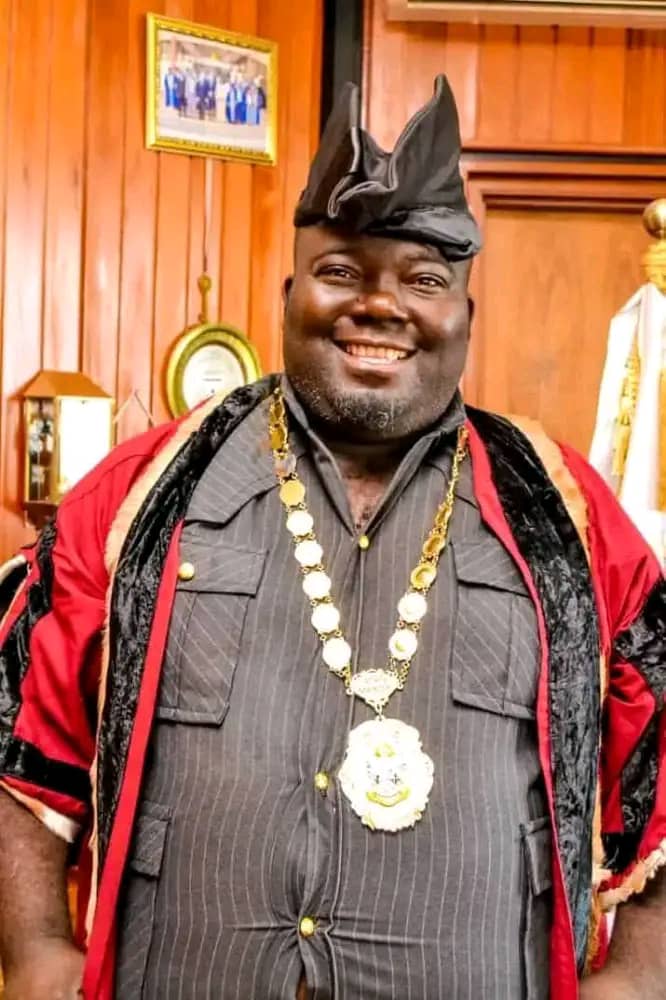
The hidden secrets behind Jomo’s success as Blantyre City Mayor

Recently, Isaac Jomo Osman’s progress as the mayor of Blantyre city has been noticed by many Malawians.

They appreciate that Jomo has unique background and experience such that he is able to resonate with the local population. Is this really true?

Interestingly, some advocates of Jomo have gone as far as hoping for him to be granted the chance to take on the role of mayor in every city in Malawi.

In the first place, Jomo’s semi-illiteracy has allowed him to connect with a significant portion of Blantyre’s residents who also struggle with formal education.

This relatability has fostered trust and open lines of communication, making it easier for him to understand and address the concerns of his fellow residents.

Furthermore, having been a street kid before, Jomo has firsthand experience of the challenges faced by marginalized groups in the city.

This background gives him a unique perspective on the needs and expectations of Blantyre residents, allowing him to advocate for policies and initiatives that directly benefit those communities.

It is true that Jomo gained experience in management when he was elected as a councillor and later served as the deputy mayor of Blantyre City.

In addition to this, Jomo has also served as a patron for Mtopwa football club, allowing him to demonstrate his strong leadership abilities.

As a result, he has gained widespread recognition and admiration not just within Blantyre city, but beyond its borders as well.

Additionally, Jomo’s origins from the impoverished Mangochi district where the incumbent state president was residing, has the potential of providing him with political leverage and support.

This connection exudes his advantage in securing resources and backing for his initiatives, as well as in navigating the political landscape of the Blantyre city.

Moreover, Jomo’s reputation as a “notorious boy” suggests that he possesses strong negotiation skills and a certain level of street intelligence.

In fact, his ability to relocate vendors without police force indicates that he can effectively mediate conflicts and find solutions that are acceptable to all parties involved, which is crucial for maintaining order and harmony in the city.

With the foregoing, it sounds logical that Jomo has a clear vision and innovative ideas for the future of Blantyre City,

He is actually focusing on practical solutions to local issues, which have the potential of leading to tangible improvements in the city.

They say “Ukaipa dziwa nyimbo”. Therefore, despite being semi-illiterate, it is highly probable that Jomo has made a commitment to learning and personal growth, seeking advice from experts to improve his leadership skills.

In conclusion, Jomo’s background, communication style, and negotiation abilities contribute to his effectiveness as a mayor, allowing him to resonate with the people of Blantyre and address their needs in a meaningful way.


Discover more from The Maravi Post

Subscribe to get the latest posts sent to your email.

The Maravi Post

Superstition and the dark side of football

Shaffie A Mtambo
Shaffie A Mtambo

Across Africa, football is more than just a sport it is passion, culture and identity but mixed within this passion is a deep belief that supernatural forces can influence matches.

Some insist that “makhwala achikuda” can change the outcome of a game, while others argue that only skill and tactics matter.

In Malawi, this belief continues to grow despite years of intense debate. Whenever a match becomes tense or a team struggles to score, supporters resort to strange behaviours. From the stands, someone suddenly breaks loose, jumps the fence and rushes to the goalpost to pour an unknown liquid believed to “open the goal.”

Those who perform these rituals believe they help their teams break deadlocks but because sometimes the rituals appear to work and sometimes they don’t, the confusion fuels the superstition even more. Meanwhile, others dismiss it as pure psychology and coincidence.

The biggest concern is how easily individuals bypass stadium security. Despite the presence of stewards, supporters still manage to invade the pitch. This exposes a worrying weakness in our stadium security systems.

Even more troubling is how bold these invaders have become. They show no fear of arrest, freely running across the pitch and pouring substances on the goal line, sometimes even attacking players. This behaviour is slowly becoming normalized.

The most recent case happened during the match between Mzuzu City Hammers and Mighty Wanderers, when a supporter splashed a liquid substance on the Hammers goalkeeper just as the second half was about to start.

The substance, believed to be similar to pepper-spray, left the goalkeeper visibly uncomfortable and raised serious concerns about safety and fairness. It once again exposed the vulnerability of match officials and players to fan misconduct.

The immediate question that followed was: How did the individual get so close to the goalkeeper? Did he come from the stands? Did he slip through weak security points? The lack of answers frustrated many fans.

The incident also highlighted a critical failure by stadium stewards. Their delayed response showed either lack of training or poor coordination. Observers were left questioning whether matchday security is taken seriously in Malawi.

This is not an isolated problem. In 2025 alone, several major clubs have been fined due to supporter misconduct.
Silver Strikers were fined MK 1.75 million for pitch invasion and failure to control fans.

FCB Nyasa Big Bullets were fined MK 5.75 million after fans disrupted a match at Kamuzu Stadium.
Dedza Dynamos were penalized MK 4.5 million for failing to control their supporters during a match against Mzuzu City Hammers.
These cases show that fan behaviour is steadily worsening.

When compared to previous seasons, the trend is clear: In 2013, Silver Strikers and Mighty Wanderers supporters caused severe violence that forced the league to postpone matches and impose point deductions.

In earlier seasons such as 2012/13, Silver Strikers were sanctioned for violent fan behaviour, including stadium bans and heavy fines.
Today, the problems remain only the fines have increased but the behaviour hasn’t changed.

This persistent indiscipline continues to damage the reputation of the TNM Super League. As long as supporters carry liquids, powders or charms into stadiums, the league will be viewed as unprofessional by outsiders, regardless of the football quality on the pitch.

This is especially unfortunate at a time when Malawi is pushing for SuperSport coverage. Broadcasters expect high security standards, disciplined fans and professional match environments.

Incidents of superstition, pitch invasion and violence significantly reduce the league’s chances of achieving this goal.

Club officials insist that strict punishment is the only solution. They argue for lifetime bans for repeat offenders, improved training for stewards and tighter checks at gates to prevent fans from sneaking in dangerous substances.

Malawi football has great potential but it can only grow when the football community abandons superstition and embraces professionalism. Until then, the game will continue to suffer not because of lack of talent but because of actions that belong to another era. Players deserve safety. Clubs deserve order. And the nation deserves a league that reflects excellence, not controversy.


Discover more from The Maravi Post

Subscribe to get the latest posts sent to your email.

The Maravi Post

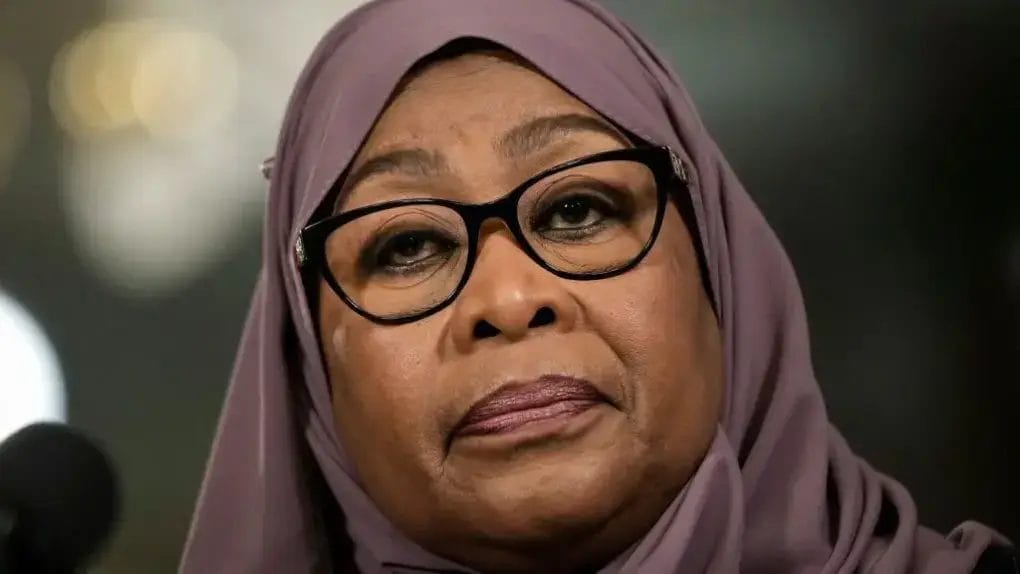
Sweden cuts aid as Tanzania’s post-election crisis deepens

Samia Suluhu Hassan
President Samia has ordered an investigation into the killing [Getty Images]

By Burnett Munthali

Tanzania continues to face an increasingly fragile economic environment following the post-election violence that destabilised the country and damaged public confidence. The unrest has left long-lasting scars on political institutions, weakened social cohesion, and triggered heightened scrutiny from international partners.

Sweden has now become the latest country to announce a significant cut in development aid to Tanzania, a move that reflects growing frustration among donors over governance concerns and human rights issues. Stockholm’s decision highlights a shift toward stricter accountability in foreign assistance, especially when political instability threatens democratic values.

For decades, Sweden has been one of Tanzania’s most dependable development partners, supporting education, gender empowerment, rural development, and governance reforms. Its withdrawal marks a major diplomatic and economic setback, particularly for programmes that heavily rely on external funding to reach vulnerable populations.

The Swedish government stated that it could no longer justify financial support in the absence of clear commitments to uphold democratic principles and protect civil liberties. Reports of arrests, intimidation, and violations linked to the post-election period contributed to Sweden’s decision to rethink its cooperation strategy.

Economists warn that the loss of Swedish aid will deepen Tanzania’s fiscal vulnerabilities at a time when the country is struggling with declining tourism revenue, weakened investor confidence, and rising unemployment. Donor funding has traditionally cushioned Tanzania against severe budget pressures, and without it, the government may be forced to make difficult financial decisions.

There is also concern that Sweden’s action may influence other major donors, potentially creating a domino effect that could significantly shrink Tanzania’s development financing. Countries such as the United States, the United Kingdom, and members of the European Union have already expressed concern over the political situation in Tanzania, and Sweden’s bold stance could encourage them to take firmer positions.

For ordinary citizens, the implications are profound. Reduced development support means fewer resources for youth empowerment initiatives, social welfare programmes, agricultural development, and civil society organisations that provide services the government has struggled to deliver consistently. These cuts are likely to intensify economic hardship among already vulnerable communities.

Civil society groups fear that the shrinking donor space will further narrow civic freedoms, as NGOs may lose the funding required to hold government institutions accountable. A reduction in monitoring capacity could weaken democratic checks and balances at a time when the country needs them most.

Tanzania now faces a critical moment that demands genuine political dialogue, reconciliation, and institutional reform. Rebuilding trust with the international community will require demonstrating commitment to transparency, respect for human rights, and constructive engagement with opposition actors. Without these steps, the country risks deeper economic stagnation and increased diplomatic isolation.

Ultimately, the situation underscores the inescapable link between political stability and economic prosperity. Tanzania must show strong leadership, restore confidence among international partners, and chart a credible path toward sustainable recovery if it hopes to reverse the growing sense of uncertainty that now surrounds its future.


Discover more from The Maravi Post

Subscribe to get the latest posts sent to your email.

The Maravi Post