
“Victims of silence”: Fired Malawian teachers expose racism, abuse, and impunity at Lilongwe Private School

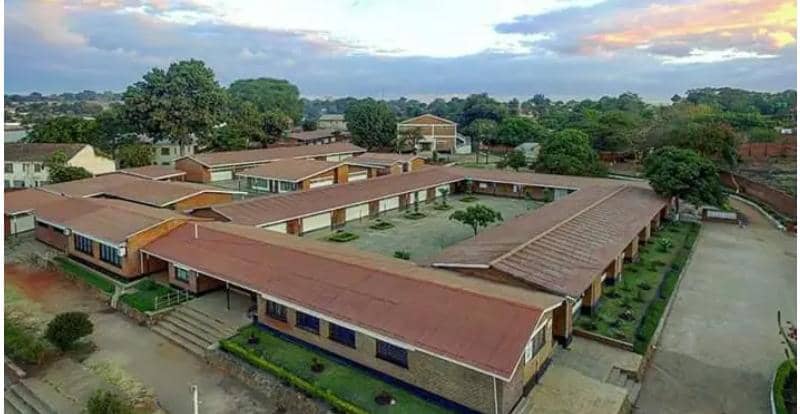
Lilongwe School
Fired Malawian teachers expose racism, abuse, and impunity at Lilongwe Private School

By Burnett Munthali

Teachers who lost their jobs during what they describe as the cruel, discriminatory, and racially charged administration of Ms. Maria Asghar at Lilongwe Private School have begun speaking out publicly about their painful experiences.

One of the affected teachers, Agatha Mwenefumbo—now based in the United Kingdom—granted this publication an exclusive interview in which she detailed the circumstances surrounding her unfair dismissal and the toxic environment created under Ms. Asghar’s leadership.

Mwenefumbo revealed that she was fired without any valid reasons, asserting that her removal was purely motivated by racial bias because she is an indigenous Malawian.

She explained that Ms. Asghar had ordered her to write a report to Cambridge against her colleague, Ms. Julie, accusing Julie of delegating duties to pregnant female teachers.

Mwenefumbo clarified that, in truth, Ms. Julie had merely asked one female assistant teacher to briefly supervise her class while she attended to another urgent matter.

She said her refusal to frame Ms. Julie out of malice was one of the reasons the primary headteacher, Ms. Asghar, decided not to renew her contract.

The second reason, according to Mwenefumbo, was an accusation arising from a simple business advertisement she had posted on her WhatsApp status, which the headteacher used to claim that she was running a business instead of focusing on her teaching duties.

She described this reasoning as flimsy, biased, and entirely unprofessional, noting that these two issues were used as justification to push her out of the school.

Mwenefumbo alleged that Ms. Asghar was jealous of Ms. Julie and feared that one day Julie might become the next primary school head, fueling hostility and divisive behaviour in the administration.

She recounted how she tried multiple times to engage Ms. Asghar in a civil discussion to understand why her contract was not being renewed, only for the headteacher to flee from her office to avoid accountability.

She described the experience as extremely frustrating and emotionally draining, especially considering her dedication to the school and her profession.

Mwenefumbo said a troubling pattern had emerged at Lilongwe Private School in which only indigenous Malawian teachers were fired, despite being fully trained and qualified to teach.

She claimed that teachers of Asian origin, some of whom were untrained, unqualified, or inexperienced in education, were consistently protected, favoured, and elevated.

She argued that this pattern amounted to institutional racism taking place within Malawi’s borders and asked, “If this is not racism, then what is it?”

She added that teachers of Asian origin were receiving special weekend allowances at the school while indigenous Malawian teachers received nothing, further deepening the inequality.

According to Mwenefumbo, racism was even reflected in how pupils were treated, with reports that Ms. Asghar systematically changed class seating plans by moving Malawian children to the back and placing children of Asian origin in the front rows.

She described this practice as discriminatory, unacceptable, and harmful to the dignity and confidence of Malawian students.

Mwenefumbo shared that Ms. Asghar often humiliated teachers in front of colleagues and even students, publicly shouting at them as though they were not professionals or human beings deserving of respect.

She revealed that the headteacher enforced strict rules preventing Malawian teachers from taking sick leave while allowing Asian teachers generous sick leave periods, sometimes up to five days.

She stated that the headteacher demanded to see hospital books belonging not only to teachers but even to their family members, and she would photocopy medical documents for placement in teachers’ files.

She revealed shocking double standards by explaining that teachers were told they must never travel or attend funerals simply because the headteacher claimed her adult child was unwell.

She pointed out the hypocrisy by noting that Ms. Asghar travelled to Pakistan during the current term while students were sitting for examinations, claiming she was caring for her sick mother.

She added that the headteacher had travelled before school closure last year as well, staying away for nearly a month without consequences or scrutiny.

Mwenefumbo and other affected teachers are now calling for an immediate investigation by the Ministry of Education, the Ministry of Labour, and human rights organisations.

She stressed that Lilongwe Private School operates within Malawi’s jurisdiction and must follow Malawi’s laws, yet a foreign headteacher was allowed to violate labour rights, human dignity, and educational ethics with impunity.

She appealed to relevant authorities to visit the school when it reopens, interview teachers, and uncover the truth behind the systemic racism and unjust treatment taking place.

The fired teachers said they are speaking now because they want justice, accountability, and protection for future teachers and learners at the institution.

They emphasised that racism has no place in Malawi and that the suffering of indigenous educators at the hands of a foreign administrator must not be ignored any longer.


Discover more from The Maravi Post

Subscribe to get the latest posts sent to your email.

The Maravi Post

Ministry of Youth and Sports hails Ritz holdings,Nico for Kings donation

Malawi Youth
Ministry of Youth and Sports hails Ritz holdings,Nico for Kings donation

By: Edwin Mbewe
LILONGWE -(Maravipost)- The Ministry of Youth, Sports and Culture has hailed Rits Holdings for donating a set of uniforms and track suits to the Malawi Men’s National Netball Team.

The spokesperson for the ministry, Macmillan Mwale said” The donation will motivate the players, When partners like these come on the board to support us during such big events, we appreciate it. The support will go a long way in motivating the team. They will play with confidence and deliver good results”.

Logistical Company Ritz Holdings corporate affairs manager Blessings Symon said the donation, was made after establishing that the men’s team does not enjoy the same support as the women’s team.

“Malawi is hosting the continental cup, We thought it wise to help the King’s. Hence decided to buy the kit and track suits to inspire and motivate them. The donation is worth K5.2 million “, He said.

The Netball Association of Malawi (NAM) President Vitumbiko Gubuduza speaking at the ceremony which took place at the Lilongwe Golden Peacock Hotel said the donation is timely and will inspire the players.

The donation came just a day after the official sponsors of the Malawi National Netball team, Nico Group, announced that every player member of the Queens in the Africa Netball Cup will get K250,000 as a participating fee.

The African Netball Tournament is slated for 8th-14th December in Lilongwe at the Griffin Saenda Indoor Sports Complex.


Discover more from The Maravi Post

Subscribe to get the latest posts sent to your email.

The Maravi Post

Sydney Sweeney Talks American Eagle Backlash, Says She’s ‘Against Hate and Divisiveness’

Sydney Sweeney ain’t keeping her lips tight like a pair of skinny jeans any longer — she has fully addressed the viral American Eagle ad controversy. The blonde-haired, blue-eyed actress opened up about the highly publicized AE ad drama that…


Discover more from The Maravi Post

Subscribe to get the latest posts sent to your email.

The Maravi Post

Former Chief Secretary Colleen Zamba faces 14-day ultimatum in misconduct case

LILONGWE-(MaraviPost)-Former Presidential Secretary and Minister, Colleen Zamba, has been given a fourteen-day window to formally respond to a case that a government agency has initiated against her.

The allegations levelled against her centre on claims that she exercised her authority in ways that contravened established procedures and regulations.

The government has instructed the court registry to issue a summons requiring Zamba to appear before the court and clarify the basis on which she stands accused.

Her legal team has already moved to secure bail, asking the court to release her while the matter proceeds through the judicial system.

The case is expected to gather momentum as both the prosecution and defence prepare to outline their positions before the court in the coming days.

Legal observers suggest that the matter will attract significant public interest due to Zamba’s political prominence and her past roles at the highest levels of government.

The judiciary has assured that updates will be provided as the situation develops, emphasising the importance of transparency and adherence to the rule of law when handling cases involving senior public figures.

Zamba’s response within the stipulated fourteen days will shape the direction of the legal process, potentially leading to further hearings or new applications from either side as the case advances.


Discover more from The Maravi Post

Subscribe to get the latest posts sent to your email.

The Maravi Post

Sports Ministry hails Ritz holdings, Nico for Kings donation

By Edwin Mbewe

LILONGWE-(MaraviPost)-The Ministry of Youth, Sports and Culture has hailed Rits Holdings for donating a set of uniforms and track suits to the Malawi Men’s National Netball Team.

The spokesperson for the ministry, Macmillan Mwale said” The donation will motivate the players, When partners like these come on the board to support us during such big events, we appreciate it.

“The support will go a long way in motivating the team. They will play with confidence and deliver good results”.

Logistical Company Ritz Holdings corporate affairs manager Blessings Symon said the donation, was made after establishing that the men’s team does not enjoy the same support as the women’s team.

“Malawi is hosting the continental cup, We thought it wise to help the King’s. Hence decided to buy the kit and track suits to inspire and motivate them. The donation is worth K5.2 million “, he said.

The Netball Association of Malawi (NAM) President Vitumbiko Gubuduza speaking at the ceremony which took place at the Lilongwe Golden Peacock Hotel said the donation is timely and will inspire the players.

The donation came just a day after the official sponsors of the Malawi National Netball team, Nico Group, announced that every player member of the Queens in the Africa Netball Cup will get K250,000 as a participating fee.

The African Netball Tournament is slated for 8th-14th December in Lilongwe at the Griffin Saenda Indoor Sports Complex.


Discover more from The Maravi Post

Subscribe to get the latest posts sent to your email.

The Maravi Post

Eswatini-based Malawian Kampeni advocates for AI-driven development across Africa

MBABANE-(MaraviPost)-Malawian International Relations and Development Studies expert, Mphatso Kampeni, says Artificial Intelligence (AI) has the potential to transform Africa’s economies and education systems if adopted responsibly and strategically.

In an interview with Maravi Post, Kampeni who is based in the Kingdom of Eswatini, recently graduated from the University of Eswatini as a Generative AI for Educators Practitioner.

He described his achievement as a major milestone, noting that AI is set to revolutionise the way various sectors operate across the African continent.

“I feel greatly accomplished knowing that AI is here to revolutionise the way we work in different sectors of our African economies,” said kampeni.

Why AI Matters for Africa

According to Kampeni, AI is reshaping global economies and education systems, and Africa stands to benefit significantly from its adoption.

He outlined several key areas where AI can drive development on the continent.

Economic Development

Kampeni explained that AI-powered automation can increase productivity in agriculture, manufacturing, and services by optimising inputs, predicting equipment failures, and supporting smart supply-chain management.

He pointed to AI-based crop-monitoring applications that are helping small-scale farmers improve yields while reducing water and fertiliser use.

Kampeni added that although some traditional jobs may be replaced, AI is creating new industries in fields such as data annotation, fintech, renewable-energy management, and health-tech diagnostics, ultimately generating new high-skill employment opportunities.

He further noted that machine-learning models using alternative data sources such as satellite imagery and mobile-money transactions are helping financial institutions assess creditworthiness for underserved populations, thereby improving access to loans for farmers and small-scale entrepreneurs.

Said kampeni:”In addition,AI is enhancing the management of key resources by improving the delivery of electricity, water, and transport services.

“Predictive maintenance of off-grid solar systems, for instance, reduces downtime and ensures more reliable access to clean energy.”

Education

In the education sector, Kampeni highlighted the potential of AI to support personalised learning.

He said adaptive learning tools can analyse each student’s progress and adjust content instantly, helping learners in overcrowded or remote classrooms stay on track.

He also emphasised that AI can ease teachers’ workloads by automating tasks such as grading and feedback generation, giving educators more time to mentor students and encourage critical thinking.

Kampeni also discussed the role of natural-language processing in expanding access to learning materials.

He said:”These tools can rapidly translate educational content into local languages, promoting inclusivity and improving comprehension.”

He added that by analysing enrolment, attendance, and performance data, education ministries can make more informed decisions, identify problem areas quickly, and allocate resources more effectively.

Challenges to Address

Kampeni cautioned that Africa must overcome several obstacles to fully benefit from AI.

He stressed that reliable electricity and internet connectivity remain limited in many rural areas and that significant investment in digital infrastructure is needed.

He also pointed out that there is a considerable shortage of AI experts and data scientists across the continent, making capacity-building crucial.

Kampeni further noted that strong privacy regulations and accurate, representative datasets are essential to ensure responsible AI use.

Additionally, he warned that without deliberate planning, AI could deepen inequalities by benefiting urban populations more than those in remote communities.

Looking Ahead

Kampeni expressed optimism that, with coordinated action among governments, the private sector, academia, and international partners, AI can accelerate progress toward the Sustainable Development Goals.

He expressed hope that when properly integrated, AI can improve health outcomes, enhance agricultural productivity, expand financial services, and deliver quality education to millions of Africans.

He emphasised that success will depend on building digital infrastructure, developing local expertise, and establishing regulatory frameworks that protect citizens while supporting innovation.


Discover more from The Maravi Post

Subscribe to get the latest posts sent to your email.

The Maravi Post