Linking the Malawian Diaspora to the Development of Malawi”
Malawi
Malawi (/məˈlɔːwi,məˈlɑːwi/; Chichewa pronunciation:[maláβi]; Tumbuka: Malaŵi), officially the Republic of Malawi and formerly known as Nyasaland, is a landlocked country in Southeastern Africa. It is bordered by Zambia to the west, Tanzania to the north and northeast, and Mozambique to the east, south and southwest. Malawi spans over 118,484 km2 (45,747 sq mi) and has an estimated population of 19,431,566 (as of January 2021). Malawi’s capital and largest city is Lilongwe. Its second-largest is Blantyre, its third-largest is Mzuzu and its fourth-largest is its former capital, Zomba.
LILONGWE-(MaraviPost)-President Professor Arthur Peter Mutharika has delegated First Vice President Jane Ansah to be responsible for Disaster Management and Prevention.
The President has also assigned Second Vice President Enock Kamzingeni Chihana the role of championing the completion of Mombera University.
A statement from the Chief Secretary to the Government notes that the Second Vice President will work closely with the ministries responsible for Education, Finance, Transport, Public Works, and other relevant departments.
The statement further mentions that additional delegations will be made to both vice presidents as the need arises.
These appointments reflect the government’s strategy to leverage the offices of the vice presidents to address critical national priorities.
By assigning clear portfolios, President Mutharika aims to ensure focused oversight and accountability in the execution of these strategic initiatives.
The move also underscores the evolving responsibilities of Malawi’s vice presidents in supporting development goals and implementing government programs efficiently.
Share this:
Like this:
LikeLoading…
Discover more from The Maravi Post
Subscribe to get the latest posts sent to your email.
LILONGWE-(MaraviPost)-The 2025 SeedCo Malawi Golf Open Championship has attracted about 450 golfers, including 80 women, expected to take to the green course.
The annual golf tournament is slated for November 26 to 30 at Lilongwe Golf Club in the capital.
SeedCo Limited’s Managing Director, Boyd Luwe told the news conference on Tuesday that, “This year’s championship the company has pumped in to the tune US$20,000”.
Luwe adds, “This event is so special as the company celebrates 25 years of service to Malawi since 2000”.
To spice up the event Luwe discloses, “Artists; Zeze Kingston, Temwa, Driemo, Onesmus and Eli Njuchi will perform simultaneously during the five days of the tournament”.
In his remarks, Professional Golfers Association president, General Henry O’dillo ( Retired) says the championship has attracted players from Zambia, Zimbabwe, South Africa, Kenya, Tanzania and Uganda.
Echoing the same, Gift Kawamba, Golf Union of Malawi president, says the open championship is used to produce the national order of merit, the standard method of ranking players.
This is the fifth edition for SeedCo to host the championship which has also attracted 60 international golfers drawn from South Africa, Zimbabwe, Tanzania, Kenya, Uganda and among others.
Share this:
Like this:
LikeLoading…
Discover more from The Maravi Post
Subscribe to get the latest posts sent to your email.
Simon Leviev — the infamous “Tinder Swindler” who allegedly scammed women out of millions on the dating app — says he’s mounting a legal war against the streaming service that made him famous … telling TMZ he’s suing Netflix. Simon joined us on…
Share this:
Like this:
LikeLoading…
Discover more from The Maravi Post
Subscribe to get the latest posts sent to your email.
The Biomechanics of Power: Hayabusa and the Science of Hand Protection
The Unspoken Truth: Why Most Gloves Fail Your Hands
As a specialist in combat sports gear, I can tell you that the difference between a glove that protects and one that merely cushions lies in engineering. The goal isn’t just to make the glove soft; it’s to manage kinetic energy and maintain the optimal anatomical alignment of the hand and wrist. Injuries like carpal bone fractures, sprains, and chronic pain are often the result of lateral wrist movement and insufficient impact dispersion.
This is precisely where Hayabusa disrupted the industry. They didn’t just add more padding; they patented a comprehensive hand protection system recognized globally as the gold standard. When you choose Hayabusa Best boxing gloves for hand protection—specifically the T3 line—you are choosing a piece of equipment backed by university-level biomechanics research.
The Anatomy of Protection: Hayabusa’s Patented Defense System
Hayabusa gloves are built on two revolutionary, patented technologies working in tandem to protect your most valuable assets: your hands.
Your wrist is a complex, fragile hinge. Hayabusa’s solution is to stabilize it with the rigidity required for heavy striking, eliminating the common causes of long-term injury.
The Hayabusa Engineering
The Hand Protection Mechanism
Key Keywords for Safety
Fusion Splinting™
Internal splints run along the dorsal (back) side of the hand and wrist. This structure acts like a semi-rigid brace, forcing perfect anatomical alignment between the hand and forearm.
A patented double-strap closure that tightens in two directions. It compresses the wrist structure, ensuring the hand is locked securely against the internal Fusion Splinting, providing a secure fit and minimal internal hand movement.
Ultimate Wrist Support, Precision Fit, Max Hand Protection
The Biomechanics Takeaway: Hayabusa T3 gloves have been tested to maintain near-perfect anatomical alignment (often cited at 99.7%), significantly reducing deflection on misfired punches—the primary cause of musculoskeletal injury.
2. Knuckle Defense: Deltra-EG™ Foam & Crush Zone™
The job of the foam is not just to feel soft. It must absorb and distribute the massive force generated during intense heavy bag work and sparring.
Deltra-EG™ Multi-Layered Foam: This is not a single layer of foam. It’s a specialized, multi-density complex engineered in collaboration with top researchers. Each layer plays a role in attenuating impact energy, dispersing the force across the striking surface, and protecting the joints.
Crush Zone™ Technology: Hayabusa utilizes a concept similar to the crumple zones in vehicle safety. This complex is designed to collapse under extreme force in a controlled manner, absorbing the kinetic energy and preventing that shockwave from traveling through your knuckles and up your arm. This means less cumulative trauma, making them the best boxing gloves for hand protection in high-volume training.
Beyond the Hit: Durability and Hygiene
For gloves to offer long-term hand protection, they must maintain their shape and integrity over time.
Vylar® Engineered Leather: Used on the exterior of the T3, Vylar is scientifically proven to be superior in abrasion resistance and durability compared to most traditional leathers. The glove’s protective shape will not degrade prematurely, ensuring consistent padding and support.
Anti-Odor AG™ Fabric: The ultra-soft interior features silver-infused, anti-microbial technology. This prevents the growth of odor-causing bacteria and maintains hygiene, a vital, often-overlooked factor in preventing skin infections that can sideline a fighter.
For fighters who are relentless in their pursuit of excellence, Hayabusa provides the peace of mind to strike with full power, knowing their hands are safeguarded by the most advanced gear on the market with the name of Best boxing gloves for hand protection.
Frequently Asked Questions (FAQs) on Hand Safety
Q1: Does a heavier Hayabusa glove (16 oz) offer better hand protection than a lighter one?
A: Generally, yes. The weight of a glove (measured in ounces) directly correlates to the volume of padding inside. A heavier glove like the 16 oz boxing gloves provides more Deltra-EG™ foam, offering superior knuckle safety and shock absorption, making it the recommended size for most comprehensive boxing training and all sparring activities.
Q2: Can Hayabusa’s wrist support replace hand wraps?
A:No. While the Fusion Splinting™ and Dual-X™ system provide unparalleled external support and alignment, hand wraps provide internal security. They compact the small bones in the hand, provide cushioning for the knuckles, and absorb sweat. Always use Perfect Stretch Hand Wraps with your Hayabusa gloves for maximum hand protection.
Q3: Does the superior protection affect the power of my punch?
A: No, it enhances it. By locking your wrist into the correct, aligned position, Hayabusa gloves ensure that the force generated by your body is transferred directly to the target, rather than being wasted through wrist deflection. This results in a cleaner, more powerful, and significantly safer punch during heavy bag work.
Share this:
Like this:
LikeLoading…
Discover more from The Maravi Post
Subscribe to get the latest posts sent to your email.
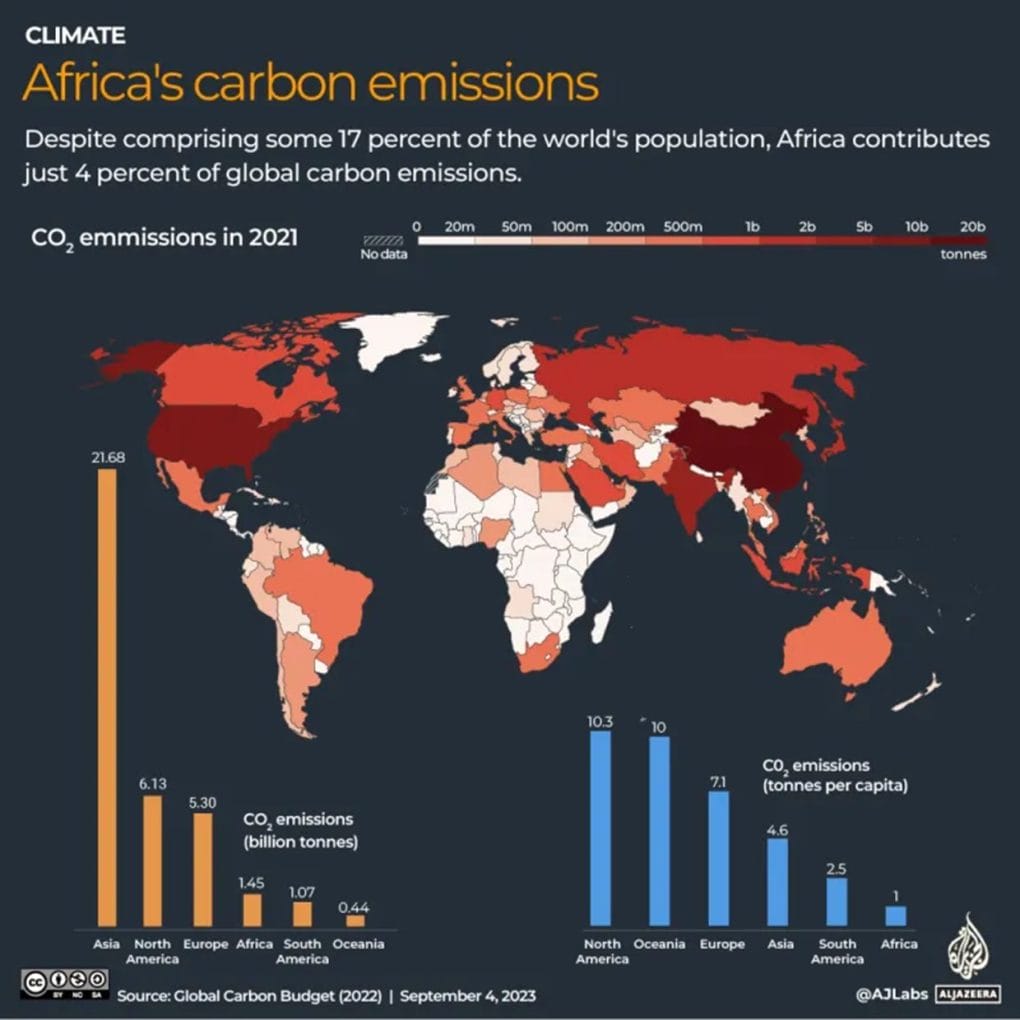
Africa holds 17% of the world’s people yet produces roughly 4% of global CO₂. On a per-capita basis it emits about one ton a year, the lowest of any continent. Africa also contains the world’s largest pocket of energy poverty. The question that matters is not whether to cut carbon, but how much temporary pollution is tolerable on the way to energy prosperity, and under what constraints.
An old question, a sharper answer
Orthodoxy has split into two camps. One says “no fossils, ever”, a moral stance that collides with fragile grids and frequent blackouts. The other says “gas or nothing”, tidier for funders, but often impossible where gas infrastructure does not exist.
A better course is lean carbon: a minimal, time-limited overdraft of emissions to buy dependable power now, with covenants that force an early peak and a rapid decline. Think of it as carbon on credit, a capped facility, not a blank cheque.
An old curve, a new context
The Environmental Kuznets Curve describes an upside-down U. Pollution rises at low incomes, then peaks and falls as countries grow richer and regulate more. Africa can peak lower and earlier than historic industrialisers because renewables are cheaper, technology has improved and coal can be avoided. The policy aim is to flatten the hump: accept a small bump now to reach the downhill sooner.
Reality, not dogma
Today’s counterfactual is not a continent powered neatly by wind and sun. It is millions of diesel generators humming in courtyards and factories because the grid is unreliable. Studies suggest self-generation already equals about 6% of installed capacity in sub-Saharan Africa, at a punishing 0.30 to 0.70 dollars per kWh, several times typical grid tariffs. When utilities falter, governments lease emergency diesel in bulk. In some cases these contracts have cost 3 to 4% of GDP. A clean sentence in a strategy does not change the physics of a failing system.
Intermittent renewables alone cannot yet stabilise a weak grid at scale. They need firm capacity, storage, or both. The sensible choice is planned, efficient firm power that complements solar and wind, rather than the messy reality of unplanned, dirtier backup.
The gas-only headache
If fossil molecules must feature, natural gas is preferable to oil products: fewer local pollutants and roughly half the CO₂ of coal per kWh. But gas-only is a mirage in much of Africa because pipes and LNG are scarce and markets are small. Outside a few corridors there are only a handful of regional gas arteries, notably the West African Gas Pipeline from Nigeria to Ghana and the line from Mozambique to South Africa. Grand schemes to extend them have moved slowly. Most countries lack the demand density to finance pipelines or import terminals. Insisting on gas everywhere, now, often means no power at all.
Policymakers have improvised. Ghana plugged supply gaps with a floating powership that initially burned heavy fuel oil, then switched to domestic gas once supplies and connections were ready. Senegal has commissioned Heavy Fuel Oil-capable plants built to convert to gas when new fields and pipes arrive. These are bridges engineered to shorten the dirty phase, not invitations to lock-in.
What a workable plan looks like
A credible lean-carbon pathway is neither all-renewables tomorrow nor gas for ever. It has three moving parts.
Power plants that can switch fuels New power stations should be able to start running right away—using heavy fuel oil or diesel if needed—but be built so they can easily switch to natural gas when supplies become available. This avoids blackouts today without locking countries into oil and gas for decades. Modern reciprocating engines can start and stop quickly, making them ideal substitutes for solar and wind power when the sun isn’t shining or the wind isn’t blowing.
Fossil fuel use that drops over time Fossil fuels should be relied upon only when necessary, shifting focus to using them for system stability and renewable-scarce periods. If they are the only means of electricity generation, we should systematically seek to decarbonise them. That way, emissions per unit of GDP fall fast, even before absolute emissions peak. The first target is to displace diesel generators, the dirtiest and costliest kilowatt-hours on the continent.
Covenants that bind To make sure the “carbon overdraft” stays small and temporary, it needs hard limits. These include deadlines for switching to cleaner fuels, limits on total emissions, and power purchase agreements that reduce payments to conventional plants as renewables and storage grow. The focus should be on financing the whole energy system – renewables, backup power, and better transmission lines – not just individual plants.
Funders are shifting, cautiously
Development financiers are moving from blanket bans to conditional support for transitional projects. A growing chorus argues that gas should form part of Africa’s just energy transition, provided it is integrated into national climate plans and structured to de-risk the shift to cleaner power. The most useful money crowds in private capital to systems, not stand-alone assets. The priority is hybrids that cut diesel use immediately and accelerate renewables later.
Why the bump is acceptable
Two points matter for the climate ledger. First, Africa’s historical contribution is tiny. Sub-Saharan Africa excluding South Africa has emitted well under 1% of cumulative CO₂ since the industrial revolution; including South Africa the region is still under 2%. Second, the opportunity cost of delay is enormous. Energy-starved economies grow slower, which makes the clean transition harder to finance. A modest, time-boxed rise to something like a 5% share of global CO₂ as grids stabilise would still leave Africa’s burden small by world standards, especially if the uptick displaces diesel and comes with a dated plan to fall.
Risks, spelled out and mitigated
The obvious risk is lock-in: today’s bridge becomes tomorrow’s motorway. That is why the contract matters. Write conversion deadlines and decommissioning triggers into PPAs. Require modular plants whose value survives a fuel switch. Publish transparent emissions dashboards. Include stop-loss clauses if milestones slip. Another risk is cheap-today myopia, choosing the lowest upfront tariff and ignoring reliability, ramping and integration costs. The remedy is to procure systems and judge bids on whole-system cost and carbon, not just cents per kWh.
One final objection is to wait for cheaper batteries. Storage costs are falling and Africa should adopt them early. But telling a low-income country to wait five years for round-the-clock electrons is not climate policy; it is development deferred. High costs of capital already hobble clean projects. Suppressing growth makes those costs worse. Better to grow with discipline, shrink diesel immediately, and use rising demand to make gas and storage bankable, then retire the fossils on schedule.
The ask
For energy ministries and regulators: publish peak-and-pivot plans that show when emissions will crest and what will force them down. Bake overdraft covenants into every firm-power tender. Allow dual-fuel where necessary, but mandate gas-ready design, switch-by dates and emissions-intensity floors.
For development financiers and multilaterals: fund hybrids and grids, not single-fuel bets. Reward early conversion and managed retirement. Deploy guarantees to cut the cost of capital for storage and transmission.
For developers and independent power producers: bid least-carbon firm power, not cheap today and stuck tomorrow.
Africa does not seek permission to pollute. It seeks permission to end energy poverty quickly while peaking emissions early. That is the lean-carbon bargain: a small, declining hump instead of a long, dirty plateau, and a faster route to the sunny side of the Kuznets curve. The task for partners is to help keep the overdraft small, and to pay it back fast.
Share this:
Like this:
LikeLoading…
Discover more from The Maravi Post
Subscribe to get the latest posts sent to your email.
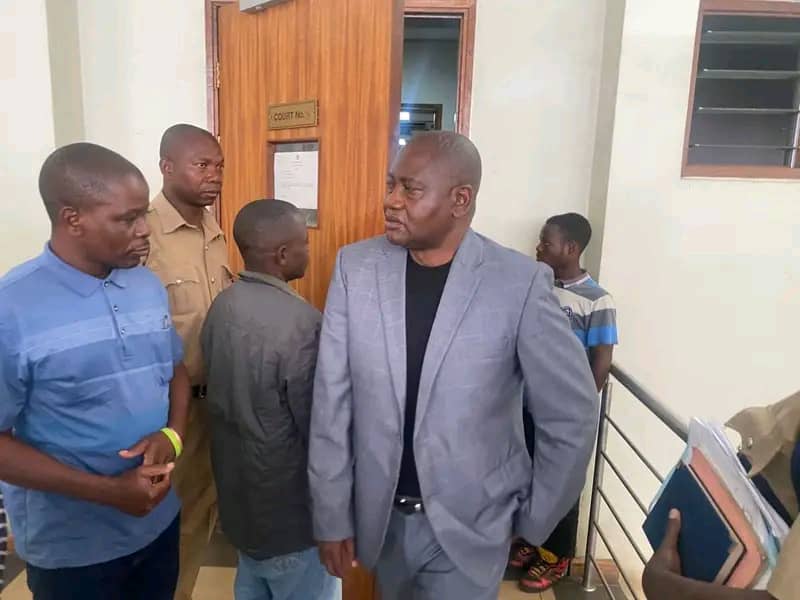
LILONGWE-(MaraviPost)-Senior Resident Magistrate Assunta Maxwell has granted bail to former Deputy Inspector General of Police (Operations) Ackis Muwanga and former Crime Superintendent Laudon Nthinda.
The two former officers were arrested last week in connection with allegations of extorting K1.3 billion from three businesspersons.
Each has been ordered to pay a MK1 million cash bond and provide two sureties, each bonded at MK2 million.
In addition to the financial conditions, the court mandated that Muwanga and Nthinda surrender their travel documents, seek court approval before leaving the country, and report to the Director of Public Prosecutions (DPP) every two weeks.
The State had requested that the court continue detaining the suspects for 14 days, citing concerns that they might interfere with investigations or attempt to flee.
However, the court ruled that the State had failed to provide sufficient evidence to justify continued detention.
The bail decision allows the former senior police officials to await trial outside of custody while complying with strict conditions intended to ensure their availability for ongoing investigations.
The case continues to attract attention given the high-profile nature of the suspects and the large sum involved, highlighting concerns over corruption and accountability within Malawi’s law enforcement agencies.
Share this:
Like this:
LikeLoading…
Discover more from The Maravi Post
Subscribe to get the latest posts sent to your email.