
Why Zambian Govt must step back from Edgar Lungu’s burial

……When compassion fails

The death of a former president is ordinarily a moment of national reflection, unity, and respect.

It is a time when a country collectively honors the contributions and sacrifices of its past leaders, setting aside political differences in acknowledgment of shared history.

However, the case of Edgar Lungu, Zambia’s late president, presents a starkly different scenario—one that demands critical examination of the government’s role during his final days and the ethical implications of its involvement in his state funeral.

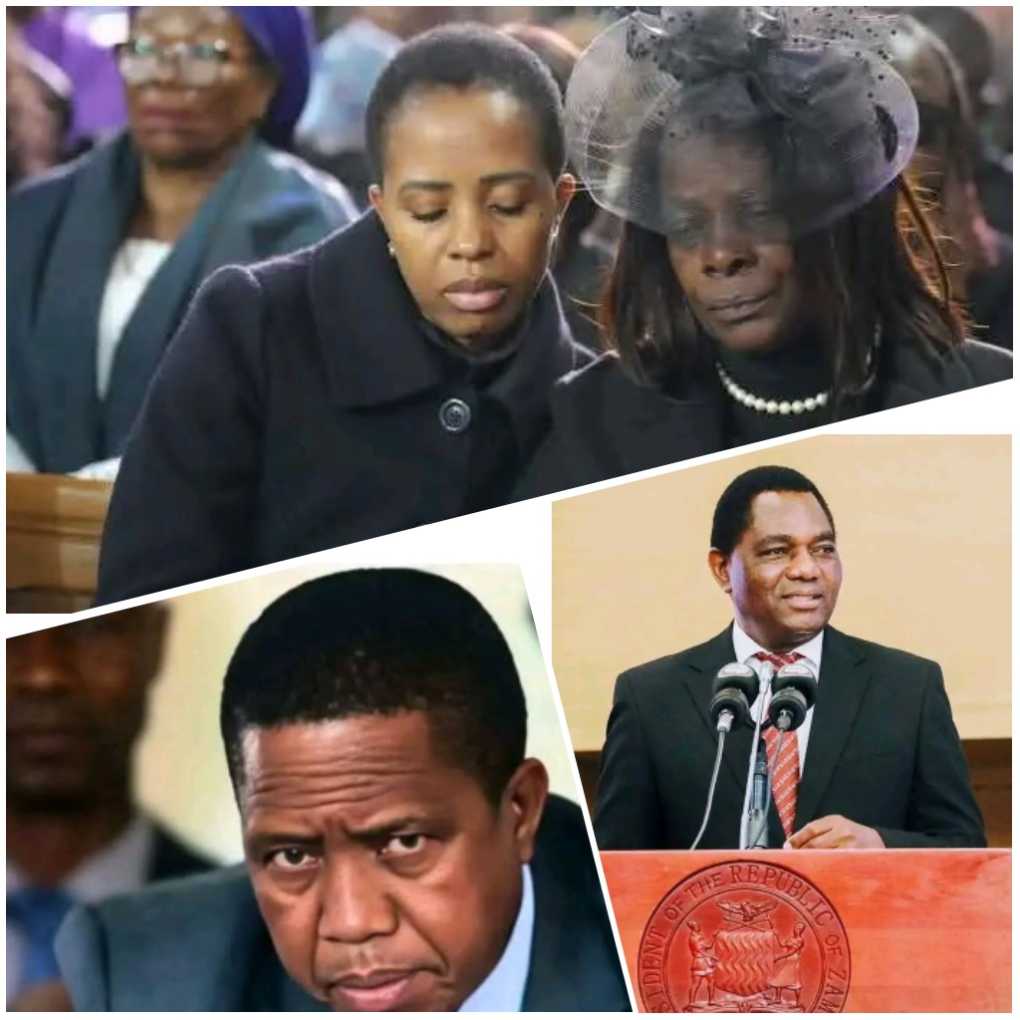
Edgar Lungu’s passing in June 2025 has been met with an unusual and uncomfortable silence from many quarters, not least from the current government under President Hakainde Hichilema.

This silence is not only about the delay in his burial, which remains unresolved months after his death, but also about the profound dissonance between how Lungu was treated during his illness and how the state now seeks to honor him in death.

To understand why it is imperative for President Hichilema’s government to abstain from participating in the burial of Edgar Lungu, one must look closely at the treatment Lungu received while bedridden.

It is well documented that the government stripped him of all privileges ordinarily accorded to former heads of state.

This was not a mere political distancing or symbolic rebuke; it was a tangible withdrawal of support and dignity.

The government denied him his medical entitlements, forcing his family to shoulder the burden of hospital bills and healthcare costs.

This abandonment was not only a breach of protocol but also a profound moral failure.

The legal arguments presented in court by Lungu’s family highlight this glaring contradiction.

They pointed out the glaring hypocrisy in seeking to accord Lungu a state funeral—a mark of honor and respect—when, during his lifetime, the very government now orchestrating this honor denied him the rights and privileges that justified such a send-off.

The family’s lawyer posed a powerful question: How could a government that deliberately withdrew medical support and stripped entitlements from a former president suddenly claim to mourn his death with a state funeral? This question strikes at the heart of the issue and demands a response grounded in sincerity rather than political expediency.

The optics of the government’s involvement in the funeral are troubling.

Rather than being seen as a gesture of respect or remorse, it risks being interpreted as an opportunistic celebration of Lungu’s demise—an event that some might view as a political victory for President Hichilema.

This perception is fueled by the government’s previous actions, which appeared to have been aimed at hastening Lungu’s exit by denying him the care he was entitled to.

Such an interpretation casts a long shadow over the funeral proceedings, robbing them of the solemnity and dignity they should command.

Moreover, the government’s insistence on taking part in the burial could be deeply hurtful to Lungu’s family and supporters.

The family, who bore the financial and emotional burden of his final days, deserve the space and respect to mourn their loved one without the political overtones that the government’s presence inevitably brings.

The burial should be a private, dignified affair led by those who cared for Lungu most intimately—not a stage for political grandstanding.

The courts have a critical role to play in this delicate matter.

They must weigh the arguments of the Lungu family with empathy and fairness, recognizing that despite Lungu’s status as a former president, the government’s treatment of him was far from that of a respected statesman.

The legal system should safeguard the rights of the deceased’s family to conduct the burial according to their wishes, free from unnecessary state interference that could compound their grief.

This situation also raises broader questions about how societies treat their former leaders and the ethical responsibilities of governments beyond political cycles.

Stripping a former president of privileges and denying medical care is not just an administrative decision—it is a reflection of a deeper erosion of respect for the office and the individual who once held it.

Such actions risk setting dangerous precedents for future leadership transitions, undermining national unity and the very fabric of democratic governance.

The Zambian government’s conduct during Edgar Lungu’s illness and subsequent death reveals a troubling disregard for human dignity and respect. By denying him the medical care he was entitled to, the government effectively contributed to his demise.

This reality cannot be ignored or whitewashed by a state funeral that lacks genuine remorse or compassion.

The government should honor the memory of Edgar Lungu by stepping back and allowing his family to mourn and bury him with the dignity they deserve, free from political interference.

True respect for a former leader is shown not only in death but in the compassion extended during their final days—a lesson that Zambia’s current government must seriously reflect upon.

Edgar Lungu died in June 2025, but his burial remains unresolved.

The time has come for the government to recognize the pain it has caused and to act with humility by letting the family lead the way in honoring their lost loved one.

Only then can Zambia begin to heal from this painful chapter in its history.


Discover more from The Maravi Post

Subscribe to get the latest posts sent to your email.

The Maravi Post

Ana de Armas Hangs With Hunky New Man After Rumored Tom Cruise Split

Ana de Armas ain’t wasting no time after her rumored split from Tom Cruise … because she just went shopping with a very handsome man. Check out these photos from Tuesday in Los Angeles, where Ana is doing some home decor shopping with Marcelo…


Discover more from The Maravi Post

Subscribe to get the latest posts sent to your email.

The Maravi Post

Kim Kardashian & Kris Jenner Delete Photos With Meghan Markle & Prince Harry

Prince Harry and Meghan Markle were guests at Kris Jenner’s 70th birthday bash, but you wouldn’t know it from her social media accounts … Kris and Kim Kardashian deleted shots of the Duke and Duchess of Sussex from the event. Kris celebrated the…


Discover more from The Maravi Post

Subscribe to get the latest posts sent to your email.

The Maravi Post

Marshawn Kneeland’s Girlfriend Breaks Her Silence Over Cowboys Star’s Death

The girlfriend of late Dallas Cowboys defensive end Marshawn Kneeland broke her silence after the NFL star’s sudden death.

“I’m grieving hard right now,” Catalina Mancera told the Daily Mail on Monday, November 10. “It will be a long time before I’ll feel ready to talk at any length.”

Mancera, 22, called the police the night before Kneeland’s death on the morning of Thursday, November 6. She expressed concern over Kneeland’s well-being, telling authorities her boyfriend had “a history of mental illness.”

After a brief police chase, Kneeland was found near his abandoned car on the Dallas Parkway, dead of an apparent suicide. He was 24 years old. 

Cowboys’ Marshawn Kneeland Was Worried About Going to Prison Before Death

“We’re still in the early stages of everything,” Mancera added. “We are working on the funeral arrangements. I don’t know where it’s going to be yet.”

Kneeland was also survived by his father, Shawn, who is currently incarcerated in the Upper Peninsula of Michigan, and his three siblings: brothers, AJ and Shawn Jr., and sister, Yahmya

The football star’s mother, Wendy, died in February 2024, just two months before he was selected in the second round by the Cowboys in the 2024 NFL Draft. 

Mancera, a fashion designer, has been staying at the Plano, Texas, apartment where Kneeland lived prior to his death. 

Marshawn Kneelands Girlfriend Breaks Her Silence Over Cowboys Stars Death
Courtesy of Catalina Mancera/Facebook

Nicole Kneeland-Woods, Marshawn’s cousin, told the Daily Mail that the NFL player started dating Mancera while he was a student-athlete at Western Michigan University. 

“Marshawn shared a very special relationship with Catalina, whom he had been with since his sophomore year of college,” she said. “They supported each other through many stages of life. Catalina is an important part of our family and she’s hurting deeply too.”

Despite what 911 dispatchers allege Catalina told them, Nicole said, “There were no previous signs or indications that Marshawn was dealing with mental issues.”

“Marshawn was a strong, loving person who cared deeply about his family and everyone around him,” Nicole added.

In addition to the death of his mother, Marshawn also lost his grandfather in 2023, which Nicole said was “was incredibly hard for him.”

“But beyond that grief, Marshawn didn’t show signs of depression or mental health issues,” Nicole explained. “Our family is devastated and still trying to process something that feels unimaginable. We want people to remember Marshawn for his kindness, his sense of humor and his drive. He was loved deeply and that love will always be his legacy.”

Former Coach of Marshawn Kneeland Recalls Final Chat Days Before His Death

Dallas Cowboys owner, Jerry Jones, broke his silence about Marshawn’s death on Tuesday, November 11. 

“I think we all have unfettered feelings about the people we love, people we work with, and this is just a time when you acknowledge that there’s no answers,” Jones, 83, said on Dallas’ 105.3 The Fan. “It makes you want to live life to the fullest. It makes you want to look for the very best in what we have for each other. And in some way make sense out of these times in terms of what they can mean from helping those that are here on earth right now.”

Jones added, “All of those things are very natural, come to mind, but his death is such a national awareness thing that it takes on some of that light when we think about how we go forward.”

If you or someone you know is struggling or in crisis, help is available. Call or text 988 or chat at 988lifeline.org.


Discover more from The Maravi Post

Subscribe to get the latest posts sent to your email.

The Maravi Post

Zambians question music industry’s silence as General Kanene buries his daughter

……While the community and colleagues from Komboni Radio stood by him, fellow musicians were notably absent during the funeral of General Kanene’s one-year-old daughter, Sophia.

LUSAKA-(MaraviPost)-Citizens in Zambia have expressed concern over the apparent silence and absence of the country’s music industry during the funeral of popular musician Clifford Dimba, better known as General Kanene.

Kanene, who recently lost his one-year-old daughter, Sophia, laid her to rest this week in an emotional ceremony attended by members of his local community and close friends.

The funeral attracted strong support from neighbours and community members who live around Kanene, as they rallied together to help him meet the daily needs of the mourning period.

Despite the tragic news spreading widely across social media and entertainment circles, no notable figures from the Zambian music industry appeared at the house of mourning or at the burial ceremony.

This lack of presence has sparked public debate, with many questioning why fellow artists did not show solidarity during one of their colleague’s most painful moments.

Observers say this incident reveals a deeper truth about the nature of fame and relationships in the entertainment world.

Many have argued that fame often brings people close for selfish reasons, creating relationships that are mostly transactional rather than genuine.

When tragedy strikes, these shallow connections often disappear, leaving the affected person to rely on family, neighbours, and genuine friends for emotional and practical support.

A visibly heartbroken yet composed General Kanene was surrounded by colleagues from Komboni Radio, where he currently works, as well as friends he interacts with daily.

Witnesses described the atmosphere as both somber and supportive, with community members doing their best to comfort the grieving artist.

Social commentators have taken the moment to remind people of the importance of building real, lasting relationships based on sincerity rather than status or fame.

Kanene, who has endured both personal and professional challenges over the years, received a heartfelt farewell message from many ordinary Zambians who continue to view him as one of their own.

“R.I.P little angel,” read a touching post shared by TV Yatu, capturing the sorrow that has swept through Kanene’s local community.

As the music industry reflects on this moment, many are calling for unity, empathy, and stronger human bonds among artists beyond the stage and spotlight.


Discover more from The Maravi Post

Subscribe to get the latest posts sent to your email.

The Maravi Post

Chakwera MCP’s Govt fuel mismanagement exposed, DPP steps up to restore stability

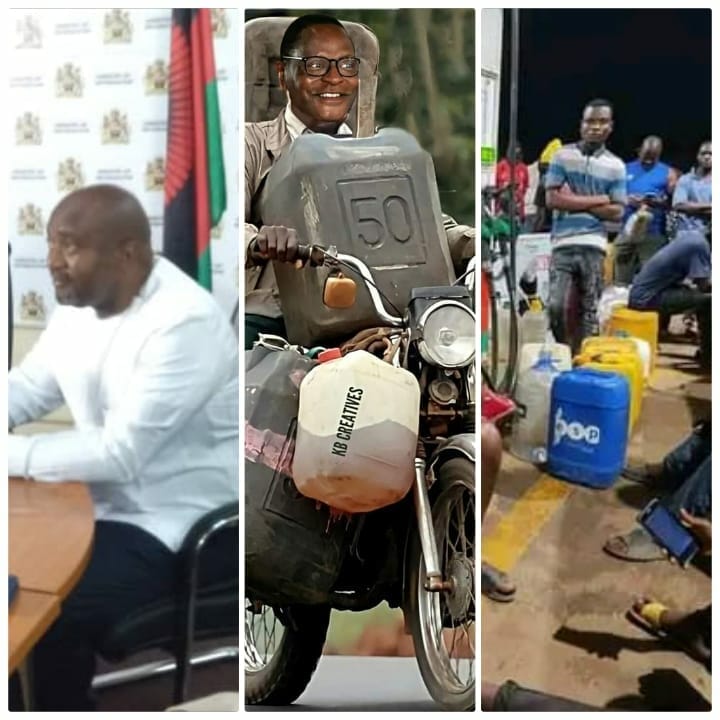
Matola (Energy Minister), Chakwera and motorists spending nights for fuel

BLANTYRE-(MaraviPost)-Malawi finds itself grappling with a severe fuel shortage that has paralyzed key sectors of its economy and disrupted the daily lives of its citizens.

At the heart of this crisis lies a troubling legacy of mismanagement and corruption linked to the Malawi Congress Party (MCP) government under former President Lazarus Chakwera.

As the nation struggles to fill its empty fuel reserves, which have been depleted since July 2024, the Democratic Progressive Party (DPP) government has stepped forward with decisive action aimed at stabilizing the situation and restoring confidence in the country’s energy security.

The roots of the current fuel shortage run deep, tracing back to the MCP administration’s failure to effectively manage the National Oil Company of Malawi (NOCMA) and maintain adequate fuel reserves.

Our investigations reveal that the MCP regime allowed systemic corruption and financial malfeasance to fester unchecked within the fuel supply chain.

The siphoning off of an estimated 22 billion kwacha through questionable fuel suppliers under MCP’s watch was not merely a case of poor planning but a deliberate plundering of resources that were critical for sustaining Malawi’s energy needs.

This corruption scandal exposed the fragile underbelly of Malawi’s fuel infrastructure.

Instead of safeguarding the country’s reserves and ensuring steady fuel availability, the MCP administration’s cadres allegedly prioritized personal gain over national interest.

The consequences have been dire: since mid-2024, Malawi’s fuel reserves have been empty, leaving the nation vulnerable to economic shocks and operational paralysis in sectors dependent on reliable energy supplies.

Citizens have borne the brunt of this crisis, facing soaring transport costs, scarcity of essential goods, and an uncertain economic future.

In stark contrast, the DPP government, now at the helm, has adopted a markedly different approach to tackling the crisis.

Recognizing the gravity of the situation, the new administration has prioritized transparency and accountability as fundamental pillars in restoring Malawi’s fuel security.

The DPP has initiated comprehensive audits of NOCMA’s operations to uncover the full extent of mismanagement and corruption inherited from the previous regime.

These audits are crucial for identifying weaknesses and enforcing corrective measures that prevent a repeat of such a debilitating crisis.

Moreover, the DPP has emphasized the importance of stringent oversight mechanisms to ensure that fuel procurement and distribution processes are conducted with integrity.

By instituting rigorous vetting procedures for suppliers and empowering independent watchdogs to monitor NOCMA’s activities, the current government is sending a clear message that graft and embezzlement will no longer be tolerated.

This proactive stance is not only stabilizing the immediate fuel supply but also laying the groundwork for sustainable management practices that can safeguard Malawi’s energy future.

The economic stakes could not be higher. Should the fuel shortage have persisted unchecked, Malawi’s economy would have faced catastrophic disruptions.

Transportation networks, which are vital for moving goods and people, would have suffered severe interruptions, exacerbating inflation and limiting access to essential commodities.

The ripple effects would extend to increased unemployment and heightened social unrest, deepening poverty levels and eroding public trust in governance.

The urgency with which the DPP has acted highlights its commitment to averting these potential disasters and cushioning ordinary Malawians from further hardship.

It is important to acknowledge the resilience and determination demonstrated by the DPP in the face of a crisis not of its making.

While the MCP government’s negligence and corruption created the fuel scarcity, the DPP has taken up the mantle of responsibility with vigor and transparency.

The administration’s efforts to rebuild trust through accountability and reform are critical not only for resolving the current shortage but also for restoring hope in Malawi’s institutional capacity to manage public resources effectively.

Yet, the path ahead remains challenging. Rebuilding fuel reserves and ensuring uninterrupted supply require sustained political will, financial investment, and continuous vigilance.

The lessons from the MCP era must serve as a cautionary tale, underscoring the dangers of complacency and corruption in managing strategic national resources.

The DPP’s ongoing reforms must be supported by all stakeholders, including civil society and international partners, to foster an environment where transparency and good governance become the norm rather than the exception.

The fuel crisis in Malawi is a stark reminder of how poor leadership and corruption can jeopardize national security and economic stability.

The MCP government’s failure to maintain adequate fuel reserves and its entanglement in corrupt practices have left the country vulnerable to avoidable hardship.

Conversely, the DPP’s prompt and transparent response to the crisis signals a renewed commitment to good governance and public accountability.

By confronting the challenges head-on and instituting reforms, the DPP is not only working to stabilize the current situation but also striving to ensure that Malawi’s energy sector can support sustainable development and prosperity for all its citizens in the years to come.


Discover more from The Maravi Post

Subscribe to get the latest posts sent to your email.

The Maravi Post