From Nepalese to Congolese, this is how an Aurora church is serving its immigrant community

Walk into an unassuming church near the intersection of Colfax Avenue and Havana Street, just east of the Denver/Aurora line on any given Sunday. Depending on what time you arrive, you might hear singing in Nepalese, or preaching in Burmese.

The Village Exchange Center, formerly St. Matthew’s Lutheran Church, is home to four congregations that meet there on Sundays for the past decade in the heart of Aurora’s immigrant and refugee community. 

Small communities of Nepalese, African-American, Congolese, and Kachin worshippers gather throughout the day – two in the morning, two in the afternoon – most of them just a few dozen strong. 

And though sometimes only five or 10 people show up for service, those who do animate many church-like moments. Universally recognized words like “Amen,” and “Hallelujah!” are heard throughout the day. Likewise the swaying-while-singing moves, and a little call-and-response. There’s the blissed-out, closed-eyed faces, the restless, playful children – moments that cross the language barrier and feature the same sacred moments of reverence found in worship anywhere. 

And it’s especially needed now, according to Pastor Marcel Narucki, co-founder and director of Multi-Faith Services at the Village Exchange Center. He was pastor of the former church until eight years ago, and is still involved, meeting with pastors of the congregations, from whom he charges a nominal monthly fee.

“The worship time together is very powerful for building their community and cohesion and connection in many ways . . . because as refugee churches, they’re facing so much more to culturally survive,” he said. 

Aurora's Village Exchange Center. Feb. 9, 2025.

Kevin J. Beaty/Denverite

Aurora’s Village Exchange Center. Feb. 9, 2025.

Living Worship Nepali Church

The first one to unlock the doors on Sundays is Pastor Habil Rasaily, who leads Living Worship Nepali Church starting at about 9 a.m. Although clearly a foreigner based on his accented English, the pastor was enthusiastic to welcome two new faces that looked very different from the usual attendees – who are generally not very tall, with Asian features and straight, dark hair. 

To welcome two visitors, one Black and 5’10,” the other MENASA and at least 6’3”, both with curly hair, he translated introductions. The response of the congregation – through waves, smiles, hands on hearts, and eye contact across the language barrier – said: You are welcome among us.

Eli Imadali for Colorado Public

A congregation member reads the Bible during a Nepalese Christian church service at the Village Exchange Center in Aurora, Colo., on Sunday, Feb. 2, 2025.

Eli Imadali for Colorado Public

Congregation members sing and worship as youth pastor James Rasaily, center with guitar, leads them in song during a Nepalese Christian church service at the Village Exchange Center in Aurora, Colo., on Sunday, Feb. 2, 2025.

The pastor had clearly taken on some of the Western flavor in his fashions; he wore a corduroy suit, a purple V-neck sweater and cowboy boots. His session was rich with singing and preaching, with plenty of English words mixed in. 

Of the 30 or so who came out, some were dressed in salwar kameez, others were holding up their hands to show how moved they were by the music and the words. One woman showed up with a white man.

At one point, two men on stage stopped singing and began blowing into musical instruments which are called shofars in some cultures, long twisty horns of rams. Like bugles, they don’t give the opportunity for the person playing it to select notes; instead, playing them added to the overall ambient sound and got a few people on their feet, singing along to music that reminded them, undoubtedly, of home.  

Blow the Trumpet Ministries

A few hours later, Pastor Kevin Rawlins got his sermon going under the banner of Blow the Trumpet Ministries, held in the same room – sparsely decorated with a bit of stained glass behind the stage, where a drum set was set up that could be used by each group.

The sanctuary, with mainly blank walls, also had dozens of chairs in the front, as well as collapsible stadium seating in the back of the room. 

The extra seats weren’t needed for the gathering, which that day topped off at 10 people. Among them were his wife/co-pastor, daughter and niece, all there for the Village Exchange Center’s only English-speaking service. 

Eli Imadali for Colorado Public

Kevin and Lynne Rawlins of Blow the Trumpet Ministries pose for a portrait after their church service at the Village Exchange Center in Aurora, Colo., on Sunday, Feb. 2, 2025.

That morning, Lynne Rawlins preached a sermon about spiritual understanding, connecting her message to the recent plane crash that resulted in dozens of bodies being found in the Potomac River in Washington, D.C. 

“The Bible written 2,000 years ago is talking about today … and planes fall out the sky – it’s enough to make you go. . .” she said, making a surprised face. “But when you have faith in God it transcends everything else because you go, you know what? I have eternal life with Christ … so even if I come to this end, I know I will be with God.”

Kevin Rawlins said that when not ministering at the center, Blow The Trumpet ministers to people with special needs and learning disabilities, sometimes taking the word to drug infested communities without judgment.  

The on-site session that day wrapped up in the early afternoon, then, like the other congregations, the group left the building, which locked up automatically.

And a few hours later, the space transformed again – without any real physical changes – into another church and its worshippers.

Colorado Kachin Baptist Church

At about 3 pm, Pastor James Naw Bawk unlocked the doors and about a half-dozen people walked in, most of them in jeans and sneakers, one with his hair two-toned, black in the back and golden-orange up front. 

They were there to hear the pastor lead Colorado Kachin Baptist Church for a handful of mainly young people, some refugees, who come from Kachin, the northernmost state in the country of Myanmar, formerly known as Burma; which shares a border with China and has a population of about 55 million.

As the voices and energy took up the room, the common experiences of church could again be felt despite the language barrier. Initially, the pastor, dressed in mainly western clothes with a hat traditional to Myanmar, was officiating. Then, using tablets and other technology, another man then took the lead, ministering to people who, wrapped up in the spiritual moment they were having, seemed not to notice that the space itself was both large and impersonal, given the small size of the group.

Kevin J. Beaty/Denverite

Pastor James Bawk preaches during the Colorado Kachin Baptist Church’s weekly meeting in Aurora’s Village Exchange Center. Feb. 9, 2025.

A lack of aesthetic attention in multi-faith spaces is common, according to an article, “Global Phenomenon of Multifaith Worship Spaces,” in the online magazine of the Center for Architecture. It was based on the fieldwork of a student pursuing a master’s in architecture, who received a grant in 2018 to do a deep dive into the architecture of multi-faith spaces, funded in part by the New York City Department of Cultural Affairs.

Among the findings: “Although what exactly imparts a sense of spirituality in a space is subjective to each individual, it is nonetheless clear when no effort has been made by the designer or administrator to nurture an aesthetic of contemplation and solemnity. Sadly, this aesthetic neglect is the case in most multifaith worship spaces. Since many of these sites are created with limited funding by non-designers, aesthetics are often the last thing to be considered. Even well-funded spaces are often left intentionally bland to maintain denominational neutrality.”

Several congregations personalized the space by bringing their own banners to drape over the lectern. They took them down when they left, which kept the space from taking on any particular religion’s style of decor. This is  not unusual, according to the article, which states: “In the majority of multifaith worship spaces, there is no designer involved; they are furnished by a facility administrator, usually as an afterthought.”

Kevin J. Beaty/Denverite

Neng (left to right), Ja and Du Howa sing as the Colorado Kachin Baptist Church begins its weekly meeting in Aurora’s Village Exchange Center. Feb. 9, 2025.

Kevin J. Beaty/Denverite

The Colorado Kachin Baptist Church begins its weekly meeting with music, in Aurora’s Village Exchange Center. Feb. 9, 2025.

The article describes multi-faith worship spaces as a global phenomenon that began to crop up in the 1950s, noting their existence in New York, Boston, London, Manchester, Zurich and Berlin.

The article points out two main types: the Multifaith Chamber, which, like the Village Exchange Center, consists of “a central gathering space shared by different faith groups;” it is described as more common, more adaptable and less expensive. The other style is the Multifaith Complex, which “allocates separate prayer rooms for each faith so they need not share spaces with other groups,” according to the report.

The sharing of spaces seemed not to be a problem at the Village Exchange Center, because the schedule allowed ample time before one service ended and the next began – usually about a half hour during which the building was unoccupied very briefly. 

8th CEPAC Pentecostal Church of Colorado

The day capped off at about 5 pm, when the final group filled up the parking lot across the street and filed inside. Senior Pastor Enock Mahangaiko Hawazi heads 8th CEPAC Pentecostal Church of Colorado, which he said was modeled to be similar to the one he pastored in the Democratic Republic of Congo before coming to the US. It lasted from about 5:30 until 8 pm, the longest of the sessions, and had the largest congregation. 

That’s because usually, it’s attended both by relocated DRC nationals, as well as Malawian students from DU, who usually arrive by shuttle and have their own choir, he said. 

Kevin J. Beaty/Denverite

Pastor Enock Hawazi Mangaiko preaches during 8th CEPAC Pentecostal Church of Colorado’s weekly church service, modeled after a congregation he led in the Democratic Republic of Congo, in Aurora’s Village Exchange Center. Feb. 9, 2025.

This congregation had about a dozen small children, some better than others at sitting still. Once or twice, as the gathering got underway, a newborn baby could be heard clucking and cooing, being held on the lap of its mother, one of the pastor’s daughters, three of whom attended the service. 

While some women had traditional clothing often worn in the DRC – printed fabric dresses with matching headraps – one woman had a red and white outfit on. She was the only woman drummer of the day, sitting on stage behind a drum set while children and adults sang in unison. That day the sermon was about love and acts of service.

Kevin J. Beaty/Denverite

Pastor Enock Hawazi Mangaiko kicks off the 8th CEPAC Pentecostal Church of Colorado’s weekly service in Aurora’s Village Exchange Center. Feb. 9, 2025.

Kevin J. Beaty/Denverite

Kids sing onstage during the 8th CEPAC Pentecostal Church of Colorado’s service at Aurora’s Village Exchange Center. Feb. 9, 2025.

Pastor Narucki, who meets with leaders of the congregations quarterly, said he usually doesn’t attend their services so they can have the space and privacy to worship. 

He created the opportunity for the four congregations to meet at the Village Exchange Center a decade ago, while pastoring St. Matthew’s Lutheran Church. Noticing that the church’s membership was dwindling, he came up with a way to maximize usage of the space: he opened it up for use by the congregations. 

After two years, the Lutheran church stopped meeting due to low attendance, but the four small communities of worshippers continued to show up and worship at different times throughout each Sunday.

Pastor Narucki changed the tax status of the church to become the non-profit Village Exchange Center, the subject of a local student’s thesis, which is also home to  other community-oriented services such as a farm and a food bank, in the heart of a part of Aurora where many immigrants and refugees live. 

He mentioned that with the new Trump administration – which called for a raid of some apartment complexes in Aurora in early February – and its aversion to immigrants, the churches ministering to immigrants and refugees are more necessary now than ever. “We don’t know how things are ultimately going to play out, but we’re all kind of being alert and concerned,” he said. 

“The safe expression of being together, that is a source of identity for communities, and of resiliency,” he said. “And I think that’s especially needed and critical for this period we are in.”

Source

10 best Bob Marley songs of all time

* 1. No Woman, No Cry’ (1974); 2. ‘One Love/People Get Ready’ (1977); 3. ‘Redemption Song’ (1980); 4. ‘Three Little Birds’ (1977); 5. *Buffalo Soldier’ (1983)

* 6. ‘Could You Be Loved’ (1980); 7. ‘Is This Love’ (1978); 8. ‘Jamming’ (1977); 9. ‘Stir It Up’ (1973); 10. ‘I Shot the Sheriff’ (1973)

Maravi Express

Jamaican singer, songwriter and guitarist, Robert Nesta Marley (Order of Merit), born on February, 6 1945 and died on May 11, 1981, was considered one of the pioneers of reggae, of which he fused elements of reggae, ska and rocksteady.

Bob Marley was renowned for his distinctive vocal and songwriting style and he increased the visibility of Jamaican music worldwide and became a global figure in popular culture.

He became known as a Rastafarian icon, who infused his music with a sense of spirituality while also considered a global symbol of Jamaican music, culture and identity.

Marley, who was controversial in his outspoken support for democratic social reforms, also supported Pan-Africanisim, thus his songs resonate well with African liberation right from the 1960s.

Advertisement

Music expert, Samuel Moore, a frequent contributor to Singers Room, the voice of R&B around the world since 2005, contends that few artists have left a legacy as powerful as Bob Marley.

“More than just a musician, he was a revolutionary voice for peace, love, and social change,” he wrote for Singersroom.com; https://singersroom.com/w76/best-bob-marley-songs-of-all-time/ on February 19.

“His songs transcended borders, uniting people with messages of unity, resistance, and hope. With his signature reggae rhythms and soul-stirring lyrics, Marley transformed music forever, making reggae a global force that still resonates today.

“From anthems of freedom like ‘Redemption Song’ to feel-good classics like ‘Three Little Birds’, Marley’s music remains as relevant and inspiring as ever. Whether you’re a lifelong fan or just discovering his genius, these songs capture the very essence of his artistry.

“His ability to blend deep political messages with infectious melodies made him one of the most influential artists of all time.”

He thus highlighted the list of top 10 most popular Bob Marley songs, the celebrate the tracks that have defined generations: “These are the songs that continue to fill the airwaves, inspire movements, and keep Marley’s spirit alive.

1. ‘No Woman, No Cry(1974)

One of Bob Marley’s most moving and heartfelt songs, ‘No Woman, No Cry’ is a powerful anthem of resilience, hope, and comfort. Originally released on his 1974 album Natty Dread, the song paints a vivid picture of life in Trenchtown, the impoverished neighborhood in Kingston, Jamaica, where Marley grew up.

Through its soothing melody and deeply emotional lyrics, the song reassures a struggling woman that better days are ahead. While the original studio recording is touching, it was the 1975 live version from Live! — recorded at London’s Lyceum Theatre — that truly immortalised the song.

With its warm organ melodies and Marley’s raw, soulful delivery, it became one of reggae’s most cherished classics.

2. ‘One Love/People Get Ready’ (1977)

A timeless anthem of peace and unity, ‘One Love’ is perhaps Bob Marley’s most recognisable song. Originally recorded with The Wailers in 1965, the version that gained worldwide fame was released on Exodus in 1977.

Infused with spiritual and political messages, the song incorporates elements from Curtis Mayfield’s People Get Ready, blending themes of love, hope, and togetherness.

With its upbeat rhythm, infectious harmonies, and universally uplifting lyrics, ‘One Love’ became an international symbol of social change and a rallying cry for world peace.

3. ‘Redemption Song’ (1980)

Stripping away his signature reggae sound, ‘Redemption Song’ is a deeply introspective acoustic ballad that stands as one of Marley’s most profound works.

Released on Uprising in 1980, the song was written while Marley was battling cancer, giving its lyrics even greater weight. Inspired by a speech from activist Marcus Garvey, the song speaks of liberation from mental and physical oppression, urging listeners to “emancipate yourselves from mental slavery.”

Its raw simplicity and poignant message resonate far beyond reggae, making it one of the most powerful protest songs in history.

4. ‘Three Little Birds’ (1977)

Few songs radiate positivity quite like ‘Three Little Birds’. Featured on Exodus (1977), its cheerful melody and reassuring lyrics — ”Don’t worry about a thing, ’cause every little thing is gonna be alright” — have comforted listeners for generations.

Some believe the title refers to three actual birds Marley saw outside his window, while others speculate it represents his backup singers, ‘The I Threes’.

The I-Threes

The I-Threes were the most influential female singing group in the history of Jamaican music, featuring Rita Marley, Marcia Griffiths and Judy Mowatt. They provided the rich harmonies for Bob Marley’s performances and recordings from 1974 until his death 10 years later.

Regardless of its inspiration, the Three Little Birds’ message of optimism and its lighthearted reggae groove continue to bring joy worldwide.

5. ‘Buffalo Soldier’ (1983)

Released posthumously on Confrontation (1983), ‘Buffalo Soldier’ tells the historical story of African American soldiers forced to serve in the US Cavalry after the Civil War.

Through Marley’s lyrics, the song highlights themes of oppression, survival, and resilience, making it both a history lesson and an anthem of empowerment.

The song’s catchy chorus — ”Woy yoy yoy” — and steady reggae beat make it one of Marley’s most recognizable tunes, resonating deeply with themes of black identity and resistance.

6. ‘Could You Be Loved’ (1980)

A perfect fusion of reggae and disco, ‘Could You Be Loved’ stands out as one of Marley’s most danceable tracks. Released on Uprising (1980), the song carries an uplifting message about staying true to oneself in the face of societal pressures.

Its pulsing beat, infectious guitar riffs, and smooth harmonies gave it crossover appeal, making it a global hit. With its universal lyrics and irresistible groove, the song remains a favorite on dance floors and reggae playlists worldwide.

7. ‘Is This Love’ (1978)

Featured on Kaya (1978), ‘Is This Love’ is one of Marley’s most romantic songs, whose smooth, mellow reggae rhythm pairs beautifully with heartfelt lyrics describing deep, unconditional love.

Marley’s warm, soulful vocals make it feel like an intimate confession, while the song’s dreamy melody remains instantly recognisable. Its laid-back yet passionate vibe has made it a beloved favorite for couples and reggae lovers alike.

8. ‘Jamming’ (1977)

A joyous celebration of music and togetherness, ‘Jamming’ is one of Bob Marley’s most energetic tracks. Released on Exodus (1977), the song’s lively groove and carefree lyrics make it an anthem for good times.

The catchy chorus — ”We’re jamming, I hope you like jamming too” — embodies the essence of reggae and its power to bring people together. A staple of Marley’s live performances, the song remains a feel-good classic that continues to electrify audiences worldwide.

9. ‘Stir It Up’ (1973)

Originally written by Marley in 1967 and recorded by Johnny Nash, ‘Stir It Up’ became a global hit when The Wailers released their own version on Catch a Fire (1973).

A sensual, romantic tune, the song’s smooth lyrics and relaxed rhythm create an irresistible groove. With Marley’s velvety vocals and The Wailers’ laid-back instrumentation, ‘Stir It Up’ is one of reggae’s most enchanting love songs, evoking warmth and intimacy.

10. ‘I Shot the Sheriff (1973)

One of Marley’s most famous songs, ‘I Shot the Sheriff’ tells the gripping story of a man accused of murder. First appearing on Burnin’ (1973), the song’s lyrics reveal a man admitting to shooting a corrupt sheriff but denying the killing of a deputy.

The track’s themes of injustice and resistance struck a chord with listeners. While Marley’s version was already a reggae hit, Eric Clapton’s 1974 cover introduced it to rock audiences, further cementing its legendary status.

Born in Nine Mile, Jamaica, Marley began his career in 1963, after forming the group Teenagers with Peter Tosh and Bonney Wailer, which became the Wailers — who released their debut studio album in 1965; The Wailing Wailers, which included the single ‘One Love’, a reworking of ‘People Get Ready’.

It was popular worldwide and established the group as a rising figure in reggae. The Wailers released 11 more studio albums, and after signing to Island Records, changed their name to Bob Marley and the Wailers.

The Wailers

While initially employing louder instrumentation and singing, they began engaging in rhythmic-based song construction in the late 1960s and early 1970s, which coincided with Marley’s conversion to Rastafari.

Around this time, Marley relocated to London, and the group embodied their musical shift with the release of the album The Best of The Wailers (1971).

Bob Marley and the Wailers began to gain international attention after signing to Island and touring in support of the albums Catch a Fire and Burnin’ (both 1973).

Following their disbandment a year later, Marley carried on under the band’s name. The album Natty Dread (1974) received positive reviews and in 1975, following the global popularity of Eric Clapton’s version of Marley’s ‘I Shot the Sheriff’, Marley had his international breakthrough with his first hit outside Jamaica, a live version of ‘No Woman, No Cry’ from the Live! album.

This was followed by his breakthrough album in the United States, Rastaman Vibration(1976), which reached the Top 50 of the Billboard Soul Charts.

A few months later, Marley survived an assassination attempt at his home in Jamaica, which was believed to be politically motivated, which forced him to permanently relocate to London, where he recorded the album Exodus, which incorporated elements of blues, soul and British rock — which had commercial and critical success.

In 1977, Marley was diagnosed with acral lentiginous melanoma which he died of in May 1981 and as fans around the world expressed their grief, and he received a state funeral in Jamaica.

The greatest hits album Legend was released in 1984 and became the best-selling reggae album of all time, that also ranked Marley as one of the best-selling reggae music artists of all time, with estimated sales of more than 75 million records worldwide.

He was posthumously honoured by Jamaica soon after his death with a designated Order of Merit (OM) by his nation and in 1994, Marley was posthumously inducted into the Rock and Roll Hall of Fame.

The Rolling Stone ranked him No. 11 on its list of 100 Greatest Artists of All Time and No. 98 on its list of the 200 Greatest Singers of All Time.

His other achievements include a Grammy Lifetime Achievement Award, a star on the Hollywood Walk of Fame and induction into the Black Music & Entertainment Walk of Fames.—Music career content by Wikipedia

Advertisement

Source

From trailblazer to track star: Dr. Del Meriwether and his Duke roots

In honor of Black History Month, The Chronicle takes a look at Wilhelm Delano “Del” Meriwether, Duke’s first Black medical student and a world-class sprinter: 

As Wilhelm Delano “Del” Meriwether watched the United States track team struggle against France during a 1970 track meet, he boldly told his wife, “Hey, I think I can beat those guys.”

Myrtle Meriwether waved her husband’s comment off. Del was not an athlete. He had neither a coach, nor any training experience. At the time, he was a 27-year-old hematologist who had become the first Black person to graduate from the Duke School of Medicine just three years prior.

But a year after Del made his ambitious declaration while lying in bed watching the American sprinters flounder on TV, he made good on his promise. A doctor by day but sprinter by night, Meriwether broke world records seemingly without breaking a sweat, eventually finding himself inches away from becoming an Olympian just two years after he stepped onto the track for the first time.

Despite the acclaim, Meriwether’s track accolades constituted just one chapter of a long and dynamic career featuring civil rights activism, public health leadership and investment in underserved communities at home and abroad.

* * *

Born on April 23, 1943, in Nashville, Tennessee, and raised in segregated Charleston, South Carolina, Meriwether displayed an aptitude for science from a young age. He appeared in the national science fair twice while attending Burke High School and worked in a veterinary hospital while still a student. By the time he graduated, Meriwether had been recognized by the American Veterinary Medical Association for his research on internal parasites found in dogs.

Impressed by his accolades, Michigan State University recruited Meriwether to its veterinary program in the fall of 1960. After a year at the school, however, he realized that his interests lay in human medicine, so he decided to switch to the pre-medical route.

Accordingly, after completing his MSU degree program in just three years, Meriwether ventured to Duke in 1963. He was the University’s first African American medical student and the only Black student in his class.

In a 2008 interview by Jessica Roseberry, then-oral history program coordinator at the Duke University Medical Center Archives, Meriwether said he applied to Duke at his father’s encouragement.

“Duke was not my first choice,” he said. “… During the sixties, Duke [alongside] a number of other schools in the South needed some guidance and pushed to diversify its student body, and as a result, I … agreed to come to Duke.”

He explained that several schools in the region were actively recruiting Black students in the wake of a new federal policy that mandated hospitals and medical institutions be racially integrated in order to qualify for federal funding. Despite the University’s delay in diversifying its student body, Meriwether maintained that “[t]he school itself was not a solid resistant entity.”

“[T]hey simply needed help, and with my father and others, we helped liberate a good institution,” he said. “Everyone benefited.”

As part of the admissions process, though, Meriwether was asked to come to Duke for an interview — an experience that almost convinced him to not enroll at the University. After his Sunday evening arrival at the Raleigh-Durham airport, a tired and hungry Meriwether made it to campus looking for something to eat.

The University cafeteria was closed, so Meriwether asked a Black woman on duty where he could find food. She replied, “there’s no place nearby for Black men and women to eat,” but when Meriwether pressed further, she eventually gave him vague directions to a place named “the Blue Light.”

But Meriwether was turned away by the restaurant’s owner, who stated that the young Black man “did not belong inside the restaurant with clients.” After a 10-minute standoff, an angry Meriwether left hungry.

He said he refrained from telling Duke’s administration about the incident. Once he was accepted, though, he made it a priority to push the University to change both its policies and the policies of private establishments that served Duke students to become more inclusive.

Influenced by the Civil Rights Movement, Meriwether advocated for increasing the diversity of students and faculty on campus. The hospital also integrated its wards while he was a student, though he noted he was not an “active” participant in the process, which went “smoothly” with the “blessing” of some University administrators.

While many of his peers who led integration efforts at other universities faced backlash and made national headlines, Meriwether did not find his experience at Duke to be “a huge event.”

“I don’t think that it’s always necessary to make a big to-do about something that is morally right and that needs to be done,” Meriwether said in the 2008 interview. “I think the quieter things can be done, the better.”

In 1967, he graduated from Duke with honors.

Meriwether went on to pursue an internship at the University of Pennsylvania, working under former Duke professor James Wyngaarden, and in 1969, he moved to the Baltimore Cancer Research Center. It was then that he picked up running on the side, for “exercise and entertainment,” he said.

By June 1971, Meriwether was competing in the Amateur Athletic Union championships against world-record holders. Clad in an unconventional uniform of gold swimming trunks and black-and-white suspenders over a hospital T-shirt, he clocked a stunning nine seconds in the 100-yard dash. At the time, the feat had only been achieved by one other man. Meriwether’s time was deemed “wind-aided” — otherwise, he would hold the record today (though the event was replaced by the 100-meter dash in most competitions in 1970).

Meriwether picked up several national titles over the course of his running career. Representing the Baltimore Olympic Club, he logged a 9.6 100-yard in the South Atlantic AAU meet, a 9.5 in the Baltimore Municipal Games and a 9.4 at the All-Eastern. Meriwether’s sprinting escapades remained a side hustle; though he spent his nights training alone on the Johns Hopkins University track, his days were devoted to treating leukemia patients.

Still, the young hematologist’s prowess at the sport was undeniable. He was profiled by national outlets including The New York Times, Sports Illustrated and Time, and readers couldn’t get enough of the thrilling underdog tale.

But staying true to the shooting star storyline his ascendancy seemed to emulate, Meriwether’s moment in the spotlight was short-lived. In 1972, the fledgling track star lost out on a chance at that year’s Olympic Games due to a knee injury. After a similar injury took him out of the running in 1976, Meriwether retired from the sport to focus on his career in medicine.

Before retiring from running, Meriwether had completed his residency at the Ohio State University, then conducted hematology research at Harvard Medical School and Boston’s Thorndike Memorial Laboratory before earning a master’s degree in public health from Johns Hopkins.

He served as a 1973-74 White House Fellow, and in 1976, he was appointed director of the U.S. Public Health Service’s National lnfluenza Immunization Program amid fears of a swine flu epidemic. There, Meriwether led a team that helped immunize 40 million people against the virus by the end of the year.

In 1983, Meriwether moved to Gazankulu, South Africa, on a mission trip with his second wife, Nomvimbi, who was born and raised in the African country but studied in the United States as an adult. There, Meriwether became one of only six physicians available to treat half a million people.

The couple’s stay was only meant to last a year, but they ended up spending eight years serving the community, a period Meriwether looked back on as “the most rewarding of [his] life” in a 1997 interview with Sports Illustrated.

Some of his work entailed petitioning for supplies, teaching about birth control and treating patients at the rural Tintswalo Hospital. Many of Meriwether’s patients were women, children and elderly refugees who had been relocated from the neighboring country of Mozambique, then in the throes of civil war.

According to Meriwether, his experience of the American Civil Rights Movement and integrating Duke’s medical school prepared him to be a part of the South African anti-apartheid movement, which he characterized in 2008 as “the last civil rights movement on earth based on color.”

“I prefer to use the word ‘liberate,’ as opposed to merely ‘integrate,’” Meriwether said in the 2008 interview. “… My wife and I did not integrate South Africa. We helped liberate those who were in positions of leadership, as well as the masses who were discriminated against and confined.”

In 1990, Meriwether returned to the U.S. and served as an emergency doctor in the Washington, D.C. area. He has since provided emergency medical services in Pennsylvania and Maryland.  

He and his wife founded the Meriwether Foundation in 2007, a nonprofit that operates “health, education, nutrition and economic empowerment programs in rural and peri-urban areas of South Africa, Zimbabwe, Zambia, Malawi and Mozambique.”

Meriwether — now 81 years old — has retired in Maryland, passing on the baton to the next generation of Duke’s Black medical students.

Editor’s note: Meriwether did not respond to The Chronicle’s request to interview ahead of publication.


Zoe Kolenovsky profile
Zoe Kolenovsky | News Editor

Zoe Kolenovsky is a Trinity junior and news editor of The Chronicle’s 120th volume.


Srilakshmi Venkatesan

Srilakshmi Venkatesan is a Trinity first-year and a staff reporter for the news department.

Source

Why conflict in eastern DRC is unlikely to end soon as history repeats itself

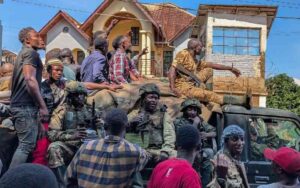
Residents walk next to a vehicle with M23 fighters in Bukavu on February 16, 2025. M23 fighters entered the DR Congo provincial capital of Bukavu on February 14, 2025. [AFP]

For decades, Congo’s eastern regions of North and South Kivu have been a tinderbox waiting to catch fire — and those willing to light a match were many and varied.

History has been rhyming in that vast country, where the more things seem to change, the more they stay the same. 

The players of the ongoing war that started in earnest last month — Tutsis and Hutus and their allies, including Rwandan and Congolese governments, as well as mercenaries — are more or less the same. 

[embedded content]

The setting is the same as it was in the 1990s. Yesterday’s accusations, counter-accusations, grievances and modi operandi are the same as today. 

As ever, Congolese civilians are being killed in their thousands and displaced in their hundreds of thousands. 

And the international community is as confused and complicit as before. 

If in the 1996 war, forces from Uganda, Angola, Burundi and African American mercenaries fought alongside Rwanda. Today, Burundi, South Africa and European mercenaries are fighting for Congo. 

Unlike the past, though, Rwanda and its Tutsi proxies, who’re tacitly supported by Uganda, are fighting alone this time around. 

The ongoing war in eastern Congo has many similarities to the 1996 Rwanda-led offensive that eventually toppled Mobutu Sese Seko a year later. 

At the time, Rwanda’s President Paul Kagame argued that Hutu militiamen, many of whom were perpetrators of the 1994 genocide in his country, were using refugee camps in Eastern Congo as bases to try to retake power from his Tutsi-led government. 

To avert such a possibility, Rwanda trained and armed Congolese Tutsis, who were victims of Congolese Hutus and their government, and finally sent its troops across the border to finish the job. 

Whether Kagame harbours similar intentions now is far from clear. Nor is it clear whether the current war would spark a regional war, as it did in 1998. 

But, ominous signs are everywhere: Rwanda and Congo are trading accusations.

The world’s big powers are distracted by wars in Europe, the Middle East and Sudan. The US that once acted as the world’s police is more concerned about its own internal affairs, as President Donald Trump is busy remaking his country. 

On Feburary 7, 2025, almost two weeks after Rwandan-backed rebel group, M23, seized the major city of Goma, James Ngango, Rwanda’s ambassador to the UN in Geneva, said that an “imminent” large-scale attack against Rwanda was being hatched in Congo before the rebels captured Goma, a city of two million people. 

Ngango accused a Kinshasa-backed coalition of stockpiling a large number of weapons and military equipment near Rwanda’s border, especially around Goma’s airport. 

Ngango’s claim was akin to Kagame’s 1996’s raison d’être that Hutus were trying to invade Rwanda. 

Prior to the 1996 invasion of Congo, Rwanda had two main concerns: refugee camps  in eastern Congo that were housing Hutu extremists and laxity by the UN. 

“It is my strong belief that the United Nations people are trying to deflect the blame for failures of their own making onto us,” Kagame, who was then vice president and defence minister, told a Washington Post reporter in 1997.

“Their failure to act in eastern Zaire (now Congo) directly caused these problems, and when things blew up in their faces they blamed us. These are people who want to be judges and nobody can judge them.” 

Rwanda’s Ministry of Foreign Affairs and International Corporation said the war “was triggered by constant violations of ceasefire by the Congolese Armed Forces in coalition with UN sanctioned militia FDLR (Democratic Forces for the Liberation of Rwanda), European mercenaries, ethnic militias (Wazalendo), Burundian armed forces, SMIDRC (the Southern African Mission in the Democratic Republic of Congo) forces, as well as Monusco (the French meaning of United Nations Organisation Stabilisation Mission in the Democratic Republic of the Congo).” 

To Rwanda, the war in eastern Congo was inevitable. 

“Is there anybody among us who did not see this coming,” Kagame told his East African counterparts during a virtual meeting on January 29, 2025, that Congolese President Felix Tshisekedi skipped. “I, for one, saw it coming to be where we’re now. I saw it coming because I didn’t see who was taking charge of the process, who was listening, who was trying to provide any guide as to what we should be doing from one thing, from one day to another.” 

For years, Kigali has voiced its displeasure with Kinshasa’s approach toward the M23 movement, a Tutsi ethnic group whose presence in eastern Congo served its interest. 

Last month, Kagame accused East African leaders of not matching their words with action. 

“We’re on one hand assuming or pretending we’re coming together over an issue and trying to find a solution, while at the same time each country is pulling in its own direction, different from others,” he said. “This is the fact of the matter.” 

Our people

He accused Tshisekedi of bringing Burundi and Southern African Development Community (SADC) forces to Congo to fight his war. 

“SADC was, without any doubt, coming to assist Tshisekedi to fight alongside FDLR, these murderers of our people in this country, to fight against mercenaries and to have Burundi on ethnic political basis,’’ Kagame said

‘‘They have displaced people, they have murdered people, they have persecuted on a daily basis for who they’re.” 

The Democratic Republic of the Congo’s (DRC) lack of consistency — at one time accepting M23 as a local rebel group and another time characterising it as a foreign terrorist organisation — is the core difference between Kinshasa and Kigali, which ethnic Tutsis in East Africa look up to as their protector. 

M23’s name was inspired by the unfulfilled peace treaty between the Tutsi rebel group, National Congress for the Defence of the People (CNDP), and the Congolese government on March 23, 2009. 

That deal called for, among other things, the transformation of the group into a political party and integration of its fighters into the Congolese army. 

The deal fell apart after Kinshasa failed to honour it, touching off a new rebellion by a Tutsi group, now rebranded as M23. 

In 2023, the M23 agreed to withdraw its fighters from North Kivu and to sue for peace during talks with Kenya’s former President Uhuru Kenyatta, who led an East African Community’s process aimed at ending the conflict in eastern Congo. 

A year earlier, the bloc deployed a force in Congo and successfully facilitated the M23’s withdrawal from about 80 percent of the territories under its control. 

But, Kinshasa, dissatisfied with the force’s lack of military action against M23, expelled it and replaced it with another force from SADC that, according to Rwanda, worked with European mercenaries and FDLR, a group made up of the remnants of the militia that sought refugee in eastern region after carrying out the 1994 genocide in Rwanda.  

“There was never any discussion with East African Community about this,” a Rwandan government’s spokesperson wrote in an email to The Standard. 

On December 15, 2024, weeks before the eruption of the war, Kagame skipped a scheduled meeting with Tshisekedi in Angola’s capital, Luanda, after Kinshasa rejected his request that it hold direct talks with M23. 

The two leaders were expected to sign an agreement calling for the withdrawal of Rwandan forces from eastern Congo and neutralisation of FDLR.

“That summit couldn’t take place because the only item on the agenda (that was important to Rwanda) was no more,” Rwanda’s Foreign Minister Olivier Nduhungirehe told Al Jazeera in a recent interview. 

The cancellation of that meeting deepened the diplomatic row between the two neighbours and may have, retrospectively, turbocharged M23’s offensive that led to the capture of Goma, the largest city in eastern Congo, on January 26. 

Since then, the group has been scything through villages and towns in eastern Congo. 

The group, which now calls itself the Congo River Alliance (or its French acronym, AFC), has recently taken control of Bukavu, which points to the likely hood of the group pushing to other towns of South East DRC.  It had already driven DRC forces and their allies from most of North Kivu. 

Its leader, Corneille Nangaa, said his aim was to “liberate” the country from its current leaders and “give a good life” to Congolese people with “no exclusion, no discrimination.” 

“Our struggle has an objective: Our objective is to go to Kinshasa because we have a vision for the people of DRC,” Nangaa told Rwanda’s New Times newspaper in an interview. He said his group’s vision was “to make Congo a business land.” 

Both the UN and DRC have accused Rwandan forces of playing a role in the Goma takeover, something Rwanda didn’t explicitly address. Burundian President Évariste Ndayishimiye has also accused Rwanda of expansionism and of training Burundian Tutsi fighters to destabilise his country. 

“People get lost in the blame game — this and that — and forget to address the root causes of the problems we have and find a solution,” Kagame said in a press conference on January 3. “And then you have geopolitics being played into all this.” 

The United Nations High Commissioner for Human Rights Volker Turk said nearly 3,000 people have been killed and 2,880 injured in attacks by the M23 and their allies since January 26, 2025, “with heavy weapons used in populated areas, and intense fighting against the armed forces of the DRC and their allies.” 

On February 7, 2025, the World Health Organisation (WHO)said more than 70 (or six per cent) of the health facilities in North Kivu have been affected, with some completely destroyed and others struggling to restart operations.” 

The rapid collapse of DRC forces is likely to weaken its bargaining power in any future negotiations with M23, a group it has been trying to eradicate since its emergence in 2012. 

“Right from the start, it was evident that we’re not looking at a repeat of 2012 in terms of the type of the warfare, in terms of the brutality of the warfare, in terms of the sophistication of the weaponry that was used,” said Thérèse Kayikwamba Wagner, DRC’s Foreign Affairs minister, in an interview with Sans Frontieres Associates on February 10. 

Kayikwamba said “this is not reminiscent of 2012 (when M23 captured Goma), but this is reminiscent of Rwanda and its tactics in eastern DRC in the late ‘90s.” 

“We are looking at IDP camps being forcefully disbanded, we’re looking at people being disappeared. We’re looking at thousands of people being killed in a span of a few days,” she said, claiming that Kagame was being “emboldened by impunity” of ruling Rwanda for more than 30 years. 

Rwanda’s alleged involvement in DRC echoes the 1997 invasion to overthrow Mobutu and installation of Laurent Kabila as his replacement. 

That war started from eastern Congo. Then, as now, Rwandan forces and their allies swept through large swathes of the vast country without much resistance. 

For its part, Rwanda has accused Kinshasa of collaborating with FDLR and of persecuting ethnic Tutsis, using regional armies and mercenaries. 

“Three fundamental issues must be addressed: First, the FDLR must be neutralised as a threat. Second, Congolese Tutsi communities must be protected from persecution. Third, refugees must be able to return home safely,” said Rwanda’s government in a statement to The Standard. 

The DRC has since the mid 1900s been a geopolitical plaything for foreign countries, with some as far as Eritrea and South Africa at one time meddling in its affairs. 

An estimated 5.4 million people died in DRC as a result of what is called the African World War between 1998-2003 in which nine African countries took part. 

The International Rescue Committee said “in terms of fatalities” the DRC war and its aftermath surpassed any other since World War II. 

The mineral-rich eastern Congo, as most of DRC’s regions, has been a scene of suffering for its inhabitants and a sphere of influence for international companies and nations trying to loot its resources. 

More than a dozen countries, including Burundi, Malawi, South Africa and Tanzania, as well as European mercenaries, operate in eastern Congo. 

As of October 2024, the UN had 10,183 soldiers and 1,324 police forces. That force was as powerless and inept as it was in 2012 when the M23 first captured Goma. 

More than 100 armed groups operate in the country due to its lawlessness and the almost nonexistent infrastructure. 

Rwanda’s government told The Standard that it’s ready to “work with all parties who are committed to finding a lasting solution to the instability in the region.” 

It also welcomed the recent joint communiqué by leaders of East African Community and SADC that called for the “cessation of hostilities and an immediate ceasefire” and peaceful resolution of the conflict through the Luanda/Nairobi process.” 

The leaders of the two blocs “emphasised that political and diplomatic engagement is the most sustainable solution to the conflict in eastern DRC” and directed their chiefs of defence forces to meet within five days and provide a technical direction on how, among other issues, hostilities could be ended and immediate ceasefire could be realised. 

They also called for the “neutralization of FDLR,” a long-held demand of Rwanda, which was asked to disengage its forces from Congo as agreed in the Luanda process. 

Hubert Kabasu Babu, a Congolese writer and analyst of African politics, said Tshisekedi’s refusal to talk to M23 to address its grievances and to deal with the issue of FDRL that threatens Rwanda was “incomprehensible” that only exacerbated the crisis. 

 He said DRC is suffering from “state degradation” that was worsened by Tshisekedi’s “predatory and oppressive authoritarian drift.” 

The International Crisis Group urged European Union and its member states to press Rwanda “to accept a deal to withdraw the M23 from Goma, with its troops and proxies desisting from further advances.” 

If Rwanda maintains its aggressive military posture, the group said, “Brussels should withdraw its support for the Rwandan army mission (in Mozambique) to signal its growing concern about the escalating conflict in North Kivu.” 

It said two issues are vitally important for relations between Kinshasa and Brussels. 

“First, tensions are mounting between Congolese President Félix Tshisekedi and the opposition over his plans to change the constitution and potentially remove the current two-term limit so as to extend his stay in office,” said the group. “Secondly, while Europe is interested in enhancing its access to the DRC’s minerals, these remain a source of corruption and illicit financial flows that are hurting the country’s development.” 

President Tshisekedi has repeatedly threatened to attack Rwanda and has even entertained ousting the regime there, which, in essence, could mean a new genocide in Rwanda as any potential seizure of Rwanda by Hutus is likely to trigger another bloodbath. 

Source

17 Best Father Son Movies on Netflix (February 2025)

While a father-son relationship sounds like there can only be so much to a traditionally awkward dynamic, films have made it clear that there’s so much more to it than we can comprehend. From being supportive to strict to protective to friendly, a dad’s love for his son shape-shifts into all these based on the requirement. In this list, we bring you father-son movies that transcend their roles and, in the process, uplift the dynamic.

17. Father of the Year (2018)

This comedy movie stars David Spade, Nat Faxon, Joey Bragg, and Matt Shively and is directed by Tyler Spindel (Adam Sandler’s nephew). In the film, we meet two college-going guys/friends who end up inadvertently pinning their dads against one another following a chit-chat about whose father would win in a fight. What follows is a string of incidents wherein relationships are compromised, among other serious stuff, and the guys come of age in a surreal manner as a result of fathers’ newly-revealed real identities. You can watch this movie right here.

16. Home Team (2022)

Directed by Daniel Kinnane and Charles Kinnane, ‘Home Team’ is a biographical sports drama showcasing the story of Sean Payton, New Orleans Saints head coach, who, after being suspended from the NFL for a year following the Bountygate scandal, returns to his hometown and decides to coach the Pop Warner 6-th grade football team that his 12-year-old son is a part of. In the endeavor, he also tries to reconnect with his son. It is this reconnection, underscored by a shared love for sport, which the father-son movie shows. You can watch it here.

15. Hustle (2022)

Starring Adam Sandler and Juancho Hernangomez and directed by Jeremiah Zagar, ‘Hustle’ is a sports drama that follows an American basketball scout, Stanley Sugerman, looking for the next big player for the Philadelphia 76ers of the NBA. On the verge of losing hope and giving up, he comes across a guy from Spain. Bo Cruz loves basketball but has to support his family, which consists of his mother and daughter. However, when Stanley plays the money card, Bo agrees. But getting drafted in the NBA is no small feat, especially with Sugerman’s bosses negating his newfound talent. Thus begins the hustle of both Bo and Sugerman to prove themselves together. The rest of the cast includes Queen Latifah, Ben Foster, and Robert Duvall. You can watch the film here.

14. The Adam Project (2022)

<img loading="lazy" decoding="async" data-attachment-id="522686" data-permalink="https://thecinemaholic.com/is-louis-dead-or-alive-at-the-end-of-the-adam-project/adam-project-fdtr/" data-orig-file="http://www.malawidiaspora.com/wp-content/uploads/2025/02/17-best-father-son-movies-on-netflix-february-2025-3.jpg" data-orig-size="1200,524" data-comments-opened="0" data-image-meta="{"aperture":"0","credit":"","camera":"","caption":"","created_timestamp":"1646865130","copyright":"","focal_length":"0","iso":"0","shutter_speed":"0","title":"","orientation":"1"}" data-image-title="adam project fdtr" data-image-description data-image-caption="

Image Credit: Doane Gregory/Netflix

” data-medium-file=”http://www.malawidiaspora.com/wp-content/uploads/2025/02/17-best-father-son-movies-on-netflix-february-2025-3.jpg?w=300″ data-large-file=”http://www.malawidiaspora.com/wp-content/uploads/2025/02/17-best-father-son-movies-on-netflix-february-2025-3.jpg?w=1024″ class=”aligncenter wp-image-522686 size-full” src=”http://www.malawidiaspora.com/wp-content/uploads/2025/02/17-best-father-son-movies-on-netflix-february-2025-3.jpg” alt width=”1200″ height=”524″ srcset=”http://www.malawidiaspora.com/wp-content/uploads/2025/02/17-best-father-son-movies-on-netflix-february-2025-3.jpg 1200w, http://www.malawidiaspora.com/wp-content/uploads/2025/02/17-best-father-son-movies-on-netflix-february-2025-3.jpg?resize=200,87 200w, http://www.malawidiaspora.com/wp-content/uploads/2025/02/17-best-father-son-movies-on-netflix-february-2025-3.jpg?resize=300,131 300w, http://www.malawidiaspora.com/wp-content/uploads/2025/02/17-best-father-son-movies-on-netflix-february-2025-3.jpg?resize=768,335 768w, http://www.malawidiaspora.com/wp-content/uploads/2025/02/17-best-father-son-movies-on-netflix-february-2025-3.jpg?resize=1024,447 1024w, http://www.malawidiaspora.com/wp-content/uploads/2025/02/17-best-father-son-movies-on-netflix-february-2025-3.jpg?resize=370,162 370w, http://www.malawidiaspora.com/wp-content/uploads/2025/02/17-best-father-son-movies-on-netflix-february-2025-3.jpg?resize=270,118 270w, http://www.malawidiaspora.com/wp-content/uploads/2025/02/17-best-father-son-movies-on-netflix-february-2025-3.jpg?resize=570,249 570w, http://www.malawidiaspora.com/wp-content/uploads/2025/02/17-best-father-son-movies-on-netflix-february-2025-3.jpg?resize=740,323 740w” sizes=”auto, (max-width: 1200px) 100vw, 1200px”>

Directed by Shawn Levy, this sci-fi action flick stars Ryan Reynolds, Walker Scobell, Mark Ruffalo, Jennifer Garner, and Zoe Saldana. A fun-to-watch drama, it shows a 12-year-old, Adam Reed, living in the present (2022) and grieving the death of his father and his future self from 2050. They meet in the present and travel to the past to save their father and the world. In the endeavor, both mutually learn to cope with their father’s demise. What makes for the fun is that the two Adams don’t really like each other despite being the same self, leaving no stone unturned to take a dig at each other in signature Ryan Reynolds-style. The film does a rather good job of addressing the father-son dynamic while offering some great action sequences. You can stream the movie here.

13. Dog Gone (2023)

This Stephen Herek directorial uses an effective means to showcase the strength of a father-son dynamic, a missing dog. Based on a true story that occurred in 1998, ‘Dog Gone’ shows Fielding Marshall and his father, John, set off on a journey to find Fielding’s beloved companion, Gonker, a yellow Labrador retriever, who bolted while he and Fielding were hiking along the Appalachian Trail. There is also a catch, which is that Gonker, who has Addison’s disease, is two weeks away from his next medication. The father-son duo’s race against time to find Gonker within 14 days is what the film showcases and does so brilliantly by showing how the quest also brings the duo closer, repairing their estranged relationship. You can stream the movie here.

12. Father Soldier Son (2020)

Directed by Leslye Davis and Catrin Einhorn, this is a documentary film showcasing single father/U.S. Army Sergeant 1st Class Brian Eisch, his deployment, and how it affected his family life, especially his relationship with his two sons, Isaac and Joey. How he copes with the fear of wartime experiences taking a toll on his mind that might affect his loving relationship with his sons is the base on which this film builds itself. A moving experience; you can stream ‘Father Soldier Son’ here.

11. Animal (2023)

Directed by Sandeep Reddy Vanga, this Indian Hindi language drama stars Ranbir Kapoor, Anil Kapoor, Rashmika Mandanna, Tripti Dimri, and Bobby Deol. The film follows Ranvijay “Vijay” Singh (Ranbir Kapoor), the son of wealthy and powerful business tycoon Balbir Singh (Anil Kapoor). After a failed assassination attempt on Balbir, who ends up in the hospital due to multiple gunshot wounds, Vijay vows revenge on the culprits. His act of revenge is underscored by his complex love-hate relationship with his father, which adds to his “animal” nature. A film that garnered a lot of controversy due to its take on toxic masculinity and its treatment of women, ‘Animal’ is yet a powerful film with brilliant performances, especially by Ranbir Kapoor as Vijay. You can watch the film here.

10. The Legacy of a Whitetail Deer Hunter (2018)

This Jody Hill directorial stars Josh Brolin, Montana Jordan, and Danny McBride and showcases a rite of passage as old as time itself (words borrowed from the film). The film entails famous hunter Buck Ferguson, who decides to take his son Jaden, who now lives with his mother (Buck’s ex-wife) and soon-to-be-stepdad Greg, on a hunting trip to reconnect with him. While the film is a comedy-drama, we get to see a nature-loving father figuring out a way to impress his estranged son, who doesn’t hate him but doesn’t care about him either. And the way the film uses nature as the base of operations is very effective when addressing such an organic bond. You can stream the film here.

9. Jersey (2022)

This is a gripping Indian Hindi-language film starring Shahid Kapoor, Mrunal Thakur, and Ronit Kamra and directed by Gowtam Tinnanuri. The film is a remake of the Telugu film of the same title. It tells the story of Arjun Talwar, a father who is a former batsman suspended for bribery, and how he tries to get back to the sport at an age when most cricketers retire, 36. The main force behind his objective is to get his son Ketan a jersey from the Indian Cricket Team that the kid wanted for his birthday.

The father’s struggle, guilt, and pain that is further propelled by a son for whom he cannot get a birthday gift and a wife, Vidya, who is working hard to make ends meet for her family while keeping up with his irresponsible attitude, is showcased in the film. What we also get to see is the loving relationship between the son and the father, which is exclusive of the pains of the father’s daily life. When he is with his son, he is the happiest. To see whether Arjun can play and get his son the gift, you can stream the film here.

8. Rob Peace (2024)

Chiwetel Ejiofor’s biographical drama ‘Rob Peace’ is based on the life of Robert Peace, as showcased by Jeff Hobbs in the book ‘The Short and Tragic Life of Robert Peace.’ It follows Peace’s life from a kid to an adult, with a special focus on his relationship with his father, who was convicted of homicide and sent to prison when the former was young. How Peace battled a tough upbringing to become an advocate so that he could clear his father’s name is what we find out in this intimate drama, which is as moving as it is heart-wrenching. As Rob grew up, his relationship with his father changed phases, and eventually, he took to dealing drugs to get the money to get his father out, meeting an unexpected and tragic fate. You can watch ‘Rob Peace’ here.

7. Concrete Cowboy (2020)

Directed by Ricky Staub, ‘Concrete Cowboy’ is set against the backdrop of Philadelphia’s African-American horse-riding culture. It shows the strained relationship between cowboy Harp (Idris Elba) and his fifteen-year-old son, Cole (Caleb McLaughlin), whom his mother has sent to his estranged father to spend the summer with. Cole arrives at a completely different landscape ridden with hardships that are customary in a stable and, more so, a cowboy community. How the father and son get along by overcoming their differences is showcased nicely in an organic environment that is underscored by horses that are symbols of strength, courage, competitiveness, confidence, and nobility, which is a great way to address the titular dynamic. You can check out the film right here.

6. Serious Men (2020)

The second Indian Hindi-language film in this list, ‘Serious Men’ has been directed by Sudhir Mishra and stars Nawazuddin Siddiqui, Aakshath Das, Indira Tiwari and Shweta Basu Prasad. It revolves around an underprivileged man named Ayyan, who is an astronomer’s assistant, and his ten-year-old son Adi. Enraged with being unable to achieve anything in life, Ayyan plots a con by posing his son as a science prodigy by using a Bluetooth hearing device. Basically, Adi will convey to a crowd what Ayyan will tell him via the device. Ayyan’s plan works as Adi becomes a local celebrity, but when the former is offered a big sum of money by a politician, to which he says yes, trouble ensues. By showing how Ayyan makes use of Adi to fulfill his own dream, the film addresses how parents often put the weight of their own ambitions on the weak shoulders of their children while showcasing the father-son dynamic. A must-watch film; you can stream it here.

5. Udaan (2010)

Directed by Vikramaditya Motwane, ‘Udaan’ is a brilliant Indian Hindi-language film about a 16-year-old boy named Rohan Singh who aspires to be a writer. But after being expelled from his boarding school for eight long years, he returns home to his authoritarian and abusive father, Bhairav, who isn’t happy at all with him and forces him to work in their family business as well as pursue his studies in an engineering college after working hours. However, unforeseen circumstances only seem to make matters worse between Rohan and Bhairav. To find out whether there is any reconciliation between the father and son, you can stream the film here.

4. OMG 2 (2023)

This Indian Hindi-language movie, directed by Amit Rai, is a standalone sequel to ‘OMG – Oh My God!’ (2012). ‘OMG 2’ shows an orthodox and religious father, Kanti Sharan Mudgal (Pankaj Tripathi), taking on his son’s school and society itself by fighting his son’s legal battle after the latter is expelled from school following a video of him masturbating in school goes viral. A commentary on sex that is a prevalent taboo in major parts of India and the importance of sex education, this film is a topic of discussion especially among Indian audiences, more so since it has an extended cameo from Lord Shiva himself, who sends his messenger to help his devotee. A treat to watch; you can stream ‘OMG 2’ here.

3. The Boy Who Harnessed the Wind (2019)

Directed by Chiwetel Ejiofor, who also stars in the film along with Maxwell Simba, Lily Banda, Philbert Falakeza, and Joseph Marcell, ‘The Boy Who Harnessed the Wind’ is based on the memoir of Malawian inventor/engineer/author William Kamkwamba. The movie tells the story of William, whose knack for anything electronic ultimately allows him to build a windmill that brings water to his drought-affected village via its sole water pump. However, before he can do this, he endures a lot, including a fall-out with his father, who doesn’t let him utilize the family’s only asset, a bicycle, for the windmill’s parts. The film shows how the two come to a common ground while throwing light on the different perspectives of a son and a father. A beautiful film and a must-watch father-son flick, ‘The Boy Who Harnessed the Wind’ can be streamed here.

2. Sr. (2022)

Directed by Chris Smith, ‘Sr.’ is a documentary film that offers an in-depth view of one of the globe’s most famous actors’ relationship with his father as well as their careers. We are talking about Robert Downey Jr. and his father, the late Robert Downey Sr. How the two affected each other’s lives and shaped one another, as shown in black-and-white, further adds to the organic nature of the film. You can stream it here.

1. How to Train Your Dragon (2010)

Underneath an animated fantasy flick about humans and dragons, ‘How to Train Your Dragon’ is a compelling father-son story. Hiccup’s father, Stoick, is the chieftain of the Viking village, which has dragon problems. Naturally, the village expects Hiccup to be the next in line to lead them in the fight against the creatures. However, Hiccup doesn’t hate dragons and rather believes that they are misunderstood creatures.

This results in a conflict between him and his father, something that better be resolved before the entire village pays for it with death and destruction. Can Hiccup prove to his father that dragons can be nice too? With a talented voice cast that includes Jay Baruchel as Hiccup and Gerard Butler as Stoick, along with America Ferrera, Jonah Hill, Craig Ferguson, T.J. Miller, and Kristen Wiig, ‘How to Train Your Dragon’ is a beautifully animated movie full of drama and emotional depth. You can watch it here.

Read More: Best Mom Daughter Movies on Netflix


Source

Protesters rally against Musk’s unprecedented control over federal government

3 hours ago

On Tuesday, protesters gathered outside the U.S. Office of Personnel Management (OPM) to voice their opposition to Musk’s actions. Dan Smith, a Maryland resident and son of a former federal worker, emphasised the need for pushback. “It’s one thing to downsize the government. It’s another to try to obliterate it. And that’s what’s happening. It’s frightening and disgusting and requires pushback,” Smith said. Federal worker Dante O’Hara expressed concern over the rising racial tensions: “As a Black worker, these attacks on diversity and inclusion feel like a Jim Crow 2.0 — re-segregating the workforce.” Jim Crow laws historically enforced racial segregation and disenfranchised African Americans in the U.S. from the late 19th century. Musk, as a “special government employee,” is exempt from standard ethics and disclosure rules. Democrats worry about his unchecked power and potential legal violations, raising concerns about democratic governance and federal integrity The world’s wealthiest man has sidelined career officials, gained access to sensitive databases, and even shut down the U.S. Agency for International Development (USAID), all without congressional approval. This unprecedented move has sparked protests and raised serious concerns about accountability and the rule of law.

More about

Source: Africanews


Discover more from The Maravi Post

Subscribe to get the latest posts sent to your email.

Source