Linking the Malawian Diaspora to the Development of Malawi”
Malawi
Malawi (/məˈlɔːwi,məˈlɑːwi/; Chichewa pronunciation:[maláβi]; Tumbuka: Malaŵi), officially the Republic of Malawi and formerly known as Nyasaland, is a landlocked country in Southeastern Africa. It is bordered by Zambia to the west, Tanzania to the north and northeast, and Mozambique to the east, south and southwest. Malawi spans over 118,484 km2 (45,747 sq mi) and has an estimated population of 19,431,566 (as of January 2021). Malawi’s capital and largest city is Lilongwe. Its second-largest is Blantyre, its third-largest is Mzuzu and its fourth-largest is its former capital, Zomba.
After living in Cape Town for 20 years, Henry Trotter explores the unique character of the city while illuminating some of the hidden historical, political and cultural forces that shape its social life in his new book Cape Town: A Place Between. In this extract, Trotter shares what inspired him to come to this curious corner of the continent.
I first came to Africa in 1994 when South Africa teetered on a knife’s edge. In the months leading up to its first democratic elections that year, the country seethed with violence.
In KwaZulu-Natal, African National Congress (ANC) and Inkatha Freedom Party (IFP) loyalists were engaged in a vicious regional war, fomented by a shadowy “third force” within the apartheid security apparatus.
East of Johannesburg, the charismatic South African Communist Party (SACP) leader Chris Hani was assassinated at his home by two white men. Nelson Mandela himself had to beg the nation not to tear itself apart over this outrage.
And in Cape Town, the white American Fulbright student Amy Biehl was stabbed and stoned by young activists in Gugulethu township. They had just attended a rally where the cry of “one settler, one bullet” (kill the whites) still rang in their ears when they came across Biehl who was dropping off university colleagues.
As a 20-year-old student myself then, going into my third year of university in California and dreaming about where I could study abroad, South Africa was not an option. Not by a longshot.
It was still run by the National Party, the white supremacists who initiated apartheid and were scrambling to protect their privileges. And they were opposed by one of the most politically mobilised populations on earth, an “ungovernable” people who had been engaged in an endless series of protests, boycotts, stay-aways, strikes, and sabotage campaigns since the Soweto uprising of 1976.
I had to admit, from what I knew about the country then – through newspaper headlines mostly – I found South Africa to be thoroughly intimidating. Completely hard core. And its people seemed just a weeee bit intense.
So at the time, Zimbabwe was the place to go in Africa. Safe, stable, peaceful, with an excellent education system, Zim was a popular destination for college exchange programs. Renowned as “the breadbasket of southern Africa,” the country seemed poised for a bright future.
Seeking to expand my cultural horizons, I signed up to study African literature and the Shona language at the University of Zimbabwe (UZ) in Harare. I even wrote a letter to then-President Mugabe before I arrived, letting him know that I was excited to visit his country. (He never wrote back.)
During my year at UZ, I learned as much as I could about African history, culture, politics, and literature. I read widely and took advantage of the easy access that Zimbabweans offered of their time and thoughts.
And I also took trips to the rural areas and neighbouring countries, including South Africa after the surprisingly peaceful elections. Went twice to Durban, a beach bum’s paradise at the time.
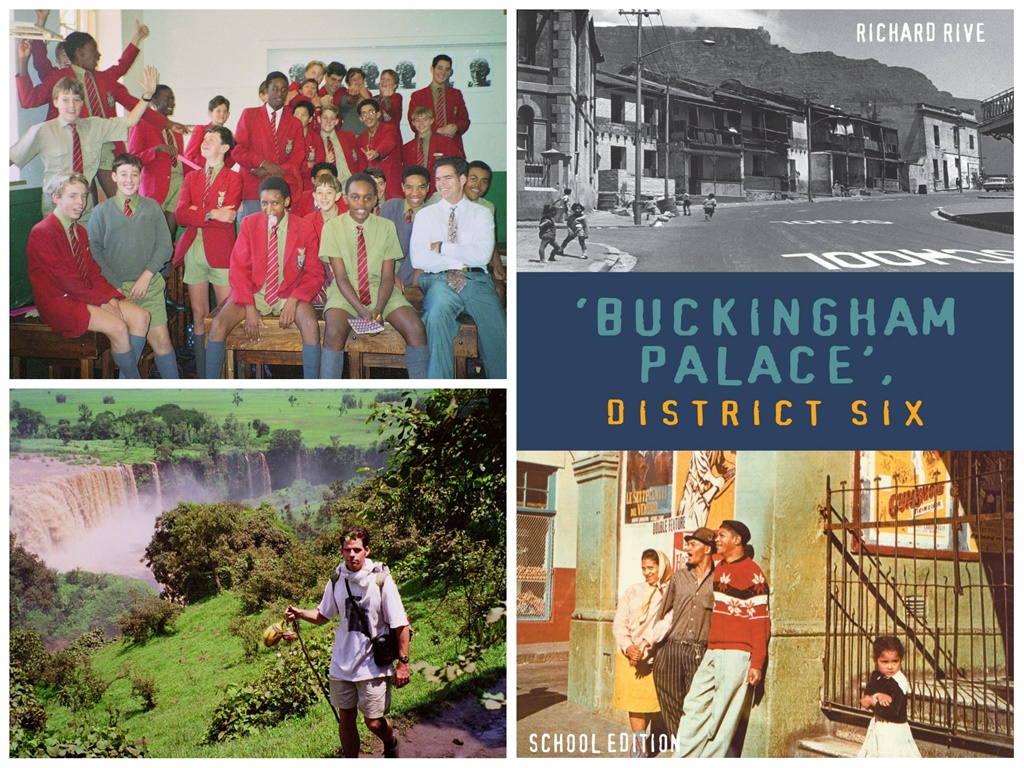
But after UZ, I didn’t want my time in Africa to end, so I got a job teaching English literature at a ritzy private boys’ high school next to the president’s house in Harare. Steeped in Anglo-Rhodesian traditions, the racially diverse students wore white collared shirts, red ties, khaki shorts, knee-high socks, blazers, and floppy cricket hats. They would stand and doff their caps, saying “Sir,” whenever I passed by.
Sadly, such courtesy did not extend to the country’s immigration officers who denied my application for a visa extension after six months of teaching. Apparently, I didn’t have any “essential skills” that Zimbabwe couldn’t live without. (I still don’t.)
So, I strapped on my backpack and started wandering around East Africa, plodding through Malawi, Zambia, and Tanzania, then up to Uganda, Rwanda, and Burundi, then east to Kenya, and north to Ethiopia and Eritrea. Then I flew over to Madagascar and Mauritius for some months, then back to southern Africa again to explore Mozambique, South Africa, Namibia, and Botswana, eventually ending my sojourn in Cameroon.
Four years. Seventeen countries. It was awesome!
But as I travelled, I embarked on a personal mission. Everywhere I went, I searched out bookshops and bought as many local titles as I could find. Then I’d read them while in the country, inviting the literary renderings of these artists to enhance my own experiences.
This massively expanded my mental and emotional engagement with these places. It was in this way that I first got a glimpse of Cape Town, through a book I found while recovering from bilharzia in Lilongwe, the capital of Malawi. (Bilharzia is a liver fluke I got from swimming in Lake Malawi. Not pleasant. Don’t google it.)
I took the strangely titled novel, Buckingham Palace: District Six, back to my fleabag hotel-cum-brothel next to the bus station and devoured it. Even with all the noises permeating the flimsy room partitions, I began to glimpse a curious world that I had yet to encounter in my travels on the continent. One that challenged my notions of the complexity, diversity and cultural parameters of “Africa.”
The author teaching at St. George’s College in Harare, Zimbabwe, 1995 (top left), and enjoying Tississat Falls, Ethiopia, 1995 (bottom left); Richard Rive’s timeless novel, Buckingham Palace: District Six (right).
It was a creole world. A mixed world. An in-between world. It stood between the conceptions that I had always taken for granted about Africa and Europe, black and white, east and west. An unsettling and intriguing world. One that I would definitely have to see for myself.
Written by Richard Rive, Buckingham Palace tells the story of the residents of a block of flats in District Six, the historical heart of Cape Town’s coloured population. Written after the district was destroyed by apartheid bulldozers, the book recounts the sights, sounds, personalities, and wit of the area.
It revels in the vitality of the street life, the inventiveness of the mixed Afrikaans and English speech (Kaapsetaal), and the quality of the relationships between the people there of all racial backgrounds.
Here was a story about a place similar to Harlem for African-Americans in its cultural and historical import for a group of people that I knew almost nothing about: Cape coloureds. A people, I’d soon learn, whose presence in this corner of the continent challenged any simplistic answers to the question of, “Who is an African?”
* This extract was taken from Cape Town: A Place Between by Henry Trotter, published by Catalyst Press. Trotter is the author Sugar Girls & Seamen: A Journey into the World of Dockside Prostitution in South Africa. This is Trotter’s third book, and the first in the Intimate Geographies Series by Catalyst Press.
WASHINGTON, DC – MAY 01: Counselor to President Donald Trump, Kellyanne Conway talks to reporters outside the White House May 01, 2019 in Washington, DC. Conway was interviewed at the same time that U.S. Attorney General William Barr was testifying before the Senate Judiciary Committee about special counsel Robert Muller’s report. (Photo by Chip Somodevilla/Getty Images)
Where does the gaffe, that awkward and embarrassing misstep caught on camera or on microphone, come from? We investigate.
On 21 October, former speaker of the National Assembly Baleka Mbete appeared on Al Jazeera’s Head to Head, presented by Mehdi Hasan. Business Day’s Jonny Steinberg,who was in the audience, wrote about the event:
“It was a dismal experience, leaving me and many others depressed, listless and bad-tempered. It is not that Mbete’s performance was shockingly bad. Something more epic than mere incompetence was on display. It was as if the sheer rottenness of what happened under Jacob Zuma spilled from the stage.”
Stupid – and hurtful – things politicians say when they go off-script (sometimes firing blunt truths in the process) is nothing new and definitely not specific to South Africa, but as Jennifer Rubin writes in the Washington Post:
“We may be in a post-gaffe era. We’ve regrettably gotten used to the president saying ridiculous, cruel and racist things. The country largely tunes him out, as he has defined political rhetoric down. Perhaps voters just don’t pay attention to stupid things politicians say as much as they used to, or maybe there is so much news that a gaffe is old news before most people have heard of it”.
And indeed, thanks to US President Donald J Trump, the gaffe – that very uncomfortable “oops” moment that should have stayed in obscurity but instead explodes under the spotlight like the DA upon Helen Zille’s return – might soon be an obsolete concept.
The word gaffe comes from the French, and more precisely the Provençal, “gaf”, a word used to label a sort of boathook. Although it is unclear how it became the defining term for a total political blunder, it has been used as such for at least the last century. A Google Ngram Viewer graph (a program that can chart the frequencies of any single word or sentence “with the text within the selected corpus”) shows that the word “gaffe” has made increasing appearances since the 1920s, and has been flying high in our vocabulary since 1992.
In 2017, the Merriam-Webster dictionary even named “gaffe” as one of its Words of the Year. It made the top 10, along with the word “feminism”, which first spiked following the #Metoo movement and later, when, as per the Merriam-Webster, Kellyanne Conway proclaimed during an interview that “she didn’t consider herself a feminist”.
Also one of 2017’s Words of the Year was “complicit”, this time again listed because of someone’s gaffe. Asked in April of that year by CBS News’s Gayle King about “whether she and her husband were ‘complicit’ in what was going on in the White House”, a dumbfounded Ivanka Trump responded: “[I] don’t know what it means to be ‘complicit.’”
A gaffe is often accidental and comes up when no one – especially those who have worked hard behind the scenes at scripting a whole tight scenario – expects it.
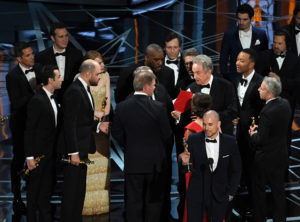
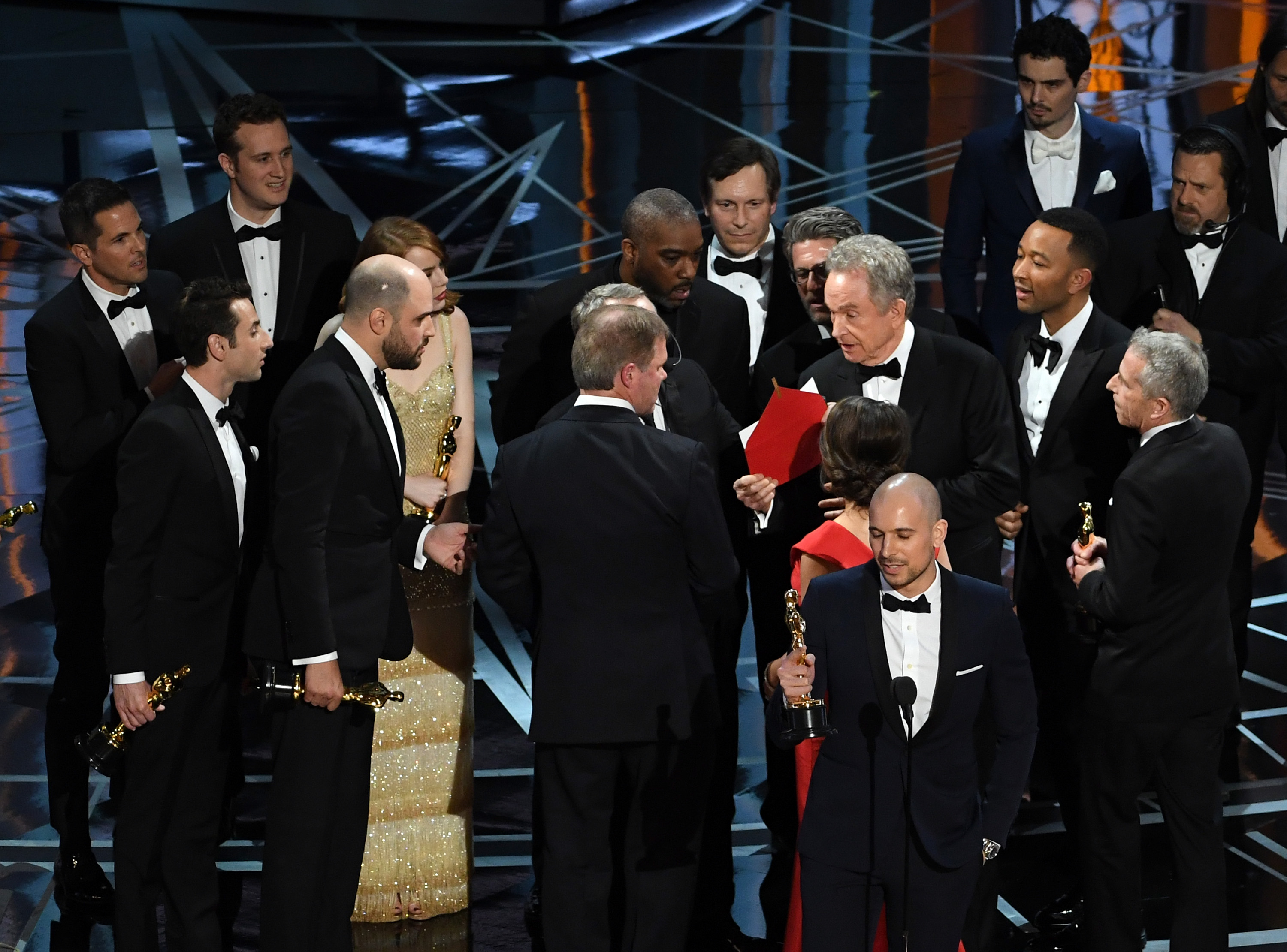
Think La La Land, called on stage as the winner of the 2017 Best Picture Academy Award when, in fact, the real winner – announced a few minutes later – was Moonlight.
HOLLYWOOD, CA – FEBRUARY 26: ‘La La Land’ producer Jordan Horowitz (C) speaks while holding an oscar and the winner card before reading the actual Best Picture winner ‘Moonlight’ onstage during the 89th Annual Academy Awards at Hollywood & Highland Center on February 26, 2017 in Hollywood, California. (Photo by Kevin Winter/Getty Images)
Sometimes a gaffe can be a glimpse into what politicians really think, like, when back in 2013, former president Zumasaid: “We can’t think like Africans in Africa generally. It is not some national road in Malawi.” Or when current Trump attorney Rudy Giuliani proclaimed on NBC’s Meet the Press, “Truth isn’t truth”.
In the universal world of bloopers, gaffes are not all the same; an article written by Dan Amira and published in The Intelligencer, dubbed “Taxonomy of Gaffes”, discerns six types of gaffes, including the Kinsley Gaffe, the Undisciplined Surrogate Gaffe and the Microphone Gaffe.
The Kinsley Gaffe, which is named after US journalist Michael Kinsley (who was the first to draw attention to it) is when the gaffe gives up the truth, like when acting chief of staff Mick Mulvaney said, when asked by ABC’s Jonathan Karl if Trump’s actions over Ukraine amounted to quid pro quo: “I have news for everybody: Get over it, there’s going to be political influence in foreign policy.”
There is also the former governor of Alaska, Sarah Palin, who, in 2010, when asked in a radio interview how she would handle tensions between the two Koreas, said, “But obviously, we’ve got to stand with our North Korean allies.”
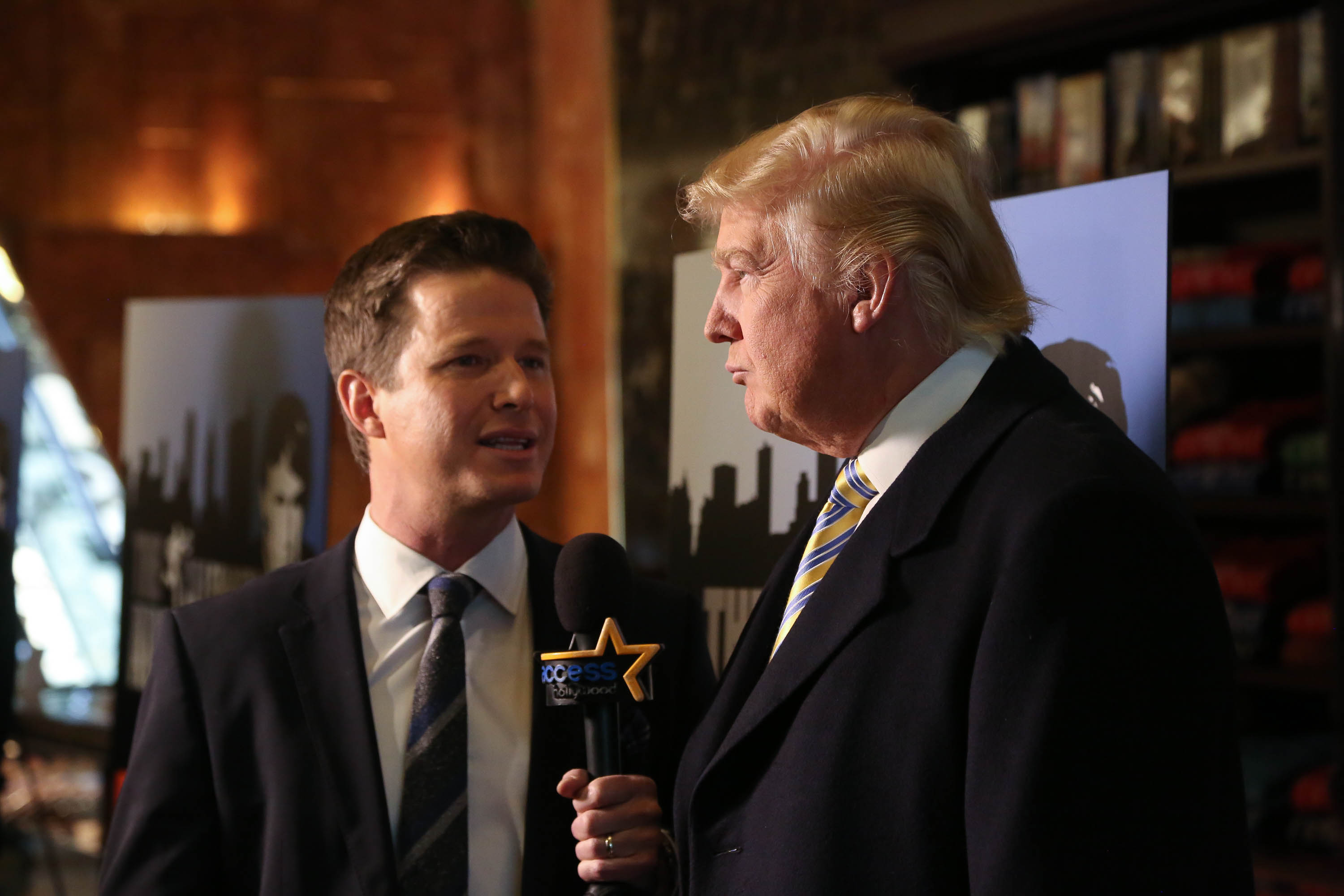
The Microphone Gaffe, as its name suggests, happens when a microphone should be off but isn’t, and the person miked makes inappropriate comments thinking no one hears except for the ones nearby. Trump gave us a taste of the “hot mic gaffe”’ when, in September 2005, during the preparation for of an Access Hollywood episode, he said, “When you’re a star, they let you do it. You can do anything… grab them by the pussy,” something that was then dubbed, “the locker room talk.”
NEW YORK, NY – JANUARY 20: Donald Trump (R) is interviewed by Billy Bush of Access Hollywood at “Celebrity Apprentice” Red Carpet Event at Trump Tower on January 20, 2015 in New York City. (Photo by Rob Kim/Getty Images)
There have been many more gaffes made by politicians and celebrities around the world, but very few were as damaging as the one uttered by US President Gerald Ford in October 1976, during a debate with Jimmy Carter.
Facing the camera, he confidently said: “There is no Soviet domination of Eastern Europe”, to which the New York Times’ Max Frankel responded: “I’m sorry, what?… Did I understand you to say, sir, that the Russians are not using Eastern Europe as their own sphere of influence in occupying most of the countries there and making sure with their troops that it’s a communist zone?” It cost Ford the presidency.
More recently, former VP and 2020 presidential candidate Joe Biden, jokingly self-proclaimed himself a “gaffe machine”. Biden once told a paralysed man in a wheelchair to “Stand up, Chuck”, and describedObama as “the first mainstream African-American who is articulate and bright and clean”. These gaffes, just two among many others, might also cost him a seat at the democratic table.
Closer to home, South African politicians haven’t spared us from blunders. In February 2019, Daily Maverick’s Marianne Merten called it political self-sabotage when International Relations Minister Lindiwe Sisulu issued a diplomatic summons claiming “interference by the Western imperialist forces”, and “latter-day colonialists” to five embassies, following the publication of an eight-month-old draft memo.
In March, DA (former) leader Mmusi Maimane told the Tembisa community on the East Rand, “44 out of 10 South Africans don’t have a job”, while in September, Minister of Mineral Resources and Energy Gwede Mantashe promoted “hazenile” at the annual Mining Down Under conference in Perth, Australia. Hazenile, he said, was a fabulous mineral discovered in the “Congo Caves”. Except Hazenile was someone’s April Fool’s joke and does not exist in real life. ML
Bernardine Evaristo won half the Booker Prize last week — sharing the award with Margaret Atwood, when the judges, chaired by Peter Florence, failed to do their job, choosing a winner.
The split decision, expressly forbidden by the rules of the prize, has been universally ridiculed. One of the judges, Afua Hirsch, didn’t help by publishing an article asserting she was proud of the decision, while inadvertently revealing that, on her part at least, it was made on dodgy criteria. When it comes to Atwood and Evaristo, “you can’t compare them”, she said, “but you can recognise them both. And I’m glad this is what we did.” On this helpless basis, there can be no literary prizes. Or if there are, they should have as many winners as entrants.
How did the Booker end up such a muddle? Perhaps partly because it was so overtly, this year, a prize devoted to celebrating diversity above other forms of excellence in fiction.
If diversity is what you value most in new fiction — and given that one of the great purposes of fiction is to help us understand the experiences of others, it might very well be — then it seems almost indecent to prize one form of diversity more than another. So that would make it difficult to choose a single winner wouldn’t it? Unless perhaps it is possible to decide which novel is, as it might be almost quantitatively, the most diverse?
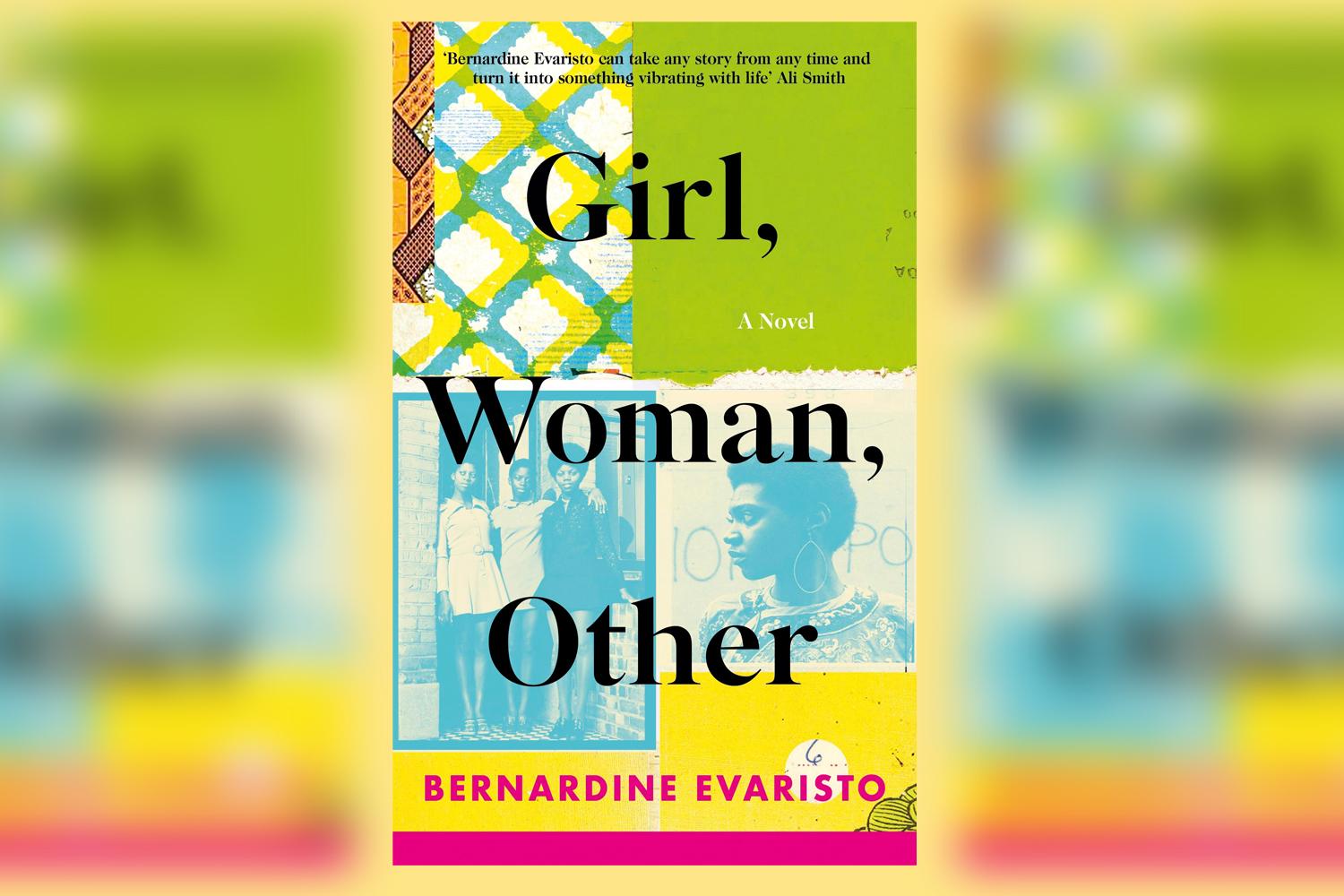
That novel this year is Girl, Woman, Other. This highly readable, even slightly saga-ish, book is dedicated to presenting the life experiences of 12 black British women from different backgrounds, giving a voice as directly as possible to those who, until really quite recently, have been little represented in British fiction, certainly not in novels with the sales that Evaristo’s now seems certain to achieve.
Each of these women is given her own section, almost a separate short story, loosely linked. First we meet Amma, the character most resembling Evaristo herself, a radical feminist lesbian playwright in her fifties, about to go to the first night of her latest play, The Last Amazon of Dahomey, at the National. The book returns to the celebratory after-party in its penultimate chapter, an occasion that brings together nearly all the other characters.
There’s Yazz, Amma’s sparky 19-year-old student daughter, fathered by dapper gay media don, Roland. There’s Dominique, her lifelong ally, despite her move to America, after being inducted into a radical feminist lesbian commune by a controlling lover, Nzinga. There’s her schoolfriend Shirley, who has become a teacher herself, striving to help her more talented pupils. Among them is Carole who, after being gang-raped as a teenager, has resolutely taken control of her life, attending Cambridge, becoming a banker — and finding a white partner, to the initial consternation of her Nigerian mother, Bummi. Carole’s schoolfriend LaTisha, however, works in a supermarket and has three children by different fathers.
Unconventional prose: BernardineEvaristo at the 2019 Booker Prize at The Guildhall in central London. She shared the award with Margaret Atwood (Dave Benett)
Then there’s the extended family of Grace, born in 1895, to an itinerant Abyssinian seaman and a 16-year-old girl from South Shields, orphaned when she was eight but married to a landowning farmer. Her one child, Hattie, now 93, married an African-American serviceman, Slim — and their descendants include Megan/Morgan, who self-identifies as gender-free, “they”, and has become an important social media influencer and activist. “Megan was part Ethiopian, part African-American, part Malawian, and part English which felt weird when you broke it down like that because essentially she was just a complete human being”, we are told, in a voice that is partly her own but also choric.
One of the 12 women here, a foundling, Penelope, a middle-class, twice-divorced feminist now nearly 80, seems not to belong so much to this novel — until an Ancestry DNA test proves otherwise, returning her to its heart, for a heartwarming end (“this is about being / together”).
Evaristo packs all this in by adopting a free declamatory style, using commas, but no caps to start sentences, and no full-stops or quotation marks. The prose is printed almost as verse, with crudely emphatic line breaks, and even single-word lines, mixing together narration, dialogue and internal monologue, reading at times like a play-script. The syntax is repetitious (she does this, she does that), the diction loose and conversational. Evaristo provides a great deal of information about her characters (including always about the food they eat and the clothes they wear and other such markers) but it nonetheless remains cursory and sketchy, like a series of rapid CV’s.
Despite the lack of conventional punctuation Girl, Woman, Other makes for fast, easy reading, but it never deepens much as a novel beyond this level of quasi-sociological reportage, skimming along. Perhaps given the mission — “ I just wanted these characters to expand in people’s minds the idea of what black British women can be”, Evaristo said after half-winning — this profusion is no fault, but rather the essence of her achievement.
The Booker Prize might usefully clarify its purpose next time around, though.
Girl, Woman, Other by Bernardine Evaristo (Hamish Hamilton, £16.99), buy it here.
Martin Luther King, Jr. Center in Atlanta, Georgia
As celebrations across the country marked the 150th birth anniversary of Mohandas Karamchand Gandhi, Oct. 2, several groups demonstrated against the Mahatma.
According to a press release issued by the Organization for Minorities of India (OFMI), protestors accused Gandhi of racism and displayed placards calling him the “father of apartheid.” Other placards claimed Gandhi hated women and stated that “Gandhi was a sex offender.”
At the Martin Luther King, Jr. Center in Atlanta, Georgia, a group including several African-Americans demanded removal of the Gandhi statue placed at the center, the OFMI said.
Jerry Jones, an OFMI activist, displayed placards declaring: “No place for Gandhi in USA.” Another placard held by Jones quoted South African author Ashwin Desai, who stated, “Gandhi believed in the Aryan brotherhood. This involved whites and Indians higher up than Africans on the civilized scale.”
Demonstrators later moved to Georgia State University to protest a commemoration of Gandhi hosted by the Consulate General of India in Atlanta in collaboration with the Gandhi Foundation of USA.
Earlier, on Sept. 24, according to the OFMI press release, Jones and Nanak Singh represented the group at the Gwinnet County Board of Commissioners’ public hearing, “where they appeared to register dissent” against a proposed bust of Gandhi which the county was planning to unveil at Bryson Park, Lilburn, Georgia, Oct. 12.
“There is no way there should be statues erected commemorating a man who could not stand Africans,” the OFMI press release quoted Cheryle Renee Moses, the Democratic nominee for Georgia State Senate’s District 9 in Gwinnett County as saying. “I’m sure many other African-Americans and black folks would feel the same way once they are educated on Gandhi’s real beliefs about Africans, about black folks,” she said.
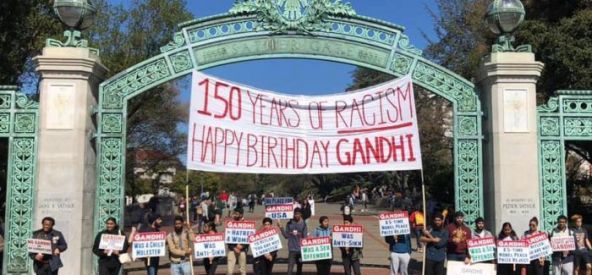
Similarly, on the West Coast, approximately 20 people blocked the Sather Gate at University of California, Berkeley, Oct. 2. Holding a large banner declaring, “150 Years of Racism: Happy Birthday, Gandhi,” they chanted slogans such as “Down with Gandhi” and delivered short speeches about why they were protesting Gandhi.
“Gandhi is used as a diplomatic weapon by the Indian State,” said Bhajan Singh, a former director of OFMI. He claimed that the Government of India has expanded its budget to finance Gandhi statues around the world, adding, “They have occupied Kashmir, they have attacked the Sikhs in Punjab, they have attacked Dalits, Christians, and they want to forcefully convert and submerge the traditional Dravidian culture of India into the pro-Aryan culture.”
Although Gandhi is widely perceived as a “Mahatma” (Great Soul) and portrayed as an icon of peace, the past several years have brought increased calls for reevaluation of his legacy. In 2014, protests erupted over a proposed statue of Gandhi in London after historian Kusoom Vadgama began a petition alleging that the Indian activist “dishonored women.” In 2018, a Gandhi statue was removed from the University of Ghana campus after students and faculty began a petition against Gandhi’s “racist identity.” An ongoing campaign against a proposed statue of Gandhi in Malawi has generated almost 4,300 signatures on a petition calling him an “ardent racist.”
“Modi’s years of building upon the false Gandhi propaganda to support the goals of India’s Hindu nationalist movement are being challenged around the world,” Arvin Valmuci of the OFMI said.
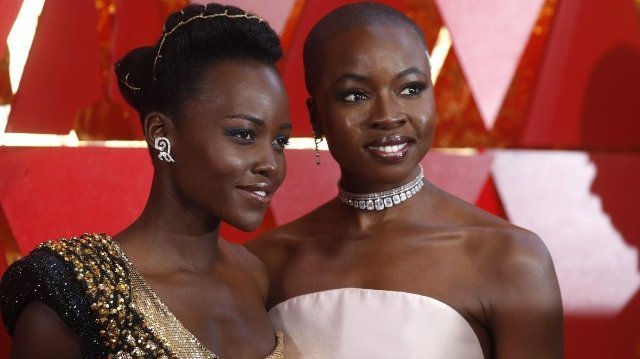
<!– Lupita Nyongo and Director Danai Gurira. Photo Credit: QuartzAfrica –>
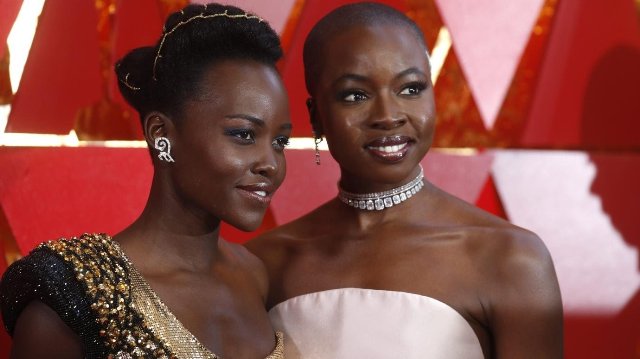
Lupita Nyongo and Director Danai Gurira. Photo Credit: QuartzAfrica
Mixed reactions have continued to trail news that Kenyan actress, Lupita Nyong’o will play the Nigerian lead character in TV series adaptation of Chimamanda Adichie’s ‘Americanah’
On Sunday, Lupita confirmed that HBO Max had ordered a 10-episode series based on the award-winning novel.
Following the announcement, Nigerians on social media shared diverse views on the casting of Lupita as the lead character, Ifemelu, an Igbo woman raised in Lagos.
While some fans applauded Lupita for purchasing the movie rights, thus earning casting control, others opined that an Igbo or Nigerian actress would do justice to the role.
Some fans suggested Genevieve Nnaji, ‘Insecure’ star, Yvonne Orji, Cynthia Erivo or Tracy Ifeachor for the role.
@Yugerohu tweeted, “Lupita is going to play Ifemelu from Igbo land Nigeria? I love Lupita a lot, but this is not it.
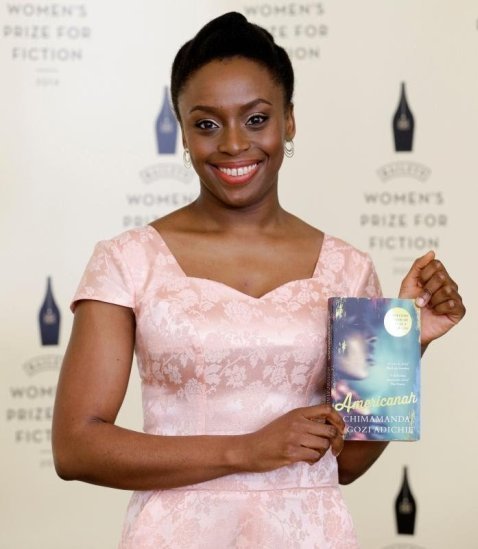
Chimamanda with her award-winning Americanah novel
“Feels like she’s the default pick whenever Hollywood needs an African Actress. If it’s too hard to find one in Nigeria, give us Yvonne Orji? Cynthia Erivo? Tracy Ifeachor?”
@Mide_TA said, “Seeing as she bought the film rights. She can cast whoever she wants I think.”
@Behembaba said, “Black Americans have been making this same argument about Black foreigners playing Black American roles.
“Cynthia Erivo should never have been caste as Harriet Tubman.”
@Johnmuriuki said, “We, Africans, didn’t gripe when Morgan Freeman played Mandela, nor did we raise a ruckus when Denzel played Steve Biko.
“We didn’t raise an eyebrow when Forrest Whittaker played Idi Amin. We oughta ran riot when @shakira did that god-awful song in 2010 but we held our wheels.”
@Theolufolake said, “Lupita bought the film rights in 2014. Honestly I feel you. I felt the same way about Half of a yellow Sun.”
@Shawlarh said, “Forget about her buying the rights. She’s the only African Actress well suited for the role and big enough to reach a bigger audience, which is what they need. It’s simply business.”
@Onioluwafunmi said, “I still have a beef with the Lady that played Olanna in Half A Yellow Sun. I felt really sad. It just wasn’t right.”
NAN reports that some other fans pointed out that Nigerian actor, David Oyelowo played leading roles in Uganda-based ‘Queen of Katwe’ and ‘The Boy Who Harnessed the Wind’.
@Echezona tweeted, “Y’all should stop being pressed about Lupita taking on the role of a Nigerian woman.
“Y’all weren’t pressed when David oyelowo acted Queen of Katwe (set in Uganda) and Chiwetel Ejiofor in the boy who harnessed the wind (set in Malawi).” @99thoughts said, “I get your point but
David oyelowo was casted in ‘Queen of katwe’ which was a Ugandan story. He was also the main actor in ‘a United kingdom’ which was a South African history.”
NAN reports that Nyong’o purchased the film rights to ‘Americanah’ in 2014 and immediately collaborated with fellow Black Panther’s castmate, Gurira to write the screenplay.
However, in 2018, the duo stated that the novel was being turned into a mini-series and not a feature film. They visited Nigeria to do research for the screen project.
‘Americanah’ tells the story of Ifemelu (Nyong’o), a young, beautiful, self-assured woman raised in Nigeria, who as a teenager falls in love with her classmate Obinze.
Living in a military-ruled country, they each depart for the west, with Ifemelu heading for America.
There, she learned that despite her academic success, she is forced to grapple for the first time with what it means to be black.
WASHINGTON-(MaraviPost)-Less than two years out from the 2020 US presidential election, the pool of Democratic candidates vying for their party’s nomination is among the largest and most diverse in United States history.
The field has been reduced from 27 to 20, and will likely continue to shrink as leading candidates continue to pull away in the polls and the race heats up.
So far, there have been three Democratic debates. The first two hosted 20 candidates over the course of two nights, but the third only saw 10 candidates take the stage due to stricter Democratic National Committee guidelines.
As the field narrows, here is a look at the current 2020 Democratic presidential hopefuls:
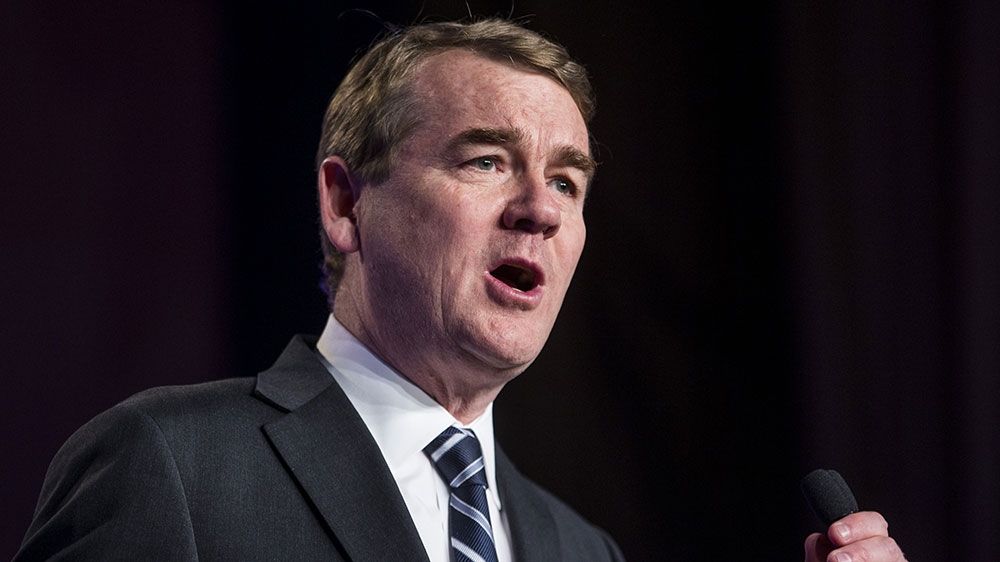
Michael Bennet, 54
Michael Bennet has served as a US senator from Colorado since 2009. Bennet, a former head of the Denver school district, carved out a profile as a wonky, policy-oriented senator.
He gained internet fame this year for a harsh scolding of Republican Senator Ted Cruz of Texas over the government shutdown.
Bennet was close to launching a presidential campaign after that, but had to pause it when he was diagnosed with prostate cancer.
In this file photo taken on April 10, 2019, US Senator Michael Bennet speaks during the North American Building Trades Unions Conference in Washington, DC [Zach Gibson/Getty Images/AFP]
Bennet’s office said last month that the senator was successfully treated. That cleared the way for his May 2 campaign launch.
Bennet has so far only made the debate stage twice, during the first and second debates. He failed to qualify for the third debate in September.
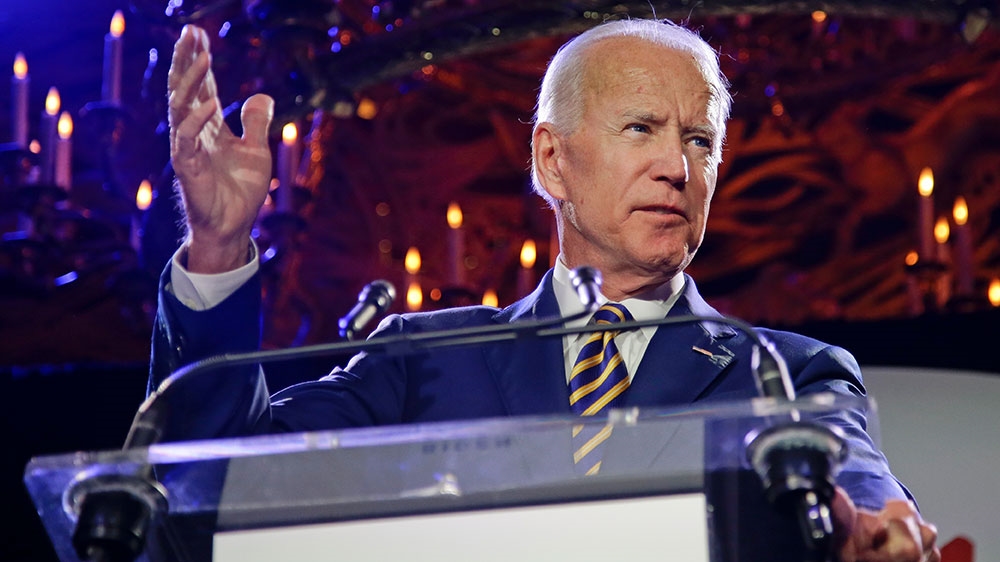
Joe Biden, 76
Joe Biden served as vice president under former President Barack Obama from 2009 to 2017 after nearly four decades serving as a senator from Delaware.
Biden is the most experienced politician in the race, and the among the oldest at 76. This will be his third presidential run. His first White House bid in 1987 ended after a plagiarism scandal.
In a video announcement of his candidacy posted on Twitter on April 25, Biden focused on the 2017 deadly clash between white supremacists and counterprotesters in Charlottesville, Virginia. Biden noted US President Donald Trump‘s comments that there were some “very fine people” on both sides of the violent encounter, which left one woman dead.
“We are in the battle for the soul of this nation,” Biden said. “If we give Donald Trump eight years in the White House, he will forever and fundamentally alter the character of this nation – who we are. And I cannot stand by and watch that happen.”
Last month, Biden struggled to respond to comments from Lucy Flores, a 2014 lieutenant governor nominee in Nevada, who said he made her uncomfortable by touching her shoulders and kissing the back of her head before a campaign event. Several other women have made similar claims.
In a video, Biden pledged to be “more mindful” of respecting “personal space”, but Flores told Fox News this week that the former senator’s jokes on the matter have been “so incredibly disrespectful”.
The incident is just a glimpse of the harsh vetting from both Democrats and Republicans expected for Biden, who has run for president twice before but never from such a strong political starting position.
Former Vice President Joe Biden speaks at the Biden Courage Awards last month in New York [Frank Franklin II/AP Photo]
In recent weeks, he was repeatedly forced to explain his 1991 decision, as Senate Judiciary Committee chairman, to allow Anita Hill to face questions about her allegations of sexual harassment against Clarence Thomas, then a nominee for the Supreme Court.
Biden has since apologised for his role in the hearing. But in the #MeToo era, it is another example of why critics believe he may struggle to catch on with the Democratic primary voters of 2020.
As the frontrunner, Biden has made all three debate stages during this campaign season.
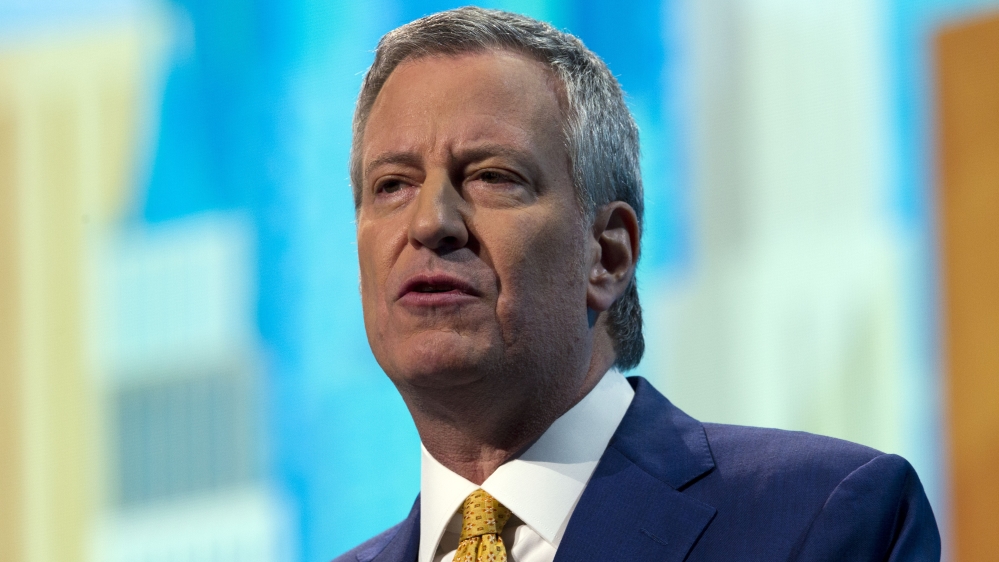
Bill de Blasio, 58
The New York City mayor emerged as a progressive standard-bearer in 2013, when he won the first of two four-year terms at the helm of the country’s biggest city on a platform of addressing income inequality. But he has struggled amid middling approval ratings and some political setbacks to build a national profile.
De Blasio, 58, can point to a number of policy wins in New York, including universal prekindergarten, a higher minimum wage and paid sick leave.
New York City Mayor Bill de Blasio speaks at the 2019 American Israel Public Affairs Committee policy conference [File: Jose Luis Magana/AP Photo]
De Blasio has called Trump a “bully” and a “con artist” and criticised his administration’s positions on immigration, climate change and social welfare.
De Blasio made the debate stages for the June and July events, but failed to do so in September.
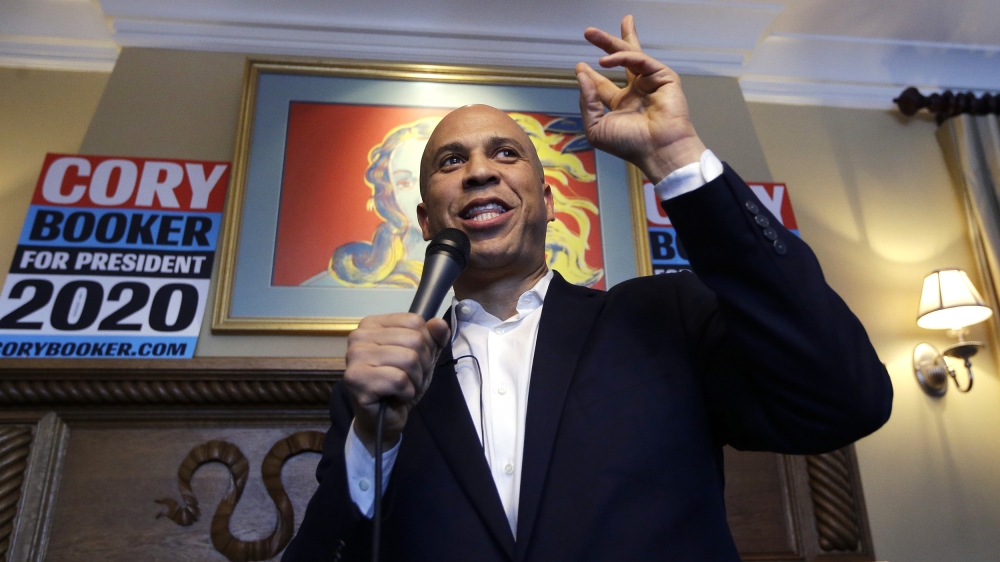
Cory Booker, 49
Cory Booker has served as a US senator from New Jersey – the first African American in the state’s history to hold the office – since 2013. He was the mayor of Newark from 2006 to 2013.
His entry into the Democratic primary was steeped in history and symbolism, befitting his status as the second black candidate in an historically diverse field. Invoking the legacy of the national movements for civil rights and for women’s suffrage, the New Jersey senator during his candidacy announcement urged a return to a “common sense of purpose”.
Cory Booker speaks to voters during a campaign stop in Manchester, New Hampshire [File: Steven Senne/AP Photo]
Booker could face difficulty winning the hearts of the progressive Democratic base due to his past financial ties to banking and pharmaceutical interests. He said he would stop taking contributions from pharmaceutical companies in 2017.
As for the debates, Booker has been on the stage for all three events held so far.
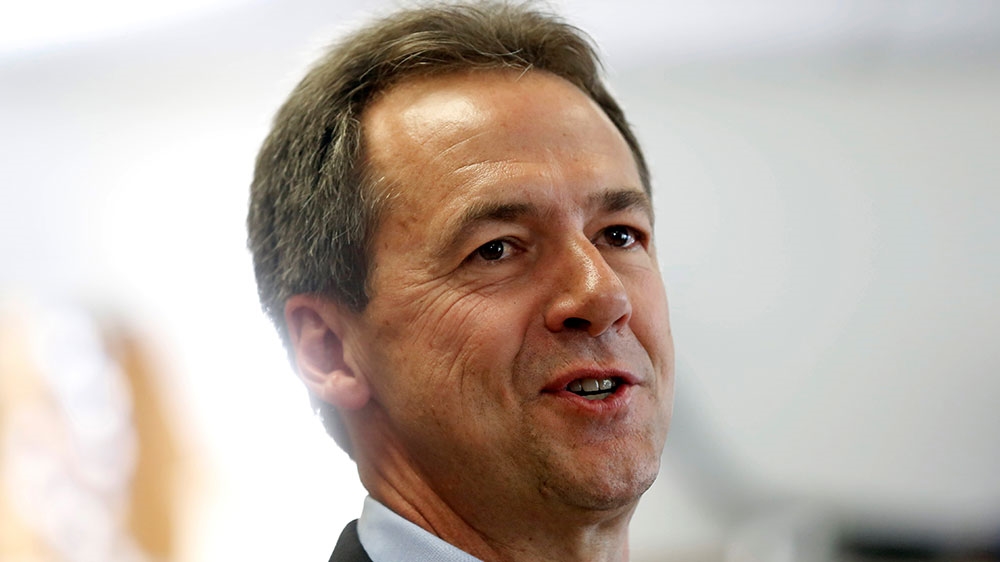
Steven Bullock, 53
The Democratic governor of Montana, re-elected in 2016 in a conservative state that Trump carried by 20 percentage points, has touted his electability and ability to work across party lines.
Montana Governor Steve Bullock talks to the media and students at Helena High School as he launches 2020 US presidential campaign in Helena, Montana [Jim Urquhart/Reuters]
Bullock, 53, has made campaign finance reform a cornerstone of his agenda, and emphasises his success in forging compromises with the Republican-led state legislature on bills to expand Medicaid, increase campaign finance disclosures, bolster pay equity for women and protect public lands.
Bullock failed to make the debate stage in June, but did so in July. Due to the stricter guidelines for the September event, however, he did not qualify.
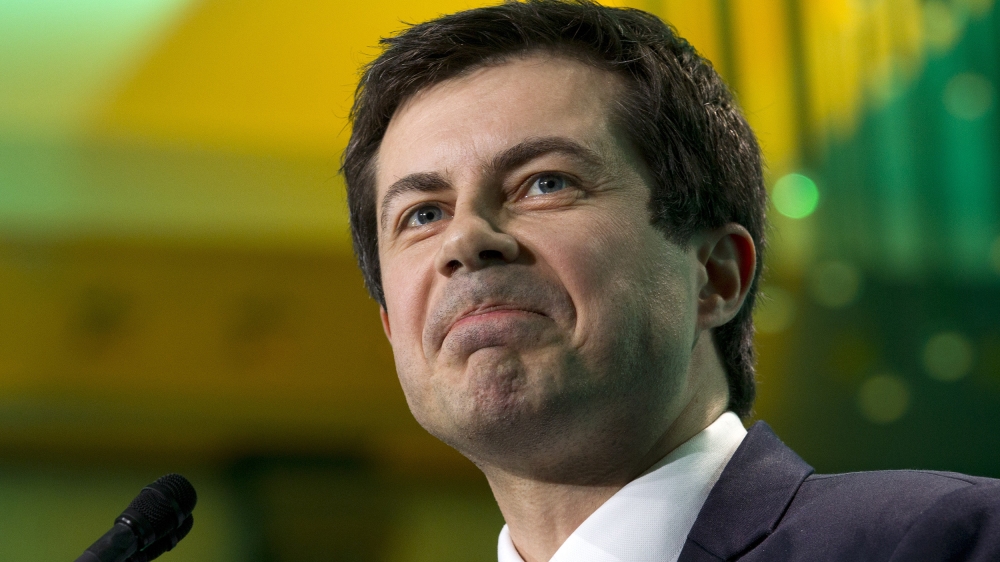
Pete Buttigieg, 37
Pete Buttigieg has served as mayor of South Bend, Indiana, since 2012.
Before that, Buttigieg was a consultant for McKinsey and company.
He is the first openly gay Democratic candidate to run for president. He announced his presidential bid on January 23, 2019.
There are no policy positions on his website. He has virtually no paid presence in the states that matter most. And his campaign manager is a high-school friend with no experience in presidential politics.
Despite this, he has suddenly become one of the hottest names in the Democrats’ presidential primary season. On the campaign trail, he has frequently spoken about the struggle to legalise same-sex marriage.
Pete Buttigieg speaks during the US Conference of Mayors winter meeting in Washington [File: Jose Luis Magana/AP Photo]
He has also repeatedly criticised Vice President Mike Pence for his views that undermine LGBTQ rights.
“I’m not critical of his faith; I’m critical of bad policies. I don’t have a problem with religion. I’m religious, too. I have a problem with religion being used as a justification to harm people and especially in the LGBTQ community,” the Indiana Democrat said in an interview with NBC’s The Ellen DeGeneres Show this month.
Buttigieg’s moment may pass if he does not take swift action to build a national organisation capable of harnessing the energy, he will need to sustain his surge in the nine months or so before the first votes are cast.
Buttigieg has been on all three stages of the debates so far.
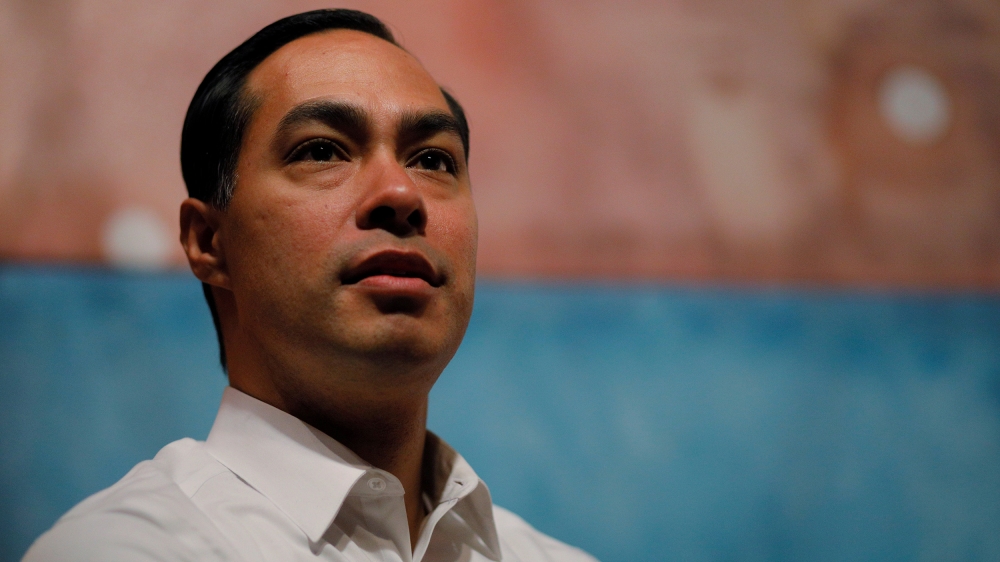
Julian Castro, 44
Julian Castro was elected mayor of San Antonio, Texas in 2009 and served until 2014.
He served as the 16th US secretary of Housing and Urban Development (HUD) under US President Barack Obama from 2014 until 2017.
Castro, the grandson of Mexican immigrants, was raised by a local Latina activist, and after a brief career in law, he was elected mayor of the nation’s seventh-largest city at the age of 34.
Julian Castro listens as he is introduced at a gathering of Tri-City Young Democrats in Somersworth, New Hampshire, US, on January 15, 2019 [Brian Snyder/Reuters]
It was not long after that election that Democrats nationally embraced him as a star in the making, particularly one from Texas, where a booming Hispanic population is rapidly changing the state’s demographics and improving the party’s fortunes.
As for the debates, Castro has made all three events held so far.
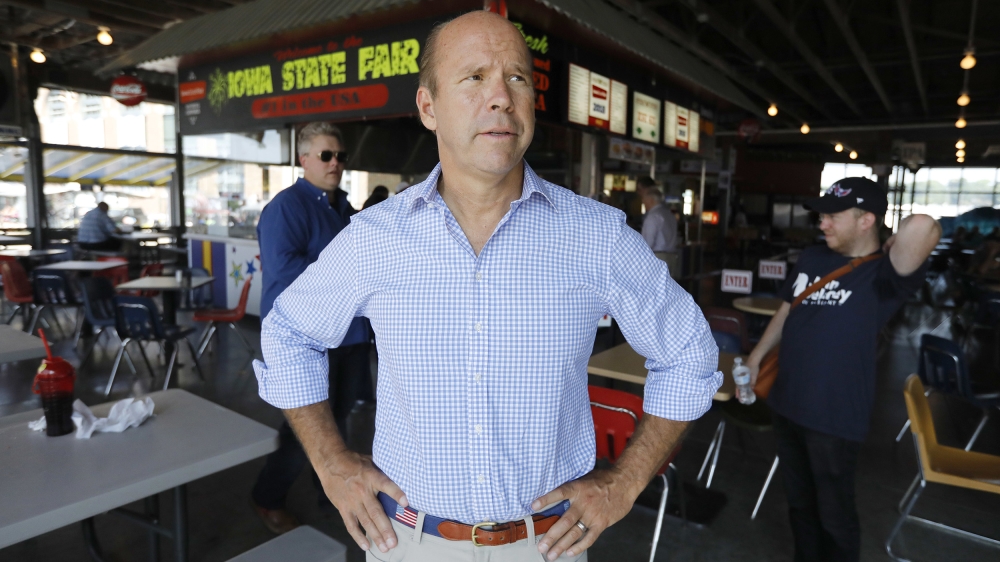
John Delaney, 56
John Delaney served as a US congressman for Maryland’s sixth district from 2013 to 2019.
Delaney, a former banking entrepreneur, is known as politically moderate with a willingness to reach across the aisle.
He has supported a measure to raise money to build infrastructure by allowing US corporations to avoid taxes when they repatriate profits overseas if they buy bonds that would be used to build infrastructure.
John Delaney stands in a food vendors building during a visit to the Iowa State Fair [File: Charlie Neibergall/AP Photo]
He announced his presidential run in a Washington Post op-ed published on July 28, 2017.
Delaney, one of the wealthiest members of Congress, was the first to announce he will seek his party’s nomination in 2020.
He said he was entering the presidential race early because he knows he will need time to build name recognition.
He failed to qualify for the first debate, but was able to do so for the second. He could not, however, meet the guidelines for the third debate.
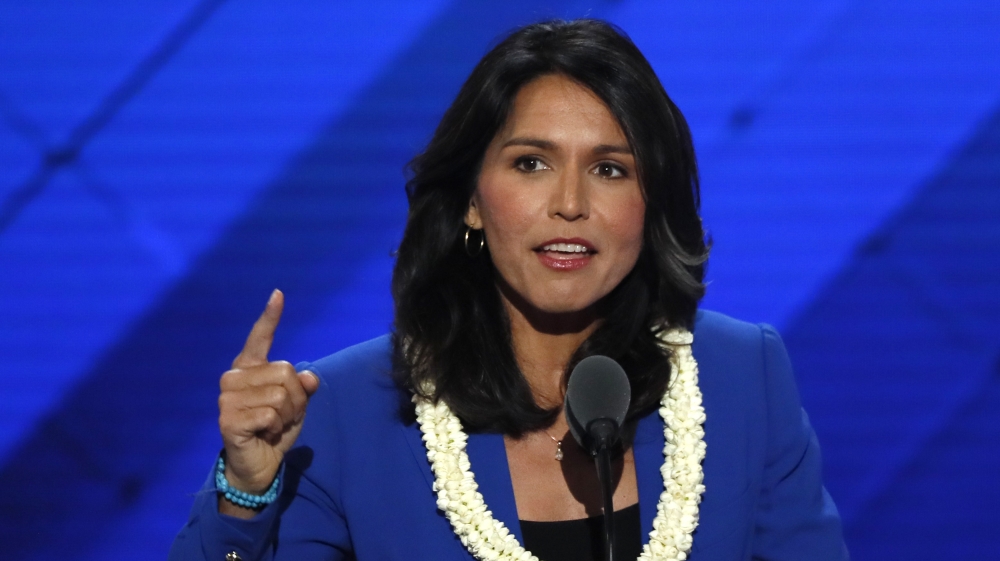
Tulsi Gabbard, 38
Tusi Gabbard has served as a US congresswoman from Hawaii’s second district since 2013.
Gabbard is the first Hindu member of Congress. At the age of 21, she became the youngest to be elected to a US state legislature serving on the Hawaii House of Representatives.
She has also served in the Hawaii Army National Guard in a combat zone in Iraq and was deployed to Kuwait.
She was a fierce opponent of same-sex marriage when she served in the state legislature in her 20s. But she has since disavowed those views and professes her support for LGBTQ rights.
Critics have pounced on her efforts to block the legalisation of same-sex marriage in Hawaii and a meeting she held with Syrian President Bashar al-Assad. Earlier this year, she penned an op-ed responding to media reports about her alleged ties to Hindu nationalists.
Tulsi Gabbard delivers a nomination speech for Senator Bernie Sanders on the second day at the Democratic National Convention in Philadelphia [File: Mike Segar/Reuters]
“While the headlines covering my announcement could have celebrated this landmark first, and maybe even informed Americans about the world’s third-largest religion, some have instead fomented suspicion, fear and religious bigotry about not only me but also my supporters,” she wrote.
As for the debates, Gabbard qualified for the first two debates, but failed to do so for the third.
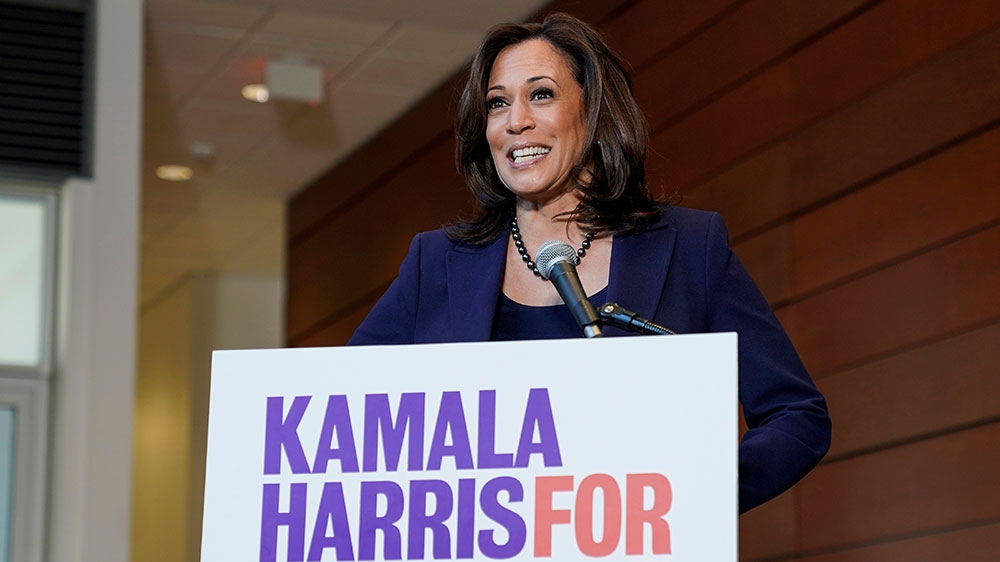
Kamala Harris, 54
Kamala Harris has served as a US senator from California since 2017.
Before joining the Senate, Harris was the attorney general of California. She has also served as San Francisco district attorney.
Her track record as San Francisco’s district attorney and California’s attorney general has drawn scrutiny in a Democratic Party that has shifted in recent years on criminal justice issues.
Harris is the daughter of immigrants from Jamaica and India.
Senator Kamala Harris speaks to the media after announcing she will run for president of the United States [Joshua Roberts/Reuters]
She supports a middle-class tax credit, Medicare for All healthcare funding reform, the Green New Deal and the legalisation of cannabis.
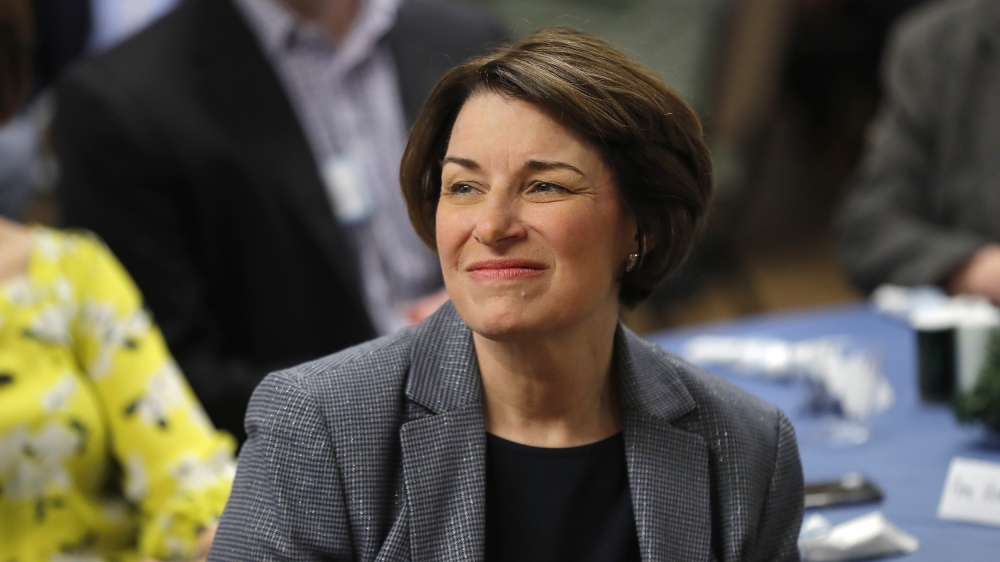
Amy Klobuchar served as a US senator from Minnesota since 2007, becoming her state’s first elected female senator.
Before joining the Senate, she was the Hennepin County lawyer.
Amy Klobuchar waits to speak at the Ankeny Area Democrats’ Winter Banquet on Thursday, February 21, 2019, in Des Moines, Iowa [Charlie Neibergall/AP Photo]
Klobuchar gained national attention in 2018 when she sparred with Brett Kavanaugh during Senate hearings for his Supreme Court nomination.
On the campaign trail, the former prosecutor and corporate lawyer supports an alternative to traditional Medicare healthcare funding and is taking a hard stance against rising prescription drug prices.
She has made all three debates held so far.
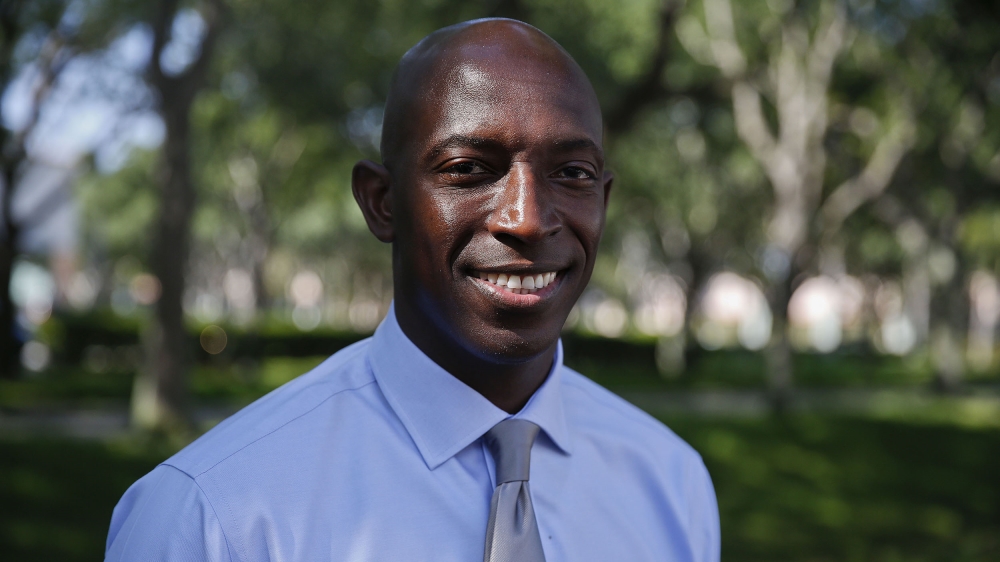
Wayne Messam, 44
Wayne Messam has served as mayor of Miramar, Florida, since 2015.
Messam grew up in South Bay, an agricultural town of 3,500 people, adjoining Lake Okeechobee. His parents emigrated from Jamaica.
Messam believes Miramar has much that the rest of the US would like to have: environmentally friendly development, high-end manufacturing and major corporate operations.
Miramar Mayor Wayne Messam poses for a portrait in Miramar [Brynn Anderson/AP Photo]
Pundits have said he is unlikely to win due to low name recognition and funding. No sitting mayor has ever won the presidency and he has a lack of political experience.
On March 28, 2019, he announced he was running for president.
Messam has failed so far to make a single debate stage.
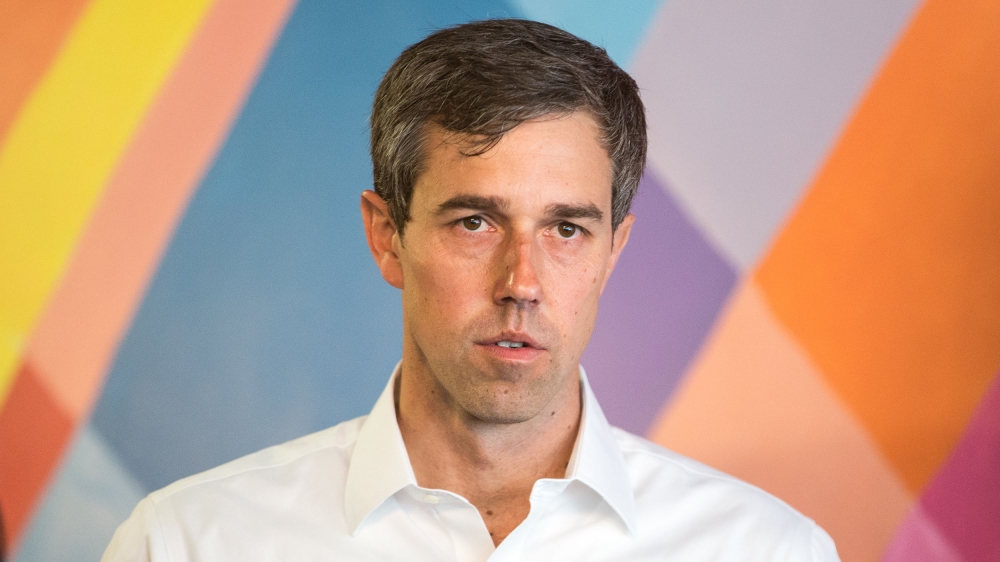
Beto O’Rourke, 46
Beto O’Rourke served Texas’s 16th congressional district in the House of Representatives from 2013 to 2019.
O’Rourke gained fame last year for his record fundraising and ability to draw crowds before of his unexpectedly narrow loss in the US Senate race against Republican incumbent Ted Cruz.
His Senate bid generated a torrent of media attention and excited voters in a party desperate for fresh political faces. He lost the race by fewer than three percentage points, the tightest senate contest in the state in four decades.
O’Rourke announced a $6.1m fundraising haul for the first 24 hours of his campaign, bettering his Democratic opponents.
Beto O’Rourke speaks during a campaign stop at a cafe on April 19, 2019, in Somersworth, New Hampshire [Scott Eisen/AFP]
Since his Senate bid ended, O’Rourke has worked to keep himself in the public eye, regularly staying in touch with his supporters and sitting for an interview with Oprah Winfrey.
But with progressive policies and diversity at the forefront of the party’s nominating battle, O’Rourke will face a challenge as a wealthy white man who is more moderate on several key issues than many of his competitors.
He announced his presidential bid on March 14, 2019.
He has appeared on all three debate stages.
Tim Ryan, 45
Ryan has served as a US House representative from Ohio’s 13th district since 2003.
He represents a northeastern Ohio area that has reportedly lost manufacturing jobs in the past few years and shifted to Republican Donald Trump in the 2016 presidential election.
Ryan has said Trump has turned his back on those blue-collar voters who fled to him in 2016 and failed to live up his promise to revitalise the manufacturing industry.
Tim Ryan speaks at the Heartland Forum on the campus of Buena Vista University in Storm Lake, Iowa [File: Nati Harnik/AP Photo]
Ryan pledged to create jobs in new technologies and to focus on public education and access to affordable healthcare.
He first gained national attention when he unsuccessfully tried to unseat Nancy Pelosi as the House Democratic leader in 2016, arguing it was time for new leadership.
Ryan announced his presidential run on April 4, 2019.
He qualified for the first two debates, but failed to do so for the September event.
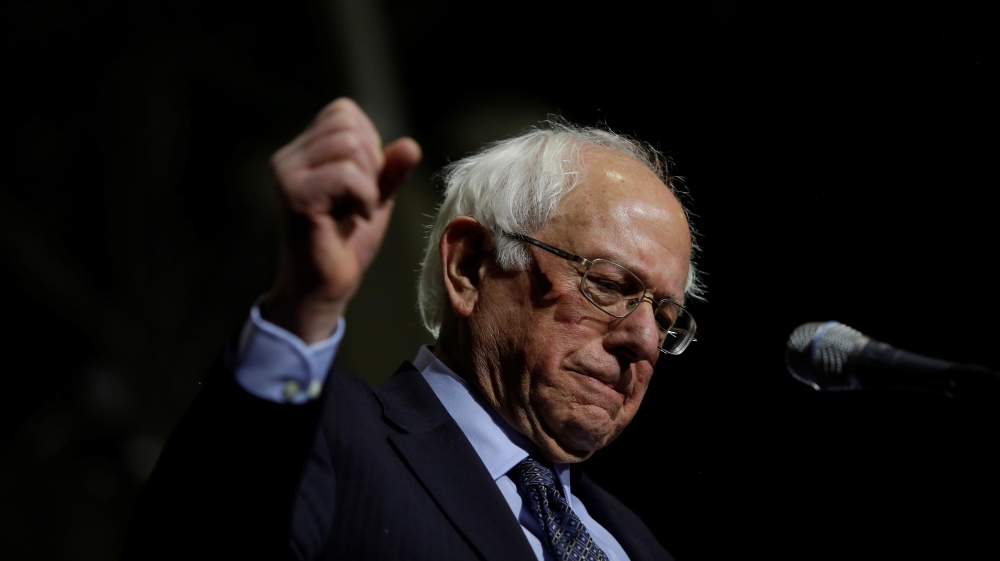
Bernie Sanders, 77
Bernie Sanders served as a US representative for 16 years before being elected to the Senate in 2006 where he currently represents the state of Vermont.
A progressive and cofounder of the Congressional Progressive Caucus, he is the longest-serving Independent in the history of Congress.
Sanders announced his presidential run on February 19, 2019. Sanders ran an unsuccessful bid for president in 2016 after losing to Hillary Clinton.
In the 2020 race, Sanders will have to fight to stand out in a packed field of progressives touting issues he brought into the Democratic Party mainstream four years ago.
Bernie Sanders speaks as he holds one of his first campaign events in Chicago, Illinois, on March 3, 2019 [Joshua Lott/Reuters]
His proposals include free tuition at public colleges, a $15 minimum hourly wage and universal healthcare.
He benefits from strong name recognition and a robust network of small-dollar donors, helping him to raise $5.9m during his first day in the contest.
Since then, he has appeared on all three debate stages.
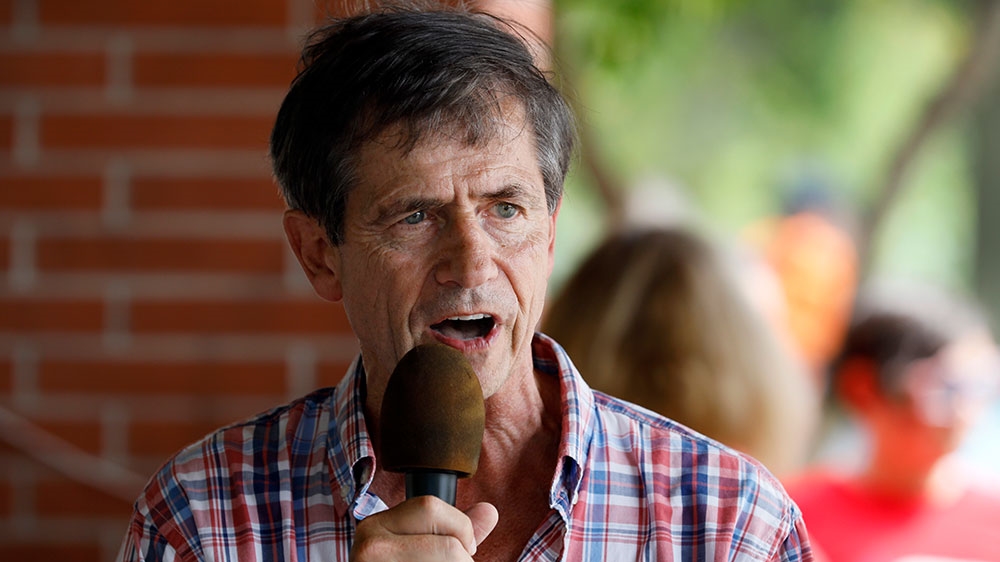
Joe Sestak, 67
Former US Representative Joe Sestak joined the race in June.
In announcing his candidacy, Sestak, 67, a retired three-star US Navy admiral, emphasized his 31-year military career, the need to restore US leadership in the world and challenges from climate change and China‘s growing global influence.
“Our country desperately needs a president with a depth of global experience and an understanding of all the elements of our nation’s power, from our economy and our diplomacy to the power of our ideals and our military, including its limitations,” Sestak said in a video released on his campaign website.
Democratic presidential candidate Joe Sestak speaks during the West Des Moines Democrats’ annual picnic [File: Charlie Neibergall/AP Photo]
Sestak represented a district in eastern Pennsylvania including the former industrial cities of Allentown and Bethlehem for two terms from 2007 to 2011.
He ran for the US Senate in 2010 and lost to Republican Pat Toomey in a year that saw Republicans take control of the House of Representatives. Sestak sought a rematch with Toomey in 2016 but lost in the Democratic primary.
Sestak has yet to qualify for a debate.
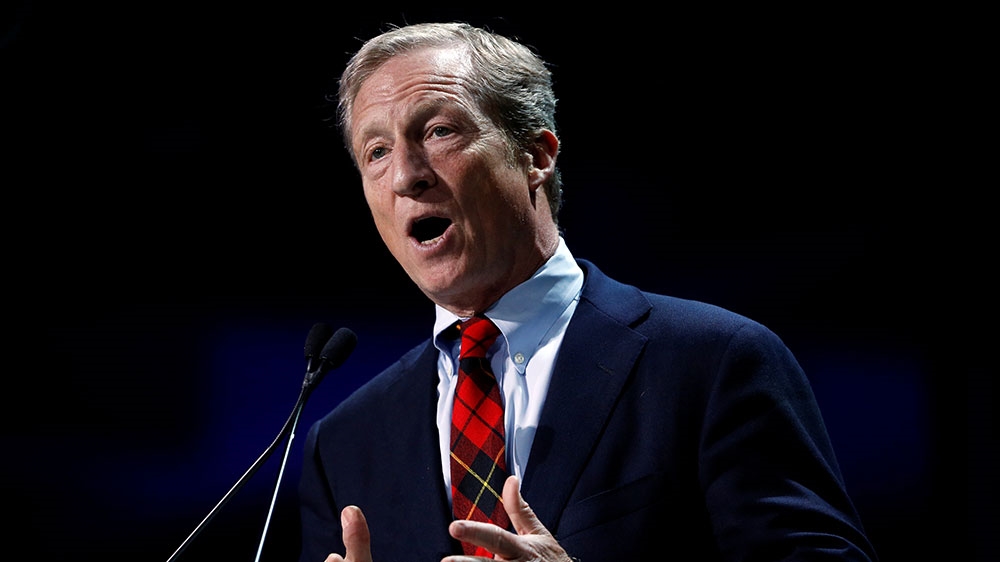
Tom Steyer, 62
Tom Steyer, a billionaire donor and liberal activist, announced on July 9 he was joining the Democratic presidential field after initially saying he would not run to focus his attention on impeaching Trump and getting fellow Democrats elected to Congress.
“There’s a breakdown in Washington DC, and I don’t mean just Donald Trump,” Steyer tweeted in a thread announcing his candidacy. “I’m talking about corporate money and our broken political system.”
The 62-year-old is one of the most visible and deep-pocketed liberals advocating for Trump’s impeachment. But he has previously said he has grown frustrated at the pace at which the Democratic-controlled House of Representatives is approaching Trump.
Tom Steyer, founder of NextGen Climate, speaks during the California Democratic Convention in San Francisco, California [File: Stephen Lam/Reuters]
His announcement made no mention of impeachment issue, instead focusing on why he believes there is a need to reduce the influence of corporations in politics. He also said he plans to target climate change, which is the focus of the Steyer-backed advocacy group NextGen America.
Citing issues including climate change and the opioid crisis, Steyer said that in nearly every “major intractable problem, at the back of it, you see a big-money interest for whom stopping progress, stopping justice is really important to their bottom line.”
Steyer announced his presidential bid after the first presidential debate in June. He failed to make the debate stage in July and September. He has, however, qualified for the fourth debate in October. He was the first to do so in addition to the 10 candidates who have appeared during all three debates held so far.
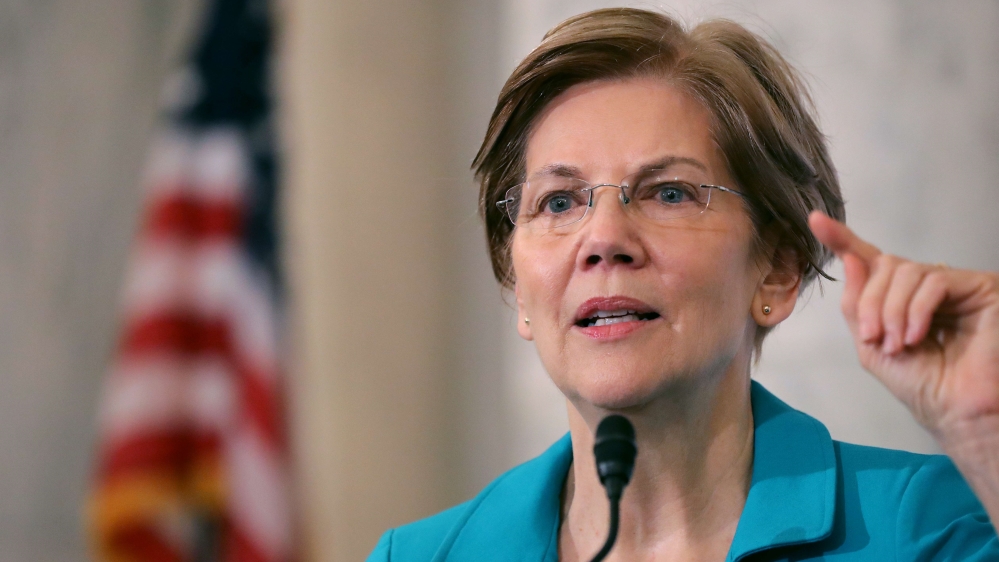
Elizabeth Warren, 69
Elizabeth Warren has served as a US senator from Massachusetts since 2013.
Warren, known as a progressive, taught law at several universities and was a Harvard professor.
Warren is a leader of the party’s liberals and a fierce Wall Street critic who was instrumental in creating the Consumer Financial Protection Bureau.
Earlier this year, she apologised to the Cherokee Nation for taking a DNA test to prove her claims to Native American ancestry, an assertion that has prompted Trump to mockingly refer to her as “Pocahontas“.
Elizabeth Warren addresses the Rev Al Sharpton’s National Action Network during a post-midterm election at the Russell Senate Office Building on Capitol Hill [File: Chip Somodevilla/Getty Images/AFP]
She announced her presidential run on February 9, 2019. She has promised to fight what she calls a “rigged economic system” that favours the wealthy.
She recently unveiled a student loan forgiveness proposal that would cancel up to $50,000 of debt for millions of Americans. She also supports free college tuition for students at two and four-year institutions.
Warren has been at all three debates.
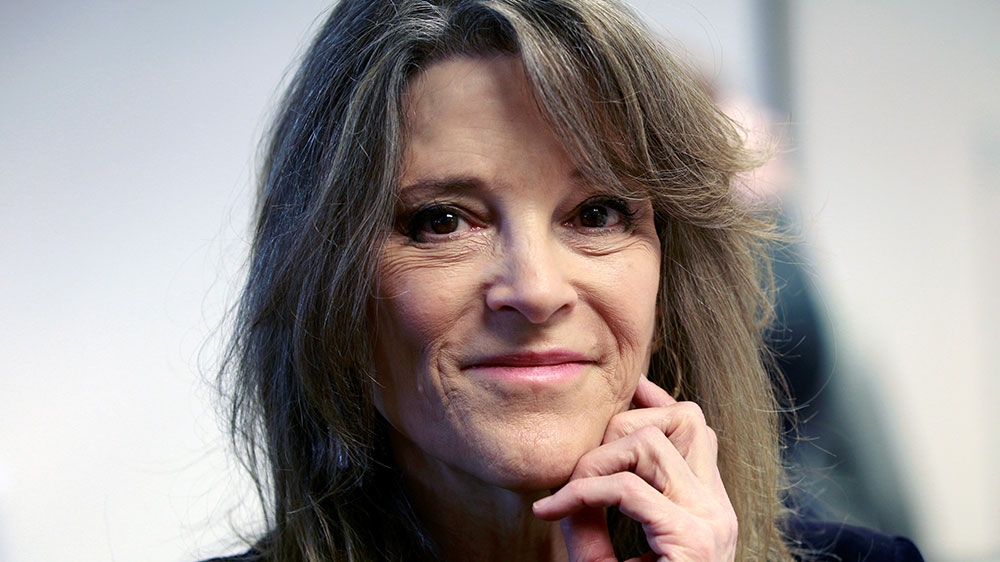
Marianne Williamson, 66
Marianne Williamson is an author, entrepreneur and activist. Williamson is the founder of Project Angel Food, a volunteer food delivery programme serving homebound people with life-changing illnesses.
She is also cofounder of the Peace Alliance, an education and advocacy organisation.
The Texas native believes her spirituality-focused campaign can heal the US.
Marianne Williamson meets with childcare advocates at the Nevada State Legislature in Carson City, Nevada [Bob Strong/Reuters]
A 1992 interview on Oprah Winfrey’s show propelled her to make a name for herself as a “spiritual guide” for Hollywood and a self-help expert.
She is calling for $100bn in reparations for slavery over 10 years, gun control, education reform and equal rights for lesbian and gay communities. In 2014, she made an unsuccessful bid for a House seat in California as an independent.
Williamson qualified for the first two debates, but failed to do so in September.
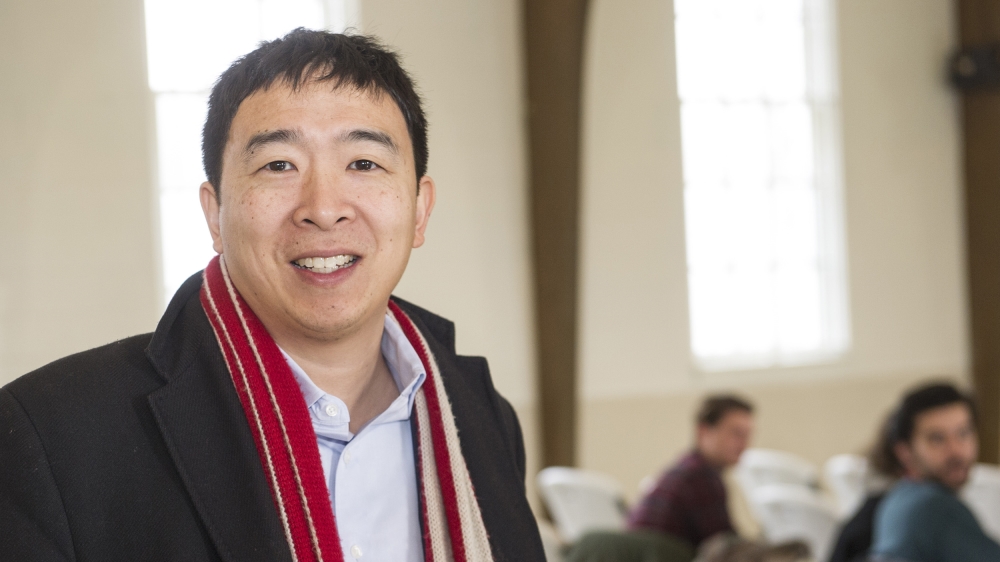
Andrew Yang, 44
Andrew Yang is the founder of Venture for America. In 2012, the Obama administration selected him as a Champion of Change.
In 2015, he was selected as Presidential Ambassador of Global Entrepreneurship.
He filed with the Federal Election Commission to run for president in 2020 on November 6, 2017.
The entrepreneur and former tech executive is focusing his campaign on an ambitious universal income plan.
Andrew Yang arrives at a town hall meeting in Cleveland on Sunday, February 24, 2019 [Phil Long/AP Photo]
Yang wants to guarantee all American citizens between the ages of 18 and 64 a $1,000 cheque every month.
The son of immigrants from Taiwan, Yang also is pushing for Medicare for All and proposing a new form of capitalism that is “human-centred”.
Yang has qualified for all three debates held so far.
Who has dropped out?
So far seven candidates have dropped out of the race, with more likely to end their campaigns as the top tier of the field continue to increase its lead.
Here’s a look at who has dropped out so far:
Kirsten Gillibrand, 52
Kirsten Gillibrand has served as a US senator from New York since 2009.
After failing to qualify for the third Democratic presidential debate, Gillibrand, who campaign on a platform centred on women’s rights, dropped out of the race.
In announcing her decision on August 28, Gillibrand told US media she had not decided which candidate to endorse.
“I think that women have a unique ability to bring people together and heal this country,” Gillibrand told the New York Times
“I think a woman nominee would be inspiring and exciting,” she added.
Mike Gravel, 89
Mike Gravel, the 89-year-old former senator made a little-known run for the Democratic nomination in 2008, took another stab at it early in the Democratic race.
His goal was to make the debate stage, but when that didn’t happen, he officially ended his campaign in August, and endorsed Sanders.
John Hickenlooper, 67
John Hickenlooper served as the governor of Colorado from 2011 to 2019.
He announced he was ending his presidential bid on August 15 in a video posted on Twitter.
“While this campaign didn’t have the outcome we were hoping for, every moment has been worthwhile and I’m thankful to everyone who supported this campaign and our entire team,” Hickenlooper tweeted.
Later in August, Hickenlooper announced he would run in the US Senate race against Republican incumbent Cory Gardner in Colorado.
Jay Inslee, 68
Jay Inslee has served as the governor of the state of Washington since 2013.
On August 21, he announced he was dropping out of the race, saying “it has become clear that I’m not going to be carrying the ball. I am not going to be the president.”
Inslee made fighting climate change the central issue of his campaign. In announcing his withdrawal, Inslee said he hopes other 2020 candidates would use his detailed 10–year climate plan.
Seth Moulton, 40
Seth Moulton has served as the US representative for Massachusetts’s sixth congressional district since 2015.
On August 23, he announced he was dropping out of the 2020 race, telling US media if one of the more progressive candidates win the nomination it could make it harder for the Democrats to beat Trump.
“I think it’s evident that this is now a three-way race between Biden, Warren and Sanders, and really it’s a debate about how far left the party should go,” Moulton told the New York Times.
Richard Ojeda, 48
Richard Ojeda was the first official presidential contender to drop out of the race.
In January, the former West Virginia state senator announced he was suspending his campaign, acknowledging he “does not have the ability to compete”.
Eric Swalwell, 38
Eric Swalwell, an Iowa native, has served as a House representative from California’s 15th congressional district since 2013.
He dropped out of the presidential race after the first primary debate in June.




 Lupita Nyongo and Director Danai Gurira. Photo Credit: QuartzAfrica –>