LILONGWE-(MaraviPost)-The High Court seating in Lilongwe on Tuesday adjourned to March 10 2026 a case in which wildlife crimes and money laundering convict Lin Yinhua is answering seven charges of corrupt practices with public officers and abuse of public offices.
High court judge Redson Kapindu made the adjournment when he was making directions in the case, indicating that the case would run for three days from March 10 to 13, 2026.
Judge Kapindu ruled that within 14 days the defence should identify a competent interpreter for client and counsel engagement.
“Make sure that within seven days assistant registrar of the court should engage Messrs Maele Law Practice to file a written notice that it no longer represents the accused”, Kapindu orders.
The judge also rules further, “Make sure that within 14 days the prosecution should ensure that the high court file contains all disclosures which shall be served to the defence with the materials”.
Anti-Corruption Bureau principal legal and prosecution officer Peter Sambani therefore told the court that the state is ready for the full trial.
Sambani hinted that the state will parade its 16 witnesses against the suspect on corruption and public officers abuses’ charges.
Among others, Lin is accused of offering K30 million to Aaron Ganyavu Kaunda who was the officer In charge of Maula Prison to engage then chief resident Magistrate Violet Chipao who was presiding over his wildlife and money laundering case, to give him a lesser sentence while he was on remand at Maula Prison in 2019.
This means Lin will remain on remand at Dedza Prison until full trial.
On November 7, 2025 High Court Judge Redson Kapindu rejected Lin’s applications discharge on unlawful detention and bail application.
Kapindu cited the suspect being flight risk and the serious offences he committed might compromise the court proceedings.
The case arose shortly after Lin’s controversial presidential pardon in July, this year which was followed by his re-arrest by ACB
BLANTYRE-(MaraviPost)-An explosive investigation by The Economist has uncovered a disturbing web of wildlife trafficking allegedly orchestrated through the Taiwanese Buddhist-managed Amitofo Care Centre (ACC) in Blantyre, Malawi — a facility established to care for orphans and vulnerable children.
Instead, evidence suggests that some of these orphans have been systematically groomed and exploited by a network of Chinese wildlife criminals posing as business investors.
The revelations point to deep-seated corruption, institutional negligence, and a dangerous exploitation of Malawi’s most vulnerable youth.
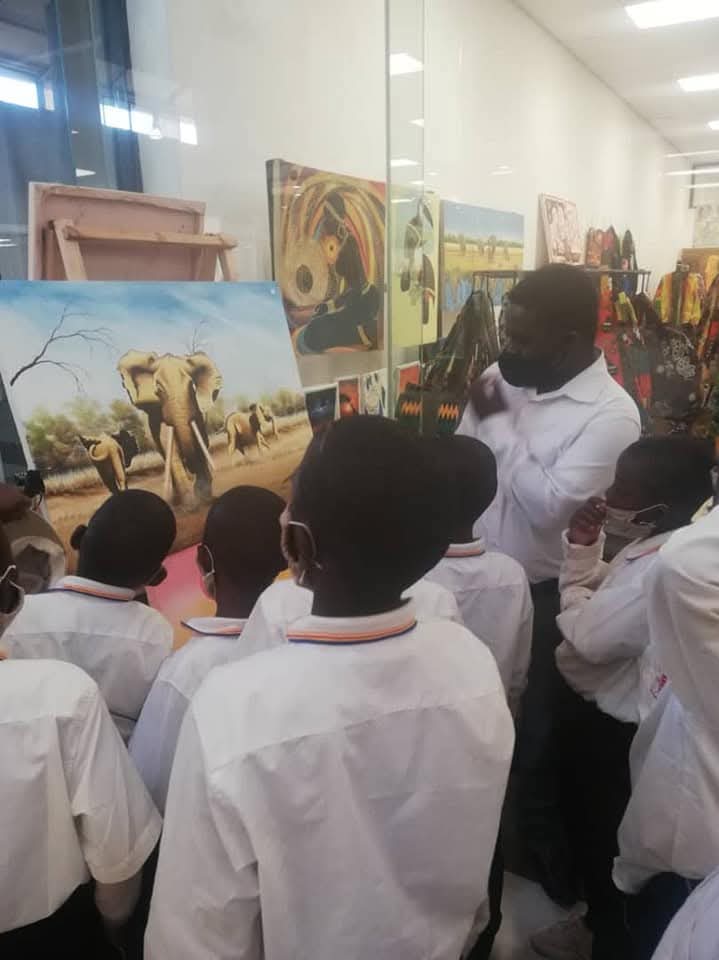
Inside Amitofo Orphanage centre
From Orphanage to Wildlife Mule: Francis’s Story
At the heart of The Economist investigation, titled “The School for Wildlife Traffickers”, lies the chilling account of a 19-year-old boy, identified as Francis, who says he was coerced by Amitofo’s Human Resources Manager, Branson Njunga, into participating in illegal ivory transactions.
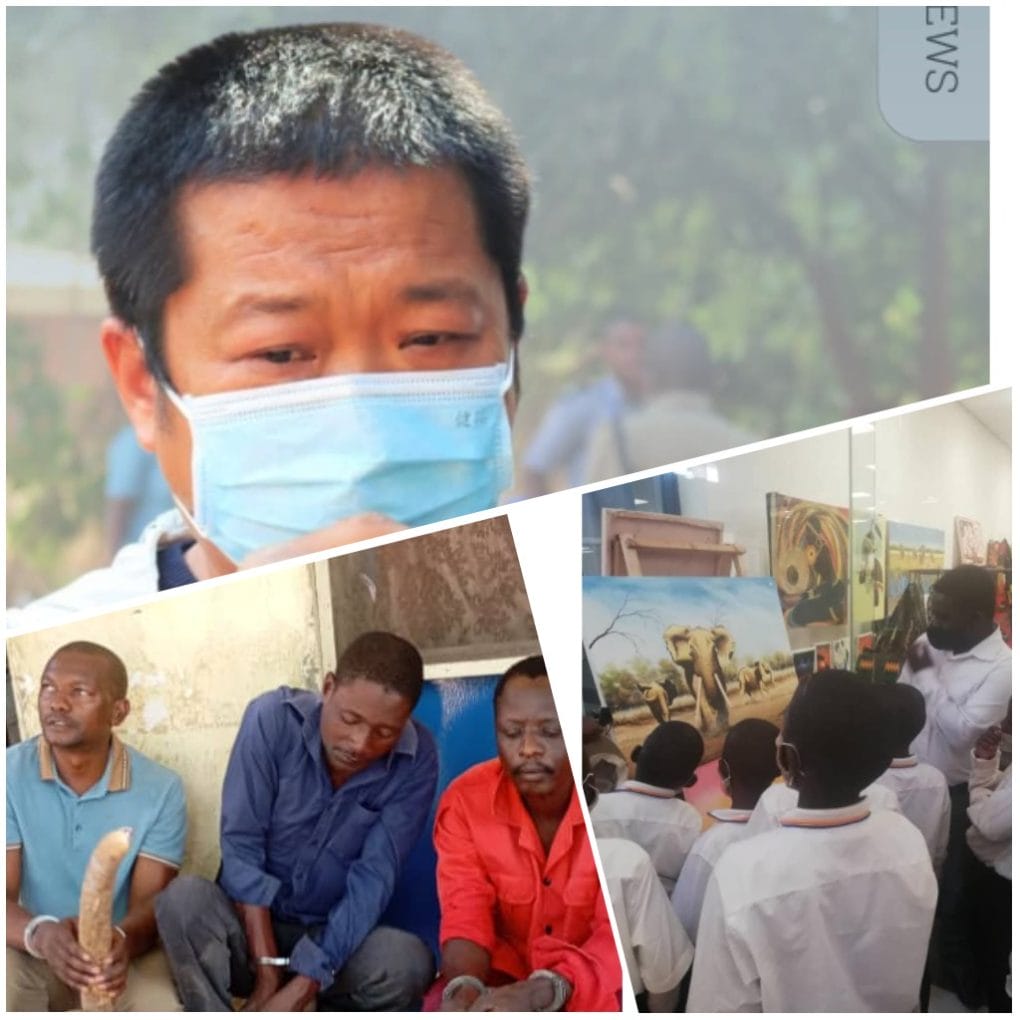
Njunga — recently arrested in Chikwawa for possession of ivory and currently facing charges — allegedly acted as a conduit between Amitofo’s vulnerable youth and Chinese wildlife traffickers.
“He had heard about former students at Amitofo who had been recruited into the illegal wildlife trade,” writes journalist Rachel Nuwer. “He had also seen news stories about people caught with ivory serving years in prison.”
Fearing for his future, Francis abandoned his education and left the centre — a decision that may have saved his freedom.
Inside the Illicit Network: Njunga, Lin, and the Chinese Connection
Undercover investigators quoted in The Economist report reveal that Njunga openly admitted to working with Chinese associates in Lilongwe, sourcing ivory for them.
Njunga arrested in sky blue from from left
He even offered to supply 20 kilograms of ivory to an undercover journalist.
“It’s risky business, but where there is money, people take risks,” Njunga allegedly told the investigator.
His recent arrest alongside two others in possession of ivory only reinforces the allegations.
They are now facing charges for possessing specimens of protected species — an offence carrying severe custodial penalties under Malawi’s wildlife protection laws.
But Njunga’s role appears to be just one part of a much larger, well-coordinated network.
The Shadow of Yunhua Lin: Pardoned Kingpin Still Pulling Strings
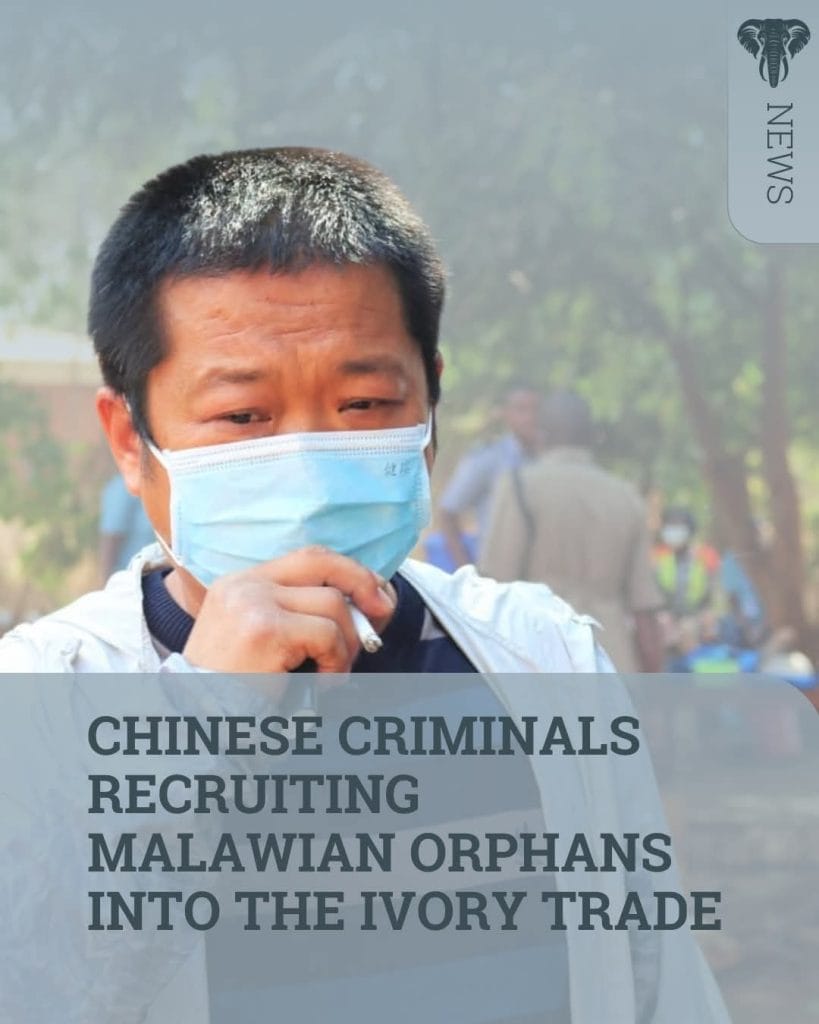
The Economist investigation also revisits the case of Yunhua Lin, an international wildlife trafficker once convicted in Malawi.
Despite his 14-year sentence, Lin was controversially pardoned by President Lazarus Chakwera in July this year — while one of his Malawian “runners,” Aaron Dyson, remains behind bars serving a 15-year sentence for crimes he was reportedly coerced into committing.
Lin, who is now facing separate corruption charges, has been repeatedly denied bail by the courts, with judges citing him as a flight risk.
Yet, despite multiple failed applications, Lin has again filed for bail — raising questions about whether the judicial system is being manipulated to his advantage.
Human rights observers say Lin’s influence continues to extend deep into Malawi’s institutions.
Lin, Wildlife crime convict
“It is shocking how Chinese traffickers manipulate vulnerable Malawians — including orphans — into committing crimes on their behalf, only for the locals to rot in jail while the real masterminds use their illicit wealth to escape justice,” said a human rights and legal expert from Chancellor College, who spoke on condition of anonymity.
The investigation reveals that Lin maintained ties with the Lilongwe branch of Amitofo Care Centre, even purchasing part of land near the facility to reportedly store illegal wildlife products.
Former Amitofo student Aaron Dyson, once celebrated as a “model orphan” and Mandarin prodigy, was recruited into Lin’s network after returning from language training in Taiwan.
Dyson’s story underscores the tragic transformation from hopeful student to victim of transnational crime.
He allegedly handled ivory and rhino horn runs across Namibia, Botswana, Tanzania, Kenya, and Zimbabwe — operations believed to have been financed and directed by Lin.
Equally concerning is the state’s response.
Despite repeated arrests and court findings, Lin continues to exploit legal loopholes and influence networks to maintain his freedom.
His July presidential pardon remains one of the most controversial acts of executive clemency in recent memory.
Call for Urgent Government Action.
“The revelations demand immediate scrutiny from Malawi’s Ministry of Gender, Ministry of Homeland Security, Department of National Parks and Wildlife, and the Anti-Corruption Bureau,” calls Lilongwe based environmental activist asked for annonymity.
He stressed on the need for authorities to protect and rehabilitate victims of the trafficking network; Investigate the conditions surrounding Lin’s presidential pardon; and Strengthen oversight over foreign religious and charitable institutions operating in Malawi.
“Anything less would be a betrayal of the very children and communities the state is meant to protect.” he earned.
“If these findings are left unchecked, Malawi risks becoming a regional hub for wildlife trafficking — fuelled by poverty, foreign manipulation, and institutional indifference.
“It is now up to the authorities to act — not with statements, but with prose,” said a Chancellor college legal and human rights expert also opted for anonymity.
The Ministry of Gender and Ministry of Justice are yet to comment on the unfolding developments .
Share this:
Like this:
LikeLoading…
Discover more from The Maravi Post
Subscribe to get the latest posts sent to your email.